Sennheiser has launched its latest pair of wireless headphones, the Accentum Plus, and they’re about what you’d expect from the storied audio brand on the outside. Clean, simplistic design and what looks like over-the-top comfort. Judging by looks alone, the Accentum Plus appears to be a very premium pair of wireless headphones. And why should you expect anything less from Sennheiser when the company has been associated with high-end premium audio for decades? Initially announced at CES 2024, the Accentum Plus is among a few new pairs of headphones the company unveiled back in January.
Sennheiser doesn’t highlight any luxury materials in the build. But that shouldn’t take away from the comfort one bit. The headband features a soft-touch silicone material that shouldn’t be abrasive. And the earpads are nice and plush with a large size to envelope your ears. They will “secure around-ear fit to enjoy long music sessions,” Sennheiser says. The headphones are also described as lightweight and ergonomic. Where the Accentum Plus really seems to shine is with the features. In particular the battery life.
The Accentum Plus headphones will last for up to 50 hours
I’m not entirely sure if 50 hours is the market leader for wireless headphone battery life. What I am sure about, is that headphones with battery life that last this long between charges are pretty uncommon. Many will last you somewhere between 25-30 hours on a single charge. Some reach 40 hours. Which in retrospect is completely fine. Most pairs of wireless headphones will charge much faster these days anyway. But the Accentum Plus boasts a whopping 50 hours on a single charge. And for those who are traveling or commuting most of the time, it can be hard to turn that down. Even if the headphones can charge up quickly.
You aren’t always by a power source to plug headphones in. Perhaps you’re short on space in your bag and just don’t have room for a power bank. Whatever the case is, sometimes you just want your headphones to last longer. These will deliver that. And even if you do need a quick charge in a pinch, the Accentum Plus has that too. Just 10 minutes on the charger gets you 5 hours. The battery life and comfort alone should be enough to entice people to at least consider these. But Sennheiser didn’t stop at excellent battery life and good comfort. There are lots of intuitive user-friendly functions.
Like touch controls. The side panel on the earcup lets you adjust volume, skip tracks, and enable the transparency mode. You can also mix and match the touch controls with the companion app to find your preference for them. There’s Hybrid Adaptive Noise Cancellation too, and Sennheiser even packs a few goodies in with the headphones themselves. Namely a sleek and slim carrying case and a 3.5mm audio cable when you want or need to use the headphones with no battery life. The Accentum Plus goes on sale today and retails for $229.95 in Black and White colorways. You can pick them up from select retailers and from Sennheiser directly.
The 5G network is now available in the US, and all three major carriers (AT&T, Verizon, and T-Mobile) provide 5G services. But, unlike other networks, AT&T’s 5G is more than just faster speeds. There are several aspects to consider, such as the cost of their new 5G plans, the meaning of 5Ge, and more. In this article, we will try to cover all of these aspects and answer any questions you may have about AT&T’s 5G network.
When did AT&T first launch 5G?
With AT&T, 5G is a bit more complicated and confusing than it needs to be. This is because it decided to rebrand its 4G LTE network as 5Ge on a lot of devices. Giving older devices supposedly 5G service, without actually having it connect to a 5G network. It’s confusing because a lot of the speed tests showed that 5Ge was actually slower than 4G LTE a lot of the time. That was even more confusing since it was the same network.
AT&T has mostly dropped the use of 5Ge, though there are still some older phones that will show it, instead of 4G LTE. This is because Many threatened to sue AT&T over the false advertising, including Sprint, which is now defunct, as T-Mobile purchased them recently.
The first true launch of 5G on AT&T was in early 2020. However, it was not available on many of its plans or in many areas until August 2020. That was because the company was still building out its network. In August of 2020, AT&T made 5G available nationwide, on its Sub-6 network. The opposite of how Verizon is doing it.
What cities have AT&T 5G?
Here’s where AT&T has 5G coverage available as of right now:
Cities
Arizona
California
Los Angeles
Menlo Park
Oakland
Redwood City
San Bruno
San Diego
San Francisco
San Jose
West Hollywood
Florida
Jacksonville
Miami
Miami Gardens
Orlando
Tampa
Georgia
Indiana
Illinois
Kentucky
Louisiana
Maryland
Michigan
North Carolina
Nevada
New York
Ohio
Oklahoma
Pennsylvania
King of Prussia
Philadelphia
Tennessee
Texas
Austin
Dallas
Houston
San Antonio
Waco
Wisconsin
AT&T has also brought 5G to a number of arenas and venues, which are listed below. This is where you can really take advantage of 5G, because of the increased capacity and speeds.
Arenas and Venues
California
Dodger Stadium – Los Angeles
Oracle Park – San Francisco
Colorado
Florida
Hard Rock Stadium – Miami Gardens
Raymond James Stadium -Tampa
Georgia
Mercedes Benz Stadium – Atlanta
Illinois
United Center – Chicago
Minnesota
U.S. Bank Stadium – Minneapolis
North Carolina
Bank of America Stadium – Charlotte
Spectrum Center – Charlotte
Texas
AT&T Dallas Stadium – Arlington
AT&T Center – San Antonio
Wisconsin
American Family Field – Milwaukee
Fiserv Forum – Milwaukee
Verizon and AT&T both focused heavily on arenas and larger venues for rolling out 5G first. And that is because that is where 5G can really prove itself. With the higher capacity, it’ll work better when there are 100,000 people at AT&T Stadium in Dallas.
AT&T C-Band
Beginning on January 19, 2022, AT&T started rolling out C-Band spectrum for its 5G Network. It’s bundled under the 5G+ branding. So when you see 5G+ it could be mmWave or C-Band.
It has started out by rolling it out in 8 cities:
Dallas/Fort Worth
Houston
Austin
Chicago
Detroit
Jacksonville
Orlando
Miami
When will my area get coverage?
Likely, very soon. But don’t expect to see gigabit speeds very soon.
This is because AT&T, much like Verizon and even T-Mobile, are building out two 5G networks. There’s the Sub-6 5G network that is running on its 850MHz spectrum. This is basically the coverage portion of 5G. It’s going to roll out to almost everywhere across the nation. But you won’t see dramatically faster speeds.
The general rule of thumb with wireless spectrum is that the lower the band, the more coverage it’ll provide and less capacity (or speed). And the opposite is true for the higher-band spectrum, which is why most carriers are doing Sub-6 and mmWave. That is AT&T’s second 5G network.
With AT&T’s mmWave network, called 5G+, you’re going to get gigabit speeds. But you won’t be connected to it for very long. At least not at this point. That is because mmWave’s coverage is very weak. I’m sure you’ve heard of the many jokes about Verizon’s network, where a gust of wind can you knock you off of its network. Well, that’s because it uses mmWave. It’s kind of funny that people think mmWave can penetrate the human body and give you cancer, though.
mmWave can offer many gigabit speeds on 5G, but the coverage is mere feet. At the same time, Sub-6 is measured in miles. Sometimes, hundreds of miles. So there’s a huge difference here.
So the answer here is that, you’ll get 5G soon, but don’t get too excited as it’ll likely be Sub-6 5G in the immediate future.
Can I use AT&T 5G as my Home Internet?
Technically, yes. But we definitely do not recommend it.
The reason for that is because the 5G coverage you’ll see indoors is basically the same speed as 4G LTE. And hotspotting off of that isn’t all that great.
AT&T isn’t planning to offer 5G Home Internet like Verizon, and it wouldn’t make sense for them to do that. Because AT&T already has fixed home internet built out in most of the US. With a good chunk of it having gigabit fiber connections already too. Verizon is offering 5G Home Internet because it does not have fixed internet built out in most of the US. Verizon FiOS is really only available in a handful of markets on the east coast.
In the future, we will likely see all of the carriers offering 5G as home internet, transforming them into ISPs. But that is going to be quite a ways off. Since 5G will need to be built out drastically more than it is right now.
What phones work with AT&T 5G?
Almost every phone on AT&T’s website right now, supports 5G. However, many of them do not support mmWave. They support Sub-6 instead. And that is because AT&T was focusing on building out Sub-6 first, before moving to mmWave. So that’s what they wanted their phones to support.
However, any phone released in 2021 or later will support both Sub-6 and mmWave.
Here are a few good options for 5G phones on AT&T. These all support both Sub-6 and mmWave:
There are many more 5G phones available that are unlocked and will work on AT&T’s network too. Make sure that they are certified by AT&T though. Otherwise, they may not connect to AT&T’s 5G network.
What plans work with AT&T 5G?
All of the unlimited plans at AT&T offer 5G connectivity. The majority of them include 5G access, while some of the cheaper plans will charge you extra for 5G access. This isn’t anything new, this also happened with 4G nearly a decade ago. Many carriers, like Sprint, charged you $10 per month to access its 4G network – even if it wasn’t in your area.
There’s the AT&T Unlimited Starter plan. This costs $65 for one line, or if you have a family plan, as little as $30 per month, per line. This plan gives you unlimited talk, text and data, which includes Canada and Mexico. Video streaming is limited to 480p however.
Next is the AT&T Unlimited Extra. This will cost you $75 per month for a single line, or as little as $35 per line on a family plan. You’ll get everything that the Starter Plan has to offer, as well as 50GB of so-called “Premium Data” This basically means you won’t be throttled until you hit that 50GB threshold per month. There’s also 15GB of 5G hotspot data available, per line with this plan.
Then there is Unlimited Elite. This plan will cost you $85 per month for a single line, or $45 on a family plan. In addition to everything on the Starter Plan, you get 100GB of Premium Data, as well as video streaming in 720p quality. Unfortunately, it’s not going to be 1080p or 4K, but 720p isn’t bad either. You also get 30GB of 5G hotspot data, and HBO MAX is included in the price. That’s a $15 value.
On most of AT&T’s non-unlimited plans, you won’t get access to 5G. Which is unfortunate, but it’s better to move up to unlimited anyways. So you won’t have to worry about going over.
Is AT&T using Sub-6 or mmWave?
AT&T is using both Sub-6 and mmWave for it’s 5G network. However it did start out with Sub-6 for its 5G network, unlike Verizon. Verizon decided to start with mmWave so it could showcase the incredible speeds that 5G can provide. But the downside is, coverage is really bad. AT&T decided to prioritize coverage first, and that was probably the right move here.
With Sub-6, you’re going to get some pretty good speeds from AT&T. They should be similar, or maybe a bit faster than its existing 4G LTE network. But you’ll actually get 5G access inside. Which is not the case for mmWave.
AT&T has started to build out its mmWave network, so you will find some markets that have much faster speeds than others. Thanks to mmWave, which is being marketed as 5G+.
In February 2021, AT&T spent $23.4 billion at a spectrum auction to purchase 3.7GHz that will be used in its 5G network. That will serve as a good middle layer for its 5G network. It won’t be quite as fast as mmWave, and won’t have quite the coverage as Sub-6 (even though it is technically Sub-6, but AT&T is using 850MHz for Sub-6). Giving it a ton of capacity that can be added to its network. This is going to be great when everyone starts jumping on its 5G network. As it likely won’t suffer the same issues it currently has on 4G, where it is just entirely too slow. Because of the congestion. But only time will tell.
Why do we need 5G?
5G is the next evolution of mobile networks. And while many will say that it is overkill, and that we don’t need gigabit speeds on our smartphones, we actually do.
If you’re old enough to remember, the same thing was said about 4G LTE. Why do we need these speeds when my phone is already fast enough? Now look at it. Those early LTE speeds of around 30-50Mbps are pretty much non-existent. As LTE is now closer to 100Mbps or more.
Our world is changing, and in a few years, 5G is going to feel slow. And yeah, that sounds weird to say, given that we’re seeing 1-2Gbps on 5G on some carriers. But as internet speeds get faster, websites get heavier, apps also get larger, and so do video files. Imagine being able to download a season of a Netflix Original in just a few seconds? 5G is going to allow that, among many other things.
So, today, 5G might seem like overkill. But by 2025, we’ll be back to complaining that it isn’t fast enough. 5G is going to enable us to do virtual reality in real-time, instead of needing to have it downloaded to use offline. It’ll also allow for autonomous vehicles to get information from the cloud. This is thanks to the much lower latency of 5G. And that’s really just the start of what 5G will enable for us.
Is it worth it to upgrade to a 5G phone on AT&T?
Our conclusion on AT&T 5G in early 2021 is that it’s available, but we wouldn’t recommend upgrading your solely so you can use its 5G network. If you need a new phone, its very likely that it’ll be a 5G phone, and in that case, fine. Because you don’t really have much of a choice. But don’t upgrade to a 5G phone just because it has 5G. Upgrade for other reasons.
AT&T’s 5G network is getting pretty good, and covering a large chunk of the US, but it is still not nationwide. Even though AT&T likes to claim that it actually is. That will change in the coming years though. AT&T is working pretty hard at rolling out 5G across the country already, and we expect that to continue for quite some time.
Signal, the popular messaging app, is introducing usernames to its platform. This optional feature allows you to connect with others without revealing your phone number, enhancing privacy on the app.
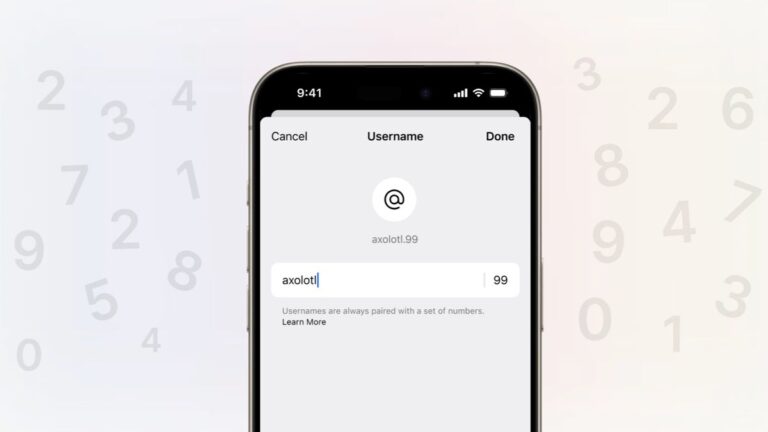
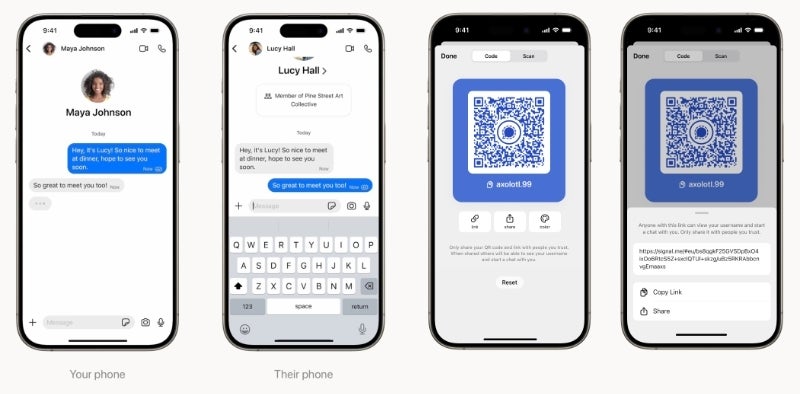
As announced today in its blog, Signal users will be able to head to their settings and select “Profile” to create a unique username. The app will then allow its users to share said username by either generating a shareable QR code or a link. Alternatively, users can connect by typing your username into the new chat bar.
Source: Signal
Traditionally, Signal required the use of a phone number in order to register for an account and use its features. This translated to having to reveal your phone number to others that you exchanged messages with. While the app will still require a phone number in order to create an account, you will now have the option to shield it and instead use a username as your alias.Signal is also rolling out other security features, such as the ability to restrict who can find you using your phone number. This means you can prevent people from messaging or calling you on Signal, even if they know your phone number and know you have an account. Additionally, the app will now hide your phone number by default if users don’t already have it in their contact list. You can change this setting within Privacy > Phone Number > Who can see my number.
These privacy-focused additions come after Signal began testing usernames last fall. Should you choose to go the route of creating a username, that also wouldn’t be visible on your profile details page or in chats unless you actively share it. As Randall Sarafa, Signal’s Chief Product Officer, explains, “Someone will need to know your exact unique username in order to start a chat with you on Signal.”
While these features bolster privacy, Signal is aware of the potential for impersonation and emphasizes safety features like comparing safety numbers for verification. Currently, these features are only available in the beta version of the app, but will be rolling out to everyone in a few weeks. Your move WhatsApp!
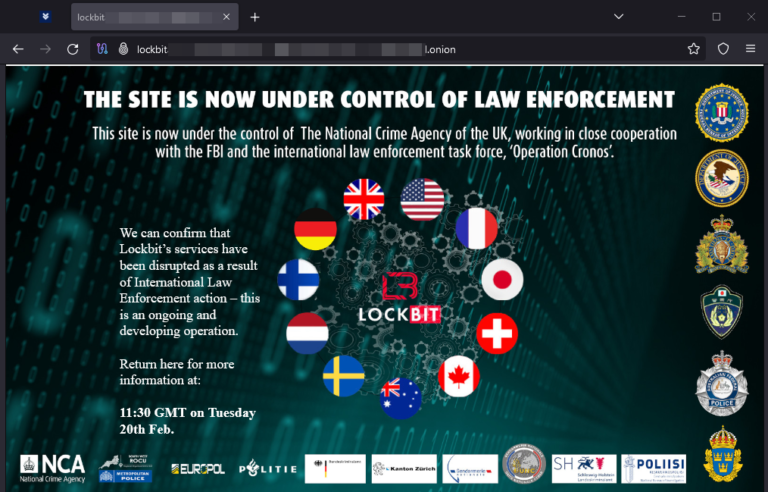
In an act of exquisite trolling, the UK’s National Crime Agency (NCA) has announced further details about its disruption of the LockBit ransomware group by using the group’s own dark web website.
The LockBit dark web site has a new look
Since the demise of Conti in 2022, LockBit has been unchallenged as the most prolific ransomware group in the world. In the last 12 months it has racked up more than two and half times as many known attacks as its closest rival. That all stopped yesterday, though, when the LockBit site was replaced with a banner decorated with the flags and badges of the countries and agencies that cooperated to “disrupt” it. The banner read:
This site is now under the control of The National Crime Agency of the UK, working in close cooperation with the FBI and the international law enforcement task force, ‘Operation Cronos’.
It also promised more information would be revealed today at 11:30 GMT. It didn’t disappoint. There was a press release, of course, and a video:
The NCA reveals details of an international disruption campaign targeting the world’s most harmful cyber crime group, Lockbit.
Watch our video and read on to learn more about Lockbit and why this is a huge step in our collective fight against cyber crime. pic.twitter.com/m00VFWkR9Z
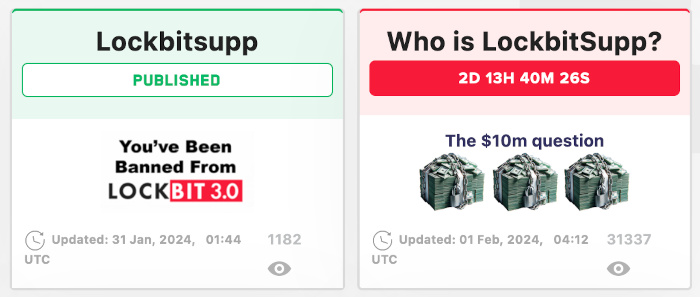
But the real treat was an updated version of the LockBit website that returned it to something resembling its former self. However, some crucial details had changed. Until yesterday, the secret dark web site was used to list details of the organizations being held to ransom by LockBit. Green squares represented companies whose data had been leaked. Timers on the red squares showed companies under threat of a leak just how long they had until their stolen data would be published.
Not any more, though.
In a graphic illustration of just how comprehensively the LockBit group has been compromised, the green squares now detail published information about the takedown, while red squares tease further reveals for the coming days.
Today, after infiltrating the group’s network, the NCA has taken control of LockBit’s services, compromising their entire criminal enterprise.
As well as taking over the leak site, law enforcement agencies have taken over LockBit’s administration environment, seized the infrastructure used by LockBit’s data exfiltration tool, Stealbit, captured over 1,000 decryption keys, and frozen 200 cryptocurrency accounts.
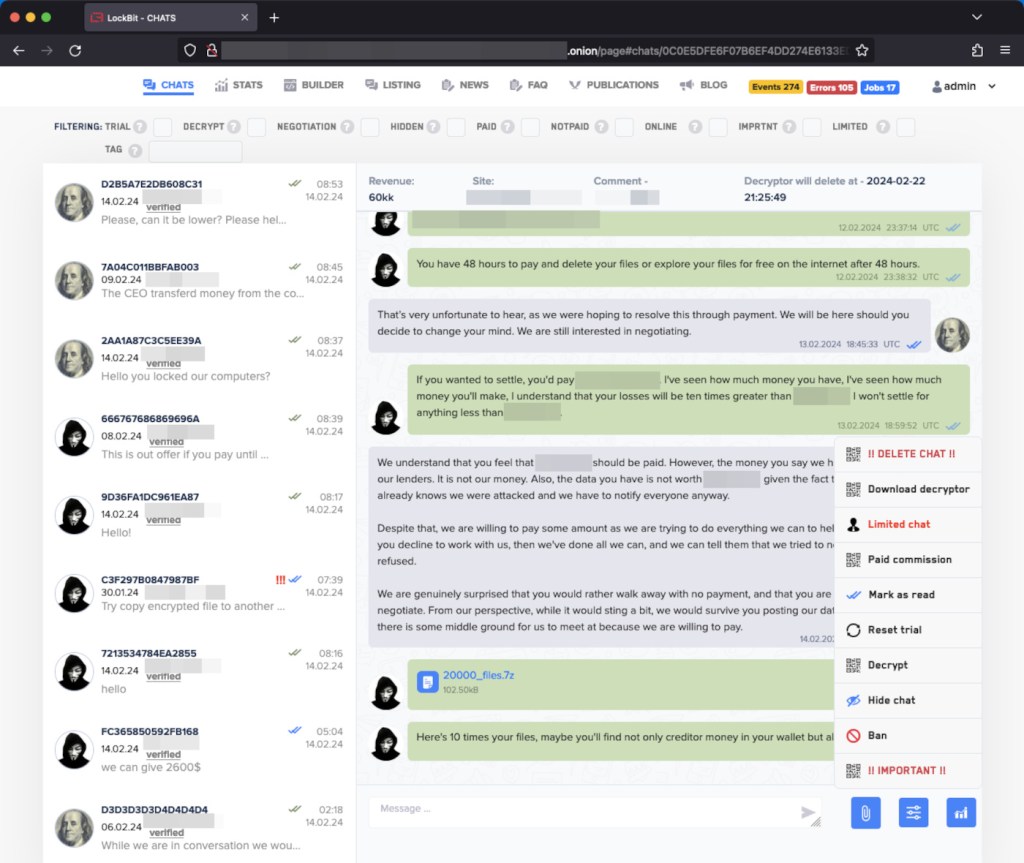
A screenshot from LockBit’s admin panel
The group’s source code has also fallen into the hands of law enforcement, along with “a vast amount of intelligence” from its systems. Criminal affiliates who logged into the compromised environment were warned that the NCA knows all about their activities too, and the NCA reports that 28 servers belonging to LockBit affiliates have been taken down, too.
Two “LockBit actors” have been arrested in Poland and Ukraine, and the US Department of Justice has announced that two defendants responsible for using LockBit in ransomware attacks have been charged, are in custody, and will face trial in the US. It also unsealed indictments against two Russian nationals, for conspiring to commit LockBit attacks.
There are numerous reveals promised for the next few days, but the most tantalising is the imminent uncloaking of LockBit’s leader and spokesperson, LockBitSupp.
The identity of Lockbitsupp won’t be a mystery for much longer
The NCA could have put the information about the takedown anywhere, but it didn’t; it did something memorable, humorous, and deliberately humiliating with it. In other words, it mimicked perfectly the way that ransomware gangs troll the world and each other. In doing so, the NCA signaled that it knows all about LockBit and the broader community of criminals it belongs to. It knows that LockBit’s affiliates and rivals will be watching, and looking over their shoulder.
Prevent intrusions. Stop threats early before they can even infiltrate or infect your endpoints. Use endpoint security software that can prevent exploits and malware used to deliver ransomware.
Detect intrusions. Make it harder for intruders to operate inside your organization by segmenting networks and assigning access rights prudently. Use EDR or MDR to detect unusual activity before an attack occurs.
Stop malicious encryption. Deploy Endpoint Detection and Response software like ThreatDown EDR that uses multiple different detection techniques to identify ransomware, and ransomware rollback to restore damaged system files.
Create offsite, offline backups. Keep backups offsite and offline, beyond the reach of attackers. Test them regularly to make sure you can restore essential business functions swiftly.
Don’t get attacked twice. Once you’ve isolated the outbreak and stopped the first attack, you must remove every trace of the attackers, their malware, their tools, and their methods of entry, to avoid being attacked again.
You can learn more about the threat of big game ransomware like LockBit and ALPHV in our 2024 State of Malware report.
Samsung introduces Auracast support to select older Galaxy devices running One UI 6.1. It includes the Galaxy S23 series, Galaxy Z Fold5, Galaxy Z Flip5, and Galaxy Tab S9 series. For those unaware, Auracast is a Bluetooth feature that allows audio to be transmitted from a single source/device to multiple receiving devices with support for LE Audio at the same time.
This move follows the successful integration of Auracast on the Galaxy Buds 2 Pro and Samsung’s smart TVs and now extends to select Galaxy smartphones and tablets.
Auracast offers two primary functionalities: ‘broadcasting sound using Auracast’ and ‘Listen to Auracast broadcast’
With the ‘broadcasting sound using Auracast’ feature, users can transmit audio to multiple connected devices simultaneously, creating a seamless audio-sharing experience. Users can use this feature on the above-mentioned Galaxy devices with One UI 6.1 or above.
Additionally, users can listen to Auracast broadcasts on supported devices, allowing them to enjoy audio content from various sources with ease. This feature is available on Galaxy devices with software versions as old as One UI 5.1.1, providing backward compatibility and extending the benefits of Auracast to a broader user base. Notably, the Galaxy Z Flip4, Galaxy Z Fold4, Galaxy A54 5G, Galaxy M54 5G, Galaxy Tab S9 FE series, and Galaxy Tab Active 5 5G are also on this list alongside the above-mentioned devices.
Setting up and joining audio streams through Auracast is similar to connecting to Wi-Fi networks
Auracast simplifies the process of setting up and joining audio streams, similar to connecting to Wi-Fi networks. Users can initiate or join broadcasts using QR codes, ensuring a seamless and user-friendly experience. With the widespread adoption of Auracast, the Bluetooth SIG envisions new use cases for public audio transmissions in environments such as waiting areas, transit centers, cinemas, and conference centers. Moreover, Auracast-equipped hearing aids hold the potential to replace traditional T-Coils, notes Android Police. It will offer enhanced accessibility for individuals with hearing impairments.
Overall, Samsung’s decision to bring Auracast support to older Galaxy devices underscores its commitment to delivering cutting-edge audio solutions and improving the user experience across its product ecosystem.
I wouldn’t consider myself an audiophile necessarily, at least not on the same levels as some who have more expertise in this category of tech products, but I do love my audio gear and this especially includes earbuds these days, so I was quite excited when OnePlus sent out a pair of the OnePlus Buds 3 for review. I’ve been using these for the past few weeks to test out their functionality and see how they stack up to everything else I’ve been using over the past few years.
And I have to say, I was quite impressed with what OnePlus has put out here. From style to comfort to price, the OnePlus Buds 3 really are a marvel. They’re a display of what can be done when you have a passion for creating a certain product and your main goal is delivering something high quality to the consumer, even at an affordable price. And I think that’s the key part here. The OnePlus Buds 3 are only $99.99. And yet, they’re really, really good earbuds. OnePlus has clearly put a lot of effort into crafting these earbuds and I think there’s a lot of attention to detail that deserves to be showcased.
With that said, let’s get deeper into this review and see how the earbuds stack up. Are they worth your money? Will they even offer you the features that you’re looking for? Let’s find out!
OnePlus Buds 3 review: Hardware and Design
Without mincing words, I am in love with the design of these earbuds. I used to dislike this style but that was mainly because the earlier versions of this design had longer sticks coming off the end. These are much shorter and a lot more in line with the style of the AirPods Pro 2. Now normally I don’t care for tech products with glossy finishes. This is because you’re always touching most of your tech products, especially those that are designed for mobile use, so the glossy finish always ends up getting fingerprints and smudges all over it.
That’s, still kind of the case here. That is, these are a fingerprint magnet. And with touch controls on the side (which are quite good, by the way), I’d say you should give up any hope of having these be fingerprint-free beyond the first time you open the package. That is unless you’re willing to wipe these down with a microfiber cloth multiple times a day. But who has the time for that kind of lunacy? In the end, they’re earbuds. They’re small enough that the fingerprints aren’t really going to matter much.
With that one aspect aside, the glossy finish here really amps up the design I think. They make the earbuds look a whole lot more premium and honestly, I dig it here. While I prefer a matte finish for most devices, I think the glossy look was the right call with these. It looks super sharp. One other neat little detail is that these feature an IP55 water and dust resistance rating. They won’t be safe from water immersion. They will be safe from rain and sweat. So don’t be afraid to wear them if it’s raining outside or during intense workouts.
Touch controls
Let’s talk about the touch controls because they always go one of two ways. They’re either terrible or they’re excellent. There’s no in-between in my experience. In the case of the OnePlus Buds 3, they’re excellent. The touch controls on these are probably the simplest and best quality touch controls I’ve ever used on a pair of true wireless earbuds. You might think they’d be challenging to get used to. Because of where they sit, it sometimes feels like the pressure you put on the earbud to engage the controls might dislodge them from your ears. But I didn’t experience this at all.
Once you get used to that one little detail, using the touch controls is a breeze. A simple swipe up or down on the touch area lets you adjust the volume of your audio. A single tap lets you pause or play the audio. You also have double-tap and triple-tap controls where you can set up things like moving to the next track or going back to the previous track. But there are also options for activating the voice assistant and the game mode. And you can set these controls for both the left and right earbuds. For example, I set the double-tap control on the left earbud to go to the previous track. While the double-tap on the right earbud goes to the next track.
On the same token, the triple-tap function for the left earbud activates the voice assistant (in this case Google Assistant), and the triple-tap for the right earbuds activates the game mode. Now most of these controls are set up by default. You will, however, need to install the HeyMelody app on your phone to access the options where you can customize things. Or if you’re using a OnePlus device like the OnePlus 12R, these options are simply available in the phone settings.
When it comes down to it, the touch controls are just really good. I never once had to fight with the earbud with multiple tap attempts to get things to work. Or press so hard it shoves the earbud into my ear to engage any of the functions. Hats off to OnePlus for engineering some great touch controls here.
Comfort
Depending on your ears, you might either hate or love earbuds. I am, I suppose, somewhere in between. Or perhaps a better description would be that I love earbuds as long as they’re comfortable. I’m pleased to say that the OnePlus Buds 3 are very comfortable to wear even for longer sessions. And I’ve been using them for multiple activities that were hours long. From listening to music to playing games. I’ve even used them for video conference meetings that last a few hours and generally haven’t had any issues with comfort.
Now these will come with a few different sizes of ear tips. I have found, however, that the ones that come on the earbuds out of the box work the best for me. They provide a good seal and they ensure they fit nice and snug so they won’t fall out. With any pair of earbuds, I like to do this little test where I wear the earbuds while doing things like chewing food since this moves my jaw a lot. And if the earbuds can stay in while chewing or talking constantly without loosening, then they’re a good fit. I have a couple of pairs of earbuds that no matter what size ear tips I use, always end up loosening and almost falling out if I move my jaw too much.
But I didn’t have that problem with the OnePlus Buds 3. What I’m saying is, they’re very secure.
The charging case
We’ll get into the features of the charging case further in the review. For now, I simply wanted to touch on its design as I feel like it’s part of the overall design of these earbuds. With that said, OnePlus has designed a nice charging case for the OnePluds Buds 3. It’s small and slim enough to fit in your pocket without feeling too bulky. And that, to me, is an incredibly important part of any pair of true wireless earbuds.
This might not be the slimmest case out there but it’s plenty slim to help it fit in your pants pocket. If you think about it, you might not always have a purse, backpack, or other kind of bag to toss the charging case into. And it’s these times that you’ll want the charging case for your earbuds to be as compact as possible so it doesn’t feel bulky in your pocket. Aside from its size, the case uses a nice matte finish which means fewer fingerprints. The case also features a really nice and sturdy hinge that doesn’t feel flimsy. I feel like that might be an often-overlooked quality that deserves some attention. As it makes the case feel more well-made.
Lastly, there’s an LED light on the front of the case to show you the battery level. This also indicates when the case is plugged in and charging.
OnePlus Buds 3 review: Battery Life
Battery life is an important factor for any pair of true wireless earbuds, and it’s actually pretty good on the OnePlus Buds 3. OnePlus advertised up to 10 hours of battery life on the earbuds on a single charge with ANC off. This was mostly my experience whenever I disabled the adaptive noise cancellation, as I would get close to 10 hours, maybe a little less if I was interacting with the touch controls more.
That being said, I rarely used these with the ANC off. I often use the earbuds while I’m out walking or shopping and I would much rather hear my music than people or traffic around me. With ANC on, I was getting around 7 hours of listening time in each earbud. Here’s the good news. The charging case provides a total listening time of about 44 hours with the ANC off. So you’ll be able to use these for probably up to a week before needing to charge the case.
No wireless charging takes away some of the convenience
The downside is that the case doesn’t come with wireless charging. So in terms of convenience, this is probably the one area where I found the OnePlus Buds 3 lacking. It would be nice to just toss the case onto a wireless charging pad and forget about them for a couple of hours. To make up for this though, OnePlus has added a super fast charging feature. This lets you charge the earbuds for 10 minutes and get up to 2 hours of listening time. So if they happen to die on you in the middle of use, toss them back in the case. Then wait for 10 minutes and you’re good to go.
What’s more, if you toss the earbuds in the case and plug the case in for 10 minutes, you’ll get up to 7 hours of listening time on the earbuds. With charging this fast, you can easily fully charge the case and the earbuds in under an hour. Now obviously, your battery life will vary. Since you may use the earbuds differently from me. Whether you turn on transparency mode or use the game mode, disable or enable the ANC, or adjust volume. All of these things will factor into your battery life. However, you should routinely get around 7 hours or at a minimum of 6 hours if you’re using some of the extra features.
OnePlus Buds 3 review: Software and Features
These are more feature-packed than I expected and for $99.99, that’s a pleasant surprise. Not only do they come with adaptive noise cancellation, but they also have a transparency mode and a game mode. The game mode in particular is one of my favorite features. Because it means I can use these for playing games on my phone and get lower latency so there’s no real lag between the audio and what’s on-screen. These aren’t the only earbuds with a game mode. But these are so comfortable, they’re the only earbuds I want to use while gaming on my phone anymore.
While I didn’t use it often because I simply don’t like hearing outside noises unless absolutely necessary, the transparency mode is pretty good. I wouldn’t say it’s the best I’ve ever used. But it was quite capable of letting enough sound in to make it easy to hear outside audio sources. I typically will only use this when I’m grocery shopping or shopping at other stores. As I tend to turn it on when at checkout if I need to speak to the cashier. You can certainly use this if you like hearing your surroundings when outside. Such as when you’re on a walk or run, as it more easily lets you hear traffic and such.
This does work pretty well and I would in fact recommend turning it on if you would feel safer not blocking out all outside audio. I personally don’t like it though, and leaving it off does help battery life a bit.
Dual Connection and Google Fast Pair
These are both great features that I have grown to appreciate. First I want to touch on the Google Fast Pair. This makes it so simple to pair these with your Android devices. Every single time I wanted to pair with any of my devices, all I had to do was turn on Bluetooth on the phone and the earbuds would essentially pair within a few seconds. The dual connection feature is also really useful if you often pair your earbuds or headphones with more than just your phone.
During my time with the earbuds so far, I was pairing these with the OnePlus 12R and my laptop while I was writing the OnePlus 12R review. The dual connection allowed me to swap between both the phone and the laptop when I was sitting down writing and walking around outside listening to music. Unfortunately, you don’t get a simultaneous connection on two devices. What I mean is that you can’t hear audio from two different sources at once. This isn’t a huge deal though. I only really tend to use this kind of thing when gaming on my PS5 so I can hear both game audio from the console and Discord voice chat from my phone.
You’re not really going to need that on these earbuds since they weren’t designed for consoles. And I can’t think of any other scenario where it wouldn’t be just as easy to swap to your second connected device when needed.
Control everything with the HeyMelody App
When it comes to the software side of things, how you control the features of the earbuds will depend on your phone. As mentioned earlier, if you’re using the OnePlus 12 or OnePlus 12R, you can control all of these same features in the settings of the phone because there’s a dedicated menu for them. On non-OnePlus devices, you’ll need the HeyMelody app. This app lets you control all of the different features the earbuds offer, including the different touch control configurations. Now you can also use the app to enable the game mode here, as well as the active noise cancellation.
You can enable this stuff on the earbud touch controls too. But if you’re already in the app or using the phone, it’s pretty convenient to just open the app and enable it from there. There’s also a Sound Master EQ feature in here where you can tweak the sound profile. There are some preset profiles you can choose from or you can adjust things manually if you prefer. What I found interesting is that the app has something called Golden Sound. OnePlus says this gives you studio-quality sound that’s customized to your ear canal structure. I don’t think this made a super drastic difference but it did make things sound a little bit better, so it’s worth doing.
There’s a 3D audio option in here too that you can turn on and adjust for certain types of content. I used this whenever I was playing games while using these earbuds because it really helped things sound much more immersive. You can use this for music and video too and I found it was great when watching YouTube or movies.
Adaptive noise cancellation
OnePlus is not the only company that makes it possible to adjust the noise cancellation in its earbuds. But it’s always nice to see this as a feature since I don’t think it’s that common. With the OnePlus Buds 3, you have a few different options for adjusting the noise control. And the app even tells you which mode is best suited for where your location. You can adjust the noise control mode between mild, moderate, max, and smart. I mostly left it on max at all times. Smart is a great option though, as it will automatically adjust the noise control mode based on your surroundings.
So if the earbud mics pick up that you’re in a noisier area, it’ll adjust the noise control to max on its own and then swap it to one of the other modes once you’re back in a quieter place. In terms of how well the noise cancellation works, I think it works fairly well. I have used it both inside when it’s dead silent and outside on walks, as well as in grocery stores with plenty of people around wheeling carts across the floor. I’d say it works well, although I wouldn’t say it’s the best. I would put it on par with something like the Hybrid Active Noise Cancellation of the Razer Hammerhead True Wireless V2 which was also good, but not industry-leading.
In short, you won’t be disappointed here unless you’re expecting the best ANC on the market. Which you shouldn’t expect as these only cost $99.99. And the earbuds with the best-rated ANC all cost a lot more. Still, again the ANC is good here. Enough to block out most noise. The only time I found where it wasn’t working as well as some other earbuds is with pretty high wind. But that won’t be an issue all the time. And even when it was windy, it wasn’t enough to detract too much from the listening experience.
OnePlus Buds 3 review: Sound Quality
Next to comfort and battery life, sound quality is one of the other important features of a pair of earbuds. Technology for true wireless earbuds has come a long way compared to 5+ years ago. So much to the point that you can cram in some considerably good quality sound in a small pair of earbuds that don’t cost a whole lot. I wasn’t sure what to expect when the earbuds showed up, as many of the pairs I have tried in the past that were around this price were just ok or not that great.
Surprisingly, the OnePlus Buds 3 have really good sound. If sound was the only thing I was concerned with and I wanted a contender for the best sound possible, I would use a different pair of earbuds. And sometimes that is what I’m looking for. But a lot of the time these days, I just want the earbuds to sound good and aren’t going to sound tinny or muddied when the volume gets turned up. I’m happy to say that isn’t an issue really with these. And there are a couple of reasons I think for that.
The OnePlus Buds 3 are certified for Hi-Res audio so right off the bat they’re already set up to deliver better sound quality. At least for content that supports Hi-Res audio. The earbuds get decent mids and highs too. They also get some decent bass with lows without being too bass-heavy. However, you can turn up the bass with the bass boost feature in the HeyMelody app if you want more.
Audio ID 2.0
A big part of the sound quality is the Audio ID 2.0. This is a returning feature from the OnePlus Buds Pro 2, and it makes a big difference I think in how things sound. What this does is enable the built-in microphones to detect sound leakage and adjust the audio accordingly and automatically for optimal sound. You’ll need to do the ear scan for this to have it working. But the ear scan is part of the first-time setup so you shouldn’t have trouble with this.
Should you buy the OnePlus Buds 3?
I am a firm believer in the saying “You get what you pay for.” In many cases, the less expensive a product, the less you get. And unfortunately a lot of the time that means the product isn’t that great. I don’t think that is at all the case with the OnePlus Buds 3. These are only $99.99. And for that low of a price, it almost feels impossible for these earbuds to be this good. I don’t think these will be as good as some of the earbuds that cost double or more than double the price. I think those are still going to be the best earbuds if you’re looking for a pair that offers more features and better audio quality.
However, not everyone wants to spend hundreds on a pair of true wireless earbuds. And for those consumers, there are a lot of options available. Most of those options are awful though. So when it comes down to it, OnePlus is offering so much for so little money. That makes these an exceptional value and I would say, well worth the money you spend to buy them. So, should you buy the OnePlus Buds 3? I would say, excluding those who want a high-end pair, the answer is yes.
You should buy these if:
– Price is a factor and you only want to spend around $100
– You want a comfortable pair of earbuds
– Good battery life and super fast charging are important
Ransomware utilizes living-off-the-land tools in Windows attacks for stealth and evasion. They can blend in with normal system activities by leveraging legitimate, built-in tools like PowerShell or Windows Management Instrumentation (WMI).
This stealthy move makes it harder for security measures to detect and block their malicious actions. This process improves the effectiveness of ransomware campaigns by exploiting trusted tools already present in the targeted systems.
Cybersecurity researchers at Symantec recently discovered that Alpha ransomware uses living-off-the-land tools to attack Windows computers.
You can analyze such malware files, networks, modules, and registry activity with the ANY.RUN malware sandbox, and theThreat Intelligence Lookup that will let you interact with the OS directly from the browser.
New ransomware Alpha that emerged in Feb 2023 resembles old NetWalker, which vanished in Jan 2021 post-law enforcement action. However, Alpha has intensified attacks lately.
Alpha mirrors the NetWalker code, and both employ a PowerShell loader for payload delivery by featuring actual code that overlaps in their payloads.
DocumentLive Account Takeover Attack Simulation
Live attack simulation Webinar demonstrates various ways in which account takeover can happen and practices to protect your websites and APIs against ATO attacks.
Outline the main functionality execution flow for both payloads.
Single thread handles process and service termination.
Resolved APIs with differing hashes but a similar list.
Similar configurations include their lists of skipped items, processes, and services.
Self-deletion via temporary batch file post-encryption.
Matching payment portals with the “For enter, please use user code” message.
Payment portals for NetWalker (left) and Alpha (right) (Source – Symantec)
Here below, we have mentioned all the identical list of processes of NetWalker and Alpha to kill:-
NetWalker and Alpha have virtually identical lists of processes to kill (Source – Symantec)
According to the report, Alpha surfaced quietly in February 2023 but now amps up operations by unveiling a data leak site. Recent Alpha attacks showcase heavy use of living-off-the-land tools.
Here below, we have mentioned all the living-off-the-land tools:-
Taskkill: Windows command-line tool that can end one or more tasks or processes.
PsExec: Microsoft Sysinternals tool for executing processes on other systems. Attackers primarily use the tool to move laterally on victim networks.
Net.exe: Microsoft tool that can stop and start the IPv6 protocol.
Reg.exe: Windows command-line tool that can be used to edit the registry of local or remote computers.
NetWalker led the early ransomware wave, which raked in $27.6 million. After a law enforcement break, it seemed gone.
But Alpha’s similarity hints at a revival – either by original developers or new attackers modifying NetWalker’s payload for their ransomware venture.
Also, you can block malware, including Trojans, ransomware, spyware, rootkits, worms, and zero-day exploits, with Perimeter81 malware protection. All are incredibly harmful, can wreak havoc, and damage your network.
Navigating the complex world of alerts just got easier, thanks to our latest enhancements to the ThreatDown Endpoint Detection and Response (EDR) platform.
The detailed technical information in EDR alerts—replete with complicated diagrams and references to advanced cybersecurity tactics—can overwhelm even seasoned professionals, let alone those with less experience. With our latest update, however, we’ve tackled this challenge head on.
Let’s dive further into how our new Incident Summary and Timeline updates make the investigation process more straightforward and accessible.
Incident Summary and Timeline updates
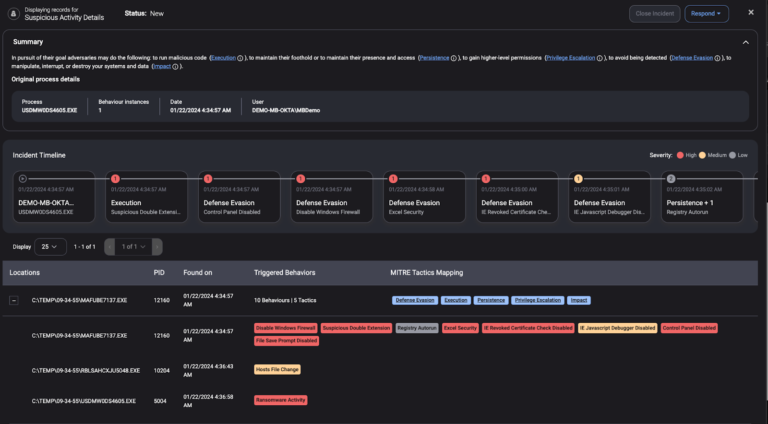
ThreatDown EDR’s enhancements include two key features: an incident summary that cuts through the jargon and an interactive timeline for a clearer understanding of each alert.
The incident summary translates the complex strategies and objectives of cyber threats in straightforward terms. For example, it may indicate the threat actor was “disabling security software” or “collecting credentials”— instead of using technical MITRE ATT&CK terminology that requires extra research.
With this new, high-level narrative, analysts and customers have a framework to understand what potentially sensitive behaviors triggered an alert without delving into specific process names or registry keys. It can help quickly differentiate suspected malicious incidents from false positives and focus resources appropriately.
The interactive timeline adds another layer of clarity, presenting a chronological sequence of events related to the alert, each marked with a timestamp and color-coded based on severity. Additional details, such as the processes involved and user accounts, are available with a simple click.
Users can also scroll through to spot patterns and grasp the incident’s narrative in a unified view, avoiding the complexity of connecting disparate alerts.
While technical details remain available below for more in-depth information, the new summary and timeline features can help users quickly kick off an investigation or close benign alerts.
The best of both worlds for ThreatDown users
By merging simplified language with user-friendly features, ThreatDown EDR’s latest updates reduce the time analysts and customers need to understand alerts—ultimately accelerating the detection and resolution of real threats.
In the version of Android, you’re able to assign lock screen shortcuts. Swiping on your shortcuts will allow you to quickly open an app right from the lock screen. Well, it appears that Android will allow you to assign a note-taking app shortcut to the lock screen. Also, it appears that Google Keep may be an early option.
It seems pretty odd that Android is taking so long to flesh out its lock screen shortcuts. Back before One UI, Samsung’s TouchWiz allowed users to set multiple apps as shortcuts on the lock screen. The same thing goes for LG phones which allowed you to assign up to five apps to be assigned as shortcuts.
Now, at least on stock Android, it seems that Google is slowly introducing the ability to assign lock screen shortcuts. It’s just very odd to see.
Google’s working on a note-taking app shortcut for the lock screen
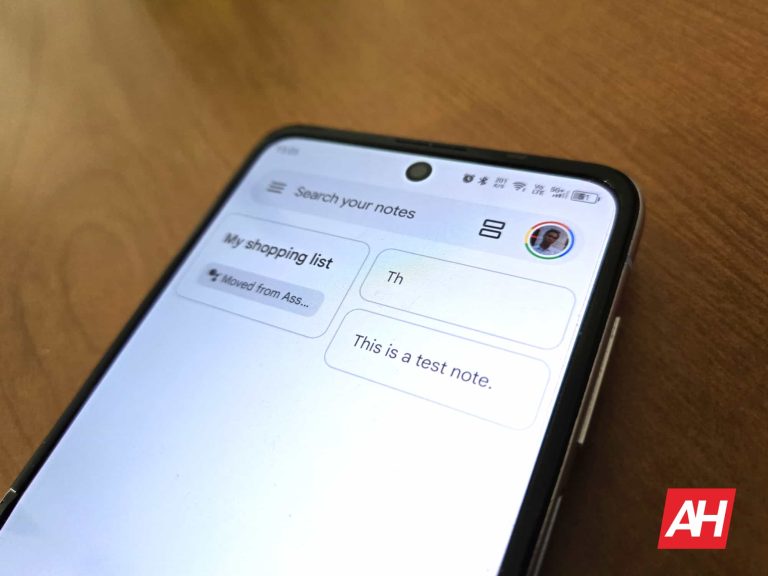
This functionality was hinted at back in December. 9To5Google reported that Google wanted to allow apps to be designated as the system note-taking app. This will be a default function, and allow users to automatically open a new note from the designated app by simply swiping on the lock screen. The beauty of this is that when you swipe on the shortcut, it will automatically open a new note rather than just opening the app itself. So, you’ll be able to get typing quicker.
In version 5.23 of Google Keep, people were able to enable a lock screen feature via the developer options. However, in the latest version of the app, version 5.24.042.07.90, users don’t see the same option. When trying to enable the lock screen function, users are met with a screen telling them that the feature is coming soon.
How this feature will work
According to reports, when selecting a new shortcut for the lock screen, you’ll have the option to designate a system note-taking app. When you choose Google Keep, and you swipe on the lock screen shortcut, you’ll see the new note pop up in a floating window. Then, you’ll be able to start typing your note right away.
In Google Keep version 5.23, we saw some of the settings for this feature. One setting will allow the system to retain the last note you’ve written for a certain amount of time. So, if you use the shortcut within that amount of time, you will see the last note that you’ve written. This is a quick way for you to access that note without having to go through the app itself.
Hopefully, more developers will come on board with this feature and format their apps so that they can start a new note when the shortcut is swiped. Google Keep is a great note-taking platform, but it’s not the only one. There are other great note-taking apps like Bundled Notes.
Samsung is gearing up to launch its first smart ring later this year. The Galaxy Ring might debut alongside the new foldables in July. The company reportedly plans to release it in eight different sizes. It wants to make early inroads into this new category of smart wearables, a market projected to grow exponentially over the next few years. Apple is also working on similar products.
Samsung’s Galaxy Ring may be available in eight sizes
After countless leaks and rumors, Samsung officially announced the Galaxy Ring during the Galaxy S24 launch last month. However, it didn’t reveal many details. The company showed its design and said the device was on the way. A Samsung executive subsequently confirmed that the first-gen smart ring would go official in the second half of 2024 but shed no light on its specs, release date, and pricing.
In the meantime, a tech analyst revealed that the Galaxy Ring will come in three colors and many sizes (up to size 13). It will also be extremely lightweight, though the weight might vary depending on the size. Korean news outlet ET News now reports that Samsung will release the smart ring in eight sizes. If both reports are accurate, we might be looking at sizes from 6 to 13.
The publication further states that the Galaxy Ring has entered the prototype production stage. Samsung will begin full-scale mass production of the device in the second quarter. The company plans to launch it “at an Unpacked event in the second half of July.” That is when the Korean firm is expected to host the second Unpacked of the year for the Galaxy Z Fold 6 and Galaxy Z Flip 6.
Samsung is projecting the Galaxy Ring as a comprehensive fitness tracker and health monitoring solution for people who don’t like wearing a smartwatch all the time, like during bedtime. “We decided to launch the ring because we believe it is essential to complete digital health in a form factor that can be conveniently worn for a long time,” its chief of mobile business TM Roh said last month.
Apple is also working on a smart ring
Smart rings have been around for a few years now. Oura debuted its first-gen model in 2016. However, the market has yet to pick up traction, likely because no big player has entered the scene. The arrival of Samsung’s Galaxy Ring later this year might give the smart ring industry a much-needed push. Along with health features, these devices can serve as remote controllers for other connected devices and offer contactless payment services via NFC.
Samsung may not be the only major tech firm interested in smart rings, though. Its arch-rival Apple also has a similar product in the pipeline. The iPhone maker has filed numerous patents related to smart ring technologies in recent years. Industry experts believe the company will launch its first-gen model in a few years. Google is also showing interest in smart rings. The market is projected to grow at a CAGR (compound annual growth rate) of 25.4% between 2022 and 2032.









%20and%20Alpha%20(right)%20(Source%20-%20Symantec).webp)
.webp)