Another day, another misconfigured database jeopardizes the online privacy and physical security of hundreds of thousands of children and families.
Cybersecurity researcher Jeremiah Fowler discovered a non-password-protected database containing over 200,000 records, including personally identifiable information (PII) of students and parents.
According to Fowler’s findings, detailed in a blog post for VPNMentor, there were over 210,020 records or 153.76 GB of data in the unprotected database. It was associated with the Online Voucher Application (OVAP) created by the Department of Education and the Private Education Assistance Committee.
Fowler uncovered a vast collection of sensitive records, including children’s and family members’ full names, DOBs, home addresses, phone numbers, tax records, as well as unredacted images of children.
The database also contained official documents such as tax filings, voucher applications, guardian/parent consent forms, financial assistance, employee certificates, local government certificates, and death certificates, which also hold personal data. For instance, tax records typically contain full names, addresses, phone numbers, employers, and tax identification numbers. A concerning aspect of the breach is that the application folders contained child profile photos.
A sample of what data was exposed (Credit: VPNmentor)
The National Privacy Commission (NPC) of the Philippines has since secured the database and is investigating the matter further. It is unclear who owns and manages the database, how long the records were exposed, or if anyone else may have gained access.
The Philippines’ Department of Education created the OVAP platform for eligible students seeking financial aid, allowing them to apply for vouchers for Senior High School education. However, the platform’s lack of password protection raises potential security concerns.
The full details of exposed data can be viewed here. However, the data leak has potentially exposed students and parents to a wide range of online threats. Students’ families submit tax filings and income declarations during application processes, which may expose sensitive financial information, potentially exposing them to financial fraud, phishing attempts, or identity theft.
Additionally, this could lead to monetary loss for students and their families. Additionally, PII, including children/minors’ data, can be compromised, posing a lifelong risk to their privacy and digital identities.
Governments and relevant departments must prioritize strong cybersecurity measures and protect the sensitive data of their citizens when creating such portals. Regular risk assessments and security audits are needed to secure public data and prevent unauthorized actors from accessing it.
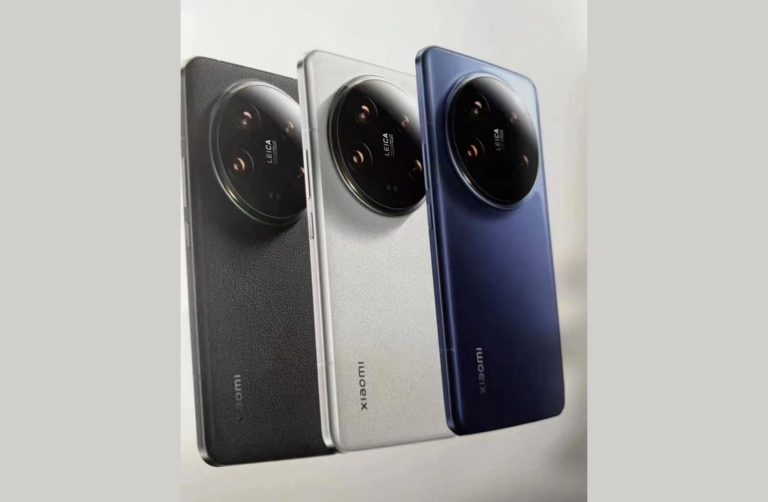
The Xiaomi 14 Ultra has surfaced a couple of times thus far, and we’ve seen only two colors of the phone, black and white. Well, a third color just appeared. A blue Xiaomi 14 Ultra surfaced online, confirming that we may get more choices.
The Xiaomi 14 Ultra will launch in a blue color too
The thing is, this color could be exclusive to China, unfortunately. If you check out the image below, in which the phone appears, it poses with the other two colors, and these are obviously Chinese promo materials. You can see some writing in Chinese above the three devices.
This would not be the first time that China gets more color options than the rest of the world. Xiaomi could yet surprise us and offer that color option to more markets. We do hope that will be the case, as not everyone likes black and white colors.
We do know that the Xiaomi 14 Ultra will launch in global markets, though. The phone will become official on February 22 in China, and it will launch globally on February 25. Xiaomi will announce the phone in Barcelona, during the Mobile World Congress (MWC).
The Xiaomi 14 Ultra will resemble its predecessor, and it will even have a very similar camera island. The back side will be more flat this time around, without the gradual increase in thickness towards the camera island.
That blue model will use different materials for its backplate
The company will use vegan leather on the back of both black and white models, while this blue model seems to have glass on the back. It could even have ceramic on the back, instead of glass, we’ll see.
This is actually another reason why Xiaomi should bring this model to global markets, to give users more choice in terms of backplate materials. Not everyone likes vegan leather, some people prefer glass, and vice versa.
The Snapdragon 8 Gen 3 will fuel the Xiaomi 14 Ultra. The phone will feature LPDDR5X RAM and UFS 4.0 flash storage, in addition to four 50-megapixel cameras on the back. The main camera will use the Sony LYT-900 sensor, and variable aperture too.
The dispute between Epic and Apple began when the game maker bypassed Apple’s in-app purchase system in Fortnite. The move prompted the tech giant to remove the game from the App Store. In response, Epic Games filed a lawsuit against Apple, accusing the company of anti-competitive behavior and monopolistic practices.
EU DMA rules bring back the Epic Games Store to iOS
After years of living behind closed gates, the EU’s Digital Markets Act (DMA) is finally forcing Apple to open up its ecosystem for third-party app stores in the continent. EU officials have even threatened Apple with “Strong Action” if it fails to meet the DMA regulations. Thanks to the DMA, Apple should allow app sideloading on iOS and let developers distribute their apps via third-party stores.
“I’ll be the first to acknowledge a good faith move by Apple amidst our cataclysmic antitrust battle, in granting Epic Games Sweden AB a developer account for operating Epic Games Store and Fortnite in Europe under the Digital Markets Act,” Epic’s CEO and founder Tim Sweeney said. Sweeney already described App Store changes as “Hot Garbage.”
The UK users will have to wait
Meanwhile, UK users should wait until the UK’s Digital Markets Bill passes Parliament. The bill could grant similar provisions to Epic Games and let it operate in the country. As a side note, the UK left the European Union in 2020. Therefore, DMA rules do not apply in the UK.
While this ruling is a positive step towards a more open App Store environment, the legal battle between Epic Games and Apple is far from over. Both companies are likely to continue their legal proceedings in other regions.
A very sketchy rumor surfaced recently, claiming that both OPPO and Vivo are giving up on foldable smartphones. That rumor was so far-fetched that we didn’t even cover it, as it seemed completely off-point from the get-go. It could have even been poorly translated. Well, it seems we were right, as OPPO decided to react. OPPO has just confirmed its utter dedication to foldables, just to appease its users.
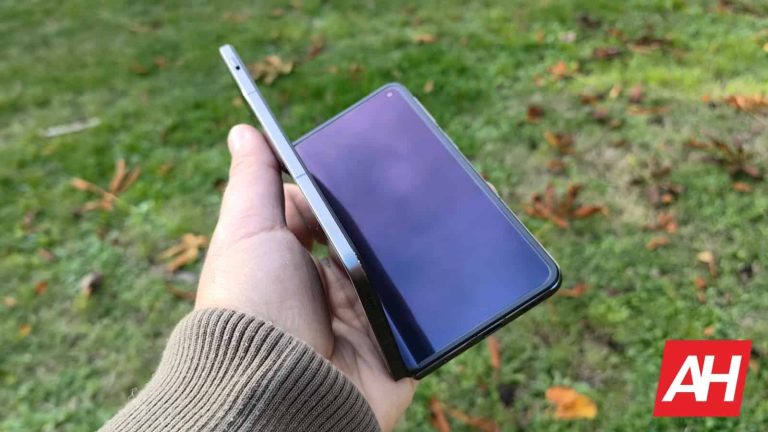
OPPO reacted to a recent rumor by confirming its utter dedication to foldables
The company said the following: “OPPO’s dedication to the continuous development of foldable smartphone technology remains unchanged. Please stay tuned for our official updates and announcements.”
This should not surprise anyone. True, the foldable smartphone sales have dropped in 2023, but that’s not something that would push OPPO to such a drastic move. The company not only poured a ton of cash into foldables, but it also made some of the best foldable smartphones over the years.
People are still very much interested in foldables, and they’ve gotten extremely good at this point. The OPPO Find N3, which is essentially the OnePlus Open with a different brand, is easily one of the best foldables to date. It was our best foldable smartphone for 2023, and it still is.
Just because the market changed a bit doesn’t really mean anything. Also, it seems like sales of clamshell foldables took more of a hit, book-style foldables are a different story, and that seems to be OPPO’s main focus either way.
OPPO launched a handful of compelling foldable phones in markets outside of China
OPPO did launch several foldables in global markets, unlike Vivo. Vivo is still focused on its home market when it comes to foldable phones. That could change this year, though, we’ll see.
Foldable smartphones have gotten extremely good, and also thin at the same time. The OPPO Find N3 / OnePlus Open and HONOR Magic V2 are both excellent examples. We have plenty to look forward to in 2024.
HONOR is expected to deliver the Magic V3, while the Google Pixel Fold 2 is also coming, and it is expected to be a considerable improvement over the first-gen model. The OPPO Find N4 is also on the way and more.
VMware has issued an urgent advisory to administrators to remove a deprecated authentication plugin vulnerable to severe security threats.
The Enhanced Authentication Plugin (EAP), which provided seamless login capabilities to vSphere’s management interfaces, is susceptible to authentication relay and session hijack attacks due to two unpatched security vulnerabilities.
DocumentLive Account Takeover Attack Simulation
Live attack simulation Webinar demonstrates various ways in which account takeover can happen and practices to protect your websites and APIs against ATO attacks.
Critical Vulnerabilities Identified
The two vulnerabilities, CVE-2024-22245 and CVE-2024-22250, pose significant risks to Windows domain environments.
CVE-2024-22245, with a CVSS score of 9.6, allows a malicious actor to relay Kerberos service tickets, potentially leading to the takeover of privileged EAP sessions.
CVE-2024-22250, scored at 7.8, enables an attacker with local access to hijack an EAP session initiated by a privileged domain user.
These vulnerabilities were discovered by Ceri Coburn from Pen Test Partners and reported to VMware, which has acknowledged the critical nature of these flaws.
A vulnerability known as the Arbitrary Authentication Relay is present in the VMware Enhanced Authentication Plug-in (EAP).
With a maximum CVSSv3 base score of 9.6, VMware has determined that the severity of this issue falls into the Critical severity range.
By installing EAP on a target domain user’s web browser, a malicious actor might fool them into requesting and transmitting service tickets for any Active Directory Service Principal Name (SPN).
The VMware Enhanced Authentication Plug-in (EAP) has a security hole that could allow unauthorized users to hijack sessions.
This vulnerability has a maximum CVSSv3 base score of 7.8, which VMware has classified as of critical severity.
A privileged domain user on the same machine can start a privileged EAP session, but an attacker with unprivileged local access to Windows can hijack it.
Impact on Users and Organizations
The deprecated EAP is not installed by default and is not part of VMware’s core products like vCenter Server, ESXi, or Cloud Foundation.
However, it may have been manually installed on Windows workstations used for administrative tasks.
These vulnerabilities in the EAP can put organizations at risk of unauthorized access and control over their virtualized environments, potentially leading to data breaches and system disruptions.
VMware’s Response and Recommendations
VMware has decided not to patch the EAP due to its deprecation and the associated security risks of bypassing modern web browser security features.
Instead, VMware recommends completely removing the EAP to secure systems against potential attacks.
The company has provided PowerShell commands to uninstall the plugin and the associated Windows service.
VMware suggests using other authentication methods such as Active Directory over LDAPS, Microsoft Active Directory Federation Services (ADFS), Okta, and Microsoft Entra ID24 as alternatives to the vulnerable plugin.
VMware’s advisory underscores the importance of maintaining up-to-date and secure authentication mechanisms.
Organizations using the EAP should take immediate action to remove the plugin and switch to supported authentication methods to protect their environments from potential exploitation.
Stay updated on Cybersecurity news, Whitepapers, and Infographics. Follow us on LinkedIn & Twitter.
The Nothing Phone (2a) design surfaced a couple of times thus far, but some of those leaks were proven to be inaccurate. Well, SmartPrix now partnered up with @OnLeaks to show us the final Nothing Phone (2a) design.
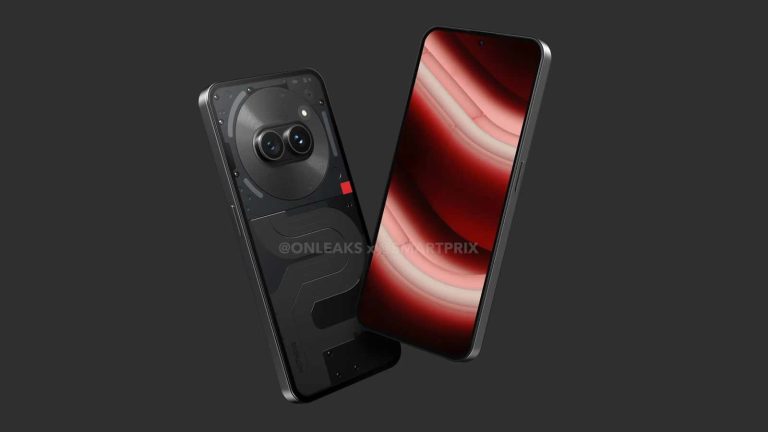
The final Nothing Phone (2a) design gets shown thanks to CAD-based renders
If you check out the gallery below the article, you’ll see the phone itself. Do note that these images are based on CAD-based renders. So the design should be spot on, but the color not so much.
The Nothing Phone (2a) will feature flat sides and will have rounded corners. Its front and back sides will also be flat, while a flat display will be used, along with a centered display camera hole.
On the back, you’ll see two horizontally-aligned cameras, and that see-through backplate that we’re used to. Based on these images, the Glyph light system will also be used, despite what some recent rumors have been saying.
It will look a bit different compared to the Nothing Phone (2)
This phone does more than enough to differentiate itself from the Nothing Phone (2), that’s for sure. Its backplate is quite different, while also obviously being somewhat similar, just so that it’s obvious the two phones are siblings.
The bezels around the phone’s display also seem to be quite thin. All the physical buttons sit on the right-hand side of the phone, while a Type-C USB port sits at the bottom.
A 50-megapixel main camera is expected on the back, and a 50-megapixel ultrawide unit too. Both camera sensors will be taken from Samsung, as they’ll be ISOCELL S5KG9 and JN1 sensors, respectively.
A large battery is expected, along with 45W wired charging
The phone is also said to offer 12GB of RAM, in at least one of its versions. An 8GB RAM model is also expected. A 5,000mAh battery is expected too, as is 45W wired charging. Android 14 will come pre-installed on the phone.
The Nothing Phone (2a) will measure around 162.2 x 76.5 x 8.7mm and weighs 188 grams. It will launch on March 5.
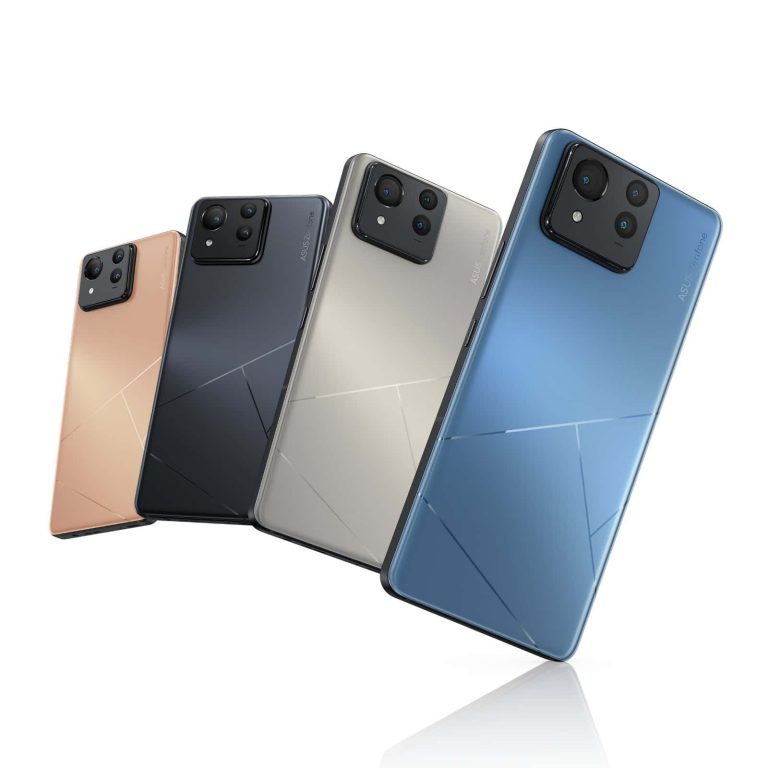
People excited about the next Asus Zenfone are definitely going to love the company’s latest announcement. ASUS just posted a teaser for this upcoming phone, and we got a good look at it. Also, the company announced when the launch date for the Zenfone 11 Ultra will be.
This Zenfone brand has been around since 2014, and the franchise hasn’t been performing as well as much as the competition. However, ASUS is coming out with the next iteration, and the name is a bit confusing. There is a Zenfone 11 Ultra coming out, but we’ve got no word on a regular version of the Zenfone 11. So, we’re just going to have to wait and see what other phones ASUS is planning on releasing.
Asus announced the launch date for the Zenfone 11 Ultra
We don’t know too much official information about this phone, but we’re pretty certain it’s going to have a lot of the best flagship phone specs of 2024. The company only gave us a teaser off the phone. We do know that it’s going to have some rather thin bezels, a very large screen, and some advanced camera features. The ASUS website also touted a long-lasting battery, but what company doesn’t say that?
As for the launch date, ASUS said that the Zenfone 11 Ultra will launch on March 14th. That’s only a few weeks away, so it’s pretty much around the corner.
What specs are we looking at?
As for the rumored specs, the Zenfone 11 Ultra is expected to have a 6.78-inch TLPO AMOLED display with a 144Hz refresh rate and a 1080p+ resolution. It’s expected to come with a Snapdragon 8 Gen 3 and launch with Android 14 out of the box.
As for the internals, the Zenfon 11 Ultra could have a version with 12GB of RAM and 256GB of storage along with a version with 16GB of RAM and 512GB of storage. Keeping the lights on, there could be a 5,500mAh battery with 65W charging.
As for the camera, we could be looking at a triple-camera setup with a 50-megapixel main camera, a 32-megapixel telephoto camera with 3x zoom, and a 13-megapixel ultrawide camera. Up front, we’re looking at a 32-megapixel selfie camera.
As always, these are leaked specs, so you should not take them as fact just yet. If the rumored specs are correct, then we are definitely looking at a powerful device. If you’re excited, mark your calendar for March 14th.
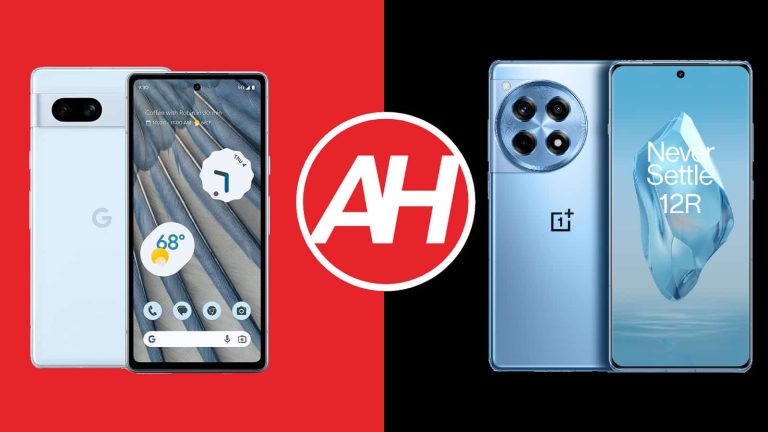
If you’re in the market for a budget smartphone, chances are you’ve been looking into at least one of the two phones we’re here to talk about. We’re here to compare the Google Pixel 7a vs OnePlus 12R. These two phones both fly under the $400 mark, and both are very appealing. They are very different, though, and that doesn’t go just for their designs, even though they do look fairly different too.
Their internals are different too, and even their sizes, very much so. The OnePlus 12R is a considerably larger smartphone, so that will likely play a role in your decision as well. We’ll first compare the specifications of the two phones, and will then move to compare their designs, displays, performance, battery life, cameras, and audio performance. Having said that, let’s get started.
As you can see, the two companies took very different approaches to designs here. Both phones are made out of aluminum and glass but do look fairly different. The Pixel 7a has a flat display and a centered display camera hole. Its bezels are rather thin, but the bottom bezel is visibly thicker than the rest. The OnePlus 12R, on the other hand, has a curved display, along with a centered display camera hole up top, while its bezels are even thinner than the Pixel 7a’s.
Both smartphones include their physical buttons on the right-hand side, but with different placement. On the Pixel 7a, the power/lock button sits above the volume up and down buttons. On the OnePlus 12R, things are the other way around, plus the OnePlus 12R has an alert slider on the left. If we flip them around, you will notice a camera visor on the Pixel 7a. That camera visor goes from the left side of the frame to the right, and it’s covered by metal. It hosts two cameras, and it does protrude on the back quite a bit.
The OnePlus 12R, on the other hand, has a round camera island on the back. That camera island is placed in the top-left corner, and there are three cameras included in it. It does not protrude as much as the Pixel 7a’s camera visor. The Pixel 7a is considerably shorter, and narrower, while it’s also slightly thicker. That’s not exactly surprising as the Pixel 7a has a much smaller display.
Google’s smartphone is also lighter than the OnePlus 12R, by almost 14 grams. The Pixel 7a offers an IP67 certification for water and dust resistance, while the OnePlus 12R comes with IP64 certification. Both smartphones are immensely slippery, so using a case with both of them is a good idea. They do feel entirely different in the hand, though, mainly due to their size difference.
Google Pixel 7a vs OnePlus 12R: Display
The Google Pixel 7a features a 6.1-inch fullHD+ (2400 x 1080) OLED display. That panel is flat, and it has a centered display camera hole. It has a 90Hz refresh rate and supports HDR content. The display aspect ratio here is 20:9, while the Gorilla Glass 3 protects the Pixel 7a’s display.
OnePlus 12R
The OnePlus 12R, on the other hand, includes a 6.78-inch 2780 x 1264 LTPO4 AMOLED panel. That display is curved, and it has a centered display camera hole. Its refresh rate goes up to 120Hz, but it’s adaptive. This panel can show up to 1 billion colors, and it supports HDR10+ content. Dolby Vision is also supported, while the theoretical max brightness of this display is 4,500 nits. The Gorilla Glass Victus 2 protects this panel.
When it comes to displays, the OnePlus 12R is a clear winner. That display not only looks more vivid, but it’s also sharper, and it has a higher refresh rate. On top of that, its refresh rate is adaptive, which is good for battery life, and the OnePlus 12R’s panel also gets noticeably brighter than the Pixel 7a. Google didn’t use a particularly great panel in the Pixel 7a, and even though it’s not bad, it cannot compete with the OnePlus 12R’s display.
Google Pixel 7a vs OnePlus 12R: Performance
The Google Tensor G2 fuels the Google Pixel 7a handset. That phone also packs in 8GB of LPDDR5 RAM and UFS 3.1 flash storage. The OnePlus 12R, on the flip side, is fueled by the Snapdragon 8 Gen 2 processor from Qualcomm. It is also equipped with up to 16GB of LPDDR5X RAM, and UFS 3.1 flash storage. In terms of sheer power, the OnePlus 12R is the winner here
The Snapdragon 8 Gen 2 is a considerably more powerful processor, while OnePlus also used faster RAM inside the phone. Still, the Tensor G2 works really well with the Pixel 7a. Both smartphones do a great job in day-to-day performance, though it’s worth saying that the OnePlus 12R is a bit snappier. You’ll especially notice that with heavy multitasking, app launches, and various more intensive tasks.
When it comes to gaming, for example, the OnePlus 12R is a much better choice. Not only does it have better performance-related hardware, but OnePlus also includes a proper vapor chamber inside the phone. It does not heat up as much as the Pixel 7a when you run graphically-intensive games, and it also offers better performance. The Tensor G2 is not exactly a gaming chip. Still, the vast majority of games will work just fine on the Pixel 7a too. Also, if you’re looking into either one of these phones, chances are you’re not planning to use them as gaming devices.
Google Pixel 7a vs OnePlus 12R: Battery
Google’s mid-ranger has a 4,385mAh battery on the inside, while the OnePlus 12R packs in a 5,500mAh unit. The OnePlus 12R does have a truly large battery, even for its size. The difference is this big, however, because the Pixel 7a has a much smaller display. Both of these phones offer good battery life, to be quite honest. We did expect the OnePlus 12R to do even better in tests, considering the size of this pack, but it did good enough.
Both of these phones were able to go up to 7 hours of screen-on-time for us, though depending on what we were doing, of course. The OnePlus 12R was consistent in that regard, while the Pixel 7a often flew below that 7-hour screen-on-time mark. Do note that gaming was not a part of our usage on those days, but everything else was, pretty much. Including plenty of picture-taking, multimedia consumption, emails, messaging, and so on. We did use both devices on Wi-Fi most of the time, though, so take that into account. Your mileage may, of course, vary.
Now, in terms of charging. The Google Pixel 7a supports 18W wired, and 7.5W wireless charging. The OnePlus 12R, on the other hand, supports 100W (80W in the US) wired charging. The OnePlus 12R can be charged fully in less than half an hour, while it takes the Pixel 7a a lot longer to get a full charge. Another thing to note is that the OnePlus 12R does come with a charger in the box, unlike the Pixel 7a.
Google Pixel 7a vs OnePlus 12R: Cameras
The Google Pixel 7a includes a 64-megapixel main camera, and a 13-megapixel ultrawide unit (120-degree FoV). The OnePlus 12R, on the other hand, has a 50-megapixel main camera, an 8-megapixel ultrawide unit, and a 2-megapixel macro camera. Let’s get that macro camera out of the way first. Chances are you won’t be using it at all. If the conditions are perfect, you can get a usable picture. In the vast majority of cases, however, it’s simply to small of a sensor and you won’t find that camera useful at all.
Google Pixel 7a
That leaves us with main and ultrawide cameras on both smartphones. Both of these phones offer good camera performance, just to be clear. For the vast majority of people, both will be more than good enough. The pictures are different, though. The Pixel 7a has that contrasty look that people who have used a Pixel are used to. It’s not trying to be particularly color-accurate, but to simply provide the best-looking photo possible. It does a great job in HDR conditions, does good in low light, and its ultrawide camera follows the color profile of the main camera really well. Google’s image processing is very good in combination with this hardware.
The OnePlus 12R does a good job too, in general. The images end up looking less processed than the ones from the Pixel 7a, but still very good. The colors are usually spot on, even though the camera is not as reliable across various different scenarios as the Pixel 7a. The ultrawide shooter is also not up to par when compared to the Pixel 7a’s. Still, the OnePlus 12R can often click a better photo than the Pixel 7a, depending on the scene. It’s not an easy choice between the two, to be quite honest.
Audio
You will find a set of stereo speakers on both of these smartphones. Those speakers do sound good on both sides, but the ones on the OnePlus 12R are a bit louder. Both sets of speakers are well-balanced, though.
Neither of these two smartphones has an audio jack, though. They do have Type-C ports, so you can use them to connect your headphones via a wire. If you prefer wireless connections, both phones offer Bluetooth 5.3.
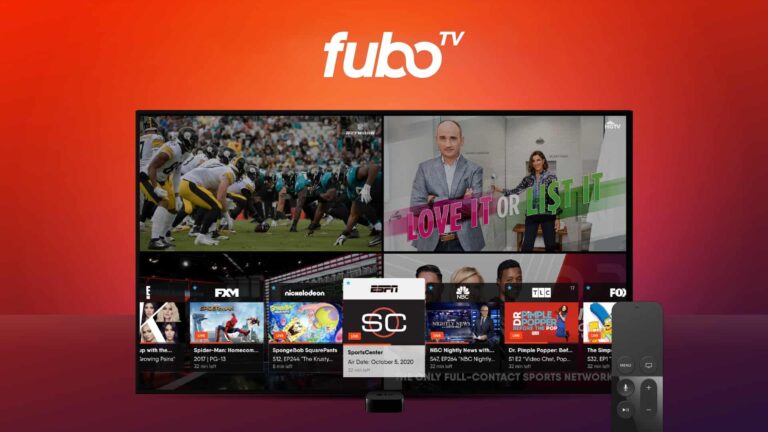
At the beginning of February, it was reported that Disney would be partnering up with Fox and Warner Bros Discovery to create a mega streaming service for sports, and FuboTV is now suing the three in attempts to either block the deal or get it amended.
A sports streaming service from three huge broadcast networks comprised of sports content from each of them is a pretty big deal. Provided it comes in at a reasonable monthly price point. And when you consider the amount of content that the service is expected to have, a reasonable monthly price would make this a very good service for huge sports fans. This could be a pretty good thing. Except, not everyone sees it that way. Especially FuboTV. On February 20 the streaming company announced it has filed a lawsuit against all three companies, citing antitrust practices.
The lawsuit claims that Disney, Fox, and Warner Bros. Discovery intentionally charged Fubo higher fees to license their sports content. The lawsuit states that Fubo was also required to pick up expensive bundles that “included non-sports channels.” All just so it would be allowed to license the sports content. These “anti-competitive practices” the lawsuit states, force customers to pay more for the sports they want to watch. In other words, Fubo is saying its customers didn’t want the non-sports content. But it was the only way to get the sports content offered. Causing “significant damages to both Fubo and its customers.”
FuboTV is suing Disney and others to block the deal or get better licensing terms
Taking on these three massive companies working together almost seems like a David and Goliath story. And that’s not just because the first name of FuboTV’s CEO is David. Disney is huge. Fox is huge. Warner Bros. Discovery is huge. These are multi-billion dollar companies and by comparison, FuboTV’s $585.61 million market cap makes it seem like a small fish. That’s not really an understatement either. FuboTV has to license the sports content from these networks. And that makes the trio of companies it’s suing a very formidable foe in the courtroom. A “Goliath,” if you will.
FuboTV CEO David Gandler isn’t deterred though, calling the three companies a “sports cartel” that has blocked its playbook for years and is now trying to steal it. So the lawsuit is FuboTV’s way of trying to get things on an even keel. While the lawsuit is seeking to block the deal from happening, there is an alternative outcome that FuboTV wants. Fair and equal treatment with regard to pricing. According to Gandler, Disney, Fox, and Warner Bros. Discovery charged FuboTV as much as between 30% and 50% more than other distributors of live sports content. It wants access to those lower rates.
FuboTV sees this as a particularly large issue as rumored pricing for the upcoming sports streaming service from the other three networks is likely to be around $50 a month, as reported by The Wall Street Journal (via The Verge). That would be a less expensive option than FuboTV for all of the same content that those three networks license out to Fubo. Which the company says would make it impossible for it and other distributors to compete.
The smart wearables market continues to grow as technology advances and consumers seek new ways to track their health and activities. While the smartwatch has been the dominant form factor for some time now, it seems that other areas are starting to gain traction – including the smart ring.
As Samsung prepares to launch its new Galaxy Ring later this year, sources (via Electronic Times) indicate that Apple is accelerating the development of its own smart ring device. The tech giant has been keeping a close eye on the wearable category. And it reportedly sees a ring as a viable option to complement its existing Apple Watch lineup.
Apple may soon enter the smart ring industry
Apple is said to have been exploring a smart ring concept for several years through numerous patent applications. Now, however, the market seems to be maturing. Just as Samsung is about to publicly unveil its take on the product. This could be an incentive for Apple to finally bring its vision of a finger-worn wearable to fruition in the near future.
If developed, Apple’s smart ring would likely focus on health tracking. Much like its competitors. It would monitor key biometrics such as heart rate, blood oxygen levels, and even body temperature directly from the finger. Sleep tracking would also be a priority since people often wear rings while sleeping. Convenience features such as contactless payments using NFC technology could allow users to tap to pay on the go.
Tight integration with iOS and other Apple devices would be expected, of course. Data collected by the ring would sync seamlessly with Apple Health. Also, a multi-day battery is critical for a wearable that is meant to stay on the finger at all times.
On the other hand, Samsung seems poised to establish itself as an early mover in the smart ring market with its Galaxy Ring. The device is said to include features such as blood flow monitoring and ECG readings. Sleep tracking and wireless device control/payment capabilities could be present too.
According to an earlier report, Samsung will begin mass production of the device in the second quarter. The company plans to unveil it “at an Unpacked event in the second half of July.” This is when Samsung is expected to host the second Unpacked of the year.
The report suggests that Apple is coordinating the timing of a potential Smart Ring launch to follow the consumer reception of Samsung’s unveiling. Waiting to “not be first” fits with Apple CEO Tim Cook’s strategy. Only time will tell if Apple makes its smart ring dreams a reality in the near future.