A popular Google One plan might be going away but don’t panic just yet

0

[ad_1]

Google One is by no means the search giant’s most popular or profitable product, but with over 100 million global subscribers as of just last week, the cloud storage service certainly deserves to make headlines… for good and for bad reasons.

The latest story is likely to enrage some users, at least if it proves to be as bad as it looks at first glance. If you’re not a paid Google One subscriber yet and want to become one, its official website currently gives you a choice between 100GB, 2TB, and 2TB AI Premium plans.
That’s all well and good, but while those options may feel like they cater to the needs of most prospective users (alongside the free 15GB tier), there was actually something in the middle there until recently that appears to have gone away.

We’re talking about the 200GB “Standard” plan, which used to cost $2.99 a month in the US compared to the $1.99 and $9.99 fees of the 100 gig “Basic” and 2TB “Premium” options respectively. Curiously enough, existing users who already pay for the Basic plan (as is the case for this writer, for instance) can still see the 200 gig option, at least when they’re logged into their accounts.

That seems to suggest the 200GB plan removal is either being done gradually or only partially. Of course, it would be rather bizarre for Google to retain this option exclusively for existing subscribers, so if we were to guess which of the two theories is more plausible, we’d definitely go with the former.

There’s also a possibility that this is merely a mistake we’re looking at and no Google One plan will be nixed after all, but that seems highly unlikely. 

Given its low monthly cost and relatively generous cloud storage allotment, the 200GB option always felt like a very solid value proposition and we’d certainly feel sorry if Google asked those on this plan to either upgrade or downgrade to a different service tier. For the time being, however, you shouldn’t panic and go there with your speculation (even though we literally just did exactly that), at least until you hear the official word from the company.

[ad_2]

Source link

Massive Cloud Database Leak Exposes 380 Records

0

[ad_1]

The researcher who discovered the database leak suspects it belongs to Zenlayer, an on-demand cloud server provider. However, uncertainty persists as the company has not provided any response or confirmation.

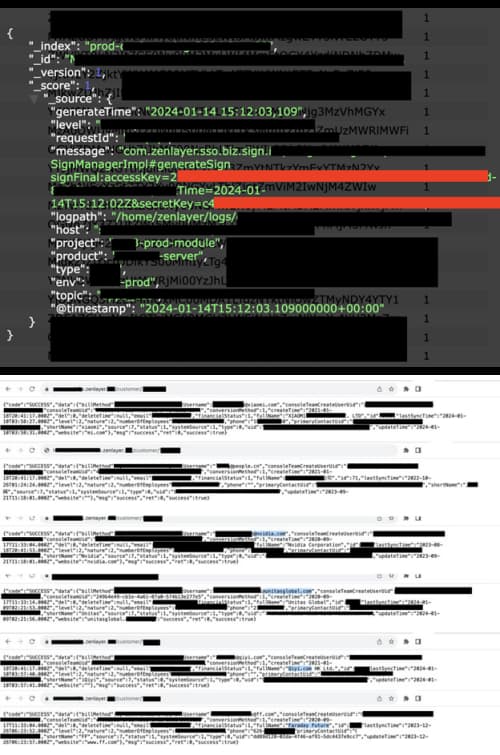
Jeremiah Fowler, a cybersecurity researcher, stumbled upon something quite alarming: a cloud database leak allegedly belonging to the global network service provider Zenlayer, left unprotected and misconfigured. What’s even more shocking is the sheer volume of sensitive data it contained: a staggering 380 million records.

384,658,212 records – 57.46 GB of Database

Upon further digging into the server, the analysis revealed a disturbing truth. The leaked information wasn’t just limited to mundane details; it encompassed the company’s internal workings and, even more concerning, customer data. In total, a jaw-dropping 384,658,212 records, totaling 57.46 GB, were laid bare for all to see.

What’s truly alarming is that this treasure trove of data wasn’t safeguarded by even a basic password. It was out there in the open, accessible to anyone, including those with malicious intent. Essentially, it was a “come and take it, no questions asked” scenario, leaving the door wide open for potential exploitation by threat actors.

Trove of Records Leaked

Within this database, numerous servers, error, and monitoring logs were found documenting both internal operations and customer activities. While these logs play a vital role in monitoring server performance, troubleshooting issues, and ensuring system security, they also carry a potential threat.

For your information, Zenlayer is a global network services provider offering SD-WAN, CDN, and cloud services to global brands in the telecom, gaming, media, entertainment, cloud computing, and blockchain sectors. Headquartered in Los Angeles and Shanghai, it has over 290 data centres across six continents. In 2021, Financial Times ranked it third on America’s Fastest Growing Telecom Companies list.

Exposing these logs to the public eye could disclose sensitive information. What was meant to be a tool for enhancing operational efficiency and safeguarding against potential threats could quickly turn into a liability if mishandled or accessed by unauthorized individuals.

The server also contained logging records for various applications, dashboards, vendors, notifications, and security. The exposed customer data, including names and emails of authorized individuals, could be used for targeted phishing attacks or fraudulent activities. For example, attackers may pose as a Zenlayer salesperson and ask for payment or banking information.

Additionally, the database exposure not only exposed sensitive information like user roles but also disclosed internal email addresses. This data could prove invaluable for cybercriminals, facilitating scams and social engineering attacks.

With access to these emails, malicious actors could carry out phishing campaigns targeting employees, potentially leading to the disclosure of confidential data, the installation of malware, and the compromise of credentials.

Massive Cloud Database Leak Exposes 380 Records

Russian Data

Fowler’s blog post on Website Planet reveals that part of the records was data of a Russian telecom carrier company, partially owned by a sanctioned state-controlled company, accused of involvement in internet traffic hijacking, or BGP (Border Gateway Protocol) hijacking, which allows attackers to intercept, inspect, or modify network traffic.

However, Fowler clarified that he wasn’t claiming that a Zenlayer customer was involved in the BGP hijacking.

Fowler also discovered logs containing VPN records and numerous IP addresses, including controller host IP, controller IP, IP LAN, jumper IP, and PXE IPMI. These IPs may reveal the organization’s internal network architecture, potentially allowing attackers to map the network, identify targets, or plan future cyberattacks.

Nevertheless, public access was secured the day after Fowler notified Zenlayer. It is unknown if the database was being managed by Zenlayer or a third party, how long it was exposed, and who else may have gained access.

Database Security, No Reply from Zenlayer

Fortunately, thanks to Fowler’s prompt responsible disclosure, the administrators managed to secure the exposed database within a day. Despite this swift action, the company failed to acknowledge or respond to the researcher’s efforts. Therefore, there remains uncertainty regarding whether the database was under Zenlayer’s direct management or handled by a third party.

  1. Cigna Health Data Leak: 17 Billion Records Exposed
  2. 7TB of Healthcare Data Leak Affects 12 Million Patients
  3. Researcher Exposes Crypto Scam Network of 300 Domains
  4. US Credit Union Service Leaks Millions of Records, Passwords
  5. Database Leak Exposes 500K Irish Police Vehicle Seizure Records
  6. Data Leak Exposes 1.5B Real Estate Records, Including Kylie Jenner



[ad_2]

Source link

Galaxy S24’s Instant Slow-mo feature will roll out to more devices

0

[ad_1]

Samsung will bring the Galaxy S24’s AI-powered Instant Slow-mo feature to a few older flagship devices. The company took to its official community forum in South Korea to reveal that the new feature will come to the Galaxy S23 series, Galaxy Z Fold 5, Galaxy Z Flip 5, and Galaxy Tab S9 series with a software update. It might be bundled with the One UI 6.1 update, which will also bring more AI features from the Galaxy S24 series.

Samsung will bring Galaxy S24’s Instant Slow-mo to more devices

Instant Slow-mo is one of the many new AI features Samsung introduced with the Galaxy S24 lineup last month. It lets you watch any recorded video in slow motion, no matter its original frame rate. All you need to do is tap and hold the screen while the video is playing in the gallery or the built-in video player. The device uses AI to generate intermediate motion between recorded frames to give you a smooth slow-motion video.

All of the processing and frame generations happen in real-time as long as you hold the screen. You can even edit the video to save a portion of it or the whole video in slow motion and share it on social media. It is a cool feature to have on your smartphone. During the Galaxy S24 launch, Samsung didn’t reveal whether Instant Slow-mo would come to older Galaxy phones. But we now have confirmation that it will, at least to a handful of models.

If you noticed, all of the aforementioned devices were launched in 2023 and are powered by Qualcomm’s Snapdragon 8 Gen 2 processor. Samsung isn’t bringing the feature to 2022 models because it needs a powerful GPU and NPU. The device must process 60fps videos within 16.6 milliseconds for smooth slow-motion playback in real-time. The moderator suggests the likes of the Galaxy S22 series and fourth-gen foldables can’t do that reliably.

Samsung is also working on improving the feature

Along with expanding support to older models, Samsung is working on improving Instant Slow-mo. An updated version of the feature will add support for 10-bit videos. You can currently only watch 8-bit videos in slow motion using this feature. It will also bring the resolution limit down to 480p from 720p (supported up to 8K). Lastly, the feature will work with .mov video file format along with .mp4 files.

Note that Instant Slow-mo doesn’t work with videos saved in the cloud because the resolution and quality of streaming videos may change automatically depending on network conditions. Web-only streaming files (.webm) are also not supported, though you can download and convert the video to .mp4 (soon .mov) format and watch it in slow motion. This also applies to cloud videos.

That said, you must ensure that the downloaded file meets the resolution criteria stated above. If a downloaded or shared video doesn’t have the resolution information, you cannot use Instant Slow-mo on it. If you are using a Galaxy S23, Galaxy Z Fold 5, Galaxy Z Flip 5, or Galaxy Tab S9, stay tuned for a new update that brings this cool new feature. One UI 6.1 will also be available to the likes of the Galaxy S22 and Galaxy S21.


[ad_2]

Source link

Big Money, Big Games! ESPN Pays $7.8 Billion for 12-Team College Football Playoff

0

[ad_1]

Since the College Football Playoff started, ESPN has had the exclusivity of all three games each year. With the CFP expanding from four teams to 12 in the 2024 season, the CFP and ESPN have a new agreement in place. Which sees ESPN remaining the exclusive home for the College Football Playoff, costing Disney $7.8 billion in total through the 2031-32 season.

One of the more interesting aspects of this deal is that ESPN has the option to sublicense games. This is really going to come into play with the new combined sports streaming service between ESPN, Fox, and Warner Bros Discovery that is set to launch this fall. This means Fox could end up hosting a game or two during the College Football Playoff.

ESPN already owns the rights to most of the bowl games during bowl season – those rights were not part of this new deal. The College Football Playoff is expanding this year, taking it from three Playoff games to eleven and giving ESPN a more extensive library of big games that it can broadcast or sublicense to its partners. This could ideally be huge for the new ESPN standalone streaming service that is set to launch next year. Considering this year’s national championship game had 25 million viewers, peaking at 28 million. It’s still a far cry from the Super Bowl, but being on a Monday Night, starting at 9 PM ET, that’s still quite impressive.

ESPN’s new standalone streamer could really benefit from this deal

Disney announced earlier this month during its earnings call that it is planning to re-launch ESPN Plus with a new standalone ESPN streaming service that would effectively give you linear ESPN but without the cable subscription. ESPN Plus has struggled over the years because it doesn’t have as many rights to major sporting events for this service since it doesn’t include linear ESPN.

However, with this new deal for the CFP games, ESPN could really use this as a way to bolster signups and users for its new standalone streaming service since the agreement does include the ability to do streaming-only playoff games. It’s unlikely that the semifinals or the championship game would be streaming only. But the NFL and Peacock have shown that a streaming-only playoff game can work.

Peacock had the exclusive broadcast of the Kansas City Chiefs vs. Miami Dolphins in the wild-card round, which ended up being the most live-streamed event ever in the US. It averaged around 23 million viewers during the game. That’s not far off from the amount of people who watched the CFP National Championship in January.

The only downside here is that the ESPN standalone streaming service isn’t set to launch until 2025. This means all 11 games this year will be on linear TV, most likely unless Disney decides to sublicense a game to the new ESPN/Fox/Warner Bros Discovery mega sports streamer, which is launching this fall.

[ad_2]

Source link

13 Flaws Discovered in Acrobat & Reader Allows Remote Code

0

[ad_1]

A critical security update for both Windows and macOS is available for Adobe Acrobat and Reader. 

Per Adobe, this update fixes serious vulnerabilities that could lead to arbitrary code execution, application denial-of-service, and memory leaks.

Document

Live Account Takeover Attack Simulation

Live attack simulation Webinar demonstrates various ways in which account takeover can happen and practices to protect your websites and APIs against ATO attacks.

Affected versions:

  • Acrobat DC – Continuous, versions 23.008.20470 and earlier
  • Acrobat Reader DC – Continuous, versions 23.008.20470 and earlier
  • Acrobat 2020 – Classic 2020, versions 20.005.30539 and earlier
  • Acrobat Reader 2020 – Classic 2020, versions 20.005.30539 and earlier

13 Security Flaws Adobe Acrobat & Reader:

High-Severity Vulnerabilities (Critical):

  • CVE-2024-20726, CVE-2024-20727, CVE-2024-20728, CVE-2024-20729, CVE-2024-20730, CVE-2024-20731

These vulnerabilities could allow attackers to execute arbitrary code on devices, potentially giving them complete control. Update immediately!

Moderate-Severity Vulnerabilities (Important):

  • CVE-2024-20733, CVE-2024-20734, CVE-2024-20735, CVE-2024-20736, CVE-2024-20747, CVE-2024-20748, CVE-2024-20749

These vulnerabilities could cause memory leaks or application crashes, potentially impacting performance or stability. While not as critical as the others, updating is still recommended.

Adobe urges users to update their Acrobat and Reader software to address critical vulnerabilities.

Adobe extends its sincere gratitude to Cisco Talos (ciscotalos), Trend Micro Zero Day Initiative, and Kai Lu (k3vinlusec) for reporting vulnerabilities and protecting Adobe users (CVE-2024-20728-20749).

[ad_2]

Source link

How ransomware changed in 2023

0

[ad_1]

In 2023, the CL0P ransomware gang broke the scalability barrier and shook the security world with a series of short, automated campaigns, hitting hundreds of unsuspecting targets simultaneously with attacks based on zero-day exploits. The gang’s novel approach challenged a bottleneck that makes it hard to scale ransomware attacks, and other gangs may try to replicate its approach in 2024.

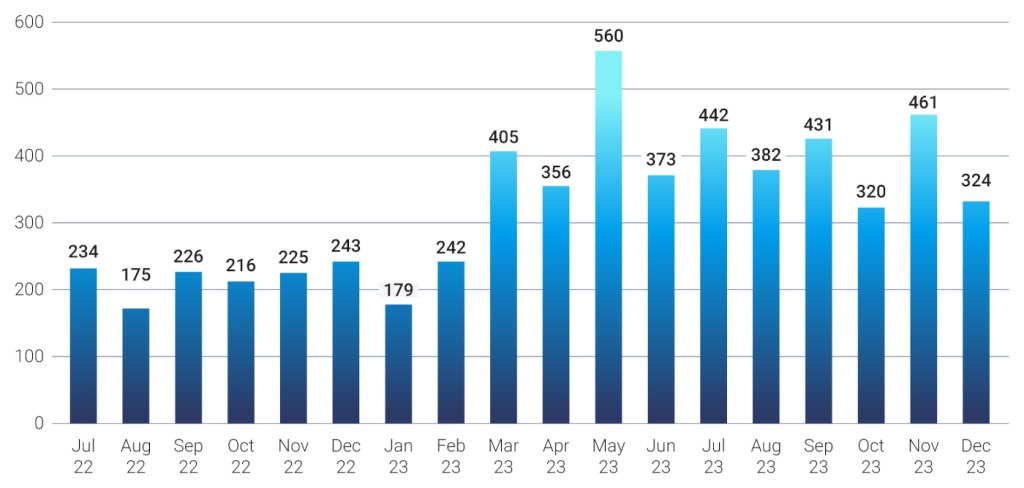
Big game ransomware attacks are devastating but relatively rare compared to other forms of cyberattack. There were about 4,500 known ransomware attacks in 2023, although the true figure is probably twice that. These attacks extorted more than $1 billion in ransoms in 2023, according to blockchain data platform Chainalysis.

The potential riches are enormous and there’s no other form of cybercrime that’s so lucrative, so why aren’t we seeing more attacks? It doesn’t seem to be a lack of targets, in fact the evidence suggests that the gangs are picky about who they attack. The most likely reason is that each attack takes a lot of work. Broadly speaking, an attack requires a team of people that: Breaks in to an internet-connected computer, researches the target to see if they’re worth the effort of an attack, explores their network, elevates their privileges until they’re an all-conquering administrator, steals and stores terabytes of data, attacks security software and backups, positions ransomware, runs it, and then conducts negotiations.

Doing all of this efficiently requires people, tools, infrastructure, expertise, and experience, and that seems to make it a difficult business model to scale up. The number of known ransomware attacks a year is increasing steadily, by tens of percentage points rather than exploding by thousands. This suggests that most of the people who are drawn to this life of crime are probably already doing it, and there isn’t a vast pool of untapped criminal talent waiting in the wings.

Known ransomware attacks, July 2022-December 2023

Before 2023, cybercrime’s best answer to this scalability problem was Ransomware-as-a-Service (RaaS), which splits the work between vendors that provide the malware and infrastructure, and affiliates that carry out the attacks.

CL0P found another way. It weaponised zero-day vulnerabilities in file transfer software, notably GoAnywhere MFT and MOVEit Transfer, and created automated attacks that plundered data from them. Hundreds of unsuspecting victims were attacked in a pair of short, sharp campaigns lasting a few days, leaving Cl0P as the third most active gang of the year, beating ransomware groups that were active in every month of 2023.

It remains to be seen if other gangs can or will follow CL0P’s lead. The repeated use of zero-days signaled a new level of sophistication for a ransomware gang and it may take a while for its rivals to catch up. However, the likes of LockBit—the most prolific group of them all—don’t want for resources so this is probably a matter of time and will, rather than a fundamental barrier.

There is also a question mark about how successful the attacks were. While automation allowed CL0P to increase its reach, it’s reported that a much lower percentage of victims paid a ransom than normal. However, ransomware incident response firm Coveware believes the group managed to compensate by demanding higher ransoms, earning the gang as much as $100 million.

Because of CL0P’s actions, the shape of ransomware in 2024 is in flux and organisations need to be ready. To learn more about how big game ransomware is evolving, the threat of zero-day ransomware, and how to protect against them, read our 2024 State of Malware report.

[ad_2]

Source link

The first Galaxy S24 software update is on the way!

0

[ad_1]

Galaxy S24 users! Your wait for the first software update is finally over. Well, almost. Samsung has announced that the highly anticipated update for the new flagships is ready and will roll out soon. “Updates will begin rolling out in February,” the company said in a press release without specifying a release date. It hasn’t shown up on any of our Galaxy S24 units so far but Samsung shouldn’t make us wait much longer.

Samsung is ready with the first software update for the Galaxy S24 series

Samsung usually rolls out the first update for its flagship phones within days of their market release—sometimes even before the sales begin. However, this hasn’t been the case with the Galaxy S24 series. The new flagships have been out for a few weeks now and are still awaiting their first update. That’s despite early buyers reporting several bugs and functional issues with the phones.

In Samsung’s defense, it might have delayed the update to fix all the issues at once. But that is still no excuse. Nonetheless, the first update for the Galaxy S24, Galaxy S24+, and Galaxy S24 Ultra is almost here. In its press release, the Korean firm revealed that the update will fix the lack of color saturation in the Vivid mode. It will add a slider to manually adjust the vividness of screen colors according to your preference.

Samsung Galaxy S24 first update screen vividness

The new update will also improve the camera performance of the new flagships. Samsung says it has improved the zoom functions, Portrait Mode, Nightography, rear camera video shooting capabilities, and more. The company doesn’t go into detail about the improvements, but you can expect better overall camera output once you install this update on your Galaxy S24.

Some of the camera issues we spotted over the past few weeks include the Night Mode occasionally failing to turn on automatically and a weird animation on the screen when the lens is switched as you zoom into a subject. Some Galaxy S24 users also noticed shutter lag and motion blur. Hopefully, Samsung has fixed all of these issues. We will know for sure once the update is here.

The update should roll out soon

As said earlier, Samsung didn’t make it clear when this update will start hitting Galaxy S24 units. It vaguely said that the rollout will begin in February—we still have 15 days left in this month. Hopefully, the company won’t delay the rollout until late February. We expect the rollout to begin soon. Watch out for a notification on your Galaxy S24. You can navigate to Settings > Software update > Download and install to check for updates manually.

[ad_2]

Source link

Gemini saves some conversations for up to 3 years!

0

[ad_1]

As most of us know, chatbots often retain your conversations in order to help train. Google Gemini is no different. The company has its privacy policy posted, and you’re able to see just how the company uses your data. According to the policy, Gemini keeps some of your conversation data saved for up to three years, depending on the circumstance.

To catch you up, Google recently renamed Bard into Gemini. So, Gemini is now the main generative AI product at the company. There’s an official Gemini app that you can download from the Play Store. The Gemini app gives you access to all the functionality you have on the website. Also, you can use it as your phone’s default voice assistant as a replacement for the Google Assistant.

If you want to get more from Gemini, you can subscribe to Gemini Advanced. You can get Gemini Advanced through the Google One AI Premium plan. It gives you access to a more advanced and smarter version of Gemini. It’s a version of Gemini powered by Gemini Ultra. The subscription plan costs $19.99/month.

Google Gemini holds onto some conversations for up to three years

If you ever want to know how companies are using your data, you should always dig into the privacy policy. This is where a company lays out everything that it doesn’t tell you in the press releases or the keynote speeches. Gemini has a pretty lengthy privacy policy, and it lays out what kind of information is retained compared to the information that’s deleted. You have the option to delete your conversations and set Gemini to not save your history. However, this comes with a big asterisk.

The company lays out that it chooses a subset of conversations to be reviewed by human reviewers. We’re not sure exactly how many conversations the company checks every day, and we’re not quite sure if this is all that random. However, Google warns people against putting personal data into conversations or putting any data in the conversation that they don’t want to be seen by human reviewers.

Along with that, the company also states that if your conversation has been reviewed by a human being, that conversation is going to be held on to Google servers for up to three years. So, imagine having a conversation with Gemini today and having it stay on Google servers until February 2027.

This is the kind of thing that people should be thinking about. Sure, it’s bad enough to have one person review that information, but multibillion-dollar companies also get hacked. So, if your information is on Google’s servers, and a company happens to be hacked, this puts your data at risk. This is why it’s extremely important to always keep an eye on what you enter into Gemini.

You can read the full privacy policy here.

[ad_2]

Source link

TikTok teams up with Adobe Express for new add-on integration

0

[ad_1]

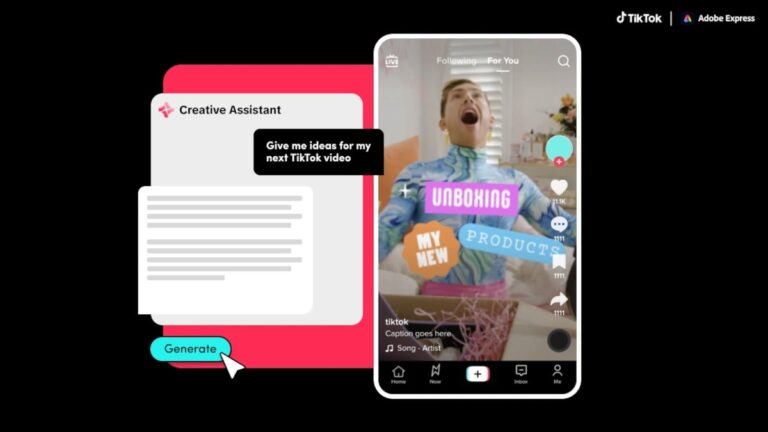
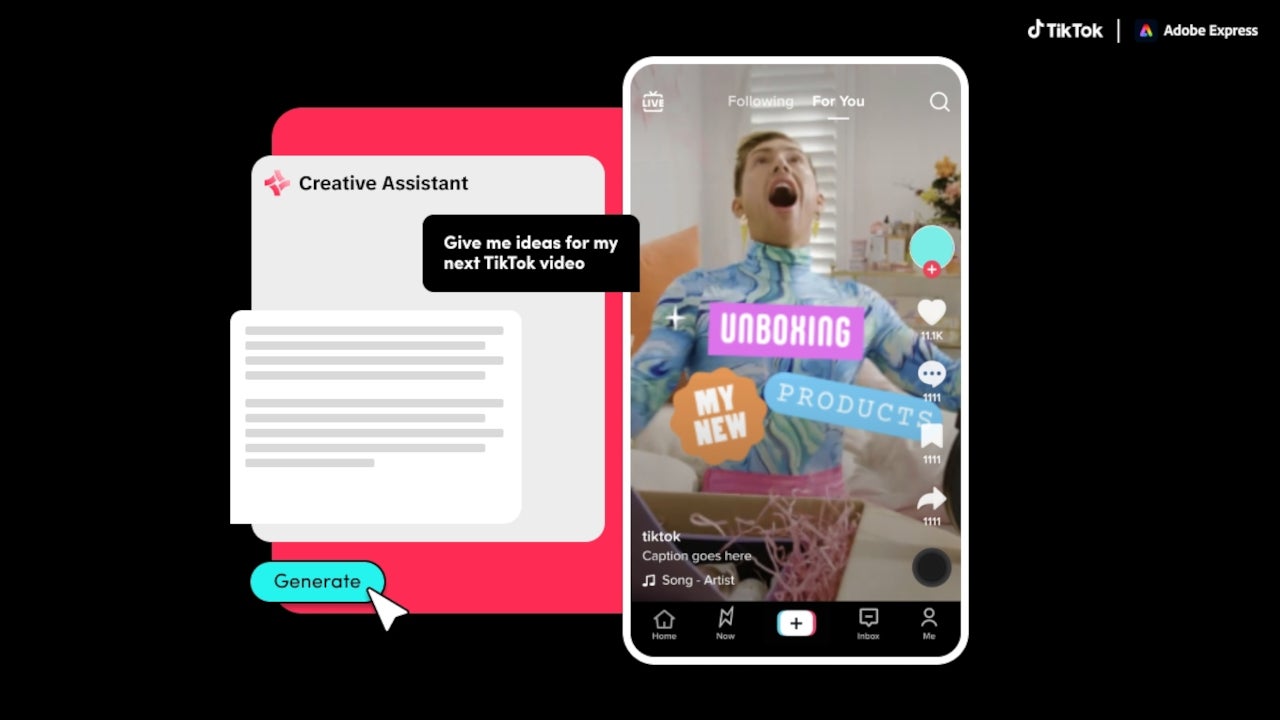
The first collaboration between TikTok and Adobe Express is bringing users of the social app a brand-new add-on integration, which is meant to create and optimize video content easier.

Previously only available in TikTok’s Creative Center, the so-called Creative Assistant is now available as an add-on within Adobe Express. As some of you probably know already, this is an AI-powered virtual assistant that helps users be creative when it comes to their video content.

The new integration with TikTok Creative Assistant allows businesses of all sizes to create TikTok content within Adobe Express. Here is how the new add-on integration works:

  • Log onto Adobe Express
  • Head to the add-on tab
  • Search “TikTok Creative Assistant”
  • Click add

Those who aren’t using Adobe Express but would like to try the Creative Assistant integration, can access the new add-on in Adobe Express for free via the desktop.According to the social company, the content provided by the AI-powered virtual assistant is generated automatically based on information submitted by the user. If you’re set on taking advantage of the Creative Assistant integration, keep in mind that TikTok makes no promises or guarantees regarding the content generated by the AI-powered tool.

It’s your choice if you decided to utilize and publish content created using the TikTok Creative Assistant in ads or other materials. Also, it’s important to mention that the TikTok Creative Assistant add-on for Adobe Express is available in English wherever TikTok is available for all free and Premium Adobe Express users.

[ad_2]

Source link

Malwarebytes crushes malware all the time

0

[ad_1]

About a month ago, The PC Security Channel (TPSC) ran a test to check out the detection capabilities of Malwarebytes. They tested Malwarebytes by executing a repository of 2015 “malicious” files to see how many Malwarebytes would detect.

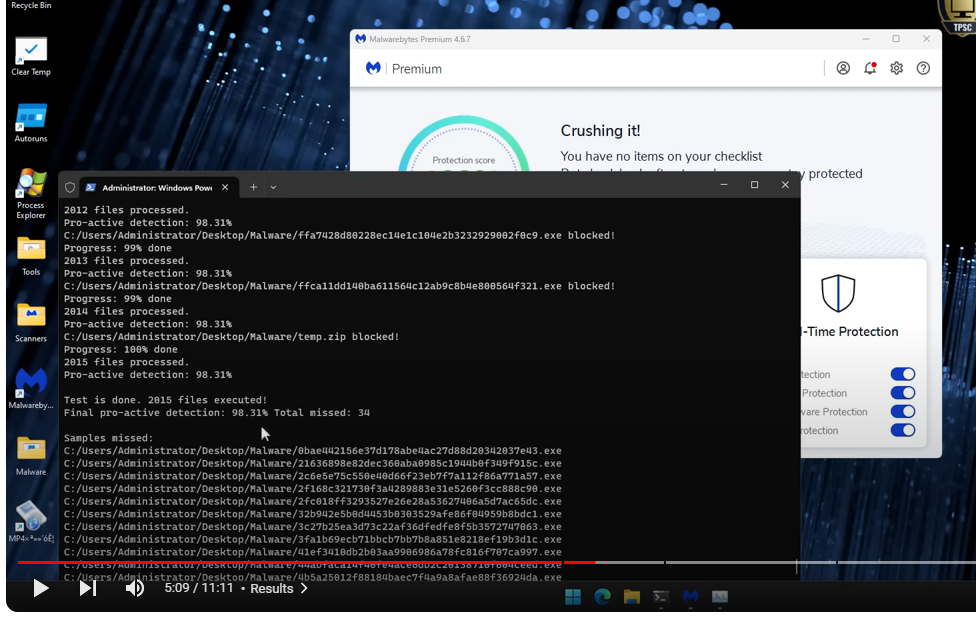
This YouTube video shows how a script executes the files and Malwarebytes blocks and immediately quarantines the majority of them.

A screenshot of Malwarebytes Premium crushing it

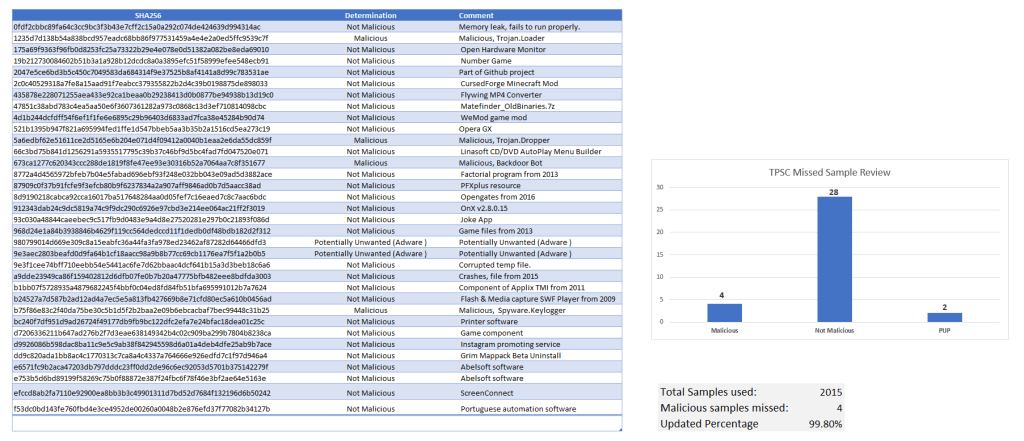
Malwarebytes missed 34 out of those 2015 files, giving us a score of 98.31%. Many vendors would have been proud of that, but being who we are, we wanted to do better. So we asked whether we could have a look at the files we missed, and TPSC was kind enough to offer us that chance.

Two of the missed files were identified as PUPs. PUP is short for Potentially Unwanted Programs. The emphasis here is on Potentially because they live in the grey area of what people might consider to be acceptable. Some PUPs simply don’t meet our detection criteria.

Anyway, back to the review of the malicious files we missed. As you can see in the sheet below (click to expand), after a full review we were left with four malicious files that we missed and the two PUP-related files.

After circling back to TPSC, they graciously agreed with our assessment of the non-malicious files. That brings Malwarebytes’ score up to 99.8 % which is a lot more like what we are used to score in such tests. The four malicious files have all been added to our detections.


We don’t just report on threats—we remove them

Cybersecurity risks should never spread beyond a headline. Keep threats off your devices by downloading Malwarebytes today.

[ad_2]

Source link