You want to sign into your favorite banking app or your tax management app. Then, you get a prompt asking for permission to use your fingerprint. However, do you really know if it is just that app using your fingerprint? Sometimes, it’s hard to know, but the latest Android 14 beta will show you which app needs access to your fingerprint.
In case you haven’t realized, Google just released the Android 14 QPR3 Beta 1 to Pixel devices. If you enrolled in the beta program, and you haven’t updated, you’ll want to install the update. People are still cracking into it and finding out what’s hidden within.
Android 14 will let you know which app needs access to your fingerprint
The sad fact of the matter is that you never really know which app is gaining access to your fingerprint. Sure, if you are logging into your Capital One credit card account, then you know that the Capital One app is getting access. However, bad actors have ways of doing things that they’re not supposed to and hijacking apps for their nefarious purposes.
You never know if a bad app is also getting access to your fingerprint or your facial data without you knowing. Malicious apps can slither around your operating system and gain access to things they shouldn’t.
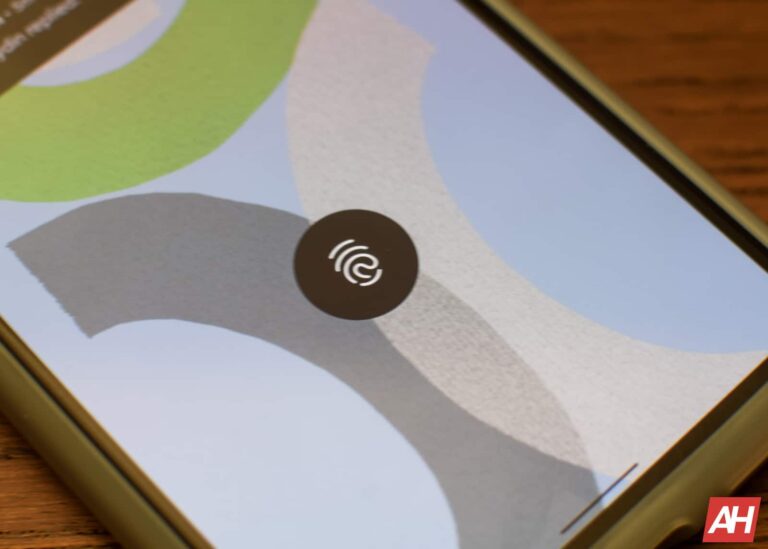
So, in the case that another app is getting access to your fingerprint or facial data, Android 14 has a solution. When an app asks for permission to access your fingerprint, you will see that app’s icon at the top of the fingerprint prompt. Ostensibly, if another app is gaining access to your facial or fingerprint data, that app’s icon will pop up.
So, if you see another app pop up, you will know to delete that app immediately. Also, if you see another app getting access to your biometric data, then you should also that app. It increases the chances Google will delist that app.
Lenovo is a world leader when it comes to laptops. It appears that a company has grown tired of the boring laptop form factor that we have now and has decided to mix things up. According to a new report, it appears that Lenovo is working on a transparent laptop. This device could be shown off during MWC later this month.
MWC sounds like a good idea we’re going to see s ton of top companies show off their products there. For example, Tecno is going to show off a rollable phone during the event.
While the source leaking this is reputable, you will still want to take this information with a grain of salt. Since we’re talking about a leak, there’s always the chance of it not being 100% true to life.
Lenovo could show off a transparent laptop at MWC
Move over Nothing, Lenovo also wants to bring a transparent device. However, there’s a completely different mentality here. From the looks of the leaked renders, it appears that the laptop’s display will be completely transparent. When it’s open, you will see right through the display. So, places in the picture where the pixel would be black will be completely transparent. Since it’s transparent, also expect a completely bezel-less experience.
Well, there technically is a bezel. The bezel is a massive chin bezel that, obviously, holds the very non-transparent electronic components. It’s an interesting-looking concept, and it would be interesting to see if Lenovo eventually released this product in the future.
As for the keyboard, it appears that there may not be a physical keyboard. Rather, it looks like this will be a dual-screen laptop. So, instead of there being a keyboard, you’ll see a secondary display with a digital keyboard. When the laptop is closed, you will see straight through the display to the digital keyboard.
Since this is a concept, we can’t really take some of the details to heart. For example, in one of the renders, it appears that this will have two USB-C ports. However, those might just be a formality.
There’s one potential issue
If this is indeed only a concept, then this could possibly be addressed. If transparent screens sound familiar to you, LG showed off an incredible-looking transparent television during CES this year. While the screen was transparent, it could be made non-transparent for the press of a button. A black sheet would rise from the bottom so that you can’t see through the screen. This will turn it into a regular television
However, there doesn’t seem to be anything in place to make this transparent Lenovo laptop non-transparent. Sure, the laptop will be nice to use in very dark environments or in places where privacy is not an issue. However, what if you want to take your laptop outside or in a coffee shop? The visibility will be a massive issue, and obviously, everyone will be able to see what is on your screen.
So, we’re going to have to see what Lenovo is going to do.
A serious security vulnerability affected the WordPress plugin Security Shield, which could allow arbitrary file inclusion. The developers patched the flaw with the latest plugin release, making it necessary for the users to update to the latest versions as soon as possible.
Shield Security Plugin Vulnerability Allowed File
According to the details shared in a post from the team Wordfence, a local file inclusion vulnerability riddled the WordPress plugin Shield Security.
Shield Security plugin offers a simple firewall for WordPress websites, preventing bot attacks, malware, and other related threats. The plugin presently boasts over 50,000 active installations, indicating the huge number of websites exposed to threats due to any security vulnerabilities affecting the plugin.
Specifically, the vulnerability affected the plugin’s render_action_template parameter that allowing an unauthenticated adversary to include malicious PHP files on the target server. Ultimately, an attacker could execute malicious PHP codes via those files.
This vulnerability, CVE-2023-6989, received a critical security rating with a CVSS score of 9.8. Wordfence confirmed that the issue typically affected PHP files only, ruling out the possibility of remote code execution attacks. However, they did confirm that an attacker had numerous options to include and execute malicious PHP files on the target server. In their post, the researchers also presented a detailed technical analysis of the exploit.
Wordfence acknowledged the researcher with alias hir0ot for responsible vulnerability disclosure via Wordfence’s bug bounty program. The firm also awarded the researcher a $938 bounty for these findings.
Following the bug report, the plugin developers patched the vulnerability with the Shield Security plugin version 18.5.10. Yet, the plugin’s official page mentions 19.0.6 as the latest release, indicating further updates since this security fix. Hence, all users running this plugin on their websites must ensure updating to the plugin 18.5.10 or later (preferably to the latest available version) to receive all necessary bug fixes.
Fortinet has classified both security vulnerabilities as critical. Concurrently, CISA has updated its Known Exploited Vulnerabilities (KEV) Catalog with pertinent details regarding the issue.
Network security vendor Fortinet has released security updates to address remote code execution vulnerabilities (CVE-2024-21762, CVE-2024-23313) in FortiOS. The vulnerabilities could be exploited by cyber threat actors to control affected systems. Fortinet noted that CVE-2024-21762 is potentially being exploited in the wild.
Following the advisory from Fortinet, the US Cybersecurity and Infrastructure Security Agency (CISA) updated its Known Exploited Vulnerabilities (KEV) Catalog on February 9, 2024, to add CVE-2024-21762. CISA confirmed that this vulnerability, affecting multiple versions, is being actively exploited in attacks,
As per Fortinet, CVE-2024-21762 (CVSS 9.6/10.0, rated Critical) is an out-of-bounds write vulnerability detected in SSL VPN. It allows remote unauthenticated actors to execute arbitrary code/commands through specially designed HTTP requests.
On the other hand, CVE-2024-23113 (CVSS 9.8/10.0, rated Critical) is a format string bug found in the FortiOS Forti/gate to FortiManager protocol and allows remote, unauthenticated actors to execute arbitrary code and commands. However, there is no evidence this vulnerability is being exploited in the wild.
The vulnerabilities affect versions 6.0, 6.2, 6.4, 7.0, 7.2, and 7.4. Fortinet has released patches for each affected version except for 6.0 for which users are advised to migrate to a newer version. It is worth noting that FortiOS 7.6 is not impacted.
The vendor stated that it balances customer security with a “culture of researcher collaboration and transparency” and regularly communicates with customers on security measures through their PSIRT Advisory process.
Still, the detection of ‘critical’ vulnerabilities in Fortinet OS has raised concerns among the cybersecurity community. CISA had earlier disclosed that a China-linked threat group Volt Typhoon has been exploiting vulnerabilities in network appliances from various vendors, including Fortinet, Citrix, Cisco, Ivanti, and NetGear.
“In fact, the U.S. authoring agencies have recently observed indications of Volt Typhoon actors maintaining access and footholds within some victim IT environments for at least five years,” the advisory read.
In one of the instances discovered by the Dutch agencies, the group likely obtained initial access by exploiting CVE-2022-42475 in an unpatched network perimeter FortiGate 300D firewall.
For insights into the latest Fortinet flaws and the rising concerns about vulnerabilities in network appliances, we reached out to Mayuresh Dani, Manager, Security Research, at Qualys Threat Research Unit who emphasised that Fortinet alerted its partners about the vulnerability before the public advisory. Considering this, the vulnerability might be easy to exploit, and a Proof of Concept (PoC) disclosure could happen soon.
“Fortinet sent out advanced notifications to its partners about this vulnerability before the advisory was made public. CVE-2024-21762 is already included in the CISA KEV list. The exploit code maturity is also ranked as HIGH in the vendor-supplied CVSS scoring,” noted Mayuresh.
“Given all these facts and the way Fortinet itself has characterized the vulnerability, it may be trivial to exploit this vulnerability and that a PoC disclosure is imminent,” Mayuresh warned. “Furthermore, no user interaction is required for exploitation and there is no mention of how this vulnerability was discovered – internally or via external reports.”
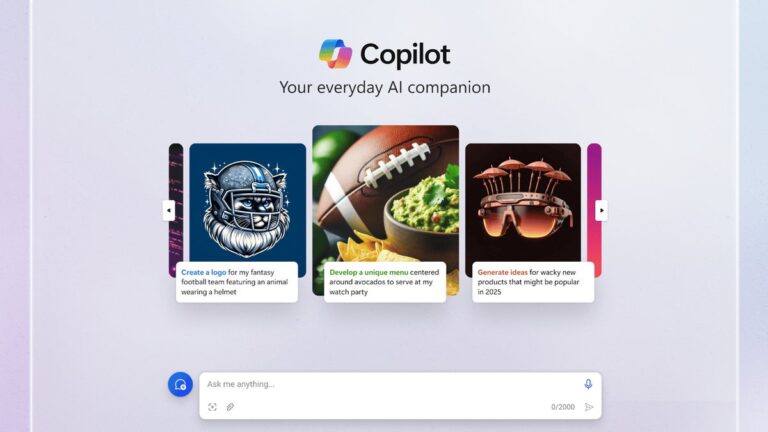
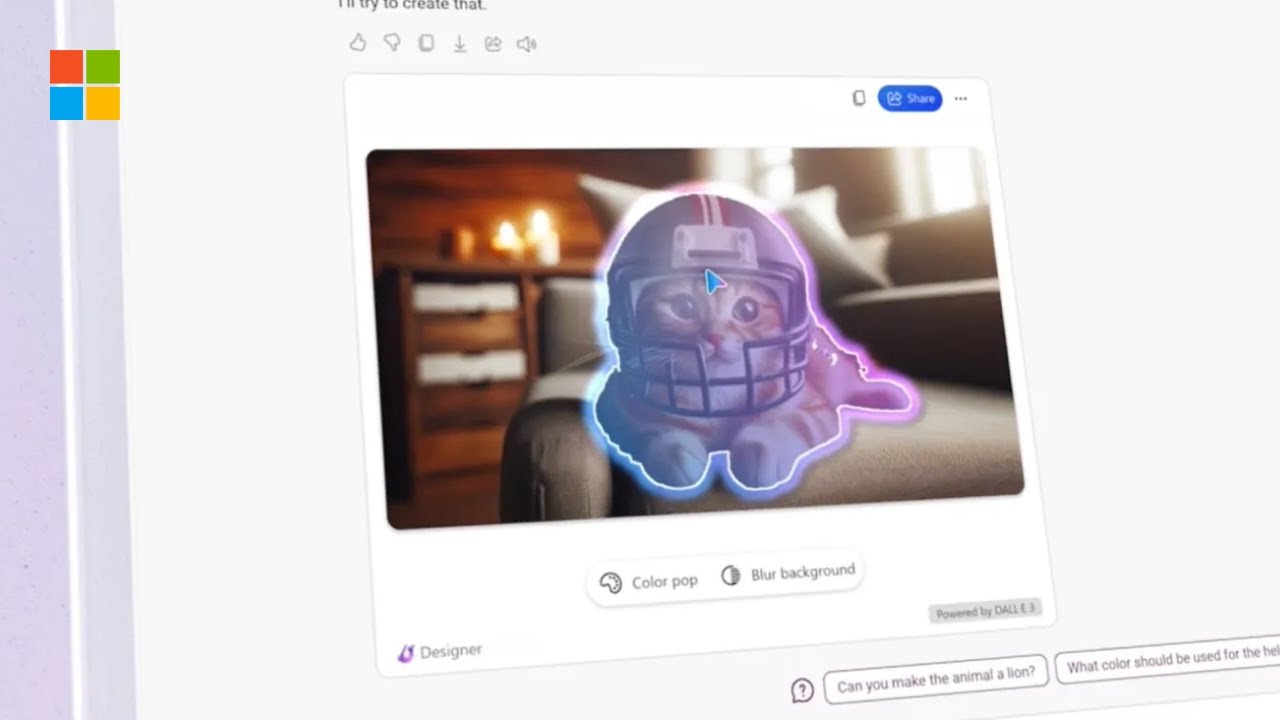
Formally introduced last month after being tested for about a year, Microsoft’s Copilot for Android and iOS devices has just received a major update that adds a new UI. Rolling out in waves, the update brings a more streamlined look and feel specifically designed to help users take advantage of Copilot’s AI-powered features.With more than 5 billion chats and 5 billion images created to date, Copilot is slowly becoming one of the biggest AI-powered tools available. The chatbot developed by Microsoft allows users to go beyond just creative images to now customize their generated images with inline editing right inside the app thanks to Designer.
Although some of the features offered by Copilot require a subscription, almost all of them have a free version that at least allows users to figure out if they’re worth paying for.
For example, Copilot Pro subscribers can also resize and regenerate images between square and landscape without leaving chat, in addition to customizing the images with Designer.
Finally, Microsoft announced that it will soon roll out the new Designer GPT inside Copilot, offering users a more immersive, dedicated canvas inside the chatbot.
Microsoft’s Copilot is available for free and works on Microsoft Edge, Chrome, Firefox and Safari. All the changes announced this week will be rolled out on iOS, Android, and the web.
Meta continues to make major changes to how its social apps work, mostly due to the EU cracking down on tech giants. The EU’s new legislation is trying to create a fairer and more competitive digital economy, and this can’t be achieved without strict rules.
Some of the changes that Meta plans to implement are related to a certain type of content that the social company aggressively recommended to its users because it produced huge engagement.
If you’re a fan of politics and take your share of political news from social apps on a daily basis, you’ll most likely be affected by Meta’s upcoming changes for Instagram and Threads.
Both apps will stop recommended political content to its users, Instagram’s Adam Mosseri confirmed over the weekend. According to him, Meta no longer wants “to proactively amplify political content from accounts that you don’t follow.”
This means that while you will still be able to see political content from the accounts you already follow, you will no longer be suggested political content from accounts that you don’t have among your following list.
Over the next few weeks, we will be improving how we avoid recommending content about politics on recommendation surfaces – like Explore, Reels, and Suggested Users – across both Instagram and Threads.
If political content is posted by an account that is not eligible to be recommended, that account’s content can still reach their followers in Feed and Stories, Mosseri explains.
Although Meta will stop recommending political content, users will still have the option to get this type of content if that’s what they really want. The changes will only apply to public accounts and only in places where Instagram and Threads recommend content.
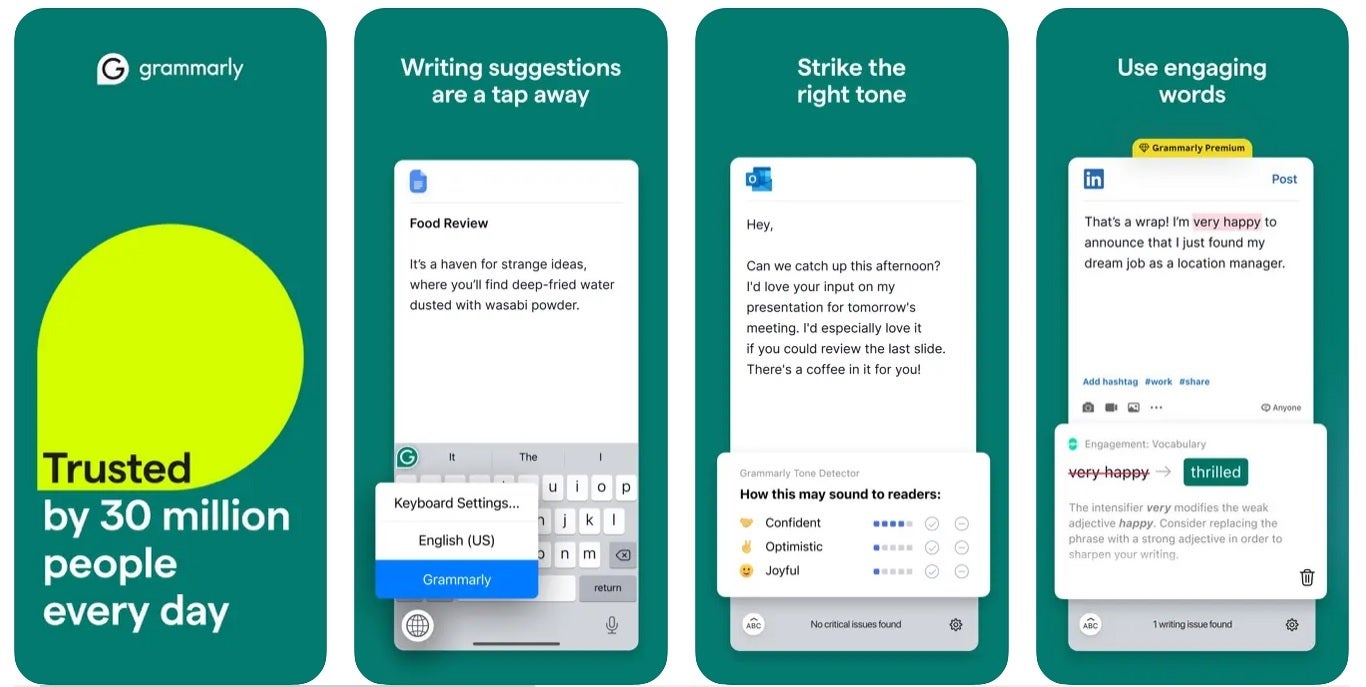
If you write for a living, or you’re a student, Grammarly is probably one of your best friends online. Grammarly will help you find and correct grammatical and spelling mistakes and the paid version of the app and website will give you real-time writing suggestions to improve your report. For $12 a month, the paid version of Grammarly will even alert you to accidental plagiarism.
With many analysts talking about a future where generative AI bots replace human writers, it makes sense for Grammarly to use AI to help subscribers improve their writing skills. This week, Grammarly announced that it is laying off 230 employees to focus on “the AI-enabled workplace of the future,” according to the company. Grammarly said, “This decision supports Grammarly’s vision of bringing responsible AI writing assistance to people and workplaces everywhere. Millions of people and thousands of businesses use Grammarly to achieve more through better writing.”
In a memo to employees shared in a blog post, Grammarly CEO Rahul Roy-Chowdhury wrote, “As we strengthen our focus toward driving the AI-enabled workplace and deepen our technical investments in AI, we will need a different mix of capabilities and skillsets. We also need to redesign our organization to improve the quality and speed of collaboration — and that means, among other things, restructuring roles and co-locating certain teams.”
The executive made it clear that the layoffs were not a cost-cutting measure and said that Grammarly’s financial position remains “strong.” Instead, reducing the headcount is being done to get Grammarly prepared for the coming AI future. Those leaving the company will receive a minimum of 3 months’ base pay. That increases for team members who have been with the company longer. U.S.-based team members leaving the company will have an option to continue receiving their health insurance benefits for up to six months.
Grammarly is squarely focused on a future with AI
Grammarly is also helping those leaving the firm find a new position by offering “stipends or access to services for individualized career coaching, resume review, and other transition services.” The company will also create an “available talent” list that the public will be able to see. The list will include names, specialties, and “key results” that future employees can view. And those leaving Grammarly can keep their company-issued laptop for personal use.
Looking ahead, it’s easy to see that Grammarly is hanging its hat on AI. CEO Roy-Chowdhury wrote, “We see massive opportunity as every individual and business begins to harness the power of AI. For nearly 15 years, we’ve been building a product that helps millions of people every day, makes teams measurably more productive, and is already used by employees in 96% of the Fortune 500. We’ll build on this foundation to bring even more value to our customers. AI will fundamentally change the workplace for the better—and Grammarly will play a leading role in driving that change.”
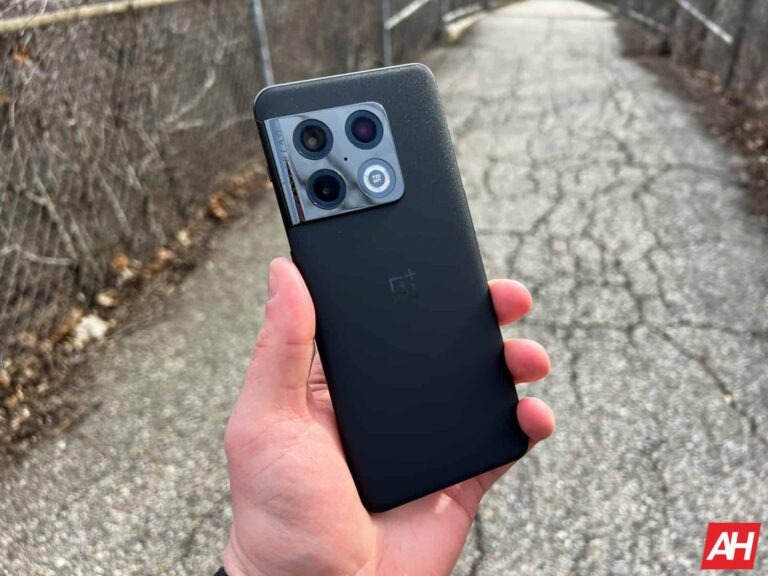
The OnePlus 10 Pro is no longer the latest and greatest smartphone from OnePlus. That title now belongs to the OnePlus 12.
The OnePlus 10 Pro initially launched in China on January 11, while the global launch followed on March 31. OnePlus opted to announce only one flagship this time around, the regular OnePlus 10 was not introduced, at all. There are some rumors that the OnePlus 10 Ultra is coming later this year, though. For now, however, OnePlus is putting all of its flagship hopes into the OnePlus 10 Pro.
The global variant of the device is quite similar to the Chinese one. It looks basically the same, while the internals are quite similar. One interesting change for North America is a decrease in charging speed compared to other markets. The global model also comes with global software, of course. In this article, we’ll try to provide you with a ton of information about the OnePlus 10 Pro, and hopefully give you enough information to decide whether you’d like to purchase it or not. Do note that we’ll focus on the US model here.
How much does the OnePlus 10 Pro cost?
The OnePlus 10 Pro surprisingly comes in only one RAM and storage option, in the US. You can only get an 8GB RAM model of the device with 128GB of storage. OnePlus, for some reason, decided not to offer the 12GB RAM model, nor offer more storage to its consumers in the States. The 12GB RAM variant with 256GB of storage will come at a later date.
In the UK, Europe, and India, you can get both 8GB RAM + 128GB storage and 12GB RAM + 256GB storage options. In Europe, the two variants cost €899 and €999, respectively. In the UK, you can get them for £799 and £899, while in India they cost INR66,999 and INR71,999.
If you’re planning to get the OnePlus 10 Pro in the foreseeable future, no, you probably shouldn’t OnePlus does tend to discount its flagship offerings after a while, but that doesn’t happen as soon as it does for some other brands. OnePlus does it after quite some time, so if you do need a phone in the near future, waiting a couple of months won’t do you much good. The good news is, however, that the OnePlus 10 Pro is more affordable than its predecessor, a $100 more affordable from the get-go. For comparison’s sake, the OnePlus 9 Pro now starts at $799, while it was originally priced at $999. So, getting the OnePlus 10 Pro probably isn’t a bad idea from the get-go, if you’re planning to get it either way.
What offers are available at launch?
OnePlus.com:
If you do opt to pre-order the OnePlus 10 Pro from OnePlus directly, you can get a free pair of earphones. In other words, you can get the OnePlus Buds Z2 if you get the device during the pre-order period. The pre-orders start today, and will basically last until the phone goes on sale on April 14. This offer is applicable for purchases via OnePlus.com.
BestBuy:
BestBuy also has a launch offer for you: Whether you decide to pre-order the phone, or get it once it launches on April 14, you can get a $100 gift card. You can, of course, spend it on whatever you want in BestBuy.
Amazon:
Those of you who prefer to get the device from Amazon, well, you’re in luck, as a pre-order offer is available here as well. Whether you pick the phone up during the pre-order period, or when it launches on April 14, you can get a free Amazon Echo Show 8 with it.
Where can I buy the OnePlus 10 Pro?
The OnePlus 10 Pro pre-orders start today, March 31. The phone will go on sale on April 14, in case you’re wondering. You can pre-order the device directly from OnePlus, at OnePlus.com, or get it from Amazon, BestBuy, or T-Mobile. That gives you plenty of purchasing options in the US, to say the least. The device may be available via other retailers in the States as well, but these are the options OnePlus officially mentioned at launch.
What carriers support the OnePlus 10 Pro?
The OnePlus 10 Pro is being sold by T-Mobile (in addition to other retailers and OnePlus itself), so you will be able to use T-Mobile’s 5G network, both low-band and mid-band. T-Mobile’s 5G network does best in the mid-band sector, so you’re good to go
When it comes to Verizon, well, the company is still working on getting the phone certified, that was the situation at launch. Verizon’s 5G should become compatible by the time the phone launches, or soon after that. You won’t be able to take advantage of 5G mmW, though, as the device doesn’t support it in the US. That won’t be a problem for many people, though.
If you’re set on buying the OnePlus 10 Pro and using its 5G capability, you may want to avoid AT&T. OnePlus doesn’t want to get the OnePlus 10 Pro certified with AT&T 5G, so you’re out of luck.
Which carriers will sell the OnePlus 10 Pro?
Only one carrier in the US will sell the OnePlus 10 Pro, at least from the get-go. As is usually the case, the carrier that will do it is T-Mobile. That was the case last year, and the same is the case this year.
What colors are available?
The OnePlus 10 Pro launched in two color options in the US, and other markets outside of China. Those two colors are Volcanic Black and Emerald Green. The device also arrived in the White color in China, but that variant didn’t launch globally, at least not for now. It’s possible OnePlus will add more color options later on, though. Do note that some retailers may not offer both color options.
What are the specs of the OnePlus 10 Pro?
Below are the specs for the OnePlus 10 Pro, and next to it, you’ll notice specs for the OnePlus 9 Pro, for comparison’s sake.
OnePlus 10 Pro
OnePlus 9 Pro
Display
6.7-inch QHD+ LTPO2 AMOLED 120Hz
6.7-inch FHD+ LTPO Fluid2 AMOLED 120Hz
Processor
Snapdragon 8 Gen 1
Snapdragon 888
RAM
8GB/12GB (8GB only in the US)
8GB/12GB
Storage
128GB/256GB/512GB (128GB only in the US)
128GB/256GB
Battery Capacity
5000mAh
4500mAh
Charging Speeds
80W (65W North America) fast wired charging 50W wireless charging Reverse wireless charging
65W fast wired charging 50W wireless charging Reverse wireless charging
The OnePlus 10 Pro comes with a brand-new design, and improved specs, of course. It does pack in some new features that are worth talking about, though. Some of these you’re probably familiar with, others, not so much. We’ll try to highlight some interesting ones here, that basically define the phone.
New cooling system
The OnePlus 10 Pro comes with a brand-new cooling system to boost its performance and keep its temperature at bay. OnePlus implemented a new 5-layer 3D Passive Cooling System here. The company says that this is “the most advanced cooling system ever in a OnePlus phone”.
Blazing fast charging
The OnePlus 9 Pro offered 65W wired, and 50W wireless charging. The same goes for the US OnePlus 10 Pro variant, but in Europe, for example, the device goes all the way up to 80W when it comes to wired charging. All those charging speeds are incredibly fast, and truth be said not many people will complain one way or the other. 65W SuperVOOC charging, for example, can get you from 1 to 100 percent in only 34 minutes, while 50W AirVOOC charging can do the same in 47 minutes. Not many people will care about the 65W to 80W difference, considering how fast this charging is.
Next-gen display
The OnePlus 9 Pro did arrive with an LTPO display which was able to refresh between 1Hz and 120Hz. Well, the OnePlus 10 Pro can do the same, but it can do it even faster. The device comes with an LTPO2 display, and it will consume less power than the panel on the OnePlus 9 Pro. It is still extremely bright, large, curved, and vibrant, while it also offers a great touch sampling rate.
HyperBoost Gaming Engine
The OnePlus 10 Pro also includes something called the ‘HyperBoost Gaming Engine’. That engine powers a number of gaming features on Android, as a result, you should get a better gaming experience. OnePlus specifically mentioned the General Performance Adapter (GPA) Frame Stabilizer and O-Sync. The GPA Frame Stabilizer should actually reduce frame rate fluctuation when you’re gaming. O-Sync increases the syncing speed between the OnePlus 10 Pro’s SoC and display.
Second-gen Hasselblad camera setup
OnePlus once again partnered up with Hasselblad. The OnePlus 9 series phones were the result of the first partnership, and the OnePlus 10 Pro is the second-gen product. Hasselblad’s color science is baked into the OnePlus 10 Pro, and the phone is capable of shooting in full 10-bit color. The device processes 64 times more color than smartphones that shoot in 8-bit color. It also captures photos using the DCI-P3 color gamut, and the phone’s ultrawide camera offers a 150-degree FoV. The phone also supports capture in 12-bit RAW on all three cameras and much more.
OxygenOS 12
Along with Android 12, OxygenOS 12 comes pre-installed on this device. We’ve already seen OxygenOS 12 in action on other phones, and all those goodies are now available on the OnePlus 10 Pro. There are a lot of features that OxygenOS 12 offers, but it shines in the customization department. You can even customize the dark mode on the OnePlus 10 Pro, if you don’t like the default shade. The Always On Display (AOD) is a part of the package as well, with plenty of options. OnePlus also updated its apps in OxygenOS 12, while this software also delivers all the major Android 12 features.
What cases are available?
OnePlus has announced three different cases for the OnePlus 10 Pro. All three cases are now available to purchase. Read more about them below.
Sandstone Bumper Case
The Sandstone Bumper Case is a well-known offering from OnePlus, and now it comes in a variant for the OnePlus 10 Pro. It’s supposed to mimic a sandpaper feeling, though a toned-down version of it, of course. This case is quite grippy, and really nice-feeling in the hand. This case costs $24 in the US.
The Karbon Bumper Case is also well-known to OnePlus users, as it has been in the family for generations. This case is also quite grippy, and it feels like rubbery plastic to the touch. This case costs $39 in the US.
The Quantum Photography Bumper Case is the newest addition to the OnePlus family. This is a silicone case with a really interesting-looking back cover. This case costs $29 in the US.
The HONOR Magic V is no longer the latest and greatest smartphone in the series. Its successor, the HONOR Magic V2 arrived, and it also launched globally, unlike the original Magic V.
The HONOR Magic V is HONOR’s very first foldable smartphone. This smartphone was rumored for quite some time, before HONOR officially announced it in January 2022. That being said, the first market this phone was launched in China. The phone will stay exclusive to China, unfortunately. Its successor, however, will arrive to global markets. That is something HONOR confirmed at IFA 2022.
That being said, in this article, we’ll try to provide you with some more information about the device. The HONOR Magic V is aiming its sights at the Samsung Galaxy Z Fold 3/4, obviously. It has a similar form factor, and it’s also quite powerful. The HONOR Magic V does have some things going for it, though, so read on if you’d like to know more.
Here’s everything you need to know about the HONOR Magic V.
How much does the HONOR Magic V cost?
In China, the only market it launched at thus far, the device comes in two variants. Both of those variants include 12GB of RAM but have different amounts of storage. The more affordable variant has 256GB of storage, while the more expensive one comes with 512GB of storage. The two models are priced at CNY9,999 and CNY10,999 in China, which converts to $1,569 and $1,726. As you can see, the device is not exactly cheap in its home country.
Should I wait for a price drop?
There is not really much to say here, as the device is available only in China. Chances are that we won’t see many discounts on this phone. HONOR would offer various deals in Europe, but sadly, this device won’t make its way to countries outside of China. It seemed like it would at first, but that won’t happen.
What trade-in offers are available at launch?
We don’t expect to see any trade-in offers. HONOR may surprise us, though.
Where can I buy the HONOR Magic V?
At the moment, it’s only available in China, and according to the latest information from the company, it will stay that way. Its successor is coming to global markets in Q1 2023, though.
What carriers will it support?
The HONOR Magic V would be an unlocked smartphone if it ever launched globally. That won’t happen, though. Its successor will be an unlocked phone, and it will launch in Europe, based on what we know now.
Which carriers will sell the HONOR Magic V?
The device is not coming to the US, so it won’t officially be sold by any carriers there. The same goes for carriers in Europe, of course, or any carriers outside of China. It remains to be seen what will happen with the next-gen model, though.
What colors are available?
The HONOR Magic V arrived in three color variants. HONOR announced it in Titanium Silver, Black, and Burnt Orange options. The first two variants offer an aluminum frame, and a glass back. The Burnt Orange model comes with an aluminum frame, and “eco-leather” on the back aka Vegan Leather. That makes the Burnt Orange model less slippery than the other two variants HONOR announced.
What are the specs of the HONOR Magic V?
A spec comparison with the Galaxy Z Fold 3 can be found below, while you can get more information on the HONOR Magic V specs by clicking here.
HONOR Magic V
Samsung Galaxy Z Fold 3
Display
Main: 7.9-inch 2272 x 1984 foldable OLED display (90Hz) Secondary: 6.45-inch (2560 x 1080) OLED display (120Hz)
Main: 7.6-inch fullHD+ (2208 x 1768) Dynamic AMOLED 2X Flex display (foldable, 120Hz) Secondary (Cover): 6.2-inch HD+ (2268 x 832) Super AMOLED display (flat, 120Hz)
Unfolded: 160.4 x 141.1 x 6.7mm Folded: 160.4 x 72.7 x 14.3mm
Unfolded: 158.2 x 128.1 x 6.4mm Folded: 158.2 x 67.1 x 16.0mm
Weight
288/293 grams
271 grams
Software
Android 12 with Magic UI 6
Android 11 with One UI 2.5 (upgradable to Android 12)
Price
Starts at $1,569 (China)
$1,799
What are the HONOR Magic V’s main advantages over the Galaxy Z Fold 3?
The HONOR Magic V comes with the so-called “gap-less” display when folded. In other words, much like the OPPO Find N, it doesn’t have gaps when folded. That’s not the case with the Galaxy Z Fold 3. Due to the way the phone’s hinge is made, it folds into a slight letter ‘V’, which leaves a bit of a gap in between the two sides when folded. That doesn’t look aesthetically pleasing, plus it allows for dust and whatnot to pile on inside.
The Magic V also comes with thinner bezels than the Galaxy Z Fold 3. If you take a look at the image below, you’ll see exactly what we’re talking about. That image has been provided by Ice Universe, by the way. The Magic V does look like a more premium device from the outside, because of those differences in bezels.
It has a wider cover display than the Galaxy Z Fold 3
The last direct advantage comes in the form of the width of its outer display. Narrower is usually better in this day and age when it comes to phones, but Samsung may have pushed things a bit too far. The Z Fold 3 is 67.1mm wide when folded, while the Magic V is 72.7mm wide. That is not a huge difference, but it’s enough to make typing more comfortable on the Magic V. We’re basing that opinion on devices that are similar in width, of course. We found that typing on the Z Fold 3’s secondary display is not that pleasant, due to the fact how narrow the display is (25:9). You can get used to it, but it’ll never be as comfortable as typing on a slightly wider display.
What features does the HONOR Magic V offer?
The HONOR Magic V is a flagship-grade smartphone, and it’s also a foldable phone at that. In this section, we’ll talk about the phone’s strong suits, including its main features/selling points. Do note that we still don’t have a full picture, as we’re basing this on a Chinese model of the device.
Truly powerful specs
HONOR didn’t really spend any cost when it comes to including top-of-the-line hardware here. The company used metal, glass, and eco-leather to create this device. On the inside, it included only the most powerful specs. This handset includes the Snapdragon 8 Gen 1 SoC, Qualcomm’s most powerful processor to date.
In addition to that, LPDDR5 RAM is used, and UFS 3.1 flash storage. The company also included a 90Hz foldable display and a 120Hz regular display. Both of those displays offer really high resolutions 1984 x 2272 and 1080 x 2560, respectively. Android 12 is also included out of the box, and it will be on the global unit as well.
On top of all that, you’re getting extremely powerful camera hardware, with three 50-megapixel cameras, and really fast charging too. The HONOR Magic V includes a 4,750mAh battery and 66W fast wired charging. On top of that, reverse wired charging is also supported.
Foldable phone features
We didn’t really get to use the phone just yet, but HONOR did mention some foldable phones features are included. The main one that was mentioned is called ‘Multi-Windows’. As its name says, this feature enables you to open multiple windows on the display at the same time. So, when you unfold the HONOR Magic V, you can open your apps in windows, so that you have access to several of them at the same time. You can do some calculations while writing down the notes, and also message someone at the same time, without the need to switch between apps.
What’s best is that HONOR Magic V will actually automatically detect and recommend content for Multi-Windows based on your usage. It remains to be seen how well will this work, though, of course.
Privacy & Security
In addition to all the privacy features that Google included in Android 12, HONOR made sure to add some of its own. The HONOR Magic V comes with a dual-security system (HTEE+QTEEE), and it has an independent security chip on board. That chip will make sure to provide an extra level of security for passwords and biometrics, such as fingerprints. Yes, the device also supports facial scanning via its front-facing camera.
Advanced cooling system
The HONOR Magic V also comes with an advanced cooling system. It includes an “intelligent cooling system” which comprises of the latest third-gen graphene and an AI intelligent thermal management system. This cooling system is supposed to keep the phone performing its best at all times. Cooling phones with two displays is a bit different in comparison to regular smartphones, of course.
Which HONOR Magic V should I buy?
When it comes to the HONOR Magic V, you have not only a choice in terms of storage, but in terms of the build as well. The first thing that you need to decide is how much storage you need. Once you do that, you can get onto the color and material choices. Do note that it’s possible that the Burnt Orange model ends up being available with 512GB of storage only, once it arrives to Europe. It remains to be seen. In any case, you’ll probably want to opt for the Burnt Orange variant if you want more grip, if not, the other two variants will serve you just fine.
Cryptocurrency is not without benefits as a decentralized form of currency, but those same aspects make it a great target for scammers. In fact, according to a new report from Chainalysis, crypto-related ransomware payments reached record-high figures in 2023. It’s a significant downturn, as 2022 actually saw crypto ransomware payments drop notably from the previous year. However, the broader five-year trend of ransomware payments is sharply increasing. Last year, the total cost of crypto ransomware payments exceeded $1 billion for the first time. Hackers and scammers often target places like hospitals or critical infrastructure, where the decision to pay or not pay a ransom is a life-or-death situation.
The initial estimate for crypto-related ransomware payments in 2023 is around $1.1 billion. However, the real total is probably higher than that. When Chainalysis initially reported its 2022 estimates, its figure was $457 million in ransomware payments. The final total for 2022 was revised to report $567 million in crypto ransomware payments. For reference, the revised total for 2022 was about 24% higher than the initial estimate. If that trend holds for the 2023 numbers, the real amount of crypto ransomware payments could be near $1.5 billion.
In 2019, people paid $220 million in crypto-related ransomware payments. That number spiked to $905 million in 2020 and held steady at $983 in 2021. In a shocking turn, the amount of crypto ransomware payments decreased by nearly half in 2022. The final $567 million total ransomware payments, though still significant, was a positive shift. In 2023, the upward trend continues, completely canceling out the positive signs we saw in 2022. The overall trends show that ransomware using cryptocurrency is spiking, and it reached its highest point yet last year.
Chainalysis says that 2022’s figures may have been an anomaly caused by global conflicts, such as the war in Russia and Ukraine. The report speculates that hackers may have shifted from ransomware attacks to more politically motivated attacks. In modern warfare, cyberattacks have proven to be a common and devastating part of these conflicts.
The real cost of ransomware in 2023 exceeds the total payments
While this report focuses on the ransomware attacks that resulted in compliance, non-compliance has costs of its own. Often, these attacks shut down core business or infrastructure for a period of time, which can be costly. For example, the report notes a cyberattack targeting MGM resort properties cost the business over $100 million in damages. As such, it’s hard for people to avoid paying the ransom. If they don’t there could be serious financial or infrastructural consequences. It’s a double-edged sword. If people keep paying, the number will keep on rising.