Following a price increase, streaming platform Disney+ lost 1.3 million subscribers during its fiscal first quarter of 2024. On Wednesday, Disney+ made an announcement that it hopes will add more subscribers than it lost last quarter. On March 15th, Disney+ will exclusively host the streaming debut of Taylor Swift | The Eras Tour (Taylor’s Version). This film is the complete concert film, and includes the song “cardigan” along with four additional acoustic songs.
Taylor Swift | The Eras Tour, directed by Sam Wrench, is the top-selling concert film of all-time having grossed more than $260 million worldwide at the global box office. Disney CEO Bob Iger said about the announcement, “The Eras Tour has been a true phenomenon that has and continues to thrill fans around the world, and we are very excited to bring this electrifying concert to audiences wherever they are, exclusively through Disney+.”
The Taylor Swift Eras Tour movie debuts exclusively on Disney+ on March 15th
Disney+ subscriptions start at $7.99 per month and these subscribers can view content with ads. Disney+ Premium is $13.99 per month or $139.99 per year and subscribers can view content without ads and download content to view at a later time offline. Some bundle options are available involving Disney+, Hulu, and ESPN+.
You can install the Disney+ app on your iPhone by tapping this link. If you have an Android phone, you can download the Disney+ app by pressing on this link. While the number of subscribers to the platform dropped from 112.6 million to 111.3 million during the fiscal first quarter, Disney+ cut its losses in the company’s streaming unit by $300 million. Disney expects its streaming business to move into the black during the fiscal fourth quarter of this year. The company says that streaming will “ultimately be a key earnings growth driver for the company.”
Swift recently announced that her next album, “The Tortured Poets Department,” will be released on April 19th. This weekend, all eyes will be on the 34-year old pop star since she is planning to fly from Japan after the last of her four concerts at the Tokyo Dome and arrive in Las Vegas in time to catch her boyfriend, Kansas City Chief Tight End Travis Kelce, play in the Super Bowl against the San Francisco 49ers.
BitLocker is a computer program provided by Microsoft that users can use to encrypt their entire volumes, preventing unauthorized access in case of device theft.
Many organizations have been using this security feature to prevent data theft, stolen devices leading to intellectual property theft, and many other threats.
However, researchers have found a novel technique that costs less than $10, which defeats this BitLocker encryption feature. To do this, researchers used a Raspberry Pi Pico device that took less than a minute to provide access to the encrypted volumes of the device.
DocumentProtect Your Network From Data Breach
Prevent malware from infecting your network at the delivery stage by intercepting malicious files in transit from their source to the target device’s web browser..
Raspberry Pi Pico to CrackBitLocker
According to the researcher, a Lenovo laptop was used for demonstration alongside a Trusted Platform Module separated from the CPU. This is not a common scenario in real life.
However, once the BitLocker encrypted the device’s physical access was gained, breaking the encryption was relatively simple. The method involved sniffing out the BitLocker key from the TPM since the key is passed from the TPM to the CPU during operation.
In addition, the key passed from the TPM module is not encrypted, making it extremely simple to gain access to the encrypted volume. Microsoft already knew and had claimed that these kinds of attacks were possible and were carried out in several scenarios.
Microsoft’s BitLocker documentation states, “[BitLocker] Targeted attack with plenty of time; the attacker opens the case, solders, and uses sophisticated hardware or software.” To mitigate attacks, Microsoft suggests
Preboot authentication set to TPM with a PIN protector
Disable Standby power management and shut down or hibernate the device before it leaves the control of an authorized user.
Furthermore, a video demonstrating the methodology has been published, showcasing Raspberry Pi Pico’s capabilities and the vulnerability of BitLocker encryption.
Stay updated on Cybersecurity news, Whitepapers, and Infographics. Follow us on LinkedIn & Twitter.
OnePlus is a relatively young company compared to a number of other mobile tech giants in the market, but this China-based company managed to rise extremely fast thanks to releasing extremely compelling flagship-grade smartphones at affordable price tags. The company has been using the “Never Settle” motto from the start. It has managed to sell quite a few devices to date and establish itself as one of the best smartphone manufacturers in the market.
The company’s first smartphone, the OnePlus One made quite a splash in the tech community. OnePlus wasn’t exactly all that well-known back there, but all of that changed over the years. The company’s initial practice of invite-only purchases also changed. Such practice was in place due to low smartphone stock. If you’d like to take a trip down memory lane, read on. In this article we’ll take a look at OnePlus’ flagship smartphones one by one, starting with the OnePlus One. It is also worth noting that this article will be updated as new OnePlus flagship phones arrive.
OnePlus One
The OnePlus One is the company’s very first smartphone, and it was referred to as the “Flagship Killer” back when it launched, mainly due to its flagship-grade specs and qualities, and not a huge price tag. This smartphone was announced back in April 2014, and it was priced at $299 and $349 for 16GB and 64GB storage variants. The OnePlus One came with a Sandstone back, and it shipped with a commercial variant of CyanogenMod on it, CyanogenOS, which ran on top of Android 4.4.2 KitKat.
This smartphone features a 5.5-inch fullHD display, along with 3GB of RAM and 16GB / 64GB of storage. The phone is fueled by the Snapdragon 801 quad-core processor, while it sports a single 13-megapixel camera on the back. A 5-megapixel unit is included on the phone’s front side. A 3,100mAh battery is also a part of the package. The phone does sport a 3.5mm headphone jack, in case you were wondering.
OnePlus 2
The OnePlus 2arrived in July of 2015, while it was released in August that same year. That handset does resemble the OnePlus One to a degree, but it features a fingerprint scanner below its display. That fingerprint scanner is flanked by two capacitive keys, which are customizable. The phone still includes a single camera on the back, and the Sandstone material made a comeback here.
The OnePlus 2 shipped with Android 5.1 Lollipop and OnePlus’ OxygenOS skin on top of it. This happened because OnePlus and Cyanogen decided to terminate their cooperation. Luckily for OnePlus, OxygenOS ended up being a truly compelling skin for Android. It’s a close-to-stock one with a number of useful additions. The OnePlus 2 features a 5.5-inch fullHD display, 3GB / 4GB of RAM and 16GB / 64GB of storage. The phone is fueled by the Snapdragon 810 SoC, while it ships with a 3,300mAh battery.
OnePlus 3
The OnePlus 3 was the very first OnePlus-branded phone to sport a metal unibody build, and the phone was announced in June 2016. The device sports a single camera on the back, which does protrude a bit. A front-facing fingerprint scanner made a comeback here, along with capacitive buttons that flank it. The OnePlus 3 ships with Android 6.0.1 Marshmallow out of the box, with OnePlus’ custom UI.
The device retained a 5.5-inch fullHD display size from the OnePlus 2, but unlike the OnePlus 2, this phone came with an OLED panel, and Optic AMOLED display, to be exact, which made it the first OnePlus flagship to include an OLED panel. The OnePlus 3 also shipped with 6GB of RAM and 64GB of non-expandable storage. It features a 16-megapixel camera on the back and is fueled by the Snapdragon 820. A 3,000mAh battery is included in this package, as are two SIM card slots (2x nano SIM).
OnePlus 3T
The OnePlus 3T looked the same as the OnePlus 3, save for a new color variant that was available, and it was announced in November 2016. This was the first time OnePlus released a “T” variant of a smartphone. The OnePlus 3T did bring some improvements over the OnePlus 3, including a more powerful processor (the Snapdragon 821), a larger battery, and several other improvements.
Other than that, this phone is the same as the OnePlus 3 in the spec department as well. The phone features the same display, same RAM count, same software, same camera setups, and so on. The phone ended up being quite successful for OnePlus, though, so the company opted to continue releasing two flagship smartphones per year. These were usually iterative improvements over the main phone.
OnePlus 5
The OnePlus 5 was announced in June 2017, and it looks similar to its predecessor from the front, though the whole phone is somewhat different in terms of the design. The OnePlus 5 sports a front-facing fingerprint scanner with two capacitive navigation buttons on each side of that scanner. The device also ships with two horizontally aligned rear-facing cameras. This is the first OnePlus-branded handset to sport two rear-facing cameras.
The OnePlus 5 is made out of metal, and it features a 5.5-inch fullHD Optic AMOLED display. The device is fueled by the Snapdragon 835 64-bit octa-core processor, while it arrived in 6GB and 8GB RAM variants. Those two variants pack in 64GB and 128GB of storage, respectively. Android 7.1.1 Nougat comes pre-installed on the device, along with the company’s OxygenOS Android overlay.
OnePlus 5T
The OnePlus 5T was announced in November 2017, and it sported a similar design to the OnePlus 5, but it looked quite different on the front. The in-hand feel between these two phones was quite similar due to a similar shape and everything. The OnePlus 5T, on the other hand, offered considerably thinner bezels. Also, instead of a front-facing fingerprint scanner, it included a rear-facing fingerprint scanner. Other than the fingerprint scanner, the back side of this phone looked identical to the OnePlus 5.
The OnePlus 5T includes the very same processor that was utilized in the OnePlus 5, the Snapdragon 835, while the phone also comes in 6GB and 8GB RAM variants, with the same storage setups as the OnePlus 5. A 3,300mAh battery is included on the inside of this phone, while the device ships with Android 7.1.1 Nougat out of the box. The OnePlus 5T does include a 3.5mm headphone jack, just like its predecessors.
OnePlus 6
The OnePlus 6arrived in May 2018 with even thinner bezels than the OnePlus 5T, but unlike the OnePlus 5T, this phone includes a rather noticeable display notch. The OnePlus 6 is the first OnePlus flagship to be made out of metal and glass (the OnePlus X was not a flagship-grade phone), and it includes two vertically aligned cameras on its back. Those two cameras are centered, and right below them, a fingerprint scanner is located.
The OnePlus 6 features a 6.28-inch fullHD+ display, 6GB / 8GB of RAM, and 64GB / 128GB / 256GB of storage. The phone is fueled by the Snapdragon 845 64-bit octa-core processor, and a 3,300mAh battery is included on the inside. Android 8.1 Oreo comes pre-installed on this device, and the OnePlus 6 also sports a 3.5mm headphone jack, which remains unchanged compared to its predecessor.
OnePlus 6T
OnePlus 6T was announced in October 2018, only five months after the OnePlus 6, and it offers an extremely similar design to the OnePlus 6. The only two differences come in the form of a new display notch, and the design of the OnePlus 6T’s back. The OnePlus 6T includes a much smaller, teardrop notch on the front, while a fingerprint scanner is not located on the back of the device, like on the OnePlus 6, it is located underneath the phone’s display. The OnePlus 6T ships with an optical in-display fingerprint scanner.
Other than those differences, the design of this phone remains pretty much the same as on the OnePlus 6. The OnePlus 6T includes a larger 6.41-inch fullHD+ display, though, while it arrived in 6GB / 8GB / 12GB RAM variants, the 12GB RAM model is reserved for a special edition variant of the OnePlus 6T. The OnePlus 6T also arrived with a noticeably larger battery than the OnePlus 6, a 3,700mAh unit. The device ships with Android 9 Pie out of the box.
OnePlus 7 & 7 Pro
The OnePlus 7 series was announced in May 2019, the company introduced two smartphones, the OnePlus 7 and OnePlus 7 Pro. The OnePlus 7 Pro is the more premium of the two phones, even though the two devices do share some specifications. Both devices are made out of metal and glass, though their design is considerably different overall, as OnePlus opted for a different approach in these two cases.
The OnePlus 7 Pro features no bezels or display holes, unlike the OnePlus 7, which sports a waterdrop notch. The device features a pop-up selfie camera instead of the notch, and it also comes with a curved display. The OnePlus 7 Pro is the larger of the two phones, and it sports three cameras on the back, compared to the OnePlus 7’s two rear-facing units. Neither of the two phones offer a 3.5mm headphone jack, but they do offer stereo speakers.
Both devices are fueled by the Snapdragon 855 64-bit octa-core processor, and both ship with UFS 3.0 flash storage. Android 9 Pie comes pre-installed on both devices, along with OnePlus’ OxygenOS 9.5. The OnePlus 7 Pro’s display also offers higher resolution, a 90Hz refresh rate, and it is HDR10+ certified, not to mention that it offers faster charging. Neither of the two phones are IP certified, nor do they offer wireless charging.
OnePlus 7T & 7T Pro
The OnePlus 7T was announced in September 2019. The phone arrived as an upgraded variant of the OnePlus 7, and this may be the most notable change a T series phone brought to the table. The OnePlus 7T comes with an upgraded processor, display, charging, and cameras, compared to its predecessor. The OnePlus 7T is made out of metal and glass, and it features a waterdrop display notch, in addition to a camera oreo.
The device features a 6.55-inch fullHD+ Fluid AMOLED display with a 90Hz refresh rate. The Snapdragon 855 Plus fuels this handset, while a 3,800mAh battery is included on the inside. Warp Charge 30T is also a part of the package and is 23 percent faster than Warp Charge 30. The device includes 8GB of RAM and comes in 128GB and 256GB storage variants (UFS 3.0). 48, 12, and 16-megapixel cameras are placed on its back, while Android 10 comes out of the box.
OnePlus 8 & 8 Pro
The OnePlus 8 and 8 Pro were announced in April 2020. Needless to say, the OnePlus 8 Pro was the more premium of the two. Both devices were flagship-grade smartphones, though, and both were fueled by the Snapdragon 865 SoC, Qualcomm’s best processor at the time. The two devices also looked quite similar, but the OnePlus 8 Pro was larger and had a different-looking rear camera setup.
Unlike the OnePlus 7 Pro, the OnePlus 8 Pro did not have a pop-up selfie camera. OnePlus opted to include a display camera hole instead. That move removed moving parts inside the device, but it left the phone with a noticeable hole in the display. The OnePlus 8 Pro was also the very first OnePlus-branded smartphone to offer wireless charging and an official IP68 certification for water and dust resistance. Android 10 shipped out of the box on these two smartphones, along with OxygenOS 10.
OnePlus 8T
The OnePlus 8T was announced in October 2020. This time around, OnePlus opted to announce only one T series smartphone. A year before that, the OnePlus 7T and 7T Pro were launched. This is actually a good move by the company. Why? Well, for the most part, there was no need for two 7T variants. The OnePlus 8T was a half-cycle upgrade. It came with the same processor as the OnePlus 8 and 8 Pro.
This phone did come with a flat display, unlike its siblings. It also delivered faster charging than the two devices that came before it. The OnePlus 8T was the first smartphone from the company to offer 65W fast charging. Do note that we’re talking about wired charging here. The OnePlus 8T did not support wireless charging. The phone included four cameras on the back, with the same sensor that was included in the OnePlus 8.
OnePlus 9 & 9 Pro
The OnePlus 9 series was announced in March 2021. The company announced two flagship smartphones during that event, while also showing off its first-ever smartwatch. In addition to that, the OnePlus 9R was announced, but not for global markets. Having said that, the OnePlus 9 and 9 Pro arrived as the first smartphones to feature Hasselblad branding on them. OnePlus agreed on a 3-year partnership with a renowned camera company.
The OnePlus 9 has a flat display this time around, combined with a plastic frame, and glass back. The OnePlus 9 Pro is made out of metal and glass and has a curved display. The ‘Pro’ variant does come with a better display, a QHD+ LTPO panel, though the OnePlus 9 can compete. It also includes a better camera system, on paper. Both phones support 65W fast wired charging. The OnePlus 9 Pro offers 50W wireless charging, while the regular model launched with 15W wireless charging. The Snapdragon 888 was included to fuel both of these phones.
OnePlus 10 Pro
The OnePlus 10 Pro was announced in January 2022, in China. The global variant of this smartphone arrived at the end of March. It’s interesting that the ‘Pro’ model launched without the ‘vanilla’ variant of the device. It’s also interesting that OnePlus decided to launch it in China first, as that’s not what OnePlus users are used to. Regardless, the OnePlus 10 Pro arrived with truly powerful specs and changed design.
The phone’s rear camera module is an extension of the phone’s frame. Design-wise it does remind us of some phones from Samsung. The front side of the phone is very similar to the OnePlus 9 Pro. The OnePlus 10 Pro is fueled by the Snapdragon 8 Gen 1 SoC, and it includes either 8GB or 12GB of LPDDR5 RAM. OnePlus also included UFS 3.1 flash storage inside of this smartphone.
The Hasselblad partnership continued with this smartphone, while the phone includes four cameras overall, three of which are on the back. A large 6.7-inch LTPO2 AMOLED display was also included by the company, and the same goes for immensely fast charging. The OnePlus 10 Pro launched with a 5,000mAh battery, along with 80W (65W in the US) wired, 50W wireless, and 10W reverse wireless charging.
OnePlus 10T
The OnePlus 10T was announced in August 2022. After skipping 2021’s T series smartphone launch, OnePlus opted to launch on in 2022. This phone is technically a successor to the OnePlus 8T which arrived in 2020. The device does resemble the OnePlus 10 Pro quite a bit, though there are some design differences. This phone has a flat display, not a curved one, and its rear camera setup looks a bit different. On top of that, it has a different coating on its glass backplate.
The OnePlus 10T does not come with Hasselblad branding, unlike its OnePlus 10 Pro sibling, but it has some advantages over that phone. The OnePlus 10T offers faster charging, 150W one (125W in the US), and it’s fueled by the Snapdragon 8+ Gen 1 SoC. In every other way, though, it’s inferior to the OnePlus 10 Pro. It’s also considerably more affordable, though, so there’s that.
A 6.7-inch fullHD+ 120Hz flat Fluid AMOLED display is used here. The company included 8GB/16GB of RAM inside of this phone, which comes with 128GB and 256GB of internal storage. Wireless charging is not supported, but there are stereo speakers included here. Android 12 comes pre-installed on the OnePlus 10T, along with the company’s OxygenOS 12.1 skin.
OnePlus 11
The OnePlus 11 was originally launched in January 2023. The global model is set to follow on February 7, 2023. That being said, the device is somewhat similar to its predecessor in terms of design, but it comes with a redesigned rear camera island. It is fueled by the Snapdragon 8 Gen 2 SoC, and it launched in two color options. Those are essentially black and green models.
It’s the very first OnePlus smartphone to include LPDDR5X RAM and UFS 4.0 flash storage. Up to 16GB of RAM and up to 512GB of storage, depending on the model. It also has a 5,000mAh battery, with 100W wired charging support. The charger is included, but wireless charging is not supported at all. The phone also comes without IP certification for water and dust resistance, unlike its predecessor.
A large 6.7-inch curved LTPO 3.0 AMOLED display is included. That display can go between 1 and 120Hz when it comes to the refresh rate. OnePlus included three cameras on the back of this phone, and Hasselblad helped with color calibration. A 50-megapixel main camera is backed by a 48-megapixel ultrawide camera and a 32-megapixel telephoto camera. OnePlus included Android 13 out of the box, along with ColorOS 13 in China, and OxygenOS 13 in other markets.
OnePlus 12
The OnePlus 12 was announced in early December, originally. its global variant arrived in late January. The phone itself looks very similar to its predecessor, the OnePlus 11. It’s made out of metal and glass, and it’s a large phone, that’s for sure. Qualcomm’s Snapdragon 8 Gen 3 SoC fuels this handset, the best SoC OnePlus could get its hands on at the time.
Globally, the OnePlus 12 comes with up to 16GB of LPDDR5X RAM, though in China that number goes up to 24GB. When it comes to storage, you can get up to 512GB of UFS 4.0 flash storage globally, and up to 1TB in China. A large 5,400mAh battery is also a part of the package, and the phone supports 100W (80W in the US) wired charging. A charger is included in the retail box. 50W wireless charging is also supported, and 10W reverse wireless charging.
OnePlus also included a compelling triple camera setup on the back. A 50-megapixel main camera is backed by a 48-megapixel ultrawide unit and a 64-megapixel periscope telephoto camera. The device is also certified for water and dust resistance. It has a truly bright display and an in-display fingerprint scanner.
Samsung has managed to become one of the world’s most recognizable smartphone brands thanks to the number of smartphones the company has released to date. In spite of the wide variety of Samsung-branded smartphones on the market, the flagship “Galaxy S” lineup remains the most popular and the most well-known.
Samsung’s Galaxy S phones have proven to be one of the main reasons the company has enjoyed such success over the years in the mobile sphere. For example, the Galaxy S series has always been Android’s main iPhone competitor, and it has been that way ever since the very first Galaxy S device launched back in 2010.
Since then we have seen many iterations of the Galaxy S line and here we’ll be going on a trip down the memory lane to briefly revisit every single Galaxy S smartphone. Starting with the first one.
Samsung Galaxy S
Samsung Galaxy S render
The original Galaxy S handset was announced back in March 2010 and turned out to be quite a success for the company. Within three years the company managed to sell 25 million Galaxy S units. A fairly substantial number back then which proved more than enough reason for the manufacturer to release a successor. It is worth noting that the Galaxy S Plus and Galaxy S Advance sub-variants of the Galaxy S were also announced prior to the arrival of the Galaxy SII.
The Galaxy S featured a physical home key below its display and a capacitive key on each side.
Its 4-inch display was considered to be quite large at the time and the phone arrived fueled by the Samsung Exynos 3110 processor – a single-core CPU. The Galaxy S shipped with Android 2.1 Eclair out of the box and was later upgraded to Android 2.3 Gingerbread. The phone included 512MB of RAM, and buyers had the option to choose between either 8GB or 16GB storage. Also on offer was a VGA camera on the back. The same goes for a removable 1,500mAh capacity battery. The phone was made out of plastic.
Samsung Galaxy S2
Samsung Galaxy S2 render
The Samsung Galaxy S2, officially known as the Galaxy SII, was announced in February 2011, almost a year after the original handset. The Galaxy S2 provided an improvement in build quality over the Galaxy S, even though the phone was still made out of polycarbonate (plastic).
The phone came with an anti-slip pattern on the back. It also utilized a removable backplate, as well as a removable 1,650mAh capacity battery. This was the same battery capacity as the first-gen model offered. The physical home key made a comeback along with two capacitive buttons. The Galaxy S2 offered a rather capable camera for the time, with an 8-megapixel main sensor.
The device arrived with a larger display compared to the Galaxy S, as it included a 4.3-inch Super AMOLED panel. The Exynos 4210 Dual / TI OMAP 4430 / Snapdragon S3 fueled the Galaxy S2 (depending on the model & market), and this was coupled with Android 2.3.4 Gingerbread. The device did receive a number of updates with Android 4.1 Jelly Bean the latest update made available to it.
The Galaxy S2 was quite a success for Samsung with over 40 million units having been sold in the end. The company even managed to sell 3 million phones in less than two months after the Galaxy S2 was launched. Also of note was the S2 Plus variant that was released at CES 2013, ahead of the launch of the Galaxy S3.
Samsung Galaxy S3
Samsung Galaxy S3 render
The Samsung Galaxy S3, aka the SIII, was announced in May 2012 and proved to be a considerable bump in display size over the Galaxy S2. The Galaxy S3 featured a 4.8-inch HD Super AMOLED display, 1GB of RAM, and arrived with three storage variants available. The Exynos 4412 Quad / Snapdragon S4 (depending on the variant/market) fueled the device, and an 8-megapixel camera was included on the back.
The Galaxy S3 included a physical home key with one capacitive key on each side. The home key was far thinner than the one that came with the first two iterations of the Galaxy S series.
Android 4.0.4 Ice Cream Sandwich (ICS) came pre-installed on the phone and Android 4.3 Jelly Bean was the last official update made available to the Galaxy S3. The phone was made out of plastic, like its predecessors. Its backplate was more slippery, though, and looked a lot more different. Also on offer was a 2,100mAh capacity removable battery.
Samsung managed to sell an impressive 70 million Galaxy S3 units overall. 9 million pre-orders having been placed before the phone even became available. By this time, it was already clear the Galaxy S series was Android’s flagship series.
Samsung Galaxy S4
Samsung Galaxy S4 render
The Galaxy S4 was announced in March 2013 and resembled the Galaxy S3 quite a lot although its bezels were thinner. The device was made out of plastic, while the physical home key was located below the display. Two capacitive keys were also included, similar to the ones on the Galaxy S3.
The Galaxy S4 did sport a larger display than the Galaxy S3, as it came with a 5-inch fullHD Super AMOLED panel, and the device was fueled by the Exynos 5410 Octa / Snapdragon 600 – a special LTE-A variant that arrived later shipped with the Snapdragon 800 CPU.
The phone shipped with Android 4.2.2 Jelly Bean out of the box, and the last official update received was Android 5.0.1 Lollipop. A 13-megapixel camera was included on the back, and the device came powered by a 2,600mAh capacity removable battery.
Samsung managed to sell 4 million Galaxy S4 units in the first four days of its availability, with 10 million having been sold in the 27 days after its release. It took the company six months to sell over 40 million Galaxy S4 units.
Samsung Galaxy S5
Samsung Galaxy S5 render
The Galaxy S5 was the third device in a row that offered slight design changes. The phone was still made out of polycarbonate (plastic) and sported very similar physical home key/capacitive keys to the Galaxy S3 & S4. The overall design had changed so little that it was actually quite easy to confuse the Galaxy S5 with the previous version.
The device was announced in February 2014 with a 5.1-inch fullHD Super AMOLED display and was the very first Galaxy S-branded phone to offer water and dust resistance (IP67 rating). The Galaxy S5 was fueled by the Snapdragon 801 / Exynos 5 Octa 5422 SoC (market-dependent), and a special LTE-A variant arrived later with the Snapdragon 805 SoC.
The Galaxy S5 included 2GB of RAM and 16GB / 32GB of expandable storage. It also offered a 2,800mAh capacity removable battery. This proved to be the last Galaxy S handset to feature a removable battery. Android 4.4.2 KitKat came pre-installed and the last update was based on Android 6.0 Marshmallow. That’s at least in terms of official updates.
The Galaxy S5 was also the very first Galaxy S-branded phone to offer a fingerprint scanner which in spite of the visual similarities to the Galaxy S4 made the home key on the Galaxy S5 entirely different.
Samsung sold 12 million Galaxy S5 units in the first three months of sales. Overall sales were disappointing considering the company sold 40 percent fewer units than it had anticipated.
Samsung Galaxy S6
Samsung Galaxy S6 & Galaxy S6 Edge renders
As part of the Galaxy S6 series, in March 2015 Samsung actually announced two phones, the Galaxy S6, and S6 Edge. A third model, the Galaxy S6 Edge+, launched in August.
The Galaxy S6 and S6 Edge had displays of the same size, but the Galaxy S6 Edge’s panel was curved. They both included a 5.1-inch QHD display, and both were fueled by the Exynos 7420 Octa. Samsung had also changed the build materials for these two phones. They were made out of metal and glass instead of plastic. The physical home key once again doubled as a fingerprint scanner. Capacitive navigation keys were again part of the package. Both phones included 3GB of RAM with three different storage options.
The Galaxy S6 Edge+ was essentially a larger variant of the Galaxy S6 Edge. It included a 5.7-inch QHD+ Super AMOLED curved display and shipped with more (4GB) RAM. It also offered a greater capacity (3,000mAh) battery compared to the 2,600mAh provided with the Galaxy S6 Edge. Android 5.0.2 Lollipop came pre-installed on the Galaxy S6. All the Galaxy S6 models were eventually updated to Android 8.0 Oreo. That was the last officially-available update for the Galaxy S6 series.
Samsung managed to sell 10 million Galaxy S6 series phones within one month of release, and reports claimed Samsung “only” managed to sell 45 million units in total. Samsung never officially declared overall sales figures.
Samsung Galaxy S7
Samsung Galaxy S7 & Galaxy S7 Edge renders
The Galaxy S7 series was announced in February 2016 and as part of this series Samsung launched two phones, the Galaxy S7 and S7 Edge – the S7 Edge+ never became a reality.
Much like the Galaxy S6 and S6 Edge, the Galaxy S7 and S7 Edge differed in terms of the display. One of them sported a flat display, and the other a curved display. Unlike the Galaxy S6 series, these two displays were not identical in size. The Galaxy S7 featured a 5.1-inch QHD Super AMOLED display. The Galaxy S7 Edge came equipped with a 5.5-inch QHD Super AMOLED display. The European model of the Galaxy S7 series was fueled by the Exynos 8890. The US variant shipped with the Snapdragon 820.
The Galaxy S7 and S7 Edge included 4GB of RAM and were available in several storage variants. A single 12-megapixel camera was included on the back of each device. The front-facing fingerprint scanner was in effect again along with the capacitive navigation keys. This would prove to be the last iteration of the Galaxy S series to feature this setup.
Android 6.0 Marshmallow came pre-installed on Galaxy S7 phones and Android 8.0 Oreo was the last official version of Android shipped to each device. These two phones were the first Galaxy S-branded units to offer wireless charging.
Samsung managed to ship between 7 and 9 million Galaxy S7 units in the first month of sales. It sold a total of 48 million units in 2016.
Samsung Galaxy S8
Samsung Galaxy S8 & Galaxy S8+ renders
The Galaxy S8 series was launched in March 2017 and represented quite a change for the series. Arguably, the biggest change up until this point.
The Galaxy S8 and S8+ were introduced as part of the Galaxy S8 series. The two were identical in terms of the display, but different in terms of size. Both phones shipped with a curved QHD+ Super AMOLED display. The Galaxy S8+ measured in at 6.2 inches compared to the Galaxy S8 and its 5.8-inch display. In addition, both models arrived with much thinner bezels compared to the Galaxy S7 series.
With the Galaxy S8, Samsung switched from a physical home button and capacitive keys to on-screen buttons and moved the fingerprint scanner from the front to the back. Unfortunately, to an awkward and hard-to-reach location.
The Exynos 8895 fueled the EU variant of the Galaxy S8, while the Snapdragon 835 was included in the US model. A 12-megapixel camera was included on the back of the Galaxy S8. The battery capacity was another area of difference. The standard model features a 3,000mAh capacity battery compared to the S8+’s 3,500mAh. Both devices supported wireless charging. Android 7.0 Nougat came pre-installed and both phones were upgraded to Android 8.0 Oreo.
The Galaxy S8 series sold 30 percent better than the Galaxy S7 series during the initial months following the release. Samsung never declared any official sales figures, though. In either case, the Galaxy S8 and S8+ were branded a huge success for the company.
Samsung Galaxy S9
Samsung Galaxy S9 & Galaxy S9+ renders
The Samsung Galaxy S9 series arrived in February 2018 in the form of the Galaxy S9 and S9+. Both of these devices were made out of metal and glass. The only difference between the two, aside from the battery size and general footprint, came down to the cameras. The Galaxy S9+ offers two rear cameras, while the Galaxy S9 shipped with just the one.
They featured curved QHD+ Super AMOLED displays, 5.8-inch and 6.2-inch, respectively. Both also included a rear-positioned fingerprint scanner, and were IP68 certified for water and dust-resistance.
Samsung opted to include 3,000mAh and 3,500mAh capacity batteries in these two phones, respectively, and the two came powered by different SoCs in different markets – the Exynos 9810 and Snapdragon 845.
Android 8.1 Oreo came pre-installed on the two phones and both have been upgraded to Android 9 Pie.
Samsung did not release official sales numbers for the Galaxy S9 series. The company did, however, describe the sales as “slow” during its Q2 2018 earnings report. A sentiment agreed with by analysts who have suggested the Galaxy S9 did not sell as well as the Galaxy S8 previously did.
Samsung Galaxy S10
Samsung Galaxy S10 series renders
In February 2019, Samsung introduced its Galaxy S10 series of devices. The company’s Unpacked 2019 event marked the tenth anniversary of its Galaxy S series of smartphones. For the first time ever, Samsung introduced four devices out of the bat.
The Galaxy S10 series consists of the Galaxy S10e, S10, S10+, and S10 5G. All of these devices look similar and are fueled by the same SoC (Exynos 9820 / Snapdragon 855, depending on the market), but they’re also quite different in comparison.
The Galaxy S10e is the smallest Galaxy S10 handset with its 5.8-inch display. It’s also the only Galaxy S10 device to sport a flat display, side-facing fingerprint scanner, fullHD+ Dynamic AMOLED display, and two cameras on the back. The Samsung Galaxy S10 and S10+ include QHD+ curved Dynamic AMOLED displays (6.1 and 6.4-inch ones, respectively). They also come with three cameras on the back and in-display fingerprint scanners. The Galaxy S10 5G is quite similar to the Galaxy S10+. Unlike it, however, it sports four cameras on the back, a larger 6.7-inch display, and 5G connectivity.
Samsung has also, for the first time ever, introduced a smartphone with a ceramic backplate. The top-of-the-line Galaxy S10+ comes with a ceramic backplate and 12GB of RAM. Pricing for the Galaxy S10 series starts at $749 in the US, and it goes well over $1,000.
Samsung Galaxy S20
Samsung Galaxy S20 series
The Samsung Galaxy S20 series was announced in February 2020. Samsung has announced three smartphones as part of this series, the Galaxy S20, S20+, and S20 Ultra. The Samsung Galaxy S20 FEjoined the S20 series ranks later in 2020, as the company’s budget flagship smartphone.
Samsung Galaxy S20 FE render
All four Samsung Galaxy S20 series smartphones offer 5G connectivity, and all of them come equipped with flagship-grade processors. The Galaxy S20 FE is the only phone in the series that doesn’t combine metal and glass. It utilizes a metal and plastic combination instead.
All phones in the series come with really thin bezels and a centered display camera hole. The Galaxy S20, S20+, and S20 Ultra utilize either the Snapdragon 865 SoC from Qualcomm or the Exynos 990 SoC from Samsung, depending on the market. The Samsung Galaxy S20 FE is exclusively fueled by the Snapdragon 865 SoC. It’s also interesting that all phones in the series come with high refresh rate displays. All of them offer 120Hz panels
Those displays are different from one phone to the next, though, and the same goes for their camera setups. The Galaxy S20 FE is the only one that offers an optical in-display fingerprint scanner. The rest of them come with an ultrasonic one. Display sizes in the series range from 6.2 inches in the Galaxy S20, all the way to 6.9 inches in the S20 Ultra.
Samsung Galaxy S21
Samsung Galaxy S21 series
The Samsung Galaxy S21 series was announced in January 2021. That is the earlier launch of the S series smartphone in history. Samsung has decided to announce them around 5-6 weeks earlier than it usually would. Three smartphones were announced as part of the series, the Galaxy S21, S21+, and S21 Ultra. Samsung used the same naming scheme as it did for the Galaxy S20 series.
The Galaxy S21 Ultra is the most powerful handset Samsung has announced. It stands apart with its cameras, display, and some of its internals. The design scheme for all three phones is similar, though there’s some differences in build materials. The Galaxy S21 is the only phone in the series that comes with a plastic backplate. It is also the smallest S21 handset that the company announced.
All three phones are fueled by the Snapdragon 888 SoC in some markets, while the Exynos 2100 fuels them elsewhere. Display bezels are thinner than ever, while the centered display camera hole made a comeback here. The Galaxy S21 Ultra is the only phone in the series to include a curved display, and also the only one to feature a WQHD+ display. All three phones do have 120Hz display refresh rates, though, and we’re looking at adaptive refresh rates here.
The Galaxy S21, S21+, and S21 Ultra feature 6.2-inch, 6.7-inch, and 6.8-inch displays, respectively. The first two phones have the exact same camera setups, four cameras overall. The Galaxy S21 Ultra, on the other hand, has five cameras overall, and a significantly different setup. Samsung has decided to include its second-gen 108-megapixel ISOCELL sensor as the main camera sensor in the Galaxy S21 Ultra.
Samsung Galaxy S22 series
Galaxy S22 series
The Samsung Galaxy S22 series launched in February 2022. Samsung announced three smartphones as part of this series, the Galaxy S22, S22+, and S22 Ultra. The Galaxy S22 and S22+ resemble their predecessors quite a bit, and they look the same, but they’re different in regards to size. Having said that, the Galaxy S22 Ultra differs quite a bit. That phone looks like a blend between the Galaxy S21 Ultra and the Galaxy Note 20 Ultra.
The ‘Ultra’ model comes with flat top and bottom sides, a quite curvy design on the sides, and sharp corners. The display is curved on this phone, unlike the ones on its siblings. The Galaxy S22 Ultra is also the first Galaxy S smartphone that comes with the S Pen silo, and S Pen included. This is basically the spiritual successor to the Galaxy Note 20 Ultra, as it’s basically a ‘Note’ device.
All three phones are quite powerful, though. They’re all fueled by the Snapdragon 8 Gen 1 / Exynos 2200, depending on the market you’re in. All three phones offer 120Hz AMOLED displays, though the Ultra’s is the best one. The camera setups are also quite powerful on all devices, but the Galaxy S22 Ultra stands out in that regard as well. This time around all three phones are made out of metal and glass. They’re also all IP68 certified for water and dust resistance. You can get more spec details on all three phones via the following links: Galaxy S22, S22+, and S22 Ultra.
Samsung Galaxy S23 series
Galaxy S23 series
The Samsung Galaxy S23 series arrived at the very beginning of February 2023. Once again, Samsung decided to launch three devices, the Galaxy S23, Galaxy S23+, and the Galaxy S23 Ultra. The Galaxy S23 Ultra looks very similar to its predecessor, while the other two phones have different rear camera islands. They’re now more in line with the ‘Ultra’ smartphone in that regard.
The Snapdragon 8 Gen 2 Mobile Platform for Galaxy fuels all three phones. That is basically a special variant of the Snapdragon 8 Gen 2 SoC. The ‘Ultra’ model is once again the only one that ships with an S Pen and has an S Pen silo. Neither phone comes with a charger in the box, by the way. The Galaxy S23 Ultra does debut a 200-megapixel main camera on the back, and once again it’s the only model that includes a periscope camera.
All three devices are IP68 certified for water and dust resistance, and every single model except the base 128GB Galaxy S23, includes LPDDR5X RAM and UFS 4.0 flash storage. Android 13 comes out of the box on these devices, along with Samsung’s One UI 5.1 skin included on top of it. The Galaxy S23 supports 25W charging, while the other two phones cap out at 45W. All phones do support 15W wireless charging too.
Samsung Galaxy S24 series
Galaxy S24 series
Samsung announced its Galaxy S24 series flagships towards the end of January 2024. The company once again delivered three smartphones, the Galaxy S24, Galaxy S24+ and Galaxy S24 Ultra. The designs of these smartphones are very similar to last year. The biggest changes are the flat sides on the Galaxy S24 and Galaxy S24+, and the flat display on the Galaxy S24 Ultra. All three of them now have flat displays, for the first time ever.
Samsung is using the Snapdragon 8 Gen 3 for Galaxy to fuel these smartphones in most regions. However, in some regions, the Galaxy S24 and Galaxy S24+ do include the Exynos 2400. The Galaxy S24 Ultra is exclusively on the Snapdragon 8 Gen 3 for Galaxy. All three phones have immensely bright displays, but the Galaxy S24 Ultra is the sharpest of them. It also offers Gorilla Armor protection on the front, which also works great to prevent glare.
Neither phone offers particularly fast charging, 45W max for the ‘Plus’ and ‘Ultra’. All of them do offer wireless charging, though, and all ship with Android 14 and One UI 6.1 out of the box. You’re also getting protection against water and dust here (IP68 rating), and capable stereo speakers across the board.
Samsung will fix the Galaxy S24’s screen color issue, after all. An upcoming update for the phones will reportedly introduce a new color saturation slider that lets you adjust the vividness of the colors. This slider will be available when you select the Vivid color profile, which currently doesn’t produce the same level of saturation we have seen on previous Samsung flagships.
Galaxy S24 users will soon get the desired screen vividness
The display experts at DXOMARK recently concluded that the Galaxy S24 Ultra has the best display ever on a smartphone. However, some users haven’t been happy with the screen colors. Like previous-gen models, the new flagship also comes with two color modes: Natural and Vivid. However, the color tones hardly change between the two modes.
We tested this ourselves and found that the two color profiles on the Galaxy S24 series, all three models, are almost identical. There is a mild difference in color tones but that’s it. The Vivid mode doesn’t increase the color saturation as much as on older models. You can manually adjust the White Balance but some users didn’t like the lack of saturation in colors.
It appeared to be a software bug, and Samsung did acknowledge the issue. However, the company later suggested that the color profiles on the Galaxy S24 series are working as intended. The firm made some changes to the Vivid mode to provide a more natural viewing experience to users. Since there is already a Natural mode, this was a weird decision from Samsung.
Unsurprisingly, users expressed disappointment over it, particularly those who preferred more saturated colors. Thankfully, the company listened and plans to let users take charge of the screen’s vividness. According to tipster Ice Universe, the next update for the Galaxy S24 series will add a second slider below the White Balance controller. It will let users adjust the vividness of screen colors.
Samsung will offer three levels of vividness
The upcoming vividness slider for the Galaxy S24 trio will reportedly offer three levels. The lowest level is the default color tone that you currently get with the Vivid mode. If you increase the vividness by one level, you will get color tones similar to the Galaxy S23 series, the source claims. At the highest level, the color tones will reportedly match the Galaxy S21 series. We will let you know when Samsung rolls out this update.
Waze was purchased by Google in June 2013 and the crowdsourced navigation app continues to focus on the actual journey from point “A” to point “B.” Google Maps, on the other hand, not only gets users from point “A” to point “B” quickly and safely, but it will also recommend to travelers places to eat, sleep, or find entertainment once they arrive at point “B.” Waze users report on certain traffic, road, and weather conditions to help others know what to expect in terms of delays or detours while alerting them to areas where there is a police presence.
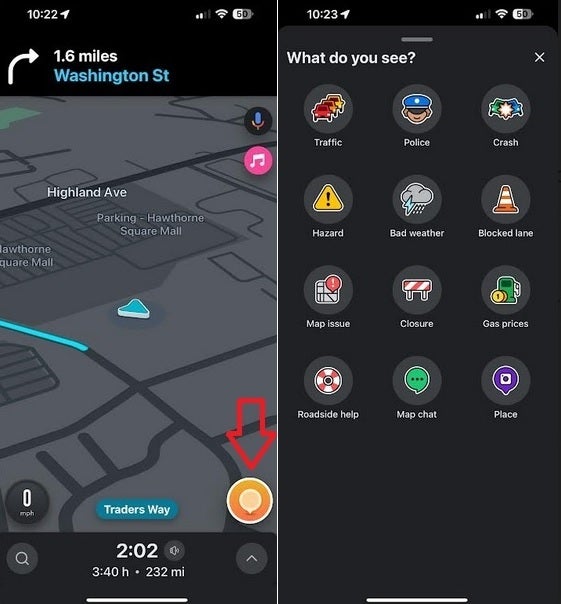
Per 9to5Google, in the latest update to the iOS and Android versions of Waze, there is a new round orange hazard icon in the lower right corner. Tapping that icon takes the user to a screen that says “What do you see?” From this page, users can report various conditions that are affecting their journey on the highway and could impact fellow travelers. Some of these options include:
Traffic
Heavy
Standstill
Police
Hidden
Other side
Crash
Pile-up
Other side
Hazard
Construction
Car on shoulder
Broken traffic light
Pothole
Object
Bad weather
Slippery road
Flood
Unlowed road
Fog
Icy road
Blocked lane
Left lane
Center lane
Right lane
Map Issue
Closure
Gas Prices
Roadside help
Map chat
Place
Waze also removed some traffic conditions from the app such as roadkill which had been listed under the “Hazard” category on the app. Another hazard, a car stuck in the middle of the road has been removed although there is an option under “Hazard” for a car on the shoulder of the road.
Update to Waze gives users a new page to report certain hazards on the road
The update is currently rolling out to the iOS and Androidversions of the Waze app. Interestingly, the update is live on my iPhone 15 Pro Max running iOS 17.3.1. You can install the Waze appon your iPhone by tapping on this link. If you have an Android device, press this link to get the app from the Play Store.
Instagram Threads was a big deal last year, mainly because Meta owns it. Plus, it came out at the perfect moment when Elon Musk, the owner of X, made some big changes to the platform. Loads of people signed up for it pretty fast. In fact, it became the fastest platform to reach a million sign-ups, beating out OpenAI’s ChatGPT. It’s often seen as an alternative to X, with many similarities. However, like any platform, it has its pros and cons. Now, Threads is rolling out a feature allowing users to save posts for later viewing, adding to its list of features since its launch.
Instagram Threads is testing the save posts feature for limited users
Instagram boss Adam Mosseri shared this update on the platform. He notified users that Threads is testing a “heavily requested feature” which happens to be the ability to save posts. If you use Instagram or X, you’d know that this is a brilliant feature. It lets you save posts to view them later.
It’s highly useful when you catch something interesting on your feed. But want to view or read it later or share it with someone but not at the moment.
So, if you’re one of those testers and the feature is available for you. You can simply tap on the three-dot menu which is usually placed on the right side. No pun, intended.
Threads’ parent social media app Instagram introduced the ability to save posts in 2016. And as Threads evolves, it’s adapting one of the most used features.
The competition is on as more players jump in
Threads remains an active and one of the most used social media apps despite a massive fall in monthly active users. Meta confirmed during a recent quarter call that it has over 130 million monthly active users.
It’s working on several features for the app as the competition has peaked in recent months. Not only X, but Bluesky, Mastodon, Nostr, Post, and Spill are also worthy contenders.
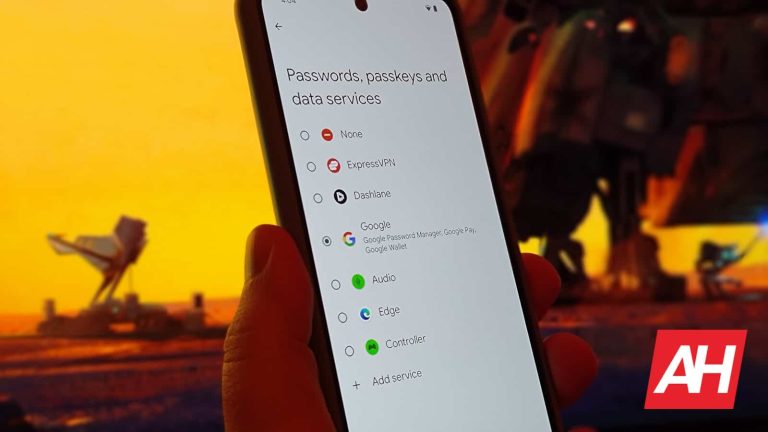
Over the past year, Google has been diligently improving its Password Manager to rival some of the best third-party password management tools available. To facilitate a seamless transition for users, Google is working on a new integrated option allowing the import of CSV files containing login credentials from other password managers.
Google app expert @AssembleDebug uncovered this development on X, highlighting Google’s endeavor to streamline the import process. Currently, Google Password Manager directs users to its web version upon selecting the import option. It requires an additional manual selection and loading of the page to commence the import process. However, the forthcoming native integration of password import directly within the Password Manager’s settings on Android promises a more intuitive and seamless experience.
As @AssembleDebug showcases through a series of screenshots, one can already activate the import tool through hidden flags. Presently, users are prompted to select a CSV file from their device’s storage, with a subsequent screen indicating the number of passwords eligible for import. Although users cannot view specific passwords yet, the ample space on the import page suggests potential future enhancements.
Image: AssembleDebug
CSV import functionality currently exists in the web version of Google Password Manager
The CSV import functionality exists in the web version of Google Password Manager. However, its integration with the Google Play Services facilitates features like autofill. It offers a more cohesive user experience across devices.
This native integration for your Android device sets Google’s Password Manager apart from its competitors. Many third-party solutions also necessitate the use of web versions for importing and exporting at present. By offering a seamless experience across platforms, Google aims to simplify password management for its users, enhancing convenience and security.
However, it’s essential for users to exercise caution when importing or exporting passwords via CSV files. You should promptly delete the CSV files after you complete the process as it may allow unauthorized access to your accounts with none of the usual data protection measures of a password manager in place, notes Manuel Vonau from Android Police.
In conclusion, Google’s introduction of native CSV import functionality underscores its commitment to improving Password Manager’s usability and competitiveness.
With the recent release of Android 14 QPR3 Beta 1, Google has subtly hinted at the impending arrival of Android 15 through a tweak to its Easter egg feature. Android updates typically introduce unique Easter eggs, and Android 14 was no exception. It features an outer space-themed Easter egg in its Settings menu.
However, the latest version has brought about a noticeable change – replacing the circular Easter egg badge with an inverted triangle. While this alteration may seem minor, it holds significant implications for the upcoming Android 15 release. Easter eggs embedded within Android versions often provide insights into the theme and direction of each iteration. In the case of Android 14, the Easter egg hinted at satellite connectivity.
The shift from a circular design to an inverted triangle in the Android 14 Easter egg is no coincidence. Android versions typically follow an alphabetical naming convention, with each version associated with a letter. Android 14 corresponds to the letter “U,” while Android 15, internally known as “Vanilla Ice Cream,” corresponds to “V.” Therefore, the change in the Easter egg’s shape strongly suggests Google’s preparation for the imminent release of Android 15.
Further reinforcing this speculation is the subtle alteration within the Easter egg itself. In addition to the change in shape, the Easter egg now references “Vanillaicecream^Tau,” indicating a deliberate nod to the upcoming Android version’s codename. This attention to detail serves as an indication that Google is gearing up for the unveiling of Android 15.
While Google has yet to officially announce the release date for Android 15’s first developer preview, historical patterns suggest that it may arrive as early as February or March. The adjustment to the Easter egg serves as an intriguing precursor to the unveiling, generating anticipation and excitement among Android enthusiasts.
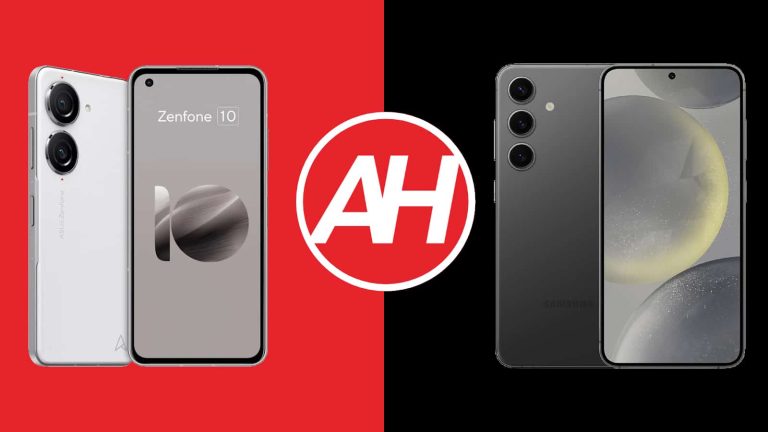
The ASUS ZenFone 10 has been praised as the best small Android smartphone out there. Just to be clear, this phone is not small, but it’s very compact, as it has a 5.92-inch display. We’re here to compare it to a new compact device from Samsung. We’ll compare the ASUS ZenFone 10 vs Samsung Galaxy S24. Now, the Galaxy S24 does have a larger 6.2-inch panel, but it’s not that much bigger than the ZenFone 10.
This should make for an interesting comparison, as the two phones do offer a different in-hand feel, and are rather different overall. As per usual, we’ll list their specifications first, and will then move to a number of other categories. We’ll compare their designs, displays, performance, battery life, cameras, and audio performance. This comparison will hopefully help you make a purchasing decision. Let’s get to it.
Specs
ASUS ZenFone 10 vs Samsung Galaxy S24, respectively
Both smartphones have flat sides and rounded corners. Their display corners are also rounded, and both of them have flat displays. That’s basically where design similarities end, though. The ASUS ZenFone 10 is made out of aluminum and soft-touch plastic, while the Galaxy S24 utilizes aluminum and glass. That soft-touch plastic feels like a combination of paper and sandpaper in a way, on the ZenFone 10. It does add more grip than glass on the Galaxy S24, that’s for sure.
The ZenFone 10 has a display camera hole in the top-left corner. Its bottom bezel is thicker than the rest of them. The Galaxy S24 has a centered display camera hole at the top, and its bezels are uniform. The bezels, in general, are thinner on the Galaxy S24, that’s what allows it to be not that bigger than the ZenFone 10. If we flip the two phones around, you’ll notice two cameras on the ZenFone 10 and three on the Galaxy S24. Each of those cameras is its own camera island, in a way, and all of them sit in the top-left corner of their respective smartphones. They’re also vertically aligned.
The Galaxy S24 is barely any taller than the ZenFone 10, while it’s slightly wider. It is thinner, though, and also a bit lighter, for about 4-5 grams. That’s not a big difference at all, but it’s worth noting. You’ll be glad to hear that both of these smartphones are IP68 certified. In other words, both of them are water and dust-resistant. Both of them do feel great in the hand, but the ZenFone 10 is grippier, and it is a bit more compact too. That makes it easier to use with one hand, that’s for sure. The Galaxy S24 does look a bit sleeker thanks to its thinner bezels, and a centered display camera hole.
ASUS ZenFone 10 vs Samsung Galaxy S24: Display
The ASUS ZenFone 10 features a 5.92-inch fullHD+ (2400 x 1080) Super AMOLED display. That display is flat, and it offers a 144Hz refresh rate. Do note that its max refresh rate will be used in some games only, other than that, you’re getting a 120Hz refresh rate. HDR10+ content is supported. The max display brightness here is 1,100 nits, and the display aspect ratio is 20:9. You’ll find Gorilla Glass Victus 2 placed on top of the display here.
ASUS ZenFone 10
The Samsung Galaxy S24, on the flip side, has a 6.2-inch fullHD+ (2340 x 1080) Dynamic LTPO AMOLED 2X display. That panel is also flat, and it has a 120Hz refresh rate (adaptive). This panel does support HDR10+ content as well, and it has a max brightness of 2,600 nits. The display aspect ratio here is 19.5:9, while the Gorilla Glass Victus 2 sits on top of the display on the Galaxy S24.
Both of these displays are very good, actually. They’re vivid, have great viewing angles, and are quite responsive. The blacks are also deep on both displays. We did prefer the colors on the Galaxy S24 a tad bit more, at least by default. You do have some additional display options so you can tune that to your liking. Where the Galaxy S24 does have a major advantage is in the display brightness section. The ZenFone 10 ends up being a bit too dim when you’re using it outside in direct sunlight. The Galaxy S24 does a much better job in such conditions.
ASUS ZenFone 10 vs Samsung Galaxy S24: Performance
What about the performance? Well, the ASUS ZenFone 10 is fueled by the Snapdragon 8 Gen 2 processor. That is no longer the latest and greatest from Qualcomm, but it’s the next best thing. The phone also comes with up to 16GB of LPDDR5X RAM and UFS 4.0 flash storage. The Galaxy S24, on the other hand, offers 8GB of LPDDR5X RAM (up to 12GB in specific markets), and UFS 4.0 flash storage on most models. Do note that the base 128GB storage variant does come with UFS 3.1 storage, though.
The performance is outstanding on both smartphones, though. The ZenFone 10 does have the inferior SoC here, but that’s not something you’ll notice during usage, to be quite honest. Both smartphones are equally snappy in day-to-day usage, regardless if we’re talking about heavy multitasking or simpler actions. They both also handle the most demanding games out there without a problem. Both phones get warm, and can even get quite warm during gaming, but neither got to the overheating point or too-hot-to-hold point.
ASUS ZenFone 10 vs Samsung Galaxy S24: Battery
A 4,300mAh battery sits inside the ZenFone 10. The Samsung Galaxy S24, on the flip side, has a 4,000mAh battery. So, despite the fact the Galaxy S24 has a larger display, it has a smaller battery. Can you feel that during usage? Yes, very much so. The ZenFone 10 actually offers much better battery life than the Galaxy S24. The difference is so considerable, that some of you may be shocked.
We were able to cross the 10-hour screen-on-time mark with the ZenFone 10, more than once. Getting solid 9+ hours of screen-on-time is possible on the phone, as long as you’re not gaming, or doing plenty of similar demanding tasks. The Galaxy S24, on the other hand, can deliver over 6 hours of screen-on-time, but not much more than that. The difference in battery life is truly considerable, at least from what we’ve seen. Your mileage may, of course, vary.
When it comes to charging, the ASUS ZenFone 10 supports 30W wired, 15W wireless, and 5W reverse wired charging. The Galaxy S24 supports 25W wired, 15W wireless, and 4.5W reverse wireless charging. The one aspect the ZenFone 10 does have an advantage on is in the included accessory department. It includes a charger in the box, while the Galaxy S24 does not. So you will have to get one on the side if you don’t already own it.
ASUS ZenFone 10 vs Samsung Galaxy S24: Cameras
The ASUS ZenFone 10 includes a 50-megapixel main camera, and a 13-megapixel ultrawide camera (120-degree FoV). The Galaxy S24, on the other hand, comes with three cameras on the back. It features a 50-megapixel main camera, a 12-megapixel ultrawide unit (120-degree FoV), and a 10-megapixel telephoto camera (3x optical zoom).
Samsung Galaxy S24
Are they any good in the camera department? Well, the pictures they both provide are good, but neither phone is the best around when it comes to camera performance. They both have rather dated hardware. During the day, the ZenFone 10 tends to provide images that utilize sharping way more, even too much at times. Those images do end up looking quite saturated too. The Galaxy S24 toned down on saturation compared to the Galaxy S23, and images from that device actually look more realistic at this point.
Ultrawide cameras on both phones do a good job of keeping the colors in line with the main unit. The quality is not as good as what the main camera provides, though, of course. The Galaxy S24’s telephoto camera is good enough, and it definitely beats the ZenFone 10 in the zoomed-in shots section, as the ZenFone 10 doesn’t have a telephoto camera at all.
During the night, both phones do a good job. The ZenFone 10 tends to brighten up the scene a bit more, as the Galaxy S24 keeps things a bit darker in comparison. Both manage to pull out quite a bit of detail from the shadows, though. The sharpening is obvious on the ZenFone 10 in such conditions too, though the Galaxy S24 images are not perfect either. There’s an obvious dip in quality with ultrawide cameras in low light, and the same goes for the Galaxy S24’s telephoto shooter.
Audio
Both of these smartphones include stereo speakers. The ones on the Galaxy S24 are noticeably louder, though. We did, generally, prefer the output from the Galaxy S24 a bit more, actually, even though the ZenFone 10 speakers are quite good too.
What the ZenFone 10 does have, and the Galaxy S24 does not, is an audio jack. This will come in handy if you’re using wired headphones still. On the Galaxy S24, you’ll have to mess around with a dongle. Both smartphones do support Bluetooth 5.3 connectivity, though, for wireless audio.