An intrusion set called FIN7 has been known to be operating since 2015 and is composed of Russian-speaking members. This threat group also pretends to be a company that recruits IT experts to hide their illegal activities.
Targets of this threat group include retail, hospitality, and food service industries within different geographical areas such as the United States, the United Kingdom, Australia, and France. This group also affiliates members from other notorious threat actors such as BlackBasta, Lockbit, Darkside, and REvil.
The toolset arsenal used by them is called “Carbanak,” which includes malware like loaders, ransomware, or backdoors alongside a great part of custom malware (e.g., Carbanak Backdoor, Domino Loader, Domino Backdoor, DiceLoader, etc.).
DocumentRun Free ThreatScan on Your Mailbox
Trustifi’s Advanced threat protection prevents the widest spectrum of sophisticated attacks before they reach a user’s mailbox. Try Trustifi Free Threat Scan with Sophisticated AI-Powered Email Protection .
Among these, Diceloader is known to have been used for a long time and is still being used by the threat group. It is dropped using a PowerShell script with specific obfuscation and other malware of their toolset. This small-sized malware is capable of several functionalities that can perform various malicious actions.
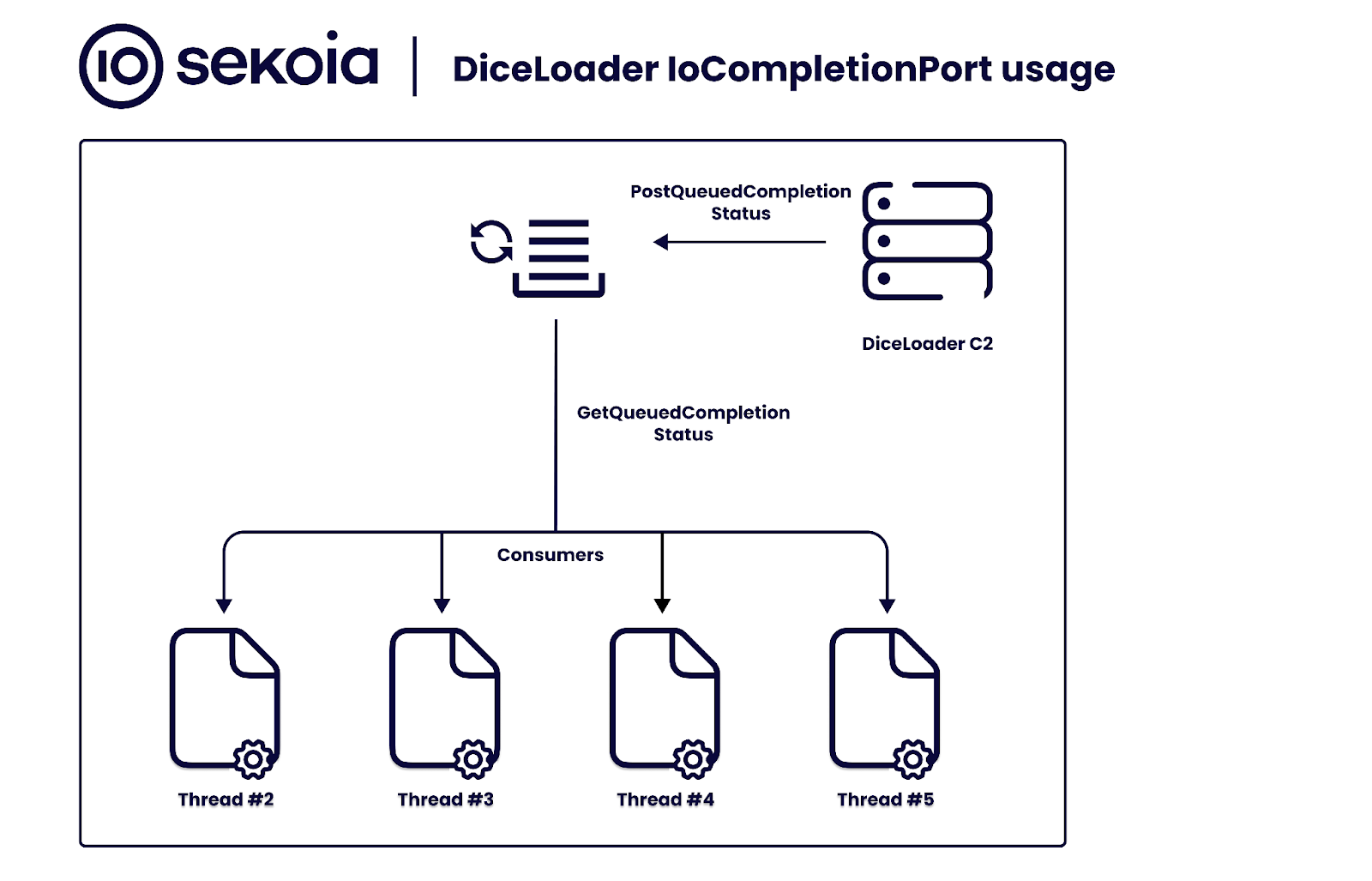
DiceLoader execution (Source: Sekoia)
DiceLoader Malware Attacking Corporates
The loader is a DLL that uses the “Reflective DLL Injection” module to inject the Diceloader main entry point into another process memory. The first function of this Diceloader is to set up the principal data structures and mechanisms for future executions.
It allocates four empty linked lists for connecting each part of the program to structure the data in memory. After this, the loader starts multiple threads, including threads, to receive, parse, and format incoming TCP packets from C2 servers and reads the SEIKO report.
Obfuscation Methods
Diceloader has two obfuscation methods. One is to deobfuscate the configuration C2 (IP address and Port), and the other is to deobfuscate the network communication. The first obfuscation method uses an XOR operation with a fixed key length of 31 bytes.
The second method uses a much more complex XOR obfuscation function with each byte (Cx) XORed with a byte of the key (Kx). To explain further, the second obfuscation is used twice, with a fixed key stored in the PE for the first time and with a key sent by the C2 at the runtime on the second time.
Fingerprint
The loader gathers victims’ system information and generates a unique identifier by concatenating the MAC address, the username, and the computer name and hashing them together. This fingerprint information is then sent to the C2 server.
Researchers created a fake Diceloader C2 for further investigation, revealing the communication type between the malware and the C2 server. The Diceloader received data from its C2 after declaring itself to the server with a unique sequence of bytes.
Stay updated on Cybersecurity news, Whitepapers, and Infographics. Follow us on LinkedIn & Twitter.
The global variant of the HONOR Magic6 Pro will launch during this year’s Mobile World Congress in Barcelona. The original launch took place in China last month. That being said, HONOR has started sharing tidbits about the device. Following the ‘freezer test’, the company now talked more about the camera system on the HONOR Magic6 Pro, the AI-powered ‘Falcon Camera System’.
The HONOR Magic6 Pro camera system got detailed by the company
The company says this phone comes with a range of industry-first features. It includes a customized HDR sensor with ultra-large dynamic range capabilities, and an ultra-large variable aperture (f/1.4-f/2.0). That’s the main camera, basically.
On top of that, this smartphone comes with a 180-megapixel periscope telephoto camera. That camera offers 2.5x optical zoom and can reach truly high zoom ranges. It remains to be seen what will the performance be like, though.
The third camera is a 50-megapixel ultrawide unit with a 122-degree FoV. That one seems to be the least impressive out of the three, but it does look good on paper. It’ll be interesting to test out, that’s for sure.
This camera system “harnesses the power of AI”
HONOR says that this phone “harnesses the power of AI technology to deliver an extraordinary photography experience”. HONOR made improvements to dynamic range, light sensitivity, long-range vision, and dynamic visuals here. This camera setup has been heavily customized.
The company is using a new Shape Memory Alloy (SMA) actuator, which combines autofocus and optical image stabilization functionalities. HONOR also quotes “industry-leading focus speed for every complicated snapshot scenario”.
This camera setup comes with the Sport Portrait Algorithm, which should allow you to capture portrait shots with a natural bokeh effect even in fast-moving scenarios. HONOR utilizes binocular depth estimation and sports portrait segmentations so that it precisely adjusts the background with a natural bokeh effect. It utilizes main and telephoto cameras at the same time for such shots.
The periscope telephoto camera has been significantly improved
HONOR believes that a zoom distance between 2.5x-10x is “highly favored by photographers”, and that’s true, for specific shots. Therefore, HONOR “has taken significant strides in enhancing its telephoto lens”. It provides a 400% enhancement in light sensing, says the company. That is compared to “flagship products from other market players”, though HONOR didn’t specify anything. This camera can combine 16 light-capturing pixels into a larger one with an equivalent pixel size of 2.24um.
The main camera offers an “800% improvement in dynamic range”. We’re not sure compared to what, though, the company didn’t share any details regarding that. This phone is also equipped with 2-frame HDR support. What’s even more interesting, HONOR claims that the main camera here can capture 22% more light than Sony’s IMX989 1-inch camera sensor.
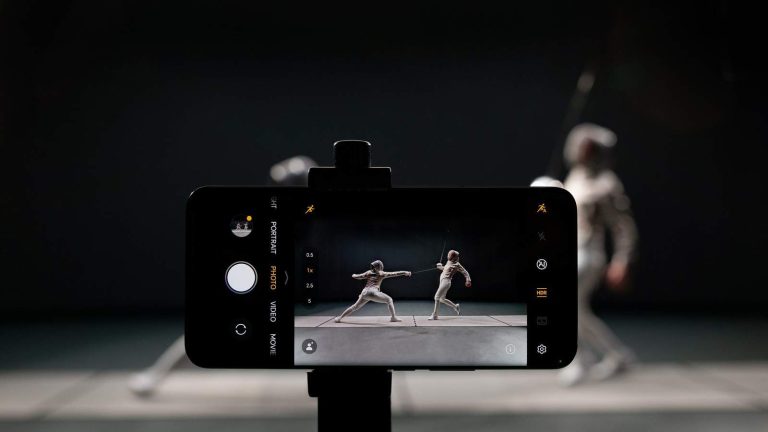
The company also shared some images that show off ‘sportography’ capabilities here. HONOR partnered up with Cécilia Berder, a well-known saber fencer. You can see her in action in the images below. As a reminder, the HONOR Magic6 series will be globally announced on February 25. We’re not sure if the regular Magic6 will arrive with it.
Google’s apps don’t always offer the same features on iOS and Android, but the Mountain View company is trying to not keep any important functionality exclusive to just one platform for too long.
In that regard, one of the Google Maps features that was only available for iOS users was the weather and AQI widget overlay that provided much needed information in real-time.
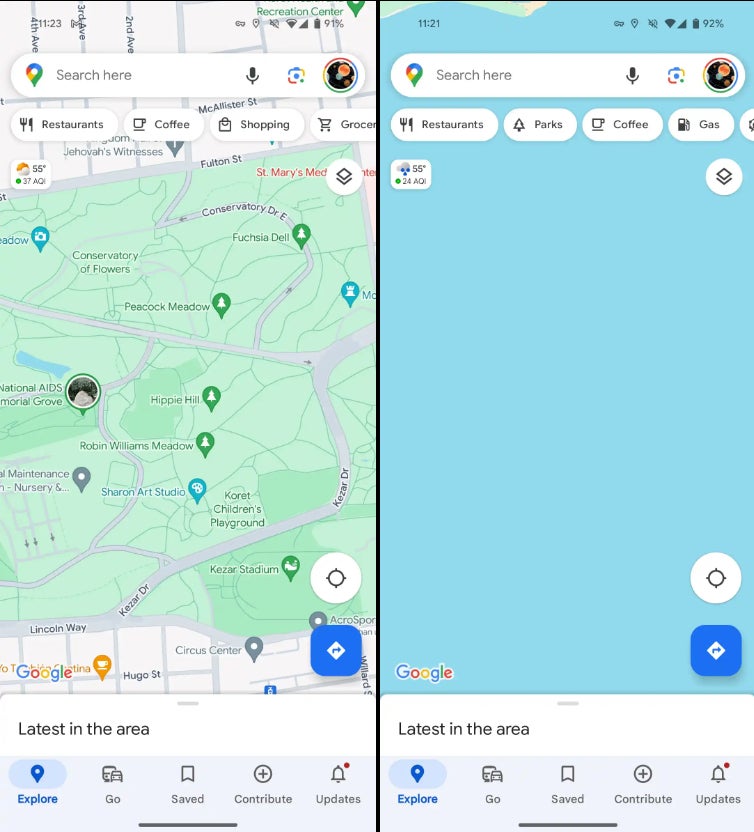
Now the feature is finally making its way to Android, 9to5google reports. The update is rolling out in waves, so you’ll know that you got the feature if you see a small rectangular box in the top-left corner of the app.
Credits – 9to5google
It’s a very small box that only shows the temperature and AQI (air quality index). However, you can tap on the box for more detailed weather information, including a 12-hour forecast. The AQI part of the small widget shows the existing Air Quality map layer if you tap on it.
Keep in mind that if you select anything else in the app, the weather box will disappear. Apparently, this update has started rolling out to Android users for a few weeks now, but it’s only been recently that Google decided to expand its availability, so expect it to arrive very soon if you don’t have it yet.
Update: The Google Pixel 4a 5G is no longer receiving new updates from Google. The last update was pushed out in November 2023. If you still own a Pixel 4a 5G, you might want to look at upgrading your phone to avoid any security issues. Check out our Best Android smartphones for some options.
The Google Pixel 4a 5G is here as the company’s “budget” 5G smartphone for 2020. It was announced on September 30 in a virtual event. And went on sale on November 19.
Google made sure that its Pixel lineup was very confusing this year, with the Pixel 4a, 4a, 5G, and Pixel 5. Essentially, the Pixel 4a 5G was the Pixel 5, and the Pixel 5 was going to be the Pixel 5S. But then the pandemic happened, and Google made some changes. Giving us the Pixel 4a, Pixel 4a 5G, and Pixel 5. All of which are very similar in specs, build, and features. So we are here to help you with your purchasing decision and to find you the best Pixel for your needs. And that might just be the Pixel 4a 5G.
You’ll find everything that you need to know about the Google Pixel 4a 5G here, including the price, where to buy the Pixel 4a 5G, release date, new features, and much more.
There is a second variant of the Pixel 4a 5G for Verizon, which costs $599, and we’ll talk a bit more about that later.
The Pixel 4a 5G went up for pre-order on October 29 and will be available for purchase on November 19.
This price pits the Pixel 4a 5G in the sub-$500 smartphone range, which has become very good over the last few years. It also makes it one of the cheapest 5G smartphones on the market today.
As of right now, you can only pre-order the Pixel 4a 5G from the Google Store.
That will change in the near future, however, as the device becomes available from other carriers, including Verizon and AT&T.
After November 19, when the Pixel 4a 5G becomes available everywhere, it’ll be available from the Google Store, Amazon, Verizon, AT&T and Best Buy.
What carriers support the Pixel 4a 5G?
All three US carriers support the Pixel 4a 5G. That includes AT&T, T-Mobile, and Verizon.
MVNOs like Xfinity Mobile, Mint Mobile, Google Fi, Straight Talk, and others will also support the Pixel 4a 5G – as long as you purchase the unlocked model.
Similar to previous years, even though every carrier might not be selling the Pixel 4a 5G (we know AT&T and Verizon will be), it will still work with them all.
Does it support 5G on my carrier?
The Pixel 4a 5G comes in two variants. There’s an unlocked variant that supports Sub-6 5G from all three carriers. And there is a second model, the Pixel 4a 5G UW, which is almost exclusive to Verizon, as it supports its mmWave network.
The Pixel 4a 5G UW is also $100 more because it supports mmWave. This is a trend that we have seen with other smartphones that were made specifically for Verizon’s 5G network. And unlike the Pixel 5, everyone won’t have to pay that “5G tax” for Verizon customers.
For most people, the regular, unlocked Pixel 4a 5G will be plenty fine. Since mmWave 5G is pretty tough to find these days. That is because mmWave does not cover as much area as low band 5G does. But that is what gives you those crazy fast speeds.
Do I need a 5G phone in 2020?
The simple answer is no.
We’ve been pretty firm in every review we have published in 2020, that you shouldn’t buy a phone for 5G. You should buy it for other reasons, like the camera, battery life, etc. And if it is a 5G phone, then that’s an added bonus.
5G is not built out that well in the US. And for most people, even if they have 5G coverage, it may not be faster than 4G LTE. And that’s because most people have access to low-band 5G, which is slower but covers more area. And not mmWave, which covers very little area, but provides crazy fast speeds – we’ve seen up to 3Gbps on mmWave networks.
Basically, don’t buy the Pixel 4a 5G for 5G, buy it for the other features it boasts.
What colors is it available in?
Much like the Pixel 4a, the Pixel 4a 5G is only available in one color – Just Black.
Google decided to keep it simple this year with its Pixel 4a models, sticking with one storage and one color variant. Which is also what helps keep the price down on the Pixel 4a 5G. And that is always appreciated.
Unlike the Pixel 4a, the 4a 5G model has a white power button. Instead of a faint mint colored power button. It’s still unique, but not as fun as the cheaper Pixel 4a.
What comes in the box?
In the box with the Pixel 4a 5G, you’ll find the Pixel 4a 5G right on top of course.
Followed by the USB-C charging brick and a USB-C to USB-C cable for charging. There is also the usual assortment of paperwork and a SIM ejection tool. Unfortunately there are no more Team Pixel stickers. Google seems to have stopped offering those after the Pixel 3 series in 2018.
Thankfully, there is a charger in the box with this one. It’s an 18W charger, so not quite as fast as some of the competition, but still fast enough. And at least it comes with a charger, unlike the $999 iPhone 12 Pro.
What are the specs of the Pixel 4a 5G?
Google Pixel 5
Screen size
6.2-inch FHD+ OLED
Processor
Qualcomm Snapdragon 765G
RAM
6GB
Storage
128GB
Cameras
12.2MP main sensor, 16MP ultra-wide sensor 8MP front-facing sensor
Battery
3800mAh
Price
$499
Release Date
November 19
Where’s the Pixel 4a 5G review?
You can read our review of the Pixel 4a 5G right here.
But the TL;DR of the review is that this is a really impressive phone for $500. Google fixed a lot of the things we complained about with the Pixel 4 series last year. Which was mainly battery life. It can last you a day and a half, if not a bit longer. Which is truly impressive.
We called it “The best Pixel for the money”, and we believe it is the best Pixel for most people. Out of the three models that Google unveiled this year.
Google was actually pretty quiet about new features on the Pixel 4a 5G (and Pixel 5) this year. There are plenty of new features, but not nearly as much as the Pixel 3 and Pixel 4 had when they were announced. This could partly be due to the fact that the Pixel 4a 5G is much more affordable this year.
Night Sight Portrait Mode
As always, the biggest new features are within the camera. And this year, it has a few new camera features available, like Night Sight Portrait Mode. Google has essentially taken two of its most popular camera modes and combined them into a single mode. That’s Night Sight and Portrait Mode. Allowing you to get some great selfies, at night. And with most of us doing bonfires now that it is starting to get cold, you can get some really cool looking night selfies out of the Pixel 4a 5G camera.
Though, the images that Google released to show off this feature, don’t look all that great. So these may not be stunning. But still cool that it can be done.
Cinematic Pans
Google is finally taking video seriously this year with the Pixel 4a 5G. It has added Cinematic Pans, so creators can really use this phone to make videos.
The Pixel team took a feature that creators use quite a bit in their videos and built it into the phone. Something that would normally need a gimbal to be done properly. Basically, Google is taking its OIS to a whole new level with the Pixel 4a 5G, and this Cinematic Pans feature. It is slowing down your video to 2X, so that it can get those smooth and crisp shots.
4K60 video recording
Speaking of video, Google also added a much requested feature for video. And that’s 4K60. Last year with the Pixel 4, many were shocked that it was not included. After all, the sensor and the processor were both capable of 4K60, but Google had a few reasons why it was left off. Stating that no one wanted it, it took up to much storage (remember Pixel 4 came in 64GB and 128GB models), etc.
But this year, 4K60 is here. Allowing you to get some really smooth video in 4K on this smartphone, making for an interesting way to make videos. Of course, it will use up more storage, but since the Pixel 4a 5G comes with 128GB of storage, that shouldn’t be a big issue. You can also offload these to Google Photos to make more room.
Hold for Me with Google Assistant
Outside of the camera features, there are a few others included. Like the new “Hold for Me” feature with Google Assistant. If you’ve ever called your ISP, wireless carrier, or really any other company, you’ve probably been put on hold for a while until someone can answer your call.
Well, now instead of having to sit there and listen to their terrible hold music, Google Assistant can do that for you. It’ll sit on hold for you, and let you know when someone is on the line to speak with you. So you can keep going about your day. It’s a fairly simple feature, but a very useful one.
There are plenty of other features available on the Pixel 4a 5G as well. Some of which will be coming to older Pixel devices via a feature drop in the coming months.
Does it have a headphone jack?
In 2020, this is a question that has kind of run its course. Most smartphones don’t have a headphone jack.
But the Pixel 4a 5G isn’t most smartphones. The Pixel 4a 5G does indeed have a headphone jack. It is located on the top of the phone, and you can plug in your favorite pair of wired earbuds into this phone. For many, that’s better than using Bluetooth earbuds – as that is another battery you need to charge.
Thankfully, Google has decided to keep the headphone jack on the cheaper, Pixel 4a models.
Is the Pixel 4a 5G environmentally friendly?
Much like the other hardware products that Google released this year, the Pixel 4a 5G is also environmentally friendly. It is made almost entirely from recycled plastic. And the fabric cases for the Pixel 4a 5G are also made entirely from recycled plastic and fabric.
That makes it a lot easier to purchase the Pixel 4a 5G and not worry about it being bad for the environment. For those that are environmentally-conscious, that is definitely a good thing. It also continues Google’s trend of moving to a more environmentally friendly company.
Should I buy this over the other Pixels launched this year?
The three Pixel smartphones that Google launched this year are very similar in specs, build quality and features. But range from $349 to $699. We believe that the Pixel 4a 5G is the best Pixel for the money.
This is because it boasts most of the features from the Pixel 5, minus the wireless charging and the aluminum backside. And you’re also getting a slightly larger display, with great battery life. Now you do lose out on the 90Hz display, which for most people that isn’t going to matter. Even the new iPhones don’t have a high-refresh rate display, and they are far more expensive.
There is a lot of competition in this space now though, with OnePlus launching its Nord series of smartphones. Like the Nord, Nord N10 and even the Nord N100 (which is actually about half the price of the Pixel 4a 5G). Of course, we also have plenty of Motorola phones in this price range too. However, from a value proposition, the Pixel 4a 5G is the best Pixel to buy in 2020. And possibly even the best phone to buy this year. Considering all of the features it has, at this price point.
Update: The last phone to launch with the Snapdragon 888 was the RealMe GT2 released in 2022. This is no longer the latest and greatest from Qualcomm. For more on the latest Qualcomm chipsets, check out the Snapdragon 8 Gen 3.
Qualcomm announced its latest high-end mobile processor, the Snapdragon 888, on December 1, 2020. This is the chipset that will power most high-end Android smartphones in 2021. Many manufacturers like OPPO, OnePlus, Vivo, LG, Xiaomi, and many others have already announced that they will be using the Snapdragon 888 and releasing phones with this chipset at the beginning of 2021.
These days, the newer silicon doesn’t make a huge difference in day-to-day usage, though companies like Qualcomm will throw out all kinds of numbers to show you that it is indeed better than the previous generation silicon. And Qualcomm is actually touting some big numbers, considering the fact that the clock speed on all of the cores in the Snapdragon 888 is the same as the Snapdragon 865 released last year. So how is that possible?
Here, we are going to tell you everything you need to know about the Snapdragon 888 and what you can expect from this chipset and smartphones in 2021.
Why is it called the Snapdragon 888 instead of 875?
Most people expected the next premium processor from Qualcomm to be the Snapdragon 875. The previous models were the Snapdragon 865, 855, 845, and 835. But every few years, Qualcomm changes its name. For instance, a few years ago, after the Snapdragon 821, many were expecting the Snapdragon 830, and instead, we got the Snapdragon 835. The reasoning behind that change was basically that a higher number is better, and they got that data from a small internal poll at Qualcomm.
The reasoning behind going with the Snapdragon 888 is a bit different, though. The number eight is known as a lucky number in both India and China. Two markets that are very important to Qualcomm. And since the Snapdragon 800-series has been its highest-end chipset for more than a decade now, Qualcomm decided to go all in. Calling it the Snapdragon 888. A slightly better reason than changing the naming scheme with the Snapdragon 835 a few years ago.
Bluetooth 5.1 Wi-Fi 6 (802.11ax), Wi-Fi 5 (802.11ac), 802.11a/b/g/n
Charging
Quick Charge 4+ Quick Charge AI
Quick Charge 4+ Quick Charge AI
Camera Support
200MP single shot 84MP single with zero shutter lag 64MP+25MP with zero shutter lag Triple 24MP with zero shutter lag Hybrid AF 10-bit HEIF image capture HDR video multi-frame noise reduction Real-time object classification, segmentation, and replacement
200MP single shot 64MP with zero shutter lag 25MP dual camera with zero shutter lag Hybrid AF HDR video multi-frame noise reduction Real-time object classification, segmentation, and replacement
Video Capture
8K @ 30fps 4K UHD @ 120fps 720p @ 960fps
8K @ 30fps 4K UHD @ 120fps 720p @ 960fps
Video Playback
8K 4K HDR up to 120fps H.265 and VP9 video decoder 360 degree
8K 4K HDR up to 120fps H.265 and VP9 video decoder 360 degree
First Available
Q1 2021
Q1 2020
What’s new in the CPU?
On paper, the clock speeds of the Snapdragon 888 are the same as the 865. Topping out at 2.84GHz. But the cores that are being used are a bit different.
With the Snapdragon 888, the high-performance core is now a Cortex-X1 CPU core. This is a bigger, more powerful and more power-hungry core from ARM. This core is said to provide around a 23% boost over the Cortex-A78, which is ARM’s latest architecture – also used on three other cores on the Snapdragon 888.
Finally, making up the other four cores of this new chipset, are the Cortex-A55. A tried and true core that Qualcomm (and many other mobile chipset makers) have been using for years. This marks the first time that Qualcomm has used three different cores in its flagship processor.
Essentially, thanks to the addition of the Cortex-X1, we’re getting ever more power out of the Snapdragon 888, when compared to the Snapdragon 865. It’ll mostly be used for gaming, and doing other power-intensive tasks. While your phone will mostly be running on the slower Cortex-A55 cores at 1.8GHz to preserve battery life.
What’s important to note here, is that while the clock speeds are the same as last year’s Snapdragon chipset, with the 888 we should see slightly better performance, with much better battery life. That’s something we can all appreciate, especially with 5G.
The Adreno 680 GPU
Qualcomm has long made its own GPU’s, instead of using an ARM GPU like Samsung does in its Exynos chipsets. And the Adreno GPU has always been pretty impressive.
With the new Adreno 680 GPU, we’re looking at a 35% boost to performance, which is the biggest boost that Qualcomm has provided on its GPU in many years. On top of that big performance boost, Qualcomm is also touting a 25% improvement in battery efficiency.
The Adreno 680 also includes new machine learning instructions, which is going to allow for up to 43% faster AI performance. Including 4-input mixed-precision dot product and wave matrix multiple for 16- and 32-bit floating-point numbers.
Improved 5G
Improved 5G support was expected, and the Snapdragon 888 brings the third-generation of Qualcomm’s 5G modem – the Snapdragon X60 5G modem. It is pretty similar to the previous X55 modem, on the spec sheet. But with plenty of improvements. It can handle peak mmWave speeds of up to 7.5Gbps down and 3Gbps up. Now these numbers you will likely never see, unless you are in perfect conditions. But it is nice to see that it can get that fast.
The Snapdragon X60 modem also brings in sub-6GHz FDD and TDD carrier aggregation, and aggregation across sub-6GHz and mmWave bands. So you should see even faster speeds on the X60. This is because it will allow for data to be sent over low-band, sub-6GHz and mmWave spectrum all at once.
This year, the Snapdragon X60 is an integrated modem. Basically meaning that the X60 is on the Snapdragon 888 instead of being external. What this means is that it takes up less room inside your phone which can be used for battery. It also helps to eliminate overheating concerns.
Much like the Snapdragon 865 last year, every phone with the 888 is going to be a 5G phone. Unless the OEM decides to deactivate the 5G modem, like Sony planned to do in the US on the Xperia 5 II.
So we’re looking at even better 5G performance coming in 2021. That should mean faster speeds and better battery life. As long as the carriers have built out 5G everywhere.
Better AI performance
You may not always think of Artificial Intelligence and Machine Learning as parts of a processor, but the processor is what allows them to work throughout your phone. And Qualcomm made some big changes in both aspects.
With the Snapdragon 888, Qualcomm has “fused” the scalar, tensor and vector processing units inside the Hexagon 780 DSP, along with 16X the amount of shared memory. This is going to make it much more efficient.
In fact, we’re looking at up to a 1000x improvement to hand-off-time moving workloads between the three processor types. The scalar processor also sees a huge 50% performance improvement. And Tensor has double the compute capacity compared to the previous generation.
With Qualcomm’s decision to combine the CPU, GPU and DSP capabilities, it claims a 3x improvement to AI performance per watt. As well as 26TOPs of overall AI compute. Making it a 73% increase from the Snapdragon 865 released last year.
The new Qualcomm AI Engine Direct is also coming with the Snapdragon 888. This will act as an entry point for Android NN, TensorFlow Lite and Qualcomm SDKs. Helping developers take full advantage of the Snapdragon 888 capabilities. No matter which framework they are using.
Camera improvements on the Snapdragon 888
Included in the Snapdragon 888 is the new Spectra 580 ISP. This Image Signal Processor is what allows your phone to take brilliant photos, even more than the lens and sensor themselves.
The Spectra 580 moves from a dual to a triple processor setup. This is going to allow for three concurrent processing chains at once. And those can be used to capture simultaneous video streams from three cameras or perform real-time processing on three separate image sensors at once. Throughput has also been improved from 2 to 2.7 gigapixels per second. That’s a 35% improvement to processing capabilities.
This is also going to give us faster image shooting and processing. Meaning that we shouldn’t have to wait for the camera to process the image, with the Snapdragon 888. This new ISP is said to be 35% faster when it comes to processing.
There is also now support for 10-bit HDR image capture when using HEIF. This is going to make the HDR video captured on your smartphone even more impressive, specifically when you are viewing it on a HDR monitor.
Spectra 580 is able to capture 120 12-megapixel images per second and low-light images down to 0.1 lux.
Qualcomm has also added a lot of new AI algorithms for auto-focus, auto-exposure and auto-white balance. Making it easier than ever for someone to just point and shoot their photos.
The Spectra 580 is super important for smartphone photography. It’s part of the entire setup for taking better photos on your smartphone. And adding support for new features makes it easier for OEMs to add new features to their cameras, without impacting performance or battery life. So this ISP is a big deal.
Snapdragon Elite Gaming improvements
There’s a few improvements to Snapdragon Elite Gaming too. For one, it now supports 144Hz displays. However, there are very few games that support 120Hz right now, and likely even less that will support 144Hz. At least for now. It also supports 10-bit HDR gaming at up to 144fps. Which is also now up to 20% more efficient compared to the Adreno 650.
Additionally, it adds the Qualcomm Game Quick Touch. This is a feature designed to lower touch response latency. Which can be up to 20% on 60fps games and up to 10% on 120fps games. The best part about this is that there is no work needed from developers to make this happen. Users will benefit from this as soon as they get a phone with the Snapdragon 888 chipset inside.
The new Adreno 660 GPU si also not going to throttle at all while you’re gaming. As Qualcomm now claims a better sustained peak performance. Which is actually a really big deal. While the Adreno GPUs have always been good at not throttling, when playing very intensive games, it would start to throttle after a while. That won’t be the case with the Adreno 660, thankfully.
Qualcomm is also bringing variable rate shading (VRS) to mobile, with the Snapdragon 888. This is a feature that is now pretty common on PC and the latest gaming consoles, so it’s a big deal to see it on a smartphone in your pocket. This technique is designed to reduce GPU workloads by giving game developers better control over how frames are rendered. For example, if there’s something that is in the background, that frame can be rendered in a lower fidelity, giving the bulk of the GPU resources to rendering foreground objects. Making it more efficient.
When to expect the first smartphones with the Snapdragon 888?
As usual, the first smartphones with the new Snapdragon 888 chipset are set to come out in Q1 2021. We know a couple of them that will be among the first, which include the Xiaomi Mi 11 series.
Though the schedule for 2021 is a bit messed up, largely thanks to COVID-19. Where Mobile World Congress was moved from the end of February to the end of June. Which means that a lot of companies may move their launches up to CES in mid-January. Samsung is one that is doing just that, according to rumors. Though Samsung was not on the list of the 14 OEMs that are set to use the Snapdragon 888 next year.
Qualcomm announced that 14 manufacturers will be releasing Snapdragon 888-powered smartphones in 2021. Including ASUS, Black Shark, Lenovo, LG, Meizu, Motorola, Nubia, Realme, OnePlus, OPPO, Sharp, Vivo, Xiaomi and ZTE.
2021 is shaping up to be an exciting year for smartphones, thanks to the Snapdragon 888.
Update: The Google Pixel 5 is no longer receiving new updates from Google. The last update was pushed out in October 2023. If you still own a Pixel 5, you might want to look at upgrading your phone to avoid any security issues. Check out our Best Android smartphones for some options.
The Google Pixel 5 was announced by Google on September 30, in a virtual event. It’s the follow-up to one of 2019’s worst smartphones, the Pixel 4.
With the Pixel 5, Google opted to go back to the basics and make a cheaper smartphone that included all of the fundamentals. So instead of having the latest bleeding-edge silicon inside or having the biggest and best screen, Google opted for specs that everyone can love. That includes a slightly slower processor and a smaller display, but keeping the same great camera that Pixel has been known for. The Pixel 5 isn’t here to compete with Apple and Samsung but to be a cheaper alternative to those two smartphone giants.
You’ll find everything you need to know about the Google Pixel 5 here. From the release date to the specs, to pricing, availability, and everything in between.
How much does the Pixel 5 cost?
The Google Pixel 5 costs $699 in the US and £599 in the UK and most other places.
It also comes in one storage variant with 8GB of RAM and 128GB of storage. And only two colors. So there isn’t a better model that you can spend more on to get better specs, unlike in previous years.
That brings it back down to a price we haven’t seen for the flagship Pixel since the original Pixel in 2016. The Pixel was $699 and the Pixel XL was $769. Those were simpler times. It’s good to see it being brought down to a more affordable price, when we have other smartphones that are crossing the $1,200 mark nowadays.
Should I wait for a price drop?
Pixels always get some sort of price drop, shortly after they go on sale. And that’s because these phones are not big sellers like the Galaxy S20 or Note 20 series. And carriers are looking to move these. At launch, Verizon has some pretty good deals on the Pixel 5, but it is likely to drop even further on Black Friday in November. You could ideally see the Pixel 5 go as low as $500 then.
No matter the phone, prices always drop as soon as a month after its launch. So do keep that in mind before picking one up. Especially if you’re looking to get one at a pretty cheap price.
Best Buy will be selling the Pixel 5 for $499 on Black Friday – but there is a caveat. This price is only available if you activate it on Verizon the same day.
Where can I buy the Google Pixel 5?
The Pixel 5 is now available for purchase, as of October 29, 2020.
It is available from Best Buy, Amazon, Google Store, and Verizon in the US. Verizon (and Google Fi) are the only carriers officially selling it, but it is going to work on all three carriers. As this is an unlocked smartphone and supports both mmWave and Sub-6 5G networks.
In the US, the Pixel 5 is supported by all three major carriers: AT&T, T-Mobile and Verizon. That also includes any MVNOs that run on those networks, like Straight Talk, Cricket, and such.
It also supports all 5G networks in the US. Including Verizon’s mmWave network.
Which carriers will sell the Pixel 5?
So far, only Verizon has opened pre-orders for the Pixel 5. But AT&T has confirmed to AndroidHeadlines that it will be carrying the Pixel 5 (and Pixel 4a 5G) as well. Though pricing and pre-order availability has not been confirmed just yet. T-Mobile has not said a word about the new Pixels. So it’s possible that they could be opting not to sell either device.
Verizon has always been a big partner for Google with the Pixel devices, having the exclusive for the first three years and spending tens of millions, advertising the phones. But, even if the carriers are not selling the Pixel 5, you can still pick it up from Google and use it on your carrier. Since it is being sold unlocked. All you need to do is pop in your SIM card and you’re all set.
What colors does the Pixel 5 come in?
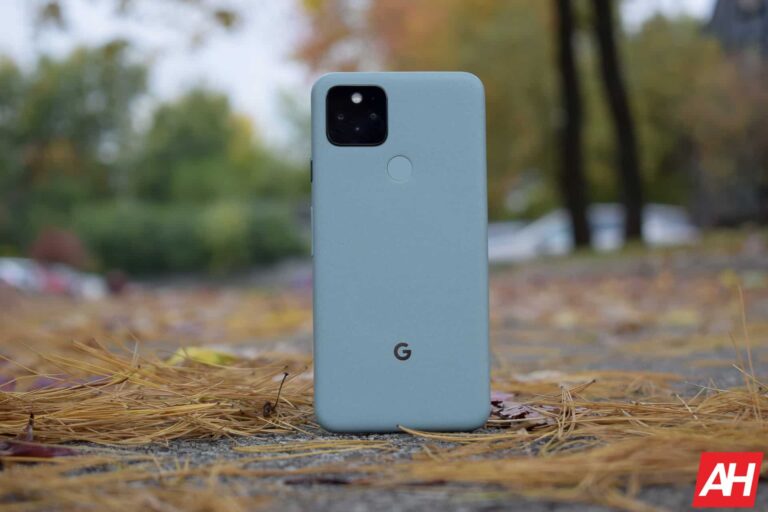
Google is offering it in two colors this year: Just Black and Sorta Sage. Unfortunately, there isn’t a white color this time around, as there has been for every Pixel device, ever. But you are getting the plain black that a lot of people love, along with an exciting color in Sorta Sage, which is sort of a darker green color on the Pixel 5.
It’s possible that the Pixel 5 is not coming in white because it’s using a metal-ish back. And doing white would have been tough and possibly discolored a lot sooner than one would want.
What are the specs of the Google Pixel 5?
Many refer to the Pixel 5 as being a mid-range smartphone, and well, that’s their opinion. This is still a very capable smartphone, even without Qualcomm’s most powerful chipset on the market. The specs are pretty much what you’d expect for the Pixel 5 though.
Google Pixel 5
Screen size
6-inch FHD+ OLED 90Hz
Processor
Qualcomm Snapdragon 765G
RAM
8GB
Storage
128GB
Cameras
12.2MP main sensor, 16MP ultra-wide sensor 8MP front-facing sensor
Battery
4000mAh
Price
$699
Release Date
October 15 outside of US/October 29 for US
What new features does the Pixel 5 have?
Google was actually pretty quiet about new features on the Pixel 5 this year. There are plenty of new features, but not nearly as much as the Pixel 3 and Pixel 4 had when they were announced. This could partly be due to the fact that the Pixel 5 is much more affordable this year.
Night Sight Portrait Mode
As always, the biggest new features are within the camera. And this year, it has a few new camera features available, like Night Sight Portrait Mode. Google has essentially taken two of its most popular camera modes and combined them into a single mode. That’s Night Sight and Portrait Mode. Allowing you to get some great selfies, at night. And with most of us doing bonfires now that it is starting to get cold, you can get some really cool looking night selfies out of the Pixel 5 camera.
Though, the images that Google released to show off this feature, don’t look all that great. So these may not be stunning. But still cool that it can be done.
Cinematic Pans
Google is finally taking video seriously this year with the Pixel 5. It has added Cinematic Pans, so creators can really use this phone to make videos.
The Pixel team took a feature that creators use quite a bit in their videos and built it into the phone. Something that would normally need a gimbal to be done properly. Basically, Google is taking its OIS to a whole new level with the Pixel 5, and this Cinematic Pans feature. It is slowing down your video to 2X, so that it can get those smooth and crisp shots.
4K60 video recording
Speaking of video, Google also added a much requested feature for video. And that’s 4K60. Last year with the Pixel 4, many were shocked that it was not included. After all, the sensor and the processor were both capable of 4K60, but Google had a few reasons why it was left off. Stating that no one wanted it, it took up to much storage (remember Pixel 4 came in 64GB and 128GB models), etc.
But this year, 4K60 is here. Allowing you to get some really smooth video in 4K on this smartphone, making for an interesting way to make videos. Of course, it will use up more storage, but since the Pixel 5 comes with 128GB of storage, that shouldn’t be a big issue. You can also offload these to Google Photos to make more room.
Hold for Me with Google Assistant
Outside of the camera features, there are a few others included. Like the new “Hold for Me” feature with Google Assistant. If you’ve ever called your ISP, wireless carrier, or really any other company, you’ve probably been put on hold for a while until someone can answer your call.
Well, now instead of having to sit there and listen to their terrible hold music, Google Assistant can do that for you. It’ll sit on hold for you, and let you know when someone is on the line to speak with you. So you can keep going about your day. It’s a fairly simple feature, but a very useful one.
There are plenty of other features available on the Pixel 5 as well. Some of which will be coming to older Pixel devices via a feature drop in the coming months.
Is the Pixel 5 environmentally friendly?
Google has been working to eliminate e-waste lately, and with its new products, they are mostly made from recycled materials. Including the Pixel 5. So if you’re worried about the environment, you can purchase the Pixel 5 without worrying about it being bad for the environment.
The cases that Google is selling for the Pixel 5 are also made from 100% recycled fabric too.
Pixel 5 isn’t the first product from Google to be made from recycled materials. The Chromecast and Nest Audio announced the same day, are made 100% from recycled materials. The Pixel 4a announced in August is also partly made from recycled materials, as well as the Pixel 4a fabric cases. So Google is doing its part to help the environment, and eliminate e-waste, without taking out your charger when you buy a new phone.
What cases are available for the Pixel 5?
There are plenty of cases available already for the Pixel 5. And we’ve rounded up the ten best cases here.
Google also has its usual fabric cases available, which are made from 100% recycled fabric. So they are good for the environment. And they also come in a few different colors to match the Just Black and Sorta Sage color of the Pixel 5. They are available in green chameleon, blue confetti, static grey and basically black. All of which would look good on either color of the Pixel 5.
Google Pixel 5 Fabric Cases – Green Chameleon
Where’s the Pixel 5 XL?
There is no Pixel 5 XL.
Google had initially planned on releasing two Pixel 5’s this year, but never a Pixel 5 XL. It planned on a Pixel 5 and a more high-end, premium Pixel 5s. Those turned out to be the Pixel 4a 5G and Pixel 5, as the year progressed, due to the pandemic and the economic downturn though.
All three of this year’s Pixels are actually fairly small in size. Ranging from 5.8-inches to 6.2-inches. If you want a larger phone, you’ll need to grab a Samsung smartphone, unfortunately. Or you can get one of Motorola’s newer devices like the Edge+ if you want a bigger screen with a nearly stock version of Android.
Should I buy this over the Pixel 4a, Pixel 4a 5G?
That really depends on what you want. The Pixel 4a series are plastic smartphones, while the Pixel 5 is metal coated in paint for some wireless charging trickery. But if you’re debating on getting the Pixel 5, the Pixel 4a 5G might be more your speed.
There’s not a lot of differences between the Pixel 4a 5G and the Pixel 5. It has the same cameras, it has a slightly larger display, a little bit less RAM and a slightly smaller battery. Otherwise it is mostly the same. Not to mention $200 cheaper – unless you are planning to get the Verizon model, which is going to be $599.
At this price point however, there are a few other phones that are really good contenders for your next smartphone. Like the Galaxy S20 FE, which is also $699 and discounted in a lot of places already. It sports better specs – like the Snapdragon 865 chipset and 120Hz display – and comes in more colors. The OnePlus 8T is also coming soon and it is pegged to be around the same price. It’ll also likely come with better specs than the Pixel 5, knowing OnePlus’ way of faster than fast.
This $700 price point is becoming a very popular price point as of late, and there’s a lot of new contenders coming in here. So you aren’t going to have to spend a grand to get a good new smartphone.
A new leak gives us an even better look at the ASUS ZenFone 11 Ultra
If you check out the gallery below the article, you’ll see six new images. They’re not showing us anything we haven’t seen yesterday, but these are better images than the ones that surfaced. Also, they’re giving us a better look at the front side of the phone.
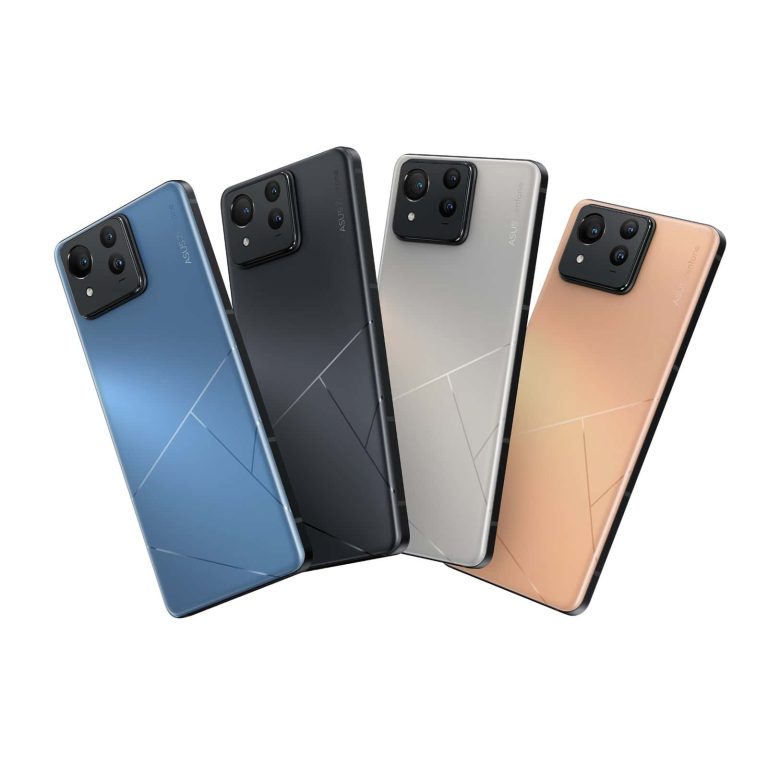
As you can see, the ASUS ZenFone 11 Ultra will resemble the ASUS ROG Phone 8 series quite a bit. The camera island won’t be cut off in the bottom-right corner, while ROG branding will also be missing. The backplate will look different, and have a specific pattern with lines on it, as shown in the images.
The overall size and shape of the phone are the same, and the camera island on the back is also very similar. Every camera sensor on the inside, and the LED flash also, are in the same spot as on the ASUS ROG Phone 8.
The phone will offer flat sides, and it’ll be a lot bigger than the ZenFone 10
You’ll be getting flat sides here, with a centered display camera hole. All physical buttons will be on the right-hand side, while the display will be flat. The bezels will also be quite thin.
It seems like this phone will be made out of metal and glass. ASUS will be ditching the more grippy material it used on the ZenFone 9 and ZenFone 10. There’s still no word on the more compact variant of this device, let’s hope that ASUS is not done with compact flagships.
In any case, you’ll notice three cameras inside the camera island on the back. That camera island does protrude quite a bit. Yesterday’s leak did also shed some information on the phone’s specs.
The Snapdragon 8 Gen 3 will be included, and 65W charging will be supported
A 6.78-inch fullHD+ 144Hz display will be included, as will the Snapdragon 8 Gen 3 SOC. Three cameras will sit on the back, a 50-megapixel main camera, a 13-megapixel ultrawide unit, and a 32-megapixel telephoto camera (3x optical zoom).
Up to 16GB of LPDDR5X RAM will be included, along with a 5,500mAh battery. 65W wired and 15W wireless charging was also mentioned, as was an audio jack. We still don’t know when is this phone coming, but chances are it won’t be long at this point.
Google Chat mobile now lets you “star” important messages for quick access. The new feature is rolling out to both iOS and Android apps. It should be available to all users within the next few days. Make sure to update the app to the latest version.
You can now star messages in Google Chat
Google introduced the ability to star messages on Chat on the desktop in November 2023. The company said the new tool will help you “stay on top of your most important messages.” You can star any message in Chat for easy access via a shortcut in the navigation panel. The feature comes in handy when you need to come back to a message later.
This function is now rolling out to Google Chat on mobile. The latest version of the app—both the standalone app and the integrated experience in Gmail—lets you long-press on a message to star it. You will find the new “Star” option in the context menu. The tool works in one-to-one conversations, group chats, and Spaces conversations.
You can star any message on Google Chat, including those you have sent. Starred messages are marked with a star icon next to the timestamp. If you want to unstar a message, long-press on it and select Unstar. The feature works the same way on Android and iOS. On the desktop version, you have to hover the cursor over a message for the context menu, click on More (three vertical dots), and select Star/Unstar.
To access your starred messages, tap the three-dot More button at the end of the floating bar in the bottom navigation menu. You will get a new sheet with Mentions and Starred. Select the latter and you will see all your starred messages across conversations. You can select a message to open the conversation and follow up with a reply if required.
The new feature is now rolling out to users
The ability to star messages is available with version 2024.01.21.x of the Google Chat app for Android. The new version is rolling out to users via the Google Play Store. Users with an iPhone or iPad will also get the feature with the latest version of the app. This follows the recent redesign of the bottom floating bar, which added an overflow button to accommodate the Starred menu. Google could have placed Mentions and Starred on the navigation menu itself for easier reach, but here we are.
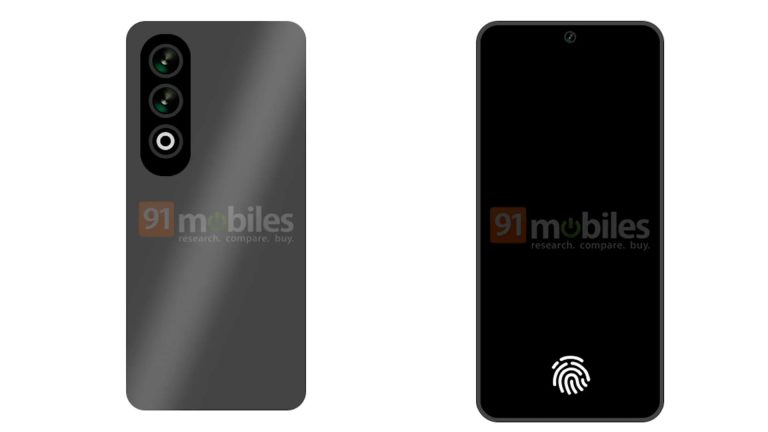
The OnePlus 12 and OnePlus12R have just hit the market, and they’ve proven to be very popular devices. However, OnePlus has more devices in the pipeline. Thanks to 91Mobiles, we have renders of a mystery OnePlus device, and it looks like it might be a rather capable Nord device.
The OnePlus 12 is the latest flagship release by OnePlus. It’s a sign that the company is going back to its roots and giving people a true flagship experience. Check out our OnePlus 12 Review if you want to learn more about it. If you are looking for an even more affordable version of the OnePlus 12, you can check out our OnePlus 12R review. This is a more budget-friendly phone that’s still running some flagship specs.
Renders of a mystery OnePlus device have popped up
Right now, we know very little about this device other than its model number CPH2613. The only thing we can tell from the model number is the fact that it’s a Nord phone. The CPH in the model number is also present in phones such as the OnePlus Nord N30 (Review), OnePlus Nord N300, and OnePlus Nord N20. Since we’re in a new Year, and we’re just getting these renders now, it’s possible that this phone could be the start of the OnePlus Nord 4 Series (Nord 4, Nord N40, Nord N400, if that’s the naming convention the company chooses).
As for the information we got from the renders, it looks like this phone will be a pretty big departure from the Nord phones we got last year. We see the camera package sitting on the left side of the phone housed in a pill-shaped cut-out. This contrasts the individual circular camera cutouts we got last year. The cameras will sit in the vertical orientation.
We’re not sure if this is just an artistic embellishment, but we see what looks like a metallic sheen on the back of the phone. That could point to this phone having glossy glass on the back. However, we’re not sure if that’s accurate to the actual phone or just part of the render.
On the front of the phone, we see something rather special, the indication of an under-display fingerprint scanner. Again, we’re not sure if this is just the render, but it looks like it’ll be placed pretty low on the screen.
The render also shows us what will be present on the sides of the phone, and it’s all pretty standard. We see the volume and power buttons on the side with what looks like a headphone jack up top. On the bottom, we see the SIM tray, speaker grill, and charging port.
We also have camera information
Aside from the renders, we have information about this phone’s cameras. These charts are from the Camera FV5 certification. From these charts, it appears that this phone will have a 50-megapixel main camera that bins down to 12.6 megapixels. It will have an f/1.8 aperture with OIS at EIS. Up front, we’re looking at a 16-megapixel front-facing camera with an F/2.4 aperture and EIS.
Right now, there’s not too much information about this phone. However, it just shows that this phone is in the works, and we will be getting more information on it as time goes on.
The “Plus” variant, the middle child, the monkey in the middle; the Samsung Galaxy S24+ sits in a weird spot in the series lineup. It’s neither the most powerful nor the most affordable Galaxy phone, so what is it? I was given the opportunity to review the Galaxy S24+ and find an answer to that question.
This phone is rather important to focus on as opposed to the other models because its killer traits aren’t as obvious. The base S24 is the cheapest model. It’s for people who don’t have the money to spend on a more premium phone but still want the most up-to-date Galaxy S experience. The Galaxy S24 Ultra is the most feature-packed and premium phone in the line-up. It’s for people who want the most that their Galaxy phone can possibly provide them.
But, what about the Galaxy S24+? Who is this phone for? Why should you choose this one over the base S24 or the Ultra? Well, there are several answers to those questions. So, let’s go over them and more in this review.
Galaxy S24+ Review: Build quality
This is an area where I didn’t expect any surprises. Samsung, obviously, reserves the highest standard of build quality for its flagship phones, and the Galaxy S24+ is no exception. The build quality of this phone isn’t only high-quality, but it also illustrates how nuanced Samsung’s phones are when it comes to their builds. I previously reviewed the Galaxy S23 FE (Review), and that is a damn good-feeling phone. It’s hefty and sturdy, and it feels like a precision-built work of craftsmanship; the Galaxy S24+ makes the Galaxy S23 FE feel like a toy.
That might be a bit dramatic. At the very least, it makes the Galaxy S23 FE feel like an actual mid-ranger by comparison. That confounded me because the Galaxy S23 FE is a solid brick of glass and metal. There isn’t a single thing about it that feels cheap. However, the Galaxy S24+ feels like it’s more premium in just about every way.
Picking up this phone, it’s unmistakable that I’m picking up a true-to-form flagship phone. Every centimeter of this handset just feels amazing. It strikes a balance of being decently hefty while remaining svelte; a PERFECT balance. It’s heavy enough to drive home the point that it’s premium, but it’s thin enough to not feel clunky. Every time I pick it up, I feel like I’m holding a phone built with a premium feeling in mind.
Aside from the overall feeling in the hand, there are other important aspects of the build quality that I like. The buttons are nice and clicky, which is something that people often overlook. A set of mushy buttons can impact the feeling a bit. Also, I bent the phone slightly a few times (I didn’t go full zack Nelson, don’t worry) and I didn’t hear any creaks or other sounds.
All in all, Samsung has a track record of making some extremely premium-feeling flagship phones, and the Galaxy S24+ continues that tradition. I knew this before I even picked it up. Opening up the box, I said to myself “This is a $1,000 Samsung phone. Of course, it’s going to be well-built!” Yet… I was still blown away when I first picked it up. I’ve reviewed a ton of phones, and this is probably the best-feeling phone out of all of them.
Galaxy S24+ Review: Design
When it comes to the design, there’s not much for me to say. This is the design that we’ve seen with the Galaxy S23 phones last year. In fact, it seems that the majority of Samsung’s phones have taken this aesthetic. The S FE phones adopted it along with the A-series phones. So, there’s not too much to talk about, at least when it comes to more obvious aspects of the design.
Looking at the Galaxy S23 and the Galaxy S24+ side-by-side, it’d be tough to tell the difference. They both have notably rounded corners, and they both have their camera lenses jutting from the body individually.
It’s only when you start nitpicking do you see some notable differences. For starters, and this is something that I love about the design, the frame’s edges of the S24+ are flatter. The Galaxy S23’s frame has a slight bulge to it. It doesn’t feel bad at all, but it feels a little bit weird compared to the Galaxy S24+’s frame. The frame on the Galaxy S24+ makes the phone feel more sleek and professional in a way. It adds to the overall dense feeling that makes the phone feel more premium than the S23.
One thing that I like about the back glass is that it curves inward ever-so-slightly where it meets the frame. It’s one of those details that adds dimension to the design. The frame itself also curves inward where it meets the glass. Aside from being visually appealing, it also helps you while holding the phone. The subtle curves keep the metal and glass from digging into your hand while you’re holding it. It sits comfortably in my hand. This is something I can’t say about the Galaxy S23 FE.
Bezels
Another thing about the design that stuck out to me is how thin the bezels are. So, I’ve always been the person to say “Who cares about bezels? When you’re watching content or gaming, you’re looking at the screen, not the bezels!” But, in comes Samsung to make me change my tune. The Galaxy S24+ is a pretty large phone, it’s a great feeling seeing a screen that comes so close to completely filling out the full front of the display. The bezels are just a few millimeters thinner than what we got with the Galaxy S23 phones if that, and the viewing experience is more immersive.
So, is the design a massive overhaul for the Galaxy S series? No. But, is it a notable change that makes for a subtly new aesthetic? Still no… However, there are a few differences that let us know that Samsung isn’t copying and pasting the same design from last year.
Galaxy S24+ Review: Display
So, this is an area I’m not sure how to tackle. At the time of writing this review, there have been numerous reports pointing to the Galaxy S24 phones’ screens being washed out compared to the S23 phones. This is something I was able to confirm, as it’s even washed out compared to my Galaxy S23 FE. One thing I noted in my Galaxy S23 FE review was that the screen was punchy, but it fell just a hair short in terms of overall saturation, and it’s still punchier than the Galaxy S24+ display.
A Samsung rep said that this was going to be fixed in an update (implying that it’s a bug), and another rep said that it’s intended behavior (implying that it’s not a bug). So, if there’s any solid update on this story, I’ll update this article to say so.
Brightness
When it comes to the brightness, I have no complaints. Samsung has hooked its flagship phones up with exceptionally bright displays since the Galaxy S22, and they’ve been getting brighter. This year, the company gave the S24+ an eye-watering 2,600 nits of brightness, but the numbers don’t really mean much. The important thing is that I can see this screen perfectly in direct sunlight.
I tested the display brightness in several lighting scenarios, and there wasn’t a moment when I had trouble seeing the screen. The Galaxy S22 Ultra was bright enough with its 1,750 peak brightness. This phone’s display is an impressive 32% brighter.
The auto-brightness feature does a great job of choosing the right brightness for each lighting situation. I never felt the need to adjust it to better match the lighting conditions.
Colors
Now, onto the colors. This is a tough one, as I’m looking at the display colors that aren’t as punchy as they could be.
That being said, I acknowledge that the colors are muted compared to past Galaxy phones. However, that’s just comparing them to other Galaxy phones. In general, the display on this phone is still pretty punchy. For me, it falls into the “Responsibly saturated” category. You’re still getting some nice juicy colors. Red flowers still pop, blue skies still punch, green grass is still lush. The colors are still impactful, but they avoid being cartoonish. They come out more natural.
Imagine seeing Times Square in real life instead of on a punchy OLED panel. You’ll see colorful billboards, lighted signs, neon lights, etc. An OLED panel would accentuate those colors to a great and visually appealing effect. However, in real life, the colors are still vivid and saturated. I feel like this is what this display represents. Viewing this display is like viewing Times Square in real life and seeing how naturally saturated everything is. It’s like looking at the world with a little added juice.
Yes, I said added juice; the colors aren’t 100% true to life. While not as saturated as Samsung’s previous displays, they’ve still got some punch. Honestly, I’d compare the colors to that of the display on the Galaxy Tab S9+. This is an LCD display, but it’s still extremely saturated. Yes, it’s behind the curve a bit, but it’s still amazing.
So, all in all, people are saying the display is dull compared to previous Galaxy phones, and it’s true. However, it’s not like you’re going to be seeing colors from a 2015 LCD display. Unless you’re moving right from another Galaxy phone or if you’re going to be holding your Galaxy S24+ side-by-side with another phone constantly, you’re not going to feel a notable valley.
My wishes
Do I wish that there was more color to the display? Honestly, yes. There are scenes in movies (colorful cartoonish and picturesque movies) that I wished just had a little more umph. Maybe the sky could be a little bluer, maybe a flower could be a bit more yellow. However, it didn’t substantially dampen the experience.
Adjustments
The latest version of One UI comes with a couple of ways for you to adjust the screen to tailor it to your experience. There are a fair number of things that you can tweak, but some of them are rendered ineffective because of the display issue (it could be an issue or intended behavior, but for the sake of the article, I’ll just refer to it as the “display issue”). Diving into the display options, you’ll see the Screen mode options that will let you switch the display between Natural and Vivid. There’s basically no difference between the modes because of the display issue.
Under the modes, you’ll see a bar that allows you to change the color temperature of the display. There are five settings that you can choose between very cool and very warm. Tapping the Advanced Settings option will open a section that will let you dial in the RGB values.
Those are the color options, but the adjustments go further than that. This year around, Samsung gave the “Plus” model a more pixel-packed display. The Galaxy S24+ has a 1440p+ display, which is much sharper than the 1080p+ display on the Galaxy S23+. If you want to crank down the resolution, you can change it to either 1080p+ or 720p+. This makes for less sharp visuals, but the battery will last longer.
When it comes to the refresh rate, this display caps out at 120Hz. However, there’s not a mode that keeps it locked at 120Hz. The only mode that gives you 120Hz is the Adaptive mode. In this mode, the software will bump the refresh rate to the full 120Hz based on your usage. There’s also the Standard mode that will knock the refresh rate down to 60Hz.
Galaxy S24+ Review: Speakers
The display and speaker quality of a phone go hand in hand. No matter how gorgeous the display is, if the speakers are low-quality, then you’re going to have a low-quality media consumption experience. This is why you’ll want your phone to have a nice set of speakers.
Samsung typically puts high-quality speakers in its phones, and that goes double for its flagship handsets. While reviewing the speakers on the Galaxy S24+, I can honestly say that I was not surprised with the results. I’ve used some pretty stellar speakers from Samsung devices, and those were more affordable offerings.
To test this phone’s speakers, I listened to a ton of music from different genres along with games, YouTube videos, and podcasts (this was just general use). Also, I used custom audio examples that were designed to stress test certain aspects of the speakers. I’m judging the speakers based on these seven aspects: Loudness, Distortion, Bass, Treble, Balance, Vocals, and Immersion.
Loudness
You, obviously, want to be able to hear your speakers in loud environments. In terms of raw loudness, I think that these speakers could be louder. At full volume, I could hear the speakers comfortably across my room, and I could also hear them pretty well across the living room. They’re perfect for most indoor scenarios. Taking these speakers outside, however, I started to hear these speakers’ limitations.
Distortion
I feel like the loudness was dampened a bit to cut down on the distortion, and it worked for the most part. Listening to music at full volume, I heard a little bit of distortion, but nothing close to most other phones. I’d give up a little bit of volume for less distortion.
Bass
One of the main things that make a quality pair of smartphone speakers is the bass performance. Since smartphone speakers are smaller, it’s harder for them to produce lower tones. However, there are stand-out phones that do a great job of bringing the bass. The Galaxy S24+ is one of them.
When it comes to producing lower tones, the Galaxy S24+ is one of the best phones I’ve tested. I listened to all kinds of music, watched movies, and played games, and these speakers produced some great low-end audio. The test track I listened to accented the lower instruments like double bass, tubas, bass clarinets, bassoons, and contrabassoons. I could hear the low growl of these instruments along with the grit and texture of their sound.
Treble
The treble is one of the things that companies don’t really focus on sometimes. Having good treble means that the higher tones come through crisp and clear. I think that the Galaxy S24+’s speakers do a good job of producing higher tones, though they could be better. I feel like the sound is definitely geared towards a lower and warmer sound, and the treble does suffer a little bit.
Balance
Being able to produce high and low tones is important, but it’s also important to balance these sounds. This helps them create an immersive sound. You don’t want the bass overpowering the treble or vice versa.
When it comes to overall balance, I think that the sound is pretty balanced with a little bit of emphasis on the low-end. It doesn’t overpower the treble, as I can hear some nice treble as well.
Vocals
You’re likely going to be using these speakers to listen to songs with singers. The voices are very important to the overall sound. There are some phone speakers that fall short in the vocals department, and this means that the singers’ voice just blends in with the rest of the music. The vocals sound beautiful while listening to the Galaxy S24+’s speakers. They project perfectly.
Immersion
Immersion is an obvious one. You want your sound to be full and captivating. I think that overall, the speakers give me some wide and immersive audio. All of the audio coming from the speakers sounds amazing and immersive.
Overall
Samsung pretty much checked all of the boxes when it comes to making a great set of speakers. While just a tad quiet, they produce an absolutely beautiful sound, and I loved using them to consume all sorts of media using them. Honestly, these are some of the best speakers that you can get on a smartphone nowadays.
Galaxy S24+ Review: Performance
Performance is another area where I knew that this phone would excel. It’s a Samsung flagship packing the latest Snapdragon chip, so it’s a no-brainer. I’ve been both testing this phone and using it as my daily driver (I instantly popped my T-Mobile SIM into it). At no point throughout my testing, did I see this phone slow down. Every app opens swiftly with a perfectly smooth animation, I’m able to navigate through every menu fluidly, and using the interface is perfectly smooth.
Everything just functions; from the moment I unlock it to the moment I slip it into my pocket, I feel like I’m using a phone with performance as premium as its hardware.
As for the fingerprint scanner, this phone uses an under-display fingerprint scanner, I have no complaints in that department. It reads my fingerprint perfectly almost 100% of the time.
So, overall, day-to-day performance is perfectly smooth. I did use the phone after it’s been heated up a bit from some intense gaming, and it still didn’t want to slow down.
Benchmarks
As we know, benchmarks are not a definitive measure of a phone’s day-to-day performance. However, just for reference, I’m going to throw a few scores at you in case you keep up with them. At Android Headlines, we have a few tests that we put our phones through.
Firstly, the typical benchmarks. Using Geekbench this phone scored 2235 for the single-core score, a 6778 for the multi-core score, and a 15055 for the GPU score. We also used 3DMark. Using this program, this phone got a Best loop score of 4862, a Lowest loop score of 2547, and a Stability score of 52.4%. As another test of the performance. We tested rendering a short 1-minute video using CapCut. rendering it only took 6.94 seconds.
Galaxy S24+ Review: Gaming
Most people who pick up the phone are going to be doing some serious gaming on it. Samsung’s flagship phones are typically made for gaming, and the Galaxy S24+ is no exception. I didn’t expect this phone to have any issues with playing games, and I wasn’t disappointed.
Right off the bat, this game crushes any 2D game that you’ll throw at it. It doesn’t matter how many sprites are on the screen or how many animations are playing. The Galaxy S24+ didn’t hiccup or skip a beat at all. We’re talking about Qualcomm’s most powerful chip on the market with Samsung’s OneUI. Playing 2D games is a breeze.
But what about the big fish? What about games like Genshin Impact, one of the prettiest games on the market now? The story is much the same. I started up the game and was met with a buttery-smooth gameplay experience. I went into the settings and maxed out the graphics. Everything was turned to its highest setting with anti-aliasing and motion blur turned on. Also, I set the peak frame rate to 60FPS. This phone did not skip a beat at all. I ran through the world, battled enemies, glid throughout the land, and had a consistent frame rate.
The same thing went for Honkai Star Rail. This is also a game that’s super pretty, rife with animations, and chock full of effects that would slow down weaker chips. While playing this game, I think I only noticed one dropped frame during an intense attack animation, but that was barely noticeable. The Galaxy S24+ conquered these games without breaking a sweat.
But… I had to heat things up
You can’t call it a gaming review without pushing the phone to its absolute limits. I had to work hard to get this phone to slow down, and I managed to. To do so, I played the games while I had a video playing in PiP mode WHILE screen recording. You can see it in the tweet below.
Really pushing the Galaxy S24+ to its limits.
Testing playing games while watching a video WHILE screen recording. It’s the only way I was able to get it to drop any frames.
In case you’re wondering, yes, the screams of pain that my Galaxy S24+ uttered will haunt my dreams. However, it was for a good cause. It’s to show just how far you have to go to push this phone to its limits. You’re not likely to be playing a game while watching a video and recording it at the same time, so you can rest assured that you’ll get some powerful gaming performance from this phone with standard use.
Galaxy S24+ Review: Heat performance
This is a phone for power users, and power users tend to run their phones into the ground. This causes them to heat up a fair bit. With typical use, this phone remained cool. It wasn’t until I started gaming did I start to feel it heat up. During my review of the Galaxy S23 FE, I noted that it heated up immensely while gaming. It heated up quickly and to a high temperature. It got uncomfortable to hold after just about 20 minutes of gaming.
I’m happy to say that things are different with the Galaxy S24+. Your typical side-scroller won’t heat up the phone, but intense games like Genchin Impact will definitely cause it to heat up faster. Playing this game non-stop, it started to get warm, but it never felt uncomfortable. So, you won’t have any issues with gaming on the Galaxy S24+ for extended periods of time.
Galaxy S24+ Review: Battery
I never really used a modern Samsung phone with a bad battery life. The Galaxy S23 FE gave me some really good battery life, and I was expecting similar results with the Galaxy S24+. However, my expectations were exceeded. The battery life on this phone was exceptional. I used it as my daily driver before I formally stopped and tested the battery, and it didn’t touch the charger often.
During my casual usage, I was able to go a two-day stretch with moderate to light usage. When I cranked my usage up during testing, I still managed to get north of a day of battery life. This included a fair amount of gaming, testing the camera, and watching a bunch of content.
As for the official test, I charged the phone to 100% and streamed an extremely long video. The point was to time how long it took the battery to run dry. Well, it took the video 20 hours and 11 minutes to kill the battery. Compared to other notable flagship phones out now, that’s definitely above average. It’s just short of the iPhone 15 Pro Max which lasted 21 hours and 35 minutes.
Galaxy S24+ Review: Camera
As you can guess, the camera is a pretty major part of this phone’s experience. I tested this camera knowing that it was going to provide a pretty powerful experience, and I was not disappointed; however, there was one area where I was a bit disappointed. I’ll get to that.
Interface
Camera interfaces have pretty much converged on the formula established by Apple years back. If you’re holding it in portrait mode, you’ll see a toolbar at the top of the screen with your settings, flash control, timer, aspect ratio, resolution, Motion Photo toggle, and filters. At the bottom is where you can switch your modes. They’re all on a horizontally scrolling carousel letting you swipe left or right to switch modes.
What’s neat about the interface is that most of the settings you need to set are easily accessible via the camera’s viewfinder. You don’t have to dive into the settings to adjust the resolution, frame rate, or aspect ratio. These are some of the things we’ll want to change on the fly.
Details
I know that the Galaxy S24+ uses a 50MP camera sensor and bins down to 12MP. Since the mass majority of people will use it in 12MP mode by default, I’ll be judging the details on this mode, and I’ll talk about the 50MP mode in a separate section.
Using the camera, I’m getting some really nice detailed shots. I have plenty of room to zoom into shots before I start to see destructive pixelization. I was actually pretty surprised by how much detail was retained in the shots. I’d take pictures of flowers, and be able to pick out individual grains of dirt. A good example will be the flower below. Zooming in a bit, I can still make out the fine details of the dirt inside of it. That’s just one example.
I’ll take pictures of far-away objects and still be able to capture some decent details on them as well (this is without using the telephoto camera). Looking at the palm trees, I’m still able to make out intricate details in the leaves.
Taking a wider shot like the one of these rocks below, I’m still able to make out some significant details on the leaves between the rocks. I’m able to see the midrib and veins of the leaves along with details on the rocks.
These are just a few examples of how detailed these pictures can get. Overall, I’m quite impressed with the camera’s performance. It also illustrates the importance of proper camera software to complement the hardware. I’ve reviewed mid-range phones with sensors just as large as this one and larger, and their performance just doesn’t compete with the Galaxy S24+’s. It boils down to the harmony between hardware and software.
Exposure/contrast
When it comes to exposure, the camera does a good job of keeping a well-lit picture without dipping into overexposure. While taking images with the most direct sunlight and reflections, there’s a nice amount of highlights to give the images nuance without looking like the sensor is being overloaded. A good example is below.
The camera also did a nice job of brightening up this black wooden post below. It was able to expose it properly without having parts of it getting too noisy from being under-exposed.
I think that the sensor does a great job when it comes to the contrast. Taking pictures where the sunlight is casting harsh shadows, I was able to get great results. I’d say that the camera does raise the shadows just a tad more than I would like. The shadows in the image below were a bit darker in real life.
However, it’s not bad. I still praise the contrast overall.
Colors
This area is where we need to appreciate a little thing called restraint. We all know Samsung as the company that usually delivers more saturated images. This time around, images are still saturated, but they don’t go overboard. I call them “responsibly saturated.” They’re just punchy enough to please the eyes, but they don’t stray into being cartoonish.
A good example would be this image of the pinkish flower. Most camera sensors would produce results that would burn your eyes with how saturated the colors are. However, Samsung was able to keep the saturation on a leash. The color is kept well in line, but there is still a nice burst to make them stand out.
Another good example is the sky in this image. The stop sign is a bit darker, and the color is kept nicely toned down. However, the sky in the background has a nice punchy blue tone to it. It strikes a nice balance that gives the eyes something nice to look at while remaining reasonable.
50MP mode
So, let’s jump into the high-res mode. This will use the full 50MP of the sensor. This is just over quadruple the resolution of the standard mode. While that’s the case, the results aren’t all that much different. Don’t get me wrong, the images are sharper and I’m able to zoom into them more than with the 12MP mode.
However, the difference isn’t all that significant. You have some additional range to zoom and crop the images but don’t expect to zoom into them 100x. You’ll want to shoot in this mode if you want to zoom in just a bit.
However, the camera does a much better job of capturing and retaining more details than other cameras that I’ve reviewed. There are some phones that produce results that don’t look any different from their standard modes; some of them look worse (calling out the Moto Edge+ 2022). So, the high-res mode on the Galaxy S24+ achieves an actual high-resolution image.
Low-light (No night mode)
When it comes to the low-light performance, this is where I was a bit disappointed. I tested the camera with the night mode turned on and without it. Without the mode turned on, the images were understandably darker with more noise. The issue is that, when I take the images, the camera doesn’t seem to do any processing to reduce the noise and brighten the image. I know that the phone is smart enough to do it. However, the results I get are very noisy and dark.
However, this is only for the extremely dark lighting conditions. When I turned the light up just a bit, the results were, of course, better.
When I moved outside, I was able to get some better results thanks to the additional light sources. One thing that got me about this camera was the excellent dynamic range it was able to achieve. There were good details throughout both the highlights and shadows.
Low light (Night mode)
Using the night mode, I was able to get some additional exposure in the images while sacrificing some details. I think that this camera is a decent overall performer in this area, but it definitely falls behind the kind of performance that you’d get from a Pixel phone.
Overall
I think that the camera is an amazing performer. Undoubtedly, you’re going to get a more powerful experience with the Ultra model, but you’re still getting a great experience with this camera. It creates images that are well-exposed, contrasty, responsibly colorful, and full of detail.
Let’s wrap this up
As I said before, the Galaxy S24+ is in a weird spot in the lineup. Being the one in the middle, it’s not the most of anything. It’s not the most powerful, or feature-packed; that’s the Ultra. It’s not the most affordable or pocketable; that’s the base variant. But, let’s not think about it as the meat of this tech sandwich. Let’s think of this phone as an entity all its own.
The Galaxy S24+ is a well-built, nice-looking, and powerful phone with a beautiful display, a powerful camera, some stellar speakers, and great battery life. It’s a powerful phone with powerful AI technology in the software and seven years of software updates. I enjoyed every moment I spent with this phone, and continue to enjoy it. Immediately before this phone, I was rocking a foldable phone that I loved to death. However, the Galaxy S24+ is so good that I swiftly made it my daily driver. In fact, it brought me over to the Galaxy ecosystem.
This is a device that works so well. It’s more than just the middle child; it’s not the less premium Ultra or the bigger base Galaxy S24. It’s an experience all its own, and this is why I heavily recommend this device.