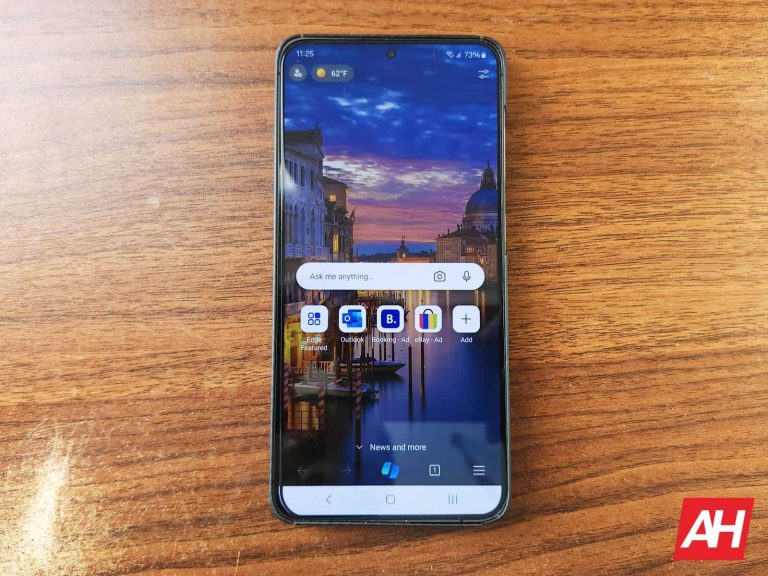
We all know about the new Circle to Search feature introduced by Samsung and Google. We also know that this feature will not be making it to other phones until later this year. That’s rather annoying, but what makes it worse is the fact that Microsoft is working on its own Circle to Search feature for the Edge browser. So, there’s a chance that Microsoft Edge will get Circle to Search before most Android phones.
To catch you up, Circle to Search is a feature that makes it much easier to access Google Lens. When you have the feature, all you have to do is summon Google Assistant, and it will basically take a screenshot of what’s on your screen currently. Then, simply draw a circle around what you want to search for. Google Lens will analyze what you just circled and give you search results.
Microsoft Edge may get its own Circle to Search feature
As you may have guessed, Microsoft is not porting over Google’s exact implementation. This feature is called Circle to Search with Copilot. So, it’s powered by Microsoft’s own artificial intelligence. Rather than being on mobile, this is a feature that you will use on the Edge browser using your mouse.
It’s pretty straightforward, as you’ll just need to access the tool, and draw a circle around the object with your mouse. Copilot will then analyze what’s on your display and start a Copilot conversation around that image. The conversation will open up on the right side of the screen in the side panel, and you’ll be able to ask it anything you want about what you circled.
At this point, this feature is not available. You can see it in the latest Canary version of Microsoft Edge, but it’s not functional. So, Microsoft is still working on making it work. In any case, it’s rather impressive that the company already has its own iteration, seeing as Galaxy unpacked happened only a few weeks ago.
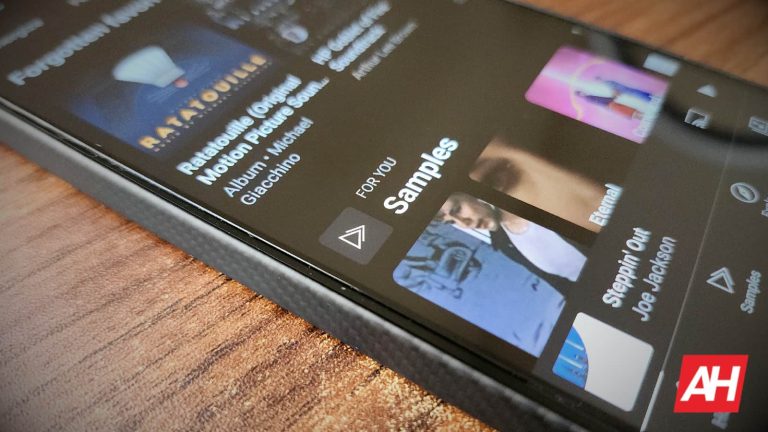
Let’s admit it, the world is converging into one giant TikTok feed. Several applications have adopted their vertically scrolling video feed, and YouTube Music is the next one to follow suit. Just recently, YouTube Music rolled out its Samples feature last year, and now they’re showing up on the home screen. It’s like watching YouTube Shorts but on YouTube Music.
YouTube Music, along with YouTube Premium are actually doing pretty well now. The company announced that it crossed 100 million users across YouTube Premium and YouTube Music. That’s a pretty surprising figure, seeing as YouTube has been going through a bit of a controversy surrounding ad blockers and increasing its prices. One thing to note is that this number includes active free trials going on. So, a section of the 100 million people aren’t actually paying for YouTube premium.
YouTube music rolls out is TikTok-style Samples feature
Trying to count how many services are implementing some sort of TikTok-style feed, it’s tempting to bring up that Vegeta “It’s over 9,000” meme. In all honesty, The TikTok-style feed seems to be the most popular and efficient way of displaying content. More social media platforms and video streaming platforms are adopting the portrait video-friendly interface. Famously, Instagram, YouTube, and Snapchat all brought their own vertically scrolling interfaces in order to combat TikTok
Well, a latecomer to the game is YouTube Music. The company just rolled out its new Samples feature. On your home screen, just scroll down a bit until you see the horizontally scrolling feed. When you tap on it, you will see a YouTube Shorts interface with clips of music videos in portrait mode. Since music videos are recorded in landscape, you will definitely see much of the action cropped out. However, these aren’t meant to be for viewing full videos. Samples are meant to give you a taste of some of the music you may be missing out on.
Using Samples, it’s easy to see that the selection of Samples you get is based on your watch history. However, there’s always the chance you’d run into some music that doesn’t fit your taste. For example, my musical taste consists of acts from the ’60s like The Bee Gees and The Turtles to the ’90s consisting of acts like TLC and Debbie Gibson with a ton of classical music thrown in. However, I’d sometimes run into modern pop and rap songs.
This could just be YouTube Music trying to push more modern popular music, as that’s where most of its viewership comes from. However, skipping them is only a swipe away. Also, they don’t pop up too often. So, you’ll see most of the music that you listen to on a daily basis. Along with songs you listen to, it will show you other songs in the same vein of your music tastes that you can discover.
Using YouTube Samples
The interface is very reminiscent of YouTube Shorts. So, on the interface, you will see a column of buttons on the right side of the screen. You have the Like,Add to playlist, and Share buttons.
There’s also a Shorts button. This will take you to the YouTube app proper and show you any YouTube Shorts that use this particular song. Below that, there’s a Play button. It will take you to the full song on YouTube Music. Under those buttons, you will have your three-dot menu with remaining options such as the Start Radio, Play Next, Add to queue, Download, Go to artist, and Report buttons.
Single-tapping the screen will pause the video, and double-tapping it will like it. Unfortunately, he cannot scrub the video. If you want to restart it or go back, you will have to wait for it to replay.
AnyDesk users faced days-long login issues as the company investigated the problem in collaboration with cybersecurity firm CrowdStrike.
AnyDesk, a remote desktop software maker, has reportedly become a victim of a cyberattack that compromised its production systems, allegedly allowing hackers to access source code and private code signing keys.
It is worth noting that the company experienced a four-day outage from January 29th to February 1st 2024, affecting the users’ ability to log in to the AnyDesk client.
In its official advisory, Germany-based AnyDesk revealed discovering the attack after detecting signs of intrusion on its product servers. After a security audit, they activated a response plan in collaboration with CrowdStrike.
Media reports suggest that the attackers stole source code and code signing certificates; however, AnyDesk has not confirmed it yet. It has only confirmed that the incident was not a ransomware attack.
AnyDesk responded to the incident by revoking all security-related certificates and systems replacing or remediating its systems. It also plans to revoke the previous code signing certificate for binaries with a new one.
Moreover, the company has revoked all passwords for its web portal (my.anydeskcom) too, as a precautionary measure. Relevant authorities have been notified of the breach as well.
Although AnyDesk states there is no evidence of any end-user systems affected it did not share the details on how the production system hacking occurred or regarding stealing of information and session hijacking. The company noted that it never stores private keys, security tokens, or passwords so end-users should not feel threatened by the breach.
“Our systems are designed not to store private keys, security tokens or passwords that could be exploited to connect to end-user devices. As a precaution, we are revoking all passwords to our web portal, my.anydesk.com, and we recommend that users change their passwords if the same credentials are used elsewhere,” AnyDesk’s advisory read.
Nevertheless, AnyDesk is urging users to change their passwords if reused on other online services and download the latest version AnyDesk 8.0.8, which has a new code signing certificate. It is still surprising because certificates are invalidated only when they have been compromised.
AnyDesk is a popular remote access solution for enterprise users, with over 170,000 customers including high-profile firms like Amedes, AutoForm Engineering, LG Electronics, Comcast, NVIDIA, 7-Eleven, Siemens, MIT, Samsung Electronics, Spidercam, Thales, and the United Nations.
Unfortunately, its wide reach and remote accessibility make it a popular tool among threat actors for gaining persistent access to breached devices and networks. In July 2021, Hackread reported seizing a fake call centre that had been scamming US citizens for seven months with employees posing as Amazon’s technical support team. The employees extorted Amazon users by claiming their Amazon IDs were hacked and tricked them into paying for fake ID repairs via the AnyDesk app.
Waze for iOS received an update in the App Store as January came to an end. Version 4.101 of the crowdsourced navigation app was supposed to fix an issue that incorrectly showed railroad crossings on the app. You don’t have to be Snidely Whiplash to want to know where the tracks are located and the railroad crossing warnings prevent accidents from occurring. Most times when train meets automobile, fatalities ensue.
Vehicle icons randomly disappear on Waze for Android Auto and CarPlay
The update, according to Autoevolution, was the first for the iOS version of the Waze app since version 4.100 was dropped on December 14th. And Waze users are a bit peeved considering that there are other issues that need to be addressed. In Android Auto and CarPlay, some users are upset to see the icon representing their vehicle randomly disappear from the display whether navigation is on the screen or not.
The voice command feature is not working on the Waze for iOS app
Autoevolution’s Bogdan Popa notes that his icon vanishes on CarPlay when turn-by-turn guidance is running. As you might have figured out already, this means that you can’t find the location of your vehicle on the map. Users also complain that the app sends them on alternate routes that don’t make sense. But this could be due to the app’s goal which is to get drivers to their destination using the fastest route even if it is not an easy one for the driver to navigate. As long as you have certain navigation settings disabled, such as the one that will “Avoid tolls,” and the one that will “avoid freeways,” Waze will suggest the fastest route.
Voice command is broken on the iOS version of the Waze app
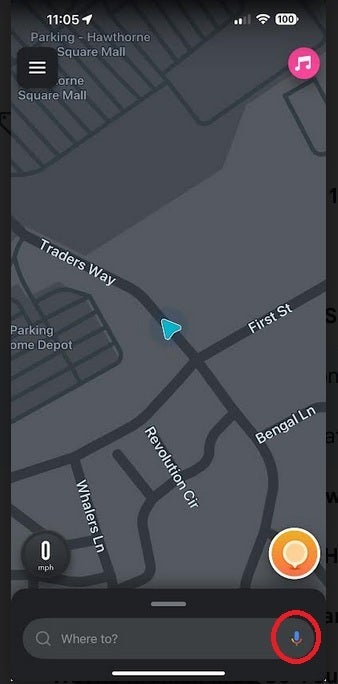
Another issue is that the voice command feature for the iOS version of Waze is not working and it hasn’t been for a few weeks. This prevents users from telling Waze where they want to go by using their voice. For example, when I tapped the microphone icon on the “Where to?” field in the Waze app and said “navigate to Madison Square Garden,” the app said “Got it” and repeated my request but did not act on it. In other words, it did not show me how to get to the venue. I was using Waze for iOS on my iPhone 15 Pro Max.
Doing the same thing using the Android version of Waze on my Pixel 6 Pro resulted in the app showing me the directions to the world’s most famous arena from my location. So yes, this is a problem for iPhone users although navigation will work if you type in the name of the destination. This could be a big issue if you’re driving and want to change your destination by voice command. Since this is not working, what you have to do is pull over to the side of the road and type in the name of the new destination.
Even though Google owns both Google Maps and Waze, the latter is focused on navigation and getting you to your destination quickly and safely. Waze is also about getting traffic updates and road conditions from your fellow drivers who can help you avoid some issues on your journey. Google Maps is about getting you to your destination quickly and safely, but that app also shows recommendations from Google Local Guides showing you places to dine, places to spend the night, and things to do when you get to your destination.
Of course, having the icon that represents your vehicle disappear from the display is a hardship as is the broken voice command. These are just as important if not more important than incorrectly placed railroad crossings. Waze decided to fix only the latter in the latest update to its iOS app and that is a good reason why some users are upset.
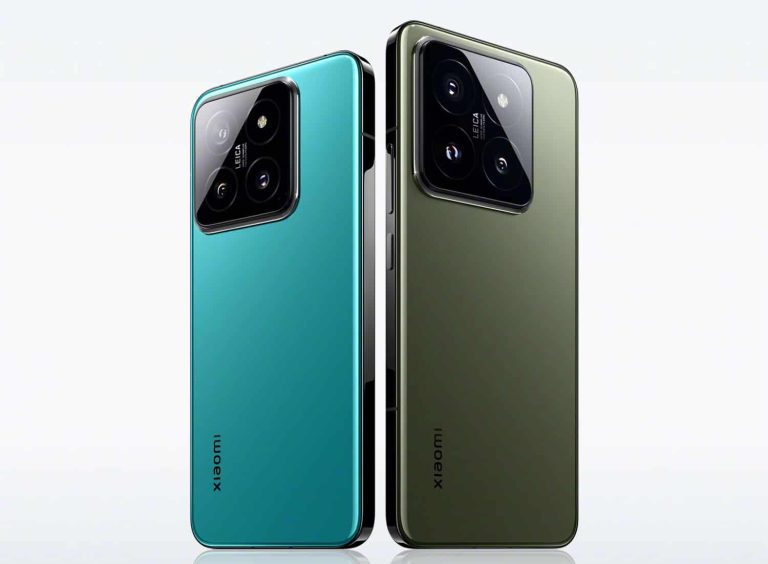
Xiaomi 14 series made its debut in China back in October 2023. With a slew of enticing features, the lineup served vanilla Xiaomi 14 and 14 Pro exclusively to native customers. Meanwhile, international buyers are holding their breath for the arrival of these flagship devices. Following last year’s schedule, the firm plans to deploy Xiaomi 14 and Xiaomi 14 Pro globally later this month, and a new teaser has landed (shown below the article).
Teaser confirms Leica and Xiaomi partnership, which is completely unsurprising
Breaking free from China-exclusive status, both Xiaomi 14 and 14 Pro will be planting their feet in a number of markets. The teaser shown below comes from Xiaomi India, though. The Xiaomi 14 series is not even mentioned, but this teaser is clearly hinting at them.
While the company has disguised the specifics to maintain suspense, the teaser did hint at Leica’s involvement in the upcoming launch. Recalling the Mi 14 series launch in China, both the Pro and non-pro devices boast Leica-optimized triple camera setups. With a slight disparity in screen sizes, the devices mirror almost every necessary feature, be it camera, software, refresh rate, or processing power.
Probable MWC unveiling
The build-up has only begun, and Xiaomi has big plans for the series’ international release. Apart from this vague teaser on X, the grapevine hints at a launch event at MWC (Mobile World Congress), where the firm is expected to showcase not only the Xiaomi 14 and 14 Pro but also the lineup’s bleeding edge Xiaomi 14 Ultra phone. These details are backed by Xiaomi’s usual launch trajectory that follows MWC’s yearly exhibition in Barcelona.
As for the series’ specifications, every little detail about Xiaomi 14 and 14 Pro is already publicly available in China. The compact form-factor Mi 14 uses a 6.36-inch LTPO OLED panel with a 120Hz refresh rate and a semi-2K resolution. Xiaomi 14 Pro has a similar LTPO panel but with a larger 6.73-inch OLED and full-2K resolution. Both devices retain the essence of older Mi 13 devices, with flat-border designs and ultra-thin bezels.
And let’s not forget about the cameras. Xiaomi’s Mi 14 duo employs a top-of-the-line 50MP ‘Light Hunter’ (machine translation) sensor with a custom Leica Summilux lens. The primary lens supports variable aperture. The display and beastly camera draw power from Snapdragon 8 Gen 3 SoC — the most powerful engine ever produced by Qualcomm. Since the 8 Gen 3 prices are running at an all-time high, there’s still some debate, whether the global versions will secure the same SoC as their Chinese counterparts.
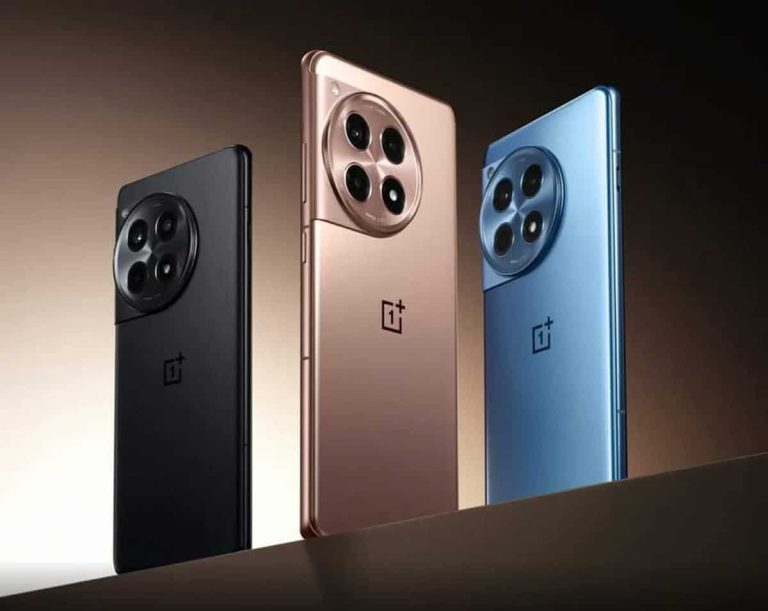
The update is marked as Oxygen OS v14.0.0.307 (EX01), and it is now rolling out to India. That very same update is expected to hit more markets very soon, as the OnePlus 12R launched in both the US and Europe as well. The update itself weighs 400MB.
The OnePlus 12R is getting its very first software update with various improvements
As per usual, the update is rolling out in stages. Therefore, you may not get it from the get-go, even when it starts rolling out to other markets. It is coming over the air (OTA), and the phone will let you know once it’s time to update. You can also check manually via the settings, though, of course.
Now, in terms of changes, let’s start with the camera. This update improves indoor photography, says OnePlus. It also improves camera performance and stability for an overall better photography experience.
System stability and performance, in general, have been improved. The power consumption has been optimized as well, and the phone should be able to offer even better battery life.
Bluetooth & network stability has been improved, in addition to camera improvements
The stability and the compatibility of Bluetooth connections have been improved too, as have network stability and compatibility. That is basically it as far as the changelog is concerned.
The OnePlus 12R actually may be the best option for most people, over the OnePlus 12. The OnePlus 12 is the better phone, but the OnePlus 12R is very affordable, well, at least in the US.
This phone does cut some corners in the camera and charging departments, and it also has an inferior chip. For the most part, it does look like a very compelling smartphone, especially for the asking price.
We’re in the process of reviewing this device, and the review is coming soon. So, if you’re still trying to decide whether to get it, perhaps we’ll be able to help out.
What is Android mobile? Basically, it is the operating system that runs on your smartphones and tablets. This article is going to go more in-depth about what Android mobile really is.
There are really only two mobile operating systems out there: Android and iOS. There are still some companies that are using proprietary software for some phones (mainly flip phones), but for the most part, there are only two options.
Android is of course, Google’s option.
Brief history of Android
Android initially started out as an operating system for digital cameras. Think of the point-and-shoot and DSLR cameras. The company, Android Inc., was founded in Palo Alto, California, in October 2003 by Andy Rubin, Rich Miner, Nick Sears, and Chris White. Rubin had difficulty pitching Android as a camera software back in 2004 but was able to get $10,000 in cash from a close friend – Steve Perlman. In 2005, Rubin tried to negotiate deals with Samsung and HTC; shortly afterward, Google acquired the company for $50 billion.
Rubin and the team continued to work on Android under the umbrella of Google for a couple of years before introducing it to the public on September 23, 2008. It was introduced at a New York subway station, and HTC’s then-president, Peter Chou, was part of the presentation. This is because the first Android phone was the T-Mobile G1, or the HTC Dream as it was known in the rest of the world.
In 2010, Google launched the Nexus line of devices. This saw Google partnering with different device makers to produce devices that ran “stock” Android, and it was Google’s vision of what Android should be. In 2016, Google switched gears and ditched the Nexus in favor of the Pixel, which is a line of phones entirely produced by Google. Instead of relying on OEM partners to build the hardware, Google does the software.
Today, there are over three billion monthly active Android devices in the world. That’s an impressive number, seeing as that’s the number of Android devices pinging Google’s servers every month.
For the most part, smartphones and tablets run Android mobile. Most smartphone makers are using Android – with the exception of Apple – for their smartphones. So, as long as you don’t have an iPad or iPhone, you most likely have Android mobile on your device.
Samsung uses Android for the majority of their smartphones and tablets. There are a few tablets that run Microsoft’s Windows, as well as a few smartphones that run Samsung’s own proprietary Tizen operating system.
What are the benefits of Android mobile?
One of the main benefits to using Android mobile is the flexibility of the operating system. Android mobile allows for almost endless customization. And that also means that smartphone makers can customize the operating system to their liking. Don’t like your home screen? You can download a launcher to change it. Don’t like Google keyboard (and its terrible name, “Gboard”)? You can download a new keyboard to use, like Swiftkey. These are just some of the customization features that Google offers.
Gboard for Android
Since Android runs on over 75-percent of smartphones in the world, it means that if your next smartphone is not from the same company as your current smartphone (i.e. you have a LG G6 now, and you upgrade to a Samsung Galaxy Note 10), it won’t be a huge difference in the experience, since it is running the same software at its core. Which would be Android.
For users, there are millions of apps available to download from the Google Play Store. No matter what you’re looking for, there is most likely an app for that. In fact, there are probably several apps for that. The Google Play Store (starting with Android 10) will also push out platform updates for your device. Making it easier to update your smartphone or tablet and keep it up to date.
There are many features that Android has that just makes using your smartphone much easier. Like Quick Settings. Instead of it being a swipe up gesture like on iOS, it’s in the notification pull-down. Making it easier to check notifications and turn off WiFi or adjust the brightness. These are also customizable. So if you don’t need the location toggle, you can get rid of it.
Android also has dark mode. This has been available in Android 9 Pie for a little while, but Google made it system-wide in Android 10 (released in 2019). If you toggle on dark mode or “night mode” you’ll get a darker interface, which is not only better on the eyes but better on your smartphone’s battery. Many apps are now updating for dark mode too.
If you’ve ever missed a moment because it took to long to open your camera, well Android has solved that. Double-tapping your power button will automatically open the camera. So that you won’t miss that moment. Really important for those with kids.
These are just some of the very many features that Android has. Google is constantly making new features and improving the features it already has, to make life easier.
What are Android “skins”?
Android “skins” or more commonly known as “overlays”, are an overlay that a manufacturer can put on top of Android on their device. Think of Android mobile as the cake and the overlay is the frosting.
For instance, Samsung has One UI. It has undergone a few name changes over the years, and now it’s simply One UI. With this overlay, Samsung decided to push a lot of the buttons and controls towards the bottom of the phone. This was to meet the demand of displays getting larger and larger. Which, in turn, makes it more challenging and tougher to actually use them one-handed. Samsung also has a number of its own features backed into One UI, which you won’t find in Android. That includes things like Air Gestures for the S Pen and a recycle bin in the gallery, to name a few.
However, many prefer OnePlus’ Oxygen OS. This is a mostly stock Android overlay that has a few features added. OnePlus has decided to just add to Android, instead of trying to make it look hugely different. With Oxygen OS, you do get even more customization features, like theming, that are available system-wide. There’s also an “App Locker” that will lock away apps with sensitive data in them, so when you hand your phone to people, they don’t see that data. It’s also a very fast overlay compared to Google’s Android. This is due to OnePlus removing a lot of the animations that Google has included.
There are other skins out there, too. Huawei’s Emotion UI or EMUI is also a pretty heavy skin like Samsung’s One UI. Motorola, ASUS, and ZTE have all adopted a more stock-like skin for their smartphones, similar to Oxygen OS, but even lighter.
How do I know if I have the latest version of Android mobile?
To check and see what version of Android mobile you’re running, head into the Settings of your smartphone. Scroll down to “About Phone” and then scroll down to the section that shows the software status. Depending on the phone you’re using, you may have to tap on “Software Info” or something similar to get this information.
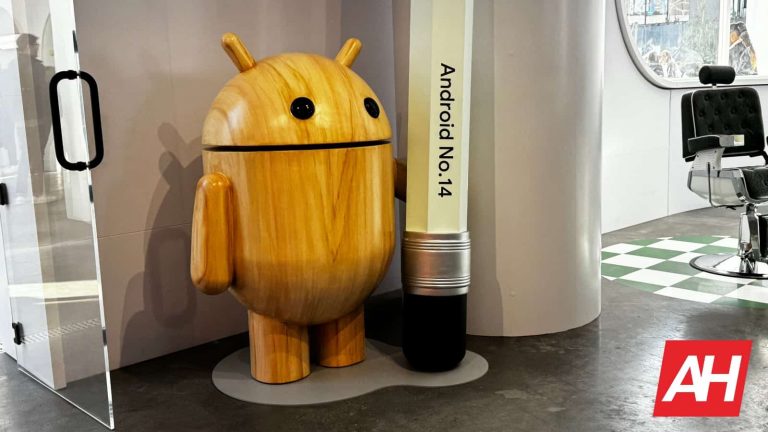
As of right now, the latest version of Android is Android 14. It was released on October 4, 2023. You might be running the latest version, but this depends on your device. Google, Samsung and OnePlus are pretty quick with updates, but this also depends on how old your phone is.
Google has not yet announced Android 15, but we do typically get the first developer preview around February. So that could be happening any day now. The final release won’t launch until around September or October, however.
What are the most popular Android devices?
Here are a few of the most popular Android devices in 2024.
Google Pixel 8 Pro
This is Google’s own smartphone, showcasing their vision of what they think Android should look like. It has Android 14 and will get 7 years of updates, which is pretty incredible. Google did include its own chipset in this phone to help with all of the AI features that the Pixel 8 Pro sports. You can read more about it in our Pixel 8 Pro Review.
Samsung Galaxy S24 Ultra
This is Samsung’s latest flagship smartphone. It has the best of basically everything that is available right now. Including the Snapdragon 8 Gen 3 for Galaxy, 12GB of RAM and up to 1TB of storage. It also has a slew of very helpful AI features in the Galaxy AI suite of features. You can read more about the Galaxy S24 Ultra in our review.
AOSP (Android Open Source Project) vs Google’s Android mobile
There are actually two versions of Android mobile. There’s Android Open Source Project or AOSP, and then there’s Google’s Android.
Google’s Android includes GMS or Google Mobile Services. That’s what brings all of Google’s services into Android, like the Play Store, Gmail, Chrome, etc. Manufacturers can use either version of Android, but Google’s version is the better bet.
The big reason Google’s Android is better is because manufacturers get earlier access to the code, as well as help from Google in getting Android working on their smartphones and tablets. It also gets all of Google’s services, which are ubiquitous around the world. And if you’re looking to sell a smartphone, you’re going to need Google’s services, or it’s dead in the water, with the exception of selling it in China.
AOSP exists still because Google wanted to make an open-source mobile platform that anyone can use. And that is still true in 2019. Even though Google’s Android is the better version to use, as it has all the bells and whistles, anyone can use AOSP and not even need to use Google Mobile Services on their devices. Amazon is one of those that does use AOSP without Google’s apps and services.
Is Android the best fit for me?
To be honest, you likely already have a smartphone running Android. About 75-percent of smartphones around the world are running Android right now, meaning that you are very likely to be using one to read this article.
Is is the best fit for you? Well that really depends on what you’re looking for. If you’re looking for the best software Google has to offer, then Android is going to be the best for you. Even though all of Google’s apps are also available on iOS, they don’t integrated into the phone as well as they do on Android.
iOS is really the only other choice when it comes to smartphone operating systems right now, even though there are others trying to take a slice of the market share.
Samsung has reportedly signed a multi-year deal with Qualcomm for the Snapdragon for Galaxy chips for its upcoming flagships. During the earnings call for Q1 2024, Qualcomm confirmed the matter saying “We’re also announcing that we extended a multiyear agreement with Samsung relating to Snapdragon platforms for flagship Galaxy smartphone launches starting in 2024. The extended agreement demonstrates the value of Snapdragon 8, our technology leadership, and our successful long-term strategic partnership with Samsung.”
People still prefer Qualcomm chips inside their Galaxy flagships, and this is where the multi-year partnership between the two giants becomes good news. It means we will continue to see Qualcomm’s absolute best offering inside Galaxy devices for at least some more years.
However, we will likely continue to see Exynos chips alongside its Snapdragon counterpart as well
This multi-year deal starts this year and the first product with the partnership is the Galaxy S24 series devices. The Galaxy S24 Ultra ships with the Snapdragon 8 Gen 3 for Galaxy SoC all over the world. However, the base Galaxy S24 and Galaxy S24 Plus still push the in-house Exynos 2400 SoC in many regions, just like what we used to see in the past before the Galaxy S23 series, which was powered solely by Qualcomm’s Snapdragon 8 Gen 2 chip.
Samsung has been reducing the performance gap between Qualcomm chips and its in-house Exynos offering over the past few generations and the Exynos 2400 is a lot closer in performance as compared to the Snapdragon 8 Gen 3 for Galaxy. It is unlikely to see Samsung leaving all its development behind and going solely with the quite expensive flagship Snapdragon chips for all the models of its upcoming flagships in all regions.
Given the rumors regarding Samsung’s anticipated Galaxy-exclusive chip prove to be true, Samsung might just continue to use its in-house offering, the Exynos 2500, inside the base and Plus models of the upcoming series in regions like the EU. Nonetheless, we can anticipate the future Ultra models to ship with the future Snapdragon chips throughout the world, just like the Galaxy S24 series.
What is the Android System? Essentially, it’s everything that is included in the Android Open Source Project, which is available for anyone to use.
The Android System is pretty much just the core of the operating system that’s on your Android phone. Think of it as the skeleton of what’s running on your smartphone. And One UI, Oxygen OS, and others as the skin of that skeleton. After all, they are called skins anyway.
Now, if you want to know what Android is all about, you can read this. In this article, we’ll be going far more in-depth about what the Android System actually is.
What are Google Core Services?
The Google Core Services, which are actually called Google Mobile Services, houses all of the Google apps and underlying services that are included in your Android device. This is not bundled with AOSP and is only part of the Android System if Google has certified the device.
For instance, Huawei smartphones use Android, but they are not certified by Google and, therefore, do not have Google services.
Apps that are included in Google Mobile Services include Gmail, Chrome, Drive, Duo, Play Store, YouTube, YouTube Music, Maps, and Photos. These are all pre-installed on any Google-certified Android device. There are other Google apps available, but these are pre-installed on every single device that Google has certified.
Now under the hood, there’s even more. Mostly, Google Play Services. This is the underlying software that works with Google to bring all of its services to your smartphone. It’s basically the glue that holds everything together, with your Google account.
What is Google Play Services?
To put it simply, Google Play Services is a background service that runs on any Android device that has been certified by Google.
This helps Google push out updates to devices, too, helping with its much-documented fragmentation issue. It won’t send you new versions of Android. But any crucial changes being made to APIs and such can be updated using Google Play Services. And Google is able to update all Android devices at the same time, via this method.
It also helps integrate advanced functionalities with other apps. Google Play services is an API for developers that developers can use to enhance communication between apps. There are a number of other APIs included in Google Play Services that can help aid a user.
Some of the APIs included in Google Play Services include Google Maps API, Location APIs, Google Drive API, Google Play Game Services, Google+ platform, Google Cast Android API, and Google Mobile Ads. Thanks to all of this being included in a single service, users are also able to adjust what information each of these APIs have access to, from the Google app on their Android device.
What features are included in the Android System?
Every year, with every new version of Android, Google gives users many new features. Some are user-facing features and some are not. But there are a good amount of features that are included in the Android System that are worth learning more about.
Keep in mind that these features are part of Android as a whole. This means that any Android smartphone that has a skin on it – from OnePlus, LG, Samsung, and others – will have these features. These are the core features that might be used as building blocks for other manufacturers.
Gesture Navigation
Google introduced Gesture Navigation with Android 9 Pie back in 2018, and has refined them every year since. The idea behind Gesture Navigation is to make it easier to use these phones. With smartphones getting larger and larger every single year.
Gesture Navigation
With Gesture Navigation, you get more screen real estate, as you don’t have the buttons at the bottom of the screen. The basic set of gestures include swiping up from the bottom to go home. Swiping up and pausing to open up your recent apps. And swiping in from the left or right to go back. To get to the Google Assistant, you can swipe in from the bottom left or right corners.
While Google does force all of its partners to use its own Gesture Navigation, partners aren’t limited to just offering Google’s option. Samsung, for example, offers their own gestures, along with Google’s, on its latest devices. Giving users the ultimate choice of which gesture navigation they prefer.
Dark Mode
One of the most popular features in Android in recent years, has been Dark Mode. Google had went through a period where it made the entire operating system bright, with loads of white space. Which is fine and all, but when you’re using your phone in the dark – like in bed or at night – that white space can really blind your eyes. And that’s where dark mode comes in.
Dark Mode
With Dark Mode, you can make the entire operating system dark. Now dark mode in the Android System does not use true black, instead it’s a dark gray most of the time. Though partners are able to adjust this for their phone smartphones, and Samsung does use a true black for its dark mode.
All smartphones running Android 10 or later have support for Dark Mode. It’s a feature that Google has forced all of its partners to use on its smartphone.
Multi-Window Mode
With smartphones getting larger and larger, Multi-Window Mode is getting more and more popular. As this allows you to have two apps on the screen at once. This feature is particularly useful with foldables.
Having two apps open at once can be very useful. For example, if you are looking for directions while you’re walking around San Francisco but also want to catch up on Twitter, you can have both of those open on your screen at the same time.
Samsung was actually the first to do multi-window with the Galaxy Note smartphones. But since then, Google has added it to the Android system.
In recent years, there have been some changes to the multi-window mode, making it even more useful, which is picture-in-picture. This works in apps like YouTube, Netflix, and Google Maps. Allowing you to keep watching a video while you’re in another app. With Google Maps, it means you can still have navigation open while you’re checking your email or doing something else.
Digital Wellbeing
Many of us spend way too much time on our smartphones these days, which is why Android now has Digital well-being. This lets you know just how much time you’re spending on your phone every day and breaks it down by app.
Digital Wellbeing
But, Digital Wellbeing is more than just telling you how much time you’re spending on Twitter. It’s also a set of tools to help you use your phone less. Digital Wellbeing can set a limit on screen time, and also help you wind down faster when getting into bed.
Initially, Digital Wellbeing was only for Pixel devices, but it is now part of the Android System and is included in non-Pixel smartphones as well. And while it might seem like a silly feature to include, it’s very vital in today’s world.
What security and privacy features are included?
Android has many security features built into the system. Google has been at the forefront of offering enhanced security for its over 2.5 billion users. They are introducing new measures behind the behind-the-scenes to make the Android System as safe as possible.
This includes protecting users from downloading malware with Google Play Protect, protecting users from exploits with monthly security updates and even using a secure lock screen so that thieves can’t get into your phone as easily.
Google Play Protect
Google Play Protect is a service that mostly runs behind the scenes. It is part of the Android System since it is built into Android, but it only works on devices that have Google certification.
One of its primary features is to check out the apps and games that you are downloading from the Play Store. To ensure that you are not downloading anything that could be malicious. It scans and verifies over 50 billion apps every single day. Instead of only scanning apps when they are uploaded to the Play Store, Google scans them when you download them as well. To make sure that nothing fishy happens.
It also includes Safe Browsing Protection in Chrome, which will keep you from entering some fishy websites, or those that aren’t secure. It will show you a red screen telling you the website is unsafe and telling you to go back. But you can still proceed if you know the site is safe.
Find My Device
The last major feature of Google Play Protect is, Find My Device. With this feature, you can open up your laptop and sign into your Google account to find out where your phone is. It’ll be shown on a map, so you can see if you left it at home, or possibly at your significant other’s house. It also allows you to lock the device, ring the device, and even show a message on the device. So if someone finds it, they know who to return it too. Now, if you think its lost for good, you can erase all of your data from it too, all done remotely.
Monthly Security Updates
The Android System does also get monthly security updates, the first Monday of each month Google releases them. These are typically small OTA updates, that mostly patch exploits found in the software. By updating smartphones every single month with patches for these exploits, users are safer than ever before. So they don’t have to worry about someone gaining access to their phone from a text message.
Google pushes these updates to the Pixel lineup every single month. Other manufacturers have different schedules. But for the most part, most smartphones get a security update once a quarter (about every three months). So instead of getting more frequent small updates, you’re getting less frequent larger updates.
Secured Lock Screen
Starting with Android 7.0 Nougat, all smartphones have support for hardware secured lockscreen. This means a fingerprint sensor, for the most part. With the exception of the Pixel 4 series which just uses face unlock.
This is all part of the Biometrics API that Google released with Android Nougat – it was the Fingerprint API, then updated to Biometrics API with the addition of Face Unlock on the Pixel 4 in 2019. This API can be used by apps for authentication, which is safer than a password, as only you have your fingerprint, or face.
It works for lock screens, to secure all of your data, but also for other apps. Like password managers and banking apps.
How do I get updates for the Android System?
Google controls the Android System and usually puts out one major update each year. Usually, the update goes out around August or September. With the early betas starting in February or March.
Once Google releases the code for the new version of Android, it is sent to AOSP and also sent to its partners. These partners include Samsung, LG, Xiaomi and others. Their partners then begin getting the new version of Android working on their existing smartphones. And integrated in with their skin and other software.
Android System Update
In recent years, Google has been giving its partners the code early for upcoming versions of Android. Which allows the updates to come out sooner for non-Pixel smartphones.
Prior to Android 10, Google named each version of Android after a dessert. Going from Cupcake to Pie. The first two versions did not receive a dessert name, as they were Alpha and then beta. Starting with Android 1.5 Cupcake, Google began using desserts for their names. Which helped Android stand out, and made it easier to remember what version of Android you were on. Google even did a brand deal with Nestle for Android 4.4 KitKat, which rolled out Android-shaped KitKat bars.
The only thing a user can do to get a new Android system update would be to head into the settings. Then tap on About Phone, tap on System Updates and finally “Check for new Update”.
What is the Android System?
Well, basically, the Android System is basically the skeleton of the operating system that is on your smartphone. Google creates the skeleton and its partners create the skin, which results in what Android has become today. Many features that are part of the Android System came from partners like Samsung, LG, Xiaomi, OnePlus and others. All of which have made Android better with each passing year.
There’s a lot of things happening behind-the-scenes in the Android System. So the next time you see “Android System” in your battery stats and wonder why, well that’s why. A lot of things are happening without you noticing it happening. And that’s actually a good thing.
Google is withdrawing Assistant support from Samsung TVs. Starting on March 1, 2024, you will no longer be able to use Google Assistant on your Samsung TV. According to the Korean firm, this is due to a change in Google’s policy. Neither company has shared more details on the matter.
Samsung to remove Google Assistant from its TVs in March
Samsung has been the world’s largest TV manufacturer for the past 17 years in a row. The TVs are powered by the Linux-based open-source operating system Tizen, with the Korean company handling its development work itself. The company shipped the devices with Google Assistant built-in, allowing users to quickly access entertainment, get answers on screen, control smart devices, and more using their voice.
However, last year, Samsung abruptly stopped offering Google Assistant built-in on its TVs. Customers were caught off guard as they didn’t expect their new TVs to lack the voice assistant. “My house is Googleized with a Google Doorbell, Google Nest Devices, Google Pixel Smart Phones, and Google Chrome set to default as my browser of choice,” a frustrated customer who purchased Samsung’s The Frame TV said in a community post.
It appears Samsung was preparing for a bigger move. The company recently updated its official support pages to add that Google Assistant will also stop working on its TVs launched in 2022 or earlier. “Due to a change in Google’s policy, Google Assistant will no longer be available on Samsung TVs beginning March 1st, 2024,” a notice on its support pages reads. This essentially means it is wiping out Assistant from its entire TV lineup.
This comes as a big shock
This is shocking for several reasons, not least the popularity of Google Assistant around the world. Assistant is available on almost every Android phone sold globally, including Samsung’s Galaxy devices. Samsung is also one of the world’s largest smartphone companies, so many of its TV customers likely use a Galaxy phone. The TVs pair with the phones and use the same Google account for Assistant, making it all a seamless experience.
Moreover, Google and Samsung have been collaborating on several industry fronts lately. In 2021, the duo got together to inject a new life into WearOS. The firms are also working together on a new XR headset. We have seen Google debut its new products on Samsung devices—Circle to Search debuted with the Galaxy S24 series last month before making it into Google’s Pixel phones. It also merged Android’s Nearby Share with Samsung’s Quick Share.
These are just a few examples. The two tech giants have partnered up on many other occasions in recent years. So, their relationship certainly hasn’t soured all of a sudden. Unfortunately, neither Samsung nor Google details what changes in the policy have led to such a drastic step. Removing Google Assistant from Samsung TVs is by no means a small decision the companies took without much thought.
Of course, you can still use other voice assistant options such as Bixby and Alexa on Samsung TVs. But these aren’t available on most Android phones, so you won’t get the same experience as Google Assistant. We will have to wait and see whether this has something to do with Samsung pushing users towards Bixby, its in-house voice assistant. Hopefully, Google Assistant won’t disappear from Galaxy phones too.