Today, if you’re on the hunt for a mobile phone, there are several form factors to choose from, but this hasn’t always been the case, at least in the context of smartphones. So, there’s something for everyone: small, compact, big, and something that opens, folds, or flips. You’d have guessed what we’re talking about; we’re talking about foldable phones. (Brief History: Royole FlexPai became the world’s first foldable smartphone once it hit shelves in 2018).
According to The ELEC (translated via Google translate), Apple might be working on a foldable smartphone, and the earliest we may expect it is around 2026-2027. The report adds several details about the potential development. It could be around 7 to 8 inches, measured diagonally, and might eventually replace the 8.3-inch iPad Mini.
Additionally, Samsung Display and LG Display have apparently submitted samples of foldable panels to Apple. Samsung Display, in particular, is rumored to be working on developing foldable panels for Apple. There’s speculation that Apple’s foldable phone might replace the iPad mini. But there’s also a counterargument considering Apple’s ongoing OLED development project for the iPad mini model.
Furthermore, Apple will celebrate the 20th anniversary of iPhones in 2027, and significant design improvements could be on the cards, akin to what we saw with the launch of iPhone X during the iPhone’s 10th anniversary.
Until we receive more information about the potential Apple foldable phone or something official breaks, it’s best advised to take this information with a grain of salt.
TikTok has never been a popular social media app among US politicians. Lawmakers in the United States repeatedly tried to block the app over its suspicious ties with the Chinese government and its collection of US users’ data. Meanwhile, statistics from the Pew Research Center show that despite those ups and downs, TikTok is the fastest-growing social media platform in the US.
As Engadget reports, the survey consists of 5,733 US adults who were interviewed between May 19 and September 5, 2023. It’s a common belief that TikTok is an app for teenagers and Gen Z. But the latest survey shows it is getting more popular among US adults. The results revealed over a third of adults are TikTok users.
Despite politician’s blockade, TikTok is getting more popular in the US
YouTube and Facebook have kept their dominant status among US social media users, with 83% of respondents saying they use YouTube at some point. Also, 68% of respondents said they still use Facebook.
YouTube is also a more popular platform among US youth than Facebook. The survey reveals that 93% of 18 to 29-year-olds use YouTube, while the number for 65 and older users is 60%. Instagram (47%), Pinterest (35%), TikTok (33%), LinkedIn (30%), WhatsApp (29%) and Snapchat (27%) are in the following ranks.
Among these platforms, TikTok stands out with a 12% increase to Pew’s research in 2021, making the ByteDance-owned app the fastest-growing platform in the US. Additionally, 49% of Hispanic users reported they use TikTok, and women’s TikTok user base is 15% higher than men. By adding more engaging features like shopping in videos, TikTok could become even more popular.
The Elon Musk social media platform, X, also stands on the list, with only 22% of respondents saying they use it. Reddit comes next to X with a similar usage number. Regarding user growth, Reddit rose from 18% in 2021 to 22% in 2023. However, X’s users dropped by 1% in the same timeframe. This could be due to Musk’s drastic changes to the platform and the controversies around him.
The Pew research further reveals that X is a more popular app among adults with annual household incomes of at least $100,000.
Rich Communication Services (RCS) has gotten plenty of attention in the past year due to several factors. However, the most notable one was Apple’s better-late-than-never decision to finally add RCS support to its iMessage application, ending once and for all Google’s “Get the Message” campaign aimed at getting Apple to do just that.
Apple’s inclusion of RCS support into its walled garden likely means that communication between Android devices and iPhones should go a bit smoother. However, there are still unknowns on how this will all work when it comes to the carriers. Verizon, for example, uses on its own “Advanced Messaging” RCS backend, as opposed to using Google’s Jibe platform like AT&T and T-Mobile do.
However, this is now about to change. In a Twitter/X post by the company, Verizon announced that it will be transitioning to Google’s Jibe platform, and with it adopting Rich Business Messaging (RBM) as well, which can allow business like airlines to send boarding passes directly to your messages app.
We’re leveling up our Android customers’ RCS messaging experience with Google’s Jibe platform and bringing RCS Business Messaging to help people connect with business in more meaningful ways. pic.twitter.com/9tR7l4Da0f
As noted by 9to5Google, this move offers several advantages which should alleviate previous Verizon user complaints regarding errors when sending or receiving messages. These include the use of Jibe Cloud, which simplifies carrier management of RCS services through Google-hosted infrastructure, and Jibe Hub, which facilitates interoperability between different RCS networks.
Seamless communication across carriers is absolutely crucial, as it has been a major pain point for users. Verizon has not given a specific timeline for the switch, but this move is a significant step towards a more unified and feature-rich RCS experience for Android users on their network.
Apple‘s Vision Pro mixed reality headset has officially launched after concluding its pre-order phase, offering three storage options: 256GB, 512GB, and 1TB of storage. The base model starts at $3,499, with the higher storage variants priced at $3,699 and $3,899, respectively. However, these prices exclude the optical inserts necessary for those with prescription glasses, notes GSMArena.
One key design difference between the Apple Vision Pro and other VR headsets like the Meta Quest 3 is that the Vision Pro uses an external battery. It provides two to four hours of battery life, which is reportedly on par with other options you have. Although they are much more affordable than Apple’s offering. Moving on to the controls, however, the price difference gets reflected. The Vision Pro headset is fully controllable through eye and hand movements without needing you to carry external controllers.
Apple portrays the Vision Pro as a ‘spatial computing’ device instead of a VR headset
Notably, Apple takes a slightly different approach portraying the Vision Pro as more like an augmented reality headset while technically the device falls into the VR category. Although the device’s video passthrough still falls short of what an actual AR headset could achieve, the implementation of video passthrough in the Vision Pro is also the thing that sets it apart from other VR headsets.
Apple calls it a ‘spatial computing device’ instead of a virtual reality headset. Apple’s CEO Tim Cook noted the Vision Pro as the “most advanced consumer electronic device ever created.”
The company emphasizes the extensive app ecosystem available for the Vision Pro, with over 600 apps already accessible, including Arcade games. The headset is not limited to Apple’s proprietary content, as it supports third-party games designed for VR headsets, provided they can run on a Mac using the Virtual Display feature.
Before you head to get
Since this is a wearable device and the Light Seal needs to match the shape of your face, you need to measure the right size for you before you go ahead. You can easily do this with an iPhone or an iPad with Face ID. Additionally, if you use glasses for reading or prescription glasses, you will need to pay an additional $99 or $149 on top of the actual price of the headset as part of the Zeiss optical inserts. This launch marks Apple’s entry into the immersive virtual reality space.
A few days ago, Galaxy S24 users reported a display issue that these phones are using. Across all three of the Galaxy S24 phones, the displays seem to show pretty washed-out colors. They display less saturated colors than what you will see on the previous Galaxy phones series. Apparently, the Galaxy S24 display issue isn’t an issue, and it’s intended behavior.
Internally, we tested the Galaxy S24+’s display against the Galaxy S23 FE. The Galaxy S23 FE showed a notable bump in color compared to the S24+. We attributed this to the issue, and eagerly awaited to see the display at its maximum capacity. In fact, Samsung itself even said that a fix for this issue was coming.
A Galaxy S24 user contacted Samsung and asked about the display issue. A representative said that the company acknowledged it and that the upcoming update would fix it.
However, it appears the Galaxy S24 display issue is intended
This is a pretty big blow to Galaxy S24 users, as a major reason to buy a Galaxy flagship is for a bright and punchy display. Samsung has a habit of really cranking up the colors in its displays, and that makes for some absolutely gorgeous viewing experiences.
However, people who bought a Galaxy S24 phone reported that the colors seemed very dull compared to previous Galaxy phones. Users reported it en masse to Samsung, hoping for a swift update.
However, according to Technóflio, this is intended behavior. The Spanish publication reached out to Samsung, and the company responded as such:
“We have adjusted the colors and brightness of Galaxy S24 series products to provide more accurate and comfortable viewing during use. Some changes have been made to the display technology to provide a more natural viewing experience, so users may notice differences in color depth compared to older devices.
This display behavior is an intentional color adjustment and is not a product defect, so it can be used safely.
To offer our customers the best possible experience, we value your feedback and continually improve our software (UX) as the market and consumer interests evolve.”
Something isn’t adding up
So, taking Samsung at face value, it appears that the company intentionally dulled down the display for Galaxy S24 phones to give them a more natural viewing experience. However, something isn’t adding up; there are a couple of questions to ask.
Firstly, people reported that when they went to the display settings and switched between Vivid and Natural modes, there was no difference in the apparent colors. Why would Samsung make it so that the Natural and Vivid modes give you the same results? What would be the point in having a setting that does basically nothing? This is what made people think it was a bug.
Secondly, if Samsung wanted to create a more natural viewing experience, why not just have the Natural viewing mode enabled by default? The mass majority of people who use phones will use the default display setting because they don’t actively search for color settings. So, Samsung could simply put the phone in natural mode by default and let people change it at their discretion.
Also, why would a Samsung representative say that it will fix the issue if this is intended behavior? Obviously, the rep who said that it’s getting fixed is a different person than the one saying that it’s intended behavior, so there must be some miscommunication over at Samsung.
The story is still developing, and hopefully, the first report is true, and a fix for this issue is coming.
The HONOR V Purse is a very interesting foldable product. We first encountered this smartphone at IFA in Berlin last September. HONOR managed to surprise us with it, as the event was about the HONOR Magic V2. The HONOR V Purse was an added bonus that HONOR spent a lot of time talking about. Back then, HONOR said that there wouldn’t be a global variant of the phone, at least that was the company’s plan. I didn’t even think I’d have a chance to use the device after that event. Well, a couple of weeks ago, a package appeared at the office, and surprise surprise, it was the HONOR V Purse. I’ve been using the HONOR V Purse since then, and you can read more about it in this review.
As mentioned already the HONOR V Purse is an odd device, but it’s also quite interesting at the same time. At the time of writing this review, I still don’t believe HONOR has any plans to launch this phone globally, but who knows, it may be a surprise as the phone’s launch was. With that in mind, let’s get to it, shall we?
Table of contents
HONOR V Purse Review: Hardware / Design
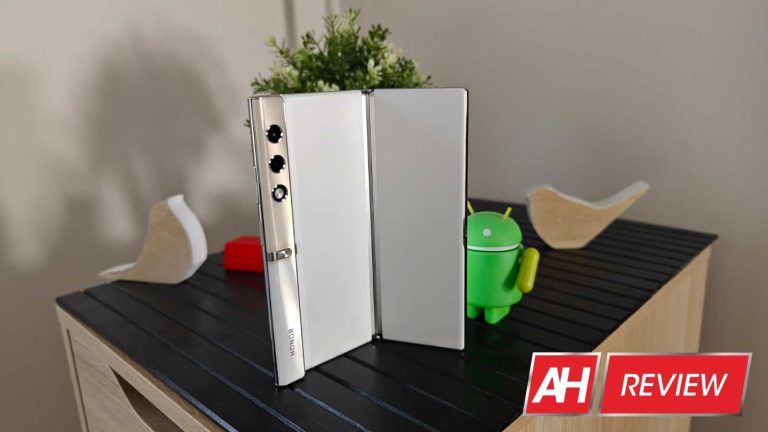
The HONOR Magic V is a foldable smartphone, but it’s not a book-style foldable. In fact, it’s the exact opposite, it opens in the opposite direction. This is not something we haven’t seen before, but it’s not nearly as common as your regular book-style foldables. I haven’t really handled a device like this since the Huawei Mate Xs 2. Speaking of which, the HONOR V Purse is actually a very similar device to the Mate Xs 2, as far as the design is concerned. That’s not a bad thing, though, not at all. It is similar to that phone, but it’s also much lighter, and thinner too. More on that soon.
The design is the main attraction of this phone, as it sure is different, and chances are you’ll get plenty of attention with it. When folded, the HONOR V Purse is very compact for a foldable. Keep in mind that there is only one display here, not two, which enabled HONOR to make it as thin. Yes, this phone is even thinner than the HONOR Magic V2, which is the thinnest book-style foldable to date. It measures only 8.6mm when folded, and 4.3mm when unfolded (not counting its thickest part/handle when it’s unfolded). It is also very light for such a foldable at 214 grams, which makes it lighter than all book-style foldables in the market.
When folded, the HONOR V Purse is extremely comfortable to hold
When folded, the HONOR V Purse is very comfortable to hold. HONOR did an excellent job curving up the phone, and making it seem like a regular phone when folded. It sits in the hand nicely, and considering it’s not heavy at all (for what it is), it can easily pass for a regular smartphone. When you press the button on the left side of the phone’s back, then the fun starts. The right side of the display will detach from the back, and you can unfold the phone, and get access to a 7.71-inch panel. When folded, only part of that display is active, as you’re getting access to a 6.45-inch panel.
Truth be said, the unfolding and folding of this display is nowhere near as satisfying as on the HONOR Magic V2. You’ll need to force-open it, and force-close it. I tried handing it to people who never used something like that, and they thought they’d break the screen. That’s the way it is, however, as you’re folding the display outwards, not inwards. Once you get used to it, it’s not a big deal at all, but still… it’s not as satisfying as doing the same on book-style foldables. The back side of the phone has a somewhat nice material, it’s plastic, but with a pattern on it, and it feels really good to anchor your fingers too. The phone would be far more slippery if the company used glass or something like that. The thickest part of the phone, when unfolded, is the strip on the right side, next to which the display sits next to when it’s folded. That’s a great place to hold the phone, and it really feels unreal to use when unfolded because of how thin it is.
The display crease is well-hidden
It is worth noting that the display crease is not that noticeable at all. It is a bit more noticeable than on the HONOR Magic V2 I’d say, close to it, but far less noticeable than the one on the Galaxy Z Fold 5, for example. There is one camera hole on the display, and it sits in the top-right corner, regardless of whether the phone is folded or not. What did bother me while using the device were the bezels. They’re not thick, but they’re uneven. When the phone is folded, the right bezel is considerably thicker than the left one, and the left one is already different than top and bottom bezels. Things are way closer when the device is unfolded, but still, it’s something you notice at first. In my case, I was able to ignore it real fast, the same goes for the display camera hole.
Considering its display folds outwards, you’ll need to be careful when you place it on the table, and during general usage, of course. That’s the main reason inwards-folding devices are more popular. Still, the hardware here is really, really good, and refreshing after handling so many inwards-folding phones.
Accessories
From what I can tell, there are no accessories included in the actual retail box of this phone. However, HONOR did send us an accessory to check out. You can see it in the provided images below. This is a plastic attachment that attaches to the right side of the phone, where most of the components lie, and where you’ll be holding the device. A chain is attached to that case, and it allows you to carry this phone as a purse, kind of, hence the name of the phone. HONOR made a big deal out of all this back in September at IFA.
This attachment has a number of sticky pads on the inside, just to keep the phone secure. The case itself does attach itself rather tightly, but these sticky pads are there for the piece of mind. Do note that taking off this attachment is not easy, it gave me a headache, and I was actually worried I’d break the screen while doing it. I had to do it twice, and quite honestly, the second time was not easier. Also, the chain that comes attached to the case itself, it can be easily removed.
HONOR V Purse Review: Display
The HONOR V Purse comes with a single display, but a foldable one. That display becomes one huge display when the phone is unfolded, and shrinks down when the phone is folded. In the folded state, part of the display sits on the back of the device. There is a pre-applied protection included on the display, of course. Despite that, however, you’ll need to be careful when handling the device. You are, after all, placing it down on a part of its display when you put it on the table, for example. When folded, that display sits next to the “lip” on the back of the phone, the strip that includes the phone’s cameras and other components. That way, the back side is flat when the phone is folded, save for the curves towards the sides, of course.
There is one camera hole in the display, in the top-right corner. It is not exactly round, it’s more of an oval-shaped camera hole. As I already mentioned in the design section, the bezels are kind of distracting at first. That is especially true when the phone is folded, as the right bezel is considerably thicker than the left. You can read more about that in the previous section.
The display is good, even though it’s not top-tier
In terms of the display itself, it’s very good. This is a 7.71-inch Foldable OLED display with a resolution of 2016 x 2348 pixels. That display has a refresh rate of 90Hz, but truth be said you’d be hard-pressed to notice during usage. Even after using tons of premium 120Hz displays, this one seemed very smooth. It can also get very bright when needed, it goes all the way up to 1,600 nits of theoretical brightness. The PPI you’re getting here is 401, and the panel can show up to 1 billion colors. When folded, that display becomes a 6.45-inch panel. Everything said above still applies, but it becomes smaller and with a different resolution due to the size difference, of course.
With that being said, what is it like in actual usage? Well, very good. Best of all, you do have additional options in the settings, if you’re not a fan of the color setup, for example. You can choose between normal and saturated color profiles. If none of those work for you, there’s always the option to manually tune the display. You have all the control you may need. There are also light and dark color profiles for the entire UI. The touch response is good, and even though I did notice that this is a 90Hz panel while using it, that’s not obvious at all. After using tons of 120Hz displays, I did notice it, but otherwise, I would not. The fact it’s a 90Hz panel really shouldn’t bother you, not at all.
You’ll need to be careful not to scratch this display, however
The main test will be trying to keep the panel scratch-free due to the fact it’s on the back half the time, depending on how frequently you use the phone in folded mode, of course. For all intents and purposes, though, this is a good display that is bright, has good viewing angles, and good touch response. It doesn’t really feel plasticky or hollow either.
HONOR V Purse Review: Performance
The HONOR V Purse is not technically a high-end device, but a mid-range one. Its form factor is odd, and unique, but its specs are not exactly flagship-grade. It is fueled by the Snapdragon 778G 5G processor, which is a 6nm chip, and years old at this point. In addition to that, there’s 16GB of RAM included here, and either 256GB or 512GB of storage. We used the 256GB storage model, even though both will perform the same.
The performance is very good despite a mid-range chip
The thing is, despite this chip, the HONOR V Purse does offer very good performance. Well, unless you’re trying to play the most demanding games offered on the Play Store, in which case there are much better options out there. I’ve enjoyed using this phone, though. The performance was better than I expected, it was actually flagship-grade most of the time. Everything ran smoothly, apps opened fast, and I was able to jump between them and multitask without a hitch. Even the animations were great, but I had to speed them up a bit. I do that on every phone through developer options, so… that’s beside the point.
Most of the games I’ve tried out ran perfectly fine, without a problem. That includes Subway Surfers, Geometry Dash, and Mini Football. What the phone did struggle with is Genshin Impact. That is basically still the benchmark I tend to use on phones, just to test their gaming limits. You can play it, but this phone is definitely not made for high-end gaming, and that’s mainly due to its processor. Other than that, everything else runs great, so no worries.
Benchmarks
We usually run both Geekbench 6 and 3D Mark Wildlife Extreme Stress Test benchmarks on the devices we test, but that was not the case on this phone. Why? Well, because both benchmarking apps are blocked on the device, as shown below. Not only was I not able to download Geekbench 6 and 3DMark, but I wasn’t able to sideload them even when I downloaded their APKs on the side.
Video export test
Export time: 31:02 seconds. It was exporting a 1-minute video, and it was exporting it in fullHD resolution at 30 FPS.
HONOR V Purse Review: Battery
HONOR Included a 4,500mAh battery inside of the HONOR V Purse. Now, the battery life itself would suggest it’s comparable to some book-style foldables out there, but that’s not the case, unfortunately. It flies below the nearest competition in the battery life segment. Both the OnePlus Open and Galaxy Z Fold 5 offer better results than this phone, both in benchmarks and in actual usage, from what we’ve been able to see.
The HONOR V Purse doesn’t offer bad battery life, but we expected more
If you check out our battery-draining test, you’ll see where the HONOR V Purse stands. That being said, the battery wasn’t bad, it was just not as good as I thought it would be. The device doesn’t really have a reason not to offer comparable battery life to the other phones mentioned. Still, chances are that its battery life will be more than enough for most of you. Also, it’ll depend on your usage, of course, as you can use this phone in both folded and unfolded states. So, your mileage may vary… considerably.
Battery rundown test
If you do run out of battery life ahead of time, you can recharge it with a 35W charger. The HONOR V Purse does come with a charger included in the box, by the way. Its 35W charging is not particularly fast, though, so do take note of that. It took me 67 minutes to fully charge this phone from scratch. It reached a 60% mark in about half an hour. In any case, it’s faster than the Galaxy Z Fold 5 in terms of charging. Wireless charging is not supported, in case you’re wondering.
Battery charging test
HONOR V Purse Review: Camera
This is, in its essence, a mid-range phone. The same can be said for its cameras. They’re okay, but not too impressive. HONOR used a 50-megapixel main camera with an f/1.9 aperture lens. That is Sony’s IMX800 sensor, by the way. In addition to that, you’ll also find a 12-megapixel ultrawide camera here with an f/2.2 aperture lens. That camera has a field-of-view (FoV) of 120 degrees. What was very disappointing, however, is the fact that neither of the two cameras offer OIS.
Remember, this is not a camera smartphone
What is there to be said about camera quality? Well, don’t expect too much, and you may be okay with it. This is not a camera smartphone after all. The details are good when the lighting is good, but that does change when the light goes away. The images still look passable, but the drip in details is noticeable. I blame the lack of OIS for this part, very much so. The colors are not the most accurate, regardless of the lighting you’re in. Also, the difference in color profiles between the main and ultrawide cameras can be quite jarring. Sometimes it’s not, but most times… it sure is. You’ll notice that once you check out the camera samples below. Images from that ultrawide camera can look rather dull, as the colors tend to be quite muted. That’s not always the case, but in most instances, it sure is.
Zooming in will cause the phone to provide you with a crop of the main camera
If you do decide to zoom in, do note that the phone will be using a crop from its main camera. On the camera viewfinder, you’ll notice 0.6, 1x, and 2x zoom ranges on offer. HONOR obviously doesn’t want you to zoom in any farther and for a good reason. You can, of course, via the manual zoom, but you shouldn’t.
Now, when it comes to low light, the images can be passable, but the less light there is in the scene, the more of a dip in quality you’ll notice, and it will be more noticeable than on better setups, of course. Once again, OIS is to blame for this, most likely. I had to hold the phone really still in order to get some decent low-light images, as shaking did manage to mess up an image rather fast.
The front-facing camera is passable
The front-facing camera is good enough. It’s nothing special, but it’s fine for what you’ll use it for, it’s good enough. It has good contrast, and the colors are not that bad either. Having said that, when the phone is folded, you can always use its main cameras for selfie stuff, regardless of whether we’re talking about video calls or selfie images. You can easily turn on the rear screen to act as a viewfinder in such cases.
Main camera samples:
Ultrawide camera samples:
Telephoto samples (from the main sensor):
HONOR V Purse Review: Software
Software is usually the thing I like the least when it comes to HONOR smartphones. Don’t get me wrong, MagicOS doesn’t work badly, not at all. In fact, it’s very fluid and everything runs fine, but the look of it, and some of the missing features usually don’t sit well with me. The same is the case here, actually. HONOR did an outstanding job when it comes to optimizing MagicOS for this device, as it usually does for its phones. There’s no denying that. So, if you like MagicOS, chances are you’ll enjoy it on this phone.
MagicOS 7.2 offers very fluid animations, and smooth performance overall
The animations are very fluid, and at every point during my usage, I felt as if things ran smoothly. MagicOS, does, however, remind me a lot of iOS. It has that see-through background style for some of its widgets, the notification shade, and quick toggles. Speaking of which, the Quick Toggles section is reminiscent of what iOS has to offer, and so is the way notifications are handled. MagicOS wants you to use the lock screen for notifications first and foremost. The notifications appear in cards towards the bottom of the screen, once again, this is something iOS does too. That change is welcomed on large devices, of course. The thing is, when you see a notification, it disappears. No, you don’t need to open it, you just need to go to the lock screen and then leave it, that’s it. It doesn’t work the same way for all apps despite the fact the settings are the same, though. For example, my Gmail emails stay there until I open them, but the same cannot be said for the vast majority of other apps.
Quite a few features are missing, and it’s… different
There’s no swipe from top-down to call upon the notification shade option, HONOR Search is the only option for that gesture. You also don’t get access to double-tap to lock screen, and so on. These are features that pretty much every major Android skin has, which is why you may expect them to be included here. Well, they’re not. HONOR’s MagicOS does have a number of other features you may like, however,
It has a great Always-On Display (AOD) implementation, while there are also large folders that you can utilize on the home screen. HONOR even included some live wallpapers for the AOD screen that react to the movement of the phone, in case you’re carrying it as a purse. There’s the Multi Dock feature that allows you to move between apps quickly, and also launch them in windows plus utilize Multi Window. HONOR also has a really great one-hand usage feature. You can simply swipe from the bottom center to the bottom right side of the display, and pause a second, for the screen to navigate to your finger (it becomes way smaller). And so on.
If you’re okay with a different software experience, go for it
What I’m trying to say is, that MagicOS is different. Don’t expect it to be similar to stock Android or many other Android skins out there. If you’ve used it in recent years, and you liked it, you’ll be right at home here. Also, if you’re coming from iOS, chances are you’ll like HONOR’s UI. By the way, Android 13 comes pre-installed here with MagicOS 7.2. So it’s not the latest iteration of Android, but that doesn’t really matter here (at least not to most of you), as MagicOS is different on its own (and so are its features), so… it doesn’t matter all that much.
HONOR V Purse: Should you buy it?
The HONOR V Purse is… well, it’s an interesting phone, first and foremost. This device started off as a concept phone, as HONOR was unsure whether to launch it or not. It decided to push it to the market, but only in its homeland, China. The company is trying to see what works, probably, and how will the consumers react to something like this. If we push the accessory with a chain to the side, this is a nice outwards-folding device. Sure, it doesn’t exactly have flagship specs, but it will sure grab people’s attention. On top of that, it’s one of the most compact foldables on the market, at least as far as flip phones are concerned. It’s difficult to explain how thin this phone feels in the hand even when folded. We have a different experience here that may appeal to some of you. It’s always interesting to see different products, especially when they’re actually good, so we’re definitely glad HONOR decided to push the HONOR V Purse to the market.
You should buy the HONOR V Purse if you:
…want a phone that is different than anything else …want the thinnest (non-flip phone) foldable around …like the idea of outwards-folding phones …want good performance in a foldable …like the idea of carrying around this phone as a purse
You shouldn’t buy the HONOR V Purse if you:
…are not very careful with your phones …live in a rainy place …want a great camera experience …want a smooth folding/unfolding experience
Originally, since 2019, Mispadu Stealer targeted Spanish- and Portuguese-speaking victims, but the new variant aims at URLs associated with Mexican citizens.
In a recent development reported by Unit 42 researchers, a new variant of the infamous Mispadu Stealer has emerged, targeting users primarily in Mexico with stealthy information-stealing techniques. The discovery shows the persistent evolution of this malware, showcasing its adaptability and the challenges it poses to cybersecurity efforts.
Initially identified in 2019, Mispadu Stealer has been a persistent threat, known for its stealthy operations primarily targeting Spanish- and Portuguese-speaking victims. The latest variant, however, demonstrates a high level of sophistication, specifically targeting regions and URLs associated with Mexican citizens.
This vulnerability, categorized as a security feature bypass within the Windows SmartScreen function, allows attackers to circumvent warnings and execute malicious payloads. Exploiting this vulnerability, the Mispadu Stealer variant was found to employ a crafty technique involving the creation of internet shortcut files (.url) or hyperlinks pointing to malicious files, effectively bypassing SmartScreen’s warnings.
One of the key findings in this investigation is the malware’s use of a parameter referencing a network share, which, when embedded in a .url file, directs victims to a threat actor’s network share to retrieve and execute the malicious payload without triggering SmartScreen warnings. This technique, while not limited to Mispadu Stealer, showcases the malware’s ability to adapt and evolve its tactics.
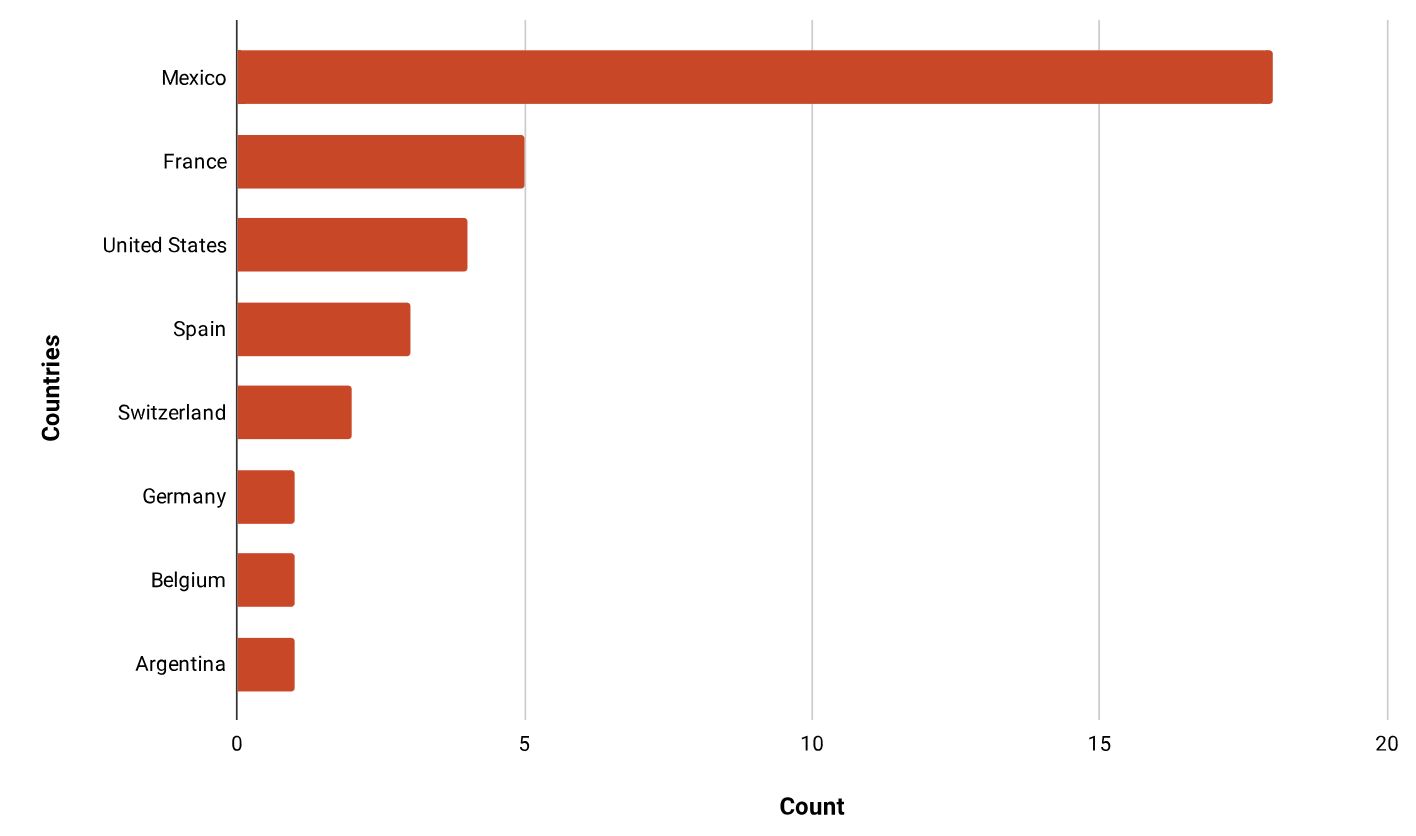
Further analysis of the new variant reveals a sophisticated operation that selectively targets victims based on their geographic location and system configurations. By querying the bias between the local time zone and UTC and performing checks based on the victim’s location, the malware ensures its execution primarily within specific regions, such as the Americas and certain parts of Western Europe.
Statistics of infected countries (Unit 42)
Once executed, the malware proceeds to interact with the victim’s browser history, extracting URLs and checking them against a targeted list. Notably, the malware employs encryption algorithms and techniques to evade detection, highlighting the evolving sophistication of its information-stealing capabilities.
The attribution of this new variant to previous Mispadu campaigns highlights the challenges in combating evolving cybersecurity threats. While similarities in tactics and infrastructure provide insights into the malware’s origins, the ever-changing nature of such threats demands a comprehensive approach to cybersecurity.
As Mispadu continues to evolve and target unsuspecting users, cybersecurity experts emphasize the importance of staying informed on the latest threat intelligence, deploying strong endpoint protection measures, and advocating a culture of cybersecurity awareness among employees and users. By adopting proactive measures and leveraging collective intelligence, organizations can better defend against emerging threats like the new variant of Mispadu Stealer.
Android carriers are a type of wireless carrier that offers a range of Android smartphones and other devices to their customers. While it’s true that most wireless carriers worldwide offer Android phones, the term “Android carrier” specifically refers to carriers that specialize in providing Android devices.
These devices are powered by Google’s Android operating system, which is the most widely used mobile operating system in the world. In essence, wireless carriers are companies that offer wireless communication services to their customers. This can include voice and data services, as well as other value-added services like text messaging, mobile internet, and more.
What are Android carriers?
While Google might sell you an Android device, you are going to need service to be able to use that device. And that’s where carriers come in.
A wireless carrier is going to provide you (the user) with service for that phone – or tablet, smartwatch, laptop, or any other device. This includes talk, text, and data usage.
Not all carriers or networks are the same, and not all Android smartphones are available on each carrier, which is where things start to get a bit interesting. Most phones are available on all four carriers in the US, but there are a few exceptions – typically with cheaper phones. Additionally, these carriers do use different technologies for their networks. Verizon, for example, uses C-Band and mmWave for their 5G network. While T-Mobile and AT&T focus more on Sub-6 and a bit more on mmWave.
What are postpaid Android carriers?
There are essentially two types of wireless carriers. One is postpaid, while the other is prepaid.
In the simplest terms, the difference between the two is that with Postpaid you pay for your usage a month after the fact. And Prepaid, you prepay, hence the term “prepaid.”
Postpaid has some other advantages, even though it is normally a bit more expensive than prepaid. This includes the fact that it is going to get first dibs for speed on a tower. Wireless carriers give priority to postpaid customers, then prepaid, then MVNO customers. Basically, those paying the most, will get the best speeds.
Normally, postpaid carriers will allow you to buy phones in a monthly installment plan. This means that instead of paying $1399 (plus tax) for the Samsung Galaxy S20 Ultra up front, you can spread it out over 24 or even 36 months. Making smaller payments.
Typically, postpaid customers will get features that prepaid customers do not. For example, on T-Mobile, postpaid customers on its Magenta plan can get Netflix and Quibi for free. That’s a $13 value and a ton of free content that you can watch. Over on Sprint, postpaid customers get free Hulu, Tidal and Amazon Prime, depending on their plans.
For carriers, postpaid customers are usually those who are not living around the line of poverty. Those users usually go for prepaid. Which means that they are less likely to default on their bill. This is why carriers prefer postpaid customers over prepaid. In addition to the fact that the profit margin is higher in postpaid.
In the US, postpaid carriers include AT&T, Sprint, T-Mobile, and Verizon.
What are prepaid Android carriers?
As mentioned already, prepaid carriers normally make you pay for your usage ahead of time. So you might pay on April 1 for the entire month of April, and so on. But the good thing about that is, that when you decide to leave your prepaid carrier, you won’t have a big bill that is prorated.
Prepaid is normally used by those who don’t make a lot of money. Prepaid plans are typically close to $30 per month, on average. At the same time, postpaid is over $70 per month on average, for a single line.
With prepaid carriers, you can still get an Android phone, but what you won’t get is an installment plan. So if you choose to get a Galaxy S20 from a carrier like Metro By T-Mobile, you’re going to have to pay the full amount up front. Prepaid carriers do often times offer more mid-range and budget smartphones, because of the clientele that they attract. If you aren’t willing to pay $70 per month for your phone service, then you likely aren’t willing to pay $1000 for a new phone.
Prepaid customers don’t typically earn wireless carriers a lot of money, but seeing as most are auto-paying, they do get their money when it is due. Instead of having to spend money on customer service reps chasing down customers to pay their bills. So there’s good and bad, there for wireless carriers.
In the US, prepaid carriers include Boost Mobile, Metro By T-Mobile, Cricket Wireless, Verizon Prepaid, and AT&T Prepaid.
What’s the difference between postpaid and prepaid?
The biggest difference between postpaid and prepaid is when you pay for your usage. As mentioned, postpaid charges you at the end of the month and prepaid is at the beginning of the month. But there are a few other differences between the two.
Postpaid will get the best service. This is because you are paying more and, therefore, are a more valuable customer to the carrier. It also gets priority on its network, with faster speeds and more data usage before getting slowed down. Prepaid is next, followed by MVNO carriers, in terms of data speed priority.
Often times, you will get a better value out of postpaid plans. But if you need something cheap, that just works, then a prepaid plan is going to be better. With postpaid, carriers often throw in things like free Netflix, free Disney+ for a year, or even free Amazon Prime. As well as discounts on auto-pay. Carriers prefer this because they know they’ll get paid, and will sometimes discount up to $20 per month if you use auto-pay.
Another key difference is the fact that prepaid normally comes with taxes included in the price. Postpaid, normally doesn’t with the exception of T-Mobile’s Magenta plan, where taxes and fees are included in the $70/month price. This means that with prepaid, you won’t get bill shock. Because your bill will be exactly what it was advertised to be.
The bottom line is that if you are a heavy user (you use your phone a lot on the road or where there isn’t much WiFi accessible), then postpaid is the route to go. If you work from home or use WiFi a ton, then prepaid might be the better option, as it is cheaper and gives you lower limits for talk, text, and data.
What is an MVNO?
Another term you might hear about a wireless carrier is “MVNO.” Well, this is a carrier that is not owned by a major carrier like AT&T or Verizon, essentially. MVNO stands for Mobile Virtual Network Operator.
In the simplest explanation, an MVNO is an operator that does not own the network that it is operating on. However, there are sometimes an exception to this. For example, Metro by T-Mobile is considered an MVNO, even though it is owned by T-Mobile. The same goes for Visible, which is owned by Verizon.
Typically, an MVNO would enter into a business agreement with a mobile network operator (like AT&T, Sprint, T-Mobile, or Verizon) and obtain bulk access to network services at wholesale rates. You can think of it as Simple Mobile going to Costco and buying access to AT&T’s network at a lower price. Then, the MVNO will sell it independently to customers.
Normally, MVNOs do offer their own customer service, billing support systems, marketing, and sales personnel. But they can also get those services from a Mobile Virtual Network Enabler or MVNE.
It can really get pretty confusing, but for most people, it’s essentially the same as a prepaid carrier. With MVNO’s you do prepay for your service, however, it is normally cheaper than prepaid carriers. For instance, Google Fi, you can get for as low as $20 per month. That’s cheaper than Boost Mobile, and Cricket Wireless.
Here are some examples of MVNO carriers: Google Fi, Simple Mobile, Straight Talk, Consumer Cellular, FreedomPop, Republic Wireless, just to name a few. There are hundreds of MVNO’s currently in service in the US. Other countries do use MVNOs, but it’s mostly limited to the US, UK and Japan.
Can I switch wireless carriers?
Yes. Of course you can switch.
But before you do, there are a few things to think about.
Not all wireless carriers are interoperable. What this means is that your phone may not work on the new carrier that you are looking to switch to. For instance, a Verizon-branded phone that you bought from your Verizon store may not work on T-Mobile. So you may need to buy a new phone when you switch. However, most phones these days do support all four carriers, but your carrier might have the SIM locked. Meaning that unless you have paid off your phone, you can’t get it unlocked, and use it on another network.
Another thing to look at is coverage. Not all carriers have the same coverage. Depending on where you live, AT&T might have better coverage, or Sprint might be better. So it’s a good idea to do your homework in that regard.
The third thing is to check your bill. Now that wireless contracts are mostly a thing of the past, many of us do financing plans with our carriers for our phones, especially with phones costing $999 or more these days. So when you cancel your service with your carrier, you are going to owe the remaining amount, and it needs to be paid a lot sooner. On top of that, if you got any bill credits, you will be forfeiting those. So if you took advantage of a BOGO deal with your carrier, those bill credits will be gone, and you’ll owe the remaining amount on both phones.
So yes, you can switch. But it’s not a good idea to just wake up one morning and decide to switch from T-Mobile to Verizon. You are going to need to do some homework before you do so. But if you bought your phone outright – for example, you bought an unlocked Pixel 4 from Google – you’ll likely be fine and can switch.
Which one has the best plans and phone selection?
Now it’s time for the big question. Who has the best phones and the best plans? Well, it really depends on what your needs are. But it’s going to be postpaid for the majority of people.
For those who are heavy users and want to take advantage of some of the freebies that postpaid carriers toss in, then postpaid is definitely the route to go. And if you live in a popular area like Chicago, New York City, or Los Angeles, where there are a lot of people on the same network, postpaid is also going to be the best choice. as you’ll be more likely to get faster and usable speeds.
But, if you are living paycheck to paycheck, then prepaid is a better deal. However, prepaid isn’t just for those who don’t make a lot of money. If you’re like me, and work from home, then prepaid can be a good way to save some money. People who work from home are normally on their WiFi network all the time and are using less mobile data. If you’re using only 2GB of mobile data a month, it doesn’t make a whole lot of sense to be paying $70 per month for an unlimited plan.
MVNOs are also good for those who are looking to save some cash. If you just want service, and don’t want to have to think about your data usage or having to buy your phone from a specific carrier. Then, yes, MVNOs are a great option. Mainly Google Fi, since it uses many networks together, and gets you the best signal in your area.
Now, when it comes to phone selection, postpaid carriers have the best phone selection hands down. However, most smartphone makers do sell their phones unlocked now and they do support all four wireless networks in the US (with a few exceptions, like OnePlus). Allowing you to buy a Galaxy S20+ from Samsung.com and take it to Boost Mobile, T-Mobile, Cricket Wireless, or even Straight Talk.
It comes down to what your needs are. Prepaid, Postpaid, and MVNOs can be suitable for everyone.
On Thursday, Congress held a hearing about child safety on social media. It invited the CEOs of many of the top social media sites, including X, Meta, Snap, TikTok, and Discord. The Senate Judiciary Committee grilled them for four hours. But the most newsworthy bit came about midway through the hearing when Senator Tom Cotton got his turn to grill the group of CEOs.
Senator Cotton, a Republican from Arkansas, really showed how lacking America’s education system is with his line of questioning. Asking TikTok’s CEO, Shou Zi Chew, about his citizenship and where he was born multiple times. Ironically, this TikTok video perfectly sums up the line of questioning from Senator Cotton, who apparently doesn’t know that Singapore is not part of China. For those unaware, Singapore gained independence from the British in 1963 and briefly joined the Federation of Malaysia before breaking away for independent sovereignty in 1965.
Obviously, Senator Cotton was looking for one thing, and that was to get an “aha” moment with Chew and his relationship with China. The only relationship he has is working for a company based in China – that’d be ByteDance.
Of course, Senator Cotton did not establish what this line of questioning had to do with what the hearing was about – Child Safety on Social Media.
Singaporeans call the line of questioning “pure ignorance”
The whole world pays attention to what happens in the US, and that’s the case with Singapore, too. Those that live in Singapore have called the line of questioning from Senator Cotton “pure ignorance” and “racist”. Singaporeans are not wrong with that conclusion either.
One user from Singapore stated that “just because he looks Chinese does not mean he’s from China.”
The US government has been worried about TikTok for quite some time and has tried to ban the app a few times due to its ties to China. But on the flip side, the government doesn’t question Apple and its CEO, Tim Cook, about its ties to the Chinese government and abiding by their censorship rules. No one’s talking about banning Apple from working with China. This makes it really seem like it’s more about this popular app being the only one not owned by an American company.
In the same hearing, Zuckerberg apologized to parents of victims
During this hearing, the Senate invited parents of victims who had been harassed or harmed by children. Meta’s CEO and founder, Mark Zuckerberg, turned and apologized to everyone in attendance. Saying that “I’m sorry for everything you have all been through”. He continued, “No one should go through the things that your families have suffered, and this is why we invest so much, and we are going to continue doing industry-wide efforts to make sure no one has to go through the things your families have had to suffer.”
Zuckerberg wasn’t alone; Snap’s CEO Evan Spiegel offered similar condolences to parents whose children were able to access illegal drugs by using Snapchat. In 2023, a suit was filed against Snapchat by the parents of more than 60 teenagers who were victims of overdoses. With the drugs being accessed by Snapchat.
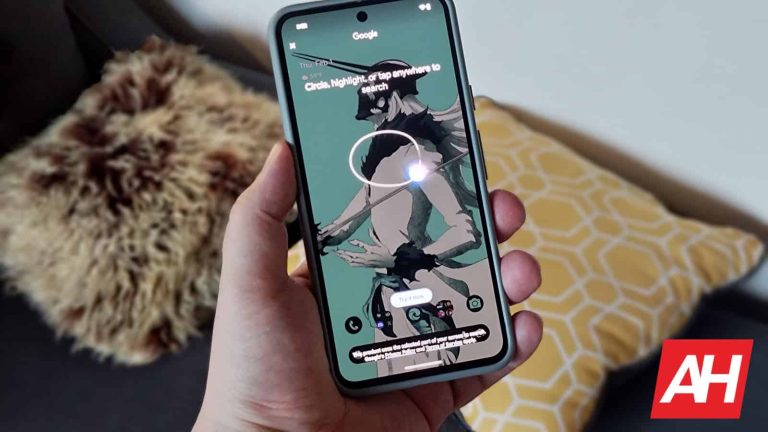
In case you don’t know what Circle to Search is, it makes searching images so much more convenient. If you have something displayed on your screen, simply access Google Assistant and circle the item on the screen that you want to search. Say, you’re watching a video that’s displaying a certain pair of shoes. Access Google Assistant and draw a circular around that pair of shoes. Google will then do a search of that image and give you results based on what it saw.
It’s currently available on all Galaxy S24 phones and the Google Pixel 8 phones. However, this being a Google feature, it’s slated to make it to more devices as time goes on.
But, hold your horses: Circle the search is not coming until October for most devices
This hit the Tech Community like a punch to the gut. There’s so much fanfare and hype around this feature. It makes Google Lens much quicker and easier to access. So, this is very disappointing news, and it gets worse.
According to a Samsung press release, the Circle to Search feature is not planned to make it to additional Android devices until October 5th this year. That’s eight months away and a very long time for eager tech enthusiasts to wait. This excludes even other snapdragon 8 Gen 3-powered devices. So, we can tell that this decision isn’t about raw processing power.
What makes this worse is Samsung’s phrasing. “Circle to Search may become available on Android devices from other brands from October 5, 2024.” it “may” come to other brands from October 5th. So, there’s a chance that it won’t come even then. The quote goes on to state that there are “no active developments underway.” This turns the news from being frustrating to infuriating.
So, what’s the deal?
Obviously, Samsung didn’t explain the reasons behind this decision. Google has been silent on it as well. The only thing we can do is speculate and glean information from what was given. What information were we giving? Well, let’s look at the month, October. By the time October rolls around, what has already happened? The next Samsung Galaxy unpacked event where Samsung unveils its upcoming foldable phones. So, it’s tempting to believe that Samsung wants Circle to Search to be a headlining feature of these devices as well. So, the only non-Pixel phone users with this feature will be Galaxy S24, Galaxy Z Fold 6, and Galaxy Flip 6 users.
Something like this isn’t entirely unlikely, as Galaxy Watch users had Wear OS 3 for more than a full year before it made it to other users. We all know that Samsung and Google are tight buddies, and they’ve left other uses out in the rain to give Galaxy devices special treatment before. So, this just might be an example of that partnership (though Samsung is removing Google Assistant from its TVs).
If you’ve been waiting for this feature to come out, and you don’t have a Galaxy or Pixel phone, you’re just going to have to wait almost an entire year to use it.