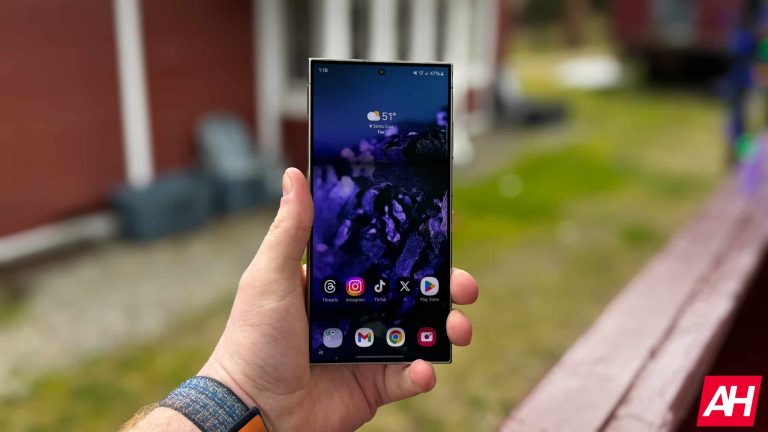
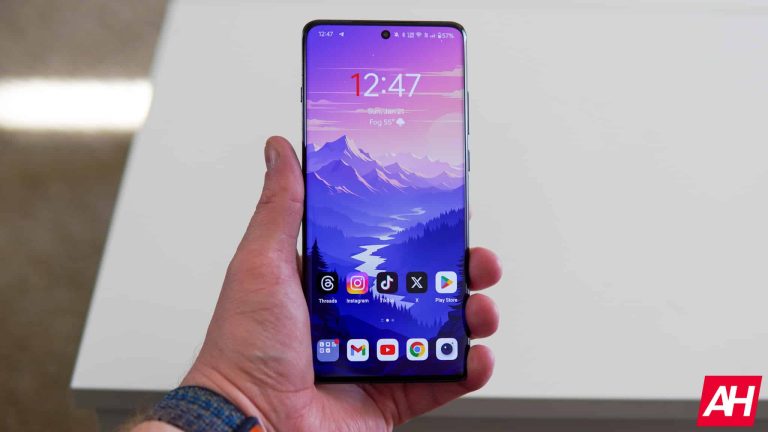
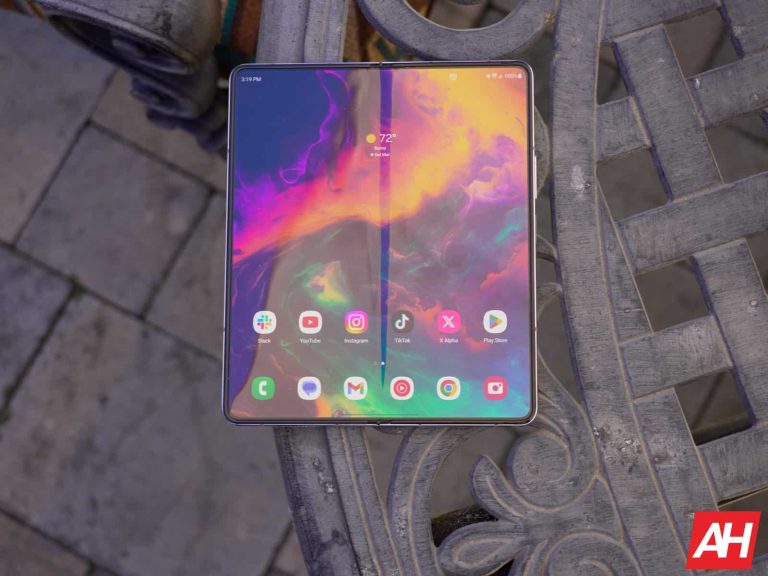
We’ve got the Samsung Galaxy S24 Ultra in-house and have been using it since Unpacked. And now we’ve just finished running our battery test on the Galaxy S24 Ultra. The results were, quite frankly, very surprising in a good way. It completely destroyed the iPhone 15 Pro Max, which was our battery champ, before the Galaxy S24 Ultra.
First, let’s talk a bit about the battery test that we run on every phone that we review. Essentially, we run a YouTube video at full brightness from 100% down to about 1% (and then we can perform our charging test). We do this because sitting there running apps for a certain length of time over and over doesn’t really work that well when comparing phones, as there are so many variables in that kind of testing. But doing this exact same test does work well, especially on brighter phones like the Galaxy S24 Ultra.
The Galaxy S24 Ultra battery life results
Our previous top score in this test was the iQOO 12, which had a score of 21 hours and 52 minutes. Followed by the iPhone 15 Pro Max at 21 hours and 35 minutes. The brand new OnePlus 12, which we just published that review, scored 19 hours and 7 minutes to put it in third place.
But the Galaxy S24 Ultra just surpassed them all. It finally hit 1% at 25 hours and 35 minutes. That crushes just about everything we’ve tested here. Even other Snapdragon 8 Gen 3-powered phones like the iQOO 12, OPPO Find X7 Ultra, and the OnePlus 12. It’s honestly very impressive.
Our real-life results
So a battery rundown is one thing, but what about our use in the real world, using it as our daily driver? It’s still quite impressive. The other day, I was able to get just over 10 hours of screen time, with 21% left. That means it could have easily hit 12 hours of more on a single charge. That’s quite impressive on its own and far above what most other phones I’ve reviewed have been able to do.
Of course, we’ll have more about this in the full review next week. But so far, it’s looking like the Galaxy S24 Ultra is going to be the new Battery Champ.
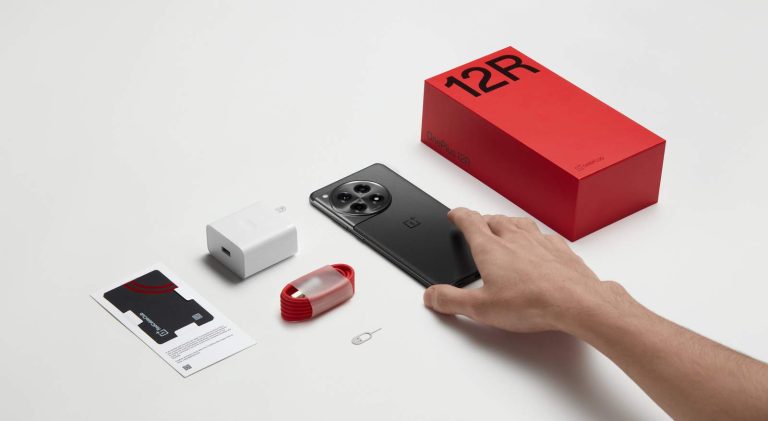
The OnePlus 12R is now official, the company’s first R series phone to launch outside of India. Having said that, this handset already launched under the ‘Ace’ brand. The OnePlus Ace 3 launched in China, and it’s basically identical to this device.
This phone is supposed to be a cheaper alternative to the OnePlus 12. It is inferior to the company’s flagship, but still very compelling in terms of both specs and a price tag. Let’s talk about the design and specifications first, though.
The OnePlus 12R is official, and it looks very similar to its flagship sibling
The OnePlus 12R resembles the OnePlus 12 quite a bit. In fact, it’s hard to differentiate between the two devices. If you flip them around, however, you’ll notice slight differences in the camera module.
OnePlus made this phone out of metal and glass too, just like the OnePlus 12. There is a curved display included on the front, with thin bezels. A centered display camera hole is also a part of the package.
On the back, you’ll find three cameras inside a camera oreo. All the physical buttons sit on the right-hand side of the OnePlus 12R, while the alert slider switch can be found on the left side.
This handset has an excellent display that gets immensely bright
There is a 6.78-inch 2780 x 1264 LTPO AMOLED display included here. That display is curved as already mentioned, and it offers an adaptive refresh rate (1-120Hz). The display is protected by the Gorilla Glass Victus 2, and it gets immensely bright. This panel did get DisplayMate’s A+ rating.
The Snapdragon 8 Gen 2 fuels the OnePlus 12R. That is Qualcomm’s flagship processor for last year. It’s still very powerful, though. That chip is paired with either 8GB or 16GB of LPDDR5X RAM. Those two models offer 128GB (UFS 3.1) or 256GB (UFS 4.0) flash storage. OnePlus also included a Cryo-Velocity Cooling System here. The phone’s vapor chambers have a total area of 9140mm2.
A large battery is also included, along with 100W charging
The company also included a truly large battery here, a 5,500mAh unit. 100W SuperVOOC charging is available globally, except for the US, it drops to 80W there. That is still immensely fast, as OnePlus claims you can get a full charge in only half an hour. Yes, the charger is included. Wireless charging is not supported.
The main camera on the phone is a 50-megapixel unit with Sony’s IMX890 sensor. It has both OIS and EIS support, and an f/1.8 aperture. The second camera is an 8-megapixel ultrawide unit (112-degree FoV), while the third one is a 2-megapixel macro unit (4cm effective shooting distance). On the front, a 16-megapixel camera is included.
The phone does have stereo speakers and comes with two nano SIM card slots. Android 14 comes pre-installed, along with OxygenOS 14.
The OnePlus 12R comes in two color options and starts at $499.99
The OnePlus 12R comes in Iron Gray and Cool Blue colors. Cool Blue color is available only for the higher-end model, by the way. The phone’s pricing starts at $499.99/CAD$669.99, while the higher-end model costs $599.99/CAD$799.99.
Do note that you can offer ANY phone in ANY condition in the US in order to get a $!00 discount. That effectively brings the starting price down to $399.99. The phone is available via OnePlus.com, Amazon, and Best Buy. You’ll be able to buy it starting February 13, but the pre-orders are kicking off today.
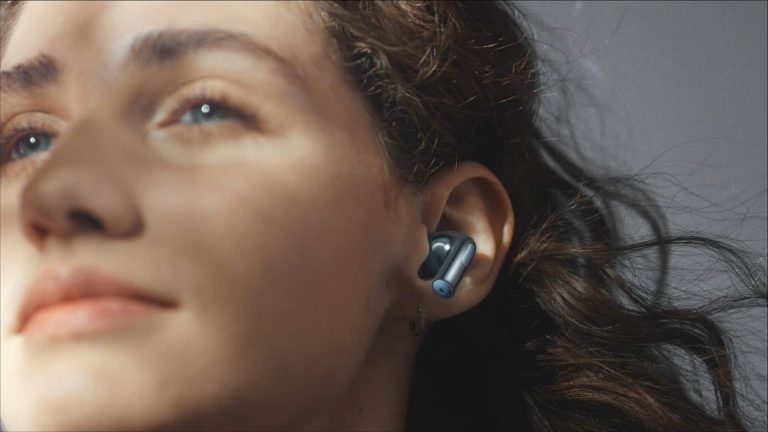
The OnePlus Buds 3 have been announced for global markets
These earbuds have a two-tone design, kind of. The vast majority of them have a shiny finish, while the part closer to the ear tips has a matte finish. The earbuds are quite compact and come with different ear tip sizes in the packaging. The charging case is square-ish, but it has rounded corners. The charging case is also made out of plastic.
You’re getting IP55 certification here, which makes these earbuds an option for working out. You don’t have to worry about sweat or rain. They also come with integrated dual dynamic drivers (10.4mm woofer + 6mm tweeter), and offer Hi-Res Audio Wireless with LHDC 5.0.
They do offer noise cancellation and transparency mode too
Noise cancellation is also a part of the package. They offer up to 49dB noise cancellation depth with TUV Rheinland certification. Smart Scene Noise Cancellation 2.0 is a part of the picture, as is adaptive ANC. You’re also getting transparency mode here. So, there are three levels you can choose from, transparency, normal, and ANC.
OnePlus included a 58mAh battery inside of each earbud. The company claims that you can get 7 hours of use out of them after a fast 10-minute charge. It remains to be seen, though. The charging case packs a 520mAh battery.
OnePlus says the offer truly compelling battery life
In terms of battery life, OnePlus claims you’ll get 6.5 hours of playback with ANC (28 hours with the case included). Without ANC you can get up to 10 hours of play time (44 hours with the case). When it comes to straight-up talk time, OnePlus says reaching 4 hours is doable (17 hours with the charging case).
You’ll also find three microphones on each earbud, which should help with call quality. The earbuds do allow for dual connectivity (as in two devices at the same time) and are equipped with Bluetooth 5.3. Google Fast Pair is supported, and OnePlus quotes a 94ms latency.
They offer “rich yet delicate” and “dynamic but balanced” sound, says the company
The company claims these earbuds provide “immersive sound environments that are rich yet delicate and dynamic but balanced”.
Each earbud measures 31.68 x 20.22 x 24.4mm. The charging case measures 58.72 x 50.15 x 25.81mm. The earbuds weigh only 4.8 grams each, while the charging case weighs 40.8 grams. They come in Metallic Gray and Splendid Blue colors.
These earbuds will become available to purchase on February 5 in the US and Canada. They are priced at $99.99/CAD$139.99, and will be available from OnePlus.com and Amazon.
Samsung‘s recently launched Galaxy S24 series is currently going through all different kinds of tests and comparisons with its competitors. One of which is the durability test of the Galaxy S24 Ultra, and it aims to let you know how much care your new flagship will require to prevent further weight reduction of your wallet.
The Galaxy S24 Ultra has undergone a durability test performed by PBK Electronics on YouTube. The phone survived four drops on a concrete surface from waist height. The drops resulted in some minor scrapes on the titanium frame and a small crack on the top right of the flat screen.
The waist height drop test resulted in minor scrapes on the frame and a small crack on the front glass
Dropping on the back from the same height also yielded relatively the same result, i.e. minor scrapes on the frame. The camera lens cover and the rear glass remained completely intact. Notably, both the Galaxy S23 Ultra and the Galaxy S22 Ultra’s screen were cracked after this test. All three phones are nearly identical in weight. So, the Gorilla Glass Armor and the titanium frame seem to have improved the durability of the new flagship.
Although, a drop from a slightly different position may yield a different result. So, one should consider a protective case for the Galaxy S24 Ultra regardless of the iterative durability improvements.
Galaxy S24 Ultra performed flawlessly in the Scratch test with sand
Upon rubbing with sand and dust, the Gorilla Glass Armor on the display seemed to remain unscratched. However, long-time use without a screen protector can still scratch the display due to the exposure to certain minerals such as quartz in the form of dust particles.
Speaking of the Gorilla Glass Armor, there are alternatives in the industry at present that perform even better in drops on a solid surface. The reviewer referenced Huawei‘s Kunlun glass which performed significantly well in multiple drops from a head height on the same concrete surface in his Huawei Mate 50 Pro drop test performed last year.
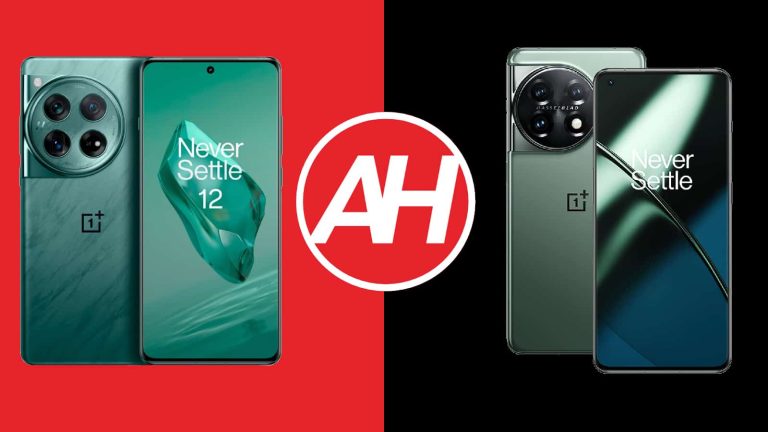
The OnePlus 12 was announced in China towards the end of last year, and the global variant dropped today, January 23. We’ve been using the device for a while now, and in this article, we’ll compare it with its predecessor. In other words, we’ll compare the OnePlus 12 vs OnePlus 11. These two phones actually do have a lot in common, but the OnePlus 12 also brings some upgrades, of course.
As per usual, we’ll first list their specifications, and then move to a number of other categories. Following the specs, you’ll see a design comparison, followed by their displays, performance, battery life, cameras, and audio output. This will hopefully give you enough information to decide whether you want to upgrade to the OnePlus 12, or perhaps stick with/go for the OnePlus 11 instead.
The design did not really change much from the OnePlus 11 to the OnePlus 12. There are some differences, sure, but not many. Both smartphones have curved displays with a display camera hole. The thing is, those two display camera holes are not in the same place. The one on the OnePlus 11 sits in the top-left corner, while the OnePlus 12 has a centered punch hole. The bezels around both displays are very thin.
On the back, you’ll find a similarly-looking camera oreo. Both phones include three cameras back there, but the camera module, in general, is bigger on the OnePlus 12, for a reason. OnePlus upgraded the camera hardware on the phone. Both smartphones are made out of metal and glass, and the in-hand feel is not that different. They are both very slippery, though, so keep that in mind. Using a case may be a good idea.
The situation with buttons is different. The OnePlus 12 has all of its physical buttons on the right-hand side. The alert slider, however, sits on the left. The OnePlus 11 has the power/lock key on the right side, along with the alert slider, while the volume buttons are placed on the left. Both devices do have an IP certification for water and dust resistance, but the OnePlus 12 has the advantage there. It comes with IP65 certification, compared to IP64 certification on the OnePlus 11.
The new phone is slightly taller, slightly wider, and slightly thicker than last year’s model. It’s also heavier at 220 grams, compared to 205 grams. It does have new camera hardware and a larger battery, so that’s not surprising.
OnePlus 12 vs OnePlus 11: Display
There is a 6.82-inch QHD+ (3168 x 1440) LTPO AMOLED display included on the OnePlus 12. That panel can project up to 1 billion colors and has a 120Hz refresh rate (adaptive 1-120Hz). Dolby Vision is supported, as is HDR10+ content. That display is curved, and it has a maximum theoretical brightness of 4,500 nits. You’ll never get to that level, though. The Gorilla Glass Victus 2 protects this panel.
OnePlus 11
The OnePlus 11, on the flip side, comes with a 6.7-inch QHD+ (3216 x 1440) LTPO3 Fluid AMOLED display. That panel is also curved, and this is also an LTPO panel, which means we’re looking at an adaptive refresh rate here. The phone goes from 1-120Hz. HDR10+ content is supported here, as is Dolby Vision. This panel goes up to 1,300 nits of brightness at its peak, and it’s protected by the Gorilla Glass Victus.
Both of these displays are very vivid and offer great viewing angles. Touch response is also really good, and they’re both more than sharp enough. It’s also great to see that both panels are of the LTPO variety. Now, the OnePlus 12 does have the advantage of better display protection. That panel also does get brighter. The OnePlus 11’s panel is bright enough, but you will notice the difference in direct sunlight.
OnePlus 12 vs OnePlus 11: Performance
The Snapdragon 8 Gen 3 fuels the OnePlus 12. The company also included up to 16GB of LPDDR5X RAM globally, the Chinese model goes up to 24GB. OnePlus also uses UFS 4.0 flash storage here. The OnePlus 11 comes with the Snapdragon 8 Gen 2 SoC, along with up to 16GB of LPDDR5X RAM. It also utilizes UFS 4.0 flash storage, well, except for the base 128GB storage model, that one comes with UFS 3.1.
The OnePlus 12 does get a bump in the SoC department. The Snapdragon 8 Gen 3 is more powerful than the Snapdragon 8 Gen 2. The thing is, the difference is not that considerable. The Snapdragon 8 Gen 2 is still a truly powerful processor, and those of you who own the OnePlus 11 can probably attest to that. It can run pretty much anything without a problem, including demanding games, and the regular, everyday performance is great.
Well, the same is the case with the OnePlus 12, in all honesty. The phone performed great during our usage. The animations were very smooth, and it handled everyday tasks with ease. Even more demanding multitasking and games were not a problem for the new phone. OnePlus did include a rather large vapor chamber on the inside, so if you’d like to game, that’s not an issue. And yes, this phone can take on even the most demanding stuff you’ll find in the Google Play Store. Neither device got hot to the point it was uncomfortable to use.
OnePlus 12 vs OnePlus 11: Battery
OnePlus’ new flagship includes a 5,400mAh battery on the inside. Last year’s model comes with a 5,000mAh battery. The OnePlus 11 was one of the best battery life flagships of 2023 in our testing, it had outstanding battery life. Is that the case with the OnePlus 12 too, especially considering the battery upgrade? Well, yes, it is, the OnePlus 12 also offers truly great battery life, which is great to see.
The OnePlus 12, as my colleague said it, is “truly a 2-day phone”. In our battery rundown test, it completely shattered the OnePlus Open and Pixel 8 Pro, while it trailed a bit behind the Apple iPhone 15 Pro Max. That test is not always the best indicator of battery life, but this phone basically reflected that in real-life usage. At around 5 hours of screen-on time, we were at 55-60% of battery life, and that was not an exception during our usage, but a rule. This phone can easily last two days for many people. The OnePlus 11 was not far behind either. Best of all, even after torturing the OnePlus 12 for 19 hours at full brightness during our rundown test, the phone only got a bit warm, but only mildly.
What about charging? Well, in the US, both of these smartphones support 80W wired charging, despite the fact they ship with a 100W charger. In other regions, 100W charging is supported. The OnePlus 12 also offers 50W wireless charging and 10W reverse wireless charging. The OnePlus 11 does not.
OnePlus 12 vs OnePlus 11: Cameras
The OnePlus 12 comes with a new 50-megapixel main camera (f/1.6 aperture). It utilizes the Sony LYT-808 sensor, the same one used in the OnePlus Open. A 48-megapixel ultrawide camera is also included here, and it offers a 114-degree FoV. On top of that, a 64-megapixel periscope telephoto camera (3x optical zoom, 6x “in-sensor” zoom) sits on the back. The OnePlus 11 has a 50-megapixel main camera (f/1.8 aperture), a 48-megapixel ultrawide unit (115-degree FoV), and a 32-megapixel telephoto camera (2x optical zoom).
OnePlus 12
The OnePlus 11 did a fine job with the camera performance, at least as the main and ultrawide cameras are concerned. The OnePlus 12 does take things to a whole new level, though. The new main and periscope telephoto setups do make the difference. The phone is not afraid of keeping an image darker if it represents the scene or subject better, but it doesn’t lose details along the way. The colors are great, which was to be expected, as Hasselblad really came through for OnePlus over the years.
The ultrawide camera does keep up with the main unit in terms of color science, and generally provides good pictures, Even in low light, both cameras do a good job, but the main one stands out, that’s for sure. The periscope telephoto camera can capture truly nice images in both 3x and 6x modes (and everything in between), while images up to 10x are perfectly usable. The OnePlus 11’s telephoto prowess is nowhere near the OnePlus 12. Its 2x optical zoom is not particularly useful, and if you go beyond that things do fall apart rather quickly.
Audio
You’re getting 24-bit/192kHz Hi-Res audio on both of these phones. Yes, they both have stereo speakers, and those speakers are well-balanced. In fact, they do sound rather similar, which is not a bad thing. They also don’t get distorted at higher volumes.
Neither phone includes an audio jack, but you can always utilize a dongle to connect your headphones to their Type-C ports. If you prefer wireless connectivity, Bluetooth 5.4 is on offer on the OnePlus 12, while the OnePlus 11 offers Bluetooth 5.3.
OnePlus claims that its new flagship, the OnePlus 12 can run all Android games at 120fps with “HyperRendering”. Interestingly, many games, for example, Genshin Impact are capped at 60fps on Android and you don’t even have the option to bump the frame rate up to 120fps even if your shiny new flagship can handle that much processing.
To deal with this OnePlus has developed something called the “Trinity Engine” that uses “HyperRendering” to let you experience 120 frames per second “for all games”. Keeping the terminologies in mind, the OnePlus 12 is using frame interpolation techniques. Notably, this creates additional frames between frames of a lower frames-per-second render (for example, 60fps) to make it look smoother on the display.
OnePlus 12 leverages frame interpolation to achieve a “120Hz frame rate for all games”
To be precise, this isn’t the first time a smartphone is using this technique to make videos and even games look smoother. For example, Samsung‘s recently launched Galaxy S24 Ultra applies this technique in multiple aspects including video playback.
Now you may ask, what is special here in the OnePlus 12 then? Well, OnePlus is talking about how they have achieved the result, which sounds a bit special. On the hardware side, OnePlus is using a dedicated “Independent Visual Processor” to help the device achieve the above-mentioned frame interpolation.
The company explains “For avid gamers seeking hyper-realistic and ultra-immersive mobile gaming experiences, the OnePlus 12 offers the perfect solution in the form of HyperRendering. Built upon OnePlus’ in-house graphics algorithms and a dedicated Pixelworks X7 Independent Visual Processor, this groundbreaking visual quality enhancement technology empowers the OnePlus 12 to deliver super-resolution picture quality with remarkable efficiency. In fact, the device achieves a 120Hz frame rate for all games through frame interpolation technology while ensuring real-time HDR color calibration.”
Nonetheless, the support of 120fps in all games is just a claim at this point. We will need to test it before commenting on the actual user experience with the “HyperRendering”.
Major tech brands like Apple, Samsung, and Google were pushed to allow users to self-repair their products. Thanks to Right To Repair, users now have the ability to repair their devices for much cheaper. Samsung just announced today that its self-repair program now supports more than 50 devices. This means that if you are an avid Samsung user, there are plenty of options to repair your devices should the unfortunate happen.
Samsung has allowed people to repair their own devices ever since August 2022. It partnered with iFixit to provide genuine Samsung parts to users. This is much the same as what Google is doing. However, Samsung has many more products. Today, the company announced more devices that were added to its self-repair program.
The Samsung self-repair program now includes more than 50 devices
At first, Samsung’s self-repair program mostly pertained to its phones, and that remains true to this day. However, the company has expanded it to encompass different types of products. As part of a new update, Samsung added 14 new Galaxy devices to its self-repair program. This includes the Galaxy S23 series, Galaxy Z Fold 5, Galaxy Z Flip 5, Galaxy Tab S9 series, and the Galaxy Book 2 Series. The Galaxy S24 series is not on this list yet. However, if you want to put in your pre-order to pick up this device, you can check the links below.
Samsung also added an additional 20 display products including the Samsung Freestyle 2nd gen Projector. When it comes to TVs, you’ll be able to repair the 77-inch Class OLED S90C TV, 98-inch Class Samsung Neo QLED 8K QN990C TV, Class The Frame Disney100 Edition TVs in the 75-inch, 65-inch, and 55-inch size, and more.
This means that Samsung has one of the most robust selections of self-repairable devices. If your phone, tablet, computer, projector, or TV encounter any issues, you won’t have to ship it off to have Samsung repair it. With a little technical know-how, you’ll be able to fix it up yourself.
SteelSeries is back with another special edition model of one of its best gaming headsets — the Arctis Nova 7 Wireless — and this time it’s celebrating the Lunar New Year with a Dragon Edition headset. SteelSeries initially announced the headset back on January 8, but now the headset has officially launched.
If you’ve seen the Diablo IV edition of the Arctis Nova 7, then you know SteelSeries tends to go all out with its limited edition designs. That is no less true here. As a matter of fact, one might venture to say SteelSeries has gone above and beyond here with some incredible attention to detail. First, though, take a moment to admire the color. Known as “Biking Red” on the Pantone color guide, this deep shade of red provides an eye-catching cornerstone for the rest of the headset’s detailing.
The Dragon Edition Arctis Nova 7 headset is packed with unique design details
The color is what gets you to look in the first place. Then you start to notice the other neat design elements. Like the dragon on the speaker plates. Some of the cooler details are hidden though. And you’d only really notice them if you were the one wearing the headset. Or if someone showed the headset to you. This kind of makes it feel like a secret that you get to keep to yourself. Something for you and you alone to enjoy.
This includes the dragon scale pattern that’s been debossed on the fabric of the ComfortMax headband. You’d never see this if you saw someone wearing this headset. Since the ComfortMax band sits on the person’s head and the pattern is debossed on that side of it. But this doesn’t make it any less cool or unique. There’s also a hidden Chinese character under the speaker plate. “Hidden beneath the dragon that is emblazoned on the speaker plates, a circular version of the Chinese character for good fortune (Fú) adorns the ear cups,” SteelSeries says.
SteelSeries even packages a second set of speaker plates with the headset. These come in the same Biking Red color. But instead of the dragon, they have the SteelSeries logo.
Steeped in heritage
One thing that’s always fascinating to us is finding out what inspires the designs of products. In this case, the Dragon Edition Arctis Nova 7 was designed by a collective of SteelSeries designers and product managers with Chinese and Taiwanese heritage. This year is the Year of the Dragon, so the headset design is a way to honor that heritage. While also providing consumers with a really cool version of one of the best gaming headsets out there.
Like other SteelSeries Arctis Nova 7 Wireless versions, this is a multi-platform headset. So you can use it with Nintendo Switch, PlayStation 4 and PlayStation 5, Xbox One, Xbox Series X|S, PC, and even mobile devices. It charges via USB-C and retails for $199.99. You can pick it up directly from SteelSeries, although it appears to be out of stock currently due to the presale that happened earlier this month. SteelSeries is also selling the headset at various retailers, which should include Best Buy, Amazon, and others. At the moment, however, this version doesn’t appear at other retailers so you may need to wait a bit before purchasing.
CD Projekt is due to start production on The Witcher 4 this year, codenamed ‘Polaris’ internally. CD Projekt first announced Polaris back in 2022 during a studio livestream. At the time it was unveiling its roadmap for the future, at which point it announced plans for several new game projects, including Polaris, otherwise known as The Witcher 4. It also revealed the Cyberpunk 2077 codenamed Orion, as well as another game in the series of The Witcher that would later be confirmed as a remake of the original The Witcher game launched back in 2007.
CD Projekt hasn’t shared too much information about Polaris yet. But based on recent reports about the game’s direction, it could be a pivotal moment for the series. The Witcher has almost always followed Geralt of Rivia as the main protagonist. Aside from a couple of The Witcher spin-off shows on Netflix. But that won’t be the case with The Witcher 4. Instead of focusing on Geralt, the studio will be using an entirely different character as the focus of the game. A fitting decision since Polaris is supposed to be the start of a new trilogy within the universe of The Witcher.
Who the lead character might be hasn’t been announced. But Gerlat’s voice actor says the focus isn’t on Geralt. Some fans think this might be opening the door for Ciri to be the main character. After her well-received segments of gameplay in The Witcher 3, this might not be a bad idea. But it would also be interesting to see completely unfamiliar characters take the helm. Or perhaps for players to be given the chance to create their own Witcher and build their own story with the game’s characters.
CD Projekt wants to have 400 people working on The Witcher 4 production by mid-year
Now that Cyberpunk 2077 is essentially done following the release of Phantom Liberty last September, CD Projekt is moving into a phase where it likely won’t have anything major releasing (that we know of) for the next couple of years. It’s suspected that The Witcher 4 won’t be released until sometime in 2026 or 2027. If those estimates are true, then you’ll have to turn elsewhere for your Witcher fix. The good news there is that The Witcher 3 is an excellent game. And you can often find it and the DLC on sale for a low price. It also includes tons of playable content that could take a very long time to complete in its entirety.
So if you haven’t played The Witcher 3 yet, now is as good of a time as any. In terms of production on The Witcher 4, things at CD Projekt are starting to ramp up. Speaking to Reuters, joint CEO Adam Badowski says they’d like to have about 400 people working on production for the game by the middle of the year. Badowski doesn’t mention whether or not those 400 would be the entire team. Badowski also doesn’t mention when production on the game is actually beginning. But there’s a good chance it may be starting soon if the studio wants to scale up to 400 developers by this Summer.
CD Projekt is also working on quite a few other projects, one of which is the Cyberpunk 2077 sequel. As Wccftech notes, development on this started a little earlier this month.
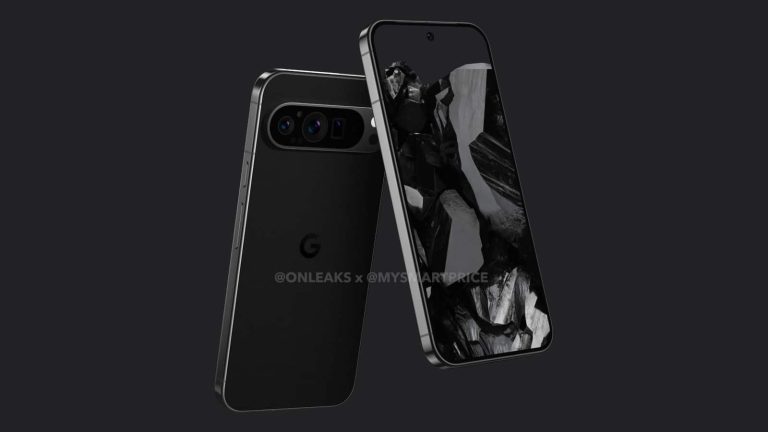
Now that the Pixel 8 series is out, it’s time to start wondering what the Pixel 9 and Pixel 9 Pro might look like, and these recently released renders could showcase Google’s direction for the design. Now it’s worth keeping in mind, that these images are just CAD renders. They’re not official promotional images or renders from Google. There’s a chance the Pixel 9 Pro may look like the phone in the renders. But there’s just as good of a chance that the phone will look very different.
Even if the design ends up being accurate, there are still things Google might change. With that being said, here’s what you might be able to expect in terms of the phone design. The Pixel 9 Pro is said to come with a flat display and based on the renders Google will move away from the current design of the Pixel 8 series. The frame of the phone is a good indicator of this. While the corners of the phone frame remain slightly rounded, the sides, top, and bottom all appear to be flat. On the Pixel 8 series, the sides, top, and bottom of the frame all have a slight curve to them.
In addition to the flat frame, the Pixel 9 Pro might come with a rounded, pill-shaped rear camera module. Although some suspect it may be more squared off like on the Pixel Fold. The Pixel 9 Pro also appears to stick with the hole punch camera on the front.
Renders of the Pixel 9 Pro have also been shown off in a 360-degree video
The still images do a good job of showcasing the upcoming phone’s potential design. However, sometimes this just isn’t enough to satiate the hunger for a full view. Luckily, you can see the phone from all angles thanks to a 360-degree video. The video was created by OnLeaks in collaboration with MySmartPrice. With the video, you get a slightly better look at the phone from all sides. This includes the power and volume rocker buttons being on the right side like always. The position of these hasn’t changed either.
Along with the design OnLeaks also shares a few specs details about the phone. The screen size is reportedly going to be 6.5 inches and it’ll have dimensions of 162.7 x 76.6 x 8.5 mm. The phone will also include a telephoto sensor on the back. Google is rumored to be releasing in the back half of 2024. But that shouldn’t be a surprise since Google does this with all of its Pixel flagship phones. If Google sticks to the same timeframe, the Pixel 9 series will be released sometime in early October and launch later in the same month.
Although official details are light on the upcoming devices, there are more than a few rumors about the Pixel 9 series already floating around. Both phones are said to support the Qi2 wireless charging standard and use a Tensor G4 chip based on a 4nm chip made by Samsung. Google is also rumored to be working on a new digital AI assistant for the Pixel 9 series called ‘Pixie’ that will be exclusive to Pixel phones and be separate from Assistant with Bard.