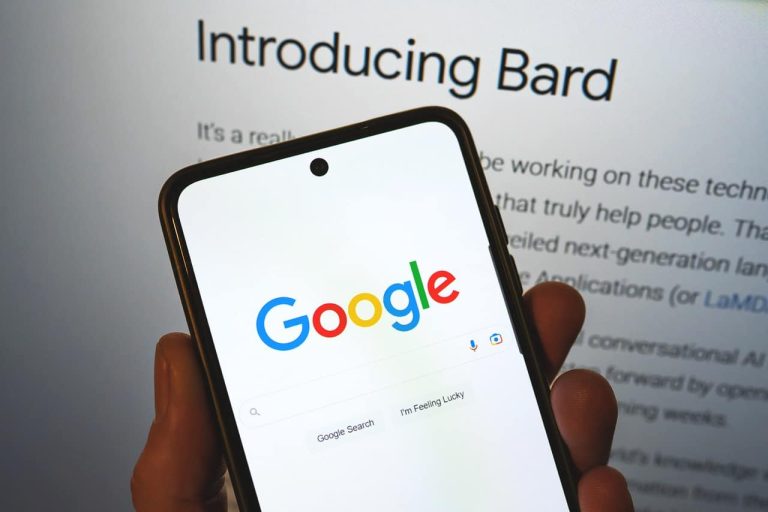
Google is expanding its generative AI offerings with an upcoming image generator for Google Bard, as revealed in an unreleased changelog dated January 18.
Following the footsteps of tools like the Search Generative Experience (SGE) and Slides, users will be able to create images by entering a few words that describes the image. This new capability is expected to be powered by Google’s Imagen family of models. Imagen is known for their ability to produce high-quality, photorealistic images.
In December, Google introduced Imagen 2, boasting significantly improved image quality. The technology aims at enterprise use cases, such as logo generation or creating images with text overlays.
Google Bard’s image generator is expected to follow safety features similar to those in SGE. The latter, introduced in October, allows users to “draw” or “sketch” prompts directly into the Search field, generating four images at a time.
Just like SGE, Google Bard will also block results with notable people and explicit content
SGE ensures safety by blocking the generation of harmful, misleading, or explicit content. Bard will also restrict prompts featuring notable people or photorealistic faces, reports 9to5Google. Additionally, each generated image will get a metadata labeling and invisible watermarking using Google’s SynthID.
Google Slides and Meet, the latter for custom backgrounds, already incorporate user-facing image generation through Duet AI. The forthcoming addition of an image generator to Bard extends the accessibility of AI-generated content across various Google services.
By adding further descriptions to image captions in Imagen 2’s training dataset, Google is enhancing image-caption understanding. It will allow for more accurate and contextually nuanced image generation.
Moreover, Imagen 2 addresses common challenges faced by text-to-image tools, such as rendering realistic hands and human faces. The technology incorporates a specialized image aesthetics model. It is based on human preferences, ensuring that generated images align with qualities preferred by users. These advancements collectively contribute to Imagen 2’s improved ability to generate high-quality and realistic images.
The move aligns with Google’s broader strategy of integrating advanced AI technologies across its suite of services.
Researchers spotted a severe security vulnerability in the Bosch thermostat that exposed users to privacy risks. Exploiting the flaw allowed malware to be installed on target devices.
According to a recent post from Bitdefender, their researchers discovered a significant security vulnerability affecting Bosch thermostat models.
Identified as CVE-2023-49722, it existed due to how the device assembles the microcontrollers. As Bitdefender explained, the thermostat has two microcontrollers – a Hi-Flying chip, HF-LPT230, that implements the Wi-Fi functionality, and an STMicroelectronics chip, STM32F103, which implements the main logic but exhibits no WiFi capability of its own. Instead, it relies on the Hi-Flying chip for WiFi, which triggers the vulnerability.
The WiFi chip leverages the UART data bus to communicate messages to the main controller and also listens on the TCP port 8899 on the LAN. Thus, it becomes possible for an adversary to execute malicious actions. As stated in the post,
This means that, if formatted correctly, the microcontroller can’t distinguish malicious messages from genuine ones sent by the cloud server. This allows an attacker to send commands to the thermostat, including writing a malicious update to the device.
Configuring malicious updates on the target device is easy because of unsecured communication between the thermostat and the server.
The thermostat communicates with the connect.boschconnectedcontrol.com server through JSON encoded payloads over a websocket. The packets sent by the server are unmasked, making them easy to imitate.
The researchers have also explained in their post how a potential adversary could introduce malicious updates to the target device. Once done, the attackers could execute any desired malicious action through the compromised IoT device, threatening users’ privacy.
Bosch Patched The Flaw
Following the bug report, Bosch acknowledged the vulnerability and started working on a fix. Yet, their observations and the subsequent patches seemingly differ from what Bitdefender reported.
Specifically, the researchers mentioned Bosch BCC100 thermostat (SW version 1.7.0 – HD Version 4.13.22) as the vulnerable device. However, Bosch mentioned the models BCC101, BCC102, and BCC50 as the vulnerable thermostat models in its advisory, clearly specifying the safe status of the BCC100 thermostat.
Consequently, the firm patched the security issue (opened port 8899) with the WiFi firmware 4.13.33 update, closing port 8899. While the update should reach all eligible devices automatically, users must still check their respective thermostats for any firmware updates to receive the patch in time.
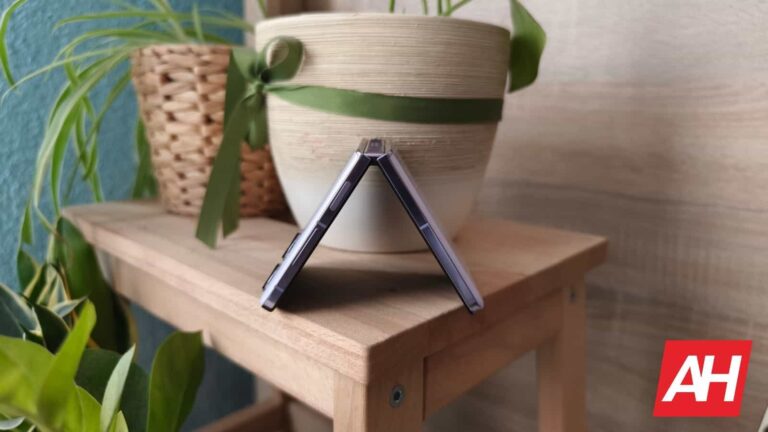
The very first clamshell foldable smartphone from Xiaomi is now one step closer to launch. The phone not only appeared in a regulatory filing, but that filing confirmed that it will offer satellite connectivity.
The first clamshell foldable from Xiaomi is coming, and it’s now one step closer to launch
The Xiaomi MIX Flip, which is allegedly the name of this phone, appeared over at MIIT in China. It appeared under the model number 2311BPN23C. That model number appeared on IMEI database earlier and has been linked with the ‘Mix Flip’ name. Once released, the name will likely be ‘MIX Flip’, though.
A tipster did say, a while back, that this device is an “extremely thin and portable” clamshell foldable. We don’t really know a lot about the device thus far, though. Back in September, a sketch of the device appeared, but we’re not sure that is legit. It looks a bit odd, in all honesty.
Some rumors shared the alleged processor this phone will use. The Xiaomi MIX Flip will allegedly ship with the Snapdragon 8 Gen 2 SoC. So, not the latest and greatest from Qualcomm, but not far from it.
The Xiaomi MIX Flip will launch this year
In regards to its launch timeframe, several rumors said we can expect it in 2024. The device is expected to arrive at some point this year, but we’re not sure when. Considering that it already appeared on several certification websites, it could launch in the first half of 2024.
You can expect this device to have rather powerful specs, though not be the most powerful foldable Xiaomi released. That title will most likely be kept by the Xiaomi MIX Fold 3.
We do expect the device to offer two or three cameras on the back, and a rather nice main display with a 120Hz refresh rate. A secondary panel will also be included, but we don’t know how large will it be.
Knowing Xiaomi, fast charging will be a part of the offering, though we’re not sure about wireless charging. The Xiaomi MIX Fold 3 does have it, but the Xiaomi MIX Flip may omit it, we’ll see.
Meta introduced a lot of new features specifically designed for teens using social apps like Facebook, Instagram, and Messenger. From parental supervision tools to more privacy features, Meta has been trying to limit teens’ access to unwanted interactions and content on its social platforms.
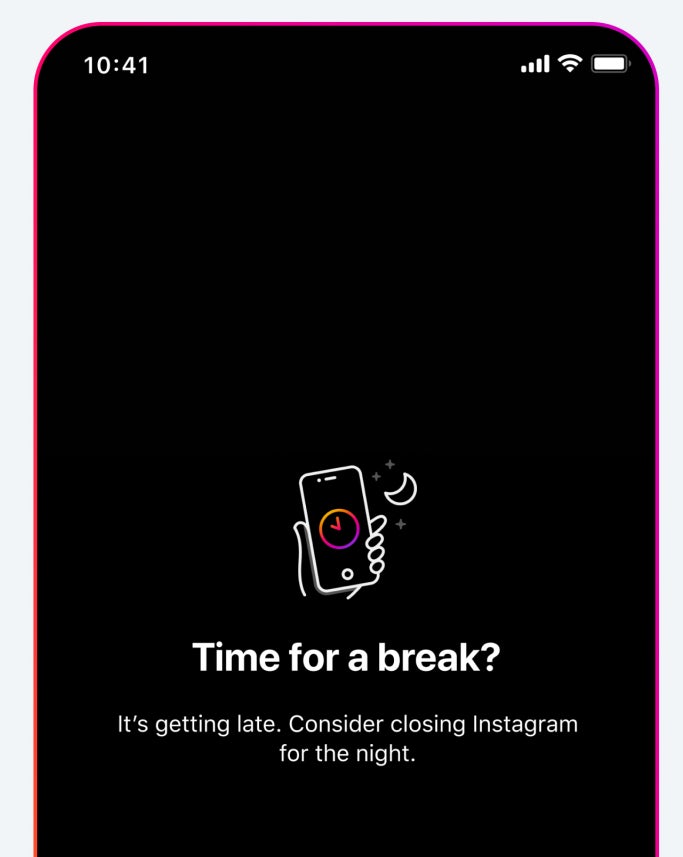
Today, the social giant announced yet another new feature that won’t be limiting access to any content but rather remind teens that it’s time to … go to bed. Suggestively named “nighttime nudges,” the new feature is meant to make it easier to manage the time teens and families spend on Meta’s apps.
For once, Meta recommends a big category of users that spending time on its apps when they should be sleeping is unhealthy. The new nighttime nudges will have been designed to show up when teens have spent more than 10 minutes on Instagram in places like Reels or Direct Messages late at night.
The nighttime nudges function as a reminder for teens that it’s late, and encourage them to close the app. Obviously, that’s not going to happen in many cases, but at least Meta is trying to convince teens to do the right thing. Perhaps some will heed the “Time for a break” warning.
The Federal Bureau of Investigation (FBI) and the Cybersecurity and Infrastructure Security Agency (CISA) have raised a red flag: Chinese-made drones pose a significant risk to the security of critical infrastructure in the United States.
While any UAS can harbor vulnerabilities, the concern escalates with Chinese models.
The People’s Republic of China (PRC) wields a legal arsenal that grants its government unprecedented access to data held by Chinese companies.
This translates to a potential goldmine of sensitive information gleaned from drones operating within American borders.
DocumentFree Webinar
Compounding the problem are zero-day vulnerabilities like the MOVEit SQLi, Zimbra XSS, and 300+ such vulnerabilities that get discovered each month. Delays in fixing these vulnerabilities lead to compliance issues, these delay can be minimized with a unique feature on AppTrana that helps you to get “Zero vulnerability report” within 72 hours.
This data-hungry approach isn’t just theoretical.
The PRC views information as a strategic resource, actively seeking to acquire it through various means, including UAS.
Their national security laws empower domestic companies to cooperate with intelligence services, granting them a backdoor to data collected globally.
Imagine the chilling scenarios that unfold: drone-captured footage of critical infrastructure layouts landing in the hands of Chinese authorities, compromising sensitive intellectual property, or worse, exposing vulnerabilities that pave the way for targeted cyberattacks or physical sabotage.
Beyond the Horizon: Vulnerabilities that Lurk
The threat isn’t limited to overt data collection. UAS are riddled with potential entry points for malicious actors.
Data transfer points through smartphones and connected devices offer avenues for unauthorized infiltration.
Patching and firmware updates, often controlled by Chinese entities, could harbor hidden vulnerabilities, silently siphoning off critical information.
This extends beyond just sensitive data. UAS expands the attack surface, capturing imagery, surveying data, and facility layouts – a treasure trove for foreign adversaries seeking to gain an intelligence advantage.
The potential consequences of unchecked Chinese-made UAS use are staggering.
Compromised intellectual property could cripple businesses, exposed infrastructure vulnerabilities could cripple critical services, and stolen network access could pave the way for devastating cyberattacks.
This isn’t merely a hypothetical risk. The White House’s National Cybersecurity Strategy and intelligence assessments paint a stark picture of the PRC as a persistent cyber threat, actively seeking to exploit any avenue for advantage.
Mitigation Strategies for a Safe Sky
In the face of this complex threat landscape, organizations utilizing UAS must prioritize secure-by-design systems.
Government agencies, especially, are urged to transition to systems compliant with federal mandates, minimizing reliance on potentially compromised technology.
Comprehensive cybersecurity recommendations provide a roadmap for a robust defense. From secure network segmentation and Zero Trust architecture to rigorous firmware update protocols and operator training, these measures collectively strengthen the digital walls protecting sensitive information.
A secure supply chain is equally crucial. Understanding the origin and legal landscape surrounding UAS manufacturers provides a vital context for assessing potential risks.
Implementing SCRM programs and SBOM reviews further bolsters the integrity and resilience of the entire UAS ecosystem.
Effective cybersecurity isn’t a one-time fix; it’s a continuous journey.
Regular vulnerability assessments, configuration management, and log analysis provide the vigilance needed to stay ahead of emerging threats.
Try Kelltron’s cost-effective penetration testing services to evaluate digital systems security. Free demo available.
OSINVGPT is an AI-based system that helps security analysts with open-source investigations and tool selection. While this tool was developed by “Very Simple Research.”
This tool can assist security analysts in gathering relevant information, sources, and tools for their investigations. It even helps researchers produce reports and summaries of their results.
DocumentFree Webinar
Compounding the problem are zero-day vulnerabilities like the MOVEit SQLi, Zimbra XSS, and 300+ such vulnerabilities that get discovered each month. Delays in fixing these vulnerabilities lead to compliance issues, these delay can be minimized with a unique feature on AppTrana that helps you to get “Zero vulnerability report” within 72 hours.
OSINVGPT is available on ChatGPT and is useful for security researchers as it saves both time and effort.
Key aspects
Here below, we have mentioned all the key aspects that OSINVGPT can do:-
Data Analysis
Interpretation
Guidance on Methodology
Case Studies
Examples
Document Analysis
Fact-Checking
Verification
Recommendations Based on External Sources
Ethical Considerations
OSINVGPT’s data analysis and interpretation involve examining information from diverse open sources to form readable narratives and address specific queries. At the same time, guidance is offered on conducting transparent and accurate open-source investigations.
Detailed insights and suggestions are provided using real-world examples within the knowledge base. Appropriate data is analyzed and extracted from the uploaded documents for open-source investigations.
To ensure investigation accuracy, assistance is given in fact-checking using open-source data. Recommendations based on external sources are provided for queries beyond the direct knowledge base, with a focus on ethical considerations in open-source investigations for responsible conduct.
Moreover, if you want, you can access the OSINVGPT tool from here for open-source investigation.
Android TVs are widely used, and due to their wide adoption, threat actors frequently target them for unauthorized access or data theft.
In Android smart TVs, the vulnerabilities in outdated software or third-party apps can be exploited.
The interconnected nature of the smart or Android TVs makes them potential targets for the threat actors seeking to compromise user privacy or launch broader attacks within home networks.
Cybersecurity researcher Alex.Turing, Acey9, and rootkiter recently discovered more than 170000 Android TVs were hacked by the “Bigpanzi” bot to Launch DDoS attacks.
DocumentFree Webinar
Compounding the problem are zero-day vulnerabilities like the MOVEit SQLi, Zimbra XSS, and 300+ such vulnerabilities that get discovered each month. Delays in fixing these vulnerabilities lead to compliance issues, these delay can be minimized with a unique feature on AppTrana that helps you to get “Zero vulnerability report” within 72 hours.
Bigpanzi Bot Hacks 170,000+ Android TVs
A sneaky ELF sample dubbed “pandoraspear” was recently discovered by security researchers with zero detection on VirusTotal. It primarily hides the C2 domains, but analysts managed to catch them and found 170,000 daily active bots, mainly in Brazil.
Botnet nodes across Brazil (Source -Xlab Qianxin)
The group fought back with DDoS and host file manipulations. They aimed at Android devices with malicious scripts and APKs, exposing a major cybercrime syndicate named “Bigpanzi.”
Their scheme involves luring users to install apps and turning devices into nodes for illegal streaming, DDoS, and piracy. Bigpanzi goes beyond DDoS by hijacking TVs for real-world attacks, like the UAE incident on December 11, 2023, showing conflict footage.
The Bigpanzi-controlled devices pose a serious threat by broadcasting violent or propaganda content by risking social order.
Security researchers found the downloader domain ak.tknxg.cf in the Pcdn sample. The Google search unveiled two leads, “device upgrade instructions” and “repair guidance.”
Moreover, to infect the devices that are running Android or eCos systems, the Bigpanzi spreads backdoored firmware via several STB, DVB, and IPTV forums.
Countermeasures
Here below, we have mentioned all the countermeasures:-
Modified UPX Shell
Dynamic Linking
OLLVM Techniques
Anti-Debugging Mechanism
Besides this, cybersecurity analysts identified “Fl00dce690167abeee4326d5369cceffadaaf,” which is a DDoS Builder.
The operational interface has a ‘slave’ button for configuration that generates bot samples for STB, Linux, and Windows. Initially doubted Bigpanzi’s DDoS involvement, but DDoS Builder discovery confirms long-term engagement.
However, no tracked attack commands suggest a focus shift to lucrative content business lines, Android TV, and STBs. The adaptability of Bigpanzi highlighted its evolution in the threat landscape.
Bigpanzi operated covertly and managed to collect wealth for eight years which resulted in a vast network of samples, domains, and IPs. Complex connections exist due to code and infrastructure reuse.
Try Kelltron’s cost-effective penetration testing services to evaluate digital systems security. Free demo available.
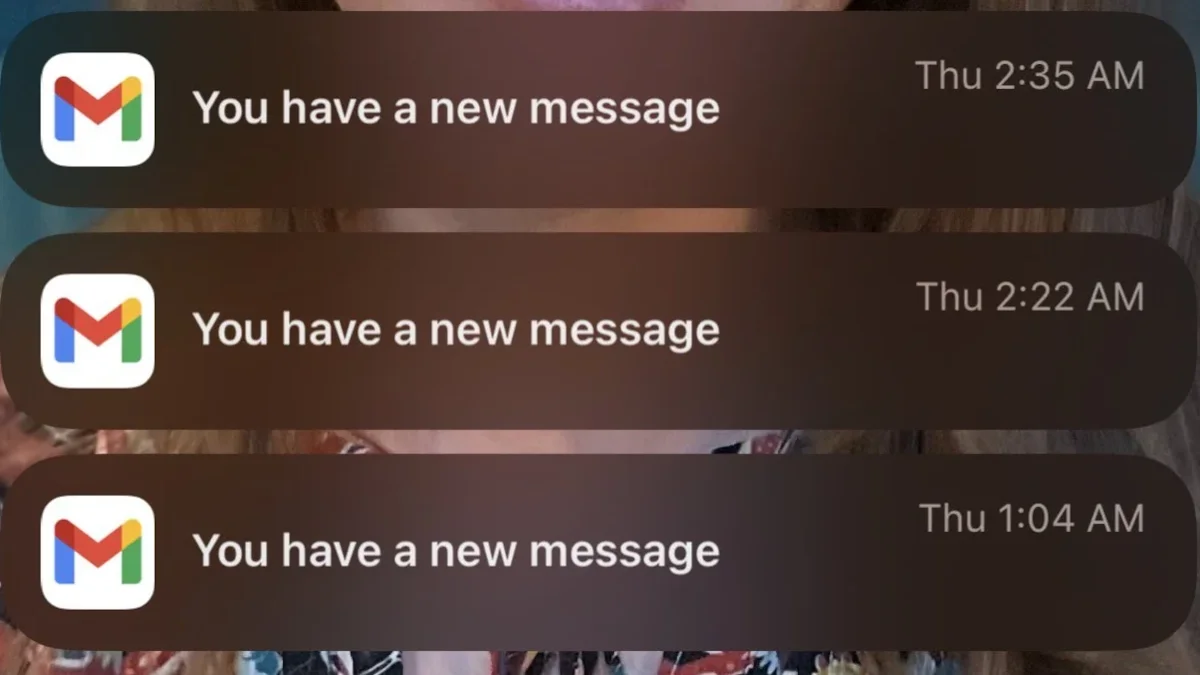
For the last couple of days I noticed that instead of getting notifications with previews from Gmail on my iPhone, I would see a banner with the Gmail icon that said “You have a new message.” This forced me to open the Gmail app every time this notification would appear on my screen in order to see who sent me the Gmail. I have no idea what brought this on and after doing some research, it appears that this is an issue that is more widespread than I originally thought.
The same thing happened to a Reddit user after he updated his iPhone 13 mini to iOS 17 more than a month ago. Another Reddit subscriber noticed the same thing was happening to him today after updating to iOS 17.2.1. Two days ago, this happened to an iPhone 13 Pro owner while three days ago, an iPhone 14 Pro owner experienced the loss of Gmail previews on his iPhone 14 Pro. I had installed iOS 17.2.1 last month when it was first released so I know that an iOS update was not responsible for the loss of Gmail previews on my iPhone.
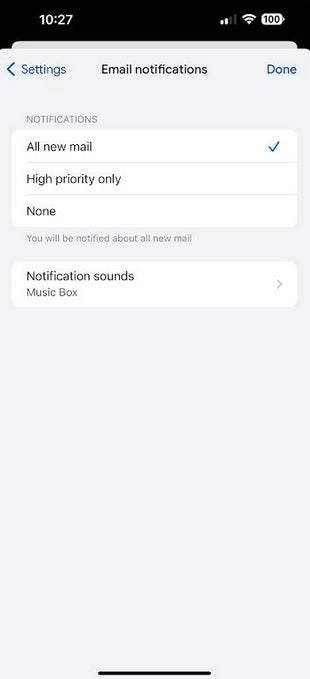
If this has happened to you, fear not. There is a workaround that fixed my iPhone 15 Pro Max and I am now receiving Gmail preview notifications once again. Here is what you do. Open the Gmail app and tap the three-line hamburger icon on the left side of the search bar on the top of the display. Scroll up and tap on Settings. Press Email notifications and that will bring up a box with three options: All new mail, High priority only, and None. Tap on None and then tap on Done at the upper right corner of the display. Turn off your iPhone.
To get your Gmail notification previews back, disable Gmail notifications, turn off your iPhone, turn on your iPhone, and enable Gmail notifications
After a minute or two, turn your iPhone back on and follow the directions above to return to the Email notifications in Gmail. This time, select from either All new mail or High priority only. Hit the Done button in the upper right corner, and that is it. You will get Gmail notifications with previews once again. And to reiterate, this morning I was getting the notifications without the previews. After trying the fix, previews returned to my Gmail notifications.
If you’re suffering from this problem, try the fix now and let us know if it brought previews back to your iOS Gmail notifications.
Samsung has just finished wrapping up its Galaxy Unpacked event where it announced the Galaxy S24, Galaxy S24+, and Galaxy S24 Ultra, but it saved one little surprise for the end — the Galaxy Ring. Samsung is touting this as the next evolution of Samsung Health and says it will “change the shape of future health like only Samsung can.”
The company then proceeded to show off a few teaser images of the device before signing off the live stream and walking off stage. And that’s about all that’s currently known about the Galaxy Ring officially. It’s a real wearable device geared towards health, and it’s coming sometime in the future. It’ll also use Galaxy AI in some form, but Samsung doesn’t elaborate on how. Unfortunately, Samsung hasn’t shared anything else on it other than that.
But you can probably make some educated guesses as to what the device will do. It’s a ring so you wear it on your finger. And chances are it’ll include the Samsung BioActive Sensor and heart rate sensor. Although Samsung didn’t share anything specific about it, you can also probably look at what other smart rings offer to see what Samsung might look to improve on.
Recently announced Samsung Galaxy Ring likely to offer features similar to other smart rings
Smart rings aren’t new in the wearable space but they’re also not a relatively common device. At least not one that you hear about often. Up until a few years ago, the Oura ring was the only offering that was really in the mainstream. Over the past few years, more brands have started to come out with similar devices. Such as the Evie smart ring from Movano that was announced at CES in 2023. Amazfit announced one at CES 2024 as well. You can look at these devices to get an idea of what Samsung might have in store for Galaxy Ring owners down the road.
Keep in mind that all of this is just speculation. But for now, it’s your best bet at the possibilities. Most or all of these smart rings include heart rate tracking and sleep tracking features. So you can probably expect those to be in the Galaxy Ring too. Devices like the Oura Ring also include stress-tracking and fitness-tracking features. These have come to be known as basic features offered by most wearables. And it would be strange if Samsung didn’t add them to its own smart ring.
Naturally, these will also connect to Samsung Health. The biggest mystery is how Samsung will incorporate its Galaxy AI. Since Samsung didn’t announce a release date, there’s no guarantee this will be released in 2024. But Samsung does have a second Galaxy Unpacked that will happen in the back half of the year. So perhaps it will share more about it then. In the meantime, you can get access to Galaxy AI features through Samsung’s latest phones, which you can pre-order starting today.
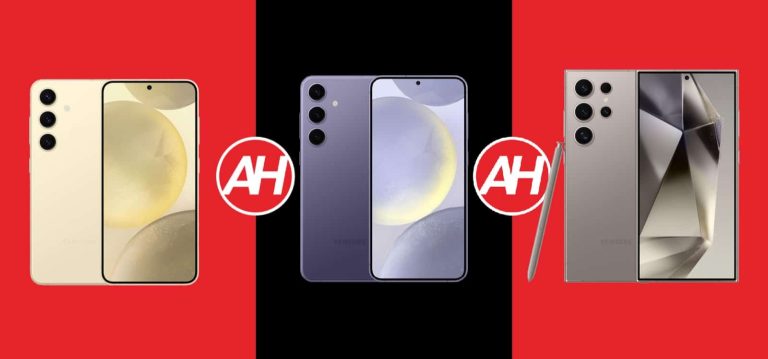
Samsung announced its new flagship smartphones, the Galaxy S24 series. Three handsets are included here, the Galaxy S24, Galaxy S24+, and Galaxy S24 Ultra, and we’ll compare them in this article. Do note that this article comes a day after the announcement, so we didn’t really use them for long at this point. This is just an initial look at how the three phones stack up one next to the other. You’ll have to wait for our full review in order to get more information.
We’ll check out their designs, take an initial look at their displays, comment on the initial performance, and more. You’ll also notice that their specifications are laid out too, just in case you’re interested in those. Having said that, let’s get down to it, and see how these three phones compare one to the other.
Specs
Samsung Galaxy S24 vs Galaxy S24+ vs Galaxy S24 Ultra, respectively
When it comes to the design, there are not many differences compared to last year, but there are some. The Galaxy S24 and Galaxy S24+ do look identical one to the other, the only difference is in their size. The Galaxy S24 Ultra is a bit different. Let’s start off with the vanilla and ‘Plus’ models, though. They now have flat sides all around, while the sides on the Galaxy S23 and Galaxy S23+ were a bit rounded.
The bezels are a bit thinner on them, which allowed Samsung to offer slightly larger displays this time around. Other than that, the Galaxy S24 and Galaxy S24+ look the same as last year’s models, down to camera placement on the back. It is worth noting that all color variants are matte this time around, and that goes for all three Galaxy S24 models, not just the Galaxy S24 and Galaxy S24+.
In regards to the Galaxy S24 Ultra, unlike the previous model, it now has a completely flat display and thinner bezels. The top and bottom sides are completely flat now, and the frame is made out of titanium. It is now slightly thinner than its predecessor, but it’s also wider at the same time. The weight is almost the same as last year, and that goes for all three models.
Based on our initial impressions, the in-hand feel is better across the board. The flat sides on the Galaxy S24 and Galaxy S24+ do make them easier to use, and those slight tapers on the sides are only helping the cause. The Galaxy S24 Ultra does feel a bit different in the hand, and many of you will appreciate the fact it now has a flat display. All three phones offer an IP68 certification, and all three phones feel like premium offerings.
Samsung Galaxy S24 vs S24+ vs S24 Ultra: Display
The Galaxy S24 and Galaxy S24+ now have larger displays, while the ‘Ultra’ retained the same display size. They do have slightly larger footprints, but only barely. The fact that all three phones have thinner bezels now definitely helped out with balancing all that. In any case, the three phones now include 6.2, 6.7, and 6.9-inch displays, respectively. The Galaxy S24 has a fullHD+ (2340 x 1080) panel, while the other two phones include QHD+ (3120 x 1440) displays. All three phones are LTPO AMOLED panels, and all three support HDR10+ content. They all offer an adaptive refresh rate from 1 to 120Hz, in case you were wondering.
They also have a theoretical peak brightness of 2,600 nits. The aspect ratio across the board is 19.5:9, while HDR10+ is supported on all three. The Samsung Galaxy S24 and Galaxy S24+ displays are protected by the Gorilla Glass Victus 2. The Galaxy S24 Ultra comes with all-new Gorilla Armor protection that Corning announced alongside Samsung. That gets the specs out of the way, what are they in real life, though?
Well, based on what we initially experienced, there’s really not much to complain about here. All three panels are extremely responsive, sharp, vivid, and have great viewing angles. Corning claims that the Gorilla Armor does have much better resistance to reflections, though we were not able to test that out just yet. All three displays do get plenty bright when needed, though chances are you’ll never reach that peak brightness of 2,600 nits. That is impossible to get to unless you’re consuming HDR content in very specific situations. The point is… all three displays are more than bright enough, up there with the best of the best.
Samsung Galaxy S24 vs S24+ vs S24 Ultra: Performance
All three phones are fueled by the Snapdragon 8 Gen 3 for Galaxy processor in the US. Those are the models that we are using. In some other markets, however, the Galaxy S24 and Galaxy S24+ do come in the Exynos 2400 variant, which is something we have not experienced just yet. The Galaxy S24 Ultra includes the Snapdragon 8 Gen 3 for Galaxy globally, though. Samsung said that the supply chain had something to do with these choices.
When it comes to RAM, the Galaxy S24 has 8GB, while the other two models come with 12GB of RAM. Samsung used LPDDR5X RAM across devices. UFS 4.0 flash storage is used on all three models, except the base 128GB storage variant of the Galaxy S24. That’s the same thing Samsung did a year ago. The storage is non-expandable, by the way.
What about the performance? Well, we’ll share a lot more information in our full review, but the initial impressions are really good. All three phones worked very smoothly regardless of what we did. The multitasking was seamless, and the same goes for the usage of YouTube, Chrome, various One UI 6.1 features, and so on. Even the brief gaming sessions that we conducted on the Galaxy S24 Ultra went more than fine, and all three phones remained relatively cool. There were basically no surprises thus far, things could change, though, of course.
Samsung Galaxy S24 vs S24+ vs S24 Ultra: Battery
The Samsung Galaxy S24 includes a 4,000mAh battery. The Galaxy S24+ comes with a 4,900mAh unit, while the ‘Ultra’ phone has a 5,000mAh battery on the inside. The Galaxy S24 and Galaxy S24+ have slightly larger batteries than their predecessors, while the Galaxy S24 Ultra retained the same battery capacity.
We cannot really comment on the battery life yet, unfortunately. It is expected to be similar to what last year’s models had to offer, though we’re hoping for an improvement when it comes to the vanilla Galaxy S24. The Galaxy S23 did not offer bad battery life, but it was below what we’d call great battery life. The Galaxy S23 Ultra, on the other hand, was amongst the best battery life smartphones in 2023.
The charging speeds, for better or worse, remained unchanged. The Galaxy S24 supports 25W wired charging, while the other two phones support 45W wired charging. Neither phone includes a charger in the retail packaging, though. 15W wireless charging is on offer across models, and the same goes for reverse wireless charging. One thing to note is that neither device supports the Qi2 standard.
Samsung Galaxy S24 vs S24+ vs S24 Ultra: Cameras
The Samsung Galaxy S24 and Galaxy S24+ have the same camera setups. A 50-megapixel main camera sits on both devices, while a 12-megapixel ultrawide camera (120-degree FoV) is also included. The last camera on the back is a 10-megapixel telephoto camera (3x optical zoom). Samsung kept things very similar to what the Galaxy S23 and Galaxy S23+ had to offer.
The Galaxy S24 Ultra, on the other hand, has a 200-megapixel main camera, a 12-megapixel ultrawide unit (120-degree FoV), a 10-megapixel telephoto camera (3x optical zoom), and a 50-megapixel periscope telephoto unit (5x optical zoom). That 5x camera is the biggest novelty here, as it replaces a 10-megapixel 10x optical zoom periscope camera from the Galaxy S23 Ultra.
All we can say thus far is that our initial impressions are good. Samsung says all three phones should be able to take pictures that look less processed, and more in line with what you see, while they still pop. That is noticeable based on some initial camera samples. Also, we’d just like to say that the 50-megapixel periscope telephoto camera seems to be capable of keeping a similar quality of 10x shots as the dedicated 10-megapixel 10x zoom lens on the Galaxy S23 Ultra. Once again, this is based on some initial camera samples under specific lighting conditions. We’ll get into it in our full review.
Audio
All three devices also come with stereo speakers. Those speakers offer good output and seem to be well-balanced. They are loud enough, and we did not notice any distortion, not even at higher volume levels. They do sound very similar to last year’s models, across the board.
You will not find a 3.5mm headphone jack on either device. You can always hook up your headphones via the Type-C port that is available at the bottom, though. Do note you’ll need a dongle for that. In regards to wireless audio connections, Bluetooth 5.3 is on offer.