In October 2023, Samsung launched two new affordable Android tablets, the Galaxy Tab A9 and Galaxy Tab A9+. The devices were first released in India. The Plus model is now available in the US too. Priced at $220 and above, the tablet can be bought directly from Samsung’s official website. It is also available on Amazon and Best Buy.
Samsung’s Galaxy Tab A9+ affordable tablet is now available in the US
The Galaxy Tab A9+ is an affordable tablet powered by Qualcomm’s two-year-old Snapdragon 695 processor. It is available in 4GB and 8GB RAM variants paired with 64GB and 128GB storage, respectively. The device supports microSD cards for expandable storage. Samsung has equipped the tablet with an 11-inch LCD screen featuring a Full HD+ resolution (1,920 x 1,200 pixels) and a 90Hz refresh rate.
A 7,040mAh battery fuels the Galaxy Tab A9+ with 15W charging support via a USB Type-C port. You won’t get a charger in the box, though. Samsung has long stopped providing one with its products. There is an 8MP camera at the back and a 5MP camera at the front with no LED flash. You can record 1080p videos with both cameras. The tablet offers AKG-tuned quad stereo speakers, making it ideal for media consumption.
Samsung is selling the device in Wi-Fi and cellular (5G) models with support for a physical nano-SIM and an eSIM. Other known specs of the Galaxy Tab A9+ include built-in GPS, Wi-Fi 5, Bluetooth 5.0, and a 3.5mm headphone jack. The tablet ships out of the box with Android 13-based One UI 5.1.1. Samsung will push at least two major Android OS updates, i.e., up to Android 15, to the device, if not more.
Detailed pricing structure and
The base variant of the Galaxy Tab A9+ costs $219.99. It is the 4GB+64GB model without cellular connectivity. The same model can be purchased with 5G connectivity at $269.99. Carrier options include AT&T, T-Mobile, US Cellular, and Verizon. Unfortunately, you won’t get 5G connectivity if you grab the 8GB+128GB model. It only comes in a Wi-Fi option and costs $269.99. Color options include Silver, Graphite, and Navy.
For a limited time—until January 28— you get a black-colored Book Cover worth $49.99 free with every Galaxy Tab A9+ purchase. It gives extra protection to your tablet. If you want to get Samsung Care+, a subscription service that covers theft, loss, and damage, it is available at $8 a month or $129 for two years. Samsung is also offering up to $170 instant trade-in credit with the new tablet.
China-backed hackers caused a lot of trouble for US companies in 2023. And they’re expected to continue their aggressive behavior in 2024- especially due to the upcoming presidential election. While cybersecurity experts have already warned hackers are using AI and machine learning to bypass firewalls, the US National Security Agency (NSA) believes AI could also be used as a tool to hunt down bad actors.
Speaking at Fordham University in New York on Tuesday, the NSA director of cybersecurity, Rob Joyce, confirmed state-backed hackers utilize AI to level up their attacks and target high-profile companies. As Techcrunch reports, Joyce added AI is helping them find and hunt down hackers. “…AI, machine learning [and] deep learning is absolutely making us better at finding malicious activity,” he noted.
NSA oversees and hunts down China state-backed hackers with AI
The NSA official didn’t mention which cyber attacks on the US were state-backed and which one of them involved AI. However, he alluded to the recent China-based hacker attacks as an example of how artificial intelligence is helping the US to repel cyber attacks on its infrastructures.
“They’re in places like electric, transportation pipelines, and courts, trying to hack in so that they can cause societal disruption and panic at the time in place of their choosing,” Joyce noted.
According to Joyce, Chinese hackers exploit vulnerabilities to access a system and pretend to be an authorized user. Meanwhile, the US uses machine learning, big data, and AI to detect and monitor malicious activities. This is mainly because bad actors don’t behave like regular operators. Joyce says this gives the upper hand to the US. The NSA official says AI won’t be a magical tool. But it makes “those that use AI more effective and more dangerous.”
Joyce also noted that less capable hackers utilize AI to overcome their technical weaknesses. Additionally, AI is helping hackers craft more professional English text in cases like phishing emails.
If you’re a HelloFresh customer, you’ll likely receive fewer marketing emails and texts due to the fine imposed by the UK’s Information Commissioner’s Office (ICO).
Key Points
Customers were bombarded with unwanted emails and texts.
HelloFresh fined £140,000 for sending 80 million spam messages.
ICO found HelloFresh’s opt-in processes were misleading and confusing.
Case highlights the importance of data protection and obtaining informed consent.
Recipe kit delivery service HelloFresh has been slapped with a hefty £140,000 fine by the UK’s Information Commissioner’s Office (ICO) for bombarding customers with a staggering 80 million spam messages.
The fine follows a year-long investigation triggered by a flood of complaints from customers who were fed up with the constant barrage of unwanted marketing emails and texts.
The ICO found that HelloFresh’s marketing practices were a clear violation of UK data protection regulations. Between August 2022 and February 2023, the company sent out a mind-boggling 79 million emails and 1 million text messages without obtaining proper consent from its customers. This included bombarding customers who had signed up for the service solely to receive recipe kits, with irrelevant offers and promotions.
“This was a clear case of a company putting its own commercial interests ahead of the privacy and rights of its customers,” said Andy Curry, Head of Investigations at the ICO. “Customers were not given a clear choice about receiving marketing messages, and many were left feeling harassed and frustrated by the constant bombardment.”
The ICO’s investigation revealed that HelloFresh’s opt-in processes were designed to be confusing and misleading. Customers were often pre-checked into marketing lists without their knowledge, and the wording of opt-in boxes was unclear, making it difficult for customers to understand what they were agreeing to.
“We take our data protection obligations very seriously and have made changes to our email and text marketing policy in response to the ICO’s findings,” said a spokesperson for HelloFresh. However, the company’s apology and belated changes to its marketing practices may not be enough to appease customers who feel they have been taken advantage of.
The HelloFresh case highlights the importance of data protection and the need for businesses to obtain clear and informed consent from customers before sending them marketing messages. Companies that fail to comply with data protection regulations face not only hefty fines but also reputational damage and the potential loss of customer trust.
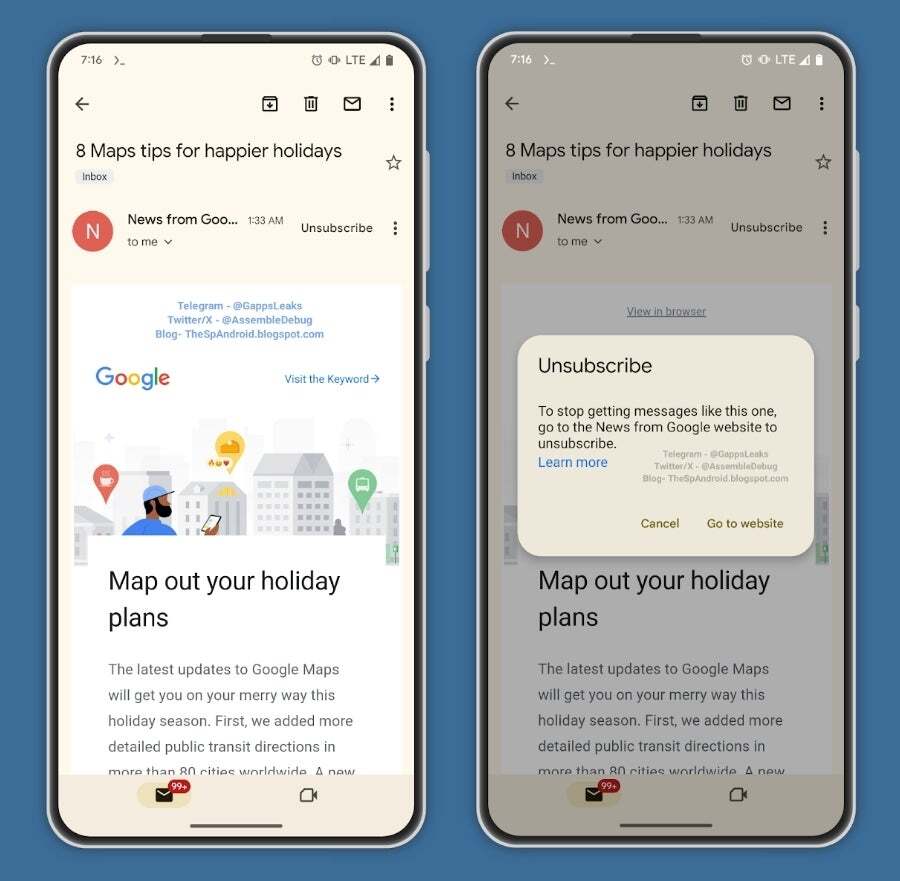
Not long ago, we informed you about Google’s efforts to introduce a convenient “unsubscribe” button in Gmail for Android. Surprisingly, this feature was initially made available to iOS users. However, now, the wait is over, as Android users can also benefit from this quick method to stop receiving those pesky emails you might have accidentally subscribed to.As spotted by Android Police, the new unsubscribe button in Gmail for Android is rolling out, strategically located at the email’s top section. Clicking on it will either request confirmation through a popup dialog or direct users to the newsletter’s unsubscribe website. The actual process varies based on how the newsletter publisher has integrated the unsubscribe option.
Image Credit–TheSpAndroid
The unsubscribe button has been a feature of the Gmail web experience for some time, positioned at the top of emails for user convenience in unsubscribing from unwanted emails. Clicking on this button may lead you directly to the sender’s website for the unsubscribe process, or in many cases, it functions automatically, offering a confirmation of the unsubscribed status.
Up until now, the Gmail mobile app didn’t make things as easy. While you could find options for blocking and reporting spam hidden in the 3-dot menu, there was no straightforward button for unsubscribing. Android mobile app users had to manually scroll through the email content to find the unsubscribe link, which was a bit more time-consuming and effortful, given that these links are usually tucked away in a small font.
You can still mark emails as spam or phishing using the three dots on the top right of the email. Just be sure it’s really spam, or you might accidentally make your spam filter too strict and miss important messages. Not everyone has access to the unsubscribe button yet, so you might need to wait a bit longer for it to show up on your device.
The potential involvement of Sandworm, the wider threat beyond attribution, the vulnerability of Zyxel firewalls and the focus on European energy firms call for improved cybersecurity posture and threat intelligence.
Forescout, a global cybersecurity leader, has provided new evidence about two attacks on the Danish energy sector in May 2023 (PDF). Their report, ‘Clearing the Fog of War,’ highlights the need for better network monitoring and incident response plans and analyzes the potential involvement of an advanced persistent threat (APT) group called Sandworm.
For your information, SektorCERT, Denmark’s critical infrastructure CERT, reported a significant cyber-related attack on 22 Danish energy sector companies between May 11-30, 2023. The attacks, linked to Russian APT Sandworm, exploited vulnerabilities in Zyxel firewalls. Despite SektorCERT’s swift response, some companies were forced into island mode, allowing attackers to access industrial control systems.
Forescout Research-Vedere Labs report shed light on this incident. Reportedly, the first wave of attacks started on May 11, 2023, exploiting CVE-2023-28771, a pre-authentication OS command injection vulnerability in unpatched Zyxel firewalls.
A second wave occurred on May 22, 2023, where attackers downloaded MIPS binaries from 45.89.106147 to Zyxel firewalls in an energy sector organization containing Mirai variants with Moobot flavour indicators. The firewalls participated in DDoS and SSH brute-force attacks against targets in Hong Kong, the U.S., and Canada.
Zyxel firewalls at other SektorCERT member organizations were also observed downloading Mirai variants from staging servers, historically associated with malware distribution, adware, ransomware, and Log4j exploitation attempts.
“After the second incident, further attacks targeted exposed devices within critical infrastructure worldwide in the ensuing months,” the report read.
Researchers couldn’t fully attribute the attacks to Sandworm given the difference between the two waves. The first wave targeted a limited number of targets using a PoC-less n-day while the second wave involved Zyxel firewalls infected by staging servers with a history of mass exploitation and crimeware, explained Elisa Costante, VP of Research at Forescout Research–Vedere Labs.
The study found numerous IP addresses exploiting the Zyxel vulnerability CVE-2023-28771, first reported by TRAPA Security in June 2023 and added to the CISA KEV catalogue in May 2023 with a 9.8 severity rating.
In April 2023, Zyxel announced patches for impacted firewalls, including USG Flex, ATP, ZyWALL/USG, and VPN. However, FortiGuard Labs reported a rise in DDoS botnets exploiting the Zyxel vulnerability, which persisted as late as October 2023 and spread across various devices, including Zyxel firewalls.
In May 2023, Hackread reported how a variant of the Mirai botnet, IZ1H9, successfully hacked Zyxel Firewalls using a patched command injection vulnerability, potentially leading to DDoS attacks. Researchers from Palo Alto Networks’ Unit 42 identified it as the most active Mirai variant.
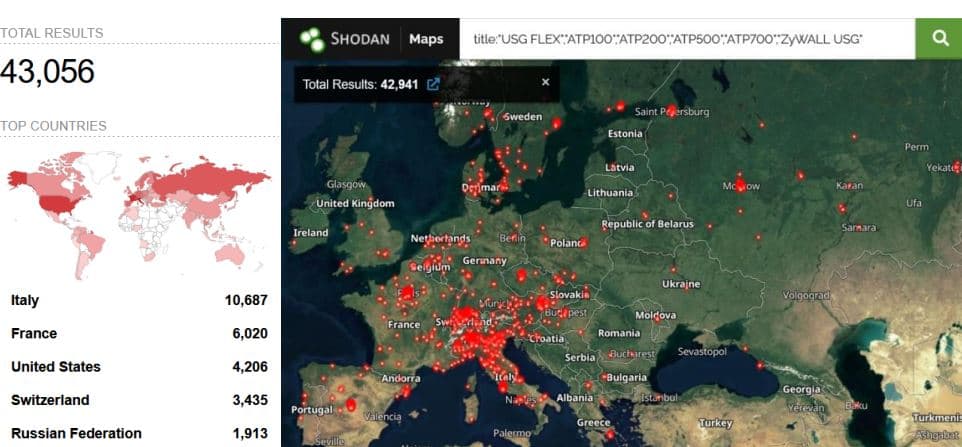
Europe faces high exploitation attempts, with 80% of publicly identifiable and potentially vulnerable firewalls located there. Six European power companies are at risk of exploitation by malicious actors due to their use of Zyxel firewalls, highlighting the need for prioritizing threat intelligence in the energy sector.
Living off the land (LotL) attacks offer stealth benefits, allowing attackers to abstract away from legacy/proprietary protocols. Energy firms and critical infrastructure organizations must remain alert to attacks on unpatched network infrastructure devices.
Exposed Zyxel firewalls
Expert Opinions
For insight into the new development, we reached out to John Gallagher, Vice President of Viakoo Labs at Viakoo who praised Forescout for “digging deeper into exploits against critical infrastructure, and getting closer to the truth of what is behind these attacks.”
“Getting a more accurate assessment of these attack vectors, and getting to that truth more quickly as Forescout has provided, is crucial in protecting these critical assets. Disrupting cyber adversaries in their efforts is one form of defence; that’s why getting specific as to who is the threat actor is critical to defending ICS infrastructure,” he said.
“Forescout’s analysis points to the spillover from nation-state-directed cyber exploits to mass exploitation campaigns, which is an alarming trend. As “mass market” threat actors become more skilled at working within the unique languages and protocols of ICS systems it dramatically increases the risk of non-affiliated threat actors providing “as a service” ICS exploitation,” John added.
“In addition, this means organizations who depend on IoT/OT/ISC systems will be direct targets at some point to the same threats being launched against national critical infrastructure.”
Jose Seara, CEO and founder at DeNexus emphasizes the need for companies to “strengthen their cybersecurity posture” by understanding their cyber risks, identifying them, and quantifying them in monetary terms.
“Critical infrastructure and industrial sites have been increasingly targeted by threat actors and they all need to strengthen their cybersecurity posture. It is imperative for these companies to better understand their cyber risks, identify them and quantify them in monetary terms to drive data-driven decisions on cybersecurity investments,” said Jose.
“Additionally, new SEC regulations on cybersecurity reporting in the U.S. and the NIS2 in Europe are mandating the reporting cyber risk management, expanding the associated consequences of attacks beyond standard security concerns and putting organizations who do not comply at risk of potential legal and financial implications,” he added.
In the fast-moving tech scene, meeting users’ demands is no walk in the park, as many startups can attest. Now, a once-promising app that kicked off nearly a year ago is saying its farewells to users.
Engadget shares that Artifact, the news app from Instagram co-founders Kevin Systrom and Mike Krieger, is calling it quits, not even a year after its debut. According to a note on Medium from Systrom, the app’s essential news reading features will stick around until the end of February, but commenting and posting will be taken offline immediately.
Artifact is a news aggregator app that was launched in 2023. The app’s goal is to provide users with a personalized and engaging news experience. Artifact uses artificial intelligence to analyze user behavior and interests and then recommends articles that are tailored to each individual’s preferences.
The app also features social discussion forums, where users can share their thoughts on the news and connect with other people who share their interests. Artifact has been praised for its innovative approach to news consumption. However, the app has also faced criticism for its lack of transparency about its algorithms and its reliance on user data.
Despite a year of dedicated effort, Systrom and Krieger ran into familiar challenges faced by founders of other noteworthy news apps. Systrom acknowledged, “We have built something that a core group of users love, but we have concluded that the market opportunity isn’t big enough to warrant continued investment in this way.”
On a different note, video-sharing apps like TikTok and YouTube are flourishing, reaching unprecedented levels of user engagement and revenue. For a detailed overview of the apps that dominated the time and spending habits of US residents in 2023, feel free to explore our dedicated article.
January 12, 2024 – The FCC wants car makers and wireless providers to make it harder for stalkers to use your car against you.
January 12, 2024 – A vulnerability in the popular Joomla! CMS has been added to CISA’s known exploited vulnerabilities catalog.
January 11, 2024 – Several international security agencies are echoing a warning by Ivanti about actively exploited vulnerabilities in its VPN solution.
January 11, 2024 – This month in ransomware: ALPHV and LockBit joining forces?
January 11, 2024 – Several info-stealers have incorporated an exploit that allows them to gain permanent access to your Google account
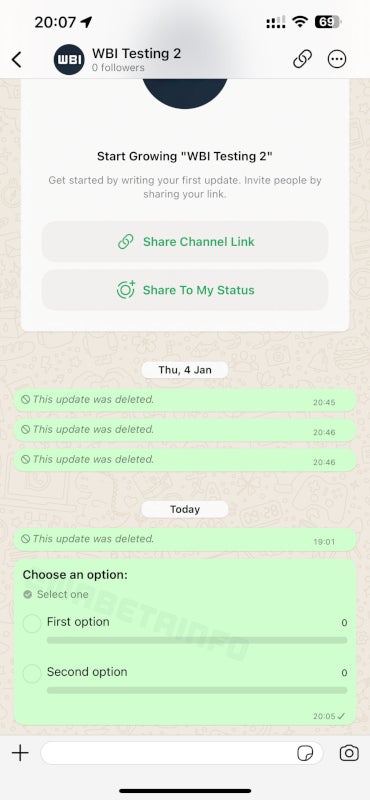
WhatsApp’s poll sharing feature is one step closer to being released to the public. Still in beta, the ability to share polls in channels have been sighted less than a week ago in the beta version of WhatsApp for Android.
Over the weekend, WaBetaInfo reports that WhatsApp beta for iOS 24.1.10.76 update, which is now available on the TestFlight app, offers early adopters the option to share polls in channels.
Obviously, you must be the owner of the channel in order to be able to share polls. The new feature has multiple options, which can be disable in case the creator of the poll believes it only needs one answer.
The votes remain anonymous, so while members of the channel will be able to see the number of votes, they won’t know who voted for a certain option. A limited number of channel owners can now see the poll option in the chat attachment menu within their channel.
Although it’s expected for the feature to expand to more early adopters, it might take some time before WhatsApp decides to make it available to everyone. Still, it’s nice to know that Channels will be getting a very useful feature for those who want to grow their audience based on the feedback received.
TikTok is a big app, but so are other apps like Genshin Impact, Instagram, Facebook, PUBG, and so on. However, sometimes it’s hard to tell exactly how big an app is until you find out how much money is raking in. According to a new report, ByteDance’s moneymaker has crossed a major milestone. TikTok has accumulated a whopping $10 billion in user spending.
Microtransactions are a prime example of “strength in numbers.” One small 99¢ purchase doesn’t do much for a company. However, if millions of people are making small 99¢ purchases every day, it can mean millions of dollars for the developers. Small transactions can bring companies billions of dollars over the span of years. A few good examples of this are Genshin Impact (more than $4 billion) and Pokemon Go (more than $5 billion).
Well, TikTok took this to a new level by breaking in $10 billion
TikTok officially launched in September 2016 in China, which means that the service is officially seven years old. Its popularity really exploded over the years, making it an international sensation and a thorn in YouTube’s, Instagram’s, and Facebook’s sides. Undoubtedly, it’s stolen a lot of money away from other video sites. Also, it really popularized the vertical scrolling video format.
Thanks to a financial report by Data.AI, it appears that, as of 2023, TikTok has accumulated a whopping $10 billion in user spending. This is across both Android and iOS. In fact, global app spending hit a new high in 2023 with a total of $64 billion in spending. That’s a pretty significant jump from the global spending in 2022, which totaled about $57.5 billion dollars.
A report from Bloomberg states that app spending grew as spending while video games shrunk. Consumers spent a large amount of money streaming apps, dating apps, and apps for making user-generated content. At this point, we only expect app spending to grow this year. Also, we expect YouTube, Instagram, Facebook, and other video streaming apps to take notice and devise new ways to combat TikTok.
WhatsApp is one of the most feature-rich messaging platforms on the internet, and it’s always working on bringing new functionality. One feature is the ability to create stickers from images in your gallery. Well, according to a new report, WhatsApp is going to take that to the next step. WhatsApp is bringing custom stickers to iOS users.
Stickers are some of the most popular ways of communicating with other people on messaging platforms. If you’re excited about something, why write that down in text when you can use a small sticker of a dog giving a thumbs up? It’s a great feature for any platform, and WhatsApp has a way of personalizing it.
Currently, you are able to use images from your gallery as stickers. All you have to do is drag and drop the image from your gallery into the WhatsApp conversation. At that point, it will show up in the conversation.
WhatsApp is bringing custom stickers to the iOS version of the app
According to the report, this is coming to users running iOS 17. As the name suggests, you’ll be able to further customize your stickers to suit your needs. Simply tap on the sticker tray and select the Create Sticker button. Then, you’ll select the image you want to import as a sticker. When you do that, you’ll see a simple image editing UI pop-up. There, you’ll be able to add text, draw on it, or paste cut out images.
Once you’re done, you can simply add the sticker to your conversation. This is a fun way to make your chat experience more personal.
This feature is not for everyone
Right now, it seems the iPhone users are the only ones able to edit their stickers. We’re not sure when WhatsApp plans to launch this for Android users- thankfully, the text formatting tools are finally making their way to Android.
To top this off, you cannot use custom stickers if you are on any version of iOS older than iOS 17.