Aussie Travel Agency Data Leak Puts Thousands of Tourists at Risk

0
[ad_1]

Melbourne-based travel agency, Inspiring Vacations, left a massive 26.8 GB database publicly exposed, devoid of any security measures like authentication or passwords.

A data leak at a Melbourne-based travel agency has exposed the personal information of thousands of tourists, raising concerns about online security and privacy in the travel industry. 

The leak was discovered by cybersecurity researcher Jeremiah Fowler and reported to WebsitePlanet. Fowler came across a publicly exposed database containing 112,605 records spanning 26.8 GB and owned by the Australian travel agency Inspiring Vacations. 

The exposed data include high-resolution passport images, travel visa certificates, and itinerary or ticket files. Most of the individuals in the records were Australian citizens, but identification documents from New Zealand, the United Kingdom, and Ireland were also found. 

The number of affected passports is unclear but around 1,000 identification documents were found in a limited sample—other files detailed customers’ passport numbers and other personally identifiable information (PII). The file names were structured to include the individual’s name in plain text.

The database stored data on 13,684 customers, including names, email addresses, trip costs, and destinations, contained in 48 Excel spreadsheets. It also contained 24,000 itinerary and e-ticket documents, some showing partial credit card numbers, and internal company documents, including 17,000 tax invoices to partners and affiliates.
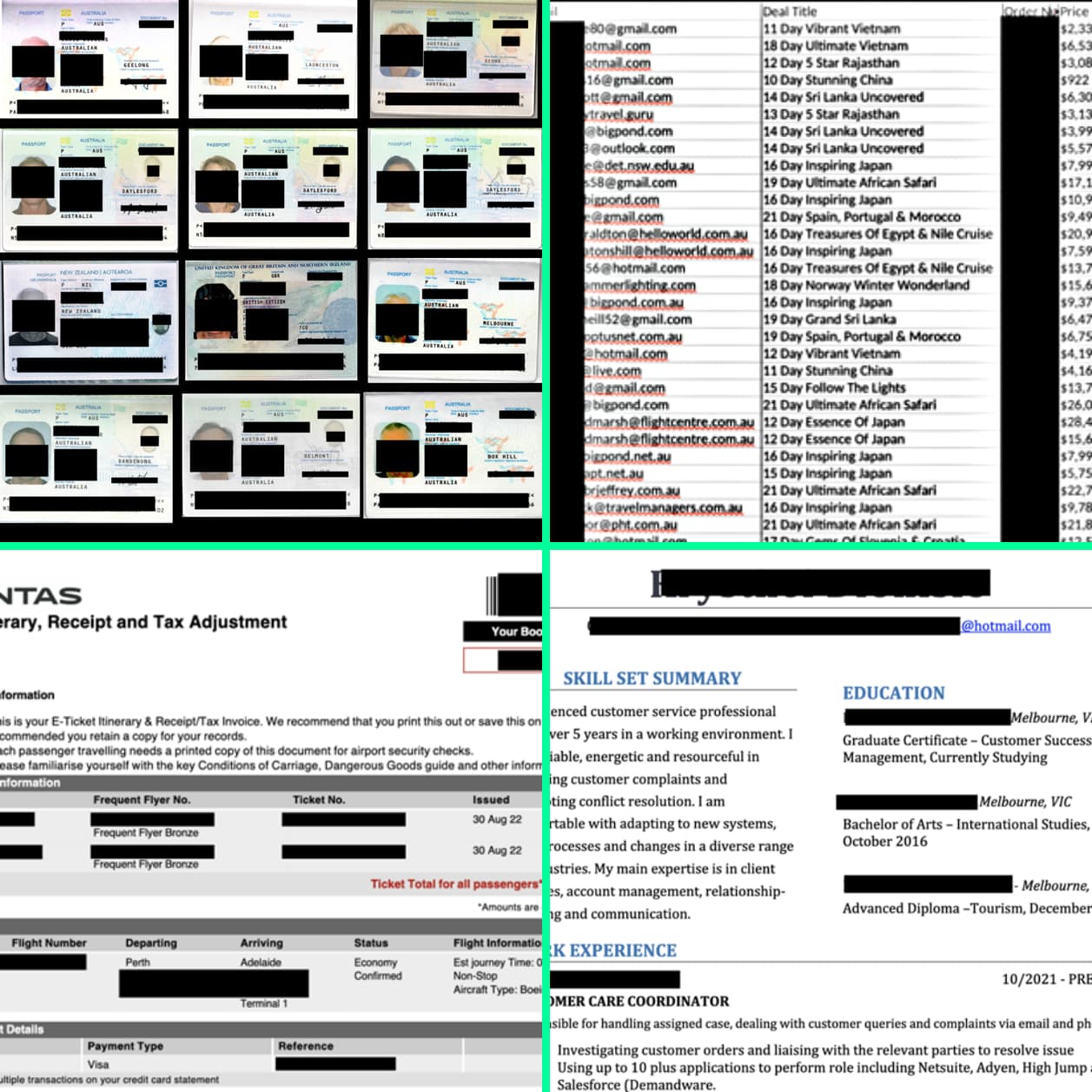
Aussie Travel Agency Data Leak Puts Thousands of Tourists at Risk
Type of records exposed in the data leak (Screenshots: WebsitePlanet)

The database remained undetected for an unknown period, potentially putting the impacted tourists/individuals at risk of identity theft, fraud, and other cybercrime. What’s worse is that it contained a folder of CVs or resumes, which cybercriminals can also exploit for identity theft, fraud, and other cybercrime.

The exposed information could also be used for phishing scams with malicious emails tricking users into giving away their login credentials or revealing additional sensitive data, such as financial information via too-good-to-be-true travel deals.

Further, scammers could use resume information to trick candidates with fake job opportunities and request upfront payments as fees for employment processing or background checks.

It is noteworthy that fake job scams have inflicted substantial financial losses on companies, amounting to hundreds of millions of dollars in damages. A prominent example of this threat is evident in the case of Axie Infinity, a blockchain company that suffered a staggering loss of $625 million. Furthermore, these scams have facilitated threat actors in compromising the devices of unsuspecting users by spreading malware.

The leaked passport data and travel details of tourists could lead to serious problems. Malicious threat actors might use this information to pretend to be someone else, causing identity theft and financial issues for tourists. Scammers could also trick them into fake schemes or use their details for illegal activities.

The leaked data might put tourists at risk during their travels, making them vulnerable to scams or even physical harm. Keeping this information safe is crucial to protect tourists from various risks and ensure their safety during trips.

Nevertheless, Fowler responsibly disclosed the issue to Inspiring Vacations, and the company has since ensured the database. So far, there is no indication of unauthorized access or suspicious activity. An internal forensic audit would identify that. Experts advise travellers to be cautious about sharing personal information with travel agencies. 

Post-exposure standard safety practices include regularly checking credit card statements for unauthorized activity and preferring fraud protection services.

Businesses collecting and storing identity documents should enhance their data security measures, conduct thorough audits, encrypt sensitive information, and implement robust cybersecurity protocols. Companies could also delete sensitive customer records or set a time limit and expiration date. 

  1. Int’l Dog Breeding Org WALA Exposes 25GB of Pet Owners Data
  2. User data exposed in Australia’s 2nd-largest telecom firm breach
  3. Data Leak Exposes 1.5B Real Estate Records, Including Kylie Jenner
  4. Texas School Safety Software Data Leak Endangers Student Safety
  5. Aussie Defence Force Communications Service Hit by Ransomware Attack

[ad_2]
Source link

Miss putting widgets on your lock screen? Well, don’t skip Android 15!

0
[ad_1]

Android 14 came out a few months ago, and we’re still getting our feet wet with it. However, the rumor mill never takes a break, and we have a rumor about Android 15. According to a new report, Android 15 may allow you to put widgets on your lock screen.

A news story like this could spark debates as to whether Google is doing this to mimic Apple. While Apple has allowed iPhone users to put widgets on their lock screens for some time now, it was Android that originally brought this functionality to Android years back. People were able to add widgets to their lock screens with Android 4.2 Jelly Bean. However, Google, for some reason, took this functionality away with Android 5 Lollipop.

Android 15 may bring back lock screen widgets

Right now, we are months away from getting our hands on Android 15. Even the developer preview is a little while away. This functionality was discovered through an APK deep dive performed by Android Authority. So, there’s a chance that Google could take this potential feature out at any point.

Android Authority did the deep-dive on the Android 14 QPR 2 Beta 3 update. However, if you have that version of Android, then you’ll need some technical know-how in order to enable the feature. From the looks of it, Google is working on letting people add widgets to their lock screens in Android 15. Again, Google is in the very early stages of this, so the feature could change drastically.

In its current state, it appears that you will have to swipe inward from the right on your lock screen. This will summon a separate page to place your widgets. Looking at the screenshots, it looks like you’ll be able to place your widgets pretty much however you want to. When you summon the page, you’ll see a pencil icon to edit it.

On the edit screen, we see the Add widget, Remove, and Done button. So far, it looks like only the Google Calendar widget and the clock widget can be placed. Most of the widgets are not compatible because their category needs to be set to Keyguard, which is something that hasn’t been necessary since Android 4.2. Plus, we’re sure that only these Google widgets are being used for internal testing.

A work in progress

As you can see from the screenshots, this feature is in very early production. One screenshot shows the lock screen UI being displayed on top of the widgets. So, it’s going to have to go through many refinements before it reaches the public.

In any case, it’s still nice to know that Google is working on bringing lock screen widgets back. Home screen widgets are great, but they require you to unlock your screen to use them. Lock screen widgets will make it easier to access information and functions on your phone.


[ad_2]
Source link

Unravelling Retirement Banking Scams and How To Protect Yourself

0
[ad_1]

In the labyrinth of financial scams, one of the most insidious is the retirement banking scam. Imagine a lifetime of diligence and effort, only to be robbed in your golden years. According to the FBI, in 2020 alone, financial scams targeting seniors netted more than $1 billion. This grim reality affects countless unsuspecting retirees, demonstrating the urgency to learn how to protect ourselves.

It’s a quiet crisis that we need to address, and understanding these scams is the first step toward safeguarding our financial future. Let’s begin this journey to empowerment, where knowledge is our most potent defence.

Anatomy of Retirement Banking Scams  

Retirement crypto and banking scams are not random acts but carefully crafted strategies that exploit vulnerabilities. Typically, these scams involve manipulating trust, inciting fear, or promising high investment returns. As we delve deeper, we’ll explore the common tactics scammers utilize, the red flags to watch out for, and the preventive measures you can take.

What are retirement banking scams?

Retirement banking scams refer to fraudulent acts that aim to deceive retirees, leading to the loss of their hard-earned savings. Scammers prey on retirees, exploiting their lack of familiarity with the intricate financial landscape or utilizing their trust in seemingly legitimate institutions.

These scams may materialize in various forms, such as bogus investment opportunities, fake lottery winnings, or even imposter relatives in need.

Awareness and vigilance are critical to debunk these deceptions. As we proceed, let’s examine the most common types of these scams, spot their tell-tale signs, and delve into practical preventive measures.

Common techniques used by scammers

Here are some common techniques scammers may use against you:

Phishing: The digital predator

Phishing is a common scamming technique prevalent in the digital sphere. It’s characterized by deceptive emails or text messages sent by scammers masquerading as trustworthy entities.

The primary purpose is to trick unsuspecting victims into disclosing sensitive information like passwords, credit card numbers, or Social Security numbers. These messages often contain seemingly urgent requests or threats, compelling the recipient to act immediately.

It’s essential to stay vigilant against such attempts by not clicking on suspicious links or sharing personal information via unsecured platforms.

The Pension Advance Scam

The pension advance scam is a deceptive scheme where retirees are offered an immediate cash advance in exchange for future pension payments.

This proposal may seem attractive to those in financial need but often includes exorbitant interest rates and fees.

Consequently, retirees pay significantly more than the initial advance, depleting their retirement funds prematurely. Awareness and caution are vital when dealing with offers that seem too good to be true.

Bogus investment opportunities

Bogus investment opportunities represent fraudulent schemes designed to dupe people into separating them from their hard-earned money. Scammers craft convincing narratives around high-return, low-risk investment opportunities. They use persuasive language and seemingly credible documentation to appear legitimate.

However, these investments are non-existent or grossly misrepresented, leaving the investors with significant financial losses once the scam is revealed. The best defence is scepticism and due diligence before investing.

Fake charity scams targeting retirees

Fake charity scams targeting retirees exploit the kind-heartedness of senior citizens. Scammers pose as charity workers, requesting donations for fabricated causes. They employ emotional narratives to elicit sympathy and manipulate their targets into giving money. Often, these scams occur during disaster relief scenarios, where the urgency and desire to help are high. The best protection is thorough research before donating to any charity.

How to protect yourself from these scams

Protecting oneself from scams requires vigilance and proactive measures. Here are straightforward and effective ways you can protect yourself:

  • Firstly, always verify the legitimacy of financial offers and investment opportunities through credible sources when you want to open a retirement account. Be wary of promises that sound too good to be true.
  • Secondly, consult a trusted financial advisor or family member before committing to any financial agreement.
  • Thirdly, adopt scepticism towards unsolicited charitable requests. Research the charity thoroughly before donating.
  • Fourthly, a cyber insurance policy can protect you from cyber threats and scams. This policy covers financial losses from cyber fraud, identity theft, and other online crimes.
  • Lastly, stay informed about current scams and fraud tactics through reliable sources such as government websites or trusted news outlets.

Identifying Vulnerable Targets

Scammers incessantly devise cunning strategies to exploit the vulnerability of others, particularly retirees. Understanding their tactics is paramount for self-protection.

The following sections delve into how scammers identify their targets, the psychological ploys they use, and practical strategies to safeguard themselves. Stay vigilant, stay informed, and maintain a healthy level of scepticism.

Who falls prey to retirement banking scams?

Typically, retirement banking scams ensnare individuals who are less tech-savvy or unfamiliar with the tactics used by fraudsters. Often, these are retirees who have accumulated substantial savings over their lifetime. They might be more trusting, isolated, or lack the knowledge of modern digital safety measures. Scammers exploit these vulnerabilities, crafting clever ruses to deceive them.

Psychological tactics used on retirees

Scammers employ specific psychological tactics to connive retirees. They wield fear, intimidation, and urgency to pressure their victims into impulsive decisions. They may impersonate authority figures, instilling a sense of obligation in the retiree.

Alternatively, they may feign distress, appealing to the retiree’s empathy. Flattery or promises of high returns can also lure unsuspecting individuals into their snare, making them easy prey for fraudulent schemes.

The role of technology in targeting seniors

Technology plays a crucial role in scams targeting seniors. Scammers leverage digital platforms like email, social media, and online banking to reach their victims. These platforms allow for anonymity, making it easier to impersonate trusted entities. Additionally, advanced technologies enable scammers to execute sophisticated schemes, seizing substantial sums from unsuspecting retirees who may lack digital literacy skills.

Empowering Your Golden Years: Concluding Strategies to Outsmart Scammers

The fight against scams starts with awareness and education. Knowledge is the best defence. Understanding how these scams operate and identifying their red flags allows you to avoid falling into these well-laid traps.

In conclusion, vigilance and awareness are vital in protecting your financial well-being. A moment’s precaution can save you the heartache of financial loss. Safeguard your golden years—they are the reward for a lifetime of perseverance and hard work.

  1. Hackers used fake job website to scam jobless US veterans
  2. US military personnel defrauded into losing $822m via scams
  3. Chinese Scammers Use Fake Loan Apps for Money Laundering
  4. New Phishing Scam Targets Digital Payment and Online Banking Users
  5. “Wire bank transfer” malware phishing scam hits SWIFT banking system

[ad_2]
Source link

When it comes to RMG apps, Google and developers are the house and the house never loses

0
[ad_1]
Google posted on the Android Developers Blog (via AndroidPolice) Thursday that real-money gaming apps (RMG) have “continued to flourish with developers creating new RMG experiences for mobile.” RMG apps are gaming apps that involve real-world currencies. In India and Brazil, Google ran pilot programs to allow Daily Fantasy Sports (DFS) apps in the Play Store along with Rummy apps in India.
The results from the pilot programs combined with the positive feedback from users and developers have led Google to desire more RMG apps in the Play Store. In Mexico, the pilot program will end on June 30th and developers will be allowed to distribute RMG apps in the Mexican Play Store beyond Daily Fantasy Sports apps as long as they are in compliance with local Mexican laws and Google’s updated policies. In India, Google will allow RMG pilot apps to remain in the Play Store until June 30th when Google’s new policies go into effect. 
“Google Play will begin supporting more RMG apps this year, including game types and operators not covered by an existing licensing framework. We’ll launch this expanded RMG support in June to developers for their users in India, Mexico, and Brazil, and plan to expand to users in more countries in the future.”

Google says that its new policies will benefit developers globally by providing them with new business opportunities. The policies will also put a priority on user safety. Google plans to look out for users by requiring age-gating. The latter is a popup that asks the user to verify that he/she is an adult and is old enough to use the app. Developers will also use geo-gating to make sure that the apps are available only in areas where they are legal.

Google might be eager to get more RMG apps into the Play Store because it will be “evolving” its service fee model for RMG “to reflect the value Google Play provides and to help sustain the Android and Play ecosystems.” Google adds, “We are working closely with developers to ensure our new approach reflects the unique economics and various developer earning models of this industry.”

RMG apps can attract those with a gambling problem, so Google needs to be extremely careful with its plan to support RMG in Play Stores throughout the world. If done correctly, Google and its developer partners will be the house and as you know, the house always makes money over time.

[ad_2]
Source link

Google adds new sharing-related feature to Docs, Sheets, and Slides

0
[ad_1]

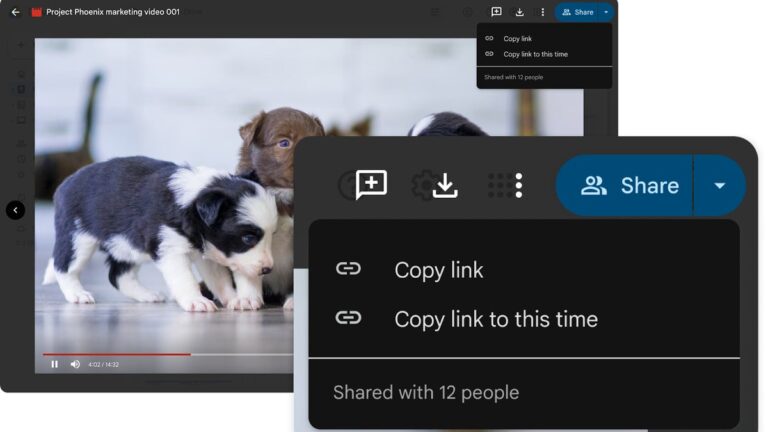
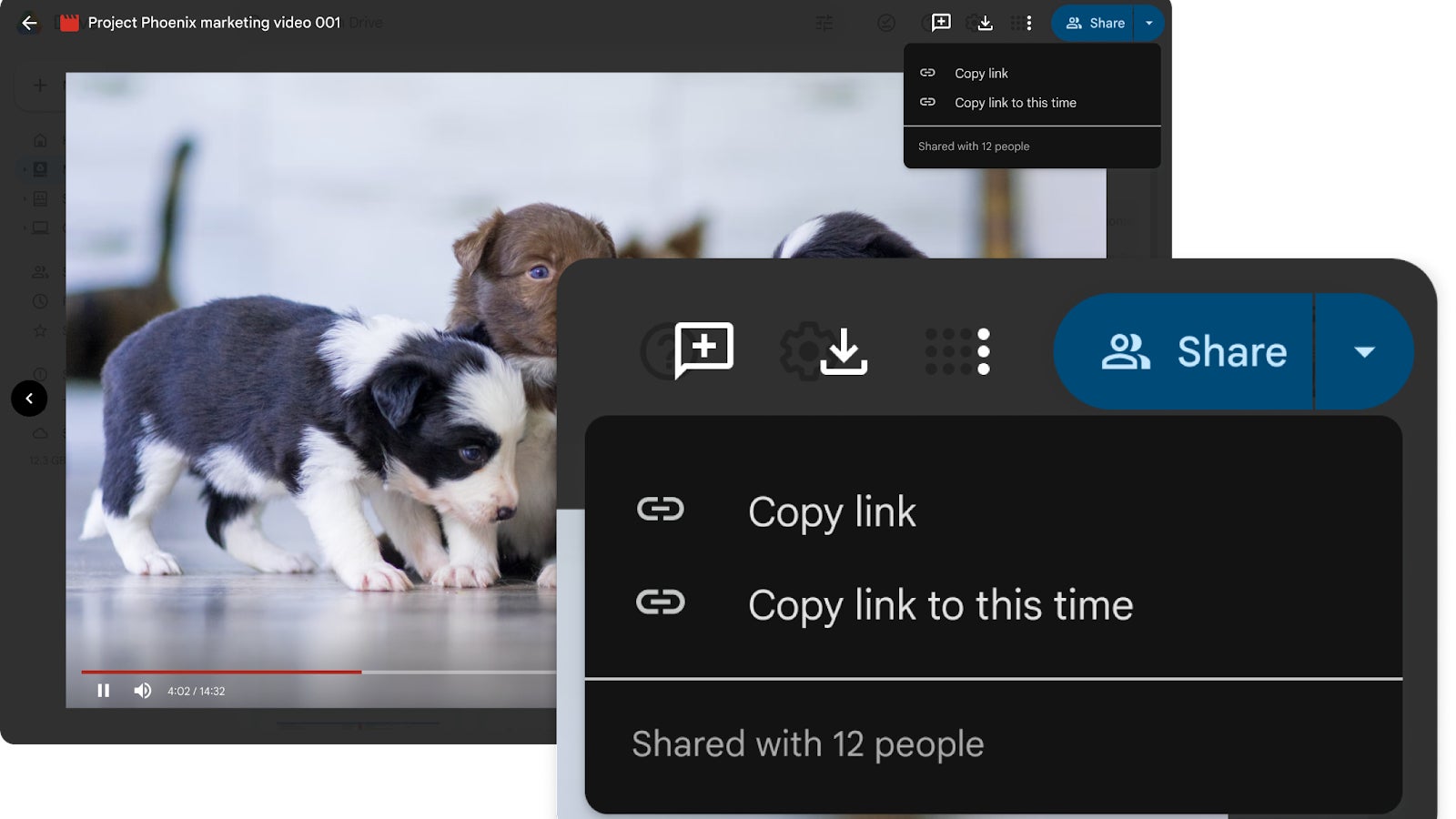
Google announced four new updates to some of its apps, which add new features or expand on existing ones. For example, Google has added a new functionality to the Drive sharing button that allows users to share a link to a specific time in a video.

Besides the new functionality in Google Drive, the search giant introduced new dropdown options on the sharing button in Google Docs, Sheets, Slides and Drawings.

The new feature is meant to make it easier for users to share documents and media across Workspace. In the latest versions of Docs, Sheets, Slides, and Drawings, a new dropdown menu will be accessible from the Share button.

The new dropdown button expands to offer multiple quick actions, such as pending access requests and “Copy link.” The functionality is now rolling out to Rapid Release and Scheduled Release domains.

According to Google, the dropdown button will be available to all Google Workspace customers and users with personal Google Accounts. Keep in mind that this will take one or more weeks to propagate to everyone, so be patient if you don’t see the dropdown menu yet.

[ad_2]
Source link

Apple finally acknowledges a change made to a major app with iOS 16

0
[ad_1]
Here’s one from the “just in case you were wondering” file. Suppose Apple made a pretty big change to one of its apps but never made any changes to the appropriate support document to reflect that change until now. And suppose we told you that this change took place starting with iOS 16 and iPadOS 16. You’d feel as though Apple, for some reason that you don’t know, didn’t feel that it could confide in you.
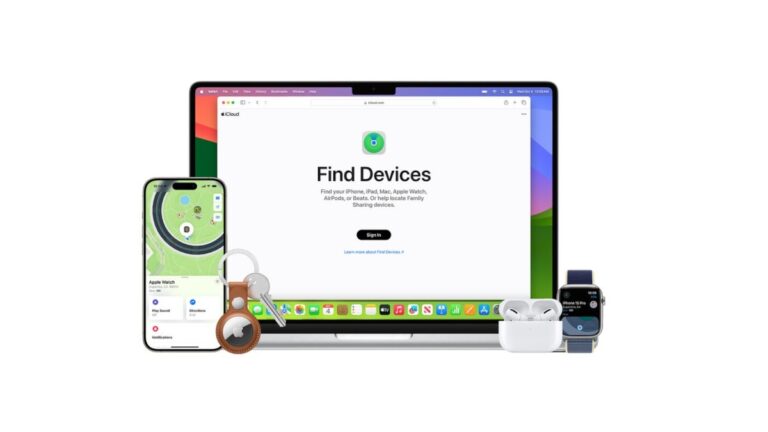
But here’s the deal. Per MacRumors, the support document that we are talking about was updated today and now says, “You can add up to 32 items in Find My. In addition to AirTag and the third-party Find My network accessories in the Items tab, AirPods Max count as one item, AirPods and AirPods Pro (1st generation) count as two items, and AirPods Pro (2nd generation) count as three items.”
In case you didn’t know, before iOS 16 and iPadOS 16 were released, you could only add up to 16 items to the Find My app. Now as I’ve aged my math skills have deteriorated somewhat, but I do believe that the correct mathematical term I’m looking for is “doubled.” In other words, Apple is just getting around to letting us know that the maximum number of items you can add to the Find My app has doubled from 16 to 32.

Let’s repeat the rules regarding AirPods to make sure they are clear. The AirPods Max are considered one item on the Find My app while AirPods and the first-generation AirPods Pro each count as two items. The second-generation AirPods Pro counts as three items. Why the difference? Some AirPods earbuds each count as one item and some AirPods carrying cases count as additional items.

Now I know you’re probably wondering what other changes Apple has made to its apps and didn’t bother to tell us about. Does the Apple Safari app now double as a kick-ass coffee filter and Apple forgot to tell us?

Seriously though, other items that you can add to the Find My app and then track when lost or stolen include AirTag tracking units, AirPods, certain Beats headphones, and compatible third-party products that have Find My support. And now you know that you can track nearly twice the number of items using the Find My app than you thought you could.

[ad_2]
Source link

Galaxy AI’s ‘Circle Search’ feature makes searching with images easier

0
[ad_1]

Under the tagline ‘Galaxy AI,’ Samsung aims to elevate the user experience by integrating AI-technologies seamlessly into the upcoming Galaxy S24 series devices. Some previous rumors have already hinted at real-time call translation and advanced photo editing features of the upcoming flagship series from Samsung.

Leaker Ahmed Qwaider sheds light on a distinctive feature called Circle Search, hinting at an innovative way to interact with photos. The leaked information suggests users will have the ability to search for items in a photo simply by drawing a circle around them.

Moreover, insights from another reliable leaker, Alvin, indicate that Samsung is integrating Galaxy AI deeply into essential applications like Samsung Keyboard and Samsung Notes. One of the AI features in Samsung Keyboard is tone detection and conversion into a different tone. According to the rumor, Samsung Keyboard will recognize five different tones including professional, casual, and one that involves the use of emojis.

The rumored capabilities seem to be compelling enough to entice users to switch from other popular keyboards, such as Gboard. This suggests that the Galaxy S24 series aims not only for technical prowess but also strives to offer a more intuitive and efficient user interface.

Galaxy AI in the Galaxy S24 Ultra will also make it easier to convert handwritten notes made with the S Pen

One of the standout AI features of Samsung‘s upcoming flagship is the ability of the new phones to summarize webpages, providing users with a quick overview. Additionally, the devices are rumored to be capable of detecting the tone of written text and offering users the option to edit it to match a specific tone, be it professional or casual. These features highlight Samsung’s commitment to leveraging AI for enhancing communication and productivity.

The leaks also suggest that the Galaxy S24 Ultra will take advantage of AI in converting handwritten notes made with the S Pen into various formats, such as a professional email or a text invitation. This integration of AI into the S Pen functionality showcases Samsung’s dedication to innovation across multiple aspects of the smartphone experience.

As Samsung positions the Galaxy S24 series against competitors like the Pixel 8, known for its AI capabilities, the incorporation of these advanced features could give the Galaxy S24 a competitive edge. With reservations now open and the official announcement scheduled for January 17, tech enthusiasts eagerly await the unveiling of Samsung’s latest flagship smartphones and the full spectrum of AI features they promise to deliver.

Galaxy AI circle search
Credit: @AhmedQwaider888

[ad_2]
Source link

EU’s Margrethe Vestager meets with Apple’s Tim Cook to discuss sideloading, Apple Tax and more

0
[ad_1]

With the EU’s Digital Markets Act (DMA) putting pressure on Apple to make changes to the iPhone that it doesn’t want to make, Apple CEO Tim Cook met on Thursday with EU antitrust chief Margrethe Vestager at Apple Park. In a tweet, Vestager said that the meeting focused on some aspects of the DMA such as one requirement that Apple allow the iPhone to sideload apps in the 27 EU member countries. Apple is required by the DMA to offer sideloading in the EU by this coming March.
Sideloading is the act of installing an app from a third-party app store. Since the days of Steve Jobs, Apple has been against sideloading because of fears that it could lead iPhone users to install malware-loaded apps. While Apple can run tests on apps that are installed from the App Store, it doesn’t have that capability with apps being sideloaded from a third-party app storefront. Vestager and Cook also spoke about ongoing  EU competition cases including one that was brought by music streamer Spotify against Apple Music.

The DMA also seeks to force Apple to allow developers to bypass Apple’s in-app payment platform and avoid the 30% of in-app revenue that developers pay Apple. This has been a major battle between some developers and Apple for years. And the EU is also looking to get Apple to open up its NFC-based mobile payments technology to third-party payment services.

On some of these issues, such as sideloading, Apple is expected to limit the feature to iPhone models purchased in the 27 EU countries. On others, such as adding RCS support, Apple plans on allowing this to happen on iPhone units worldwide. Apple did the same when the EU’s common charger law passed which forced Apple to replace the Lightning port with USB-C. 
Apple could have limited the replacement of its proprietary Lightning port to iPhone units sold in the 27 EU member countries but decided that offering two different versions of new iPhone models (with EU variants sporting the USB-C port and the Lightning port found on models elsewhere in the world) would be too complex. So as you probably know, starting with the iPhone 15 series, all new iPhones must use a USB-C charger.

[ad_2]
Source link

The Galaxy S24 could get software updates until 2031

0
[ad_1]

Google shocked the tech world when it announced that the Pixel 8 phones will be supported for a whopping seven years. We’re not just talking about software and security updates, this also means major OS upgrades. Well, it appears that Samsung is following in Google’s shoes, as the upcoming Galaxy S24 phones could get software support for seven years.

To put this into perspective, Android will run out of alphabetical letters before the Pixel 8 phones lose compatibility. This was a pretty big step for Google, as it previously supported its devices for three years. This was seen as a response to Samsung revamping its upgrade schedule to offer four major OS upgrades to its phones in five years of security updates back in 2020.

The Galaxy S24 could get seven years of software support

Fresh off of CES 2024, the Galaxy S24 is now at the center of attention for the tech world. These phones are meant to bring all the best hardware present on the market today. However, what’s as important as its performance today is its performance down the road. Most people want their phones to be supported for a long time. This is especially true if they’re spending over $1,000 for them.

Well, Samsung thought about this when it introduced five years of software support. However, according to a new leak, it appears that Samsung will support its devices for a whopping seven years.

Whenever we talk about software support, we always have to differentiate between software updates and OS upgrades. Software updates usually refer to security patches and other minor updates. OS upgrades bring your phone to the next major version of Android. Well, it appears that Samsung is going to offer seven years of major OS upgrades. This means that the Galaxy S24 phones could receive updates up to Android version 21.

This information has yet to be officially confirmed, but it’s still great to hear. The Galaxy S24 phones are set to be unveiled on January 17th. We don’t expect too many hardware upgrades besides the latest and greatest Snapdragon and Exynos processors. However, Samsung is going to be prioritizing AI technology and incorporating that into the Galaxy experience.


[ad_2]
Source link

Samsung Galaxy S24 leaked images and AI details

0
[ad_1]

The Samsung Galaxy S24 family of devices is just around the corner as Samsung prepares for the official unveiling at Unpacked on January 17, and with just a few days left before the event we’ve got some exclusive leaks of official Galaxy S24 and Galaxy S24 Ultra promo images that showcase some tantalizing camera and AI details. Samsung seems to be going all-in with AI this year and will incorporate fresh AI features to help enhance the user experience. “Galaxy AI is here” one image reads.

This suggests that Galaxy AI will be the official name, however, we won’t know for sure until Samsung reveals everything next week. That being said, if “Galaxy AI” is the focal point of one of the promo images, it’s a safe bet that AI will play a big role in what these devices can do. More to the point, AI appears to be at the very core of what makes these devices more special.

If you’re familiar with Google’s latest Pixel devices, the Pixel 8 and Pixel 8 Pro, then you’re aware that AI is a very big part of each device. Moreso than past Pixel phones It’s a huge selling point for Google, and the AI-based camera features are the biggest part of that. It’s unclear if Samsung will be baking AI into its cameras more than other parts of these devices, but based on the promo images, Samsung may be following Google’s lead and beefing up the camera with lots of AI magic.

Galaxy S24 promo leaks suggest AI camera feature to move or delete objects

One of the more exciting AI camera features in the Pixel 8 series was the ability to move, shrink, and completely delete objects from a photo in post-processing. It appears that Samsung will be giving the Galaxy S24 series the same capabilities. In one of the images in the gallery above, you can see a person on a BMX bike riding up a ramp. With the power of an AI-based “generate” button, the person in the image is moved to show them in the air as opposed to just barely touching down on the ramp edge. This makes for a more exciting shot.

You can also see a box around the rider, with anchor points for shrinking and rotating the subject prior to hitting the generate button. So it seems users will have a decent amount of control in adjusting subjects to get a better outcome for photos. To be clear, Samsung teased this feature in one of its promo videos about Unpacked. So there was already a hint this was coming. But the leaked image actually shows what the camera UI will look like if you use the feature.

Camera details confirmed: 200MP wide-angle lens, 2x Optical Quality Zoom, & more

Some of these camera specs have been leaked or rumored before. So this isn’t the first time we’ve heard about them. But this does appear to be the first time that actual details are showing up in a promo image. Two leaked images confirm the specs. One for the Galaxy S24 and one for the Galaxy S24 Ultra.

Starting with the Galaxy S24, it’ll feature a 12MP selfie camera on the front. Which is essentially the same as last year’s Galaxy S23. However, Samsung could be using a new sensor here. There will most certainly be some AI features the selfie camera can use now too. For the main camera setup on the back, the Galaxy S24 will have a 10MP camera with 3x Optical Zoom, a 50MP wide-angle lens camera with 2x Optical Quality Zoom, and a 12MP Ultra Wide lens camera. Last year’s Galaxy S23 had a 10MP camera as well, and it provided the telephoto lens capabilities. So the 10MP camera on the Galaxy S24 may also be a telephoto lens.

The Galaxy S24 Ultra bumps things up with a fourth camera on the back. The 10MP camera looks to be the same as on the regular Galaxy S24. The 12MP Ultra Wide camera looks the same as well. Where things get interesting is with the 50MP camera. This camera on the Galaxy S24 Ultra uses 5x Optical Zoom instead of 3x Optical Zoom. It also adds 10x Optical Quality Zoom. As for the fourth camera, this is the 200MP wide-angle lens and it features 2x Optical Quality Zoom. Then, of course, there’s the 12MP selfie camera on the front.

In terms of camera specs, there’s still some information that isn’t confirmed. Such as whether or not these are the actual same sensor hardware from last year. Still, it’s nice to know what you’re working with if you plan to upgrade to these. And the inclusion of AI features is sure to make for some more exciting images.

Samsung will adopt Google’s update strategy of 7 years of updates

In addition to the promo images, a few more leaked details showcase Samsung’s commitment to its flagship devices. For starters, Samsung will be adopting Google’s update strategy launched with the Pixel 8 and Pixel 8 Pro.

This means that if you buy a Galaxy S24, Galaxy S24+, or Galaxy S24 Ultra, you’ll get updates for 7 years. Presumably, this means not just security updates, but updates with new features and updates for the OS version of Android. This is a big deal. Because with Samsung onboard, other smaller or less popular OEMs may adopt the same strategy for updates going forward.

The leak also mentions that Galaxy AI features will be free of charge until at least 2025 on supported Galaxy devices. This suggests that Samsung may be looking to charge for some features. And that would be a strange move considering Google isn’t charging for any of theirs. But, we’ll have to wait and see if Samsung’s plan is to charge for more advanced features or if it ends up looping all of them in under a subscription or one-time fee of some sort. Lastly, it seems that some AI features will require the user to login with their Samsung account credentials. It’s unclear what features might require this, however.


[ad_2]
Source link