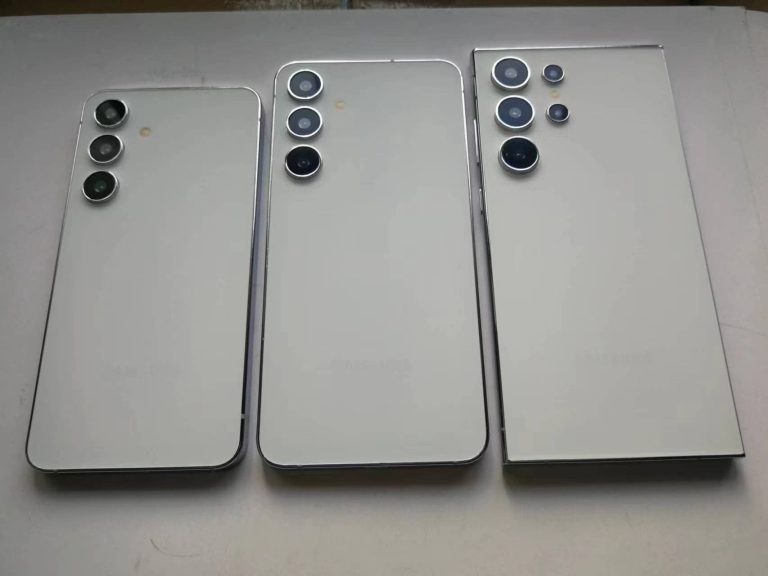
The Vivo V30 is the company’s upcoming smartphone that popped up on various certification websites recently. It appeared on both IMDA and TDRA certification websites, and interestingly enough, the Vivo V30 also got certified by the FCC.
The Vivo V30 got certified by the FCC, which is rather interesting
Why is that interesting? Well, the FCC is the official certification body in the US. It’s a part of the US government. Phones that end up there are usually meant to be sold in the US. So, will that be the case with the Vivo V30? Well, only time will tell.
That would likely surprise many people as Vivo doesn’t really have a presence in the US. Its sister company, OnePlus, is a different story entirely, though, of course. We’ll have to see what happens.
While we’re waiting for that info, let’s just say that the Vivo V30 appeared under the ‘V2318’ model number. The FCC confirmed that this smartphone has a 4,895mAh battery, and supports 80W fast wired charging. The device will also offer two SIM card slots.
Geekbench did reveal some of this phone’s specs
Now, thanks to a Geekbench listing that surfaced not long ago, we do have some of the phone’s specs. This handset is expected to pack in the Snapdragon 7 Gen 3 processor. It will also offer 12GB of RAM, and ship with Android 14 out of the box.
That’s pretty much everything we know about the device thus far. Its sibling, the Vivo V30 Lite, got announced at the very end of last year. That handset is inferior to the Vivo V30, and there’s a good chance there will be notable differences between them.
The Vivo V30 Lite does have a fullHD+ AMOLED display with a 120Hz refresh rate. We’re expecting as much on the Vivo V30 too. The phone will also be at least splash resistant, as that’s the certification the ‘Lite’ model offers.
Samsung had a poor 2023 financially, as its profit dropped a whopping 85% from 2022. The Korean tech behemoth is estimated to have taken home just about $5 billion last year, its lowest annual profit since 2008. However, this hasn’t deterred it from moving forward with its investment plans. The company is looking for big mergers and acquisitions this year as a long-term plan to strengthen its leadership in the tech industry.
Samsung is looking for big mergers and tech acquisitions
Samsung is one of the biggest names in the tech industry. The Korean firm is a global leader in several technological fronts, including smartphones, TVs, semiconductors, and more. In a New Year memo last week, its co-CEOs Han Jong-hee and Kyung Kye-hyun encourage employees to strive for excellence while remaining flexible in this fast-evolving tech world. They said it’s the only way to enhance competitiveness in the market.
Han recently went on to share insights into Samsung’s long-term plans. Speaking at a press conference on the sidelines of CES 2024, which is currently underway in Las Vegas, he said that the company is exploring M&A (mergers and acquisitions) deals to strengthen and grow its businesses. “To strengthen our existing businesses and discover future growth engines, we’ve been steadily on M&A deals,” Han said.
The Samsung co-CEO, who is also a Vice Chairman at the company and heads its visual display, appliances, mobile experience, and network businesses, added that the firm is hopeful of securing an M&A deal this year. The tech giant acquired US-based OLED microdisplay firm eMagin last year. Its audio subsidiary Harman acquired Roon, a multi-room and multi-device music streaming platform.
However, it appears to be looking for a bigger acquisition this year. Perhaps something akin to the $8 billion mega-acquisition of Harman in 2017. Samsung has already made small investments in over 260 venture firms over the past three years alone. Its investments have come in the fields of AI (artificial intelligence), digital health, fintech, robotics, and electronics, according to a new report from The Korean Herald.
Samsung is in talks to acquire a Korean robotics firm
In March last year, Han revealed that Samsung was discussing an acquisition deal with Rainbow Robotics, a Korean humanoid robotics firm. While there has been no update about it so far, the companies may still be in talks. Samsung has a 14.83% stake in Rainbow Robotics, making it the second-largest shareholder of the firm. Perhaps the recent economic downturn slowed down the talks.
“We have made a lot of effort, continuously collecting and reviewing companies as M&A targets despite a series of unfavorable deal-making conditions, including the COVID-19 pandemic, geopolitical tensions, and global economic downturn,” Han said. It remains to be seen whether Samsung can secure a big merger or acquisition this year. The company plans to take a step-by-step approach to improve its market performance in 2024.
The peer-to-peer review source G2 has released its Winter 2024 reports, ranking ThreatDown products on top across several Endpoint Detection and Response (EDR) and Managed Detection and Response (MDR) categories.
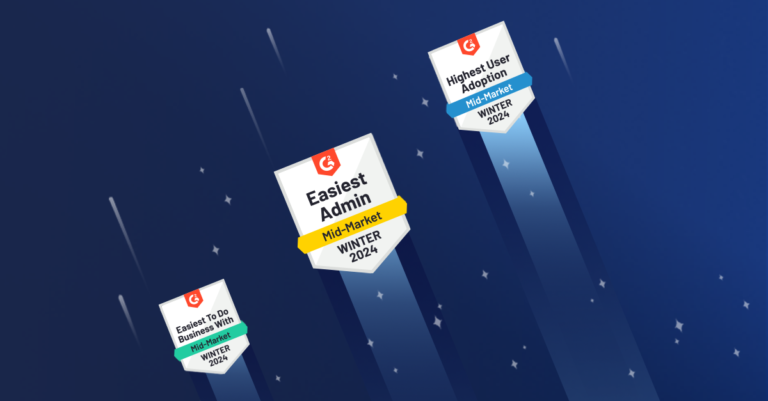
Based on verified customer reviews, ThreatDown EDR was voted a Leader in the overall and mid-market grid reports for EDR, winning awards for Most Implementable, Fastest Implementation, Easiest Admin, Best Usability, and more. ThreatDown MDR also won awards for Ease of Use, Highest User Adoption, and more.
Let’s dive more into how ThreatDown performed in G2 Winter 2024 and look at quotes from IT professionals using ThreatDown solutions daily.
EDR that brings down complexity
Endpoint Detection and Response (EDR) systems are grappling with significant complexities. Deployment challenges delay ROI and increase vulnerability to breaches. A lack of integrated tools in EDR necessitates additional platforms, creating operational and security gaps. Additionally, everyday management burdens, like alert overload, strain small IT teams and reduce productivity.
Feedback from real users said ThreatDown EDR is the most user-friendly EDR solution available in the Mid-market Usability Index, with a Usability Score that surpasses the average across all other vendors.
ThreatDown EDR deploys within minutes, featuring a lightweight endpoint agent, robust integrations, and an intuitive cloud-native management console.
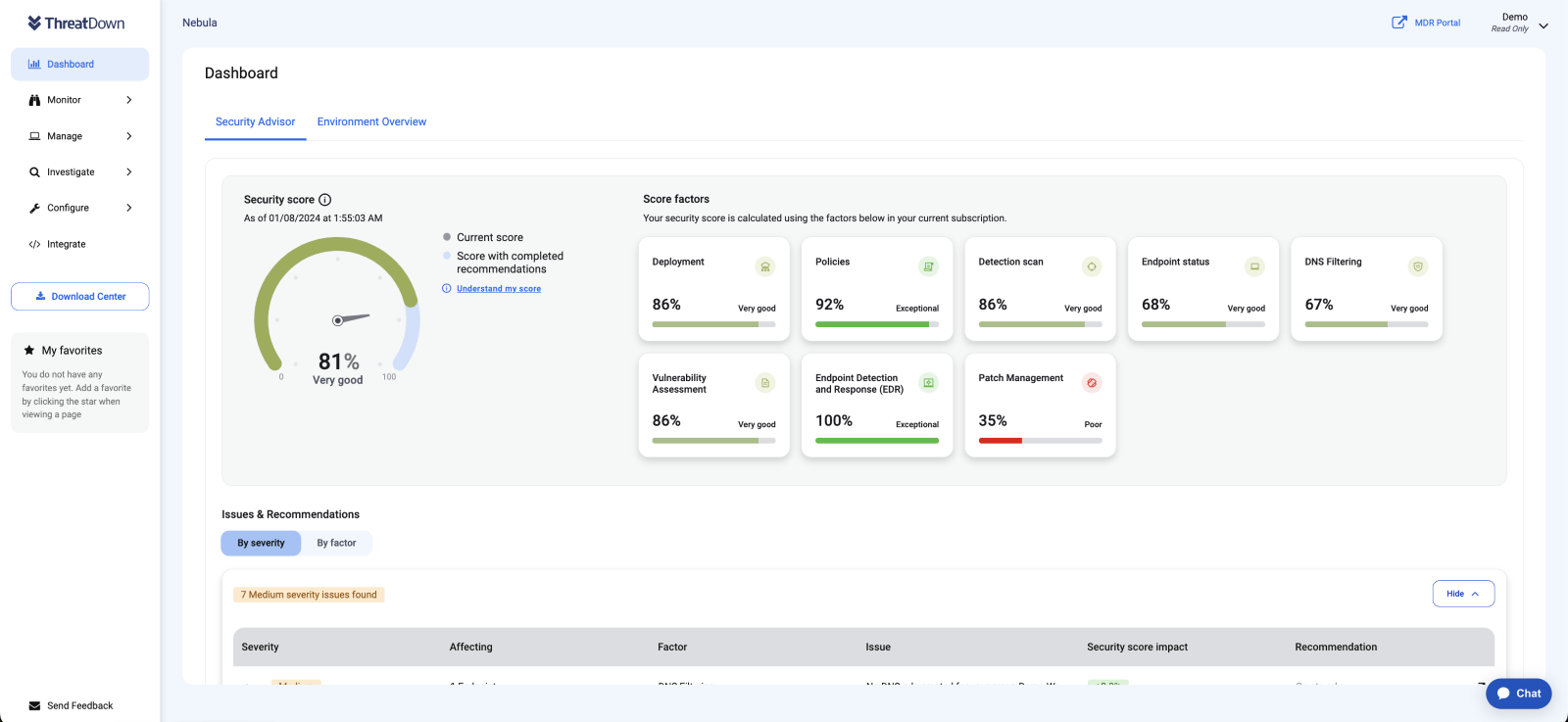
Dashboard view of ThreatDown Nebula console, featuring Security Advisor.
“The Nebula console is one of the most user-friendly interfaces we’ve come across. We can’t recommend it enough.”
Justin N.
“Malwarebytes makes it simple to deploy. Additionally, the user interface has minimal impact on the end-user, so [it’s] win-win. Support are happy to help when you do hit the occasional bump and the portal is easy to use and very responsive.”
John K.
Fastest to Implement EDR
Malwarebytes EDR proudly holds the #1 spot on the mid-market Implementation Index. Our industry-leading ‘ease of setup’ and ‘implemention time’ won us the Most Implementable and Fastest Implementation awards for this category.
With the average deployment timeline for traditional EDRs stretching up to 18 months for small security teams, a swifter solution means faster protection and resource savings.
Smaller teams can’t afford extensive learning curves, which is why they prioritize implementation costs (50 percent) in their endpoint security more than anything else. (Global Surveyz)
ThreatDown EDR, the cornerstone of most ThreatDown Bundles, takes the complexity out of EDR deployment with an average time to become fully operational that is two times shorter than the industry average.
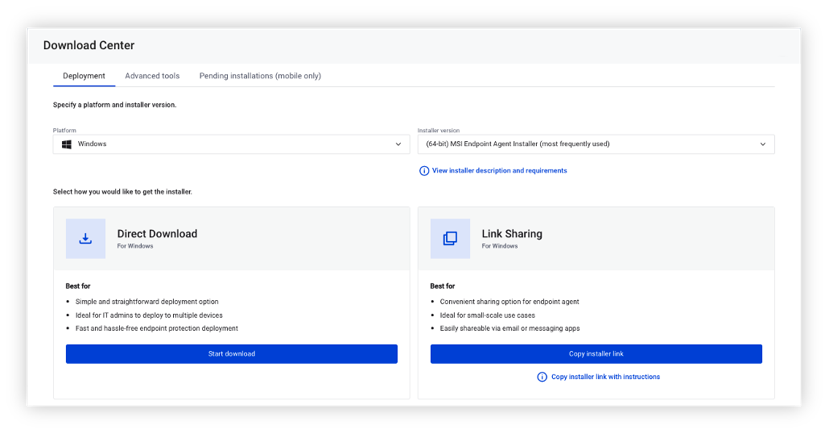
You can distribute the ThreatDown Endpoint Agent to endpoints either manually to each user or automatically via network-wide remote deployment tools.
“If you are purchasing Malwarebytes, then you have made the correct choice. You will quickly see how easy it is to implement, and how great their support is.”
Mauro B.
“Very easy to install and deploy, setup, and configure – for instance – a 5 machine setup would take roughly ~10 mins from start to finish.”
Verified User
“Easy to use and implement, along with great support and support tools at your disposal, along with courses to help you become more familiar with the inner workings.”
Doug C.
MDR with the Highest User Adoption
ThreatDown MDR placed on multiple reports for G2 Winter 2023 reports, winning awards for “Ease of Use,” “Highest User Adoption,” “Easiest to do Business With,” “Easiest Admin,” and “Easiest to Use.”
ThreatDown MDR provides powerful and affordable threat detection and remediation services with rapid set-up and 24×7 monitoring and investigations. Our top-tier MDR analysts protect your organization from cyberthreats through accelerated threat detection and response to incidents—allowing you to focus on growing your business.
“Malwarebytes MDR is simple to deploy and manage. They increase our security posture, meet cyber security insurance requirements, and make a great partner to augment my small IT team.”
Steve S.
“We wanted to extend our SOC team with MDR services, and that has always been our vision with Malwarebytes since we look at the company as a partner, rather than a vendor. Malwarebytes MDR enables us to meet the need for 24x7 coverage with professional security experts who work in the industry every day.”
Matthew Verniere, Richards Building Supply
“Cyber threats are 24/7, and my team needs to sleep. The MDR team watching our network around-the-clock gives us a chance to sleep without worry. With Malwarebytes MDR backing us up, I also finally got to step away and take a two-week vacation. I’m just glad to know that we have a security team watching over our shoulder and making sure it’s all clear.”
Dennis Davis, IT Systems Manager, Drummond
Experience ThreatDown bundles: Award-winning ROI, user-friendly, and effective threat defense
ThreatDown provides IT staff with award-winning business solutions, offering unmatched threat protection, a lightning-fast return on investment, and smooth, speedy implementation.
Try ThreatDown Bundles today and join the ranks of those who have already discovered amazing results, best-in-class support, strong ROI—and more—of top-rated cybersecurity solutions.
A few days back, we got word that Samsung has prepared eight different official cases for the Galaxy S24 series. The information came from the UK-based accessory retailer MobileFun. While it named all eight cases, there were no images to see. We now have visuals too, thanks to noted X tipster Evan Blass. He shared a large image showing the entire collection in all reported colors.
Galaxy S24 official cases seen in leaked image
Samsung is said to be readying a transparent Clear Case and a transparent Clear Gadget case for the Galaxy S24 lineup. The Suit Case will come in White and Yellow colors, the Shield Case in Dark Violet and Light Gray colors, the Silicone Case in Dark Violet, Light Green, Violet, White, and Yellow colors, and the Smart View Wallet Case in Black, Violet, Light Green, and White colors.
Additionally, the Standing Grip Case will be available in Dark Violet, Light Blue, and Taupe colors. Lastly, the Vegan Leather Case will come in Black, Taupe, and Dark Violet colors. In total, each Galaxy S24 model will have 21 different official case options with eight designs to choose from. The new leak shows all 21 cases for all three models, making for a total of 63 images.
The source squeezed the 63 images into a large single image, so they look a little blurry. However, you can get a fair idea of the design of all eight official cases Samsung is offering for the Galaxy S24, Galaxy S24+, and Galaxy S24 Ultra in the image below. The cases appear in the order we have listed above, including the color variants. The Vegan Leather Case for the Plus model is at the end, though.
Along with protective covers, Samsung will also offer an anti-reflective screen protector for the Galaxy S24 lineup. Additionally, you can buy the S Pen for the Ultra model in Black, Gray, and Yellow colors. Of course, the stylus pen will come built-in with the device. But if you lose or damage it, you will have the option to buy it separately. The prices of these accessories are not known.
The new flagships debut in a week
It won’t be long before we know the prices of Samsung’s official cases for the Galaxy S24 trio. The company should start selling them alongside the new flagships, which will debut on January 17, i.e. a week later. Pre-orders for the phones are expected to begin immediately after the launch event in San Jose, California, USA. We will keep you posted accordingly.
ASUS has introduced the AirVision M1, a wearable display that aims to provide users with extra screen space without the need for a physical monitor. The device, which can be worn like a pair of glasses, is designed for individuals who require additional display real estate while on the go or in confined spaces. The Micro OLED display technology delivers a full HD (1080p) resolution with a peak brightness of 1100 nits, ensuring clear visibility even in well-lit environments. ASUS emphasizes eye comfort with features such as reduced flicker and blue light exposure, with the intention of obtaining TÜV Rheinland certification.
One of the notable features of the AirVision M1 is its 57° vertical field of view, offering users a more expansive view of the real world while maintaining a bright digital image. Privacy is also a priority, as the embedded display ensures that content remains visible only to the wearer. The device incorporates ASUS Eye Care technology to enhance eye comfort during extended usage.
The AirVision M1 connects to your device via USB Type-C port hidden in the frame
Moreover, the AirVision M1 stands out with its advanced virtual screen capabilities, enabled by 3 degrees of freedom positioning. Users can pin a virtual screen to stay in a specific location relative to the device, allowing seamless interaction with other elements in their workspace. The Windows app further expands functionality, enabling users to set up multiple virtual screens with various aspect ratios and modes. The Motion Sync feature ensures smooth transitions as users switch focus between virtual displays.
To facilitate easy control, ASUS has integrated a multi-function touchpad into the left side of the frame. The touchpad allows users to start or pause content, select virtual screens, adjust brightness, and more. Additionally, the AirVision M1 includes noise-canceling microphones and speakers for private remote conferencing.
The AirVision M1 connects to your device via USB Type-C hidden in the frame. It supplies both power and display signal to the wearable display unlike the upcoming Apple Vision Pro, which requires an external battery. The lightweight USB Type-C offers compatibility with laptops, smartphones, or consoles that support DisplayPort Alt Mode. Overall, the AirVision M1 aims to redefine portable displays by combining comfort, privacy, and advanced features in a wearable format.
Vivaldi kicks off 2024 with a brand-new update that introduces a bunch of new features and improvements for its Android browser. The key highlights of the update are full history syn and a new search engine setting for Private Tabs.
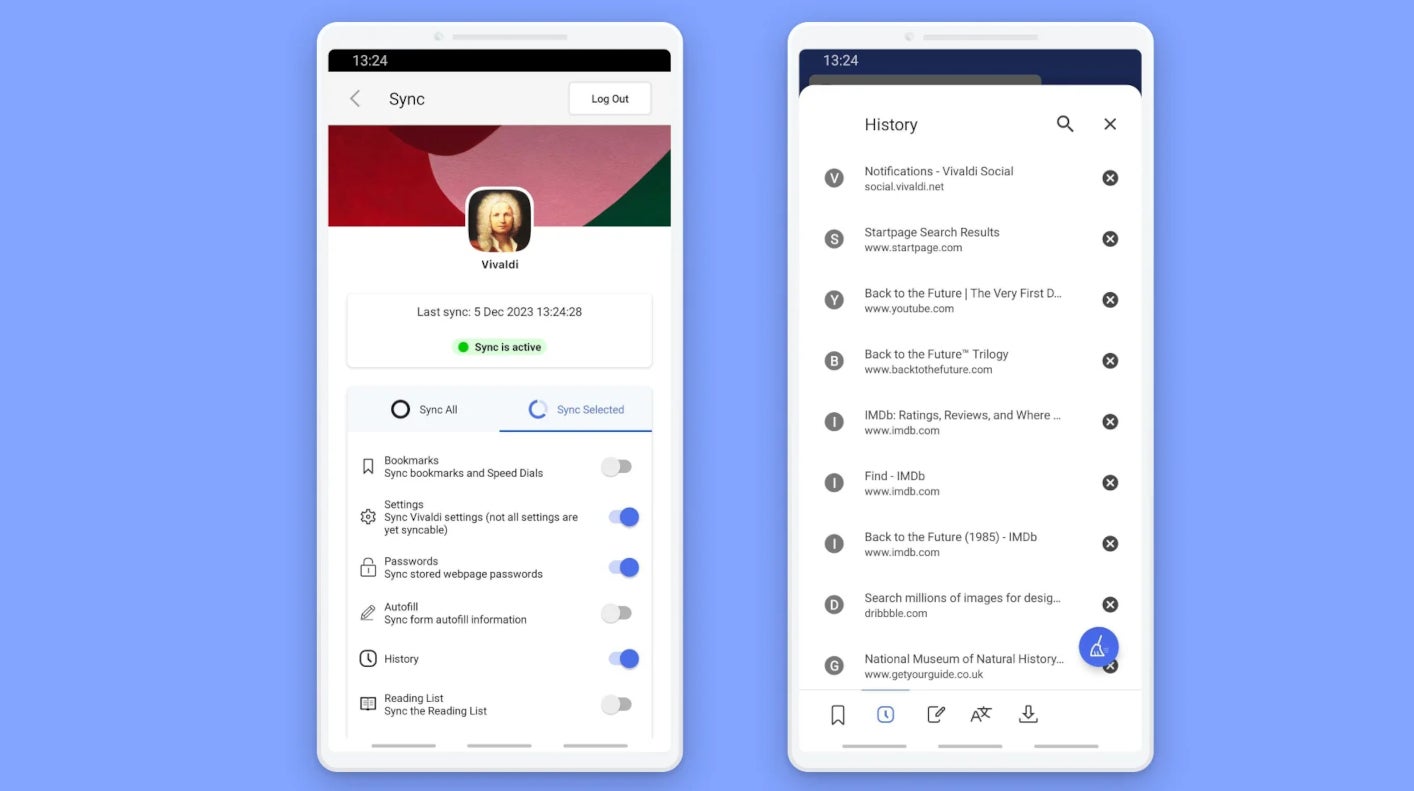
If you’re a Vivaldi user, you’ll be happy to know that Vivaldi Sync finally synchronizes your full browsing history across all devices. You’ll be able to access the entire browsing history from the History Panel and Address Bar.
Also, you can now find all web pages that you have previously visited across all your device with the help of History Sync. Previously, you could only find the webpages and search that you typed into the Address Bar.
Apart from full browsing history, Vivaldi Sync helps users keep their Bookmarks, Password Manager, Open Tabs, Reading List, Notes, and some settings (i.e. search engines) in sync, regardless of what device you’re using. Of course, all data is end-to-end encrypted between devices. Furthermore, Vivaldi says that it can’t read your data on their servers, nor can anyone else except the owner of the data.
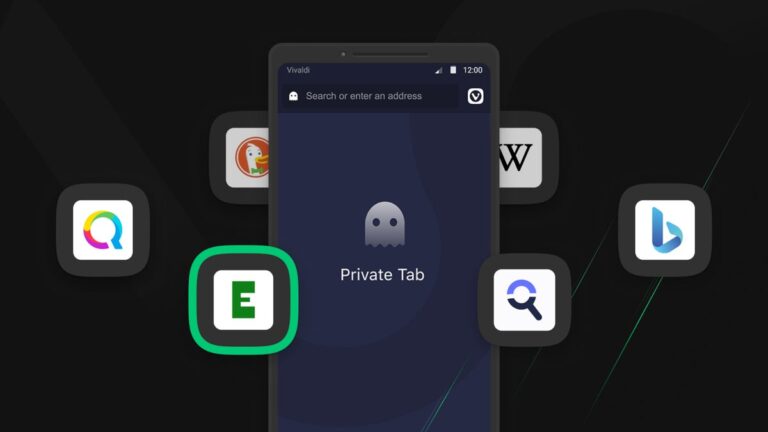
The latest update introduces a separate search engine setting for Private Tabs. Basically, you can add a custom search engine using Vivaldi on your computer. Also, you can now separately set your default search engine for regular tabs and private tabs (Settings / Search engine / Private Tab / select your default search engine).
The latest Vivaldi update is now rolling out to Android devices worldwide, so make sure to download the latest version to benefit from all these improvements.
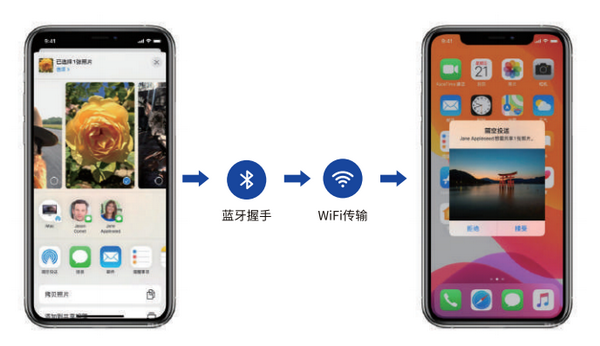
AirDrop was introduced in iOS 7, which allows Apple users to transmit files between iOS and macOS systems. Moreover, this does not require an internet connection or a phone book contact for the receiver to receive files.
However, it has been reported that malicious actors have abused this feature to share illegal pictures, videos, audio, and other files in crowded places like subways, buses, or shopping malls. Due to its anonymity, it is difficult for law enforcement authorities to track these threat actors.
DocumentFree Webinar
Compounding the problem are zero-day vulnerabilities like the MOVEit SQLi, Zimbra XSS, and 300+ such vulnerabilities that get discovered each month. Delays in fixing these vulnerabilities lead to compliance issues, these delay can be minimized with a unique feature on AppTrana that helps you to get “Zero vulnerability report” within 72 hours.
Case Review
According to the reports, several people in the Beijing subway received video files with inappropriate remarks through unknown Air Drops.
Case Review (Source: Beijing Wangshendongjian)
Initial investigations revealed that due to its anonymity, the malicious actor utilized the AirDrop function to transfer these files to victims. However, one of the victim devices that received an unknown Airdrop was analyzed.
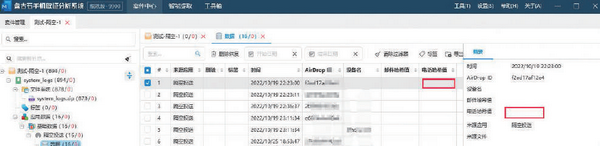
After several attempts, researchers found the logs for Airdrop and analyzed them further. The recorded information was found to contain the fields sender device name, mobile number, and email address, all of which were in a hash value.
Cracking the Hash
To crack the hash values, the researchers created a rainbow table with mobile numbers and email accounts to convert the hash value into original text.
Evidence collection and Traceability (Source: Beijing Wangshendongjian)
Eventually, the hash values were cracked, revealing the threat actors’ mobile phone numbers and email accounts. This information was quickly shared with the law enforcement authorities, who used it to track down several suspects involved in this case.
It is recommended that people turn off their AirDrop receiving when not in use, which will prevent these kinds of activities from threatening actors.
Try Kelltron’s cost-effective penetration testing services for free to assess and evaluate the security posture of digital systems
The OnePlus 12 just overcame two additional obstacles on its way to its global launch. The device is now not only Google Play-supported, but it also got certified by Bluetooth SIG.
The OnePlus 12 deals with two obstacles on its way to global launch
The device was spotted on the Google Play Supported Devices List with the model number PJD110. It also appeared over at Bluetooth SIG with model numbers CPH2581, CPH2583, and CPH2573. These are likely different model numbers for different regions.
As a reminder, the OnePlus 12 will launch globally on January 23. The phone has already been announced in China. Later this month, it will arrive in the US, Europe, and India. It will launch alongside the OnePlus 12R, which also launched in China already under the OnePlus Ace 3 moniker.
Its specs are well-known as it already launched in China
Considering that the OnePlus 12 already launched, its design or specs are not a secret anymore. The device will be fueled by the Snapdragon 8 Gen 3 processor by Qualcomm.
On the front, the OnePlus 12 will include a 6.82-inch LTPO AMOLED display. That will be a QHD+ panel, and it will be curved. It will offer an adaptive refresh rate between 1 and 120Hz. The phone’s peak brightness will be at 4,500 nist.
A 50-megapixel main camera (Sony’s LYT-808 sensor) will sit on the back, while a 48-megapixel ultrawide camera (macro mode) will support it. A 64-megapixel periscope telephoto camera (3x optical zoom) will also be included.
A large battery will be on board, with extremely fast wired & wireless charging
A 5,400mAh battery will power this phone, while 100W SuperVOOC wired charging will also be on offer. 50W wireless charging will be supported too. Do note that the phone will ship with a charging brick too.
On top of all that, you can expect water and dust resistance, thanks to an IP65 rating. Android 14 will come pre-installed, with OnePlus’ OxygenOS 14 on top of it.
When it comes to AI-generated content, things are still pretty murky. Several companies are outlining their policies regarding this controversial tech, and Steam is the next company to do so. According to new reports, Steam will allow games using AI-generated content on the platform. However, there are still some things that developers need to know.
Since video games are constructed from code, visuals, and music, it’s possible that much of a game can be crafted using IA tools. Obviously, this is something that many traditional game developers don’t like. “Why should game developers, artists, and musicians go through years of training to create their games while AI users just generate their way to the top?” This is a question that many people ask.
At the moment, navigating this AI-generated landscape it’s difficult, and we probably won’t see any official legislation regarding AI for a while.
Steam will allow games that use AI content
Steam is one of the biggest video game storefronts on the planet, and many developers post their games there. However, with the rise of generative AI, we can expect to see many more games flood the market. This could lead to rapid fluctuations in quality. Thus, the company outlined its policy regarding AI-generated content in the games posted.
Pre-generated content involves the developers using AI-generated assets in the game’s development. Think about games that use AI-generated images, music, scripts, etc. Live-generated content involves the system using generative AI while the game itself is running. Say, if you play a game where the villagers are all using AI-generated voices generated in real-time, that qualifies as life-generated.
Games with Pre-generated and Live-generated content will be put under the same pre-release evaluation as other games on the platform. Steam will evaluate the quality of the game’s performance, visuals, audio, etc. to see if it lives up to its standards. So, if the game is of low quality and obviously cobbled together within a few days using 99% AI, it runs the risk of being rejected.
Games using Live-generated content will have an additional requirement. Developers need to write down what guardrails they used to make sure that the AI does not generate any legal content. They’ll do this in their Content Survey.
Disclaimers
Disclaimers are probably one of the biggest tools for people who oppose AI. If you use AI in your game, then you will need to disclose that on your store page. This is so that potential buyers will know that the game uses AI. Steam will actually use some of your Content Survey in the disclosure on the developers’ store page. This is so that people can know exactly how they’re using generative AI in their game.
Reporting AI-generated content
Next up, Steam is also unveiling a new system that will let people report any illegal activity in their games caused by generative AI content. There will be an in-game overlay that people can use to submit a report. This way, users can ring the bell if the AI generates any unsavory content. Steam refers to Illegal content, however, we can also rope in other types of AI misbehavior. This includes generating offensive and harmful content.
One exception to this policy revolves around adult-only sexual content generated using AI. The post says that it’s unable to release that type of content at the moment. So, we’ll have to wait for information on that.
This may upset several developers, but it’s still good to know that Steam is taking AI-generator content into consideration and that it’s policing this content.
2023 is already in the rearview mirror, so let’s take a fun stroll down memory lane and check out the mobile world in 2023. Thanks to the detailed report by Data.ai, we’ve got some cool insights to share about our mobile habits. In this article, we will dive deeper into the world of social media.
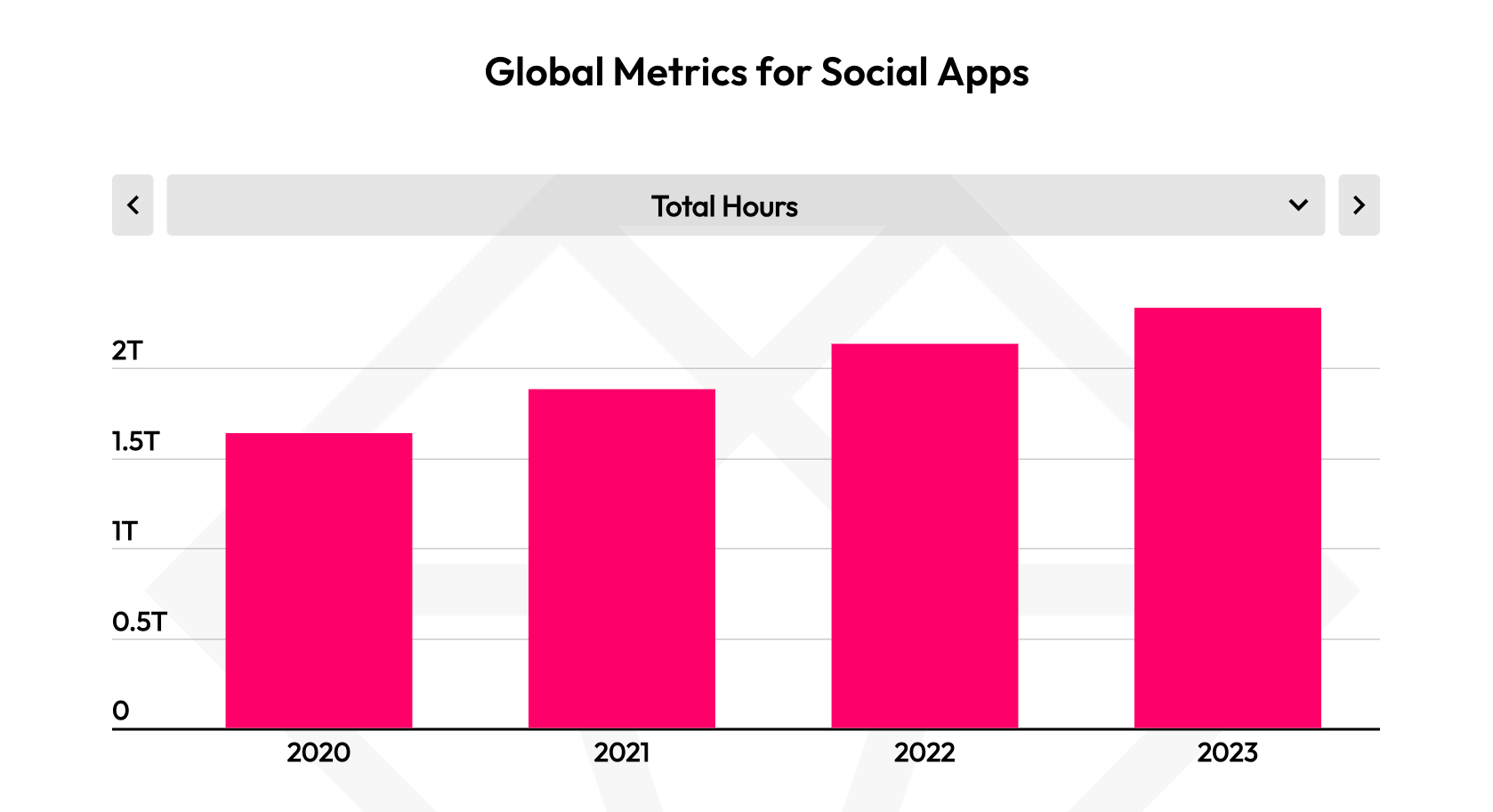
Have you ever wondered how much time we spend on social media? Guess what? We’re loving our social apps more than ever! Just on Android phones, we spent a whopping 2.3 trillion hours on social media in 2023. Yep, that’s trillion with a “T,” and it is a 9% jump from the previous year. Apparently, we just can’t get enough of scrolling and swiping!
Image Credit–Data.ai
Show me the money: Consumer spending
Here’s where things get really interesting. We’re not just spending time; we’re opening our wallets too. In 2023, we spent nearly $9 billion on social apps. That’s a 13% increase from the year before. TikTok is the star player here, breaking records in the app stores.
It’s the first app (including games) to hit $10 billion in total consumer spending. Just a few years ago, reaching a billion dollars seemed like a dream. Now, TikTok is raking in over a billion every quarter! Most of this cash comes from users buying coins to tip creators during live streams.
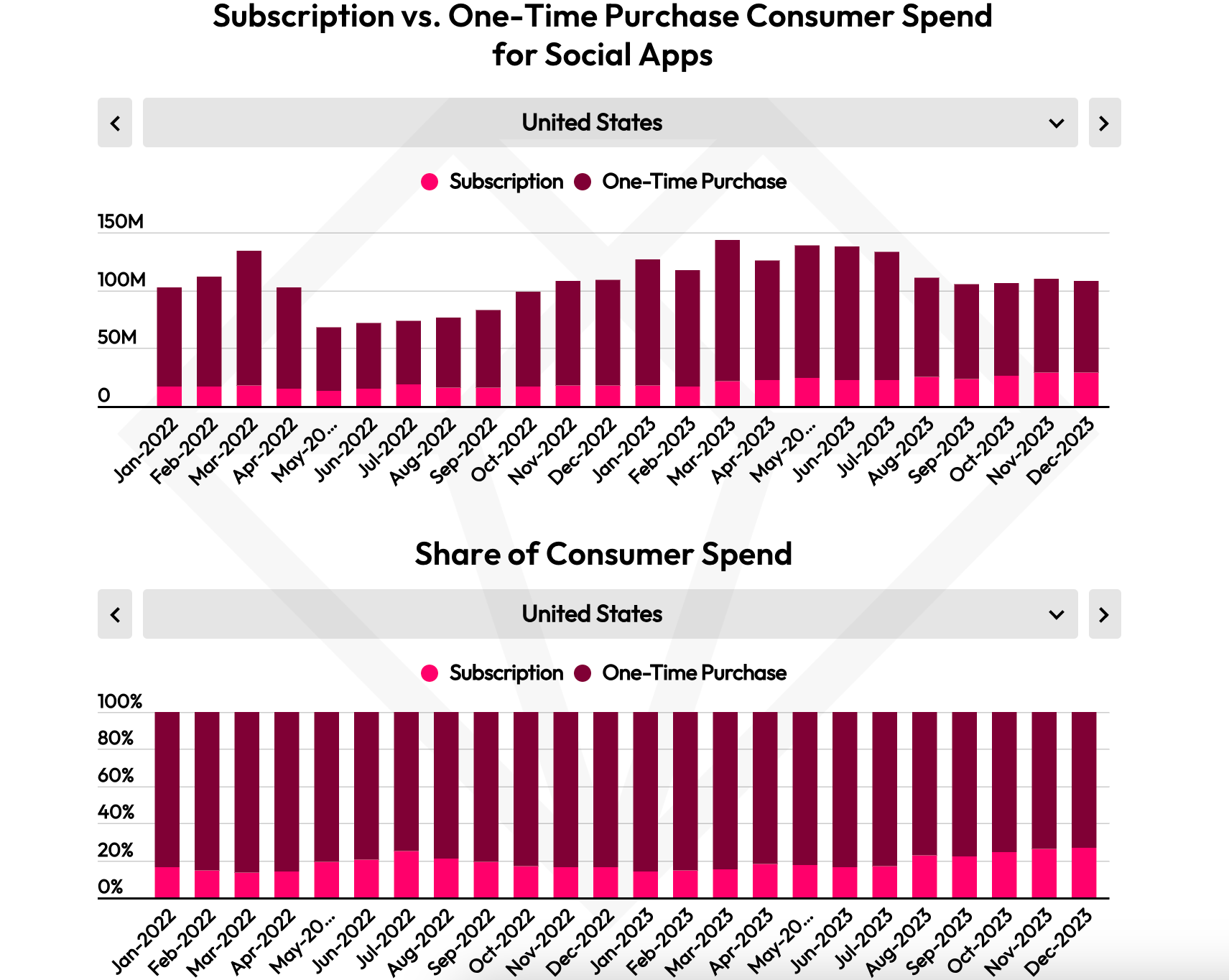
It took a while for leading social platforms to expand from advertising as their only source of revenue on mobile. TikTok’s success with tipping, as well as the rise of the subscription model outside of mobile games, has revealed the potential for in-app purchases to boost revenue. Consumer spending on Social apps nearly doubled between 2020 and 2023.
TikTok’s not the only one getting creative with cash. Other social platforms are exploring new ways to make money beyond ads. Think subscriptions and in-app purchases. While TikTok stands out with its one-time purchases, most other big players in the non-game app world are leaning heavily on subscriptions. Snapchat, for example, saw its revenue skyrocket with its Snapchat+ subscription.
Image Credit–Data.ai
Global downloads: A tiny dip but still impressive
Okay, there was a slight drop in global downloads, about 4%, but the numbers are still higher than before 2022, so the social app world looks pretty robust.
Here’s some food for thought: different types of social apps had mixed results in various countries. In the US, for example, the number of people using communication, social networking, and microblogging apps didn’t quite reach the high bar set in 2020. Video and forum apps also saw a bit of a dip.
There’s been some chatter about microblogging apps like X (former Twitter) losing their charm, especially with the rise of video-focused platforms like TikTok. Even with new players in the game, like Threads, microblogging isn’t growing as much as it used to.
On the other hand, in the US, TikTok now makes more than $1 per user. That’s up from 67 cents per user in 2022. Discord is in second place but way behind at 17 cents per user. Snapchat and Instagram are also seeing good growth in user spending.
To wrap it up, TikTok is the king of the social media jungle. It’s leading the pack in downloads and user spending worldwide. But with all this growth, there are concerns about privacy and misinformation. This has even sparked talks of banning the app in some US states.