If you’re on YouTube, exercise caution due to the ongoing Lumma Stealer campaign, where threat actors hack a YouTuber’s account and upload videos that appear as legitimate cracked software sharing.
The cybersecurity researchers at Fortinet’s FortiGuard Labs have uncovered a new wave of cyber threats as malicious threat actors leverage YouTube channels to spread the notorious Lumma Stealer through cracked software.
The malware campaigns investigated by researchers involve YouTube videos disguising content related to cracked applications, leading users to installation guides with hidden malicious URLs.
What sets this apart is the attackers’ evasion technique, utilizing open-source platforms like GitHub and MediaFire, a file-sharing and cloud storage service, to avoid traditional web filter blacklists.
The specially crafted installation ZIP files act as effective baits, exploiting users’ intentions to install applications and prompting them to click on the malicious files without suspicion. The attackers employ a private .NET loader equipped with environment checks, anti-virtual machine measures, and anti-debugging functions.
Lumma Stealer, a well-known threat targeting sensitive information such as user credentials, system details, browser data, and extensions, has been actively promoted on the dark web and Telegram channels since 2022. The malware’s global presence is evident, with a peak observed in December.
In their blog post research shared with Hackread.com ahead of publication on Tuesday, FortiGuard Labs detailed the complex stages of the attack, digging deeper into the tactics employed by the threat group.
The modus operandi of the malware campaign involves attackers compromising a YouTuber’s account and uploading videos that appear as legitimate cracked software sharing.
In the next step, unsuspecting users are lured to download a ZIP file from file-sharing sites, which carries malicious content for the next stages of the attack. Regular updates to these files suggest that attackers are continuously revising their methods to spread malware effectively.
It is worth noting that the also campaign involves the use of a private .NET loader meaning, a kind of hidden tool which creates a special set of instructions to make sure it runs code without getting detected. This script, in turn, connects to GitHub repositories and downloads encrypted binary data from servers chosen based on system date evaluation.
Further, the DLL file, responsible for decoding Lumma Stealer’s payload, engages in extensive environment checks to evade analysis. This includes anti-VM and anti-debugging measures, as well as scrutiny for virtualization platforms and sandbox environments – Simply put: Lumma Stealer comes with capabilities which let it evade detection from anti-malware solutions.
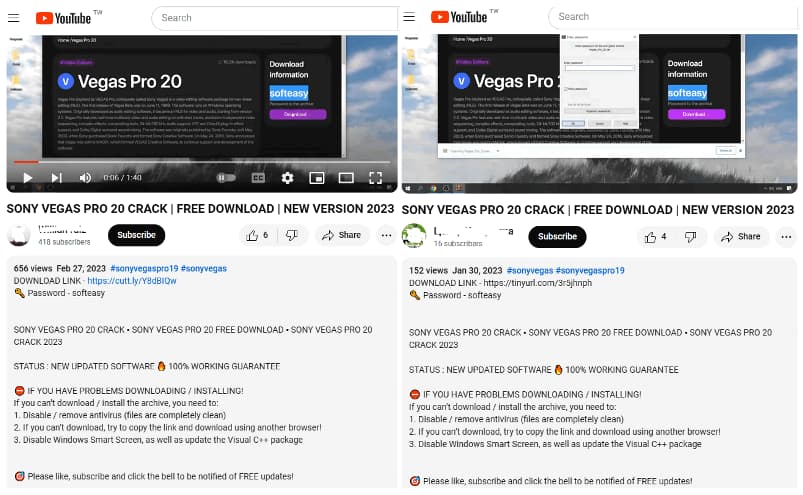
The screenshot reveals two compromised YouTube channels actively promoting cracked software, which results in Lumma Stealer infection (Credit: Fortinet Labs).
In the new campaign, once Lumma Stealer infects the device, it proceeds to seek the victim’s browser data. It steals various types of information, such as login credentials, personal details, financial information, and cryptocurrency funds by accessing crypto wallets. Additionally, it targets other data, including browser extensions.
YouTube, renowned as a great entertainment platform, has unfortunately also become a lucrative haven for cybercriminals. Over the years, the Google-owned site has witnessed a surge in major malware infections and crypto-related scams.
In October 2023, researchers reported a new threat known as Stream-Jacking, a tactic aimed at spreading Redline malware during live streams to steal cryptocurrency funds. The severity of the situation becomes apparent when considering that, in 2020, Google took action by deleting two million channels and 51 million videos due to the escalating prevalence of malware and cryptocurrency-related scams.
Nevertheless, as threat actors continue to equip Lumma Stealer with new malicious capabilities, users are urged to be on the lookout, particularly when dealing with applications from unclear sources, ensuring the use of legitimate applications and software from reputable and secure origins.
YouTube TV has been out for a while. While the current price of $72/month is miles above the initial price of $35/month, the platform has been rapidly expanding. According to some new industry data, YouTube TV has surpassed 6.5 million subscribers.
YouTube TV first hit the market in February of 2017, and it was a pretty weird time for it to launch. At that point, several of the streaming services that exist today had yet to Launch, Netflix was still gathering subscribers at an increasing rate, and the streaming market was heating up. People were starting to turn away from traditional television in lieu of on-demand streaming.
So, it seemed weird that YouTube wanted to bring a new television streaming service. However, seeing as several services such as Roku and Hulu now offer traditional television, it doesn’t seem so weird now.
YouTube TV crossed 6.5 million subscribers
The thing about YouTube is that it’s backed by Google. Google is an online service Empire, so there are plenty of places where YouTube TV could find a home. And this is one reason why it was able to expand so rapidly. YouTube TV isn’t massive compared to on-demand streaming. Companies like Netflix and Disney+ boast over 200 million subscribers. However, YouTube TV is a service for people who still want that traditional television experience.
Also, based on some market research by LRG, it seems that YouTube TV is at the top of the charts when it comes to internet-delivered TV services. As of Q3 2023, YouTube TV has around 6.5 million subscribers, which is a fair amount more than Hulu + live TV. That service boasts about 4.6 million subscribers. Going down the list, Sling TV has about 2.12 million subscribers. Lastly, Fubo boasts about 1.477 million subscribers.
So, YouTube TV is definitely the king of its own domain. Crossing a milestone like this is significant, as many TV providers are losing subscribers at a rapid rate. This should come as no surprise. Getting Netflix is as easy as downloading the app, and putting in your information. Also, it’s relatively inexpensive.
Getting cable, on the other hand, requires hardware installation along with setting up an account, and it’s much more expensive than any streaming service currently on the market. This is why the cable market is struggling, and why many traditional TV channels are partnering with other companies to offer their content via streaming services.
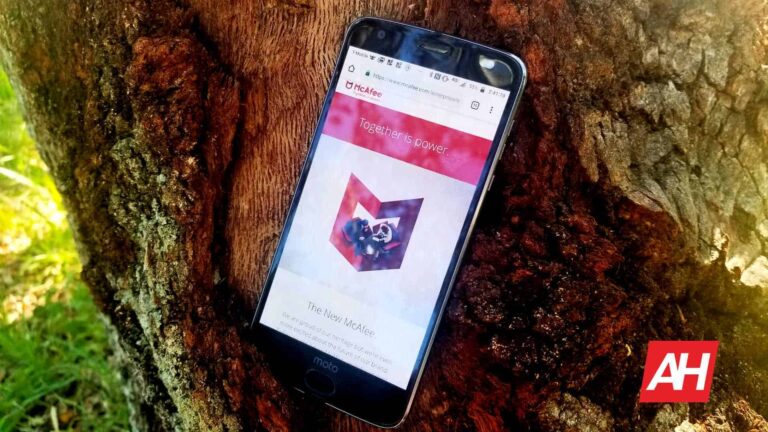
McAfee has announced Project Mockingbird to counteract AI-driven deepfakes at CES 2024. It’ll counter especially those employing audio to deceive consumers with fabricated news and fraudulent activities. Artificial Intelligence (AI) is getting smarter; because of this, bad actors are making more convincing fake content, like fake voices and videos. McAfee’s new tool, Project Mockingbird, uses AI to analyze and understand content, and it’s really good at spotting fake audio in videos, being right over 90% of the time.
McAfee Project Mockingbird will counteract deepfakes
McAfee’s Project Mockingbird is designed to differentiate genuine human audio from AI-generated replicas. This innovation is pivotal in addressing the emerging challenge of AI-enabled deepfakes, especially those incorporating deceptive audio elements.
Deepfakes, which often show celebrities in fake videos, used to be on certain websites mostly. But now, fake audio is becoming a bigger problem. Steve Grobman, McAfee’s CTO, is worried about these misleading audio clips spreading on social media, especially with the upcoming 2024 U.S. Presidential election. More importantly, it comes at a time when there are over three major elections ahead, in the U.S., India, and South Africa. Quite similar to McAfee’s approach, Meta had also updated their policy to counter deepfakes.
McAfee’s Steve Grobman shares concerns about cheapfake scams
McAfee’s CTO stressed how important this technology is. He compared it to a weather forecast but for the internet. McAfee wants to help people understand and stay safe from fake content made by AI.
“We’ll help consumers avoid ‘cheapfake’ scams where a cloned celebrity is claiming a new limited-time giveaway,” he told Venture. “And make sure consumers know instantaneously when watching a video about a presidential candidate, whether real or AI-generated for malicious purposes.”
Grobman also mentioned how badly people use real social media accounts to spread fake videos or lies. McAfee’s tech can spot these fake videos and tell the difference between what’s real and what’s not.
As CES 2024 kicks off in Las Vegas, anticipation is building for a plethora of groundbreaking tech announcements. The upcoming days promise a thrilling showcase of innovation and advancements!
The iQOO 12 is one of the first phones to ship with Qualcomm’s latest Snapdragon 8 Gen 3 flagship processor and the first we reviewed. The vivo sub-brand launched the phone in its home country, China, in early November. The device arrived in international markets a month later, starting with India. It is the company’s flagship offering and has a lot going for it. Besides an industry-leading chip, the device boasts an excellent display, quality rear cameras, a big battery, incredibly fast charging, and the latest connectivity standards, including Wi-Fi 7.
Additionally, the iQOO 12 has a premium design with a strong build quality. The company has fitted it with an aluminum alloy frame and glass back. Despite its relatively affordable price tag for a Snapdragon 8 Gen 3 phone, the handset doesn’t feel cheap. In fact, it feels premium in the hand. However, at the end of the day, what matters most is how the phone holds up during real-world usage. We put it through its paces to find out. Read the review below and you will know whether the iQOO 12 is the best Android flagship in its price segment.
Table of contents
iQOO 12 Review: Hardware and Design
iQOO sent us the Legend (White) color variant of the iQOO 12. The device arrived in a black matte box prominently featuring the BMW M Motorsport logo—BMW is a “Premium Partner” of iQOO, which is noted on the box too. The same logo can also be found on the back of the device. The Alpha (Black) variant doesn’t have it, though.
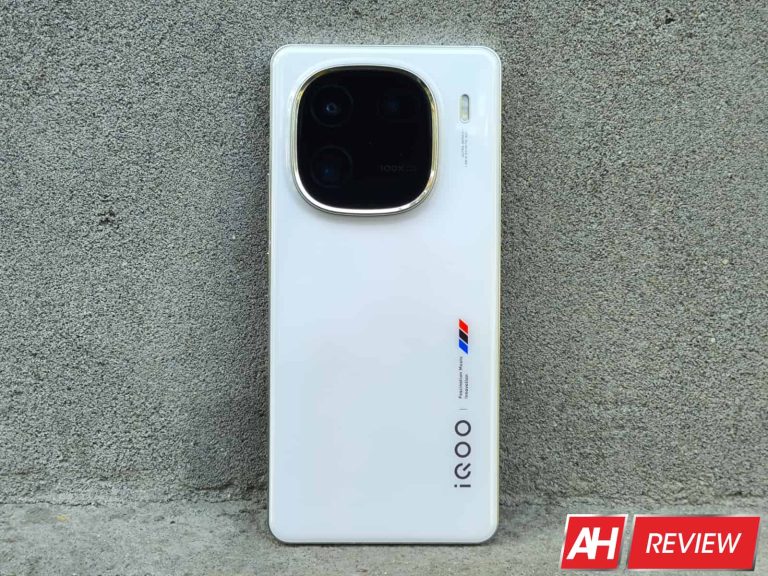
Inside the box, we have the phone itself at the top. Under it are a BMW M printed card, a transparent silicone case, a 120W charger, a USB Type-C to Type-C cable, a SIM tray ejector pin, and some paperwork. The unboxing experience is nothing extravagant. But as soon as you hold the iQOO 12, you can say that it is a premium phone. The Legend variant’s shiny white back panel coupled with the squircle camera island, vertical dual-tone LED flash, and side-printed iQOO and BMW M logos make for a striking design. The silvery aluminum frame complements its look.
Despite a glossy finish, the rear panel doesn’t retain smudges, which is another sign of the device’s premium-ness. The handset is quite slippery, though. This is something you need to be wary about, particularly if you aren’t using a case. While the white iQOO 12 has Porcelain Enamel Glass on its back, the black (Alpha) variant has a Fluorite AG Glass panel. It sports a sandblasted-like finish but the company claims silk-like smoothness. If you ask us, we find the white variant better-looking than the black. It’s up to one’s preference, of course.
The handset is comfortable to hold but incredibly slippery
Weighing 203.7 grams and measuring 75.88 x 163.22 x 8.1mm in dimension, the iQOO 12 is somewhat big and heavy. However, it isn’t uncomfortable to hold. The aluminum frame has rounded corners and is completely flat, and so is the display. But the rear glass is slightly bent at the edges, such that it blends perfectly with the frame without leaving sharp edges. This makes the handset comfortable to hold for a prolonged period.
The power and volume buttons, both of which reside on the right side, are at a comfortable height too. They are easily reachable even during one-hand use. The buttons are clicky and feel premium. The bulky camera island with its textured decorative ring, whose grooves can be felt on hand, isn’t located centrally at the top but slightly to the left side. However, it doesn’t make the handset unstable when kept on a hard surface. But because of its slippery nature, the device may wobble if you tap on the screen while it is on the table unless the surface is rough.
Putting a case would make the device less slippery and also somewhat reduce the bulkiness of the camera housing. Since the iQOO 12 has a glass back, you get added protection too. A transparent cover would add protection without obscuring the handset’s sleek design. However, the buttons feel less clicky and premium with a case. We still wouldn’t recommend using the phone without a cover, though. After all, it has a glass back that can break easily if the device falls on a hard surface from a waist height.
Bezels are slim but not entirely symmetric
The iQOO 12 isn’t the best-looking Android device from the front. Bezels are relatively slim but not symmetric—the bottom bezel is slightly thicker than the other three sides. The punch hole cutout for the selfie camera is also bigger than what we have seen on some other phones. But credit where due, iQOO has done well to blend the earpiece perfectly into the frame. The earpiece, which doubles as one of the speakers, is hardly noticeable. This phone also has two dedicated speaker outlets—one each at the top and bottom.
The top edge of the iQOO 12 also has a secondary microphone hole and an IR (infrared) blaster. So you can use the phone as a remote control for your TV, Air Conditioner, Music Player, and other compatible devices. At the bottom, we have the SIM tray, primary microphone, USB Type-C port, and a speaker. The company has made tiny pill-shaped cuts on the frame for the speaker grille. This design looks more premium than a single coin slot-like strip. The left side of the iQOO 12 is blank.
Overall, this phone is built well with an impressive design and finish that feels premium and comfortable to hand. If there is any complaint about the iQOO 12’s build quality, it is the lack of solid protection against water. The handset has an IP64 rating for dust and water resistance. While that’s strong dust protection, the device can only block non-pressurized water jets. It should withstand some splashes and a little rain but submerging the phone in water isn’t a good idea. Many phones in this price segment or lower boast an IP68 rating.
iQOO 12 Review: Display
The iQOO 12 features a gorgeous 6.78-inch LTPO AMOLED display with a 2,800 × 1,260 pixels resolution (1.5K). That’s a 20:9 aspect ratio and a pixel density of 453ppi. The device supports dynamic refresh rates up to 144Hz as well as a 300Hz touch sampling rate and a 1200Hz instant touch sampling rate, making the display extremely smooth. The touch response is excellent. We didn’t feel a hint of lag while playing games like COD (Call of Duty: Mobile) and BGMI (Battlegrounds Mobile India), the Indian version of PUBG Mobile.
Excellent color accuracy, brightness, and dimming
Talking about colors, the iQOO 12’s screen boasts 10-bit color depth. It can show over 1 billion colors, fully covering the DCI-P3 color space. Pictures on the screen are vivid and bright. You can select between three different color modes for the display—Standard, Bright, and Pro with manual adjustment of color temperature. You cannot adjust color temperature when Eye Protection is enabled, though. Anti-fatigue brightness adjustment and Low blue light certification mean the display is easy on the eyes.
As far as brightness is concerned, iQOO claims an HBM (high brightness mode) brightness of 1,400 nits with the local peak brightness going up to a whopping 3,000 nits. In our two weeks of usage, we found the iQOO 12’s display perfectly legible under direct sunlight. It retained colors well and didn’t make images look washed out. And when you go into dark areas, the display gets pretty dim. It boasts a 2,160Hz pulse-width modulation (PWM) for optimal display dimming in low-light conditions.
The iQOO 12 offers Always On Display (AOD) with a wide range of styles to pick from. You can also schedule AOD or have it appear on the screen only when the phone is moved slightly. The latter option lets you enable AOD for new notifications too. There is also an option to have AOD enabled all the time. Depending on the style you choose, it will increase power consumption a little. AOD should use a 1Hz refresh rate. The phone also lets you lower the refresh rate to 60Hz and resolution to 1080p (2,400 × 1,080 pixels) to save power when needed.
Ideal screen for media consumption and gaming
The iQOO 12’s display is HDR10+ certified and offers visual enhancement, MEMC (Motion Estimation, Motion Compensation), and Super Resolution in video streaming apps such as YouTube, Netflix, and Amazon Prime Video for improved frame rate and color accuracy. The iPhone also has Widevine L1 DRM certification, offering Full HD streaming across the aforementioned streaming apps and more.
Additionally, iQOO has equipped it with Wet Touch technology that uses AI to detect if your hands are wet. The phone then optimizes touch control to improve precision and accuracy. This allows you to make or pick up calls with wet hands. During gaming, it recognizes sweat characteristics and optimizes touch accordingly. Overall, the iQOO 12’s big screen is perfect for media consumption and graphic-intense gaming with vivid colors, excellent brightness, and optimal dimming.
The under-display fingerprint scanner works with wet fingers
The iQOO 12 features an under-display optical fingerprint scanner that works as fast and smoothly as the technology currently does. You can add multiple fingerprints and name them. Once registered, it can detect a portion of your fingerprint and swiftly unlock the device. You also have several fingerprint icons to choose from. On top of this, iQOO’s Wet Touch technology appears to be working for fingerprints too. The device could read wet fingers—not as fast as it normally did, but it did get the job done.
iQOO 12 Review: Performance
The iQOO 12 is an absolute performer. The phone is powered by the Qualcomm Snapdragon 8 Gen 3, so we weren’t expecting it to be a slouch. For a quick recap, the chipset has an octa-core CPU in a 1+5+2 setup. Qualcomm has included one ARM Cortex-X4-based prime CPU core clocked at 3.3GHz, three Cortex-A720-based performance cores at 3.2GHz, two more Cortex-A720-based performance cores at 3.0GHz, and two Cortex-A520-based efficiency cores at 2.3GHz. Fabricated on TSMC’s 4nm process technology, is the currently best chipset in the Android space.
The processor is paired with the Adreno 750 GPU and iQOO’s proprietary Supercomputing Chip Q1 aimed at enhancing the gaming performance of the phone. Additionally, the iQOO 12 has a massive vapor chamber of over 6,000 mm² in area, the largest yet on any iQOO phone. It helps keep the phone’s temperature in check during intense gaming sessions or any other heavy usage. You get up to 16GB of industry-leading LPDDR5X RAM (plus 16GB of virtual RAM) and 512GB of UFS 4.0 storage too.
Ideal for graphic-intense gaming
Considering the specs and iQOO’s aim to make an Android flagship killer, expectations were always high with the iQOO 12. It lived up to the expectations and even exceeded in some areas. Starting with the gaming performance, the phone didn’t stutter a bit while playing graphic-intensive games like BGMI and COD at the highest graphics. We didn’t notice frame drops or lags even once across our two weeks of testing, which involved at least an hour of gaming almost every day.
Continuously playing BGMI for about 90 minutes with Ultra HDR graphics, Ultra frame rate, and Game Super Resolution enabled made the phone a little hot but nothing uncomfortable. The Supercomputing Chip Q1 and the large vapor chamber appear to have done their job effectively. The Game Super Resolution feature enhances the clarity and sharpness of in-game images for a more immersive gaming experience. With Game Frame interpolation, you get frame rate enhancements up to 144fps.
The Ultra Game Mode breaks the shackles and lets you enjoy the full gaming potential of the iQOO 12. Motion control is part of this tool, giving you six different motion control options: left-hand lifting, right-hand lifting, left-leaning, right-leaning, horizontal forward pressing, and horizontal backward pressing. Each option comes with a corresponding illustration. A gorgeous AMOLED display, superfast touch response, and stereo speakers elevate your gaming experience. This is on top of the chip’s inbuilt Ray Tracing capabilities and improved GPU performance.
Excellent everyday performance
A smartphone isn’t all about gaming. Companies usually optimize the device to enhance the gaming performance and even include dedicated chips to handle the intensive resource demand, as iQOO did with this phone by adding the Supercomputing Chip Q1. However, the iQOO 12 excels in everyday performance too. It’s extremely fast and reliable for tasks like taking pictures, recognizing fingerprints and faces, loading apps, switching between apps, and all other regular usage. We didn’t find it lagging anywhere.
The iQOO 12 is excellent in background app retention and multitasking too. You can simultaneously open two apps in the split-screen mode and keep them in the background for later access. Here are some numbers as a testament to its performance and speed: copying an 8GB file from one folder to another takes only about 17 seconds, less than what iQOO claims (20 seconds). The gist is that the iQOO 12 won’t disappoint you with its performance. System animations are quite smooth too, so that adds to your user experience.
Wi-Fi 7 and on-device AI are part of the package
The iQOO 12 supports Wi-Fi 7, the latest wireless connectivity standard slated to go official in the first quarter of this year. So when Wi-Fi 7 arrives at your home router or other connected devices in the house, your phone will be ready to take full advantage of faster speeds, lower latency, and a more reliable connection. Of course, you get both sub-6GHz and mmWave 5G network connections too. So, no matter which carrier service you use, the iQOO 12 offers the best cellular connectivity.
Additionally, the Snapdragon 8 Gen 3 boasts on-device AI processing capabilities. The chip’s built-in AI Engine is the world’s first to support on-device generative AI models with up to 10 billion parameters. It can process LLMs (large language models) at up to 20 tokens per sec. The iQOO 12 benefits from these features. The phone uses AI across various apps and functions, not least the cameras. AI enhances the detail and clarity of photos and videos in both daylight and night conditions.
Speakers are loud while the haptic feedback is brilliant
The new iQOO flagship features symmetrical dual stereo speakers that are loud enough for a mobile device—the earpiece doubles up as a speaker on the top side where we already find a dedicated speaker cutout. Symmetrical design allows for a more balanced stereo field with more depth and direction in sound. This enables an enjoyable experience whether you are gaming or streaming. The microphones are good too. They offer good audio clarity in voice and video recordings.
For haptic feedback, iQOO has added an x-axis linear motor inside the iQOO 12. With a volume of 560mm3, it is a fairly large motor. The company claims 1.2 Grms (root-mean-square acceleration) steady-state vibration amplitude, 13.1-millisecond steady-state vibration startup time, and 85Hz bandwidth. Numbers aside, the motor offers excellent in-game vibrations. Haptic feedback during normal usage such as navigating through apps or typing something is perfect too.
Benchmarks
As much as we say about the iQOO 12’s performance, it’s incomplete without comparing how the phone stacks up against the competition. Despite its relatively affordable price tag, the phone is competing against some heavyweights in the industry, including the Google Pixel 8 Pro, Apple iPhone 15 Pro Max, and Sony Xperia 1 V. We run a series of benchmarks on the iQOO 12 to compare its performance with these phones. While benchmarks don’t necessarily tell the full story, they give us a fair idea of what to expect from a phone.
To start with, the iQOO 12 was put through a CPU and GPU test on Geekbench v6. It scored 2,272 points in single-core CPU tests and 7,063 points in multi-core CPU tests. The GPU score came in at 14,019. As expected, these scores are substantially better than what we achieved with the Pixel 8 Pro (1,349, 3,019, and 4,469) and Sony Xperia 1 V (1,907, 5,292, and 8,581). Of course, these phones are powered by an older chip. The iQOO 12 couldn’t reach the levels of the iPhone 15 Pro Max (2,930, 7,305, and 27,178). You can see the chart below for a quick comparison.
Next up, we ran the 3D Mark Wildlife Extreme Stress Test on the iQOO 12. It puts the device through a demanding 20-minute test to evaluate how it performs during prolonged heavy use. The phone achieved the best loop score of 5,134, the lowest loop score of 3,461, and a stability of 67.4%. The loop scores are the highest we have achieved on any phone yet. However, the stability is on the lower side. This indicates the iQOO 12 isn’t the best suited for long hours of heavy use. It does handle 1-2 hours of continuous graphic-intense gaming without issues, though.
Finally, we did a Capcut video export test on the iQOO 12. The test, which we have put together here at Android Headlines, involves measuring the time it takes for the phone to export a one-minute video in Capcut. We perform the same test on every phone we review, so it gives us a good idea of its performance and speed. The iQOO 12 completed the export in nine seconds, second only to Samsung’s Galaxy Tab S9 Ultra. The chart below shows the results for some devices. The less time a phone takes to do the job, the better its performance.
iQOO 12 Review: Battery life and charging
The iQOO 12 has a 5,000mAh battery, with the company claiming a design of two battery cells in series. It is a graphite battery rated to retain 80% of its health even after 1,600 charging cycles. Considering its battery life, the phone will be around five years old when you reach that many charging cycles. Of course, the battery life varies depending on your usage pattern, but the new iQOO flagship should carry most people through the day while still having some fuel in the tank.
On the Balanced mode, which is the default setting, we could get over eight hours of screen time with relatively heavy use. The device was connected to Wi-Fi all the time. The camera was used for about 1.5 hours, while BGMI was played for over an hour with Ultra HDR graphics, Ultra frame rate, and Game Super Resolution enabled. YouTube was also used for an hour or so, watching multiple videos in 1080p resolution and optimal sound. Our usage also involved some web browsing, video calling via WhatsApp, and benchmark runs, among other things.
To put some perspective into the iQOO 12’s battery life, we conducted a battery rundown test where a YouTube video was played till the battery level dropped from 100% to 0. The video is played in 1080p resolution with full sound and brightness. We do the same test on every phone that arrives on our desk, playing a specific YouTube video. The iPhone 15 Pro Max lasted 21 hours and 35 minutes before the battery ran out. The iQOO 12 topped it with a runtime of a whopping 21 hours and 52 minutes.
This makes it the battery king in the flagship segment, at least among the phones launched in recent months. While we have seen the battery percentage drop faster once it hits 10% on some phones, this isn’t the case with the iQOO 12. The drop rate remains incredibly constant. Even at 1% battery, the phone could play 1080p YouTube videos at full sound and brightness for about 12 minutes. That is excellent battery endurance, to say the least. The battery life is one of the strengths of the iQOO 12.
Incredibly fast wired charging but no wireless charging
The iQOO 12 supports a whopping 120W wired charging. That’s a breakneck charging speed and not many people may already have a 120W charger in their home. Thankfully, iQOO has included the charging brick in the box, along with a 6A-rated USB C-to-C cable. It charged the phone from 0 to 100% in slightly over 26 minutes, which is remarkable. We got a 28% charge in just five minutes. The battery level reached 52% in 10 minutes and 69% in 15 minutes. That much battery should be enough to run the phone for a day with moderate usage.
Note that we got this speed with Fast charging enabled and the charging optimization disabled. We also had the phone switched off, though turning it on doesn’t add much to the charging time. However, by default, the iQOO 12 ships with Fast charging disabled and the charging optimization enabled, so it optimizes the charging speed based on the phone’s temperature and other factors. In default settings, a full charge took about 30 minutes. While this is impressive, you may not always get the same speed.
Over time, the iQOO 12 will learn your charging habits and intelligently adjust the speed. You will get a slower speed if you keep the phone on charge for a long time. To preserve the battery’s health, we advise using it in the default charging settings. But if you want to enable fast charging, you can do that by going to the Battery section in the Settings app and tapping on “Battery health and charging”. There is no wireless charging on this phone, sadly. This is a big letdown from the vivo sub-brand trying to compete with established players in the flagship Android market.
iQOO 12 Review: Camera
The iQOO 12 sports a triple camera setup at the back. We have a 50MP primary shooter with an f/1.68 aperture and 1.2µm pixels. It has an optical format of 1/1.3 inches and supports PDAF (phase-detection autofocus) and OIS (optical image stabilization). The 50MP ultrawide lens boasts an f/2.0 aperture and has a 119-degree field-of-view with autofocus. Finally, there is a 64MP telephoto camera with 3x optical zoom. It is a 1/1.20-inch sensor with an f/2.57 aperture, PDAF, OIS, and up to 100x digital zoom. The selfie camera is a 16MP unit with an f/2.5 aperture.
The camera performance of the iQOO 12 is as impressive as the hardware sounds in theory, particularly the rear setup. The 50MP main camera offers multi-directional Quad-PD autofocus and 2x lossless zoom. By default, it captures 12.5MP shots with enough details, dynamic range, and color accuracy in daylight conditions. The phone applies a mild pop effect to images after capturing but not much. If you don’t like it, you can switch to the Natural color mode from the center button in the top toolbar of the camera app.
There’s also a Textured mode that oversharpens images. If you prefer high sharpness, you can try this mode. Overall, the iQOO 12 captures excellent photos in daylight conditions. There isn’t much noise in the photos. We noticed occasional focusing issues where the device couldn’t focus on the subject until you restart the camera app or tap on the screen. But this happened like two times in two weeks, so it shouldn’t be a major problem. Capturing photos in the 50MP mode doesn’t bring much change to the quality.
Zoom shots offer excellent detail too
The iQOO 12’s 64MP 3x optical zoom camera, which captures 16MP photos by default, gives you amazing photos. At 3x zoom, the images have the same quality as the main camera. You get excellent details and dynamic range with low noise. Switching to the full-resolution (64MP) adds some noise to the photos, though. The colors and contrast are still preserved nicely. If 3x zoom brings the subject too close, 2x zoom or crop shots from the main camera retain a great amount of detail too.
Likewise, the telephoto camera doesn’t lose quality much up to 10x digital zoom. Of course, the more you zoom in, the level of detail continues to deteriorate. However, you get decent pictures at 10x zoom. We got some usable zoom shots up to 30x magnification. Beyond that, the best use of the 100x digital zoom is to read some far-away text that is otherwise undecipherable. The iQOO 12 also captures moon photos but it is more about AI than the phone’s camera capabilities.
iQOO 12 2x zoom camera samples
iQOO 12 3x zoom camera samples
iQOO 12 10x zoom camera samples
Good ultrawide and macro shots
The 50MP ultrawide camera of the iQOO 12 is on par with the other two rear cameras in terms of output quality. It gives you a decent amount of detail and dynamic range in photos. Both 12.5MP and 50MP shots came out brilliant with no noticeable lens distortion. You might notice some noise but not much. In some scenarios, we liked the default photos better, while the 50MP shots looked better in some other scenarios.
If you want to get up close to the subject for a macro shot, the iQOO 12 offers four different macro modes. The 1x mode, which lets you get as close as 5cm, uses the ultrawide camera. The 2x mode uses the main camera while the 3x and 6x modes use the zoom lens. You get good photos if you take your time to perfect the shot. The phone advises you to move further away if you get too close.
The selfie camera is below par
While the rear camera system of the iQOO 12 impressed us, the 16MP selfie camera failed to live up to our expectations. Don’t get us wrong, the images aren’t bad. They boast adequate color accuracy and contrast. However, the images lack depth and detail. We expected better selfie quality from this phone. Hopefully, iQOO can improve things a little with software updates in the future.
Videos offer good stability but lack quality compared to photos
Coming to videos, the iQOO 12 can record 8K videos with the main camera and 4K videos with the other two rear cameras. The videos come out decent with good contrast and low noise, particularly from the main camera and the telephoto lens. However, the colors aren’t accurate and the footage lacks detail. Maybe we expected too much considering the quality of the photos, but we are talking about a flagship-grade phone. Expectations are always high.
Videos from the selfie camera, which is limited to 1080p resolution, are worse. That doesn’t mean the iQOO 12 is extremely poor in terms of video quality. If you are a content creator, it may not be the best substitute for your video camera. But for capturing those sweet moments and preserving memories, the phone won’t disappoint you. The video stability is great, particularly at lower resolution.
Low-light photos are decent but the videos could have been better
The iQOO 12’s main camera captures decent photos in low-light conditions too. The phone does well to preserve colors and detail. You will notice some blown-out highlights and more noise in images compared to daylight shots, but that is expected. The 3x zoom camera does a good job too. The ultrawide camera fails to match that level, though. Zooming in beyond 3x deteriorates the quality fast, though you will get usable photos at up to 10x zoom.
iQOO 12 low-light camera samples
iQOO 12 low-light zoom (2x, 3x, and 10x) camera samples
The story for the selfie camera remains unchanged in low-light conditions. The photos are nothing extraordinary but not poor either. Likewise, the iQOO 12 leaves a little to be desired with its low-light video quality. In default settings, we noticed some blown-out highlights and poor contrast. Not too bad but we expected better videos at night. You can improve the quality by manually controlling the parameters in the Pro mode.
Speaking of which, the stock camera app of the iQOO 12 is fun to play with. It offers quick access to the color mode, macro mode, video resolution and stabilization, HDR, and more. There are dedicated buttons for 0.6x (ultrawide lens), 1x (main camera), 2x (main camera zoom), 3x (telephoto lens), and 10x shots. The circular zoom slider offers vibration feedback for a satisfactory zooming experience.
iQOO 12 Review: Software
The iQOO 12 runs Android 14-based Funtouch OS 14. The company has promised three major Android OS updates (up to Android 17) and four years of security updates. This isn’t the best support you get in the flagship Android space. Google offers seven Android OS upgrades and seven years of security patches. Samsung, OnePlus, and OPPO have also committed to four major Android OS updates and five years of security patches. So, iQOO lags in this department. It’s still a decent support, though.
As far as the software experience is concerned, there aren’t many complaints about Funtouch OS. The iQOO 12 does ship with a lot of preloaded bloatware but you can uninstall most of them. We would have liked it better if iQOO cut down on bloatware but we suppose this is the price we have to pay for an affordable flagship. Bloatware aside, the overall experience is smooth with extensive customization and personalization options. Customizing wallpaper is a breeze—you can do that by long-pressing on the home screen.
Likewise, you can customize the Recents menu right there. The app drawer offers a recommended section at the top, showing apps that you might want to open. By default, you see four recommended apps but you can expand the section to see four more. The iQOO 12 also gives you app recommendations when entering split-screen mode. You can disable these recommendations from the Shortcuts & accessibility settings. The same page also lets you enable/disable the “three fingers swipe up” gesture for split-screen.
The Smart Sidebar makes favorite apps more accessible
The iQOO 12 offers a Smart Sidebar tool that lets you quickly access your favorite apps. The sidebar can be pulled out over any app and is expandable. You can customize the order of apps and add two recent apps to it. The phone also lets you customize the opacity of the indicator for the sidebar when not in use. All of these controls are available under the Shortcuts & accessibility settings.
This settings page also lets you manage gestures and other settings for screenshots and screen recordings. Tapping on a screenshot preview brings up a toolbar from where you can quickly edit or share the file or translate text in it using Google Lens. Other accessibility options include tap gestures for turning the screen on and off and shake gestures for activating the torch. Smart Calling offers gestures for making calls, answering calls, putting incoming calls on mute, and more.
The iQOO 12 also offers shortcuts for a double-press and long-press of the volume down key. When the screen is off, pressing the volume down key twice in quick succession opens the camera. A long press of the key can turn on/off the torch by default. You can customize it to open any app or start audio recording. Funtouch OS also lets you customize the battery indicator style and percentage.
Dynamic customization of system animations
The Dynamic effects section in the Settings app gives you a lot of control over system animations on the iQOO 12. You can customize touchscreen animations, home screen entering and transition animations, fingerprint icon and recognition animations, face recognition animations, screen on/off animations, charging and USB animations, and more. There are multiple options for everything, so you personalize the phone the way you want.
Additionally, the iQOO 12 allows you to customize sound quality and effects based on your age, listening experience, hearing hardships, or the earphones you are using (only works with IQOO and vivo earphones). You can also enhance the audio quality with Super Resolution. Moreover, media volume can be adjusted separately for each app, with the phone remembering your adjustments.
Ultra Game Mode for gamers
For gamers out there, the Ultra Game Mode lets you enhance your gaming experience by blocking unwanted disturbances. The dedicated Esports mode prevents app notifications from popping up while gaming. It also optimizes control by disabling display gestures for screenshots and more. Brightness lock and adaptive frame rate and temperature ensure you get the best gaming experience. Other options include 4D game vibration, frame rate priority, and professional control settings.
iQOO 12 Review: Should you buy it?
The iQOO 12 has a lot going for it. The phone packs the industry-leading Snapdragon 8 Gen 3 processor with the latest RAM and UFS storage, fantastic cameras, excellent display, and superb battery life and charging speed. In our two weeks of testing, we didn’t notice any performance hiccups. Be it gaming, photography, or everyday usage, the device delivered amazing all-round performance. Its entry price makes the package even sweeter.
Of course, this is the first Snapdragon 8 Gen 3-powered phone we reviewed, so we can’t tell how the iQOO 12 stacks up against other phones with the same chipset. There aren’t many available globally yet, but Samsung will soon release the Galaxy S24 series with the latest Qualcomm chip, at least in some markets. But at a sub-$700 price segment, the iQOO 12 stands out.
That’s not to say the phone doesn’t have any flaws. While IP64 is decent protection against dust and water, IP68 would have been better. The lack of wireless charging is also a bummer. Additionally, the selfie camera is not up to the mark we expected from a flagship-grade Android phone. The company could have cut the amount of preloaded bloatware too. To conclude, the iQOO 12 is a great performer but lacks a few premium extras found on competing phones. The OnePlus 12, Galaxy S24, Realme GT5 Pro, and Xiaomi 14 are among its competitors.
It is CES 2024, and all the top brands are showing off their exciting upcoming devices. TCL is never one to shy away from CES, as the company unveiled its TCL 50 series of new smartphones. This is a massive line of seven new handsets the company is going to release globally. So, let’s take a look at what TCL has to offer.
Before diving in, it’s important to know that a ton of companies are showing off their devices, so you should check out Android Headline for more coverage on this event. We have a bunch of CES 2024 news, so you’ll have enough new content to keep you busy.
TCL revealed the TCL 50 series of smartphones
TCL usually announces a handful of devices at trade shows, but 2024 definitely takes it to the next level. However, a few of these devices do stand out from the rest.
TCL phone with the NXTPAPER technology
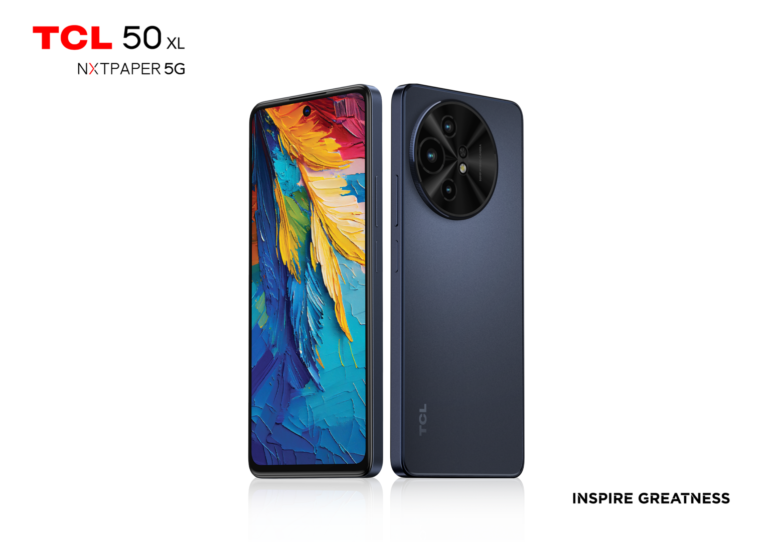
TCL has a surprise NXTPAPER technology. This gives displays a more paper-like experience with blue light reduction, a paper-like feel, and added clarity to the content you watch. The TCL 50 XE NXTPAPER 5G and the TCL 50 XL NXTPAPER 5G are the first phones for the American market that will use this technology. Users will have a much more comfortable time viewing these displays.
4G models
Next, we have two phones that do not offer 5G, so these will be the most cost-effective phones. These are the TCL 50 SE and the TCL 50 LE. These phones come with modest specs but a nice viewing experience nonetheless. The TCL 50 LE has a 6.6-inch 720p+ display with a 90Hz refresh rate. It comes with 4GB of RAM, 64GB of storage, and a 4,000mAh battery.
5G models
Rounding out the list, we have three 5G handsets (the NXTPAPER models are also 5G, but these next three have traditional displays). These are the TCL 50 G, TCL 50 XL 5G, and the TCL 50 XE 5G.
The most premium of these phones would be the TCL XL 5G. This phone has a 6.8-inch 1080p+ display with a fluid 120Hz refresh rate. It has a set of dual speakers that only enhance the media-watching experience, and they are powered up with DTS sound. The processor is backed up by an impressive 8GB of RAM. Keeping the lights on, there is a 5,010mAh battery.
These phones are all meant to bring you great experiences at affordable prices, so one of these phones might be in your pocket within the next couple of months.
Google has been working on robotics for a long time, but a breakthrough might be on the way soon via the DeepMind team. That’s because the recent advancements in artificial intelligence paired with current and next-generation robotics could be a groundbreaking combination. To prepare for robots that might be able to act based on advice from AI large language models (LLMs), Google created a “Robot Constitution.” In essence, these base-level guidelines are intended to prevent robots from going awry and potentially harming humans.
The Robot Constitution is based on Isaac Asimov’s Three Laws of Robotics, which were introduced in 1942. These laws are that robots “may not injure a human being,” must obey orders from humans as long as they do not violate the first law, and must protect their existence as long as doing so would not violate the first law. Essentially, protecting human life is of the utmost importance. Everything else, from following orders to protecting itself, is secondary for robots.
Google’s robot guidelines add some practical elements, as well. For example, the LLM instructing these robots will not suggest tasks involving humans, animals, sharp objects, or electrical appliances. Even with these laws, Google understands that they are not absolute. That’s why it has introduced AutoRT, a system that uses AI for additional safety. It’s a three-pronged system that uses visual processing data in a Visual Language Model (VLM), an LLM, and a robot control model (either RT-1 or RT-2). All of this data and AI-assisted processing creates more safety measures, like one that will instruct a robot to stop if the force on its joints exceeds a certain threshold.
The state of Google robot construction with AI technologies
Google’s robots are becoming more advanced, but there’s still a lot of work to be done. As the Robot Constitution dictates, there’s a lot that robots can’t do, such as tasks involving humans or machinery. There is also still a lot of oversight required for robots to complete certain tasks. Plus, these robots are currently prioritizing function over form, and don’t have flashy designs.
Google rolled out 53 AutoRT robots to four office buildings as part of more than 77,000 tests and had various levels of control. Some were controlled by humans. Others followed a specific script, and some were using the RT-2 model. Human operators also had a physical kill switch that would force stop a robot from continuing, if the need arose.
AI will become a massive part of robotics. Currently, a robot can use a VLM to observe its surroundings. In addition to LLM to figure out what logical task to complete, and an RT model to execute the task. This all happens autonomously. Without the need for human input. It’s gearing up to be a breakthrough, but there’s still a long way to go before we see AI droids all around.
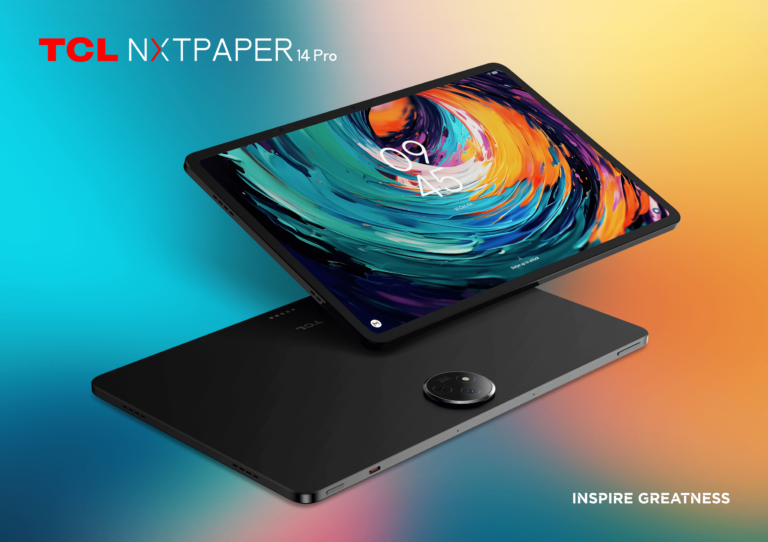
It’s CES 2024, and TCL is not holding any punches. After unveiling a handful of amazing phones during the trade show, the company gave us a taste of its upcoming tablets. The company unveiled the TCL NXTPAPER 14 Pro and the TCL Tab 10 NXTPAPER 5G.
Along with the tablets, TCL unveiled a whopping seven phones under its TCL 50 Series. Two of these phones are the first handsets to use TCL’s NXTPAPER technology in the States. There’s a lot of great stuff coming from the company, so you want to stay tuned for whatever TCL unveils.
TCL introduced its TCL NXTPAPER 14 Pro
This is going to be a pretty capable device. Starting off with the specs, the TCL NXTPAPER 14 Pro has a 14-inch 2.8k display. Since TCL is a TV maker, you can expect good quality from this panel. What’s most significant about this display is that it uses TCL’s NXTPAPER 3 technology. This is the next generation of the company’s proprietary technology that gives us devices a paper-like appearance. It prioritizes eye safety by utilizing CPL technology and DC dimming. It’s supposed to be just as safe as looking at a piece of paper rather than staring at a tablet screen.
Moving onto the internals, this tablet sports the MediaTek Dimensity 8020 SoC. That’s backed up by a hefty 12GB of RAM and 256GB of storage. As for the battery, this tablet has a massive 12,000mAh battery with 33W charging.
TCL Tab 10 NXTPAPER 5G
This device has a 10.4-inch 2K NXTPAPER display. As the name suggests, this tablet can use 5G. It’s lightweight, so you will be able to watch content on it for as long as you want without your hand getting tired. You can use it to watch content, do some light work, or read ebooks.
These devices will officially launch later this year, and they’re both coming to the United States. This is just a taste of the incredible technology that TCL has in store for us.
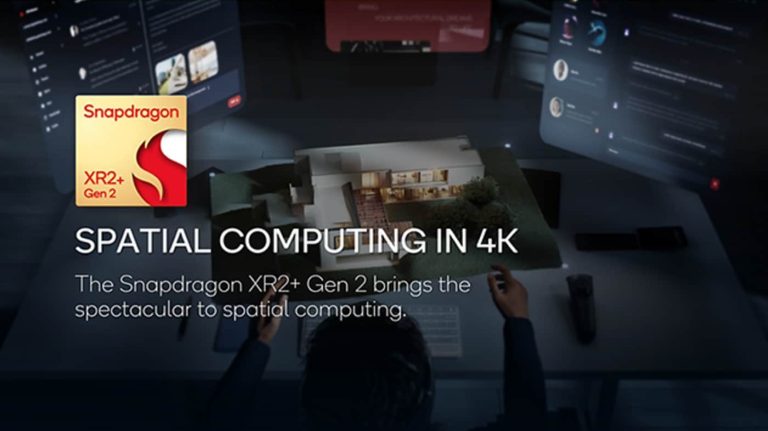
Qualcomm has revealed some insights about its Snapdragon XR2+ Gen 2 Platform which is built for high-end XR devices. It’s a single-chip architecture designed to elevate immersive experiences in Mixed Reality (MR) and Virtual Reality (VR). This new platform will deliver 4.3K resolution per eye at 90 frames per second or 3.7K per eye at 120fps.
It offers a 15% higher GPU frequency and a 20% higher CPU frequency. It supports 12 concurrent cameras, providing robust user’s movement tracking and navigation in both the physical and digital world.
Hugo Swart, Vice President and General Manager of XR at Qualcomm, expressed the platform’s potential to revolutionize XR productivity and entertainment. The Snapdragon XR2+ Gen 2 promises to deliver stunningly clear visuals. It makes the upcoming XR/MR devices ideal for diverse applications like room-scale screens, life-size overlays, and virtual desktops. This innovation aligns with Qualcomm’s commitment to powering top-notch XR devices, advancing the immersive future.
The Snapdragon XR2+ Gen 2 will support 12 or more concurrent cameras for improved tracking and navigation
Samsung, in collaboration with Qualcomm and Google, will leverage the Snapdragon XR2+ Gen 2. It will help create an unparalleled XR experience for Galaxy users.
Google‘s Vice President of AR, Shahram Izadi also showed excitement about the ongoing collaboration with Qualcomm Technologies and Samsung in shaping the future of immersive and spatial XR. Industry experts anticipate the capabilities of the Snapdragon XR2+ Gen 2 to unlock new possibilities for the Android ecosystem, enabling innovative XR experiences.
Additionally, Qualcomm Technologies revealed a new MR & VR reference design, featuring eye-tracking technology from Tobii and developed by Goertek. This reference design supports both 3K per eye (Snapdragon XR2 Gen 2) and 4K per eye (Snapdragon XR2+ Gen 2) configurations, offering OEMs a valuable tool to accelerate their time to market.
The Snapdragon XR2+ Gen 2 platform stands out as a premium option for higher-priced headsets. It emphasizes its capability for fully tetherless experiences. Qualcomm revealed partnerships with Immersed’s Visor, Samsung’s upcoming Google-powered headset, a new HTC Vive headset, a YVR headset in China, and an undisclosed fifth headset. Qualcomm positions the platform to compete with high-end offerings, including Apple’s Vision Pro, providing pixel-level precision and significantly improved spatial computing experiences.
The web extension, patented in the U.S. and U.K., is now available for pre-order in a limited, pre-sale event.
Lack of online data security globally
In today’s almost entirely digitised, cyber world, it’s imperative that private data and passwords remain secure and protected at all times. According to Business Insider (2022), Bitcoin investors are likely to lose up to $545 million in 2023, owing to various reasons like forgetting passwords to their wallets or wrongly recording their seed phrases. In most cases, safeguarding sensitive access credentials requires entrusting them to third-party databases. This has proven to be a highly unreliable strategy, with data servers being unavailable or becoming compromised more and more frequently. A new type of solution is needed to combat the ever-growing proliferation of unauthorised data breaches.
A new level of data cyber safety
Cyqur is an easy-to-install browser extension, geared towards developers, DeFi enthusiasts, NFT collectors, remote workers, artists and creators, digital natives, and anyone else who is reluctant to entrust third parties with their most sensitive credentials. The simple, yet powerful encryption and decryption web extension facilitates the storage and transmission of private data (passwords, seed phrases, etc.). The patented solution helps users achieve unparalleled peace of mind for their digital profiles.
What makes Cyqur different
By design, the Cyqur solution does not store the user data on his behalf either through third-party servers, or any other centralised means. Instead, it encrypts the user data and then fragments that encrypted data across a number of cloud storage locations chosen and controlled by the user. Because of the fragmentation and decentralisation of data storage in this manner, it is virtually impossible for all cloud storage locations to be compromised at the same time. This is a level of security that modern password managers and vaults can’t offer.
How Cyqur helps users achieve peace of mind
Secure storage: User access credentials are duplicated, fragmented, encrypted, and scattered across multiple cloud storage locations that the user alone 100% owns and controls, all the while ensuring your data fragments remain encrypted at rest. Cyqur does not have access to any of your data and it doesn’t scrape or share user browsing data.
Proprietary approach: Safeguards user data by using an immutable, automated, unique, independent, public blockchain proof of record for every access credential secured. User digital profile succession planning is ensured through Custodian of Last Resort.
Breach protection: In case of a breach, hackers only access incomplete and useless data, while you retain uninterrupted complete access to your user credentials that remain protected and safe.
Crypto wallet protection: Specifically designed to provide next-level peace of mind by securing all access credentials to your valuable wallets, including your previous seed words.
Uninterrupted access and credential sharing: Users retain complete and uninterrupted access to their most important data, even offline.
Limited opportunity to purchase at a discounted rate
Users who purchase Cyqur at this time will receive a 70% early-bird discount (from €48 to €15) for the first year. Users can get their annual license and start securing their cyber data here.
About Cyqur
Cyqur was brought to market by Binarii Labs with the goal of offering a new way of securing data. Designed with the utmost care and attention to detail, it provides unprecedented security in online data storage, which isn’t reliant on third-party solutions. Whether it’s seed phrases, passwords, NFTs, pins, private blockchain keys, usernames, exchange accounts, hot & cold wallets, or any other access credentials that need to remain safe, Cyqur offers its users this high level of protection.
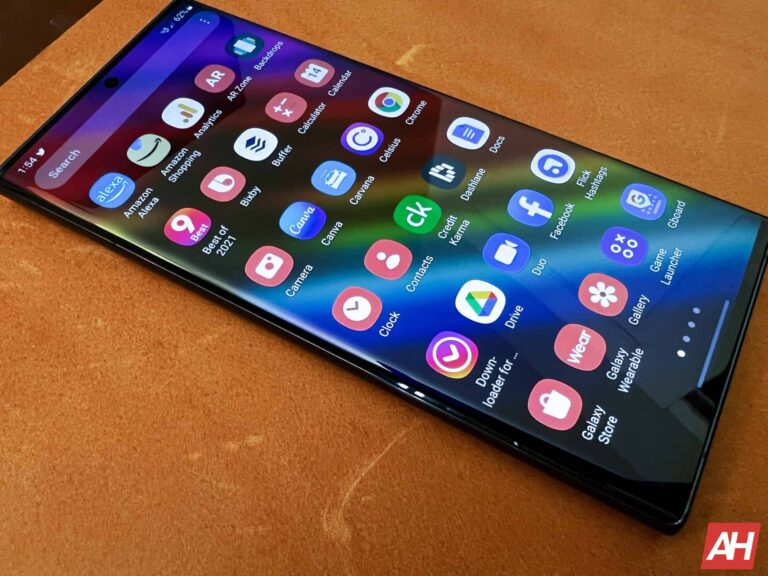
Samsung has released its January 2024 security update for the Galaxy S22 series. The first security patch of the new year brings a whopping 80 vulnerability fixes. The company has already updated its recent foldable phones to the new SMR (Security Maintenance Release). More devices will pick up the January SMR in the coming days.
The January 2024 update is available for the Galaxy S22 series
Last week, Samsung released its latest security patch for the Galaxy Z Fold 4, Galaxy Z Flip 4, Galaxy Z Fold 5, and Galaxy Z Flip 5. The former duo picked up the update first, followed by the new models. As the update reaches the four foldables in more markets, the Korean firm has started pushing the new SMR to the Galaxy S22, Galaxy S22+, and Galaxy S22 Ultra.
As of this writing, the January security update for the 2022 Galaxy flagships appears to be limited to the Snapdragon-powered units in several countries across Asia and Africa. The updated firmware build number for the phones is S908EXXS7DWL8. The Exynos versions should receive the new SMR shortly, though the build number may vary. The update is also yet to reach the US and Canada, where the devices shipped with the Snapdragon chip.
For the Snapdragon version of the Galaxy S22 Ultra, the new update comes with an OTA (over the air) file size of 388MB. The official release note from Samsung states that the update protects the phones with improved security. That is the only entry in the changelog, which means there aren’t any additional changes. The phones recently received the Android 14-based One UI 6.0 update with several new features.
While there may be no additional goodies in tow, the latest update for the Galaxy S22 series brings plenty of security fixes. Samsung’s January 2024 SMR contains fixes for as many as 80 vulnerabilities. There’s only one confirmed critical fix this month but the vast majority of the remaining patches concern “high-severity” Android OS issues. Five fixes are Galaxy-specific, meaning that they don’t apply to Android products from other brands.
Samsung will push these security fixes to more Galaxy devices
The January SMR will soon reach more Galaxy devices, including the Galaxy S23 series. The update for the Galaxy S22 series will also be available globally over the next few days. Samsung is gearing up to launch the Galaxy S24 next week. The new flagships will debut One UI 6.1, which should reach older models a few weeks later. We will let you know when the rollout begins.