Oops! Black Basta ransomware flubs encryption

0
[ad_1]

Researchers at SRLabs have made a decryption tool available for Black Basta ransomware, allowing some victims of the group to decrypt files without paying a ransom. The decryptor works for victims whose files were encrypted between November 2022 and December 2023.

The decryptor, called Black Basta Buster, exploits a flaw in the encryption algorithm used in older versions of the Black Basta group’s ransomware. The bug was fixed by the group in mid-December, probably as a result of the discovery, so it won’t work on the most recent attacks.

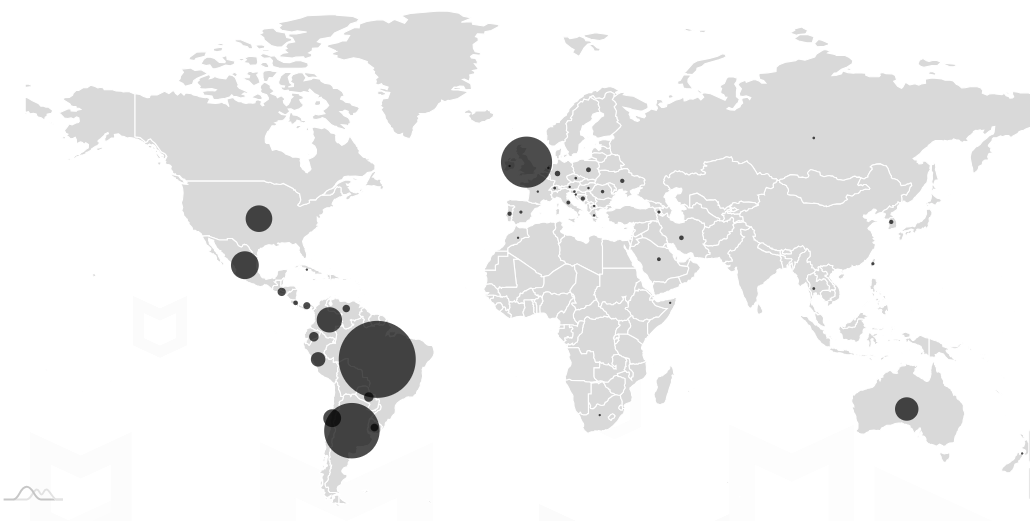
During the period the decryptor works for, the gang was responsible for 153 known attacks (attacks where the victim did not pay a ransom and appeared on Black Basta’s dark web data leak site).

BlackBasta first appeared in April 2022 and is a regular entry in the top 5 most active ransomware groups in our monthly ransomware reviews. Among others, the ransomware has been used to attack organizations like Canada’s Yellow Pages and German arms producer Rheinmetall.

Known Black Basta attacks, December 2022 - November 2023
Known Black Basta attacks, December 2022 – November 2023

The decryptor comes with a few restrictions due to the nature of the flaw it exploits.

On its Github page for Black Basta Buster, SRLabs explains:

“Files below the size of 5000 bytes cannot be recovered. For files between 5000 bytes and 1GB in size, full recovery is possible. For files larger than 1GB, the first 5000 bytes will be lost but the remainder can be recovered.”

So, how do you recover your files?

The decryptor only works on one file at a time and your best chances are on virtual machine disks. According to SRLabs, virtualised disk images “have a high chance of being recovered, because the actual partitions and their filesystems tend to start later. So the ransomware destroyed the MBR or GPT partition table, but tools such as “testdisk” can often recover or re-generate those.”

Files can be recovered if the plaintext of 64 encrypted bytes is known. The easiest way to establish this is to find a sequence of zeroes in the file. It may be possible to decrypt large files that don’t contain large enough chunks of zero-bytes, but you will need an unencrypted version of the target file. In many cases this will defeat the purpose of decryption, but there may be are edge cases where you have a previous version of the target file that meets the requirements, but does not hold the information you want to decrypt.

On the Github pages you will find several python scripts to help you with the recovery of the encrypted files. Interested parties can find instructions on how to use them in the readme file. This is not an easy process and certainly not something we would recommend using for every encrypted file. Each victim will need to weigh up how useful it is to them.

BleepingComputer reports that some digital forensics companies may have been aware of the flaw and have been assisting clients for months in recovering important files, similar to the way the FBI offered decryption keys to Hive victims after penetrating its computer networks. They may have done the same for ALPHV victims, but this is unconfirmed.

Obviously, it’s better to avoid malicious encryption if you can, so here are some pointers.

How to avoid ransomware

  • Block common forms of entry. Create a plan for patching vulnerabilities in internet-facing systems quickly; and disable or harden remote access like RDP and VPNs.
  • Prevent intrusions. Stop threats early before they can even infiltrate or infect your endpoints. Use endpoint security software that can prevent exploits and malware used to deliver ransomware.
  • Detect intrusions. Make it harder for intruders to operate inside your organization by segmenting networks and assigning access rights prudently. Use EDR or MDR to detect unusual activity before an attack occurs.
  • Stop malicious encryption. Deploy Endpoint Detection and Response software like ThreatDown EDR that uses multiple different detection techniques to identify ransomware, and ransomware rollback to restore damaged system files.
  • Create offsite, offline backups. Keep backups offsite and offline, beyond the reach of attackers. Test them regularly to make sure you can restore essential business functions swiftly.
  • Don’t get attacked twice. Once you’ve isolated the outbreak and stopped the first attack, you must remove every trace of the attackers, their malware, their tools, and their methods of entry, to avoid being attacked again.

Our business solutions remove all remnants of ransomware and prevent you from getting reinfected. Want to learn more about how we can help protect your business? Get a free trial below.


[ad_2]
Source link

The Honor Magic 6 Pro joins the 200MP camera club

0
[ad_1]

Smartphones have been coming out with progressively more pixel-packed camera sensors, and they’re capped at 200MP for the time being. A few phones have come out with cameras using the Samsung ISOCELL HP3 sensor so far. The next phone to sport this 200MP sensor is the Honor Magic 6 Pro.

Honor has been really making a name for itself as a premium smartphone brand over the past couple of years. It’s no longer the sub-brand of Huawei selling primarily cheap phones. It made headlines by introducing a foldable phone with a hinge only consisting of four parts. Now, it’s coming out with other premium phones that look like viable iPhone and Samsung Galaxy alternatives.

The Magic 6 Pro could come with a 200MP camera, but not all of them

If you’re planning on picking up the base version of this phone, you shouldn’t expect to see 200MP photos. While the sensor could be coming to this phone, it might be confined to the Porsche edition of the Honor Magic 6 Pro. So, it could only be for a limited edition of the phone. Usually, the main cameras use the higher-resolution sensors, but that’s not the case with this phone it seems. According to the report, this phone could use this camera sensor for the telephoto camera rather than the main one.

The telephoto camera may have a 3.5x or 5x optical zoom range. However, the added resolution could mean that it’s able to zoom in further digitally without too much picture degradation. On the leaked images of the Magic 6 Pro, we also see “100x zoom”, so it looks like the company wants to take on Samsung’s zooming capabilities.

As for the other cameras, we don’t know their resolutions, but the report says that the main camera will use a 1-inch OV50K sensor from OmniVision. The ultrawide may use an OV50M sensor.

As for the other details, it looks like this phone will have some robust specs. Rumors point to this phone using the Snapdragon 8 Gen 3. This could be backed up by 12GB of RAM and 256GB/512GB/1TB of internal storage. Keeping the lights on, there could be a large 5,600mAh battery.

As for the display, this phone could have a large OLED panel with a 120Hz refresh rate and pretty small bezels. One of the main things you’ll notice about the display is the pill-shaped cutout that resembles the Dynamic Island on newer iPhones.

According to reports, Honor plans on officially unveiling this phone between January 10th and January 11th.


[ad_2]
Source link

Navigating the Complex World of Capital Markets with Technology

0
[ad_1]

The world of capital markets has changed dramatically over the past few years. Today, most transactions are conducted electronically and rely on sophisticated technology. In addition, blockchain-based applications are being used to facilitate transactions in complex financial instruments such as derivatives and bonds. These changes mean that investors must have a solid understanding of how various types of securities are traded, as well as the role that technology plays in this process.

Evolution of Capital Markets and Technology

As you can see, the role of technology in capital markets has evolved. In the beginning, it was simply a tool for transmitting information about financial assets and transactions. Nowadays, it plays an integral role in helping traders make decisions about what to buy or sell and even how much to pay for them.

In 2020, as regulations become more stringent on how your firm trades with clients and counterparties, you’ll need access to sophisticated risk management tools that can help mitigate some of these risks before they become problems–and that’s where technology comes in handy again!

Key Challenges in Capital Markets

Capital markets represent a complex system with numerous challenges. Within this intricate landscape, capital markets firms grapple with various issues that demand attention and innovative solutions:

  • High-frequency trading (HFT): Regulators and policymakers find it challenging to comprehend HFT due to its operation at incredibly high speeds. This speed makes it difficult for them to identify potentially suspicious activities that might be occurring within the system.
  • Market data quality: Capital markets firms need to address the crucial issue of accurate market data. Inaccurate data can have far-reaching consequences, affecting everything from market regulation to the effectiveness of algorithmic trading strategies. Ensuring the reliability and precision of market data is an ongoing concern for these entities.
  • Data security: With the rise of cyber threats, financial institutions face an increasing need for robust data security. Protecting sensitive information from hackers and cybercriminals has become a top priority for organizations operating in capital markets.
  • Algorithmic trading and human traders: Algorithmic trading has transformed the way investors place orders. However, human traders still play a significant role, as they often outperform computers in decision-making processes. This is particularly evident when determining whether to execute a sale immediately or wait for potentially higher prices.

The Role of Technology in Capital Market Operations

Technology is a key component of capital market operations, and it’s used to manage risk, trade and settle transactions, automate processes and data management. Capital markets use a variety of technologies including cloud computing and SaaS for market, credit, and operational risk management; cloud computing and SaaS for trading & settlement; cloud computing & SaaS for data management & analytics; as well as customer relationship management systems (CRM).

Cloud computing has been adopted by many financial institutions because it offers flexibility in how they can scale up or down their infrastructure based on business needs while reducing costs associated with building out their own data centres or leasing space in third-party facilities like colocation centers or wholesale data center providers (WDCPs).

Algorithmic Trading and High-Frequency Trading

Algorithmic trading is a form of high-frequency trading that uses algorithms to make trading decisions. The role of technology in capital markets has always been important, but it has become increasingly so over time. In particular, algorithmic and high-frequency trading have played an integral part in the evolution of financial markets since they were first introduced during the 1980s.

Algorithmic and high-frequency traders use technology to improve their ability to predict stock movements based on historical data sets and real-time market information such as news headlines or social media posts about companies whose stocks are traded on an exchange (publicly traded).

Algorithmic traders may also use machine learning techniques such as artificial neural networks (ANN) or reinforcement learning (RL) algorithms for predicting future prices based on historical data sets which allows them to trade more efficiently than human traders could ever hope for without any form of modern technology at all!

Blockchain and Distributed Ledger Technology (DLT)

Blockchain, the technology behind cryptocurrencies like Bitcoin and Ethereum, is a distributed ledger technology (DLT). While it’s often compared to other types of DLTs such as Hyperledger and Corda, blockchain has its unique characteristics that make it stand out from the crowd.

Blockchain was first conceptualized by Satoshi Nakamoto in 2008 and implemented as part of Bitcoin’s underlying infrastructure in 2009. Since then, there have been several iterations on this original concept: Ethereum introduced smart contracts; Ripple uses its native digital token XRP; Litecoin aims to improve upon existing blockchains by creating blocks every 2 minutes rather than every 10 minutes like Bitcoin does but none have yet dethroned these three giants in terms of market share or popularity among developers worldwide!

Artificial Intelligence (AI) in Market Analysis

Artificial Intelligence (AI) is a computer program that can learn from experience and make decisions based on the data it collects. AI has been used to identify patterns in data and predict future events, optimize processes, make decisions, and even detect fraud.

How AI can be applied to capital markets include:

  • Predicting market trends – As more companies adopt machine learning models for risk management purposes or run simulations using these models before trading begins each day (or even overnight), they’re able to identify potential trends before they start happening. This allows traders at these firms to react accordingly so as not only to avoid losses but also to profit from them once they occur. It also gives them an edge over their competitors who aren’t using this technology yet!
  • Monitoring compliance regulations – Several financial institutions have used AI systems for regulatory compliance purposes since 2016; however, many firms still find themselves struggling with outdated technology solutions due to their complexity or lack thereof when dealing with constantly changing regulations across multiple jurisdictions worldwide.

The capital markets are a complex ecosystem, and the role of technology is only becoming more important. As we’ve seen in this article, there are many ways that technology can help improve the efficiency of your trading operations and make better decisions about how to invest your capital. It will be interesting to see how these trends develop over time!

  1. How Cross-Chain DEXes Democratize the Crypto Market?
  2. Investing in Ethereum Blockchain-based JasmyCoin: Guide
  3. Understanding Software Supply Chain and How to Secure It
  4. Digital Transformation in Financial Industry – Role of Fintech
  5. 15 Best SaaS SEO Experts That Will Help You Dominate Online

[ad_2]
Source link

The affordable Pixel 7a gets the Most Durable Smartphone award for 2023

0
[ad_1]

We have entered 2024 and it’s time for the 2023 smartphone awards. We got some self-repair-friendly ones, some good-looking, some with intricate hardware, and some with structural design flaws, that lead to catastrophic damage in JerryRigEverything’s durability tests and may face the same in real-life accidents as well. So let’s take a look at some of the notable contenders in the different categories from last year.

The Pixel 8 Pro and the Pixel 7a came after the modular Fairphone 5 in terms of smartphone repairability for 2023

Starting with repairability, the Google Pixel 8 Pro emerges as one of the best repairable phones in 2023. Google has worked with iFixit to make the repair parts available for self-repair. As the host of JerryRigEverything Zach Nelson mentions, the screen repair for the Pixel 8 Pro still requires a heat gun. But since it’s a flagship from 2023 and needs ingress protection, the use of glue is justifiable. Other than that, Google has also promised seven years of software and hardware support for the Pixel 8 series devices.

However, there’s another contender that wins the most repairable smartphone award for 2023 from the creator. It is the Fairphone 5 with removable parts. Fairphone directly avails the replacement parts as well.

But 2023 didn’t only offer some eco-friendly or consumer-friendly devices, but it also some that still motivate you to get a new one. The least repairable smartphone award for 2023 from JerryRigEverything goes to the ROG 7 Ultimate. Notably, this phone also gets another honor of the most innovative smartphone of 2023, thanks to its motorized flap and copper fins inside for cooling.

The folding phones are seen as comparatively fragile. But interestingly, some of them performed really well in the durability testing. The Galaxy Z Flip 5 successfully survived all the tortures from the outside and remained functional after being completely torn down and reassembled.

2023 offered foldable devices that defy the perception of fragility

Unfortunately, the Google Pixel Fold didn’t survive the durability test. Google achieved the IPX8 rating for this foldable by separately sealing both halves with the hinge in the middle. It leads to a construction where the halves don’t meet each other on the back while unfolding. When bent from the back, they don’t support each other and it caused the failure in the durability test.

For those who are waiting for the latest Pro iPhones, they won the smartphone award 2023 from JerryRigEverything for their best-looking inside, with visible electromagnets around the main sensor for stabilization.

With all said, Zach honors the affordable contender from the Pixel 7 series, the Google Pixel 7a as the most durable smartphone from 2023. The reason is the plastic back which won’t break and the repair parts are available from iFixit, same as the Pixel 8 series devices.


[ad_2]
Source link

Visible is $20 per month for the next 24 months in this incredible New Year Deal

0
[ad_1]

Visible is offering a pretty incredible deal for the new year, where you can get service for $20 per month for 24 months – as in 2024. This is for the base-Visible plan, which is normally $25 per month. So you’re saving $120 here over two years, making it a really good idea to sign up.

If you’re looking for the Visible+ plan, that is also on sale for $35/month for the next 24 months. You can use the promo code VISIBLE24 for either plan.

With the Visible plan, you’re getting unlimited talk, text, and data, as well as a mobile hotspot (though it is limited to just 5Mbps). And Visible gives you unlimited talk and text to Mexico and Canada.

Over on the Visible+ plan, you’ll get unlimited premium data on Verizon’s 5G Ultra Wideband network. And 50GB of premium data on Verizon’s 5G and 4G LTE networks. Basically, you’ll get unlimited premium data on Verizon’s fastest networks and only 50GB on the slower networks. On top of that, you’ll get calls to 30+ countries and over 200 countries for texting. Otherwise, you get all of the same benefits as the base plan.

This offer runs through January 31.

Why you should sign up for Visible?

Visible is actually one of the best MVNOs out there right now. It’s owned by Verizon and thus runs on Verizon’s network. It is also the cheapest option for using Verizon’s network, with prices normally starting at $25. Visible also offers smartwatch connectivity for only $5 per month, which is cheaper than most other carriers and MVNOs.

What makes Visible by far the best is how simple everything is. It’s super simple to switch and port your number, and it only uses auto-pay, so you’ll never have to worry about missing your payment.

Finally, Visible does sell phones and watches, which you can finance with Affirm. Visible does allow you to upgrade after you’ve paid off half of your device too. Verizon does the same thing, actually, even though they don’t use Affirm for financing.

Sign up for Visible


[ad_2]
Source link

Chrome on Android’s New Tab Page gets a Material You makeover: thicker bars and rounded cards

0
[ad_1]
Chrome on Android is getting a fresh face, with its New Tab Page (NTP) adopting the Material You design language. While not a major overhaul, the tweaks bring a touch of consistency to Google’s first-party apps and enhance the overall browsing experience.

As documented by 9to5Google, the first thing you’ll notice is the thicker search bar, mirroring the one in Gmail and Google Chat. This design element seems to be Google’s new standard for Android apps, promoting a unified visual language. The search bar also boasts bolder hint text and more distinct microphone and Lens icons, making them easier to find.

Gone are the days of the flat grid for your most visited sites. Now, they reside in a rounded card, visually separating them from the rest of the page. The Discover/Following switcher also gets a similar rounded treatment, while the Discover feed itself remains largely unchanged.

Old NTP vs New NTP

These changes may seem minor, but they pack a punch in terms of visual coherence. The NTP, a frequently accessed part of the browser, now feels more polished and in sync with other Google apps. Plus, the increased padding doesn’t impact content visibility, ensuring the focus remains on your browsing needs.

The Material You makeover started rolling out with version 119 and is now picking up pace with version 120. If you’re eager to get your hands on it, and you feel comfortable tinkering with feature flags, you can enable this new look by enabling chrome://flags/#enable-surface-polish to experience the 4×2 grid of favicons. You also get additional options within the flag to enable a carousel showcasing 12 frequently visited pages. Additionally, if you’re a fan of the old search bar, chrome://flags/#query-tiles-ntp lets you bring back the previous search queries.

Feature flag for Chrome’s surface polish with all the additional options

This redesign marks a subtle but significant step for Google in unifying its Android app aesthetic. The New Tab Page, now adorned with Material You touches, feels more polished and cohesive, while retaining its core functionality. So, next time you open a new tab in Chrome, be sure to appreciate the subtle changes that bring a touch of Material You magic to your browsing experience.

[ad_2]
Source link

DNA data deserves better, with Suzanne Bernstein: Lock and Code S05E01

0
[ad_1]

This week on the Lock and Code podcast…

Hackers want to know everything about you: Your credit card number, your ID and passport info, and now, your DNA.

On October 1 2023, on a hacking website called BreachForums, a group of cybercriminals claimed that they had stolen—and would soon sell—individual profiles for users of the genetic testing company 23andMe.

23andMe offers direct-to-consumer genetic testing kits that provide customers with different types of information, including potential indicators of health risks along with reports that detail a person’s heritage, their DNA’s geographical footprint, and, if they opt in, a service to connect with relatives who have also used 23andMe’s DNA testing service.

The data that 23andMe and similar companies collect is often seen as some of the most sensitive, personal information that exists about people today, as it can expose health risks, family connections, and medical diagnoses. This type of data has also been used to exonerate the wrongfully accused and to finally apprehend long-hidden fugitives.

In 2018, deputies from the Sacramento County Sherriff’s department arrested a serial killer known as the Golden State Killer, after investigators took DNA left at decades-old crime scenes and compared it to a then-growing database of genetic information, finding the Golden State Killer’s relatives, and then zeroing in from there.

And while the story of the Golden State Killer involves the use of genetic data to solve a crime, what happens when genetic data is part of a crime? What law enforcement agency, if any, gets involved? What rights do consumers have? And how likely is it that consumer complaints will get heard?

For customers of 23andMe, those are particularly relevant questions. After an internal investigation from the genetic testing company, it was revealed that 6.9 million customers were impacted by the October breach.

What do they do?

Today on the Lock and Code podcast with host David Ruiz, we speak with Suzanne Bernstein, a law fellow at Electronic Privacy Information Center (EPIC) to understand the value of genetic data, the risks of its exposure, and the unfortunate reality that consumers face in having to protect themselves while also trusting private corporations to secure their most sensitive data.

“We live our lives online and there’s certain risks that are unavoidable or that are manageable relative to the benefit that a consumer might get from it,” Bernstein said.

“Ultimately, while it’s not the consumer’s responsibility, an informed consumer can make the best choices about what kind of risks to take online.”

Tune in today to listen to the full conversation.

Show notes and credits:

Intro Music: “Spellbound” by Kevin MacLeod (incompetech.com)
Licensed under Creative Commons: By Attribution 4.0 License
http://creativecommons.org/licenses/by/4.0/
Outro Music: “Good God” by Wowa (unminus.com)


We don’t just report on threats—we remove them

Cybersecurity risks should never spread beyond a headline. Keep threats off your devices by downloading Malwarebytes today.


[ad_2]
Source link

Galaxy Z Fold 4, Flip 4 pick Samsung’s January 2024 update

0
[ad_1]

It’s the first business day of 2024 and Samsung has already released a new security patch. The company is pushing the January 2024 security update to the Galaxy Z Fold 4 and Galaxy Z Flip 4. More Galaxy devices will join the party over the next few weeks.

Galaxy Z Fold 4 and Flip 4 receive the January security update

As of this writing, Samsung is rolling out the January security patch to the Galaxy Z Fold 4 and Galaxy Z Flip 4 in Europe. The new firmware build numbers for the two devices are F936BXXS4EWL5 and F721BXXS4EWL5, respectively. The rollout will soon reach other markets, including the US.

The official changelog supplied by Samsung confirms that this update is all about the latest security fixes. “The device is protected with improved security,” the only entry in the changelog for both foldables reads. The Galaxy Z Fold 4 and Galaxy Z Flip 4 recently received the Android 14-based One UI 6.0 update with several new features and functional improvements. The next feature update should be One UI 6.1.

Details about the vulnerabilities patched this month are not available yet. However, as usual, the new security update should contain several dozen Android OS patches from Google. A handful of those are expected to be critical security fixes. Samsung will bundle a few Galaxy-exclusive patches with the Android fixes. The latter group of patches doesn’t apply to Android products from other brands.

The January 2024 SMR (Security Maintenance Release), as Samsung calls its security updates, will gradually reach other eligible devices. The Korean firm pushes monthly security updates to its flagships and premium mid-range models for a few years after launch. They are then demoted to quarterly updates. Budget models start at quarterly updates and drop to bi-annual releases (two updates in a year) later.

One UI 6.1 will bring new features to these Samsung foldables

Samsung will introduce One UI 6.1 with the Galaxy S24 series later this month—expected to debut on January 17. The new One UI version, which is still based on Android 14, brings several new AI features. From AI wallpapers and lockscreen effects to AI-powered camera enhancements and editing tools, there is a lot to look forward to.

Following the Galaxy S24 launch, Samsung will update its older flagships to One UI 6.1. The Galaxy Z Fold 4 and Galaxy Z Flip 4 should also receive the update. However, we don’t expect all new AI features to trickle down to older models. The company may share more details following the unveiling of the new flagships. We will keep you posted accordingly.


[ad_2]
Source link

DODOcase reveals new MagSafe iPhone 15 Cases

0
[ad_1]

DODOcase has just announced its new lineup of cases for the iPhone 15, 15 Plus, 15 Pro and 15 Pro Max. The company says that these will “seamlessly blend traditional partisanship with innovative design, DODOcase offers premium-quality cases for various Apple devices.”

First up is a new Colorway Shockproof iPhone case with MagSafe. With this case you can really express yourself with bold colors in Italian pebble leather. It’s a shockproof case, that has a newly redesigned polymer tray to maintain a sleek minimalistic aesthetic.

Additionally, DODOcase has a new Rugged leather shockproof iPhone case with MagSafe. This is a leather case that will safeguard your iPhone 15 with a bumper that can absorb shock and protects against accidental drops.

DODOcase also has a number of new wallet cases

Aside from the MagSafe-compatible cases for the iPhone 15, DODOcase also has a number of different wallet cases available too, which includes a new Colorway shockproof iPhone Card case, which is for those that love bold colors. It uses Italian Pebble Leather to carry your cards in style.

Like its MagSafe counterpart, the Rugged Leather Shockproof iPhone case is also great for those who want a natural leather look. With a bumper around the case to protect it and absorb shock from drops.

DODOcase also offers a new Leather Phone Wallet, which is an all-in-one case for credit cards, ID, cash, business cards, and receipts for your iPhone 15. This was designed to fit comfortably in your pocket without adding any bulk.

There is also a new Durable Wallet Phone sleeve, which is a pretty simple case, it’s a sleeve that features external leather pockets for cards, cash and more. There’s also the Custom iPhone Case. You can customize your case by choosing the materials and colors, all the way down to the elastic closure. You can upgrade to add credit card slots and turn your phone into a case with a wallet.

These cases are available now on the DODOcase website. They start at $45, making them pretty competitive.


[ad_2]
Source link

T-Mobile provides early glimpse into new app for deal-loving customers

0
[ad_1]

T-Mobile started the year on a high note by taking concrete measures to safeguard customers against spam and inappropriate messages. The company is now going to improve the customer experience in another meaningful way by replacing the T-Mobile Tuesdays app with an app with expanded functionality.

Even though T-Mobilescrews up every once in a while, it more than makes up for that by rolling out new deals and perks periodically. You don’t have to wait for it to announce a deal for free stuff and rewards though. Just like for everything else, there’s an app for those feeling peckish for a deal, assuming you are a T-Mobile user. It’s called T-Mobile Tuesdays and it’s the carrier’s little way of thanking you for being a customer.

As the app’s name suggests, all you are expected to do is open the app every Tuesday and see if a deal or a prize is waiting to be claimed. Even Metro by T-Mobile and Sprint customers can download the app. T-Mobile Home Internet and Small Business Internet users are also eligible.

T-Mobile is shutting down the T-Mobile Tuesdays app and introducing in its place a new app called T Life, reports Android Authority.

T-Mobile announced this change via the Tuesdays app. As a user, you don’t have to worry about downloading or deleting anything, as the Tuesdays app will morph into the T Life app, as long as your app is set to auto-update. The company hasn’t exactly revealed when this will happen.

Does that mean the Tuesday rewards are going away? Absolutely not. They will be a part of the new app, which will also allow you to access more benefits and provide you with “more ways to connect with what’s important.”

Released in 2016, the Tuesdays app serves more than its intended purpose at this point, which could be why it’s being replaced with a more sophisticated app. Besides, T-Mobile surely wouldn’t mind if you checked its apps on days that are not Tuesdays, and the new name will surely help with that.

The image included with the announcement gives us a little glimpse into the T Life app. It looks like a versatile app with different sections, including Global, which shows the location of a SyncUP Kids Watch, and a category which displays the status of a T-Mobile 5G Home Internet system.


[ad_2]
Source link