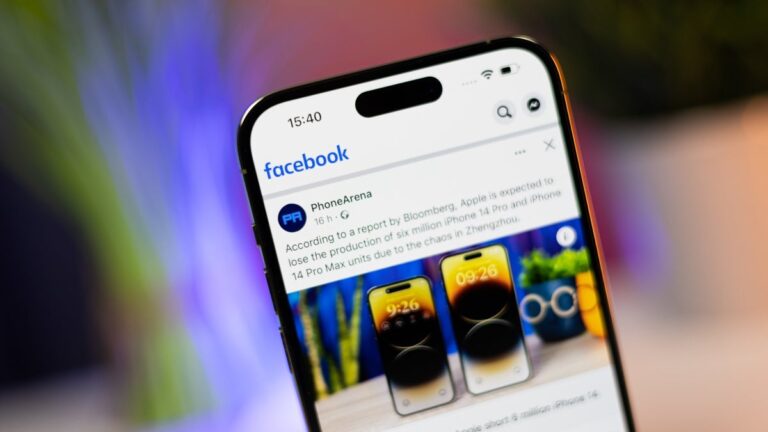
There’s a new feature on Facebook mobile that Meta is rolling out – Link History – and you may not see it on your handset right now, but at a point, you certainly will.
This feature is being introduced globally over time and may not be available in your location. Link history is available on the Facebook app for Android and iPhone.
That’s what the Meta Help Center’s information page says. Also, it states that this Link History can be turned off or on.
As The Verge summarizes, if you toggle link history to be on, Meta will be able to show you a list of links you’ve tapped and viewed in the in-app browser over the past 30 days.
Gizmodo’s report goes into much more detail and states that Link History is turned on by default, and the data is used for targeted ads. Lawmakers across the world are forging new strict tech regulations by the day and Meta is searching for new ways ‘to preserve its data harvesting empire’.
With the Link History feature you’ll “never lose a link again,” Facebook says in a pop-up encouraging users to consent to the new tracking method. The company mentions that “When you allow link history, we may use your information to improve your ads across Meta technologies”.
Are Messenger chats affected?
Meta Help Center’s information page says – no, they are not: “Links visited in chats on Messenger are not saved to link history”.
You can choose to turn link history on or off at any time. When link history is on, any links you’ve tapped inside of Facebook and visited in Facebook’s Mobile Browser will be saved here for 30 days.
“Keep in mind that when link history is on, we may use link history information from Facebook’s Mobile Browser to improve your ads across Meta technologies. Learn more about how we use information in our Privacy Policy”, reads another message on the page.
Here’s how to turn Link History on or off per Meta’s steps:
Tap any link inside the Facebook app to open Facebook’s Mobile Browser.
Tap the 3-dot icon in the bottom right, then tap Go to Settings.
To turn link history on, tap the toggle next to Allow link history, then tap Allow to confirm.
To turn link history off, tap the toggle next to Allow link history, then tap Don’t allow to confirm.
Note: When you turn Link History off, we will immediately clear your link history, and you will no longer be able to see any links you’ve visited. Additionally, we won’t save your link history or use it to improve your ads across Meta technologies. When you turn Link History off, it may take Meta up to 90 days to complete the deletion process.
Samsung‘s retail partners can’t seem to wait for the Galaxy S24 launch. Last week, one of its partners in Colombia prematurely listed the unannounced phones on its website. US retail giant Walmart has now made the same blunder. It accidentally published the product page for the Galaxy S24+, revealing key specs. The page has since been taken down but a cached version is still available.
Walmart spills the beans on Samsung’s Galaxy S24+
There is no dearth of Galaxy S24 leaks on the internet. We already know a lot about the devices, including the design, specs, and even alleged prices for some markets. Walmart’s premature listing for the Plus model confirmed its rumored specs. As expected, the device will feature a 6.7-inch display with a 3120×1440 pixels resolution. The chipset isn’t mentioned but we know that the US version will be powered by an overclocked Snapdragon 8 Gen 3.
Samsung will offer 12GB RAM as standard, with 256GB and 512GB storage options. The Galaxy S24+ has a 12MP selfie camera and a 50MP primary rear camera. These are the same cameras found on last year’s Galaxy S23+. The 10MP 3x zoom camera and 12MP ultrawide lens on the back may also remain unchanged. The company will also limit the phone to 45W wired charging but increase the battery capacity to 4,900mAh.
The listing also revealed the new AI features that Samsung will introduce with the upcoming flagship lineup. These include live translation of audio calls and an AI-powered photo editing tool. The Galaxy S24 lineup will offer AI features across various apps and functions such as cameras, battery health monitoring, wallpapers, and the lockscreen. The phones are more about software enhancements than hardware upgrades.
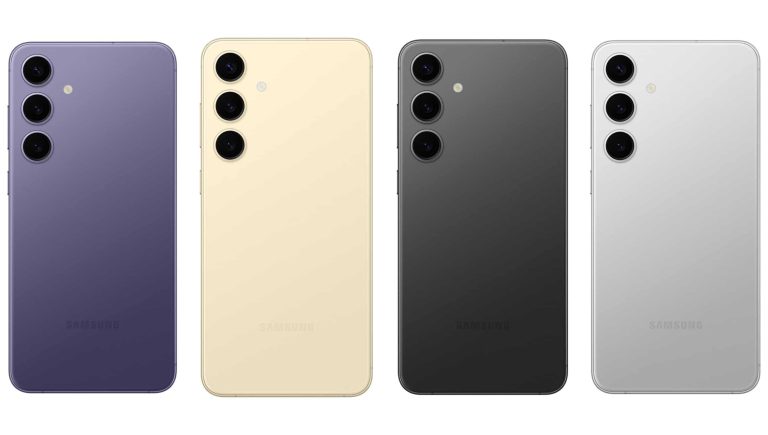
Walmart listed the Onyx Black color variant of the Galaxy S24+. The handset will also come in Marble Gray, Cobalt Violet, and Amber Yellow colors. There may be a few Samsung-exclusive colorways too, only available from the Korean firm’s official website. The handset measures 0.30 × 2.99 × 6.24 inches in dimension and weighs 6.95 oz (197 grams). It is slightly shorter than the 2023 model while still packing a bigger battery.
The official launch is just around the corner
The American retail giant published its Galaxy S24+ listing about three weeks too early. Samsung is gearing up to officially launch the device, alongside the Galaxy S24 and Galaxy S24 Ultra, on January 17. Pre-orders are expected to open immediately after launch, so Walmart’s now-deleted web page should be back up later this month. We will let you know when Samsung officially announces the Galaxy S24 launch date.
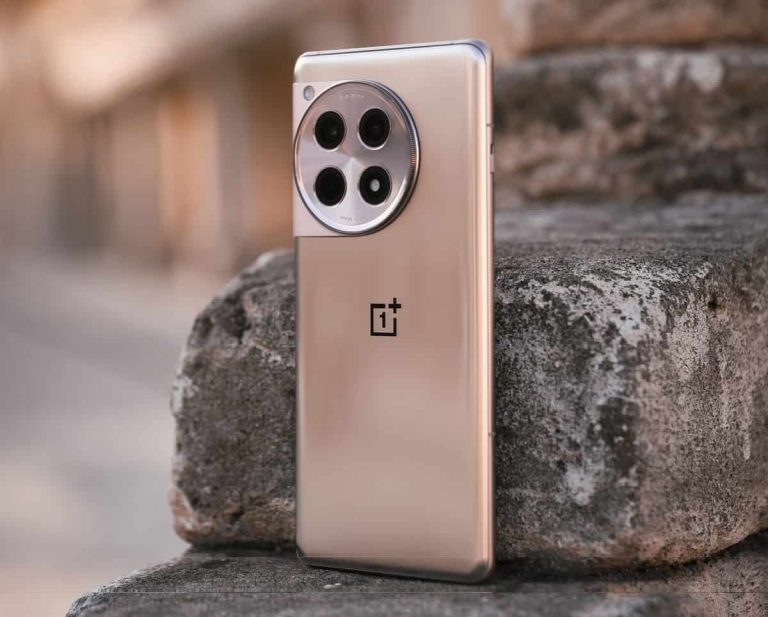
The OnePlus 12R is not a secret anymore, not even close. We’ve seen a ton of info thus far, ranging from its specs, to lifestyle images of the device. In the latest leak, real-life images of the OnePlus 12R appeared, showing us the device in three colors.
The OnePlus 12R poses for the camera in three colors
These images have been shared by Abhishek Yadav, and they’re included below this paragraph. You can see the phone’s black, blue, and bronze colors. All of those color variants will have more fancy names, though, of course.
It’s not exactly a secret that the OnePlus 12R will look a lot like the OnePlus 12. That’s something we expected to happen, and it will. The black variant of the phone seems to have something other than glass on the back, but that’s probably not the case. It’s most likely just a pattern underneath the glass.
The device will include three cameras on the back, all of which will be a part of a circular camera island. The alert slider will be included, and the phone will be made out of metal and glass.
The OnePlus Ace 3 will be identical to the OnePlus 12R
The phone in the provided images is actually the OnePlus Ace 3, which is a Chinese variant of the OnePlus 12R. Those two devices are completely identical, though, only their names are different (and software).
The OnePlus Ace 3 will launch in China on January 4. The OnePlus 12R will become official on January 23, alongside the global variant of the OnePlus 12. This is the first time we’ll see a OnePlus R series phone leave India. It will become available in both Europe and the US.
The OnePlus 12R will be fueled by the Snapdragon 8 Gen 2 processor. It will include LPDDR5X RAM and UFS 4.0 flash storage, and will ship with Android 14 out of the box. OxygenOS will come pre-installed too.
The device will feature 100W charging, and three rear cameras
A 5,500mAh battery is also expected, along with 100W wired charging support. A 50-megapixel main camera (Sony’s IMX890 sensor), will be backed by an 8-megapixel ultrawide camera, and a 2-megapixel macro shooter.
Apple launched two compact smartphones back in September. Samsung currently has only one flagship-grade compact device. We’ve already compared that phone with the ‘Pro’ iPhone 15, and it’s now time to do that with the vanilla version. In this article, we’ll compare the Samsung Galaxy S23 vs Apple iPhone 15. These two phones do have somewhat similar price tags too, which is yet another reason to see how they compare.
We’ll first list their specifications, as we usually do in comparisons. Following that, we’ll compare their designs, displays, performance, battery life, cameras, and audio output. These two devices are not that similar in any way, except for their size, and price tags. So… that should make for an interesting comparison, that’s for sure. Let’s get going, shall we?
Specs
Samsung Galaxy S23 vs Apple iPhone 15, respectively
– Screen size: 6.1-inch Dynamic AMOLED 2X display (120Hz, HDR10+, 1,750 nits) 6.1-inch Super Retina XDR display (60Hz, HDR, 2,000 nits) – Display resolution: 2340 x 1080 2556 x 1179 – SoC: Qualcomm Snapdragon 8 Gen 2 Apple A16 Bionic – RAM: 8GB (LPDDR5X) 6GB – Storage: 128GB (UFS 3.1)/256GB/512GB (UFS 4.0) 128GB/256GB/512GB – Rear cameras: 50MP (f/1.8 aperture, Dual Pixel PDAF, OIS), 12MP (ultrawide, f/2.2 aperture, 120-degree FoV), 10MP (telephoto, f/2.4 aperture, 3x optical zoom) 48MP (f/1.6 aperture, sensor-shift OIS), 12MP (ultrawide, f/2.4 aperture) – Front cameras: 12MP (f/2.2 aperture) 12MP (f/1.9 aperture) + TrueDepth – Battery: 3,900mAh 3,349mAh – Charging: 25W wired, 15W wireless, 4.5W reverse wireless (charger not included) 20W wired, 15W wireless (charger not included) – Dimensions: 146.3 x 70.9 x 7.6mm 147.6 x 71.6 x 7.8mm – Weight: 168 grams 171 grams – Connectivity: 5G, LTE, NFC, Wi-Fi, USB Type-C, Bluetooth 5.3 – Security: In-display fingerprint scanner (ultrasonic) Advanced facial scanning – OS: Android 13 with One UI iOS 17 – Price: $799+ (often discounted to $699) $799+ – Buy: Amazon Apple
Samsung Galaxy S23 vs Apple iPhone 15: Design
If you place these two devices side by side, you won’t see that many differences. They do have flat displays, and they’re both made out of metal and glass, but that’s where their similarities end. The Galaxy S23 has a centered display camera hole, while the iPhone 15 includes a pill-shaped hole, which is also centered. Their bezels sure are extremely thin, all around their displays.
All the physical keys are placed on the right-hand side of the Galaxy S23. That’s not the case with the iPhone 15, they’re balanced between the phone’s left and right sides. If we flip the two phones over, we’ll see even more differences. The Galaxy S23 has three cameras, which are vertically aligned. They sit in the top-left corner of the phone’s back, and each of the cameras is its own camera island.
The iPhone 15 includes two cameras in the top-left corner, and they’re part of the same camera island. The sides of the iPhone 15 are flat, but they do have curves towards the very edges. That makes the device far more comfortable to hold than its predecessor. The Galaxy S23 doesn’t exactly have flat sides, as they’re slightly curved all around. Both smartphones are IP68 certified for water and dust resistance.
The Galaxy S23 is slightly shorter than the iPhone 15, and also slightly narrower. The two devices are almost the same in terms of thickness and weight. Both of them feel really nice in the hand, and both are very comfortable to use.
Samsung Galaxy S23 vs Apple iPhone 15: Display
You will find a 6.1-inch display on both of these smartphones. The thing is, those two panels are very different. The Galaxy S23 includes a Dynamic AMOLED 2X panel with a resolution of 2340 x 1080. That display is flat, and it supports a 120Hz refresh rate. HDR10+ content is also supported here, and the panel goes up to 1,750 nits of brightness at its peak. The display aspect ratio is 19.5:9, while the panel is protected by the Gorilla Glass Victus 2.
The Apple iPhone 15, on the flip side, features a 6.1-inch Super Retina XDR OLED display. That is also a flat display, and it supports HDR10 content. Dolby Vision is also supported here. This panel goes up to 2,000 nits at its peak. That display has a resolution of 2556 x 1179, but it’s stuck at 60Hz in terms of refresh rate. The display aspect ratio is 19.5:9, so the same as on the Galaxy S23. The panel is protected by the Ceramic Shield Glass.
The Apple iPhone 15 does have a sharper display, though the difference is not that big, so that’s not something you’ll notice. The two panels also get equally bright during usage, but the Galaxy S23’s panel has one major advantage… its refresh rate. That’s something the vast majority of you will easily notice during usage. Both panels are quite vivid, have great viewing angles, and do offer deep blacks. The touch response on both sides is also quite good.
Samsung Galaxy S23 vs Apple iPhone 15: Performance
Samsung’s Galaxy S23 is fueled by the Snapdragon 8 Gen 2 processor. Samsung also included LPDDR5X RAM here, and 8GB of UFS 4.0 flash storage in all variants except for the 128GB model. That variant offers UFS 3.1 flash storage. The iPhone 15, on the other hand, is fueled by the Apple A16 Bionic chip. Apple also included 6GB of RAM here, and NVMe flash storage.
Both of these devices offer great performance, actually. That goes for pretty much all situations, as you’d expect. They are great when it comes to opening apps, browsing, consuming multimedia, multitasking, and so on. Yes, even when it comes to gaming both of these devices can hold their own. The chips that the two companies used are very powerful still, even though they’re no longer the most powerful chips out there… at the time if writing this comparison.
Both phones do get quite warm during gaming. That is especially true for longer gaming sessions with graphically-intense titles. Still, there are no major complaints that we can highlight when it comes to performance.
Samsung Galaxy S23 vs Apple iPhone 15: Battery
Samsung’s Galaxy S23 handset includes a 3,900mAh battery. The iPhone 15, on the other hand, has a 3,349mAh battery. Do note that Android and iOS have different battery consumption, so don’t pay much attention to this difference. The question is, do they offer good battery life? Well, yes, but neither phone is outstanding in that regard. Also, the iPhone 15 fares better.
We managed to get around 5.5-6 hours of screen-on-time on the Galaxy S23. The iPhone 15, on the flip side, managed to get us over the 7-hour screen-on-time level. In our experience, the iPhone 15 does offer better battery life. That doesn’t necessarily mean you’ll get the same results, though, of course. You will use different apps on your phones and will have different usage, with different signal strengths. The point is, that neither phone offers outstanding battery life, but they’re both okay.
In terms of charging, the Galaxy S23 supports 25W wired, 15W wireless, and 4.5W reverse wireless charging. The Apple iPhone 15 offers support for 20W wired, 15W wireless (MagSafe and Qi2), 7.5W wireless (Qi), and 4.5W reverse wired charging. They’re on a similar playing field in terms of charging. That even goes for chargers, as neither device offers a charger in the retail box.
Samsung Galaxy S23 vs Apple iPhone 15: Cameras
A 50-megapixel main camera sits on the back of the Galaxy S23. A 12-megapixel ultrawide camera (120-degree FoV) is also included, as is a 10-megapixel telephoto camera (3x optical zoom). The iPhone 15 has a 48-megapixel main camera, and a 12-megapixel ultrawide unit (120-degree FoV). Apple’s handset doesn’t have a telephoto camera at all. The most important thing is that both of these smartphones do offer good camera performance.
The pictures coming from the two devices are quite different, though. The iPhone 15 tries to keep things closer to real life, while the same cannot be said for the Galaxy S23. Samsung’s handset still tunes up the saturation in images, for better or worse. They both provide plenty of detail in daytime conditions. In low light, the iPhone 15 keeps things a bit darker, but both devices do a great job.
Ultrawide cameras on both smartphones do a commendable job, that’s for sure. They are a step below the main shooters, however. The Galaxy S23 wins the telephoto battle easily, though, as the iPhone 15 doesn’t even have a telephoto camera. On the flip side, the iPhone 15 easily wins the video comparison, as it’s better in basically every way when it comes to video recording.
Audio
You will find two stereo speakers on both of these smartphones. Those speakers offer good audio quality, while the Galaxy S23’s is technically slightly louder. That’s not something you’ll notice, however.
What neither of these two phones have is a 3.5mm headphone jack. They do include Type-C ports, so you can use that to connect your headphones via a wired. They both also support Bluetooth 5.3 connectivity, for wireless audio.
Microsoft and its deal to buy Activision Blizzard didn’t go over well with the UK’s CMA at first. And it was that block of the acquisition that caused Microsoft to go back to the drawing board and restructure the deal to meet the CMA’s standards. Initially, Microsoft’s President Brad Smith and other employees from both Microsoft and Activision Blizzard weren’t too pleased with the CMA’s decision.
Smith noted that the CMA blocking the deal before the restructuring was a “dark day” for the company within the UK. But fast forward to now, Smith has changed his tune a bit. The CMA has now approved the acquisition and Microsoft has been free to go ahead with its plans. Following this more favorable result has gotten Smith to rethink his stance on the UK regulator.
Smith recently spoke with BBC Radio 4 in an interview and said the CMA was “tough but fair.” However, although Smith has a slightly different outlook on the whole thing now, he isn’t changing his stance entirely. Speaking to BBC Radio 4 he said “I wouldn’t step back necessarily from all of the concerns I raised when I talked way back in April, but I might choose slightly different words to make my point.”
Microsoft was forced to change its Activision deal to appease the CMA
Realistically, the need to restructure the deal was about the consumer. At least in the CMA’s eyes. When it was initially blocked, the CMA’s concern was over cloud gaming. Approving the deal could have meant things being worse off for the consumer. Because Microsoft would have had the ability to lock Activision Blizzard games to its own Xbox Game Pass service. Microsoft responded by selling those rights to Ubisoft. It also made deals with NVIDIA to bring Xbox and Activision games to GeForce NOW.
And just this past month we saw the first of those Activision titles make an appearance with Call of Duty. Even before any titles made their way to Game Pass. These kinds of changes gave the CMA the confidence it needed to approve the acquisition. However, the regulator states Microsoft didn’t go about things the right way. Saying that Microsoft dragged out proceedings and “wasted time and money” in the process.
2023 has been a mixed year for the smartphone industry. Overall sales are estimated to decline year-on-year (YoY) globally from 2022. On the other hand, the premium segment—wholesale prices $600 and above—saw record sales last year. Apple remained the undisputed king of premium smartphones.
Sales of premium smartphones estimated to grow six percent in 2023
According to market research firm Counterpoint, the global sales of premium smartphones may have hit a new record in 2023. More detailed and accurate numbers aren’t expected until later this month but early estimates suggest the premium segment saw a shipment growth of six percent last year. It will account for almost one-fourth of all sales—24 percent, to be precise.
If these estimates turn out to be accurate, we are staring at a 3x volume growth of premium smartphones in the market over the past seven years. In 2016, premium models only made up six percent of all global sales. This share grew to 15 percent in 2019 and 21 percent in 2022. While there has been steady growth, the growth in 2023 is against the overall industry trend.
Smartphone sales have declined all through last year, with shipments hitting a decade-low in the third quarter. Industry experts estimate the full-year shipments to be substantially lower than in 2022. So, a six percent growth for the premium segment is noteworthy. In 2020, when the whole industry stagnated due to the pandemic, the premium market remained flat too.
Since we are talking about phones that cost more than $600 in wholesale, the revenue share of the premium segment may reach 60 percent in 2023. This is particularly because the sales in the ultra-premium segment ($1,000 and above) are at an all-time high. India is the fastest-growing premium market globally, though sales have increased worldwide.
“There has been a shift in consumer buying patterns in the smartphone market. Considering the importance a smartphone holds, consumers are willing to spend more to get a high-quality device that they can use for a longer period,” senior Counterpoint analyst Varun Mishra said. “These devices are increasingly becoming more affordable due to promotion seasons and financing options.”
Apple suffered a minor decline but is still the undisputed king
Apple, which only makes premium phones bar for a few SE models once in a while, remains the undisputed king of this segment. It is estimated to capture a whopping 71 percent of the market in 2023. That’s a minor decline from 75 percent in the year before, but nothing to be worried about. Apple’s rivals are nowhere close to it. Samsung follows distantly with a share of 17 percent, up from 16 percent in 2022.
Samsung aims to improve its market share in the premium segment this year. It has brought the Galaxy S24 launch forward by a couple of weeks—rumored to launch on January 17—to compete against the iPhone 15 lineup. The Korean firm has set an internal target of increasing its flagship sales by double digits in 2024. Time will tell whether it can further close the gap with Apple over the next 12 months.
Last month we told you that Apple had settled a suit over its Family Sharing feature for $25 million. At the time, we gave you the information that we had about the settlement, and how much claimants might receive for their share of the settlement. Per 9to5Mac, we now have some updated information that we would like to pass along to you including the amount of money you might get back, and how to file to receive your share of the settlement.
For those who have forgotten, the filing said, “As a result of Apple’s deceptive and misleading practices, Plaintiffs and the Class Members were induced to purchase subscription-based Apps for which Apple receives hefty fees, believing that those Apps could be shared with up to six family members—when in fact they were available only to the single user who set up the subscription.” In other words, until 2019 Apple made it seem that Family Sharing was supported by some apps that didn’t support it.
If you were misled by Apple’s Family Sharing feature, you might qualify for a cut of Apple’s $25 million settlement
The lawsuit, known as Walter Peters v. Apple, alleged that “Apple has made millions of dollars in fraudulent sales to individuals who Apple told were receiving up to six copies of an App when they were receiving only one.” The settlement of $25 million has already been reduced by $10 million, or 40%, to pay attorney’s fees. The remaining $15 million will be split among those who file a legitimate claim. The maximum payout will be $50 per person.
To qualify to receive a cut of the settlement, you must be a U.S. resident. You also must have been enrolled in Apple Family Sharing with at least one other person between June 21, 2015, and January 30, 2019. And lastly, you must have purchased a subscription to a third-party app via the App Store between the aforementioned dates.
To submit a claim, click on this link which will take you to the Walter Peters v. Apple website, and choose whether you will be submitting your claim online or by mail. Follow the directions on the page. Many eligible iPhone users have already received a letter that includes a Payment ID and PIN on the top of the letter. Those numbers can be used to submit your claim online. If you did not receive such a letter, you can print out the form from the website and mail in your claim.
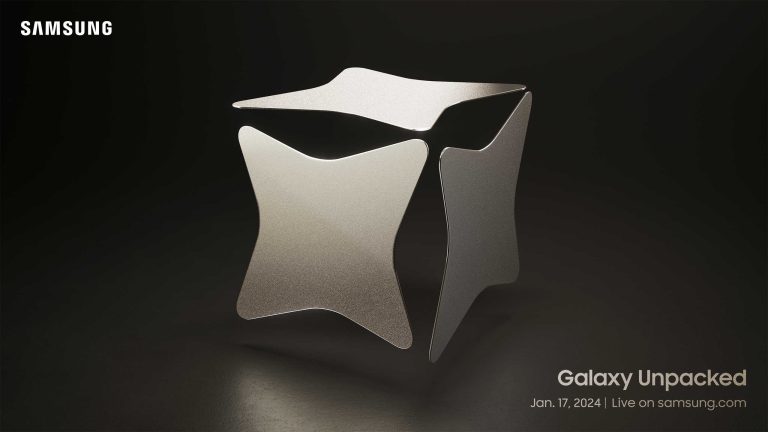
It’s official. Samsung has announced that it will be debuting the Galaxy S24 series on January 17, 2024, in San Jose. Samsung has said that “at the event, Samsung will unveil the newest additions to the Galaxy mobile device portfolio.” So, I’m not quite coming out and saying it’s the Galaxy S24 series, but it is pretty obvious that is the case here.
The event is taking place in San Jose, California, this time around, instead of Seoul. This means it’ll be a bit later this time around, with it starting at 10 AM PT/1 PM ET.
The Galaxy S24 series has been leaking like crazy for the past few weeks, so we pretty much knew that the launch was right around the corner. It’s interesting that it is happening the week after CES instead of during when hundreds of thousands of press and media will already be in town. But Samsung doesn’t like to share attention with other companies, hence the Unpacked event on January 17.
As usual, the event will be live-streamed on YouTube and virtually every other social platform. So even if you aren’t attending the event in San Jose, you’ll still be able to see it.
Samsung Galaxy Reserve is back with a $50 credit
It’s become a pretty popular thing for Samsung to let you “reserve your next Galaxy” before the device is even announced. And that is happening once again this year. As of right now, you can head to the Galaxy Reserve website and fill out the form to get your $50 Reserve Credit. Samsung only asks for your name and email, as this is a no-commitment offer from Samsung. Meaning that just because you got the Reserve Credit, doesn’t mean you have to buy a single thing.
Samsung is also offering up additional savings for eligible Students, Military, First Responders, and corporate partner employees that will be part of the Samsung Offer program. We won’t know more about these discounts until the Galaxy S24 series is announced on January 17.
Samsung is announcing plenty of new stuff at CES this year and among those products is a slate of new Odyssey OLED gaming monitors with Glare-Free technology. Designed to enhance immersion, Samsung says these are its first OLED gaming screens to feature the OLED Glare-Free tech. Imagine you’re playing a game and you’re getting really into it. Then right in the middle of a really good part, the sun beams into your room through the window and bounces off the display.
If you’ve experienced this sort of situation before, then you know. It’s enough to nearly ruin the moment. Samsung wants to cut down on that with these new monitors. The company says the Glare-Free screens are built to minimize ambient reflections and daylight. So you can enjoy more of your gaming experiences with fewer distractions and get more immersed in what you’re playing.
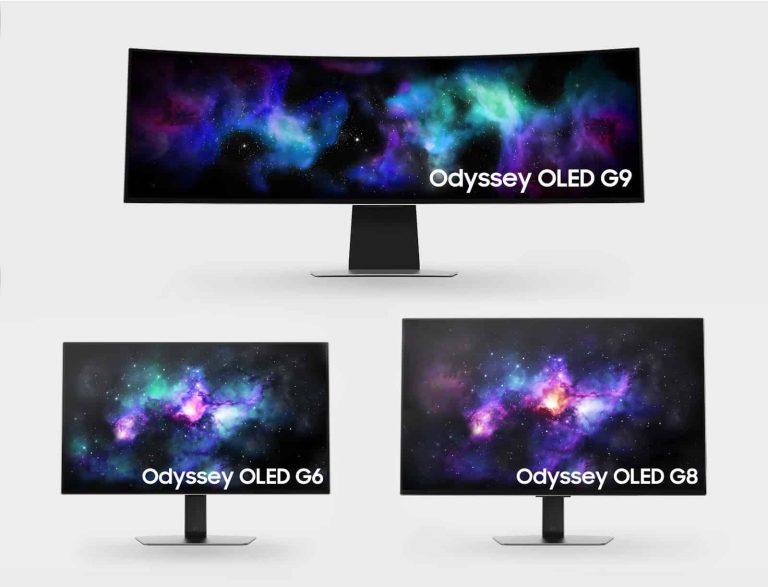
Included in this lineup are three refreshed monitors. The Odyssey OLED G6, the Odyssey OLED G8, and the Odyssey OLED G9. All of these feature a super slim metal design for a sleek look and support for AMD FreeSync Premium Pro.
All three Odyssey OLED monitors with OLED Glare-Free tech will launch this year
Samsung has officially confirmed that all three monitors will hit the market in 2024. However, the company has not yet announced pricing or availability on any of them. Like previous iterations, each of the monitors will have different screen sizes and slightly different features.
The Odyssey OLED G9 will stick to its 49-inch curved ultrawide display. Meanwhile, both the Odyssey OLED G8 and Odyssey OLED G6 will be flat panels. The Odyssey OLED G8 will be a 32-inch display and the Odyssey OLED G6 will be a 27-inch display. The G6 model will also be the monitor with the fastest refresh rate, set at 360Hz. It’s a significant bump up from the 240Hz that the older G6 models have. And if you play more competitive online games, this will probably be the monitor you want to go for.
Both the other two models will come with a 240Hz refresh rate. In terms of resolution, the Odyssey OLED G9 will be Dual QHD, the Odyssey OLED G8 will be 4K UHD, and the Odyssey OLED G6 will be QHD. All three monitors will also feature the Core+ light ring on the back. This is yet another feature to make gaming more immersive because the Core+ lighting mimics the colors of what’s on-screen. If you’re wondering what that might look like, it’s not too different from the way the lighting of the Nanoleaf 4D works. Although, it won’t be as prominent.
Samsung Gaming Hub will be present on at least two of the monitors
Samsung Gaming Hub has been one of the more exciting features to come to the company’s displays over the last couple of years. Because it cuts out the need for a PC or a console for gaming. You simply need to have the monitor hooked up to the internet and launch the gaming hub to access apps like Xbox Game Pass or GeForce NOW. Then you can stream games with a connected controller. Samsung confirms that Gaming Hub will be coming to at least two of the refreshed monitors. The Odyssey OLED G8 and Odyssey OLED G9.
It doesn’t mention whether or not the Odyssey OLED G6 will have it, but chances are it will come with this feature too since most Samsung monitors do have it these days.
Huawei lays out its vision for 2024 (in Chinese), reflecting on the challenges faced and outlining strategic priorities for the future. Despite returning to normal operations after years of hard work, Huawei acknowledges the challenges, including geopolitical uncertainties and the impact of technical sanctions. The company emphasizes its belief in digitalization, intelligence, and low-carbonization as certain development trends. Huawei aims to embrace opportunities and invest resources strategically to achieve significant milestones in various business units.
Huawei‘s 2023 achievements set the stage for its vision in 2024. The company anticipates achieving sales revenue exceeding 700 billion yuan, with notable stability in the ICT infrastructure business, better-than-expected performance in the terminal business, and significant growth in digital energy and cloud segments.
Smart car solutions are also expected to witness enhanced competitiveness. The acknowledgment of the collective effort from customers, industry partners, hardworking employees, and silent contributions from family members underscores the collaborative spirit that propelled Huawei forward during challenging times.
The vision for 2024 revolves around hardware and cloud as the focus
The resolution sheds light on the efforts made by Huawei’s front-line marketing and service employees. It ensured the stability and security of customer networks. Examples include overcoming typhoon-induced damages in China, delivering communication network projects within tight deadlines in Indonesia and Burkina Faso, and addressing emergency network congestion in Latin America.
Moving forward, Huawei’s vision for 2024 revolves around value creation, with each business unit assigned specific responsibilities. The ICT infrastructure business aims to support digital transformation with its comprehensive capabilities, while operator services focus on network traffic, business innovation, and network evolution.
The terminal business remains committed to creating exceptional products and building the Hongmeng ecosystem, providing consumers with an ultimate experience. Rotating Chairman Hu Houkun not only expects Huawei Cloud to become a base for the firm’s digitalization but also a trustworthy digital foundation for various industries.
Quality management is portrayed as Huawei’s lifeline. It accompanies a commitment to ensuring the security and stability of networks and platforms through end-to-end quality management. Huawei concludes by emphasizing the need for Huawei’s cadres to keep pace with the times, stay strategic, and actively contribute to the company’s growth in key areas and critical periods. Overall, Huawei’s vision for 2024 reflects resilience, innovation, and a commitment to navigating challenges.