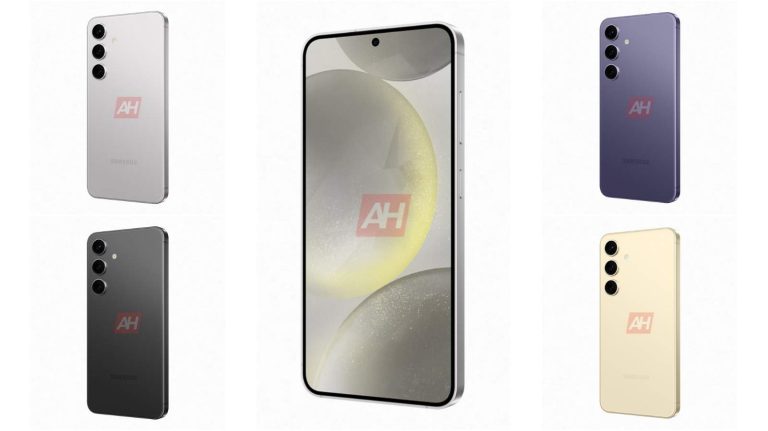
With less than a month before the rumored Galaxy S24 launch, anticipation and excitement among Samsung’s fans and tech enthusiasts are reaching a fever pitch. To add to the excitement, we bring exclusive official renders of the base Galaxy S24 in all four rumored colors. The renders give you a close look at the phone from various angles, detailing its design ahead of launch.
Samsung Galaxy S24 exclusive official renders
Samsung is rumored to launch the Galaxy S24 in four colors globally: Onyx Black, Marble Gray, Cobalt Violet, and Amber Yellow. We have exclusive official renders of the phone in all of these colors. Shared with us by a trusted, confidential source, the renders show the handset from the front, back, and sides, letting you get a detailed look at its design. We are also expecting Blue, Green, and Orange colors exclusive to Samsung’s official website.
The Galaxy S24 has rounded corners and a flat front. The back panel is flat, too, but with a chamfered edge. Samsung has also flattened the power and volume buttons, both of which sit on the right — standard Samsung stuff, you know. The frame is completely flat and has antenna lines, confirming a metallic body.
Rumors say Samsung will stick to its Armor Aluminum material for the smaller two Galaxy S24 models. The Galaxy S24 Ultra may get a titanium frame. On the front, the new Samsung flagship has symmetrical display bezels and a centered punch-hole cutout for the selfie camera. The Korean firm has opted for the same design language across the lineup, including the Ultra.
While the Galaxy S23 Ultra has a curved display, the upcoming Ultra has a flat panel with symmetrical bezels. The change makes for a design consistency. Apart from this, the Galaxy S24 series doesn’t see major design changes over the Galaxy S23. The rear camera array, which Samsung hasn’t changed on any Galaxy phone this year, remains unchanged in the upcoming flagship lineup.
We have three camera rings individually protruding out of the back panel in a vertical array. The LED flash unit sits next to the camera column, positioned such that it sits between the top two cameras. The Plus model features the same design, while the Ultra looks slightly different thanks to a fourth camera and a laser autofocus sensor sandwiching the flash unit.
Samsung Galaxy S24 official renders in Onyx Black:
Galaxy S24 official renders in Cobalt Violet:
Galaxy S24 official renders in Marble Gray:
Galaxy S24 official renders in Amber Yellow:
Samsung is readying two different processor variants of the phone
This year, Samsung shipped the Galaxy S23 series with an overclocked version of Qualcomm’s Snapdragon 8 Gen 2 processor globally. Everyone appreciated the company for finally moving away from its in-house Exynos chipsets, which have had their fair share of power and performance issues in recent years. However, the Korean firm is returning to Exynos next year.
The Galaxy S24 will feature the Exynos 2400 in some markets, including Europe. In the US, Samsung still plans to ship the phone with an overclocked Snapdragon 8 Gen 3. It’s the same story for the Plus model. Meanwhile, the Galaxy S24 Ultra is expected to feature the Qualcomm processor globally. Hopefully, Samsung has fixed its Exynos woes, or it has to be ready to face a public backlash.
The company may get a stick from prospective Galaxy S24 buyers for one more reason. While it is upgrading the Plus model to 12GB RAM as standard, the base model will seemingly come with just 8GB of RAM. There are rumors that the phone may have a 12GB RAM variant in some regions, but we don’t have any evidence supporting those claims. The Ultra isn’t getting a RAM upgrade either, staying at 12GB of memory.
The base storage option of the Galaxy S24 may irk a few fans, too. Samsung is offering 128GB base storage on the phone, with a 256GB option. It is unclear whether the 128GB variant has a UFS 3.1 storage solution or UFS 4.0. The Galaxy S23’s 128GB variant has UFS 3.1 because Samsung didn’t make UFS 4.0 chips with 128GB storage capacity. The other two Galaxy S24 models start at 256GB storage.
A display upgrade is on the cards
Samsung will equip the Galaxy S24 with a 6.2-inch AMOLED display. It is an LTPO OLED panel with a 48-120Hz variable refresh rate and a full HD+ (2340 x 1080 pixels) resolution. The company has reserved the WQHD+ display for the other two models. However, the new phones will have a peak brightness of a whopping 2,500 nits, or maybe even more. That’s a massive brightness boost over the Galaxy S23’s 1,750 nits of peak luminance.
This isn’t the only display upgrade, though. The Galaxy S24 series also jumps to the M13 OLED material. Samsung used M12 OLED displays on the Galaxy Z Fold 4, Galaxy Z Flip 4, Galaxy S23, Galaxy Z Fold 5, and Galaxy Z Flip 5. The newer display tech allows for improved power efficiency, luminance, and color accuracy. It makes the display assembly thinner, too.
Samsung arguably makes the best smartphone displays, so you can rest assured that the Galaxy S24’s screen won’t leave a lot to be desired. You will get bright and vibrant colors with great outdoor legibility and viewing angles. The new Galaxy flagships will be ideal for content consumption of the highest quality. The Ultra model even adds S Pen support for enhanced multitasking and more.
Camera hardware may remain unchanged
Cameras have always been one of the strengths of Samsung’s S-series flagships. The Galaxy S23 series offers a solid all-round camera performance. If leaks are anything to go by, the company is keeping this winning formula largely unchanged next year. The Galaxy S24 isn’t expected to bring newer camera sensors. We might get the same 50MP primary shooter, 10MP ultrawide lens, 10MP 3x optical zoom camera, and 12MP selfie camera.
The Plus model will feature the same camera hardware. The Galaxy S24 Ultra, on the other hand, has a 200MP main camera and a second zoom camera—a 50MP periscope lens with 10x or 5x optical zoom. All three models will let you capture 8K videos at 30fps (frames per second) with support for stereo sound audio recording and HDR10+. You can record 1080p videos at 960fps.
Despite largely unchanged camera hardware, the new Samsung flagships may capture better photos and videos than their respective predecessors thanks to improved software processing and AI integration. Samsung will ship the Galaxy S24 with Android 14-based One UI 6.1 software. It brings new AI features for improved photography. Among other things, the new phones are said to enhance low-light photos.
They will use AI to identify various objects in a scene and optimize the scene by adding more details. The phones may enhance colors, tone, and dynamic range to improve the overall quality of the photo. Samsung may also use AI to improve the camera performance in other ways, such as more accurate edge detection, de-noising dark scenes, and filtering out noise in video sound.
A bigger battery but the same charging speed
For the past few years, Samsung has offered a maximum charging speed of 45W on its phones. The Galaxy S24 series doesn’t go beyond that. Well, only the Plus and Ultra models reach that speed. The base Galaxy S24 charges at just 25W. It may not sound fast in today’s world when smartphone charging speeds are topping a whopping 200W. However, it should still charge the phone fully in just over an hour.
As far as the battery capacity is concerned, Samsung is adding 100mAh more juice to the Galaxy S24, taking its total capacity to 4,000mAh. The Plus model may get a 4,900mAh battery, while the Ultra has a 5,000mAh unit. All three models will offer 15W wireless charging. You also get reverse wireless charging that allows you to charge your earbuds or watch on the back of the phone in urgent situations.
No Wi-Fi 7 for the Galaxy S24 but satellite connectivity could be there
The Wi-Fi 7 standard is all set to go official early next year. However, Samsung isn’t offering the new wireless tech on the Galaxy S24 or Galaxy S24+. Only the Galaxy S24 Ultra has Wi-Fi 7. The other two models only get Wi-Fi 6E, the same as the Galaxy S23. This is a bit of a disappointing decision from the company. Wi-Fi 7 devices will be all around us in a few years, so the Galaxy S24 will then feel outdated.
Thankfully, Samsung seems to be offering satellite connectivity on all three Galaxy S24 models. When you are out of a cellular network connection, you can use built-in satellite connectivity to send short text messages. The feature will come in handy when you are lost and can’t connect to a cellular network. You can reach out to emergency services via satellite. The rescue request will include your location so you can be tracked by rescuers.
Other miscellaneous Galaxy S24 specs include an ultrasonic under-display fingerprint scanner, Samsung DeX, Samsung Wireless DeX, Ultra Wideband (UWB), AKG-tuned stereo speakers, Bluetooth 5.3, IP68 dust and water resistance (up to 1.5m for 30 minutes), and Android 14-based One UI 6.1 software. Leaks have already revealed many AI features that One UI 6.1 will bring to Galaxy devices, including the Galaxy S24.
Galaxy S24 has AI built into the system software
Samsung has built artificial intelligence all over the Galaxy S24, not just the camera. You will be able to use AI to generate wallpapers based on text keywords. You can also add various weather effects to your lock screen. Additionally, the phone can smartly limit charging to 80% when you go to sleep at night, preserving the battery’s health. Charging will resume just before you wake up, so you have a fully-charged battery in the morning.
AI will also let you add or remove objects from photos and videos on the Galaxy S24. If you want to expand a photo to add a friend to the frame, you can do that, too. The phone can also remember your last edits. Elsewhere, Samsung Notes can arrange and summarize notes with key points. If you want to quickly make an internet search for something on the screen, you can draw a circle around it, and your Galaxy S24 will run a web search.
Samsung’s voice recorder app can identify ten different voices and tag them. It can even transcribe the recordings and summarize what each person said in a recording. The Galaxy S24 can even pull out key points from audio calls and recommend actions based on what you spoke. It can recommend actions based on the content of screenshots too. Bixby Text Call, which can transcribe calls, supports call translation on the new Samsung flagship.
As the tech industry ushers into an AI era, Samsung’s Galaxy S24 series is poised to be the perfect AI phone next year. The company has developed an in-house generative AI tool that works offline on the new phones, ensuring the safety of your data. Leaks suggest you can also use third-party AI chatbots such as ChatGPT. However, those will require an active internet connection.
Samsung may not charge you more for the new flagships
The Galaxy S24 is a decent upgrade over the Galaxy S23. However, Samsung reportedly won’t charge you more for the new flagships. Rumors say the base model will start at $799. The Galaxy S24+ will cost you $999, and the Ultra will start at $1,199. Considering what you are getting, these are pretty competitive prices. There may not be many incentives for those switching from the Galaxy S23, but the Galaxy S24 is a notable jump from older flagships.
The Korean firm is expected to launch the Galaxy S24 series on January 17, 2024. Like before, it will open pre-orders for the phones immediately after the launch event, which takes place in San Jose, USA. Samsung plans to start general sales of the new flagships on January 30. Stay tuned for the official confirmation of Samsung’s next Galaxy Unpacked date.
Okay, Tecno, you win! You’ve convinced me! Before, I didn’t really see the utility in clamshell foldable phones. Sure, I used flip phones in the past like the Sanyo Katana and others, but I wasn’t nostalgic for the experience. So, clamshell phones just didn’t pique my interest. THEN, I got the opportunity to review the Tecno Phantom V Flip.
In case you don’t know, Tecno is a smartphone manufacturer based in Shenzhen, China, and it’s owned by Transsion. The Phantom V Flip is the company’s first clamshell foldable, and it’s competing against the likes of the Galaxy Z Flip 5 and the Motorola Razr+. With such incredible competition, it’s easy to wonder if foldables belong at the sub-$1,000 price range. With an MSRP of around $870, it undercuts much of the competition.
However, is it good? Is the Phantom V Flip a solid alternative to the more expensive foldable phones, or is this Flip a flop? Let’s find out in this review.
Tecno Phantom V Flip Review: Design
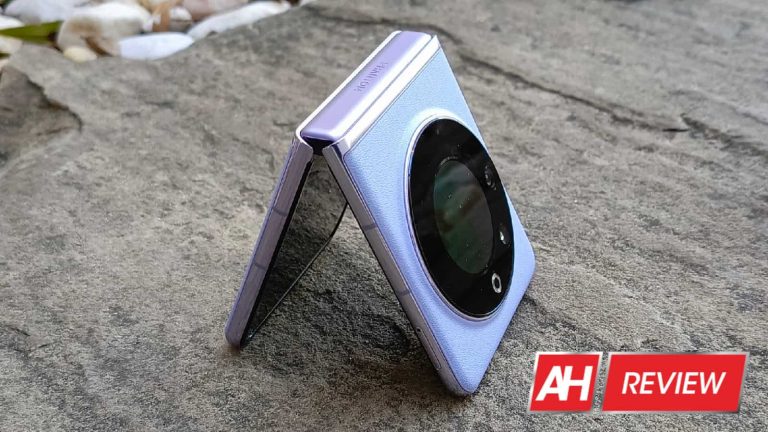
In terms of design, I was impressed with how far Tecno went to make this one of the prettiest foldable phones on the market. This is, seriously, one of the most elegant-looking phones I’ve ever reviewed. I chalk this up to the leather aesthetic that it achieves with the materials. It almost makes it look like one of those limited-edition versions of phones made in collaboration with prestigious companies.
The circular outer display almost gives it the appearance of a fancy timepiece, and I think that’s what Tecno was going for. It contrasts the likes of the Galaxy Z Flip 5 and the Motorola Razr+, which are also nice-looking devices. They have a more utilitarian look because of their larger screens, but the Phantom V Flip has more of a “fashion over function” mentality. Does that affect the overall usability of this phone? Heck yes! But that’ll be discussed later in the review.
Another thing I like about this design is the use of color. The Phantom V Flip comes in two colorways, and they’re Misty Dawn (the color of the unit being reviewed) and Iconic Black. Both colors come with a glossy metal frame, and the frames are also colored to reflect the color of the phone.
Other little details include the Phantom logo etched on the hinge and the little circle with a letter “V” on the back. It shows that Tecno put a lot of time and effort into making a good-looking phone. As good as more popular foldables look, I think that the Phantom V Flip has a more elegant look to it overall.
Tecno Phantom V Flip Review: Build Quality
The build quality of this phone is a weird story. When I first got this phone. I didn’t know what to expect. None of the Tecno phones I reviewed in the past seemed to be poorly built, but I wouldn’t say they had a premium feel. This is why I was blown away when I first held the Phantom V Flip.
This isn’t a $1,000 foldable phone, but it sure feels like it. The first thing I noticed was the satisfying heft of the device that I felt. Sure, you don’t want your phone to be too bulky, but you also don’t want it to be too light. The Phantom V Flip sits right in the sweet spot between average heft and bulky.
Everything from the leathery material to the metal frame just feels good to the touch. Where some of the cheaper Tecno phones used cheaper materials to keep the price down, this phone goes all in on the premium materials.
I think that’s extremely important, more so for Tecno than other companies. Tecno phones mainly inhabit the affordable phone price bracket, so it’s easy to assume that the Phantom V Flip would be behind the competition in terms of the build quality. I admit that I had that assumption as well, but I was gladly proven wrong.
Hinge
The hinge is where things get a little weird. The folding feels smooth and high-quality no matter how many times I open and close it. It stays in place at several angles, so I can adjust it- I’d estimate from about 20° to 165°, the hinge will stay in place. Any further than that, it will either slide all the way open or close.
So, in terms of the feeling, everything is good… But, in terms of the sound, things are not so. That’s right, there’s a sound! Ideally, when you have a foldable phone, you won’t hear any sounds when you’re opening or closing it. At very first, I didn’t hear any sounds coming from the hinge, but I started to shortly after using it.
Occasionally, when I’d open the phone I’d hear this disconcerting crackle come from the hinge; it’s really unsettling to be honest. So, if this is something that happens with all of the units, I think that Tecno will need to work on its hinge. The hinge is one of the most important parts of a foldable phone. If it’s making noises, that’s not a great sign.
Ingress protection
When it comes to foldable phones, ingress protection is extremely important. Unfortunately, it doesn’t look like there’s any IP rating to speak of. That’s not great, seeing as one of the main issues with foldable phones is protection from outside elements. If you get this phone, then you’ll need to be careful where you take it.
Tecno Phantom V Flip Review: Display
I haven’t used a Tecno device with a screen that I didn’t absolutely LOVE. The display on the Phantom V Flip did much to live up to my expectations; however, it being a foldable phone, there’s one aspect really holding it back.
Colors
Tecno hit a sweet spot with the color calibration of this display. Out of the box, the colors are set to their Natural setting, which mutes the colors to look more like a standard LCD display. However, once you turn on the Bright-Colored mode, all of the colors just come to life.
All of the colors that this panel produces are juicy and extremely pleasant to look at. One thing to note is that, while OLED displays are naturally more colorful, it depends on the manufacturer to decide just how colorful they are. It’s very possible to go overboard with the colors. In the case of this phone, just like with other Tecno phones I’ve reviewed, the colors reached this beautiful balance between saturated and oversaturated.
When it comes to the color temperature, there’s a slider in the display settings that lets you adjust it. you can get pretty precise with your adjustments as well, which is nice.
Brightness
This is the area where this phone is held back, but I can’t really fault Tecno for this. The Tecno Camon 20 series comes with some decently bright displays. They appear to cap out at about 900 nits, which is pretty good when it comes to sunlight visibility. I never really had much of an issue using these phones outside. Sure, other phones come out with substantially brighter displays, but 900 nits still battles the sunlight pretty well.
In the case of the Phantom V Flip, I feel that the brightness is just a bit below that 900-nit brightness. It doesn’t feel like a massive drop off; I still get the sense that the brightness is exceptional. However, it just takes a bit more effort to see my screen when outside.
The thing that holds it back is the screen protector. Both the inner and outer displays come with plastic screen protectors. The one on the outer display can be taken off, but the one on the inner display can’t. The issue with these screen protectors is the fact that they cling to fingerprints like there’s no tomorrow. This creates an extra layer of reflective oil that helps obscure the screen. It heavily inhibits the sunlight visibility. I can’t fault Tecno for this because foldable phones all come with permanent screen protectors for added protection.
I’m not sure it’s the screen protector that makes me think that the brightness was reduced. In any case, I’d say that the sunlight visibility is just slightly above average. I could still see the screen decently well, but I have to cover the screen just a bit more.
Crease
Oh, the dreaded crease! Foldable phones and the middle crease are a package deal. I think that the crease in the Phantom V Flip is pretty shallow. It’s definitely there; I can see it and feel it. However, it doesn’t distort the content I’m viewing. I can feel it, but it’s not annoying in any way. The crease is about par for the course, I’d say.
Overall, the display on the Phantom V Flip takes the amazing quality from other great Tecno phones and seamlessly transfers it to the foldable form factor. You’ll have some trouble seeing it in direct sunlight due to the screen protector, so you’ll need to keep that in mind.
Tecno Phantom V Flip Review: Speakers
It’s a bit tough to review the speakers with this phone because there are several settings you can change to edit the sound. However, I’m going to review the speakers based on their out-of-the-box experience, since more people are likely to hear them with their default settings.
Admittedly, the speakers in Tecno’s phones have never impressed me. I felt that there was always this lack of depth with them. I wouldn’t say that they were bad; they were just so plain. With the Phantom V Flip, it feels like Tecno made some changes to its speakers and the overall sound profile because I think there have been some major improvements.
Loudness
In terms of loudness, these speakers get extremely loud. If you’re outside or in a loud environment, you won’t have any issues hearing them. Just like with any speaker, you’ll hear some significant distortion when at full volume. In my opinion, there’s just a bit more distortion than I would have liked to hear at the higher volumes.
With some of the best speakers I’ve heard, I’d hear distortion at the highest or second-highest volume level. In the case of the Phantom V Flip, I’d say that I hear distortion at the three highest volume levels.
Bass
This is the area where I heard the most improvement. The issue I had with other Tecno phones’ speakers was the lack of bass. The sound would be pretty tinny compared to other phones I’d review. With the Phantom V Flip, I’m hearing some more low-end audio from the speakers. There’s a pleasant boost in that department, and it adds some much-needed depth to the sound.
It’s far from the best that I’ve heard, but it’s still nice to hear. I mostly tested these speakers on music from the last quarter of the 20th century(the 70s, 80s, 90s), and I also used newer music. The bass sounded nice on all of the music that I listened to, but I felt that it shined with 80s music. The added crunch of the basses from that era really sounded great on the speakers.
Treble
In terms of the treble, I think that the performance is pretty similar to other Tecno phones that I reviewed. That’s not a bad thing because I rather enjoyed the high-end performance of those phones. One thing that I noted in other reviews is that these phones’ speakers are actually really good for ASMR. Higher tones like clicks and pops sound pleasantly punchy.
This performance does translate nicely to music. When listening to music, especially more modern music, higher instruments and percussion all have a lot of punch to them. The treble compliments the bass nicely to create an all-around immersive sound.
Vocals
I never really thought that the vocals were an issue for Tecno’s speakers, and that didn’t change with the Phantom V Flip. When listening to songs or watching videos, all of the voices cut through nicely. I didn’t have any issues hearing any of the voices when listening to these speakers.
Overall, I think that Tecno ironed out some of the issues holding its speakers back. Again, I wouldn’t say that they’re the best out there on the market, but they’re far from what I’d consider to be bad. The loudness is nice, the bass got a nice boost, and the treble and vocals remain crisp.
Adjustments
Again, this is how the speakers sound out of the box. In HiOS, the Android skin that Tecno’s phones run on, there’s a section in the sound settings called DTS Sound. Here, you’ll find a suite of settings that you can do to tailor the sound experience to your liking. Starting off, you’ll be able to choose the sound mode.
There are four modes in all: Music, Video, Game, and Smart. As you can guess, the first three modes will tune the audio so that it sounds the best when you’re consuming that form of media. Music gives you an overall warmer audio profile. The other two are tuned to emphasize the high-end audio to accent voices.
The Smart audio mode will automatically switch modes based on what media is playing on your phone. This is the mode that’s selected by default.
Once you pick your mode, you can further adjust it by choosing the stereo profile of the audio. Lastly, you can choose whether you want to boost the bass, treble, vocals, or any combination of the three.
Rounding out the adjustments, there’s the EQ. It’s a five-band equalizer that you can use to further refine your sound. You can adjust the 100Hz, 300Hz, 1kHz, 3kHz, and 10kHz bands between -5dB and +5dB. That’s an amazing feature to have built right into the software.
Tecno Phantom V Flip Review: Camera
The camera performance of Tecno’s phones that I reviewed has been solid, with the exception of the Tecno Camon 20 Pro. However, foldable phones aren’t known for having good cameras, so I didn’t really know what to expect from the camera in the Phantom V Flip. When I actually started using this phone’s camera, I was pleasantly surprised with the results.
Details
For this review, I used the camera in its regular mode. The Phantom V Flip has a 64MP camera, but it bins down to what I believe is 16MP. Using the regular mode, I got some really good details in my shot. I’m able to zoom in a good bit before I see degradation in the image.
Exposure
In terms of exposure, I think that the company went for a very balanced approach. Taking pictures in the bright afternoon sun, I didn’t really notice many points where the highlights were blown out. Everything is nicely exposed in the shots I took. I’d probably say that it’s some of the best exposure I’ve seen with phones that I’ve reviewed.
In terms of the overall contrast of the images, I think that this camera does a great job. The highlights and shadows all look nice throughout the images.
Colors
As for the colors, I think that they’re nice. They’re very pleasant and nice to look at. Everything is responsibly saturated with a nice boost to everything. I’m happy to say that colors like red don’t sizzle my eyes, as red is usually a tough color for digital sensors to capture.
In terms of the saturation, while it’s kept in line, I think that it’s right on the edge of being too much. I don’t think it crosses that line, but some of the colors are approaching that candy-like area. It’s not too bad. I think it’s the most present in the shot of the sky and the flower below.
While the colors are definitely robust, they don’t go overboard. So, I think that the colors are a strong aspect of the pictures.
Low-light
When it comes to the low-light performance of this phone, I think that it reflects the camera’s performance as a whole; it’s very good. In situations with diminished light, it maintained a fair amount of detail and I was still able to get some nice colors. However, when I moved into extremely dark situations, as you can imagine, the colors and detail took a hit. I saw the typical drop in saturation and warmth.
When the lights go even lower, I can use the Super Night mode which takes a longer-exposure shot to bring some more light in. While this mode does brighten up the image, there’s something that differentiates it from more expensive phones.
The likes of Samsung and especially Google use extra image processing on those lower-light photos to boost the details and colors and reduce the noise. In the case of the Phantom V Flip, I didn’t see any of that. I only saw the boosted brightness. Because of this, the image came out noisy and a bit blurry. You might just be better off taking your chances with the regular low-light performance rather than with the Super Night mode.
Focus
I don’t think that this is a major issue with this camera, but it did pop up. There was an issue getting it to focus on a particular subject in one of the images. I tapped to focus on the leaf about 15 times, and it just did NOT want to focus. When I eventually took the picture, it focused on a section at the bottom of the picture. So, you might run into instances when the focus doesn’t cooperate.
Overall
I had no issues making this my main camera after my Pixel 6 died on me. The shots that I get are typically nice, but the low-light performance could be better.
Tecno Phantom V Flip Review: Battery
So, the complaint I had about the plastic screen protector is similar to my complaint about the battery life. I can’t really be mad because this is one of the characteristics of a foldable phone. Foldable phones typically have smaller batteries because the cells are split. Also, there has to be room for the hinge to run down the phone. Thus, there’s a smaller 4,000mAh battery in the Phantom V Flip.
With a 20% reduction in capacity compared to other Tecno phones I’ve reviewed (5,00mAh), I definitely felt a dip in battery life. I wouldn’t say that the battery life is bad, it’s not up to the standard that I saw with other phones with larger batteries. With moderate to light usage (casual video-watching, some gaming, and a lot of social media), I’m able to get through the day with about 20% left in the tank. On heavier days, I know that I’ll need to reach for a charger before the night’s through.
The battery life is what I’d call average. It’s not bad, but it’s not spectacular. You’ll be able to stretch it to a day and a half, but that will have to be with minimal usage.
Charging
If you run out of juice, and you need to top up your battery, then you’ll be able to quickly. Tecno Phantom V Flip supports 45W charging, and it has a charger included in the box. 45W isn’t the fastest on the market, but it’s plenty fast. If I need to do a quick 20-minute top-up, I will be able to recover more than half of the battery power. So, charging this phone when it’s low on power is no problem.
Tecno Phantom V Flip Review: Performance
Tecno, HiOS, and MediaTek make a great team because Tecno’s phones deliver some really good performance. Now, we need to shed the notion that MediaTek processors are automatically low-quality.; it’s all about the optimization. The Phantom V Flip uses the MediaTek Dimensity 8060, which is a premium mid-range SoC. Thus, it’s able to deliver some pretty powerful performance.
However, I can’t forget about Tecno’s software optimizations. The company’s HiOS runs as smooth as butter. I’m able to navigate the interface, use apps, and do any task without any sort of slowdown. Now, I have to admit that there’s the ever-so-rare stutter in the software, but these instances are very few and far apart. I’m getting consistently good performance from this phone, and this is one of the reasons why I enjoy using these phones.
Tecno Phantom V Flip Review: Gaming
The gaming on this phone is very much in line with other Tecno phones running similar hardware. It has its ups and downs, and there’s one aspect where I have an issue.
2D games
Playing 2D games on this phone is no sweat. I tested this phone out with games like Fishing Paradiso, Sweet Sins 2, Snowman Story, Survivor.io, and others. Neither of these games gave me any issues. If you’re looking to play your simple puzzle games, match-3 games, platformers, or other 2D titles, you won’t see any performance issues.
Graphically intensive games
Let’s crank things up a notch. Sure this phone can tackle Candy Crush, but what about the mobile behemoths? There are a ton of graphically intensive games on the market. The story with the gaming performance with graphically intensive games is multi-layered. I, of course, used games like Genshin Impact and Honkai Star Rail to test the higher-end gaming performance.
I cranked both of these games to their highest graphical settings, and I was pretty impressed with the performance. It was similar for both games. Now, it wasn’t 100% smooth; there were definitely some dropped frames here and there. They happened every so often, but they weren’t so plentiful that the games felt laggy. The performance was smooth overall with frame rates hitting 60fps. It’s just that I’d see a dropped frame every so often.
This is multi-layered because this phone has a suite of game-specific settings, and one of them is the performance mode. By default, the performance mode is set to “Equilibrium”, which means that it’s balanced between power-saving and performance. When I set it to “Performance” mode, I saw a notable improvement in the performance. Was it perfect? No, there were still the occasional dropped frames. However, they were less often.
Heat performance
This is the area where I had the issue. This phone heats up a lot while doing some intensive gaming. I could feel it getting hot not long after starting a game. It got pretty uncomfortable before too long.
Overall, while this phone is not the most powerful gaming phone on the market, you won’t have any issues using it as such. It’s able to give you some pretty smooth performance when playing some of the most graphically intensive games that are on the market.
Tecno Phantom V Flip Review: Foldable phone features
So, the Phantom V Flip looks like a good phone, but how is it as a foldable phone? Well, there’s both good news and bad news.
The good
Starting off with the good news, I think that Tecno did a great job transitioning HiOS onto a foldable form factor. Software-wise, everything makes sense. Also, there are some live wallpapers that change as you open the phone. For example, there’s one with flowers that bloom as you open it.
There’s a mode that’s similar to Flex Mode on the Galaxy foldables. When you open your phone at a 90° angle, it will dedicate half of the screen to one task and the other half to another. For example, while in the camera app, it will push all of the controls down to the bottom half of the screen and dedicate the top half to the viewfinder.
Next, there’s a selection of widgets that you can choose to show on the outer display. You’re able to cycle through them and assign which order you want to use them in.
The bad
Moving onto the complaints I have with this phone, there aren’t too many. For starters, the outer display is rather small. Over the years, we’ve seen the outer displays of foldable phones grow gradually. With outer displays getting larger, the smaller display on the Phantom V Flip seems dated.
This next one is a minor gripe, but when you’re viewing the notification list on the outer screen, there’s no way to swipe away notifications individually. Another minor gripe is the fact that you can’t edit the list of quick replies that are present with messaging app notifications. When you get a notification that you can respond to on the outer display, you’ll see a list of different quick replies to send. Well, the list is limited to just a short list, and that’s what you’re stuck with.
Tecno Phantom V Flip Review: Final verdict
I never really showed interest in clamshell foldable phones, no matter how good they got over the years. They were just like regular slab phones that could get smaller, but that concept was always boring to me. Instead, I always pined after notebook-style foldables because of the added usability that came with the increased real estate. So, when I found out that I was getting a Phantom V Flip, my reactions weren’t all too spirited.
All of that changed with the Tecno Phantom V Flip. This phone really introduced me to the fun of having a clamshell foldable. Sure, the folding action doesn’t add much utility to the overall experience, it’s nice having a smaller outer display to see notifications, timers, the weather, and other information.
Being a foldable phone doesn’t mean much if it’s not a good phone in general, and the Tecno Phantom V Flip is a great phone. It has the gorgeous screen and smooth performance that I expect from Tecno devices with a solid camera, improved cameras, and an amazing design. This is truly a beautiful phone on both the outside and inside.
Should you buy this over a Galaxy Z Flip phone?
That all depends. If you’re looking for the best of the best, then you’re better off with the Galaxy. It has a larger outer display, IP water resistance, a more powerful processor, and other advantages. However, if you’re looking for a phone that still delivers a great experience with an elegant design AND a notably lower price, then the Phantom V Flip is perfect for you. I highly recommend this phone.
Mozilla Foundation has released Firefox version 121 to the public. The latest version of the popular desktop browser brings enhancements for all major OS platforms. There are new features for Windows, Linux, and macOS machine users in Firefox 121. The new Firefox version comes a month after the release of the Firefox 120 version.
Windows users are getting Microsoft AV1 Extension support
Mozilla has added support for the Microsoft AV1 Video Extension for Windows users in Firefox version 121. After upgrading, Windows OS-powered PC users will be prompted to install the AV1 Video Extension. This will essentially enable support for hardware decoding for the AV1 video codec. The new Firefox update for desktops has arrived soon after support for extensions rolled out for its Android counterpart.
Firefox version 121 brings enhanced graphics performance for Linux users
For Linux users, Firefox’s newest update arrives with improvements in the graphics rendering department. It brings support for touchpad and touchscreen gestures, apart from swipe-to-navigation, per-monitor DPI settings, and more. In the new version, Firefox browser has now made the Wayland compositor default on Linux instead of XWayland. Overall, Linux-based machines users can expect improved graphics performance when rendering videos and more.
“Note that due to Wayland protocol limitations, Picture-in-Picture windows require an extra user interaction (generally right-click on the window) or a shell / desktop-environment tweak”, adds the official release notes for Linux PC users.
Force underlining of links and new features for PDF viewer arrive in Firefox 121
Firefox will now force links on webpages to always be underlined in version 121. Although, it is an optional feature, which can be enabled from the Browsing section that’s inside the Firefox Settings menu. The PDF viewer is getting a new floating button. This simplifies deleting images, drawings, and text in the PDF files. The new PDF viewer features will make editing PDF files much easier using the Firefox browser.
In addition to Windows and Linux, Firefox 121 also brings new features for macOS devices. Now, Firefox supports Voice Control commands on macOS, allowing users to navigate without a keyboard. macOS users will first need to enable the voice control features from the Accessibility section inside the System Settings.
Firefox version 121 also fixes general bugs and security issues on Windows, Linux, and macOS platforms. Furthermore, there are new features for the web platform and enterprise users in the latest version. The users can read the whole detailed Firefox 121 changelog on the company’s website. The update doesn’t bring the fake review checker tool that’s the company is testing for a while.
The latest version of Firefox is rolling out over the air on all OS platforms in a gradual manner. Those who already have the browser installed on their machines will be automatically notified to update it soon. Users can also head to the About Firefox section inside the Firefox toolbar to check for the latest browser updates.
Web injections involve injecting malicious code into websites to manipulate content or redirect users to fraudulent sites.
Threat actors use this technique to steal sensitive information, such as:-
Login credentials
Financial data
Exploit vulnerabilities in web applications
Cybersecurity researchers at Security Intelligence recently identified that hackers hijacked the banking details of more than 50,000 users using web injection attacks.
Banking trojans use web injections to threaten the cyber world, and IBM Security Trusteer finds a sneaky JavaScript campaign in March 2023.
While in this malicious campaign, the malware’s link to DanaBot remains unconfirmed; however, Since 2023, more than 50000 user sessions got hit in over 40 banks across the following countries:-
North America
South America
Europe
Japan
Hackers Hijacked Banking Details
This new threat campaign aims to hijack popular banking apps, and the malicious domains bought in Dec 2022 have been active since early 2023.
Meanwhile, the JS script targets specific page structures and injects content when certain conditions are met.
Besides this, the credential theft is done via added event listeners on the login button. It also focuses on common bank layouts, as the threat actors aim to compromise and monetize user banking info.
Malware starts grabbing data as soon as the script is fetched. It often uses the computer’s name to add details like bot ID and config flags as query parameters.
This suggests an OS-level infection by other malware components before browser injection.
Initial obfuscated GET request fetching the script (Source – Security Intelligence)
The encoded script is disguised and returned as a single line with an added decoy string. Meanwhile, the malicious content is hidden in network traffic, resembling a legitimate CDN.
Injection avoids running if “adrum” is in the page URL, and the function patching removes malware evidence to hide its presence.
Dynamic script communicates with the C2 server and adjusts actions based on the following two key elements:-
Received instructions
Logs updates
Resilient injection patiently waits, retries steps, and adapts based on server responses. Continuous server-device identification ensures execution continuity.
The script, within an anonymous function, configures with default values and adjusts dynamically during runtime. Asynchronous actions, triggered by server responses, hide the script.
While the operational states dictate actions like:-
Injecting prompts
Executing login attempts
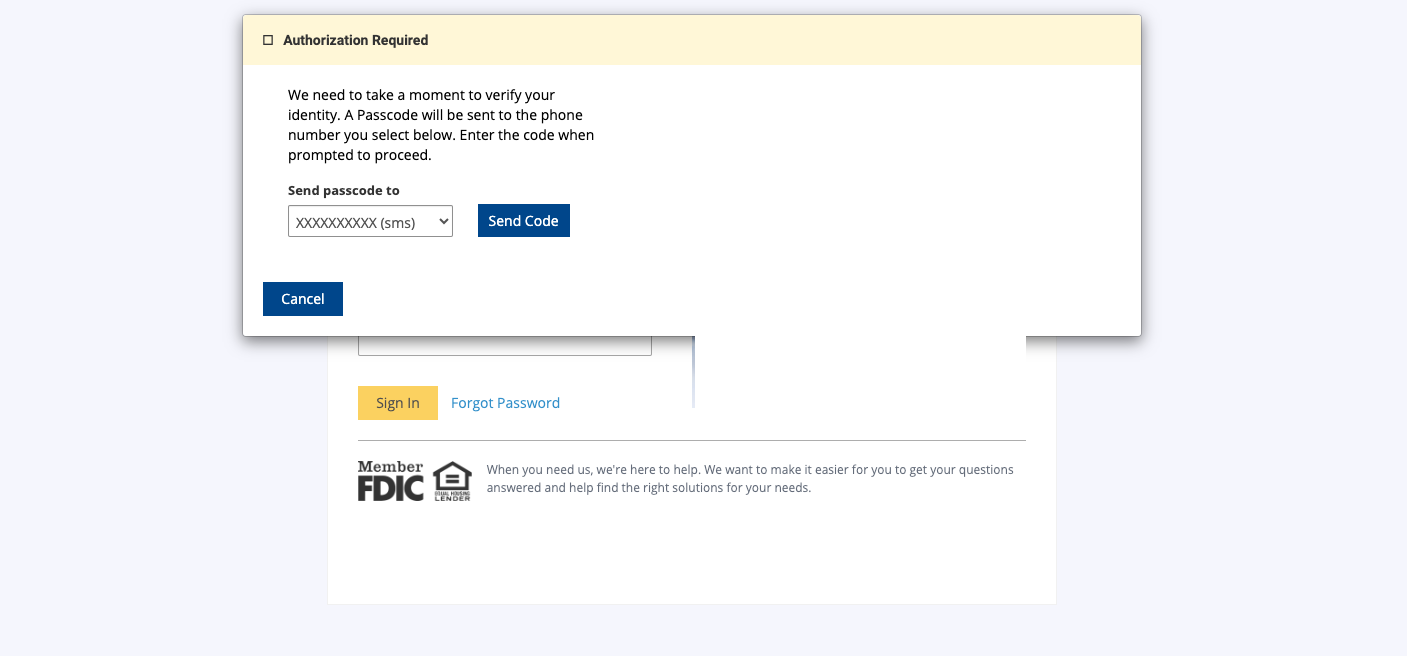
Prompting a phone number for two-factor authentication (Source – Security Intelligence)
Recommendations
Here below, we have mentioned all the recommendations offered by the security analysts:-
There are tons of note-taking apps out there, for Android, so there’s plenty to choose from. If you still haven’t found one that suits your needs, you may want to check out Noto, a rather simple note-taking app.
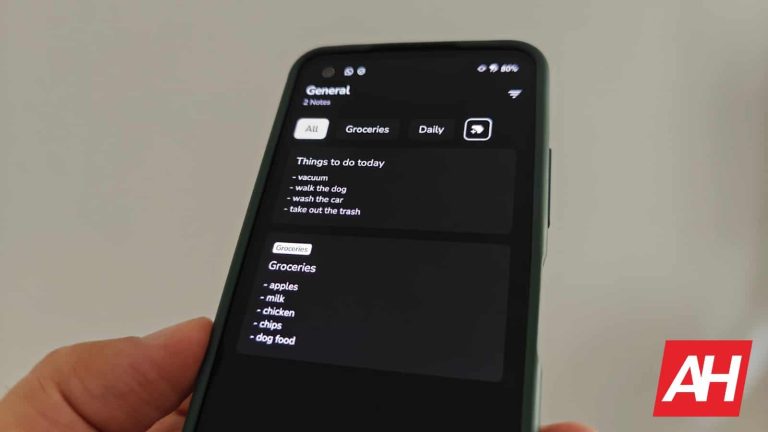
Noto is a simple, and yet great note-taking app for Android
This application has a really nice-looking UI, and it’s free to use. That’s not all, though, the app is also open-source, which is always great to see. It currently has a 4.2-star rating in the Google Play Store, after almost 500 reviews.
People seem to really like this app, and after some initial testing, it’s not difficult to see why. Noto is a rather simple app, and considering how some developers simply love to go overboard in terms of features and design, that’s great to see.
You can create different notes that are then placed on the main list. Tags are also included in the package, or labels, whatever you want to call them. They are called labels in the app, though. They sure make it easier to filter through your notes.
The UI on the main page is what appealed to me the most. I really like how labels are highlighted above everything else, and different notes are nicely separated, with highlighted labels and titles.
You can schedule reminders, and also lock your note piles behind biometric protection
You can schedule reminders for some notes, if you want, and there’s also the archive option. Different themes are also at your disposal here. You can set the app to follow the system theme, or choose manually. Light, dark, and blackout themes are available.
There’s also a reading mode on offer, which sets your phone to do not disturb mode, and even makes the app go full screen. That way you can even use this app for reading, kind of.
As if that’s not enough, adding folders of notes is also possible. They can be locked behind biometric protection, so that they’re away from prying eyes. Those are all useful features without complicating things too much.
There are more features available in the app that we didn’t cover here, so if you’re interested, the Google Play Store app link is available below, along with some official images.
Predator, a bot protection tool designed to fight against bots and crawlers, has now been found to be abused by threat actors for malicious purposes.
Threat actors have been using phishing emails with malicious links to lure users into a malicious website.
However, if any security researchers run bots/crawlers on the website, a redirect is set up to a legitimate site such as Google’s home page or Wikipedia. This is done as part of an evasion technique.
Threat actors are regularly changing their phishing template and the brand of impersonation to evade detection.
Most of the emails are sent from compromised accounts, indicating that threat actors have already gained access to several accounts for this attack.
However, the URL links attached to these phishing emails redirect the user to a website that contains the window.location.replace method that redirects them to the next page.
Additionally, the page also contains the code for scanning of bot/crawler/automation. The images embedded inside the web page contain hidden/empty links that are used for detecting automation tools.
In case these URLs are under inspection, the program can also block the IP addresses or redirect them to legitimate websites, as most of the inspections occur through automated programs only.
Sample phishing website (Source: Trellix)
isBot() function
This function is responsible for performing various tests, which can also change all the <href> links within the web page into Wikipedia links if a bot is detected.
Additionally, the isBot() function also inserted three extra functions with Hex strings along with the original tool code.
This was done to make the analysis of the website difficult. Several sample websites were collected as part of the analysis by researchers. All of them had different templates and luring methods.
Furthermore, a complete report has been published, which provides detailed information about the method of abuse, source code, and other information.
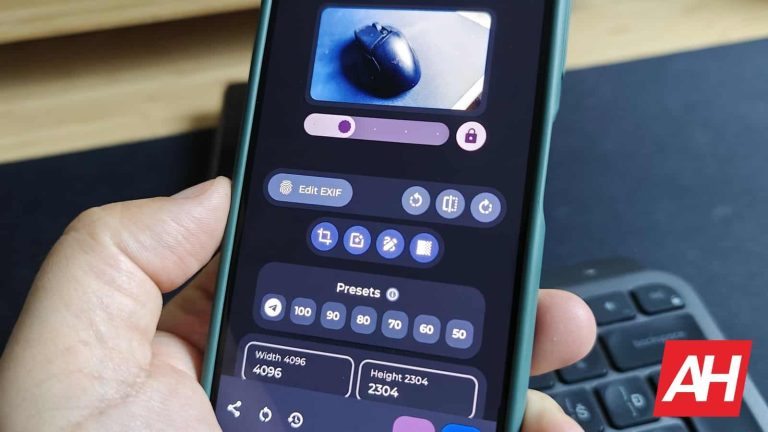
There are not that many apps on Android that allow you to batch-edit images. What I’m talking about here is the manipulation of a bunch of images at the same time, including resizing, compressing, and so on. That being said, I did stumble upon one such app recently, an app called ‘Image Toolbox’.
The ‘Image Toolbox’ app is a batch image editing machine
This application is actually rated really high on the Google Play Store. Based on my initial impressions, there’s a reason for it. This is an immensely powerful application that has a ton of tools in its arsenal. Most importantly, however, it has batch processing. Not only that, but it looks modern too, very clean.
This app not only allows you to batch resize images, but it also allows for batch masking, and more. It even allows you to generate color palettes from images, and even change metadata for any image. If you need an image to be a particular file size, that’s not a problem either. There are a ton of tools included here, and the UI is very easy to use.
There are a bunch of additional tools at your disposal here
The Image Toolbox app also includes some additional tools. It allows you to draw on images, you can remove background from images via this app, and even utilize the image stitching tool if you need to.
One tool that I did not find here, and that would be really useful, is the add watermark tool. That’s something I’ve been using the AddWatermark app for years now, and it has been working great. It does have an outdated design, though, so it would be fun to try out something else that looks more modern.
Either way, the Image Toolbox app is packed with various features that you won’t find in many other apps, at least not all at the same time. If you find yourself in need of a batch editing tool for your images, you should definitely try out this app.
Online gaming is a luxury, especially if you are interested in strategic war games. So, here are the 5 best war games that you can play!
War and hostilities are terrible events and the worst outcome in the development of state policies. A format for human interaction in which there are no winners and all parties are losers, losing the best people who join the army.
Nevertheless, the theme of wars attracts players and movie lovers, because in such difficult and critical situations, the best and worst qualities in a person are revealed at the same time, and therefore it is interesting to watch the actions of the heroes and at least approximately understand what the soldiers participating in big wars went through.
Let this format be better expressed within the framework of games and films and people will perceive it at the multimedia level, and not take part in real combat operations. Let’s look at five of the most interesting and vibrant projects that you should play.
Call of Duty Modern Warfare
A project from the Infinity Ward studio invites players to fully transport themselves and see the world through the eyes of different soldiers who will take part in a fictional modern conflict, first against terrorists, and then in a full-fledged war.
According to the game plot, in the Far East, separatists from Russia helped carry out a coup and put the terrorist Al Assad in power, who carried out a coup, killed the current ruler and took possession of nuclear weapons, to counteract him, special operations forces and the regular army of US Rangers enter the battle.
You will play as individual characters, some of whom will continue their journey in the next parts of the series.
You will be able to fully experience the spirit of the offensive and storming of cities, carrying out secret and silent operations, tank offensives and major landings. You will destroy entire armies in units and destroy important targets.
Among the interesting mechanics, you will find a nuclear explosion with all the consequences and the outcome of an entire war in the series of Modern Warfare with the reflection of the attack on Washington, New York, Paris and Berlin.
For players who want to play against other gamers, there is the Warzone format, in which players face each other on a small game map in a survival mode where there can only be one winner.
Victories and high results in the match will lead to an increase in rating and entry into new matches with stronger players.
If you are unable to increase your rank on your own, then you can always order Call of Duty services – professionals who will increase your level, and you will only come across strong gamers.
Battlefield 5
A project in which you will be immersed in the format of the battles of the Second World War and, at the same time, you will choose one of the proposed stories, with all the moral dilemmas and important turning points of gaming companies.
Battlefield relies relatively on realism but creates an atmosphere in which the player will be interested in immersing himself in his gameplay and gives an additional chills effect due to the soundtrack, which has not changed for many years, but is constantly changing the arrangement.
You will be able to go through a company of Norwegian saboteurs, the first British SAS Forces, military pilots and even a tank commander of the Third Reich at the very end of the Second World War.
You will see many aspects, including moral ones, associated with the loss of morale and the general cruelty of any of the fronts, however, you will be able to play for different participants in the Second World War.
Medal of Honor
Medal of Honor, one of the earliest shooters in the gaming industry, allows players to delve into future conflicts and the missions of special forces units in its latest versions. Beyond diverse tasks, the game immerses players in the everyday challenges faced by soldiers, including conflicts with wives grappling with the absence of their husbands and the risks they endure.
There is, of course, a theme of the Second World War. Still, it belongs to already quite outdated games unless you choose the format of the Pacific front, in which a group of friends together will go through a campaign against Japanese forces on key islands throughout the Second World War and survive Pearl Harbor as well.
There is a project in the series based on cinematography and vivid scenes played by real actors for realism.
This is the Airborne Medal of Valor, in which the player will have to take part in several operations as part of the airborne forces, where each task will be accompanied by a mandatory parachute into a danger zone and the completion of tasks in Operation Husky, during the assault on German bunkers, the Normandy landings and attacks in cities.
Each time there will be different landing circumstances, from ordinary to extremely difficult. The tasks will constantly become more complicated, and one of the interesting features is the constant improvement of the selected weapon when using it.
This means that by hitting enemies with a Thompson assault rifle, you will regularly upgrade it. First, get manual stabilization and front sight for better and more accurate aiming, and then get a larger ammo clip.
The system works similarly with all game weapons, including enemy ones. Any third-level weapon will be very different from its initial appearance but will bring significant benefits to its owner.
Wolfenstein
Wolfenstein is a series of games with a rather interesting setting and a unique format, which differs depending on the game you choose for yourself.
The old format is a setting of the Second World War, in which the fascists experiment on people and turn to mysticism to create unique and invincible soldiers, and you have to stop their entire plan.
The new format and updated version, called New Order, offers to try out unique mechanics and a plot that suggests trying out a dystopia in which it is demonstrated what would have happened to the world if the Nazis had won the Second World War.
You will again find the format of super soldiers, experiments and attempts to destroy humanity, in which again one person must stop everyone.
Bonus: For those into old-school gaming, revisiting Delta Force is a pure delight as all of its versions offer a fun playing experience.
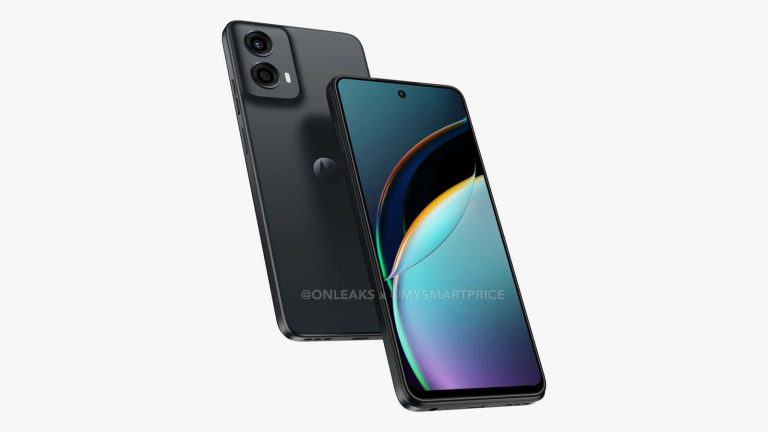
If you’re waiting for Motorola to release its new budget phone, we have a treat for you. The Motorola Moto G 5G (2024) just surfaced in the form of CAD-based renders, thus the phone’s design got revealed.
The Motorola Moto G 5G (2024) design gets revealed early
There are a handful of images included in the gallery below the article. A 360-degree look at the phone is possible via the video included below. The Moto G 5G (2024) will feature a flat display, and rather thin bezels except for the bottom one. That bezel aka “chin” will be considerably thicker than the others.
A centered display camera hole is visible at the top as well. All the physical buttons sit on the right-hand side. The power/lock button will double as a fingerprint scanner, as expected.
On the back, two cameras will be included. They’ll sit inside a camera island, which will be placed in the top-left corner. That camera island does seem to protrude a bit. Motorola’s logo is placed on the back too, right in the middle.
A 6.5-inch display will be included
Now, OnLeaks and MySmartPrice also confirmed that we can expect to get a 6.5-inch display here. So, basically the same as on its predecessor. It remains to be seen if it will be the exact same panel, though.
Another detail that is worth noting is the fact that a 3.5mm headphone jack seems to be sitting at the bottom of the phone. That’s also where its speaker, Type-C USB port, and microphone are located.
Having said that, the phone will likely include a 120Hz display. Storage expansion will likely be possible, and you shouldn’t expect a powerful processor here. This is a budget phone. The Motorola Moto G 5G (2023) includes the Snapdragon 480+ SoC, so… don’t boost your expectations too high.
This year’s model arrived back in May. If Motorola aims to wait until May 2024 to launch the 2024 model, then we’re in for quite a wait. We’ll see.
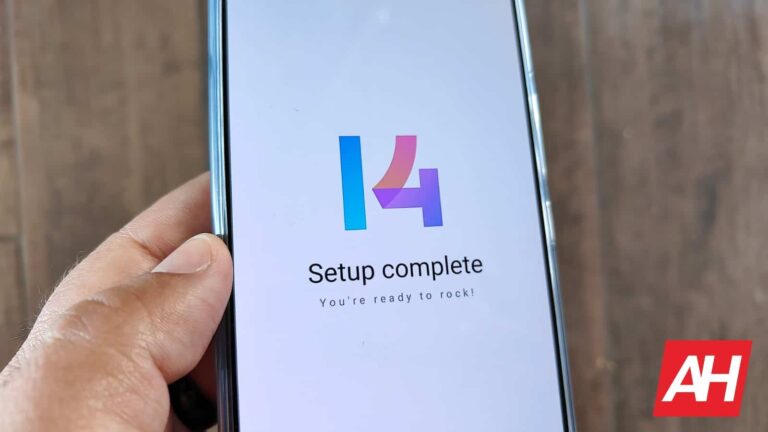
Xiaomi has shared a rather interesting video on YouTube. The name of the video is “A Journey through Time | The Evolution of MIUI”, and that’s a perfect description of this video from Xiaomi.
Xiaomi shows us the evolution of MIUI in its new video
The video itself has a duration of 3 minutes, and it’s embedded below the article. In it, you’ll see every version of the company’s Android skin through time. You’ll see various elements of MIUI, animations, and various other details.
This is a perfect look at how MIUI changed with time. If we compare the original version and the current one, the differences are major. Xiaomi also shared this video as an homage to MIUI, kind of.
MIUI is waving goodbye, as HyperOS is taking over
Why? Well, MIUI has basically been put to rest, as HyperOS is taking over. In all honesty, HyperOS looks basically the same as MIUI, so this is more of a rebrand than anything else. Xiaomi has big plans for it, though.
HyperOS did start rolling out to some devices recently, and the company announced its global roadmap for HyperOS updates as well. The Xiaomi 14 and Xiaomi 14 Pro do ship with HyperOS out of the box, in China, and their global models will too.
The Xiaomi 14 is expected to arrive to global markets in Q1 2024
Xiaomi still hasn’t announced the global variants of these two phones. That is expected to happen in the first quarter of the year. The Xiaomi 13 series launched globally towards the end of February this year. Xiaomi could be aiming for a similar time frame with the Xiaomi 14 series. So, either around or as part of MWC in Barcelona.
Xiaomi is continuing to trim down the fat in its Android skin, and that trend is expected to continue. HyperOS does deliver a number of under-the-hood updates, and we’ll see how its global variant will look. For the time being, we only got to see the Chinese version of Xiaomi’s new Android skin.