Volt Typhoon, also known as the Bronze Silhouette, has been discovered to be linked with a complex botnet called “KV-botnet.”
The threat actor has been using this botnet to target Small Office/Home Office routers since at least February 2022. Their primary targets are routers, firewalls, and VPN devices which are utilized for proxying malicious traffic.
According to reports from Microsoft and the US government, this threat actor is building their infrastructure to disrupt communications between the USA and Asia in case of future conflicts.
Chinese Hackers Seized Outdated Routers
The IP addresses used for the campaign were attributed to the People’s Republic of China, according to the report shared with Cyber Security News.
In addition to this, the operations took place during the working hours of Chinese Standard Time, which adds additional confidence about the threat actor’s origin.
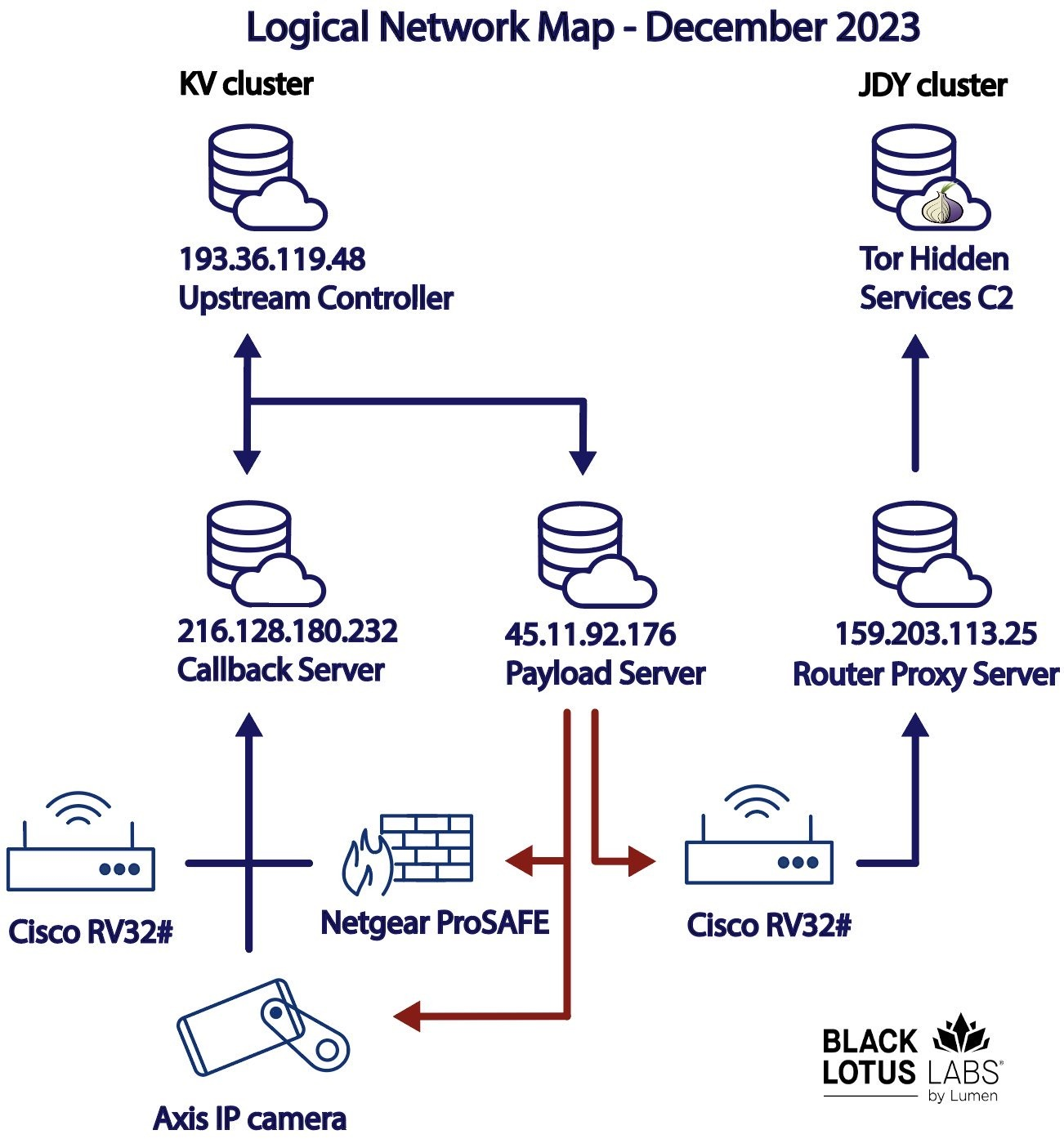
The botnet is divided into two distinct activities: the “JDY cluster,” which has less sophisticated techniques for scanning targets, and the “KV cluster,” which is reserved for manual operations against high-profile targets.
Clusters of botnet (Source: Black Lotus Labs)
Moreover, the botnet also targets end-of-life devices that are being used by SOHO entities as they have low security and are easy to exploit. The devices focussed specifically were Cisco RV320s, DrayTek Vigor routers, and NETGEAR ProSAFE firewalls.
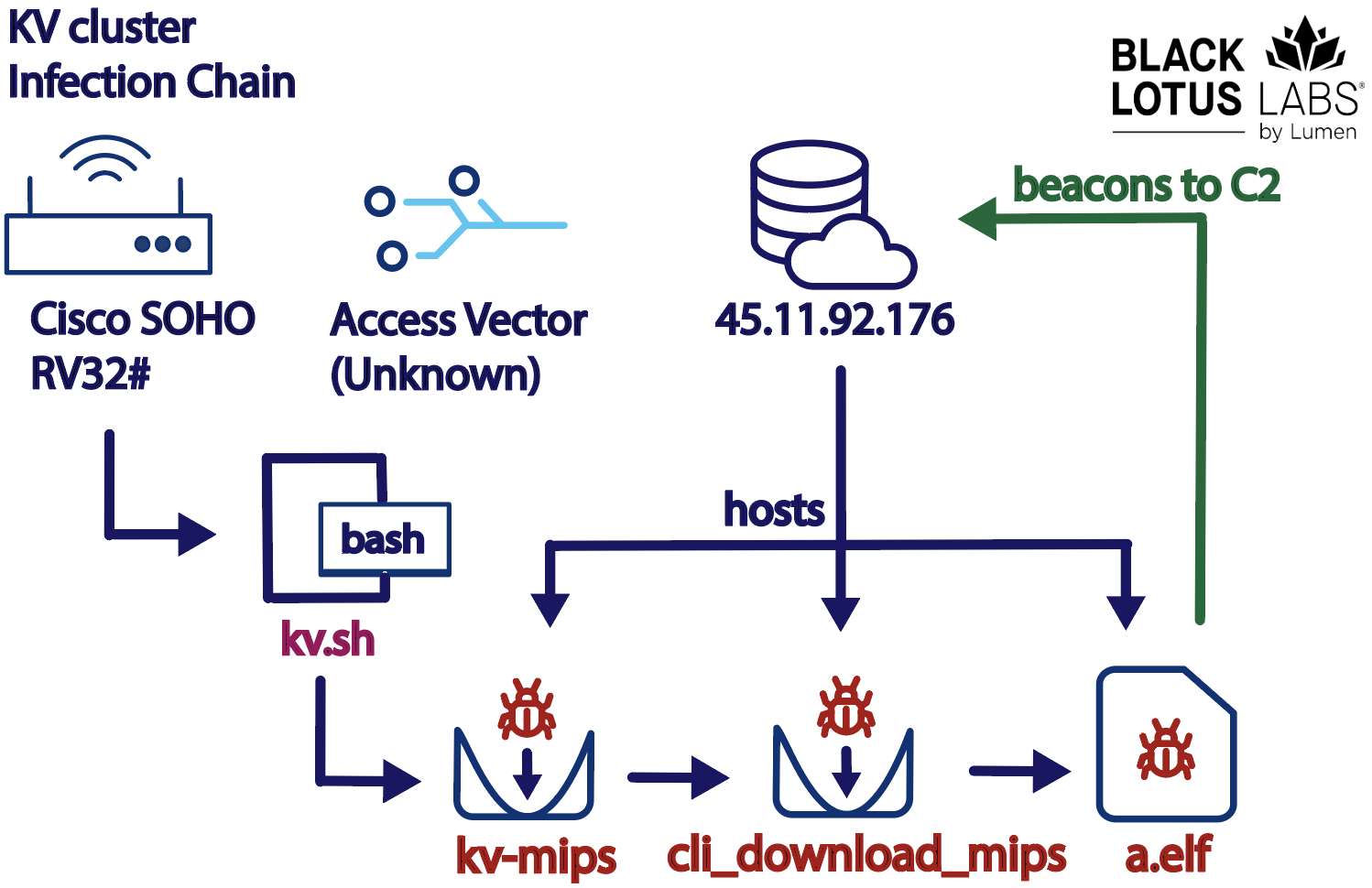
Infection Chain
The threat actor uses multiple files, including a bash script file, for their infection chain. They half-specific processes and remove security tools that defaultly run on the compromised devices.
KV cluster infection chain (Source: Black Lotus Labs)
As part of the evasion techniques, the botnets are set up with random ports for C2 communication and also disguise their names as existing processes.
Threat actors communicate with these botnets and perform data exfiltration, data transmission, creation of network connections, task execution, and many others.
Furthermore, a complete report about this botnet has been published, which provides detailed information about the botnet infection chain, process execution, attack methods, evasion techniques, and other information.
Samsung has picked up a couple more regulatory approvals for the Galaxy Xcover 7. The upcoming rugged smartphone has received certifications from the FCC in the US and NBTC in Thailand. It was previously certified by the Bluetooth SIG and India’s BIS.
New Galaxy Xcover 7 certifications confirm some rumored specs
A month ago, we exclusively leaked the official renders of the Galaxy Xcover 7, revealing its design much ahead of launch. The device has since popped up on several online listings with the model number SM-G556B. Those listings unveiled some of its key specs, giving us a better idea of what Samsung has in the pipeline.
While we still don’t have a launch date, the FCC and NBTC certifications have revealed more information about the Galaxy Xcover 7. First spotted by MySmartPrice, the latter listing confirmed the name and presence of 5G cellular connectivity. The FCC, on the other hand, revealed that the device packs a 3,950mAh battery with support for 25W (9V/2.77A or 11V/2.25A) fast wired charging.
Additionally, we can see that the new rugged smartphone boasts NFC and Wi-Fi 5. The Bluetooth SIG recently confirmed Bluetooth v5.3 support for the Galaxy Xcover 7. Previous leaks and benchmark listings have revealed Android 14, 6GB RAM, and an octa-core chipset featuring two performance CPU cores clocked at 2.2GHz and six efficiency cores at 2.0GHz for the phone.
The chipset features ARM’s Mali-G57 MC2 GPU. Based on this information and 5G support, we might be looking at MediaTek’s Dimensity 6100+ SoC. It is a 5G-enabled chipset designed for low-cost Android smartphones. It appears Samsung is readying a budget-oriented rugged smartphone in the form of Galaxy Xcover 7. Last year’s Galaxy Xcover 6 Pro is a more premium offering.
Samsung may launch the phone alongside a rugged tablet
The Galaxy Xcover 7 isn’t the only rugged Android device Samsung has in the work. The company is also readying a rugged tablet, the Galaxy Tab Active 5 Pro. Leaked specs of the tablet suggest it will be a budget offering too, so much so that the device may lack a “Pro” branding.
The Korean firm may be preparing a sequel to the Galaxy Tab Active 3 from 2020 rather than last year’s Galaxy Tab Active 4 Pro. Likewise, the Galaxy Xcover 7 could be the successor to the Galaxy Xcover 5 from 2021. We expect to hear more about the two rugged Galaxy products in the coming weeks. Samsung may unveil them in early 2024 if not before the end of this year.
Intel has lifted the curtain on its latest mobile CPUs, codenamed Meteor Lake, officially called Core Ultra. The new CPUs are designed for laptops and are years in the making, featuring significantly improved power efficiency and overall computing performance with a bunch of AI computing baked in.
Intel says its new CPUs are the company’s most power-efficient CPUs ever. Built on Intel’s 4 process technology and utilizing a new tiled architecture with a combination of core types to divide up the tasks. P-cores (or performance cores) handle any high-performance tasks like gaming. E-cores (efficiency cores) take care of any tasks that are more tedious and don’t require a lot of computing power.
By splitting up these tasks like this, battery life on laptops is “stretched by hours.” Any improvement Intel can help deliver when it comes to battery life should be welcomed. Considering the most recent generations before the Meteor Lake family didn’t exactly shine in this area. The entire makeup equals 16 cores and 22 threads with six of those cores being P-Cores and 8 of them being E-Cores. The remaining two cores are low-power E-Cores to help boost the power efficiency. The new chips also feature a new, more powerful GPU.
Intel Core Ultra CPUs have built-in Arc GPUs for enhanced performance
Better power efficiency is great but Intel didn’t stop there with these chips. They also feature a built-in Intel Arc GPU for better performance while gaming. Intel says that these new chips can deliver 2x the performance per watt compared to 13th Gen Intel Core i7 CPUs when gaming resolution is set at 1080p.
There’s also support for DirectX 12 Ultimate, hardware-accelerated ray-tracing, HDMI 2.1, and DisplayPort 2.1 20G.
An all-new Neural Processing Unit paves the way for AI computing
The addition of the NPU seems to be more about setting things up for future computing. Rather than what you’ll be able to do right now. As ExtremeTech points out, Intel does little more than show off a few benchmarks for apps like Stable Diffusion and DaVinci Resolve. However, the company doesn’t go in-depth on how the NPU will benefit the majority of consumers.
That being said, Intel is seemingly getting a jumpstart here. It’s paving the way now so it’s prepared for when “AI PCs” are more mainstream.
Intel already has plenty of partners implementing the new chips
We’re bound to hear about more of these leading into CES. Some manufacturing partners are already announcing products though. Earlier this morning Samsung announced the Galaxy Book 4 powered by the Intel Core Ultra 9 and Intel Core Ultra 7 chips. Lenovo also announced the IdeaPad Pro 5i featuring an Intel Core Ultra 9. These are both mainly intended for ultra-thin portable computing for work or general use. But there are gaming laptops with Intel’s new chips on the horizon as well. Acer this morning announced its first gaming laptop powered by Intel’s Core Ultra CPUs. The Predator Triton Neo 16.
Consumers should expect more gaming laptops with Intel’s new chips to pop up in the coming weeks.
Cybercriminals employ numerous tactics to infiltrate endpoints and scripts are among the most destructive.
You can trigger an infection chain by clicking on a seemingly innocuous document, potentially compromising your entire network.
To prevent this, analyzing suspicious files in malware analysis sandboxes is crucial. Here are some instances where they prove invaluable.
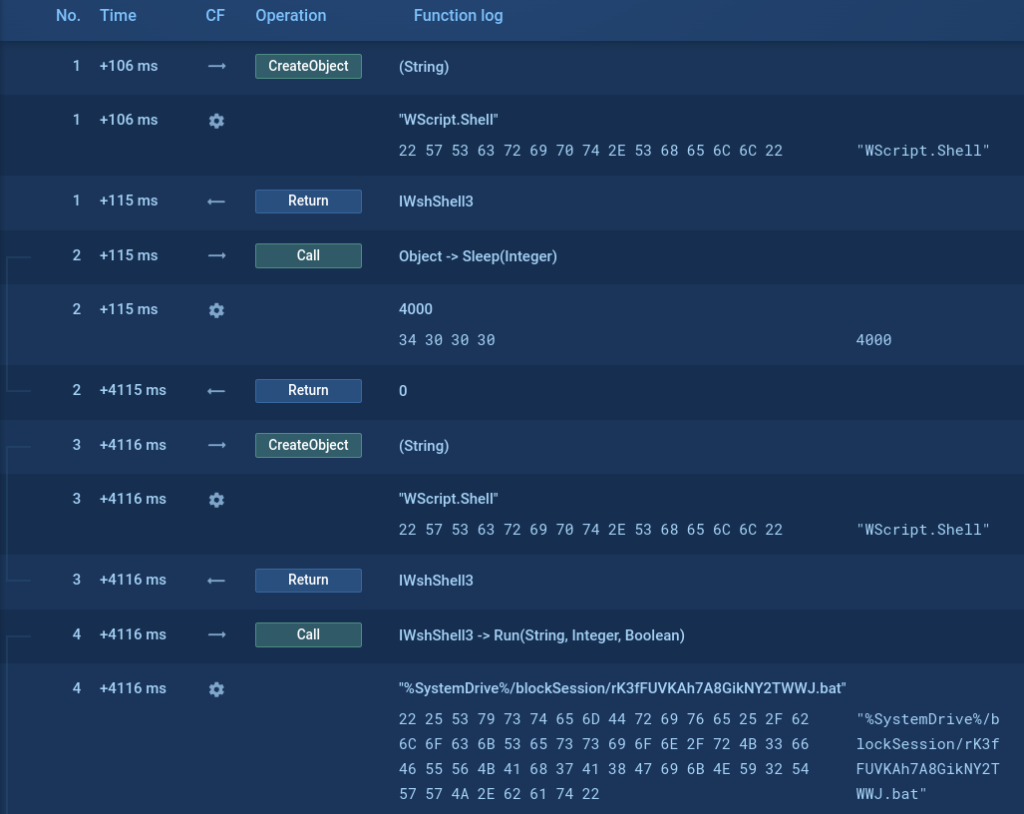
Decoding VBE Files
The contents of a VBE file
VBE files are essentially encoded VBS scripts initially designed back in the day to safeguard intellectual property. As a result, it is impossible to view their source code without extra tools, hindering analysis and allowing detection evasion.
A decoded VBE file
However, uploading a VBE fileto a proper sandbox service instantly reveals the decoded VBS script at play. It presents a full view of the script execution process, including its requested functions, transferred data, and commands.
Viewing Command Returns
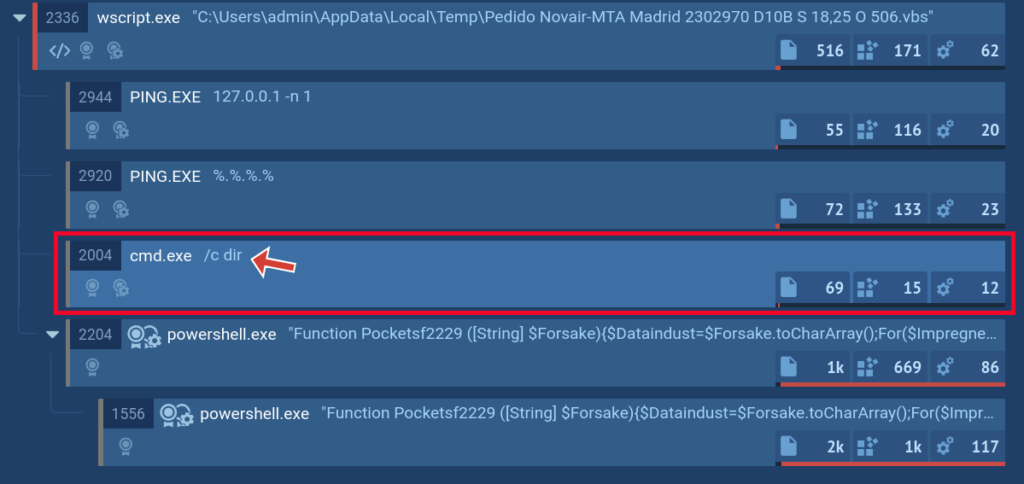
The dir command
A sandbox can also reveal the results of commands executed within scripts. In this example, the cmd process command line contains the command “dir,” yet it remains unknown what it returns.
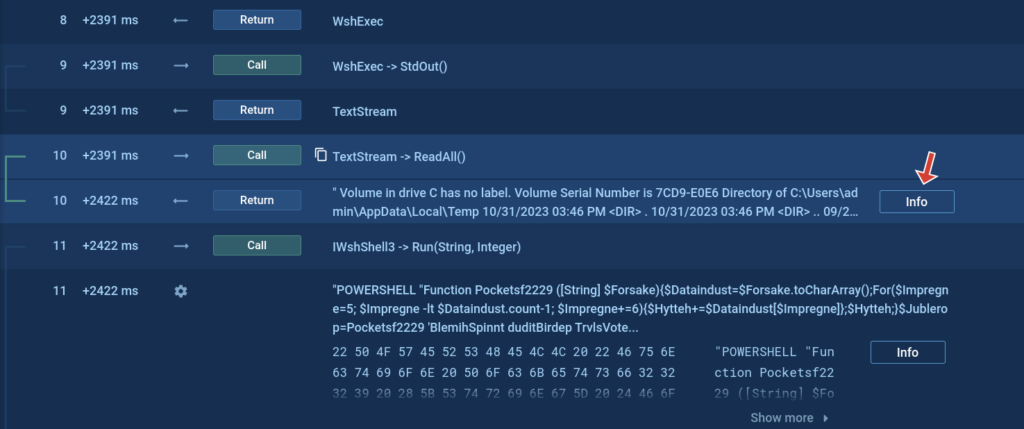
The return of the command and additional information
With the help of a sandbox, users can see the command’s output as well as download it for further analysis. This empowers analysts to fully comprehend the attacker’s actions and the potential harm caused.
DocumentAny Run Interactive Sandbox
Analyzing any suspicious attachment or URL in a free interactive malware sandbox like ANY.RUN can instantly provide you with a conclusive verdict.
Observing Script Usage by Executables
A sandbox’s ability to track script-executable interactions is crucial in identifying malicious scripts that depend on executables for their functionality. This insight helps analysts detect and neutralize script-based malware by employing executable files as a launchpad for their malicious activities.
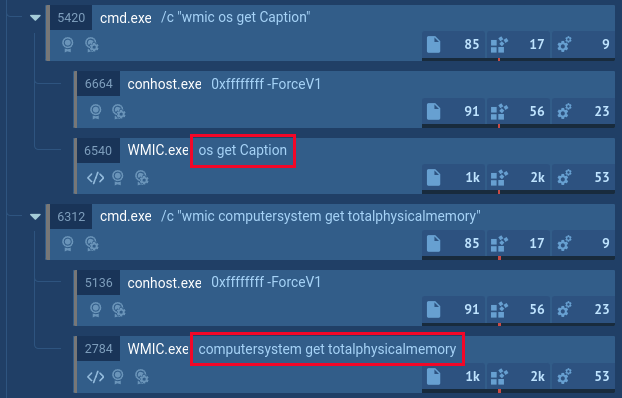
Scripts launched by executables
In the provided example, a malicious executable utilizes the Windows Management Instrumentation Command (WMIC) tool to load and execute a VBScript file. This approach allows the malware to conceal its true nature and manipulate the system without raising suspicion.
Analyzing VBS and JS-based Malware
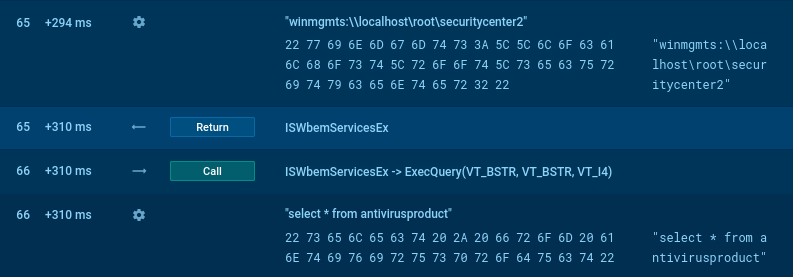
WSHRAT’s query to “winmgmts:\\\localhost\root\SecurityCenter2″
A sandbox can streamline investigating VBS-based malware, saving a lot of time on extensive reverse engineering or debugging. This example shows the WSHRAT malware making a WMI query likely to check for all the installed antivirus solutions on the device.
Microsoft Threat Intelligence, partnered with cybersecurity firm Arkose’s ACTIR, conducted a large-scale operation against online fraudulent login markets, successfully taking down Hotmailbox.me.
Microsoft has successfully dismantled a black market for fraudulent login credentials. This action followed an investigation aimed at disrupting the fake Microsoft account network known as Storm-1152, extensively utilized by cybercriminals.
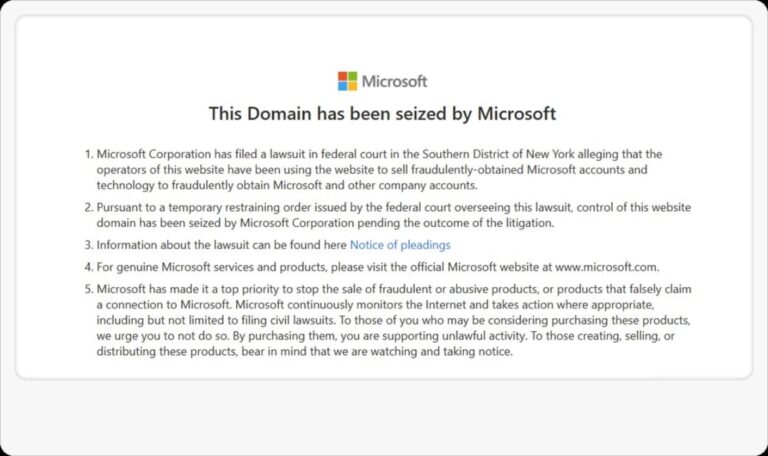
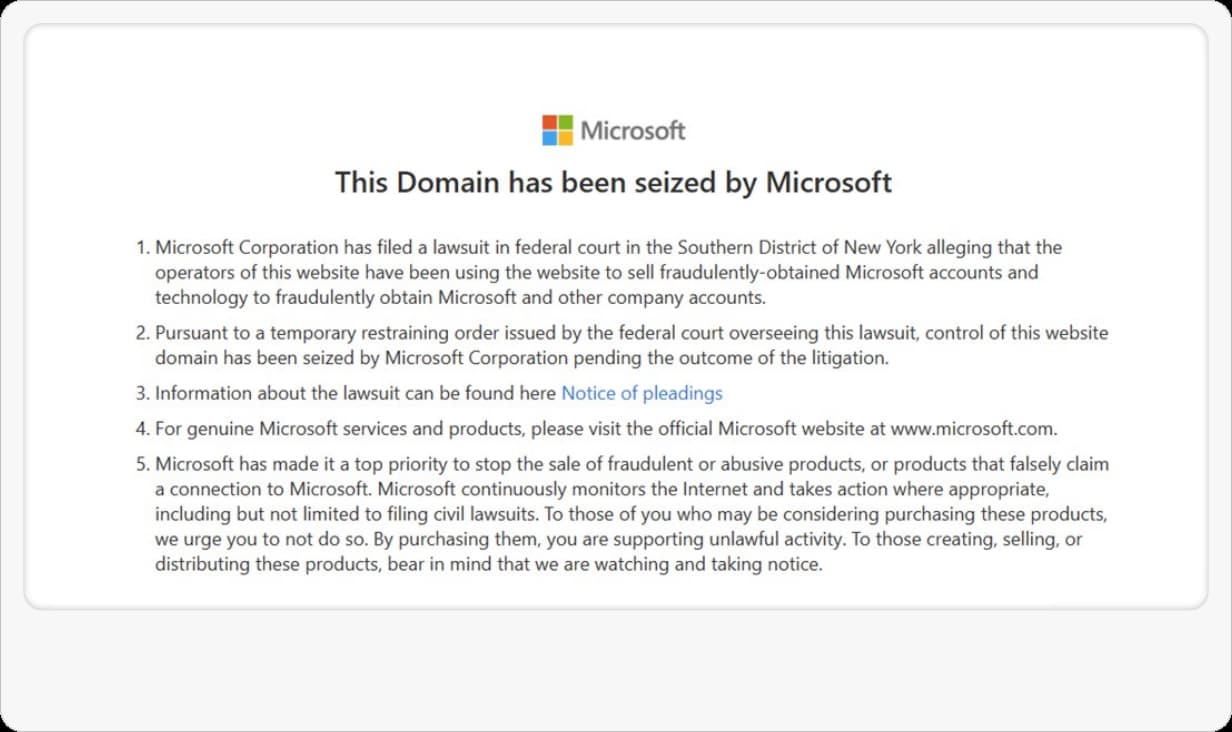
The seizure notice (Screengrab: Microsoft)
Researchers believe that cracking down on fraudulent accounts is crucial because cybercrime relies on fraudulent accounts as these act as digital keys for mass phishing, spam campaigns, and ransomware attacks.
The use of fraudulent and stolen login credentials by cybercriminals for large-scale data breaches is an undeniable reality. The recent attack on OAuth app users, as revealed by Microsoft just yesterday, serves as a small example amidst more significant incidents.
For your information, Storm-1152 is the world’s leading seller and creator of fraudulent Microsoft accounts. The platform has been exposed through a collaborative effort between Microsoft Threat Intelligence and cybersecurity firm Arkose’s Cyber Threat Intelligence Research unit (ACTIR).
According to Microsoft’s report, Storm-1152 operates a network of illicit websites and social media pages, selling fake Microsoft accounts and identity verification bypass tools. So far, the operators have generated around 750 million fraudulent accounts, leaving a trail of destruction.
Storm-1152, a notorious group in the cybercrime-as-a-service (CaaS) industry, specializes in producing and selling millions of fraudulent Microsoft accounts. The group is impactful because it lowers the barrier to entry, enabling a wider range of actors to engage in cybercrime. This efficiency boosts the scope and frequency of cyberattacks, impacting countless individuals and businesses.
Microsoft aims to dismantle Storm-1152’s infrastructure and disrupt the entire ecosystem that enables their activities, aiming to create a safer online environment for everyone. Microsoft has obtained a court order from the Southern District of New York to seize U.S.-based infrastructure and offline websites used by Storm-1152 to harm Microsoft customers.
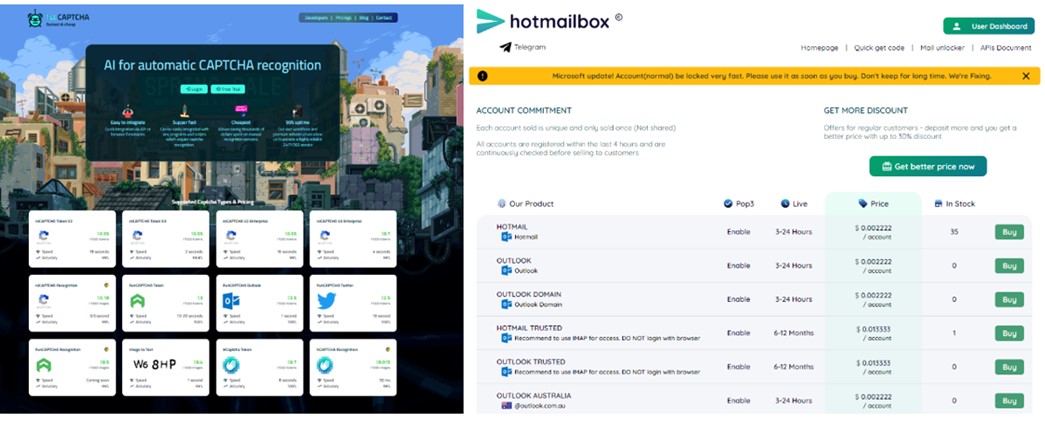
The case focuses on fraudulent Microsoft accounts and services sold to bypass security measures on other technology platforms. Microsoft’s Digital Crimes Unit disrupted Hotmailbox.me, 1stCAPTCHA, AnyCAPTCHA, and NoneCAPTCHA, which facilitate CAPTCHA solve service sales and identity verification bypass tools for other platforms.
The malicious marketplace Hotmailbox.me (Screengrab: Microsoft)
Researchers have also uncovered links between Storm-1152’s network and various cybercrime groups, including Octo Tempest, Storm-0252, and Storm-0455.
Nevertheless, this was a multi-phased operation launched to expose the people operating the malicious servers. Researchers used various investigative techniques, including network traffic analysis, telemetry data, and reverse engineering, to identify the source of the storm.
They identified three individuals, Duong Dinh Tu, Linh Van Nguyễn, and Tai Van Nguyen, as the masterminds behind the Storm-1152 machine. They hosted illegitimate platforms, authored the code, published tutorials, and offered live chat support.
Screengrab: Microsoft
Exposing the individuals behind Storm-1152 was crucial in dismantling this criminal network and holding accountable those who actively enabled online crime. Additionally, this coordinated takedown sends a clear message to Storm-1152 and others following their path: they are being watched and soon will be caught.
Android 14‘s latest update brought a notable feature – an expanded “Data sharing updates for location” dashboard. However, confusion ensued as Google Messages users received warnings that their location data was being shared with third parties. Google has now clarified that this warning is a result of an error in the app’s Play Store listing, and no actual data sharing with third parties is occurring.
Users reported seeing Google Messages in the privacy dashboard, with a message indicating that their location data is now being shared with third parties, provided they have enabled the app’s location permission for the sharing feature. The warnings displayed on this page are generated based on changes to the Data safety section of Google Play, which app developers self-report.
Google clarifies: No location data shared by Messages despite the Android 14 warning
The Data safety section, introduced in 2022, allows app developers to provide information about their data sharing practices. However, it is the responsibility of individual developers to accurately report their data sharing practices. Additionally, they can update this information at any time.
In the case of Google Messages, the app’s development team has responded to this matter. The team acknowledged that they mistakenly checked the wrong Data safety box on the Play Store. Currently, both Approximate and Precise location data are listed under “Data that may be shared with other companies or organizations.” However, Google clarified that Google Messages is not actually sharing location data with third parties. The warning was triggered due to a listing error.
It’s important to note that other major Google apps listed on the Play Store have been reported as “No data shared with third parties,” emphasizing Google’s commitment to user privacy. Google recently noted “Maps never sells data to anyone, including advertisers.” Significant in context, Google informs that Maps will soon start saving your location history locally. As Google initially assured users, the error in the Messages’ Play Store listing has already been corrected.
Major semiconductor companies are competing to bring the “2 nanometre” processor chips as early as possible. It is believed to be the next thing in tech, especially in smartphones. According to a new report, the world’s largest foundry TSMC (Taiwan Semiconductor Manufacturing Company) showed off its 2nm prototype to its biggest customer, Apple.
But, how does a 2nm processor chip excel over others? The simplest answer to this would be smaller process nodes, which means smaller transistors. It enables more of them to fit on a single chip which further boosts its capabilities. And of course, the number of transistors on a chip is directly related to its performance and efficiency. For example, the Apple iPhone 15 Pro line makes use of 3nm processed A17 Pro chips and we’ve seen the company boasting about its performance on the show and off the show.
Apple and NVIDIA get an exclusive look at TSMC’s 2nm processor chip
NVIDIA was another tech major to catch an exclusive look at TSMC’s 2nm prototype. More importantly, it’s another of TSMC’s biggest customers among Apple and others. The production of a 2nm chip is chugging along at the Taiwanese foundry. TSMC is eyeing to launch 2nm processor chips in 2025, noted FT, and it’d be the most efficient tech to date. If all goes smoothly, the iPhone 17 Pro and Pro Max might be the first Apple devices to house a 2nm A19 Pro processor. But take it with a grain of salt because previous leaks suggest Qualcomm could make the first move with 2nm.
Notably, Samsung and Intel are now behind. It has become a tech race and includes many aspects to compete, such as reliability, and affordability being the major prospects. ArsTechnica notes Samsung may pull the “price” card to attract big customers including NVIDIA. Samsung sees 2nm as a “game-changer” but people doubt it could compete well against TSMC, said a Dalton Investments analyst.
While Samsung confidently preps for mass production by 2025, TSMC finalizes its 3nm and 2nm client list. Meanwhile, Intel throws down the gauntlet with free test production for its 1.8nm process, potentially wooing AMD and challenging TSMC’s dominance.
As Cynet’s COO, my team and I get to work closely with risk management executives at small-to-medium enterprises (SMEs) around the world. In this article, I’ll condense our collaboration’s insights into three key trends for 2024, backed up by data and research from all areas of cybersecurity practice.
These emerging patterns pertain to organizations of all shapes and sizes — but, make no mistake, the greatest effects will be felt by SMEs where lean security teams with shoestring budgets are the norm.
I highly encourage business leaders to leverage resources like the 2024 Cybersecurity Planning Checklist for a holistic understanding of the security technologies, services and initiatives needed to manage risk in the year ahead. I also hope you’ll join a special webinar as we connect our findings to actionable advice you can implement to protect your organization’s most critical operations and valuable assets.
DocumentIncident Response Plan Template
A well-articulated and well-rehearsed incident response plan to use it to customize the ultimate IR plan for your IT security team.
SMEs will Face Recognizable Risks at Unprecedented Scale:
Executives will be challenged to boost security awareness, expertise and capability — without adding costly headcount.
The potential to bolster or bypass cybersecurity measures with artificial intelligence is far from breaking news. But don’t worry: this forecast steers clear of the canned prognostications you’ve been reading since ChatGPT became a household name.
Around this time last year, speculation was abundant that adversaries would weaponize GenAI to invent never-before-seen malware with the click of a button. That didn’t happen.
Instead, my team has observed using GenAI to proliferate existing threats at an unprecedented scale. This trend will continue to typify automated attacks in 2024.
A parallel effect of GenAI is that rookie hackers will wreak havoc in 2024. When mainstream platforms implement guardrails to deter illegal activity, alternatives like FraudGPT circumvent those restrictions.
Dark web forums where malware and ransomware are sold as services make it easy for script kiddies to procure and deploy automated malware.
These dynamics offer inexperienced threat actors an asymmetric advantage against unprepared organizations. This will produce a lot new threat actors trying to breach your environment.
The impact will be especially acute for SMEs. Gartner forecasts cybersecurity spending to increase by 14% in 2024 as the volume of inbound threats increases exponentially.
Further underscoring this disparity, PwC estimates that one in five organizations will shrink or freeze their security budget for 2024. Lean security teams must guard against the same threats facing large enterprises — but with a fraction of the personnel, budget or bandwidth. Company culture can help close this gap.
Employee incentives — such as the risk-linked performance bonuses — can boost awareness and reinforce resilience. According to another Gartner survey, 50% of C-suite leaders will have performance requirements related to cybersecurity risk embedded in their contracts by 2026.
For guidance to boost employee awareness, pg. 5 of the 2024 SME security plan checklistidentifies the key components of a holistic security training program.
By implementing these initiatives, SME execs can reduce organizational risk by boosting organizational awareness, promoting responsible best practices and empowering employees to respond appropriately if they believe an incident is underway.
Malware is Evolving Maximize Financial Damage:
SME execs can mitigate their exposure by prioritizing preventative capabilities to qualify for favorable insurance coverage.
Threat actors are adapting malware to bypass detections and impart maximum financial damage. In 2024, this ongoing evolution will be exemplified by cybercriminals’ widespread embrace of customizable infostealers like Stealc. Based on the Vidar, Raccoon, Mars and Redline stealers,Stealc allows attackers to pick and choose the data they wish to pull from their victims’ machines.
To evade detection, infostealers may hide within seemingly innocuous email attachments, hijack legitimate websites or exploit vulnerabilities in your software.
Once they have established a foothold, they may employ keyloggers to capture your every keystroke, steal browser cookies to access your online accounts, or even target specific applications like email clients and instant messaging platforms.
The pilfered data can be immensely valuable in the dark web forums where threat actors convene. Buyers can then use it to commit identity theft, drain bank accounts or blackmail organizations.
As the financial stakes of cybersecurity soar in 2024, executives can take the initiative to mitigate organizational risk. Cyber insurance provides an increasingly popular layer of protection. The market is expected to surpass $20 billion in 2024, up from $7 billion in 2020.
Most agreements cover damage and recovery costs — but some extend to investigations, forensics, fines, lawsuits and even ransomware payments.
Providers typically require organizations to demonstrate certain cybersecurity capabilities to qualify for optimal coverage.
These requirements help ensure that the organization has a baseline level of security to reduce the likelihood and impact of cyber incidents. Pg. 8 of the 2024 Cybersecurity Planning Checklist identifies the most important capabilities to proactively detect and destroy stealthy threats.
Compliance is also key, especially in highly regulated sectors. Executives must prepare to report impact to regulators and minimize reputational damage. Resources like an incident response template can be customized to define a plan with roles and responsibilities, processes and an action item checklist.
Geopolitical Chaos Will Spread Cyber Threats to New Sectors:
Ideologically motivated cyberattacks will comprise a larger proportion of threat actor activity.
The world is entering an era of heightened geopolitical tensions, with rising nationalism, ideological clashes and a growing distrust of international institutions. This volatility creates fertile ground for ideologically motivated cyberattacks, introducing new considerations for security leaders.
Traditionally, cybersecurity adversaries could be oversimplified into two categories. First and most common are financially motivated threat actors.
They pursue profit, as with a ransomware gang demanding payment or a social engineer soliciting credit card numbers. The second, state-sponsored threat actors, are backed by governments. They aim to advance the national security interests of their state.
In 2024, business leaders can expect to a significant increase in activity from a third flavor of adversary: ideologically motivated threat actors, often referred to as “hacktivists” or “cyberterrorists” depending on one’s opinion of their targets.
Ideologically motivated cyberattacks aim to disrupt critical infrastructure and sow discord within target nations. They may target power grids, transportation systems, financial institutions, or even companies that are perceived to take an opposing social stance causing widespread disruption and economic damage.
DocumentCybersecurity Planning Checklist
This document provides an easy-to-use checklist by distilling a comprehensive cybersecurity program into 36 key areas. Each key area addresses a technology (e.g., EDR), service (e.g., Darknet Monitoring) or initiative (e.g., employee training) necessary to effectively protect your SME.
But their goal is not to monetize that damage, like a financially motivated cybercrime; or to collect intelligence for analysis, like state-sponsored espionage. For these ideologically motivated actors, disruption is an objective in and of itself.
As hacktivism surges in 2024, small businesses in sectors once thought of as “safe” from cybercrime must recognize that ideological adversaries could view them as low hanging fruit. Let’s say, for the sake of example, you run a fashion blog.
It is unlikely your site stows the large cash reserves targeted by financial crimes; or the classified IP of the sort sought by the China-backed breach of Boeing. Nothing to worry about, right?
Wrong. A typical tactic of ideologically motivated actors is to spread propaganda and disinformation online. Hackers can hijack media outlets to promote fake news, manipulate social media algorithms and even infiltrate online communities to spread misinformation.
When TTPs are optimized to cause confusion, polarize public opinion and undermine trust in institutions, that fashion blog could easily be caught in the crosshairs.
As a result, executives across industries must recognize security as an organizational enabler, not a narrow niche for technical specialists, and build it into the fabric of their operations. Guides like “How to Build a Security Framework” can offer you a helpful head start.
For SMEs, newer all-in-one cybersecurity platforms offer an affordable and realistic approach for gaining enterprise-grade defenses without the exorbitant costs and complexities of building and operating an integrated multi-vendor tech stack.
Conclusion
For a growth-focused SME, lapses in cybersecurity can be catastrophic. Protection must be integral to every aspect of decision-making, from product development to supply chain management. By understanding new opportunities to holistically manage risk in collaboration with technology teams, business leaders can prepare to boost organizational resilience in 2024.
DownloadFree Cybersecurity Planning Checklist for Leaders 2024 – Here
There is a possibility the Xiaomi 14 Pro won’t be launched globally, it seems. A new report has surfaced, claiming that it’s possible, and there’s a reason why that’s claimed. It still doesn’t make much sense, though.
The Xiaomi 14 Pro may not launch globally at all
What’s this all about? Well, based on a report by Xiaomiui, the Xiaomi 14 Pro may not reach global markets. This statement is based on software development info. It seems like Xiaomi is not developing global software for the Xiaomi 14 Pro, while the opposite is true for the Xiaomi 14.
Do note that the source is possibly looking in the wrong place, though, which would make the entire report pointless. Still, there is a possibility that this is true, of course, which is why we’re reporting about it.
It doesn’t make all that much sense, however. The Xiaomi Pro models are usually quite popular globally, when it comes to the company’s higher-end devices. Pretty much everyone is expecting the Xiaomi 14 Pro to launch alongside the Xiaomi 14.
The Xiaomi 14 Ultra is on the horizon
As a side note, both of those smartphones did launch in China at the end of October. There is another phone worth noting, though, the Xiaomi 14 Ultra. That device is expected to arrive next year too.
If Xiaomi is planning to launch the Xiaomi 14 Ultra sooner than expected, that would explain the omission of the ‘Pro’ variant globally. We can only guess at this point, however. Also, the Xiaomi 14 Ultra will be considerably more expensive.
The Xiaomi 13 Ultra was announced back in April this year. The Xiaomi 14 Ultra could launch a bit sooner, though. One thing to note is that it may not arrive to global markets immediately, however, as it’s possible it will arrive to China first.
There are a lot of presumptions here, as we still don’t know anything for sure. It would be a shame if the Xiaomi 14 Pro didn’t launch globally, however.
Outages and oustings, these words pretty much characterized ChatGPT maker OpenAI over the past month. In November, ChatGPT experienced some major outages, leaving people without their favorite AI-powered encyclopedia. Well, ChatGPT is now back up and running after another outage was fixed.
Over November, the company experienced several outages, and it was speculated to be from a targeted attack. It fixed the issues multiple times only for them to come back. Outages weren’t the company’s biggest worries in November, as the company dealt with Sam Altman being ousted. That issue, along with the outage, no longer affects the company.
OpenAI fixed yet another ChatGPT outage
If you tried to use ChatGPT between 5:32pm and 6:10pm PST, you were out of luck. According to OpenAI’s status log, ChatGPT for the web was down. Based on the log, the company began investigating the issue within 20 minutes of it going down. In the meantime, there were more than 3,000 reports to the company about it being down. It just gives us an idea of how many people were trying to use the chatbot at that time. The number of actual users would be much higher, as not everyone is keen on sending reports to the company. Many people just log off and try another chatbot. Since Google Gemini now powers Bard, people likely chose to go there.
As for the cause, the log didn’t point to any kind of wrongdoing or foul play. So, as far as we can tell, it was just an internal error that needed a band-aid.
ChatGTP Plus is back
Speaking of services coming back online, Sam Altman announced that people can resume signing up for ChatGPT Plus subscriptions. This is the premium subscription service that grants the user more advanced features and a much more powerful language model. If interested, you can learn about ChatGPT Plus. It weighs in at $20/month, and it can really be something if you’re looking for some powerful AI.