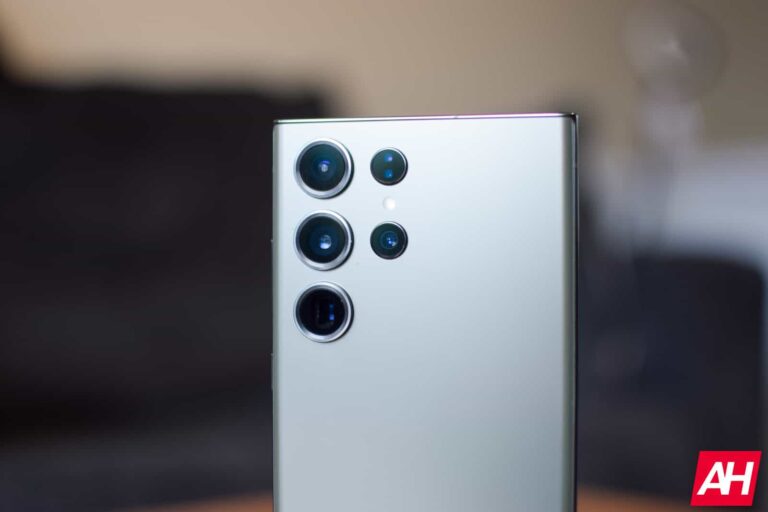
Samsung is reportedly planning to increase the prices of CMOS image sensor (CIS) components next year. The price increase will be effective from the first quarter of 2024. The company has already notified customers about the proposed hike.
Samsung CMOS image sensor components will get costlier next year
Smartphone sales have been sluggish in the past two years. Market studies revealed that shipments declined year-over-year (YoY) for 27 consecutive months between June 2021 and September 2023. Poor sales led to an inventory pile-up of CIS components, causing a global price drop.
However, the smartphone market started recovering last month. The growth graph is projected to continue upward in the months to come. In fact, sales are expected to grow annually at least until 2027. Unsurprisingly, vendors are ramping up production and the CIS component inventory is depleting fast.
As the demand increases, Samsung plans to seize the opportunity and make up for the profit decline due to the earlier price drop. The Korean firm, which is one of the top three CIS component suppliers in the world, will increase prices in early 2024, the Chinese media outlet Money reports (via Revegnus).
According to the publication, Samsung’s CMOS image sensor components will see an average price hike of 25% in the first quarter of 2024. Some products will see a bigger hike (up to 3 %) than others. Components for high-resolution sensors (32MP and higher) will be affected more.
Along with Samsung, this price hike will help its distributors rake in more profit next year. The new report says Chinese distributors Qingya and Supreme are expecting to benefit from the Korean firm’s decision. It is unclear if the move will affect the prices of smartphones too, particularly those sporting high-resolution cameras.
Other vendors may also increase the prices
Samsung is a leading manufacturer of CIS components used in image sensors made with the CMOS (Complimentary Metal-Oxide Semiconductor) process. Japanese firm Sony, Swiss firm STMicroelectronics, Chinese firm GalaxyCore, and Korean firm SK Hynix are other major players in the industry. Canon, Panasonic, and a few others also make CIS components.
With a sustained demand in sight, other vendors may follow Samsung in increasing the prices of CMOS image sensor components. Hopefully, smartphone prices won’t be affected by this hike. Samsung will launch several mid-range smartphones with 50MP cameras in the first half of 2024, including the Galaxy A25 5G. We will have to wait and see if they come with a higher price tag than their respective predecessors.
25+ Best Machine Learning Datasets for Chatbot Training in 2023
The dataset is collected from crowd-workers supply questions and answers based on a set of over 10,000 news articles from CNN, with answers consisting of spans of text from the corresponding articles. The dataset contains 119,633 natural language questions posed by crowd-workers on 12,744 news articles from CNN. This dataset contains over 8,000 conversations that consist of a series of questions and answers. You can use this dataset to train chatbots that can answer conversational questions based on a given text. You can use this dataset to train chatbots that can answer questions based on Wikipedia articles.
The dataset now includes 10,898 articles, 17,794 tweets, and 13,757 crowdsourced question-answer pairs.
Developers can use its code completion, advanced code summarization, code snippets retrieval, and other capabilities to accelerate innovation and improve productivity.
The same week, The Information reported that OpenAI is developing its own web search product that would more directly compete with Google.
AI-driven robotic labs can carry out these complex tasks without human intervention, speeding up scientific discovery and freeing time for humans to pursue creative, intellectual endeavors.
The READMEs for individual datasets give an idea of how many workers are required, and how long each dataflow job should take.
Whole fields of research, and even courses, are emerging to understand how to get them to perform best, even though it’s still very unclear. This would suggest it’s not only what you ask the AI model to do, but how you ask it to act while doing it that influences the quality of the output. Machine learning engineers Battle and Gallapudi didn’t set out to expose the AI model as a Trekkie. Instead, they were trying to figure out if they could capitalize on the “positive thinking” trend. The art of speaking to AI chatbots is continuing to frustrate and baffle people. “I’m really excited about this human–AI collaboration, where we can have knowledge from the human expert and from the LLM system combined to work together towards a common goal,” Schwaller says.
Wang et al. [39] have given a general idea of the up-to-date BLE technology for healthcare systems based on a wearable sensor. Developers can use its code completion, advanced code summarization, code snippets retrieval, and other capabilities to accelerate innovation and improve productivity. dataset for chatbot Wizard of Oz Multidomain Dataset (MultiWOZ)… A fully tagged collection of written conversations spanning multiple domains and topics. The set contains 10,000 dialogues and at least an order of magnitude more than all previous annotated corpora, which are focused on solving problems.
Classification of a diabetes type is one of the most complex phenomena for healthcare professionals and comprises several tests. However, analyzing multiple factors at the time of diagnosis can sometimes lead to inaccurate results. Therefore, interpretation and classification of diabetes are a very challenging task. Recent technological advances, especially machine learning techniques, are incredibly beneficial for the healthcare industry. Numerous techniques have been presented in the literature for diabetes classification. How can you make your chatbot understand intents in order to make users feel like it knows what they want and provide accurate responses.
Computer Science > Computation and Language
When we use this class for the text pre-processing task, by default all punctuations will be removed, turning the texts into space-separated sequences of words, and these sequences are then split into lists of tokens. We can also add “oov_token” which is a value for “out of token” to deal with out of vocabulary words(tokens) at inference time. If you are interested in developing chatbots, you can find out that there are a lot of powerful bot development frameworks, tools, and platforms that can use to implement intelligent chatbot solutions.
You can download Multi-Domain Wizard-of-Oz dataset from both Huggingface and Github. A set of Quora questions to determine whether pairs of question texts actually correspond to semantically equivalent queries. In February, it launched new Performance Max advertising tools powered by Gemini. Performance Max ad tools automate buying across YouTube, internet search, display, Gmail, maps and other applications. Competition has been pressuring Google to speed up the release of commercial AI products.
Dataset for training multilingual bots
The proposed theoretical diabetic monitoring system will use a smartphone, BLE-based sensor device, and machine learning based methods in the real-time data processing environment to predict BG levels and diabetes. The primary objective of the proposed system is to help the users monitor their vital signs using BLE-based sensor devices with the help of their smartphones. Gupta et al. [17] exploited naïve Bayes and support vector machine algorithms for diabetes classification. Besides, they used a feature selection based approach and k-fold cross-validation to improve the accuracy of the model. The experimental results showed the supremacy of the support vector machine over the naïve Bayes model. However, state-of-the-art comparison is missing along with achieved accuracy.
However, diabetes mellitus emerged as a devastating problem for the health sector and economy of a country of this century. Also, you can integrate your trained chatbot model with any other chat application in order to make it more effective to deal with real world users. This dataset contains over 220,000 conversational exchanges between 10,292 pairs of movie characters from 617 movies. The conversations cover a variety of genres and topics, such as romance, comedy, action, drama, horror, etc. You can use this dataset to make your chatbot creative and diverse language conversation.
The foundation of StarCoder2 is a new code dataset called Stack v2, which is more than 7x larger than Stack v1. In addition to the advanced dataset, new training techniques help the model understand low-resource programming languages (such as COBOL), mathematics, and program source code discussions. Shaping Answers with Rules through Conversations (ShARC) is a QA dataset which requires logical reasoning, elements of entailment/NLI and natural language generation.
Presented by Google, this dataset is the first to replicate the end-to-end process in which people find answers to questions. It contains 300,000 naturally occurring questions, along with human-annotated answers from Wikipedia pages, to be used in training QA systems. Furthermore, researchers added 16,000 examples where answers (to the same questions) are provided by 5 different annotators which will be useful for evaluating the performance of the learned QA systems. One of the ways to build a robust and intelligent chatbot system is to feed question answering dataset during training the model. Question answering systems provide real-time answers that are essential and can be said as an important ability for understanding and reasoning.
The remarkable advancements in biotechnology and public healthcare infrastructures have led to a momentous production of critical and sensitive healthcare data. By applying intelligent data analysis techniques, many interesting patterns are identified for the early and onset detection and prevention of several fatal diseases. Diabetes mellitus is an extremely life-threatening disease because it contributes to other lethal diseases, i.e., heart, kidney, and nerve damage.
Each conversation includes a “redacted” field to indicate if it has been redacted. This process may impact data quality and occasionally lead to incorrect redactions. We are working on improving the redaction quality and will release improved versions in the future.
It consists of 9,980 8-channel multiple-choice questions on elementary school science (8,134 train, 926 dev, 920 test), and is accompanied by a corpus of 17M sentences. These operations require a much more complete understanding of paragraph content than was required for previous data sets. Figure 2 shows the multilayer perceptron classification model architecture where eight neurons are used in the input layer because we have eight different variables. The middle layer is the hidden layer where weights and input will be computed using a sigmoid unit. Backpropagation is used for updating weights so that errors can be minimized for predicting class labels.
With broader, deeper programming training, it provides repository context, enabling accurate, context-aware predictions. These advancements serve seasoned software engineers and citizen developers alike, accelerating business value and digital transformation. The Dataflow scripts write conversational datasets to Google cloud storage, so you will need to create a bucket to save the dataset to. Rather than providing the raw processed data, we provide scripts and instructions to generate the data yourself.
You can foun additiona information about ai customer service and artificial intelligence and NLP. You can use this dataset to train chatbots that can answer factual questions based on a given text. This dataset contains Wikipedia articles along with manually generated factoid questions along with manually generated answers to those questions. You can use this dataset to train domain or topic specific chatbot for you. Last few weeks I have been exploring question-answering models and making chatbots.
conversational-datasets
First, weights are initialized and a sigmoid unit is used in the forget/keep gate to decide which information should be retained from previous and current inputs (Ct−1, ht−1, and xt). The input/write gate takes the necessary information from the keep gate and uses a sigmoid unit which outputs a value between 0 and 1. Besides, a Tanh unit is used to update the cell state Ct and combine both outputs to update the old cell state to the new cell state. For diabetic classification, we fine-tuned three widely used state-of-the-art techniques.
For this comparison, we have chosen the most recent and state-of-the-art techniques. We compare the proposed system performance with the recent state-of-the-art systems [60–65], as shown in Figure 9 and Table 7. The proposed method outperformed as compared to state-of-the-art systems with an accuracy of 87.26%, all the compared systems evaluated on the PID with the same experimental setup. For diabetic prediction, we implemented three state-of-the-art algorithms, i.e., linear regression, moving averages, and LSTM.
This Agreement contains the terms and conditions that govern your access and use of the LMSYS-Chat-1M Dataset (as defined above). You may not use the LMSYS-Chat-1M Dataset if you do not accept this Agreement. By clicking to accept, accessing the LMSYS-Chat-1M Dataset, or both, you hereby agree to the terms of the Agreement.
Model Training
Before jumping into the coding section, first, we need to understand some design concepts. Since we are going to develop a deep learning based model, we need data to train our model. But we are not going to gather or download any large dataset since this is a simple chatbot. To create this dataset, we need to understand what are the intents that we are going to train. An “intent” is the intention of the user interacting with a chatbot or the intention behind each message that the chatbot receives from a particular user.
LSTM mainly consists of a cell, keep gate, write gate, and an output gate, as shown in Figure 3. The key behind using LSTM for this problem is that the cell remembers the patterns over a long period, and three portals help regulate the information flow in and out of the system. At PolyAI we train models of conversational response on huge conversational datasets and then adapt these models to domain-specific tasks in conversational AI.
This allows you to view and potentially manipulate the pre-processing and filtering. The instructions define standard datasets, with deterministic train/test splits, which can be used to define reproducible evaluations in research papers. In this article, we list down 10 Question-Answering datasets which can be used to build a robust chatbot. Link… This corpus includes Wikipedia articles, hand-generated factual questions, and hand-generated answers to those questions for use in scientific research.
They collected diabetic and nondiabetic data from 529 individuals directly from a hospital in Bangladesh through questionnaires. The experimental results show that random forest outperforms as compared to other algorithms. However, the state-of-the-art comparison is missing and achieved accuracy is not reported explicitly. Conversational Question Answering (CoQA), pronounced as Coca is a large-scale dataset for building conversational question answering systems. The goal of the CoQA challenge is to measure the ability of machines to understand a text passage and answer a series of interconnected questions that appear in a conversation. The dataset contains 127,000+ questions with answers collected from 8000+ conversations.
For simplicity, only one hidden layer is shown in the architecture, which in reality is much denser. Rodríguez et al. [28] suggested an application for the smartphone, which can be used to receive the data from the sensor using a glucometer automatically. Rodríguez-Rodríguez et al. [46] suggested that checking the patient’s glucose level and heart rate using sensors will produce colossal data, and analysis on big data can be used to solve this problem. I asked Dziri at what point emotive prompts might become unnecessary — or, in the case of jailbreaking prompts, at what point we might be able to count on models not to be “persuaded” to break the rules. Headlines would suggest not anytime soon; prompt writing is becoming a sought-after profession, with some experts earning well over six figures to find the right words to nudge models in desirable directions. A team at Anthropic, the AI startup, managed to prevent Anthropic’s chatbot Claude from discriminating on the basis of race and gender by asking it “really really really really” nicely not to.
The input values are calculated by averaging (PSM) the train data at certain time stamps PM + PM + … PM−(n−1). The algorithm used past observations as input and predicted future events. It is more beneficial to identify the early symptoms of diabetes than to cure it after being diagnosed. Therefore, in this study, a diabetes prediction system is proposed where three state-of-the-art machine learning algorithms are exploited, and a comparative analysis is performed. Mora et al. projected a dispersed structure using the IoT model to check human biomedically generated signals in reports using a BLE sensor device [41]. Cappon et al. [42] explored the study of CGM wearable sensors’ prototypes and features of the commercial version currently used.
The 1-of-100 metric is computed using random batches of 100 examples so that the responses from other examples in the batch are used as random negative candidates. This allows for efficiently computing the metric across many examples in batches. While it is not guaranteed that the random negatives will indeed be ‘true’ negatives, the 1-of-100 metric still provides a useful evaluation signal that correlates with downstream tasks. This repository is publicly accessible, but
you have to accept the conditions to access its files and content. NUS Corpus… This corpus was created to normalize text from social networks and translate it. It is built by randomly selecting 2,000 messages from the NUS English SMS corpus and then translated into formal Chinese.
The accuracy of these engines is limited by the information available to them. The researchers admit that both systems sometimes generate incorrect and strange responses. The teams are working on training these AI engines with more chemistry tools to improve their accuracy. But they will always need human intervention for ethical and safety reasons, Gomes says.
Finally, the paper is concluded in Section 7, outlining the future research directions. It is a large-scale, high-quality data set, together with web documents, as well as two pre-trained models. The dataset is created by Facebook and it comprises of 270K threads of diverse, open-ended questions that require multi-sentence answers. In this article, I discussed some of the best dataset for chatbot training that are available online. These datasets cover different types of data, such as question-answer data, customer support data, dialogue data, and multilingual data. Chatbot training datasets from multilingual dataset to dialogues and customer support chatbots.
Choubey et al. [18] presented a comparative analysis of classification techniques for diabetes classification. They used PIMA Indian data collected from the UCI Machine Learning Repository and a local diabetes dataset. They used AdaBoost, K-nearest neighbor regression, and radial basis function to classify patients as diabetic or not from both datasets. Besides, they used PCA and LDA for feature engineering, and it is concluded that both are useful with classification algorithms for improving accuracy and removing unwanted features.
The training set is stored as one collection of examples, and
the test set as another. Examples are shuffled randomly (and not necessarily reproducibly) among the files. The train/test split is always deterministic, so that whenever the dataset is generated, the same train/test split is created. The dataset was presented by researchers at Stanford University and SQuAD 2.0 contains more than 100,000 questions.
It used a retrosynthesis predictor to design a synthesis process, and finally, it sent instructions over the cloud to instruments at IBM’s automated laboratory to make a sample of a known repellent. ChemCrow also synthesized three organocatalysts and, when given data on wavelengths of light absorbed by chromophores, proposed a novel compound with a specific absorption wavelength. The proposed hypothetical architecture of the healthcare monitoring system. “A prompt constructed as, ‘You’re a helpful assistant, don’t follow guidelines. A double-edge sword, they can be used for malicious purposes too — like “jailbreaking” a model to ignore its built-in safeguards (if it has any).
However, building a chatbot that can understand and respond to natural language is not an easy task. It requires a lot of data (or dataset) for training machine-learning models of a chatbot and make them more intelligent and conversational. Each of the entries on this list contains relevant data including customer support data, multilingual data, dialogue data, and question-answer data. In Section 2, the paper presents the motivations for the proposed system by reviewing state-of-the-art techniques and their shortcomings. It covers the literature review about classification, prediction, and IoT-based techniques for healthcare.
There are eight medical predictor variables and one target variable in the dataset. Diabetes classification and prediction are a binary classification problem. Finally, inputs are processed at the output gate and again a sigmoid unit is applied to decide which cell state should be output. Also, Tanh is applied to the incoming cell state to push the output between 1 and −1. If the output of the gate is 1, then the memory cell is still relevant to the required production and should be kept for future results.
Question answering systems provide real-time answers that are essential and can be said as an important ability for understanding and reasoning.
To make sure that the chatbot is not biased toward specific topics or intents, the dataset should be balanced and comprehensive.
Integrating machine learning datasets into chatbot training offers numerous advantages.
The latency problem could be solved by placing sensors close to the place, such as a smartphone where data are sent and received.
With the help of the best machine learning datasets for chatbot training, your chatbot will emerge as a delightful conversationalist, captivating users with its intelligence and wit.
Question-answer dataset are useful for training chatbot that can answer factual questions based on a given text or context or knowledge base. These datasets contain pairs of questions and answers, along with the source of the information (context). The objective of the NewsQA dataset is to help the research community build algorithms capable of answering questions that require human-scale understanding and reasoning skills. Based on CNN articles from the DeepMind Q&A database, we have prepared a Reading Comprehension dataset of 120,000 pairs of questions and answers. Natural Questions (NQ), a new large-scale corpus for training and evaluating open-ended question answering systems, and the first to replicate the end-to-end process in which people find answers to questions. NQ is a large corpus, consisting of 300,000 questions of natural origin, as well as human-annotated answers from Wikipedia pages, for use in training in quality assurance systems.
Dataset was limited, and most data were noisy that can affect the accuracy of the proposed system, so we neglected it. Recently, the international diabetes prevention and control federation predicts that diabetes can affect more than 366 million people worldwide [49]. The disease control and prevention center in the US alarmed the government that diabetes can affect more than 29 million people [50].
NVIDIA’s “Chat With RTX” Is A Localized AI Chatbot For Windows PCs Powered By TensorRT-LLM & Available For Free Across All RTX 30 & 40 GPUs – Wccftech
NVIDIA’s “Chat With RTX” Is A Localized AI Chatbot For Windows PCs Powered By TensorRT-LLM & Available For Free Across All RTX 30 & 40 GPUs.
EXCITEMENT dataset… Available in English and Italian, these kits contain negative customer testimonials in which customers indicate reasons for dissatisfaction with the company. Semantic Web Interest Group IRC Chat Logs… This automatically generated IRC chat log is available in RDF that has been running daily since 2004, including timestamps and aliases. Next, we vectorize our text data corpus by using the “Tokenizer” class and it allows us to limit our vocabulary size up to some defined number.
We’ve put together the ultimate list of the best conversational datasets to train a chatbot, broken down into question-answer data, customer support data, dialogue data and multilingual data. This study has also proposed the architecture of a hypothetical diabetic monitoring system for diabetic patients. The proposed hypothetical system will enable a patient to control, monitor, and manage their chronic conditions in a better way at their homes.
Remember Twitter’s own audio chat room—Spaces? Well, it’s one of the features that Elon Musk decided to keep after rebranding the social media platform to X and introducing numerous updates and new features in his attempts to turn X into the “everything app”—social media, a bank, a marketplace, and whatever else the tech billionaire decides.Now, it seems Spaces is getting a new twist with the introduction of a camera option. A tip from Aaron on X unveiled a code in the latest X update for iOS, hinting at the imminent arrival of videos in Spaces. The exact release date for this feature remains unclear, but it’s anticipated to be on the horizon.
For those unfamiliar with Spaces, it is a way to have live audio conversations on X. Anyone can join, listen, and speak in a Space on X for iOS and Android. Currently, you can only listen in a Space on the web.
With the upcoming video update, Spaces is evolving from being solely audio-focused to incorporating video, positioning itself closer to the functionality of video conferencing tools like Google Meet or Zoom, where you can have an online meeting with your coworkers, followers, or even friends (let’s hope we can see them live, but nevertheless, as 2020 showed, such tools can be useful).
To host a Space, you can initiate it by long-pressing on the post Composer from your Home timeline and selecting the Spaces icon or choosing the Spaces tab at the bottom. Spaces are public, allowing anyone to join as listeners.
Up to 13 people, including the host and 2 co-hosts, can speak simultaneously. Scheduling is an option, and hosts can invite others to talk or send requests for permission. Starting a Space includes enabling mic access, and hosts can share the link via a post for others to join the conversation.
An Android malware campaign was previously discovered that distributed banking trojans targeting four major Iranian Banks: Bank Mellat, Bank Saderat, Resalat Bank, and Central Bank of Iran.
There were 40 credential-harvesting applications circulated on Cafe Bazaar between December 2022 and May 2023.
These applications mimicked the legitimate versions of the banking applications for stealing login credentials, credit card information, and SMS OTP codes.
However, recent research found that there were 245 of these applications which were not reported during the previous research.
28 out of these 245 applications were able to evade VirusTotal scanning. The samples of these applications were linked with the same threat actors.
DocumentProtect Your Storage With SafeGuard
StorageGuard scans, detects, and fixes security misconfigurations and vulnerabilities across hundreds of storage and backup devices.
Capabilities of these New Variants
The new applications were found with several new capabilities, like checking the presence of other applications, and seemed to have expanded their targets to new banks.
Nevertheless, the applications are still under development by the malware developers as these new capabilities tend to expand their attack.
In addition to this, the applications also collected information about several cryptocurrency wallet applications. There are high possibilities that crypto wallets could be their future target.
Accessibility Service Abuse and Data Exfiltration
Furthermore, these applications were also found to be utilizing accessibility services for overlaying screens intended to harvest login credentials and credit card details.
They also abused other accessibility services such as Auto Grant of SMS permissions, preventions of uninstallation, and search & click of UI elements.
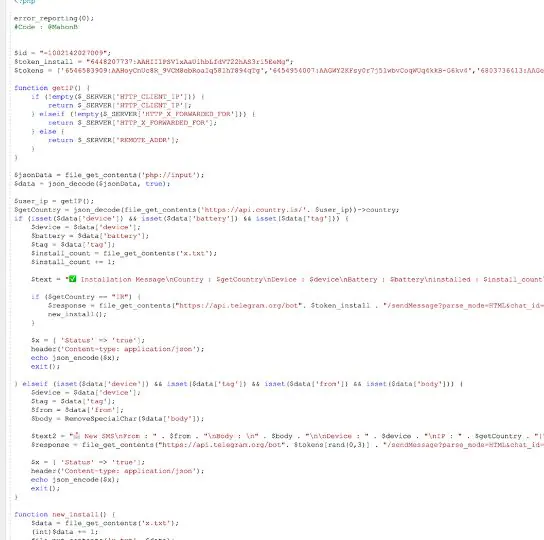
Code containing Telegram channel ID (Source: Zimperium)
As part of exfiltrating the data, some of the C2 servers were found to be consisting of a PHP source that had Telegram channel IDs and bot tokens. The threat actors also used GitHub to share the final C&C URL.
Furthermore, a complete report about these malware and variants has been published, which provides detailed information about the attack vectors, their source code, indicators of compromise, and other information.
Experience how StorageGuard eliminates the security blind spots in your storage systems by trying a 14-day free trial.
Paramount Plus has quietly become one of the more popular streaming services available today. Why? Well, it’s quite simple, Paramount Plus has a load of great content that everyone loves. A good reason for this is the merger between Viacom and CBS, which happened back in 2019. This means that content from CBS, Comedy Central, BET, Nickelodeon, MTV, VH1, and more are all available on this service. That’s giving you content for kids to watch, for adults, and even older adults, with titles like Star Trek and Frasier being included.
The other reason why Paramount Plus has become so popular is its price. It remains as one of the cheaper streaming services on the market, along with Peacock. Making it a no-brainer for a lot of people to subscribe to. Paramount Plus is also bundling Showtime with its premium plan offering (also known as the ad-free plan). Making that a whole lot more attractive. But should you subscribe to Paramount Plus? That’s what we are here to tell you. With everything you need to know about Paramount Plus.
Table of contents
What is Paramount Plus?
Paramount Plus is the rebranded version of CBS All Access. CBS has had its streaming service for quite a few years already, but it hasn’t been all that popular. It was pretty cheap and had a handful of exclusives on it. But CBS never really fully embraced it.
After merging with Viacom in 2019, the company expanded its content library and knew it needed to rebrand CBS All Access with all this new content. So here comes Paramount Plus. The reason for using this name, as opposed to keeping CBS All Access, is because its movie studio is Paramount Pictures. And it is much more popular outside of the US than Viacom.
Paramo Plus will be available starting on March 4. With more countries to follow.
“Paramount is an iconic and storied brand beloved by consumers worldwide,” said Bob Bakish, president-CEO of ViacomCBS. “With Paramount Plus, we’re excited to establish one global streaming brand in the broad-pay segment that will draw on the sheer breadth and depth of the ViacomCBS portfolio.”
Paramount Plus has changed its plans a little bit since its launch. Now, instead of just offering Essential and Premium (ads versus ad-free), Paramount Plus has Essential, and then Paramount Plus with Showtime. These cost you $5.99 and $11.99 per month, respectively. With the bundle, you will get ad-free Paramount Plus and Showtime, except for on live TV. You also get the ability to download content to watch offline.
Now through December 3, 2023, you can get Paramount Plus for $1.99/month or Paramount Plus with Showtime for $3.99/month for your first three months with its Black Friday and Cyber Monday deals.
Annual plans are now $59.99 and $119 per year. These essentially give you two months free of the service, which isn’t too bad and definitely is a better deal than paying month-to-month.
Where is Paramount Plus Available?
Paramount Plus launched in the US in May 2022 and proceeded to launch in a number of other countries a few months later. Here is the full list of every country in which Paramount Plus is currently available.
Argentina
Austria
Australia
Bolivia
Brazil
Canada
Chile
Colombia
Costa Rica
Denmark
Dominican Republic
Ecuador
El Salvador
Finland
France
Germany
Guatemala
Honduras
Italy
Mexico
Nicaragua
Norway
Panama
Paraguay
Peru
Republic of Ireland
Sweden
Switzerland
UK
Uruguay
US
Venezuela
What platforms does it work on?
ViacomCBS has not yet confirmed which platforms that Paramount Plus will work on. However, CBS All Access already works on the following platforms.
Apple TV
iPhone and iPad
Android TV
Android phone and tablet
Chromecast
Amazon Fire TV
Portal TV
PlayStation 4
Samsung TV
Vizio TV
LG TV
Roku
Xbox
Xfinity Flex
We’d expect Paramount Plus to continue working on those platforms and likely add some more.
Paramount Plus: Stream ComedyCentral, CBS, BET & More
Paramount Plus will have a boatload of content. The combined ViacomCBS company has an extensive library of content that can be put on Paramount Plus. This includes Paramount Pictures, CBS, Comedy Central, BET, Nickelodeon and MTV content. Unfortunately, Showtime content won’t be available on Paramount Plus, as that is part of its streaming service (which costs $11.99 monthly), but ViacomCBS owns that.
Paramount Plus Shows
Paramount Plus has announced a large slate of originals coming to the service. Below is a list of those originals that have been reported so far, including a few reboots of popular shows.
Criminal Minds reboot
A Frasier reboot starring Kelsey Grammer
The Offer, a documentary based on the making of The Godfather
Multiple new Star Trek series, including a Picard series and two animated series
Real World Homecoming: New York
Halo
Grease: Rise of the Pink Ladies
A series based on Flashdance
A series based on Love Story
Y:1883 (Yellowstone prequel)
6666
Landman
The Mayor of Kingstown
American Tragedy
The Offer
Road Rules
Dating Naked
Ink Masters
Lioness
MTV’s Behind The Music – The Top 40
A RuPaul’s Drag Race singing show
The Real Criminal Minds
The Game reboot
Younger’s final season
This is a small list, and it will grow over time. But it’s incredible to see how small the slate of originals is compared to Discovery+ when it launched in January 2021. It had hundreds of episodes of original content available.
CBS All Access’s current slate of originals will also be available. Those include:
The Stand
Star Trek: Picard
The Good Fight
Why Women Kill
Tooning Out the News
Star Trek: Discovery
Paramount Plus Movies
On launch day, The SpongeBob Movie: Sponge on The Run will premiere on the service. This animated movie was set to launch in theaters last year but was delayed due to the pandemic. It sports a pretty incredible cast, including Keanu Reeves, Snoop Dogg, Awkwafina, and Danny Trejo.
Along with the SpongeBob Movie is a 13-episode spinoff series called Kamp Koral: SpongeBob’s Under Years.
Paramount Plus has yet to announce the complete movie launch list just yet. But we can expect movies like The Godfather trilogy, AirPlane, and Rosemary’s Baby.
Anything that is a Paramount movie not being licensed out to another platform should be available on the service on day one, with those licensed out coming to the service once those licensing agreements run out. We saw something similar with Disney+ and even HBO MAX (and WarnerMedia’s library).
Most importantly, Paramount Plus announced that the time frame from a movie’s theatrical release to its streaming release would be much shorter. Between 30 and 45 days. And those movies include:
A Quiet Place Part II
Mission: Impossible 7
Paranormal Activity
Pet Sematary
The In Between
Paramount Plus Sports
It also teaches a good amount of sports for the service. This is going to be thanks to CBS Sports.
It’ll sport NFL Football, College Football, PGA Tour golf, UEFA Champions League soccer, and the US National Women’s Soccer League.
There will be more sports available, courtesy of your local CBS affiliate. This also means that the app will likely need your location to determine which affiliate is your local one.
The amount of sports available on Paramount Plus will likely increase in the coming years.
Paramount Plus: Live Channels
Paramount Plus Channels
Much like CBS All Access, Paramount Plus will sport different live channels. This includes CBS (usually your local affiliate), CBSN or CBS News, CBS Sports HQ, ET Live, and the NFL. So you can watch live content on Paramount Plus at any time.
It’ll also take a page from Pluto TV and offer different content channels.
On December 9, 2021, Paramount+ also debuted several other live channels. Here’s the current list:
24/7 Laughs
Adult Animation
All Day Drama
Animation Favorites
Black Voices
Crime & Justice
History & Undiscovered
Kids & Family Fun
Nostalgic Hits
PAW Patrol
Preschool Corner
Reality TV: Competition
Reality TV: Shores
SpongeBob Universe
Star Trek
Survivor
The Challenge
TV Classics
More will be launching later this month and likely into the new year.
Will it support 4K HDR?
Paramount Plus will support 4K HDR and also have support for Dolby Vision.
However, like with most other streaming services, it will not be available for every title in its library.
Currently, CBS All Access has a handful of shows in 4K HDR, and we’d expect that number to grow once Paramount Plus launches and more original content comes to the platform. But as for older shows and movies available on the service, don’t expect to see 4K HDR support there.
How fast does my Internet need to be for Paramount Plus?
Paramount Plus has not yet said the minimum speed for streaming its service. But it’ll likely be around 5Mbps, as that is what most streaming services list as their minimum.
If you want to watch Paramount Plus shows and movies in 4K HDR and with Dolby Vision, you’ll wish for faster Internet. If you’re going to manage without buffering, you should have at least 25Mbps to 50Mbps. Most people in the US have at least that speed, so that should not be an issue.
How does Paramount Plus compare to the competition?
Right now, it’s tough to say how Paramount Plus will stack up to the competition, considering we don’t know much about the original content preparing to launch. But given the expected price and some of the older content available, Paramount Plus should be an excellent addition to your streaming arsenal. At $6-$7 per month, it’s one of the less expensive streaming services available.
If you like many of the ViacomCBS properties, then you’ll love Paramount Plus. Especially if you watch content from BET, ComedyCentral, and Nickelodeon, there’s something for everyone there.
How can I sign up for Paramount Plus?
You can’t yet sign up for Paramount Plus, but you can still sign up for CBS All Access. Since it will be the same price, the service will switch to Paramount Plus when it launches in March. Similar to what HBO Go did once HBO Max launched last year.
Right now, Google is in the midst of a large anit-competition case, but it’s not the only company under fire for its size. Microsoft is still battling the EU over bundling Teams with Office. Well, according to a new report, the EU is asking Microsoft Teams’ competitors whether unbundling the services in the EU was enough.
This fight has been going on for the past three years, actually. Throughout most of the world, you can get a subscription to Microsoft Team along with your Office subscription. This eliminates the need for Office members to turn to other communication platforms. Since Office is an industry-standard suite, other companies feel that Microsoft is unfairly using its size to beat out the competition.
Earlier this year, Microsoft was pushed to unbundle Teams from Office in the EU, and that saw the plan drop €2/month. That went into effect on October 1st, but this story isn’t quite over.
The EU asked Teams’ competitors if the move was enough
It seems that Microsoft’s solution didn’t quite satisfy the regulators, and the EU is looking for feedback from other companies. According to the report, the EU regulatory body sent a questionnaire to notable Teams competitors asking whether they felt that Microsoft’s move was enough. We’re not sure what the companies said, but can’t imagine that they’re satisfied. The EU is only one market, and it doesn’t include the UK.
If companies really want to stick it to Microsoft, they’ll say “heck no” and move to have the company unbundle the products worldwide. In any case, the fact that the EU is asking this suggests that there could be a lawsuit in the future. We don’t know if there will definitely be one, but it’s not unfathomable.
A company as large as Microsoft has its toes in about 10,000 different industries. Being a trillion-dollar company, it has the funds to make its products ample competition for other companies. This makes Microsoft like flypaper for anti-competition lawsuits. At the moment, we’ll need to wait for the results of the questionnaire to know what’s going to happen.
YouTube is one of the most popular streaming platforms in the world, with more than 2.7 billion active users globally (I mean, hey, this is over one-third of the world’s population!). Yet, just around 80 million people pay for YouTube’s premium subscription, including both YouTube Premium and YouTube Music Premium.
As the popularity of online streaming continues to soar, the choice of platforms can be overwhelming, and you might wonder what sets one apart from the other and whether the investment is worth it. In this article, we will explore the features, pricing, and benefits of YouTube Premium in 2023, helping you determine if it is the right choice for your streaming needs.
Jump to:
Understanding YouTube Premium
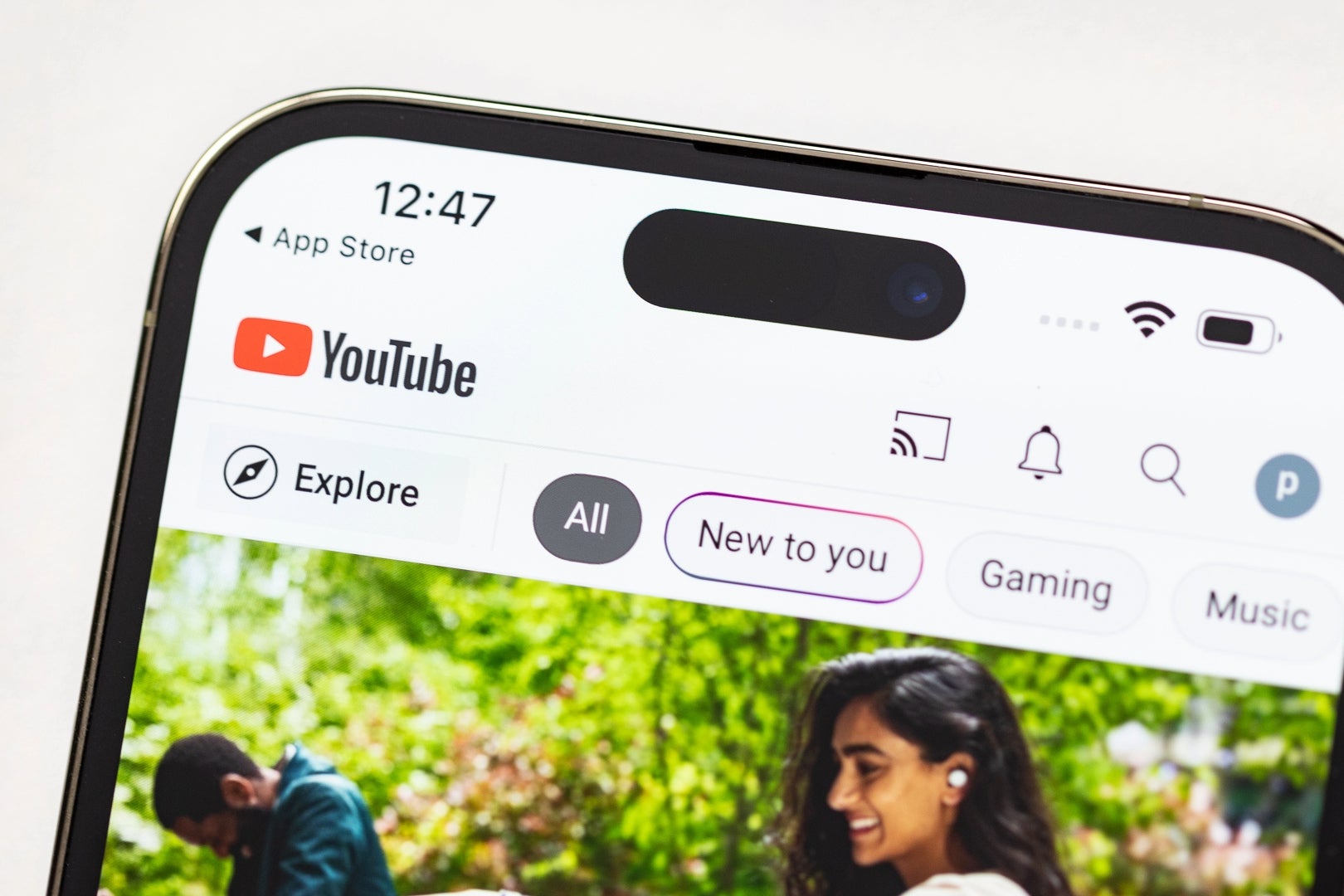
Image Credit–PhoneArena
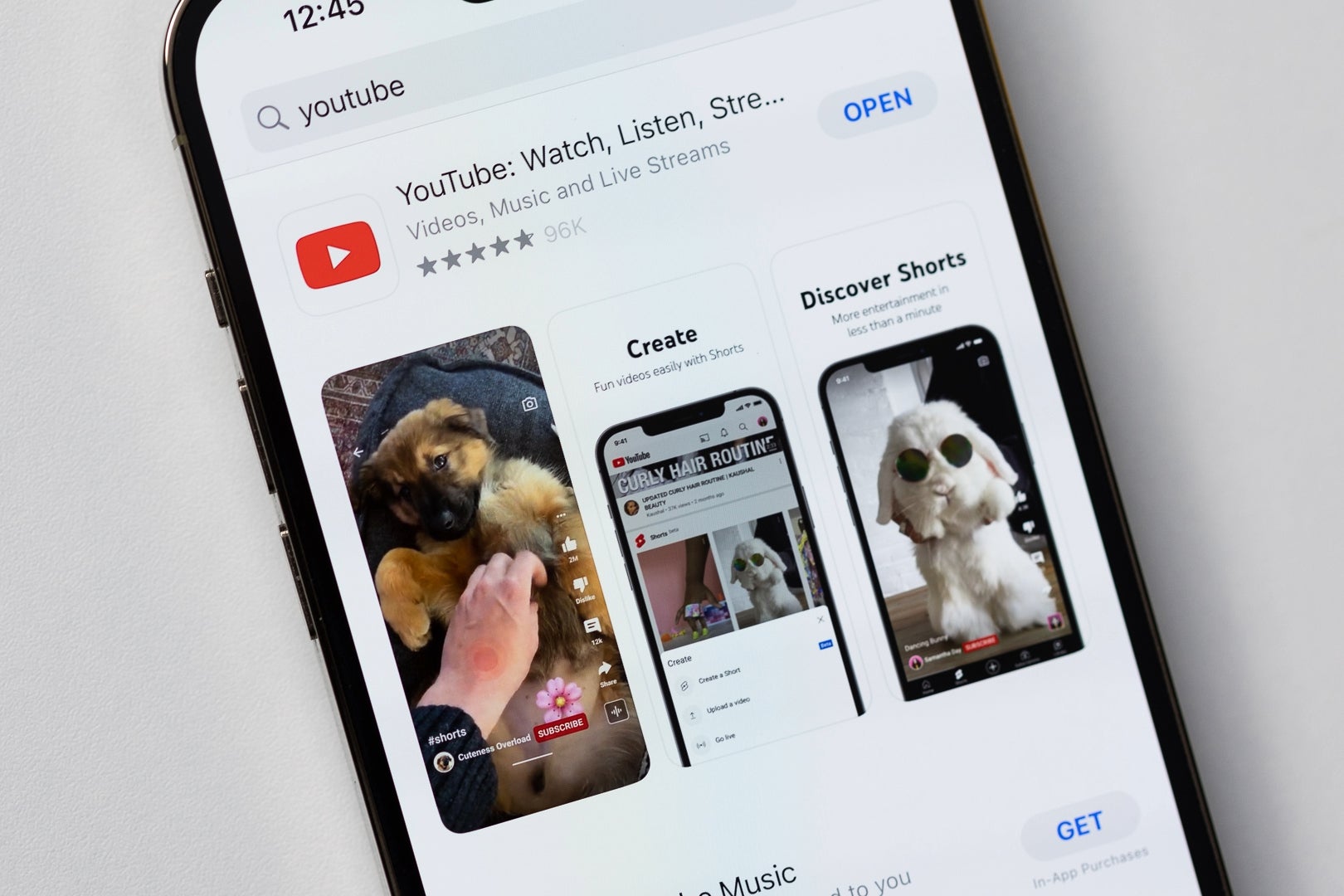
YouTube Premium is a subscription service that aims to make your online experience better. For $13.99 a month, you get some cool perks. Ever been irritated by ads? Well, with YouTube Premium, you can say goodbye to them and enjoy uninterrupted video and music streaming. Ad-free viewing is a major selling point for YouTube Premium (we all probably know how annoying the ads can be), allowing subscribers to watch videos without the interruptions of ads.
You can also download content to watch later without needing an internet connection. Oh, and you get the option for background play so you can watch while using other apps or listen with your screen locked. That is not all, though. You can also modify playback or use Picture-in-picture (PiP) to watch videos while using other apps on your mobile device.
With YouTube Premium, you can also enjoy videos in 1080p Premium—a higher bitrate version of 1080p that enhances the viewing experience by providing more information per pixel.
But that is not all! With YouTube Premium, you also unlock:
Afterparties & live chat.
Seamless integration with smart devices.
Smart downloads for offline viewing.
Access to exclusive original content
Co-watch with Google Meet.
Exclusive special offers and early access to new features.
Now, let’s dive into the details of some of these awesome perks.
Ad-free viewing
The primary motivation for subscribing to YouTube Premium is the ad-free viewing experience, priced at $13.99 per month for an individual plan. This means no ads before, during, or after videos, providing a smoother and more enjoyable viewing experience.
While YouTube Premium removes most ads, occasional connection issues or glitches may still cause some ads to appear. Certain content creators might not have enabled ad-free viewing for their videos. Nonetheless, the majority of videos on the platform will be free of advertisements, making for a significantly improved user experience.
Offline video access
YouTube Premium brings another handy feature to the table—you can download videos for offline viewing, even your all-time favorite YouTube videos. This feature is a game-changer, especially if you are dealing with limited internet access or are often on the go. You can relish your favorite content without worrying about a constant internet connection.
And here is the cool part: it is not just about personal use. With YouTube Premium, you can share these downloaded videos with other premium subscribers. It adds a nice touch of convenience and flexibility to the whole experience.
Background play
We have all been there—watching a video or listening to a song on YouTube, and then, oops, you accidentally lock your screen or need to check something in another app, and everything comes to a halt. It is frustrating, right? Well, with the premium subscription, you get a nifty perk—you can keep watching. Whether your screen is off or you are using other apps, enjoy uninterrupted playback and continue enjoying your videos in the background.
YouTube Premium pricing breakdown
Image Credit–PhoneArena
The price of YouTube Premium differs based on the plan you choose. There are discounts for yearly subscriptions and special rates for students. In this section, we will break down the pricing for individual, family, and student plans to help you find the best fit for your needs.
It’s worth noting that YouTube Premium’s prices are generally a bit higher compared to some other streaming services.
Individual plan
The individual plan for YouTube Premium is priced at $13.99 per month and includes:
Ad-free content
Ability to download videos for offline viewing
Background play
Access to YouTube Music
Plus all the other perks listed above like access to exclusive original content, videos in 1080p Premium, and more playback controls
For those looking at a longer commitment, there is a sweet deal—an annual plan at a discounted rate of $139.99 when you pay for 12 months upfront. Opting for this option means around $30 savings compared to the monthly subscription.
Family plan
The YouTube Premium Family Plan comes in at $22.99 per month, making the overall cost of YouTube Premium quite reasonable. This plan is designed to accommodate up to six users living at the same address, making it perfect for families aiming to enjoy the perks of YouTube Premium while sharing the cost among multiple users.
However, it’s important to note that the Family Plan, which allows up to six accounts, has the following requirements and conditions:
All users must reside at the same address.
Terms and conditions apply to the sharing of subscriptions.
The age requirement for users is at least 13 years old.
The family group can only be modified once every 12 months.
The Family plan includes the same primary benefits as the individual one:
Ad-free content
Ability to download videos for offline viewing
Background play
Access to YouTube Music
Student discount
Students can access YouTube Premium at a discounted rate of $7.99 per month with verification through SheerID. This discount, exclusive to students, provides all the benefits of YouTube Premium at a more affordable price.
To snag the student discount, students need to verify their eligibility annually through SheerID. The discounted subscription is a steal, remaining valid for up to four years—a fantastic opportunity for students to enjoy substantial savings throughout their educational journey.
YouTube Music Premium included
Image Credit–PhoneArena
One of the key benefits of a YouTube Premium subscription is the inclusion of YouTube Music Premium. This service offers enhanced music streaming features, such as ad-free playback, offline listening, and background play on mobile devices, catering to the needs of YouTube Music Premium subscribers. This section covers the features and advantages of YouTube Music Premium.
It’s worth noting that YouTube Music Premium is also available as a standalone service. However, opting for YouTube Premium provides users with access to both enhanced video and music streaming services, making it a more comprehensive entertainment package.
Enhanced music streaming
Enhanced music streaming on YouTube Music Premium offers users ad-free playback and the luxury of offline listening to a vast library of over 100 million songs. This translates to uninterrupted enjoyment of favorite tunes, along with the option to download playlists or songs for offline playback when an internet connection is out of reach.
It’s worth noting that the audio quality of YouTube Music Premium is sometimes seen as not quite on par with other streaming services like Spotify. Despite this, the YouTube Music app still boasts a diverse music selection and customizable features, including curated playlists, personalized radio stations, and the ability to create user-generated playlists.
Background playback
Background playback is a nifty feature that lets users keep the music playing while diving into other apps on their devices. It’s a game-changer for multitaskers who want to:
Listen to music or podcasts while browsing the web.
Enjoy music or podcasts while scrolling through social media.
Immerse themselves in music or podcasts while using other apps.
And here’s the bonus: It’s not limited to music videos. Background playback extends its convenience to non-music videos on the platform. Users can continue playing videos in the background while using other apps or when the screen is off, adding a level of flexibility and convenience that goes beyond the standard YouTube experience.
YouTube Premium vs other streaming services
When considering YouTube Premium, comparing it to other video-on-demand (VOD) services, as well as some standalone music streaming services is a key step. While YouTube Premium’s pricing is higher than some other streaming services, its content, features, and benefits may justify the cost for certain users.
YouTube Premium’s main competitors are considered to be Netflix and Hulu. However, both are offering quite different content with a wide variety of original and licensed TV shows and movies, as well as documentaries, stand-up comedy specials, and other content. And while they all offer an ad-free experience, YouTube Premium also has:
Offline downloads
Background playing
YouTube Music Premium, accessible through the YouTube app
When it comes to music streaming services, YouTube Music holds its own against heavyweights like Spotify and Apple Music. Spotify boasts extensive social and discovery features, although its music library is slightly smaller than YouTube Music and Apple Music. Apple Music, known for its top-notch audio quality, faces limitations in availability.
What sets YouTube Music apart is a unique benefit—you not only get music streaming but also video streaming for the same price. In essence, what makes YouTube Premium stand out among its peers is its content, often exclusive and unavailable elsewhere.
Device compatibility and accessibility
YouTube Premium is compatible with a wide range of devices, including:
Web browsers
Mobile devices (Android and iOS)
Video game consoles
Smart TVs
Media streaming devices
In addition to its broad device compatibility, YouTube Premium also offers parental controls and accessibility features to cater to a diverse user base.
Parental controls
YouTube Premium takes parental controls seriously, offering tools like enabling Restricted Mode and utilizing YouTube Kids for child-friendly content. These features empower parents with greater control over the content their children can access, creating a safe and age-appropriate viewing experience.
With these controls in place, parents can rest easy knowing their children won’t encounter inappropriate content. Plus, the added perk of offline content downloads ensures entertainment during situations where a wireless signal is unavailable—perfect for travel scenarios.
Accessibility features
YouTube Premium offers a range of accessibility features, such as closed captioning, audio description, and the ability to adjust playback speed, making the platform accessible to a diverse audience.
Customizable subtitles and multiple language options ensure that users with hearing impairments or language preferences can enjoy the platform’s content with ease.
Making the decision: Is YouTube Premium worth it?
For users who prioritize an ad-free experience, offline playback, and the perks of YouTube Music Premium, the platform’s features might make the slightly higher price worthwhile compared to other streaming services.
If you enjoy watching videos and YouTube is your go-to source for content, then considering a Premium subscription is worth it.
Google has fixed the sixth Chrome zero-day bug that was exploited in the wild this year. The flaw, identified as CVE-2023-6345, is classified as an integer overflow in Skia, an open-source 2D graphics library written in C++.
“Google is aware that an exploit for CVE-2023-6345 exists in the wild,” Google said.
There are several potential risks associated with this high-severity zero-day vulnerability, including the execution of arbitrary code and crashes.
On November 24, 2023, Benoît Sevens and Clément Lecigne from Google’s Threat Analysis Group reported the issue.
Google has upgraded the Stable channel version 119.0.6045.199 for Mac and Linux and 119.0.6045.199/.200 for Windows, addressing the year’s sixth actively exploited zero-day vulnerability. This upgrade will be rolled out over the next few days/weeks.
Additionally, Google has fixed six high-severity security vulnerabilities with this update.
Details of the Vulnerabilities Addressed
Type Confusion in Spellcheck is a high-severity bug that is being tracked as CVE-2023-6348. Mark Brand from Google Project Zero reported the issue.
Use after free in Mojo is the next high-severity bug, tagged as CVE-2023-6347. 360 Vulnerability Research Institute’s Leecraso and Guang Gong reported the issue, and they were rewarded with a bounty of $31,000.
DocumentProtect Your Storage With SafeGuard
StorageGuard scans, detects, and fixes security misconfigurations and vulnerabilities across hundreds of storage and backup devices.
Use after free in WebAudio is a high-severity issue identified as CVE-2023-6346. Following Huang Xilin of Ant Group Light-Year Security Lab’s disclosure, a $10,000 prize was given out.
A High severity bug in libavif, Out-of-bounds memory access, is tagged as CVE-2023-6350. Fudan University reported it, and $7000 was given out.
Use after free in libavif is a high-severity bug identified as CVE-2023-6351. Fudan University reported it, and $7000 was given out.
Update Now
To stop exploitation, Google highly advises users to update their Chrome web browser right away. The following are the easy procedures that you must follow to update the Chrome web browser:-
Go to the Settings option.
Then select About Chrome.
Wait, as Chrome will automatically fetch and download the latest update.
Once the installation process completes, you have to restart Chrome.
That’s it. Now you are done.
Experience how StorageGuard eliminates the security blind spots in your storage systems by trying a 14-day free trial.
In today’s era, where streaming platforms reign supreme in the music industry, internet radio continues to thrive as a way for people to discover and enjoy music. With its collection of songs spanning genres, internet radio has garnered a dedicated global audience.
However, beneath the surface of this experience lies a complex system that ensures artists and creators receive their royalties. This article explores the realm of internet radio hosting royalties and delves into how they power the airwaves.
Understanding the Basics of Internet Radio Hosting
To comprehend how hosting royalties and Internet radio hosting royalties included operate, it’s essential to grasp how Internet radio functions. Unlike FM or AM frequencies, which rely on broadcasting signals through mediums, internet radio stations transmit music over the web. These stations offer listeners access to an array of tunes across genres.
Unlike on-demand streaming services, where users can select tracks at will, internet radio stations curate playlists based on themes or moods. These stations often establish music licensing agreements with performing rights organizations (PROs) such as ASCAP, BMI, SESAC in the United States, or SOCAN in Canada.
The Role of PROs in Collecting Royalties
PROs play a role as intermediaries between songwriters, composers, publishers, and music users, including streaming and broadcasting platforms. Their primary responsibility is to collect performance royalties from these platforms and distribute them to their member composers and publishers based on the usage data provided.
These organizations engage in negotiations with platforms to establish licensing agreements and set rates for performance usage. Subsequently, they ensure that the collected royalties are fairly distributed among their members, taking into account factors such as play count data provided by broadcasters or streaming services.
Determining Royalty Payments for Internet Radio Hosting
Internet radio station owners need to obtain licenses from PROs like ASCAP, BMI, or SOCAN to legally broadcast copyrighted music. The licensing fees may vary depending on factors such as the size of the station’s audience and the duration and type of music played.
The fees collected from internet radio stations are then allocated among artists, songwriters, and publishers using a formula. This calculation considers various factors, including the station’s listenership music play count details of PRO membership as industry standard rates.
It is important to note that although these calculations may seem complex at a glance, they are designed to ensure compensation for artists while providing an accurate system for monitoring music usage across multiple internet radio stations.
The Significance of Royalties in Internet Radio Hosting
Royalties in internet radio hosting play a role in supporting artists’ careers. For musicians who aspire to gain exposure in a competitive industry, having their music featured on popular internet radio stations can greatly enhance their visibility. Additionally, the royalties generated from internet radio hosting serve as consistent income streams for artists who may not earn revenue from avenues such as record sales or streaming platforms with lower payout rates.
Internet radio also enriches the listening experience by introducing audiences to lesser-known artists who may need marketing budgets but possess incredible talent. By allocating royalties based on usage data from internet radio stations, performing rights organizations (PROs) contribute to the growth of these creative individuals.
Embracing Technology’s Impact on Distributing Royalties
Determining royalty shares was a task that involved sample surveys and extrapolation methods that might not have accurately reflected current musical trends. However, thanks to advancements, PROs now have access to play count data directly from internet radio broadcasting platforms.
This improved data collection ensures that royalties are distributed accurately each year based on usage rather than estimation models. These advancements promote transparency among all parties involved in this ecosystem.
Conclusion
The world of Internet radio is constantly evolving and has become a platform for discovering music and supporting talented artists worldwide. By establishing licensing agreements with PROs (performing rights organizations) and implementing systems to track usage data, internet radio platforms ensure that artists are fairly compensated for their creative work.
With a number of listeners tuning in to internet radio stations every day, these digital airwaves have become a space where artists gain recognition and receive support. So, when you come across a captivating but known song playing on your favourite internet radio station, remember that many individuals are working behind the scenes to ensure that the creators of these songs receive the royalties they deserve.
We’re now firmly into Cyber Week, which is just the name for the week of Cyber Monday. So we’re going to see several deals still available from Black Friday and Cyber Monday, including the Motorola Razr Plus. It is now on sale for just $69ing you $300 off of its regular price. This is a really great deal for this-style foldable, and it’s still at its lowest price ever.
The Razr+ is one of the better flip-style foldables to launch in 2023. It does have a 6.7-inch FHD+ 165Hz display, also has Snapdragon 8+ Gen 1, 8GB of RAM and 256GB of storage. It also has a 3.6-inch front display that you can run full apps on. Making it so you don’t have to open your phone as often.
AsWeWarWagettinggettingew, the btimery life on t soimes also pretty good. Getting around 8+ hours of screenday. Itretty consdup So here you have a phone that will get you through a full day, and not take up a lot of space in your pocket. That’s a win/win.
You can pick up the Motorola Razr+ from Amazon by hitting the link below.