You can also manage your T-Mobile account using the T Life app including the ability to add a line, change your plan, make a payment, get the status of your EIP (Equipment Installment Plan), track your data usage, and manage your T-Mobile home internet plan. It can also be used to set up SyncUP KIDS smartwatches. But there is an issue with the app.
One T-Mobile subscriber’s T Life app attempted to send him over 54,000 ads in 24 hours
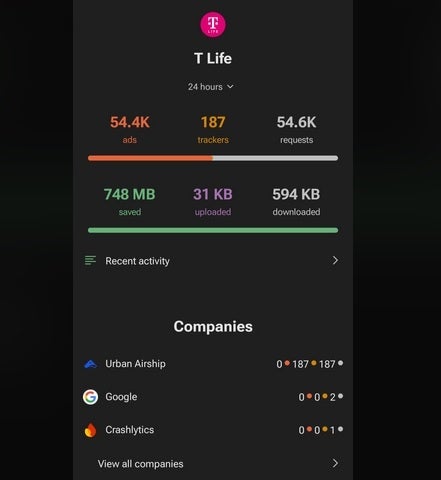
A photo posted on Reddit of the T Life app monitored by the AdGuard app shows that in the space of 24 hours, T Life tried to push out over 54,000 ads and 187 tracker requests to the specific T Life user. The ads and trackers were blocked by AdGuard.
“The T Life app is straight up trash….this app is just meant to push a bunch of bullshit onto the customers. T-Mobile is in full vampiric revenue mode right now trying to pinch pennies and suck blood out of turnips everywhere they can.”-Reddit user Tree_of_Woes
One Reddit user said that the number of ads is so high because when the ads, metrics, and analytics APIs are blocked by AdGuard and can’t reach their destinations, requests continue to be sent out like a brute force attack. The problem is that the constant attempts to block ads and trackers that follow the user around the internet could drain the battery on a T Life user’s phone and tie up some of the device’s resources.
“You’re seeing those numbers so high because the advertising, metrics, and analytics APIs that are being blocked don’t throttle their behavior when they can’t reach their destination, so they just hammer out requests constantly to try and break through…which is also terrible in design, and leads to the second problem. This behavior ends up draining your battery and unnecessarily using resources. Especially when there are valid scenarios outside of adblocking/metric blocking where these APIs may not be able to communicate (say corporate, airplane, high-security, etc wifi that might severely limit access) and should never hammer requests.
But also, apps: don’t be shitty. Few of us care about your perceived value in hidden metrics, instrumentation, and ads that use our data and our battery power.
T-Mobile specifically, you’re a paid service, you should be doing zero of this.”-Reddit user ChainsawBologna
It appears from the shared image that Airship (formerly Urban Airship) is the company behind the 187 tracker requests that the T Life had blocked. Airship is a mobile engagement company that uses push notifications, in-app messaging, email, and SMS to send personalized and targeted messages that attempt to reach customers on their mobile devices.
Samsung introduced its latest foldable smartphones – the Galaxy Z Flip 6 and Z Fold 6 – at its Unpacked 2024 event yesterday. In addition, the company also took the wraps of the Galaxy Ring, Galaxy Watch 7, and Watch Ultra wearables, apart from the Buds 3 series. The South Korean tech giant didn’t introduce the Galaxy Tab S10 series of flagship Android tablets at the Unpacked event.
However, Samsung did reveal that the new flagship slates are indeed in the pipeline. On the sidelines of the Unpacked 2024 event, a Samsung executive shed some light on the Galaxy Tab S10 series. The new slates will be the successors to the Galaxy Tab S9 series, launched in April last year.
Samsung’s Galaxy Tab S10 series flagship tablets will be available before the end of 2024
According to the source, a Samsung South Africa representative said that “there will be a Tab S10 series”. Unfortunately, the executive couldn’t offer more details about the new Samsung slates. However, the representative did confirm that the Samsung Galaxy Tab S10 series devices would be “available before the end of 2024”. There’s a possibility that Samsung may unveil the Tab S10 series alongside the Galaxy S24 FE in September or October. Only time will tell.
The Tab S10 series may come only in Plus and Ultra models
If the reports from the rumor mill are to be believed, the Galaxy Tab S10 series may come only in Plus and Ultra models. The last two generations of the S series flagship tablets from Samsung have come in three modes – base, plus, and Ultra. However, the company is said to be returning to a dual-variant lineup with the Tab S10 series this year.
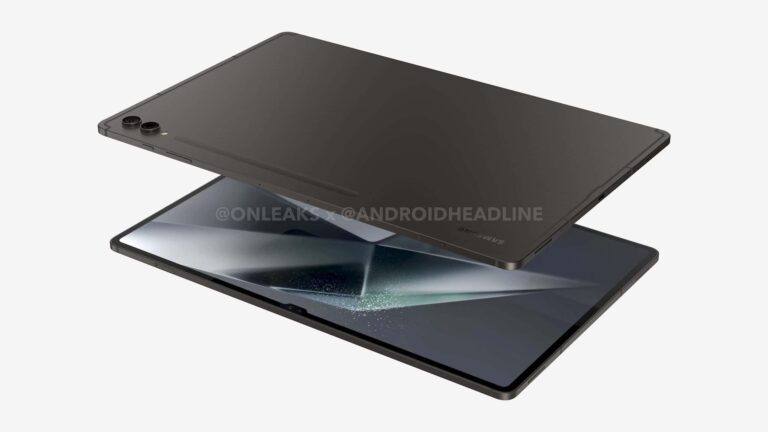
Last month, we gave you an exclusive first look at the Galaxy Tab S10 Ultra model in collaboration with OnLeaks. The slate is expected to flaunt a 14.6-inch display and a slim waistline, just like the Galaxy Tab S9 Ultra. As for the Galaxy Tab S10 Plus variant, it could be offered with a smaller 12.4-inch screen. We can expect more details about the new slates to emerge soon, so stay tuned.
Yesterday, Samsung launched the Galaxy Z Fold 6 and Galaxy Z Flip 6 as its latest foldable phones. While they are solid products, they don’t change much from previous models. During the event, the president of Samsung Electronics revealed an estimate of how many Galaxy Z Fold 6 and Flip 6 they expect to sell. His response reflected expectations of growth, although somewhat discreet.
Regarding the potential sales of Samsung’s new generation of foldables, Roh Tae-Moon said that “it is difficult to estimate the exact sales figure.” However, the executive revealed that the company hopes “to sell 10 percent more of new products compared to the previous model released last year.” So, while Samsung expects to sell more Galaxy Z Fold 6 and Z Flip 6 units, its analysis does not project excessive figures.
Samsung’s foldables have lost a lot of market share
Roh’s response is in line with the latest foldable phone market analysis. In May, a report from Counterpoint Research revealed that Samsung is losing market share in the segment at a rapid pace. More specifically, the South Korean giant went from having a share of 58% in the first quarter of 2023 to 23% in the first quarter of 2024. This is due to multiple reasons, among which is the growing competition in the segment.
The current foldable phone market offers more and more options in multiple price segments. This has probably caused fans of this type of device to try other brands. Additionally, Samsung has been conservative about improvements to its foldable devices. Lately, each new device generation includes minimal improvements. Meanwhile, products from other brands (especially Chinese brands) strive to include innovative and exclusive features.
Other brands have grown significantly
During the same period analyzed (Q1 2023–Q1 2024), brands such as Huawei, Honor, and Motorola experienced notable growth in foldable phone market share. They went from 14% to 35%, 3% to 12%, and 1% to 11%, respectively. That said, Samsung is not preoccupied by the situation. Roh said the growth of other brands “is positive for consumers as they benefit from a more competitive market.”
Perhaps it is time for Samsung to bet on innovation in future launches to reverse the trend. Their latest foldable devices have even reused some components for years. For instance, the Galaxy Z Fold 6 uses the same camera sensors as the Z Fold 5 and 4. However, the company has improved the quality by tweaking the image processing software. They have also been stuck in terms of fast charging, like the Galaxy S devices.
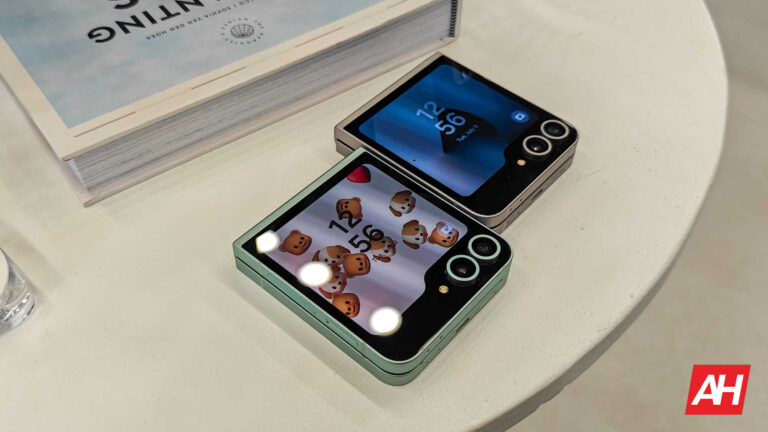
Yesterday, Samsung introduced its latest foldable smartphones, the Galaxy Z Flip 6 and Galaxy Z Fold 6, at its Unpacked 2024 event. While the Z Fold 6 gets a slightly bigger outer display, the Z Flip 6 retains the same 3.4-inch cover screen found on its predecessor. Besides some new widgets and Galaxy AI features, Samsung didn’t make any major upgrades to Z Flip 6’s outer screen this year.
However, the South Korean tech giant will soon be adding support for two popular email applications. During a press briefing before the Unpacked event (via 9to5Google), Samsung revealed that the Z Flip 6’s cover display will support the Gmail app.
Samsung is adding support for the Gmail app on the Galaxy Z Flip 6’s cover display
According to the source, Samsung representatives revealed that the Galaxy Z Flip 6’s cover display will soon support the Gmail app. Apart from Gmail, the phone’s Flex Window will also support Microsoft’s Outlook app. Unfortunately, the representatives didn’t reveal when exactly the updated versions of these apps with support for the cover screen will arrive.
The 3.4-inch cover screen of the Galaxy Z Flip 6 doesn’t provide much estate to work with. However, the official Gmail and Outlook support will certainly provide quick access to your inboxes, without having to flip open the phone. We can be hopeful that the updated email apps will also have support for the Flex Window of the Z Flip 5.
Currently, users can run any third-party app like Gmail directly on the Galaxy Z Flip 5’s cover display using Good Lock. However, these apps offer a sub-par experience due to UI scaling and other issues. It won’t be the case with the Gmail and Outlook apps once they get support from Google and Microsoft later this year.
Galaxy Z Flip 6 is available to pre-order, pricing starts at $1,099
Samsung has started taking pre-orders for the Galaxy Z Flip 6. The phone is up for grabs for $1,099 for the 256GB storage variant. The 512GB model, on the other hand, will set you back by $1,219. The handset is offered in four color variants – Silver Shadow, Yellow, Blue and Mint.
The company is also offering three more color models including Crafted Black, Peach and White, exclusively on its website. Samsung will start shipping the Galaxy Z Flip 6 on July 24.
A new phishing kit, FishXProxy, makes it alarmingly easy for cybercriminals to launch deceptive attacks. Learn how it works and how to protect yourself from these scams.
Phishing attacks have long been a menace, but a new toolkit called FishXProxy is making it disturbingly simple for even novice cybercriminals to launch sophisticated scams.
In their latest report, researchers at cloud messaging security platform, SlashNext Email Security, have disclosed exclusive details on FishXProxy, a new phishing kit discovered on the Dark Web.
FishXProxy is an end-to-end solution that lowers barriers for cybercriminals, offering advanced features like antibot configurations, Cloudflare Turnstile integration, built-in redirector, and page expiration settings.
The kit is advertised as “The Ultimate Powerful Phishing Toolkit,” as it can easily dismantle technical barriers associated with phishing campaigns, making launching attacks that bypass security defences and go undetected easier for cybercriminals.
FishXProxy is particularly dangerous because it makes phishing accessible to those with minimal technical skills. It is a comprehensive tool designed to create and manage phishing sites, aiming to evade detection and maximize the success rate of credential theft attempts.
“FishXProxy equips cybercriminals with a formidable arsenal for multi-layered email phishing attacks…Even if one attack fails, cross-project tracking allows attackers to persistently target victims across multiple campaigns,” SlashNext’s researchers noted in their report.
Through this kit, phishing emails with unique links and dynamic attachments can bypass security checks. Advanced anti-bot systems weed out automated scans and potential victims. What is worse, FishXProxy also has built-in traffic management to hide the true destination of links and distribute traffic across multiple pages.
Additionally, short-lived scams can be set to expire after a set time, pressuring victims to act quickly. A cookie system allows attackers to identify and target users across campaigns, tailoring scams and building profiles of potential victims.
The toolkit can also create attachments using HTML smuggling to deliver malware while bypassing email filters making detection and mitigation challenging for traditional security measures..
FishXProxy is also equipped with a cross-project tracking capability that allows attackers to persistently target victims across multiple campaigns, adapting their strategies based on previous interactions. This persistence poses a significant challenge to traditional security measures, necessitating more sophisticated and proactive defences.
According to researchers, the kit’s deep integration with Cloudflare provides phishing operators with enterprise-grade infrastructure, making it much harder for detection and takedown efforts.
Mr. Mika Aalto, Co-Founder and CEO at Hoxhunt, a Helsinki-based Human Risk Management Platform commented on the latest development emphasizing that phishing kits are making it easier for even less skilled and resource-limited criminals to launch advanced phishing attacks.
“Phishing kits are lowering the barrier of entry to advanced cybercrime even for low-resourced and not clever criminals. As more phishing attacks consequently bypass filters, we need to make sure our people are equipped with the skills and tools to keep themselves and their colleagues safe,“ he said.
“Even advanced attacks will trigger a mental alarm in the upskilled human defence layer. With a dedicated threat reporting button integrated into the email client and connected directly to the SOC, we can quickly leverage a single threat report into the total extermination of a widespread phishing campaign that’s wormed its way into inboxes. Human threat intelligence can be a game changer when it’s factored into the security stack,“ Mika added.
To combat this threat, organizations need advanced security solutions that detect threats across various channels. Employees should also be trained on the latest phishing tactics, and strong authentication measures should be implemented.
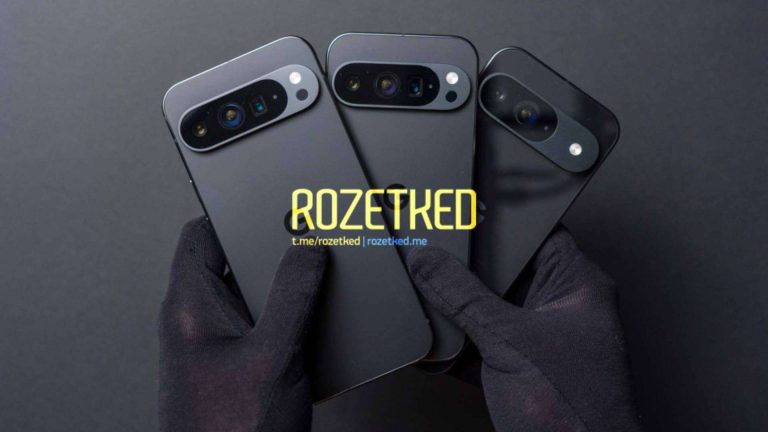
Google is set to unveil the Pixel 9 series next month at an event in Mountain View, California. But that’s not stopping the rumors and leaks. Now, we’re seeing European pricing for the Pixel 9, Pixel 9 Pro, Pixel 9 Pro XL and Pixel 9 Pro Fold. And to be honest, none of these prices are surprising.
Starting off with the Pixel 9 it’s currently being listed in France for €899 for the 128GB model, with the 256GB model being €999. Currently, the Pixel 8 is priced at €799 in France, so that means it is expected to see a €100 price increase after getting that price increase last year from the Pixel 7 to the Pixel 8.
Moving onto the Pixel 9 Pro, it is going to start at €1,099 for 128GB of storage. It will also be available in Obsidian, Porcelain, Hazel and Pink. The 256GB will be available in the same colors at €1,199. And finally, the 512GB model will be available in Obsidian and Hazel for €1,329. This is the same price as the current Pixel 8 Pro. However, the Pixel 9 Pro is supposedly going to be smaller than the current Pixel 8 Pro, so it’s not quite an apples-to-apples comparison.
Then the Pixel 9 Pro XL. This model will be available starting at €1,199 for 128GB and it’ll be available in Obdisian, Porcelain and Hazel. The 256GB model will add pink to the color lineup and priced at €1,299. Then the 512GB will be available in Obsidian, Porcelain and Hazel at €1,429. Finally, the 1TB model will be priced at €1,689 in Obsidian.
Google Pixel 9 Pro Fold will start at €1,899
Finally, we have the Google Pixel 9 Pro Fold, which is a pretty long and complicated name, but hey, here it is. The Pixel 9 Pro Fold is going to start at €1,899 for the 256GB model and €2,029 for the 512GB option. The Pixel Fold was not sold in many countries last year, including France. But it appears that the Pixel 9 Pro Fold will be sold in the US, UK, Germany and Japan. It’s also good to see that the pricing is staying the same for the most part.
A few days ago, a reliable industry insider claimed that Huawei is readying a tri-fold foldable smartphone. The Chinese firm is allegedly on track to launch the world’s first device that folds in two places. No other company is anywhere close to it in tri-fold development. It appears Huawei is toying with another foldable idea, not as revolutionary as a tri-fold, but certainly, a design element we could see on its future flip phones.
Huawei patent hints at a new design for future flip foldables
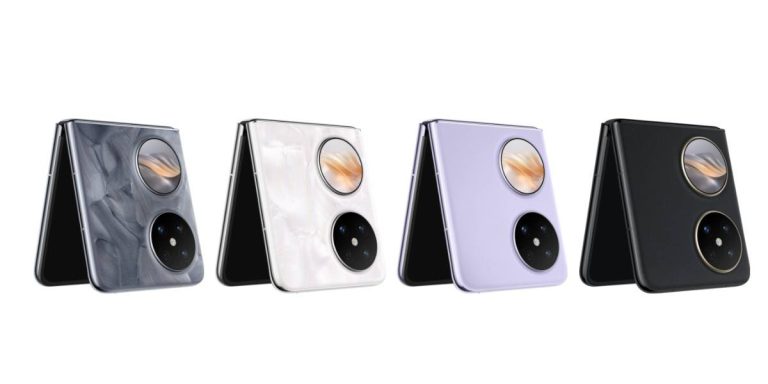
Huawei is one of the few experienced players in the foldable segment. The company has been making foldables for several years. Like Samsung, Oppo, and others, it makes book-style and clamshell (flip) foldables. Its most recent flip model, the Pocket 2, debuted in China in February 2024. Like its predecessors, the device has a circular cover display of the same size as the rear camera housing. The circular rings are aligned vertically.
Newly spotted design patents from Huawei suggest the company is mulling redesigning its flip foldables. Filed with the China National Intellectual Property Administration (CNIPA), the patents uncovered by 91Mobiles show five different cover display designs. Two of them have circular screens, while three have rectangular cover displays. For the circular design, Huawei patented horizontal and diagonal alignments.
The latter design also shows a bigger cover display. It certainly looks elegant and very much practical. In fact, neither design is impractical. We don’t see why Huawei shouldn’t design its new Pocket like this. We have reservations about the aesthetics of the rectangular cover displays, though. Like the circular design, Huawei’s patents show vertical, horizontal, and diagonal alignments, the latter with a bigger screen than the camera housing.
However, a rectangular camera housing and cover display isn’t aesthetically as pleasing as circular ones. Of course, these are just patents and Huawei’s designers would consider everything before picking the next design evolution for its flip phones. If it decides to shake things up, we might see the company pick one of the two circular designs discussed in these patents. It’s too bad that Huawei’s foldables aren’t available globally.
Huawei is rising from the ashes
Once a global leader in the smartphone industry, Huawei is now primarily a China-only company. The US sanctions severed its access to cutting-edge smartphone technologies, forcing it to rely on domestic innovations. With no access to Google Mobile Services, an integral part of the Android experience, Huawei struggles to compete in markets outside China. That said, the firm is growing fast, supported by a robust Chinese supply chain. Only time will tell if it can reclaim its former position in the global market.
iPhone users in 98 countries are alerted that they may have been targeted by spyware attacks
According to a report by TechCrunch, Apple has notified iPhone users in 98 countries that their devices may have been compromised by mercenary spyware attacks. The spyware attack in question is reportedly trying to compromise iPhones to steal personal information. The report suggests that Indian iPhone users were among the first to receive the warnings associated with the attacks.
“Apple detected that you are being targeted by a mercenary spyware attack that is trying to remotely compromise the iPhone associated with your Apple ID -xxx-,” mention the brand’s warning alerts.
“This attack is likely targeting you specifically because of who you are or what you do. Although it’s never possible to achieve absolute certainty when detecting such attacks, Apple has high confidence in this warning — please take it seriously,” the company added in the notifications.
Apple’s communication to the affected users clearly suggests that these are serious mercenary spyware attacks. The company hasn’t disclosed the identities of the attackers or the exact countries where iPhone users are being warned.
Apple has been sending similar threat warnings since 2021
Apple has been regularly releasing similar threat notifications to affected iPhone users since 2021. So far, the company has sent these alerts to users in more than 150 countries across the world. As per Apple, these attacks “cost millions of dollars and are individually deployed against a very small number of people, but the targeting is ongoing and global”.
Apple also sent an identical notification to a handful of journalists and politicians in October last year. Notably, Apple’s spyware alerts are released at a time when many countries are preparing for elections. In recent months, many other tech companies have also cautioned their users about similar threats on their electronic devices.
Previously, Apple used to describe these incidents as “state-sponsored attacks”. However, the company has opted for the term “mercenary spyware attacks” since last year.
Hacktivist group “SiegedSec” claims responsibility for a data breach at the Heritage Foundation, stealing details of a potentially controversial “Project 2025.” Learn more about the hack, the group’s motives, and the leaked data’s potential impact on the US political landscape.
In a brazen cyberattack, a group calling itself SiegedSec – self-described as “gay furry hackers” – infiltrated the servers of the conservative think tank, the Heritage Foundation. SiegedSec claims to have stolen crucial data, including internal documents related to a controversial initiative known as “Project 2025.”
The attack occurred on July 2nd and the hackers released over 2 gigabytes of data on Tuesday, July 9th including emails, usernames, and passwords of Heritage and non-Heritage contributors.
As seen by the Hackread.com Research Team, data contain information from 2007 to November 2022 about the right-wing media website The Daily Signal, linked to the Heritage Foundation. The leaked data also includes US government email addresses.
SiegedSec on Telegram announcing their hack (Screenshot: Hackread.com)
On the other hand, SiegedSec claims to have access to over 200 gigabytes of data, and that they have only released a small portion. Of particular concern is the data related to Project 2025. If authentic, this leak could expose the inner workings of a potentially far-reaching political agenda, with implications for the American government and society.
The group’s co-leader, known by the username Vio, told The Intercept that they are highly critical of Project 2025 and “everything the Heritage Foundation stands for.”
What is Project 2025?
Last week President Joe Biden tweeted about Project 2025 urging people to Google the term. However, details about Project 2025 are scarce, but reportedly, it outlines a roadmap for enacting a series of far-right policy changes if Donald Trump wins the 2024 US presidential election. It touches upon various issues such as abortion pills, family structure, diversity, equality, and immigration.
However, Trump has distanced himself from the proposals, stating he is unaware of the project’s origins and disagrees with some of its statements. But former Trump administration officials Paul Dans and Spencer Chretien hold significant positions within the project.
Nevertheless, the hackers claim that the majority of the obtained files were “mostly useless.”
Chat between SiegedSec and the Foundation’s Executive Director
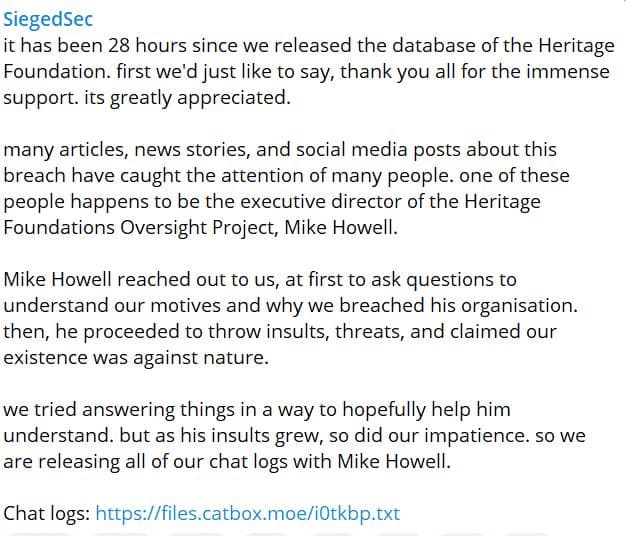
According to SiegedSec, the group was contacted by Mike Howell, the executive director of the Heritage Foundation’s Oversight Project. Howell expressed his anger over the hack and threatened the hacktivist group with consequences, including exposing their identities and arrests.
SiegedSec on Telegram talking about the chat (Screenshot: Hackread.com)
OpTransRights
The attack is a part of the hacktivists collective’s “OpTransRights” campaign, launched to disrupt government efforts to enact anti-trans and anti-abortion laws by targeting associated websites. The campaign targeted the Heritage Foundation because of its link with Project 2025.
Heritage spokesperson denied any system breach, stating the incident was a false narrative by criminal trolls, and that the organization was not “hacked” at any time.
SiegedSec Retires from Hacktivism
On its official Telegram account, while leaking the Heritage Foundation’s data, SiegedSec also announced its retirement from hacktivism and cybercrime. The group stated that their reason for retiring was to avoid the heat from law enforcement agencies, particularly the FBI, and to move on.
“Hello everynyan! the time has come for SiegedSec to disband 🙁 yes this is a sudden announcement, we planned to disband later today or tomorrow, but given the circumstances, I believe it’s best we do so now. for our own mental health, the stress of mass publicity, and to avoid the eye of the FBI.”
“I’ve been considering quitting cybercrime lately, and the other members have agreed its time to let SiegedSec rest for good. in the past, i have tried quitting cybercrime a few times, and ive always been unable to fully quit. this time, hopefully, i am able to stay away from it for my own wellbeing. we may not be a cybercriminal group anymore, but we will always be hackers and always fighting for the rights of others.”
SiegedSec
SiegedSec emerged in early 2022 as a “hacktivist” group targeting anti-LGBTQ+ groups. They hacked a US nuclear laboratory last year, demanding employees focus on “real-life cat-girls” research. They have also targeted government organizations, including NATO and Israeli companies for their compliance to the war in Gaza.
Samsung first introduced Galaxy AI with the Galaxy S24 series in January of 2024. It’s a suite of AI features that are built on Google Gemini Pro and Gemini Nano, it also uses Google’s Imagen 2 on Vertex AI, which Samsung says is “Google’s most advanced text-to-image diffusion technology”. It’s not a specific app, but rather the backbone for all of the AI features that are included in Samsung phones these days.
With the launch of the Galaxy Z Fold 6 and Flip 6 in July 2024, Samsung has added even more AI features to Galaxy AI. And that’s only going to continue. So, in this article, we are going to explain everything you need to know about Samsung Galaxy AI, as well as all of the different features that are available.
What is Galaxy AI?
Galaxy AI is the new AI system that Samsung has built for its devices moving forward. It will streamline existing features, adding new tools for users and generally improve the functionality of the device in line with current AI technology. Under-the-hood, Samsung is relying pretty heavily on Google’s Gemini LLM as well as Google Cloud to get these things done.
With Galaxy AI, most of these features are done in the cloud, but some are done on-device. In fact, in your phone settings, you are able to force everything to be done on-device.
What Samsung devices is Galaxy AI available on?
While Samsung debuted Galaxy AI on the Galaxy S24 series, it is not keeping the features from coming to older devices. However, the experience may differ on some older devices due to the hardware included. Here’s the full list of Galaxy AI-enabled devices.
And expect more to come as Samsung releases more devices and updates older devices.
What features are available in Galaxy AI?
Today, Samsung actually offers a slew of features within Galaxy AI. These include all sorts of things like Generative Edit in photos, Live Translate in the phone and messages app, Chat Assist and much more. Let’s break down each of these features.
New in One UI 6.1.1, Samsung actually lists all of the Galaxy AI features in the Settings app, and allows you to turn some of these off. A few of them are off by default as well. Samsung also allows you to force Galaxy AI to process data on device only, for added privacy.
Call Assist
This is probably one of the most useful and straightforward features of Galaxy AI. With Call Assist, you can get real-time translation during voice calls. Now, in practice, this is a bit slower than you’d probably like. However, this does tell the person on the other end that you are using a real-time translation service, so hopefully, they will be a bit more accommodating.
Chat Assist
Much like Call Assist, Chat Assist is able to translate messages in select chat and text messaging apps. You can compose a full text based on a snippet or request you’ve written, change your writing style, and get spelling and grammar suggestions. Unfortunately, Chat Assist is only available in the Samsung Keyboard. If you opt for a different keyboard like Gboard, you won’t be able to use Chat Assist.
Interpreter
With Interpreter, you get live translation of spoken conversations, which is available in both voice and text output. This makes traveling to other countries a whole lot easier. And sort of eliminates or eases the language barrier.
Note Assist
Moving onto Note Assist, which lives in the Samsung Notes app, this is going to auto format, summarize, spell check, and translate notes or decorate them with AI-generated covers and images.
Transcript Assist
Much like Google’s recorder app, Samsung’s can now transcribe what was said in that recording. Which can also be translated. This is especially great for meetings, webinars, and talking with people that speak other languages.
Browsing Assist
Ever wanted to know what’s going on in a news article without reading 3,000 words? Well, with Browsing Assist and the Samsung browser, you can get summaries of webpage text, and get full translations too. Making browsing even better, and getting the details faster.
Photo Assist
With Photo Assist, you can transform portraits using a variety of fun styles or reimagine entire images by moving or removing people and objects. This was previously called “Generative Edit”, but Photo Assist sounds a bit better.
Drawing Assist
Drawing Assist will let you transform simple drawings into captivating works of art. This is especially useful on devices like the Galaxy S24 Ultra or Galaxy Z Fold 6, which both have S Pen support. So, you no longer need to be an artist to get artistic images unique to you.
Photo Ambient Wallpaper
With Photo Ambient Wallpaper, you can see how the time and weather changes your photo with AI. For example, if you set a picture as your home screen or lock screen, and it is raining outside, you’ll see rain pouring on your screen. And as it gets darker outside, so does your wallpaper.
Health Assist
New with the Galaxy Watch 7 and Galaxy Watch Ultra, Health Assist is here to give you personalized insights and guidance based on your health data. This is also used to calculate your Energy Score, which is new with the Galaxy Watch 7 and Ultra this year. Samsung does note that this is used for fitness and wellness only and not intended to be used for diagnosis or treatment of any medical condition. Samsung also stresses that this information may not be accurate and may vary based on your condition or environment. You shouldn’t use this as medical advice and to always contact a medical professional.
Is Galaxy AI free?
For now. Galaxy AI is free until the end of 2025, but Samsung has not come out and confirmed that they will indeed start charging for Galaxy AI after that time, however it is a possibility.
We’d expect that most of these features will remain free, especially those that are offered by competitors. But some of the more intensive AI features could require a premium subscription. Not unlike what Google and OpenAI offer with Gemini and ChatGPT, respectively.
When asked about this, Samsung’s president of its mobile division, TM Roh, stated that “there could also be customers who wish for even more powerful AI capabilities and even pay for them. So, in future decision-making, we will take all these factors into consideration.”
So, for now, Galaxy AI is free, and it could always be free, or Samsung could offer a premium tier like some of its competitors. That decision hasn’t yet been made, but Samsung is leaving the door open to do so.