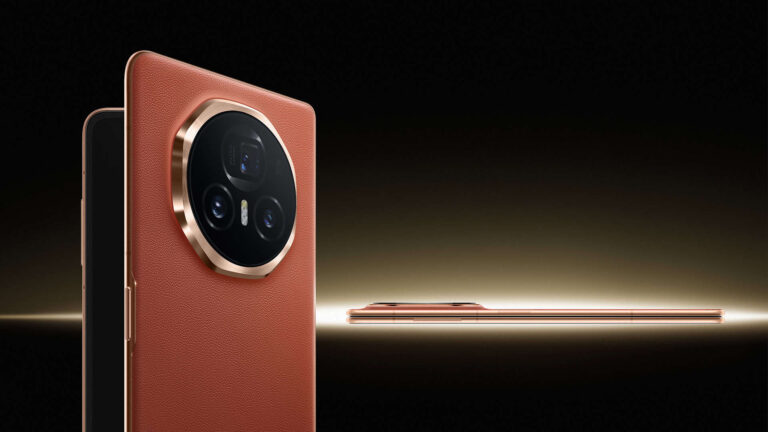
HONOR has announced its new foldable flagship, the HONOR Magic V3. This handset comes as a successor to the Magic V2, and it launched in China. Its global launch is also expected, and it will probably be announced for global markets at IFA 2024 in September. We’re still not sure, though.
The HONOR Magic V3 is even thinner than its predecessor
With that in mind, this smartphone is even thinner than the Magic V2, and even thinner than expected. It was rumored to be 9.7mm thick, but it’s only 9.2mm thick (not counting the camera bump, of course). The HONOR Magic V2 was 9.9mm or 10.1mm thick, depending on the model. Do note that the 9.2mm thickness applies to the vegan leather model, the glass models are 9.3mm thick.
Now, the HONOR Magic V2’s predecessor felt like a normal phone in the hand when folded. The Magic V3 will feel even better judging by these numbers. The HONOR Magic V3 also weighs only 226 grams (vegan leather model, glass models weigh 230 grams), while its predecessor weighted 231/237 grams. So that’s an improvement too.
It’s lighter than the Galaxy S24 Ultra, despite the fact it’s a foldable phone
This weight puts some regular smartphones to shame, which is a true accomplishment by HONOR. That’s the weight of some regular, non-folding smartphones, a number of them are even heavier than 226 grams. For comparison’s sake, the iPhone 15 Pro Max weighs 221 grams, while the Galaxy S24 Ultra weighs 232 grams.
The Magic V2 was not IP-rated, well, this phone is. It comes with an IPX8 rating, which is very welcomed. Its hinge has also been thinned down, it measures 2.84mm. That hinge can be folded up to 500,000 times, the company says.
The battery capacity is much higher than what the Galaxy Z Fold 6 offers
The Snapdragon 8 Gen 3 fuels the HONOR Magic V3, so HONOR didn’t skimp out on power. A larger vapor chamber cooling system is also included. To top it all off, a 5,150mAh battery sits inside of this smartphone, and even larger battery than in the HONOR Magic V2.
The device offers 12GB or 16GB of RAM, and it comes in 256GB, 512GB, and 1TB storage options. Only the 256GB storage model includes 12GB of RAM, the other two offer 16GB of RAM. HONOR used LPDDR5X RAM and UFS 4.0 storage inside the HONOR Magic V3, by the way. Android 14 comes pre-installed with MagicOS 8.0.1.
HONOR even managed to squeeze in 50W wireless charging support
This is a silicon-carbon battery, and it’s a lot bigger than what the Galaxy Z Fold 6 has to offer. That phone comes with a 4,400mAh unit. This phone supports 66W wired charging, and 50W wireless charging too. Wireless charging was not included in the Magic V2, so it’s a true accomplishment that HONOR managed to do that here and make the phone even thinner.
The phone includes a 7.92-inch main display with an adaptive refresh rate of up to 120Hz. Its cover display also has an adaptive refresh rate of up to 120Hz, though it measures 6.43 inches. HONOR also mentioned a 5,000-nit peak brightness for HDR content, and a 1,800-nit global peak brightness, which is impressive. That goes for both displays. Both panels also offer a 4,320Hz PWM dimming to protect your eyes.
The cameras have been improved too, there’s a periscope telephoto camera on the back now
The HONOR Magic V3 has three cameras on the back. The main one is a 50-megapixel unit with an f/1.6 aperture. A 40-megapixel ultrawide camera (f/2.2 aperture, 112-degree FoV) is also included, as is a 50-megapixel periscope telephoto camera (f/3.0 aperture, 3.5x optical zoom, 100x digital zoom).
The phone comes in Black, Green, Red, and White color options. The black variant combines metal with vegan leather, while all the other variants have glass on the back. A side-facing fingerprint scanner is also included, as are two SIM card slots.
When unfolded, the phone measures 156.6 x 145.3 x 4.35-4.4mm. When folded, it measures 156.6 x 74 x 9.2-9.3mm. The 226-gram weight applies to the black model, while the other variants weigh 230 grams. The price tags are still unknown. They’ll be different outside of China either way, presuming this phone will launch globally, and it almost certainly will.
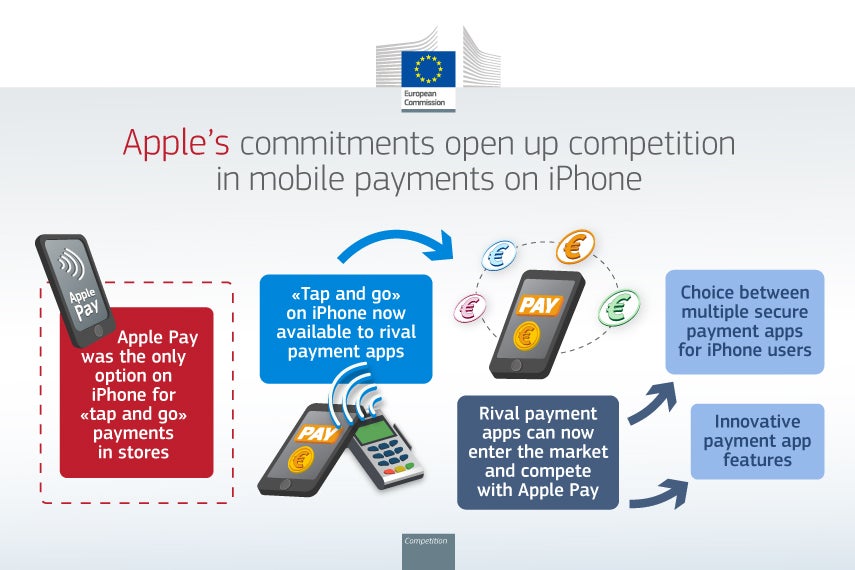
The European Commission (EC) is relentless in its push for open access, making big tech companies rethink their rules. For example, the EU’s Digital Markets Act (DMA) has already forced Apple to allow different app stores on iPhones. Now, the company is opening up its contactless payment system as well.
Apple opens iPhone payments to competition in the EU
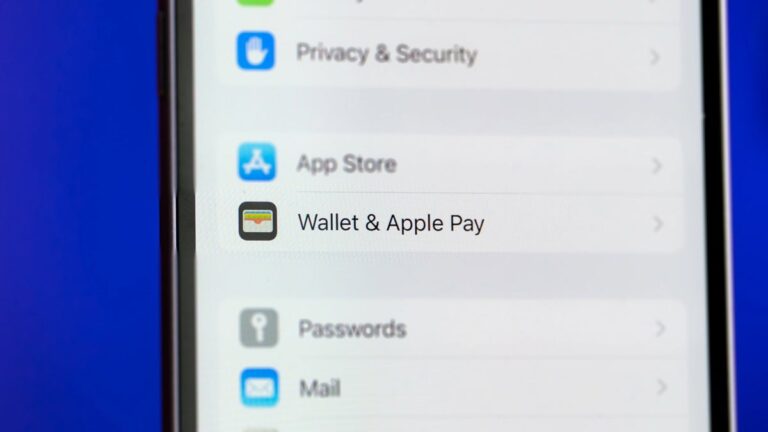
The EC has given the nod to Apple’s updated commitments, which means users won’t be restricted to using just the Apple Pay mobile wallet anymore.Apple Pay is Apple’s mobile wallet that lets iPhone users make payments both in stores and online. Since iPhones exclusively use iOS, Apple maintains control over every aspect of its ecosystem, including the conditions for mobile wallet developers to access it.
However, the tech giant is now allowing European developers to enable tap-and-go payments within their iOS apps for things like car keys, transit passes, corporate badges, home keys, hotel keys, merchant loyalty rewards, and event tickets.
From now on, Apple can no longer use its control over the iPhone ecosystem to keep other mobile wallets out of the market. Competing wallet developers, as well as consumers, will benefit from these changes, opening up innovation and choice while keeping payments secure.
– Margrethe Vestager, EU antitrust chief, July 2024
Apple has until July 25 to roll out these changes, which will be in effect for 10 years across all 30 countries in the European Economic Area.
Apple opens iPhone payments to competition
The European Commission first took issue with Apple’s tap-to-pay practices in 2022 after starting a formal antitrust investigation into Apple Pay two years earlier. Regulators determined that Apple had abused its dominant market position by limiting access to the NFC technology required for mobile payments. This restriction meant that rivals couldn’t create apps or wallets with tap-to-pay features on iPhones, forcing users to rely solely on Apple Pay for mobile payments.
Had Apple failed to comply with the DMA rules, it would have been subject to even steeper fines than before. In March, Apple was hit with its first EU antitrust penalty – a 1.84-billion euro fine – for stifling competition from Spotify and other music streaming rivals through App Store restrictions.
Cybersecurity researchers at McAfee Labs have uncovered a sophisticated new method of malware delivery, dubbed the “ClickFix” infection chain.
This novel attack strategy leverages advanced social engineering techniques to manipulate unsuspecting users into executing malicious scripts, leading to severe security breaches.
This article delves into the intricacies of the ClickFix method, its implications, and the steps users can take to protect themselves.
Prevalence for the last three months
The ClickFix Infection Chain
The ClickFix infection chain begins with users being lured to visit seemingly legitimate but compromised websites.
These websites are meticulously crafted to appear genuine, significantly increasing the likelihood of user compliance. Upon visiting these sites, victims are redirected to domains hosting fake popup windows.
These popups instruct users to paste a script into a PowerShell terminal, a command-line shell used for task automation and configuration management.
Once the script is pasted and executed in the PowerShell terminal, the malware can infiltrate the victim’s system. This can lead to data theft, system compromise, or further propagation of the malware.
The sophistication of this method lies in its ability to exploit the trust users place in seemingly authentic websites and prompts.
Malware Families Leveraging ClickFix
Two notable malware families, Lumma Stealer and DarkGate, have been observed leveraging the ClickFix technique.
Lumma Stealer is known for its ability to extract sensitive information, including passwords, credit card details, and other personal data, from infected systems.
DarkGate, on the other hand, is a more advanced threat that steals sensitive information, provides remote access, and establishes persistent backdoors in compromised systems.
DarkGate employs advanced evasion tactics, making it difficult to detect and remove. It can spread within networks, posing a significant cybersecurity threat.
Combining these malware families with the ClickFix technique represents a formidable challenge for cybersecurity professionals.
The Role of Phishing Emails
McAfee Labs obtained a phishing email from their spamtrap containing an HTML attachment masquerading as a Word document. Phishing emails play a crucial role in the ClickFix infection chain.
The HTML file displayed an error prompt designed to deceive users into taking actions that could lead to the download and execution of malicious software.
Email with Attachment
The phishing email tactic is particularly effective because it exploits the user’s familiarity with common file types and error messages.
By presenting a seemingly legitimate problem and offering a solution, the attackers increase the likelihood that users will follow the instructions and inadvertently execute the malicious script.
Technical Analysis
Upon examining the code within the HTML attachment, researchers discovered several base64-encoded content blocks. These blocks contained the malicious script users were instructed to paste into their PowerShell terminal.
The script, once executed, initiates the malware download and installation process.
Displays extension problem issue
This method of encoding and disguising the malicious script is a testament to the attackers’ sophistication. By hiding the true nature of the script within encoded blocks, they make it more challenging for automated security systems to detect and block the threat.
HTML contains Base64-encoded content in the title tagAfter decoding the code
Protecting Against ClickFix
To protect against the ClickFix infection chain and similar threats, users should follow these best practices:
Be Cautious with Emails and Attachments: Always verify the sender’s identity before opening any email attachments, especially if they are unexpected or from unknown sources.
Avoid Pasting Scripts: Never paste scripts or commands from untrusted sources into your terminal or command prompt.
Use Security Software: Ensure your security software is up-to-date and capable of detecting and blocking advanced threats.
Educate Yourself and Others: Stay informed about the latest cybersecurity threats and educate others about the risks and best practices for staying safe online.
The discovery of the ClickFix infection chain highlights the ever-evolving nature of cyber threats and the importance of vigilance in the digital age.
By understanding the tactics used by attackers and taking proactive measures to protect themselves, users can reduce the risk of falling victim to these sophisticated social engineering schemes.
As cybersecurity threats continue to grow in complexity, staying informed and cautious is more critical than ever.
Life’s hectic, right? Between work, errands, and everything else, who has time for the little things at home? Enter smart home tech. It’s not just for tech geeks—it’s for anyone wanting an easier, more convenient life.
Imagine controlling your home’s temperature, lighting, and security with a tap on your phone. Sounds good? Let’s get into how you can transform your house into a smart home paradise.
Personal Financial Editor Matt Mayerle with CreditNinja.com says, “Smart home technology offers unparalleled convenience and control. With just a few taps, you can manage your entire home environment, making daily life significantly easier.
Smart Speakers: The Heartbeat of Your Home
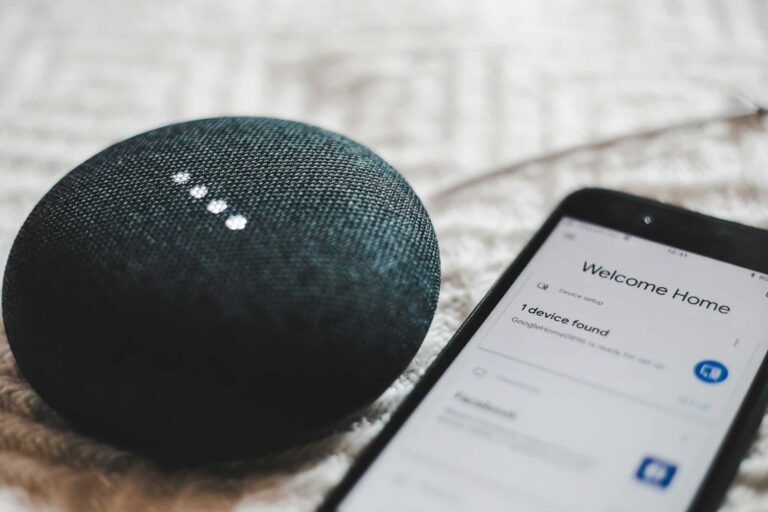
Have you ever wished you had a personal assistant? Smart speakers like Amazon Echo and Google Home are just that. They’re the command centers of your smart home, letting you control everything with your voice. Play your favorite tunes, dim the lights, or even order a pizza without lifting a finger.
What They Do:
– Set Alarms and Reminders: Never miss a beat. – Weather Updates: Plan your day while still in bed. – Manage Smart Bulbs: Adjust your lighting to match your mood.
These devices learn from you, making each interaction more tailored to your habits.
Next-Level Entertainment
Smart homes aren’t just about practicality—they’re about fun, too. Picture this: telling your TV to play a movie or syncing your lights to your music for an immersive experience. Smart tech takes your entertainment to new heights.
Must-Have Gadgets:
– Smart TVs & Streaming Devices: Binge your favorites effortlessly. – Smart Speakers & Sound Systems: Fill your space with rich, quality sound. – Virtual Reality Headsets: Step into another world.
These gadgets make your entertainment more interactive and enjoyable.
Automate Your Home
Think of smart devices as giving your home a brain. Control everything remotely and make your daily routine easier.
Essential Smart Devices:
– Smart Bulbs: Adjust brightness and color from your phone. – Wi-Fi-enabled Thermostats: Save energy by controlling temperatures remotely. – Smart Locks: Secure your home with advanced locking systems from your phone.
These additions bring convenience and efficiency right to your fingertips.
Navigating the Smart Home World
Smart home tech is cool, but there are some things to keep in mind.
Considerations:
– Compatibility: Make sure all your gadgets play nice together. – Cost: Think about initial costs and future updates. – Privacy & Security: Protect your data with strong security measures.
Planning ahead ensures a smoother transition to a smart home.
Smart Kitchens: The Future of Cooking
Kitchens are the heart of the home. Smart tech is turning them into hubs of innovation.
Top Smart Appliances:
– Smart Fridges: Track expiration dates, create shopping lists, and suggest recipes. – Smart Ovens: Control remotely to prepare meals before you get home. – Smart Dishwashers: Schedule washes to save on energy.
These appliances simplify cooking and cleaning while adding value to your home.
Smart Security: Keeping Your Home Safe
Safety is a top priority. Smart security systems offer peace of mind. Imagine monitoring your home in real time, getting instant alerts on suspicious activities, and controlling your security settings from anywhere. With smart security, you’re always in the know.
Essential Smart Security Devices:
– Smart Cameras: High-definition video monitoring and night vision. Some models even have facial recognition. – Smart Doorbells: See and speak to visitors at your door, even when you’re not home. Some doorbells also offer package detection. – Smart Locks: Control your locks remotely, grant access to guests, and get notifications when someone enters your home. Advanced models offer fingerprint recognition.
These devices ensure that your home is not only smart but also secure, giving you control and peace of mind whether you’re at home or away.
Financing Your Smart Home Transformation
Upgrading to a smart home can be an investment, but it doesn’t have to break the bank. Many people are turning to creative financial solutions like apps that loan without a job to fund their smart home upgrades. Whether you’re adding smart locks or a full home automation system, finding the right financial assistance can make your dream smart home a reality without the upfront cost.
Conclusion
Think turning your home into a smart space is tough? It’s easier than you think. Start with a smart speaker. Before you know it, your home will be smarter, more efficient, and secure.
Smart home tech isn’t just a trend. It’s changing how we live. Start small. Expand gradually. Watch your home transform into a modern haven. Dive into smart living—your future self will thank you.
Hackers use Banking Trojans to steal sensitive financial information. These Trojans can also intercept and modify transactions, allowing hackers to drain bank accounts or make unauthorized purchases.
BlackBerry cybersecurity researchers recently detected that the Coyote banking trojan has been actively attacking Windows users to steal login details.
Coyote is an advanced .NET Trojan horse focusing on Brazilian financial institutions, indicating the increasing cyber hazards in Latin America.
Named after its misuse of Squirrel malware, Coyote uses a unique process linked to legitimate open-source files contaminated with DLLs.
This loads the Trojan using Nim programming language to collect financial data and maintain itself in the system.
When this malware appeared in February 2024, it reflected the World Economic Forum’s findings on Latin America’s cybersecurity drawbacks, especially in governments and finance.
Moreover, researchers added that Coyote’s complex techniques underline threat actors’ changing strategies to expand the market in this region.
Due to the large file size, the Coyote Trojan which focuses on clients in Brazil is likely delivered through phishing links.
It has a complex infection chain includes Squirrel updates, DLL sideloading of a vulnerable Google Chrome DLL, and a Nim loader that runs the Trojan in-memory.
Before sending data to its C2 servers, it keeps watching window titles for specific targets. It can perform 24 tasks such as screenshots, displaying fake banking overlays, and keylogging.
Randomly choosing from several C2 domains, WatsonTCP is utilized by this Trojan.
Connections from Coyote banking Trojan to different C2 servers (Source – BlackBerry)
Besides this, the Coyote threat actor’s sophisticated Brazilian .NET banking Trojan has not yet been observed being sold on underground markets.
Coyote banking Trojan is a sophisticated .NET malware that targets financial institutions in Brazil and the Binance cryptocurrency exchange.
One of the ways it does this is by phishing with malicious domains or disguising its loader as a legitimate squirrel update packager.
In this respect, there’s an emerging threat in LATAM. This highlights the necessity for better security measures where advanced protection mechanisms are combined with user awareness campaigns.
To fight this growing threat and guard against the compromise of financial institutions’ reputations, it is important to adopt a multidimensional strategy that includes the integration of contemporary offerings and the development of cyber security and advanced defense mechanisms.
"Is Your System Under Attack? Try Cynet XDR: Automated Detection & Response for Endpoints, Networks, & Users!"- Free Demo
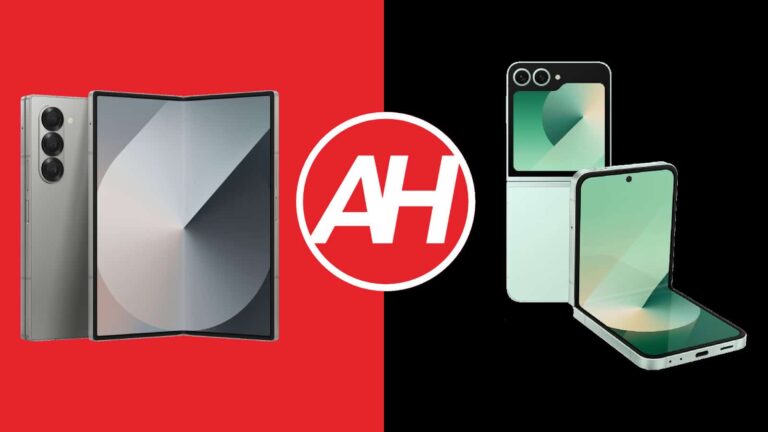
Samsung announced two new foldables during its second Unpacked event of the year. One book-style foldable, and one flip phone. In this article, we’ll compare them, the Samsung Galaxy Z Fold 6 vs Samsung Galaxy Z Flip 6. Do note that we’ve just started using both of these phones not long ago, so you’ll have to wait for our reviews for all the info. We’ll just compare them based on specs and initial impressions here.
This time around, Samsung didn’t really change a lot of things. That goes for their designs, and even quite a few internals. That’s something we’ll cover here, as we’ll do with a number of other aspects. Granted, these two phones are considerably different, but we’ll compare them here as they’re both coming from Samsung, both are foldable, and both are current-gen devices that launched at the same time. So… let’s get to it.
Specs
Samsung Galaxy Z Fold 6 & Samsung Galaxy Z Flip 6, respectively
– Screen size (main): 7.6-inch Foldable Dynamic LTPO AMOLED 2X display (120Hz, HDR10+, 2,600 nits) 6.7-inch Foldable LTPO AMOLED 2X (120Hz, HDR10+, 2,600 nits) – Screen Size (cover): 6.3-inch Dynamic LTPO AMOLED 2X (120Hz, 1,600 nits) 3.4-inch Super AMOLED (120Hz) – Display resolution (main): 1856 x 2160 2640 x 1080 – Display resolution (cover): 968 x 2376 720 x 748 – SoC: Qualcomm Snapdragon 8 Gen 3 for Galaxy – RAM: 12GB (LPDDR5X) 12GB (LPDDR5X) – Storage: 256GB/512GB/1TB (UFS 4.0) 256GB/512GB (UFS 4.0) – Rear cameras: 50MP (wide, f/1.8 aperture, Dual Pixel PDAF OIS), 12MP (ultrawide, 123-degree FoV), 10MP (telephoto, 3x optical zoom) 50MP (wide, f/1.8 aperture, Dual Pixel PDAF OIS), 12MP (ultrawide, 123-degree FoV) – Front cameras: 4MP (under display, main display, f/1.8 aperture), 10MP (cover display, f/2.2 aperture) 10MP (cover display, f/2.2 aperture) – Battery: 4,400mAh 4,000mAh – Charging: 25W wired, 15W wireless, 4.5W reverse wireless (no charger) – Dimensions (unfolded): 153.5 x 132.6 x 5.6 mm 165.1 x 71.9 x 6.9 mm – Dimensions (folded): 153.5 x 68.1 x 12.1 mm 85.1 x 71.9 x 14.9 mm – Weight: 239 grams 187 grams – Connectivity: 5G, LTE, NFC, Wi-Fi, USB Type-C, Bluetooth 5.3 – Security: Side-facing fingerprint scanner – OS: Android 14 with One UI 6.1.1 – Price: $1,899+ $1,099+ – Buy: Galaxy Z Fold 6 (Samsung / Best Buy) Galaxy Z Flip 6 (Samsung / Best Buy)
Samsung Galaxy Z Fold 6 vs Samsung Galaxy Z Flip 6: Design
Both of these smartphones are still very similar when it comes to design. They look very similar to their predecessors and still have flat frames all around, which are slightly rounded towards the edges. The biggest change is the Galaxy Z Fold 5’s display width, as it’s much closer to a regular smartphone now when closed. Both of these phones are made out of metal and glass. When unfolded, the Galaxy Z Flip 5 is both taller and wider than a folded Galaxy Z Fold 5. When in a different state, it’s a completely different story, of course.
Now, in terms of weight… the Galaxy Z Flip 5 is a lot lighter, of course. It’s a regular smartphone that folds into a tiny device, not a regular smartphone unfolding into a tablet. The display creases are still quite pronounced, not to the level of the competition. The Galaxy Z Flip 5 has a display camera hole on its main display, while the Galaxy Z Fold 5 has on its cover panel. Samsung once again uses an under-display camera on the main panel. The company also held onto the ‘folder’ cover display.
Physical buttons are located on the right-hand side of both smartphones. The power/lock key actually doubles as a fingerprint scanner on both devices. Both smartphones offer an IP48 rating for water and dust resistance. These two devices have considerably different form factors, and they’re aimed at different people, that’s for sure. They also feel entirely different to use. Both phones feel well-built, and premium, but you have to figure out which form factor suits you more.
Samsung Galaxy Z Fold 6 vs Samsung Galaxy Z Flip 6: Display
The Samsung Galaxy Z Fold 6 features a 7.6-inch Dynamic AMOLED 2X main display. That is an LTPO display, and it offers a refresh rate of up to 120Hz. The resolution here is 1856 x 2160, and we’re looking at 374 ppi here. The cover display on the phone measures 6.3 inches, and it’s an HD+ (2376 x 968) panel. This is also a Dynamic AMOLED 2X panel, and it’s also an LTPO display with a refresh rate of up to 120Hz. The ppi here is 410, and both panels are flat, of course.
The main display on the Galaxy Z Flip 6 measures 6.7 inches. That’s a fullHD+ (2640 x 1080) Dynamic AMOLED 2X panel. It’s flat, and it has a refresh rate of up to 120Hz, this is also an LTPO panel. The cover display on the phone measures 3.4 inches, and that’s a Super AMOLED display with a 60Hz refresh rate. The resolution here is 748 x 720, while the PPI is 306. This panel is flat too.
All of these displays have one thing in common, they’re quite vivid. All of them are more than sharp enough for what they are, and while it would be nice for the cover panel on the Galaxy Z Flip 6 to have a higher refresh rate, 60Hz is fine. The display crease on the two foldable panels could be more minimal, that’s for sure. Samsung didn’t make major improvements in that regard, the competition is still ahead. The viewing angles on all panels are good, and so is the touch response. We’ll reserve our brightness comments for full reviews, we didn’t have a chance to use them in enough lighting scenarios just yet.
Samsung Galaxy Z Fold 6 vs Samsung Galaxy Z Flip 6: Performance
These two phones are completely on the same level this time around, power-wise. They’re both fueled by the Snapdragon 8 Gen 3 for Galaxy SoC. That is an overclocked variant of the Snapdragon 8 Gen 3. In other words, they’re fueled by one of the most powerful mobile chips. Both smartphones have 12GB of LPDDR5X RAM this time around, and also UFS 4.0 flash storage. So… they’re entirely on the same playing field.
We only used both phones briefly thus far, as we’re working on our reviews. What we noticed is that both smartphones are very fluid, as you’d expect out of flagship devices. They offer the same level of fluidity even though they feel entirely different to use, of course. We did not really get into gaming just yet, but it shouldn’t be a problem for either device. We’ll talk more about that in our full review, of course.
In regards to general tasks, both smartphones do them without issue. Multitasking is a breeze, and the two phones open apps really fast, they’re basically leveled in that area too. We may spot some performance-related differences as we continue using the phones, though. So… stay tuned for our full reviews of both of these smartphones, which are coming in the near future.
Samsung Galaxy Z Fold 6 vs Samsung Galaxy Z Flip 6: Battery
The Samsung Galaxy Z Fold 6 has a 4,400mAh battery on the inside, the same as its predecessor. The Galaxy Z Flip 6, on the other hand, includes a 4,000mAh battery, a slightly larger pack than the Galaxy Z Flip 5. Granted, some Galaxy Z Fold 6 competitors have considerably larger battery packs, but we’ll see how this battery performs. It will all depend on how much you use the main display, of course. We only started using the phone, so that info will be revealed once our full reviews go out.
The Galaxy Z Fold 5 did not exactly shine in the battery life department, the same goes for the Galaxy Z Flip 5. We’re expecting a small increase for the Galaxy Z Flip 6, at least based on the battery life increase. The Galaxy Z Fold 6, on the other hand, is a mystery at this point. We’ll have to wait and see, it’s way too early to share any numbers, but that phone could also deliver a small boost.
In regards to charging, neither phone offers improvements compared to their predecessors. Both devices support 25W wired, 15W wireless, and 4.5W reverse wireless charging, or as Samsung calls it ‘Wireless Power Share’. Neither phone will charge particularly fast, and Samsung is expected to offer an improvement in this regard next year. We expected it this year, but that didn’t happen. On top of that, neither phone ships with a charger in the box.
Samsung Galaxy Z Fold 6 vs Samsung Galaxy Z Flip 6: Cameras
Both devices actually come with unchanged camera setups compared to last year’s models. The Galaxy Z Fold 6 has three cameras on the back and one on each of the phone’s displays. Keep in mind that the one on the main display is an under-display camera, though. A 50-megapixel main camera (f/1.8 aperture, OIS, Dual Pixel PDAF) is backed by a 12-megapixel ultrawide camera (f/2.2 aperture, 1.12um pixel size, 123-degree FoV). A 10–10-megapixel unit sits on the cover display, while a 4-megapixel under-display camera is included under the main panel.
The Samsung Galaxy Z Flip 6, on the other hand, has a 50-megapixel main camera (f/2.2 aperture, OIS, 1.0um pixel size, Dual Pixel PDAF) and a 12-megapixel ultrawide camera (f/2.2 aperture, 1.12um pixel size, 123-degree FoV). There is one camera on the phone’s main display. It is a 10-megapixel camera with a 1.22um pixel size and an 85-degree FoV.
We did notice some initial differences compared to their predecessors, despite the fact the camera hardware is the same, but we did not take that many pictures thus far. Don’t expect a huge difference, however. We’ll talk a lot more about the cameras in our separate full reviews of these two smartphones. Samsung is expected to boost camera hardware next year, considering that it didn’t happen this time around. There’s only so much that can be done via software.
Audio
Both the Galaxy Z Fold 6 and Galaxy Z Flip 6 offer stereo speakers. Samsung didn’t really talk about them or mention them, so we’re assuming they’re the same as in last year’s models. The audio coming from them fits, that’s for sure. The Galaxy Z Fold 6 speakers are louder, but the difference is not huge.
Neither of these two handsets includes an audio jack. You’ll have to use their Type-C ports in order to hook up your wired headphones. Alternatively, you can use Bluetooth 5.3 for wireless connectivity.
Earlier this year, Samsung launched the Galaxy S24 series and the Galaxy AI suite. The latter includes a set of features powered by generative AI. Interestingly, the company seemed to forget about its own Bixby assistant, for which no Gen AI-based boost was mentioned. However, now Samsung has confirmed its plans in this regard, and they look promising.
Google, the pioneer of generative AI in commercial smartphones, has the Gemini assistant powered by its own LLMs. After Google, Samsung was the second phone manufacturer to make the biggest bet on the segment. The company even integrated the Gemini Nano model into its Galaxy S24 series before most Pixel phones (including the vanilla Pixel 8) received it. Many of the Galaxy AI features are inspired by those of the Pixel 8 series. However, the company left out a potential Gen AI-based improvement for Bixby from its announcements.
Bixby assistant will be revamped with Gen AI-based features and capabilities
The lack of news related to Bixby even made some think that Samsung would get rid of its assistant. However, things perked up in April when Won-Joon Choi, head of Samsung’s Flagship Product R&D Team, mentioned the possibility of giving Gen AI features to Bixby. Now it is TM Roh, president of Samsung Mobile, who confirms the company will revamp Bixby “with the application of Gen AI technology” later this year.
Roh did not reveal an exact date for the rollout of the improved assistant. However, he said that it will be powered by the company’s own LLMs. So, it seems that the new Bixby will not depend on the Google Gemini models. Instead, Samsung will take a similar path to Apple with Ajax or BBK companies (like OPPO and Oneplus) with AndesGPT. Samsung also confirmed that it will maintain an open approach where it will allow multiple assistants on its phones. This way, it will be the user who decides which one they want to use.
The company seems quite enthusiastic about its commitment to AI in all segments. In this regard, Roh said that Samsung is “reinforcing and bringing more AI capabilities” to all its product lines. Currently, it is unknown what improvements the Gen AI-powered Bixby assistant will bring. The current version is a kind of Google Assistant, but less capable. Samsung has a lot of work to do to make Bixby gain more interest among its broad user base.
Android 15 is adding support for Thread, a low-power mesh networking protocol specifically designed for Matter smart home devices. This opens the door to potentially seamless smart home experiences as Matter enables smart home devices to communicate with each other, regardless of brand. Matter doesn’t replace communication protocols like Bluetooth or Wi-Fi but acts as a universal language, standardizing the way devices talk to each other.Thread, with its mesh networking capabilities, offers unique advantages over traditional protocols. It is highly power efficient, a key benefit for battery-powered devices, and allows devices to relay signals and route data more efficiently. This results in a more reliable connection that is also easily scalable, addressing common issues in smart homes.
While Thread is not yet as widespread as Bluetooth and Wi-Fi, its adoption is increasing. Major tech players are integrating Thread into their devices, with Google enabling certain TVs to function as Thread border routers, bridging Thread networks to Wi-Fi. Notably, Apple has already incorporated Thread radios into the iPhone 15 Pro models, demonstrating a commitment to this technology.
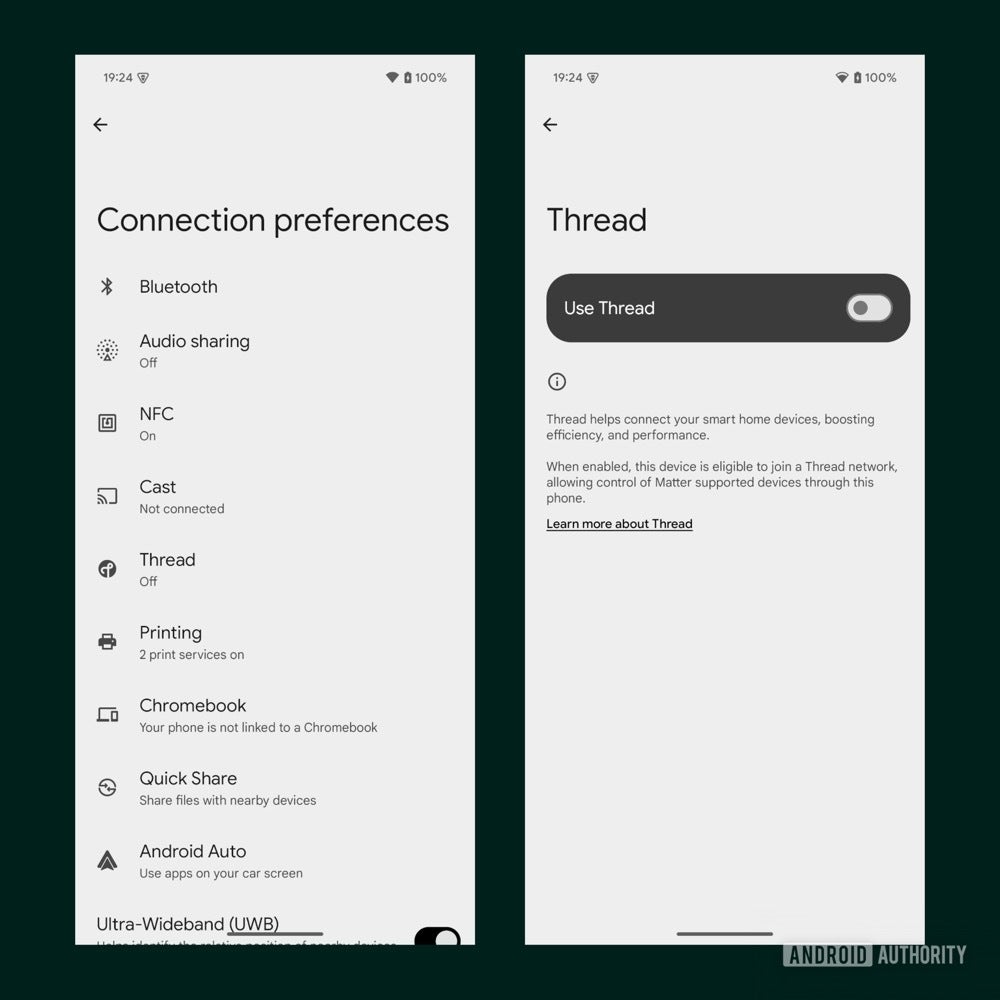
According to the findings, Android 15 will not only include support for the Thread network stack but also introduce a “Use Thread” toggle in its settings, as can be seen in the above images. This allows devices with Thread radios to communicate directly with other Thread network devices, bypassing the need for a separate Thread border router. This direct communication can enhance the speed and responsiveness of smart home actions, and even allow for local operation without internet access.
While the specific Android phones that will incorporate Thread radios are yet to be confirmed, the addition of Thread support in Android 15 marks a significant step towards greater interoperability and improved performance in smart homes. This could potentially revolutionize the way smart devices interact, fostering a more connected and seamless experience for users. I’m definitely looking forward to when I can incorporate more smart tech in my home without worrying about which ecosystem they are in.
It seems that Google is working on integrating Thread network support for Matter smart home ecosystems into Android 15. The option was recently discovered in an Android 15 beta. It will probably be ready for the update’s stable rollout.
The option was found by Mishaal Rahman of Android Authority in the Android 15 settings. It is not available by default, so Rahman had to “force” it to appear. Anyway, there will be a “Use Thread” option under the “Connection preferences” menu. Thread is basically a communication protocol designed for Matter-based product ecosystems.
Android TV OS 14 already supports Thread networks; phones are pending
It’s noteworthy that Android 14 already includes Thread support, but only on Android TV OS 14. According to the report, smartphones will start receiving it with the Android 15 update. That said, taking advantage of the Thread network will not only require Android 15 phones but also a Thread radio on the device. Currently, the only phones with a Thread radio are the iPhone 15 Pro series.
Matter and Thread are two different things. There may be Matter-supported devices incompatible with the Thread protocol. The latter basically helps boost the performance of your smart home device ecosystem. Thread enables faster and more agile connections and interactions between devices than Bluetooth and Wi-Fi protocols. However, you could set up a Matter-based network without needing Thread-supported devices.
In short, you can see the Matter standard as a common “language” in which your devices will communicate, and the Thread network as shorter paths between them. The current smart home market is fragmented among multiple platforms. There are devices designed for Google Home, Alexa, HomeKit, or SmartThings, for example. While some products are compatible with up to two of these platforms, there are also many that only support one.
Android 15’s Matter and Thread network support seek flawless smart home device interoperability
Matter seeks to solve the smart home fragmentation issue by overcoming interoperability limitations. All devices compatible with the standard should be able to interact with each other without problems. For example, you could manage an Alexa product from the Google Home app if both devices involved support Matter. Then, the experience will be even more agile and reliable if both devices also have Thread radios.
This year, Google announced that some new Google TVs would gain “Thread border router” capabilities. That is, they can act as the bridge between your Matter home ecosystem and your WiFi network to enable an internet connection. Once Thread network support is available on your Android 15 compatible phone, you will not need the “border router TV” to improve your Matter home ecosystem.
The real impact will probably take a few years
The goal is to achieve perfect interoperability between all your devices. Things are just getting started, so it will probably take years to see a significant impact. Currently, it is not even known which will be the first Android device to include Thread radios. However, in the not-so-distant future, you will no longer suffer headaches while looking for new smart home devices.
With Unpacked now done and dusted, Samsung’s promotional game has begun. The company has released a series of YouTube videos promoting its new products. From introductory videos to unboxing and feature highlights, these videos hype up the newly launched Galaxy Z Fold 6, Galaxy Z Flip 6, Galaxy Watch Ultra, Galaxy Watch 7, Galaxy Buds 3 Pro, Galaxy Buds 3, and Galaxy Ring, all of which are available for pre-order.
Samsung released promotional videos for its new foldables and watches
Over the past two days, Samsung published dozens of short and long videos on its official YouTube channel. It made four introductory videos for its new products launched at Unpacked on Wednesday. The first video makes us familiar with the foldable duo, the Galaxy Z Fold 6 and Galaxy Z Flip 6. It focuses on the improved Circle to Search, enhanced multitasking, powerful chipset, hands-free selfies, cover screen improvements, AI-powered Note Assist, and IP48 rating.
Samsung made a similar video for the Galaxy Watch Ultra, its first-ever Ultra smartwatch. Powered by its first 3nm chipset, the Exynos W1000, with a massive 590mAh battery, the watch is a powerhouse on your wrist. It is tough, durable, feature-rich, and “built to go the distance.” The Korean firm has also introduced several new health features, which are available on the Galaxy Watch 7 as well. Older models will get compatible features with the Wear OS-based One UI 6 Watch update.
The Galaxy Ring, the smallest product Samsung launched at Unpacked in Paris, attracted one of the loudest cheers at the event. Priced at $399, it is an expensive piece of tech, but an equally remarkable engineering marvel. The tiny titanium ring that you can wear on your finger boasts comprehensive health monitoring capabilities. Its official introductory video makes us familiar with its health features, functions, durability, battery life, and more.
After years of making wireless earbuds, Samsung redesigned the buds this year. The Galaxy Buds 3 and Galaxy Buds 3 Pro feature a stemmed design popularized by Apple’s AirPods. However, instead of a rounded stem, the Korean firm made it angular. It also added what it calls blade lights to the step. It’s an LED strip that lights up during charging and media playback. The new earbuds boast AI features and offer improved sound quality and audio clarity.
Watch Samsung unbox the new devices
Samsung also made unboxing videos for its new products. As expected, the Galaxy Z Fold 6 and Galaxy Z Flip 6 come in minimalist boxes containing the phone, a SIM ejector, a USB cable, and some paperwork. Well, it’s a similar unboxing experience with all the devices. The Galaxy Ring is a completely new product, so it feels slightly different. Otherwise, it is a standard Samsung stuff. We have embedded all five unboxing videos below.





.webp)