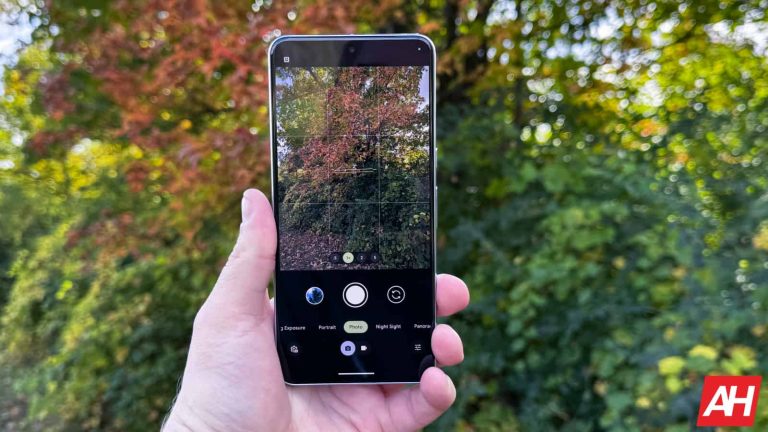
Google took the wraps off its Pixel 8 series back in early October. The Pixel 8 and 8 Pro perform exceptionally, especially when it comes to the camera. The Pixel 8 Pro performs even better with its 50MP camera lens and AI-enabled features. The Adobe RAW support for the Pixel 8 series serves as the perfect final touch.
Pixel 8 series now support Adobe RAW
Pixel 8 and 8 Pro get support for Adobe RAW capture, but it’s primarily recommended for extensive editing scenarios. Notably, folks at 9to5Google first spotted this. Adobe’s introduction of RAW support for the Pixel 8 expands the range of editing options beyond the Google Photos app. This makes high-end mobile photography more accessible to users. But what does this mean?
Serious photographers could relate to what it means to capture images in RAW format. It is the preferred method to achieve the highest quality results. These files contain more image data which comes in handy in editing and fine-tuning details. While the Pixel 8 series excels in taking photos, the RAW captures make the experience even better. It is great for achieving maximum editing capabilities.
It’s getting better…and better
Adobe Lightroom and Photoshop now recognize RAW files from the Pixel 8 series. It comes as a DNG file on the Pixel 8 series. This includes all the lenses available on both Pixel 8 and Pixel 8 Pro. For Pixel 8, it recognizes two rear cameras: wide and ultra-wide and one front camera.
Meanwhile, the Pixel 8 Pro gets an edge with an extra telephoto camera on the rear. The only recommendation is to use minimum plug-in v16.0.1. Most importantly, make sure to update the Adobe apps (Lightroom and Photoshop) for seamless compatibility. That’s pretty much it. Other phones that support Adobe RAW include the iPhone 15 series and Xiaomi 14 series.
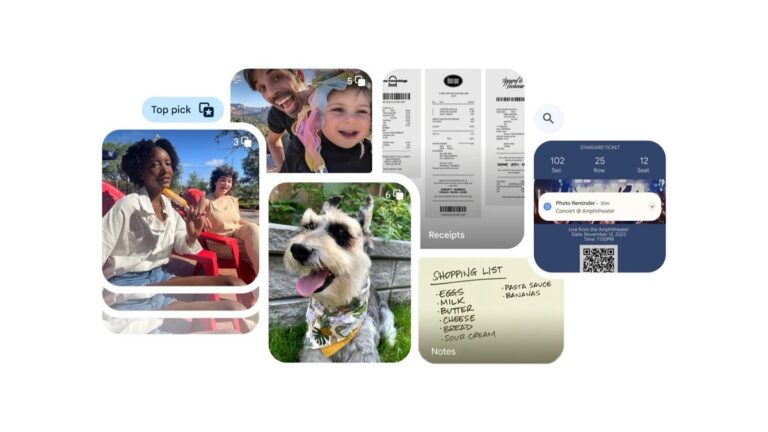
Google Photos is enhancing its organization capabilities with the help of artificial intelligence (AI). The new features will automatically group similar photos together and intelligently organize screenshots and documents into helpful albums, making it easier for users to find the content they need. These features have been leaked and talked about in the past few weeks, but they are now officially rolling out to Android and iOS users.
Photo Stacks for similar photos
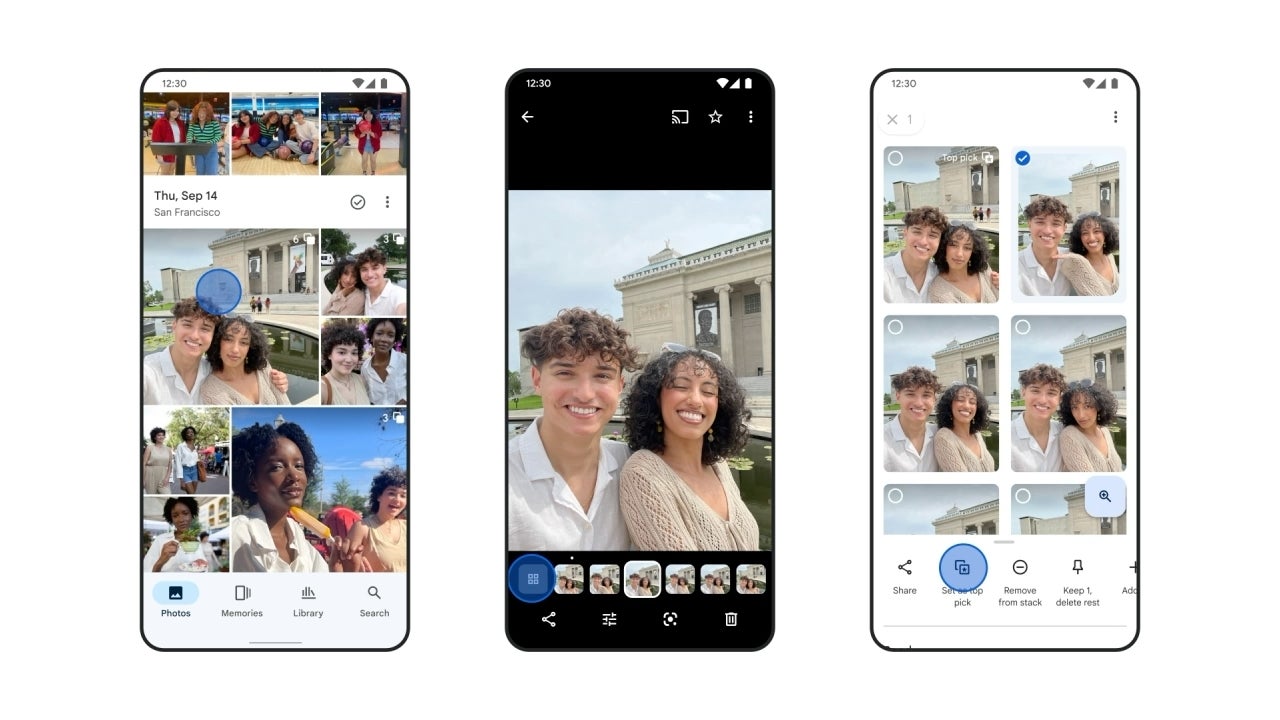
Photo Stacks is a new feature that automatically groups similar photos taken in close succession, such as multiple shots of a sunset or a large group photo. Once rolled out, Google Photos will select the best photo from the stack as a top pick, and users can easily switch to other photos or turn off Photo Stacks altogether.
Google Photos Stack feature | Source – Google
AI-powered organization for screenshots and documents
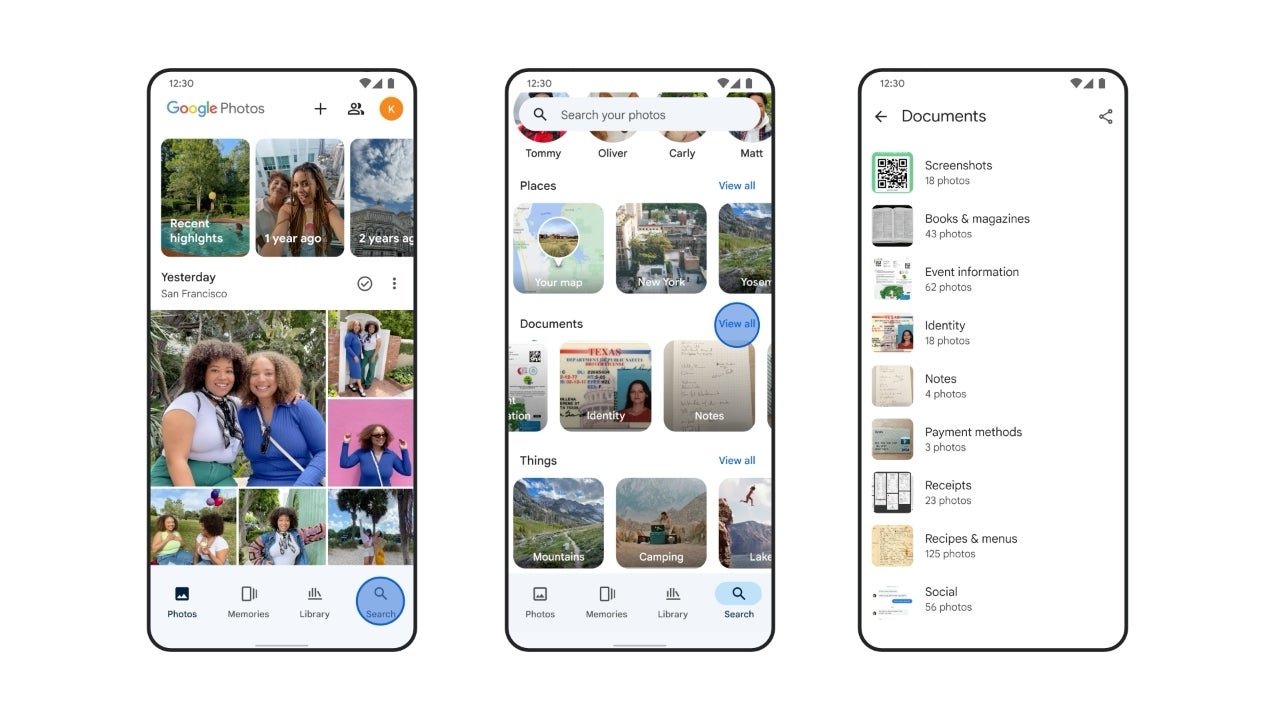
Google Photos is also using AI to better identify and categorize screenshots and documents in users’ galleries. Screenshots will now be automatically organized into albums like ID, receipts, and event information, while documents will be grouped into albums like travel docs, financial docs, and personal docs.
Google Photos document organization | Source – Google
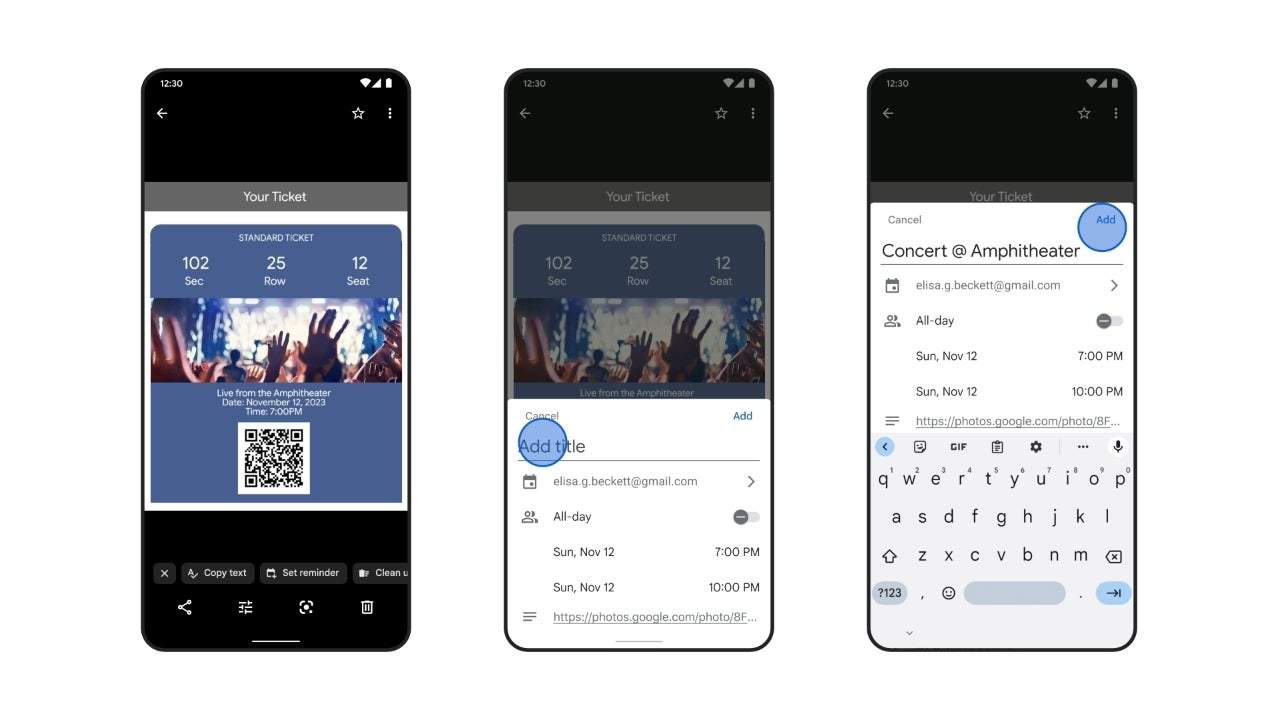
Taking screenshots of event tickets or flyers can help you stay organized, but remembering to revisit them can be a challenge. Google Photos is now introducing a feature that allows you to set reminders directly from your screenshots. Simply click the “Set Reminder” option, and Google Photos will add a reminder to your calendar based on the information in the screenshot.
Google Photos event reminders | Source – Google
To further declutter your photo gallery, Google Photos now offers the option to automatically archive screenshots and documents after 30 days. This will hide them from your main gallery but keep them easily accessible from their respective dedicated albums.
The new Photo Stacks feature and the improvements for screenshots and documents are rolling out to Google Photos on Android and iOS. These AI-powered organization features will help users keep their photo galleries tidy and make it easier to find the photos and documents they need when they need them.
During Threads’ peak, you had 100 million potential friends that you could possibly message, but the platform never debuted that functionality. That’s a bummer, as people were making new acquaintances on the app. Being able to directly contact them would have been a plus. Well, Adam Mosseri, the CEO of Instagram, stated that DMs might come to Threads, but it might be through Instagram.
As you may know, Threads and Instagram are EXTREMELY close; Threads was basically built off of Instagram’s code, and this is why you weren’t allowed to delete your Threads account without deleting your Instagram account. That’s changing, thankfully. Anyway, we all expected that any DM system from Threads would be closely tied to Instagram’s messaging system. Judging by what Mosseri said, it looks like this will be the case.
DMs might be coming to Threads through Instagram
Mosseri talked about the company’s plan regarding DMs through a Threads post. This post was in response to a post from Casey Newton saying. In his response, Mosseri said that DMs are “possibly” coming. “My hope is that we can make the Instagram inbox work“, he said, “We just launched the ability to DM from Threads without app switching. We still need to make that easier, improve the receiving experience, and work through a more comprehensive set of messaging controls.”
So, it seems likely that the messaging experience will be powered by Instagram’s messaging platform. While that’s the case, Mosseri and the gang are at a bit of a crossroads. In a subsequent post, he said that there are two possible avenues that the company could pursue. Firstly, the company could unify the Instagram and Threads inboxes. So, you’ll be able to access both sets of messages from either app.
One challenge that Mosseri noted was in making sure that there wouldn’t be any “notification routing weirdness”. You don’t want to get double notifications for every message you get.
Secondly, the company could craft an inbox separately for Threads. That’s easier said than done based on how tightly integrated Threads is with Instagram. We’re not sure what option the company will choose or how long it will take. All we know is not to hold our breath. Threads came out attached at the hip to Instagram, and we don’t know if Mosseri had any part in that plan. This is still Meta’s baby
So, there are going to be challenges ahead for the Insta-Threads team. Let’s just hope that the company pulls this off.
If you are an Android user, every night (or week or month, depending on your choice), without fail, WhatsApp backups your chats and media to Google Drive. It’s a hassle-free process, made more convenient by the fact that the backups don’t count towards your free Google Drive storage space, which is 15GB for everyone. Those days are about to be over.
Google and WhatsApp have announced that WhatsApp backups will soon start impacting your free cloud storage quota. This means you cannot continue to be as mindless as you have been about backups because if you run out of storage, the backups will stop. To continue storing your chats and media on the cloud, you’ll have to delete some stuff from your Google Drive. You may also consider deleting items from WhatsApp so they take up as little space as possible.To avoid sounding like a spoil-sport, Google points out that this is how backups have always been handled on other platforms (Apple’s iOS) which offer three times less free storage space (5GB) than Google. Keep in mind that 15GB of free storage is shared across Google Drive, Google Photos, and Gmail.
WhatsApp Beta users will be the first to experience this change next month, whereas others will be hit by the change from early next year.
Google has also dutifully pointed out that you can always sign up for Google One, the company’s cloud storage subscription service which starts at $1.99 per month for 100GB. Google will also offer one-time promotions to ease the transition.
If you don’t want to store chats on Google Drive, you can use the WhatsApp Chat Transfer feature instead to move chats and media between Android devices.
WhatsApp will inform users 30 days before the change is implemented with a banner in WhatsApp Settings > Chats > Chat backup.
The large-scale scam campaign has been ongoing for at least two years, and the cloned websites are still operational.
Online gambling is a booming industry, and the Asia-Pacific region has become the hub of gambling in the world, with China and India leading the way. However, this unexpected rise has led to a sharp incline in illegal activities such as money laundering, online scams, and fraud.
In October 2023, Hackread reported a scam campaign discovered by CloudSEK involving Chinese scammers targeting the Indian digital payment system using illegal instant loan apps. Now, an even bigger scam has come to the fore.
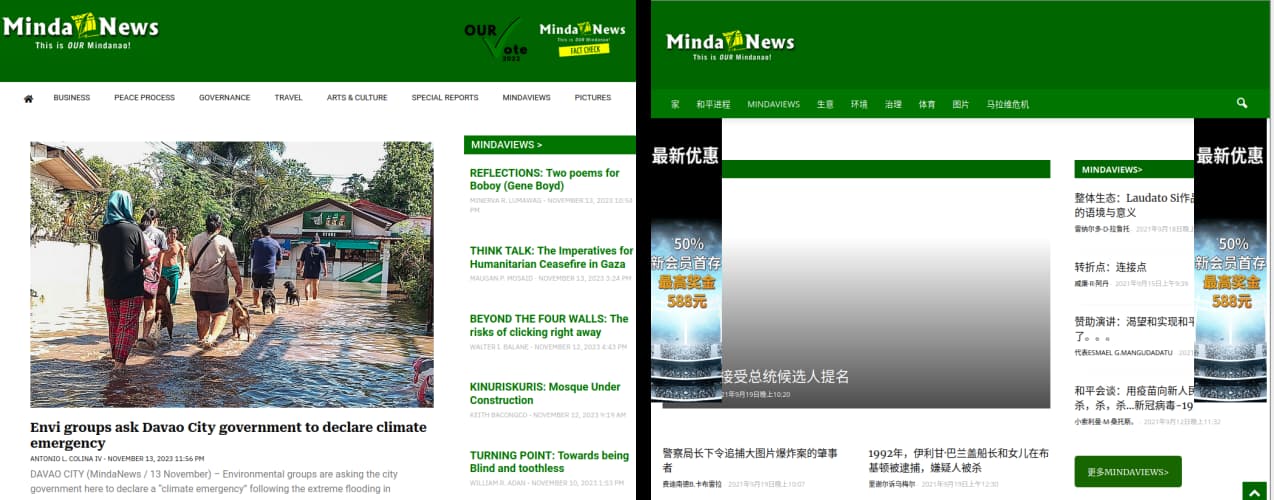
According to Qurium Media, a Swedish nonprofit provider of digital security solutions, Chinese scammers have been creating cloned versions of legitimate websites, redirecting visitors to gambling sites.
It all began when MindaNews discovered a Chinese clone of their website and promptly notified Qurium. For context, MindaNews is a Philippine newspaper headquartered in Davao City and serves as the news outlet for the Mindanao Institute of Journalism.
MindaNews’ clone (mmart-inn.com) was registered in China. It had been replicating the newspaper’s content (news, photos, opinion pieces) illegally after translating it into Chinese for the past two years, the most recent translation being of content from February 2023.
“Some MindaNews authors were retained in their English names, while others were translated into Chinese. However, in general, the content is the same when translated to English,” explained MindaNews in its blog post.
The company dug deeper and found more than 500 cloned websites, many of which were of academic institutions, and all were promoting gambling services based in China.
It is important to note that in August 2023, the Chinese APT group Bronze Starlight was reported to be using stolen Ivacy VPN certificates to sign malware targeting the Southeast Asian gambling sector. However, as of now, it remains unclear if that attack campaign was related to the ongoing website cloning attack.
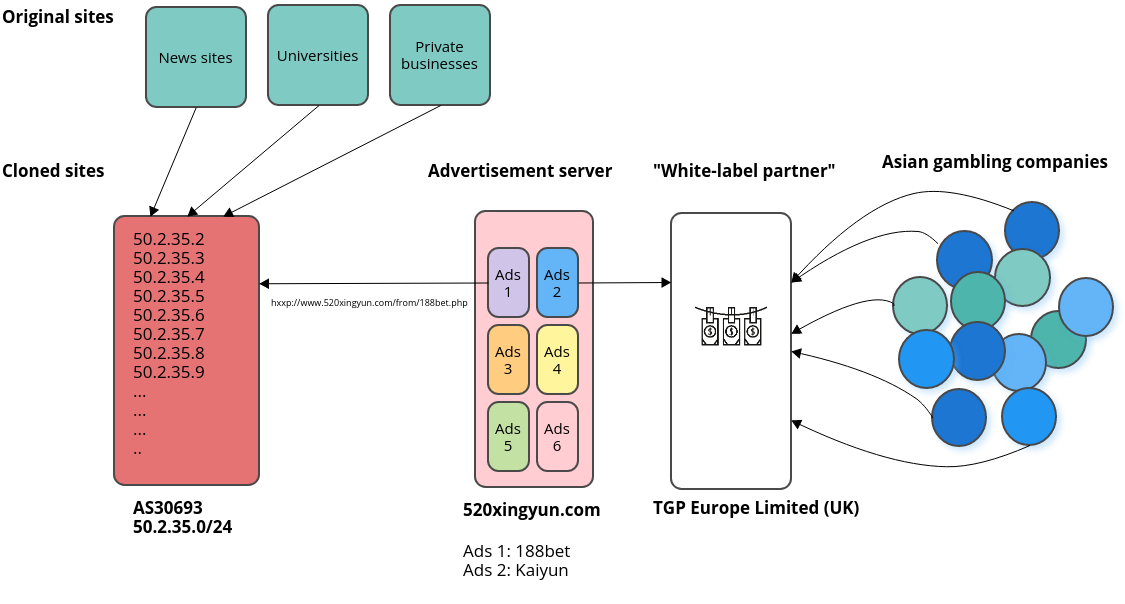
The cloned websites were hosted on two /24 networks operated by the US-based, Eonix Corporation-owned ServerHub and included websites from public libraries, universities, and private businesses.
All the clones were created in September 2021 and promoted a gambling platform called ‘188bet’ (520xingyun.com/from/188bet.php) through advertisements.
These ads contained a physical address in the Isle of Man, where many other gambling firms (including Kaiyun, BetVictor, Raybet, or Manbetx) were already registered. A website 520xingyun{.}com was hosting a large number of such ads.
Moreover, all the companies were registered in July 2021 through the domain registrar Gname.com Pte. LTD, employing a white-label partnership with TGP Europe and Cube Limited. Both Cube Limited and 188bet have affiliations with the Isle of Man.
These companies served as intermediaries from Asian gaming partners. Further probing revealed that TGP Europe was based in the UK and was found guilty of social responsibility failures and anti-money laundering.
Campaign overview (Credit: Qurium)
According to Qurium’s report, Gname was involved in different WIPO cases of domains used for ads. It is worth noting that 188bet has officers in Makati, Philippines, which is a standard practice.
“These Chinese gambling companies are often headquartered in nearby nations like Vietnam and the Philippines due to the fact that gambling is banned in China.”
Qurium
So far, ServerHub has not taken any action against the client for cloning hundreds of websites, as it is still investigating the claims. As the report develops, Hackread.com will monitor the situation and provide updates to readers accordingly.
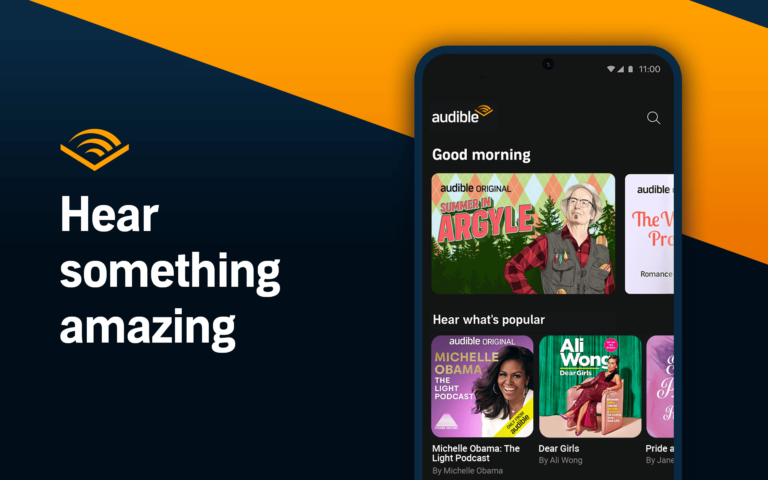
Audible is a pretty popular service from Amazon. Allowing you to listen to your favorite audiobooks on the go, and even at home. But what exactly is Audible, and is it worth it for you to sign up for this service?
In this guide, we will walk you through the ins and outs of Audible, explaining the different plans, the pricing, and why it is (or isn’t) a great service.
What is Audible?
Audible is a service that offers “books on tape” as it was called, 25 years ago when it first launched. Nowadays it offers a lot of other content from TV, to podcasts, and much more. Making your membership even more impressive than ever before.
When Audible first launched in 1995, it was a pretty revolutionary product. Think about it, in 1995, we didn’t have the iPod or MP3 players. So even getting music was tough, it was all done on CDs. Audible did launch its own digital audio device in 1995, which could only hold two hours of audio. That was due to the proprietary format that Audible was using at the time.
Now Audible, gives you access to over 500,000 titles that you can listen to anytime and anywhere. Which can be downloaded or streamed on smartphones, tablets, smart speakers, TVs, and even in your car. Audible has come a long way in those 25 years, including being bought by Amazon in 2008 for around $300 million. And now the company is worth a whole lot more than that.
There are over 500,000 titles available on Audible right now. Including some of the newest books, that have been released.
Audible Catalog
Some of the newest releases available on Audible include:
Rage. By: Bob Woodward
Dune. By: Frank Herbert
Disloyal: A Memoir. By: Michael Cohen
Blackout. By: Candace Owens, Larry Elder
Think Like a Monk. By: Jay Shetty
What Lies Between Us. By: John Marrs
Mythos. By: Stephen Fry
Total Power. By: Vince Flynn, Kyle Mills.
And many more. Most of the books that have come out recently, make their way to Audible pretty quickly. So you can start listening to them, without having to wait weeks or even months for them to become available.
Audible Originals vs audiobooks
Like every entertainment company these days, Audible also has its own list of originals. Which you can listen to as many as you want.
Audible Originals are simply put, those produced by Audible. Which also means that they aren’t on other services, only on Audible.
Most audiobooks are produced by the published of the physical book. So the number of Originals available on Audible is not as high as you might think.
There are two different plans available for Audible. The first on is Plus, which is a cheaper plan, costing only $7.95 per month. This will only give you access to the Audible Plus Catalog. That includes unlimited listening to select audiobooks, Originals, Podcasts, Wellness programs and more. If you’re a casual audiobook listener, then this is a really good one to check out.
You can tell the difference from those included in the Audible Plus plan and those that are not by the wording on the listing. If it says “included” then it is part of the Plus Catalog. If not, it will tell you the price. For example, on Michelle Obama’s book below, you’ll see that it tells you to upgrade to Premium Plus to get this book. As it does require a credit.
Audible Upgrade
The other plan is the original plan, Plus Premium Plus and it costs $14.95 per month. So you get access to the catalog, plus a title of your choice every month and exclusive discounts on other titles, as well as access to exclusive sales. So with Premium Plus, you get a credit each month which can be used for any title in their catalog. You’re limited to one credit per month though, which is where the 30% exclusive discount comes in handy for this plan.
Is there a free trial available?
There is a free trial available for Audible. You can head to this link and sign up for your free 30-day trial.
Keep in mind that if you don’t cancel before the end of the 30 days, you will be charged for a month of the service. So if you don’t want to keep it, make sure you cancel before those 30 days are up.
Is it discounted for Prime members?
No, unfortunately Audible is not discounted for Amazon Prime members. Unlike Amazon Music Unlimited which does offer discounts for Prime members. However, Amazon does sometimes give out special free trial deals for those that are Prime members.
Amazon Prime
For example, right now if you sign up for a 30-day free trial of Audible, you can get two free audiobooks instead of the standard one. Normally you get one per month. So you’re doubling up on your free trial.
As mentioned already, Audible offers credits on the Premium Plus account. You’ll get one credit each month that your account is active. Basically, that $14.95 per month is paying for a credit.
These credits are used to purchase audiobooks. These audiobooks are yours to keep, even after you’ve decided to cancel your Audible account. However, that is only applicable to the Premium Plus plan. Any audiobooks you listened to on the Plus plan, will be removed from your library. Basically, any audiobook you purchased with a credit, will remain, the others will be removed.
The cool thing with these credits is that if you don’t like a book you “purchased” with one of these credits, you can swap it out for another title at any time. Now it’s worth mentioning that there is no hard limit on swapping titles, but if you do abuse this system, Audible will know and it will stop you from being able to swap. So don’t go about swapping titles just because you can.
Can credits roll over from month-to-month?
The other cool part about Audible is the fact that the credits do roll over. So say this month there aren’t any titles that you want to purchase and listen to. Well you don’t need to purchase any. You can keep that credit in your account and use it next month.
But do keep in mind that these credits do expire after one year. So you won’t be able to keep more than 12 credits, unfortunately. That’s more than fair, on Amazon’s behalf. But do make sure that you remember when these credits expire, so you can use them before they expire. Since you already paid for them, you might as well use them.
You also can put a hold on your account for up to three months, once every 12 months. This is going to be great for those that are in a situation where they aren’t listening as much as they used to. So instead of just straight up cancelling your account, you put a hold on it. You aren’t charged, but don’t have to worry about signing up again. Just restart your account and you’ll pick up where you left off.
What platforms is Audible available on?
Audible is available on just about every platform that you can imagine. These include Android, Android tablets, Android Auto, iPhone, iPad, Apple CarPlay, Mac, Amazon Fire Tablets, Fire TV, Kindle devices, Sonos Speakers, Amazon Alexa speakers, and on Windows.
Audible platforms
So whether you’re in the car driving to work, on the subway heading home, or working from home, you can listen to a new book.
Once you click that link, click “Try Premium Plus Free” and it’ll take you to the checkout page. You’ll pay nothing up-front, but it will show you when your month is up. Even though that is pretty easy to figure out, that is a nice touch that Amazon has added for the sign up process. So you can cancel before the 30 day trial is up, if you decide not to keep Audible.
Audible Sign Up
And that’s it. It’s pretty simple. If you’re a Prime member though, you do get a second audiobook for free when you sign up, which is really neat. So with your free trial you get two audiobooks instead of one.
Video-sharing giant YouTube has just released a statement about its upcoming safeguards and restrictions on AI-generated content. AI content has taken the world by storm this past year, but it’s also given way to major concerns. Deep fakes and disturbing imagery have been circulating around the internet for months now. Furthermore, lots of copyright concerns have arisen since the advent of GPT, DALL-E, and other generative AI tools. In a recent blog post, YouTube highlights measures it will be taking concerning AI going forward.
Labels for realistic AI content
YouTube’s Community Guidelines are going to get an update to accommodate the rise of AI content. Specifically targeting realistic depictions, YouTube will now ask creators to disclose AI content as synthetic. This includes videos or imagery of non-existent events or real people saying or doing something they never actually did. AI videos will have a discreet label identifying them as such. Videos about more sensitive topics are going to get even more prominent labels.
According to the blog post, this safeguard will be put in place to clearly label fake content as generated by AI. Creators who repeatedly fail to tag AI content as AI-generated will have their content removed. They may also be removed from the YouTube Partner Program in addition to other penalties. There will also be restrictions on certain types of AI content. Violent or gory depictions, for example, will not be tolerated and will be removed.
Removal requests for AI deep fakes
YouTube is also going to add a new safeguard; an option for you to request a video’s removal. These requests can be made for AI-generated deep fakes of people. YouTube says not all requests will be entertained, and content will only be removed in certain cases. If the video is of a public figure, different considerations will apply.
Artists will now be able to request the removal of videos simulating their voices in music. This safeguard will prevent people from making and uploading new content with someone’s voice without their permission. Voice actors will most likely also be able to make use of this feature, as many have begun generating voices of known actors recently. This will help prevent voice actors from being phased out of the industry, at least on YouTube.
AI moderation tools and safeguards
The blog post also mentions that YouTube is developing its own moderation services and AI tools. Similar to the copyright detection system YouTube employs today, these moderation services will be able to identify and remove content that violates the guidelines before it is published. YouTube is also working on AI tools that content creators will have access to. These tools will allow creators to more easily generate AI content right there on the platform.
AI technology is improving at a rapid pace, and many companies are trying to play catch-up before they become irrelevant. YouTube’s statement emphasizes the company’s drive to remain ahead of the competition and provide state-of-the-art tools to its creators.
We’ve known for some time now of Google’s plans to make YouTube your one-stop destination for entertainment. The combination of YouTube and YouTube Music now encompasses all your needs for multimedia streaming, be it videos, movies, music, and now podcasts.
The addition of podcasts to the YouTube Music app as a move to replace the legacy Google Podcasts app, was made public by the company back in September, with evidence of private RSS feed support surfacing all the way back to a month prior to the announcement. By doing this, YouTube Music would enable podcasters to effortlessly publish their podcasts directly, eliminating the need for intermediaries, while also streamlining the process by which listeners can subscribe.
Now, as spotted by 9to5Google, Google has followed through and is currently rolling out this feature to the Android and Web versions of the YouTube Music app. Unfortunately, it doesn’t look like the feature has rolled out to its iOS counterpart yet, though podcasts already added via other platforms can still be accessed on iOS.
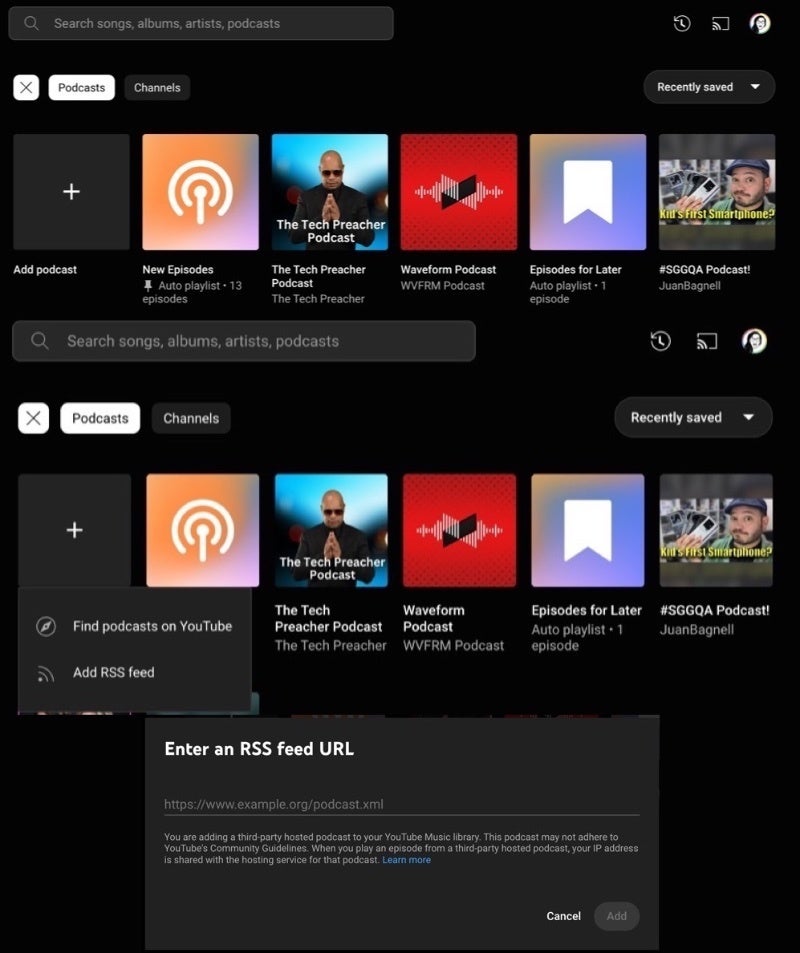
Adding a Podcast to YouTube Music Android app by RSS feed
Adding a Podcast to YouTube Music on the Web by RSS feed
On the Android app, the option to add a podcast via RSS feed can be found in the Library tab by tapping on the “Podcasts” category. You will then see an option on the bottom left to “Add podcast” that when tapped will give you options to browse the top podcasts or to add a private or public .xml URL for your desired podcast feed. The process is pretty much the same on the web as well, which can be accessed by navigating to music.youtube.com/library/podcasts.
Google has made its commitment in making YouTube Music the ultimate destination for podcasts clear by investing in resources to create a more robust podcasting experience. Providing migration tools, such as the ability to import podcast RSS feeds, will be a very important step towards achieving this goal.
Database security is difficult because of the large volume of attacks, zero-day exploits, human errors, and the need for continual management of security tools.
On October 12, Japanese electronics maker Casio was the victim of a data breach. A bad actor obtained files containing sensitive information from 91,921 customers in Japan and 35,049 users from 148 other countries from which the company operates.
The compromised database belonged to a company’s educational platform known as ClassPad. Therefore, those affected were both individuals and educational institutions.
Some of the files that hackers stole amid the breach contained sensitive information such as names, email addresses, payment methods, purchase information, and regions of residence.
Cybercriminals were able to breach the company due to the weakness in its database, later discovered within the development environment.
The company is currently investigating the attack, strengthening the security of its databases, and dealing with the aftermath of the breach.
For Casio, this marks the second major data breach of this year. In August 2023, the hacker dubbed Thrax stole and leaked 1.2 million pieces of customer data. Casio’s data breach is one of many that happened this year.
The truth is, any company can be the victim of a data breach — regardless of its IT resources, size, or whether it already has been the victim of an attack. Nothing makes a business 100% immune to potential data compromise.
Aware of the possible reputational and financial consequences of a data breach, businesses already invest a lot in security to protect one of their most important assets — data. However, the number of compromised databases remains high. Why is database security still a major struggle for companies nowadays?
Human Errors at the Heart of Most Attacks
To compromise the database as it happened to Casio, the hacker needs to gain initial access. In their case, the mistake happened due to operational errors within the development environment.
That oversight allowed hackers to get into the database of the educational platform.
For most companies, the culprit of a data breach is a human mistake. It’s estimated that 95% of data breaches can be attributed to it. That is, nine out of ten data breaches happen because of human error.
Some common ways database breaches result from human errors are:
Poor password practices — weak and reused credentials or password sharing
Deleting or corrupting the records — by accident
Falling for phishing schemes — clicking on the link or sending credentials to the threat actor
General workforce and phishing schemes are usually highlighted when the topic of human errors and data breaches is discussed. However, anyone can make a mistake, from developers and security experts to those working in finance or marketing.
Large Volumes of Cyber Attacks that Compromise Data
Over the last couple of years, businesses have been up against more data breach attempts than ever before. As mentioned, Casio had been the victim of two major data breaches within the last couple of months alone.
With a larger volume of cyberattacks that attempt to compromise data, there is a higher chance that a human mistake will result in stolen data. And that vulnerability that hasn’t yet been discovered by the company will be exploited in the attack.
We’ve already read about a lot of data breaches in the news. But keep in mind that these are only the highlights. Many hacking incidents and data compromises go unreported.
Not every company in every sector and every country has to disclose a breach. It depends on its severity and whether they have to notify the users that their personal data has been exposed in the breach.
Since not all companies disclose a breach, their users can be at greater risk of being a victim of further data theft, phishing attempts, and even identity fraud.
Data Protection Seeks Continual Management
As with any other cybersecurity system, database security processes and tools have to be continually managed and improved. This is another major factor that makes data security challenging for companies — where should they even start?
For example, this could mean a company has to continually update access to protect the databases of a business.
Suppose an employee changes their role within the company or is no longer a part of the team. Their user access has to be revoked or changed to fit the new role as soon as possible.
Then, there are flaws within the software environment. Companies need to patch them up regularly to prevent databases from being accidentally exposed in an attack.
In Casio’s case, the network security settings within the development area have been disabled. This weakness, discovered too late, opened the doors to hackers.
Shortage of IT Professionals
Another factor that makes database security challenging is the lack of professionals within IT and cybersecurity who specialize in data security and cybersecurity. They regularly manage the security and keep the hacker far away from the databases.
Companies that have fewer professionals are at a heightened risk of errors because those who do stay in the company have to take up large workloads. There is also more pressure and stress within understaffed and overworked IT departments.
True, in this year, there has been a surge of layoffs within the tech industry. However, IT workers also leave their jobs due to stressful environments, insufficient compensation, and lack of opportunities to grow and develop within their roles.
Database Security Is a Work in Progress
One vulnerability within the database is enough for the hacker to compromise the data of hundreds or even billions of sensitive user records.
The severity of financial as well as reputational damage depends on the flaw that a hacker could have exploited and how skilled is the threat actor.
While there is no one ultimate solution for reducing the chance of a data breach to zero, what most companies can do is prioritize the protection of sensitive databases.
Also, they should continually strengthen database security — and seek vulnerabilities that could lead to data breaches, such as those that affected Casio this year.
Samsung is on a roll today. First, it released the November security patch to the past three generations of Fold-series foldables in international markets. The Galaxy S20 FE and Galaxy Note 10 Lite were also added to the mix. It is now rolling out the new security update to the Galaxy S21 series, including the Galaxy S21 FE, and the Galaxy Note 20 series in the US.
Galaxy S21 and Galaxy Note 20 get the November update in the US
As of this writing, Samsung’s November SMR (Security Maintenance Release) is available for carrier-locked Galaxy S21, Galaxy S21+, and Galaxy S21 Ultra in the US. The update comes with the firmware build number G99*USQS9EWK1 and, expectedly, doesn’t bring anything more than the latest security fixes. With the Android 14 and ONe UI 6.0 update just around the corner, it’s no surprise that Samsung isn’t pushing any other goodies.
It’s the same story for the Galaxy S21 FE as well. The rollout has begun for carrier-locked units with the firmware version G990USQS9EWK1 in tow. This update should soon reach the unlocked variants of all four Galaxy S21 models in the US. The phones have already received this month’s security patch in international markets. For the regular flagships, the new build number is G99*BXXS9EWJO. It is G990EXXS7EWK1 for the FE model (via SamMobile).
The Galaxy Note 20 and Galaxy Note 20 Ultra, meanwhile, are completely new to the scene. And it’s a global rollout at once for the last Note phones. In the US, Samsung is pushing the November update to both carrier-locked and unlocked units, with build numbers N98*USQS5HWJ4 and N98*U1UES5HWJ4, respectively. In international markets, it is N98*BXXS8HWK1 (may vary in some regions).
The Note phones won’t get Android 14
As the build number suggests, this update for the Galaxy Note 20 duo is all about the latest security fixes (“S” as the sixth character from last indicates a security patch). However, that isn’t because Samsung is keeping new features for Android 14. The two Note phones won’t get the new Android version. They debuted with Android 10 and are only eligible for updates up to Android 13.
The Galaxy S21 series, meanwhile, will get Android 14 with One UI 6.0 on top. Samsung may begin the rollout later this month or in early December. It’s expected to update all eligible flagship models to One UI 6.0 before the end of the year. If you’re using one, keep checking for the big update. Go to Settings > Software update > Download and install to check. You can also stay tuned to stay informed.