In late October, YouTube started cracking down on ad blockers. The company wants users to either watch videos with ads as intended or sign up for YouTube Premium if ads bug them. This move annoyed many people, and now, one is taking action.
As per The Register (via Android Authority), a privacy advisor is gearing up to file criminal charges against YouTube in Europe. The reason? Scripts that detect and limit the use of ad blockers on the platform.
Alexander Hanff is taking legal action against the streaming platform under Ireland’s computer abuse law. The privacy advisor mentioned he gave the National Police a heads-up about his plan to share details on the criminal complaint. The police have apparently acknowledged the complaint and requested more info.
Hanff claims that YouTube engages in the use of unauthorized tracking scripts aimed at identifying ad blockers. According to him, this activity is akin to unauthorized surveillance of EU citizens. Additionally, Hanff has lodged a civil complaint against YouTube’s browser interrogation system, designed to identify and counter ad blockers. This complaint has been filed with the Irish Data Protection Commission.
The regulatory authority has reached out to Google and now waits for the company to share its take on Hanff’s claim.
But this privacy consultant is not solely pointing fingers at YouTube. He asserts that over the past 5 years, Meta has also been in the game of “illegally” intercepting data transmissions within an information system (aka devices) to monitor his behavior.
When questioned about the choice to file a criminal complaint, Hanff explained, “I chose to go down the criminal complaint route because historically, EU regulators have been absolutely terrible at enforcing the ePrivacy Directive.”
However, things are shifting with the newly embraced Digital Markets Act (DMA). The EU is laying out clear criteria for gatekeepers—those big digital players like Meta, Google, Microsoft, and Apple. With the DMA in play, these companies have to revamp their policies, and some have already started.
November 9, 2023 – A judge has refused to bring back a class action lawsuit against four car manufacturers because the privacy violation did not meet the WPA standard.
November 9, 2023 – The FBI is investigating a data breach where cybercriminals were able to steal patients’ records from a Las Vegas plastic surgeon’s office and then publish them online.
November 9, 2023 – A SysAid vulnerability is actively being exploited by a ransomware affiliate.
November 8, 2023 – Users looking to download a popular PC utility may be tricked in this campaign where a threat actor has registered a website that copies content from a PC and Windows news portal.
November 8, 2023 – Scientists have developed a ChatGPT detector with unprecedented accuracy. Even though it has a limited scope, this could be a big step forward.
FOMO is a very common phenomenon, and everyone without exception experiences it from time to time. Investors and traders are especially susceptible to it, since the market situation changes daily, and even more often when it comes to cryptocurrency.
What it is
The term FOMO (Fear Of Missing Out) is an emotional reaction to the loss of a potential chance to earn money or other benefits. This reaction varies, from mild regret to deep apathy or, conversely, unbridled rage.
It is physically impossible to monitor social networks around the clock, respond to every industry news and control your investment portfolio. And during the day there are many other things to do. Well, it’s really annoying when you open the terminal and find that in the previous two hours the XRP has increased by 20% and has fallen back to its original level. thoughts like: if I had exchange TetherUS to Bitcoin eight years ago and recorded a profit in 2021, then”…
Such thoughts spoil your mood, knock you out of alignment, and provoke spontaneous emotional actions. As a result, lost potential profit turns into very real losses.
The main reasons for FOMO are:
– Popularity of the asset. It is quite difficult to resist the temptation to buy an asset on the wave of hype and get rich quickly. Stories like the transformation of $200 into $2 million due to a jump in the price of the PEPE memcoin add fuel to the fire. – Social influence. The feeling of missed opportunity is heightened by the fact that someone else got what could have been yours.
Consequences of FOMO
We have already mentioned the “sweet couple” of impulsive decisions and losses. Yes, there are exceptions, but profit as a result of an impulsive decision is very rare. But these guys have another friend – excessive concentration on a popular asset.
Suffice it to recall the achievement of Bitcoin’s historical maximum, when its exchange rate almost came close to $70,000 per coin. History is silent about the number of investors who tried to jump on the departing train in the hope that prices would continue to rise.
But it turned out that the train was leaving in a different direction. In two months, BTS fell in price to $35,000, and in the summer of 2023, the scenario with a possible drop to $12,000 looked quite realistic. No matter how strong the temptation, neglecting diversification and investing everything in a “hot” asset is too risky.
What to do about it?
It is not possible to completely avoid FOMO in investing, but it is quite possible to reduce its manifestations and consequences to an acceptable minimum. Yes, you will have to muster your will and make an effort, but it is really worth it.
– Set financial goals. Determine your time frame, budget, and your maximum risk tolerance. – Analyze and learn. Study the principles of investing, learn to analyze different assets, and refrain from impulsive decisions. It might be a good idea to work with a professional financial advisor. – Diversify. The golden rule of an investor is to distribute capital between different assets in order to reduce risks. – Don’t get caught up in the market noise. If you decide to invest, it should be based on long-term prospects and fundamental analysis.
What psychologists advise
– Switch things up. At the moment when a storm of emotions covers you, switch from them to your external state. To the point, list what you feel from the outside, what you see and hear. Return to your inner experiences without trying to suppress them. Switch your attention to the outside world again and do this several times. – Introduce your inner critic if it bothers you. Try to introduce him as a stranger and respond to his accusations. – Work on your own endurance. – Think about those who are lucky this time. If they are in the market, then they also once experienced and will experience the same thing more than once. Everything flows, everything changes, and someday someone will envy you the same way. – Compare yourself with yourself yesterday. You also had your own achievements, didn’t you? You recently successfully convert USDT to EUR or bought on ETH at a local minimum. Focus on your achievements. If you had them, then you will continue to have them.
The market is like a huge organism. If the average earthling is not particularly aware of the processes in his own body, then what can we say about attempts to predict events in a huge third-party system. Keep calm and act according to your plans.
Managing a diverse range of devices, including desktops, mobile devices, and Internet of Things (IoT) devices, is an essential aspect of modern businesses. To efficiently handle these devices, a set of best Unified Endpoint Management Tools (UEM) technologies provide an indispensable solution.
These tools offer a comprehensive approach to managing and securing all endpoints, ensuring optimal performance, and enhancing overall productivity.
UEM solutions give IT administrators a centralized location from which to manage the entire lifecycle of a device, from provisioning to configuration to security to updates and maintenance, simplifying management and increasing productivity.
Unified Endpoint Management (UEM) solutions provide a centralized platform for managing and securing endpoints, enabling organizations to streamline security measures, ensure regulatory compliance, and elevate the overall user experience across a wide range of devices and operating systems.
This method is essential in today’s remote and mobile workplaces, where many devices must be efficiently managed and secured to safeguard confidential information and keep workers productive.
An endpoint management tool is a piece of software that businesses use to keep an eye on and handle all of the computers, smartphones, tablets, and servers that are connected to their network.
With these tools, managers can remotely install software, update security, keep an eye on devices, and fix problems. Endpoint management tools give you a single place to control and protect your network-connected devices.
This makes security better, IT work easier, and policy enforcement more likely. They are necessary in today’s complicated and varied IT environments, where keeping endpoints’ integrity and speed is key to running a business.
2. What is the difference between MDM and unified endpoint management?
MDM and UEM are vital tools for enterprises to govern and secure their devices, but they differ in scope and capability.
MDM manages and secures cell phones and tablets. Device enrollment, app management, and remote wipe are its main mobile device management functions. In contrast, UEM covers desktops, laptops, servers, and potentially IoT devices in addition to mobile devices.
UEM integrates management tools and technology into a single platform for a more complete solution. This single approach streamlines management, making it easier for enterprises to secure, enforce policies, and verify compliance across all endpoints, independent of kind or OS.
3. What is EPM endpoint management?
A critical cybersecurity method, Endpoint Privilege Management (EPM), controls and secures endpoints’ enhanced rights or permissions in an organization’s network.
Computers, servers, and IoT devices typically need higher access rights to complete tasks, but if not managed properly, these privileges can pose a security risk. EPM tools and policies limit and monitor endpoint access permissions to prevent malicious activity and allow only permitted actions.
Enterprises use this proactive approach to limit the attack surface, security breaches, and regulatory compliance. A complete endpoint security plan includes EPM to protect an organization’s digital assets against cyberattacks.
Unified Endpoint Management Market Players
Managing endpoint devices in an enterprise environment can be complex and challenging. To simplify this process, Unified Endpoint Management (UEM) software is used. This software solution must meet various feature and capacity requirements while also satisfying several fundamental security and performance requirements. As a result, only a limited number of players in the market offer UEM tools with the necessary capabilities to manage endpoint devices effectively.
According to Gartner, the UEM tools mentioned below can fulfill various essential requirements. These tools can effectively manage and secure employee devices, apps, data, and networks, providing organizations with enhanced visibility and control.
Source: Gartner
What is Unified Endpoint Management?
Unified Endpoint Management (UEM) simplifies IT tasks by providing a single control center for managing, securing, and deploying company resources and apps on all devices.
This goes beyond traditional mobile device management, as it adapts to the evolving landscape where users work remotely from various devices, including IoT.
UEM helps address the challenges of integrating legacy systems on these new devices, ultimately reducing IT expenses and managing risks effectively.
Antivirus and Anti-Malware Behavioral Analysis and Threat Detection Real-time Endpoint Protection Web Security Device Control Firewall Management Application Control Patch Assessment and Deployment
Mobile Device Management (MDM) Mobile Application Management (MAM) Conditional Access Endpoint Security Compliance Policies Windows 10 and 11 Management iOS and Android Management Remote Wipe and Lock
Application Virtualization Remote Access and VPN Workspace as a Service Enterprise Mobility Management (EMM) File Sharing and Synchronization Secure Remote Work Solutions Network Optimization and SD-WAN
Application Virtualization Remote Access and VPN Workspace as a Service Enterprise Mobility Management (EMM) File Sharing and Synchronization Secure Remote Work Solutions Network Optimization and SD-WAN
Endpoint Detection and Response (EDR) Threat Intelligence Antivirus and Anti-Malware Real-time Threat Detection Behavioral Analysis Threat Hunting Incident Response Device Control
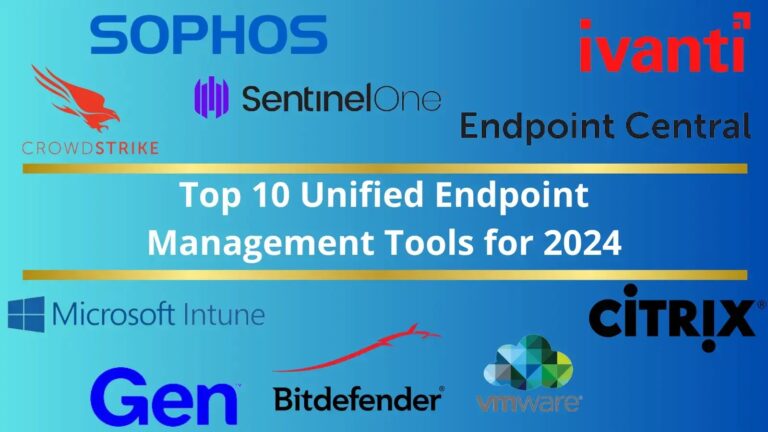
Top Unified Endpoint Management Tools
Ivanti Endpoint Management Software
SentinelOne
Sophos
EndPoint Central
Microsoft Intune
VMware
Citrix Systems
Gen Digital
Bitdefender
CrowdStrike
1. Ivanti Endpoint Management Software
Ivanti
Core Features
Ivanti Unified Endpoint Manager (formerly LANDesk Management Suite) empowers enterprises by providing comprehensive mobile security and device management (UEM) software support.
It offers robust features, including remote control and issue resolution, real-time monitoring and alerting, automated inventory discovery, effective license management, and more.
Ivanti Unified Endpoint Manager represents a comprehensive solution that merges the vendor’s previously distinct offerings: enterprise mobility management (formerly under the Landesk brand) and client management tools.
Within the Ivanti platform, users can harness its capabilities for network-connected device discovery, automated software deployment, enhanced login performance, and seamless integration with various IT solutions.
Ivanti UEM incorporates several functionalities inherited from its Endpoint Manager counterpart, such as streamlined OS provisioning, automated alerting, and versatile support for both agent and agentless devices.
Ivanti Endpoint Software – Demo Video
To whom is it advised?
Ivanti is recommended for many IT and cybersecurity companies and experts. Its flexible IT management and security solutions serve IT administrators, security experts, IT service desk teams, compliance and governance teams, business leaders, and executives.
Security professionals can use Ivanti’s threat detection and vulnerability management products, while IT administrators can use them for asset management and maintenance.
Ivanti’s products can also improve IT service desk support and compliance and governance reporting. Ivanti’s flexible IT and security solutions are useful for a wide range of professionals and enterprises, regardless of size or industry.
What is Good?
What could be Better?
Patch management
Error codes
Remote control
Long way
Reports based
Scheduled tasks
Supported Platforms
Windows
macOS
Linux
Chrome OS
IoT and other devices
Customer Rating
Gartner: 4.3 out of 5
Trust Radius: 8.1 out of 10
Cost
A free trial is available to start with.
2. SentinelOneEndpoint Management Software
SentinelOne
Core Features
Endpoint Protection Platforms
Record Breaking ATT&CK Evaluation
SentinelOne Unified Endpoint Management (UEM) tool is a cloud-based platform that provides all endpoints in an organization, including laptops, desktops, tablets, and smartphones.
SentinelOne offers a centralized dashboard, providing a streamlined approach to critical tasks. With UEM, organizations can effortlessly handle device management, including device enrollment, application deployment, and policy management.
It also ensures endpoint security by keeping devices up-to-date with the latest patches through efficient patch management. Real-time threat detection and response capabilities protect against malware and other security risks.
SentinelOne UEM also makes compliance reporting easier, which helps companies follow industry rules by keeping track of and reporting on endpoint configurations. This improves overall security and compliance measures even more.
SentinelOne Endpoint Management Software – Demo Video
To whom is it advised?
Organizations and security professionals who are searching for superior endpoint protection and threat detection solutions are strongly encouraged to consider SentinelOne.
Large corporations, professionals in the field of cybersecurity, sectors with stringent regulatory standards, proponents of automation, and organizations with remote or distributed workforces are the kinds of firms that will find this solution particularly useful.
SentinelOne is an excellent option for individuals who are serious about enhancing their cybersecurity defenses and defending their endpoints from a wide variety of cyber attacks thanks to its AI-driven methodology and comprehensive feature set, which make it a powerful alternative.
What is Good?
What Could be Better?
Detect and respond to threats in real-time
It can be expensive for some organizations
Automated threat hunting and response
AI-based detection engines can generate a lot of alerts
Supported Platforms
Windows
MacOS
Linux
Kubernetes
Customer Rating
Gartner: 4.8 out of 5
Trust Radius: 9.2 out of 10
Cost
3. Sophos Endpoint Management Software
Sophos
Core Features
Adaptive Attack Protection
Prevent Breaches, Ransomware, and Data Loss
Sophos Mobile is a unified endpoint management solution that safeguards mobile devices while offering robust data protection.
It serves as a critical defense against mobile malware and ensures comprehensive security for organizations.
Sophos Mobile is a Unified Endpoint Management (UEM) solution that streamlines the management and security of both traditional and mobile endpoints for businesses.
Integrated with a top-notch next-gen endpoint security platform, it efficiently oversees Windows 10, macOS, Android, and iOS devices.
This unified approach, within the Sophos Central admin interface, ensures consistent policies and robust security through Intercept X for Mobile and empowers users to be productive on their preferred devices.
Sophos Endpoint Management Software – Demo Video
To whom is it advised?
Anyone looking for dependable and all-encompassing cybersecurity solutions should consider Sophos. It’s a great option for companies of any size, but especially SMBs on a tight budget that need to beef up their security without breaking the bank.
In addition, Sophos provides organizations with scalable enterprise-grade cybersecurity solutions that can be used in advanced IT infrastructures. Sophos provides powerful threat detection and response capabilities and centralized management solutions for IT managers.
In addition to serving traditional office workers, the company’s products are ideal for the increasingly common remote and hybrid workforces. Those who are dedicated to a unified and robust security strategy can benefit from Sophos’ synchronized security approach, which integrates numerous components for coordinated defense.
What is Good?
What Could be Better?
Mobile management
The ability to control mail platforms other than MS Exchange.
Reporting and visibility
The ability to control more features on iOS
Threat defense
Supported Platforms
Android
IOS
Chrome OS
macOS
Windows 10
Customer Rating
Gartner: 4.4 out of 5
Trust Radius: 8.1 out of 10
Cost
A free trial is available to start with.
4. Endpoint Central Endpoint Management Software
Endpoint Central
Core Features
Endpoint Privilege Management
GoTo Central is a robust endpoint management solution for IT professionals.
It simplifies endpoint infrastructure monitoring, management, and security, making it suitable for remote or global setups.
With GoTo Central, IT teams gain agility and visibility, boosting productivity, cutting costs, and enhancing security measures.
Endpoint Central unified endpoint management software covers critical aspects such as device management, patch management for security updates, real-time threat protection, compliance reporting, remote control for troubleshooting, and asset management.
It provides a holistic approach to streamlining IT operations, boosting security, and ensuring compliance with industry regulations.
Endpoint Central Endpoint Management Software – Demo Video
To whom is it advised?
Endpoint Central’s many applications include automating routine desktop management tasks, standardizing OS and application configurations throughout the network, protecting desktops from a variety of threats, and troubleshooting common issues.
Install or uninstall MSI or EXE-based applications, audit your IT assets, and more. Software Deployment Scheduling, Script Execution Before and After Installation, Maintenance Patches, Installation Windows Operating System and Application Updates, Patch Management Automation, Checking the Update Deployment Progress
What is Good?
What could be Better?
Automate task
Slow to deploy
Scalable
Require regular updates
Supported Platforms
Customer Rating
Gartner: 4.5 out of 5
Trust Radius: 8.9 out of 10
Cost
A free trial is available to start with.
5. Microsoft Intune Endpoint Management Software
Microsoft Intune
Core Features
Secure and protect data on devices
Automate policy management & deployment for apps
Provide a single point of management for devices
Microsoft Intune, formerly known as Microsoft Endpoint Manager, represents a comprehensive solution that seamlessly amalgamates the functionalities of its predecessor, Microsoft System Center Configuration Manager (SCCM), also known as ConfigMgr.
This robust UEM solution offers a unified endpoint management experience, enabling organizations to oversee and control their entire device ecosystem efficiently.
Microsoft Intune is a versatile Mobile Device Management (MDM) solution offering secure management for various devices, including iOS, Android, Windows, and macOS, all under one streamlined endpoint management platform.
Endpoint Configuration Manager, formerly SCCM, is a robust system monitoring and management tool that can be deployed flexibly as an agent, via the cloud, or on-premises.
It efficiently handles systems across various operating systems (Windows, Mac, Linux), spanning multiple environments, including servers, virtual setups, and mobile devices. Its scalability ensures seamless future application delivery.
This unified endpoint management solution has a highly customizable reporting tool, empowering organizations to make informed decisions regarding their software needs.
Microsoft Intune Endpoint Management Software
To whom is it advised?
If your company manages mobile devices, apps, or data, Microsoft Intune can help you manage it more efficiently and securely.
It serves a wide range of customers, from small startups to large enterprises, from companies that encourage remote work and BYOD to those that place a premium on data security and compliance, and from Microsoft 365 users looking for tighter integration.
Those who are currently using Microsoft’s ecosystem of tools and services will find Microsoft Intune to be a scalable and flexible solution for optimizing endpoint management and enhancing security.
What is Good?
What Could be Better?
Setup application protection for Office 365 apps
Setup on an Android requires additional software to implement
Protects corporate data
Ability to add other applications to trust apps lists
allows a device to be split into corporate data and personal data
Supported Platforms
Android.
iOS/iPadOS.
Linux.
macOS.
Windows.
Chrome OS.
Customer Rating
Gartner: 4.3 out of 5
Trust Radius: 8.3 out of 10
Cost
A free trial is available to start with.
6. VMware Endpoint Management Software
6. VMware
Core Features
Multi-Tenant Architecture
Remote Onboarding and Configuration
Full App Lifecycle Management
Role-Based Access Control
VMware Workspace ONE is a direct competitor to Citrix in virtualization, offering a UEM solution comparable to Citrix Endpoint Management.
It operates through a virtual desktop system, granting users access to a virtual desktop from any company device.
This virtual desktop spans Windows and macOS environments, providing seamless continuity for users’ work experiences.
This acquisition paved the way for developing Workspace ONE, an all-encompassing Unified Endpoint Management (UEM) solution.
VMware’s Workspace ONE Unified Endpoint Management (UEM) is a powerful, unified solution that empowers IT teams to deploy and manage applications across the diverse enterprise ecosystem.
This includes our Macbooks, Windows laptops, and Android and iOS devices, which are utilized for essential corporate apps such as email and chat communicators.
Workspace ONE UEM streamlines the app installation, configuration, and update process, ensuring seamless functionality and efficiency across the digital workspace.
VMware Endpoint Management Software
To whom is it advised?
VMware is recommended for a broad spectrum of enterprises and IT professionals seeking virtualization and cloud computing solutions. When it comes to optimizing resource use and scalability, it shines for large organizations with complicated IT systems.
VMware’s virtualization technology helps data centers with tasks like server consolidation and disaster recovery. VMware’s products can help cloud service companies provide cloud services more effectively.
VMware’s virtualized workload protection and easy-to-use management tools are valued by both security-conscious businesses and IT departments. Businesses that are working on hybrid or multi-cloud deployments can also rely on VMware’s solutions for consistent workload management across clouds.
Because of its flexibility and wide range of products, VMware is an invaluable tool for businesses seeking to improve the efficiency and adaptability of their IT infrastructure.
What is Good?
What Could be Better?
Works with all platforms – Windows, Mac, Android and iOS
Onboarding new devices is not very intuitive
Protects devices against attacks
Some programmatic ways should be provided to manage devices
Profiles and configuration can be easily changed remotely for all devices
Supported Platforms
Android
macOS
Windows Desktops
Windows Mobile devices
Customer Rating
Gartner: 4.3 out of 5
Trust Radius: 7.0 out of 10
Cost
Starts with $3.00 per device/$5.40 per user
7. Citrix Systems Endpoint Management Software
Citrix Systems
Core Features
Deliver enterprise mobile apps.
Deploy device policies and apps.
Retrieve an asset inventory
Citrix Endpoint Management, formerly XenMobile, is a versatile Unified Endpoint Management (UEM) and enterprise mobility management solution.
Its primary objective is to ensure the security and integrity of mobile applications and devices within the enterprise environment.
Citrix Systems Unified Endpoint Management (UEM) is a sophisticated IT tool for efficiently managing and securing various endpoints, including computers and mobile devices.
It provides advanced features like device provisioning, application deployment, and security policy enforcement, making it a crucial asset for IT professionals in maintaining and safeguarding their organization’s endpoint infrastructure.
Citrix Systems Endpoint Management Software
To whom is it advised?
Any business or IT department in need of a digital workplace, networking, or virtualization solutions should look into Citrix Systems. It is ideal for multinational corporations that want to standardize their digital work areas and enhance their networks for their distributed employees.
Citrix’s administration solutions aid IT managers in streamlining the provisioning of desktops and applications. Citrix’s safe and compliant solutions are useful for industries with severe regulatory requirements, such as healthcare and finance.
Citrix facilitates safe, versatile access to programs and data in today’s era of remote work. Organizations that place a premium on the user experience can use Citrix to facilitate the migration and management of their workloads to the cloud, while those that are open to new technologies can use Citrix to improve the usability and happiness of their products and services for their employees, customers, and partners.
What is Good?
What Could be Better?
Secure access
Take time to understand
Easy to use
The interface could be more straightforward.
Easy file sharing
Supported Platforms
Android
iOS
iPadOS
macOS
Windows
Customer Rating
Gartner: 4.4 out of 5
Trust Radius: 8.2 out of 10
Cost
8. Gen Digital Endpoint Management Software
Gen Digital
Core Features
Real-Time AI-powered Scam Detection
Decentralized Digital Identity
protection solutions for devices
Gen Digital Unified Endpoint Management (UEM) is a cloud-based UEM solution that helps businesses manage and secure their endpoints.
It supports many devices, including laptops, desktops, tablets, smartphones, and IoT devices.
Gen Digital Unified Endpoint Management (UEM) is a comprehensive solution for managing endpoints throughout their lifecycle.
It covers device management tasks like provisioning, configuration, and security updates, ensuring efficient operations from enrollment to retirement.
The platform also handles application management, including corporate-owned and BYOD apps.
Gen Digital UEM prioritizes security with device encryption, remote wipe, and two-factor authentication, shielding endpoints from malware, phishing, and other threats.
Additionally, it offers detailed reporting and insights on endpoint usage and security status, aiding organizations in identifying and mitigating potential risks.
Gen Digital Endpoint Management Software
To whom is it advised?
Through its trusted Cyber Safety brands, including Norton, Avast, LifeLock, Avira, AVG, ReputationDefender, and CCleaner, Gen (NASDAQ: GEN) is a worldwide corporation committed to supporting Digital Freedom.
It’s not Generation X, Y, or Z; there’s a new generation. The digital natives are known as Gen D. The foundation of our consumer brand family is protecting the first generations of digital natives.
Now, Gen gives individuals the tools they need to use the internet with peace of mind, privacy, and security, both now and in the future. More than 500 million people in over 150 countries rely on our award-winning cybersecurity, online privacy, and identity protection products and services.
What is Good?
What Could be Better?
Easy to use
Lack of customization
Scalable
Slow support system
Supported Platforms
Customer Rating
Gartner: 4.5 out of 5
Trust Radius: 8.4 out of 10
Cost
A free trial is available to start with.
9. Bitdefender Endpoint Management Software
Bitdefender
Core Features
Fileless Attack Protection
Bitdefender UEM is a comprehensive UEM solution that can help businesses manage and secure their endpoints.
Bitdefender UEM is a versatile solution for comprehensive endpoint management. It covers the entire device lifecycle, from enrollment to retirement, handling tasks like provisioning, configuration, and security updates. Application management is seamless, encompassing both corporate-owned and BYOD apps.
Security is a top priority, offering robust protection against malware, phishing, and other threats through features like device encryption, remote wipes, and two-factor authentication.
Detailed reporting and insights empower organizations to identify and address security risks effectively.
Additionally, Bitdefender UEM aids in compliance with industry regulations such as GDPR and HIPAA.
At the same time, its integrations with other security solutions like SIEM and SOAR provide a holistic view of security posture.
Bitdefender Endpoint Management Software
To whom is it advised?
Bitdefender is recommended for people, enterprises, and organizations of all sizes seeking comprehensive and effective cybersecurity solutions. Its flexible product choices make it a great choice for home customers looking to protect their gadgets and data.
SMBs benefit from Bitdefender’s affordable business security solutions, while large corporations can use its powerful threat detection and data protection.
IT administrators benefit from Bitdefender’s integrated security deployment and monitoring tools. Modern IT infrastructures benefit from Bitdefender’s cloud and virtualization solutions. Companies with rigorous compliance standards, like healthcare and banking, trust Bitdefender to protect their data.
What is Good?
What Could be Better?
It has device encryption.
Costly
It can remotely wipe the data on endpoints.
Slow support system
Supported Platforms
Customer Rating
Gartner: 4.6 out of 5
Trust radius: 8.6 out of 10
Cost
A free trial is available to start with.
10. CrowdStrike Endpoint Management Software
CrowdStrike
Core Features
Streamlined, single-agent architecture
Effortless workflows and automation
Infused with AI expertise
CrowdStrike UEM is a comprehensive UEM solution that can help businesses manage and secure their endpoints.
It is used to manage the entire lifecycle of devices, from enrollment to retirement. This includes tasks such as provisioning, configuration, and security updates.
CrowdStrike UEM is a robust Unified Endpoint Management (UEM) solution, proficient in the complete lifecycle management of devices, spanning enrollment to retirement, including provisioning, configuration, and security updates.
It excels in application management for both corporate-owned and BYOD apps. Security is paramount, with features like device encryption, remote wipe, and two-factor authentication guarding against malware, phishing, and threats. Comprehensive reporting and insights facilitate risk identification and mitigation.
CrowdStrike UEM aids businesses in achieving compliance with regulations such as GDPR and HIPAA, and its integrations with SIEM and SOAR offer a holistic security view.
This solution enhances security, reduces IT costs through automation, ensures compliance, and boosts employee productivity with secure, efficient tools.
CrowdStrike Endpoint Management Software
To whom is it advised?
CrowdStrike is recommended for diversified enterprises and cybersecurity experts wanting top-tier endpoint security and threat intelligence. Scalable and advanced threat detection and response capabilities make it ideal for large companies with complex IT infrastructures looking to improve cybersecurity.
CrowdStrike’s real-time threat information, proactive monitoring, and fast incident response help security teams fight cyber attacks. Government, banking, and healthcare, which must fulfill strict security standards, use CrowdStrike’s sophisticated security features.
Distributed workforces need CrowdStrike endpoint protection due to remote and hybrid work. CrowdStrike’s cloud-native design will also appeal to cloud-first and cloud-security companies. CrowdStrike is a great option for next-generation endpoint security to combat changing cyber threats.
What is Good?
What Could be Better?
Encrypts the data on endpoints
Limited customization
Easy to use
Scalable
Supported Platforms
Windows
Mac
Linux
Android
IOS
Customer Rating
Gartner: 4.8 out of 5
Trust Radius: 9.0 out of 10
Cost
A free trial is available to start with.
Conclusion
Adopting Unified Endpoint Management (UEM), tools offers a compelling array of benefits for organizations navigating the complexities of managing diverse device ecosystems, from mobile devices to desktops, Windows to macOS, in both office and remote settings. One of the standout advantages is streamlining device management through a single, unified approach.
This consolidation eliminates the need for separate support teams and tools, enhancing efficiency and simplifying centralized management.
UEM tools bring consistency to policies governing applications, devices, and data, ultimately reducing security risks.
Organizations can maintain a more robust and secure IT environment with fewer opportunities for policy misconfigurations. The ability to enforce consistent policies across the board minimizes complexity and enhances the overall security posture.
UEM tools empower organizations to achieve higher operational efficiency, bolster security, and reduce risk.
These tools are invaluable in today’s increasingly diverse and interconnected digital landscape by providing a unified console, a single vendor, and a consolidated approach to device management.
Messaging service Signal is testing support for usernames as a replacement for phone numbers to serve as user identities.
Signal provides encrypted instant messaging and is popular among people that value their privacy. Compared to more popular services like WhatsApp, Signal offers more layers of privacy protection, customization of settings, and enhanced data security. These layers include hiding metadata, not using a user’s data, allowing call relay, and others.
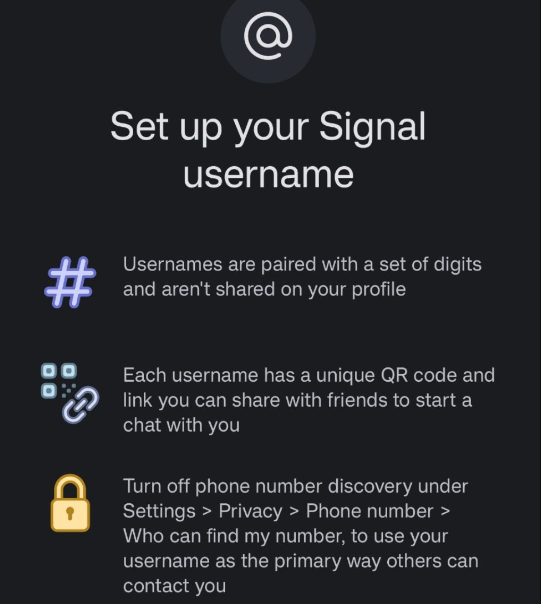
The current Signal setup requires users to sign up with a phone number and this number will be shared if you want to message other users on the app. But not everyone wants to share their phone number when messaging someone and so Signal is doing something about that.
On its forums, Signal announced the feature is ready for pre-beta-testing.
“After rounds of internal testing, we have hit the point where we think the community that powers these forums can help us test even further before public launch.”
So, for now, the announced feature is currently only available for the app’s testers on Android, iOS, and desktop users. Once it’s finally released, you’ll be able to select your username by going to Settings > Profile and Settings > Privacy > Phone Number section.
From a screenshot posted on X, it looks like you’ll be able to invite new contacts by sending them a link or a QR code.
Screenshot of new options
It’s also likely you still have to have a phone number to create an account. The new feature just allows you to hide your number behind a username. Phone numbers will still be used as a unique identification and as an anti-spam measure.
We don’t know when the new feature will be generally available, but in an earlier interview, president Meredith Whitaker said she expected the feature’s launch in early 2024. However, this seems unlikely as it requires a major overhaul of the app’s architecture.
We don’t just report on privacy—we offer you the option to use it.
Privacy risks should never spread beyond a headline. Keep your online privacy yours by using Malwarebytes Privacy VPN.
Researchers detected IMPERIAL KITTEN, an adversary with ties to Iran, conducting strategic web compromise (SWC) operations with a focus on transportation, logistics, and technology firms.
The adversary, who has been operating since at least 2017, has been reported to have ties to the Islamic Revolutionary Guard Corps (IRGC) and fulfill Iran’s needs for strategic intelligence related to IRGC activities.
Its operation is distinguished by the use of social engineering, namely job recruitment-themed content, to distribute custom .NET-based implants.
Previously, IMPERIAL KITTEN has targeted the energy, maritime, defense, technology, consulting, and professional services sectors.
Tactics, Techniques, and Procedures Employed
CrowdStrike claims that IMPERIAL KITTEN intrusion chains employ the following tactics, techniques, and procedures:
Using one-day exploits, public scanning tools, SQL injection, and compromised VPN credentials to gain initial access.
Use of scanning tools, PAExec, and credential theft.
Data exfiltration by leveraging custom and open-source malware to target Middle Eastern entities.
“In a SWC, the adversary attempts to compromise victims based on their shared interest by luring them to an adversary-controlled website”, CrowdStrike said in a report shared with Cyber Security News.
As of now, compromised (mostly Israeli) websites can be redirected to the adversary-controlled domains, which are also the locations where data gathered to create visitor profiles is sent.
According to the researchers, SWC domains employed the Matomo analytics service1 in early 2022 to profile visitors who visited the hijacked Israeli websites.
Later, SWC domain iterations employ a custom script to profile visitors by collecting browser information and IP addresses, which are then delivered to a hardcoded domain.
According to CrowdStrike intelligence Collection reporting, the final payload of the SWC activities is a malware family known as IMAPLoader.
DocumentProtect Your Storage With SafeGuard
StorageGuard scans, detects, and fixes security misconfigurations and vulnerabilities across hundreds of storage and backup devices.
Reports mention that the adversary may occasionally serve malware to SWC victims directly. There is some evidence that IMPERIAL KITTEN targets companies, such as upstream IT service providers, in order to locate and obtain access to targets that are of major interest for data exfiltration.
Additionally, malicious Microsoft Excel documents are allegedly used in IMPERIAL KITTEN’s phishing operations.
“IMPERIAL KITTEN achieves lateral movement through the use of PAExec (the open-source PsExec alternative) and NetScan, and uses ProcDump to dump the LSASS process memory for credential harvesting”, researchers said.
It is possible that IMPERIAL KITTEN uses open-source tools like MeshAgent3 or deploys custom malware to exfiltrate data.
It is stated that IMPERIAL KITTEN operations use a variety of tools, such as custom implants, a remote access tool (RAT) that uses Discord for C2, IMAPLoader, and StandardKeyboard, which both use email for C2.
Notably, in May 2023, a sophisticated watering hole attack was detected by ClearSky and connected to Imperial Kitten. The attack was also aimed at multiple Israeli websites.
Targeting Israeli transportation, maritime, and technology groups is consistent with Imperial Kitten’s prior actions in this instance as well.
Patch Manager Plus, the one-stop solution for automated updates of over 850 third-party applications:Try Free Trial.
Earlier, Chess.com confirmed to Hackread.com that malicious threat actors exploited the “find friends” feature in the platform’s API to extract publically available user data.
On November 10th, 2023, Hackread.com exclusively reported that threat actors had disclosed a scraped database containing information from Chess.com users. The database, containing approximately 828,327 users, was leaked on the notorious Breach Forums.
Over the weekend, a different threat actor leaked another scraped database from Chess.com, affecting nearly 500,000 (476,121) users of the widely used online platform for chess enthusiasts and social networking.
Interestingly, this forum also saw another threat actor leaking a scraped database from LinkedIn just a couple of days prior on the same forum, which contained information from 25 million users.
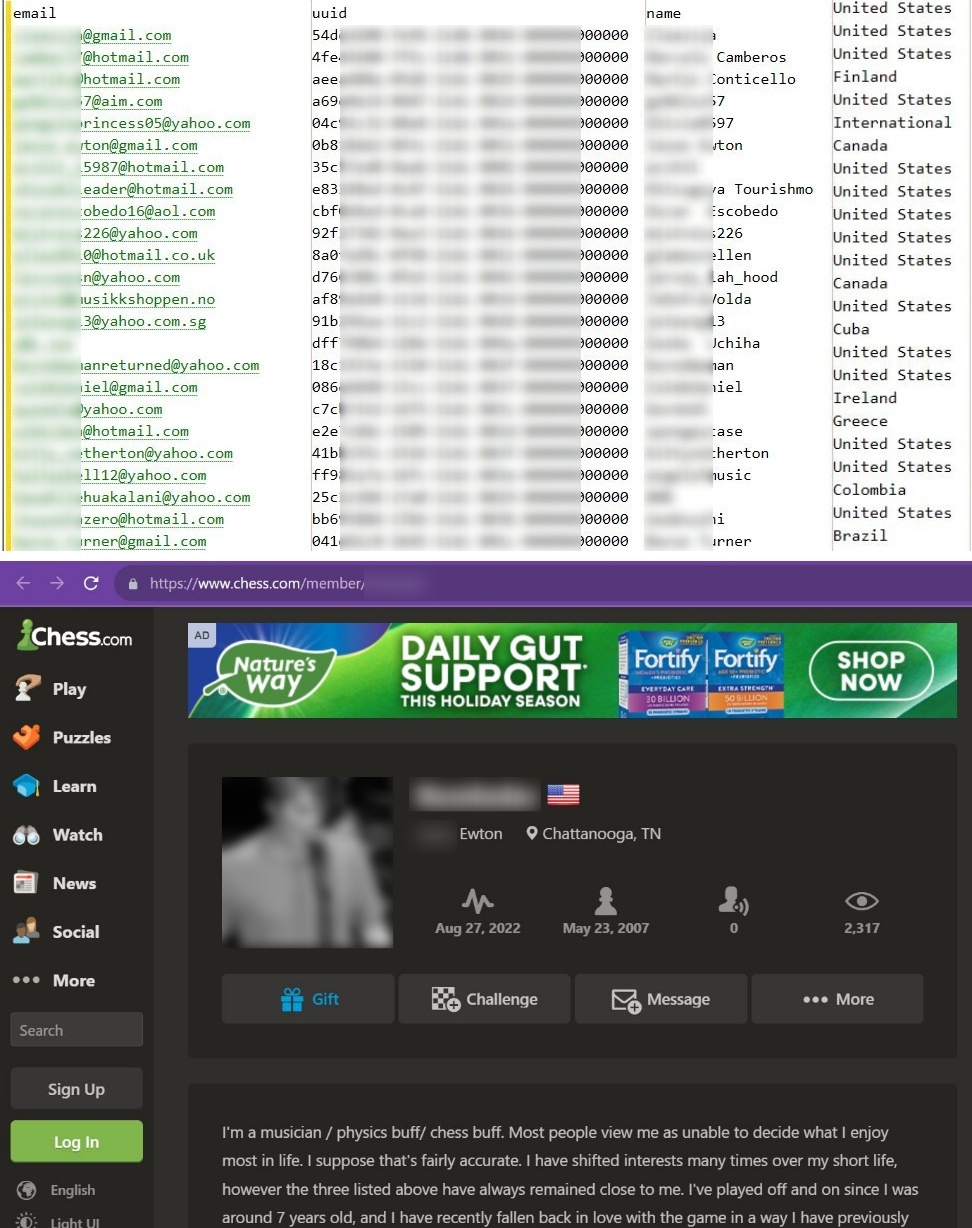
Similar to the previous data breach, the latest incident also involves the exposure of sensitive information. The compromised data includes full names, usernames, profile links, email addresses, users’ originating countries, avatar URLs (profile pictures), Universal Unique Identifier (UUID), user IDs, and registration dates.
A screenshot from the data leak displays email addresses along with other information and provides an example of a user profile when the profile URL is clicked. (Credit: Hackread.com)
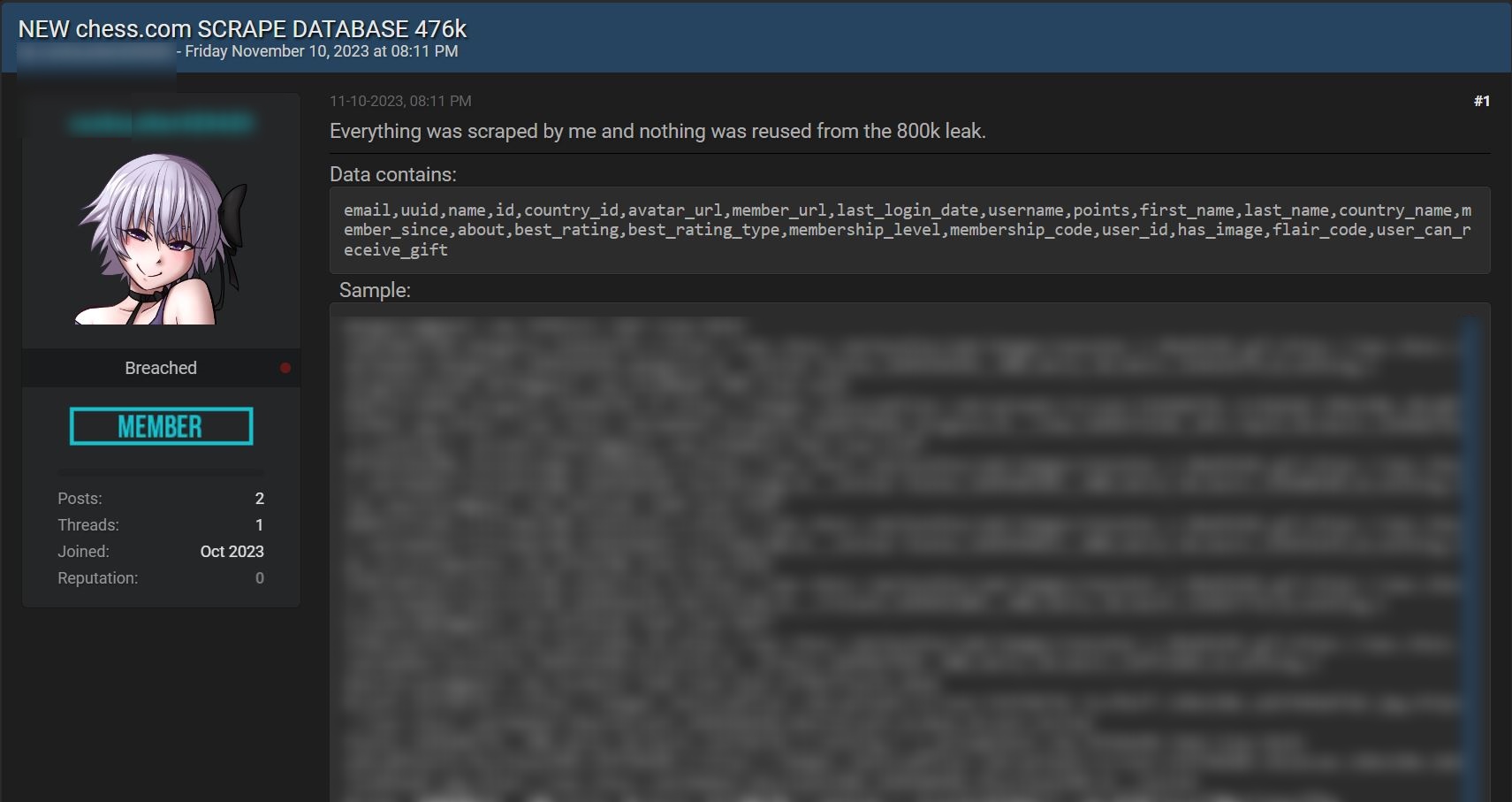
In a post on Breach Forums, the threat actor specified that the recently published data leak is distinct and unrelated to the previous one involving the 800,000 scraped records.
According to the threat actor, no data from the earlier leak has been incorporated into the current leak. “Everything was scraped by me and nothing was reused from the 800k leak,” the actor wrote.
A quick analysis by Hackread.com can confirm the actor’s claims to be authentic and no data was taken from the previous leak.
What the threat actor said on Breach Forums (Credit: Hackread.com)
Expect 4 Additional Chess.com Data Scrapes
Since Hackread.com has been monitoring the activities of threat actors on Breach Forums, “DrOne,” the group responsible for the initial Chess.com data leak, has claimed that they have acquired access to four more scraped databases from the site.
According to their claim, these four databases comprise personal information from over 1 million Chess.com users. Nevertheless, it remains uncertain when the databases will be leaked, and whether the actors have any intentions to do so.
This is not a cyber attack – Chess.com is aware of the issue
It is crucial to emphasize that Chess.com has not fallen victim to a cyber attack, and its servers have not been compromised by threat actors. In response to the previous scrape leak reported to Hackread.com, Chess.com affirmed its awareness of the issue. The company clarified that threat actors exploited its public API, highlighting that the breach did not involve a direct intrusion into its servers.
“Today, we learned that some bad actors used our API to collect and release some publicly available member data. This was NOT a data breach. Our infrastructure, member accounts, and data such as passwords are secure,” the company said.
“The bad actors used email addresses found outside Chess.com to search our API via the “find friends” feature and match email addresses to Chess.com accounts. Those Chess.com usernames, email addresses, and other public information such as the account creation date, and last login date were published,” the representative explained.
Still A Danger to Chess.com Users
While it is true that malicious actors have compiled and leaked publicly available information, the inclusion of email addresses in the data poses a significant threat to the site’s users. The leaked information provides a basis for potential malicious activities, such as the creation of fake profiles leading to identity theft.
Additionally, threat actors could leverage the exposed data to search for passwords linked to the compromised email addresses in previous data breaches. Furthermore, the presence of email addresses opens the door for phishing attacks, where attackers may attempt to deceive users by posing as Chess.com in fraudulent email communications.
Web Scraping – Not Easy to Defend Against
Web scraping, also known as data scraping, refers to the automated method employed by software to extract information from websites, particularly to gather specific data from web pages. Given the expansive nature of Chess.com as a large website, the process becomes challenging to block.
In an attempt to thwart scraping activities, large websites implement preventive measures like rate limiting and captcha challenges. Despite these measures, scrapers persistently innovate and devise new techniques to overcome these obstacles. However, not all scrapers are malicious; some engage in data collection for research purposes, ranging from studying social networks to developing machine learning models.
In the ever-evolving landscape of financial markets, the US Tech 100 Index, represented by the Nasdaq 100, emerges as a guiding star for investors seeking exposure to the dynamic technology sector. Yet, to truly harness the potential of this index, one must unravel the intricate web of correlations it shares with other major indices, particularly the S&P 500 and the Dow Jones Industrial Average (DJIA).
The Dance of Titans: Nasdaq 100 and S&P 500
At the heart of this financial ballet lies the dance between the Nasdaq 100 and the S&P 500, two giants that sway to market trends. The correlation between these indices is palpable, a result of shared constituents that bridge the worlds of technology and diverse sectors. Companies like Apple, Microsoft, and Amazon, pivotal players in the Nasdaq 100, also wield influence in the S&P 500, creating a synchronized ebb and flow in their movements.
Historical market data unveils a narrative of tandem strides during pivotal moments. Whether it be the exuberance of bull markets or the caution of bear markets, the US Tech 100 and S&P 500 often move harmoniously, echoing sentiments reverberating across the broader market landscape. This interconnectedness underscores the need for strategic portfolio construction, as high correlations between these indices demand a nuanced approach to diversification.
Harmony and Discord: Nasdaq 100 and DJIA
Yet, as we get deeper into the financial symphony, we encounter a more complex melody in the relationship between the Nasdaq 100 and the DJIA. With its 30 blue-chip constituents, the Dow brings a different timbre to the ensemble. Its diversified composition, spanning various sectors, introduces nuances to the correlation game.
During economic expansions, the Nasdaq 100 may take center stage, propelled by the surging performance of technology stocks. However, with its broader representation, the DJIA might follow a different rhythm, reflecting a more measured response to economic cycles. The result is a correlation that dances to a subtler tune, highlighting the interplay of diverse market forces.
Strategies in the Symphony: Navigating Correlations
In this financial symphony, traders and investors become conductors, orchestrating strategies that leverage the interconnections between indices. Portfolio diversification becomes an art, with an awareness that high correlations between the Nasdaq 100 and S&P 500 necessitate a thoughtful selection of assets to achieve true diversification.
Strategic diversification emerges as a key motif. By introducing assets with lower correlations, such as commodities or international equities, investors can fine-tune their portfolios to harmonize with the dynamic rhythms of the market. It’s a strategic dance, adapting to the ever-changing correlations that define the contemporary financial landscape.
Yet, in this intricate ballet, the one constant is change. Economic variables, global events, and the individual movements of stocks all play their part in reshaping correlations. Traders and investors must remain vigilant, adapting their strategies to the evolving dynamics of the market.
Cybersecurity firm Kaspersky has figured out that thanks to new and sneakier techniques used by bad actors to get malicious apps through Google’s security scans, Android users downloaded malicious apps over 600 million times in 2023. That’s a mind-blowing number and is helped along by the huge number of apps in the Play Store (more than 3 million unique apps says Kaspersky) that makes it impossible for even a company with resources like Google to completely check out each one in depth.
Some malware starts life as a legit app until an update adds some malicious features
The first case study that Kaspersky lists in its blog post is interesting because it shows how these apps are getting installed on Android phones. The iRecorder app was first added to the Play Store in September 2021 and 11 months later, an update added code from Trojan AhMyth which caused the app to record every 15 minutes from the microphone on all phones that had the app installed. The recordings were sent to the server of the app creator.
Mini-games like these contained malware and were installed 451 million times from the Google Play Store this year
By the time the iRecorder app was considered to be malware in May 2023, it had been downloaded 50,000 times. But the iRecorder story is illustrative of how these apps slip through Google’s checkpoints; they start life as a regular app that does only what the developer says it does. But after some time goes by, an update is sent out that includes malware, and instantly that benign app you installed on your Android phone has become dangerous.
Another strategy employed by cybercriminals is to open multiple developer accounts with Google. This way, if Google kicks out a malware-laden app, another similar one can be uploaded to the Play Store. As an example, Kaspersky describes three apps: Beauty Slimming Photo Editor, Photo Effect Editor, and GIF Camera Editor Pro. This trio chalked up 620,000 installs while featuring the Fleckpe subscription Trojan.
35 million installs were tallied for clones of Minecraft which contained adware
Once these apps were opened on a phone, the malicious payload was downloaded on the device which would then open a browser window that the phone’s user could not see. The browser would direct itself to sites offering paid subscriptions and after intercepting confirmation codes, the malware would sign up the device owner for paid subscriptions through his/her cellular account which the app had been able to access.
This app signed up users for expensive subscriptions without their knowledge
One of the most distributed malware apps that came from the Google Play Store last year were apps of Minecraft clones. Because of the popularity of the real Minecraft app, 35 million downloads were tallied under such names as Block Box Master Diamond. These apps contained adware called HiddenAds that ran ads in the background that the user could not see. While this made money for the bad actors, these apps would negatively impact the battery life of the phones on which they were installed.
Malware called SpinOk was behind the biggest case of the year according to Kaspersky. About 200 infected apps were installed an incredible 451 million times. The apps were supposed to deliver mini-games that would pay out cash rewards to players. But what these apps really did was collect user data and send it to the bad actor’s command-and-control server.
One thing you can do to prevent yourself from installing malware is to check the comments section in the Play Store on each app from an unknown developer that you want to install. Forget the positive comments with high scores because those can be faked. Instead, check the negative comments with low ratings as these will probably be the ones that give you the true story behind the app.
Look for red flags in these comments from those who have installed the app on their phones. Such complaints include reduced battery life, overheating, and the constant freezing of a device. Also, check the app’s Play Store listing for spelling errors, and grammatical mistakes; if something doesn’t look right, your best bet is to refrain from installing the app.
In an age where online threats loom large, safeguarding our personal and professional accounts has never been more critical.
With hackers tirelessly attempting to breach security barriers, the need for robust identity verification methods has become paramount.
In response to these challenges, Microsoft has introduced a cutting-edge solution: the Microsoft Authenticator app, revolutionizing the way we secure our digital lives.
MFA provides an extra layer of security by necessitating multiple forms of verification, such as passwords coupled with unique codes or biometric data.
Approve-in
However, not all MFA methods are created equal, with some susceptible to interception and spoofing by tech-savvy hackers.
Authenticator
Microsoft Authenticator: Security Redefined
Enter the Microsoft Authenticator app, a game-changer in online security.
This free app, compatible with smartphones and tablets, supports MFA for a plethora of accounts, including Microsoft, email, social media, and banking services.
DocumentProtect Your Storage With SafeGuard
StorageGuard scans, detects, and fixes security misconfigurations and vulnerabilities across hundreds of storage and backup devices.
Its seamless user experience sets it apart: with a single tap, users can access their accounts without the hassle of passwords or codes.
What truly elevates the Microsoft Authenticator app is its integration of artificial intelligence and machine learning.
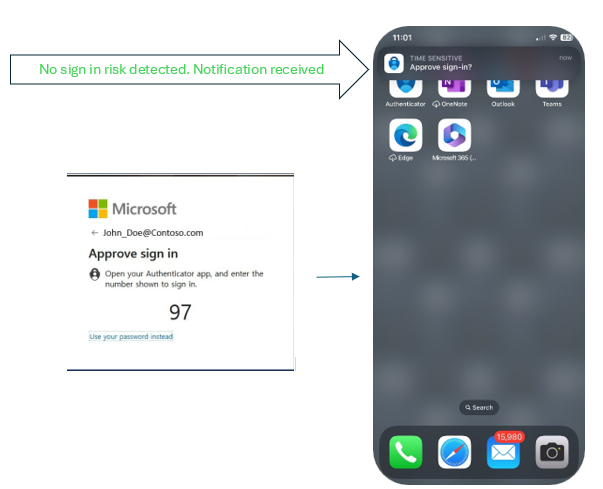
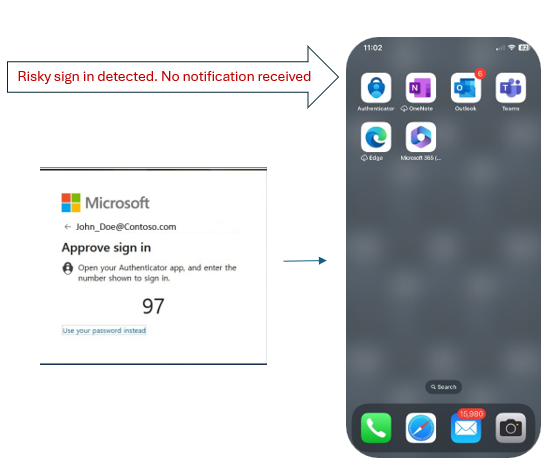
The app distinguishes genuine login attempts from suspicious by analyzing factors like location, device information, and user behavior.
Authenticator
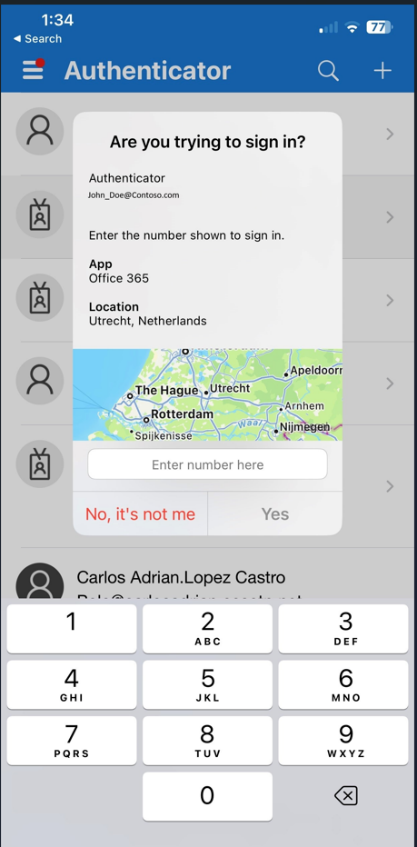
If a potential threat is detected, the app prompts users to confirm their identity within the app, thwarting phishing attempts and ensuring secure access.
The app maintains a comprehensive history of login requests, allowing users to review their account activities anytime.
Any irregularities or unauthorized attempts can be promptly reported to Microsoft, contributing to ongoing improvements in security protocols.
According to Alex Weinert, VP Director of Identity Security at Microsoft, the app’s implementation since September 2023 has significantly reduced irrelevant notifications and prevented over 6 million potentially malicious login attempts initiated by hackers.
Embracing a Password-Free Future
Microsoft Authenticator fortifies online security and liberates users from the constraints of passwords, offering a hassle-free yet highly secure authentication experience.
By leveraging this intelligent app, individuals can confidently navigate the digital landscape, knowing that their accounts are shielded from threats.
To embrace the future of online security and experience the seamless convenience of Microsoft Authenticator, visit the [Microsoft Authenticator website] and embark on a journey towards a safer digital existence. Stay protected, stay empowered.











.webp)