The ActiveArmor is AT&T’s spam text and robocall blocking service that is available to all users. With this, AT&T can protect its users from chains of spam texts and robocalls. In July alone, this service blocked over 1 billion of these attacks from reaching their users around the world.
That figure is huge and shows how much these bad actors rely on spamming their victims with texts or calls. Truthfully, AT&T hit a milestone back in July, and they were able to keep users safe. Following this level of success, the service provider is giving their users or customers more control over how they block these attacks for bad actors.
To gain control over the blocking of spam texts and robocalls on their devices, AT&T provides users with an app. Additionally, AT&T encourages their users to report such scam activities so that they can be handled appropriately. If you use AT&T services on your mobile device(s) this article highlights efforts put in place to keep you safe.
AT&T takes the fight against spam texts and robocalls to the next level with its ActiveArmor service
As AT&T heightens the fight against spam texts and robocalls they are giving users more control over these actions. With the ActiveArmor mobile security app, users can get more control of both spam texts and robocalls. With access to this, users can appreciate the efforts put into keeping them safe, as well as have more control over these actions from bad actors.
Scams are becoming more popular as the days go by, with ill-meaning individuals trying to pry on the vulnerability of others. These individuals resort to different means to get access to potential victims. Some of the tactics they use are spam texts and robocalls and lots of users have fallen for these types of scam attacks.
With the help of ActiveArmor, AT&T has been able to block most of these attacks from reaching their users. The AT&T ActiveArmor mobile security app helps users to block email-to-text messages and have their text messages sorted. The sorting process will group texts into folders, and the user can pick which folder they want to get notifications from.
For robocalls the app lets users fine-tune their settings, and they can pick between two options. They can either block all suspected spam callers or move all calls from unknown numbers to voicemail. These are very useful features or controls that the app gives users to ensure their safety.
AT&T now occupies a leadership role in the industry Traceback Group and is fighting to curb spam calls. Users can rest assured knowing that a lot of effort is being put into place to protect them from scammers. If you use AT&T, you can download the ActiveArmor mobile security app on your smartphone and enjoy access to these controls and features.
Samsung‘s Galaxy S23 FE is getting its first software update in the US. The company is pushing the latest, November 2023 security patch to the phone. The new Fan Edition (FE) handset should soon pick up the Android 14-based One UI 6.0 update.
Galaxy S23 FE begins its five-year update journey in the US
The Galaxy S23 FE is Samsung’s newest FE device, following the Galaxy S21 FE that arrived in January last year. The new phone debuted early last month in a handful of international markets. It arrived in the US a couple of weeks back. The Korean firm has already pushed two updates to the phone in a few other regions but the US version is picking up its first today.
While the latest update for the Galaxy S23 FE in international markets brought the October security patch, Samsung is pushing the November patch to the phone stateside. It’s rolling out for carrier-locked versions with the firmware build number S711USQS1AWK3 (via SamMobile). This month’s security patch should reach the device in other regions in the coming weeks.
As expected, the update doesn’t contain any new features or improvements. Samsung is only pushing the latest security fixes to the Galaxy S23 FE. The November SMR (Security Maintenance Release) fixes 65 vulnerabilities across the Galaxy family. Almost 50 of those are Android OS patches coming from Google, including five critical patches. They affect Android products from other brands as well. The remaining vulnerabilities only exist on Samsung devices.
This is the first of many updates the Galaxy S23 FE will get in its lifetime. Like most recent Samsung phones, the device is eligible for five years of security patches. It will receive updates until at least October 2028, though they may come less frequently at the end of its life. For the first two or three years, you can expect new security patches monthly, along with feature updates once in a while.
The first feature update should be just around the corner
The Galaxy S23 FE is also eligible for four major Android OS upgrades. Debuted with Android 13, it will get updates until Android 17. The first of those, i.e. Android 14 is expected to arrive before the end of this year. It will bring Samsung’s One UI 6.0 custom software. The Korean firm has already released this big update for the regular Galaxy S23 flagships. We will let you know when the rollout begins for the FE model.
Samsung made two big AI announcements this week. First, the company unveiled its generative AI model called Samsung Gauss. It followed up with a glimpse of Galaxy AI, a comprehensive mobile AI solution that will transform the Galaxy smartphone experience. Expected to debut with the Galaxy S24 series next year, the tool is said to unleash new possibilities with advanced AI features. Leaks have now given us an idea of what Samsung is cooking.
Galaxy AI will translate calls, assist in photography, and more
In its press release, Samsung gave us a glimpse of what Galaxy AI can do. It said the tool can translate audio calls in real-time. As long as both parties have access to the tool (use a supported device), language won’t be a barrier to a fluent conversation. You can speak naturally in your preferred language and Galaxy AI will translate the call to the other party’s preferred language. It will also provide translated transcription on the screen.
According to Samsung, the tool comes integrated into the native call feature of Galaxy devices. This means you don’t need a standalone app or a separate service. Moreover, all of the AI processing happens locally on the device, ensuring the safety of your data and conversations. While the company didn’t share further details, tipster Revegnus has revealed that the feature will support at least ten languages at the beginning.
A graphic posted by Samsung shows a call translation between Korean and English. It’s unclear what other languages will be supported at launch. The company should expand the service to more languages following the debut of the Galaxy S24 series early next year. The source added that Samsung will bring Galaxy AI to older devices through software updates in the future. A less powerful NPU in older phones may somewhat limit its functionality, though.
Separately, Ice Universe revealed that Galaxy AI will offer features like generating summaries of reports and capturing the best photo in a scene. It will also enhance your everyday mobile experience with other proactive AI functions. The tipster says Samsung has baked everything right into its One UI software, so Galaxy AI will be always ready to assist you. It will be a key difference between the Korean firm’s AI tool and other brands.
The Galaxy S24 series is just about two months away now
We might soon get to know more about Samsung’s Galaxy AI. The AI service will debut with the Galaxy S24 series, which is said to arrive on January 17, 2024. If history is any indication, leaks about the devices should get more detailed in the coming weeks. It remains to be seen whether the Korean behemoth manages to keep Galaxy AI completely under wraps until its public launch about two months later.
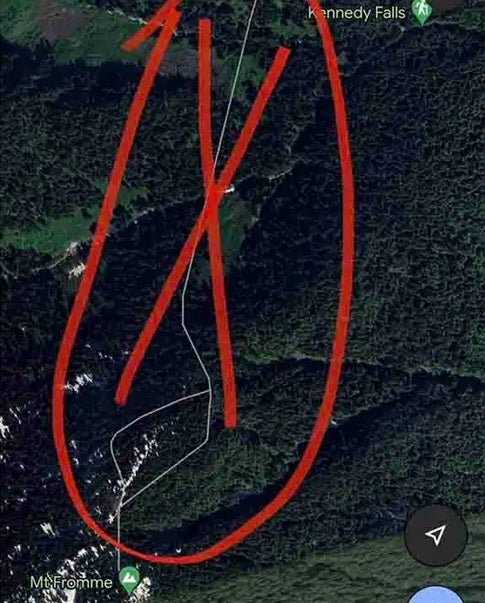
Everyone takes it for granted that Google Maps can be trusted to get you from point “A” to point “B” quickly and safely. Sometimes this is not the case. This past Saturday, a hiker attempting to climb Mount Fromme in Canada had to be rescued from a cliff where he was stranded after he followed directions on Google Maps. These directions took him through a trail that didn’t exist. Per Fox News, a helicopter rescue crew along with a rope team had to be deployed to save the hiker.
The chopper and the rescue team were sent to the rear of Mount Fromme, located near Vancouver, British Columbia. Officials said that the Kennedy Falls area that the man was attempting to climb Mount Fromme from does not have any trails, is very steep, and was the location of a previous fatality. In addition to following Google Map directions to hike a trail that didn’t exist, officials said that the man was not equipped to carry out his goal as he did not carry a flashlight and had very little hiking gear with him.
The walking trail seen on Google Maps by the hiker did not exist
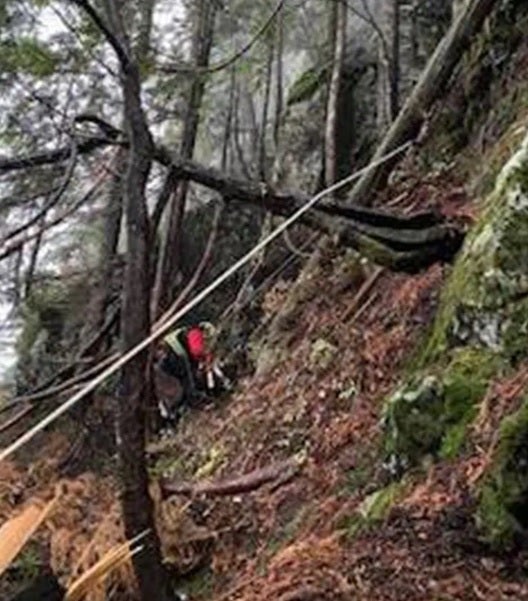
The rescue team was at first unable to spot the hiker due to the trees that blocked their view. Two of the technicians flying in the helicopter were lowered onto the mountain and had to hike their way up. After finding the stranded hiker, they placed him in a harness and took him down to an area where all three of them could be safely picked up by the helicopter.
Back in September, a similar situation occurred when a hiker in the same area tried following a trail seen on Google Maps that did not exist. The rescue group said that it has tried to get Google to remove the non-existent trails but has not heard back from the company.
Rescuers were lowered to the side of the mountain from the helicopter
Seeking to prevent a similar situation from happening again, the rescue group issued some warnings to hikers. “First, it is simply not appropriate to navigate in the wilderness using ‘urban street map’ programs like Google Maps,” the team said. They recommended that hikers go ‘old school’ and use a compass with a paper map and follow posted signs in the area that warn of approaching dangers.
If you need to use a phone based navigation app, the rescue group suggests using one designed for the outdoors that is preloaded with a wilderness topographical map.
Bitdefender researchers and the cybersecurity community speculate that Hunters International might be a revival or successor to the Hive Ransomware, especially in the absence of any reported arrests by the authorities.
Hive, one of the most notorious global ransomware operators, targeted over 1,300 companies and amassed $100 million in ransom payments. However, it was dismantled in January 2023 through a joint operation by the FBI and law enforcement agencies in the Netherlands and Germany.”
However, no arrests were made at the time due to the group’s covert, transnational operations. According to Bitdefender’s research, the group appears to have recommenced its activities under a new name, Hunters International.
Bitdefender’s blog postrevealed that Hive’s leadership strategically ceased operations and transferred their remaining assets to Hunters International. This information was initially reported by security researcher @rivitna2 in a post on X (formerly Twitter) on October 20, 2023.
“#Hive is back! Now they are #Hunters International!”
Security researcher Will Thomas @BushidoToken also found startling similarities and code overlaps between both groups’ codes. Thomas reportedlyfound a 60% match between both sets.
“Ever since the takedown of Hive ransomware by the FBI, it seems the operators have been busy developing their next project: Hunters International. Multiple code overlaps and similarities link Hive and Hunters together, at least +60% match from my research 🔍 h/t @rivitna2.”
While these discoveries seem to confirm that Hunters International is a rebranded version of Hive, the group has refuted these assumptions in a surprising turn. Hunters International maintains that they are an independent entity formed after acquiring and rectifying Hive’s infrastructure and source code.
Their preference lies in data exfiltration rather than data encryption, and the dismantling of Hive provided them with the ideal opportunity to pursue this avenue.
“All of the Hive source codes were sold including the website and old Golang and C versions and we are those who purchased them,” the group stated.
Here’s what Hunters International had to say in response to claims made by researchers
This opportunistic group doesn’t focus on specific regions or industries. Primarily, they target victims in the United States, the UK, Germany, and Namibia including hospitals. The group employs a simplistic approach because it uses fewer command line parameters, has streamlined the process of encryption key storage, and their preferred malware is less verbose.
The gang offer Ransomware-as-a-Service, using Rust language ransomware. Their approaches are rather unique as they don’t embed the encryption key in each file. Instead, they generate two key sets in memory for file encryption and store both as the encrypted drive’s root with a .key extension.
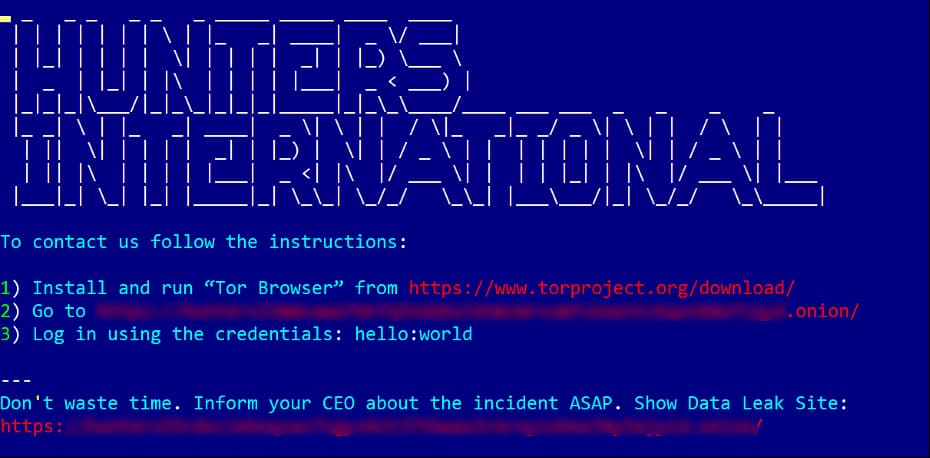
Their ransomware family, identified by Bitdefender’s flagship security platform GravityZone, was Trojan.Ransom.Hunters. Regarding their payment method, the victims have to access a chat portal using the credentials provided in the ransom note.
Ransom note from Hunters International
Whether Hive has resurfaced as Hunters International or not, there’s no doubt that ransomware groups are constantly evolving and developing new techniques. Therefore, extended international cooperation and implementing strong cybersecurity measures are essential to mitigate the threats timely.
CISOs rely on information about security from across the organization, particularly from the various IT departments. Unfortunately, the information being fed to CISOs about cybersecurity risk is incomplete.
There is a blind spot present—a gaping hole. Data about the security posture of their storage and backup systems is either woefully deficient or missing entirely.
That is one of the reasons why CISOs set strategies and approve the procurement of solutions to keep data and systems safe. Yet, the organization continues to suffer from breaches and attacks.
Despite implementing vulnerability management, extended detection and response (XDR), threat monitoring, security information and event management (SIEM), and other technologies, they seem to be one step behind the cybercriminal fraternity.
That state of affairs will likely remain until the risk of vulnerable storage and backup systems is addressed.
False Sense Of Security
Part of the problem is that storage and backup systems are thought of as back-end and don’t pose the same level of risk as other layers of IT closer on the perimeter.
This can lull storage admins, infrastructure managers, and CISOs into a false sense of security.
This is a misconception, and a dangerous one at that. The average enterprise storage device has around 15 vulnerabilities or security misconfigurations.
Of these, three are considered a high or critical risk. Therefore, CISOS must comprehend the seriousness of the threat that insecure storage and backup systems pose and what they must do to address it.
Earlier this year, we interviewed 8 CISOs to get their insights on new data protection methods and the importance of securing storage & backup, including: John Meakin, Former CISO at GlaxoSmithKline and Deutsche Bank, Joel Fulton, Former CISO at Symantec and Splunk, Endré Jarraux Walls, CISO at Customers Bank, and George Eapen, Group CIO (and former CISO) at Petrofac.
Scores of vulnerability scanners, patch management, and configuration management systems exist. Organizations rely on them to locate areas of potential weakness, remediate them, and deploy patches to resolve known vulnerabilities.
These systems do great at inventorying and scanning networks, operating systems (OSes), and enterprise applications. However, they are typically sketchy regarding inventorying and assessing storage and backup issues.
Shockingly, they often miss security misconfigurations and Common Vulnerability and Exposures (CVEs) on popular storage systems from the likes of Dell EMC, NetApp, or Pure, and backup systems from the likes of Veeam, Rubrik, and Veritas. Yet, such systems host the crown jewels of enterprise data.
Superficial scans of storage and backup infrastructure can lead CISOs to believe that these systems lie outside the reach of cybercriminals. Nothing could be further from the truth.
Hackers are notorious for finding ways to obtain privileges to user accounts and finding their way into storage and backup systems. From there, they can wreak havoc.
The State Of Storage And Backup Vulnerabilities
The fact is that hundreds of active security misconfigurations and CVEs currently exist in various storage and backup systems. Our research shows that about 20% of storage devices are exposed on average.
That means they are wide open to attacks from ransomware and other forms of malware.
At the device level, the average storage device is riddled with vulnerabilities, some of them severe. In addition, about 70 CVEs in storage environments could be used to exfiltrate files, initiate denial-of-service attacks, take ownership of files, and block devices. Many of these CVEs are several months old.
A few of them are a year or more old. This means that approved patches exist but are not deployed. Don’t think the bad guys aren’t aware of this.
They prefer the easiest possible route into the enterprise. Why devise a genius plan to broach defenses when you only need to scan for some common vulnerabilities and mount an incursion from there?
DocumentProtect Your Storage With SafeGuard
StorageGuard scans, detects, and fixes security misconfigurations and vulnerabilities across hundreds of storage and backup devices.
Storage Security Features Not Implemented
Modern storage devices often include ransomware detection and prevention capabilities. Some include locking retained copies, protecting critical data from tampering and deletion, and air gap data.
However, in breach after breach, such features were found to be either misconfigured or not implemented, leaving the organization exposed.
Misconfigured backup and storage systems impact cybersecurity in other ways. Zoning and masking mistakes may leave LUNs accessible to unintended hosts.
Replicated copies and snapshots may not be properly secured. Audit logging misconfigurationsmake it more difficult for the organization to detect brute-force attacks and spot anomalous behavior patterns.
They can also impede forensic investigations and curtail recovery efforts. And a surprising number of storage and backup systems still operate with their original default administrative passwords.
Unauthorized employees and malicious actors can easily exploit these factory settings to inflict serious damage. These are just a few of the many security challenges that are present within the enterprise infrastructure.
There are many other areas to check. The bottom line is that storage and backup systems generally have a significantly weaker security posture than the compute and network infrastructure layers. It is a ticking time bomb ripe for exploitation by criminal gangs.
How To Harden Storage And Backup Security
Storage and backup systems must be fully secured to protect data and ensure recoverability. StorageGuard finds the security risks that other vulnerability management tools miss.
Developed specifically for storage and backup systems, its automated risk detection engines check for thousands of possible security misconfigurations and vulnerabilities at the storage and backup system levels that might pose a security threat to enterprise data.
It analyzes block, object, and IP storage systems, SAN/NAS, storage management servers, storage appliances, virtual SAN, storage networking switches, data protection appliances, storage virtualization systems, and backup devices.
Continuity’s StorageGuard ensures these systems will never be the weakest link in cybersecurity. Its comprehensive approach to the scanning of storage and backup systems offers complete visibility into blind spots, automatically prioritizing the most urgent risks, and remediating them.
The report’s findings underscore a significant gap in the state of enterprise storage and backup security and shows how much it lags behind the security of other layers of IT.
With the growing sophistication of data-centric attacks, the high volumes of data at risk and tightened regulations, enterprise storage and backup security clearly require urgent attention.
At a Senate hearing, a Meta whistleblower has revealed some shocking numbers around children’s experiences of its platforms.
Arturo Béjar, a former engineering director at Meta, testified before the US Congress on Tuesday. Not only did he share his own daughters’ experience suffering harassment on Instagram, he also shared some statistics.
“13% of Instagram users under the age of 16 had received unwanted sexual advances on the platform in the previous 7 days.”
His own daughter received unsolicited pictures of male strangers’ privates on the platform. She reported them without ever receiving a response that indicated Meta would take appropriate action.
In a conversation with chief product officer Chris Cox, Béjar learned Meta was already aware of the statistics related to the harm done to teens.
Béjar is not the first Meta whistleblower to voice his concerns about Meta’s unwillingness to put the wellbeing of its users before the bottom line. On October 5, 2021, Frances Haugen told a Senate panel Tuesday that Congress must intervene to solve the “crisis” created by her former employer’s products.
Haugen, a former Facebook product manager for civic misinformation, stated that by design the Facebook algorithm is consistently used to prioritize the company’s own profits over users’ health and safety. As an example she explained how the algorithm, in its drive towards more profitable content, could steer young users from something relatively innocuous such as healthy recipes to content promoting anorexia in a short period of time.
Béjar previously worked as an engineering director at Facebook from 2009 to 2015, gaining recognition for his efforts to combat cyberbullying. Later he worked as a Meta consultant. In this capacity, his team at Meta created “Bad Emotional Experience Feedback” (BEEF) a recurring survey of 238,00 users’ experiences in the previous week.
Other statistics from these surveys raised concerns as well. Of the 13—15 year-olds on Instagram that filled out the survey, 26% said they had witnessed discrimination based on various identities and 21% felt worse about themselves due to others’ posts on Instagram.
Meta on the other hand issued a statement saying it’s working hard to keep minors safe.
“The issues raised here regarding user perception surveys highlight one part of this effort, and surveys like these have led us to create features like anonymous notifications of potentially hurtful content and comment warnings.”
Meta has rolled out some 30 parental controls to manage who children can talk to or how much time they spend on Facebook and Instagram. In an earlier statement, Meta said it has strict policies and technology to prevent predators from finding or interacting with teenagers on its apps.
“We’re continuously exploring ways to actively defend against this behavior, and we set up an internal task force to investigate these claims and immediately address them.”
Despite these promises, Béjar’s statements have reinforced in some senators the need for the Kids Online Safety Act (KOSA), to ensure that companies like Meta have a duty of care to the young people that drive their record profits.
KOSA is a bill that was introduced in the United States Senate in February 2022 and reintroduced in May 2023, The bill establishes guidelines meant to protect children on social media platforms. Criticism of the bill mostly points out that it might potentially enable censorship and increased online surveillance.
Nevertheless, this testimony and others may be the cause of dramatic changes to how kids use social media. Reportedly, a group of 42 US attorneys general already announced they are suing Meta Platforms Inc. for harms they say Instagram and Facebook are perpetrating on young people.
Instagram has already been fined €405 million after European Union privacy regulators came to a decision on a long-running complaint related to how the social media platform handles children’s data.
We are pretty confident that these are not the last fines and lawsuits Meta will face, but whether they will help to keep our children safe from predators remains to be seen. We will keep an eye on this.
We don’t just report on threats—we remove th
Cybersecurity risks should never spread beyond a headline. Keep threats off your devices by downloading Malwarebytes today.
Bundle subscribers of Hulu and Disney+ will soon be able to stream content from both platforms in one app. The one-stop streaming service will be available in beta in December this year, Disney CEO Bob Iger has announced. The combined app is expected to hit a stable release in early spring.
Disney is readying a combined app for Disney+ and Hulu subscribers
Disney announced its plans to create a one-app streaming experience for Hulu and Disney+ in May this year. CEO Bob Iger confirmed that the app will be available before the end of 2023. He said a combined service “is a logical progression” of the company’s direct-to-consumer offerings. It will provide “greater opportunities for advertisers while giving bundle subscribers access to more robust and streamlined content…”
Iger has now revealed that the new app is almost here. He shared the news during Disney’s latest earnings call (via Engadget). A beta release in December will allow parents to set up profiles and content controls for their children, ensuring age-appropriate viewing. Disney says this is the key reason for keeping the app in beta for a few months. Since Hulu brings a wide range of content, it will give parents ample time to do the setup before the stable release.
While a combined service will streamline the streaming experience for users who have subscribed to both Disney+ and Hulu in a bundled deal, the Disney CEO said the company may not reap the full benefits of this change until 2025. As you might expect, all of Disney’s streaming services—Disney+, Hulu, and ESPN+—will continue to exist as standalone options. This will give customers more choices when picking up their streaming service.
Disney will soon have full ownership of Hulu
Launched in October 2007 as a joint venture between several media and entertainment houses, Hulu will soon be fully owned by Disney. Comcast, which has a 33% stake in the streaming service, is selling its entire stake to Disney. The latter already holds the remaining 67% majority stake.
The two firms agreed on this acquisition in May 2019, setting a guaranteed floor value of $27.5 billion for Hulu. According to that agreement, Disney will pay Comcast a minimum of $8.61 billion to gain full ownership of the streaming service. However, the final price may be higher, as it depends on the equity fair value for Hulu as of September 30, 2023. The deal will close sometime next year.
Most netizens today rely on the Google Home app to control their smart home devices. However, some of these users lack full control of certain devices due to the limitations that the app poses. Now, recent reports point out that Google is now removing these limitations and letting users of this smart home integration app gain full control of sensors around their homes.
For some time now, Google has been working to bring more controls to users of the Home app on their smartphones. To do this, support for more devices and controls is coming to the app to help improve user experience. Additions of these controls have been coming to the app one after another over the past months.
Two days ago, the Google Home Reddit page announced more information from sensors coming to the app. Users of the app are already excited to get data from more sensors on various smart devices in their homes. With access to more data from sensors, users of the app will get better insight into their smart devices.
More information from sensors is coming to the Google Home app
If you use the Google Home app for your smart devices, then you are in for a treat. A user took to the Google Home community Reddit page to share a discovery on his Home app. While checking the reading on his Hue indoor motion sensor, the user also noticed that the app was giving two temperature readings.
While this was an error on the user’s part, the screenshot he provided gave off more sensor readings. The sensor readings available via the app were motion, light level, and temperature. With all these readings, users can better understand how their smart devices operate and the data they collect from their sensors.
Aside from the Hue indoor motion sensor, more devices are now reaching their full potential. This is to say that users can access more information from these devices’ sensors. Regardless of the device’s usage, the Google Home app will be able to read data from its sensors.
This change is coming to more users along with some other important improvements. An example of a new feature to look out for on your app is the ability to “control the rotation and speed of your compatible fans directly in the Home app.” These upgrades are currently rolling out and will become available to users in the coming weeks.
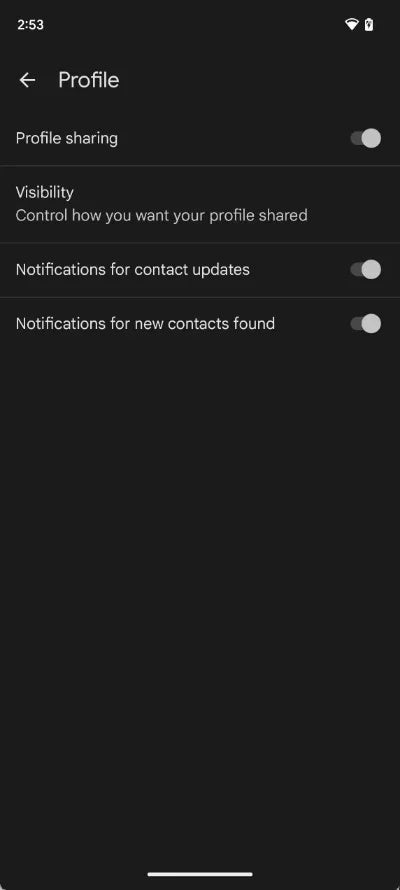
Google has been reportedly working on a Profiles feature for its Messages application for several months. This feature appears to be a way for users to have their desired name, photo and other information attached to their contact card within the application.
The “Profiles” feature was spotted in an APK teardown by 9to5Google, which helped identify more details on what it could do. According to this teardown, code was found in the latest beta version of Google Messages (v20231106_01_RC00) which describes Profiles as a way for users to “Choose your profile name & picture so people can recognize you.”
The feature is still under development, but it appears that users will be able to create a profile with their name, photo, and other information. This profile could then be shared with other Messages users, so that they can easily identify each other in conversations.”Profiles” was originally spotted back in January as a preferences page in Android system settings, although the toggle was not functional when turned on. This suggested that Profiles could be a standalone feature that is managed by Google Messages, rather than being part of RCS.
Google Messages ‘Profiles’ spotted back in January | Source seeareeff on Reddit
If Profiles are implemented, it is likely that they would appear at the top of conversations in Google Messages. I would speculate that tapping on a profile name or photo could then open a profile page with more information about the user that other users could then save to the corresponding contact card.
Google has not yet announced a release date for the Profiles feature. However, given that it has been in development for several months and is now appearing in beta versions of the app, it is likely that it will be released in the near future.
Google Messages Profiles have the potential to be a significant new feature that would improve the messaging experience for users. It will be interesting to see how Google implements Profiles and how it integrates them with other Messages features, such as RCS and group chats.







.webp)