It’s the beginning of the month, and you know what that means. Google is delivering the November update to its Pixel phones. It’s a routine monthly update, so it brings some bug fixes to the software and that’s pretty much it, according to a new report.
If you’re looking to update your phone to this latest update, you should get a notification letting you know. However, if you missed the notification, then you’ll have to get to the update screen manually.
Go to your settings and scroll down to the System button at the bottom. On the resulting screen, look for the Update section. When you tap on that button, you’ll see a screen letting you know that you have an update. If it says that your phone is up to date, tap on the Search for update button at the bottom of the screen. Your phone will do a search to see if there’s an update.
If your phone finds the update, tap on the Update and your phone will start downloading the update. It will download and install it in the background.
Here’s what the November Pixel update fixed
As stated, this is a routine update, so there aren’t any new features or major upgrades; we’re just talking about bug fixes. The update made it to all Pixel devices as old as the Pixel 4a 5G. This phone is pretty much on its final leg, so the November update could be its final.
System
The update fixed the issue when an app requests an app that’s been uninstalled. Also, it brought a fix for the issue affecting users with multiple accounts.
UI
There was an issue where the desktop icons would disappear after you unlocked your device. Well, that one’s fixed. Also, the update fixed the issue where the wallpaper would be misaligned.
Display, NFC, and Touch
Pixel device had an issue with the screen flashing green when turned off, NFC acting up, and screen jerkiness when touching the screen. All three of those issues were fixed.
Be sure to install this update for these fixes, and be on the lookout for the update for the feature drop coming next month.
A new safety feature is coming to Waze, and it gives users a history of crashes in various areas. This feature is not designed to scare users, but to help them pay attention to these areas to make important driving decisions. Users of the Waze app around the world can now access this new feature after installing the latest update to the app.
This is not the first protective feature that Waze has made available for users in the past few years. But this new safety feature employs the use of AI analysis to figure out an accident location before updating the app user. It also sources information from accident locations from its community of users to identify accident spots around various routes.
With the information this feature will give users, they will be able to make a wise choice on the route to follow while driving. In no way is this feature a solution to accidents on the road, but it can help users to avoid potential accidents. Here are the details on this new Waze feature that you will need if you use the app.
Everything you need to know about the new Waze history of crash feature
This new safety feature rolling out to Waze users shows them the history of accidents around them. It sources the information necessary for this feature using either AI or the Waze community. The system then decides which of the sources to provide users information from to help guide them.
Users will then get notifications on their device of an upcoming location where an accident happened. The user can now be on the guard and more watchful as they approach this location. All data sourced for this feature is real-time data and shows real accidents that occurred in the area.
The app will also take into consideration the user’s route (with the help of AI) and factors that are common in these routes. These factors can include traffic levels, and the nature of the road, whether it’s a highway or a smaller road. So the Waze history of crashes feature will constantly update users on upcoming traffic locations.
As users approach each accident location, they can then slow down and avoid potential accidents. This is especially useful when the user is not familiar with the area he is navigating. With each history of crash notification, users can get more alerts of their environment.
Users of the Waze app will get this feature via an update that is currently rolling out. This rollout might be gradual and regional, with certain areas getting it before others. So if you are yet to get this feature then you can wait till it becomes available in your region.
Samsung enthusiasts now have another reason to mark their calendars, as the official launch date of the Galaxy S24 series is nearly confirmed at this point and now there’s a rumor about the venue. The highly anticipated Unpacked event will reportedly take place in San Josė on January 17 and will be streamed live.
The choice of location for this event has piqued the interest of fans, as Samsung is known for selecting iconic venues. Earlier reports mentioned San Francisco as the host city. However, the latest update from renowned leaker Max Jambor intriguingly adds the possibility of San Josė. It has created an air of mystery around the event.
Samsung’s Unpacked events have always been a spectacle, and the Galaxy S24 series launch is expected to be no different. In recent years, the tech giant has opted for virtual or hybrid events. With its most recent event taking place in Seoul, South Korea. The next live keynote will return to center stage to unveil the next generation of flagship phones.
The Galaxy S24 Ultra is likely to get the spotlight regardless of the launch venue
The spotlight at this event is likely to shine brightest on the Galaxy S24 Ultra model. It’s expected to feature a larger periscope camera sensor. It will also bring one of the brightest displays ever seen on a phone along with a new design. The Galaxy S24 Ultra seems to be one of the big players among the contenders of next year.
One of the most anticipated aspects of the Galaxy S24 series is the use of Qualcomm’s latest Snapdragon 8 Gen 3 chipset. This powerful chip is expected to be available worldwide, including in Europe, and will further boost the device’s performance.
As the launch date draws nearer, Samsung fans and tech enthusiasts can eagerly anticipate the unveiling of the Galaxy S24 series on January 17. Whether it takes place in San Josė or San Francisco, this event promises to be a spectacle. Because it’s meant to be, to showcase the future of Samsung’s flagship devices.
Artificial intelligence (AI) may be able to predict whether a person is likely to suffer sudden cardiac death, according to a new study published in MedicalXpress on Monday. The data used to train the AI model was far-reaching, and included more than one million hospital diagnoses and 10 million medication prescriptions. It came from the records of 25,000 people who had died from sudden heart attacks. Then, the AI model crossed the data profile against health information from 70,000 people in the general public. The study found that AI models could detect who had over 90% risk of dying suddenly.
“Predicting [sudden cardiac death] is difficult,” said Xavier Jouven, M.D., Ph.D., the lead author of the study, in the report. “The usual approaches fail to identify high-risk people, particularly at an individual level.” This is where AI comes into play. AI can analyze the full portfolio of a person’s medical information, seeing what the human brain misses. That’s how AI can detect the probability of a sudden heart attack at a higher level than human doctors. While past research has tried to link past cardiovascular history to future heart attacks, this new AI model is considered “a mix of neurological, psychiatric, metabolic and cardiovascular data.”
There are notable limitations to this study. The researchers note how medical histories often include proxies, which are averages or substitutes, instead of raw data. The differences between data proxies and the raw data, at scale, could affect the success of the AI training model. In turn, this could decrease AI’s effectiveness predicting heart attacks.
AI has been used in health in the past, and will be used in the future
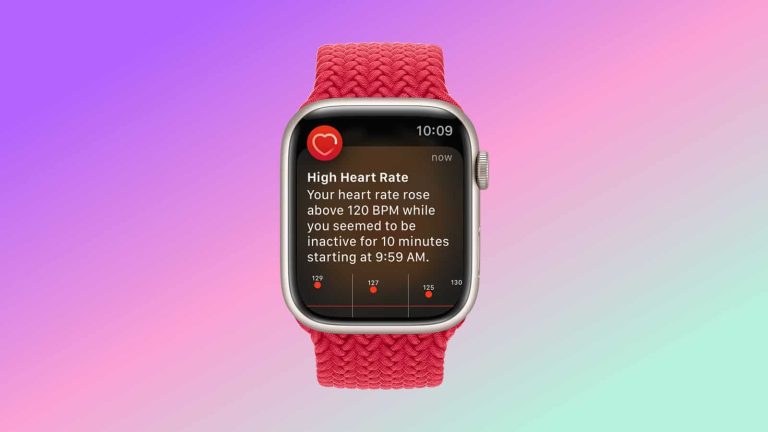
Artificial intelligence is no stranger to the health space. Specifically, AI can analyze large data sets thoroughly much more quickly and effectively than human researchers. It is also useful when tied into the vast array of consumer health devices out in the wild. For example, researchers at the Mayo Clinic used ECG recordings from Apple Watches to identify weak hearts in a study published last year. Rumors also point to Apple itself working on an AI-equipped health coach for future release, but these are unconfirmed.
Jouven notes that medical professionals do have recourse to prevent heart attacks in high-risk patients. The hard part is identifying which patients are high-risk. “The use of AI is necessary to detect in a given subject a succession of medical information registered over the years that will form a trajectory associated with an increased risk of sudden cardiac death,” Jouven said. The researchers hope that with AI, heart attacks can be prevented with personalized health reports in the future.
The Google Pixel 8 is Google’s latest compact flagship. This handset is smaller than its predecessor, and it’s a direct competitor to the best compact phone Samsung has to offer. In this article, we’ll compare the Google Pixel 8 vs Samsung Galaxy S23. Both of those phones are quite compact, even though the Galaxy S23 is more so. In this article, we’ll compare them, and hopefully help you make a purchasing decision.
We’ll first list their specifications, as we usually do in our comparisons. Once we get that out of the way, we’ll compare the two phones across a number of other categories. You’ll be able to see the design comparison, a comparison between their displays, performance, battery life, cameras, and even a brief audio comparison. Having said that, let’s get started, shall we?
Specs
Google Pixel 8 vs Samsung Galaxy S23, respectively
Both the Google Pixel 8 and Samsung Galaxy S23 are made out of metal and glass. The two phones do look quite different, at least from the back. On the front, both devices do have flat displays, with thin bezels, and a centered display camera hole. Their corners also have a similar curve. When we flip them over, however, you’ll see major differences. The Pixel 8 includes a camera visor on the back. It connects to the left and right sides of the frame, and it’s covered by metal.
The Galaxy S23, on the other hand, has three cameras on the back, and all three are located in the top-left corner. They’re stacked one above the other, and each of them sticks out of the back of the phone, separately. Both phones have physical buttons on the right-hand side, but their order is different. The Pixel 8 has a power/lock key above the volume rockers, while it’s the other way around for the Galaxy S23.
The Galaxy S23 does have a slightly smaller display than the Pixel 8, and is a bit smaller too. It is shorter and thinner than the Pixel 8, while the two phones are basically the same in terms of width. The Galaxy S23 does have a less tall display aspect ratio, hence these proportions. Samsung’s compact flagship is also 19 grams lighter than Google’s, and that’s a difference you’ll feel in the hand. No, it doesn’t feel less premium because of that, not at all. Both phones feel truly premium in the hand.
Both of these devices are quite slippery in the hand, in case you were wondering. Both of them also offer the same water and dust resistance, you’re getting an IP68 rating here.
Google Pixel 8 vs Samsung Galaxy S23: Display
The Google Pixel 8 features a 6.2-inch fullHD+ (2400 x 1080) OLED display. That is a flat panel with a 120Hz refresh rate. That panel also supports HDR10+ content, and goes up to 2,000 nits of peak brightness. The display aspect ratio here is 20:9 while the display itself is protected by the Gorilla Glass Victus from Corning.
The Samsung Galaxy S23, on the other hand, includes a 6.1-inch fullHD+ (2340 x 1080) Dynamic AMOLED 2X panel. That display is also flat, and it has a 120Hz refresh rate. This particular panel supports HDR10+ content as well, and goes up to 1,750 nits of brightness at its peak. The display aspect ratio is 19.5:9, and the display itself is protected by the Gorilla Glass Victus 2.
Both of these panels are great, to say the least. They’re quite vibrant, have good viewing angles, and good touch response as well. The Google Pixel 8’s display does technically get a bit brighter, but the difference is not that big, and quite frankly, they’re on the same playing field. Regardless of which display you end up choosing, chances are you’ll be happy with its performance.
Google Pixel 8 vs Samsung Galaxy S23: Performance
Google’s handset is fueled by the company’s very own SoC, the Tensor G3. That is a 4nm processor, and it’s combined with 8GB of LPDDR5X RAM and UFS 3.1 flash storage. The Galaxy S23, on the flip side, comes with the Snapdragon 8 Gen 2 for Galaxy, and includes 8GB of LPDDR5X RAM, along with UFS 4.0 flash storage. Do note that the 128GB storage model of the phone does come with UFS 3.1 storage, but that’s the only model that doesn’t offer UFS 4.0.
During our usage, both smartphones proved themselves in terms of performance. Both of them provided us with a smooth experience in general. The Tensor G3 is the inferior SoC here, both in terms of sheer power and power efficiency. Still, the lack of power is not something you’ll feel during usage. The Pixel 8 is one of the smoothest devices out there. They both do a great job with multitasking, browsing, consuming multimedia, and anything else you can think of.
Gaming is worth considering on its own. The Tensor G3 is not exactly made with gaming in mind, but it does a fine job. If you dig up the most demanding games in the Google Play Store, you will see the advantage of the Snapdragon 8 Gen 3, sure. The Tensor G3 can run those games too, though, and really well. All in all, both smartphones do offer really good performance.
Google Pixel 8 vs Samsung Galaxy S23: Battery
A 4,575mAh battery sits inside the Google Pixel 8, while a 3,900mAh pack can be found inside the Galaxy S23. Having said that, considering how great battery life can be on smartphones these days, these two phones are not exactly breaking any records. However, the battery life is good, and for most people, it will be more than enough to get to the end of the day. I never enjoy talking about battery life, as it can vary a lot between people, based on location, usage, and so on.
We’ve managed to get over 6 hours of screen-on-time with the Pixel 8, sometimes the phone even crossed the 7-hour barrier. The Galaxy S23 usually lingered between 5.5 and 6 hours of screen-on-time. That included plenty of messaging, browsing, multimedia consumption, emails, and so on. Everything except for gaming. A casual game was played briefly from time to time, but nothing that would have a major effect on the battery life. The signal was good, and most of our time was spent on a Wi-Fi network. Your mileage may vary, of course, considerably.
When it comes to charging, the Pixel 8 offers 27W wired, 18W wireless, and also reverse wireless charging. The Galaxy S23 supports 25W wired, 15W wireless, and 4.5W reverse wireless charging. All in all, they’re on the same playing field in terms of charging. Neither one charges particularly fast. You also won’t get a charger in the box here, with either of the two smartphones.
Google Pixel 8 vs Samsung Galaxy S23: Cameras
The Google Pixel 8 includes a 50-megapixel main camera, and a 12-megapixel ultrawide unit (126-degree FoV). The Galaxy S23, on the other hand, comes with three cameras. A 50-megapixel main camera is backed by a 12-megapixel ultrawide unit (120-degree FoV), and a 10-megapixel telephoto camera (3x optical zoom).
Both of these smartphones do a good job in the camera department, but the results are quite different. The Galaxy S23 tends to oversaturate images. Just to be clear, some people will prefer that look, and that’s perfectly fine. The Pixel 8 tends to make images a bit dramatic, as you’ll recognize that contrasty look Google loves. You won’t exactly get the most accurate representation from either phone, but that’s probably for the best, at least for most people.
The Pixel 8 does a great job with HDR scenes, and with color tones as well. The Galaxy S23 can be easily mistaken, especially if you’re taking photos at sunset or something like that. Both ultrawide cameras are good, but we prefer results from the Pixel 8, that goes for both of its cameras. Google’s phone even holds its own in telephoto shots, despite the fact it doesn’t have a telephoto camera. The Galaxy S23 is still better in that regard, however.
Audio
An audio jack is not available on either device. You can, however, use their Type-C ports for wired audio connections. If you prefer wireless audio, do note that both devices support Bluetooth 5.3.
You will also find stereo speakers on both of these phones. The Pixel 8’s speakers are a bit louder, but both setups are good. They provide clear audio, and you can’t really ask for more considering their size and the fact they’re smartphones.
ZeroFox, a renowned cybersecurity leader, has released its 2024 cybersecurity predictions, providing insights into the looming threats in the upcoming year. Drawing from extensive data and experience, ZeroFox has its finger on the pulse of the evolving threat landscape. ZeroFox predicts that in 2024, the use of artificial intelligence (AI) for malware will see a significant increase. Other ongoing threats include ransomware, targeting of critical infrastructure, and a rise in zero-day vulnerabilities. The 2024 elections may also act as a catalyst for various threat actors.
ZeroFox writes, “Newly-formed ransomware groups are expected to demonstrate proficiency faster than ever before in 2024, due to a number of proliferating as-a-service tools that continue to lower entry barriers to would-be threat actors”. The year 2023 witnessed a record number of ransomware incidents, and this trend shows no signs of slowing. The United States remains a prime target, both for its lucrative digital infrastructure and the deteriorating Russia-US relations.
The rise of “Ransomware as a Service” has made ransomware and digital extortion attacks more accessible than ever. Ransomware is a top cybersecurity threat in 2024. Greedy threat actors are progressively zeroing in on small to medium-sized organizations with aging network infrastructure. These entities often struggle to keep up with the latest cybersecurity best practices. As threat actors continue to exploit critical network vulnerabilities for ransomware attacks, no company can consider itself safe.
Artificial Intelligence (AI) has become a double-edged sword in the realm of cybersecurity
While AI serves in offensive roles, it has also grown in significance within defensive applications. According to ZeroFox, “AI will continue to be used in support of malicious activities such as impacting elections and stirring discontent.” Its versatility and complexity make it a valuable tool for both offensive and defensive cybersecurity measures. It is expected that the use of AI will continue through 2024.
High-level programmers and experienced cybersecurity groups have traditionally held the responsibility of discovering zero-day vulnerabilities and crafting new exploits. The search for zero-day vulnerabilities is challenging, but the rewards can be significant. In 2024, there will likely be a shift away from traditional data exfiltration methods towards exploiting new vulnerabilities, driven by the pursuit of more significant payouts.
Critical infrastructure, including finance, energy, and healthcare, will remain the primary targets for ransomware groups. These sectors offer the most lucrative opportunities for threat actors. Additionally, major cyber events tend to surge during times of geopolitical tension, making it crucial for these sectors to strengthen their cybersecurity defenses.
In summary, 2024 promises to be an intriguing year for cybersecurity. The convergence of AI, the 2024 elections, and the relentless rise of ransomware highlight the need for organizations to stay proactive in their defenses against evolving threats.
The scraped LinkedIn database was leaked in two parts: one part contained 5 million user records, while the second part contained 35 million records.
A LinkedIn database, holding the personal information of over 35 million users, was leaked by a hacker operating under the alias USDoD. The database was leaked on the infamous cybercrime and hacker platform, Breach Forums.
It is important to note that USDoD is the same hacker responsible for breaching the FBI’s security platform InfraGard last year and disclosing the personal details of 87,000 of its members.
The hacker confirmed in a post on Breach Forums that the most recent LinkedIn database was obtained through web scraping. Web scraping is an automated process utilized by software to extract data from websites, primarily for gathering specific information from web pages.
The data was leaked in two parts (Screenshot: Hackread.com)
Regarding the contents of the data, as observed by Hackread.com, the database predominantly comprises publicly available information from LinkedIn profiles, containing full names and profile bios. Although the database contains millions of email addresses, it’s a relief to note that no passwords are included in the leaked data.
The screenshot below shows email addresses included in the breach belong to high-ranking US government officials and institutions. Additionally, email addresses from various government agencies worldwide have also been identified.
(Screenshot: Hackread.com)
Legitimacy of LinkedIn Data: Authentic or Fraudulent?
Troy Hunt of HaveIBeenPwned analysed over 5 million accounts from the database and concluded that it includes a mixture of information from various sources such as public LinkedIn profiles, fabricated email addresses, and other sources. Troy emphasizes that while some of the data might be anecdotal or partially fabricated, the people, companies, domains, and many email addresses are real.
“Because the conclusion is that there’s a significant component of legitimate data in this corpus, I’ve loaded it into HIBP,“ Hunt explained. “But because there are also a significant number of fabricated email addresses in there, I’ve flagged it as a spam list which means the addresses won’t impact the scale of anyone’s paid subscription if they’re monitoring domains.“
The LinkedIn database has been identified and labelled as “scraped and fabricated data” on HIBP
This however is not the first time when LinkedIn’s scrapped database has been leaked online. In April 2021, a threat actor was selling 2 scraped LinkedIn databases with 500 million and 827 million records. In June 2021, a hacker sold a scrapped LinkedIn database containing data of 700 million users.
Big tech companies will have new rules to abide by following a provisional agreement by the European Union (EU) to regulate political targeted ads. The agreement, reached today, has an emphasis on increasing transparency and restricting foreign interference in elections. The move by the EU comes after Norway banned target advertising by Meta Platforms, a ban that was later extended to the entire EU. Meta is the owner of social media platforms Facebook, Instagram, and Threads. The EU’s latest regulations are set to impact Meta and Google, as well as others.
Unlike the earlier ban, the EU’s most recent measure regulates rather than restricts. Amidst concerns of interference in elections by tech companies and advertisers, the EU aims to quench those fears. “The regulation has been drawn up amid concerns about the dangers posed by information manipulation and foreign interference in elections,” the EU said in a press release. “It aims to make it easy for citizens to recognize political ads, understand who is behind them and know whether they have received a targeted advertisement, so that they are better placed to make informed choices.”
The specifics of the new political ad rules
This agreement is centered around political ads. As such, it has a much smaller scope than earlier bans. Essentially, the main goals are transparency and privacy. The new rules dictate that political targeted ads can only be used with consent from the user. Specifically, users must grant permission for political targeted ads. This presumably means that simply granting permission for personalized ads isn’t enough. A company must get permission from the user about political uses for their data specifically. The EU also restricts certain types of data altogether, like data related to racial or ethnic origins.
The more pressing matter might be containing foreign interference. The EU will ban political advertising by third-country clients three months before an election. It will also make the sponsors of advertisers more clear and easier to find. The EU plans to create “a European public repository for online political advertisements to bring together and make publicly available information on all online advertisements and their transparency notices,” per its release. It is unclear whether users would have to seek out this information proactively, or if it would be displayed with the ads.
“The new rules will make it harder for foreign actors to spread disinformation and interfere in our free and democratic processes,” said Sandro Gozi, a member of the EU parliament, in a statement to Reuters.
How these rules will affect big tech companies
It’s important to note that these rules won’t have an immediate impact. This provisional agreement will be refined at a technical level over the coming weeks. After the technicalities are refined, the EU will need to ratify this agreement again. Then, the new rules won’t go into effect until 18 months afterward. However, when the final rules take effect, heavy fines could be levied against violators. Advertisers who offer political targeted ads could be fined up to six percent of their annual turnover for violations.
The original Samsung Galaxy Fold launched back in 2019 will no longer receive any updates. After almost four solid running years, the first ever commercially produced foldable device from Samsung has come to the end of its run. This device stepped into the smartphone industry to kickstart an entirely new form factor for devices.
Fast-forward to today, there are now a ton of foldable smartphones on the market from various smartphone brands. But their old timer and pioneer is set to retire to its resting place as it is no longer going to get any updates. This is the final nail in the coffin for this device, as its retirement process went into effect two years ago.
Back in 2021, the original Samsung Galaxy Fold got its last Android update. Ever since that time, the device has been getting a series of security updates to keep it up to date in some ways. But the latest update for Galaxy devices isn’t coming to this foldable device.
Samsung is retiring the original Galaxy Fold device after four solid years of its existence
Back in 2019, the original Samsung Galaxy Fold was a sensation even before its launch. Lots of people questioned how it was possible to fold a device with a large touchscreen in half. Leaks of this device hit the internet, keeping Samsung fans on their feet in expectation of the launch.
Finally, the phone hit the launch stage in September 2019. Following its launch, Samsung made the device available for purchase on its official website and in retail stores around the world. Despite the phone being an internet sensation, it didn’t hit the market like Samsung had hoped it would.
Sales weren’t so good as users weren’t seeing themselves using a foldable. One of the issues most potential buyers had with it was its thickness. When folded, this device measured 15.5mm, which is too thick for today’s devices and also didn’t sit well with buyers four years ago.
Additionally, the cover display on this device was almost unusable for most users. Measuring 4.6 inches, the cover screen had thick bezels, which isn’t attractive regardless of its Super AMOLED display panel. Well, this was just the beginning of an era for Samsung, and one where it would reign supreme for years.
After the launch of the original Samsung Galaxy Fold, the tech giant has launched four new foldable devices with similar form factors. Despite the influx of competition in the foldable industry, Samsung is still reigning supreme with impressive sales. Now, fans can wave goodbye to the device that paved the way for the foldable smartphone industry as we know it today.
The Division Resurgence – Ubisoft’s mobile game adaption of the popular PC and console looter shooter – is getting a second regional beta for Android and iOS users and it begins this month. In fact it begins a lot sooner than you may think.
Ubisoft today has confirmed that a new regional beta will begin officially on November 16 which means it starts next Thursday. For those that haven’t already done so, you’ll want to pre-register for your chance to check the game out prior to its launch. And the sooner the better. There’s no evidence that registering earlier gives you a better chance at getting in. But it can’t hurt to get it out of the way. If for nothing else, to ensure that you’ve remembered to do it while it was still fresh in your mind. If you want to pre-register you can do so by heading to the official website.
The Division Resurgence regional beta includes three countries
Since this is a regional beta it won’t be available to players everywhere. That’s an unfortunate detail of many game launches these days, but keeping the tests small likely makes it easier for the developers to keep an eye on player feedback and address any issues if they come up. Then when things are where the developers want them to be, there’s a better chance of an open beta happening and including more regions. For this beta Ubisoft is going to send out invites to players in the US, Brazil, and Australia where the first beta was available.
Note that if you’ve already registered and simply didn’t get into the first beta, your registration is still good. As it counts for any future tests.
What to expect in this beta test
When it comes to content this test will include more playable activities than the last test. Namely the campaign, where players will be able to check out the game’s main story up to the eight mission.
It will also include side quests and other open-world activities which can be done solo or in co-op. In addition to these activities this test will include the Dark Zone and Conflict mode will be available. The Dark Zone is a PvP area of the map where you can encounter other players, and is best experienced in groups, mainly due to safety.
In the PC and console versions of the game, the Dark Zone was only available to high-level players. As it was meant to be a piece of end-game content where you could acquire some of the best loot. But it was a tough as nails area that wasn’t easy to get in and out of by yourself. Unless you were already kitted out. Expect the same out of the Dark Zone in Resurgence.
There will also be a new Lone Wolf Challenge mode for players to check out. So by the sounds of it there’s a ton of content to dive into once things go live next week.