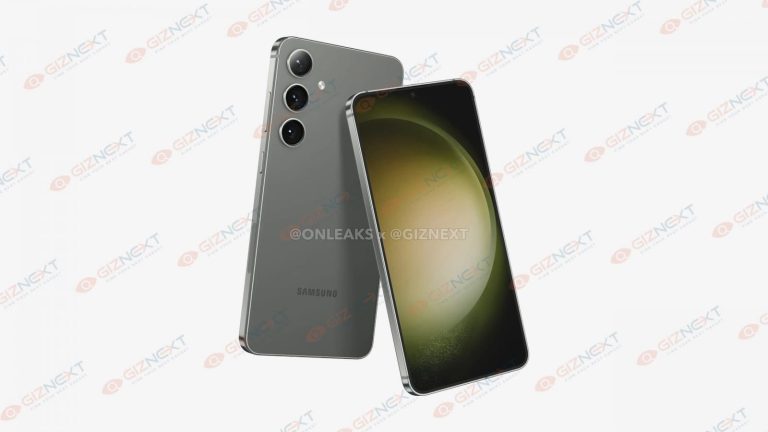
The Samsung Galaxy S24 series is coming, and a recent rumor suggested the devices will launch on January 17. That information was shared by the Korean media. Now, a reliable source actually confirmed that info, he confirmed the rumored Galaxy S24 series launch date.
Reliable source just confirmed the rumored Galaxy S24 series launch date
The tipster in question is Max Jambor, and he shared the info via X. He quoted a tweet in which January 17 was mentioned as the launch date, and flat-out said he could confirm that.
That article actually said that the phones will launch in San Francisco, so that’s what seems to be happening. Yes, that will be a global launch of the Galaxy S24 series. It’s not the first time Samsung hosted its press event in San Francisco.
As a reminder, the Galaxy Z Fold 5 and Galaxy Z Flip 5 launched in Korea a couple of months ago. Samsung doesn’t have a tendency of hosting global launch events in its homeland, but it made an exception for those two phones.
In any case, as expected, we’ll see the Galaxy S24 series break cover in January. We already know a lot about each of those smartphones, as plenty of information leaked up to this point.
These three phones won’t be all that much different from their predecessors
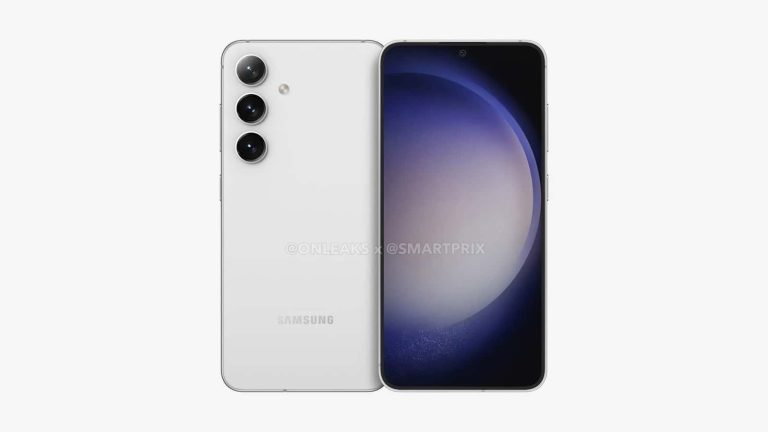
The three devices won’t be all that different from their predecessors, design-wise. The biggest change will be the flat display on the Galaxy S24 Ultra. The Galaxy S23 Ultra had a curved panel, and so did its predecessors. Samsung is ditching curved displays, at least for now. All three Galaxy S24 series phones will have flat panels.
Speaking of displays, all three devices will also come with an LTPO AMOLED display. Those panels will offer a 120Hz refresh rate. The Snapdragon 8 Gen 3 for Galaxy will fuel them in some markets, while Samsung will use its Exynos 2400 SoC in other regions. We presume that Europe will get the Exynos model, but we can’t confirm that. Just to be clear, the Galaxy S24 Ultra is tipped to use the Snapdragon 8 Gen 3 for Galaxy globally, that model won’t feature the Exynos 2400 if rumors are to be believed.
The market for money transfer applications has seen a significant shift. The emergence of digital technologies has made sending and receiving money more convenient and efficient than ever before. It’s practically impossible to live without nowadays. Let’s delve into this sector, investigate the technical developments, and see how technologies such as blockchain, biometrics, artificial intelligence, and machine learning are transforming the money transfer application scene.
The Evolution of the Money Transfer Application Market
Before we go into the technology underlying transfer apps, let’s set the stage by looking at some significant facts and trends affecting this ever-changing industry:
– Stat Attack: The worldwide money transfer business is enormous, valued at more than $700 billion. In 2020, $540 billion will have gone to poor nations, making a significant contribution to the economic subsistence of millions. – Mobile Takeover: Mobile money transfer apps have changed the game. Mobile channels account for 72% of all money transfers to poor and middle-income nations. – Top Players: Well-known platforms such as Western Union, PayPal, and TransferWise (now Wise) are leading the pack in the transfer app race. These businesses have adapted to the digital age by providing online choices in addition to their traditional services.
Now that we’ve established our facts and numbers, it’s time to dig into the intriguing realm of technical breakthroughs.
Blockchain: The Security Sentinel of Money Transfer Apps
Blockchain, which is frequently linked with cryptocurrencies such as Bitcoin, is gaining center stage in the realm of money transfers. Here’s how it’s changing the industry:
Enhanced Security:
Blockchain technology ensures that each transaction is safely encrypted and documented transparently. This not only protects finances but also fosters user confidence.
Transparency is the Goal:
Transparency is the goal. Because of Blockchain’s decentralized ledger, you can trace your money’s path from beginning to end, removing any uncertainty.
Lower Transaction Costs:
Traditional money transfer providers sometimes charge exorbitant fees. Blockchain drastically reduces these expenses, making cross-border transactions more inexpensive for everyone.
“But what about biometrics?” you may be asking.
Biometrics: The Human Touch in Digital Transactions
Biometric identification technologies, such as fingerprint and face recognition, are the way of the future for safe and convenient money-transfer apps:
Fingerprint and Facial Recognition:
These biometric technologies offer levels of security that standard passwords can only dream about. Your distinct physical characteristics become the key to your financial world.
User Convenience:
No more lost PINs or forgotten passwords. Biometrics provide a smooth and user-friendly method of verifying transactions.
Fraud Prevention:
Using face and fingerprint scans makes it extremely difficult for unauthorized parties to access your accounts. After all, they are one-of-a-kind.
With blockchain and biometrics down, we can’t overlook the critical role that artificial intelligence (AI) and machine learning (ML) play.
AI and ML: The Guardians of Financial Safety
AI and ML algorithms are the sentinels that protect your finances. They bring multiple benefits of the money transfer application market
– Fraud Detection: AI and machine learning can quickly detect fraudulent activity, offering a strong barrier against unlawful transactions. – Personalized Recommendations: These technologies evaluate your transaction history to provide personalized financial advice and investment recommendations. – Improved User Experience: The more you use the software, the smarter it becomes. It adjusts to your settings, making your experience more seamless and intuitive.
But what about combining transfer apps with Internet of Things (IoT) devices?
IoT: Where Smart Meets Swift
Consider how your smartwatch or linked automobile may become a part of your financial life. It’s not just a fantasy; it might become a reality. Imagine transferring money or monitoring your balance while running on your wristwatch. IoT gadgets provide truly unparalleled convenience.
IoT connection may provide real-time financial data and have extra security layers. Ensuring you are constantly up to date on your finances, while making your transactions even more secure.
Let us now confront the elephant in the room, which are virtual currencies such as Bitcoin and Stablecoin.
Virtual Currencies: Cryptocurrency and Money Transfer Apps
Cryptocurrencies have grown in popularity, and they’re making an impact in money transfer as well:
Advantages: Virtual currencies have no borders, making international transactions simple. They work around the clock to ensure money gets to their destination at any time. Disadvantages: Despite their advantages, virtual currencies are still finding their way into the mainstream banking system. Regulatory obstacles and market instability are obstacles that must be addressed.
After we’ve looked at the technical wonders that are transforming the money transfer application industry, let’s have a look at the regulatory framework that controls these developments.
Navigating the Regulatory Framework
With new technology come new obligations. The money transfer application sector operates within an ever-changing framework. Here’s a quick rundown of the regulatory landscape:
Compliance is Critical:
Regulators demand money transfer apps to adhere to anti-money laundering (AML) and know your customer (KYC) rules. These safeguards enhance the transparency and security of financial transactions
Legal standing of Blockchain:
While blockchain provides increased security and transparency, its legal standing differs by nation. Regulatory bodies are striving to develop clear rules for its application.
Cryptocurrency Regulation:
Governments are scrambling to pass regulations governing the usage of cryptocurrencies. These policies are critical for preventing financial crimes and ensuring financial system stability.
Conclusion
Because of cutting-edge technologies, the world of money transfer applications has experienced a tremendous revolution. Blockchain guarantees security and transparency, biometrics enable smooth and safe transactions, and AI and machine learning algorithms protect us from fraud while improving our user experience. The potential integration of IoT devices adds a new level of ease, and virtual currencies have the potential to revolutionize cross-border commerce.
However, like with every technology advancement, obstacles and regulatory barriers remain. Compliance with rules is critical to preserving the financial ecosystem’s integrity and safety.
The future of money transfer apps is an exciting voyage into the realm of innovation that will forever revolutionize the way we send and receive money. As we adapt and evolve, one thing becomes clear: the one constant in this ever-changing world is change itself.
Global variants of Xiaomi smartphones will start getting the HyperOS update in Q1 2024. Not all of them will get it at the same time, of course, nor will all of them get the update. A list actually surfaced, which we’re here to talk about.
Global Xiaomi smartphones will start getting HyperOS in Q1 2024
This list has been shared by GSMChina, and 9 devices are included on it. Do note that the Xiaomi 14 series is not mentioned here as HyperOS will come pre-installed on the global models, as it does on Chinese ones.
Having said that, the first devices listed here are the ones from the Xiaomi 13 series. The Xiaomi 13, Xiaomi 13 Pro, and Xiaomi 13 Ultra are included here. On top of that, you’ll also notice the Xiaomi 13T and Xiaomi 13T Pro.
IMAGE
Following them, the Xiaomi 12T is also mentioned, as is the Xiaomi 11T. There is even one tablet mentioned on this list, the Xiaomi Pad 6, as many of you have probably guessed.
HyperOS will come to more devices moving forward, but this is the initial wave that will get the update. GSMChina claims that this list has been confirmed by information from a Xiaomi server.
Xiaomi’s latest flagships are the only ones that run HyperOS at the moment
The Xiaomi 14 and Xiaomi 14 Pro, which launched in China, are the only devices rocking HyperOS at the moment. Other devices in Xiaomi’s homeland will start getting the update in December this year.
HyperOS is supposed to replace MIUI altogether. Xiaomi went with a rebrand here, and some changes on the UI side of things. Based on what we’ve seen thus far, however, HyperOS does look a lot like MIUI.
We haven’t had the chance to use it just yet, but at least from the design side of things, it’s very similar. It remains to be seen if the global version will differentiate in that regard, but chances are it will not.
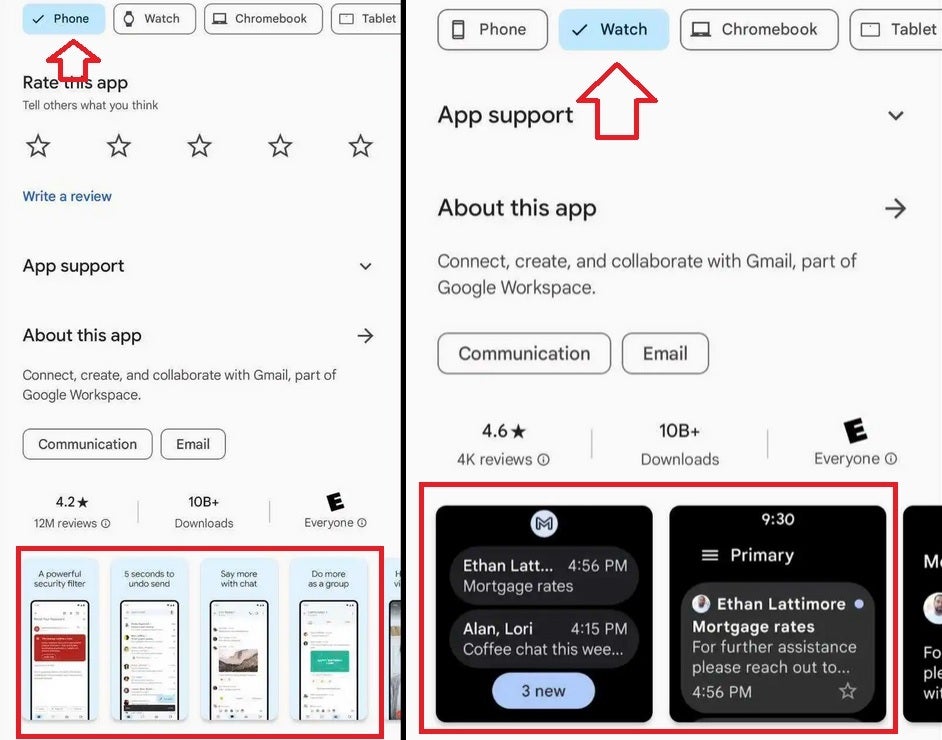
When you open the Google Play Store looking for a new app, you usually see screenshots arranged on a carousel that at first shows what the app will look like installed on a phone or a tablet. You’ll have to keep scrolling to see what the app will look like on a smartwatch, for example, or on a Chromebook, or a car. But you can save plenty of time thanks to a new feature that is being added to the Play Store.
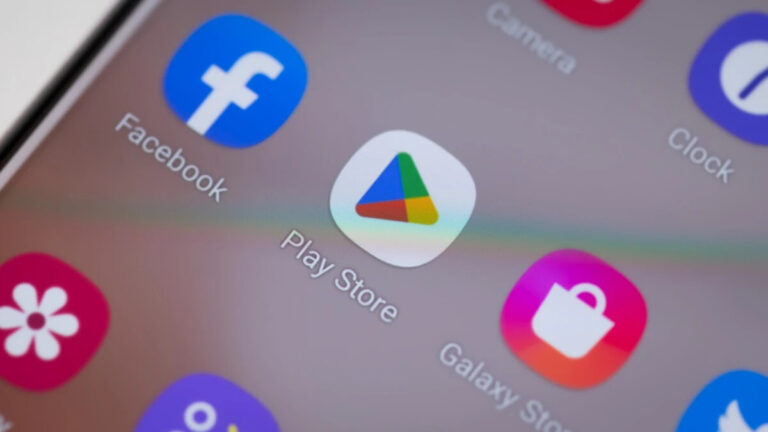
According to 9to5Google, the Play Store will soon have a carousel on the top of the screen that includes options listed inside chips for different form factors including Phone, Watch, Chromebook, Tablet, and Car. Tapping on the one that you plan on using the app on will show you screenshots of what the app will look like on the form factor you select.
The user ratings and the comments will also change depending on the form factor you select. For example, if you select Phone you will see the ratings and comments about the app from Android users who installed it on a phone. If you tapped on the chip marked Tablet, you’ll see the comments and the ratings from those who installed the app on an Android tablet.
This feature has yet to make its way to a large number of devices. It did not show up on my Pixel 6 Pro running Android 14 QPR1 Beta 2.2.
We first wrote about this feature back in July when it was merely a rumor posted on what was then called Twitter by a tipster. But now the feature is rolling out so we might as well give credit to the tipster, @AssembleDebug, for making a prescient call.
New Play Store feature allows you to select a form factor and see what an app will look like installed on such a device
Another change found on the Play Store app on tablets and Chromebooks is the addition of an asterisk icon in the navigation rail that has the title “New.” It happens to show the same thing that the “Offers” tab shows you when you tap it on the bottom bar of the Google Play Store app on your Android phone. You’ll see special offers, carousels with deals on streaming movies and televisions, upcoming games, games on sale, and more. This is the first time that the “Offers” tab has been found on large-screen Android devices even though it uses a completely different name and icon on larger screens.
Unfortunately, we don’t know what version of the Play Store app will include this new feature. Considering that the update just started rolling out, it might be a couple of weeks or longer before you find this useful tool on the Play Store.
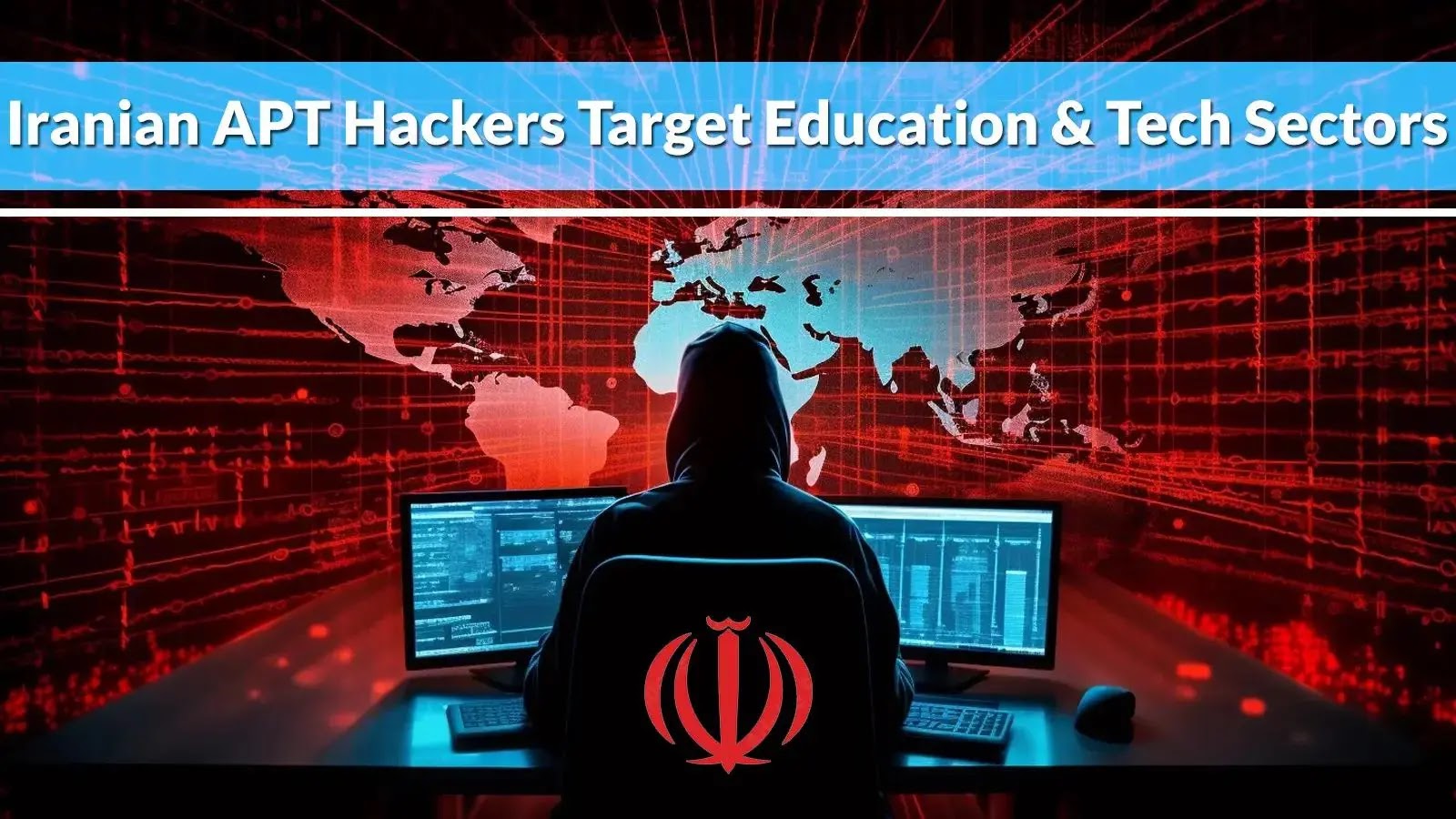
Cybersecurity researchers link attackers to the Iranian-backed APT group “Agonizing Serpens,” which has upgraded its capabilities and uses various tools to bypass security measures.
Hackers target and steal sensitive data for various reasons, including:
Financial gain
Identity theft
Espionage
Disruption
Cause harm
They may sell the stolen data on the black market, use it for blackmail, or exploit it for fraudulent activities. Unit 42 researchers recently discovered a series of cyberattacks targeting Israeli education and tech sectors, aiming to steal data and render endpoints unusable.
Technical Analysis
Iranian-linked APT Agonizing Serpens has been active since 2020, using wipers and fake ransomware in attacks targeting Israeli organizations. They aim to steal data and disrupt business continuity, often publishing stolen info on social media.
Here below, we have mentioned the other names of Agonizing Serpens:-
Agrius
BlackShadow
Pink Sandstorm
DEV-0022
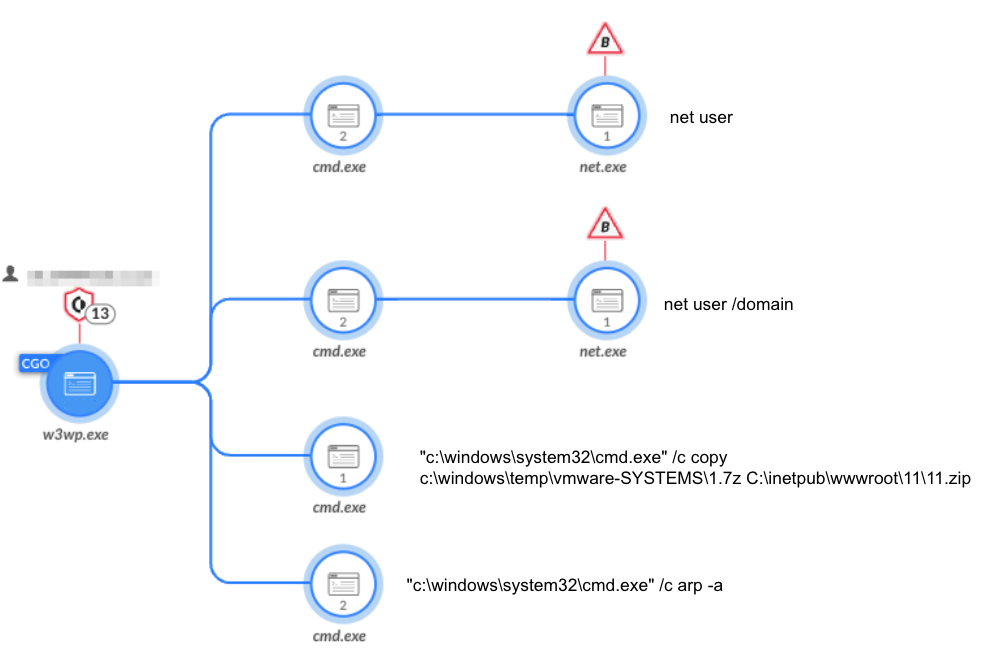
Attackers exploited web servers for initial access, deploying web shells. These shells, similar to past Agonizing Serpens attacks, conducted reconnaissance and network mapping using common scanners that are publicly available.
Basic reconnaissance commands via the web shells (Source – Unit 42)
Here below we have mentioned the scanners:-
The attackers attempted to gain admin credentials, but Cortex XDR blocked their methods. Here below we have mentioned all the attempted methods:-
Mimikatz
SMB password spraying
SMB password brute force
Dumping the SAM file
The attackers employed Plink (as systems.exe) for lateral movement, aimed at data theft and wiper execution. They used tools like WinSCP and Putty, along with a custom sqlextractor (sql.net4.exe) for exfiltration.
Here below we have mentioned the types of data extracted:-
ID numbers
Passport scans
Emails
Full addresses
The attackers tried using WinSCP and pscp.exe for file exfiltration, seeking specific file types containing stolen data.
The group tried to bypass EDR, but Cortex XDR blocked their attempts. They used various known techniques not seen in previous attacks, indicating increased sophistication.
The attackers used a custom tool called agmt.exe, likely derived from drvIX based on the PDB path. Agmt.exe is a custom loader for the GMER driver, AGMT.sys. It can terminate a specified target process by registering and starting the AGMT service.
After failing to exploit the GMER driver, the attackers turned to the drvIX tool, leveraging a new vulnerable driver from a public PoC tool called BadRentdrv2.
Cybersecurity researchers at Unit 42 found the following new wipers and tools used by the operators of the Agonizing Serpens group:-
MultiLayer wiper
PartialWasher wiper
BFG Agonizer wiper
Sqlextractor – a custom tool to extract information from database servers
DocumentFREE Webinar
Ensure your Cyber Resiliance with the recent wave of cyber-attacks targeting the financial services sector. Almost 60% respondents not confident to recover fully from a cyber attack.
Based on everything we’ve seen thus far, Europe will get the worst Samsung Galaxy S24 version, and unfortunately… this is not the first time we’re seeing this. This info comes from Ice Universe, a well-known tipster, while it’s corroborated by some benchmarking information that surfaced earlier.
The worst Galaxy S24 variant will be on offer in Europe, it seems
He basically says that European Galaxy S24 consumers will get the worst version possible. By that, he means a Galaxy S24 fueled by the Exynos 2400, with 8GB of RAM.
Based on rumors, the Galaxy S24 and Galaxy S24+ will launch in both Snapdragon 8 Gen 3 and Exynos 2400 variants. The Exynos 2400 models are expected to launch in Europe, hence Ice Universe’s tweet.
The Galaxy S24 Ultra, on the other hand, is expected to be equipped with the Snapdragon 8 Gen 3 for Galaxy all over the globe. It remains to be seen if that information will pan out or not.
In any case, let’s go over the chip and RAM. The Exynos 2400 didn’t launch just yet. Based on rumors and leaks, however, it will be inferior to the Snapdragon 8 Gen 3 (for Galaxy). That is not surprising, as we’re used to seeing it.
The same was the case with the Galaxy S22 series, for example. Consumers in Europe got the Exynos 2200 models, and the rest of the world got the Snapdragon 8 Gen 1 variants. The Exynos 2200 was the inferior chip at that time too.
Not many companies include 8GB of RAM in their flagships
What about the RAM? Well, Ice Universe referred to this move as “Android world’s last 8GB RAM”. What does he mean by that? Well, pretty much every company utilizes at least 12GB of RAM in their flagships. We just hope that Samsung will use LPDDR5X or LPDDR5T RAM in this phone. The Snapdragon 8 Gen 3 (for Galaxy) models are expected to have the same RAM count as the Exynos models, by the way.
Truth be said, the Exynos 2400 could end up being a lot better chip than its predecessor. If it ends up being inferior to the Snapdragon 8 Gen 3 (for Galaxy), however, it’s easy to understand the frustration. That’s especially true considering that the Galaxy S24 series will be more expensive in Europe than it will in the US, for example.
The Galaxy S24 series is expected to become official in January. The rumored date is January 17, and the press event is expected to take place in San Francisco.
Two critical OS command injection flaws have been discovered in multiple QNAP products, which include QTS, Multimedia Console, Media Streaming add-on, QuTS Hero, and QuTScloud.
These vulnerabilities existed in the QTS operating system and applications on network-attached storage (NAS) devices, which are used to store many sensitive data.
Hence, a command injection flaw on a NAS device could lead to the leakage of several sensitive pieces of information, which threat actors can use for many malicious purposes, including ransom demands.
The CVEs for these vulnerabilities have been assigned as CVE-2023-23368 and CVE-2023-23369, with severities of 9.0 (critical) and 9.8 (Critical), respectively. However, QNAP has released security advisories for fixing these vulnerabilities.
This vulnerability exists in several QNAP operating system versions, which threat actors can exploit to execute commands via a network. The severity of this vulnerability has been given as 9.0 (Critical).
This vulnerability exists in multiple QNAP operating systems and application versions, which could allow threat actors to execute remote commands on affected versions. The severity of this vulnerability has been given as 9.8 (Critical).
QTS 5.0.1.2376 build 20230421 and laterQTS 4.5.4.2374 build 20230416 and laterQuTS hero h5.0.1.2376 build 20230421 and laterQuTS hero h4.5.4.2374 build 20230417 and laterQuTScloud c5.0.1.2374 and later
QTS 5.1.0.2399 build 20230515 and laterQTS 4.3.6.2441 build 20230621 and laterQTS 4.3.4.2451 build 20230621 and laterQTS 4.3.3.2420 build 20230621 and laterQTS 4.2.6 build 20230621 and laterMultimedia Console 2.1.2 (2023/05/04) and laterMultimedia Console 1.4.8 (2023/05/05) and laterMedia Streaming add-on 500.1.1.2 (2023/06/12) and laterMedia Streaming add-on 500.0.0.11 (2023/06/16) and later
DocumentFREE Webinar
Ensure your Cyber Resiliance with the recent wave of cyber-attacks targeting the financial services sector. Almost 60% respondents not confident to recover fully from a cyber attack.
How to Update?
1. Log in to to the affected versions as an administrator
2. Go to Control Panel > System > Firmware Update
3. Under Live Update, click Check for Update
For updating Multimedia Console,
1. Log on to QTS as an administrator.
2. Open the App Center and then click .
3. Inside the search box appears Type “Multimedia Console” and then press ENTER.
4. In the Multimedia console, Click Update.
5. After updating, Click OK.
For updating Media Streaming Add-on,
1. Log on to QTS as an administrator.
2. Open the App Center
3. Inside the search box, type “Media Streaming add-on” and then press ENTER.
4. In the Media Streaming add-on console, Click Update.
5. After updating, Click OK.
However, The Update button is unavailable if your version is already up to date.
For more information, QNAP has also releasedsteps to fix these vulnerabilities. Users of these products are recommended to upgrade to the latest versions of these products to prevent these vulnerabilities from getting exploited.
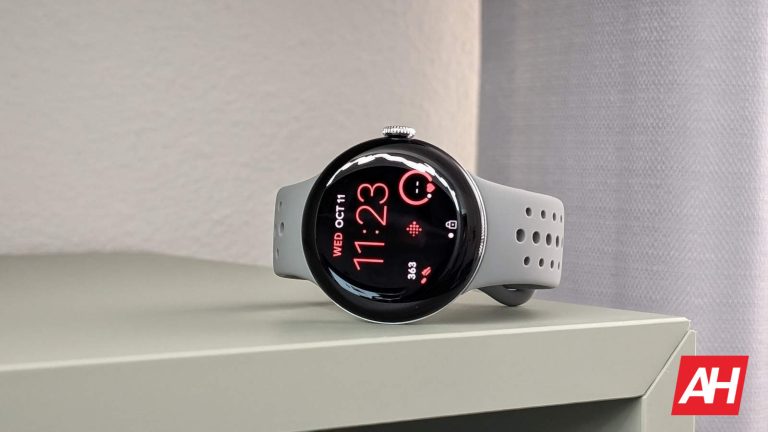
The Pixel watch 2 is perhaps one of the sleekest and most stylish smartwatches within the Android space. This is thanks in part to the curved edges and the crown. However, according to a new report from Wareable, Google might consider removing the beloved crown from the Pixel Watch 3 and replacing it with a capacitive touch bezel, similar to the Galaxy Watch 6.
This report comes from a patent filed by Google. It shows a touch-sensitive area baked into the screen, thus allowing users to perform various actions, such as changing volume, managing notifications, or switching between apps. Moreover, the bezel promises gesture controls, enabling actions like tapping or holding the touch bezel.
Furthermore, the patent also hints at potential integration between gesture controls and Google Home. For instance, a user might control household lighting by squeezing their watch. Maybe they could adjust the thermostat by swiping on the watch’s surface.
Why would Google switch from the crown?
While the crown is one of the standouts of the Pixel Watch, the primary motivation behind Google’s possible shift lies in the challenges posed by such hardware in terms of manufacturing and waterproofing. As a result, adding a touch bezel will not only ease the manufacturing process. It will also enhance durability and unlock new features.
However, implementing the touch bezel may present challenges due to the issue of detecting and differentiating various touch-based gestures. This problem is further highlighted by Google’s experiences with gestures in products like Fitbit. The company had to abandon capacitive buttons due to reliability concerns.
Furthermore, it is important to note that while this patent suggests that Google is exploring touch-based gestures, it does not guarantee that the company will incorporate them into the Pixel Watch 3. Tech companies often file patents as a strategic move to protect their technologies and prevent other companies from gaining access to them.
It’s the beginning of the month, and you know what that means. Google is delivering the November update to its Pixel phones. It’s a routine monthly update, so it brings some bug fixes to the software and that’s pretty much it, according to a new report.
If you’re looking to update your phone to this latest update, you should get a notification letting you know. However, if you missed the notification, then you’ll have to get to the update screen manually.
Go to your settings and scroll down to the System button at the bottom. On the resulting screen, look for the Update section. When you tap on that button, you’ll see a screen letting you know that you have an update. If it says that your phone is up to date, tap on the Search for update button at the bottom of the screen. Your phone will do a search to see if there’s an update.
If your phone finds the update, tap on the Update and your phone will start downloading the update. It will download and install it in the background.
Here’s what the November Pixel update fixed
As stated, this is a routine update, so there aren’t any new features or major upgrades; we’re just talking about bug fixes. The update made it to all Pixel devices as old as the Pixel 4a 5G. This phone is pretty much on its final leg, so the November update could be its final.
System
The update fixed the issue when an app requests an app that’s been uninstalled. Also, it brought a fix for the issue affecting users with multiple accounts.
UI
There was an issue where the desktop icons would disappear after you unlocked your device. Well, that one’s fixed. Also, the update fixed the issue where the wallpaper would be misaligned.
Display, NFC, and Touch
Pixel device had an issue with the screen flashing green when turned off, NFC acting up, and screen jerkiness when touching the screen. All three of those issues were fixed.
Be sure to install this update for these fixes, and be on the lookout for the update for the feature drop coming next month.
A new safety feature is coming to Waze, and it gives users a history of crashes in various areas. This feature is not designed to scare users, but to help them pay attention to these areas to make important driving decisions. Users of the Waze app around the world can now access this new feature after installing the latest update to the app.
This is not the first protective feature that Waze has made available for users in the past few years. But this new safety feature employs the use of AI analysis to figure out an accident location before updating the app user. It also sources information from accident locations from its community of users to identify accident spots around various routes.
With the information this feature will give users, they will be able to make a wise choice on the route to follow while driving. In no way is this feature a solution to accidents on the road, but it can help users to avoid potential accidents. Here are the details on this new Waze feature that you will need if you use the app.
Everything you need to know about the new Waze history of crash feature
This new safety feature rolling out to Waze users shows them the history of accidents around them. It sources the information necessary for this feature using either AI or the Waze community. The system then decides which of the sources to provide users information from to help guide them.
Users will then get notifications on their device of an upcoming location where an accident happened. The user can now be on the guard and more watchful as they approach this location. All data sourced for this feature is real-time data and shows real accidents that occurred in the area.
The app will also take into consideration the user’s route (with the help of AI) and factors that are common in these routes. These factors can include traffic levels, and the nature of the road, whether it’s a highway or a smaller road. So the Waze history of crashes feature will constantly update users on upcoming traffic locations.
As users approach each accident location, they can then slow down and avoid potential accidents. This is especially useful when the user is not familiar with the area he is navigating. With each history of crash notification, users can get more alerts of their environment.
Users of the Waze app will get this feature via an update that is currently rolling out. This rollout might be gradual and regional, with certain areas getting it before others. So if you are yet to get this feature then you can wait till it becomes available in your region.






 ever, implementing the touch bezel may present challenges due to the issue of detecting and differentiating various touch-based gestures. This problem is further highlighted by Google’s experiences with gestures in products like Fitbit. The company had to abandon capacitive buttons due to reliability concerns.