Batteries are perhaps the most important components of the electric world we are heading towards. But despite the research going into developing new battery standards, lithium-ion has always proven to be the most viable option, even after decades. However, all this could soon change as Apple is reportedly working on a new battery technology, which could reshape the industry as early as 2025.
While reports about Apple’s looking to make its own batteries have been circulating for some time, especially in relation to the Apple car, recent information from the Korean site ETnews suggests that Apple aims to revolutionize mobile battery technology by changing key raw materials and creating a battery that surpasses existing ones significantly in terms of energy density, output, and stability.
How will this be possible?
To develop the new standard, Apple is primarily focusing on the anode and cathode materials, which play a pivotal role in determining battery performance. Additionally, the company is investing substantial resources in researching new combinations and modifications of regular materials, including nickel, cobalt, manganese, and aluminium, as well as the potential integration of carbon nanotubes (CNTs).
While the exact details of the material combinations Apple plans to use for its batteries remain unclear, the company does intend to use silicon on the battery anode instead of the industry-standard graphite. This switch alone has led to a big increase in battery capacity and faster charging times. However, it is important to note that silicon’s tendency to expand under heat has proven to be a challenge for Apple.
What is the endgame?
The demand for lithium-ion batteries has surged in recent years thanks to the ongoing electric revolution. However, the technology, initially introduced in 1976, is now struggling to meet the requirements of users who expect their cars and devices to last longer. As a result, if Apple succeeds, the implications could be massive for the entire electronics industry, as battery-powered devices like iPhones will not only last longer but also support faster charging times.
Currently, there is a feature of Threads and Facebook that promotes Threads posts on people’s Facebook feeds. There is no option of opting out of this though, at this time. However, now it seems Meta is going to give that rightful choice to users, reports Android Headlines. The company is working on a way to let users choose how their posts get shared (and if they want that at all).
Threads users will have control over cross-posting on other platforms
At the moment, the update isn’t available officially. The new feature will give you the ability to choose whether you want your Threads post on other Meta platforms and if so, to which platforms you’d like to show it.
Currently, Threads posts are shared on Facebook and Instagram without users’ control, and this has been going on for a while (some people weren’t even aware their Threads posts were being cross-posted). The new update will give control back where it belongs – to the users and authors of posts. The info comes from Alessandro Paluzzi, a reverse software engineer who’s correctly shown features-in-the-works before.
You’ll be able to pick between Facebook and Instagram for post sharing. This feature was found under the “Suggesting posts on other apps” section of the Threads app, according to Paluzzi.
It is unclear when this feature will be available for all the users though. However, it won’t be too long for it to come.
The cross-posting feature exists mainly for the promotion of Threads on the other more popular social media apps by the company. Understandably, not giving the option to users to decide whether or not they want their Threads posts on other platforms is, however, not the best of moves. At least now the feature to fix this is in the works and probably will come soon.
Natalie Mottram, a 25-year-old intelligence analyst who worked for Cheshire Police and the North West Regional Organised Crime Unit (ROCU), has been given a prison sentence of three years and nine months for her role in a serious security breach.
She was convicted of accessing confidential information without authorization and alerting a criminal friend about a secret international investigation into serious and organized crime.
The investigation, called Operation Venetic, was conducted by the National Crime Agency (NCA) and aimed to take down the encrypted communications platform EncroChat.
Mottram’s actions were exposed when a leak compromised the operation.
She revealed vital information about the secret operation to Jonathan Kay, 39, and told him that he was under the radar of law enforcement officers.
DocumentFREE Webinar
Ensure your Cyber Resiliance with the recent wave of cyber-attacks targeting the financial services sector. Almost 60% respondents not confident to recover fully from a cyber attack.
This treachery endangered the whole investigation, allowing criminals to escape arrest and carry on their illegal activities.
The NCA caught Mottram on June 12, 2020, after they set up a trap to confirm her involvement in the leak.
Corrupt Police Imprisoned
Surveillance showed her cooperation with Kay and his partner, Leah Bennett, 38, in exchanging classified information.
The evidence against Mottram included examples of her talking about sensitive case files, buying drugs, and even posing with classified documents in the background.
Mottram’s actions could have ruined Operation Venetic, a remarkable investigation that resulted in the conviction of over 1,240 offenders, recovery of 173 firearms, and seizure of nine tonnes of heroin and cocaine.
Moreover, the operation averted more than 200 threats to life, demonstrating its significant impact on public safety.
At her sentencing, John McKeon, head of the NCA’s anti-corruption unit, stressed the importance of keeping integrity within law enforcement agencies.
He said, “There is no place for corrupt officers in UK law enforcement, and it was vital that this investigation uncovered her betrayal.”
This case serves as a stark reminder of the critical importance of trust and integrity within law enforcement agencies.
Mottram’s actions not only compromised the safety of the public but also tarnished the reputation of dedicated officers working tirelessly to protect communities from organized crime.
As the legal proceedings unfold, it remains essential to uphold the highest standards of professionalism and ethics within the law enforcement community to maintain public trust and safety.
Protect yourself from vulnerabilities using Patch Manager Plus to patch over 850 third-party applications quickly. Try a free trial to ensure 100% security.
Clinical research company Advarra has reportedly been compromised after a SIM swap on one of their executives.
SIM swapping, also known as SIM jacking, is the act of illegally taking over a target’s cell phone number. This can be done in a number of ways, but one of the most common methods involves tricking the target’s phone carrier into porting the phone number to a new SIM which is under the control of the attacker.
In the case of Advarra, the ransomware group ALPHV reportedly managed to transfer the executive’s cellphone number, allowing them access to the company’s resources and copy information that the group is now threatening to sell.
Advarra entry on the ALPHV leak site
However, Advarra isn’t willing to play ball, saying it doesn’t “pay digital terrorists”.
“An Advarra colleague was the victim of a compromise of their phone number. The intruder used this to access some of the employee’s accounts, including LinkedIn, as well as their work account.
We have taken containment actions to prevent further access and are investigating with third-party cyber experts. We also notified federal law enforcement. At this time we believe the matter is contained. We further believe that the intruder never had access to our clients’ or partners’ systems and it is safe to connect to Advarra’s systems. Importantly, we have no evidence that the Advarra systems and products that clients use to interface with us were compromised or accessed. At this time, our business operations have not been disrupted as a result of this activity and we continue to operate as normal. In addition, we continue to take steps to enhance the overall security of our systems in line with industry best practices.
Our investigation remains ongoing, and we will provide additional updates as appropriate.”
Octo Tempest
We recently wrote about the growing concern around criminal gang Octo Tempest. In 2022, Octo Tempest began selling SIM swaps to other criminals and performing account takeovers of high-net-worth individuals in order to steal their cryptocurrency. Since then the group has expanded its range of activities to include targeting organizations providing cable telecommunications, email, and tech services, and partnering with the ALPHV ransomware group.
So it’s quite possible that here Octo Tempest used their SIM swapping knowledge to compromise the executive’s account and use that leverage to steal information, which is now being used to extort Advarra
Even if the incident didn’t go down exactly as we think, there are a few takeaways:
Social engineering has shown time and again to be the most reliable tool for cybercriminals. It can even hurt companies with enterprise grade security.
The security of your private accounts matters to the company you work for. A breach of one of your accounts can provide an entrance to your employer.
SIM swapping is one of the reasons why some forms of MFA are better than others. Spoiler alert: text messages and call-based verification are not the best options.
Prevent intrusions. Stop threats early before they can even infiltrate or infect your endpoints. Use endpoint security software that can prevent exploits and malware used to deliver ransomware.
Detect intrusions. Make it harder for intruders to operate inside your organization by segmenting networks and assigning access rights prudently. Use EDR or MDR to detect unusual activity before an attack occurs.
Stop malicious encryption. Deploy Endpoint Detection and Response software like Malwarebytes EDR that uses multiple different detection techniques to identify ransomware, and ransomware rollback to restore damaged system files.
Create offsite, offline backups. Keep backups offsite and offline, beyond the reach of attackers. Test them regularly to make sure you can restore essential business functions swiftly.
Don’t get attacked twice. Once you’ve isolated the outbreak and stopped the first attack, you must remove every trace of the attackers, their malware, their tools, and their methods of entry, to avoid being attacked again.
Malwarebytes Managed Detection and Response (MDR) simply and effectively closes your security resources gap, reduces your risk of unknown threats, and increases your security efficiency exponentially. Malwarebytes MDR staffs highly experienced Tier 2 and Tier 3 analysts who are hands-on with customer endpoints, ensuring critical threats are quickly identified and a thorough response is rapidly deployed.
Want to learn more about MDR? Get a free trial below.
The OnePlus 12 won’t use the Sony LYT-900 sensor after all, at least based on a new rumor. This information comes from Yogesh Brar, a tipster. The device was expected to use the best Sony has to offer, but it seems like that won’t happen.
The OnePlus 12 possibly won’t use the Sony LYT-900 sensor after all
OnePlus did announce a partnership with Sony recently, where it was confirmed that a Sony LYTIA sensor will be used. Many people expected the Sony LYT-900 sensor to be used, which is considered to be the most powerful one in Sony’s lineup.
Based on this rumor, that will not happen, however. The OnePlus 12 will allegedly use the same main camera sensor as the OnePlus Open. In other words, the phone will utilize the Sony LYT-808 sensor.
Now, that is also a ‘Pixel Stacked’ CMOS sensor, and a very powerful sensor at the same time. Not many people will complain about it, but the phone was not expected to utilize that very same camera.
The Sony LYT-808 is also a very powerful camera sensor
To those of you keeping count, that is a 48-megapixel camera sensor. If it ends up having the same lens as the OnePlus Open, we’ll get an f/1.7 aperture lens. OIS is supported, while a 1.12um pixel size will be included, and multi-directional PDAF.
Why did OnePlus give up on a different camera sensor? Well, the tipster claims that OnePlus wants to get things right straight from the box this time around. In the past, the company’s flagships required several updates to tune the camera just right. Well, OnePlus seemingly wants to get everything ready out of the box this time around.
The OnePlus 12 is still expected to arrive in January next year. There’s a slight chance that OnePlus could announce it in December, as the Snapdragon 8 Gen 3 arrived sooner than expected.
It remains to be seen if OnePlus will once again launch its flagship in China first, or will we see a proper global launch from the get-go.
AI chatbots are now on many social media platforms and Elon Musk’s Grok is preparing to arrive on X. The billionaire and owner of the X social media platform says that his new AI chatbot “loves sarcasm” and this becomes obvious in the way it responds to requests. Some users on the social media platform already have access to this feature and are putting it to the test.
This AI chatbot rolled out to X about a day ago, and Elon Musk sang its praises on the platform. In his post after its launch, Elon said “Grok has real-time access to info via the X platform.” According to the billionaire, this is a “massive advantage over other models” but this is just a mere claim without proper testing.
Users of the X platform will be able to put this AI chatbot to use as they search for what’s trending on the platform. With access to information millions of X’s users are spreading on the platform, the AI chatbot can figure things out and give responses to questions. You might already be asking yourself what good can come out of a bit of sarcasm from one of the most feared technologies in the world.
If you aren’t a big fan of sarcasm, the new Grok AI chatbot might not appeal to you
With the constant abuse of various AI technologies around the world, there’s a need for regulations. During the UK AI Safety Summit, Elon Musk had a few solid ideas regarding AI technologies. The billionaire hopes that more measures can be put in place to limit the abuse of these technologies.
Only a few days after the AI Safety Summit, Elon Musk heads over to X to launch his own AI chatbot. This isn’t the first time that Elon Musk has put his eyes out for AI technologies. Elon was one of the investors in OpenAI and he’s now preparing to give ChatGPT a run for its money on the X platform.
Back in July, the team behind Grok’s development was born. Now just about three months later, the team is out with the AI chatbot product which will be in use on the X platform. While this AI chatbot aims to help users find facts on the X platform, it does so in a sarcastic manner.
Some examples of the sarcasticness of this new AI technology model have already hit the internet. While this new feature is still in beta testing and not available to all X users, details on it are available. It is good to note that this chatbot will be built into the X app and might become available as a standalone app after its official release.
Regardless of the sarcasm or source of information, there are some concerns about this new chatbot. These might lie within the accuracy of information the Grok AI chatbot provides, as well as its manner of conversation. While it’s too early to criticize this new chatbot for the X app, netizens are itching to see what it offers.
Managing all the passwords for various websites, apps, and social media platforms can be a real headache. That is why services designed to streamline this process are incredibly useful. Take Google, for example, with its Google Password Manager. While the tech giant is eyeing Passkeys as the default sign-in method for personal accounts, it seems a fresh design is in the works for its Password Manager.Detailed by the unofficial Google News Telegram group (via Android Police), the redesign involves breaking down the Password Manager’s core features into three tabs located in the bottom navigation bar—Passwords, Checkup, and Settings.
In its current form, the Checkup and Settings buttons are found on the main/home page of Google Password Manager. There is also a subtle tweak to the Search bar, now featuring an “Add password” button instead of the “+” present in the current version of Password Manager.
Google’s Password Manager has seen several updates for mobile and desktop users in the past year. Some nifty features include the ability to alert users when saved passwords have been compromised in a data breach or prompt password changes for those that are reused or considered weak.
The exact rollout date for this redesigned Password Manager remains unclear, but it could be part of a forthcoming app update since the changes align with Google’s Material Design 3 guidelines.
Material You 3, Google’s latest open-source design system unveiled at Google I/O 2023, is already integrated into various apps and products. For instance, WhatsApp is experimenting with Material Design tweaks on Android to align its appearance more closely with its iOS app.
With the introduction of Android 14, Google wanted to provide users with even more customization options for their phones. For example, paired with Material You 3, the color palette of your Android system will automatically synchronize with the wallpaper you have chosen.
The Government of Canada officially bans using WeChat and Kaspersky apps on government devices, citing privacy risks. Users can no longer download the apps on government-issued mobile devices.
Canada Bans Kaspersky And WeChat
According to a recent press release from the Government of Canada, the authorities now prohibit using Kaspersky and WeChat applications on government-issued devices.
Specifically, Canada not only bans Kaspersky and WeChat but also removes the two applications from all devices where they are found installed, barring users from downloading these apps in the future.
The Canadian government took this decision after detecting potential privacy and security risks with these apps. They suspect that the apps gather device data by gaining “considerable access” to the contents, particularly when installed on mobile devices.
The ban went into effect on October 30, 2023 – the same day the Canadian Government announced this step. This urgency suggests the severity of the threat level the authorities suspect. Nonetheless, they assured the security and integrity of the Government of Canada’s networks, systems, and data.
While this ban typically applies to Canadian government officials, the state advises the public to remain cautious regarding their security.
Kaspersky Expresses “Disappointment” Over Canada’s Ban
Responding to the recent bans from Canada, Kaspersky issued a detailed statement expressing its disappointment. The firm debunked the claims regarding espionage and its possible link with the Russian government. Also, it deemed this step as a “response to the geopolitical climate” instead of a security measure.
As there has been no evidence or due process to otherwise justify these actions, they are highly unsupported and a response to the geopolitical climate rather than a comprehensive evaluation of the integrity of Kaspersky’s products and services.
WeChat is a popular messaging app from the Chinese firm Tencent, whereas Kaspersky is a Russian anti-malware service from the cybersecurity provider Kaspersky Lab. While both these apps seem legit, they often face backlash from the US, UK, and European countries for suspected state-backed espionage.
For instance, in 2020, the US Department of Commerce banned WeChat and TikTok (another popular social media app of Chinese origin) transactions, citing security concerns. Even before that, in 2017, the US government banned the use of Kaspersky Lab products on government systems. However, both services have almost always refuted such claims, assuring their private existence.
A worrying trend is cropping up amongst Americans, particularly within Generation Z—they’re spying on each other more.
Whether reading someone’s DMs, rifling through a partner’s text messages, or even rummaging through the bags and belongings of someone else, Americans enjoy keeping tabs on one another, especially when they’re in a relationship. According to recent research from Malwarebytes, a shocking 49% of Gen Zers agreed or strongly agreed with the statement: “Being able to track my spouse’s/significant other’s location when they are away is extremely important to me.”
As far back as 2010, in a piece titled “Little Brother is Watching,” author Walter Kirn wrote for the New York Times:
“As the internet proves every day, it isn’t some stern and monolithic Big Brother that we have to reckon with as we go about our daily lives, it’s a vast cohort of prankish Little Brothers equipped with devices that Orwell, writing 60 years ago, never dreamed of and who are loyal to no organized authority. The invasion of privacy — of others’ privacy but also our own, as we turn our lenses on ourselves in the quest for attention by any means — has been democratized.”
Little Brother is us, recording someone else on our phones and then posting it on social media. Little Brother is us, years ago, Facebook stalking someone because they’re a college crush. Little Brother is us, watching a Ring webcam of a delivery driver, including when they are mishandling a package but also when they are doing a stupid little dance that we requested so we could post it online and get little dopamine hits from the Likes. Little Brother is our anxieties being soothed by watching the shiny blue GPS dots that represent our husbands and our wives, driving back from work.
Little Brother isn’t just surveillance. It is increasingly popular, normalized, and accessible surveillance. And it’s creeping its way into more and more relationships every day.
So, what can stop it?
Today, we speak with our guests, Malwarebytes security evangelist Mark Stockley and Malwarebytes Labs editor-in-chief Anna Brading, about the apparent “appeal” of Little Brother surveillance, whether the tenets of privacy can ever fully defeat that surveillance, and what the possible merits of this surveillance could be, including, as Stockley suggested, in revealing government abuses of power.
“My question to you is, as with all forms of technology, there are two very different sides for this. So is it bad? Is it good? Or is it just oxygen now?”
The Samsung Galaxy S24 Ultra is the company’s upcoming flagship smartphone. This is going to be the most powerful handset in the Galaxy S24 flagship series. The information regarding the device has been leaking for quite some time now, and will continue doing so up until the launch event. Speaking of which, we’re here to share what we know thus far, so that you know what to expect. We’ll talk about the phone’s design, its specifications, and more down below. So, let’s get started, shall we?
This article will be regularly updated with new information on the Samsung Galaxy S24 Ultra (this is a preview article) — both official teasers and credible leaks, rumors, and insider claims — as it becomes available in the run-up to the release of the upcoming Android smartphone. The last update was made on November 6, 2023.
When will the Samsung Galaxy S24 Ultra be released?
We’ve seen various different rumors regarding the Galaxy S24 Ultra launch. Most of them, and also the latest one, suggest that the phone will launch in January next year. The device is also tipped to launch in San Francisco, just like its predecessor. The Galaxy S23 series did launch on February 1, though, so this launch event will come a bit sooner than expected. The exact date has not been revealed yet, though, nor has it been tipped. We’ll have to wait and see. Considering that the Snapdragon 8 Gen 3 will be announced earlier this year, in October, a January launch is quite probable for the Galaxy S24 series.
What models are coming?
The Samsung Galaxy S24 Ultra will launch alongside its siblings, the Galaxy S24 and Galaxy S24+, which we’ll round up in a separate article. That being said, the Galaxy S24 Ultra is also said to arrive in a single SoC variant, unlike its siblings. The Snapdragon 8 Gen 3 will fuel the Galaxy S24 Ultra, while Samsung’s Eyxnos 2400 chip won’t be in the picture. Many people will see this as a good thing considering that Qualcomm’s flagship SoCs did have an upper hand for years.
How much will the Samsung Galaxy S24 Ultra cost?
The Galaxy S24 Ultra likely won’t cost more than the Galaxy S23 Ultra did. In fact, we’re expecting the same price tag. Having said that, the Galaxy S24 Ultra will likely start at $1,199. That will be the 8GB RAM variant with 256GB of storage. Samsung could yet surprise us and kick things off at 12GB of RAM, we’ll see. In any case, if that ends up being the starting price, the 512GB storage model will likely cost $1,299, and the 1TB model $1,619. These are only our assumptions at this point, as the price tags haven’t leaked out just yet. The Galaxy S24 Ultra will be quite similar to its predecessor in many ways, and Samsung will hardly justify a price bump.
What will the Samsung Galaxy S24 Ultra look like?
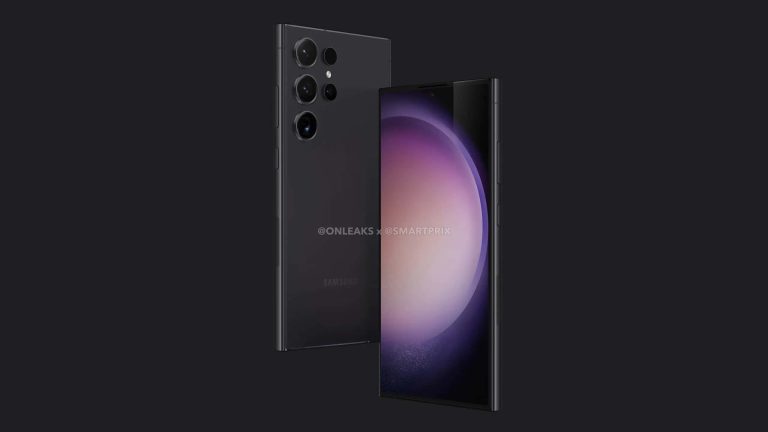
The Samsung Galaxy S24 Ultra already surfaced in CAD-based renders (shown at the end of the section). Those images do give us a good idea as to what to expect in the design department. This phone will resemble its predecessor a lot. In fact, even a video surfaced showing the transition from the Galaxy S23 Ultra to the Galaxy S24 Ultra (shown below), so that you can see the minor differences, at least on the back. There will be one considerable difference overall, though. The Galaxy S24 Ultra will feature a flat display.
The Galaxy S23 Ultra has a slightly curved display, but curved nonetheless. Well, Samsung will change that with the Galaxy S24 Ultra. The entire Galaxy S24 series will feature flat displays, which will happen for the Galaxy S series after a long, long time. The Galaxy S24 Ultra is also said to include a frame made out of titanium. As a reminder, the Galaxy S23 Ultra has a frame made out of aluminum.
The camera design will be very similar
The camera design on the back will be very similar, even the positioning of particular cameras will stay unchanged. You can clearly see that in the image provided below this paragraph. Three sensors will sit on the left, and two on the right. Four out of five of those sensors will be reserved for the cameras, and an LED flash will be placed in the same spot too. Each of those camera sensors will protrude from the backplate directly, they won’t be placed inside a singular camera island or anything like that. The Galaxy S24 Ultra will retain a slight curve on the back, but it will be less pronounced than on the Galaxy S23 Ultra.
You will also notice that the Galaxy S24 Ultra will retain the sharp corners that its predecessor has. In fact, those corners will be even slightly more pronounced here. The physical buttons will once again sit on the right-hand side. They’re seemingly in the same place as on the Galaxy S23 Ultra. The left and right sides of the phone will be slightly curved, while the top and bottom ones will be flat, as we’re used to.
This is what the Galaxy S24 Ultra will look next to its predecessor
A well-known tipster has also decided to show us the Galaxy S23 Ultra and Galaxy S24 Ultra side-by-side. Do note that the Galaxy S24 Ultra design is based on the info he has, this is not a leak or anything of the sort. Check out the image below.
Galaxy S23 Ultra and Galaxy S24 Ultra
What specs will the Samsung Galaxy S24 Ultra have?
The Samsung Galaxy S24 Ultra will be fueled exclusively by the Snapdragon 8 Gen 3, based on reports. The other two Galaxy S24 models could arrive in an Exynos version too, though. In any case, Samsung will once again get the “For Galaxy” version of the Snapdragon chip. It will likely just be clocked higher than the regular chip. The phone is expected to feature a 6.8-inch QHD+ AMOLED display, just like its predecessor. That display will offer a 120Hz refresh rate, and it will be an LTPO panel (1-120Hz). Chances are it will be even brighter than the one on the Galaxy S23 Ultra. Considering the brightness on Samsung’s current flagship, that’s great.
LPDDR5X RAM & UFS 4.0 flash storage will be in use
Samsung will utilize either 8GB or 12GB of LPDDR5X RAM in the base model of the device. The most powerful variant will likely come with 16GB of LPDDR5X RAM. Three storage variants are expected, 256GB, 512GB, and 1TB models. All three are set to use UFS 4.0 flash storage, and storage expansion will not be possible. A 5,000mAh battery will be included in the package, while 45W wired charging will once again be available. Chances are that Samsung will stick with 15W wireless charging, and 4.5W reverse wireless charging, for better or worse. And no, the charger will not be available in the box.
The phone will come with a downgraded periscope camera, it seems
Android 14 will come pre-installed on the device, with One UI 6. Do note that Samsung could boost its software support longevity, to follow Google. Now, what about the cameras? Well, a 200-megapixel camera will once again be in use (a better sensor, though, ISOCELL HP2SX). That will be the phone’s main camera. It will be backed by a 10-megapixel telephoto camera (Sony’s IMX754+ sensor, 1.12um pixel size), a 12-megapixel ultrawide camera (Sony’s IMX564 sensor, 1.4um pixel size), and a 50-megapixel periscope telephoto camera. Based on leaks, the phone’s 50-megapixel periscope telephoto camera will offer a 5x optical zoom (Sony’s IMX854 sensor, 0.7um pixel size), not a 10x one like the Galaxy S23 Ultra, unfortunately. The regular telephoto camera will offer support for 3x optical zoom.
The Galaxy S24 Ultra may actually get the same S Pen as the Galaxy S23 Ultra. It’s also worth noting that satellite connectivity may be a part of the package too. It is claimed that the Galaxy S24 series will be the company’s “smartest” lineup of phones, thanks to AI.
It will be considerably lighter than its predecessor
The Galaxy S24 Ultra is tipped to measure 162.3 x 79 x 8.6mm, and weigh 195 grams. That means it will be a lot lighter than its predecessor, which weighs 234 grams. It will also be slightly shorter, and a bit wider if this info is accurate. The Galaxy S24 Ultra is coming in Black, Gray, Violet, and Yellow colors. Light Blue, Light Green, and Orange colors will be online exclusive. Also, there are rumors that a gold-colored variant will be on offer too.
Should you wait to buy the Samsung Galaxy S24 Ultra?
Is the Samsung Galaxy S24 Ultra the right phone for you? Well, that’s not something we can tell you, and especially not yet. If you love premium phones that are also big, and that also offer a truly compelling camera setup. Well, chances are you’re considering Samsung’s ‘Ultra’ phones. If you like the one you have now, and would like to upgrade, or are switching from something similar, this may be a good option. The thing is, we’re worried about the 5x optical camera rumor. It sure sounds like a downgrade compared to the Galaxy S24 Ultra. That periscope telephoto camera was the phone’s strong suit. It remains to be seen, but the Galaxy S24 Ultra does look like a compelling device even now, especially if you were annoyed by the Galaxy S23 Ultra’s curved display.