X is planning to roll out Pinned Hashtags for usage with Communities to help members stay on top of things. By letting admins pin hashtags on their communities, X is giving them the ability to remind users of what’s trending. Currently, hashtags in communities are based on the trending topics among members and admins have little control over the hashtags users see.
To keep the community’s attention locked on a particular topic, admins have to keep bringing back the hashtag. This is because new hashtags are created on trending topics and tend to push older hashtags down the drain. So, community admins can find themselves struggling to keep up with the influx of hashtags bombarding their members.
Currently, the ability to pin hashtags was spotted within the codes of the latest version of the X app. While these codes exist, the feature itself is not available for usage within the app. Possibly, the feature is currently under testing within some communities.
Community admins will soon have access to the Pinned Hashtag feature for usage
The folks at Android Authority were able to find some strings of codes within the new X app update. These strings cleared and made mention of the Pinned Hashtag feature for communities. While these strings exist in the new app update, the feature is nowhere to be found.
About two years ago, Twitter launched a Community feature for people who share similar ideas on a particular topic. Since the roll-out of this feature, lots of Communities on various topics of interest have been formed on the platform. From technology, fashion, sports, politics, and many other topics of interest, there are communities for all.
Even after Elon Musk took over the platform, communities still stood strong. Now under new management, communities are getting more important features on X. An example of the important new feature coming to communities is the new Pinned Hashtag feature.
Already communities on X have a hashtag feature that became available last year. With hashtags, members of the community can share various topics with other members. Now, X is preparing to let admins pin hashtags, so users can keep them in mind while going through the community posts.
For now, this feature isn’t available for usage, but it might roll out in the coming weeks. There’s no news from X on when the feature will become available for usage. But once available, admins will start putting it to use and members of communities will start noticing its usage.
The ongoing struggle between YouTube and ad blockers is turning users into the victims.
YouTube has gone all out in its fight against the use of add-ons, extensions and programs that prevent it from serving ads to viewers around the world. It started out as just a small experiment, but it looks like the company has opened the floodgates for most users now.
“We’ve launched a global effort to urge viewers with ad blockers enabled to allow ads on YouTube or try YouTube Premium for an ad free experience. Ads support a diverse ecosystem of creators globally and allow billions to access their favorite content on YouTube.”
On a support page, YouTube says that if you use ad blockers, you’ll be asked to allow ads on YouTube or sign up for YouTube Premium. If you continue to use ad blockers, YouTube may block you from watching videos at all.
Now, users are flocking to places like Reddit to complain about YouTube’s hardened stance against ad blockers.
Privacy expert Alexander Hanff has filed a complaint with the Irish DPC (Data Protection Commission) about YouTube’s ad block blocking. Hanff says that YouTube needs permission to detect adblockers because by doing so it’s looking at something that is on the visitor’s system. In his complaint, Hanff demands that YouTube stop its anti-ad blocking policy, saying some experts call it “illegal”.
The DPC is the Irish supervisory authority for the General Data Protection Regulation (GDPR), so any outcome of this complaint might only cause changes for EU residents. We have reported about plans to introduce ad free services by Meta, TikTok, and YouTube as a way to circumvent EU rules that require platforms to get users’ consent in order to show them targeted ads.
Watch out for fakes
With all this going on, users should be extra careful about downloading new ad blockers that claim to circumvent YouTube’s blocking. Oftentimes we’ll see miscreants trying to rip off users by launching non-functional products and promoting potentially unwanted programs (PUPs).
There are many examples of fake ad blocker extensions in the Chrome Web Store that we would advise against installing.
Browser Guard
As you may know, Malwarebytes Browser Guard has a built-in ad blocker. If you still need to access an important site but you’re being asked to disable your ad blocker, you can do this by clicking on the blue M logo in your browser taskbar and set the Ad/Trackers to be disabled for that site.
Browser Guard blocks two entities on www.youtube.com
We don’t just report on threats—we remove them
Cybersecurity risks should never spread beyond a headline. Keep threats off your devices by downloading Malwarebytes today.
Samsung is the world’s largest smartphone company. It makes some of the best Android smartphones and is trusted by consumers globally. Its Galaxy devices offer excellent reliability, camera quality, and other features, making them the favorite of many. However, the Korean firm launches so many smartphones each year that it’s often difficult to track and pick the best for you.
From sub-$200 devices to foldables costing $1,800 and more, Samsung has a Galaxy phone at almost every price point. Whatever your budget might be, the Korean company has something for you. To help you find a suitable model for your needs, we have curated a list of the best Samsung smartphones to buy in November 2023. We regularly update this list to reflect new launches and price changes.
Best Samsung flagship – Galaxy S23 Ultra
The Galaxy S23 Ultra is arguably the best Android smartphone out there.
Featuring a 6.8-inch Dynamic AMOLED 2X display and a built-in S Pen, the Galaxy S23 Ultra is a productivity powerhouse. The stylus pen makes taking notes and annotating PDFs a breeze. It also works as a remote controller for the camera and music and helps enhance productivity with various other nifty tricks. The screen has a brightness of 1,750 nits and boasts a 120Hz variable refresh rate. This makes it super smooth and legible in bright environments.
The phone runs on a special version of Qualcomm’s Snapdragon 8 Gen 2 processor that delivers excellent all-round performance. You’ll get smooth gameplay in even the most graphics-intense games on your Galaxy S23 Ultra, with effective thermal management thanks to a robust cooling system. It handles background apps well, allowing you to switch back and forth between them without any stutters. With Samsung DeX, you can connect a monitor and use the phone in a PC environment.
The latest Samsung flagship delivers excellent camera performance as well. It is equipped with a 200MP primary camera that captures crisp images and 8K videos in all lighting conditions. You get tons of camera features to play with. You also get two optical zoom cameras (3x and 10x), with up to 100X hybrid zoom. While the latter option is just about usable, zoom photos at up to 10x magnification come out brilliant. The 12MP ultrawide lens and 12MP selfie camera give you amazing photos too.
Thanks to IP68 dust and water resistance, the Galaxy S23 Ultra is safe to use in light rain. Its Armor Aluminum body and Gorilla Glass Victus 2 front and back add to its physical strength. Other highlights include AKG-tuned stereo speakers, a 5,000mAh battery, 45W wired charging, Ultra-Wideband (UWB) support, and an ultrasonic under-display fingerprint scanner. The phone is Wi-Fi 7-ready, though Samsung has blocked it with software. It should unblock it at some point.
The device takes slightly under an hour to charge fully and offers excellent battery life with about nine hours of screen time. You also get wireless and reverse wireless charging here. Debuted with Android 13, the Galaxy S23 Ultra has already received Android 14, with Samsung’s One UI 6.0 on top. This phone will get updates up to Android 17. Prices start at $1,199. You can read our Galaxy S23 Ultra review to know more about its performance and user experience.
The Galaxy S23 gives you the best of Samsung in a compact package.
If you like compact smartphones, then look no beyond the Galaxy S23. It gives you a similar software experience as the Ultra model. The device runs the same Android and One UI versions and is eligible for updates up to Android 17. It misses out on the S Pen but the 6.1-inch display is as good as it gets. You’ll get vivid colors across all sorts of content on the screen, with smooth navigation. It supports the same under-display fingerprint scanner as well.
Like the Ultra model, Samsung has equipped the Galaxy S23 with a customized Snapdragon 8 Gen 2 processor. It’s the best chip you can get on any Galaxy phone today. It delivers swift performance with no hiccups during normal usage. Even the most resource-intensive games run smoothly while background app management is excellent too. The Android 14-based One UI 6.0 experience complements the chip’s capabilities.
The Galaxy S23’s 50MP primary camera is highly capable. You don’t get the same maximum resolution as the Ultra’s 200MP sensor but images come out as crisp and vibrant. It lets you capture 8K videos too. There’s no 10X optical zoom camera here but you do get 3x optical zoom and up to 30X hybrid zoom. The ultrawide lens and the selfie camera are the same, so you aren’t losing much in the camera department either. Unless limited by hardware constraints, all software camera features are here.
The rest of the specs and features also mostly carry over unchanged, including IP68 dust and water resistance, Armor Aluminum body, Corning’s Gorilla Glass Victus 2 at the front and back, Samsung DeX support, and AKG-tuned stereo speakers. So the phone is as strong and durable as its pricier sibling. Since the Galaxy S23 is smaller, you get a 3,900mAh battery here that supports 25W of fast wired charging, along with wireless charging and reverse wireless charging.
Battery life is good enough to take you through the day. 25W charging may seem a little slow in 2023, but the Galaxy S23 charges from 0 to 100% in a little over an hour, which isn’t too bad. Overall, it’s an excellent compact Samsung flagship without many compromises over the Ultra model. All of this for $799 is unmissable as long as you’re okay with a smaller screen and battery.
The Galaxy S23 FE makes flagship-grade features more affordable.
Samsung’s FE (Fan Edition) devices offer flagship-grade features at a lower price point. You won’t get a full-fledged flagship experience as the Galaxy S23, but the Galaxy S23 FE gives you a powerful Snapdragon 8 Gen 1 processor (Exynos 2200 in Europe), which is no slouch. The device offers smooth and consistent performance during most of the tasks. It has a fairly large cooling system and can handle thermals well for efficient occasional gaming.
This phone’s affordability doesn’t come with a display compromise. You get a 6.4-inch Dynamic AMOLED 2X panel almost as good as the Galaxy S23 Ultra. It boasts a peak brightness of 1450 nits, a 120Hz refresh rate, and HDR10+ support. It delivers vibrant colors and a smooth overall display experience. The phone has an aluminum body, IP68 dust and water resistance, and Gorilla Glass 5 front. Samsung’s cost-cutting gives it a plastic back, though it doesn’t necessarily feel cheap.
The cameras on the Galaxy S23 FE are almost as good as the Galaxy S23. It features the same 50MP primary shooter with 8K video recording capabilities. It’s paired with an 8MP telephoto lens with 3x optical zoom (up to 30x hybrid zoom), a 12MP ultrawide camera, and a 10MP selfie shooter. All of these cameras give you quality pictures and videos, with the same set of features. Overall, it’s a premium camera setup with excellent value at its price, which starts at just $599.
The latest FE phone from Samsung packs a 4,500mAh battery with support for 25W wired charging and 15W wireless charging. Battery life isn’t excellent but not too bad either. A full charge takes a little longer than an hour. Like most recent high-end phones from the Korean firm, the Galaxy S23 FE is also eligible for four major Android OS updates. It arrives with Android 13, so you will get official support until Android 17. This phone also boasts Samsung DeX support, an under-display fingerprint scanner, and stereo speakers.
The Galaxy S22 Ultra gives you the best of Samsung at a discounted price.
The Galaxy S22 Ultra is Samsung’s best phone from 2022. It features the same display and build quality as the Galaxy S23 Ultra, including an Armor aluminum frame, Gorilla Glass Victus+ on the front and back, and IP68 dust and water resistance. This phone comes with a built-in S Pen too, so you’ll get a similar experience at a discounted price. The Snapdragon 8 Gen 1 chip (Exynos 2200 in Europe) may be a generation old but it is still very much capable. The difference isn’t noticeable during most of the tasks.
That said, it isn’t as efficient as the latest solution. That means you won’t get the same battery life as the Galaxy S23 Ultra, even though the battery capacity is unchanged. The older chip also heats up more quickly, affecting the charging time. The Galaxy S22 Ultra takes more than an hour to fully charge its 5,000mAh battery with Samsung’s 45W charger. App management isn’t a problem but the phone may get a little too hot during long hours of gaming.
As for cameras, the 2022 phone has a 108MP primary shooter that is still one of the best out there. It lets you record 8K videos, while photos come out excellent too. Since the Galaxy S22 Ultra is eligible for updates up to Android 16, you get all the latest camera features as well. The other rear cameras are the same as the Galaxy S23 Ultra so up to 100X hybrid zoom is available here. The 40MP selfie camera is almost as good too. Our Galaxy S22 Ultra review will give you more insights.
The rest of the setup is more or less the same as on the 2023 model, including an ultrasonic under-display fingerprint scanner, Samsung DeX, AKG-tuned stereo speakers, and Ultra Wideband (UWB). If you want the best of Samsung but the Galaxy S23 Ultra is out of your budget, a discounted Galaxy S22 Ultra shouldn’t disappoint you. You can get it at around $850 or even less. However, if you can find a good deal on the former, it’s slightly better in overall comparison. Most notably, the processor is better on the latest Samsung flagship.
The Galaxy Z Fold 5 is the best foldable smartphone in the current market.
If you’re looking to buy a foldable smartphone, there’s nothing better than Samsung’s Galaxy Z Fold 5. The Korean company has been making foldables for five years now and its expertise is reflected throughout the device. The hardware may not be perfect, but the software experience is unmatched. This phone is a pocketable PC of sorts. You get more or less the same set of premium features as the Galaxy S23 Ultra but in a folding form factor.
The 6.2-inch Dynamic AMOLED 2X external display comes with Gorilla Glass Victus 2 protection and supports all apps. It is a full-fledged smartphone on its own, though its tall aspect ratio may make things a little uneasy at times. This is a tradeoff you’ll have to make for an awesome foldable experience. The Galaxy Z Fold 5 lets you get most tasks done without unfolding the device, including messaging, photography, and more.
When you need a bigger screen, you have a 7.6-inch panel on the inside with the same resolution, color accuracy, and refresh rate (120Hz). It supports the S Pen, a special version Samsung made to work with the plastic folding screen. It is a separate $100 purchase, though. This foldable shares the processor with the Galaxy S23 Ultra, so the performance is not an issue. You can expect a similar flagship experience, with a big folding screen adding more value.
When we say more value, we mean its unmatched multitasking features that Samsung continues to improve with each new generation. You can simultaneously open three apps on the screen and quickly switch between apps through the persistent task manager at the bottom. With the Flex Mode, the device can be unfolded at various angles to use the two halves of the screen for different purposes. It also helps keep the phone stable for taking pictures.
Speaking of pictures, the rear camera setup of the Galaxy Z Fold 5 is the same as the Galaxy S23. So you get 8K video recording here, along with all other flagship camera features such as up to 30X hybrid zoom and Nightography. Its Flex Mode comes in handy for taking long-exposure photos of the night sky. The foldable runs Android 13 out of the box, with One UI 5.1.1 on top. It will get updates up to Android 17, so there’s plenty of life in it.
Samsung has fitted the device with a side-mounted fingerprint scanner at a comfortable height. The foldable offers IPX8 water resistance with an Armor Aluminum body. AKG-tuned stereo speakers, UWB, and Samsung DeX are part of this package too. The device packs a 4,400mAh battery and gives you around seven hours of screen time. 25W charging is a little slow as it takes almost two hours to charge fully. This phone is priced at $1,799 and above. You can read our Galaxy Z Fold 5 review for more.
The Galaxy Z FLip 5 is a compact foldable with grace and elegance.
The Galaxy Z Flip 5 is a slightly less powerful foldable from Samsung, with more style. It features the same Snapdragon 8 Gen 2 chipset as the Fold model and the Galaxy S23 series, so you won’t be compromising on performance. It is IPX8 water-resistant too, and does feature an Armor Aluminum frame and Gorilla Glass Victus 2. That means durability isn’t a concern either.
The display is equally good. On the outside, you have a 3.4-inch Super AMOLED folder-shaped display that can run some apps and lets you see notifications, control music, take photos, and more. This screen serves as a viewfinder when taking selfies with the rear cameras. With Flex Mode, you can do this hands-free. The 6.7-inch Dynamic AMOLED 2X panel on the inside is big, bright, and boasts vibrant colors. It doesn’t support the S Pen, though.
The biggest shortcoming of the Galaxy Z Flip 5 is its cameras. They aren’t as good as other Samsung flagships. The Flip model’s 12MP dual main camera lacks 8K video recording capabilities (supports 4K videos). The image quality isn’t the best either, at least in this price segment. The same can be said for the 12MP ultrawide lens and the 10MP selfie camera. This phone lacks a zoom camera too. You can find phones with better cameras at $999. Read our Galaxy Z Flip 5 review for a detailed look into its camera performance.
The device still gives you a great foldable experience for its price. If the best camera isn’t your primary need, and the Fold model isn’t your type or in budget, the new Flip won’t disappoint you. Samsung offers many foldable-specific One UI features that make tasks more intuitive and help enhance your productivity. You get a 3,700mAh battery in this phone, which can run throughout the day. It takes a little over an hour to charge fully with a 25W Samsung charger. The company will push updates up to Android 17.
The Galaxy A54 5G is Samsung’s best-value smartphone of 2023.
The Galaxy A54 5G arguably offers the best value among all recent Samsung smartphones. You get a vibrant 6.4-inch Super AMOLED display with a 120Hz refresh rate, HDR10+ support, and 1,000 nits of brightness. The screen is readable under sunlight though colors may appear a little washed out. It’s good enough for media consumption. The phone is IP67 dust and water-resistant and gives you stereo speakers, Wi-Fi 6, NFC, and an under-display fingerprint scanner.
The Exynos 1380 SoC powering this phone is a decent 5nm chip from Samsung. It isn’t a flagship solution, so don’t expect a groundbreaking performance. However, you won’t notice major hiccups during normal usage. It squeezes a decent amount of screen time out of the phone’s 5,000mAh battery that supports 25W wired charging. A full charge, which takes a little over an hour, would comfortably take you through the day. Gaming isn’t its forte, though. You can game occasionally, but long sessions of intense gaming make the phone hot.
Cameras on the Galaxy A54 5G are fairly capable. This device can record 4K videos with its 32MP front camera and its 50MP primary rear camera. Photos come with enough dynamic range and details. It also boasts PDAF (phase detection autofocus) and OIS (optical image stabilization), along with a 12MP ultrawide lens and a 5MP macro camera. The latter two are mostly there to make up the numbers, though. The image output from those lenses is usable but nothing special. That is expected in this price segment.
There’s no wireless charging on the Galaxy A54 5G, nor do you get a metallic body. It has a plastic frame that doesn’t feel necessarily cheap but is not premium either. However, Samsung has slapped a Gorilla Glass 5 panel on its front and back, so that’s some extra protection there. This phone is also eligible for four major Android OS updates, i.e. until Android 17. Overall, the device gives you excellent value for the money you are spending on it. Samsung has priced it at $399.
The Galaxy A23 5G is the right pick for people looking to buy a decent Samsung phone without breaking the bank.
The Galaxy A23 5G gives you all the basics and a few extras without breaking the bank. At $299, you get 5G connectivity (UW option available for Verizon users), a 6.6-inch Full HD+ display with a 120Hz refresh rate, a 50MP main camera with PDAF, OIS, and 1080p video recording, an 8MP selfie camera, side-mounted fingerprint scanner, a 5,000mAh battery, and 25W charging.
For its price, these specs look promising. However, bear in mind that the 50MP camera here is no match to that of the Galaxy S23. The image quality is about as good as the Galaxy A54 5G, though. The Galaxy A23 5G also has a 5MP ultrawide lens, a 2MP macro camera, and a 2MP depth sensor, but they aren’t very good. Overall, it’s a usable camera system but don’t expect a high amount of dynamic range and details in photos and videos.
This phone’s display is an LCD panel, so colors may not look vibrant either. That’s expected in this segment, anyway. The Galaxy S23 5G’s battery life is good and so is its charging speed. A full charge takes a little over an hour. That’s an excellent charging speed considering that Samsung flagships take as much to charge from 0 to 100%. The capacitive fingerprint scanner on the right side is swift and at a comfortable height.
The Galaxy A23 5G is equipped with Qualcomm’s Snapdragon 695 chipset, which is a 6nm solution. It’s a decent performer as long as you don’t put too much stress on it. It can keep a substantial number of apps in the background. The chip is good for occasional too. The phone comes with 4GB of RAM and 64GB of storage, with support for up to 1TB micro SD cards. It’s nice to have expandable storage when the onboard capacity is on the lower side of the spectrum.
This Samsung mid-ranger offers NFC and has a 3.5mm headphone jack. You don’t get a metallic body, wireless charging, and stereo speakers here. Samsung gives you a plastic frame, plastic back panel, and Gorilla Glass 5 on the front. The bottom-firing speaker is quite loud. The device will get Android 14 and Android 15 updates, so it won’t be outdated anytime soon.
The Galaxy A14 5G is the cheapest Samsung phone with 5G connectivity.
The Galaxy A14 5G is a budget handset for basic smartphone use. It offers 5G cellular connectivity at just $199. The device features a 6.6-inch display with a 90Hz refresh rate and a Full HD+ resolution. The LCD screen isn’t of the best quality but not bad either. You get decent colors and viewing angles. It isn’t the brightest and most legible under direct sunlight, though.
Samsung has equipped its cheapest 5G phone with MediaTek’s Dimensity 700 chipset (Exynos 1350 in international markets). It’s a 7nm SoC (the Exynos chip is a 5nm solution) and not the most powerful or efficient one. However, since the Galaxy A14 5G is a budget phone, gaming isn’t recommended here. You won’t feel major hiccups in normal usage. With a 5,000mAh battery, you’ll get a decent amount of screen time as well. Its 15W charging speed takes over two hours for a full charge, so that’s a bummer.
The Galaxy A14 5G is available with 4GB of RAM and 64GB of storage. Like most other Samsung phones in the budget and mid-range segments, it supports micro SD cards up to 1TB capacity. This phone has a 50MP camera at the back with support for PDAF but no OIS. The images you get here are good enough for keeping memories. You can capture 1080p videos as well.
The primary shooter is paired with a 2MP macro camera and a 2MP depth sensor, neither of which gives you excellent photos. The 13MP selfie camera is fairly decent, though. It supports 1080p video recording too. Other highlights of the Galaxy A14 5G include a side-mounted fingerprint scanner and a 3.5mm headphone jack. This phone will also get Android 14 and Android 15 updates.
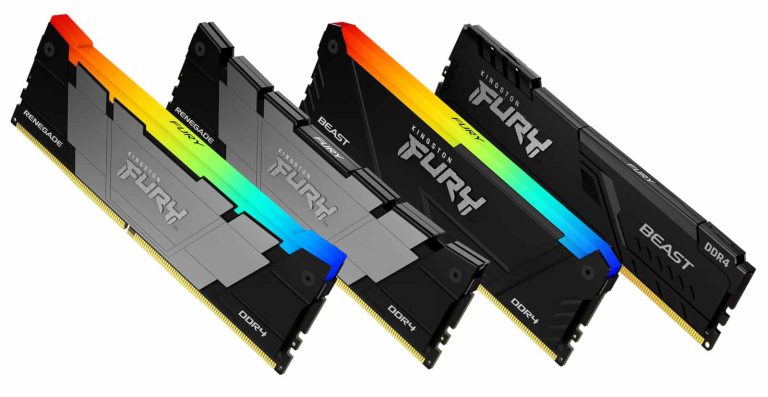
Kingston is listed at the very top of a recent ranking of the top global suppliers for DRAM modules, securing its popularity as the number one supplier for the 20th year in a row. Kingston makes a lot of different products, but it’s also the maker of FURY Beast DRAM. Which is popular among gamers due to its high build quality and performance. A well as the stylish RGB lighting that some variations offer.
The rankings come from TrendForce and are focused on DRAM from third-party suppliers. Rankings are based on revenue, with Kingston reporting that for 2022 it cleared a revenue amount of $13.5 billion. A big contribution to that was Kingston’s release of FURY Beast DDR5 RAM and Renegade DDR5 RAM that were refreshed for 2022. Featuring new white heat spreaders and a more stylish look. Kingston also recently refreshed its FURY Renegade DDR4 RAM, although the release of those don’t have an impact on this ranking.
The DRAM module ranking shows Kingston holds 78.12% of the market share
When it comes to third-party DRAM module suppliers, Kingston doesn’t just hold the top sport. It has 78.12% of the market share according to the data. That’s more than the next nine suppliers on the ranking combined. According to the data nearly all of the market share is held by the top five third-party suppliers. Beyond Kingston there’s Ramaxel at number two with 3.78% market share. Then there’s ADATA Technology at number three with 3.33%, POWEV at number four with 2.88%, and finally Kimtigo with 2.33% at number five. That’s over 90% market share globally. With SMART Modular Technologies coming in at number six with 2.23%. The remaining four all having under 1% market share.
All that being said, the rankings don’t include any companies which didn’t publicly release their earnings details. Although the earnings from those companies likely wouldn’t have impacted Kingston much given how much market share it has. In keeping the top spot Kingston does also note that its revenues decreased year-over-year just a little bit. With DRAM module sales from all third-party companies decreasing by 4.6% YOY overall.
Google Messages has become a popular messaging app for Android users, with over a billion downloads on the Google Play Store. However, one of the biggest complaints about the app has been the need to scan a QR code to use it on multiple devices, such as tablets and computers, at the same time.
This could be a pain, especially for users who are constantly switching between devices. To help with this, Google began to experiment a couple of months back with a new device pairing system that is based on Google accounts.
This new system made it more convenient to pair your phone with the web version of the app without having to scan a QR code. Fortunately, as spotted by 9to5Google, after a few months of beta testing, the account-based pairing system is now rolling out to more users.
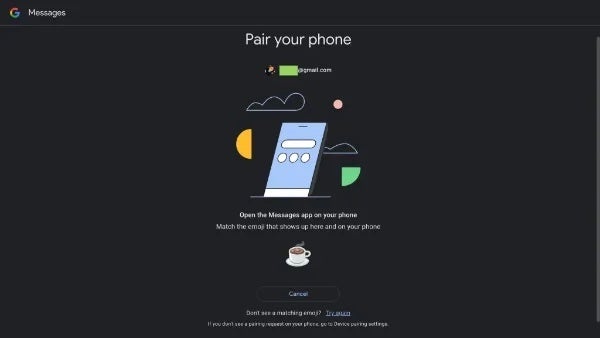
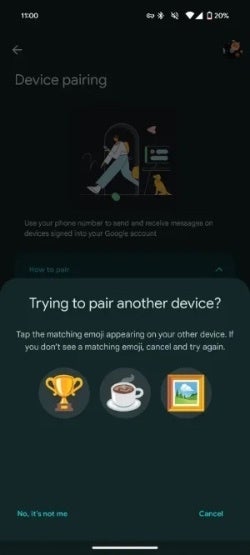
According to 9to5’s reporting, to use the new feature, simply go to the Google Messages web address (messages.google.com/web) and choose to sign in with your Google account. Then, open the Messages app on your phone and match the emoji that is displayed on both devices to confirm that you want to pair them. Once you have confirmed your choice, you will be able to send and receive messages from your computer or tablet.
Images via 9to5Google
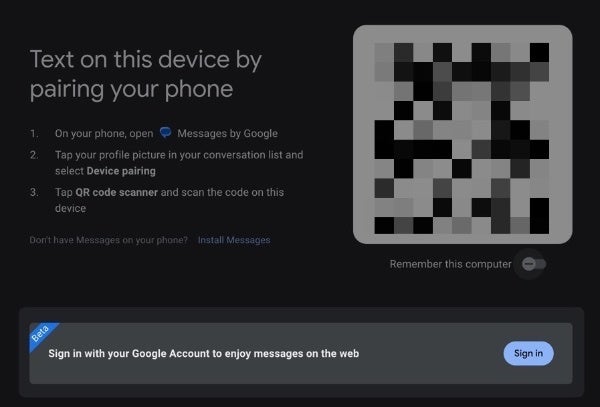
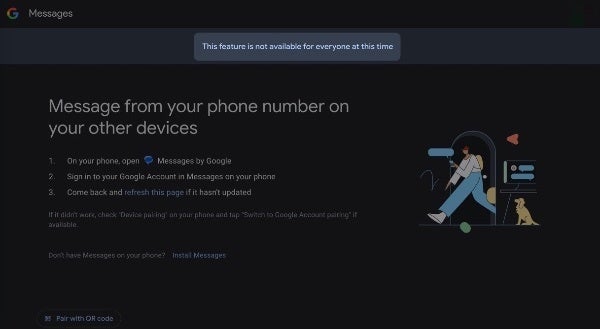
Unfortunately, the new pairing system is not yet available to everyone. When I tried to use it by navigating to the Messages by Google webpage, I did see the option to use the Google Account login, but was unable to complete the process on my phone. As a matter of fact, there is a clear notice at the top advising users that the feature may not be available to you yet.
The new account-based pairing system is not yet replacing the old QR based one and does have the limitation that you can only have one browser instance active at a time. However, the app does indicate which Android device is being used for messages at that time.
Programmatic is an advertising format on third-party resources, where placement is done automatically through special advertising platforms where advertisers purchase advertising space from sellers’ websites.
You do not negotiate with the site owner, media, or blogger directly, but work through a service where a robot buys space for banners and videos on advertising platforms. If you are interested in the intricacies of programmatic advertising and are looking for a white-label programmatic solution, this article is for you.
What Is Programmatic Advertising?
The most clear example of how programmatic works is placing a campaign in Google AdWords. You write an ad, and the system places it where the target audience is. However, the term programmatic mainly refers not to contextual advertising services, but to new tools for the automated purchase of advertising space.
What is programmatic and how does this type of advertising differ from targeted and contextual advertising? It is important to note that advertising campaigns in Google Ads and targeted advertising on social networks are also programmatic because you automatically purchase advertising by specifying the necessary criteria.
But marketers, answering the question “programmatic advertising – what is it?”, say that programmatic has a deeper level of settings that allows you to create an accurate portrait of the target audience: socio-demographic characteristics, preferences and hobbies, gender, age, profession, income, marital status and presence of children. More precise targeting results in higher response.
So, programmatic advertising is a format for purchasing targeted advertising on a large number of sites. Everything is done in real-time and automatically.
What Programmatic Advertising Looks Like
The standard format is a banner, video, or native ad, consistent with the presentation and design of the site where the advertisement is placed. The technology is also relevant for mobile devices.
The Difference Between Programmatic And SMM
SMM is working with communities where content and communications come first, and the second place is the purchase of targeted advertising through advertising accounts on social networks. Programmatic is only the purchase of advertising. There is also a difference in the objectives of advertising campaigns. In SMM, the goals are engagement, subscriptions, reach, reposts, and not always direct sales. For programmatic advertising campaign goals are website traffic and conversions.
Advantages, Disadvantages, And Risks Of Programmatic Advertising
Programmatic advertising has become an important tool in digital marketing, allowing companies to more effectively reach their target audience and measure the results of their advertising efforts.
Benefits of programmatic advertising
Direct access to the advertising network.
Payment is only for real impressions.
Many settings options for deep targeting.
Very flexible betting system.
A huge number of seller sites in the advertising network.
The ability to purchase space on different platforms within one advertising campaign.
Disadvantages of programmatic advertising:
You need to understand the technical nuances and quality of traffic.
You need to have a ready-made portrait of the target audience. Not every business knows well who it can and wants to sell to.
A good result is obtained only after repeated testing.
Not all programmatic advertising services are available to small businesses or small agencies.
Programmatic Advertising Methods
Previously, advertisers collaborated with platforms directly by concluding an agreement. Nowadays, even integrations from bloggers and micro-influencers can be ordered through the service without direct contact. The convenience of programmatic advertising methods, which were originally built as an automated purchasing system, is obvious.
The most common method of working in the programmatic ecosystem is the RTB auction. It begins with the advertiser assigning bids for ad impressions to specific users. If your bid is the highest, then the seller’s site displays your ad. It is clear that detailed targeting is done for advertisements in the auction and the site selects the most relevant users.
The user opens a website that is located in an advertising network;
The publisher site sends a request to the programmatic platform: “There is such a visitor, what ad should I show him?”;
The platform selects the most relevant ad with the highest bid;
The seller’s website shows an ad to the visitor.
Everything happens in a split second in real time. There are other options for working in the programmatic ecosystem:
fixed price – the display is paid at pre-approved rates;
priority transactions – the advertiser pays for the necessary positions outside the auction;
private bids are also an auction, but closed: you can only participate by invitation.
Programmatic Advertising Ecosystem
Sellers and buyers of programmatic advertising form a so-called ecosystem that regulates the interaction of platforms and services on both sides.
Here’s what the ecosystem participants are called and what they do:
Ad Networks – advertising networks through which banners are displayed, and clicks and impressions are counted;
Ad Exchange is an exchange where impressions are displayed and bids are accepted from advertisers;
DSP (Demand-Side Platform) – a system for organizing auctions for advertisers;
The SSP (Supply-Side Platform) platform trades with DSP, where site owners, also known as publishers, offer advertising space to brands from the DSP platform;
The advertiser manages trading operations through the Trading Desk tool. This is an add-on over the DSP platform, in fact, an office where campaign settings are made.
If you are interested in working with programmatic advertising, we recommend paying attention to the white-label solution from SmartHub.
What Are The Risks When Working With Programmatic Advertising?
In the world of programmatic advertising, there is a problem with a lack of transparency regarding exactly where and how your ads are being placed. This can create difficulties in measuring the effectiveness and monitoring of campaigns.
Let’s look at the main risks:
Clicking – protection from click fraud is provided in programmatic technology, but the budget can still be clicked.
Bad sites – sometimes the system can place your advertising on sites that are undesirable from the point of view of brand reputation because the selected target audience visits them. To prevent this from happening, study the targeting settings in the selected service before starting your advertising campaign.
The numbers do not match – it happens that the statistics of the site where your advertising hangs and the statistics of the DSP platform (the system through which you place advertising) differ. This may mean that the DSP pad is gray and giving you incorrect statistics. Work only with large and well-known sites.
Final Thoughts
Programmatic advertising systems provide huge coverage, elimination of negotiations with website owners, and tangible conversion. In the future, a significant increase in the share of programmatic advertising in the total flow is predicted. If you are looking for a white-label programmatic solution for development in the world of programmatic advertising, we recommend contacting SmartHub, which offers an effective product for launching and developing ad exchange.
The Shopping Lists and Assistant Notes now gets integrated inside the company’s note taking service, Google Keep. From now on, you will not only be able to manage all of the aforementioned staffs using your Google Assistant, but you will also find them inside Google Keep at your convenience.
Once the migration of the Shopping Lists and Assistant Notes and Lists inside Google Keep is complete, it will serve as the unified platform for all of them. It’s a significant step toward creating a more organized and efficient environment for keeping track of your tasks and ideas.
Shopping Lists and Assistant Notes inside Google Keep: a streamlined experience
While most of your data will transition seamlessly, there are some exceptions to be aware of. Family notes created on Smart Displays will not be moved. Additionally, there will be notes or lists that are too large for Google Keep. You can download those notes or lists from Google Takeout until May 1, 2024. After that Google servers will delete the data left in the previous platforms.
To access your migrated notes and lists, simply open the Google Keep app. It’s available on both the Android Play Store and Apple App Store. You’ll easily spot the notes and lists that Google transferred from Shopping List or Assistant Notes (image below).
You can continue to use Google Assistant to access all the lists and notes from Google Keep. For that, you will need to grant Google Assistant the permission to access your Shopping Lists and Assistant Notes data stored inside Google Keep. It allows you to create, update, and delete your notes and lists effortlessly.
Google sets the migration process to roll out starting in November 2023. You can check whether your account has been migrated by visiting the Shopping List page. It will provide updates and information regarding the completion of the transition.
In summary, Google’s move to transition to Google Keep for note-taking and list management offers a more unified and efficient way to organize your digital life.
While Pixel devices have been separating themselves in almost every aspect, for better or worse, the Google Pixel 8 Pro with its matte glass back and even well-pronounced Camera Bar now stands out in design.
Google boldly declared the Pixel 8 and Pixel 8 Pro to be “the most beautiful phones we’ve ever made.” A deeper dive into the design process reveals that this proclamation is not without merit. Google’s design team, including Ivy Ross, Claude Zellweger, and Isabelle Olsson, sat down for an interview with The Keyword to share the intricacies of crafting these stunning devices.
One standout feature of the Google Pixel 8 Pro is its matte glass back. This design choice was initially introduced with the Pixel 3 and continued with the Pixel 4. Isabelle Olsson explained that sometimes, design ideas must wait for the stars to align. Meanwhile, there are factors to consider, like time, supply chain logistics engineering needs, and technical specifications.
This patient approach led to the reintroduction of matte glass, a finish celebrated for its grip, tactile appeal, and resistance to fingerprints. With the Google Pixel Fold and Pixel 8 Pro showcasing this matte finish, it’s a trend we hope will persist.
Google’s design efforts make the Pixel 8 series stand out within the realm of Android flagships
Google’s designers have a fundamental goal – to ensure there’s nothing intimidating about the Pixel. Claude Zellweger credited engineering partners for making the Pixel 8 series more inviting with improved fit and finish. It enhances the phones’ smooth surfaces. In the words of Ivy Ross, “With something that you’re constantly holding, wearing, or putting up to your ear, it’s critical to be comfortable visually and physically.”
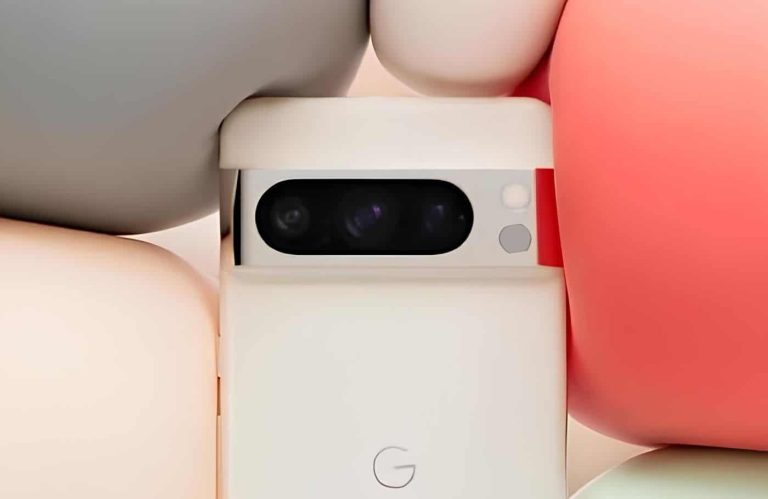
While the Pixel 8 series predominantly flaunts a rounded aesthetic, the Camera Bar stands in the realm of Android flagships. Both the Pixel 8 and Pixel 8 Pro feature neatly designed glass and metal finishes, drawing attention to the camera. However, there’s one hiccup with the Pixel 8 Pro. The polished aluminum frame and Camera Bar are magnets for fingerprints, reports 9to5Google.
Finally, the captivating Bay blue color of the Pixel 8 Pro isn’t just a random choice. Isabelle Olsson revealed that this hue was inspired by the hope of emerging from the pandemic. It symbolizes the view of a sunny noonday sky. This inspiration is reflected in coordinating watch bands and the Pixel Buds Pro, creating a sense of unity across products.
In a recent report via AT&T’s community forums, the company announced that its Thanks reward program is shutting down. From the post, the service provider makes it clear to its customers that the reward program was a limited one-time offer and is no longer available. This update came after questions from users concerning this program, and users aren’t taking this news happily.
If you are an AT&T user, you must have heard of the Thanks reward program and maybe even benefitted from it. This reward program came into existence back in 2016 and has been in existence ever since then. Certainly, throughout this program’s existence, there have been a ton of changes to it and how users benefit from the rewards it offers.
But for AT&T to call this program a “limited-time offer” is quite concerning. However, bringing this change might trigger the kick-off of another offer for AT&T customers. The service provider still has the intention to reward users for their patronage, but not through the AT&T Thanks reward program.
Shutting down the AT&T Thanks reward program might affect other initiatives of the service provider
Lots of AT&T users have benefited from the various rewards available through the Thanks program. Now the service provider is bringing this reward program to an end, hence disappointing their loyal users. The benefits that users could enjoy from this reward program are “tickets to live events, device and accessory perks, data giveaways, and more.”
For a while now, most AT&T users have been having a hard time accessing this service. These users had to ask AT&T about this service and why they have been having a hard time accessing it on their devices. The response from AT&T from their help page was quite shocking and not really what most users want to hear.
From the response, AT&T Help points out to users on their community forum that the thanks reward program is coming to an end. The response reads “To answer your question on AT&T Thanks, it was a limited-time offer and is no longer offered.” Well, this response isn’t what most users want to hear and it isn’t good for AT&T’s business.
According to the company, they are “constantly looking for new ways to thank our customers in more unique and meaningful ways.” Earlier this year, the service provider gave a lot of rewards to their customers in LA and Miami during the AT&T GameBall experience. More of this might be coming shortly, but the AT&T Thanks reward program is gone for good.
MuddyWater is using a fake memo from the Israeli Civil Service Commission as a lure to trick victims into downloading a RAT.
Iranian state-sponsored threat group MuddyWater is targeting Israeli entities in a spear-phishing campaign, reports cybersecurity firm Deep Instinct.
According to Deep Instinct’s treat intelligence researcher, Simon Kenin, MuddyWater is using a fake memo from the Israeli Civil Service Commission as a lure to trick victims into downloading a remote administration tool called Advanced Monitoring Agent (AMA).
This malware lets hackers remotely access their victims’ computers to steal data, disrupt their systems, and perform spying. The threat actor is targeting two Israeli entities to deploy the AMA, a legitimate remote administration tool from N-able.
The fake memo used by MuddyWater hackers (Credit: Deep Instinct)
In their blog post, researchers noted updated TTPs (techniques, tactics, and procedures) in this campaign compared to the group’s previous activities. For instance, the group has used similar attack chains in the past and focused on distributing remote access tools like ScreenConnect, Syncro, RemoteUtilities, SimplyHelp, etc.
However, in this spear-phishing campaign, MuddyWater has used a new technique called ‘eN-Able,’ which is a new type of phishing email designed to evade standard email security filters because the emails combine HTML and JavaScript and appear legitimate. These emails contain malicious code to exploit vulnerabilities in operating systems and email clients.
Another new tactic is called ‘spray and pray.’ This technique is akin to a phishing attack in which a large number of phishing emails are sent to a large number of targets. However, through the spray and pray technique, the chances of success increase dramatically, even if a fraction of the targets fall for the lure.
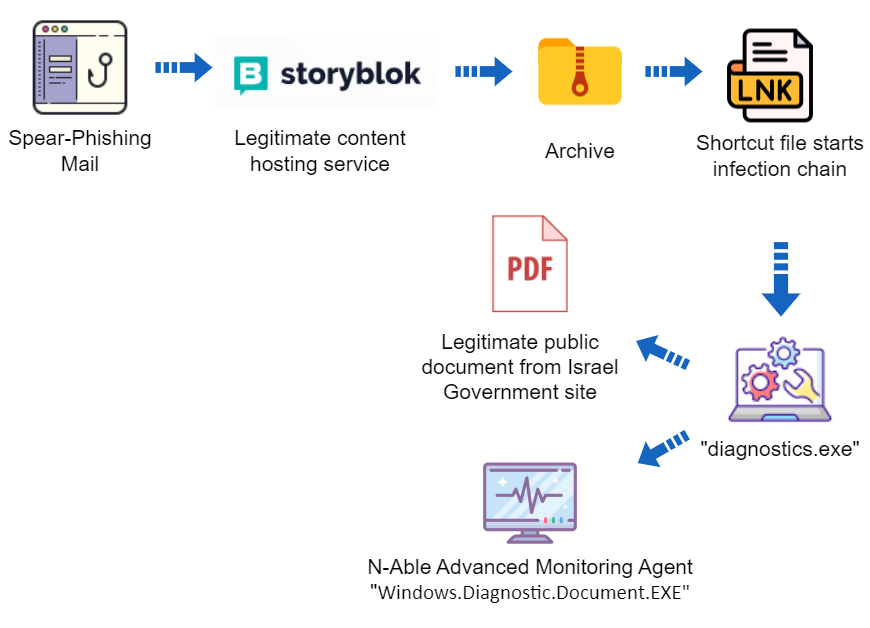
Furthermore, the group has used a new file-sharing service called Storyblok to launch the multi-stage infection vector containing hidden files, an LNK file that initiates the infection, and an executable to launch the malware. After the victim is compromised, the attacker connects to the infected host using the legit remote administration tool and starts reconnaissance.
In addition to these new TTPs, Deep Instinct notices that the group is leveraging a new C2 framework called Muddy2Go. Using new TTPs indicates that MuddyWater is trying to improve its modus operandi. These findings have been confirmed separately by another cybersecurity firm, Group-IB.
Campaign overview (Credit: Deep Instinct)
MuddyWater (aka Mango Sandstorm and Static Kitten) is a cyberespionage group that’s believed to be active since 2017. It represents a unit of Iran’s Ministry of Intelligence and Security (MOIS), like other groups, including Agrius, OilRig, and Scarred Manticore.
It is worth noting that this campaign is the latest in a series of targeted cyberattacks against Israeli entities by MuddyWater. In fact, since the escalation of tension between Israel and Palestine, many state-sponsored actors have become active in targeting Israel.
Recently, Hackread reported that Hamas hackers have developed a dangerous new malware dubbed BiBi-Linux to target Israeli systems. This malware can overwrite critical system files, making it impossible to boot up infected systems. The malware was distributed via spear-phishing emails designed to be from legitimate Israeli organizations.
Another spyware campaign was detected in October 2023 in which pro-Palestine hackers delivered malware to unsuspecting Israeli citizens using the rocket alert app.