If you’re serious about mobile gaming, then you should know about Apple Arcade and Google Play Pass. These are subscription-based services that offer the user access to great games, no in-app purchases, and exclusive titles. They both used to have a $4.99/month price tag, but Apple Arcade just had its first price hike in the States.
Now, Apple Arcade costs $6.99/month in the US market, according to a new report. A $2 increase doesn’t seem like much in the grand scheme of things. However, these small dollar amounts count a ton when you’re talking about a $5 subscription service.
Apple has been testing this new price in other countries earlier in the month of October, and it just finally made its way stateside. If you already have a subscription, we don’t know if you’ll see a higher bill each month. Apple may give you a grace period.
Apple Arcade had a price hike, but it’s still worth it
If you’re on the fence about whether you want to get Apple Arcade, there are some ways for you to try it out. You can get three months of Arcade for free with the purchase of a new iPhone. So, if you’re planning on getting a new phone, that’s a perk.
You can also get a one-month free trial. Lastly, you’ll get one month free when you sign up for Apple One.
On Apple Arcade, you’ll have access to more than 200 premium games, and this includes exclusive titles like the upcoming Sonic Dream Team. Just browse through the library of games, and you’ll see a selection of titles that you can download and play right then and there.
Some select titles include Sneaky Sasquatch, Cooking Mama: Cuisine!, Jetpack Joyride 2, What the Car?, and many more. These are all great games that will make getting the service worth it.
HWP documents are primarily associated with the Hangul Word Processor software used in South Korea.
Hackers may opt for HWP documents to target National Defense and Press Sectors because they exploit vulnerabilities in this specific file format and software, which may not be as widely monitored or protected as more common document formats like PDF or Microsoft Word.
Cybersecurity analysts at ASEC recently discovered HWP documents with OLE objects, potentially distributed via email attachments or download links, targeting specific sectors like:-
The document names relate to the following domains:-
National Defense
Unification
Education
Broadcasting
Hackers Weaponize HWP Documents
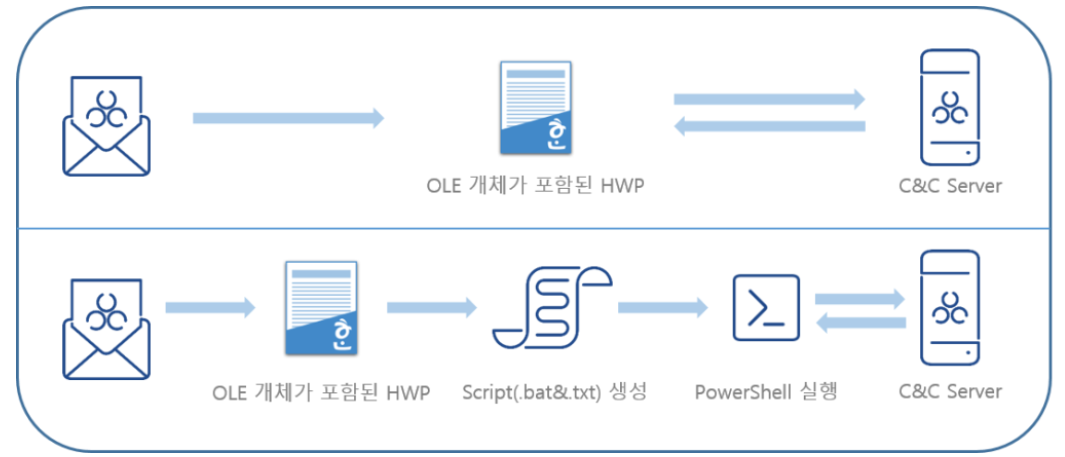
The analyzed HWP documents have two main types:-
One connecting to an external URL.
The other one creating a script file.
However, the researchers also suspect a common creator due to the shared FTP server password in type 2.
Operation process (Source – ASEC)
Here below, we have mentioned all the HWP documents’ file names:-
Unification** cue sheet May 29 Mon.hwp
20230508_ProfessorMeetingMaterial_NewTemplate.hwp
(***)2023-05-30 Material for Professor Meeting.hwp
Payment Receipt (Chief ***).hwp
(Template)Payment Receipt_Congratulatory and Condolence Money.hwp
20230512_MyungbakScenario_Details.hwp
1-1.Installation of a Separate Service for Research Support Within the Overseeing Organization (** University Graduate School Academic-Industry Cooperation Center).hwp
Reference Material for School President for the Honorary Doctorate Awarding Ceremony of Former Prime Minister Hu** ***.hwp
[Faculty Training Department-489 (Attached)] [Attachment 3] Lecturer Card (Template).hwp
National Defense and Protection Sacrificed to Political Disputes.hwp
** Unification April 30 2023 (Sun).hwp
Special The Agricultural Industry and Quality of Life of North Korea ** Cho.hwp
The OLE object has 5MB of dummy bytes and a malicious URL. When clicked, it connects to that URL, and the malicious URLs found are tailored for specific individuals with unique parameters.
Here below, we have mentioned the malicious URLs:-
Besides this, the data is deobfuscated and executed with a key, while the GitHub script has four functions that we have mentioned below:-
mainFunc
getinfo
uploadResult
downCommand
The mainFunc changes the PowerShell policy, enabling later script execution. getinfo collects user data from hxxps://raw.githubusercontent[.]com/babaramam/repo/main/info.txt.
uploadResult sends collected data and deletes it. downCommand maintains persistence with the LNK file. thumbs.log runs the script on PC restart.
Though it collects user data, the script can perform various malicious actions based on pq.txt.
Nowadays, there are multiple malicious HWP documents circulating actively, so it’s strongly recommended to be cautious about document authors and senders.
Protect yourself from vulnerabilities using Patch Manager Plus to patch over 850 third-party applications quickly. Try a free trial to ensure 100% security.
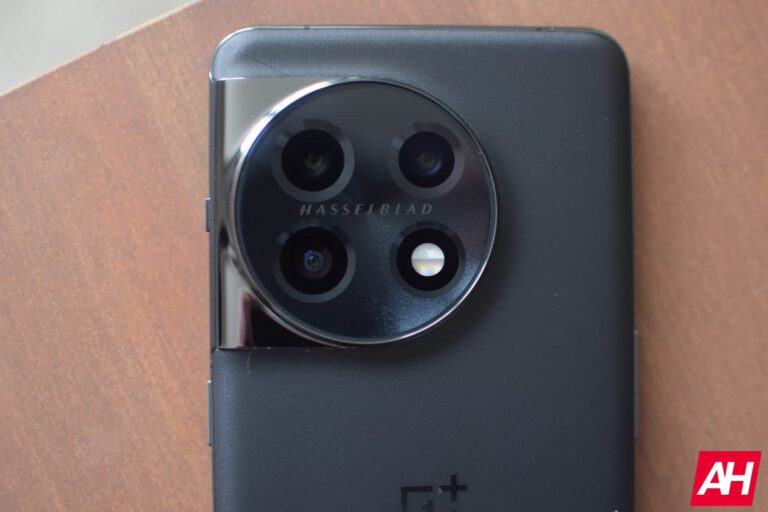
The very first official OnePlus 12 camera samples are now available online. They’ve been shared by a OnePlus exec. To be more accurate, they’ve been shared by Li Jie Louis, the President of OnePlus China.
The very first official OnePlus 12 camera samples are here
He shared three camera samples taken with the upcoming device. All three samples are basically the same image, but the second and third are cropped. The company’s exec wanted to emphasize how much detail the camera preserves.
Li Jie Louis also added that he took this image without a stand, gimbal, or anything of the sort. It’s not a professionally-taken picture, is what he wanted to say, as his hands were shaking as normal while he took it.
This is not the easiest image to take. It’s an image of a coffee shop, which is partially lit up by the sun, and partially in the shade. The sample does look really good, and well-balanced, and when cropped, a lot of detail is preserved.
You can see all three images that the company’s exec shared in the gallery below. Do note that they’ve been cropped, though, in order to see them in full size, follow this link.
The device is coming in December or January
Now, the OnePlus 12 is coming either in December or January, if we had to guess. The OnePlus 11 launched in early January this year, in China. The Snapdragon 8 Gen 3 did launch earlier this year, so it’s possible OnePlus will want to move up its launch event. Xiaomi certainly did.
We also don’t know if the company will announce the device in China first, or will we see a global launch from the get-go. One thing is for sure, this will be an immensely powerful handset. In addition to the Snapdragon 8 Gen 3, plenty of LPDDR5X RAM will be used, and UFS 4.0 flash storage.
A 5,400mAh battery is tipped, along with 100W wired charging, and 50W wireless charging. A powerful camera setup was also tipped, along with Hasselblad branding and expertise. A 6.82-inch QHD+ AMOLED display will also be included, and more.
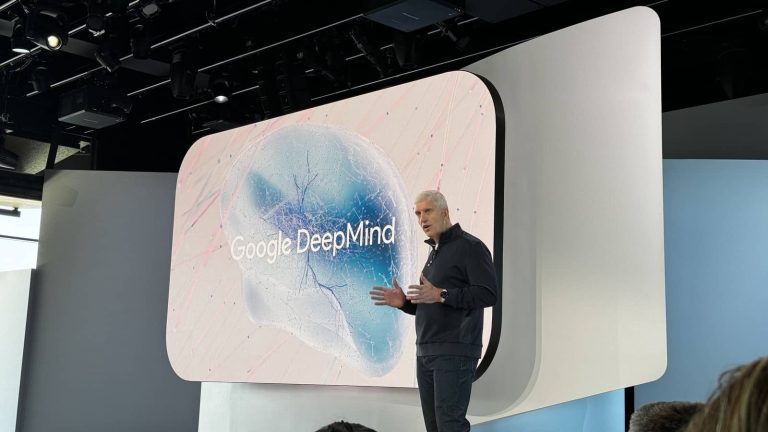
AI is a technological marvel to some and an affront to others. However, it’s a potential revenue source for large companies, but that was to be expected. Companies are vying to control the lion’s share of AI going forward, and it’s led to some people butting heads. Now, Demis Hassabis, Google DeepMind’s boss is pushing back against claims that the company is fearmongering to gain more control over AI.
This is an odd concept; it seems that large AI companies are stoking fears that AI will lead to the extinction of humanity… so that people will use their AI more. While that’s hard to grasp, it has a round-about way of actually working. A company can push the idea of how dangerous AI could be to get regulators to craft laws governing AI moving forward. These companies can get into bed with these regulators so that they could craft regulations more suited to their models. Thus, they’ll be more suited to operate under those regulations as compared to other companies.
This could give that company an advantage in the AI market going forward. The more control the company has in the AI market, the more money it can make. It always comes back to money.
Demis Hassabis opposes claims of fearmongering for AI dominance
Hassabis was on an interview with CNBC where he pushed back against claims made by Meta’s chief AI scientist Yann LeCun. “If your fearmongering campaigns succeed, they will *inevitably* result in what you and I would identify as a catastrophe: a small number of companies will control AI,” LeCun said in an X (formerly Twitter) post.
However, Hassabis disagreed with the comments during the interview and cited some pretty reasons as to why regulation is important. He talked about the long-term harm of misinformation, deepfakes, bias, bad actors, and AGI (artificial general intelligence). These strongly justify the need for regulation.
These are solid points. LeCun believes in a world where AI is open-sourced; where the language models are accessible to the public for research and general usage. Having freely open AI has some major benefits.
Hassabis, on the other hand, believes that AI should be regulated to avoid it getting out of control. That also has some major benefits.
At this point, we don’t know which AI will be best for humanity going forward, so we’ll have to wait to see its potential effects.
Hackers opt for DLL hijacking as a technique to exploit vulnerable applications because it allows them to load malicious code by tricking a legitimate application into loading a malicious DLL.
This can give them unauthorized access and control over a system or application, enabling various types of attacks like:-
Privilege escalation
Data theft
System compromise
An active threat involves an Infostealer distributing a legitimate EXE file alongside a hidden malicious DLL in the same directory.
The legitimate EXE runs the malicious DLL, a technique known as DLL hijacking, commonly used for malware distribution.
Malicious DLL With Legitimate EXE Files
Malware posing as software cracks is growing at a rapid pace and is getting distributed by the threat actors using DLL hijacking.
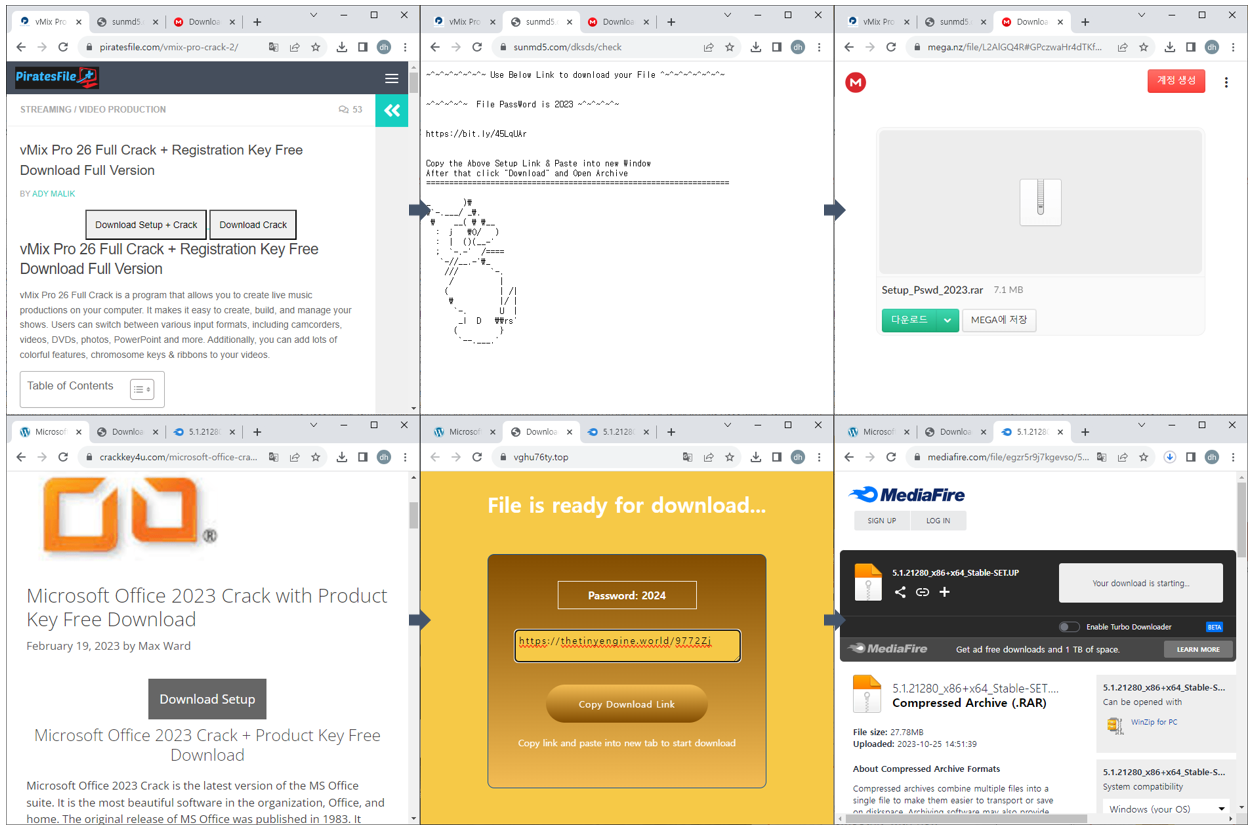
Users searching for cracked software leads to malicious sites, and the downloads are encrypted RAR files with passwords.
Running EXE infects the system, and they often have valid signatures, so always be cautious with cracked software, reads the ASEC report.
Distribution of the malware via webpages (Source – ASEC)
Malicious DLLs tweak part of legitimate DLLs as they decrypt and run data from a nearby file. Hiding data this way avoids altering DLL appearance, reducing detection risk.
For malware to work, the following elements are required to be placed in the same folder:-
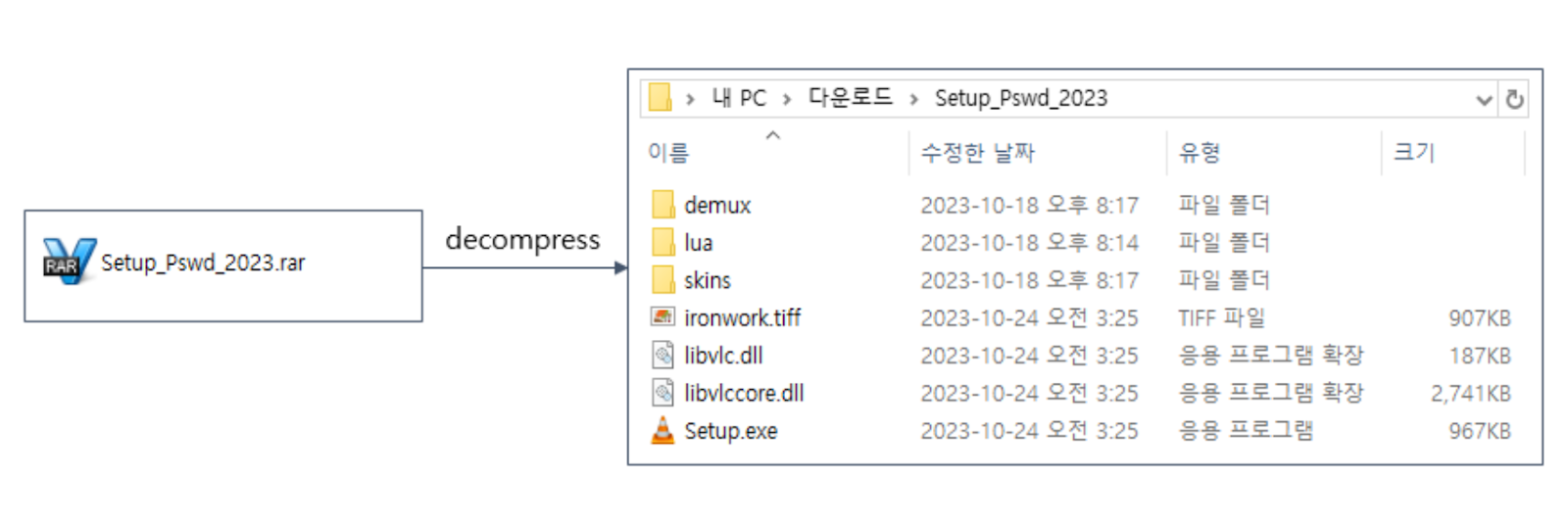
Unzipping the password-protected file with the code “2023” gives you the following files:-
Contents of compressed file (Source – ASEC)
The following two files are genuine VLC files with valid signatures:-
The “libvlccore.dll” is altered and lacks a matching signature, due to which the extra directories like demux and lua serve to mask its malicious nature.
Running ‘Setup.exe’ activates ‘libvlccore.dll,’ triggering a modified function that reads and decrypts ‘ironwork.tiff’ in the same folder. This file holds code info. disguised as a PNG.
It loads “pla.dll” from SysWow64 and injects code into its memory differently than typical malware. This method uses NTDLL relocation, and for “cmd.exe,” it loads “pla.dll” and injects the malware into it.
A data file is written to %TEMP%. cmd.exe inherits it and has its EntryPoint changed to “pla.dll” code. This code decrypts a file, generates LummaC2 malware, and runs “explorer.exe,” injecting and executing the binary.
LummaC2 targets victims and installs malware from its C2 server, and it steals various sensitive data using JSON-formatted responses from C2.
The malware infects via legitimate EXE files, looking like original DLLs, posing a low detection risk.
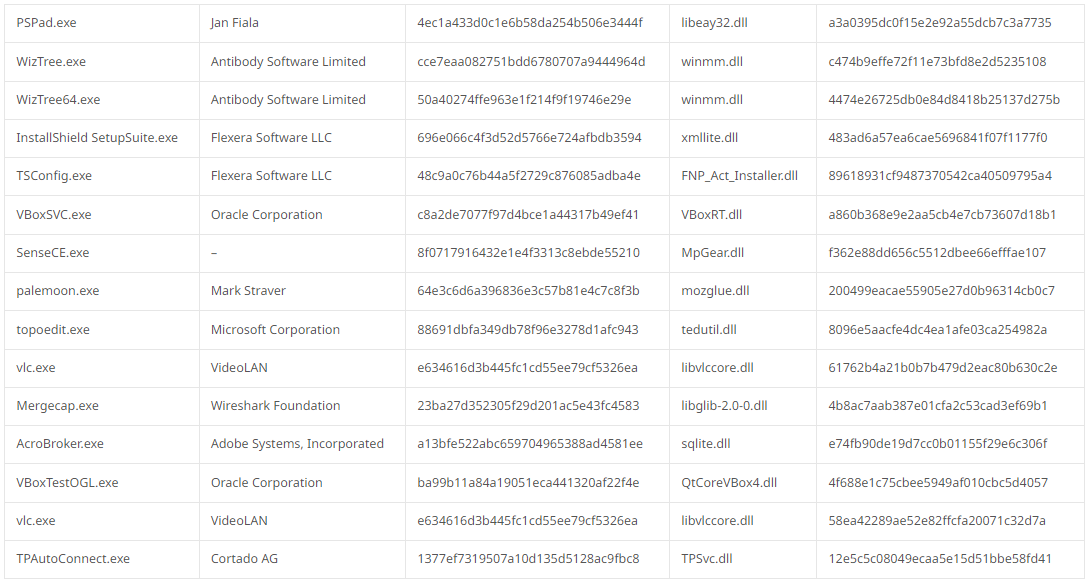
IOCs
IOCs (Source – ASEC)
Protect yourself from vulnerabilities using Patch Manager Plus to patch over 850 third-party applications quickly. Try a free trial to ensure 100% security.
Knowing who visits your website gives you valuable data that your sales team can use this valuable marketing information to actively develop your business environment. People visit your website because they are interested in what you offer (products and services).
Not all website user data is the same. So the more specific you are, the better for you and your marketing team. No matter how good your website is, only 2% of visitors link to your website. This means that 98% of site visitors visit, browse, and leave without being prompted.
You also don’t know much about these inactive website visitors, so it’s quite difficult for you to develop an effective marketing strategy to get them to come back to you (so that they become regular customers of your business environment).
This article explains what information is available about website visitors, how you can access it with modern solutions offered by visitor identification systems, and why it’s important. You can go further and learn how to reach these visitors and increase their conversion rate. This allows you and your sales team to fill your sales pipeline with quality leads.
Key benefits of website visitor identification processes
Why is it so important to know who is visiting your site? How important is it to use technical means for their localization? This is important to sales success for the following reasons:
First, it’s unclear why 98% of visitors leave your website before taking the next step in the purchasing process.
Am I not in your target market?
Have trouble with your landing page?
Identifying your site visitors will help you find the answers to all these questions.
The biggest problem is that you don’t know who is visiting your site, and you’re missing out on great, profitable marketing opportunities. With proper service and user interaction, it is impossible to predict whether 98% of visitors will convert and become your loyal customers. By knowing your visitors, you can significantly increase your income.
Google Analytics gives you a pretty informative insight into the overall performance of your website. Analyze website audience, demographics, behaviour, purchasing patterns, and conversion rates. Best of all, it’s completely free. Here are some key performance indicators and ratios to keep in mind when using Google Analytics.
Demographics – The age and gender of your website visitors will tell you if they fit your ideal customer profile.
Location – Like demographics, knowing the geographic location of your visitors will help you understand whether your digital marketing strategies are attracting your ideal customers.
Device – Indicates whether the visitor is using a computer or mobile device.
Engagement – Knowing how visitors get to your site shows how your marketing strategy is working and effectively helps you identify opportunities to improve your team’s marketing efforts.
Behavioural Traffic – Shows traffic from your most popular landing pages to other pages on the web, showing where traffic is growing and where visitors are stopping.
Session duration – By knowing how much time visitors spend on your site, you can understand how useful and interesting it is.
Bounce Rate – If your website has a high bounce rate, you should pay attention to page load times and overall website design.
Popularity – Knowing which sites are the most popular and which are the least popular will help you decide which sites to target for paid advertising.
Key solutions offered by the Google Analytics platform
Google Analytics has long been the gold standard for collecting and analyzing data about website visitors. The platform contains valuable marketing information such as the number of users, the type of device used, and the origin of the users.
Google Analytics is a good starting point to determine who is visiting your site. Google Analytics offers several reports that contain traffic data from different websites. Tracking of website visitors using the Google Analytics platform is as follows:
Sign in to your Google Analytics account (or create one);
Create an attribute (the website whose traffic you want to track) and add the tracking code;
Go to Purchase, Full Broadcast, Channels;
For a more detailed analysis, see the Source report under Total Traffic.
Add the tracking code to the property (website), step 2:
In the Admin section, select the appropriate account in the Account column.
Go to the Properties column and select Create Property.
Enter a property name and select a time zone and currency.
Click “Show advanced options”
Check the Universal Analytics attribute.
Enter a web address and select HTTP or HTTPS
Creation of Google Analytics and Universal Analytics resources (code tags).
Accept the terms of use and data processing changes and click “Done.”
Modern software solutions that help to effectively identify website visitors
Not all key methods of identifying website visitors are the same. Some are simple but cheap, identifying visitors and nothing more. Other website user tracking tools can convert this data into actions to show which visitors should be followed, and create a target group of visitors who are interested in certain products that are in the range of your business environment. Tools for identifying website visitors include website visitor analytics tools, these powerful tools have been around for many years.
However, since 2020, the coronavirus pandemic has changed the landscape of online shopping. With more people browsing and shopping online than before the pandemic, tracking website visitors has become a key aspect of many businesses’ successful business operations. Increase your website traffic with fast and easy online shopping. The growing importance of website conversions means you can’t rely on people finding your website.
Here are some key, effective, modern tools to help you take advantage of increased traffic and more conversions:
LeadBoxer – LeadBoxer not only identifies website visitors but also turns this information into actionable data to accelerate your sales process. It covers about 50% of anonymous visitors. You can monitor the behaviour of visitors to your website on the Internet, such as visiting the website, opening emails, clicking on newsletters, advertising, and using social networks. This gives a complete picture of how your website interacts with visitors.
LeadBoxer may also provide visitors with information about their primary business and specialization. LeadBoxer calculates a score for each potential client based on key criteria defined by your business organization. The higher the leader’s score, the better the prospects. Sales reps can instantly see who is converting and who isn’t.
Hubspot Sales Hub – This is a modern, powerful sales management tool with built-in visitor identification and lead qualification tools. Hubspot shows you in real time which companies are visiting your site and how many visitors are visiting each company. It shows which pages the user has visited and how many pages they have viewed. Hubspot takes valuable marketing information like company size and geography and turns it into filtering options.
Salesforce Sales Cloud – This is an effective attendance management system that can identify website visitors. Shows marketing campaigns that drive ads and their impact on sales traffic. This provides an opportunity for companies to make informed decisions about where to invest their marketing funds to promote their business activities.
Both Google and Apple have outstanding smartphones to offer. In this article, we’ll compare the best of both worlds, the Google Pixel 8 Pro vs Apple iPhone 15 Pro Max. Both of these smartphones launched in the last couple of months, so both are still kind of fresh. These are large offerings from the two companies, and even though they’re both quite powerful, they’re vastly different.
As per usual, we’ll kick things off by listing their specifications. Following that, we’ll compare the phones across a number of categories. We’ll compare their designs, displays, performance, battery, cameras, and audio. If you’re still trying to decide which of the two phones to get, this article will hopefully be of some use. Let’s get down to it!
Specs
TABLE
Google Pixel 8 Pro vs Apple iPhone 15 Pro Max: Design
The Google Pixel 8 Pro and Apple iPhone 15 Pro Max not only look entirely different, but they also feel different in the hand. The Google Pixel 8 Pro is a bit curvier. Its back side does curve into the frame, on the edges. The one on the iPhone 15 Pro Max does not. Apple did add some curvature to those predominantly flat sides this time around, though, which makes the phone more comfortable to hold.
Both devices have flat displays. The Pixel 8 Pro includes a centered display camera hole, while the iPhone 15 Pro Max has a pill-shaped cutout. Google’s handset also has a camera visor on the back, covered by metal. The iPhone 15 Pro Max has a more regular-looking camera island, with three cameras included in it. They look vastly different as you can see in the image provided above.
The Pixel 8 Pro is a bit taller than the iPhone 15 Pro Max, while the two phones have very similar widths. Google’s handset is also a bit thicker, and lighter. It weighs 213 grams, compared to 221 grams of the iPhone 15 Pro Max. Both smartphones are IP68 certified, which means they’re both water and dust resistant. One more thing worth noting is the Action Button on the iPhone 15 Pro Max, a customizable button. Google’s handset doesn’t have one of those.
Google Pixel 8 Pro vs Apple iPhone 15 Pro Max: Display
The Google Pixel 8 Pro features a 6.7-inch 2992 x 1344 LTPO OLED display. This is a 120Hz display, an adaptive one, it goes from 1 to 120Hz. It supports HDR10+ content, and goes up to 2,400 nits of brightness at its peak. The display is flat, it has a 20:9 aspect ratio, and it’s protected by the Gorilla Glass Victus 2. The bezels are uniform around the display, and a display camera hole sits on it.
The iPhone 15 Pro Max, on the other hand, has a 6.7-inch 2796 x 1290 LTPO Super Retina XDR OLED display. This is also a 120Hz display, and it also has an adaptive refresh rate. This panel is flat, and supports HDR10 content. It also offers Dolby Vision support, and goes up to 2,000 nits of brightness at its peak. It has an aspect ratio of 19.5:9, and is protected by the Ceramic Shield Glass.
Apple iPhone 15 Pro Max
Both of these panels are outstanding, to say the least. They’re both quite vivid, and yet they try to be color-accurate at the same time. The viewing angles are great, and both displays are more than sharp enough. The fact that they’re flat will also please many people. The Pixel 8 Pro’s display does technically gets brighter, but both of these displays are extremely bright, and chances are you won’t have a problem with either one. On top of all that, we also don’t have any complaints about touch responsiveness here.
Google Pixel 8 Pro vs Apple iPhone 15 Pro Max: Performance
Google’s flagship is fueled by the Google Tensor G3 SoC. This chip relies heavily on AI, and the smarts of Google’s software in general. The phone is also equipped with 12GB of LPDDR5X RAM and UFS 3.1 flash storage. The iPhone 15 Pro Max, on the other hand, is fueled by the Apple A17 Pro processor. That chip is technically quite a bit more powerful than the Tensor G3. Apple also included 8GB of RAM with the device, along with NVMe flash storage.
Apple’s flagship is technically a more powerful smartphone, mainly due to that processor. The Apple A17 Pro can run console-quality games, some of which are incoming, which says a lot about its power. The Tensor G3, on the other hand, makes it possible for Google to offer a range of truly useful AI features. Both smartphones do perform admirably in day-to-day use, though, regardless of what you’re doing.
They’re very smooth and have great animations, and their 120Hz panels only help the overall smoothness. Multitasking is really fast and easy on both, and they’re both great for multimedia as well. Basically anything you throw at them, they can handle. The Pixel 8 Pro can play basically any game from the Play Store, but the iPhone 15 Pro Max is more capable in that regard, no doubt about it.
Google Pixel 8 Pro vs Apple iPhone 15 Pro Max: Battery
A 5,050mAh battery sits inside the Pixel 8 Pro. The iPhone 15 Pro Max, on the other hand, has a 4,441mAh battery on the inside. Apple’s handsets usually have smaller battery packs, so don’t let that deter you. What’s the battery life actually like? Well, very good, on both, though they won’t break any records. We’ve been getting outstanding battery life on the OnePlus 11, Galaxy S23 Ultra, and ZenFone 10 this year. These two don’t get to that level of over 9, 10 hours of screen-on-time, but they do offer really good battery life.
How good? Well, the Pixel 8 Pro jumped between 6 and 7.5 hours of screen-on-time for us. Even when the usage was similar, the results weren’t exactly close, but things will probably get better moving forward. The iPhone 15 Pro Max, on the flip side, does offer very good battery life. Crossing the 8-hour screen-on-time mark is possible, depending on what you’re doing. Your mileage may vary, though, of course, depending on your usage, installed apps, signal, and so on.
When charging is concerned, the first thing you should know is that neither phone offers a charger in the box. The Pixel 8 Pro supports 30W wired, 23W wireless, and reverse wireless charging. The iPhone 15 Pro Max, on the other hand, supports 20W wired, 15W MagSafe wireless, 7.5W Qi wireless, and 4.5W reverse wired charging. Google’s handset doesn’t really charge faster, though, they’re similar in that regard, due to the difference in their battery capacities.
Google Pixel 8 Pro vs Apple iPhone 15 Pro Max: Cameras
Both of these phones have three cameras on the back. The Pixel 8 Pro comes with a 50-megapixel main camera, a 48-megapixel ultrawide unit (126-degree FoV), and a 48-megapixel telephoto unit (5x optical zoom. The iPhone 15 Pro Max, on the other hand, has a 48-megapixel main camera, a 12-megapixel ultrawide one (120-degree FoV), and a 12-megapixel telephoto unit (5x optical zoom).
Google Pixel 8 Pro
The images these two phones provide are excellent, but also quite different. The iPhone 15 Pro Max is trying to keep them closer to what they look like in real-life, while Google wants them to look great out of the box. Google loves to provide contrasty shots, and is outstanding in HDR situations. The iPhone 15 Pro Max is also great in such situations, much better than its predecessor, but it still doesn’t nail basically every single HDR shot like the Pixel 8 Pro.
Ultrawide and telephoto cameras on both smartphones are great, and are actually comparable in terms of quality. When it comes to video, the Pixel 8 Pro is much-improved, and it can compete with the iPhone 15 Pro Max, but Apple’s flagship is still a step above in that regard. Both of these smartphones pack extremely capable camera setups, while Google also has a bunch of AI camera features you may be interested in, such as Best Shot, Magic Eraser, Magic Editor, and so on.
Audio
Both smartphones have stereo speakers. Those speakers are good on both phones. The sound is clear, and there are no noticeable distortions. Do note that the iPhone 15 Pro Max’s speakers are louder, though.
When it comes to wired audio connections, you can use Type-C ports on the two phones. Neither device has an audio jack, so you can’t really utilize it. If you prefer wireless audio, you’ll be glad to know that Bluetooth 5.3 is supported on both devices.
As a dominant player in the smartphone chip market, Qualcomm is known for pushing the boundaries of performance and efficiency with every new chip release. Qualcomm has once again raised the bar for mobile computing with the release of the Snapdragon 8 Gen 3, its most recent flagship processor.
The Snapdragon 8 Gen 3 is made using a 4nm process, which enables higher performance and better power efficiency. Heavy-duty tasks like gaming, video editing, and multitasking would be easily handled by devices running this chipset. The robust CPU guarantees lag-free and seamless performance in all applications by combining efficiency and high-performance cores.
Several well-known smartphone manufacturers have already revealed plans to use Snapdragon 8 Gen 3. These consist of flagship models made by OnePlus, Xiaomi, and Samsung, among others. In this list (thanks to 9To5Google), we’ll look at the smartphones powered by the Snapdragon 8 Gen 3 chipset. More Android devices might join the list in the future.
Samsung Galaxy S24 series
Samsung has showcased the new zoom video feature on its in-house ISOCELL sensors through a teaser posted to the company’s YouTube. The teaser is focused on using AI for zoom features and also confirms the Korean OEM relies on Snapdragon 8 Gen 3 on its future products. While Samsung has yet to stay tight-lipped about the device that takes the Gen 3 chipset, all evidence suggests that the Galaxy S24 series is the most likely candidate.
OnePlus 12
The OnePlus 12 is a flagship device, so it needs a flagship chip. According to a Geekbench 6 benchmark listing, the OnePlus 12 is powered by the Snapdragon 8 Gen 3 processor. At the testing, the phone scored 2169 points in the single-core tests and 6501 points in multi-core tests. The OnePlus 12 will be launched in China in December. The global launch also starts in January 2024.
Xiaomi 14 series
The Xiaomi 14 series is already confirmed with the Snapdragon 8 Gen 3 processor. The phone launches in Xiaomi 14 and Xiaomi 14 Pro variants in China late this year, with the global shipment starting from 2024.
Among others, Honor has also confirmed its Magic 6 series is powered by the Qualcomm Snapdragon 8 Gen 3 chip. Realme GT5 Pro is another device that takes the chip. More companies like Asus, Sony, Oppo, ZTE, Redmi, etc also confirmed their future devices with Snapdragon 8 Gen 3.
F5 Networks has issued a security alert about a severe vulnerability in its BIG-IP Configuration utility, identified as CVE-2023-46748.
This vulnerability is an authenticated SQL injection flaw that allows attackers with network access to execute arbitrary system commands.
F5 Networks has categorized this issue under CWE-89, indicating an ‘Improper Neutralization of Special Elements used in an SQL Command’ (SQL Injection) problem.
The Vulnerability Details
The vulnerability enables authenticated attackers with access to the BIG-IP Configuration utility through the management port and/or self-IP addresses to inject malicious SQL commands.
Although this issue affects the control plane and not the data plane, the possibility of unauthorized command execution raises serious concerns about system security.
F5’s Response and Mitigation
F5 Networks has promptly responded to the issue by assigning an ID (1381357) to track the vulnerability.
They have released an engineering hotfix for affected versions of the BIG-IP system that have not yet reached the End of Software Development.
Customers impacted by this vulnerability are advised to download the hotfix from the MyF5 Downloads page.
However, since authenticated users carry out the attack, traditional mitigation techniques are limited.
One suggested temporary measure is to limit access to the Configuration utility, allowing only trusted networks or devices.
Users can block Configuration utility access through self-IP addresses, reducing the attack surface.
F5 Networks provides detailed instructions for implementing these temporary mitigations, emphasizing the importance of limiting access for untrusted users.
Indicators of Compromise
F5 Networks has identified indicators of compromise related to this vulnerability.
Entries in the /var/log/tomcat/catalina.out file, such as java.sql.SQLException and executed shell commands serve as potential signs of exploitation.
Users are urged to remain vigilant and monitor their systems for any suspicious activities.
Acknowledgments
F5 Networks extends its gratitude to the researchers who reported this issue, adhering to responsible disclosure practices.
While the company acknowledges the efforts of these researchers, they emphasize the urgency for users to take immediate action to secure their systems.
F5 Networks’ swift response underscores the importance of timely updates and patches in protecting against evolving threats.
Users of BIG-IP systems are strongly encouraged to apply the provided mitigations and download the necessary hotfix to protect their systems from potential exploitation.
Protect yourself from vulnerabilities using Patch Manager Plus to patch over 850 third-party applications quickly. Try a free trial to ensure 100% security.
The cybersecurity researchers have developed theories regarding who might have taken down the Mozi botnet: it could have been China, India, or even the botnet’s creators themselves.
Earlier today on November 1st, 2023, ESET researchers observed a deliberate takedown of the infamous Mozi botnet, one of the largest and most active IoT (Internet of Things) botnets in the world. The takedown was likely carried out by the original Mozi botnet creator, Indian or Chinese law enforcement, perhaps enlisting or forcing the cooperation of the botnet operators.
The Mozi botnet was used to launch a variety of attacks, including distributed denial-of-service (DDoS) attacks, web scraping attacks, and click fraud attacks. It was also used to steal data from infected devices, including usernames, passwords, and credit card numbers.
Mozi botnet, known for exploiting vulnerabilities in hundreds of thousands of IoT devices, experienced an unexpected nosedive in activity during August 2023. This unforeseen disappearance, first observed in India on August 8th, 2023, and a week later in China on August 16th, stripped Mozi bots of a substantial part of their functionality, leaving cybersecurity experts puzzled and intrigued.
That’s where cybersecurity researchers decided to investigate the takedown of Mozi botnet unveiling a significant breakthrough on September 27th, 2023 by detecting a kill switch within a user datagram protocol (UDP) message.
According to ESET’s report, researchers spotted a control payload lacking the usual encapsulation of BitTorrent’s distributed sloppy hash table (BT-DHT) protocol. This control payload was relayed eight times, instructing the bot to download and install an update via HTTP.
The kill switch demonstrated multiple functions, including terminating the original Mozi malware, disabling certain system services, executing device configuration commands, and establishing a similar foothold as the replaced original Mozi file.
“The demise of one of the most prolific IoT zombie botnets is a fascinating case of cyber forensics, providing us with intriguing technical information on how such botnets in the wild are created, operated, and dismantled,” says ESET researcher Ivan Bešina, who investigated the disappearance of Mozi.
Interestingly, ESET’s analysis identified two versions of the control payload, with the latest one functioning as an envelope containing the first, incorporating minor modifications. Notably, the latest version contained an added function to ping a remote server, possibly for statistical purposes.
While the reduction in functionality was drastic, the Mozi bots retained persistence, suggesting a calculated takedown. The investigation revealed a strong connection between the botnet’s source code and the used binaries, along with the use of correct private keys to sign the control payload.
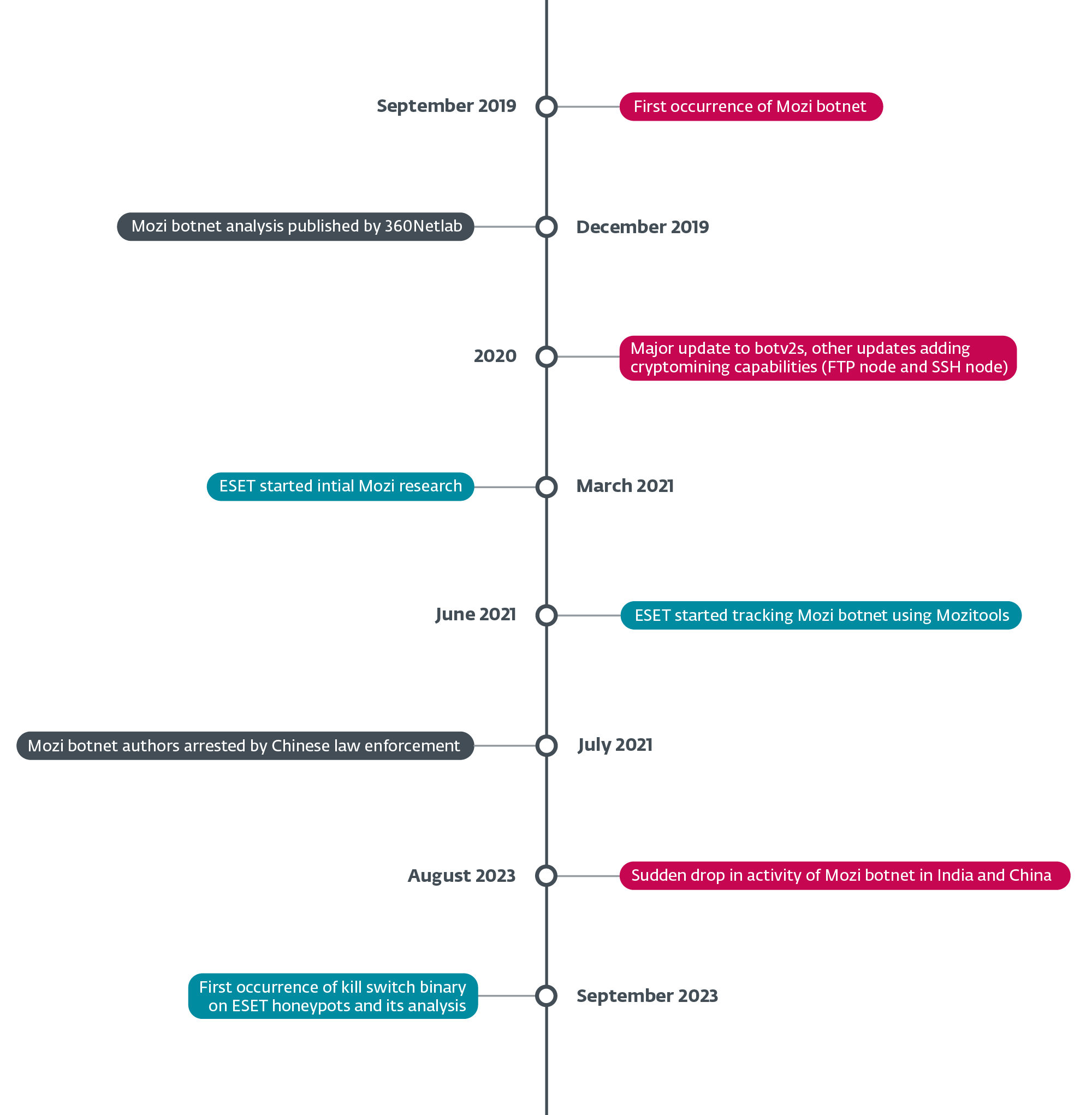
The Mozi botnet’s Demise: A Timeline (Credit: ESET)
So who killed the Mozi botnet?
It is difficult to say for sure. However, there are a few possible explanations. One possibility is that the original Mozi botnet creator took down the botnet. The creator may have done this for a variety of reasons, such as wanting to distance themselves from the botnet’s criminal activities, the botnet was not profitable anymore or wanting to sell the botnet to another party.
Another possibility is that Chinese law enforcement took down the botnet. China has been cracking down on cybercrime in recent years, and the takedown of the Mozi botnet could be seen as part of this effort.
Regardless of who took down the Mozi botnet, the takedown is a positive development for the cybersecurity community. It is a sign that even the largest and most sophisticated botnets can be taken down, and it is a reminder that cybercriminals are not invincible.
“There are two potential instigators for this takedown: the original Mozi botnet creator or Chinese law enforcement, perhaps enlisting or forcing the cooperation of the original actor or actors. The sequential targeting of India and then China suggests that the takedown was carried out deliberately, with one country targeted first and the other a week later,” explains Bešina.