The new update to the Mastodon Android app brings lists to users to help them follow the news. With this new feature, users can “create custom lists and categorize your followers based on specific topics or interests.” To announce the rollout of this new feature to their Android app, Mastodon took to their official blog.
In this blog post, Eugen Rochko, the Mastodon CEO and founder advertised this new feature as a way users can declutter their home feeds. Well, its usage doesn’t just stop at decluttering one’s home feeds but extends to their engagement. With this feature, Android users can pick topics that they relate to and create custom lists with these topics.
Users can use this new List feature to gain more control over the content they interact with on Mastodon. Lots of Android users of the app will be asked to update their apps to access this List feature for usage. This feature was previously available on the Mastodon web platform and is now making its appearance on the Android app.
Take more control of your Mastodon Android app home feeds with the new List feature
The Mastodon Android app is now getting a list feature with a new update. This update is now rolling out to Android devices around the world and it’s bringing more than just the list feature. Users will be able to use this feature to customize their home feeds to their tastes.
There are also a few design upgrades that are coming to the Mastodon home feed on the Android app. These upgrades will make navigating the home feeds and other areas of the app easier for users. But let’s look at how Android users can access the new list feature and personalize the feeds.
Tapping on the drop-down at the top of the screen will pull up an option page where users will find the lists option. From here, users will be able to create and manage lists that they are open. Selecting the create list option will let users name the list they’re creating, add members to the list, and perform other actions.
Lists that users create will be displayed under the list option on the drop-down page. These lists will give users access to content that fits the name of the list. For example, if a user creates a list and names it “sports” then the content the list will provide will relate to sports.
This is a very useful feature that Android users of the Mastodon app will come to love. The iOS users will have to wait until Mastodon rolls out an update bringing this feature to them. Regardless of this delay, the team at Mastodon is working to get this feature out to iOS users as soon as possible.
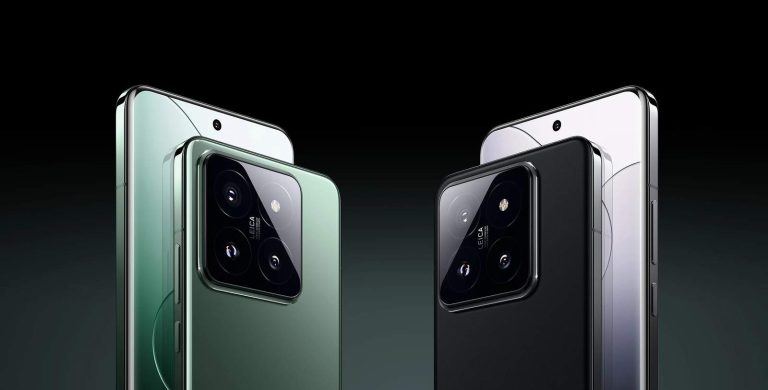
Xiaomi just launched their new Snapdragon 8 Gen 3 flagship devices, and they come with the Tango translator. This translator will help devices in the new Xiaomi 14 series to run 32-bit apps without any trouble. Naturally, these devices aren’t meant to run such apps, since the new Qualcomm flagship processor doesn’t support 32-bit apps.
Regardless of this limitation, Xiaomi is determined that this isn’t the time to let users give up some of their favorite apps. So instead of letting the new Snapdragon 8 Gen 3 chip on the Xiaomi 14 series force users to use 64-bit apps, the smartphone maker came up with a smart solution. They call this clever solution “Tango” and it serves as a translator, making 32-bit apps behave as though they are 64-bit apps.
By doing this, the new Xiaomi flagship devices can escape the Snapdragon 8 Gen 3 limitations to running 32-bit apps. While Tango is in no way an innovation creation from Xiaomi, it is a helpful one. With this translator, users will be able to enjoy using their favorite 32-bit apps on a Snapdragon 8 Gen 3-powered device.
Xiaomi 14 series users will be able to access 32-bit apps with the help of Tango
Tango is simply a 32-bit to 64-bit Arm binary translator that permits 32-bit apps to run on the Xiaomi 14 series. The processor on the devices in this series doesn’t support the use of 32-bit apps. This is because Google is pushing for the switch to 64-bit apps for developers around the world.
With the new Snapdragon 8 Gen 3 processor, apps that still use 32-bit architecture won’t be able to work. Faced with this dilemma and understanding that not all developers have made the switch to 64-bit, Xiaomi launched Tango. This translator allows apps not supported on the new Snapdragon flagship chip to run smoothly.
Expert, Mishaal Rahman, took to his X account to point out an app running a 32-bit app. The app in question is Flappy Bird, and it uses the 32-bit architecture but can still run on the Xiaomi 14 series. Its ability to exist in these devices that use the Snapdragon 8 Ge 3 processor is a result of Tango’s translation to 64-bit.
Lots of users of the new Xiaomi 14 series devices will come to appreciate this new feature. The Xiaomi Tango translator might move other smartphone manufacturers to do something similar on their Snapdragon 8 Gen 3-powered devices. With the coming Android flagship device launches, more smartphone manufacturers might deploy a similar translator for their devices.
Despite the lack of support for 32-bit apps, the new flagship processor is still a performance beast. With its successor, there might be no need for a translator like Tango, since most apps will be 64-bit. Until then, you can check out the new Xiaomi 14 series in this article.
Images and comments are popping up all over the place showing and discussing how Huawei’s phones are calling the Google app a virus if installed on one of the manufacturer’s phones. A photo posted on Reddit (via 9to5Google) shows a warning that appeared on Huawei’s four-year-old P30 flagship phone. The notification says “Security threat. Google appears to be affected. Immediate uninstallation is advised.” A button at the bottom of the pop-up screen will uninstall the app.
The owner of the Huawei P30 scanned his device and found no viruses. Another user on Reddit had the same message pop up on his Huawei P30 Lite. He wrote, “Just got it as well, Huawei P30 Lite. Thing is, I don’t even use Google, so I got extremely freaked out. Have never had an issue like this, but seeing as how we all got it around the same time, it’s probably an update or something.”
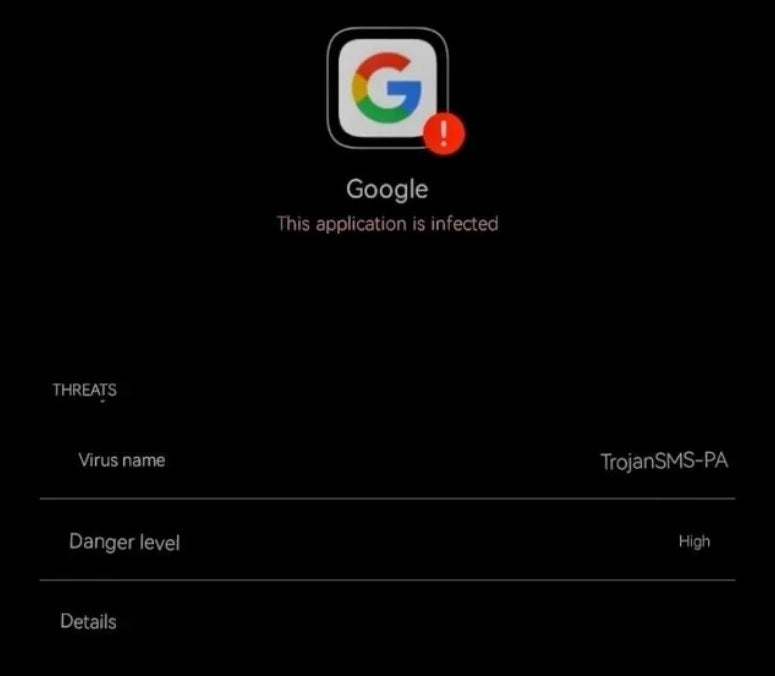
Huawei lists the Google app as a TrojanSMS-PA virus. A Trojan program is malware disguised as a legitimate app so that the victim installs it. Once installed on a device, the malware could give the attacker the same level of control over a device that the legitimate user has. Some Trojans are designed to steal the login information used to open banking and financial apps; the goal is to get into the target’s bank account to wipe him/her out.
The Google app is flagged by Huawei
Another screenshot shows a warning stating that the Google app is infected. The warning from Huawei adds, “This app was detected sending SMS privately, enticing users to pay with adult content, downloading/installing apps privately, or stealing private information, which may cause property damage and privacy leakage. We recommend uninstalling it immediately.”
Google apps are not supposed to be available on newer Huawei devices which is why the Alphabet subsidiary is not commenting on the situation. And since we all know that the Google app is not a virus (we all know that, right?), the blame for this screw-up must lie with Huawei.
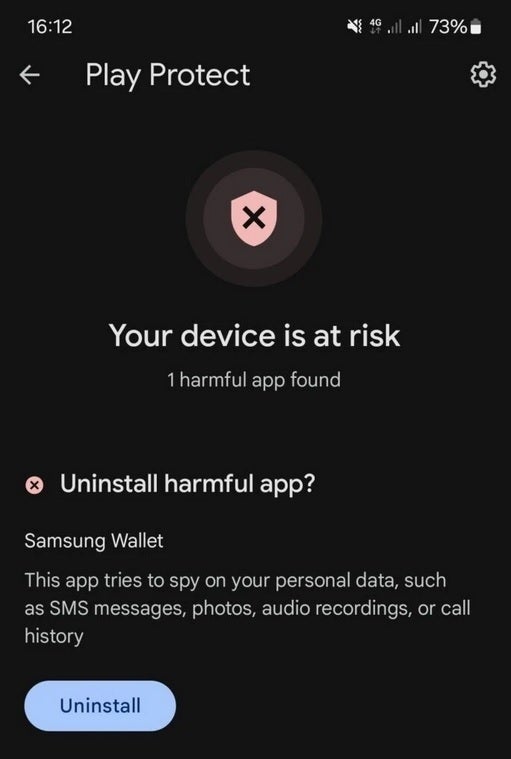
Google accidentally flags Samsung Wallet and Samsung Message
We don’t believe that Huawei is doing this on purpose to paint Google in a negative light and that some mistake is causing Huawei’s software to identify the Google app as a security threat. After all, last week we told you that Google Play Protect, the tool used to try and keep malware off your Android device by running a safety check on them before they are installed, accidentally flagged Samsung Messages and Wallet suggesting that the apps be uninstalled.
If this message keeps appearing on your Huawei phone, you might try clearing the cache of the Phone Manager app as that seems to fix the problem.
Google CEO Sundar Pichai has reportedly referred to Search as a “very competitive” market during his testimony in the company’s antitrust trial with the Department of Justice.
Google is in its third day of presenting a defense and is doing everything it can to come off as the good guy. Pichai’s statement paints Google as being less in control of its lucrative default search deal than the DOJ is implying. Noting that Google had to “make compromises” when negotiating a continued deal with Apple to keep Google Search as the default option on its devices.
He also mentions the deal was crucial to future success in search. The DOJ however paints a very different picture. That Google uses illegal monopolistic business practices to maintain dominance in the market and lock out competitors. Of which these exclusive and lucrative deals are a big part. Last week it was reported that Google paid just over $26 billion in 2021 to keep those deals with Apple and others.
Google CEO says search is competitive and Google is just a business
For Google’s part, Pichai is listing Google as simply a business. Not an evil entity trying to keep competitors out. During his testimony he states that Apple had specific demands if it were to continue the default deal. Google didn’t want to lose its deal with Apple who was reportedly entertaining the idea of other search options back in 2016.
So it did what any business would and compromised to meet Apple’s demands and keep the deal alive. Basically, Google says it’s not necessarily dictating the terms like the DOJ is suggesting. And with that lack of control it can’t be engaging in illegal activity. Pichai’s statements today though are in contrast to what his opinions on being the default from well before 2016. Where he noted in an email to Google co-founders that being the only search option on Apple was “bad optics.” With a couple of weeks left in the trial it remains to be seen what Judge Amit Mehta will decide.
Intel’s 14th generation of Core processors, known as “Meteor Lake,” has debuted on an online Bulgarian retailer before the official release date. This early introduction follows Intel’s announcement of a rebranding strategy for the upcoming Meteor Lake launch on December 14th. They are bidding farewell to the iconic ‘i’ that has been synonymous with their processor series for 15 years. Moreover, reports suggest that these laptops will come with a notably high price tag, a notion supported by the prices listed on the Bulgarian website. Laptops powered by Meteor Lake Core Ultra 7 and Core Ultra 5 were spotted for sale with price tags of $1,600 and $1,400, respectively.
In a recent statement, an Intel VP stated, “To better align with our product strategies, we are introducing a branding structure that will help PC buyers better differentiate the best of our latest technology and our mainstream offerings.”
This new branding will be implemented for the upcoming Core and Core Ultra processors, starting with Meteor Lake. The new series of chips drops the ‘i’ and features the new Intel 4 process node, advanced 3D packaging technology, improved power efficiency, enhanced graphics performance, and the integration of Intel AI Boost for dedicated AI processing. Specifically, Intel designates the Intel Core Ultra processor brand for higher-end processors and tailors the Intel Core brand for mainstream offerings. Both incorporate a tiering system (Intel 3/5/7/9) for upcoming processors.
The Bulgarian site listed two Meteor Lake powered laptops based on Lenovo’s Yoga Pro 7. Notably, they feature a 14.5-inch 3K resolution display and a 120Hz touchscreen panel. Additionally, they contain 32GB of DDR5 memory and a1TB PCIe SSD storage. One features the Core Ultra 7, and the other comes with the Core Ultra 5 CPU.
Laptops with Meteor Lake chips have already made an early appearance ahead of the official launch date on December 14th
The Meteor Lake Core Ultra 7 155H powered YOGA Pro 7 appears with a price listing of $1594. The Yoga 7, powered by the Core Ultra 5 125H, carries a price tag of $1395. These preliminary prices suggest potential higher costs for customers interested in owning a Meteor Lake-powered laptop. The official launch date for Meteor Lake is December 14th, and prices are subject to change. However, early reports suggest that devices powered by Meteor Lake will carry a premium price.
Meteor Lake incorporates the latest ARC Alchemist graphics architecture within its integrated GPU. It promises to deliver substantial performance improvements over previous Intel iGPU efforts. Initial tests of the Meteor Lake Core Ultra 5 135H reveal a decrease in single-core performance. These performance tests are in comparison to the previous Raptor Lake Core i5 13500H. However, multi-core performance is much closer. These tests are based on pre-production hardware, so we can expect official performance figures to be even higher.
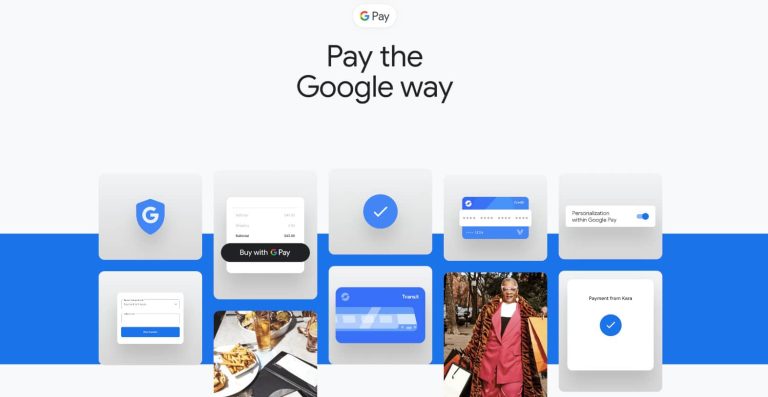
Google’s Material You design language has been refreshing the look of Android, giving a fresh look and feel to some of the company’s most popular apps as well as to the homescreen. While Google has gradually implemented the Material 3 design on the web, the latest example of it is visible on Google Pay web. It marks an uplift in its online transaction experience.
This rollout on the web has not been as extensive as on Android. However, it represents an important shift towards a more cohesive design language. Speaking of cohesive design, just days before, we noticed the search bar on Gmail getting a revamped look. Now Material You is also expanding its appearance on the web for Android.
The Google Pay website now prominently features Material 3 design elements, unlike ‘Google payments center’ (payments.google.com) which continues to use the previous design.
One exciting addition to the Google Pay web is the introduction of a unified “Transactions” view. It displays all transactions linked to the card used, reports 9to5Google. This makes tracking the spending easier for users.
A peek into the Material 3 design implementation on Google Pay web
The Google Pay web Material 3 design introduces a blue background and accent colors in the side drawer. The revamped toggle style adds to the modern aesthetic. In the “Settings” section, users will find customizable preferences for emails and privacy. It gives users more control over their Google Pay experience.
While it remains uncertain when this redesign was officially rolled out, the Material 3 transformation on the Google Pay website demonstrates Google’s commitment to providing users with a unified, stylish, and user-friendly experience across various platforms.
In conclusion, Google’s implementation of Material 3 on the web, particularly with Google Pay, showcases a commitment to delivering a consistent and modern user experience. This design shift enhances the functionality and visual appeal of the online transaction platform. It aligns with Google’s broader design language evolution.
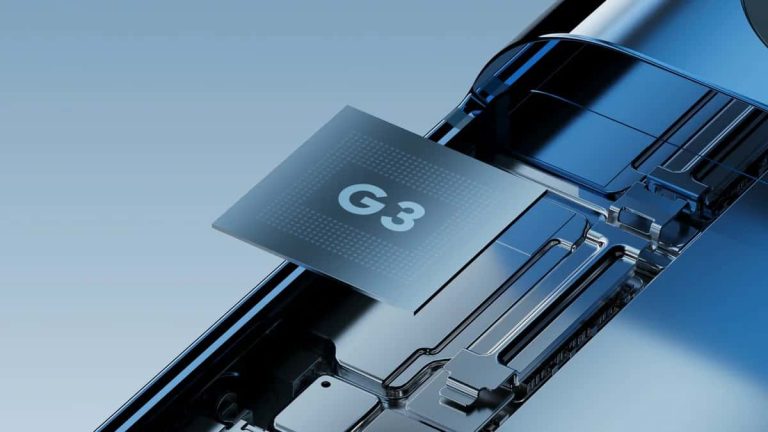
Google‘s Tensor-series custom processors for Pixel phones have failed to live up to the expectations so far. They have struggled with performance, thermal management, and efficiency. The company has improved things with each new generation but it has been a slow progress. This year’s Tensor G3 for the Pixel 8 series doesn’t seem to leave all the woes behind, and next year’s Tensor G4 may not either. The 2024 chip appears to be a minor upgrade over Tensor G3.
The Tensor G4 could be nothing but an improved G3
Google started using custom processors in Pixel phones in 2021. The first-gen Tensor chip featured a Samsung-developed CPU and GPU. The chip was manufactured by Samsung Foundry too. With the Tensor G2, Google started developing GPU on its own but the CPU was still made by the Korean firm. It’s the same story this year as well. There were rumors that Google might self-develop the CPU for the Tensor G4, but that doesn’t seem to be happening.
According to the Korean media, next year’s Google chip will still have a Samsung CPU. More importantly, the CPU could be an upgraded version of the Tensor G3. So it might not bring major performance improvements. The chip will reportedly bear the codename “Zuma Pro.” The latest Tensor is codenamed “Zuma,” so that tells you a lot about the Tensor G4. It may not deliver a generational leap in performance.
The new report adds that Samsung will manufacture the Tensor G4. Well, if the CPU is developed by the Korean behemoth, it’s no wonder that it gets the manufacturing duties as well. It will fabricate the chip on its third-gen SF4P 4nm process. Samsung manufactured the Tensor G3 on its 4nm SF4 process. The newer process node should bring some efficiency and performance gains, but there may not be any major improvements.
The fifth-gen Tensor might bring a lot of changes
Google’s Tensor chips may finally come good in 2025. Rumors have it that the company will develop both CPU and GPU in-house for the Tensor G5, which will power the Pixel 10 series. It may also switch to TSMC’s foundry for the chip. The Taiwanese firm’s foundry tech is regarded as superior to Samsung’s, though the latter is catching up to it fast. Time will tell whether Google picks Samsung or TSMC. More importantly, we’ll have to wait and see if manages to fix its Tensor woes over the next couple of years.
Samsung smartphones could finally get a much-needed charging speed boost. Not next year’s Galaxy S24 series, it will still charge at the same speed as the Galaxy S20 series from 2020, but the company may bump up the speed sometime in 2024 or later. It may jump to 65W charging, up from its current fastest charging of 45W.
Samsung may add 65W charging support to Galaxy phones
Samsung added 45W charging support to its flagship Galaxy smartphones in 2020. The Galaxy S20 Ultra was the only model in the lineup to charge at that speed, though. The other two models were limited to 25W charging. The company did the same the following year. In 2022, it upgraded the Plus model to 45W charging too, leaving the Galaxy S22 behind.
The Galaxy S23 series didn’t change anything and based on leaks and certifications, the Galaxy S24 phones will have the same charging specs as well—45W for the Plus and Ultra models, and 25W for the base model. There have been rumors about Samsung upgrading at least the Ultra model to 65W charging, but that doesn’t seem to be happening.
However, the Korean behemoth may have this charging speed boost in the pipeline. According to X tipster Revegnus, Samsung’s supplier of smartphone charger transformers, Atum, recently added 65W and 140W chargers to its portfolio. Details are missing, so there’s no telling if the new chargers are for Galaxy devices, at least the former. But there’s some hope.
The same source states that Atum is the exclusive supplier of flat transformers for 45W chargers for Samsung. It may have made the 65W solution for the Korean firm too. Since there are already rumors about Samsung working on a 65W charger, the dots are connecting nicely. The 140W charger, meanwhile, could be for laptops. The world’s largest smartphone company makes laptops as well.
Samsung may not rush to this change
Samsung Galaxies aren’t the slowest-charging Android phones. Google’s latest Pixel 8 Pro only supports 33W charging. This is at a time when Chinese firms are pushing the limits to over 200W. The Korean firm’s rumored 65W charger would still feel slow in front of some competing solutions. However, despite this, it may not rush to offer faster charging. Samsung may take its time to evaluate things before finally making the jump. We will keep a close eye on the matter and let you know as soon as we have more information.
The Skype Insider version is now getting a redesign to the various aspects of the UI on the app. These redesigns will affect certain aspects of the app that users interact with, hence improving usage and looks. Some areas of the Skype app that are getting these design improvements are the messaging interface, audio UI, and camera interface.
If you use the Skype app, you will not be getting this update soon, as it is currently in beta testing. Currently, only users of the Skype Insider app version can access these design changes and improvements. In the coming weeks, users of the regular Skype app will get these design improvements via an app update that’ll roll out on the Google Play Store and the App Store.
The design upgrade to the messaging interface now helps users to better reply to messages. Audio messages get an active waveform, and the camera interface gets a media preview feature. Let’s now learn more about these new design improvements and features that are coming to the Skype app.
Details on the coming Skype UI redesign that is currently available on the Insider version
From the Skype Insider version update, three major design updates are coming to the app. Each update not only improves the look of the app but also brings a functional feature that users will love. If you use Skype for work or to keep up with your family and friends, then you’ll get to like some of these design improvements once they roll out via an update.
The new update is bringing vertical lines to the messaging interface, and this will help break things up. With this users now have a visual separation of the messages in their chats. This will help aid in replying to messages, and other design upgrades here will help the visually impaired.
For audio messages, users will soon get a waveform visual effect on each audio message. This waveform moves along with the audio messages depicting its length. Users will be able to use this feature to scan through the entire audio message, as well as adjust the speed at which the message is playing.
While sending images via messages to other users will soon be able to preview the media before sending it. Skype will also try to prevent users from sending up to 10 media content to others at the same time. Those who don’t like this preview feature can cancel it from the app once the update rolls out.
The roll-out of this Skype UI redesign update is a bit jittery at this point. It also brings some bug fixes and improvements to the app stability for better and refined usage. Some users will get this update before others, so keep checking the Google Play Store or the App Store for an update to your app.
On February 1, Samsung announced the next evolution in the Galaxy S series. That’s the Galaxy S23. This new lineup consists of the Galaxy S23, Galaxy S23+ and the Galaxy S23 Ultra. In this article, we are going to share everything you need to know about the Galaxy S23 lineup, and which model is the best option for you.
The Galaxy S23 and Galaxy S23+ are both essentially the same phone, apart from their sizes. The Galaxy S23 Ultra is essentially a merger of the Galaxy S and Note smartphones. So it has a more boxy shape, and of course, the S Pen is built-in.
Samsung Galaxy S23 Specs
Here are the specs for the entire Galaxy S23 lineup.
Galaxy S23
Galaxy S23+
Galaxy S23 Ultra
Display
6.1-inch FHD+ Dynamic AMOLED 2X Adaptive 120Hz
6.6-inch FHD+ Dynamic AMOLED 2X Adaptive 120Hz
6.8-inch QHD+ Dynamic AMOLED 2X Adaptive 120Hz
Processor
Snapdragon 8 Gen 2 Mobile Platform for Galaxy
Snapdragon 8 Gen 2 Mobile Platform for Galaxy
Snapdragon 8 Gen 2 Mobile Platform for Galaxy
RAM
8GB
8GB
8GB/12GB
Storage
128GB/256GB
256GB/512GB
256GB/512GB/1TB
Battery Capacity
3900mAh
4700mAh
5000mAh
Charging Speeds
Wireless Powershare, Super Fast Charging, Fast Wireless Charging
Wireless Powershare, Super Fast Charging, Fast Wireless Charging
Wireless Powershare, Super Fast Charging, Fast Wireless Charging
The Samsung Galaxy S23 series is keeping the same price, in the US at least. So we’re not seeing any price increases here. That means that the following is the pricing for the Galaxy S23 series:
Galaxy S23: $799
Galaxy S23+: $999
Galaxy S23 Ultra: $1,199
To get the higher storage, it’ll be a $50 increase for the Galaxy S23 and S23+, and a $100 increase for the Galaxy S23 Ultra. So a 1TB Galaxy S23 Ultra will cost you $1,399. Quite pricey, but that is still cheaper than a 1TB iPhone 14 Pro Max (by quite a bit actually).
What trade-in offers are available at launch?
Carriers will be offering their own trade-in offers, which you can check out the latest deals for the Galaxy S23 by clicking here.
However, Samsung is going to offer up to $1,000 or the cost of the phone (if you get a Galaxy S23) for a trade-in. Now, depending on what you trade-in, you might get the full $1,000, or it might be less. Typically, the newer the phone, the more you’ll get on trade-in. Samsung.com does allow you to now trade-in multiple devices on a single order. Which makes this even easier.
What pre-order bonuses is Samsung offering?
Samsung typically offers some bonuses for pre-ordering their new phones. Well this year, they have brought back one of their more popular bonuses. And that is a free storage upgrade. Which means that if you pre-order a 128GB Galaxy S23, you’ll get upgraded to the 256GB model for the same price. The same goes for the 256GB models and the 512GB Galaxy S23 Ultra model. So you could actually get the 1TB Ultra for around $1,299. And of course, that is before any sort of discount from trade-ins.
Where can I buy the Galaxy S23 series?
Samsung will have the Galaxy S23 available at all of the usual retailers and carriers. These include:
Amazon
AT&T
Best Buy
Samsung.com
T-Mobile
Verizon
And many more. Keep in mind that Samsung’s pre-order bonuses are available everywhere. However, BOGO’s and trade-ins may differ by retailer and carrier.
What carriers support the Galaxy S23?
The Samsung Galaxy S23 will be supported by AT&T, T-Mobile and Verizon, along with any MVNO that runs on their networks. That includes Boost Mobile, Cricket, MetroPCS, Straight Talk and many others.
What colors is Samsung selling the Galaxy S23 in?
This year, Samsung is keeping it simple. Offering the Galaxy S23 models in all of the same, four colors. Those are:
Phantom Black
Cream
Green
Lavender
Now, Samsung will offer its own exclusive colors for these phones as well. Which those colors are listed below:
Lime
Graphite
Sky Blue
Red
What new features does the Galaxy S23 sport?
Samsung is bringing some new features to the Galaxy S23 this year. Which includes a new 200MP camera on the Galaxy S23 Ultra. As well as some new gaming features. And of course, the entire lineup has been better optimized for video and social media apps.
Worlds-first 200MP camera
On the Galaxy S23 Ultra, Samsung has included a 200-megapixel main sensor for the camera. This is a world’s-first, but likely won’t be the only one with it this year. Thanks to this new high-resolution sensor, a new AI-powered image signal processor, and some other software tweaks, the Galaxy S23 Ultra is going to take some very detailed images. Virtual noise has been reduced as well. This 200MP sensor won’t really be taking 200MP pictures. Instead, it will be binned down to 12.5-megapixels. So basically every 16 megapixels is one, with this sensor.
Samsung has also doubled optical image stabilizer so that videos are even more stable on the Ultra. There’s also enhanced 8K video recording available, with 30fps. For an even wider angle. Along with advanced object-based AI.
The future of mobile gaming
The Galaxy S23 Ultra has some new enhancements for gaming, this year. For instance, it is now running on the Snapdragon 8 Gen 2 for Galaxy, which allows the Ultra to last about 20% longer when gaming. While the graphics performance is about 40% better, and its AI performance is also optimized by than 40%.
This is all going to work to give you a better gaming experience on the Galaxy S23 Ultra. Along with that impressive 6.8-inch QHD+ 120Hz display that’s on-board.
Better optimized for video and social media apps
One of the big things that people complain about on Android is how laggy some social media apps are. Like Snapchat, which makes it very obvious that you’re using an Android smartphone. That’s because Snapchat doesn’t use the camera API, instead it takes a screen recording of your camera. But with the Galaxy S23 series, that’s not an issue anymore.
For a few years now, Samsung has been touting that it is optimizing its phones for video and social media apps. Like Snapchat, Twitter, Instagram, YouTube and others. So you’ll experience a much better experience there.
What software updates has it received?
The Samsung Galaxy S23 series has received quite a few updates since releasing in February 2023. Here’s the full list:
What cases are available?
There’s plenty of cases available for the Galaxy S23 series, which we have a roundup for each model. You can check those out here:
Galaxy S23 cases
Galaxy S23 Plus cases
Galaxy S23 Ultra cases
But we are also listing a few popular cases here, one for each model.
Samsung Silicon Cover
Costing $30, the Silicon Cover is a good option for a lot of people, even though it is rather expensive. It’s a pretty simple case for most people. It’s just a Silicon cover for your Galaxy S23, but Samsung does offer it in a lot of colors, which is really nice to see.
Samsung Leather Cover
The Leather Cover is similar to the Silicon Cover, but more expensive and in leather. It’s a really good feeling case in the hand. And the big thing it has over the Silicon Cover here is that it is not a soft-touch material. So it won’t attract dirt and dust as much as the silicon model does.
Samsung Rugged Case
Now this is a new case this year. But it’s a rugged case, and it appears to only be available on the Galaxy S23 Ultra. It has a built-in kickstand, as well as reinforced edges and corners. So it can take a drop or two, without damaging your phone.
Which Galaxy S23 model should I buy?
More than ever before, Samsung is really trying to differentiate the three models. With the small Galaxy S23 only coming with 128GB of storage, and the others with 256GB at the base. Along with the Ultra getting a 1TB model, and of course the S Pen. Our recommendation would be the Galaxy S23 Ultra. Since it does have the S Pen, as well as a larger battery and an incredible display. It also has the best camera setup of any smartphone right now.