More users in the US might be getting access to the Apple Pay Later service. This service found its way to the public about a year and five months ago, but now more users can get to experience it. Apple is giving more users access to this shopping service from the Apple Wallet, and some users can even access it directly from the company’s website homepage.
If you haven’t heard anything about this service, and you live in the US, you might be wondering what it’s all about. Well, it does exactly what its name states, letting users purchase Apple products now and pay later. The catchy thing about this impressive shopping service Apple is now expanding access to is that there is no interest in products purchased.
Over the past few months, Apple has been treating this service as a pre-release, hence limiting access to most users. Only a few users in the US could access it, and also it didn’t affect all iPhones or iPads that the brand had to offer. But now this shopping service is rolling out to more US users, but there are a few things that you need to take into mind.
The wide rollout of the Apple Pay Later service sparks concerns over consumer safety
Sometimes getting a new phone might be a bit of a hassle, especially when the need is sudden. At times like these, users might not be able to purchase a new device at the time they require one because they lack access to cash. For this reason, the Apple Pay Later service was born to make purchasing a new device in tight financial situations easier for users.
Users who intend to use this feature to make a purchase are to take a few things in mind. The service is only available for purchases between $75 to $1000, which gives users a wide range of choices. Additionally, this service only covers iPhones and iPads (and possibly some accessories) at this time, as Apple might expand the product list in the future.
To benefit from this service, users need to purchase at Apple-authorized retailers. These include the official Apple website and physical stores around various locations in the US. The service is also very accessible by using Apple Wallet as a payment option.
Payment will run over six months, during this timeframe the user will make a total of four instalments. There are no interest or late fees, as Apple says that the purpose of this feature is for users. Despite how good this shopping service sounds, there are concerns over consumer safety.
The major concern here is users carrying debts from using the Apple Pay Later service. There is also the concern of Goldman Sachs, a partner with Apple, on instalments’ payment pulling out from the partnership. These are some valid concerns that need proper clarification as this shopping service rolls out to more users in the US.
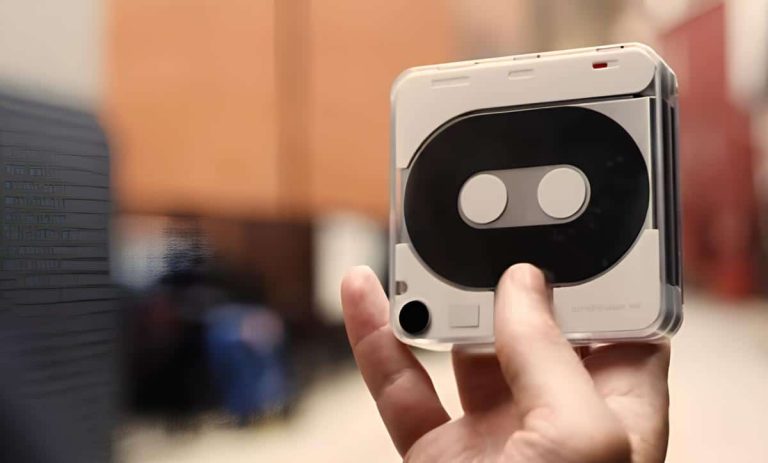
Carl Pei recently talked about a product category that Nothing had worked on and rejected. It was a transparent power bank with 65w fast charging support. The reason was that the product didn’t match up to the expectations of the R&D team. This power bank was supposed to come out just after the Nothing Ear (1) and was likely to be called the Nothing Power (1).
But Nothing AI wasn’t capable enough to power the Power (1) back then. Power banks are essentially a different product category and require specific experience in the field, especially for matching the safety requirements.
To Carl, Nothing at the time of Power (1) development was still a small company, a start-up, and didn’t have sufficient resources to continue with the R&D to make Power (1) meet the expectations.
Challenges that the team faced while working on the Nothing Power (1)
Nothing’s design language incorporates a transparent design. The team was just figuring out ways to implement the transparent design aesthetics without sacrificing the build and safety of Nothing products. For instance, the team had to make the glue invisible all while preventing dust from getting in or else it would be visible from outside.
The Power (1) faced some durability issues. The transparent design only allowed a handful of materials for the exterior. But the product being a power bank, was kind of heavy. It didn’t survive the drop tests it had to go through.
“Given the issues with the product, we knew we had to go back to the drawing board and redesign the product from scratch. At that point, it didn’t feel worth it anymore,” said Carl in a video.
Moreover, the Nothing Power (1) was also a compact product designed to support 65 watts of fast charging. However, it suffered from overheating issues. The transparent design only allowed selective materials and design elements underneath the transparent body of the product. Proper heat dissipation is crucial, especially for a product that contains a battery inside.
“A lot of us put a lot of heart into this product – and time, and cost. We learned a lot of lessons along the way” said Carl Pei about the Power (1) that never made it to mass production.
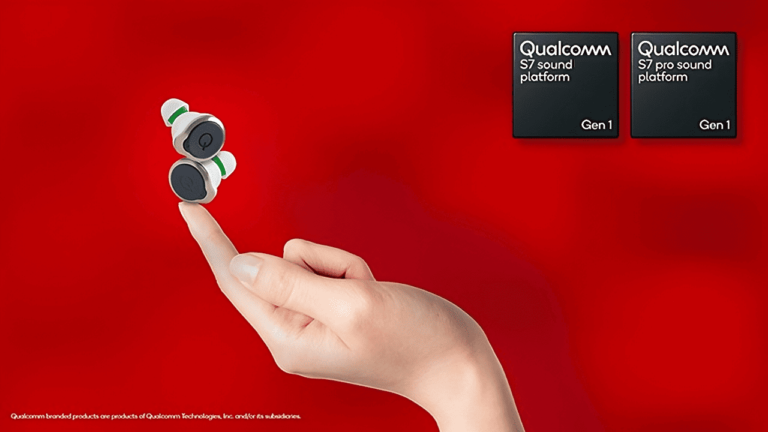
Qualcomm’s latest sound platform is on the edge of a groundbreaking shift in how we experience Bluetooth headphones and earbuds. For too long, the hurdle of delivering lossless audio and overcoming the limited range of Bluetooth technology has held back even the most advanced audio devices. Enter Qualcomm’s S7 Pro chip, which introduces micro-power Wi-Fi support poised to transition your audio experience from Bluetooth to Wi-Fi. This technology will allow users to walk away from their phones while still enjoying their audio.
According to Dino Bekis, Qualcomm’s VP of mixed-signal solutions, “The S7 Pro chip will help your device utilize the best of Bluetooth and Wi-Fi, delivering groundbreaking user experiences” via The Verge. Qualcomm has announced the release of the S7 and S7 Pro chips. The new chips are expected to be integrated into devices in early 2024. These chips boast improvements in performance, on-device AI capabilities, enhanced active noise cancellation (ANC), and voice recognition features.
The standout feature of this release is undoubtedly the new micro-power Wi-Fi capabilities of the S7 Pro
Bekis explains, “The S7 Pro Platform, with our micro-power Wi-Fi and revolutionary Qualcomm® XPAN technology, transforms the sound experience by enabling whole-home and building audio coverage, supporting up to 192kHz multi-channel lossless music streaming, and enhancing multi-channel spatial audio for gaming.”
Imagine your earbuds seamlessly connecting to access points as you stroll through your campus or office building. This is a level of convenience and connectivity not currently offered by any other technology. However, the S7 and S7 Pro chips will not be available until 2024. Your phone must also be powered by the Snapdragon 8 Gen 3 chip for this technology to work. Additionally, your Wi-Fi network needs to support XPAN, Qualcomm’s Expanded Personal Area Network.
As Bekis explains, the setup process for this new technology is straightforward. “When the phone detects that both ends support XPAN, it will exchange your Wi-Fi credentials with a simple prompt and a single click on the screen. From that point on, your earbuds will know the credentials for using your network, ensuring connectivity wherever you have Wi-Fi in your home.”
If you’re an audio purist seeking lossless sound and an immersive experience, then this technology is for you. Qualcomm’s S7 Pro chip has the potential to transform how you use wireless audio. It is ideal for music enthusiasts, gamers, or anyone looking for connectivity in larger spaces.
The question remains: Is micro-powered Wi-Fi the long-awaited solution that will revolutionize the headphone and earbud industry? Only time will tell how this promising technology, which is fantastic in theory, translates to real-world performance.
What differentiates a gaming phone from a regular phone? Is it the performance, the fancy RGB lights, or the overall gamer-forward mentality behind it? The answer is: YES! Tecno, a rising star in the tech industry, is here to prove that price shouldn’t be a differentiating factor, and let us review the Pova 5 Pro 5G.
This is a gaming phone that promises all of the power and flair of a gaming phone but without the inflated price tag. Indeed, the Pova 5 Pro 5G is meant to bring the gaming phone to more gamers. Rather than spending over $1,000 for a top-of-the-line gaming phone, you can spend much less for a phone that also brings some serious gaming chops. Well, is this the phone to do it, or are you better off with a ROG phone? Let’s find out with this review.
Tecno Pova 5 Pro 5G Review: Design
The design is a major part of the Pova 5 Pro 5G. Being a gaming phone, it has a very over-the-top “Look at me!” design, and I’m all for it. The phone brings a certain angular design aesthetic that reminds me of the Tecno Camon series. Speaking of the Camon series, I also reviewed the Tecno Camon 20 Pro, and you can read the review for that phone as well.
Most of the phone is pretty run-of-the-mill for most phones nowadays. The volume rocker and power button/fingerprint scanner are both on the right side. The USB-C port, headphone jack, and bottom-firing speaker are on the bottom with the other speaker at the top. On the front of the device, we see the screen with a punch-hole in the middle. So, from a design standpoint, most of the phone looks pretty average.
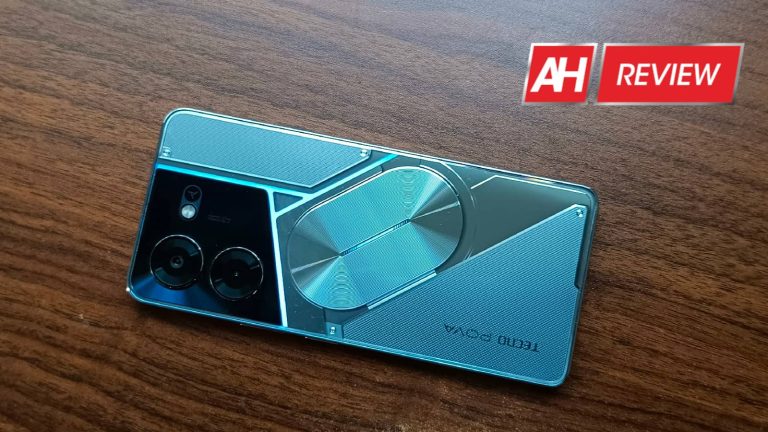
Then, we get to the back… and OMG is this phone pretty! If you didn’t think this was a gaming phone before, seeing the back will make you a believer. For starters, there’s a glass back with a bit of a gap between it and the internals. This look would remind you of what Nothing is doing with its phones. However, it’s not meant to give off a transparent look. Instead, the back glass is a window to the lights on the back.
We see this fun and intricate pattern on the back that’s clad in glossy plastic. The plastic reflects the ambient light beautifully. We see several different patterns in the back plastic that all flow with the overall design of the phone.
Lights
The lights are the main attraction here. There are a few sets of RGB lights on the back of this phone that switch on during different activities. When I first got this phone, I was excited to see what kind of cool and interesting lighting effects Tecno put into this phone.
Sadly, I was a little disappointed. First off, however, the lights look nice. They’re all in a unique triangular shape with a thin strip in the middle of the back. When the lights are on, they look amazing. Being RGB lights, they can cycle through different colors and create different effects.
However, I was a bit underwhelmed. The lights only come on during certain times like when the phone is charging, when you get a notification, and when you’re playing certain games. This means that the lights are off for most of the time. In fact, it’s really hard to catch the phone when the lights are actually on. It kind of defeats the purpose of having the lights if no one can see them.
Also, when the lights are on, there’s nothing really special about them. They flash and pulsate at different rates, but there’s not much else. There’s nothing else about the lights that really caught my attention.
I wouldn’t make as much of a deal about this if it weren’t for the fact that Tecno is pushing this as a gaming phone. The RGB lights are a pretty big part of the gamer phone experience.
Tecno Pova 5 Pro 5G Review: Build quality
The build quality is similar to that of the Tecno Camon 20 Premier. It feels nice, but you can tell that the company had to cut some corners to keep the price down. When I first picked up the phone, I was impressed by how sturdy it felt. The phone is rather thick, and it feels really significant in the hand. It has some notable heft to it, which is something that many affordable phones lack.
On the back of the phone, the back glass feels nice and sturdy. Also, the camera package is housed in a thick metal block that will help protect the cameras during a fall. It’s a little addition that adds to the overall feel of the phone.
So, the Tecno Pova 5 Pro 5G doesn’t feel quite like a toy. However, there’s one thing that does take away from the premium feeling, and that’s the frame. This phone has a plastic frame. This is the same thing for the aforementioned Tecno phones. Sometimes, the frame can be the make-or-break factor in how a phone feels.
So, when picking it up, it feels like I’m picking up a very well-built mid-range phone. I don’t think that it feels bad in any way. Just know that when you pick up the phone, you’ll definitely feel where the company had to compromise to keep the cost down.
Tecno Pova 5 Pro 5G Review: Display
When it comes to the display, it was a bit of an emotional rollercoaster. I freshly came from reviewing the Tecno Camon 20 phones, and those phones have some absolutely breathtaking displays. I can’t say enough about how gorgeous they are. They’re bright, perfectly calibrated, colorful, and just well-balanced.
I expected to be greeted with a similarly wonderful OLED display when I powered this device on… but then I saw the grayish tone of an LCD’s back-lit display. I was definitely a bit disappointed. However, once I started using the phone and getting familiar with the screen, most of my disappointments went away.
Color
We’re at the point where LCD displays are no longer miles behind OLED panels in terms of saturation. Yes, there is a noticeable difference, don’t get me wrong However, there are LCD panels out there that offer just a ton of juicy and punchy colors, and the display on the Pova 5 Pro 5G is one of them.
After whining about the LCD display, I started actually using the device, and I found that the colors were rather nice. Not only are the colors nice and juicy, but I think they’re good enough to rival those you’d see on an OLED panel. They weren’t 1-to-1, and if you place this phone right next to an OLED, you’ll definitely see a difference. However, in general, this screen has some beautiful colors.
Contrast
In terms of contrast, I didn’t have any complaints about the display. You still get the dark gray tones when the screen is trying to produce complete black, and that’s unavoidable. However, the contrast in general is very good. In tandem with the brilliant colors, I enjoyed watching all kinds of content.
Brightness
So, when I said that most of my disappointments went away, I was pointing to the brightness. Now, the brightness isn’t bad in general; it’s just a few steps behind what I was used to. I used rather bright displays on the Camon 20 Pro, Camon 20 Premier, and Infinix Note 30 Pro- both companies are owned by Transsion, and they used similar, if not the same displays).
The displays on those phones are bright enough that outdoor viewing isn’t an issue. However, it seems that the brightness of the Pova 5 Pro 5G is just okay. It’s average compared to most phones on the market, and that means that the second I took it outside, I could see an immediate degradation in the visuals.
It’s still decently bright, and it’s not impossible to see in daylight. However, knowing what the company is capable of compared to what this phone does is a bit disappointing.
Tecno Pova 5 Pro 5G Review: Speakers
The story of this phone’s speakers is a bit of a weird one. The speakers are similar to what we got with the Camon 20 phones. Out of the box, they’re nothing to write home about. The sound has a lot of high-end to it and not much low-end. This means that there’s just no depth to the sound, so listening to music isn’t the best with them.
Be that as it may, one thing that I found out was that they’re actually great for ASMR content out of the box. This isn’t me trying to be funny or sarcastic. Of all the phones that I tested, I noticed this with all of the Tecno and Infinix phones that I reviewed.
Those higher tones aren’t only more present, but they’re actually accentuated rather nicely. They sound crisp and pleasant. This means that clicks and pops that you hear throughout the interface, games, and videos have a satisfying crispness. So, if ASMR videos and podcasts are your guilty pleasure, then you should go right ahead, you’ll enjoy it.
Sound profile
If you’re not happy with how the speakers sound, then there are some ways that you can bring some change to it. In the sound settings, you’ll see the DTS sound settings. These will let you adjust the sound coming out through your speakers, and there are a fair number of settings that you can change.
Starting off, there are several preset sound profiles that are tailored to different types of media. You have a setting for music, video games, and movies, and there’s a smart mode that sets it automatically based on what you’re listening to. When you choose your profile, you’ll be able to change additional settings by tapping a button under those settings.
Stereo settings
This page will let you choose the stereo profile of the sound. The traditional will give you a neutral mono sound, while the wide option will give you the widest stereo sound. Forward will widen the sound and give it a very frontward feeling. You can choose the setting that suits your tastes.
Boosts
On that same page, you’ll be able to choose the aspect of the sound you want to boost. You can tap on the Bass to boost the low-end audio, Treble to boost the high-end, and vocal to boost the voices. What’s neat is that you can boost any combination of the three that you want.
EQ
The adjustments don’t stop there. Under the sound profile settings, there’s the option to enable the built-in EQ. This is a five-band EQ that lets you adjust each band between +5db and -5db.
You can employ a combination of these methods to help give your sound a nice change from what you heard with the out-of-the-box settings.
My recommended settings
The settings that I use are the Music profile with the Traditional stereo setting with the Bass and Treble boosted. As for the EQ, I have the first band (the lowest band) set to +5, the second lowest set to +4, the middle set to +0, the fourth set to -1, and the highest one set to +2.
This gives the sound a nice boost to the low-end with some pop in the higher end to give the vocals a nice boost.
Tecno Pova 5 Pro 5G Review: Camera
So, when I started using the cameras on this phone, I didn’t really know what to expect. I’ve had a bit of a history with Tecno’s cameras. The cameras on the Tecno Camon 20 Pro were terrible, to be honest, while the cameras on the Camon 20 Premier and the Tecno Phantom Flip are much better.
The results that with the Pova’s, I got, thankfully, were nowhere near what I got with the Camon 20 Pro. However, I did feel that phone’s influence on the Pova 5 Pro 5G’s camera in one area.
Exposure
In terms of exposure, I didn’t feel that the phone exposed the scene especially bright or especially dim. I think that the camera did a good job of balancing out the scene.
Colors
In the color department, I’d say that the camera did a decent job getting some nice colors from the scene. However, I feel that it could have gone just a little further. In scenes where the colors were loud and vibrant, this camera produced images that felt just, not dull, but a tad subdued. In the bright sun, the greens of the bushes should be bright and punchy, but I felt that they were just a bit held back.
It’s like someone put the pictures in a photo editor and cranked the saturation down about 10%. This does come in handy with the reds and other warm colors. This is an area where most cameras produce images that will cook your eyes. The reduced saturation was able to keep the reds in the image of the flower in check.
Contrast
This is where I saw the influence of the Camon 20 Pro. Now, it’s not nearly as bad as what I got with the Camon 20 Pro’s camera, but it’s noticeable. The contrast that I got with the images from this phone was pretty lacking. I didn’t feel that it was bad, but I could have gone with just a bit more contrast to make the images more dynamic.
The lower contrast deadened what would have been some really juicy pictures. Images of plants in the sun could have had more punch with just a bit more contrast. You could throw this into a photo editor and punch up the contrast a little, but that defeats the purpose of having a good camera.
Low light
When it comes to low light, I think that this camera does a respectable job of brightening the scene. Images that I take in the heavily diminished light come surprisingly bright and colorful. This is even without enabling the Super Night mode which takes a longer exposure.
The neat thing about the low light performance is the reliable focus. I found the camera was able to focus on objects in extremely dim light. I’m able to pick out finer details like text and intricate designs in the low light.
When using the Super Night mode, I feel like this is a “pick your poison” situation. The Super Night mode uses its longer exposure to bring more light from the scene and create an exponentially brighter scene. However, the clarity definitely takes a hit. Cameras in more expensive phones definitely do a better job of preserving detail when taking long-exposure shots. In the case of the Pova 5 Pro 5G, I see some intense artifacts in the image.
So, if you choose not to use the Super Night mode, your image will be darker, but you’ll have a more detailed image.
Tecno Pova 5 Pro 5G Review: Performance
Now, onto that all-important subject; the performance. Tecno is great when it comes to optimizing its software for more modest MediaTek chips. The Pova 5 Pro 5G is powered by the Dimensity 6080, and it’s a few steps behind the latest and greatest from the company.
While that’s the case, HIOS runs as smooth as silk. Running apps, navigating the interface, and just generally using the phone, I have no major issues. I may get the occasional dropped frame or hiccup every now and then, but these instances are few and far apart.
I’ve used phones where stutters and dropped frames happen so often that they characterize the experience as a whole. That’s not the case with this phone at all. As hard as I tried to slow it down, it took quite a bit of effort to get this phone to chug.
I literally had two apps open in pop-out windows with YouTube playing in the background and I didn’t get the phone to slow down. I’d say that the performance is amazing for the price that you’re paying.
Tecno Pova 5 Pro 5G Review: Gaming
I’ll let you in on a secret; this is kind of a gaming phone. At least that’s what’s all over the packaging. So, it’d make sense that this game performs well when it comes to games, right? The answer to that is complicated.
2D games
Starting off with 2D games, I didn’t have any issues with any of the titles that I downloaded. This phone is more than able to take care of any 2D game that I downloaded. Games like Dragonball Z Dokkan Battle, Super Meat Boy, Fishing Paradiso, etc. all ran like a dream.
Mid-range 3D games
The story is much the same with lower and mid-tier 3D games. I loaded games like DragonBall Legends, Sky: Children of The Light, and Asphalt 9 Legends. All of these games are very good-looking in their own right, and they can slow down weaker hardware.
The Tecno Pova 5 Pro 5G runs these games without even a hint of stutter or slowdown. I expect nothing more from a gaming phone.
High-end games
This is where things get complicated. Again, the Tecno Pova 5 Pro 5G is a gaming phone. With a title like that, you’d expect this phone to tackle just about every game that crosses its path. Well, that’s the case; it tackles most of the games it comes across. The aforementioned games are no sweat, but once you reach the top of the gaming market, the term “gaming phone” starts to lose some of its legitimacy.
Playing Genshin Impact, I experience some heavy stutters while playing on the highest graphical settings. The stutter was pretty consistent while I played. Rotating the screen turned the game into a slideshow. Turning down the settings gave me a smoother experience, as you can imagine.
This brings the title into question
While I understand that Genshin Impact is a heavy game and it takes a lot of power to process, it brings into question what truly makes this a gaming phone. The gaming performance I’m getting from this phone is not much different from other mid-range phones. I admit that an affordable gaming phone is a bit of a steep ask, but Tecno’s decision to go with the MediaTek Dimensity 6080 was a bit confusing.
The Tecno Camon 20 Premier uses the Dimensity 8090, and that phone flew through Genshin Impact at its highest settings with no issue. I only raise this issue because the RGB lights on the back are the only other factor making this a gaming phone, and they’ve been pretty lackluster. With this middle-of-the-road gaming performance, it feels that Tecno missed the mark here.
You can get decent performance with graphically intense games, but this phone just doesn’t deliver the kind of performance that you get from the phones that it’s undercutting.
Tecno Pova 5 Pro 5G Review: Battery
When it comes to battery performance, the Tecno Pova 5 Pro 5G is a phone that will last you. I can typically get just over a day and a half with moderate usage. This includes some gaming, social media scrolling, and video-watching. I never had an issue getting to the end of the day with a charge even on heavier days of testing with picture-taking involved.
I got this performance without needing to really keep an eye on my battery. Instead of taking care not to use more battery than I needed to, I just used it how I would regularly use it. That’s the important thing. I think that the battery on this phone is exceptional.
Charging
Charging the Tecno Pova 5 Pro 5G doesn’t take long at all. The powerful 68W charger that comes in the box can charge it from 0% to 100% in just over an hour. If you need a quick charge, just popping it on the charger for 20 minutes will charge the battery about halfway.
Final thoughts
Tecno has come out with some incredible devices with affordable price tags, and the Pova 5 Pro 5G is no exception. It’s meant to make the gaming phone more accessible. The only thing is that it’s not really delivering on those gaming phone features that it’s sporting. The RGB lights are very basic, and the gaming performance isn’t all that great. Those are the main gaming features that the company is touting, and they don’t really stick out.
Do I think that it’s a bad phone in general? Absolutely not! I think that this is a phone to get if you’re looking for a great regular smartphone experience. The screen is gorgeous, the performance is great, the design is unique, the software is well-optimized, and the overall experience is great. I think that if the company went the Nothing route and touted this as a regular phone with lights that add to the experience, it would have been more effective.
Applying the “gaming phone” moniker brings with it high expectations for the gaming performance and RGB lights. This didn’t stick out to me as a gaming phone. The price is low, but I think it’d be worth it to charge a bit more for a more powerful processor and some more RGB light tricks.
If you’re looking for a great all-around phone that specializes in being a smartphone, then I recommend that you pick this handset up. If you’re looking for a true-to-form gaming phone, then I suggest that you look elsewhere.
While Apple announced its latest event yesterday, the news from Apple isn’t over for the week. Apple has also announced that it is raising the prices on most of its services.
Apple is raising prices on TV+, News+ and Arcade. But surprisingly, Music and iCloud storage have not been affected so far. However, Apple Music did go up in price in October 2022. And so did it’s competitors – Spotify and YouTube Music both raised prices to match.
So what’s the damage? Well, Apple TV+ is going from $6.99/month to $9.99/month. Apple News+ is going from $9.99/month to $12.99/month and Apple Arcade is moving from $4.99/month to $6.99/month. Apple TV+ is getting the biggest price increase here, and given Apple’s increased spending on original content, that is not surprising in the least.
It’s not just the individual services that are going up in price either. Apple One is also seeing increases across the board. The Individual tier was $16.95/month and now it’s changing to $19.95/month. While the Family tier is moving from $22.95/month to $25.95/month and the Premier tier is moving from $32.95/month to $37.95/month.
Does Apple One still make sense?
Apple One is a pretty brilliant bundle that Apple offers, and it’s one that I wish Google would also offer. As it combines its services into a bundle that is generally cheaper. The Individual tier still saves you $9 per month, while Family saves you $11/month and Premier at $29/month. But those savings only work if you use enough of those services.
For instance, if you use iCloud+ and need 2TB of storage, along with TV+, Music and News+ that would come out to a total of about $48 per month, making it worth it, and you get Arcade and Fitness+ included for free. Don’t forget with these Premier and Family bundles, you can share them with your family – that’s why you’re seeing the Apple Music family plan included in the breakdown from Apple.
The prices of all streaming services have gone up in the past year, and it was bound to happen to Apple. Sure Apple has a ton of money, but they do need to keep making money to keep shareholders happy. And with fewer people buying new hardware, this is Apple’s new cash cow.
Samsung is no stranger to high-quality audio with its line of premium TWS earbuds under the Galaxy Buds name. However, premium products come at a premium price, and not everyone can afford the best mainline Galaxy Buds. Enter, the Galaxy Buds FE. Being in the FE line of products, these are more affordable than the mainline products. I was given the opportunity to review these earbuds and spent a few weeks getting to know them.
Being more affordable compared to the other Galaxy Buds, the question is whether you should bother with these or just shell out more money for the premium earbuds. Well, the thing about the Galaxy FE devices is that they’re meant to make you forget; they make you forget you’re using an affordable item.
Will these earbuds make you forget that you’re using an affordable product, or are they just forgettable? Let’s find out in this review.
Galaxy Buds FE Review: Design
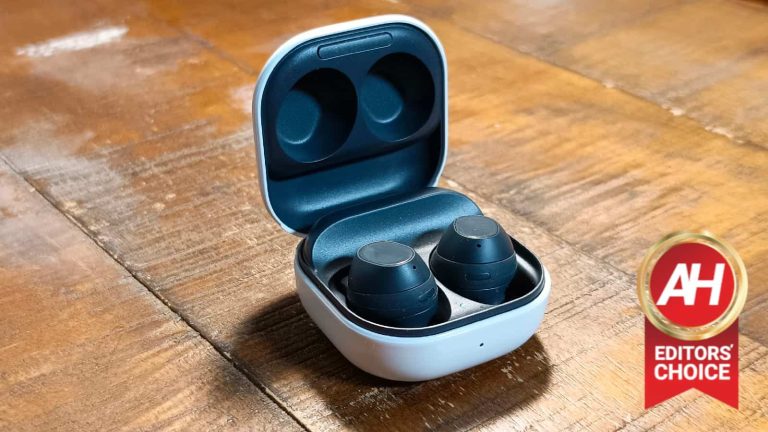
Starting off with the very first thing you’ll notice about these earbuds, their design is pretty toned down. We all know Samsung as the company that’s given us some pretty robust designs over the years. The Galaxy Buds are no exception; we all remember the Galaxy Beans. Well, Samsung decided to turn down the design dial with the FE buds.
This isn’t a bad thing or a complaint. The design of the Galaxy Buds FE is pretty mellow. They have the shape of a pretty standard pair of TWS earbuds. They’re made from a pretty lightweight matte plastic with the exception of the touchpad; that’s made from glossy plastic.
There’s a rubber ring that runs around the earbuds that ends in a shark fin-shaped bit that juts out. This is the main thing that makes the design stick out. Other than that, these are a very standard-looking pair of earbuds from a design standpoint.
That’s not really an issue, as earbuds aren’t as much of a fashion statement as phones are. People aren’t likely to stop you on the street because of how fashionable your earbuds are.
Galaxy Buds FE Review: Build quality
In terms of build quality, I think that these earbuds do give off a more premium feeling. They’re made from plastic, as all other earbuds are, and the plastic itself doesn’t feel particularly premium. However, there is a bit of a heft that gives these earbuds a nice feel in the hand.
When you pick them up, you can feel that there are some quality parts. I’ve held cheaper earbuds and, while there’s not a huge difference in the weight, I could feel the lack of quality. They might be just a few grams heavier than other earbuds in this price range, but they go a long way.
Moving on to the case, I think my feelings are the same. The case is made from a glossy plastic. The plastic is nice to the touch, and it’s got some notable thickness to it. The case feels like it could take some abuse before taking on any damage. As for the overall feeling, it feels nice.
Just like with the earbuds, there’s a nice little heft to the case. It makes me feel like I’m picking up a product that’s going to give me a nice experience.
The fact that these earbuds feel nice doesn’t surprise me, as this is the same case with the Galaxy Tab S9 FE series. I recently reviewed the Galaxy Tab S9 FE+, and it also feels exceptionally premium.
Galaxy Buds FE Review: Touch controls
The Galaxy Buds use capacitive touch pads in order to control the audio. The touch controls are a bit of a mixed bag. For starters, there are eight different options that you can use to control your content. You have single-tap, double-tap, triple-tap, and tap-and-hold functions for both earbuds.
That’s nice, as I’ve seen earbuds with only double and triple-tap options. So, there are a bunch of actions that I can perform. My only complaint is that they’re pretty limited.
You can’t choose which actions do what. So, you can’t choose what the single-tap action does; you can only enable and disable it. The single-tap action plays/pauses the music, the double-tap action plays the next track, and the triple-tap action plays the previous track.
The only command that you can customize is the tap-and-hold, which is pretty odd. You can assign an action for the left bud and one for the right. You can either have the tap-and-hold option summon Bixby, adjust the volume, open Spotify, or change the sound mode.
When it comes to the sound mode, you can choose to have it switch the sound modes (ANC to ambient mode) or enable/disable them. So, you can have it so that tapping and holding the left earbud activates ANC, and tapping and holding the right activates ambient mode.
All in all, I think that Samsung should give people more control over the touch controls. I don’t know why Samsung only allows people to adjust the tap-and-hold actions but not the others.
Galaxy Buds FE Review: Low-end audio
When it comes to more affordable audio equipment, the question of audio quality comes into play. A large part of the quality is the balance; the balance between the low tones and the high tones. One issue that I run into with earbuds and other audio equipment is the over-emphasis on the low-end.
Companies pump so much bass into their speakers to appeal to a more modern audience. While it’s true that a lot of modern music like dubstep and EDM are very bass-heavy, this practice limits the usability of earbuds.
I’m happy to say that Samsung showed great restraint with the Galaxy Buds FE. Out of the box, I started listening to content, and I found that the sound was pretty thin. It lacked some of those finer low-end tones that you could really feel. I couldn’t really immerse myself in the music as much as I wanted.
However, that wasn’t the case for long. I’ll touch on the app later on in the review, but in the Galaxy Wearable app, I enabled the Dynamic setting in the EQ. This gave a nice boost to the bass, and that was the missing piece of the puzzle I was looking for with the sound.
These earbuds are capable of producing a juicy low-end sound. It just makes the lower instruments sound amazing. The earbuds don’t make the bass pop as much as they make it support the overall sound much better. It’s not overblown; it fits perfectly.
Galaxy Buds FE Review: High-end audio
The higher tones are just as important as the lower ones, and some companies tend to forget that. Again, some companies only focus on the bass. In the case of the Galaxy Buds FE, it’s clear that Samsung focused on balance.
Out of the box, the higher tones sounded nice, and they only sounded better with the Dynamic audio setting. This setting gave a nice little bump to the high-end.
I think that Samsung did a great job with the high-end of these earbuds. Voices, higher percussion, and all of the higher synth you’d hear in 80s music all sound amazing. They project crisply and clearly in the music that I’m listening to.
Just like with the bass, the higher tones fit in perfectly with the sound. Too much high-end can really weigh on the ears. Fortunately, just like with the low-end, Samsung showed great restraint and kept things in line.
Galaxy Buds FE Review: Sound Space
Because of Samsung’s excellent tuning, the sound space is great. I’m very immersed in the music that I’m listening to, and it really sounds like I’m in the middle of the action. It sounds like Daryl Hall is on one side of me and John Oates is on the other.
While the sound is immersive, it’s also spacious and clear. This is because of Samsung’s excellent management of the low-end audio. Too much low-end can wind up making the sound feel muddy and cluttered.
So, I think that Samsung went above and beyond with the audio tuning for these earbuds. When you put them on, you tend to forget that you’re listening to an affordable pair of earbuds.
Galaxy Buds FE Review: ANC (Active Noise cancelation)
Real talk; I had a moment of confusion. It was the same moment that most people have when they first hear ANC. It’s that moment of “Wait, how can this quiet the noise that much?” For me, it was “How could an affordable pair of earbuds possibly have ANC this good?!”
This isn’t an exaggeration; I was so thoroughly impressed with how good the ANC is on these earbuds. I’ve used earbuds with great ANC, but I’d still manage to hear a high-pitched hiss because they didn’t filter that noise. With these earbuds, it really felt like they silenced the world. This is for when I’m indoors.
When I’m outdoors, it’s much the same story. When outside, there’s a lot more noise that they have to filter. This includes traffic, the wind, and general ambient audio. Regardless, the ANC does a great job of getting rid of the ambient noise around. When I turn on the feature, I truly feel isolated while I’m listening to music. The ANC, in my opinion, is too good for the price you’re paying for these earbuds.
Galaxy Buds FE Review: Listening to different genres
Certain genres of music sound different depending on what earbuds you’re listening to. So, I’m going to go over my experiences with listening to different genres of music. These are genres of music that I typically listen to, and they have a wide range of moods.
Classical
Beginning with classical music, I think that excellent balance helps create an amazing sound all around. Having a balanced sound is key to making classical music sound great. Classical music isn’t intrinsically bass-heavy or top-heavy. All of the instruments have an important role to play, and they all fit together like puzzle pieces.
If the sound is unbalanced, it becomes immediately evident when you start listening. However, classical music really makes these earbuds shine. Everything that I mentioned came into play here: the ANC, balance, sound space, juicy low-end, and pleasant high-end. They all came together to create a warm and immersive sound.
Listening to orchestral music, the nice boost to the bass adds warmth and depth to the lower instruments without having them become muddy. The bass supports the higher instruments beautifully. The higher instruments sing amazingly. If you like to turn on some classical music, you will not be disappointed.
Epic orchestral
Epic orchestral and classical may share certain instruments, but they’re completely different in terms of their overall appeal. While classical is more balanced, Epic orchestral has an emphasis on impact and low-end; it’s meant to get your heart rate up.
Listening to epic music with these earbuds I could feel every impact. The great low-end performance works well for the sound in this case. Epic music uses a lot of low synth and percussion to augment the bass, and I could hear the low rumble that comes along with it. All of this is wrapped up in a package that sounds amazing because of the spacious sound space. So, the sound is punchy, but it doesn’t become muddy. It feels like you’re in a space with the instruments all around you, but it doesn’t feel like they’re all bunched up around you.
So, if you’re watching an action flick, you won’t be sorry.
70s pop/disco
Moving onto less orchestral music, we have smaller studio setups. First up, there’s 70s pop/disco. This genre is notably warm in nature, and the responsibly boosted bass comes in handy. It gives the lower-end music a nice depth and warmth that just warms the soul.
Again, we can’t forget about the voices. The high-end makes the voices sound amazing. You don’t only hear the voices, you also hear the texture of said voices. It sounds like they’re singing directly to you. Since the sound space is so nice, it sounds like you’re in the studio with the singer.
80s pop
Moving onto 80s music, we heard a shift from warmer music to music with more of an emphasis on the higher-end. Many of the basses used in 80s pop were much crunchier with a focus on the higher tones. Also, we can’t forget about the high-pitched “twinkly” synth that characterizes 80s music.
This is a great opportunity for these earbuds to produce a thin and tinny sound that would tire out the ears. However, that’s not the case. These earbuds give the higher tones the attention they deserve without having them go overboard. The voices, bass, synth, percussion, and other parts sit nicely together.
This is a challenge for most other audio equipment. There are speakers and earbuds that sound great with 70s music but don’t quite have the balance to pull off 80s music. That’s not the case for the Galaxy Buds FE.
90s pop/R&B/Hip-hop
In the 90s, a lot of music brought back the warmth that we hear with 70s music and turned it up. There are so many deep tones that rumble in the back of the head. This is where a ton of other earbuds fail to produce a decent sound. They wind up making the bass sound muddy and ugly.
Again, the Galaxy Buds FE managed to pleasantly surprise me with their restraint. The bass sounds velvety and warm, but it doesn’t go as far as to be muddy. I get a fair amount of that rumble, and it’s the perfect amount to give the sound a warm and relaxing feeling.
Moving onto the higher end, we heard a lot of emphasis on higher percussion with a lot of 90s pop and hip-hop. Well, as you can imagine, the high-end performance gives the high percussion a nice boost. Those high hat hits sound crisp and clear.
2000s pop
Moving up a decade, we hear a bit of a shift in the overall sound of the music. For starters, we started hearing more synthetic kick drum hits which added some punch to the sound. This characterizes a lot of 2000s music, and these earbuds do a great job of bringing that out. This is on top of producing an amazing balanced sound.
Overall, these earbuds have a great feature that most other audio products in this price range don’t have. I’m not talking about the low-end, high-end, or sound space. I’m talking about consistency. There are earbuds that sound great with a few genres- maybe they sound great with 90s pop but not with classical. Maybe they sound great with 80s pop but not 70s pop. However, the Galaxy Buds FE sounded consistently great no matter what I listened to; I was thoroughly impressed with the sound.
Galaxy Buds FE Review: Battery
It doesn’t matter how great the audio is if the earbuds die before you can listen to all of your favorite music. Adding to these earbuds’ long list of amazing qualities, the battery life of the Galaxy Buds FE is great. I typically use these earbuds when I’m working, so I’m talking about 6+ hours of constant use every day. When I start the day with a full battery, I usually end my shift with the battery just reaching the end of its rope.
This is without the charging case. With the charging case, I’m able to get just north of 24 hours of constant use. I went through the trouble of testing the earbuds on a constant run, and I got a time of 24 hours and 7 minutes. That’s really good for a pair of earbuds.
The charging is pretty fast, and it will come in handy when you’re in a pinch. I ran out of battery, and I needed a quick top-up for a trip to the store. I popped them in the charging case for about 20 minutes. They were able to last me over an hour before falling back to sleep. They charged fully in just north of an hour and a half, so if they die on you, you won’t have to wait for too long before you can start listening to them.
Charging the case itself takes about two hours, which isn’t too bad either. You won’t have trouble with these earbuds getting you through the day. I got 24 hours, but that was listening to them constantly with no break. If you’re using them casually throughout the day, then they will last you a couple of days.
Galaxy Buds FE Review: Galaxy Wearable app
Nowadays, most advanced earbuds and headphones can be managed with an app. In the case of the Galaxy Buds FE, they’re managed through the Samsung Galaxy Wearable app. This is the all-in-one interface that you can use to customize your Galaxy Buds experience.
The experience using the app is pretty standard compared to other apps that I used. Samsung made a point to put the most relevant settings and information on the front page. At the top, you see the battery status of the earbuds and the case. You can only see the battery status of the case if you have at least one of the earbuds, which is typical of TWS earbuds.
I would have liked to see the battery status of each earbud individually, but it only shows you one battery level for both. That’s not great, as we’re all familiar with the pain of putting out earbuds in our ears only to find that one of them decided not to charge. It’d be nice to know the battery level for both in case this happens. That’s not the biggest complaint, however. What’s neat is that I get the battery level in 1% intervals, so I can see the exact battery level.
Right under the battery level, you’ll see the slider where you can adjust the sound mode. You’ll switch between the ANC, ambient, and normal modes.
EQ presets
There are a ton of settings and tweaks that I could go into, but I think that the best one is the built-in EQ. Under the Earbuds settings, the top option is the EQ. This isn’t as in-depth as the EQ in the Edifier Connect app, but most companion apps aren’t.
However, I do wish that it gave you the ability to customize the EQ. Instead, you have a selection of five EQ presets along with the normal mode. You have a Bass Boost, Soft, Dynamic, Clear, and Treble Boost mode. They’re all pretty self-explanatory except for the Dynamic one. This gives both the bass and treble a boost while the mid-tones are kept relatively unchanged.
Galaxy Buds FE Review: Conclusion
Just like I said at the beginning of the review, the Galaxy FE devices are meant to make you forget. Actually, I can say the same thing about most mid-range devices. The company wants you to forget that you saved $200 getting the cheaper product. During my review, I have had to remind myself multiple times that I’m using an FE product.
When I hear the amazing ANC, I have to remind myself; when I hear the excellently balanced sound, I have to remind myself, when I make it to the end of a long work day with juice in the tank, I have to remind myself.
I think that since I have to keep refreshing my memory, Samsung accomplished what it wanted. I didn’t feel like I was using a cheaper device, I felt like I was using a great device that just costs less. If you’re looking for a fantastic pair of earbuds, then look no further than the Galaxy Buds FE. They’re worth every dime and so much more!
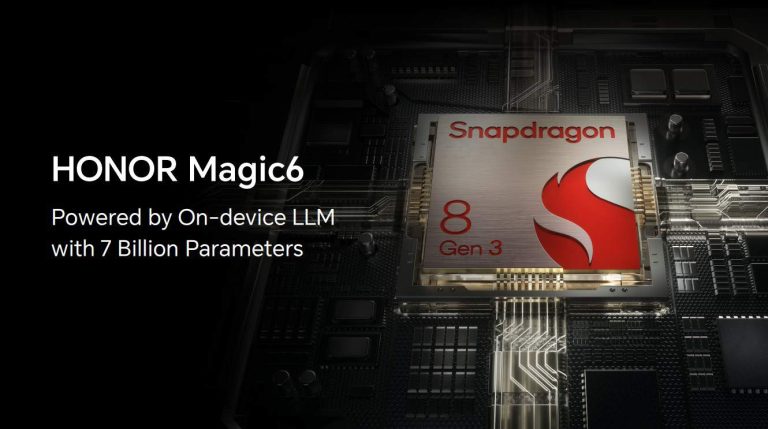
HONOR has just announced that its upcoming Magic6 flagship series will be fueled by the Snapdragon 8 Gen 3 SoC. That processor was announced by Qualcomm yesterday, and it’s a major improvement compared to an excellent Snapdragon 8 Gen 2 chip.
The HONOR Magic6 will be fueled by the Snapdragon 8 Gen 3
Having said that, HONOR also announced that the Magic6 will also come with a “cutting-edge” 7B model on-device large language model (LLM). It will provide “true individual personalized services”.
Considering that on-device AI will be a part of the picture, some advanced options regarding that will be on offer too. You’ll be able to create a personal short video just by “giving a command prompt to the on-device voice assistant”. Templates, themes, and music of the generated videos will also be customizable with additional prompts. Check out the demo video below.
The company demonstrated ‘Magic Capsule’ in Hawaii
On top of that, HONOR also demonstrated an eye-tracking-based multimodal interaction, which the company refers to as ‘Magic Capsule’. In addition to that, HONOR also demonstrated three key features of MagicRing: Connected Camera, Connected Input, and multi-device screen sharing. MagicRing basically relies on the Snapdragon Seamless tech that Qualcomm introduced. It allows for a variety of data to be exchanged between devices without a problem or power drain. The Magic Capsule demo is shown below.
https://youtu.be/YlY4Jbf-s9Q
In regards to specs, we don’t know what else will the Magic6 offer. It will come with high-end specifications, however, and probably in several different models. HONOR does put a lot of focus on the cameras in this series, so you can expect some changes in that regard too.
The HONOR Magic6 series will likely arrive in February, as part of MWC (Mobile World Congress) in Barcelona, but we’re only guessing based on previous launches.
Apple has officially released iOS 17.1. After a little over a month of beta testing, the first .1 update of iOS 17 is finally here. This is not a huge update, it’s more of a bug fixing update, with a few minor features being added. Things like the Journal app that Apple announced back at WWDC are not coming with this update. That is likely coming in iOS 17.2.
So what is new in iOS 17.1? Well, for starters, the Apple Music app is finally getting the ability to star songs, albums and artists and have them saved to your library. This feature is also going to help Apple Music with recommendations. It’s a bit surprising that something as simple as starring tracks has taken so long to come to Apple Music.
Additionally, AirDrop is getting a new “out of range” option. So you are able to still send files over AirDrop if your device is out of range of the sending device. The other big update is for the UK. Where those that use the Apple Wallet app will be able to connect their cards and see transactions as well as balances. Now those that were in the beta testing for this feature have said that the feature works, but it’s not that accurate. Basically, it’s not pinging your bank as often to get your transactions and balances. So you might not be able to trust them.
When can we expect iOS 17.2 beta?
Those of us that live life on the edge, and are always on the beta version of operating systems might be wondering when iOS 17.2 beta will start? Well, it will likely start tomorrow, or Apple could opt to wait until next week. Either way, it’s going to be very soon.
What can we expect in iOS 17.2? Well, we’re expecting to see the Journal app that was announced at WWDC. This is because the Journal app is still listed on the iOS 17 page on Apple’s website as “coming later this year”. And well, there’s not much time left in the year. Seeing as November is next week. We’d expect to see iOS 17.2 as the last major iOS update for the year, aside from some minor, 0.0.1 updates for bugs and security exploits.
Sure, emails are supposed to be professional, but there’s no rule stating that you can’t spice up an email with an emoji. You’ve been able to add emojis to your emails using Gmail for the web for a while, but you were always pretty limited. Well, according to a new report, the emoji picker for Gmail for the web will let you choose the gender and skin tone.
You’ve been able to change emojis using your phone for a long time. Using Gboard, all you have to do is hold your finger on the emoji you want to change. You’ll see a little panel pop up showing the different options that emoji have. After that, just choose the version that you want.
This only works for emojis that have different versions. This is important to know in case you’re trying to change the gender of the hamburger emoji.
The emoji picker on Gmail for the web now lets you choose gender and skin tones
When you’re using Gmail on the web, you have the ability to add emojis thanks to a dedicated emoji picker. While you’re typing, you’ll see the emoji icon in the toolbar to the right of the Send button. Clicking on it will bring up a simple board with emojis that you can choose from separated by category.
This is convenient if you need to add a simple smiley face or a thumbs up to end a business email. However, you weren’t able to change the emoji to express who you are. If you have a darker skin tone or if you’re a woman, you’re stuck with yellow male emojis.
Well, Google finally changed that. Starting Wednesday, Google will let you change the skin tone and gender of the emoji by clicking on the little downward-facing arrow right below the emoji. When you click on it, you’ll see the list of options pop up.
If you don’t see it right away, then you might just want to wait a bit. Google is still rolling this out.
The folks at 9to5Google have noticed some similarities between the Google News Following Tab and the Google Search Discovery feature. In a previous update to the Google News app, users were able to customize their following tab to their taste. This update lets users customize their news feeds by picking what publications they like, as well as what topics appeal to them.
Similarly to this update, the Google Search Discovery feature also gives users the content they wish to see. It does this by letting users control what news content gets to them with the help of the “Manage Your Interest” settings. From this settings option, users can let Google know what topics they have an interest in, and they can also block content from certain publications.
This gives users control over how they access news and what news content comes their way. For professionals, this is very important, as it helps them to focus on what matters to them. For a while, Google News didn’t give users the ability to select what content appealed to them, as they needed to shuffle through available news.
The Google News Following Tab is making the app more usable to a lot of people
For users like 9to5Google’s Abner Li, Google News was a no-go area when sourcing news. This is because of the busy layout of customizable content on the following tab. Instead, these users opt to source news on social media platforms like X, where they can follow their new sources.
There is always a need to keep a strict watch on the type of news you access online as a professional. The launch of Google’s For You tab a few years ago made finding news articles easier for users. Even though this update was an impressive improvement at its time, it didn’t give users a certain level of control accessibility.
In addition to giving users control over their news sources, the update uses AI to source what users might like. It figures this out from the type of news the user reads on the app regularly. But the following feature this previous update brought didn’t have all the sauce that users were looking for.
However, a few months ago, the Google News app got an update that users have been waiting for. Now, just like the Google Search Discovery feature, the Following Tab arranges news articles in an easy-to-access manner. With three cards for publications, topics, and cities, users can easily glance over the content they follow. Each card contains three articles on the said topics that users can tap to expand.
Google News users (on Android devices) around the world are getting access to the new Following feed. With this, they can better access content that appeals to them and they follow. Users of iOS devices and on the web will get the update in the coming weeks.