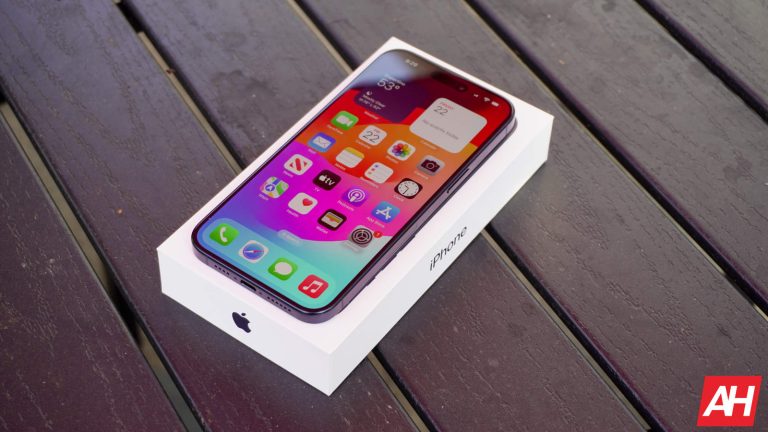
Over the past week, there’s been some reports about users with an iPhone 15 having screen burn in issues, already. Now the iPhone 15 has not even been out a month yet, so seeing screen burn in seemed kind of odd. And well, it was a software issue.
Apple issued a new beta for iOS 17.1 this week, it’s now in the Release Candidate stage, so we should see it coming to all iPhones next week – likely on Tuesday, October 24.
So what was the issue? Well, Apple had the iPhone 15 keeping the images on the display longer. So it wasn’t screen burn in but rather image retention being an issue. And that is an easy software fix, and good to see Apple addressing it so quickly. And this is not just an iPhone 15 issue, but some models from the iPhone 12 and iPhone 13 series were also affected. And should be fixed now with iOS 17.1.
Screen burn in vs image retention
These are two very different things actually. Image retention is usually related to a software concern that is not permanent. A lot of devices will keep the image up there longer, to make it seem faster, than redrawing the app every time. Especially if you are using the same app for a long period of time. We had a similar issue on the Pixel Watch last year. The reason for the Pixel Watch having this issue was AOD. But on the iPhone, this is happening to people not using AOD, so Apple is just keeping the image up on the display longer here.
Screen burn in is where you’ve had the same app on the screen for a long time, and it eventually burns into the display. This generally takes years to happen. You’ve probably seen it on the TVs at the airport that are playing CNN or CNBC all day, every day, for many years. You can see it where the lower-third is generally on those channels.
Good to see Apple has fixed this issue, along with a number of other issues in iOS 17.1.
Threads by Instagram is on a mission to earn that spot on your phone’s homescreen and it plans on doing that by regularly releasing new features that are of interest to its users. In its latest release, the company has revealed a few “secret” features that you may or may not know exist on the platform.
Head of Instagram and Threads boss, Adam Mosseri, revealed via a post a couple of tricks that the app can currently do. While these are definitely not mind blowing additions, they are neat little details that can enrich the app’s user experience.
Easy follow all mentioned on a post
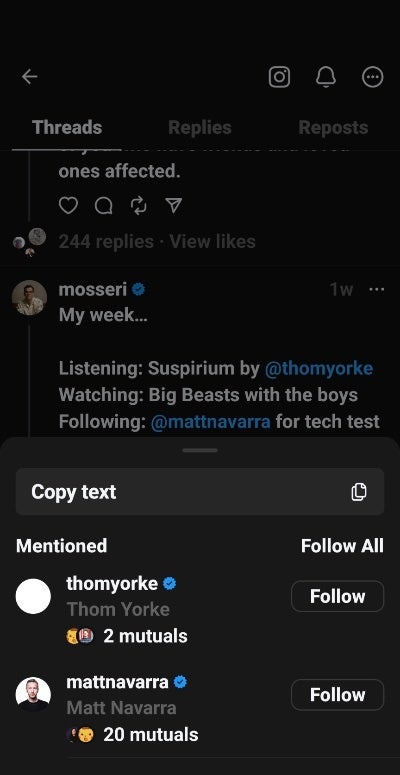
On the mobile apps, you can now long press on a post to follow everyone who is mentioned on it. A panel will popular at the bottom of the app showing you who was mentioned in the post. Here, you can either follow each one individually, or choose the “Follow all” option. As a bonus, there is also a “Copy text” option if you want to use that same text in a new post or share it to another app.
Copy/paste media attachments
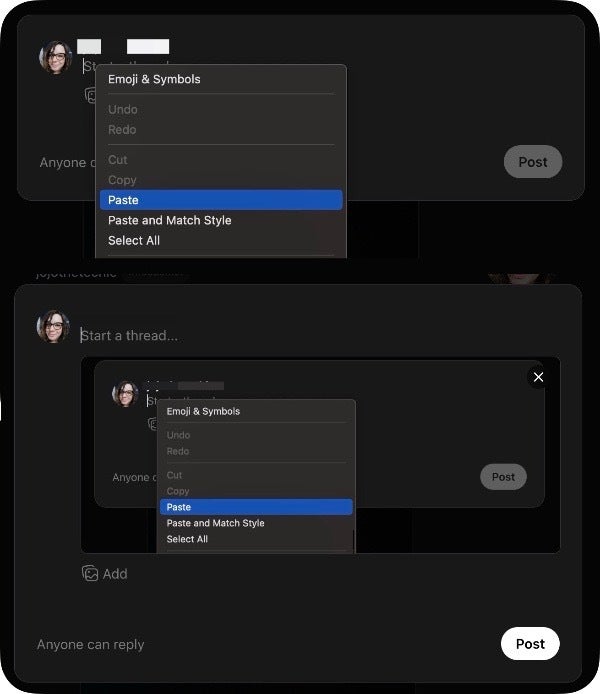
You can now copy and paste media attachments on the web to make posting easier. Previously, when composing a post you had to click on the media icon in order to attach an image or video from your device’s file manager. Now, it’s as easy as copy/paste, which can save you a ton of time when wanting to add something that’s already saved in your clipboard.
Tag Instagram accounts
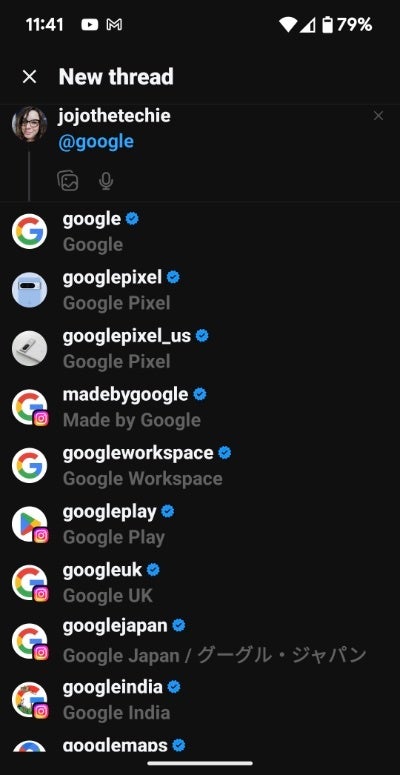
Not only can you tag other accounts within Threads, but you can also now tag Instagram accounts. When tagging, you can now see Instagram accounts populate in the autocomplete options. This is great if the account you want to tag has not signed up for Threads yet, but does have a presence on Instagram. Who knows? This might entice more Instagram users to sign up for threads and gain more exposure that way.
Hopefully Threads continues to add on helpful features such as they have been lately. The platform’s daily user base continues to request new features regularly and these are seemingly not falling on deaf ears. We will continue to report new features here as they are revealed.
Following the rumors about a zero-day flaw in the Signal app, the developers have debunked the reports. As explained, they found no traces of any zero-day vulnerability in the app, asking for evidence (if any) in this regard.
Signal Confirms No Truth In Zero-Day Rumors
Recently, rumors about a serious zero-day vulnerability in the Signal app stirred up the news world, worrying the users. While no specific details surfaced online, it allegedly affected the Signal app’s link preview feature, as the users posted about it on various platforms.
It appeared that the vulnerability in the generated link previews could allow an adversary to take complete control of the target device during link preview generation.
Apparently, the rumored issue seemed viable, as such vulnerabilities have been reported in the past, too. However, as the security community clarified, while asking for genuine reports and evidence regarding the rumored vulnerability, Signal link previews work differently from most other apps.
Specifically, Signal generates link previews on the recipient user’s device instead of server-side, which reduces the probability of the spread of malicious content. And if any vulnerabilities affect the link preview feature, disabling previews won’t really help to prevent the exploit.
As the reports gained traction, Signal finally issued an official statement debunking the rumors. According to its post on X (formerly Twitter), Signal confirmed detecting no such vulnerabilities in the app. Nor did it receive any bug reports from the researchers.
We also checked with people across US Government, since the copy-paste report claimed USG as a source. Those we spoke to have no info suggesting this is a valid claim.
We take reports to [email protected] very seriously, and invite those with real info to share it there. 2/
This official statement finally stopped the rumor mill, and some users who initially posted about the matter also posted clarifications to prevent misinformation.
Apparently the information I had been given earlier was false. Please disregard my tweet from yesterday about Signal having a link preview vulnerability.
I spend my life fighting disinformation online, so I always regret when I accidentally spread it. My apologies. https://t.co/zUGlMClfWZ
Hence, now, Signal users may breathe a sigh of relief as their preferred messaging app remains safe. Nonetheless, what remains crucial is keeping the respective devices up-to-date with the latest Signal releases to receive all bug fixes and security patches in time.
Sure, you can keep your Google Pixel 8 charged with a traditional charger, but you can also charge it wirelessly. There are a ton of great wireless chargers that you can buy for the Pixel 8. With such a large selection to choose from, it can be hard to narrow them down to the best one for you. However, we’re here to help you with that. Here’s a list of some of the best wireless chargers for your Pixel 8 or other phones.
All wireless chargers serve the same purpose; if you’ve seen one, you’d think that you’ve seen them all. However, this list consists of a selection of different wireless chargers that serve different purposes for different people. There are ones that are more convenient, more affordable, more portable, etc. So, we’ll show you wireless chargers for a wide range of uses.
Lastly, if you’re still looking to put in your order for the Pixel 8, you can do so with the links below. There’s a link for the Pixel 8 and one for the Pixel 8 Pro.
Best wireless chargers for the Google Pixel 8 wireless chargers
So, let’s get started with the list. This list will be updated each month, so feel free to check back every now and then. You never know if you’ll stumble upon your new favorite wireless charger.
Official Google Pixel Stand (2nd Gen)
Back when the Pixel line of phones was still pretty new, the company introduced its proprietary wireless charging stand. Called the Pixel Stand (2nd Gen), this $79.99 stand is optimized perfectly for the Pixel 8 and other Pixel devices. This is important, it will charge your device based on how Google built the phone.
It’s a stand, so you’ll be able to stand your phone up in portrait mode. This is great if you still want to use your phone while it’s charging. That’s great because you’ll be able to hold your head in a more natural position rather than hunching over a phone that’s facing up on a table.
Another great feature of this stand is the fan that keeps your phone cool while charging. Excessive heat can cause your phone’s battery to degrade faster, so keeping it cool is important. The fan will turn on when your phone is heating up to keep it cool
There are those times when you just need a device to cover the basics, and that’s the Anker 315 Wireless Charger. This is a standard wireless charger that will get your phone charged up safely. What’s also neat is that it only comes in at $14.99
This is a simple wireless charger that can be packed away in any bag. It’s only 8.5mm thick, and it’s only as wide as need be. So, you won’t have to worry about it taking up too much space. You can even stuff it in your pocket if you need to.
This is a 10W wireless charger, which means that you’ll be able to charge your phone with a decent speed. It’s not exactly a speed demon, but that’s not what it’s meant for. In fact, keeping a lower wattage means that it will charge your phone safely compared to other chargers. If you want to keep your phone’s temperature down while charging, then this one is the charger for you.
Sometimes, your wireless charging needs extend past one device. When that happens, you’ll need more than just a wireless charger. This is the SwanScout Wireless Charging station. It goes above and beyond, and you can have it for $45.99. That’s a great deal for what you’re getting.
With the SwanScout Wireless Charging Station, you can charge three devices at a time. There’s an upright stand for your phone to stand. Right behind the stand, there’s a smaller pad for your Pixel Buds (it’s not compatible with the Pixel Buds A). right above that pad, there’s one more wireless charging pad, and this is for your Pixel Watch (not compatible with the Pixel Watch 2).
If you don’t want to stand your phone up, don’t worry, this charger is collapsible. You can tip the charging stand down so that it sits flat. You can charge your phone like that or collapse it in order to pack it away. This makes it much easier to travel with.
If you need a stylish wireless charger that will charge two of your devices, then look no further than the iOttie iON Wireless Duo. This is a dual-charging station that’s made for your Pixel devices. You get this station for a reasonable $49.99.
The iOttie iON Wireless Duo can charge your newer Pixel, and it can also charge your older Pixel phones. You can stand your phone up on the stand or lay it down in landscape mode. It will charge either way. Right next to the stand, there’s a charging pad for your Pixel Buds. So, you won’t have to settle for charging one device at a time.
The charging stand can charge your phone with 10W of power. That’s not extremely fast, but it’s safe. As for the other charging pad, it will charge your earbuds with 5W of power. That’s decent enough to charge them up in good time. You’ll still be able to top them pretty quickly.
Wireless chargers don’t have to be boring. Sometimes, you want accessories with a little flair. The Sidpro wireless charger stands out because of its unique light band around it. It’s very nice to look at while your phone is charging. If you’re searching for more value, you can pick up a pack of two for just $22.99.
It’s compatible with a handful of different phones, and the Pixel 8 is one of them. This charger is decently powerful delivering a 15W current. It’ll charge your phone in a decent amount of time. While charging your phone in good time, it still charges it safely. It has a proprietary chip inside that protects it from over-charging.
You’re likely to have a case for your Pixel 8. Well, don’t worry, you’ll be able to charge your phone through the case. You’ll be able to charge it through cases that are up to 5mm thick.
The FORYOU Wireless Charging Station goes all out for only $49.99. This is more than just a wireless charging station, it’s a central charging hub that will fill many of your charging needs. It’s compatible with Pixel phones, but it’s also compatible with a wide range of other phones, so you shouldn’t worry about what devices you have.
Starting off, this charging station has two wireless charging mats that can charge your phone or earbuds. They both offer a high wattage so that you can charge your devices pretty quickly. The back mat is raised so you can easily access the device sitting within it.
Aside from that, there are six USB ports on the back. There are two normal USB-A ports, two fast-charging USB-A ports, and two USB-C ports. Altogether, you can charge up to eight devices at once. So, with this charging station, most of your charging needs are pretty much met.
There are those times when you need to charge your phone while away from an outlet. This is where portable chargers come in, and the FOCHEW Wireless Portable Charger offers plenty of functionality for just $49.95. It’s a 2-in-1 portable charger that gives you two ways to charge your phone.
This is a massive 30,800mAh charging bank, so it can charge your phone multiple times before it throws in the towel. There’s a wireless charging pad on the top that sends a 15W current. This will charge your devices fairly quickly if you choose to charge wirelessly.
Aside from the wireless charging pad, there are also three USB charging ports. There are two USB-A ports with a USB-C port. you get 25W charging with these ports. So, it’s an all-around useful portable charger.
In this highly connected world, teenagers excessively using social media apps like Instagram and TikTok have had a big impact on their mental health, leaving many depressed and plagued with self-doubt. This mental health epidemic has prompted the US government to propose measures for the safety of children online, suggesting a ban on kids’ use of social media apps. Now, in a recent development, Google has responded to these proposals, stating that any regulations should be cautious not to ban children from using social media while also preserving crucial safety measures.
According to Google’s blog post, the company does not agree with the implementation of age-verification technology since forcing users to submit government IDs for access could potentially hinder their ability to access vital information. However, it is important to note that the company did acknowledge the importance of implementing legislative models based on age-appropriate design principles.
“We agree with public health and mental health experts that technology companies have a responsibility to design and build better online experiences,” said Google.
What does the law focus on?
The current version of the Kids Online Safety Act (KOSA), backed by lawmakers like Sen. Elizabeth Warren, aims to protect children from harmful online content by implementing measures such as age verification. While the law aims to foster a healthier environment for children, Google highlighted some side effects of the bill since it would ban teenagers from using social media apps and treat older teenagers similar to younger kids.
However, Google did align with the sentiments of Sen. Richard Blumenthal and Sen. Ed Markey, who rallied about banning personalized ads for individuals under 18. Moreover, the company also supports age verification systems for adult content apps like those featuring gambling or pornography.
“Today’s children and teens are growing up in an increasingly digital world. We take seriously our responsibility to promote positive online experiences, and we support regulatory approaches that promote both online safety and balanced practices,” reads Google’s blog post.
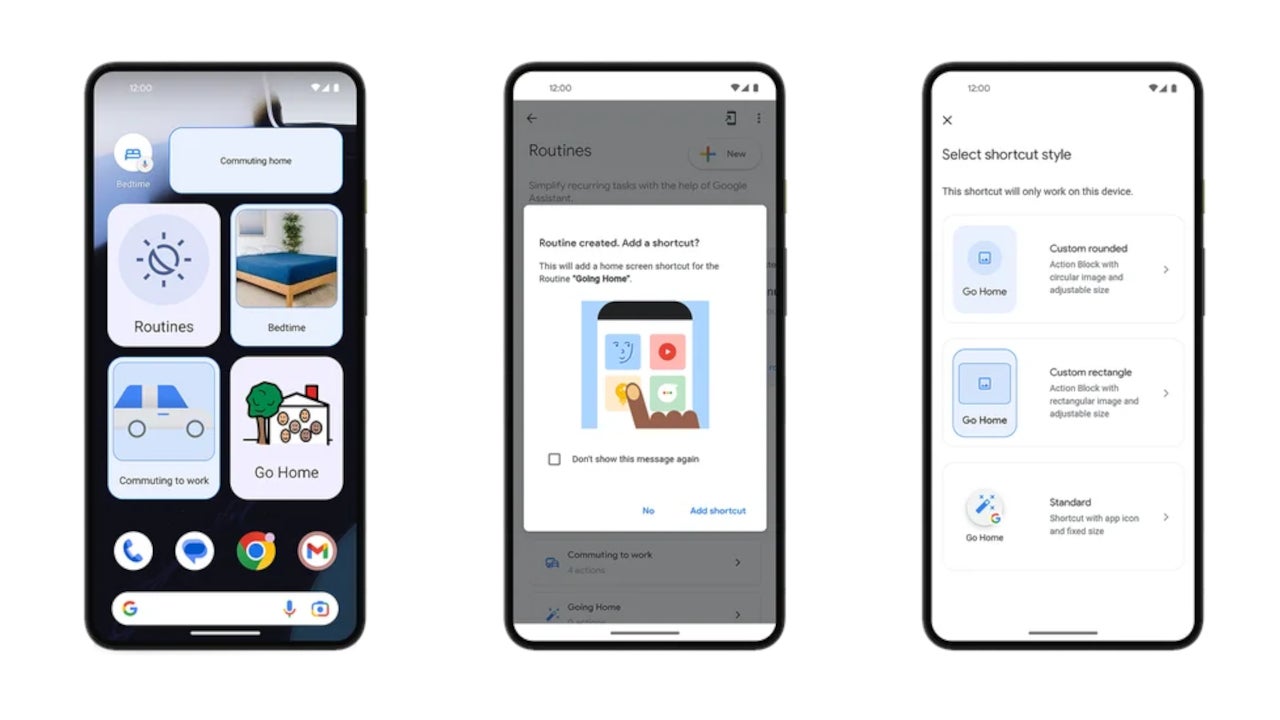
Google announced a set of changes to some of its apps that further enhances the functionality of its ecosystem. Google Assistant is one of the company’s products that received some improvements too, so if you’re using Routines often, you’ll find the new changes quite useful.
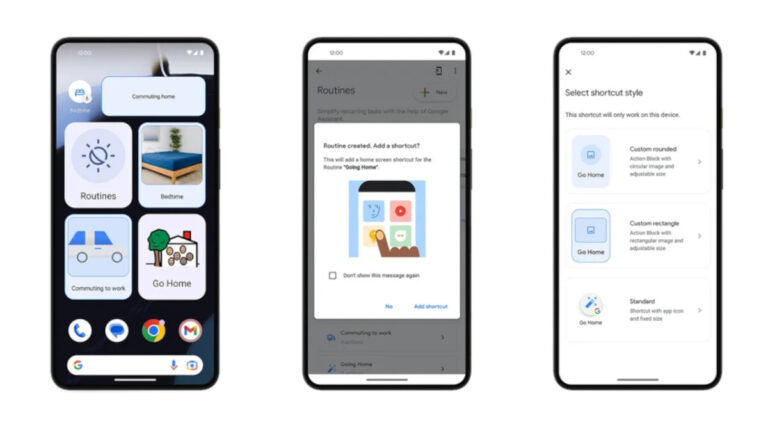
Starting this month, those who use Assistant Routines to get useful info or automate daily tasks will have new customization options at their disposal. Additional functionality inspired by Action Blocks is coming to Assistant Routines allowing users to further customize those routines.
According to Google, “research has shown that this personalization can be particularly useful for people with cognitive differences and disabilities,” but the company hopes that the new changes will bring additional value to even more people who use Assistant Routines.
It’s worth noting that thanks to the new changes, you will no longer have to download the Action Blocks app, which makes routine actions easier with customizable buttons on your Android home screen.
However, the Action Blocks app also includes an Accessibility Service, which allows users to connect a switch, so if you’re planning to use or already use this service, you’ll probably have to keep the app installed on your phone.
Malware distribution methods have changed significantly in the cyber threat landscape. Data analysis shows that Microsoft Office document files are no longer the preferred medium for delivering malware.
Cybercriminals are using more complex and elusive methods, such as alternative file formats and evasive techniques, reads the ASEC report.
DocumentFREE Demo
Implementing AI-Powered Email security solutions “Trustifi” can secure your business from today’s most dangerous email threats, such as Email Tracking, Blocking, Modifying, Phishing, Account Take Over, Business Email Compromise, Malware & Ransomware
The New Trend
MS Office document files have been used for a long time to spread malware, from simple information stealers to sophisticated APT attacks.
However, there is a clear change in how malware is delivered, affecting the role of MS Office products in this scenario.
In the past, attackers used macros in Word and Excel documents to download more malware from malicious URLs.
However, this method has changed to using compressed executables in formats like ZIP, R00, GZ, and RAR or disk image files like IMG as email attachments.
This means that fewer Word and Excel files contain malware through hidden Office VBA macro code or Excel 4.0 (XLM) macros.
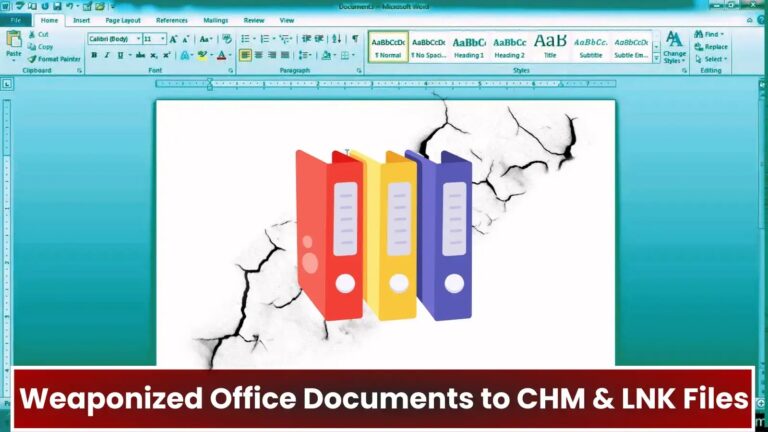
1-1. CHM (Windows Help Files)
There was a big increase in the use of Windows Help files (*.chm) to distribute malware in the second quarter of 2022.
This happened at the same time as the decrease in the use of Word and Excel files for malware distribution.
This shows that attackers are using different file formats that are not part of the MS Office suite to target users.
These CHM files often have catchy names, such as ‘COVID-19 Positive Test Results Notice,’ to attract users’ attention.
1-2. LNK (Shortcut Files)
In the second quarter of 2022, the notorious Emotet malware also changed its distribution method from MS Office products to LNK files.
Emotet had previously used VBA macro codes and Excel 4.0 (XLM) macros to spread malware, so this change is important for anti-malware solutions.
The background of these attacks suggests that the same attacker switched from MS Office to LNK files, following a similar pattern as the malicious CHM distribution process.
The change from using Word and Excel files to deliver malware has two benefits for cybercriminals.
It makes it harder to detect malware in document editing programs by static analysis, and it also makes it harder to identify the malware itself.
Attackers are using normal Windows processes and running malware without creating any files when they load malicious data, which makes it more difficult for security measures.
MS Office files are less used for distributing malware due to Microsoft’s announcement in early to mid-2021 about disabling Excel macros by default.
As a result, attackers have looked for new ways to avoid detection by anti-malware products.
Protect yourself from vulnerabilities using Patch Manager Plus to patch over 850 third-party applications quickly. Take advantage of the free trial to ensure 100% security.
The US is pushing member countries of the Counter Ransomware Initiative to stop paying ransoms to cybercriminals.
As the White House prepares to host its annual International Counter Ransomware Initiative (CRI) summit, Bloomberg reports that the US is pushing other countries to stop paying ransoms to cybercriminals.
The CRI wants to enhance international cooperation to combat the growth of ransomware, and its 47 members will convene in Washington for its annual summit on October 31, 2023.
“The work of the CRI supports the implementation of the endorsed UN framework for responsible state behavior in cyberspace, specifically the voluntary norm that States should cooperate to exchange information, assist each other, prosecute terrorist and criminal use of ICTs and implement other cooperative measures to address such threats.”
White House Deputy National Security Adviser Anne Neuberger said ransomware payment bans have been a topic of discussion among members of the CRI, and she noted that several other countries have also raised the issue, but no decisions have been made.
The reasoning is very understandable. Ransomware has grown to be a formidable industry over the years and if it was possible to stop the cashflow in that direction, it would soon collapse. Not only would the seasoned criminals turn to other sources of income, the entry-level jobs would disappear and the funds for research into new tactics would dry up.
If an agreement is reached, this would only bind government organizations, but even that could potentially have a large impact. Other experts believe that the energy spent on achieving this would be more effectively spent on helping less well-equipped governments improve their cyber-defenses.
If we could eliminate the low-effort attacks on long-known vulnerabilities where patches are available but unapplied, this could have at least the same kind of impact.
And to be fair, several US states have banned local government entities from paying ransoms connected to attacks. So far, this really hasn’t stopped them from being targeted. In 2021, The FBI even advised against making ransom payments illegal because it would only open up another avenue of extortion.
One might think that now that most organizations have their backup strategies sorted out, it shouldn’t be too hard to convince victims not to pay the ransom. Unfortunately many ransomware gangs have adapted the double extortion strategy where stolen data extracted from the victim’s systems during the attack is used as extra leverage. And when sensitive data is stolen, having a backup does not take away the threat.
Also, it’s not fair to think that all government organizations in the member states have their security and backup strategy at the required level to safely survive a ransomware attack. But we feel it is true that they should be setting an example by investing in their security posture and by refusing to pay the criminals.
Neuberger said that she would like participating governments to publicly commit to not make ransom payments, but if members can’t agree to the statement in advance of the meeting, then it will be included as a discussion point.
Prevent intrusions. Stop threats early before they can even infiltrate or infect your endpoints. Use endpoint security software that can prevent exploits and malware used to deliver ransomware.
Detect intrusions. Make it harder for intruders to operate inside your organization by segmenting networks and assigning access rights prudently. Use EDR or MDR to detect unusual activity before an attack occurs.
Stop malicious encryption. Deploy Endpoint Detection and Response software like Malwarebytes EDR that uses multiple different detection techniques to identify ransomware, and ransomware rollback to restore damaged system files.
Create offsite, offline backups. Keep backups offsite and offline, beyond the reach of attackers. Test them regularly to make sure you can restore essential business functions swiftly.
Don’t get attacked twice. Once you’ve isolated the outbreak and stopped the first attack, you must remove every trace of the attackers, their malware, their tools, and their methods of entry, to avoid being attacked again.
Malwarebytes EDR and MDR removes all remnants of ransomware and prevents you from getting reinfected. Want to learn more about how we can help protect your business? Get a free trial below.
The Xiaomi 14 series launch date has been tipped. According to a leaked image (shown below the article), HyperOS 1.0 will launch on October 31 in China, and with it, the Xiaomi 14 series. Do note that we don’t know the source of this image, so take the info with a grain of salt.
The Xiaomi 14 launch date has been tipped, HyperOS coming too
Xiaomi already confirmed that HyperOS will debut on the Xiaomi 14 series, so the two will launch at the same time. In any case, Evan Blass also had something to add to the mix.
The tipster said that Xiaomi is “fairly close” to introducing the Xiaomi 14 series. He also said that both standard and ‘Pro’ variants will get brand new Leica Summilux lenses. Those are allegedly the best the company ever employed.
The Xiaomi 14 Pro design did leak not long ago. Its CAD-based renders appeared to reveal flatter sides than last year. The phone still features rounded corners, but a different-looking camera island on the back.
The display on the phone will be flat this time around, it seems. The bezels will be very thin, maybe even uniform. A display camera hole is once again located at the top of the display.
A new Leica lens will be included, and hopefully variable aperture too
Now, the Xiaomi 13 Pro already includes a 1-inch camera sensor from Sony. Will Xiaomi use that same sensor this time around? Well, it’s possible, let’s just hope the company will add variable aperture to the mix.
The Xiaomi 13 Ultra offers a 2-stop variable aperture, while Huawei ups that to a 10-stop variable aperture in its most powerful smartphones. Will Xiaomi take the next step? Well, let’s hope so, it would certainly help the camera performance.
Do note that the Xiaomi 14 Ultra is also rumored to arrive, but chances are it will launch next year, not at the same time as the other two models.
Security researchers have discovered new spyware targeting Android users in Israel. Threat actors are using a fake version of the “RedAlert – Rocket Alerts” app to steal information from the victim’s phone. The app can collect the user’s contact list, messages, call logs, phone IMEI, logged-in emails, and more data.
Threat actors target Israeli Android users with spyware-laced “RedAlert” app
RedAlert – Rocket Alerts is a genuine open-source app that Israeli citizens use to get real-time alerts about incoming rockets or missiles. The app has been around on the Google Play Store for a long time now but has seen a sudden rise in popularity after the Israel-Gaza conflict escalated earlier this month. Reports say more than 5,000 rockets have been launched into the country by Hamas since October 7.
In the wake of this war, Israeli citizens are relying on the RedAlert – Rocket Alerts app to get timely alerts about airstrikes and seek safety. Developed by Elad Nava, the app has already garnered more than one million downloads on the Play Store. It’s also available for iPhones on the Apple App Store. Unfortunately, some people search for apps online rather than in the stores. Threat actors are exploiting this to trick them into downloading spyware.
According to Cloudflare, the people behind this attack created the website “redalerts[.]me” on October 12, 2023, to distribute the spyware-laced app. It includes two buttons to download the app for Android and iOS platforms. The latter button takes users to the genuine app on the App Store. However, the Android download button downloads a fake APK directly onto the user’s device.
Unsuspecting users who visit the website looking for the RedAlert – Rocket Alerts app think they have downloaded the genuine app and proceed to install it. Since the fake version is built using the real app’s source code, it offers the same functionality. So most people don’t notice any anomaly after installation either. However, the fake app requests additional permission from the user to collect data that it doesn’t require.
This attack reminds us about the dangers of sideloading apps
When launched, the spyware version of RedAlert – Rocket Alerts abuses the permissions to steal data and uploads it to servers operated by the threat actors. The app employs anti-analysis tactics such as anti-debugging, anti-emulation, and anti-test to avoid the detection of its malicious activities. However, anyone can differentiate between the real and the fake app by checking permissions. The latter asks for too many unnecessary permissions.
This attack once again demonstrates the dangers of sideloading apps from unknown sources. You should always download apps from official sources, such as the Google Play Store. The website used to distribute the spyware version of the RedAlert – Rocket Alerts app has been taken down, but the attackers could soon launch a new domain. If you’re using this app, make sure that it’s downloaded from the Play Store and update it to the latest version.