X, formerly known as Twitter, finds itself entangled in legal issues yet again. In a recent development, a legal marketing company named X Social Media has slapped X with a lawsuit, claiming that the new name of the social media platform infringes on its trademark, which features the letter “X.” This adds to the company’s legal challenges, with another lawsuit now on the horizon.
The National Labor Relations Board (NLRB) has initiated legal action against X, alleging that the company unlawfully terminated an employee. As reported by CNBC (via Android Headlines), the official complaint asserts that X fired the employee for criticizing its return-to-office policy following Elon Musk’s takeover last year.
According to the NLRB, X’s termination of Yao Yue, a principal software engineer, shortly after Musk took over Twitter, violated the National Labor Relations Act. The NLRB contends that X fired Yue after she sought to organize fellow Twitter employees who were dissatisfied with Musk’s sudden changes to the company’s work requirements.
Musk’s alleged statement, “If you can physically make it to an office and you don’t show up, resignation accepted,” triggered concern and outrage among several employees, according to the NLRB. Yue responded with a tweet encouraging employees not to resign but to let the company fire them, stating, “You gain literally nothing out of resignation.” She also shared a similar message in the company Slack channel.
Yue’s messages received responses from many colleagues, as outlined in the legal charge document. Meanwhile, Musk instructed his management team to monitor online posts and Slack communications “to identify who should be fired,” according to the document.
Yue got the boot five days later, with the reason given as a breach of some unspecified company policy, according to the legal document. “Ms. Yue alleges that Twitter chose her for layoff in retaliation for her attempt to organize her co-workers not to resign, so they would have better legal footing to challenge any separation from Twitter,” the document stated.
The NLRB is throwing shade at X, claiming the company has been “interfering with, restraining, and coercing employees in the exercise of the rights guaranteed” under national labor law.
To fix what it calls unfair labor moves, the NLRB wants to make things right for Yao Yue. It’s looking to cover any money hits she took directly or could see coming, plus other damages from what it is calling X’s shady business. Mark your calendars for January 30; that is when the case heads to a hearing in San Francisco.
Discord has become a household name in online gaming and digital communication.
Gamers, friends, and families flock to this platform to chat, share, and collaborate. Discord is one of the most widely used communication tools worldwide, with millions of users.
Yet, this widespread popularity has also attracted a new audience – malicious actors. The Trellix Advanced Research Center has recently unearthed a disturbing trend: cybercriminals exploit Discord, turning it into a fertile ground for their wicked activities.
In the past, we’ve witnessed malware that abused Discord’s infrastructure, mainly focusing on information theft and Remote Access Trojans (RATs).
The cybersecurity landscape is experiencing a pivotal moment as a new threat emerges.
Recently, Trellix researchers have come across a sample specifically aimed at vital Ukrainian infrastructure.
This marks a significant shift in the Advanced Persistent Threat (APT) activity, as Discord has become the latest platform to be targeted.
DocumentFREE Demo
Implementing AI-Powered Email security solutions “Trustifi” can secure your business from today’s most dangerous email threats, such as Email Tracking, Blocking, Modifying, Phishing, Account Take Over, Business Email Compromise, Malware & Ransomware
The findings revealed that multiple malware families have started leveraging Discord, with clear patterns emerging regarding when this abuse began.
The Discord Conundrum
Discord is a web-based application that functions over HTTP/HTTPS. This very feature is what makes it enticing to malicious actors.
It is prevalent not only in casual networks but is also extensively enabled in corporate environments.
This blending of contexts provides a convenient camouflage, hiding their activities from security software and researchers.
Malicious software’s exploitation of Discord predominantly focuses on two techniques: downloading additional files and exfiltrating information.
One favored method is through Discord’s Content Delivery Network (CDN), allowing attackers to upload files that can be downloaded later.
The modus operandi appears to be quite straightforward. The perpetrator fabricates a Discord account to transfer the malicious file, which they will then share discreetly through private messaging.
After uploading a file, it is not necessary for it to be made public in order for it to be accessible. The link to the file can be easily copied and used to download the “second stage” through a simple GET request.
Discord’s Webhooks: A Malicious Backdoor
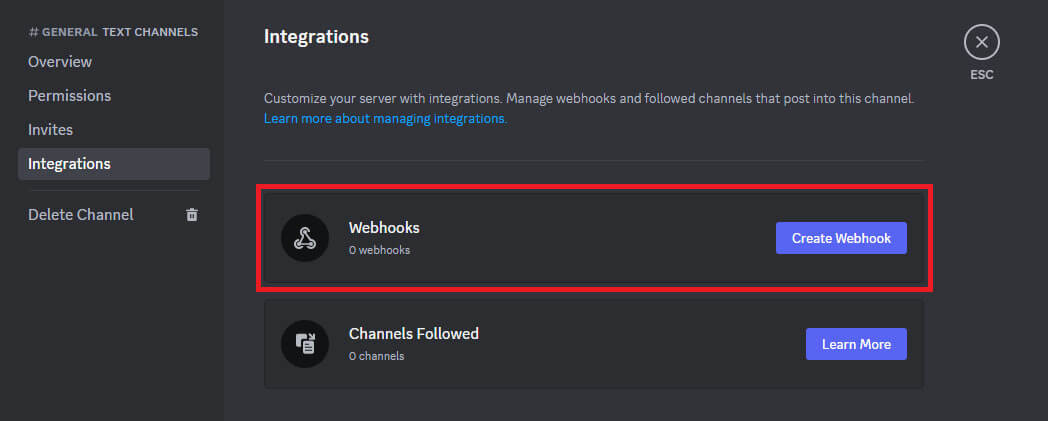
Data exfiltration through Discord is accomplished using webhooks, an automation feature that allows attackers to send information and files from the victim’s machine.
This process involves creating a webhook associated with a specific channel on a private server, making it an ideal method for extracting sensitive data.
Webhook creation on Discord (source: trellix.com)
Historically, APT groups have refrained from Discord due to the platform’s limitations. It’s a double-edged sword, as Discord can access their data and potentially close their accounts.
However, a recent discovery of a sample targeting Ukrainian critical infrastructures suggests a possible change in this trend.
While the sample isn’t definitively linked to a known APT group, it’s a development that raises concerns and requires ongoing investigation.
Technical Analysis and Discoveries
The technical analysis of the sample in question reveals a multi-stage attack involving PowerShell scripts and Discord’s webhooks for data exfiltration.
The final payload aims at gathering information from the victim’s system. Interestingly, the malware families use Discord for their activities.
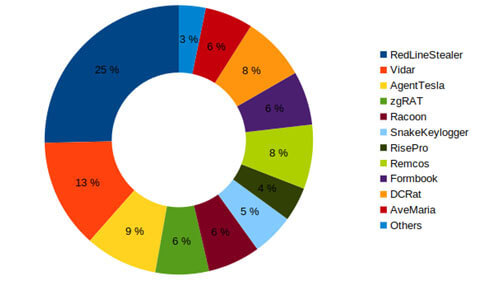
Threatray’s analysis shows the prevalence of these activities starting in late 2021, with malware families downloading a variety of payloads via Discord’s CDN.
Most frequently downloaded malware families via Discord’s CDN
Discord’s webhooks have also become popular for malware families looking to exfiltrate stolen data.
The data researchers highlight the critical malware families exploiting this method, including Mercurial Grabber, AgentTesla, and Umbral Stealer.
The usage of Discord by APT groups is a recent development, signaling a new and complex dimension of the threat landscape.
While APTs may employ Discord for exploration or early-stage activities, they may still rely on more secure methods for later stages.
However, general malware poses a different challenge. From trojans to ransomware, they have been using Discord’s capabilities for years, extending the range of business threats.
To ensure the proper detection of these malicious activities and safeguard systems, monitoring and controlling Discord communications have become essential, even to the extent of blocking them if necessary.
Protect yourself from vulnerabilities using Patch Manager Plus to patch over 850 third-party applications quickly. Take advantage of the free trial to ensure 100% security.
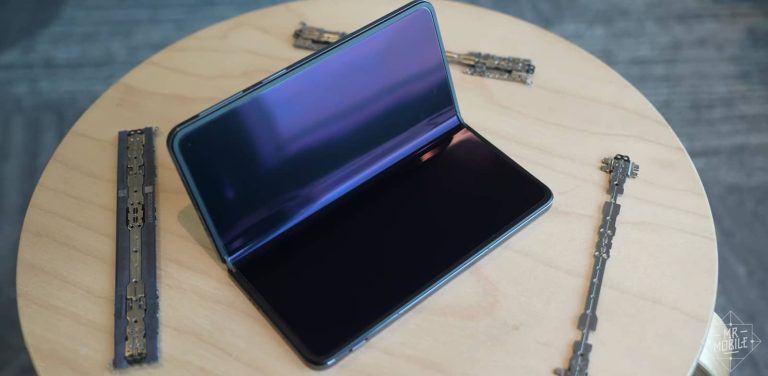
A new OnePlus Open video gives us a closer look at the phone’s hinge, and the company’s durability testing process. This video comes from Michael Fisher aka MrMobile, one of the biggest fans of foldable smartphones in the industry.
New OnePlus Open video details its durability testing process & hinge
OnePlus invited MrMobile to China to check out some of the phone’s internals, and the durability testing process. The video has a duration of 10 minutes, and it’s embedded below the article.
Now, OnePlus is using a lighter alloy this time around, and also carbon fiber in order to make the phone as light as possible. On top of that, Cobalt Molybdenum and Zirconium are used to cut down weight, while keeping the overall quality of the product.
OnePlus even included a drainage system inside the hinge, in case water ends up there. As you’ll see in the video, the phone has been thoroughly tested for water resistance, while it has also been dropped a number of times to guarantee its quality.
Various tests are conducted by OnePlus
There are also button tests, charging tests, and fold tests conducted by the company. The video embedded below does reveal a lot of information about that. OnePlus actually dropped the phone from 1 meter 30 times, repetitively, as part of its testing.
The company even threw the device in a tumble machine, where it tested its resistance. You’ll see all of those devices and tests in the aforementioned video.
That being said, the source also shows us the phone’s design, to a degree. He was not allowed to show us the back side of the device, nor anything that lies under the lock screen (software-wise). A couple of images are shown in the gallery below, in case you’re interested. More are available in the provided link.
OnePlus will announce its first foldable smartphone, the OnePlus Open, on October 19. The OPPO Find N3 will look exactly the same, and will be announced on the same day.
The National Labor Relations Board (NLRB) has filed a case against X (formerly known as Twitter) for illegally firing an employee. The official complaint states that the company fired the employee for criticizing its return-to-office policy after the Elon Musk takeover last year, CNBC reports.
X sued for firing an employee who criticized its in-office work policy
In October 2022, Elon Musk completed his $44 billion purchase of X (called Twitter then) and immediately announced several changes. He laid off thousands of employees to reduce operational costs and asked the remaining people to work overtime to reshape the social networking app according to his vision. To pull this off as early as possible, Musk urged all employees working remotely to return to offices.
The new X owner allegedly threatened to fire those who didn’t comply. “If you can physically make it to an office and you don’t show up, resignation accepted,” Musk told employees, according to the NLRB. Unsurprisingly, many workers were upset with the sudden change in work policy. The official complaint says employees expressed “concern and outrage” over Musk’s directive to return to the office immediately.
Yao Yue, who was a principal software engineer at X and had worked at the company for 12 years, raised her voice against it. “Don’t resign, let him fire you. You gain literally nothing out of resignation,” she tweeted shortly after Musk’s ultimatum. Yue also posted the same message on one of the company’s official Slack channels, encouraging co-workers to not quit and instead let X fire them. Many of her colleagues responded.
In the meantime, Musk directed the management team to scan Slack and online platforms to identify employees “who should be fired.” Five days later, X fired Yue saying that she violated a company policy, though it failed to specify the policy in question. “Ms. Yue alleges that Twitter chose her for layoff in retaliation for her attempt to organize her co-workers not to resign, so they would have better legal footing to challenge any separation from Twitter,” the NLRB said.
X violated the National Labor Relations Act
According to NLRB’s complaint filed on Friday, X violated the National Labor Relations Act in firing Yue. In its complaint, the Board added that the company has “been interfering with, restraining, and coercing employees in the exercise of the rights guaranteed” under national labor law.
It’s seeking to “make Yao Yue whole for any direct or foreseeable pecuniary harm, as well as other consequential damages suffered as a result of Respondent’s unlawful conduct.” The NLRB is also seeking the court to provide “all other relief as may be just and proper to remedy the unfair labor practices alleged.” A hearing on the case will take place on January 30, 2024, in San Francisco.
In the fast-paced world of mobile tech, a quick update can work wonders for resolving glitches in apps or devices. We’ve seen this in action with the latest iPhone 15 Pro and iPhone 15 Pro Max, where an update tackled the overheating issue. The iPhone 12 also had its exceeding radiation levels addressed with an iOS update in France. Similarly, Google recently addressed a reported problem concerning Android Auto not displaying the navigation bar.After confirming the issue with the Android Auto app last week, Google swiftly rolled out an update to fix it (via 9to5Google). If you’ve been facing the missing navigation bar problem, head to the Play Store. Check for updates for both the Android Auto app and the Google app, ensuring the latter is at version 14.40.33 or higher.
While Google sorted out that issue, it appears Android Auto has more challenges. Some early users (yes, some lucky people already have them) of Pixel 8 and Pixel 8 Pro have reported connectivity issues when trying to link their smartphones to Android Auto.
This problem manifests as either the phone being unable to initiate Android Auto or the app getting stuck on setup screens. Google has promptly addressed the situation by acknowledging it on their work-in-progress list. The company urges affected users to submit bug reports for further investigation by the Android Auto team.
With the recent 10.6 Android Auto update, Google not only tackled the navigation bar issue but also introduced a practical “Disconnect” button. This feature provides an easy way to end an Android Auto connection with a simple tap, allowing you to use your phone independently. A small but handy update, considering the previous hassle of disconnecting from the system.
If you’ve used an Android phone, then you should know what the Discover feed is. This is a feed of fresh headlines that you’d be interested in. This is based on your preferences and your history. The Google Discover feed is a staple for Android users, and it could be making its way to desktop users.
When you set up a new Android phone, the Discover feed will most likely come already enabled. When you swipe left on your home screen, you’ll see the feed. Depending on the version of Android and who made your phone, you’ll be able to disable it in different ways.
However, if you do want to keep up with the current events, then it’s something you’ll want to keep around. You’ll be able to go through and select the stories that you want to see more of and the ones that you don’t want to see. This way, you’ll be able to refine your feed to only show the news that you want to see.
The Discover feed could be coming to desktop users
If you’re used to experiencing the Discover feed on your phone, then you’re missing out when you go to your desktop. You’re not greeted with your headlines when you go to the Google website, and the company wants to change this. According to a report from MSPowerUser, Google has begun testing a Discover feed for desktop users. This test is limited to India for the moment.
After the change, You’ll see several columns of news headlined under the search bar on the Google website. This will be a major change, as we’re all used to seeing the vast amount of empty space on the Google website.
This feed, just like on Android, will be fine-tuned to your preferences and only reflect the topics that you’re most interested in. Right now, we don’t know when Google is going to expand this test to more people. Only time will tell.
If you’re a developer in this day and age and you need help, you’ve most likely gone to Stack Overflow. This is a popular forum that’s meant to help people with their coding needs. However, according to the company CEO (via The Verge), Stack Overflow had to lay off about 28% of its staff.
Stack Overflow didn’t explain why it had to lay off employees
Stack Overflow’s CEO Prashanth Chandrasekar announced today that the company had to significantly reduce its staff by around 100 people. The company’s Go-to-marketing organization was affected by this as well as supporting teams among others. In an interview with The Verge, Chandrasekar said that the go-to-marketing organization was hit the hardest. About 45% of the laid-off employees were from that team.
So, this is a bit of a major blow to the company, but we’ve seen this happen with much larger companies. Last year, Stack Overflow made a large hiring push which boosted its workforce to more than 500. With hiring pushes, there’s always the chance that added operational costs will weigh the company down in the long run, and that seems to have happened.
Also, the global economy is in a tough spot. Many large companies are shedding employees due to rising costs and diminishing returns.
There’s one potential reason that we also can’t ignore
Over-hiring and the economy are valid reasons for this situation, but we can’t overlook another reason that’s in the back of our minds; AI. Since the start of the generative AI revolution, several industries have been hit harder than others. Artists and writers have seen the ugly side of AI, and the same goes for developers.
Since ChatGPT came onto the scene, people have been using it and other chatbots to generate code. People can simply ask the platform to generate code to perform certain tasks, and they’ll have the solution within seconds.
Well, if you’re able to turn to AI to code your app for you, why would you want to go to a help forum? This is the issue that Stack Overflow is dealing with. We can’t say for sure that the AI-splosion is the direct cause, but it’s definitely a contributing factor.
If AI is indeed the reason for this, then it’ll be another reason to keep an eye out for the effects of AI across different industries. We expect to see rolling lay-offs as time goes on, and there’s no way to predict just how bad it will get.
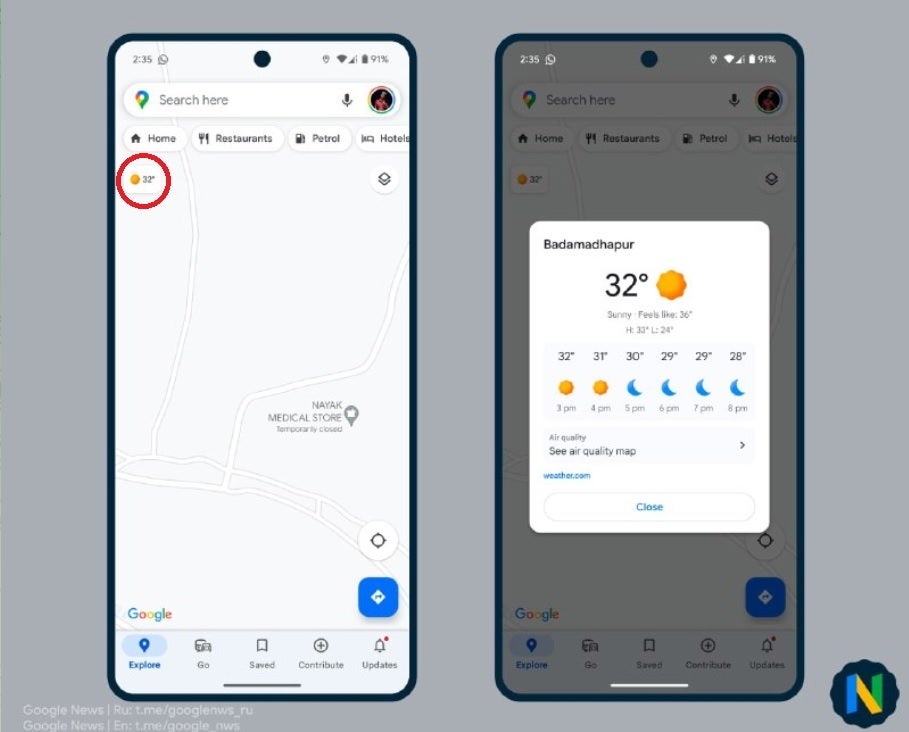
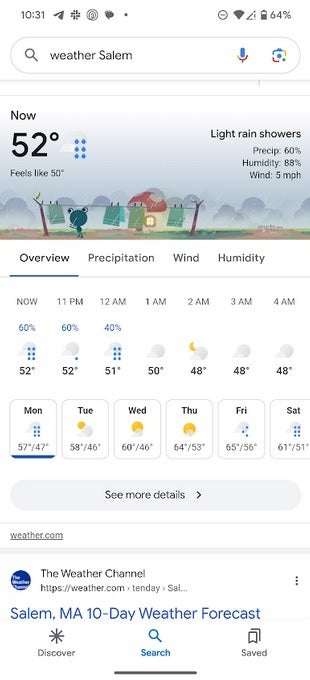
The iOS version of Google Maps has had a feature for some time that is not available on the Android version of the app. Apple iPhone users have been able to see real-time local weather conditions on Google Maps for nearly four years now. And now weather is coming to the Android variant of the app. This comes from a new focus on weather by Google which changed the UI of the weather feature inside the Android version of the Google app. It also is rumored to be developing a stand-alone weather app for Android.
The Android version of Google Maps will soon join the iOS variant and show current weather conditions
The weather information on the Android version of Google Maps appears as a chip showing the temperature underneath the search chip carousel. Tap on it and a window opens showing the current temperature in the area, the local conditions, the high and low temperatures for the day, the hourly forecast, and the air quality. Google is in the early stages of adding the weather information to the Android version of Google Maps and one person who spotted the feature shared a screenshot with Google News on Telegram.
The new Material You weather UI found inside the Google app on Pixel phones
Let’s return to the redesigned Material You Weather UI within the Google app which is just rolling out now to Pixel users. You can create a home screen icon for this by opening the Google app on your Pixel phone while the Discover tab is running. Scroll the carousel until you get to the rectangle with your local temperature inside and tap on it. That will bring up the new weather UI. Tap the three-dot menu icon and from the pop-up menu, tap on add to home screen and an icon showing the sun with the Google “G” logo will be added to your home screen.
You might be thinking why would Google put the weather feature on the iOS version of Google Maps first and is just getting around to adding it now to the Android version. It’s a good question asGoogle has long appeared to favor its iOS apps over its Android apps.
AI-powered Customer Communication Platforms will revolutionize customer interactions, streamlining support, and providing personalized, efficient service, ultimately enhancing customer satisfaction and brand loyalty.
In today’s digital age, the importance of efficient and effective customer communication cannot be overstated. As businesses strive to deliver seamless customer experiences, AI-powered communication platforms have emerged as game-changers.
These platforms harness the power of artificial intelligence to streamline interactions, predict customer needs, and ensure that every touchpoint is meaningful. Among the myriad options available, Glassix Customer Support & Messaging Platform stands out as the ultimate solution for contact centers. Here’s why.
Glassix Customer Support & Messaging Platform: The Ultimate Solution for Contact Centers
Intuitive User Experience: Glassix boasts an interface that is both user-friendly and intuitive. This ensures that agents can navigate the platform with ease, reducing the learning curve and enabling them to focus on what they do best – serving customers.
Advanced AI Capabilities: At the heart of Glassix is a sophisticated AI engine that understands customer intent, sentiment, and behaviour. This allows the platform to predict customer needs, offer real-time suggestions to agents, and even automate responses when appropriate.
Omnichannel Support: In a world where customers interact with businesses across multiple channels – be it chat, email, social media, or voice – Glassix’s omnichannel support ensures that every interaction is captured and integrated into a single, unified view. This not only provides agents with complete context but also ensures that customers receive consistent and personalized experiences across all touchpoints.
Scalability: Whether you’re a startup or a large enterprise, Glassix is designed to grow with you. Its cloud-based infrastructure ensures that you can scale up or down based on your needs, without any disruption to your operations.
Data-Driven Insights: Glassix doesn’t just facilitate communication; it turns every interaction into actionable insights. Through its robust analytics dashboard, businesses can gain a deep understanding of customer behaviour, preferences, and pain points. This data can then be leveraged to refine strategies, improve service quality, and drive customer loyalty.
Security and Compliance: In an era where data breaches are all too common, Glassix places a premium on security. The platform is built with state-of-the-art encryption and complies with all major data protection regulations, ensuring that your customer data is always safe.
Seamless Integrations: Glassix understands that businesses often use a myriad of tools and platforms. Hence, it offers seamless integrations with popular CRM systems, ticketing tools, and other enterprise solutions. This ensures that your teams have all the information they need, right at their fingertips.
In essence, Glassix is not just another communication platform; it’s a comprehensive solution designed to elevate the entire customer journey. By leveraging its advanced AI capabilities, businesses can not only streamline operations but also deliver experiences that are truly customer-centric.
While Glassix is the pinnacle of AI-powered customer communication platforms, the market is filled with other notable mentions. Here are 11 other platforms that have made a mark in the industry:
Intercom: A conversational relationship platform that brings businesses and customers closer through real-time chat, automation, and personalized messaging, making customer interactions feel more human.
Zendesk: Known for its robust customer service suite, Zendesk offers a range of tools, including chatbots and AI-powered automation, to streamline support and enhance customer relationships.
Drift: Pioneering the concept of “conversational marketing,” Drift uses AI to engage visitors in real time, qualify leads, and seamlessly connect them to sales teams.
Freshdesk: A cloud-based customer support software that offers AI-driven automations, and omnichannel capabilities, Freshdesk offers a range of integrations to ensure efficient and effective customer service.
LivePerson: Specializing in conversational commerce, LivePerson leverages AI to help brands connect with customers on their preferred messaging channels, turning conversations into conversions.
Kustomer: Focusing on providing a holistic view of the customer, Kustomer’s platform uses AI to automate repetitive tasks and offers insights to enhance the overall customer experience.
Ada: An AI-powered platform that specializes in automating customer interactions, Ada’s chatbots handle millions of support queries, freeing up human agents to tackle more complex issues.
Chatfuel: Primarily known for its Facebook Messenger bot platform, Chatfuel allows businesses to engage, nurture, and convert audiences through automated chat sequences.
Tars: A chatbot builder for marketers, Tars enables businesses to capture leads and offer support through conversational landing pages and automated chats.
Customers AI: A multi-channel chatbot platform, Customers AI offers tools for marketing, sales, and customer support, ensuring consistent messaging across web chat, SMS, and social media.
Aivo: Recognized for its voice and text-based customer service bots, Aivo uses AI to provide instant, personalized responses, driving customer satisfaction and operational efficiency.
While each of these platforms has its strengths and unique selling points, Glassix’s comprehensive approach to customer communication, combined with its advanced AI capabilities, positions it as the ultimate solution for contact centers.
In the ever-evolving landscape of customer communication, the role of AI has become paramount. As businesses strive to meet the rising expectations of their customers, the need for platforms that can deliver swift, personalized, and efficient communication has grown exponentially. While Glassix stands out with its holistic approach, the other platforms mentioned also play a significant role in shaping the future of customer interactions.
Conclusion
The digital transformation wave has ushered in an era where customer communication is not just about resolving queries but about creating memorable experiences. AI-powered platforms, like Glassix and the others mentioned, are at the forefront of this revolution. They are not only redefining the way businesses interact with their customers but also setting new benchmarks for what customers can expect.
Choosing the right platform depends on a business’s specific needs, the scale of operations, and the desired customer experience. However, with its comprehensive suite of features, advanced AI capabilities, and a focus on creating seamless customer journeys, Glassix undoubtedly offers a compelling proposition for contact centers looking to elevate their customer communication game.
As we move forward, the integration of AI in customer communication platforms will only deepen, leading to even more personalized, efficient, and delightful customer experiences. Businesses that leverage these tools effectively will not only gain a competitive edge but also foster stronger, more meaningful relationships with their customers.
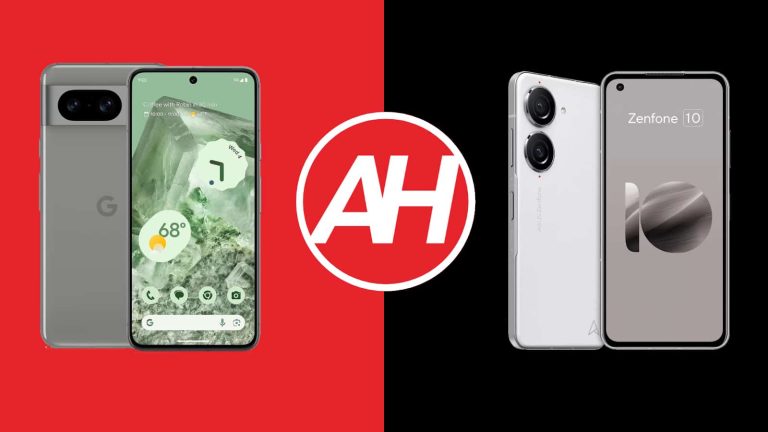
The Google Pixel 8 is Google’s latest compact flagship, and it has some competition in the market. One of the devices that is competing directly with it comes from ASUS, and it’s actually really great. In this article, we’ll compare those two phones, the Google Pixel 8 vs ASUS ZenFone 10. The ZenFone 10 launched back in June, but it has top-of-the-line specs, many would say better than the Pixel 8.
Both of these phones are quite compact, even though the ZenFone 10 is a bit smaller. They are very different, though, and that doesn’t apply only to their designs. They’re different in terms of specifications too, and also software, and various other things. ASUS bases its software on Google’s but adds its own features on top, while Google has a ton of AI features exclusive to the Pixel 8 series on the phone. You can read more about those software features in our reviews, we’ll focus on other aspects here. We’ll first list their specifications, and then compare their designs, displays, performance, battery life, cameras, and audio performance.
The Google Pixel 8 is made out of metal and glass. Its frame on the sides is slightly curved, while the bezels around the display are almost uniform. There is a display camera hole at the top, and the phone has a flat display. On the back, you’ll notice a camera visor, which connects to the phone’s frame on the left and right sides. It’s covered by metal (aluminum) too. Gorilla Glass Victus sits on the back.
The ZenFone 10, on the other hand, is made out of metal and plastic. That plastic on the back feels like paper almost, though, it’s not your cheap, glossy plastic, not at all. It adds some grip to the device too. The phone’s sides are flat, but come with chamfered edges for comfort. There is a flat display on the front, while the bezels are thin, but the bottom one is slightly thicker than the rest. A display camera hole sits in the top-left corner. The ZenFone 10 has two camera islands on the back, for its two cameras.
The Pixel 8 is taller, wider, and slightly thinner than the ZenFone 10. It also has a larger display than the ZenFone 10, though not by much. The Pixel 8 weighs 187 grams, compared to the ZenFone 10’s 172 grams. Both of these phones feel very premium in the hand, and also look great, but the in-hand feel is entirely different. The ZenFone 10 definitely offers more grip in comparison, and is easier to use with one hand.
Google Pixel 8 vs ASUS ZenFone 10: Display
The Pixel 8 features a 6.2-inch fullHD+ (2400 x 1080) OLED display. That panel is flat, and it has a centered display camera hole. This panel has a 120Hz refresh rate, and does support HDR10+ content. It also gets very bright at 2,000 nits of peak brightness. We’re looking at a 20:9 display aspect ratio here, while the panel is protected by the Gorilla Glass Victus, so it has the same protection as the phone’s back.
ASUS ZenFone 10
The ASUS ZenFone 10, on the flip side, includes a 5.92-inch fullHD+ (2400 x 1080) Super AMOLED display. That panel is also flat, and it has a display camera hole, but in the top-left corner. It supports a 144Hz refresh rate (only during gaming), and HDR10+ content too. This panel goes up to 1,100 nits of peak brightness, so it’s considerably less bright than the Pixel 8’s. We’re also looking at a 20:9 display aspect ratio here, and the same display protection too.
Both of these displays are very good. They are vivid, and offer good viewing angles, not to mention that the blacks are deep on both panels. The thing is, the Pixel 8’s panel does get a lot brighter, and that is easily noticeable. The ZenFone 10’s display is not exactly dim, but it doesn’t get nearly as bright as the Pixel 8’s. If you’re spending a lot of time outdoors, especially in direct sunlight, the Pixel 8 is the better choice. Touch response is good on both phones.
Google Pixel 8 vs ASUS ZenFone 10: Performance
The Google Pixel 8 is fueled by the Google Tensor G3 processor. In addition to that, Google also included 8GB of LPDDR5X RAM inside the Pixel 8, along with UFS 3.1 flash storage. The ASUS ZenFone 10 is fueled by the Snapdragon 8 Gen 2 processor, while it comes with up to 16GB of LPDDR5X RAM and UFS 4.0 flash storage.
Now, both of these processors are 4nm chips, but the Snapdragon 8 Gen 2 is more powerful. Not only that, but it’s also more power efficient. The Tensor G3 does enable the Pixel 8 to offer a ton of AI features, though, and it’s adapted to the phone really well. The ZenFone 10 also has the advantage of having faster and more efficient storage, which does make the phone a bit more future-proof, at least from the hardware standpoint. Google will cover the Pixel 8 with updates far longer than ASUS will the ZenFone 10, so… there’s that.
When it comes to day-to-day performance, they both do an outstanding job. These are some of the most fluid smartphones we’ve ever used. That goes for basically anything you throw at them. The ZenFone 10 will handle the most demanding games a bit better, but in most situations, you won’t even notice the difference. Both smartphones offer outstanding performance, though you should note that the ZenFone 10 does have a bit more powerful performance-related hardware.
Google Pixel 8 vs ASUS ZenFone 10: Battery
A 4,575mAh sits inside the Google Pixel 8, while a 4,300mAh unit is included inside the ZenFone 10. Battery capacity isn’t everything, and these two phones are the sheer proof of it. The ZenFone 10 does offer better battery life than the Pixel 8, and it’s not even close. Its SoC definitely has something to do with it, and its display is also slightly smaller.
With the ZenFone 10, we’ve been able to cross the 10-hour screen-on-time mark a number of times. Getting over 8 or 9 hours of screen-on-time with this phone is very easy, which is uncharacteristic of compact smartphones. The Pixel 8 is capable of providing over 6 hours of screen-on-time, at least it was for us, but not much more than that. On some days, we’ve been able to get over the 7-hour mark, but anything over that will be difficult to reach. Your mileage may vary, though, of course, as your usage will be entirely different, and so will your signal strength.
When it comes to charging, the Pixel 8 supports 27W wired, 18W wireless, and also 5W reverse wireless charging. The ZenFone 10, on the flip side, supports 30W wired, 15W wireless, and 5W reverse wired charging. The thing is, the Pixel 8 does not include a charger in the box, while the ZenFone 10 does. So take that into account.
Google Pixel 8 vs ASUS ZenFone 10: Cameras
Both of these smartphones have two cameras on the back. The Google Pixel 8 includes a 50-megapixel main camera (f/1.7 aperture, 25mm lens, 1.2um pixel size, multi-directional PDAF, OIS), and a 12-megapixel ultrawide unit (128-degree FoV, 1.25um pixel size). The ASUS ZenFone 10 has a 50-megapixel main camera (f/1.9 aperture, 24mm lens, 1.0um pixel size, multi-directional PDAF, gimbal OIS), and a 13-megapixel ultrawide unit (f/2.2 aperture, 120-degree FoV, 1.12um pixel size).
Google Pixel 8
Both smartphones are quite capable in the camera department, but they do offer different results. The ZenFone 10 still tends to go a bit overboard with oversharpening, though not nearly as much as its predecessor. It also tends to use saturation a bit more than the Pixel 8 does. The Pixel 8, on the other hand, tends to provide images with cooler tones. Both devices handle HDR situations like champs, though images from the Pixel 8 tend to look more realistic.
They both have a tendency to brighten up low light scenes quite a bit. They end up looking great in both cases, but quite unrealistic. Truth be said, the Pixel 8 does that more than the ZenFone 10, thanks to its Night Sight mode. Video is good on both phones, as is stabilization. However, the stabilization does look better overall on the ZenFone 10 thanks to its gimbal OIS which does its job perfectly.
Audio
What about the audio? Well, you’ll realize that both devices have stereo speakers, but only one has an audio jack. The ZenFone 10 does equip that port at the top, while the Pixel 8 does not. So, if you do use wired headphones still, the ZenFone 10 is an ideal choice. You can use the Pixel 8’s Type-C port too, but you’ll need a dongle.
In terms of stereo speakers, both smartphones do a good job. The sound is good enough from both devices, and it’s also loud enough. Speakers on either phone are not as good as some others we’ve seen, on larger phones, but they’re not that far from that point either. The Pixel 8 does have Spatial Audio support too. Both smartphones also support Bluetooth 5.3 for wireless audio connections.