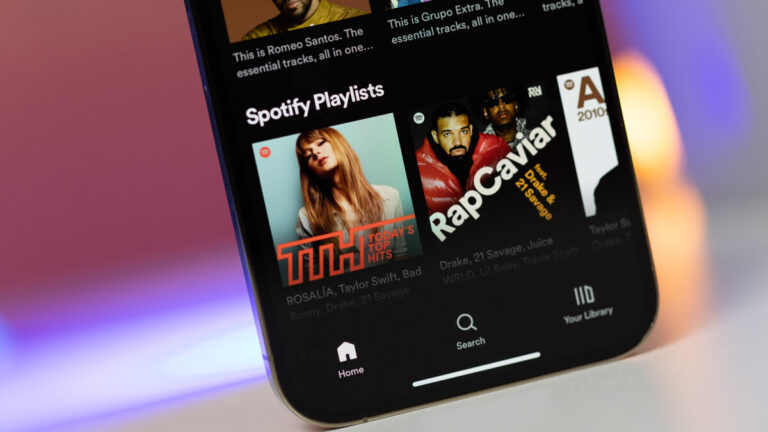
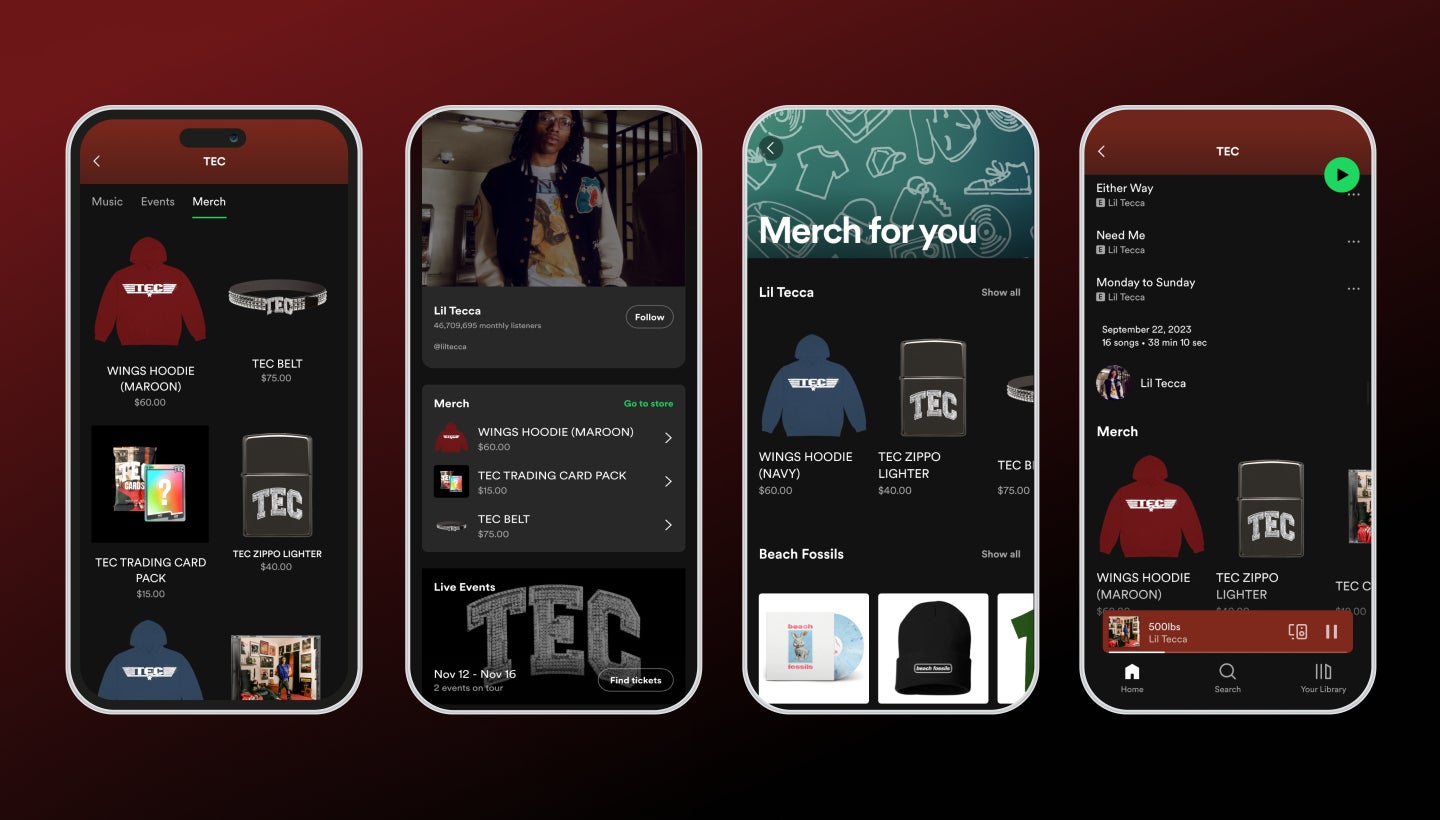
It’s been less than a week since Spotify’s last announcement and the company is back in the news with yet another interesting functionality: a merch shop. One of the biggest streaming services in the United States revealed today a dedicated Merch Hub in the Spotify app, which will serve fans who want to support their favorite artists.The merchandise shop sells various items including shirts, totes, hats, vinyl, and many others. Previously, artist merch was only available from individual artis profiles, the Now Playing view, and release pages.
However, the new hub will make it easier to find the artist and the merchandise you want since everything can be accessed from one place. Spotify users can browse, click on available items to learn more, and purchase through the artist’s Spotify store (via Shopify) directly from the new hub.
Spotify’s new Merch Hub
With the latest update, Spotify users can now find artists’ merch in the Merch tab on their artist pages, the Now Playing view when streaming their tracks, the new Merch Hub, and their albums, EPs, and singles pages.
If you’re looking to buy something, simply search for “Merch” to find the hub or navigate to the Merch tile on the Browse page. Artist who wish to have their merch on Spotify can head to the dedicated page to learn more about the procedure required.
While the identity of the culprits behind this spyware campaign remains uncertain, their tactics closely resemble those used by pro-Palestinian hackers, such as AnonGhost.
On October 9th, 2023, Hackread.com reported on the infiltration by pro-Palestinian hackers associated with AnonGhost into the Red Alert app, an Israeli application designed by Kobi Snir exclusively for delivering missile and rocket alerts to the Israeli population. Seizing this opportunity, AnonGhost maliciously disseminated fabricated rocket, missile, and even nuclear bomb alerts to Israelis.
Now, Cloudflare’s Cloudforce One Threat Operations Team has uncovered a similar incident, this time targeting a different rocket alert app. The researchers identified a malicious website (redalertsme) hosting a Google Android Application (APK) impersonating the legitimate RedAlert – Rocket Alerts application originally created by Elad Nava. The motive behind this malicious website was to infect unsuspecting Israeli app users with spyware.
Rocket alert apps have gained immense popularity in Israel, providing crucial alerts to citizens about incoming air strikes, which have sadly become an all too common occurrence. The misuse of these applications, as witnessed in the recent hack, has the potential to create widespread panic and further escalate an already tense situation.
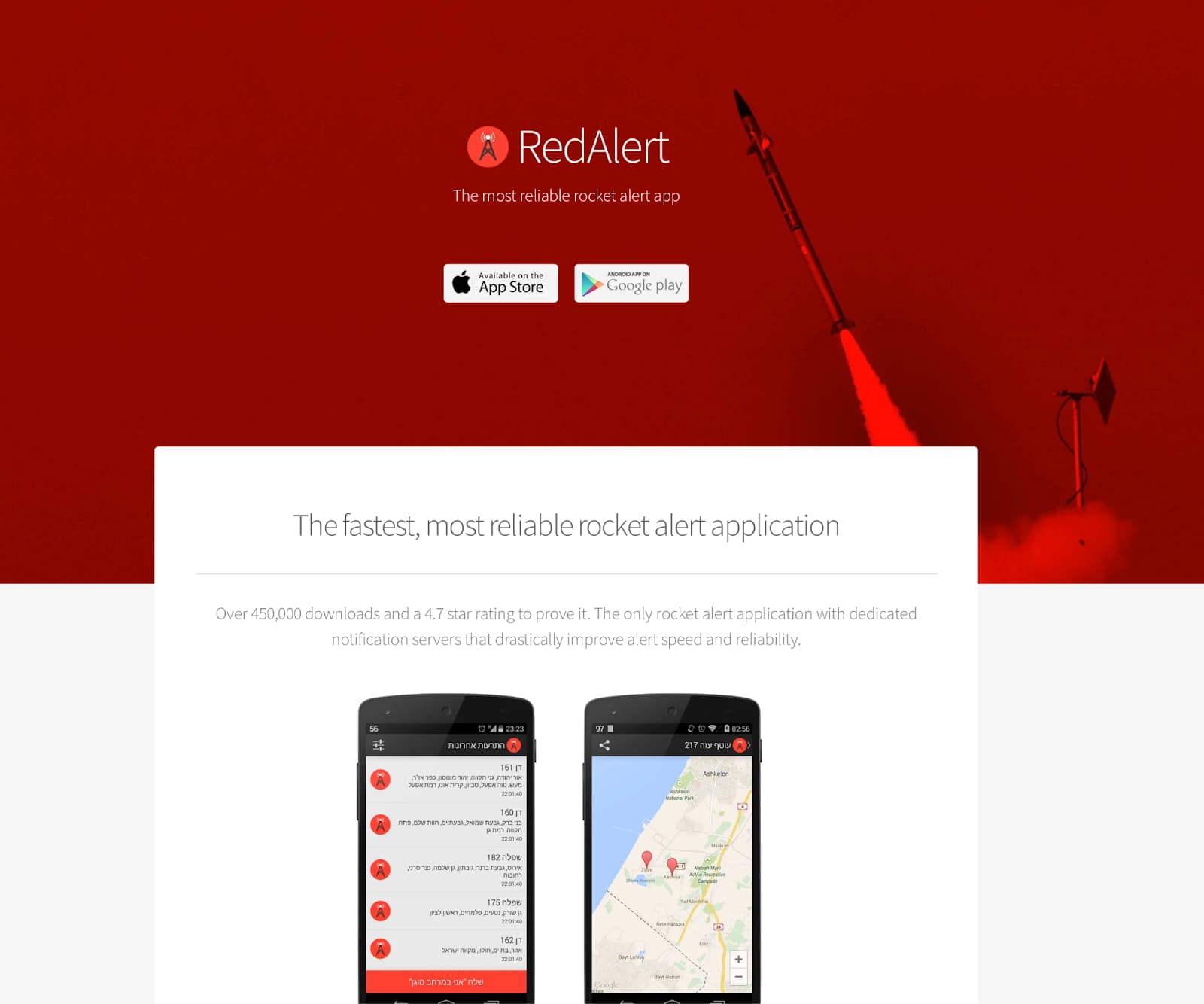
According to a blog post by Cloudflare, the malicious domain in question offered both iOS and Android versions of the mobile application. However, while the link for the iOS version directed users to the legitimate App Store page, the Android version was a manipulated variant.
Screenshot of the malicious website (Cloudflare)
The malicious application, while retaining elements of the original code, had been equipped with the capability to collect sensitive user data. This included access to contacts, call logs, text messages, account information, SIM card details, and a list of installed applications on the victim’s device.
To make matters worse, the malicious app operated stealthily in the background, continuously harvesting data from the compromised device. The stolen information was then sent to a remote server.
Although the data was encrypted, the use of RSA encryption with a bundled public key within the app made it theoretically possible for anyone intercepting the data packets to decrypt the information.
The website hosting the spyware-infested version of RedAlert has since been taken down. However, users who may have unwittingly installed this malicious application remain at risk. They are advised to take immediate action to cleanse their devices of the spyware.
To determine whether their devices have been compromised, users are urged to check the permissions that the app has requested. Suspicious permissions include access to call logs, contacts, phone features, and SMS capabilities. These indicators should be taken seriously to ensure the security of their devices and personal information.
While malicious AI chatbots like WormGPT and FraudGPT assist malicious actors in generating novel ideas with user-friendly technology, traditional cyber warfare tactics, such as hackvisits, persist. Presently, both pro-Palestinian and Israeli hackvisits are focusing on each other’s critical ICS products.
As hackers continuously innovate, it is crucial for users to remain vigilant and informed about protecting themselves from the ever-evolving cybersecurity threats.
The OnePlus Open’s arrival is right around the corner. The phone will launch on October 19, and some interesting info got revealed. A tipster has revealed what software version is coming on the OnePlus Open, along with a new app dock.
The OnePlus Open software version & app dock surface
It seems like the OnePlus Open will ship with OxygenOS 13.2 based on Android 13. So, the company won’t rebrand the name of its UI for its first foldable, for better or worse.
This version will, however, bring some features specific to the OnePlus Open, of course. One such feature will be an app dock, similar to the one we’ve seen on many other foldables. The tipster also shared an image of that dock, as you can see below.
You can see that the dock is split into two sections, we presume that one of them shows the apps you’ve pinned, while the other shows the apps you’ve used recently.
The phone’s cameras will be its “standout feature”
Another thing that the tipster mentioned are the phone’s cameras. He did not go into specifics, but he did mention that the cameras will be the “standout feature” of this device. The camera specifics did surface recently, though.
The OnePlus Open will have a very compelling 50-megapixel main shooter (Sony’s IMX966 sensor), a 48-megapixel ultrawide camera, and a 64-megapixel periscope telephoto camera. Hasselblad will be a part of the package too.
This handset will be fueled by the Snapdragon 8 Gen 3 SoC, Qualcomm’s upcoming flagship. The phone will also include plenty of RAM, and up to 1TB of storage, based on rumors.
The OPPO Find N3 will look the same as the OnePlus Open, but will include ColorOS on top of Android, not OxygenOS as on the OnePlus Open. There’s also a chance that the Find N3 will remain exclusive to China, but we’ll see. OPPO already announced its global launch, so that gives us some hope it will launch globally.
Apple’s decision to start using last year’s chips on the non-Pro models hasn’t received the best reception, as regular iPhone buyers seemingly have no choice but to upgrade to the Pro models for performance improvements. However, according to a new report from Haitong Securities analyst Jeff Pu, all this could change, as Apple is looking to power the entire iPhone 16 series with the A18 chip.
According to the report, the iPhone 16 lineup will feature TSMC’s state-of-the-art 3nm A-series chips produced through the supplier’s N3E process. However, the standard iPhone 16 models will house the A18 Bionic chip, while the ‘Pro’ models will feature the A18 Pro chips. This implies that the regular models will skip TSMC’s N3B process altogether, directly transitioning to the N3E fabrication, resulting in a significant performance boost.
Reasoning behind Apple’s decision?
When the company first introduced the A17 Pro chip with a whopping 19 billion transistors, it marked a significant jump in performance, considering the iPhone 15 Pro models could finally play PC-level games like Resident Evil natively without streaming.
However, despite the performance gains, the A17 Pro chips, utilizing the N3B process node, suffer from low yields, which represent the percentage of successfully manufactured chips compared to the total possible chips on a single wafer. While companies typically bear the responsibility for defective chips, Apple’s sheer scale and TSMC’s dominance (accounting for over 90% of the production of the A17 Pro chips) mean that low yields might result in a significant financial loss.
As a result, jumping the non-Pro models straight to the A18 chips would not only provide a massive performance boost for regular customers but also help Apple save a substantial amount of money. Moreover, when comparing the N3E process node with the current N3B used for the A17 Pro, the second-generation process promises greater power efficiency and significantly improved performance.
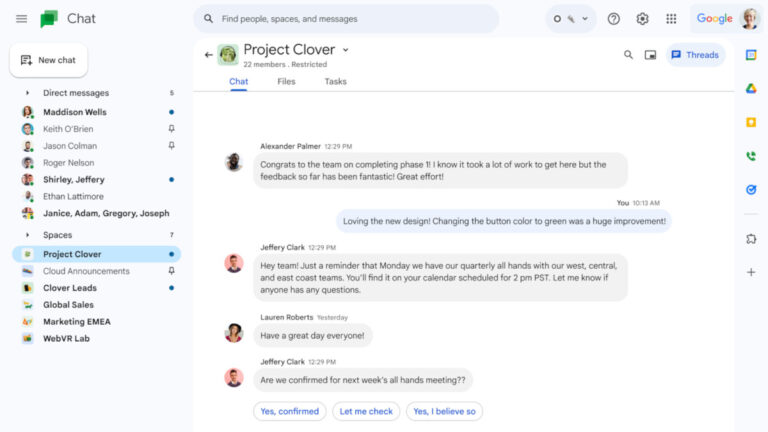
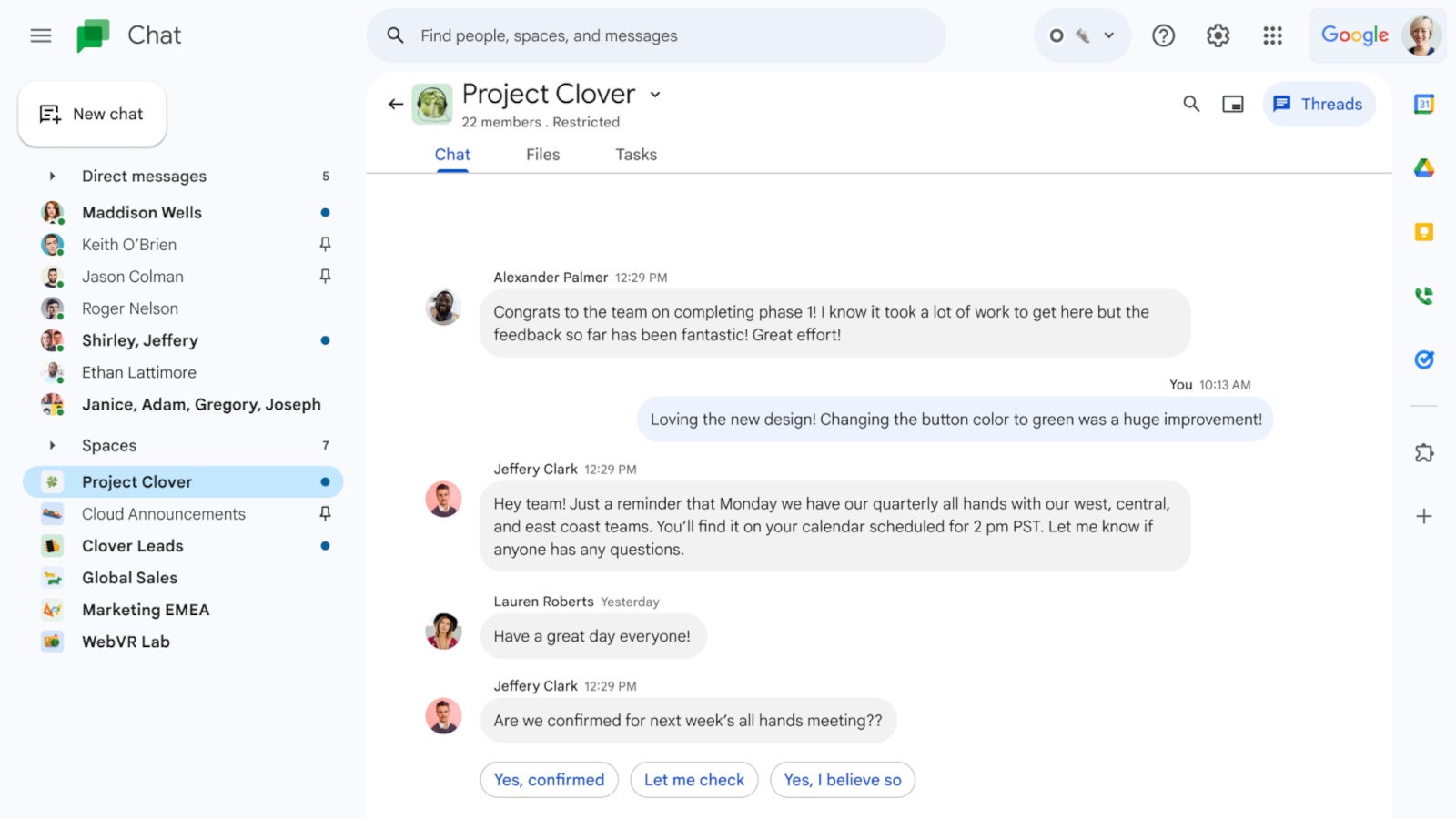
Smart replies have been added to Google Chat a long time ago, but they were only available for direct messages. However, that’s about to change, as Google has just announced Chat’s smart replies will expand to group messages and spaces on the web.
Powered by Google’s machine learning, smart replies are the perfect tool to respond quickly to a message when you’re on the move, or you just want to avoid typing long messages.
According to Google, the new feature is available now for all users, including Google Workspace customers and users with personal Google Accounts. There’s no need to make any changes to your Google Chat app, as the feature will appear automatically.
Once it’s been added to your Chat app, you will be able to select one of three response options that pop up in a chat or customize your reply before sending it.
It’s important to add that Google Chat’s smart replies are only available in English, French, Portuguese, and Spanish. Those who want to turn off smart replies for whatever reason can do so by clicking Settings and unchecking the Smart Reply box.
In an ever-changing digital landscape, robust security measures are paramount. As Windows adapts to meet the evolving demands of our world, user authentication, a cornerstone of Windows security, undergoes significant transformation.
Microsoft is actively working to enhance user authentication by bolstering the reliability and flexibility of Kerberos while reducing its reliance on the older NT LAN Manager (NTLM) authentication protocol.
Kerberos has been the default Windows authentication protocol since the turn of the millennium, but there are still scenarios where it proves inadequate, causing Windows to resort to NTLM.
DocumentFREE Demo
Implementing AI-Powered Email security solutions “Trustifi” can secure your business from today’s most dangerous email threats, such as Email Tracking, Blocking, Modifying, Phishing, Account Take Over, Business Email Compromise, Malware & Ransomware
To address these situations, Microsoft is introducing new features for Windows 11, such as Initial and Pass Through Authentication Using Kerberos (IAKerb) and a local Key Distribution Center (KDC) for Kerberos.
These innovations aim to expand Kerberos’ usability and security, ultimately diminishing the need for NTLM.
User authentication in the Windows environment essentially entails verifying one’s identity to a remote system while safeguarding the confidentiality of sensitive password data.
NTLM achieves this by engaging in a challenge and response interaction that verifies the user’s familiarity with a password without revealing it.
The benefits of NTLM, such as not requiring a local network connection to a Domain Controller, being compatible with local accounts, and functioning even when the target server is unknown, have contributed to its historical popularity.
Certain applications and services have relied on NTLM because of these benefits instead of embracing contemporary authentication protocols like Kerberos, which provide enhanced security and flexibility.
Despite the clear advantages of Kerberos, organizations have been hesitant to disable NTLM due to potential compatibility issues with applications hardcoded for NTLM use.
Moreover, certain scenarios are incompatible with Kerberos, as it demands access to a Domain Controller and requires specifying the target server.
The evolution of Windows authentication seeks to address these limitations in Kerberos.
Windows 11 introduces two significant features for Kerberos to decrease its dependence on NTLM.
The initial feature, IAKerb, enables clients to authenticate Kerberos in various network topologies.
IAKerb leverages the cryptographic security guarantees of Kerberos to protect messages in transit, making it valuable in segmented environments and remote access scenarios.
The second aspect introduces a local Key Distribution Center (KDC) for Kerberos, facilitating Kerberos support for local accounts and enhancing the security of local authentication by implementing AES encryption.
In addition to expanding Kerberos’ use, Microsoft is working to replace hardcoded NTLM instances in existing Windows components with the Negotiate protocol.
This transition will empower services to adopt Kerberos instead of NTLM and harness IAKerb and LocalKDC for both local and domain accounts.
These adjustments will be activated by default, ensuring a smooth transition, with NTLM still accessible as a backup to preserve compatibility.
Improving NTLM Management
Microsoft also enriches NTLM management tools, granting administrators greater freedom in monitoring and regulating NTLM utilization.
Augmenting existing event viewer logs with service-specific data; these updates will offer transparency regarding applications employing NTLM.
Moreover, administrators will gain the capability to establish precise policies at the service level, enabling them to either restrict or create exemptions for NTLM usage on a service-by-service basis.
The ultimate objective is to substantially decrease NTLM usage to the extent that it can be securely disabled in Windows 11.
Microsoft is taking a data-driven approach, closely monitoring NTLM utilization, and plans to disable it by default once it’s considered safe. Users will still have the option to re-enable NTLM for compatibility purposes.
To prepare for these impending changes, Microsoft suggests starting a record of NTLM usage, reviewing code for any hardcoded NTLM instances, and staying vigilant for updates that address scenarios where Kerberos remains limited.
Protect yourself from vulnerabilities using Patch Manager Plus to patch over 850 third-party applications quickly. Take advantage of the free trial to ensure 100% security.
The OPPO Find N3 has just appeared in even more images. Evan Blass, a well-known tipster, has published two new pictures. The first one shows us a render of a device, while the other gives us a look at the real thing.
The OPPO Find N3 appears in even more images ahead of launch
You can check out the first image (a render) below. The first image shows us the gold color of the device. The phone is unfolded here, but we only get to see its back side. So, we can see its cameras, and the cover display.
There are three cameras included on the back, and they’re all a part of the same camera oreo. One of the cameras is a periscope telephoto unit, which is something we can see based on its shape. Hasselblad branding is also present here.
The cover display does have rather thin bezels, and a centered display camera hole. You can also see the phone’s buttons here, and its power/lock key will almost certainly double as a fingerprint scanner.
A real-life image surfaced as well
If you check out the image below this paragraph, you’ll notice a real-life shot of the phone. This is a black version of the device, with a vegan leather backplate. The gold model comes with a glass backplate.
This seems to be the same color scheme OPPO used on the OPPO Find N2 that we reviewed, down to the frame colors. We loved this color scheme on that phone, and it still looks great on the Find N3, based on this.
Now, the OPPO Find N3 is also said to include a new “independent security chip”, which will provide advanced hardware-level security.
The OPPO Find N3 will launch on October 19, which is the same day the OnePlus Open is coming. Those two devices will feature the exact same design.
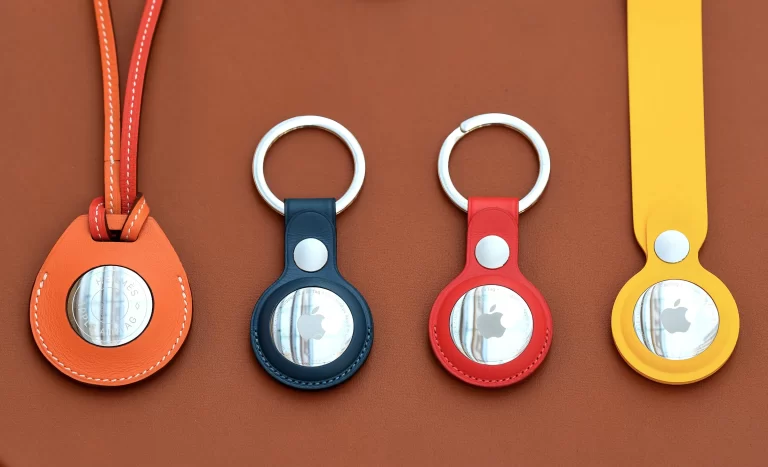
When Apple first introduced AirTags, it envisioned a solution for people who have trouble finding their belongings, such as keys and wallets. However, soon after its release, bad actors exploited Apple’s network and started using AirTags for stalking purposes. This led to a significant lawsuit in December, accusing Apple of negligence for failing to implement effective anti-stalking safeguards in its popular AirTags. In a recent development, the lawsuit has now expanded to include 38 plaintiffs from 20 different U.S. states, including two individuals residing in Canada and Ireland.
The original lawsuit, which first began with a woman who claimed her ex-boyfriend used an AirTag to monitor her without authorization, accused Apple of negligence, design flaws, unjust enrichment, intrusion upon seclusion, and violations of California state laws. However, with a surge in reported incidents, the lawsuit now includes over 150 police reports in the United States, with a range of harms from financial losses to extreme cases, including murder.
“Every day, I am reminded that me and my daughter are not safe,” said one victim.
Apple’s response
When the lawsuit first began in December, Apple introduced a series of updates to address the stalking issues, including features like louder sounds, Precision Finding, and improved display alerts. Additionally, the company also gave warnings during the AirTag setup process, explicitly stating the illegality of using them to track people.
However, despite these measures, the lawsuit claims that people continue to suffer from stalking attempts made possible by AirTags. This was evident in a case in Georgia, where an individual reported ongoing stalking via AirTags, receiving daily alerts and chimes indicating the persistent presence of the tracking device, thus causing significant stress and anxiety.
Furthermore, some victims also reported an inability to sell their vehicles due to hidden AirTags that mechanics couldn’t locate.
“Other than my friends, do people even believe this is happening? Do they believe me? Do they know how much havoc this has created in my life,” said one plaintiff in the lawsuit.
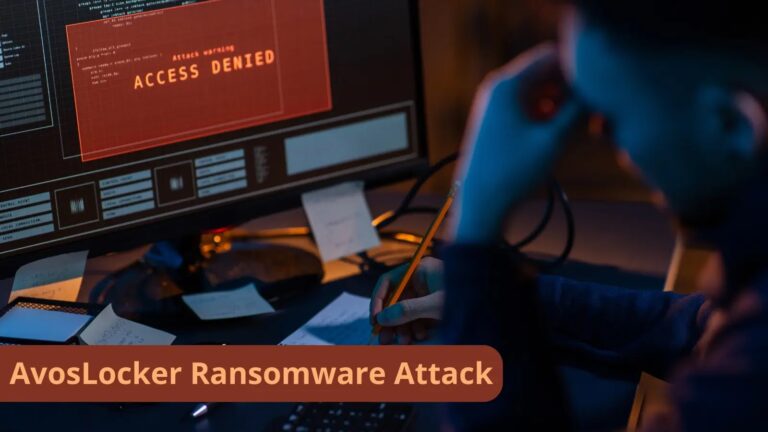
Cybercriminals behind the AvosLocker ransomware attack employed a tactic of infecting organizations through Open-Source Remote Administration Tools.
This method allowed the malware to spread rapidly, potentially compromising sensitive data and systems across the affected networks.
The FBI found a new version of AvosLocker in May of 2023 during their investigations.
AvosLockerRansomware
AvosLocker is a RaaS (ransomware as a service) group that emerged in the middle of 2021. It has since gained notoriety for attacks on U.S. financial institutions, vital factories, and government buildings, all considered part of the country’s “critical infrastructure.”
Members of the AvosLocker group infiltrate corporate networks by masquerading as genuine software installers or by employing freely available remote system administration tools.
Affiliates of AvosLocker engage in extortion by threatening to leak or publicly disclose the stolen information obtained through data exfiltration.
DocumentFREE Demo
Implementing AI-Powered Email security solutions “Trustifi” can secure your business from today’s most dangerous email threats, such as Email Tracking, Blocking, Modifying, Phishing, Account Take Over, Business Email Compromise, Malware & Ransomware
AvosLocker Affiliates:
Remote system administration tools—Splashtop Streamer, Tactical RMM, PuTTy, AnyDesk, PDQ Deploy, and Atera Agent—as backdoor access vectors [T1133].
Scripts to execute legitimate native Windows tools [T1047], such as PsExec and Nltest.
Open-source networking tunneling tools [T1572] Ligolo[1] and Chisel[2].
Cobalt Strike and Sliver[3] for command and control (C2).
Lazagne and Mimikatz for harvesting credentials [T1555].
The FBI developed the following YARA rule to detect the signature of a file known to be enabling malware, based on an analysis by a sophisticated digital forensics group.
NetMonitor.exe is a malware masquerading as a legitimate process and it has the appearance of a genuine network monitoring tool.
The network will get a ping from this persistence utility every five minutes.
The software for NetMonitor is set up to talk to a specific IP address that acts as its command server through TCP port 443.
During an attack, the communication between NetMonitor and the command server is protected, and NetMonitor works like a reverse facilitator that lets attackers connect to the tool from outside the victim’s network.
The FBI and CISA suggest that companies take steps to protect their computer systems from AvosLocker ransomware attacks. This will help to prevent hackers from stealing important information and causing problems.
Protect yourself from vulnerabilities using Patch Manager Plus to patch over 850 third-party applications quickly. Take advantage of the free trial to ensure 100% security.
Greetings, tech aficionados and iPhone 15 connoisseurs. If you seek the perfect fusion of sophistication, security, and functionality for your prized iPhone 15, look no further than the Limited Edition Atomic Slim Cases. These are not your run-of-the-mill phone covers; they embody the essence of cutting-edge technology and timeless design. In this discourse, we shall delve into why these Limited Edition Atomic Slim Cases are unequivocally the epitome of the finest iPhone 15 cases available.
Unparalleled Fortification
As the custodian of a valuable asset, the protection of your iPhone 15 is paramount. Enter the Limited Edition Atomic Slim Cases, a vanguard in safeguarding your device, raising the bar for what defines the best iPhone 15 cases. Meticulously engineered with the resilience of military-grade materials, these cases offer unmatched fortification while preserving the sleek contours of the iPhone 15.
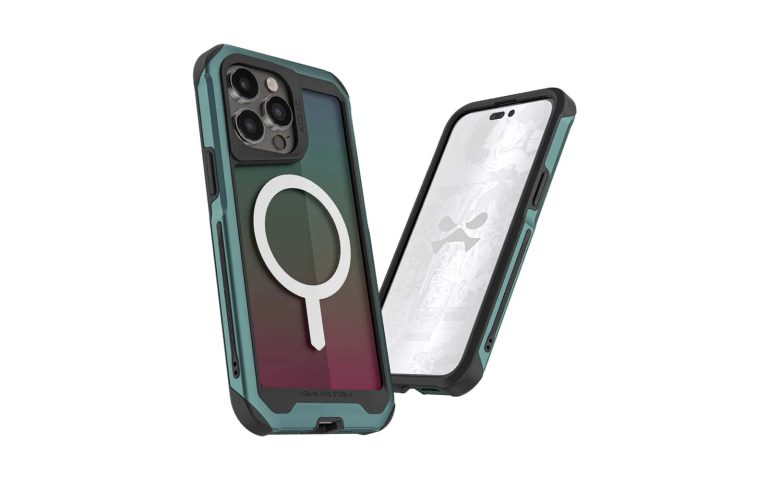
The Atomic Slim Cases exhibit a revolutionary dual-layer architecture. The initial layer entails a robust TPU bumper, meticulously engineered to absorb shockwaves, rendering them the pinnacle of iPhone 15 cases in terms of protection. The second layer comprises a resolute aluminum frame, providing structural reinforcement and exuding an aura of refinement. These materials synergize to ensure your device remains impervious even in the face of adversity, solidifying their status as the best iPhone 15 cases for the discerning.
Aesthetic Panache
Beyond fortification, the Limited Edition Atomic Slim Cases are a testament to the marriage of form and function, making them the premier choice among iPhone 15 cases. These cases are impeccably tailored to complement the iPhone 15’s elegant aesthetics. The precision-cut aluminum frame is offered in a spectrum of exquisite finishes, including Blue, Green Iridescent, Gunmetal Brown Leather, Orange Fabric, Pink, Purple, Silver, Blue Aramid, allowing you to select the embodiment of your personal style.
Moreover, these cases feature a translucent back panel that acts as a canvas, revealing the inherent beauty of your iPhone while ensuring its safety. Their minimalist design enables your device’s innate charm to radiate, while meticulously crafted apertures ensure seamless access to all functions, establishing them as the best iPhone 15 cases for the fashion-forward and the functionalist alike.
Wireless Charging Synergy
In the era of rapid technological advancement, wireless charging has become indispensable. The Atomic Slim Cases are meticulously engineered to seamlessly integrate with wireless charging technology, epitomizing convenience among iPhone 15 cases. Charging your device is effortless, eliminating the need for case removal and positioning them as the best iPhone 15 cases for those who value efficiency.
Limited Edition Distinction
What sets the Limited Edition Atomic Slim Cases apart is their exclusivity, making them highly coveted among iPhone 15 cases. Produced in limited quantities of only 100 per design, these cases bestow an air of exclusivity upon your device, elevating them to the upper echelons of iPhone 15 cases. Possessing one of these limited edition cases signifies not only the protection of your device but also an expression of your discerning taste.
Conclusion
In a milieu inundated with choices, the Limited Edition Atomic Slim Cases for your iPhone 15 emerge as the crème de la crème, effortlessly merging protection, style, and functionality. These cases offer unassailable protection without compromising the iPhone 15’s aesthetic grace. With wireless charging compatibility and an aura of exclusivity, they stand as the quintessential accessory for aficionados seeking the best iPhone 15 cases. Elevate your iPhone 15 experience with Ghostek’s Atomic Slim Cases – the zenith of smartphone case craftsmanship.