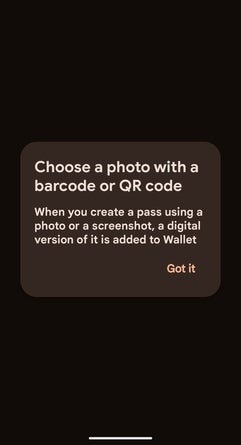
Google Wallet is finally rolling out a previously announced feature that lets you digitize your physical passes, like transit passes, gym memberships cards, parking passes, and library cards. The feature is currently only available on Pixel phones, but will hopefully be rolled out to other Android devices in the future.
This feature was originally teased by Google back in June, among a list of “coming soon” features for Google Wallet, as a way to save passes from an image. This opened up the possibility of digitizing a number of items you couldn’t before, however, it isn’t to be confused with the ability to digitize ID cards, or the option to use a QR code to pay on phones without NFC that rolled out in some countries.
It is important to note that this method of adding passes requires a photo of the physical pass (or screenshot), and for it to contain a barcode or QR code. For example, I was able to add my gym membership card, but only because I was able to capture a screenshot of it from the gym’s app and this screenshot contains the QR code I usually scan to gain entrance. Should you attempt to add an image that does not contain the aforementioned requirements, you will receive an error explaining the issue.
According to Android Central, this feature is just now rolling out to Pixel devices after getting pushed back to become part of the September 2023 Pixel feature drop. This means it might take a while to reach all Pixel users as so far it has only been spotted on the Pixel 8 series and the Pixel Fold.
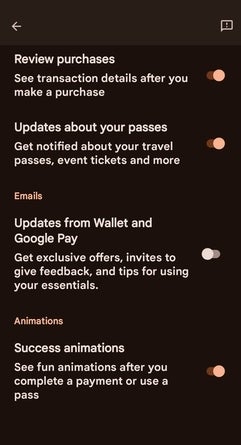
Additionally, there is one more design element that is making its way to Pixels as part of this update. This minor design tweak adds a toggle to enable or disable “Success animations,” which appeared after completing a transaction. These fun little animations were themed and, according to some, a time-waster when trying to purchase something quickly. Thankfully, Google now gives us an option to completely disable them within Google Wallet’s settings.
The new feature is a convenient way to keep all of your passes in one place and a more secure way to carry your passes. You no longer have to worry about losing physical passes or have to fumble to through different apps in order to use them.
AgentTesla, a notorious information stealer, is observed spreading via CHM and PDF Files, which covertly harvest critical information from the victim’s computer.
The stealer has features including keylogging, clipboard data capture, file system access, and data transfer to a Command and Control (C&C) server.
According to CRIL, its tactical changes maintain its serious threat to organizations and allow it to continue accessing priceless data.
Due to its adaptability, it may be used to exploit a variety of attack vectors, including email attachments, malicious URLs, and document-based intrusions.
DocumentFREE Demo
Implementing AI-Powered Email security solutions “Trustifi” can secure your business from today’s most dangerous email threats, such as Email Tracking, Blocking, Modifying, Phishing, Account Take Over, Business Email Compromise, Malware & Ransomware
AgentTesla Delivered Via CHM File
An AgentTesla infection begins on the victim’s computer by a PowerShell script retrieved through a spam email containing a CHM file.
A lure is used in the specially designed CHM file. Based on the information in the CHM file, it appears to be aimed at people or organizations working in network engineering, telecommunications, or information technology.
Malicious CHM file
This CHM file secretly downloads and runs a PowerShell script from the remote server when the user opens it. The PowerShell script conceals harmful code by using encoded binary strings.
Infection Chain
The malicious PowerShell script drops a loader DLL file based on the .NET framework, which injects the AgentTesla payload into system executables.
AgentTesla Delivered Via PDF File
In this case, this PDF uses two different strategies to spread the infection. In the first technique, the PDF triggers a PowerShell command that loads the AgentTesla malware.
Two URLs Embedded in the PDF File
The second technique shows a fake message when the PDF is accessed, and when users click the “Reload” button, a PPAM file is downloaded.
The PowerShell operations executed by this PPAM file download the AgentTesla malware.
Recommendations
Use effective email filtering solutions to identify and stop spam, phishing scams, and harmful attachments.
Avoid clicking on dubious links and opening email attachments.
Install a trusted Internet security and antivirus software on all of your linked devices.
Protect yourself from vulnerabilities using Patch Manager Plus to patch over 850 third-party applications quickly. Take advantage of the free trial to ensure 100% security.
Machine learning is transforming fraud detection by swiftly identifying unusual patterns in data, helping prevent financial losses and safeguarding against identity theft and unauthorized transactions.
Fraud detection is vital for many businesses and organizations, especially in the financial sector. According to a report by PwC, the global cost of fraud in 2020 was estimated at $42 billion.
Therefore, it is essential to have efficient methods and tools — anti-spy programs, etc., to detect and prevent fraud.
One of the most promising tools for fraud detection is machine learning — technology that implies data-based training for predictions or decisions. This technology can:
Analyze large and complex data sets
Identify patterns and anomalies
Adapt to changing behaviours and scenarios
Provide insights into the causes and factors of fraud, as well as recommendations and solutions to combat it
In this article, we will explore how machine learning is used in fraud detection, its benefits and challenges, and some best practices on the example of the fraud detection website.
How does machine learning work for fraud detection?
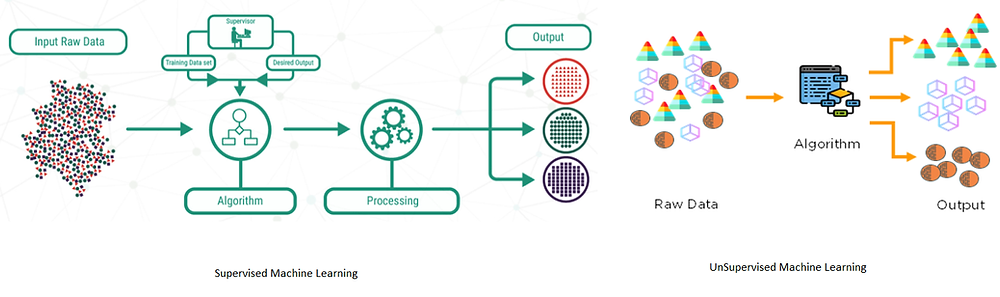
Machine learning works by creating and applying algorithms that can learn from data without being explicitly programmed. These algorithms can be classified into two main categories:
Supervised learning. Here, algorithms learn from a set of labelled data: every data point has a known outcome or class. For example, it can be trained on a set of credit card transactions that are labelled as either fraudulent or legitimate and learn to identify features that can identify fraudulent and legitimate transactions.
Unsupervised learning. This involves training on unlabeled data. It means there is no known outcome or class for each data point. For example, an unsupervised learning algorithm can learn from a set of credit card transactions without knowing which ones are fraudulent or legitimate. As a result, it can detect outliers or anomalies among the transactions and indicate potential fraud.
What are the benefits of machine learning for fraud detection?
Scalability: Machine learning can proceed with big data sets containing noise, missing values, or irrelevant features. It can also process data in real-time or near real-time, which is crucial for fraud detection.
Adaptability: Machine learning adapts to changing patterns of fraudsters by continuously learning from new data. Besides, it handles dynamic or evolving fraud scenarios, such as new types of fraud, new channels of fraud, or new targets of fraud.
Insightfulness: Machine learning can provide insights into the underlying causes or factors of fraud by identifying important features. Also, you can get recommendations or solutions to prevent or mitigate fraud by suggesting actions or policies.
What are the challenges of machine learning for fraud detection?
Machine learning also faces some challenges or limitations for fraud detection. Here are the most common ones.
Data quality
Machine learning depends on the data quality used to train and test the algorithms. Poor data quality can lead to inaccurate or unreliable results:
Incomplete data. If data is missing some important features or variables, the algorithms may not be able to capture the full picture or context of the problem.
Incorrect data. Data with errors or outliers might result in algorithms learning from false or misleading information.
Inconsistent data. Data with duplicates or conflicts might confuse the algorithms with contradictory information.
Irrelevant data. With data that is irrelevant or contains noise or redundant variables, the algorithms may be distracted or overwhelmed by unnecessary information.
Possible solutions to improve data quality:
Data cleaning and preprocessing to remove errors, duplicates, conflicts, noise, etc.
Data imputation and interpolation to fill in missing gaps.
Data transformation and normalization to standardize or scale the data into a common format or range.
Data augmentation and synthesis to generate new or additional data from existing data.
Data imbalance
Data balance refers to the distribution or proportion of the classes or outcomes in the data. Imbalanced data can lead to skewed or biased results. To address data imbalance, some possible steps are:
Data resampling and rebalancing to adjust the distribution or proportion of the classes or outcomes in the data.
Data stratification and cross-validation to ensure that each fold or subset of the data contains a representative sample of each class or outcome in the data.
Data privacy
Data privacy is about the protection or security of the personal or sensitive information in the data — and it can pose ethical or legal issues for machine learning. For example, suppose the data contains personal or sensitive information about users, such as name, address, phone number, email, credit card number, etc.
In that case, the algorithms may violate their privacy or expose them to identity theft or other risks. This can result in a loss of trust or reputation for the organization.
To protect data privacy, some possible steps are:
Data encryption and decryption to convert plain text into cypher text and vice versa using a secret key.
Data anonymization and pseudonymization to remove or replace personal or sensitive information from the data with random or fictitious values.
Data aggregation and generalization to reduce the granularity or specificity of the data by grouping or summarizing it into higher-level categories or ranges.
Machine learning for fraud detection in action: case studies and best practices
Machine learning for fraud detection is not a one-size-fits-all solution. It requires careful planning, design, implementation, evaluation, and maintenance.
Some of the best practices and examples of machine learning for fraud detection are:
Define a specific problem and objective for fraud detection. For example, what type of fraud do you want to detect? What are the criteria or indicators of fraud? What are the expected outcomes or benefits of fraud detection?
Choose an appropriate machine learning technique and model for fraud detection. For example, what kind of data do you have? What kind of features or variables do you need? What kind of performance or accuracy do you want?
Collect and prepare high-quality data for fraud detection. For example, where do you get your data from? How do you clean data?
Train and test your machine learning algorithm for fraud detection. For example, how do you set up your algorithm parameters? How do you measure your algorithm performance and validate its results?
Deploy and monitor your machine learning solution for fraud detection. For example, how do you integrate your solution with your existing system? How do you update your solution with new data?
Let’s look at some examples of machine learning applications on the example of a fraud detection website that uses machine learning models:
to analyze credit card transactions and flag suspicious ones based on their features, such as amount, location, time, frequency, etc.
to verify the identity and behaviour of online shoppers and prevent fraudulent transactions based on their features, such as device, IP address, email, phone number, etc.
to analyze healthcare claims and detect anomalies or patterns that indicate fraud based on their features, such as provider, service, amount, diagnosis, etc.
Conclusion
Machine learning is a powerful fraud detection tool. However, it faces some challenges or limitations for fraud detection — and thus, it is important to follow some best practices and examples to avoid the issues.
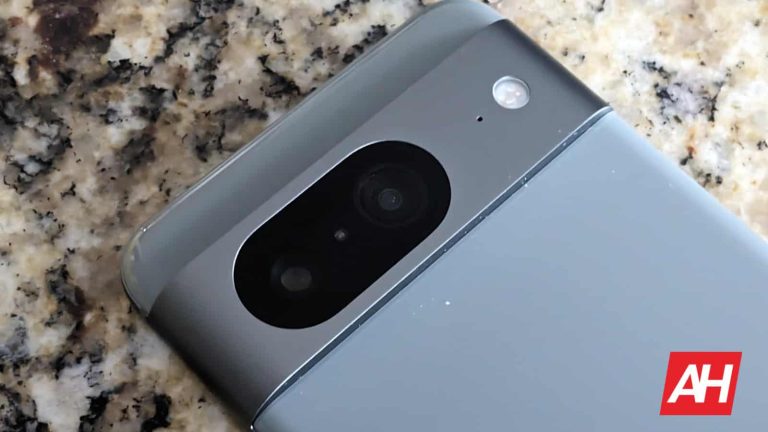
The Pixel design language has changed a bit since the Pixel 6, and the biggest change has to be the camera visor. The glass on the visor is now pill-shaped as opposed to being all glass on the Pixel 6. While the glass area is smaller, Google still wants to make sure that it’s protected from impacts. This is why Google is selling a lens protector for the Pixel 8 phones, according to 9To5Google.
In case you haven’t heard, the Pixel 8 and Pixel 8 Pro are the newest phones from Google. They bring some major improvements in terms of power, camera, AI, and much more. They use the new Google Tensor G3 and they bring their new Actua Display technology. If you’re looking to upgrade, you should check out the links below.
The Pixel 8 starts at $699 and the Pixel 8 Pro starts at $999.
Google is selling lens protectors for the Pixel 8 phones
If you remember, there were some people who complained that their Pixel 7 glass broke which may have led Google to do this. The company is selling lens protectors to protect the camera packages in the case of a fall. If the camera visor makes contact with the surface during an impact, the lens protector will break rather than the phone’s glass. That’s the preferred case.
These are made from tempered glass, which is about what 99.99% of all screen protectors are made of. This is glass that’s been heat treated in order to be more resilient to impacts.
If you’re interested in picking up one of these, you can buy one from the Google Store. Just go to the Accessories section and scroll down. You should be able to find the lens protectors on the top of the third page of accessories. They’re a little pricey at $19.99, so just keep that in mind. The company is selling them for both the regular Pixel 8 and the Pro model, so no one will be left out.
In June 2022, Samsung announced that it had begun the production of 3nm semiconductor chips. The Korean firm beat its arch-rival TSMC to the punch by about six months in the foundry race. It appears we will see something similar when both companies move to the 2nm node in 2025. Reports suggest Samsung will start 2nm production a few months earlier than its Taiwanese rival.
Samsung and TSMC will jump to the 2nm technology in 2025
Despite more than a year of experience manufacturing 3nm chips, Samsung has yet to apply the advanced node for smartphone processors. TSMC, on the other hand, has already manufactured Apple’s A17 Pro chip for the iPhone 15 Pro and iPhone 15 Pro Max using its 3nm node. However, reports are that both foundries are struggling with yield rates. Neither has been able to achieve a 3nm yield of over 60 percent.
Samsung’s upcoming flagship chip, the Exynos 2400 for the Galaxy S24 series, will be a 4nm solution. TSMC is also manufacturing Qualcomm’s Snapdragon 8 Gen 3 on a 4nm node. The Korean media recently said that Samsung might consider directly jumping to 2nm solutions if it fails to solve the 3nm yield issues. While it would continue to work on the latest chip fabrication tech, the company may be looking to quickly move to the next-gen solution.
TSMC, on the other hand, has slightly delayed its 2nm production plan. It’s constructing a new semiconductor plant in Baoshan, Taiwan for manufacturing advanced chips. The plant was originally expected to be ready for operation in early 2025. However, construction delays have pushed the deadline to the second quarter of 2025. At the earliest, the Taiwanese firm may start producing 2nm chips in the final quarter of 2025 with a monthly volume of 30,000 wafers.
Samsung is looking to capitalize on this opportunity
Samsung sees TSMC’s delay as an opportunity to gain a competitive edge over its Taiwanese rival in the foundry market. The latter company is also reportedly struggling with the power efficiency of the GAA (Gate All Around) transistor architecture. Its current chips use the older FinFET tech, which Samsung has already moved to the GAA architecture with the 3nm chips.
The Korean firm is now looking to utilize the experience to its benefit. By producing more efficient 2nm chips earlier than TSMC, it could be able to increase its market share. TSMC currently captures more than 50 percent of the market, with Samsung accounting for just over 10 percent. It remains to be seen whether Samsung manages to improve its foundry share with 2nm chips.
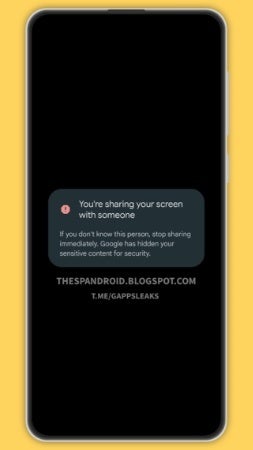
Google Messages is testing a new security feature that blocks users from accessing the app when it detects screen sharing. This is to prevent scammers from snooping on private conversations and security codes. Some people are concerned that this feature may backfire by preventing legitimate use cases.
As spotted by TheSpAndroid, Google is currently experimenting with a new feature in Google Messages that blocks the app from being displayed when it detects an ongoing screen sharing session. This could be useful, and likely a security measure to prevent sensitive information from being shown to bad actors.
Scammers often use screen sharing apps to trick users into revealing their personal information. For example, a scammer might pretend to be a customer support representative and ask the user to share their screen so that they can help them with a problem. Once the scammer has access to the user’s screen, they can steal their personal information, such as their passwords, credit card numbers, or one-time two-step verification codes.A security feature such as this one, could be a way to protect users from these types of scams. By blocking access to Google Messages when screen sharing is detected, Google can help to prevent users from accidentally revealing their private information to scammers.
However, some people are concerned that this new feature may backfire by preventing legitimate use cases. For example, if a user is trying to share their screen with a friend or colleague, they may be blocked from accessing Google Messages.
Credit – TheSPAndroid
In this rollout, which appears to be limited to a small amount of users (possibly as an a/b test), what appears when attempting to share one’s screen while having the Google Messages app open is a popup stating “You’re sharing your screen with someone. If you don’t know this person, stop sharing immediately. Google has hidden your sensitive content for security.” Meanwhile, while the app continues to work in the background and notifications continue to come in, the rest of the app is blacked out and the popup cannot be dismissed as long as you are still screen sharing.
However, in its current state it does not look like the feature’s implementation has been completely tested in all possible scenarios. For example, TheSPAndroid noted in its post that when receiving a Messages notification, one could still tap on the notification and view the message, even while screen sharing. This would, of course, defeat the entire point.
As someone who has had to connect to a relative’s phone in the past to troubleshoot by using screen sharing, I can see where a feature like this could be very restrictive. However, on the other hand I’m glad Google is looking out and implementing ways to protect unsuspecting users from themselves and the harm a scammer could cause should they gain access to a person’s messages.
The notorious DarkGate malware has become active again, as it now spreads via compromised Skype accounts. Researchers warn users to remain cautious while interacting with unknown accounts.
DarkGate Malware Spreads Via Compromised Skype Accounts
According to a recent report from Trend Micro, the DarkGate malware has re-emerged after remaining dormant for a few years. As observed, DarkGate exploits instant messaging platforms, like Skype, to spread malicious scripts that, in turn, download the malware on the target devices.
DarkGate first made it to the news in 2017, but it remained somewhat inactive during the past few years. However, beginning 2023, Malwarebytes and TrueSec observed the malware re-appearing in the wild. And it now caught the attention of Trend Micro researchers via its recent campaigns.
In the recent attacks, DarkGate used compromised Skype accounts to spread its infections. It remains unclear how the threat actors behind this campaign identified those accounts, but the researchers suspect previous breaches to have provided the login credentials.
The attack begins by luring the victim user into downloading a maliciously crafted file, such as PDF, with the VBA script. Clicking the file executes the AutoIt automation and scripting tool to execute the malware.
Regarding the malware features, the researchers found it possesses remote access capabilities using RDP or AnyDesk, crypto mining, keylogging, gaining elevated privileges, self-update and management, and executing discovery commands. Moreover, the malware also steals browser information from the target devices.
The threat actors use the compromised Skype accounts trusted by the target organizations’ contacts to lure the users. In other cases, the researchers also noticed the exploitation of Microsoft Teams to spread the malware. Again, the attack involves tricking the victim user into clicking a maliciously crafted file.
Users Must Remain Careful When Interacting With File Attachments
The recent DarkGate campaign targeted users across America (41%), followed by Asia, Africa, and the Middle East (31%), and then the European region (28%).
The researchers advise organizations to remain careful regarding the use of IM apps. Also, they suggest applying file scanning, especially for IM apps, implementing multi-factor authentication to ensure secure logins, and deploying app allowlists to prevent the execution of unnecessary apps, such as AutoIt, by unauthorized users.
On Saturday, rumours began circulating regarding a potential Signal zero-day vulnerability that could impact the security and privacy of the messaging app’s users.
KEY FINDINGS
On Saturday, a rumour originated that the Signal messaging app has a zero-day vulnerability.
After extensive investigation, Signa has confirmed that it didn’t find any evidence that a zero-day exists.
Rumours originated from an unverified source, shocking everyone and making users feel wary of using the app.
Signal has reiterated its commitment to ensuring user privacy and data security in its X post.
Zero-day vulnerabilities refer to disclosed but unpatched bugs in a system or device. These bugs are worrisome because malicious actors can exploit them before the software developers release a patch and can cause damages amounting to millions of dollars.
The popular encrypted messaging app, Signal, was recently in the news after an unverified source claimed the app contained a zero-day vulnerability. The company quickly launched an investigation and found no evidence to support this claim.
In a post on X (formerly Twitter), Signal categorically denied that a zero-day bug exists in the system while reiterating its commitment to upholding user privacy and data security. The company stated that it has a robust mechanism to detect and address potential bugs/vulnerabilities.
“PSA (public service announcement): we have seen the vague viral reports alleging a Signal 0-day vulnerability. After a responsible investigation, we have no evidence that suggests this vulnerability is real – nor has any additional info been shared via our official reporting channels,” Signal’s post read.
The company also wrote that it contacted government officials as USG was quoted as a source in the ‘copy-paste report,’ revealing that the officials denied making any such claim.
“We also checked with people across the US government, since the copy-paste report claimed USG as a source. Those we spoke to have no info suggesting this is a valid claim.”
We also checked with people across US Government, since the copy-paste report claimed USG as a source. Those we spoke to have no info suggesting this is a valid claim.
We take reports to [email protected] very seriously, and invite those with real info to share it there. 2/
The rumours regarding zero-day in the Signal app originated from a single, unverified source on Saturday afternoon and spread like wildfire.
Reportedly, the bug was associated with the General Links Previews feature, leading to a complete device takeover. Allegedly, the bug could be mitigated by disabling this feature in the app.
Now that Signal has confirmed no zero-day exists in the app, users can breathe a sigh of relief and continue using this app confidently. Signal also aims to upgrade its cryptographic specifications to prevent the threat of cyberattacks facilitated by quantum computers.
Zero-day vulnerabilities still remain a cause of concern within the cybersecurity community, as many bugs are discovered every year. Google’s Project Zero reported 50 zero days in the first nine months of this year, which is much higher than zero days discovered in 2022.
Earlier this month, Samsung launched two new mid-range Android tablets in the form of the Galaxy Tab S9 FE and Galaxy Tab S9 FE+. The devices arrived in the US last week. The company has now released an unboxing video to show what you are getting with these tablets. The video also highlights their key specs and features.
Samsung video highlights the Galaxy Tab S9 FE’s design and features
The newly published video on the Samsung US YouTube channel starts with an unboxing of the Galaxy Tab S9 FE+. The tablet sits at the top, followed by the S pen, Type-C to Type-C USB cable, ejection pin, and some paperwork. The company quickly shows us all four color variants of the tablet (Mint, Silver, Gray, Lavender), with the S pen matching the body color. The base model also comes in the same four shades.
Samsung then proceeds to highlight the specs of the new tablets. Both models feature a 12MP selfie camera and an 8MP rear camera, with the Plus model adding a second 8MP ultrawide lens at the back. They boast an IP68 rating for dust and water resistance. The Galaxy Tab S9 FE has a 10.9-inch LCD screen while the Plus model gets a 12.4-inch LCD screen, both with a 90Hz refresh rate. Samsung says the tablets emit low blue light and offer excellent visibility.
The built-in S pen, which magnetically attaches to the back of the tablet, makes multitasking a breeze. Thanks to the ultra-thin design (6.5mm) and a lightweight build (523 grams/1.15 pounds for the base model and 627 grams/1.38 pounds for the Galaxy Tab S9 FE+), the devices are quite portable too. This is without compromising on the battery capacity. The tablets feature 8,000mAh and 10,090mAh batteries, respectively.
Only the base model comes with optional 5G connectivity
Samsung’s promo video for the Galaxy Tab S9 FE series doesn’t go into detail about the processor and connectivity options. However, none of this is a secret anymore. Both models are powered by the Exynos 1380 processors, paired with 8GB of RAM and 256GB of storage. The devices support micro SD cards of up to 1TB capacity.
As far as connectivity is concerned, only the Galaxy Tab S9 FE is available in a 5G version. The Plus model only comes with Wi-Fi 6 and Bluetooth 5.3 connectivity. Both tablets feature an under-display fingerprint scanner and support face unlocking. Samsung is shipping them with Android 13 onboard, with its One UI 5.1 custom software on top.
Other highlights include AKG-tuned dual stereo speakers, 45W fast charging, and USB 3.2 with DisplayPort (DP) support. There have been reports that the Galaxy Tab S9 FE features USB 2.0, but that doesn’t appear to be true. This should mean support for external Samsung DeX as well. The new tablets start at $449.99, but you can grab them for less with these deals.
Netflix has announced that it will be ending support for some older Smart TVs and Streaming Devices. Most of the devices that will no longer be supported are over 10 years old. So it makes plenty of sense that Netflix would end support for those devices. But the downside here is, Netflix has not released a list of the devices that will no longer be supported, nor when the support will end. We will likely get some more details on this in the very near future though.
The good news, if you do have an older TV or streaming device, you can get a new one for pretty cheap. There are Roku and Fire TV devices that are often times as cheap as $15, or even less. Especially with Black Friday coming up in the next month.
What’s the real reason for discontinuing support for these older devices? Well, Netflix won’t come out and specify what the issues are, but it likely has to do with internet speeds and security features. Imagine how fast a Roku device released in 2012 is, compared to devices launched in 2020 and later. The experience is likely not great, so Netflix discontinuing support is pretty much expected.
Here are some cheap Streaming devices that support Netflix
If you do need a new streaming device, there are a few great alternatives, for less than $40. And we’ve rounded them up down below. This includes Amazon Fire TV Stick, Chromecast with Google TV and Roku. So there’s something for everyone here.
These streaming devices do also support a number other apps out there, like YouTube TV, Max, discovery+, Hulu, Disney+ and so much more. It’s always good to upgrade your streaming device every so often. As they can get pretty slow, and you’ll want them to be quick, and also offer up faster streaming speeds.