Is the Pixel 8 worth the upgrade?

0
[ad_1]

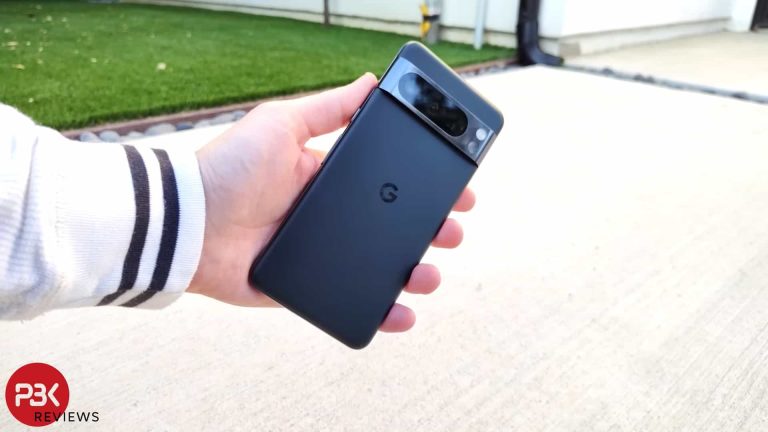
The latest iteration in the Google Pixel line of phones is finally here. The Pixel 8 and Pixel 8 Pro are the most powerful Pixel devices with their Tensor G3 processor. Along with the added muscle, these phones bring some new and useful features. While that’s the case, the question is whether the upgrade to the Pixel 8 is worth it.

You’re most likely asking this question if you purchased the Pixel 7 or the 7 Pro last year. These phones were extremely popular last year when they launched, and they’re great options today. So, is it time to trade up or should you hold out for the Pixel 9?

We’re going to go over the reasons why you should upgrade as soon as possible and the reasons why you should hold onto your current phone. Before we get started, you can find the pre-order links for these devices below.

Pre-order the Pixel 8 (Best Buy)

Pre-order the Pixel 8 Pro (Best Buy)

Why the Pixel 8 is worth it

So why should you part with your Pixel 7? This question could be a bit tough considering how iterative upgrades work. However, if you take a closer look at some of the finer details, you’ll start to see a strong case for switching up.

Software support

First and foremost, those OS upgrades. Google shook the Pixel community with its announcement. Now, the Pixel phones (before the Pixel 8) have a pretty lukewarm update schedule.  The phones get three major OS upgrades with five years of security patches. That’s pretty lacking considering that Samsung offers an additional year of OS upgrades. Also, it’s laughable compared to what Apple does for its phones.

Well, the Pixel 8 will get seven years of OS upgrades. It’s launching with Android 14; it will be supported until Android 21. This means that the phone will lose support all the way in 2030. If you’re planning on getting this for the long run, then you know that it’s going to be supported for longer than you’ll own it, most likely.

The upgraded AI capabilities of the Tensor G3

So, Google’s Tensor chips aren’t going to make Qualcomm quake in its boots. The Tensor chips aren’t exactly weak, but they’re not meant to be the beefiest processors out there. They shine with their AI power. The first-generation Tensor chip enabled on-device speech dictation on the Pixel 6, which was major.

The AI prowess of the Tensor chips has only gotten stronger in the intervening years. In fact, Google did some pretty impressive things with the AI in the Tensor G3. Google put actual generative AI models on the chip for the Pixel 8 Pro. This means that the phone can perform on-device generative AI.

The chip has some of Google’s own foundation models built in. They’re stripped-down versions, obviously, but they’re able to give the Pixel 8 Pro a huge boost over the Pixel 7 and Pixel 7 Pro. The Pixel 8 Pro can generate AI with 150x as many computations as what you get on the Pixel 7 series.

Google even loaded an image model onto the Tensor G3. This means that it can utilize generative AI when editing images. This AI will power the Zoom Enhance feature coming to the Pixel 8 Pro.

So what?

Sure, the more powerful AI is cool, but why should you trade up? You have to think about this: What does Google have coming down the road? The increased AI power in the Tensor G3 only opens more possibilities for amazing AI feats for the phone to perform in the future. Having these language models on the chip is a game-changer.

The upgraded camera

It wouldn’t be a new Pixel phone without substantial camera improvements. If you’re looking for the best that Google has to offer in photography, then this update will be worth it. Starting off, you’ll expect improvements in the low-light performance. Most of the sensors for both the regular and Pro versions take in more light.

The main sensor takes in 21% more light compared to last year. The telephoto camera on the Pro model takes in 56% more light compared to last year and the ultrawide takes in 105% more light. This will lead to some much better low-light photos compared to the Pixel 7 phones.

Speaking of low-light performance, the Pixel 8 Pro will bring Night Sight video. This will boost the low-light performance for video.

As for the regular Pixel 8, the ultrawide camera gets autofocus this time around. This means that this phone will be able to use macro mode.

Take those improvements with the additional AI enhancements, and you have one of the best cameras of the year. If you’re big into having this best photography experience, then the Pixel 8 is a no-brainer.

Newer battery

If you switch up to a newer phone, then you’re going to be getting a newer battery. A year doesn’t take a toll on the performance or the camera, but it definitely takes one on the battery. Your Pixel 7’s battery is most likely starting to feel long in the tooth.

Why the Pixel 8 isn’t worth it

So, those are some pretty strong reasons to switch to a shiny new Pixel 8. However, do you really have to upgrade? There are some reasons why you might want to hold onto your old phone.

The Pixel 7 is still fast

Sure, some people like to be on the bleeding edge of technology. However, you can survive being close to the edge. The Tensor chips are optimized excellently for the Pixel phones, and the Pixel 7 had great performance. A year in, that phone still flies. It’s not the most powerful, true, but you’re still getting buttery smooth performance.

The Pixel 7’s camera is still great

Google is unveiling some amazing features with the Pixel 8’s cameras. However, the Pixel 7’s camera is still one of the best cameras that you can get on a phone. The photos that you get from that phone are absolutely gorgeous. If you hold onto your Pixel 7 or Pixel 7 Pro, you won’t be getting a bad experience in the slightest.

Prices are going up

In case you didn’t know, this year’s Pixel phones start at $100 more than last year’s. The Pixel 8 starts at $699 and the Pro model starts at $999. So, the Pixel 8 Pro joins the $1,000 phone gang. The global economy is in a tough spot at the moment. Buying a new phone might not be in the cards. Sure, you can capitalize on a trade-in deal, but it costs you nothing to just hold onto your old phone. You’re still getting a fantastic device with the Pixel 7.

The Pixel 7 will still get two more years of OS upgrades

So, the Pixel 8’s software support blows Pixel 7’s support out of the water. However, you can still hold onto your Pixel 7 for two more years before software support becomes an issue. You’re still going to get all of the fundamental features that are coming to Android 14, Android 15, and Android 16. If you’re worried about software features, you’re still covered.

Well, what if you have a Pixel 6?

Maybe, you’re a Pixel 7 owner and you decide to keep your phone, but what if you’re still clutching your Pixel 6? Well, the Pixel 6 is definitely no spring chicken. The performance of the original Tensor chip is okay, but it’s slowing down. As for the battery life, well, you’ll be lucky to get a day of light usage.

It might be worth getting a Pixel 8. You’re getting the newest and most powerful Tensor chip, an updated camera, a much brighter screen, much better AI prowess, a much fresher battery, and many more years of software support. The Pixel 6 will lose support after Android 15 (next year’s version). the Pixel 6 was an amazing phone and a great change of direction for the company, but it might be time to switch up.

That’s the dynamic with phone releases nowadays. If you bought last year’s iteration, you’re good with keeping it for another year. However, if you’ve been holding out for two or three years, the update is much more worth it.


[ad_2]
Source link

Samsung might skip 3nm and jump to 2nm to challenge TSMC

0
[ad_1]

Samsung might skip 3nm mass production for smartphones and jump directly to 2nm. According to the Korean media, the company sees this as a winning move to challenge TSMC’s dominance in the foundry market. Research firm TrendForce recently reported that TSMC had a 56.4 percent share in the market in Q2 2023, with Samsung’s share coming in at just 11.7 percent.

Samsung considering jumping to the 2nm process amid 3nm yield struggles

The 3nm semiconductor era kicked off in 2022, with both Samsung and TSMC beginning mass production of the advanced chips. The former beat the latter to the punch in this race by a few months. However, TSMC ended up being the first to manufacture a 3nm processor for smartphones. It made Apple’s A17 chip used in the newly launched iPhone 15 Pro and iPhone 15 Pro Max.

It is currently the only 3nm smartphone chip available commercially. Samsung’s upcoming Exynos 2400 and Qualcomm’s Snapdragon 8 Gen 3 will both be 4nm solutions. Neither company is upgrading to 3nm, with MediaTek appearing to be the only one following Apple. Samsung and TSMC’s yield issues might be to blame for this. Both foundries are reportedly struggling to surpass a 3nm yield rate of 60 percent.

A poor yield means smaller production capacity, as a large portion of manufactured chips are defective or don’t meet the required specifications. It’s been more than a year since Samsung started manufacturing 3nm chips (for non-smartphone applications) but the company is still struggling to improve yield. The situation is no better at TSMC, despite it making Apple’s new chip on a 3nm process.

Industry experts believe these yield issues may extend the 3nm era as both companies still have several derivative 3nm processes to work on. However, Samsung might have something else in mind. While it will continue to work on improving the 3nm yield, the company doesn’t want to be caught up with it. The Korean behemoth may move to the 2nm process in 2025 regardless of where its 3nm technology stands at the time.

2nm chips could be a reality in 2025

Samsung has long planned to start producing 2nm chips in 2025. However, there have been fears that the yield issues with 3nm solutions may delay the plan. It appears that won’t be the case. The Korean firm is determined to make 2nm chips a reality in a couple of years.

TSMC also plans to move to the 2nm process in 2025. However, Samsung’s experience with the GAA transistor architecture might give it a competitive edge against TSMC. The Korean firm first applied the GAA technology to its 3nm chips, while TSMC has stuck with the older FinFet transistor architecture. It will upgrade to GAA with the 2nm solutions in 2025, but Samsung will have the “first mover” advantage. It remains to be seen whether Samsung can make this advantage count and increase its foundry market share.


[ad_2]
Source link

Best Google Pixel 8 Pro Accessories

0
[ad_1]

The Google Pixel 8 Pro is now official, and Google actually has built itself a nice little ecosystem of products for the new smartphone. So there are actually quite a few products that you can buy to get the most out of your new Pixel 8 Pro. That is why we have rounded up the very best accessories that you can buy for the Google Pixel 8 Pro.

Anker 735 Charger

518CnkU772L AC SL1500

The new Anker 735 charger is a really impressive charger to pick up, since it has two USB-C PD ports and a USB-A port available for charging.

Both of the USB-C ports can do up to 65W, while the USB-A port can do 22.5W. However, if you are using multiple ports, the first USB-C port will do up to 40W and the second will do up to 12W. This is a great charger to use if you are traveling or need to charge multiple things.

Anker 735 Charger – Amazon

Google Pixel Watch

71nEDjUiHGL AC SL1500

The Google Pixel Watch 2 is Google’s second-generation Pixel Watch, and it has some really nice improvements this year. That includes the new multi-patch sensors, for more accurate tracking. It also has better battery life at 24 hours with AOD on (versus 24 hours with AOD off last year).

Google is also selling the Pixel Watch 2 in four colors: black case with black band, gold case with hazel band, silver case with bay band, or silver case with porcelain band.

Google Pixel Watch 2 – Best Buy

PopSockets: PopGrip

galaxy s21 accessories

The PopGrip from PopSockets is a really good accessory for really any phone. And the reason why this is the best PopSocket you can buy right now is because it does allow you to swap out the top. So if you want to change the color, you can do so.

PopGrip is really great because it allows you to hold onto your phone much easier, especially for larger phones, but even works great on smaller ones like the Pixel 8 Pro. But it also doubles as a sort of kickstand for your smartphone. Allowing you to use it on long flights to watch a movie or two, without having to hold your phone the whole time. It’s a really genius invention, and it’s something that everyone should have.

You can attach the PopGrip to your case, so that it doesn’t ruin your phone too.

PopSockets: PopGrip – Amazon

Google Pixel Stand 2

51Q5xfJhcYL AC SL1500

The Google Pixel Stand 2 is an expensive wireless charger, a lot like other first-party accessories. But where it has a leg up over the competition is in the charging speed. The Pixel Stand 2 is the only one that can charge your Pixel at the full 23W.

It also has a few other tricks up its sleeve. Since it does sit at an angle, it’s great for having a Google Meet or Zoom meeting while it’s charging. It can also give you quick access to media controls and smart home controls right there on the screen, while it is charging. Nothing major, but definitely useful.

Google Pixel Stand 2 – Amazon

RAVPower Portable Charger 20000mAh PD 3.0 Power Bank

galaxy s21 accessories

The RAVPower Portable Charger 20000mAh PD 3.0 Power Bank is a really great option for a battery pack for the Google Pixel 8 Pro. It offers fast charging, though you likely won’t need that for the Pixel 8 Pro, since it does offer some really good battery life.

It also uses two USB-A ports with fast charging, so you can charge other devices at the same time. RAVPower also includes two more USB-C ports for input, which is really nice, when you need to charge this battery up pretty quickly.

RAVPower Portable Charger 20000mAh PD 3.0 Power Bank – Amazon

Anker Powerline II USB-C to USB-C

best note 20 ultra accessories

It’s always a good idea to get another USB-C cable or two, to have around your home. While you probably don’t need one at your office right now, since the majority of us are not actually going to work. It is good to have one in the car and other places around your home.

This is a USB-C to USB-C cable that is capable of USB-C PD speeds, so it can charge your phone pretty quickly too. That’s important in this day and age of fast charging.

Anker Powerline II USB-C to USB-C – Amazon

Google Pixel Buds Pro

61Q1lrV8zTL AC SL1500

The Pixel Buds Pro are the best pair of earbuds to go along with your new Google Pixel 8 Pro, and they also come in a couple new colors. Google now has the Pixel Buds Pro in Bay and Porcelain colors to match the new Pixel 8 Pro. These are also $199, so they are pretty pricey, but worth the price.

Pixel Buds Pro sport about 11 hours of continuous battery life, which is quite impressive, to say the least. Additionally, you can get about 31 hours of usage with the included charging case. Google has also added active noise cancellation and transparency mode here.

Google Pixel Buds Pro – Amazon

Anker PowerPort Atom PD 1

614SyJ alnL AC SL1500

The Anker PowerPort Atom PD 1 is the perfect USB-C PD charger to use with the Pixel 5. While it does still come with one in the box, it never hurts to have a spare somewhere in your home or at work.

This is a 30W charger, and can charge most smartphones at full speed. That includes the Pixel 8 Pro, Galaxy S23 Ultra and more. It also uses Gallium Nitride or GaN, which makes this charger a lot smaller than you’re probably used too. Which is why we think it is the best option. Since you can easily toss this into your bag when you’re traveling – if we are ever able to do that again.

Anker PowerPort Atom PD 1 – Amazon

Spigen Kuel S40 Stealth Car Mount

pixel 5 accessories

This is one of the most interesting looking car mounts out there, and it really doesn’t even look like a car mount.

The Spigen Kuel S40 stealth Car Mount is a minimalist car mount for those that don’t want to use magnets. This is a car mount that folds down when it is not in use. Just open it up and stick your phone in the mount, in landscape mode and you are good to go. It’s a good option, because it is fairly small when it is not in use, so that it is not blocking your view of the road all that much.

Spigen offers the Kuel S40 Stealth car mount in only one color. Which is black and blue, so it can blend in with your car a bit more.

Spigen Kuel S40-2 Turbulence Car Mount – Amazon

Google 30W USB-C Charger

51BjEHzAv5L AC SL1500

The Google Pixel 8 Pro is finally able to take full advantage of this charging speed now. As it can now charge at up to 30W, compared to the Pixel 7 Pro that was only 23W. Now you can also use this charging brick for other products that charge faster and slower. As it will adapt to whatever is plugged in and only give it the amount of juice it can handle.

Google 30W USB-C Charger – Amazon


[ad_2]
Source link

The recent Sony data breach affected a ton of the company’s workers

0
[ad_1]

Hackers have gained access to sensitive information of Sony employees in a recent data breach. Confirmation of this was given by Sony in a move to alert affected workers of this turn of events. The hackers responsible for this action were able to get access to Sony’s workers’ data through a MOVEit high-severity flaw.

MOVEit is a secure file transfer server that companies like Sony employ to handle sensitive information. These can include medical, legal, financial, and personal files that concern the company and its workers. Progress Software is the name of the company that owns and operates MOVEit hence making its services available to businesses around the world.

Back in May, hackers were able to break the security of Progress Software, hence gaining access to the MOVEit software. The company proceeded to inform its clients and businesses that use its software of this attack, but it was already too late. By this time, the hackers had already made away with tons of personal data of Sony workers.

Sony made some moves to secure its business after the data breach and contain its spread

While this data breach took place in May, it was not until June that Sony found out about it. Well, both actions (the attack by the hackers and Sony finding out about it) happened in two different months but just a few days apart. According to available reports, the attack hit Progress Software on May 28 while Sony found out about it on June 2.

Sony was able to discover the effects of this attack from certain unauthorized downloads on the MOVIEit platform. Once this data breach was discovered, Sony was able to take the MOVEit platform offline and fix the vulnerability. The next step from the company was to launch investigations into the data breach with the help of law enforcement and cybersecurity experts.

Sony also confirms that this data breach didn’t spread into other parts of its business. It initially hit the personal data of Sony’s workers as well as their family members, and the company has been able to prevent it from spreading. However, the bad actor behind this attack is now selling the stolen data to buyers on the dark web.

Reports point out the hacker to be the Russian ransomware actor CI0p. This individual is already selling the personal data of Sony workers on its data leak website. From this action, it is clear that Sony didn’t bulge to the bad actor’s demand for a ransom price for the stolen data.

The bad actor is claiming that its attack hit all of Sony’s systems and is advertising the stolen data for sale. While this attack is one of a kind, it’s not the only attack affecting a major tech firm in recent times. It highlights the need for tighter security measures from companies like Progress Software that handle sensitive data from various sources.


[ad_2]
Source link

Amazon Luna adds the ability to buy games

0
[ad_1]

It’s now possible to buy games on Amazon Luna meaning you can own the games you play on Amazon’s cloud gaming service. Up until this point, Luna operated on a subscription-based model. Where you pay a monthly fee and get access to collection of games to play. Games were split up into different tiers called ‘Channels’ and would offer a variety of titles. This method of accessing games on Luna isn’t going away. And Amazon will still offer it.

But there’s now the option buy games should you want to own the license in addition to playing them on the Luna service. If this sounds a little like how Stadia offered games, you’re not entirely wrong. But things are definitely different with the way Luna is offering things. And honestly it sounds like a better method.

Games you buy on Amazon Luna can be downloaded for offline play

Buy Games on Amazon Luna

Here’s the thing with buying games on Luna. This only applies to Ubisoft titles for now it seems. Which makes sense given Amazon added the ability in December of last year to link your Ubisoft account so as to link games you bought through the Ubisoft Connect app.

With this new change, if you buy a Ubisoft game through Luna, you can access it in the Ubisoft Connect app. So it’s available in both places. This is a good thing because, god forbid something happens to Luna and it goes belly up, you still own the license to the game. And it should be accessible in Ubisoft Connect. That’s how Amazon’s blog post about the new feature reads. Which means there would be pretty much zero hassle with accessing the game outside of Luna if it ever disappeared.

Something that can’t really be said for Stadia when it was going through its shutdown process. Amazon doesn’t mention if this will ever expand to games from other publishers.


[ad_2]
Source link

Some Galaxy S24 models will use Exynos 2400, details here

0
[ad_1]

Samsung recently unveiled the Exynos 2400, its new flagship processor for the Galaxy S24 series. However, it will not power all three models. Only the Galaxy S24 and Galaxy S24+ will feature the new chipset. Moreover, the Exynos versions will be limited to select markets such as Europe, South Korea, and India. Buyers in the US and Canada will get Qualcomm’s Snapdragon 8 Gen 3 For Galaxy chip. The Galaxy S24 Ultra will use the Snapdragon globally.

The Exynos 2400 won’t make it to the Galaxy S24 Ultra, thankfully

Samsung has long shipped its flagship phones with Exynos processors in some markets and Snapdragon in others. However, the former chips have always underperformed the latter, leading to widespread backlash and criticism of the company. Understandably, consumers would be unhappy if they got a less powerful phone even after paying the same amount of money.

The Korean firm addressed these complaints this year by shipping the Galaxy S23 series with a Snapdragon chip globally. Unfortunately, it isn’t sticking to this strategy for the Galaxy S24 series. The company is returning to its usual dual-chip strategy next year. There have been rumors that it will exempt the Ultra model from this, and the Korean media has just confirmed that.

Since the Snapdragon 8 Gen 3 For Galaxy is more expensive, using the Exynos 2400 in the Galaxy S24 and Galaxy S24+ will save Samsung a few bucks. Unfortunately, early benchmark scores suggest the company still hasn’t completely got rid of the Exynos problems. The new chip might end up underperforming its Snapdragon counterpart again. If this happens, the Ultra model’s share in overall Galaxy S24 sales could grow further.

Samsung might be taking a cue from Apple

Samsung using the Exynos 2400 in the Galaxy S24 and Galaxy S24+ and the Snapdragon 8 Gen 3 For Galaxy in the Galaxy S24 Ultra rings a bell. Apple has done something similar in years. It ships the latest iPhones with two different chips. The Pro and Pro Max models get the newer and more powerful chipset, while the other two models get the previous-gen solution.

The Exynos 2400 and Snapdragon 8 Gen 3 For Galaxy might be two competing chips from the same year, but as said earlier, the latter is shaping up to be a more powerful solution. It looks like Samsung is taking a cue from Apple here. If it stopped shipping the same phone with different SoCs in different markets, people might stop complaining about its Exynos processors.


[ad_2]
Source link

Samsung rolls out October update for Galaxy S22 in the US

0
[ad_1]

Samsung is rolling out its October 2023 security update to the Galaxy S22 series in the US. The latest security patch is available for both carrier-locked and unlocked variants of the 2022 Galaxy flagships stateside. The rollout should soon reach other markets as well.

The Galaxy S22 series is getting Samsung’s October update in the US

The October SMR (Security Maintenance Release) for the Galaxy S22, Galaxy S22+, and Galaxy S22 Ultra is rolling out with firmware build numbers S90*USQS3CWI1 (carrier-locked) and S90*U1UES3CWI1 (unlocked) in the US. The official changelog supplied by Samsung confirms that the devices aren’t getting anything more than this month’s security fixes.

The Korean firm recently revealed that the latest security update for Galaxy devices patches 46 vulnerabilities. These include 12 Galaxy-specific issues and over 30 Android OS flaws, at least two of which were “critical” issues. Of course, the Galaxy S22 phones aren’t vulnerable to all 46 issues, but some of the vulnerabilities affect all three models.

If you’re using any of the three phones in the US, the latest update will secure it from those vulnerabilities. You will get a notification as soon as the OTA (over the air) release from Samsung hits your Galaxy S22, Galaxy S22+, or Galaxy S22 Ultra. You can also navigate to Settings > Software update > Download and install to manually check for updates.

If you don’t see any updates today, check again a few days later. That’s because updates are released in batches and may take a while to reach all eligible units. The latest security patches will also gradually roll out to more Galaxy smartphones globally. Samsung has already released the new SMR for the Galaxy Z Fold 5, Galaxy Z Flip 5, and Galaxy A54 in the US. Expect other models to join them soon.

This may be the final Android 13-based update for the 2022 flagships

The October security patch could be the final Android 13-based update for the Galaxy S22 series. Samsung is already working on Android 14 for the 2022 flagship trio. It will come with One UI 6.0. The big OS update is expected to hit the stable channel at the end of this month.

While the Galaxy S23 series will get it first, the Galaxy S22 trio shouldn’t be too far behind on Samsung’s roadmap. The phone may get the update in early November. The Korean firm is currently running One UI 6.0 beta programs for both of these flagship lineups, along with the Galaxy S22 series, Galaxy Z Fold 5, and a couple of mid-range models. We will let you know when the stable update arrives.


[ad_2]
Source link

Samsung Galaxy Ring delayed, not coming with Galaxy S24

0
[ad_1]

Samsung‘s first-gen smart ring might still be several months away, or maybe more than a year. The Korean firm is reportedly aiming to launch the Galaxy Ring in the third quarter of 2024 at the earliest, i.e. between July and September of next year. The launch could be further delayed until the first quarter of 2025 if things don’t go according to the plan.

Samsung has yet to complete the Galaxy Ring development

We have long known about Samsung working on a smart ring. The company is looking to make a tiny wearable device for your finger that can serve as a comprehensive health monitoring gadget, potentially offering better accuracy than wrist-worn smartwatches. Rumors about the device started getting more detailed and frequent earlier this year, indicating a nearing launch.

A few months back, the Korean media reported that the product had reached an advanced development stage, with Samsung beginning preparations for its mass production. Subsequently, we spotted references to the Galaxy Ring within several Samsung apps, with some of them containing ring-shaped icons as well. The company also filed numerous smart ring-related trademark applications.

The sheer volume of rumors and leaks about the Galaxy Ring suggested that the device isn’t too far off. Some industry insiders even claimed that Samsung will unveil it during the Galaxy S24 launch in January 2024. However, according to The Elec, that isn’t happening. The Korean firm is yet to complete the development of the Galaxy Ring. It has finalized the sensors for the product, but cramping those all in a tiny ring is proving to be a challenge.

Samsung reportedly plans to offer the Galaxy Ring in four sizes to ensure proper fit on fingers of varying sizes. Finnish brand Oura’s Oura Ring, for example, comes in eight sizes with the inner diameter ranging from 15.2 to 20.9 mm. While the Korean firm’s planned size options are not known, the new report states that the device in its current form is too large for commercialization.

Medical approvals might further delay its launch

Samsung is currently evaluating the possibilities of fitting all necessary sensors in each of the four Galaxy Ring size variants. It might remove some functions from the smaller models if need be. Once the company finalizes it all, the development stage will be complete and the device will be ready for mass production. The firm has already informed its suppliers about the plan, so production may not be an issue.

However, the Galaxy Ring has another hurdle to overcome before it can hit the market. If Samsung wants to sell it as a health-monitoring device, it must obtain necessary medical approvals. This process might take as long as a year. And the process will only begin once the company completes its development. Even if the company does that within the next couple of months, the Galaxy Ring won’t make it to the market until early 2025.

Of course, Samsung could sell it as a fitness tracker rather than a health monitoring device, which circumvents the need for medical approval. However, that has never been the plan. So in all likelihood, we will have to still wait more than a year for the Galaxy Ring. The company may unveil it during the Galaxy Z Fold 6 and Galaxy Z Flip 6 launch in July/August 2024, but a market release could take a few more months.


[ad_2]
Source link

Exim finally fixes 3 out of 6 vulnerabilities

0
[ad_1]

Six vulnerabilities in the Exim message transfer agent have been fixed—over a year after they were reported.

Exim is a message transfer agent (MTA) originally developed at the University of Cambridge for use on Unix systems connected to the internet, and is freely available under the terms of the GNU General Public Licence.

Even though the name may be new to you, a Shodan search revealed 3.5 million servers online. According to recent data, they account for more than half of all email servers. Most of these servers are in the US, Russia, Germany, and the Netherlands. The large numbers are, at least partly, due to the fact that on Debian-based Linux systems, Exim is the default MTA software.

For over a year, many of these servers have been vulnerable to six zero-day vulnerabilities. An anonymous researchers filed those vulnerabilities through the Zero Day Initiative (ZDI) that acts as an intermediary to reward researchers and helps them to responsibly disclose vulnerabilities.

The word “finally” in the title stems from the fact that these vulnerabilities were reported to Exim on June 14, 2022. After 10 months of silence, the ZDI made an enquiry to see if anything had been done about them and as a reply received a request to re-send the reports.

Another four months went by and ZDI sent an ultimatum announcing the intention to publish the case as a zero-day advisory on September 27, 2023.

From the description of the vulnerabilities there was no reason to think that these were minor bugs, not worthy of immediate attention. Let’s look, for example, at the vulnerability listed as “CVE-2023-42115 (CVSS score 9.8 out of 10): This vulnerability allows remote attackers to execute arbitrary code on affected installations of Exim. Authentication is not required to exploit this vulnerability.”

The specific flaw exists within the SMTP service, which listens on TCP port 25 by default. The issue results from the lack of proper validation of user-supplied data, which can result in a write past the end of a buffer. An attacker can leverage this vulnerability to execute code in the context of the service account.

Now, Exim has acknowledged the bugs and published the available fixes on October 2, 2023 providing mitigation advice for all of them.

The delay seems to be a lack of communication where each side is blaming the other for not being clear and proactive enough. It’s hard to say who’s at fault here, but the issue remains that the goal of responsible disclosure wasn’t achieved.

What can Exim administrators do

Even though some researchers say that the vulnerabilities are not that severe, you may want to check if your setup is vulnerable and apply fixes or mitigations where needed.

The three vulnerabilities that have been fixed (CVE-2023-42114, CVE-2023-42115, and CVE-2023-42116) are all related to Secure Password Authentication (SPA)/New Technology LAN Manager (NTLM), and EXTERNAL authentication. EXTERNAL authentication enables authentication based on some properties which are external to the Simple Mail Transfer Protocol (SMTP) session which is usually an x509 certificate.

If you do not use SPA/NTLM, or EXTERNAL authentication, you’re not affected. If you are you should install the latest version (4.96.1 or later).

The solution for CVE-2023-42117 is to not use Exim behind an untrusted proxy-protocol proxy. The proxy protocol is a simple protocol where the client sends a message to the server asking to make a connection from a specific local IP to a specific remote IP. Once the connection is made, traffic in both directions is relayed as is via the proxy. There are many trustworthy ones to chose from that will properly validate user-supplied data. Exim is working on a fix for this one.

The solution for CVE-2023-42118 is to not use the `spf` (Sender Policy Framework) condition in your access-control list  (ACL). The specific flaw exists within the parsing of SPF macros and can only be exploited by network-adjacent attackers.

CVE-2023-42219 is not likely to be fixed by Exim. They feel users should use a trustworthy Domain Name System (DNS) resolver which is able to validate the data according to the DNS record types. This vulnerability allows network-adjacent attackers to disclose sensitive information on affected installations of Exim.


We don’t just report on vulnerabilities—we identify them, and prioritize action.

Cybersecurity risks should never spread beyond a headline. Keep vulnerabilities in tow by using Malwarebytes Vulnerability and Patch Management.


[ad_2]
Source link

Pixel Watch 2 popularity leads to out of stock inventory

0
[ad_1]

The Pixel Watch 2 is quickly getting to the “out of stock” point in its pre-order phase. After Google announced the Pixel Watch 2 alongside the rollout of Android 14 and two new Pixel phones this week, it began pre-orders for all new hardware the same day. This means the Pixel watch 2 has been available to pre-order for nearly two whole days. And as pointed out by 9To5Google, that has led to some variants of the watch going out of stock on Google’s online store front.

For example, if you go to the Google Store and attempt to pre-order the LTE model of the Pixel Watch 2 in Polished Silver with the Bay colored band, there’s no option to pre-order. Just an option to join the waitlist. However, it is worth noting that not all LTE model variants are out of stock. The Hazel option which comes with the Champagne Gold case is still available.

Out of stock Pixel Watch 2 options are available at Best Buy

All is not lost if you like the Polished Silver and Bay combination the best. Because Best Buy still has the LTE model in that variant and you can pre-order it right now. This is also the case with the Matte Black and Obsidian combo that’s out of stock at the Google Store as well. Worth noting is that Best Buy says watches will still arrive on launch day too. Or you can pick it up on launch day if it shows that’s an option for you.

Best Buy also offers a trade-in program where you can save money on the watch pre-order. So you’re not really losing anything by not going through Google. Plus, there’s not much you can do aside from wait since Google doesn’t have all the variants available anyways. While some variants are out of stock others are simply listed with shipping dates that have been pushed out into next month. So depending on what you pick you may be waiting a while to get it.


[ad_2]
Source link