Samsung may soon launch its first 1-inch type camera sensor. In fact, it appears to be readying two of them. However, neither of them might find its way into a Galaxy smartphone. The company reportedly plans to stick to smaller cameras for its phones in 2024 and 2025.
The first 1-inch Samsung camera could be a bonkers 432MP sensor
Samsung is one of the leading companies in the camera sensor industry, second only to Sony. The latter has already released 1-inch type smartphone cameras, while the Korean firm has been focusing on higher-resolution sensors. There have been calls from industry stakeholders and fans alike for Samsung to launch larger sensors too.
A few weeks back, a rumor surfaced that the company was finally working on a 1-inch type camera. The same source has now revealed that there are two of them in the pipeline. The ISOCELL HW1 will be a 1/1.05-inch sensor with 0.56µm pixels. The ISOCELL HW2, on the other hand, has an optical size of 1/1.07 inches and features 0.5µm pixels. Both sensors boast a 432MP resolution.
The new report doesn’t go into details about the release date of these sensors, nor does it confirm that Samsung will use them on its Galaxy devices. However, the source states that next year’s Galaxy Z Fold 6 will continue to use the 50MP ISOCELL GN3 camera found on the Galaxy Z Fold 4 and the Galaxy Z Fold 5. It’s a much smaller sensor with an optical size of 1/1.56 inches.
With the Galaxy Z Fold 7 in 2025, Samsung plans to upgrade the camera to a 200MP sensor. The source says the foldable will feature the ISOCELL HP5 camera, which is a 1/1.3-inch sensor with 0.5µm pixels. Samsung’s Galaxy S24 Ultra and Galaxy S25 Ultra are also rumored to stick to a 200MP camera, with the company focusing on improving the sensor rather than increasing the resolution.
Galaxy phones might not get the big new cameras
If all of these rumors turn out to be accurate, Samsung’s 1-inch type ISOCELL HW1 and ISOCELL HW2 cameras may not make their way into Galaxy smartphones. The company could be developing them for non-smartphone applications. It also supplies cameras to various automakers. Considering the reported 432MP resolution, which might be overkill for smartphones, these cameras may debut on a car. Or maybe the Korean behemoth has some other plans. We should get more information about the new Samsung cameras over the next few months.
Social media companies are offering or thinking about paid subscriptions in exchange for removing ads.
According to a report from the Wall Street Journal, Meta is considering charging its European users around $14 a month if they don’t agree to personalized ads on Facebook and Instagram. On mobile devices, the price for a single account would be higher because Meta would factor in commissions charged by Apple’s and Google’s app stores.
European rules require Meta to get users’ consent in order to show them targeted ads, so this seems like an obvious attempt to make up for the lost advertising revenue when a user declines to give their consent. In the past, Meta tried to circumvent the European legislation by claiming in court that showing advertisements was an intricate part of the services stipulated in the user agreement.
A Meta spokesperson said:
“ [the company] believes in free services which are supported by personalized ads, but is exploring options to ensure compliance with evolving regulatory requirements.”
Meta has spoken with digital-competition regulators in Brussels, privacy regulators in Ireland, and other EU privacy regulators about its proposal, according to the report. The company has reportedly named the plan “subscription no ads” (SNA), and it wants to start rolling it out in the coming months.
At the same time, the BBC reports that TikTok is testing a monthly subscription model for ad-free content. The current price during the test for this feature is $4.99 per calendar month. Reportedly, this the test is being done at a small scale and it’s not sure whether a subscription model will be rolled-out globally.
YouTube and X, formerly Twitter, are among sites already offering fewer or no ads for a monthly fee. X Premium promises to show 50% less advertisements on your timelines “Following” and “For you.” YouTube Premium offers YouTube and YouTube Music without advertisements.
It is unknown if in the SNA model that Meta is trying to agree upon with European privacy watchdogs there will also be restrictions about the information gathering that takes place on the platforms. If not, it is very feasible that you will still get targeted ads based on your Facebook activity, you’d just see them on other sites you visit. If that’s the case, Facebook will make money off your presence on more than one side.
Netflix, Spotify, and others like them, allow you to pay for ad-free movies and music, so maybe the model can easily be ported to YouTube. But whether it will work for social media remains to be seen.
It’s also unknown whether Meta will be offering the same option to users outside of the EU. This may well depend on how successful the formula turns out to be for the company. The announced “Meta Verified” paid verification subscription service wants to provide verification for more than the notable users like politicians, executives, members of the press and organizations to signal their legitimacy.
Obviously it is up to you, if you are presented with a choice, to decide whether you prefer to pay directly, or you’d rather be the subject of targeted advertising. Given that a big part of the population is active on several social media platforms, all the monthly subscriptions would add up to a sum most young people can’t afford to shell out, so there’s a good chance that it will be mostly business as usual for the social media giants.
We don’t just report on threats—we remove them
Cybersecurity risks should never spread beyond a headline. Keep threats off your devices by downloading Malwarebytes today.
Google announced its new Pixel phones recently. The Pixel 8 and Pixel 8 Pro were launched, and we’ve already compared the two. In this article, we’ll compare the Google Pixel 7 Pro vs Google Pixel 8 Pro. Some of you are probably trying to decide whether to get the latest ‘Pro’ model, or stick with the previous one. Or perhaps you’re thinking of getting the Pixel 7 Pro instead of the Pixel 8 Pro. Regardless, we do hope that this comparison will help.
Do note that we’ll do our best to compare the two phones, but this is not a review. You’ll have to wait for full reviews in order to get an in-depth look at both phones separately. Having said that, we’ll first check out their specifications side-by-side, and will then take a look at their designs, displays, performance, battery life, cameras, and audio performance. Having said that, let’s get started, shall we?
At first glance, the Google Pixel 7 Pro and Pixel 8 Pro do look quite similar. There are some differences, though. The Pixel 7 Pro’s display is slightly curved, but the Pixel 8 Pro’s is flat. There is a sheet of curved glass on top of it, but the display itself is flat. The newer phone also has curvier corners. You will also notice different camera cutouts on the rear camera modules. On the Pixel 7 Pro they’re separated, on the Pixel 8 Pro, not so much.
Both smartphones do have thin bezels around the display, though the ones on the Pixel 8 Pro are uniform. A display camera hole is present on both phones, and it’s centered on both devices too. All of their physical buttons sit on the right-hand side, while both have similar camera visors on the back. On both phones they connect to the left and right side of the frame, and span across the top side of the phone’s backplate.
Both smartphones are made out of aluminum and glass. The Pixel 8 Pro does have Gorilla Glass Victus 2 on the back, while the Pixel 7 Pro includes Gorilla Glass Victus. They’re almost the same size, and that goes for height, width, and thickness. The Pixel 8 Pro is 1 gram heavier, so that’s the same as well, basically. These two smartphones are IP68 certified for water and dust resistance, by the way. They do feel a bit different in the hand, we found the Pixel 8 Pro to be more comfortable. Both phones are slippery, though.
Google Pixel 7 Pro vs Google Pixel 8 Pro: Display
You will find 6.7-inch displays on both of these phones, but they’re quite different. The Pixel 7 Pro includes a curved display with a 3120 x 1440 resolution. That’s an LTPO AMOLED panel with a 120Hz refresh rate, which can go up to 1,500 nits of brightness at its peak. It supports HDR10+ content. It has a 19.5:9 aspect ratio, and is protected by the Gorilla Glass Victus.
Google Pixel 8 Pro
The Pixel 8 Pro, on the other hand, has a 6.7-inch LTPO OLED display too. This one has a resolution of 2992 x 1344 pixels, and a 20:9 aspect ratio. It also has a 120Hz refresh rate (1-120Hz), and supports HDR10+ content. It does get brighter, though, at 2,400 nits of peak brightness, which is quite a difference. The Pixel 8 Pro’s panel is protected by the Gorilla Glass Victus 2.
Both of these displays look really good, and offer good viewing angles, with deep blacks. The Pixel 8 Pro’s panel does get a lot brighter, and it actually looks a bit better to us. We’re not sure if brightness has something to do with it, but it seems to be a bit more vivid. It also has the advantage of brightness, though, of course, as it does get a lot brighter in direct sunlight.
Google Pixel 7 Pro vs Google Pixel 8 Pro: Performance
The Google Pixel 7 Pro is fueled by the Google Tensor G2 SoC. That phone also includes 12GB of LPDDR5 RAM, and up to 512GB of UFS 3.1 flash storage. The Pixel 8 Pro, on the flip side, is fueled by the Google Tensor G3 processor. It includes 12GB of LPDDR5X RAM, and up to 1TB of UFS 3.1 flash storage. Neither phone offers storage expansion, by the way.
The Pixel 8 Pro not only has the advantage of having a considerably more capable SoC, at least on paper, but also faster and more efficient RAM. Unfortunately, Google didn’t use UFS 4.0 flash storage on the new model. At first, the Pixel 8 Pro performs really nicely. We didn’t really get a chance to properly test it yet, this is based on our hands-on time with the device. Our review is coming soon, and will reveal more information.
Chances are that the Pixel 8 Pro will offer really good performance, as it does feel a bit snappier than the Pixel 7 Pro. Truth be said, though, the Pixel 7 Pro also offers really good performance. It may struggle to power the most demanding games out there at top details, but for everything else, it’s still more than powerful enough, of course.
Google Pixel 7 Pro vs Google Pixel 8 Pro: Battery
There is a 5,000mAh battery included inside the Pixel 7 Pro. You’ll find a 5,050mAh unit inside the Pixel 8 Pro. So, the difference is not that big, they basically have the same battery packs. The Pixel 8 Pro does have a new chip, which should be a bit more power efficient, and it also has a more power-efficient RAM. We are currently reviewing the Pixel 8 Pro, at the time of writing this article, so we cannot report on how good the battery life is on the phone. We are hoping for improvements, as the Pixel 7 Pro did not exactly impress, even though its battery life wasn’t bad per se.
When it comes to charging, the Pixel 7 Pro supports 23W wired, and 23W wireless charging, in addition to offering 5W reverse wireless charging. The Pixel 8 Pro, on the other hand, supports 30W wired, 23W wireless, and 5W reverse wireless charging. What neither phone includes is a charger. It is not included in the retail box of either phone, you’ll have to get one separately, if you don’t have one at home already. The phone supports the PD 3.0 (PPS) standard, so getting a charger should be fairly easy.
Google Pixel 7 Pro vs Google Pixel 8 Pro: Cameras
A 50-megapixel main camera (OIS) sits on the Pixel 7 Pro, while the phone also includes a 12-megapixel ultrawide camera (126-degree FoV), and a 48-megapixel telephoto unit (OIS, 5x optical zoom). The Pixel 8 Pro, on the flip side, includes a 50-megapixel main camera (OIS) also, but a larger sensor which allows more light into the shot. A 48-megapixel ultrawide camera (126-degree FoV) is also included on the phone, along with a 48-megapixel telephoto shooter (OIS, 5x optical zoom).
Google Pixel 7 Pro
Based on some initial samples we’ve seen, the Pixel 8 Pro does a great job in both daylight and low light. The bigger difference is noticeable in low light, as the images do seem to offer a bit more detail. The low light video performance has also been improved, thanks to Night Sight support for video. The biggest improvement you’ll likely spot in the ultrawide camera, if you pixel peep, though. There’s noticeably more detail there.
We’ll have far more information to share with you once our full reviews are published. We’re still testing the Pixel 8 Pro. So far, though, the phone’s camera system looks very promising, to say the least, Google obviously made improvements here, not to mention added a number of useful camera-related features. Features like Best Shot, Magic Editor, and more.
Audio
You will find stereo speakers on both of these smartphones. We haven’t had the chance to properly test the Pixel 8 Pro speakers just yet, but they did sound good based on a short test. In fact, I’d say they’re rather similar when directly compared.
There is no audio jack on either of these two smartphones. You can use their Type-C ports to connect your wired headphones or something of the sort, of course. Bluetooth 5.2 is included on the Pixel 7 Pro, while Bluetooth 5.3 is available on the Pixel 8 Pro, for wireless connectivity.
OpenAI, the company behind ChatGPT, is reportedly planning to make its own AI chips. Given the current chip shortage and the growing demand for AI chips, the tech giant cloud has a great chance of success.
Everything revolves around chips these days. All electronic devices, home appliances, cars, and airplanes use chips to operate. The chips have also become a strategic and national security matter for the United States and China. The market is currently dealing with a massive shortage and the Taiwan crisis has worsened the outlook. Thus, chip companies are investing tens of billions of dollars to ramp up production and meet the demands.
In the meantime, demands for AI chips are skyrocketing as they’re essential for AI-driven services and products. Nvidia is now the leader of this segment, but a new player might come to the game. ChatGPT’s parent company, OpenAI, might soon become an AI chip producer.
OpenAI diversifies its portfolio by focusing on producing AI chips
As Reuters reported, OpenAI is still evaluating the idea and hasn’t moved forward with it yet. The company’s strategy for entering AI chip production is also vague. Two options are available. First, OpenAI can acquire a smaller chip producer and start producing its chips. This plan might require plenty of money and other resources.
The second option is cheaper, and it’s outsourcing. The AI chips leader, Nvidia, is outsourcing over half of its AI hardware production to Foxconn. OpenAI can also follow the same path and benefit from cheap labor and existing production facilities in Southeast Asia.
Despite investments in new production lines, the chip market suffers from a shortage. Political tensions are also making everything worse, as Taiwan is the biggest chip producer in the world. Any unrest in Taiwan could throw the supply chain into crisis. To mitigate risks, OpenAI could start working with other AI hardware manufacturers besides launching its production lines.
OpenAI’s interest in producing in-house AI chips coincides with its CEO’s meeting with former Apple designer Jony Ive. Both reportedly talked about building AI hardware, which is still mysterious to everyone.
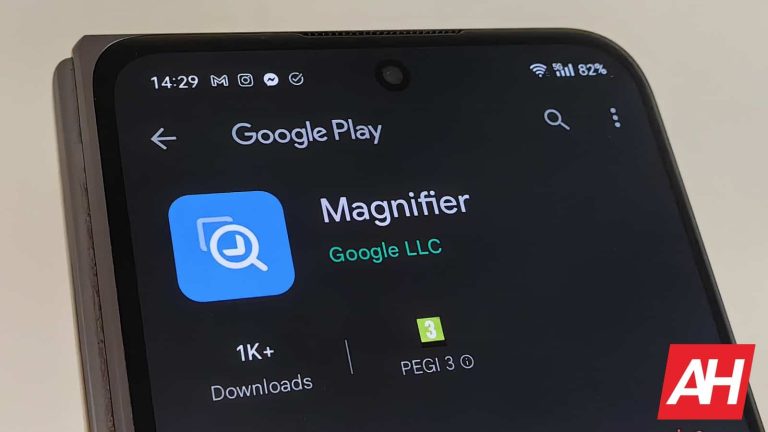
Google has released on the Google Play Store the Pixel 8Magnifier app. The Pixel-exclusive app uses the phone’s camera to zoom in on objects, making it easier to see small text or object details.
The Magnifier app also has a number of features that make it useful for a variety of tasks. For example, it can be used to read small text on menus, signs, or labels. It can also be used to see object details, such as the serial number on a piece of equipment or the expiration date on a food product. The app can also be used to zoom in on faraway text, such as a billboard or a street sign.
In addition to its basic magnification features, the Magnifier app also has a number of features to help users adjust the image. For example, users can apply filters to the image to make it easier to see certain details, as well as adjust the contrast and brightness of the image.
To use the app, simply open it and point the camera at the object you want to magnify. The app will automatically zoom in and adjust the image so that it is easy to see. Below is how Google describes its function on the Play Store:
Use your camera to magnify small text, see object details, or zoom in on faraway text like street signs or restaurant menus behind a service counter. Apply visual effects to make low contrast text more visible. In low light environments brightness is automatically adjusted. You can also take photos and zoom in as much as you need.
Credit: Google Play Store
Although the app listing only states having the Pixel 5 as a requirement for downloading the app, it doesn’t seem to be compatible with the Pixel Fold or the Pixel Tablet at this time — as also corroborated by 9to5Google. This is rather unfortunate and hopefully just an oversight that gets resolved soon.
Magnifier app incompatibility error on Google Pixel Fold
For those that are able to install the app, its listing also provides a quick and convenient way to access it by using a Quick Tap gesture. Here are the steps Google provides to set that up:
Open your phone’s Settings app.
Go to System > Gestures > Quick tap.
Turn on Use Quick tap.
Choose open app. Next to “Open app,” tap Settings. Then select Magnifier.
To open Magnifier, tap twice on the back of your phone.
Sony has confirmed a ransomware attack in June and is investigating claims of a second, more recent one.
On September 25, newcomer ransomware group RansomedVC claimed to have successfully compromised the computer systems of entertainment giant Sony.
Then, on October 4, news leaked that Sony had told current and former employees and their family members about another cybersecurity breach that exposed personal information. This was confirmed by a Data Breach Notification submitted in Maine.
It looks as if this is fall-out from the attack on Sony that was claimed by the Cl0p ransomware gang in June. This would mean that Sony can be chalked up as yet another victim of the MOVEit vulnerability.
A Sony spokesperson shared a statement with BleepingComputer, confirming a limited security breach:
“Sony has been investigating recent public claims of a security incident at Sony. We are working with third-party forensics experts and have identified activity on a single server located in Japan used for internal testing for the Entertainment, Technology and Services (ET&S) business. Sony has taken this server offline while the investigation is ongoing. There is currently no indication that customer or business partner data was stored on the affected server or that any other Sony systems were affected. There has been no adverse impact on Sony’s operations.”
The disputed dataset contained details for the SonarQube platform, certificates, Creators Cloud, incident response policies, a device emulator for generating licenses, and more. The data stolen by Cl0p seems to contain personal information about former and current staff, including Social Security Numbers. According to the Data Breach Notification the total number of persons affected is 6791.
So it seems reasonable to assume that Sony suffered two separate breaches using different methods and stealing different datasets.
Prevent intrusions. Stop threats early before they can even infiltrate or infect your endpoints. Use endpoint security software that can prevent exploits and malware used to deliver ransomware.
Detect intrusions. Make it harder for intruders to operate inside your organization by segmenting networks and assigning access rights prudently. Use EDR or MDR to detect unusual activity before an attack occurs.
Stop malicious encryption. Deploy Endpoint Detection and Response software like Malwarebytes EDR that uses multiple different detection techniques to identify ransomware, and ransomware rollback to restore damaged system files.
Create offsite, offline backups. Keep backups offsite and offline, beyond the reach of attackers. Test them regularly to make sure you can restore essential business functions swiftly.
Don’t get attacked twice. Once you’ve isolated the outbreak and stopped the first attack, you must remove every trace of the attackers, their malware, their tools, and their methods of entry, to avoid being attacked again.
Data breach
There are some actions you can take if you are, or suspect you may have been, the victim of a data breach.
Check the vendor’s advice. Every breach is different, so check with the vendor to find out what’s happened, and follow any specific advice they offer.
Change your password. You can make a stolen password useless to thieves by changing it. Choose a strong password that you don’t use for anything else. Better yet, let a password manager choose one for you.
Enable two-factor authentication (2FA). If you can, use a FIDO2-compliant hardware key, laptop or phone as your second factor. Some forms of two-factor authentication (2FA) can be phished just as easily as a password. 2FA that relies on a FIDO2 device can’t be phished.
Watch out for fake vendors. The thieves may contact you posing as the vendor. Check the vendor website to see if they are contacting victims, and verify any contacts using a different communication channel.
Take your time. Phishing attacks often impersonate people or brands you know, and use themes that require urgent attention, such as missed deliveries, account suspensions, and security alerts.
Malwarebytes EDR and MDR removes all remnants of ransomware and prevents you from getting reinfected. Want to learn more about how we can help protect your business? Get a free trial below.
Google officially unveiled the Pixel 8 on October 4 alongside the rollout of Android 14, and one of its many tracks is a new AI wallpaper feature. Wherein the phone will make a customized wallpaper for you. It does this using Google’s generative AI magic. And bases the end result off a selection of prompts that you pick. You start by choosing a theme from one of the many options. Such as imaginary, mineral, luminous, painting, bloom, volcanic and others.
Once you choose a theme, you’re given a short sentence with a few different words you can pick from. For instance, you can select the ‘Bloom’ theme and then select from a series of word options to create a full prompt. After doing these things you tap the create button, and it spits out an image. You can also swipe through a carousel of options based on the prompt you gave it. Additionally Google added a thumbs up/thumbs down button to give feedback on the tool.
The Pixel 8 AI wallpaper creator will save your results
If you really like the feature and want to keep the creations, you’re in luck. Because once you feed the AI wallpaper creator a prompt and get images results, you can save ones you like by setting them as your wallpaper. From there, you can always go back and find them in the AI wallpaper creator under a newly created section called ‘your AI wallpapers.’
This will let you create a large collection of them to swap between should you like to change things out. And having them in the same menu as where you create them makes them easy to find. This is one of many different AI features the Pixel 8 offers. Others include the new magic editor feature in Google Photos, and the new Zoom Enhance feature on the Pixel 8 Pro.
Windows 11 was only released back in 2021, and Microsoft has been hard at work pushing updates to the new operating system. Most of us in the tech world weren’t expecting a new version of Windows for about five or six more years at the least. However, what would you say if the next version of Windows were to come out next year? It seems that Intel might have leaked the release window for Windows 12.
At this point, you’ll want to take this news with a grain of salt. We’re talking about a leak about software that’s well over a year away at the very least. Anything can change or happen between now and then.
Intel may have leaked the release window for Windows 12
The Citi 2023 Global Technology Conference just happened, and Intel was a guest at the event. The company talked about its future plans and the upcoming chips it’s working on. The information about the chips was pretty par for the course, but what stuck out was this line, “We actually think 2024 is going to be a pretty good year for client [processors], in particular, because of the Windows refresh”.
The fact that Windows is thinking of a refresh is interesting enough, but it doesn’t really make us think of a new version. However, we have been following rumors that Windows 12 is slated to launch in 2024. So, it’s very convenient that Intel would point to a Windows refresh next year when we’re getting rumors like these.
So, with this information, it’s easy to draw the conclusion that Windows is coming next year. Adding to the fire is all of Microsoft’s investments in AI. The company has been implementing AI into several nooks and crannies in Windows 11. However, it wasn’t built with AI in mind. While AI can play a big role in your Windows 11 experience, it’s not encoded into its DNA. So, a swift refresh where the actual firmware is constructed for AI wouldn’t be out of the cards.
As this year wraps up, we should hear more information about the future of Windows.
X, formerly known as Twitter, has been going through some shifts ever since Elon Musk took the reins. Recent buzz hinted that Musk was eyeing a complete paywall for X, but he swatted those rumors away, claiming they were off the mark. Nevertheless, it seems boosting the ranks of paid subscribers is still the game plan.As per a post on X by researcher Aaron (via 9to5Mac), X is cooking up new Premium subscription tiers to give users an ad-free experience. The latest X app version includes code that shows three fresh X Premium tiers: Basic, Standard, and Plus. With Basic, expect to rub shoulders with ads as usual. Standard serves up fewer ads, and the Plus tier kicks them out altogether.
Before the rebranding, X Premium went by the name Twitter Blue. Those investing in X Premium snag some exclusive perks, including customizing the app icon, an edit posts button, text formatting, longer posts and videos, downloading videos, and access to X Pro.Presently, X Premium subscribers already catch fewer ads in their timeline compared to their non-paying counterparts. However, Musk might flip the switch, giving users the choice to bid farewell to ads permanently—for a steeper price, of course. It looks like with the Basic option, ads stay put, but you probably still get a ticket to some premium features.
Since Musk took Twitter’s reins, a stream of new features and updates has flowed, mainly favoring the paid crowd. Free users, on the flip side, faced a few limitations, presumably to nudge them toward the subscription bandwagon.
As of now, X Premium runs at $8 per month or $84 annually. The crystal ball is hazy on how much X will charge for these new tiers and whether current subscribers will be in for a migration shuffle, so stay tuned for updates.
Listening to music doesn’t always have to be an at-home experience. Sometimes, you need some tunes during your walk to the store, your long work shift, or your hiking trip. For those times, you’ll need a portable speaker. There are a ton of portable speakers out there, but which ones are the good ones? Android Headlines was given the opportunity to review the Edifier MP100 Plus portable speaker.
This is a speaker that promises to pack a ton of power and usability into a small package. It’s portable, so you’re able to take it with you on your outings. Is this speaker really a small wonder or is this all just big talk? Let’s find out in this review.
Edifier MP100 Plus Review: Design
The design of the Edifier MP100 Plus isn’t different from most other speakers in this category. It’s meant to be portable, so it’s rather small. The device is about the size of a hockey puck. The top half is rounded and it has the Edifier logo pasted on.
On the bottom half, we see the four main buttons that you’ll use to control your media. The two volume buttons are on the left with the power and Bluetooth button on the right. All four buttons are positioned toward the front of the speaker (the side facing away from you if it’s sitting on a table). This means that, depending on how you grip it, both your index finger and your middle finger will rest on a button.
That’s pretty convenient because, if you reach your hand across the top of the speaker with your fingers resting on the left side, your index and middle finger will sit on the volume buttons. This makes it easy to easily adjust the volume when you need to. Also, if your hand is in that position, your thumb will rest on the power button.
Also on the bottom half of the speaker, we have a rounded ring that grips the surface that it’s sitting on. Opposite the end with the buttons, we have the USB-C port behind a thick protective flap.
Color options
The Edifier MP100 Plus comes in three different color options. The color I’m reviewing is the forest green color. It has a nice dark green color for the speaker mesh. The Edifier logo is a greenish-yellow and the bottom half is a semi-glossy black. Both of the latter parts remain the same color regardless of the colorway you choose. Only the speaker mesh changes colors when you switch colorways.
One of the other colors is called Lake Green. This one gives the speaker a vibrant teal color. The teal compliments the Edifier logo amazingly. Lastly, the Black color is just as its name says. With this color, the speaker mesh matches the bottom half, and it contrasts the Edifier logo nicely.
Overall, the colors are nice. This speaker isn’t meant to pop with fun and extravagant colors. There are other speakers out there with bright and punchy colors. The color options for the Edifier M100 Plus are more toned down so as to have that outdoorsy aesthetic.
Edifier MP100 Plus Review: Build Quality
The second I picked up this device, I was hit with that confounding feeling that we’ve all felt. “Wow! It feels sturdy… but it’s so light. But wait, how can it be both?!” The MP100 Plus walks the line between lightweight and heavy-duty. It feels structurally sound; all of the materials used to build it are high-quality.
The speaker mesh is thick, and it’s supported by sturdy plastic underneath it. That’s what gives it its structure. The rubber of the Edifier logo is also made from thick plastic and it’s tightly stuck to the mesh.
Moving onto the bottom half, this is where you feel most of the heft of the speaker. It’s where the driver and other tech are housed. It’s made with this thick soft-touch plastic that almost has this rubbery feeling to it. Again, it feels high-quality.
Sandwiched between the top and bottom halves, we have the strap that you use to clip it to your bag. The strap is made from a thick woven material that feels like it will survive all kinds of abuse. It’s really locked into place between the two halves, as well.
Overall
I have no complaints about the build quality of the Edifier MP100 Plus. It’s evident that this speaker is meant to be taken outside. Sure, it’s perfectly fine sitting on your desk or kitchen counter, but this is built for the outdoors. You can even hear it in the names of some of the colors; Forest Green and Lake Green.
If you get this speaker, just know that you’re not getting a flimsy speaker. You’re getting a well-engineered piece of hardware.
Edifier MP100 Plus Review: Water resistance
Like I said, this speaker is meant to be taken outdoors. This means that it’s meant to survive some of the things that Mother Nature will throw at it. If you get caught in the rain while hiking with your speaker, you won’t have to worry about it getting ruined. By all means, blast your music at full volume to overpower the sound of the rain.
The MP100 Plus has IPX7 water resistance. This means that it can be fully submerged in up to 3ft of water for at least 30 minutes. That’s just the dictionary definition of the rating. In reality, it could be even longer; it was just tested to withstand those conditions.
Now, you wouldn’t want to take it with you while scuba diving; you would still want to minimize contact with the water where possible. The protection means that if you’re caught in the rain or you accidentally drop it in a lake or your kitchen sink, you can take it out and use it as normal.
Also, you’ll want to be careful about what type of water it comes into contact with. Devices are usually rated to survive fresh water. If you take your speaker around seawater or pool water, you could risk damaging it.
Edifier MP100 Plus Review: Usage
There are only four buttons on this speaker, but you’re still able to perform all of the tasks that you would on any speaker. You press and hold the volume buttons to skip the tracks. If you want to pause the music, you just press the power button. While the music is paused, press the power button again to play the music. Lastly, hold the Bluetooth button to enter Bluetooth pairing mode.
Edifier MP100 Plus Review: Loudness
Now, let’s get down to the most important part of the speaker, the audio. It doesn’t matter how high-depth the sound is if you can’t hear it. Since the MP100 Plus is such a small speaker, you wouldn’t expect it to be very loud, but that’s not the case.
Indoor listening
This speaker has more than enough power to completely fill a room with its audio. Remember, the Edifier MP100 Plus is meant to be taken outside. This means that its audio is meant to be heard over the hustle and bustle of traffic and all the sounds of Mother Nature. So, if you’re going to be using this in an indoor setting, loudness won’t be an issue.
I placed this inside my living room, which is sizable because it’s connected to my dining room and kitchen, and I could hear the audio clear as day from every corner. The volume was only at 70% too. This could easily be the main speaker during a friendly get-together or personal listening.
Outdoor listening
Outdoor listening is much the same. I had no trouble hearing the audio over the noises outside. AC units, cars, birds, the wind; nothing could really deaden the sound. It was naturally quieter because of more ambient noise and the lack of surfaces for the sound to bounce off of. However, I could hear the sound clearly.
Edifier MP100 Plus Review: Low-end
After using several of Edifier’s speakers, I’ve come to expect this. The MP100 Plus has a pleasant amount of low-end, but it avoids being too much. There’s enough bass to give depth and color to the sound. You can feel the low hum of bass guitars, the warm velvety rumble of double basses, and the impact of the kick drum. When I’m listening to 80s pop, the crunchy basses just sing through while the warm bass in 90s R&B just melts you.
There’s a good amount of bass, but it doesn’t fall into the trap that most modern speakers fall into. Most modern speakers focus so much on the thumping bass that the sound ends up muddy. That’s not the case with the MP100 Plus. The bass is strong, but it sits in its own corner. There’s the perfect amount of bass.
I think that’s impressive because, with a speaker like this, you’d either expect it to have too much bass or too little. I expected to have too much because most modern speakers are designed for modern bass-heavy music. I’m talking about modern hip-hop or dubstep.
Also, I expected to have too little bass because of its size. This is a very pocketable speaker, so I was expecting a thinner sound. However, I was mistaken, and I realized that soon after I started listening to it. When it comes to the low-end, Edifier did a great job. It lives up to the quality I’ve come to expect from other speakers like the MP230 and the QD35.
Edifier MP100 Plus Review: High-end
The high-end is similar to the low-end in that it’s not too much or too little. Again, when I first saw this speaker, I thought that the sound was going to be on the thin side; I thought that the sound was going to be mostly high-end. However, much like the low-end, the high-end fits perfectly within the sound.
When listening to music, voices cut through amazingly. The silky smooth voices of the BeeGees, Kenny Loggins, and Hall & Oates are crystal clear on this speaker. Snare drums and high hats also sing through.
The keyword here is Balance. Edifier calibrated these speakers to give you an amazing listening experience for a wide range of genres. If I’m listening to older music or newer music; loud or soft; instrumental or with lyrics, it doesn’t matter. The sound is so well-balanced.
Edifier MP100 Plus Review: Different genres
I used this speaker to listen to several musical genres. Different genres of music fit different speakers, but I think that the Edifier MP100 Plus handles most genres very well. Obviously, there are more genres out there than I can put in this review. So, I’m going to list some of the genres that I listen to most. I’ll also use some other genres.
Classical
Starting off with classical, this is a challenge for most modern speakers. The thing with classical is that all of the ranges are important. The music can’t be led by the bass as with something like dubstep. All of the parts (lows, mids, and highs) need to flow together in a well-balanced tapestry of sound. You need to hear the melody, harmony, rhythm, and bass interact with each other.
When listening to classical, that excellent balance comes into play. I can hear everything clearly; I have no trouble hearing either the melody, harmony, rhythm, or bass. Given the nature of classical music, however, there will be times when the bass is harder to hear.
Classical music flows from state to state, so there will be times when the bass is loud and times when it’s quiet. During those quieter times, it’s harder to hear the bass than it would be on a larger speaker. So, the sound could wind up sounding a little thin, but it’s not too bad.
Epic cinematic music
Both classical and epic cinematic music use similar instruments, but they’re focused on two different types of sounds typically. The added emphasis on bass and impact you get with epic music works well with this speaker. Where classical lacked a lot of punch, cinematic music goes above and beyond to blow your head off.
The extra BANG and BOOM that you hear with epic music coupled with the excellently balanced high-end delivers a superb experience. So, feel free to use this speaker when watching your favorite MCU movie.
70s Pop
Moving onto something more modern, I think that this speaker shines with 70s pop. The electric basses used in a lot of the music then had a satisfying pop that this speaker accentuates beautifully. While the bass is accented, the sound still remains crisp and clean. The voices cut through so nicely that it almost feels like the singer is in the room with you.
This is where that excellent balance has the best effect. Everything just projects perfectly.
80s Pop
Jumping ahead a decade, you’ll hear more of an emphasis on the higher end of the spectrum. The basses are brighter and crunchier, so they cut through the mix a bit more. Also, we can’t forget that powerful snare drum hits every other beat.
So, for many of the songs, I’m hearing more of the high-end. Because of that, I’m having close to the same issue that I have with listening to classical. The low end just isn’t quite exaggerated enough to bring out the bass. I can still hear the base pretty well, I just can’t feel it as much as I did with the 70s pop. On the plus side, the voices sound amazing because of that emphasis on high-end.
90s hip hop/R&B
In the 90s, the music warmed up again. From crunchy bass and icy snare hits to deep and velvety bass and thick harmonies, most music in the 90s took on a completely different profile. From what I heard, 90s music strikes a nice balance between 70s and 80s pop. The low-end projects nicely and it plays well with the high-end.
In my opinion, 90s music didn’t have that perfect balance like 70s pop, but it’s not far off. The music still sounds amazing on this speaker.
Edifier MP100 Plus Review: Battery and charging
It doesn’t matter how great the audio quality is if the device is dead. A speaker this powerful needs to have a good battery to power it. Thankfully, the speaker is equipped with a battery that can go the distance.
The battery life will depend on the volume of the audio that you’re listening to and the temperature. I tested this speaker at a decent inside volume. It was just above half volume. During the test, I listened to music non-stop. Doing this, I was able to get just north of 14 hours and 1 minute.
That’s impressive battery power, and it will get you through any listening session. If you’re listening to music through your work shift or through a study session, then it will more than last you.
Charging is a bit of a weird story. If you need a boost, you can plug this speaker in for about 15 minutes and get a few hours of playback. However, when it comes to charging to full, it typically takes a few hours.
Edifier MP100 Plus Review: What’s missing?
Not every device has everything that you need, and the Edifier MP100 Plus is no different. I wouldn’t say that this speaker is missing a lot, however.
This omission isn’t the worst, but I would have liked an official dust resistance rating. It’s IPX7 water-resistant, yet this is a speaker that’s meant to survive the elements. I’m not sure that it would be ruined if I dropped in on a sandy beach or nature trail, but it’d still be more reassuring to have an official rating.
Next, and this would be a more major omission if you use other Edifier devices. The Edifier MP100 Plus does not work with the Edifier Connect app. This app is an incredible piece of software that makes the experience of using Edifier devices that much better. It gives you access to latency settings, an in-depth equalizer, the ability to power devices off remotely, battery information, and much more.
I think that this speaker could have definitely benefited from working with the app. It doesn’t dampen the experience, though; I still enjoy the speaker.
You should buy this speaker if:
The Edifier MP100 Plus is the perfect speaker for you if you like to take your music with you. It’s an outdoor speaker; it’s meant to be taken with you to the beach, the park, the hiking trail, etc.
Also, it’s the speaker for you if you don’t want to bother with a delicate speaker. The Edifier MP100 Plus is a quality speaker, but it’s not premium. That’s not a bad thing, it just means that this speaker isn’t meant to be kept in a glass box. It’s a speaker that can take a drop or two (or 50) and keep going. It’s a rugged and sturdy device.
Moving onto the sound, the Edifier MP100 Plus is for people who dare to listen to more than the mainstream. This speaker, much like other Edifier speakers, prioritizes balance. This makes it a great speaker for several musical genres. If you pop from genre to genre at a moment’s notice, you won’t feel a dip in quality or enjoyment.
You shouldn’t buy this speaker if:
You might want to pass this speaker up if you’re looking for that extra exaggerated bass that you get with most other speakers. It’s not the speaker to use if you’re looking for thumping bass. You’ll also want to pass it up if you want a speaker that’s connected via a mobile app.
Final verdict
There are a ton of speakers like this on the market. You usually see people walking down the road blaring music from small speakers hanging off of their bags. It’s a popular genre of speaker, and you see a wide range of quality. So, going into this review, my expectations weren’t the highest. I mostly expected a standard experience from the MP100 Plus.
However, and this is one of the best parts of reviewing devices, my expectations were far exceeded. nothing could prepare me for the amazing sound that I got from this speaker. As I listened to different genres of music, I heard how well-balanced the sound is. Edifier is one of the companies that actually make speakers that you’ll want to listen to classical music with. This shows its superior attention to the full range of frequencies.
If you’re a music enthusiast, and you like to consume a wide range of music, then this speaker is just right for you. If your music tastes are modern, but you don’t mind branching out and dipping into older forms of music, you’ll still get a great experience. I highly recommend that you pick up this speaker.