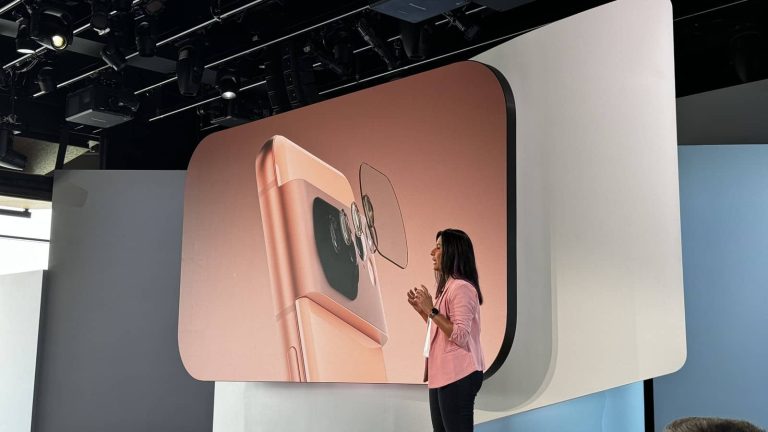
The Pixel 8 series just launched, and both devices bring 4 new Google Photos features. These new features are not only impressive, but they are also mind-blowing and help refine photos after the users take them. All features that this article will touch on are exclusive to the Pixel 8 series and will likely not make their way to other Pixel devices.
Google integrates the power of AI into these features to help them fix up various aspects of a photo. Also, videos aren’t left out, as one of these features is dedicated to videos and improving the audio quality of videos Pixel 8 series users take. With these new features, users can perfect, reimagine, reduce, and zoom in on certain aspects of their photos and videos.
It’s no longer news that with each new Pixel smartphone entry, Google tries to bring photography improvements. These improvements are seen not only while taking photos, but even after taking photos. Here are the 4 new Google Photos features that might make you consider getting the new Pixel 8 series.
All 4 new Google Photos features and how they help improve photos and videos
The first new feature on this list is the ability to perfect group photos on the Google Pixel 8 series. This employs a feature that Google calls Best Take and it helps fix your friends’ unaware faces in group photos. To do this, the Best Take feature uses similar photos taken close together and finds the best facial expression for everybody.
Users can then manually pick from the number of options the feature offers them. The selected facial expressions then replace the ones on the photo the user desires to change. Moving over to the next feature, this helps users to reimagine photos.
This feature employs the Magic Editor and can reposition various subjects in a photo to improve its looks. All a user needs to do is tap or circle the subject they want to move and drag it to the desired position. Lots of users will get to love this feature over time, and Google also plans to make it better as time goes by.
Another impressive Google Photos feature for Pixel 8 and Pro is the ability to reduce distracting sounds in videos. This is great when trying to isolate the main sounds in a video using the Audio Magic Eraser feature. Lastly, the new Zoom Enhance feature lets users employ generative AI to zoom in and crop what they want to be the main focus in the photo.
All these features will help users brush up on the quality of their photos even after the Pixel 8 series users take them. This paired up with the camera advancements on the new Pixel 8 series will produce much better photos for users. Those hoping to get the devices in this new Pixel series will be able to start placing orders in a few days.
When Elon Musk rebranded Twitter as X Corp., there were concerns about potential lawsuits challenging the new name. That’s because Microsoft, Meta, and hundreds of other companies have trademark rights over the letter “X”. Unsurprisingly, one of those companies has sued X alleging trademark infringement. Florida-based ad agency X Social Media has filed a lawsuit claiming that Twitter’s rebranding has caused consumer confusion and lost revenue.
X has been sued by X Social Media for trademark infringement
In an official complaint filed in federal court in Florida, X Social Media states that it has used its registered trademark “X SOCIALMEDIA” since early 2016 (via Reuters). Over the years, it has created a distinctive “X” branding associated with its social media advertising services. The company alleges that Twitter’s recent rebranding to X has affected its business and market reputation.
According to X Social Media, Elon Musk’s X benefitted from the global media attention. It has “wielded its social media clout, marketing resources, and overall national notoriety to dominate consumer perception of its “X” mark,” the plaintiff alleges. This has quickly caused “reverse confusion” as consumers now associate X Social Media as part of X Corp. That’s despite the latter firm existing more than eight years before the inception of X Corp.
Even online searches for “X Social Media” tend to guide people towards the rebranded Twitter, the complaint states. The company says this has caused and will continue to cause “serious irreparable harm” to its business. It has already suffered a loss in revenue “that correlates with X Corp.’s rebrand and use of the mark X.” X Social Media adds that this reverse confusion could continue to its financial detriment in the future.
The firm says this is a willful act from Elon Musk, who was already aware of its trademark. It wants the court of law to hold him and X Corp. accountable under four different violations: Registered Trademark and Service Mark Infringement, Florida Common Law Unfair Competition, Florida Deceptive and Unfair Trade Practices Act, and Common Law Trademark and Service Mark Infringement.
The lawsuit seeks to reverse Twitter’s X rebranding
X Social Media is seeking a judgment directing X Corp. to remove the use of the “X” branding across its apps and services. In other words, it wants to reverse the Twitter rebranding. It is also seeking various other judgments in its favor, including monetary damages. It remains to be seen whether the ad firm has a strong case in its hands. Considering the crowded field of “X” trademarks, X Social Media may be fighting a tough battle here.
AT&T customers don’t need to feel left out when it comes to good deals on the Pixel 8 and Pixel 8 Pro, because the carrier also has a promotion where you can get a phone for free. Should you desire a new Android 14-powered Pixel 8 series phone, AT&T has you covered with some good deals that could potentially save you hundreds.
As with the other carrier offers, you can slide into a new Pixel 8 or Pixel 8 Pro device with a trade-in on eligible plans. This will be for new and existing customers too. Also keep in mind that not all trade-in phones will have the same value. So how much you save, and whether the phone can end up being free, will depend a lot on which device you’re trading in.
Get a Pixel 8 Pro for free from AT&T when you trade in an eligible phone
AT&T’s best offer for either phone is obviously the free Pixel 8 Pro. So here’s what you would need to do to get that deal. First, it’s only open to qualifying customers. Which means there are going to be some customers that won’t be able to take advantage of this offer unfortunately. But if you do qualify, you’ll need an eligible trade-in device and you’ll need to be on an eligible plan.
You will also need to pay for the phone on AT&T’s installment plan with the phone being a minimum value of $1,040. With your trade-in, AT&T will then credit your monthly bill over the term of the Pixel 8 Pro’s installment plan so it ends up being free at the end of that term. Assuming your trade-in phone was valued high enough. Also worth noting is that credits begin within three bill cycles. But not necessarily immediately.
If you don’t have a phone to trade in or you simply don’t want the Pixel 8 Pro, AT&T has an offer for the Pixel 8 as well. Basically you can get the Pixel 8 for $15 a month on the installment plan with credits after the 36-month term. Again, customers will need to qualify for this promotion. And both offers are specifically for the 128GB models. All of that said, AT&T’s offer starts today.
Last month, the Chinese smartphone market got to welcome the OPPO Find N3 Flip smartphone. Now there is proof to show that this impressive clamshell folding device is preparing for its global debut. On the OPPO India website, there is an advertisement that helps to draw users’ attention to this smartphone using a sale promo.
This promotion page tells users that they can win an OPPO Find N3 Flip and an Enco Air2 Pro earbuds. All those wishing to participate need to do is enter the draw after checking the rules to see if they are eligible to participate. The draw lasts from the 3rd of this month and runs through to the 24th of this month.
Once the draws are over, the OPPO team in India will pick a winner to send the said prizes to be won. During the period of this draw competition, the OPPO India team might make the Find N3 Flip available on their official website. Even though there is no date as to when this will happen, it is safe to expect this clamshell folding device to become available in India within the month.
India’s smartphone market might get the OPPO Find N3 Flip this month
After a few weeks of waiting for the OPPO Find N3 Flip to hit the global market, netizens will soon be able to purchase one. A promotional image of this device is already on display on the brand’s India website. Although this image shows nothing concerning its Indian launch, this is a great sign that the device is stepping out of China.
This new device comes with a similar rear design to its predecessor. The cover screen stays the same size, but the camera layout changes, as it now houses three rear cameras. Another design change on this device is that it comes with a flip-to-mute slider, which isn’t available on any other OPPO device.
For its performance, this device makes use of the MediaTek Dimensity 9200 processor. Supporting this is 12GB worth of RAM and up to 512GB storage capacity. The front-facing camera doesn’t see any change, but on the rear, there is a new lens with impressive improvements.
This device’s new rear camera layout now comes with a 50MP main camera, 32MP telephoto, and a 48MP ultrawide. It also brings Hasselblad camera technology for that extra touch to help improve mobile photography. Aside from those mentioned in this article, there are not many changes to this device.
The global market can now start preparing to welcome this device into stores. India might be the first to get the OPPO Find N3 Flip sometime within the month before other regions start getting it as well. This device will compete with the Samsung Galaxy Z Flip 5 and the Motorola Razr Plus, as well as other entries in the industry.
Today is Pixel 8 and Pixel 8 Pro day and that means all the carriers are officially announcing their availability for customers, and this includes Verizon. In fact Verizon isn’t just announcing that it’s carrying the Android 14-powered Pixel 8 and Pixel 8 Pro. It has an insanely good deal available for those looking to upgrade.
So what’s the deal? Well in short you can get a Pixel 8 Pro (or a Pixel 8) for free. But just like the T-Mobile promotion this is not just a cut and dry deal. You won’t just be walking in and renewing a contract or something to get the free phone. But that being said the requirements aren’t that hard to meet. This promotion is available for both new and existing customers as well.
Add a new line to get a Pixel 8 Pro for free from Verizon
You probably guessed it, but you’ll need to add a new line to your plan if you want to get this phone for free. This can be a new plan or an existing plan. So even if you’ve been a Verizon customer for years, this promotion applies. It will however need to be a qualifying plan as not all plans will be eligible. Most likely any legacy plans will not qualify. So keep that in mind.
The compatible plans that will work with this promotion are the Unlimited Plus or the Unlimited Ultimate plans. You will also need to trade in your old phone. Basically, when you go in to get the Pixel 8 or Pixel 8 Pro, you need to either switch to one of those plans, or be on it already. Then pay for the Pixel 8 or Pixel 8 Pro via Verizon’s device payment plan or in full at checkout. Then you trade in your old device and the trade-in value is kicked back to your monthly bill via credits. This is how T-Mobile’s promotion works as well. The difference here is Verizon’s is applied over a 36-month period and T-Mobile’s is 24 months.
Additionally, the value of your trade-in will vary depending on the phone model. Lastly, this promo only applies to the 128GB models of the Pixel 8 and Pixel 8 Pro.
According to new reports, the video game developer company Naughty Dog is performing some layoffs. These layoffs are affecting some of the company’s contract developers and have been ongoing for about a week now. From the start of the layoff exercise till now, over 25 contract developers have been relieved of their duties.
For some reason, only the company’s contract staff are being impacted by this sad turn of events. Naughty Dog is preserving its full-time staff and possibly safeguarding them from losing their jobs. But there are some details concerning this issue that are rather concerning, as they raise questions over possible foul play.
These layoffs at Naughty Dog hit contract workers under the art, production, and quality assurance teams. Reports have it that Naughty Dog is trying to keep the news of their recent layoffs as quiet as possible, which seems a bit sketchy. Why should the layoff news be kept quiet, and what treatment are the affected contract staff receiving?
The recent Naughty Dog layoffs are raising some eyebrows within the industry
Due to the need to cut costs, most tech companies undergo periodic layoffs. Over the past few years, big tech names like Google, Amazon, and many more have made the headlines for their layoff exercises. Now a video game developing company, Naughty Dog, is making the headlines for their layoff exercise.
This layoff exercise is only impacting contract workers with the company. Being contract workers, these staff are aware that their work with Naughty Dog will eventually come to an end as agreed in their contracts. However, there is a possibility that they are now being sent off of work without their contract expiring.
All 25 contract staff laid off are expected to work until the end of October before leaving the company. Reports also point out that Naughty Dog is trying to keep this layoff news as private as possible. However, some staff members affected have already taken to their LinkedIn pages to share the news that their contract is coming to an end.
Things are not looking good
The video game developing company is also allegedly not paying these staff any form of severance. On its part, Naughty Dog is yet to confirm the reason for the layoff to the public. This is creating some concern on the internet as the company is working on announcing a new and well-anticipated game.
Will this layoff influence the release of this game, or is Naughty Dog just trying to cut down on operational costs? These are just a few questions weighing upon the minds of some Naughty Dog fans. More details on these layoffs as well as the status of the coming video game will become available in the coming weeks.
Threat actors are exploiting the open redirection vulnerability on Indeed.com to launch EvilProxy phishing attacks against high-ranking executives.
The cybersecurity researchers at Menlo Labs have uncovered a sophisticated phishing campaign in which cybercriminals are using the infamous EvilProxy phishing kit by exploiting an open redirection vulnerability in the job site Indeed.com.
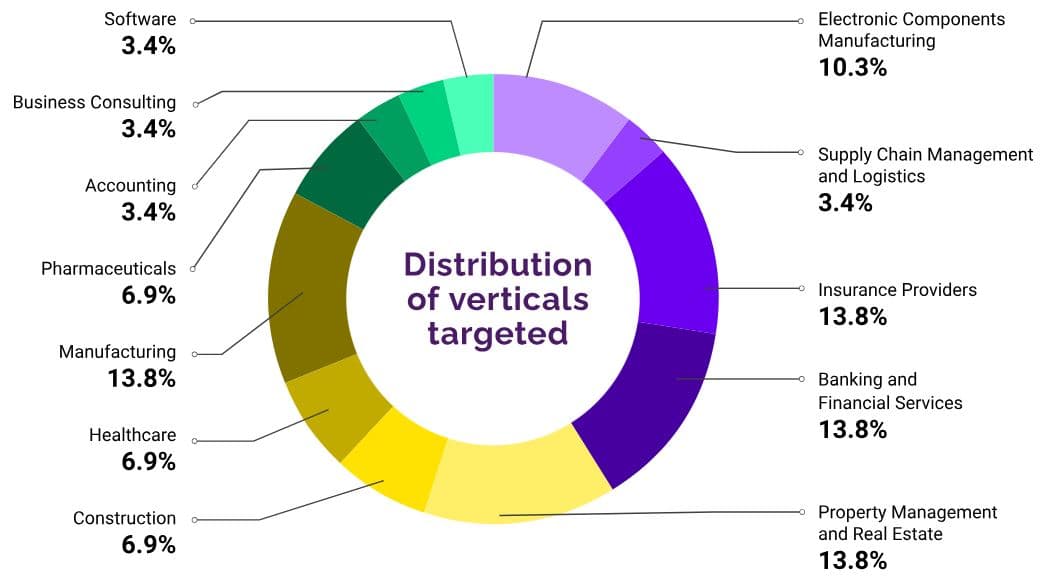
The campaign specifically targets high-ranking executives across various industries, with a notable focus on Banking and Financial Services, Insurance providers, Property Management and Real Estate, and Manufacturing.
Industries targeted in the attack (Screenshot: Menlo Labs)
This disclosure comes after rigorous research by Menlo Labs, and the key findings from this investigation are both intriguing and concerning:
Campaign Timeline: The phishing campaign was initiated in July 2023, and has persisted into August, demonstrating a sustained effort by the threat actors.
EvilProxy Phishing Kit: The attackers harnessed a highly advanced phishing kit known as ‘EvilProxy.’ This kit operates as a reverse proxy, intercepting communication between the user and the genuine website. Notably, EvilProxy possesses the capability to harvest session cookies, effectively bypassing multi-factor authentication (MFA) defences.
Primarily US-based Targets: The campaign predominantly targeted organizations based in the United States, raising questions about its origin and motivation.
Open Redirection Vulnerability: To initiate their phishing scheme, threat actors exploited an open redirection vulnerability present on the popular job search platform “indeed.com.” Victims were redirected from this trusted platform to malicious phishing pages impersonating Microsoft.
This phishing campaign is emblematic of an “Adversary In The Middle” (AiTM) phishing attack, which hinges on stealing session cookies to circumvent MFA protections.
In July 2023, Menlo Security’s HEAT Shield detected and thwarted an innovative phishing attack. This attack employed an open redirection within the ‘indeed.com’ website, ultimately redirecting victims to a deceptive Microsoft login page. This redirection cleverly disguises the attack as originating from a reputable source, ‘indeed.com.’
The threat actors leveraged ‘EvilProxy,’ a phishing-as-a-service platform available on the dark web, offered as a subscription-based service with plan durations ranging from 10 to 31 days. ‘John_Malkovich,’ a threat actor within this scheme, served as an administrator and intermediary for customers who purchased this nefarious service.
The campaign honed in on C-suite employees and key executives across various sectors, as illustrated in the chart below. This data was collected from intelligence gathered through URLScan, Phishtank, and VirusTotal feeds.
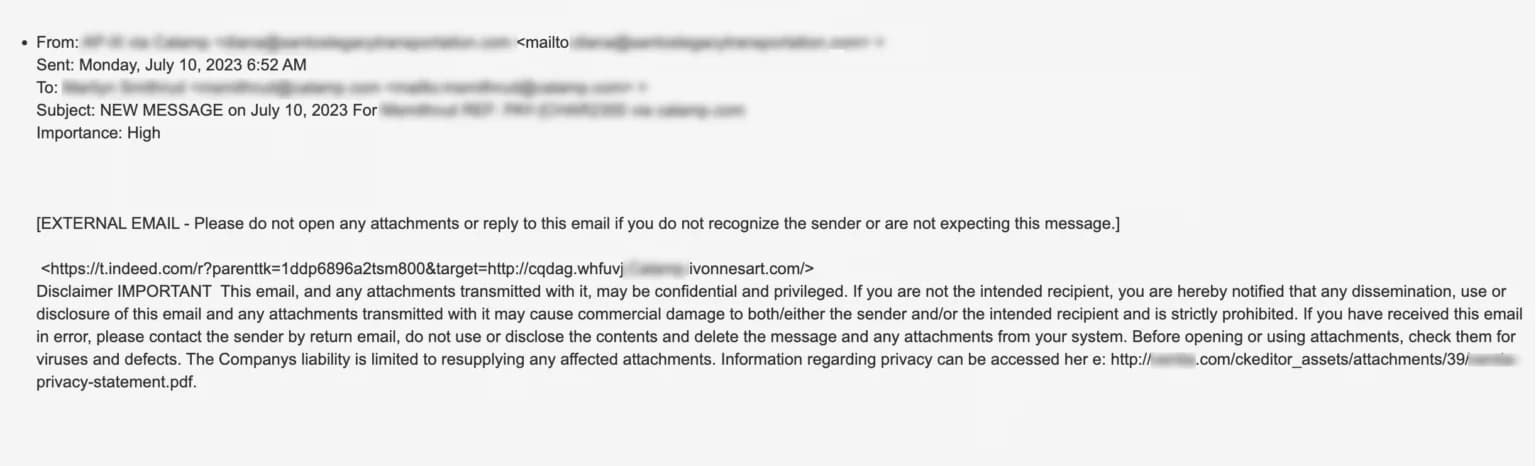
The phishing emails delivered a deceptive link that appeared to originate from ‘indeed.com,’ fooling victims into clicking. Once clicked, the link led to a counterfeit Microsoft Online login page.
The phishing email detected by researchers
According to Menlo Labs report, here’s a step-by-step breakdown of the attack chain:
The victim receives a phishing email containing the seemingly legitimate Indeed link.
The unsuspecting victim clicks the Indeed link, which redirects them to the fake Microsoft login page.
The phishing page, deployed via the EvilProxy phishing framework, dynamically fetches content from the legitimate login site.
The phishing site acts as a reverse proxy, intercepting requests to the genuine website.
The attacker seizes the legitimate server’s requests and responses, thereby capturing session cookies.
The stolen cookies grant access to the legitimate Microsoft Online site, enabling attackers to impersonate victims and bypass non-phishing-resistant MFA.
This attack relied on an open redirection vulnerability, wherein an application unintentionally redirects users to an untrusted external domain. In this case, users believed they were redirected to ‘indeed.com’ or its subdomains, but the subdomain ‘t.indeed.com’ was furnished with parameters to redirect them elsewhere, ultimately leading to a phishing page.
The attackers effectively employed the EvilProxy phishing kit, executing an “Adversary In The Middle” attack by pilfering user session cookies to successfully evade MFA.
The phishing pages, identified by the subdomain ‘lmo.,’ impersonated the Microsoft Online login page. These pages were hosted on nginx servers, capable of acting as reverse proxies, dynamically fetching content and intercepting requests and responses between the victim and the genuine site. This method facilitated session cookie theft and is attributed to the usage of the EvilProxy Phishing kit.
Artefacts pointing to EvilProxy usage include domains hosted on Nginx servers, phishing pages containing common URI paths, and the use of Microsoft’s Ajax CDN for dynamic content rendering.
In response to the findings, Roger Grimes, data-driven defence evangelist at KnowBe4 advised users to use common sense as the first defence mechanism against such attacks. “Open redirects are among the most tricky tricks that social engineering hackers can deploy. We tell our end-users to always hover over a URL and to make sure it goes to a legitimate domain before clicking on it. But with these types of open-redirects, the originating URL DOES point to a legitimate URL,” Grimes said.
“Technically, the only defence is for every website and service to make sure they aren’t implementing a “feature” that allows malicious redirects. Education-wise, you must tell users that not only must they inspect URLs before they click them, but to re-examine the URL after they click them to see where they ended up. With a malicious open redirect, the final destination will not be a legitimate one. So, in short, all users must check all URLs before clicking on them AND AFTER clicking on them. It’s not enough just to examine before clicking,” Grimes emphasized.
Indeed.com Knows…
Indeed.com was informed about the vulnerability however it is unclear whether the company has it has been patched or not.
In light of the gathered intelligence and analysis, it’s evident that threat actors deployed the ‘EvilProxy’ phishing kit, exploiting an open redirection vulnerability in ‘indeed.com’ to impersonate the Microsoft Online page for credential phishing and account compromise.
This attack is just the initial phase of a broader attack chain that could lead to severe consequences, including identity theft, intellectual property theft, and substantial financial losses.
There is a looming possibility of increased ‘EvilProxy’ usage, given its user-friendly interface and the ability to bypass MFA, making it an attractive choice for cybercriminals.
The recently patched TeamCity RCE flaw is now under active attack by numerous ransomware gangs. The researchers warn the organizations to patch their systems immediately, suspecting most have already fallen prey to the attacks.
Multiple Ransomware Groups Exploit TeamCity RCE Flaw Despite Patch
In a recent tweet, security and threat intelligence service GreyNoise warned users about the active exploitation attempts against the newly discovered remote code execution vulnerability in JetBrain’s TeamCity software.
TeamCity is a dedicated CI/CD software that currently serves numerous organizations for efficient handling of their source codes and builds. The software currently boasts a huge clientele, including names like Gearbox entertainment, Gradle, and Playrix.
According to GreyNoise, they caught numerous attempts to exploit the critical TeamCity RCE flaw (CVE-2023-42793) from numerous ransomware groups. In fact, they even warned the organizations to consider their networks already infiltrated if they not had patched their systems in time.
🚨 35 malicious IPs seen doing internet-wide attempts at digging into JetBrains TeamCity installs. You and your org are 100% REDACTED if you had any of these on the internet and not patched in the last ~48hrs. pic.twitter.com/2kJgqozixB
Besides GreyNoise, another cybersecurity service PRODAFT also issued a similar warning as their security tool detected numerous exploits in a period of three days. While it’s unclear if the organizations have already fallen a victim to the ransomware attacks, the researchers suspect that those firms might have to suffer “a huge headache” in the coming days.
🚨Many popular ransomware groups started to weaponize CVE-2023-42793 and added the exploitation phase in their workflow.
Our #BLINDSPOT platform has detected multiple organizations already exploited by threat actors over the last three days. Unfortunately, most of them will…
PRODAFT’s prediction for a chaotic situation among the affected organizations sounds highly plausible. There have been numerous cases in the past where the attackers remained dormant on the victim networks before executing the ransomware. This tactic gives enough time to the threat actors for surveillance, gaining persistence, and ensuring that the victims are left with no other option but to fulfil the attackers’ demands.
Users Should Remain Vigilant
JetBrain recently patched the critical TeamCity vulnerability following Sonar researchers’ report, with TeamCity On-Premises version 2023.05.4. However, given the users often neglect prompt system updates, the vulnerable systems have now become prone to ransomware attacks.
Regardless, users must ensure patching their systems with latest TeamCity releases to avoid the threats. In addition, all TeamCity customer firms should run thorough network security scans to ensure no malicious infiltration.
Social media companies are showing their hand about scraping user data to feed into their AI and large language models.
Post anything publicly on Facebook and Instagram? Meta has likely been using those posts to train its AI, according to the company’s top policy executive.
In an interview with Reuters, Meta President of Global Affairs Nick Clegg said the company used the public posts to train the LLM (large language model) that feeds into its new Meta AI virtual assistant.
Large Language Models (LLMs) are huge deep-neural-networks which are trained on the input of billions of pages of written material in a particular language, such as books, articles, and websites. So, in in the ongoing race between tech giants to create the best LLM it’s hardly surprising that they’re looking at social media as a giant source of data.
Clegg said that Meta excluded private posts shared only with family and friends, as well as private chats on its messaging services:
“We’ve tried to exclude datasets that have a heavy preponderance of personal information and the “vast majority” of the data used by Meta for training was publicly available.”
He also said they decided against using LinkedIn content for privacy reasons.
In separate news, X (formerly Twitter) updated its Terms of Service to let it use tweets for AI training. In July 2023, Elon Musk announced the launch of xAI to “understand the true nature of the universe.” In more realistic terms it looks like xAI will set out to compete with companies like OpenAI, Google, and Microsoft, which are behind leading chatbots like ChatGPT, Bard, and others.
Given that Musk threatened to sue Microsoft for using Twitter data for training, it may come as a surprise to some that the policy change states:
“We may use the information we collect and publicly available information to help train our machine learning or artificial intelligence models for the purposes outlined in this policy.”
Musk has already said that xAI will use public tweets for AI model training and in a tweet responding to comments about the policy change, Musk clarified that the plan is to use “just public data, not DMs or anything private.”
So, that seems to be the consensus about what is acceptable to scrape of your social media presence. If others can see it, it’s public knowledge and the tech giants are of the opinion they can use it to train their AI.
There is a world of difference to me, between data being publicly available and then feeding them into an AI that can combine it with information from other sources at a speed faster than any human is capable of.
Another undesirable side-effect of these developments is that the social media giants are relegating the responsibility for scraping copyright protected media and using them unwittingly. Asked whether Meta had taken any such steps to avoid the reproduction of copyrighted imagery, a Meta spokesperson pointed to new terms of service barring users from generating content that violates privacy and intellectual property rights. In other words, it’s not our problem but the user’s.
What to do
Now more than ever you should assume that anything you post on social media is up for grabs for anyone. An extra point of attention is the use of copyrighted material in your posts. The social media companies will not think twice to use it, and hold you responsible for the fact that they copied them from you without asking.
And please don’t believe all the posts, especially rampant on Facebook, that you can protect your content by copying and pasting some 10 year old post that has done at least twenty laps on the platform. You can’t.
Be warned that based on the AI-assigned definitions in the updated terms by X, your access to certain content might be limited, or even cut off. As a consequence, you may find it harder to reach your intended audience. Maybe it really is time to switch to a different platform.
We don’t just report on threats—we remove them
Cybersecurity risks should never spread beyond a headline. Keep threats off your devices by downloading Malwarebytes today.
Samsung has just unveiled a bunch of Fan Edition (FE) products. The company took the wraps off the Galaxy S23 FE, Galaxy Tab S9 FE, Galaxy Tab S9 FE+, and Galaxy Buds FE. These devices are touted to offer a premium user experience in an affordable package. The Korean firm has now released a promotional video highlighting what you are getting with each of them.
Samsung releases promotional video for its new FE Galaxy ecosystem
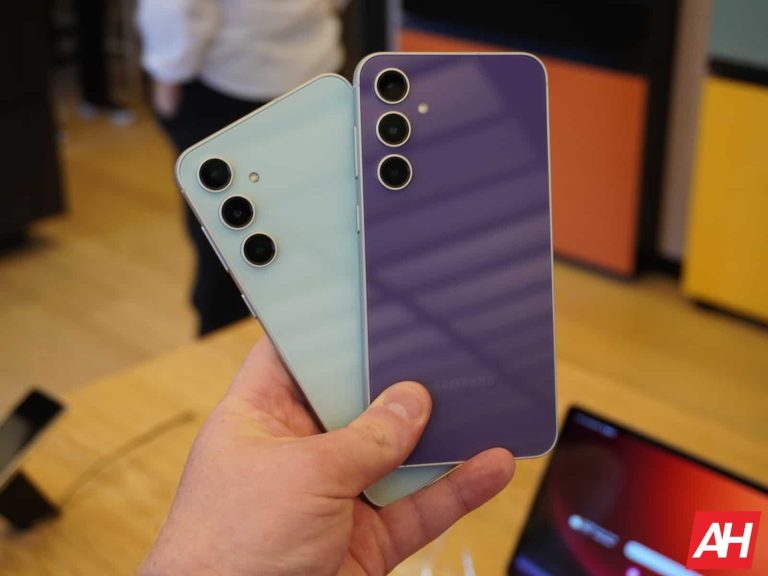
“Today, Samsung Galaxy brings epic to everyone,” the video says at the beginning, with the company hinting at the affordability of the new FE devices. It quickly runs us through the aforementioned products before getting into details. The Galaxy S23 FE is the first in the line. The Korean firm is using the tagline “epic starts here” for the phone. It first shows us the four color variants of the handset — Cream, Graphite, Mint, and Purple.
Samsung then showcases the phone’s cameras. It sports a 50MP primary shooter with flagship-grade features such as Nightography and Super steady video. The main camera is paired with a 12MP ultrawide lens and an 8MP telephoto camera with 3x optical zoom support. The video proceeds to talk about the Galaxy S23 FE’s display, which is a 6.4-inch Dynamic AMOLED 2X panel with a 120Hz adaptive refresh rate, adaptive visibility, and Vision Booster.
Packed with a 4,500mAh battery, Samsung says the phone is ready to take you through the day, while its Snapdragon 8 Gen 1/Exynos 2200 SoC is capable of delivering an “epic performance.” The Galaxy S23 FE is followed by the Galaxy Buds FE in this three and a half minutes long video. The Korean firm is betting high on the ANC (Active Noise Cancelation) support offered in this affordable pair of TWS earbuds.
The company also showcases its wing tip design and “enriched bass sound.” The buds don’t get more screen time in the video, though. The Galaxy Tab S9 FE+ arrives on the scene quickly. Samsung says its 12.4-inch display offers an immersive viewing experience, while the in-box S Pen lets you take productivity to a new level. The video also highlights its IP68 dust and water resistance.
You can use these devices in a connected ecosystem
Samsung’s new promotional video also makes people familiar with the connected Galaxy ecosystem. It shows how you can drag and drop items from one device to another or automatically switch the Galaxy Buds connection depending on the usage. If you’re watching something on your tablet and receive a call on the phone, your buds will switch the connection to the phone without requiring manual interruption. You can watch the full video below.