Upgrading your iPhone? Read this first

0
[ad_1]

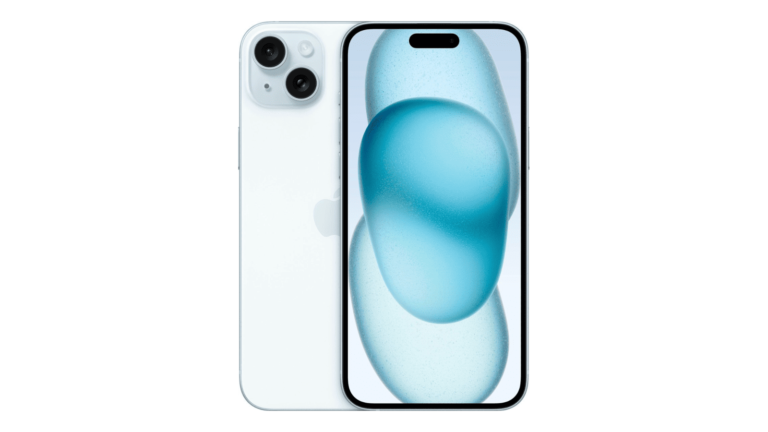
Has the launch of the iPhone 15 triggered a yearning to upgrade to a new model? Here are some tips to consider during transfer.

Apple’s Wonderlust event on Tuesday saw the launch of the company’s top-of-the-line iPhone 15 Pro Max with a titanium chassis and an improved telephoto camera, as well as other iPhone 15 models and new Apple Watches.

Also this week, Apple was reportedly banned from selling the iPhone 12 in France because the device’s Specific Absorption Rate (SAR) is above the legal limit. France’s National Frequency Agency (ANFR) stated the model emits more than the permitted electromagnetic waves, and the company must stop selling the device, starting immediately.

All this news may have caused people to entertain the thought of trading in their old devices for a new iPhone. If you are one of them, we have a few tips for you.

What to do while you still have the old one:

1. Transfer your data

You can use Quick Start to transfer information from your old device to your new device. But if you don’t have the new device yet, you can use iCloud to store your data.

  • Go to Settings > General.
  • Scroll down and tap Transfer or Reset [Device].
  • Under Prepare for New [Device], tap Get Started.
  • If you see iCloud Backup is Turned Off, tap Turn On Backup to Transfer.
  • If you don’t have enough iCloud storage, you’ll see a message that says you’re eligible to get free extra iCloud storage. Tap Continue.
  • Wait for the backup to complete. You have 21 days to restore your temporary backup to your new iPhone or iPad before your temporary iCloud storage expires and your backup is permanently deleted. Do not erase your current iPhone or iPad until you restore your temporary backup to your new device.

Once you have your new iPhone:

  • Turn on your new iPhone and follow the onscreen steps to begin setup.
  • On the Apps & Data screen, tap Restore from iCloud Backup.
  • Sign in to iCloud with your Apple ID and password.
  • Choose your most recent iCloud backup.
  • Wait for the restore to complete.

2. Unpair your linked devices

Make sure you unpair devices like Apple Watch and headphones. 

3. Transfer your MFA apps

A step which is easily forgotten but very very important is making sure you transfer your account verification apps, like Okta, Google Authenticator, Microsoft 2FA, Authy, etc.) These instructions can differ per app and are almost never transferred to your new device without requiring additional actions.

4. Sign out of important apps

Sign out of iCloud and the App Store on your old device.

As Thomas Reed, Director of Core Technology at Malwarebytes and renowned Apple security expert puts it:

“I recommend users take a few minutes to disconnect from services like iCloud/Apple ID and transfer 2FA. It is much easier to remove a device from your account while you still have it in your possession.”

Should you forget to do this before wiping or giving away your device, that is no reason for panic. You can use the “Find My” app to remotely erase the device and then remove it from your account.

5. Remove the phone as a trusted device

Thomas Reed adds:

“Once you’ve added your new phone (and maybe once you’ve added another backup option such as personal email or home phone), make sure to remove your old phone as a trusted device. Go to Settings and click on your name. If you click on each device listed, there is a small disclaimer at the bottom of the screen that says “This device is trusted and can receive Apple ID verification code.” Simply tap Remove from Account for your old item.”

6. Wipe the old phone

When you’re ready to finally say goodbye to your old iPhone, go to Settings and tap General > Transfer or Reset [device] > Erase All Content and Settings. When asked for your device passcode or Restrictions passcode, enter it. Then tap Erase [device]. If you’re doing an in-store trade-in at Apple, they will help you with this.

If you’re not trading in but are ready to get rid of your phone, it’s worth reading our guide on how to dispose of your old devices safely.

7. Protect your new iPhone

Malwarebytes for iOS helps protect you from scams: It flags and/or blocks robocalls, and detects fake texts, phishy links, malicious sites, and ad trackers. It also now includes a full-featured VPN to help keep your connections private, no matter where you are. Try downloading Malwarebytes for iOS today.


[ad_2]
Source link

Microsoft Designer AI app is now available for Android

0
[ad_1]

Microsoft’s AI Android App, the designer app, has made its debut on Android phones via the Google Play Store, marking a significant expansion of its AI-powered capabilities into the mobile realm. This free app empowers users to make use of AI directly from their smartphones, offering a wide range of functionalities.

The app, currently in the beta preview stage, is now available for download on the Google Play Store, similar to the web version.

It was launched in May this year and enables users to create impressive designs quickly, even without prior design experience. Unlike the E-model-powered Bing Image Creator, which features flying cat images in astronaut suits, Designer allows you to craft social media posts using straightforward word prompts.

Users can now use the app to perform tasks such as removing backgrounds from photos, generating AI-driven imagery, crafting social media posts, resizing images and designs, and much more. Microsoft, at first introduced its first major AI-powered design-focused app, Microsoft Designer, for desktop operating systems last year. Now, with this mobile app release, users can conveniently access Microsoft’s AI prowess on their phones.

Microsoft has currently made the app available as a free download on the Google Play Store, although it comes with certain compatibility restrictions. It functions only on select Android phones, excluding certain tablets and the best foldable phones. According to MSPowerUser, it also worth noting that the Microsoft’s Android AI app may not always remain free.

Capabilities of the Microsoft’s Android AI app

Nevertheless, for the time being, users can embrace the capabilities of Microsoft‘s AI to facilitate the creation of various content, ranging from AI-generated images to social media posts enriched with AI-generated visuals

For instance, imagine a scenario where users employ the AI to generate an Instagram Story for an upcoming pizza party. The app presents several options, which users can select and further customize through text-based prompts, guiding Microsoft’s DALL-E-powered AI engine in creating the desired content.

Designer utilizes artificial intelligence (AI) to create unique designs and layouts based on what you tell it. You can describe what you want, and Designer will present multiple design options. After picking one, you can make it your own by adding text, images, and more.

Microsoft emphasizes that the app encompasses a wide spectrum of design-related tasks. As users engage with the app, Microsoft’s AI is designed to provide suggestions and enhancements tailored to the content being created. This feature contributes to the production of designs with a more polished and professional appearance than users might have achieved otherwise.

Microsoft Designer (Google Play Store)


[ad_2]
Source link

Qualcomm’s Snapdragon 8cx Gen 4 chip might just beat Apple’s M2

0
[ad_1]

Apple’s M series chips have had industry giants like Qualcomm playing catchup for a few years. However, according to a report from SemiAccurate, Qualcomm’s new Snapdragon 8cx Gen 4 chip’s custom Oryon cores, a development made possible by their acquisition of Nuvia, could finally allow them to compete with Apple’s current M2 SoCs.

As per the report, the flagship variant of the 8cx Gen 4 chip, which features a 12-core CPU configuration comprising eight high-performance cores and four efficiency cores, has proven to outperform the company’s performance and power efficiency goals, positioning them slightly ahead of the M2 in terms of capabilities. However, it’s important to note that there are multiple variants of the Snapdragon 8cx Gen 4, each with varying core counts and features.

Apple’s M3 launch could be a problem for the Snapdragon 8cx Gen 4.

While Apple is yet to announce its M3 chip, Qualcomm fears that its launch could diminish its advantage, as the M3 is rumoured to be a significant step forward compared to the M2. Additionally, with reports suggesting that Apple is preparing to launch the M3 in the coming months, it could once again put Qualcomm on the back foot, trailing behind Apple by a generation in the competitive SoC market.

Possible delay in M3’s launch

Despite multiple reports, including Bloomberg’s Mark Gurman confirming the launch of the M3 chips in October with the MacBook Pro, MacBook Air, and Mac Mini, a new report from analyst Ming-Chi Kuo on X (formerly Twitter) suggests that the next generation of M-series chips, won’t make its debut in a MacBook until next year. Therefore, if true, this delay could give Qualcomm the advantage they have long sought, as experts speculate that we might see the announcement of the Snapdragon 8cx Gen 4 during the annual Snapdragon Summit, typically held in late October.

“It seems that Apple will not launch new MacBook models (equipped with M3 series processors) before the end of this year,” said Ming-Chi Kuo.


[ad_2]
Source link

Google trained employees to avoid words that sound monopolistic

0
[ad_1]

In the latest day of Google’s antitrust trial with the DOJ, lead litigator Kenneth Dintzer alleges that Google trained employees to avoid words that could make them sound like monopolists. This included avoiding phrases like “market share” and instead using the term “query share.” Googlers were also reportedly told to avoid using the words “leverage” with regards to any of the company’s products. With Google telling employees that they don’t leverage anything. This was part of a training Google held in 2011 called Antitrust Basics for Search Team. In which it also informed employees that Google doesn’t lock up or lock in users or partners.

According to Dintzer, this was part of Google’s tactics to hide evidence. This was in addition to deleting scores of chat logs between employees via the auto delete function that was enabled when chat history was off for internal communications. As Bloomberg reports, Google would often instruct employees to have conversations with the history off so logs would be deleted in the 24-hour timeframe.

DOJ alleges Google knew it was violating antitrust laws

In the first day of the trial, Dintzer issued his opening statement by saying Google was aware of what it was doing. That it knew it was violating antitrust laws. And that this knowledge has been a big part of its tactics over the years that included history off chats and the avoidance of certain words and phrases.

Based on Dintzer’s presented evidence so far, Google has been using these tactics as far back as 2003. Dintzer also references that Google more recently employed this tactic in October 2021. Where Alphabet CEO Sundar Pichai says he needed “a link for my leaders circle tomorrow,” followed by a request that the setting of the chat group be turned to off.

This and other evidence according to Dintzer paints a picture of Google’s true intentions. And its willingness to skirt various antitrust laws to maintain its top spot in search. All of this of course is merely one side of the argument. Google will likely deny these allegations as it has others thus far. But things are already looking a little rough for the search giant. And the trial has barely begun.

Even with Dintzer’s evidence though, things could still go either way. As it’s too early to tell whether or not Google can actually lose this case. You can catch up on all the latest details of the trial here.


[ad_2]
Source link

Chromebooks are now supported for 10 years

0
[ad_1]

It’s always a shame when your device loses software support. What makes it worse is if you still get some use out of it. Well, there’s good news if you use Google’s desktop software. According to The Wall Street Journal, the lifespan of Chromebooks was extended to 10 years.

This is a good move, as Chromebooks have become so much more useful over the years. If you bought a Chromebook during year one, then you were basically using an overblown Chrome browser. Now, there’s enough productivity potential for people to get some serious work and play done. So, it’s much more important that these devices be supported as long as possible.

Chromebooks are now supported for up to 10 years

This is a bit of a shocker, as Google’s own Pixel phones don’t have the best update schedule. Samsung, and now Xiaomi, support their phones better than Google does, however, the company might change that soon.

In any case, Google is making some changes to its update schedule for its Chromebooks. Chromebooks will receive software updates for a decade based on when they were released. This policy starts next year, so it doesn’t extend to existing Chromebooks.

However, Google isn’t leaving existing models in the dust. The company promises that existing Chromebooks will be supported for at least the next two years. They can actually be extended up to five years. For example, the Pixelbook is supposed to lose support in 2024, but the company extended the support to 2027.

The number of years your Chromebook could be extended will vary depending on when it came out. So, if you’re still holding onto your old Chromebook, you can hang onto it for some more time.

So, if you’re in the market for a new Chromebook, you know that it’s going to be supported for the next decade. If you want to get the most out of your next Chromebook, you might want to wait until 2024 to pick one up.


[ad_2]
Source link

Malwarebytes wins every Q2 MRG Effitas award & scores 100% on new phishing test

0
[ad_1]

Dive into where we prevented more than the rest and how we were able to do it.

MRG Effitas, a world leader in independent IT research, published their anti-malware efficacy assessment results for Q2 2023. Malwarebytes Endpoint Protection (EP) achieved the highest possible score (100%) and received certifications for Level 1, Exploit, Online Banking, and Ransomware. 

These results mark the eighth time in a row we have received all certification awards, and we are now officially the only vendor to win every single certification & award in 2022 and so far into 2023. 

MRG Effitas assesses a product’s ability to meet today’s most pressing threats, including stopping zero-day malware, ransomware, exploits, and more—and doing so with speedy performance and low false positives. 

In addition to their normal tests, for Q2 2023 MRG Effitas added two new tests to their Q2 2023 360° Assessment & Certification: the ITW Phishing Test and Phishing Simulator Test.   

Malwarebytes blocked 100% of phishing attempts in BOTH the ITW Phishing Test and Phishing Simulator Test. In other words, Malwarebytes was the only vendor in the Q2 2023 MRG test to both receive all 4 award logos AND block 100% of phishing attempts.  

How we were able to do it: The signature and behavior-based detection techniques and proprietary anti-exploit technology of Malwarebytes EP allowed it to detect and block more malware than any other competitor on the Q2 test. In addition, the Web protection layer of our EP blocks access to and from known or suspicious Internet addresses, allowing us to ace the phishing tests. 

As an integral foundation layer for our EDR and MDR solutions, these results prove that Malwarebytes EP provides reliable and comprehensive protection against a wide range of threats.  

For the full results and to see how we stack up against competitors, our “Endpoint Security Evaluation Guide” eBook—based on MRG Effitas’ independent lab assessment—is an essential tool for any organization looking to make an informed decision about endpoint security. Download below! 

GET THE ENDPOINT SECURITY EVALUATION GUIDE

Let’s dive into where we prevented more than the rest and how we were able to do it. 

100% of phishing attempts blocked 

Given the frequency and risks associated with phishing attacks today, it’s clear that modern endpoint security needs to protect against these attacks.   

According to Verizon, attackers used phishing for initial access in 15% of data breaches in 2022. CISA also showed that, within the first 10 minutes of receiving a phishing email, 84% of employees took the bait. After successfully compromising a system through phishing, threat actors can further their attacks by dropping ransomware or stealing sensitive data, leading to costly financial and reputational damages.  

Malwarebytes blocked 100% of phishing attempts in BOTH the ITW Phishing Test and Phishing Simulator Test.  

How we were able to do it: Malwarebytes EP, the foundation for Malwarebytes EDR, features a Web protection layer that blocks access to and from known or suspicious Internet addresses. 

100% of ransomware blocked 

Using a blend of signature and signature-less technologies, the anti-ransomware layer of Malwarebytes EP constantly monitors endpoint systems and automatically kills processes associated with ransomware activity.  

MRG Effitas tested security products for 30 ransomware samples. In addition, they tested four ransomware simulator samples created in-house, ensuring the security product could only rely on its behavior scanning modules. To test for false positives, a device running Malwarebytes EP also ran three benign programs designed to mimic ransomware behavior. 

Malwarebytes blocked 100 percent of ransomware threats in the MRG Effitas assessment and did so with no false positives, allowing the three benign programs to run. For this we earned the 360° Ransomware Certification.  

Nebula view of detected ransomware activity  

100% of banking malware blocked 

We were one of the few vendors who earned a 360° Online Banking Certification, which means Malwarebytes EP stopped 100% of threats designed to steal financial information and money from victim’s accounts. To outperform the others, our unique detection technology again came into play. 

Malwarebytes EP autoblocked 100% of the 25 financial malware samples, the Magecart credit card-skimming attack, and Botnets designed to steal credentials.  

100% of zero-day threats blocked 

One of the many strong suits of our detection is that it can detect malware that has never been seen before, also called zero-day malware. Again, we were one of the only vendors to detect and block these pernicious threats, which account for 80% of successful breaches.  

Built on machine learning (ML) and behavioral analysis techniques, our behavior-based detection enabled Malwarebytes EP to detect and autoblock 100% of all zero-day threats. For this, as well as blocking all Botnets, we earned the 360° Level 1 Certification.  

100% of exploits blocked 

The anti-exploit feature of Malwarebytes EP protects organizations from one of the most advanced cyber attacks: zero-day exploits targeting browser and application vulnerabilities.  

But don’t take our word for it: MRG Effitas used 8 different exploitation techniques to try and deliver a malicious payload on a device running Malwarebytes EP—but they didn’t get very far. Malwarebytes earned the 360° Exploit Certification for autoblocked 100% of Exploit/Fileless attacks, entirely protecting the system from infection.  

We were one of the few to earn the 360° Exploit Certification all thanks to our proprietary anti-exploit technology, which wraps vulnerable programs in four defensive layers that prevent an exploit from installing its payload, or even executing initial shellcode. 

Our four layers of exploit protection  

Anti-exploit settings in Nebula 

Consistency is key 

If there is one shining take away from this accomplishment, it’s that consistency is key. 

You don’t want a security solution that passes rigorous tests like MRG Effitas only some of the time. You want a solution that passes them with flying colors all of the time. Clearly, Malwarebytes EP, and by extension our EDR and MDR, is that solution.  

For organizations that are concerned their current solution may not be up-to-par, the MRG Effitas assessment has demonstrated that Malwarebytes for Business —more constantly than anybody else—has what it takes to keep your business safe from today’s most pressing cyberthreats. 


[ad_2]
Source link

Google will let you sync your locked folder across devices

0
[ad_1]

Google Photos is a great platform to store photos and videos to share with others. However, there are those pictures that you just don’t want to share with others; for this, you have the locked folder. According to 9To5Google, Google will let you sync your locked folder across different devices.

In case you don’t know what the locked folder is, it’s a secret folder for your media. When you put an item in the locked folder, you’ll need to enter a password or draw a pattern to see it.

When you move a photo or video to the locked folder, you also won’t be able to access it on your device. So, you won’t see the locked media in any gallery app on your phone. If you want it to be visible, you’ll need to move it out of the locked folder.

Google Photos will let you sync your locked folder across devices

The locked folder is neat, but there’s one issue; you can only access your files on one device. People use different devices, and it’s possible to find yourself in need of your locked media on another device.

According to the report, some people are seeing a new prompt when in the Google Photos app. It reads “Back up Locked Folder. Keep photos hidden across devices”. The popup will then give you the option to enable it or refuse it. When you enable it, your phone will back up photos to the cloud so that you can access them on other devices. When you’re in your locked folder, you’ll see a little cloud icon in one of the corners. This will let you enable and disable the backup feature.

Since you enable the locked folder sync on a per-device basis, you’ll need to enable it on your device if you want to see the media. If you disable the feature after media was already backed up, you’ll still be able to see that content. You just won’t be able to see any new content that’ll be uploaded.

Also, it looks like the locked folder is coming to Google Photos for the desktop. The button for it will appear under the Trash option. However, if you want to use this feature, you’ll need to enable 2FA.


[ad_2]
Source link

Apple iPhone 15 Plus vs Apple iPhone 15 Pro Max

0
[ad_1]

Apple launched four iPhone 15 models quite recently. We’ve already compared the iPhone 15 and iPhone 15 Pro, two smaller handsets. Well, it’s time to pay some attention to the big boys now. In this article, we’ll compare the Apple iPhone 15 Plus vs iPhone 15 Pro Max. Do note that the comparison is based on the information Apple provided, and initial hands-ons. We did not get a chance to review either device, nobody has at the time of writing this article.

That being said, we’ll first list the specs of both phones, and will then compare their designs, displays, and much more. Both of these phones are truly large, and both have been noticeably upgraded compared to their predecessors. In fact, many would say that the ‘Plus’ got a more significant upgrade. We’ll let you be the judge of that, and do hope this comparison will help you make a purchasing decision.

Specs

Apple iPhone 15 Plus vs iPhone 15 Pro Max, respectively

Screen size:
6.7-inch Super Retina XDR display (60Hz, HDR, 2,000 nits)
6.7-inch Super Retina XDR display with ProMotion (120Hz, HDR, 2,000 nits)
Display resolution:
2796 x 1290
SoC:
Apple A16 Bionic
Apple A17 Pro
RAM:
6GB
8GB
Storage:
128GB/256GB/512GB
256GB/512GB/1TB
Rear cameras:
48MP (f/1.6 aperture, sensor-shift OIS), 12MP (ultrawide, f/2.4 aperture)
48MP (f/1.78 aperture, second-gen sensor-shift OIS), 12MP (ultrawide, f/2.2 aperture, macro photography), 12MP (telephoto, f/2.8 aperture, 5x optical zoom)
Front cameras:
12MP (f/1.9 aperture) + TrueDepth
Battery:
N/A
Charging:
20W wired, 15W wireless (charger not included)
Dimensions (unfolded):
160.9 x 77.8 x 7.8mm
159.9 x 76.7 x 8.25mm
Weight:
201 grams
221 grams
Connectivity:
5G, LTE, NFC, Wi-Fi, USB Type-C, Bluetooth 5.3
Security:
Advanced facial scanning
OS:
iOS 17
Price:
$899
$1,199
Buy:
N/A (coming September 15)

Apple iPhone 15 Plus vs Apple iPhone 15 Pro Max: Design

Both of these phones do look quite similar to their predecessors, but there are some differences. The iPhone 15 Plus has slightly thinner bezels, while it also received a Dynamic Island. The iPhone 15 Pro Max has noticeably thinner bezels, even thinner than the ‘Plus’, while it also has a Titanium frame now. Both smartphones include a Type-C port at the bottom now, and both have a changed frame which now feels better in the hand. The edges are not as sharp as they used to be. The iPhone 15 Pro Max is also considerably lighter than its predecessor, but noticeably heavier than the iPhone 15 Plus. Both phones cross the 200-gram level, however.

The two phones are quite similar in terms of dimensions. The iPhone 15 Pro Max is slightly narrower and shorter, while it’s also a bit thicker. From the front, they look almost identical, but the Pro Max has thinner bezels. On the back, you’ll notice an extra camera on the iPhone 15 Pro Max. That model also has an Action Button on the left, while the iPhone 15 Plus includes a mute switch.

Both smartphones fit a lot better in the hand than their predecessors. They’re more comfortable to hold and use. What’s especially noticeable is the lighter body of the ‘Pro Max’ model. You’ll also be glad to hear that both smartphones come with IP68 certification for water and dust resistance. The iPhone 15 Pro Max is the only one that supports USB 3.0 transfer speeds, but you’ll need to get a new cable for that. The included one supports 2.0 only.

Apple iPhone 15 Plus vs Apple iPhone 15 Pro Max: Display

Both of these devices include 6.7-inch panels, but they’re not the same. Truth be said, both are flat, and both are Super Retina XDR OLED displays with a 2796 x 1290 pixels resolution. The thing is, the iPhone 15 Pro Max comes with a ProMotion display. In other words, it supports a refresh rate of up to 120Hz, while the iPhone 15 Plus is limited to a 60Hz display, unfortunately.

iPhone 15 Pro image 839834834

Both displays go all the way up to 2,000 nits when it comes to peak brightness. Both offer great contrast ratio, and very good touch response. The viewing angles are also really good on both, at least based on initial hands-ons. A Dynamic Island is present on both displays, as you can see, and it seems to be the same on both of them. 3D facial scanning tech is hidden in it, as is the phone’s front-facing camera.

So, what are the advantages of the iPhone 15 Pro Max’s display? Well, the refresh rate we’ve mentioned, and it also offers the Always-On Display (AOD) functionality. That is something the iPhone 15 Plus does not support. Other than that, these two panels are basically on the same level.

Apple iPhone 15 Plus vs Apple iPhone 15 Pro Max: Performance

The iPhone 15 Plus is fueled by the Apple A16 Bionic processor. That is the same processor that sits inside the iPhone 14 Pro and Pro Max. The phone also comes with 6GB of RAM. The iPhone 15 Pro Max, on the other hand, includes the brand new Apple A17 Pro chip. Apple also placed 8GB of RAM inside of this phone. So, on paper, the iPhone 15 Pro Max is the more powerful phone, of course.

That is a 6-core CPU, which includes a 6-core GPU and a 16-core Neural Engine. The Apple A16 Bonic has a similar setup, but it has a 5-core GPU. The day-to-day performance difference won’t exactly be noticeable, but the new chip can run more powerful games, which Apple announced during its keynote. That part actually managed to surprise quite a few people. We’ll have to wait until the review, but this chip does look quite promising, and we’re expecting big things from it.

Apple iPhone 15 Plus vs Apple iPhone 15 Pro Max: Battery

What about their batteries? Well, we don’t have any battery info at this point. Apple also didn’t really boast about the iPhone 15 Pro Max’s battery life during the keynote. What it did mention is that the iPhone 15 series offers all-day battery life, referring to the iPhone 15 and iPhone 15 Plus. We do hope that Apple made some improvements in that regard, though, as the iPhone 14 Pro models weren’t exactly great in the battery life department.

Charging is a different story, though, that info we do have. Both smartphones support 20W wired, and 15W wireless charging. MagSafe and Qi wireless charging are supported, and Qi2 will be as well. Apple says that you can charge up both phones to 50% in about 35 minutes. Reaching a full charge will take a lot more than that. Also, a charger is not included in the box with either of the two phones. You do get a Type-C to Type-C cable, though.

Apple iPhone 15 Plus vs Apple iPhone 15 Pro Max: Cameras

The iPhone 15 Plus got a considerable camera upgrade this year. It jumped from a 12-megapixel main camera to a 48-megapixel camera, as it basically got the iPhone 14 Pro’s setup. That main camera has an f/1.6 aperture, and sensor-shift OIS is also a part of the package. There is also a 12-megapixel ultrawide camera (f/2.4 aperture) included on the back.

iPhone 15 image 82938928

The iPhone 15 Pro Max also has a 48-megapixel main camera, but with a larger sensor and a second-gen sensor-shift OIS. That camera has an f/1.78 aperture. The second camera on the back is a 12-megapixel ultrawide camera (f/2.2 aperture). The ‘Pro Max’ also has a third camera back there, a 12-megapixel telephoto unit (f/2.8 aperture), with an optical zoom of up to 5x, which is a first for an iPhone.

We can’t really judge the performance of these cameras just yet, but we do know they also come with some interesting improvements. You’ll be able to change the focus of an image after you take it, without manually going to ‘Portrait Mode’. Apple also has a new coating for light reflections on the Pro Max, which should result in better low-light images and video. All in all, both setups do look promising, but especially the one on the iPhone 15 Pro Max.

Audio

Apple didn’t really focus on audio at all during its keynote. What we do know, however, is that both smartphones have stereo speakers. They both support Dolby Atmos, and Spatial Audio playback. The audio output will likely be similar to what their predecessors offer.

Neither phone has a 3.5mm headphone jack. You’ll have to use their Type-C ports for wired audio connections. If you prefer wireless, however, do note that both smartphones support Bluetooth 5.3.


[ad_2]
Source link

Google settles California location data lawsuit for $93 million

0
[ad_1]

Google has reportedly settled a lawsuit in California court that alleged the company was using deceptive location data practices with users. The complaint was filed on September 14, 2023, and accuses Google of using deceptive practices to track, store, and use location data of consumers for targeted advertising without consent.

The complaint was filed by California’s Attorney General Nicklas Akers. It states that Google basically tricked users into consenting to having their location data tracked 24/7 outside of the Google Maps app. This practice went on from 2014 to 2018 according to the complaint. It also notes that Google would “show users a deceptive prompt” to allow location history under the guise of enhancing the Google Maps experience. The enhancement was said to be for storing location data to improve search suggestions and recommended routes.

This prompt would pop up in the Maps app when users would launch it. And at the bottom of the prompt was a big blue button that you could tap that said “yes I’m in.” Tapping yes is what would give consent to Google to use the location data that was gathered. Only that was never mentioned to users. And it wasn’t periodically, it was all the time.

Google agrees to pay $93 million for location data lawsuit, but admits no wrongdoing

Google has agreed to pay $93 million to the state of California to settle this complaint. This also comes after it settled with 40 other states for around $391 million back in November of 2022. Of course, part of the settlement agreement is that Google doesn’t admit any faults. So the company gets to walk away with its integrity intact. Settling was probably a smart choice. Today is day three of Google’s antitrust case with the DOJ.

And settling this lawsuit means it can clear its plate for the weeks ahead in its ongoing trial. In addition to paying the $93 million, Google has agreed to show more information to users about location data tracking. This includes providing additional transparency about tracking, as well as disclosing that location data may be used for targeted ads. So, Google is still to going to track the data of Californians and use it for advertising. It just has to tell them about it now.


[ad_2]
Source link