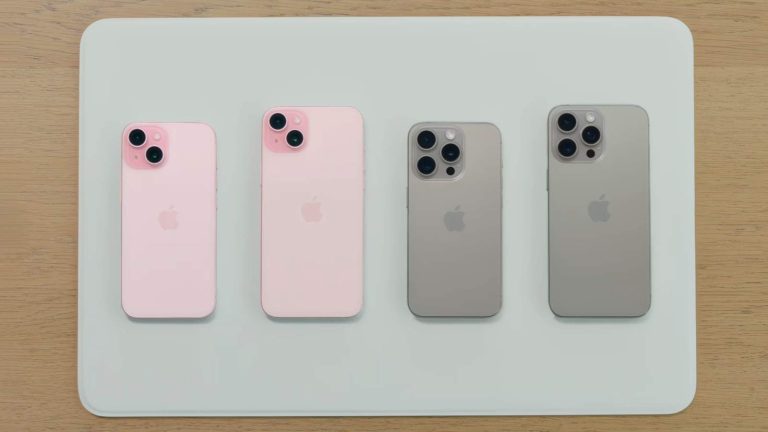
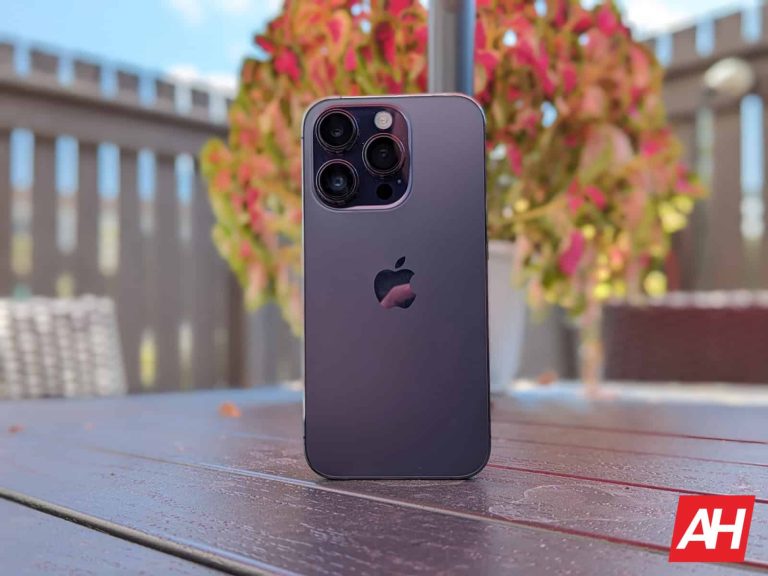
iPhones have long enjoyed one of the highest customer loyalties, and the new iPhone 15 series is no exception. Although the new phones do represent a significant generational update, especially due to the introduction of USB-C, the $1,000 price tag for the Pro models is still a big financial investment. However, according to a new report from WalletHub, 1 in 5 Americans are willing to incur debt to get one of the new iPhone 15 models.
The survey included 240 online respondents in the United States, with WalletHub ensuring data normalization by age, gender, and income to accurately represent a cross-section of U.S. demographics, and raised the question of whether one should finance the purchase of a new phone or pay for it upfront. Answering this, approximately 40% of the respondents expressed a preference for paying through installments for their new phones, highlighting an industry-wide trend of consumers opting for payment plans offered by mobile carriers.
Reasoning behind this decision
Although the specific reason will differ from person to person, the survey also delved into the phenomenon known as “phone shaming,” which involves people discriminating against others based on their choice of phones. This is particularly common in the United States, where iMessage dominates as the primary messaging service, and Android users face discrimination for having a differently coloured message bubble.
Moreover, in days when both iPhones and Android easily last three years with software support and ample performance headroom, the study also tried to uncover stereotypes about people who upgrade their iPhones every year. Over 30% of the respondents described someone who consistently owns the latest iPhone model as “wasteful,” while more than 21% considered them financially well off. Additionally, almost three-quarters of the participants believed that the new iPhone models were overrated.
“Importantly, there are both psychosocial (emotional) benefits and functional benefits that come with phones. Feelings of belonging, having the latest “thing”, and self-signalling that you deserve the new product all might outweigh the psychological consequences of carrying debt,” said Jared Watson, Assistant Professor of Marketing at the Stern School of Business.
Email communication is still widely used as an attack vector despite the ever-changing nature of cyber threats.
The vast number of people who use it for communication daily, both professionally and personally, makes it a tempting target.
Cybercriminals are becoming more skilled at using malicious email campaigns in line with the growth of advanced technologies and increased security measures taken by businesses.
VIPRE Security found that 85.01% of phishing emails had harmful links inside the message body, and the volume of spam emails increased by 30.0% from the first to the second quarter of 2023.
In addition, phishing attacks against IT companies are now more common (14%) than against financial institutions (9%).
The Limitations of Traditional Spam Filters
Conventional spam filters rely on static rule-based systems with predetermined criteria or known dangerous signatures to identify emails as spam.
Their strict compliance with predetermined policies leaves companies vulnerable to ever-evolving cyberattacks. These filters rely too much on signature-based detection, making them vulnerable to zero-day threats and unable to protect against recent or modified malware.
They can’t detect hidden risks like spear phishing since they don’t have advanced behavioral analysis. In addition, it cannot examine potentially harmful information in isolation without sandboxing characteristics.
As a result, the ever-evolving and complicated nature of cyber threats makes their traditional approaches ineffective.
Next-Generation Email Firewalls are the latest technologies for protecting against malicious emails. To quickly prevent new threats, such as zero-day vulnerabilities, these systems interact with real-time threat intelligence feeds, unlike traditional spam filters, which depend primarily on static rules.
They scan things in-depth, including emails, embedded URLs, and attachments. Sandboxing is essential since it allows testing of potentially harmful information in a secure environment.
Advanced systems use machine learning and behavioral analytics to identify complex phishing attacks like this. These firewalls use authentication protocols like DMARC, DKIM, and SPF to prevent spoofing and verify email senders.
In addition, they have measures to prevent sensitive information from being accidentally leaked. These solutions, which are frequently cloud-native, provide a robust and complex approach to email security while scaling efficiently and integrating smoothly with existing security infrastructure.
DocumentFREE Demo
Implementing AI-Powered Email security solutions “Trustifi” can secure your business from today’s most dangerous email threats, such as Email Tracking, Blocking, Modifying, Phishing, Account Take Over, Business Email Compromise, Malware & Ransomware.
How do Next-Gen Email Firewalls Protect Your Inbox?
Advanced Threat Intelligence – The use of real-time threat intelligence helps to identify and prevent emerging attacks, such as those that exploit zero-day flaws, as soon as they appear.
Deep Content Inspection – Rather than simply scanning the email’s information, these firewalls read the message in full, including any embedded URLs or files attached, to discover any hidden risks.
Sandboxing – To prevent viruses and malware from reaching their intended recipients, suspicious attachments and URLs are displayed in a safe, isolated environment.
Behavioral Analytics – These firewalls may identify spear-phishing initiatives by learning the sender’s typical activity patterns and comparing them to suspicious emails that appear to be from the same sender but act differently.
Identity Verification – Using authentication methods like DMARC, DKIM, and SPF, these tools ensure that all email arrives genuine and from a known source, protecting users from spoofing and phishing attempts.
Data Loss Prevention (DLP) – Besides inbound threats, they monitor outgoing emails to prevent sensitive material from being transmitted without authorization or violating regulations.
Machine Learning – Many modern firewalls use machine learning to “learn” from the attacks they block and better detect various threats over time.
Next-Gen Email Firewalls vs. Traditional Email Security
Next-Gen Email Firewalls
Traditional email security
Quickly adapt to new threats by using real-time threat intelligence.
It uses a static collection of threats and patterns to make decisions.
Emails, URLs, and attachments are all placed through an extensive content analysis.
Metadata and simple patterns are the primary areas of security inspection.
Uses content isolation technologies (sandboxes) to investigate potentially harmful data.
Doesn’t have a sandboxing environment.
Utilizes machine learning and behavioral analytics for real-time threat assessment.
Depending on predetermined guidelines rather than monitoring user activity
Designed specifically for use in the cloud, this safeguards the present remote workforces.
Less flexible with cloud integrations; works best in local installations.
The sophisticated analysis and learning capabilities have resulted in fewer false positives.
There is an increase in false positives because of the inflexibility of rule-based systems.
Countering Sophisticated Email Threats with Next-Gen Email Firewalls
The importance of Next-Generation Email Firewalls in preventing modern email threats cannot be underestimated.
These modern firewalls utilize real-time threat intelligence to detect and neutralize recent security risks instead of the static rules used by older systems.
They investigate thoroughly, looking at every aspect of the email, from the subject line to the attachments. Sandboxing is a technique to test malicious code in a safe, restricted setting.
Unusual behaviors, such as those used in spear phishing or impersonation, can be detected via machine learning.
In addition, email spoofing may be prevented using sender authentication methods such as DMARC, DKIM, and SPF.
By authenticating the sender’s identity and confirming the accuracy of the received messages, these procedures act as the first line of protection against email-based threats.
SPF aims to improve email security by limiting the possibility that an unauthorized sender
In DKIM, the transmitting server gives Each email a unique DKIM signature generated using a private key. The DNS records of the sender are queried to retrieve the sender’s public key, which is then used to validate the email’s signature.
With DMARC, website administrators may specify how they want their domain’s incoming mail servers to deal with unencrypted messages that have not been authenticated. It has a policy and a statement, with three options (reject, quarantine, or do nothing).
Why Trustifi ? – AI-Powered Protection for Business Email Security
Next-generation email firewalls will benefit from quantum-resistant algorithms, IoT integration, and adaptive AI for threat prediction in the long run.
Trustifi’s advanced protection uses machine learning and AI to quickly find and stop the most sophisticated email-based attacks, such as ransomware, malware, phishing attacks (malicious links), CEO impersonation protection, BEC, and account compromise, keeping hackers out of inboxes with the following email threat protection solutions.
These firewalls will prioritize cross-platform connectivity, robust data protection measures, and real-time threat sharing in response to the constantly evolving nature of cyber threats.
Next-generation email firewalls have significantly improved email security by adapting to today’s digital ecosystem’s more complex and complicated threats.
They offer robust protection against complex threats that conventional systems could miss by utilizing modern technologies such as artificial intelligence, real-time threat intelligence, and deep content inspection.
Trustifi’s AI-powered email security helps you stay one step ahead of today’s malicious email senders. – Request a Free Demo.
Foldable smartphones have been on the rise, and it seems like they’ll grab 5% of global market share by 2027. That is, at least, what TrendForce is saying will happen. The company posted its forecast for the next 5 years.
Foldable smartphones are expected to grab 5% of the market by 2027
By the end of 2023, the shipments are expected to reach 18.3 million units. In other words, 1.6% of the market will be reserved for foldables. That will, however, grow to 70 million by 2027, which will be the equivalent of 5% of the market.
What about the years in between? Well, we do have info for 2024 too. In 2024, the shipments are expected to reach 25.2 million, which will represent a 38% growth. The market share for foldable should be around 2.2% next year.
Why are we seeing this increase? Well, consumers are more and more interested in foldables, and as the prices go down, more and more of them will make the leap. Costs for manufacturing will be reduced, which will affect prices, of course.
More and more foldable phones are coming to the market
We’re also seeing more and more foldable smartphones in the market, and the competition is good for both product quality and pricing. More and more Chinese OEMs are joining the global foldable smartphone market.
TrendForce says that Samsung is still a force to be reckoned with, globally. The company is expected to sell 12.5 million foldables this year, and take two-thirds of the market. That will be a decline from last year, when it held 82% of the market. That is to be expected due to increased competition.
Huawei is projected to take 14% of the market, OPPO 5%, and Xiaomi 4% of the foldable smartphone market. All in all, considerable growth for the foldable smartphone market is expected in the coming years, which is not surprising.
On September 12, 2023, Spotify introduced a new playlist called “daylist” that adapts to your moods as the day progresses. This ever-changing Spotify playlist joins Spotify’s collection of personalized playlists like Discovery Weekly and On Repeat. It’s designed to be ever-changing and tailored to “every version of you” throughout the day.
The daylist playlist will receive updates multiple times during the day, offering new tracks and titles based on your past interactions with Spotify’s app. For instance, if you tend to listen to cheerful music in the mornings, you might see a title like “bedroom pop banger early morning” in your playlist. Your mood changes throughout the day, and so does the music you listen to. You might have enjoyed a windows-down trillwave Monday evening last night, and now you prefer a ’90s rave rainforest late night. The point is, you’re ever-changing, and your playlists should adapt accordingly.
Details of the ever-changing Spotify playlist
Introducing daylist, your day in a playlist. Bringing together the niche music and microgenres you listen to during specific moments in the day. Spotify now offers this unique playlist that ebbs and flows with unique vibes, or on particular days of the week. It frequently updates between sunup and sundown, creating a series of highly specific playlists tailored for every version of you. It’s hyper-personalized, dynamic, and playful as it reflects your current music preferences.
You’ll receive new tracks with every update, along with a fresh title that sets the mood of your daylist. Titles like trillwave, happy dance, pumpkin spice, and more help you understand your music taste better and express your unique audio identity. This new feature builds on Spotify’s knowledge of music information, which they used to introduce Niche Mixes earlier this year. With Niche Mixes, users could simply type in any activity, mood, or style, and the app would generate a custom playlist. Now, Spotify is taking those preferences you’ve shown in your actual listening habits and using them to create a comprehensive playlist that reflects how you enjoy music throughout your day.
To access your daylist, you can either search for it within the Spotify app or go directly to spotify.com/daylist.
Daylist is now available to both free and Premium users in English-speaking countries like the US, Canada, the UK, Australia, New Zealand, and Ireland. It will become available to more users worldwide in the coming months.
Cisco has been discovered with an arbitrary code execution flaw on their Cisco IOS XR Software image verification checks, which allows an authenticated, local attacker to execute arbitrary code on their underlying operating system.
Cisco Internetwork Operating System (IOS) is a network operating system that can be used in large-scale enterprise environments for high-performance and reliable routing. It is a privately owned Operating System that runs on the Cisco Systems routers and switches.
This is a Time-of-Check Time-of-use (TOCTOU) race condition due to the install query sent to the ISO image during an ISO install operation. A threat actor can exploit this by modifying an ISO image and carrying out the install requests in parallel, resulting in an arbitrary code execution if the exploitation succeeds.
CISCO SYSTEMS GIVES the CVSS score for this vulnerability as 5.7 (Medium). Cisco has released a security advisory for addressing this vulnerability.
DocumentGet a Demo
With DoControl, you can keep your SaaS applications and data safe and secure by creating workflows tailored to your needs. It’s an easy and efficient way to identify and manage risks. You can mitigate the risk and exposure of your organization’s SaaS applications in just a few simple steps.
Affected Products
As per the reports shared with Cyber Security News, the affected products are as mentioned below,
8000 Series Routers
Network Convergence System (NCS) 540 Series Routers that are running the NCS540L images
Network Convergence System (NCS) 5700 Series Routers that are running the NCS5700 images (NCS-57B1-5DSE-SYS, NCS-57B1-6D24-SYS and NCS-57C1-48Q6-SYS)
However, Cisco has confirmed that this product does not affect IOS Software, IOS XE Software, and NX-OS Software.
Fixed in Release
Cisco IOS XR Release
First Fixed Release
Earlier than 7.5.2
Not affected.
7.5.2 and later
Migrate to a fixed release.
7.6 and later
Not affected.
7.7 and later
7.10.1
Users of these products are recommended to upgrade to the latest version to fix this vulnerability and prevent them from getting exploited.
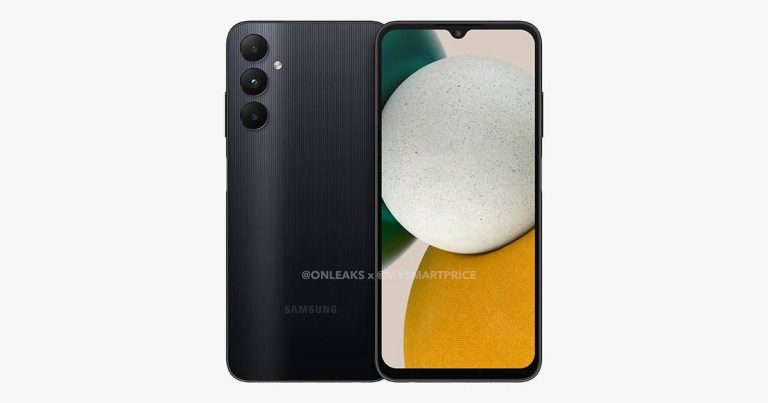
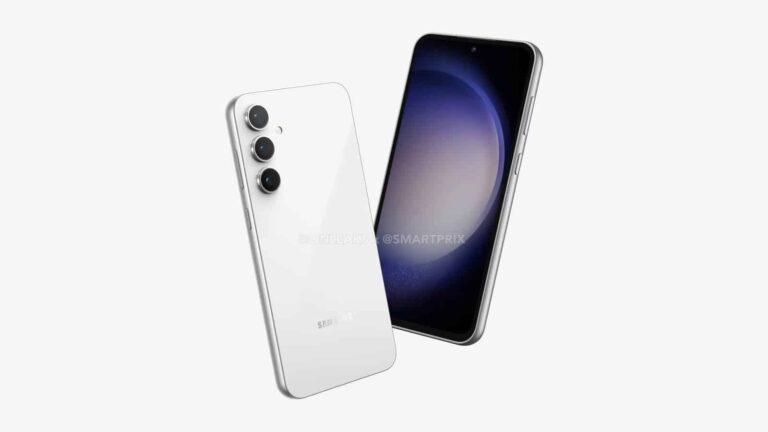
Alongside the Galaxy S24, Samsung is also working on new A-series phones for 2024. The Galaxy A05 and Galaxy A05s will be its next entry-level offerings in the series. We recently saw the former in leaked real-life photos, revealing its design. Another leak has now given us our first look at the latter. This time around, we have higher-resolution renders and a 360-degree video as well, giving us a detailed look at the phone’s design from every angle.
Unlike the Galaxy A05, we don’t have real-life photos of the Galaxy A05s. The leak only gives us CAD-based renders. However, they come from a reputed source (OnLeaks) with a proven track record of Samsung leaks. The images shared by the source via MySmartPrice show a phone with flat front and back panels and slightly curved edges. The display features a U-shaped notch and chunky bezels that scream a budget handset, particularly the chin.
The notch houses a front-facing camera for selfies and video calls. On the back, we have what Samsung calls the “signature Galaxy look” with no camera bump. The Galaxy A05s features three rear cameras aligned vertically, with all of them protruding out of the back panel individually. The Korean firm has used this design on every smartphone launched this year. An LED flash unit sits next to the three cameras. Camera specs aren’t known yet.
As usual, Samsung has placed the volume and power buttons on the right side. The power button is recessed, confirming a side-mounted fingerprint scanner. At the bottom, we have a microphone hole, a 3.5mm headphone jack, a USB Type-C port, and a speaker grille. There’s a second microphone hole at the top, while the left side is blank. The report says the Galaxy A05s will measure around 167.9 x 77.7 x 8.8mm in dimension.
Rumored Galaxy A05s specs
The Galaxy A05s is rumored to feature a 6.6-inch display, likely an LCD solution. The device has already been certified by the FCC, revealing a 4,000mAh battery and 25W fast charging support. Unfortunately, the rest of the specs are still under wraps. We expect more information to surface online in the coming weeks.
Samsung will probably unveil the Galaxy A05 and Galaxy A05s later this year. The Korean firm also has a bunch of other devices lined up for launch before the end of 2023, including the Galaxy S23 FE, Galaxy Tab S9 FE series, Galaxy Tab A9 series, Galaxy Buds FE, and Galaxy SmartTag 2.
It seems like the recent news were off the mark. China didn’t ban Apple’s iPhone after all, reports CNN, in any capacity. As a reminder, a report surfaced claiming that iPhones got banned in central government offices in China, which resulted in a drop for Apple shares.
China didn’t ban Apple’s iPhone in any capacity after all
Well, the ban didn’t happen at all, it seems. Ministry of Foreign Affairs spokesperson, Mao Ning, said during a press conference: “We have always been open to foreign companies and welcome them to seize the opportunities and share the fruits of China’s economic development”.
She added that China has noticed “many media reports” regarding the security incidents of Apple’s iPhone, and that China attaches “great importance to information and cyber security”.
She didn’t go into details regarding that, but she did urge foreign smartphone companies to follow China’s privacy laws and to prevent “any person or organization” from stealing data stored in their customers’ phones.
The US did share its concern after the initial report
The US reacted to the initial report, shared by The Wall Street Journal, by saying that they’re “concerned”. John Kirby, National Security Council spokesman, said, at the time: “It seems to be a piece of the kinds of aggressive and inappropriate retaliation to US companies that we’ve seen from the PRC in the past, that’s what this appears to be”.
As a reminder, that was prior to Mao Ning’s press conference, where she cleared the air. It seems like Apple’s iPhone devices are not banned in any capacity in China.
The relations between China and the US are tense, at least as far as the technology aspect is concerned. Huawei has suffered quite a bit since the US ban years ago. And things only went downhill from there.
This report managed to raise quite a few eyebrows, but it seems to have been false. Anything is possible down the line, though. That being said, Apple did announce its new iPhone 15 lineup a couple of days ago, in case you’re interested.
SolarWinds Platform has published its release notes 2023.3.1, which provides multiple bug fixes and security updates. With this release, the platform has fixed two vulnerabilities, CVE-2023-23840 and CVE-2023-23845, related to arbitrary command execution.
SolarWinds Platform is an infrastructure monitoring and management platform designed for simplifying IT administration for on-premises, hybrid, and SaaS (Software-as-a-Service) environments.
These vulnerabilities can be exploited by threat actors or users with administrative access to SolarWinds Web console to execute arbitrary commands with NETWORK SERVICE privileges due to incorrect comparison vulnerability. The CVSS Score for these vulnerabilities has been given as 6.8 (Medium).
DocumentGet a Demo
With DoControl, you can keep your SaaS applications and data safe and secure by creating workflows tailored to your needs. It’s an easy and efficient way to identify and manage risks. You can mitigate the risk and exposure of your organization’s SaaS applications in just a few simple steps.
Bugs Fixed
In addition to this, SolarWinds has also patched multiple bug fixes that were associated with performance issues, FreeICMP SWQL query optimization, PerfStack updates, and SolarWinds Agent configuration improvement.
Furthermore, Two error messages were fixed: “There was an error retrieving data from SolarWinds Information Service” and “Cannot access a disposed object. Object name: ‘System.ServiceModel.Channels.ServiceChannel’.”
Additionally, nfs2 and nfs3 volume types for AIX systems have now been classified as NetworkDisks. As per the new release, swdebugMaintenanceExecutionHistory.log will show when the job started and when it was completed if database maintenance is run manually.
Another bug fix stated, “In environments with HA pools, the SolarWinds Agent configuration was improved so that the Agents do not experience connection issues or do not connect to an incorrect polling engine. The issues were caused by incorrectly assigned engine IP addresses.” as per the current release notes.
The last SolarWinds release was on July 25, 2023, which fixed one low-severity and five medium-severity vulnerabilities, along with multiple bug fixes on the Platform.
Users of the SolarWinds Platform are recommended to upgrade to the latest version of SolarWinds to fix the bugs and vulnerabilities.
There seems to be no stop to the Galaxy S23 FE leaks. The new Fan Edition (FE) Samsung smartphone has just shown up in a bunch of high-resolution renders, revealing its design. The source claims these are official renders of the phone, which should mean a nearing launch. We don’t yet have a confirmed launch date, though.
Leaks about the Galaxy S23 FE have been coming for several months now. We already know its detailed specs and alleged price, at least for some markets. We have also seen the phone in CAD-based renders and some live photos courtesy of certification listings. All of those images showed a familiar design with sizeable display bezels, arguably a bit too thick for a high-end phone.
The latest leak confirms the alleged Galaxy S23 FE design. We can see the wide display bezels on these official renders as well. The wallpaper obfuscates the chin, but previous leaks have shown even wider bottom bezels than the side ones. Samsung is using a punch-hole design for the selfie camera here. On the back, the phone features the standard Galaxy design of 2023 with three cameras aligned vertically.
Certifications have revealed that Samsung will equip the Galaxy S23 FE with a 50MP primary camera on the back. It’s paired with an 8MP telephoto camera with 3X optical zoom and a 12MP ultrawide lens. The front camera is a 10MP unit. We are expecting some flagship-grade camera features on this phone, including 4K video recording support at 60fps (frames per second) on the front and the back.
The Galaxy S23 FE will feature an FHD+ display, IP68 rating
Samsung is offering a 6.3-inch FHD+ display (2340×1080 pixels resolution) on the Galaxy S23 FE. It should be a Dynamic AMOLED 2X panel with a 120Hz refresh rate, the same display found on the regular Galaxy S23 flagships. The device will feature an optical under-display fingerprint scanner, an IP68 rating for dust and water resistance, and a 4,500mAH battery with 25W fast charging.
Qualcomm’s Snapdragon 8 Gen 1 SoC will power the Galaxy S23 FE in the US, China, and a few other markets, with the rest of the world getting Samsung’s in-house Exynos 2200 SoC. The Korean firm will likely unveil the device later this month, or in early October. Indian e-commerce platform Flipkart has already published a product page for the phone. It says the Galaxy S23 FE is “coming soon” as a “big festive surprise of 2023.” The festive season begins in India in mid-October.
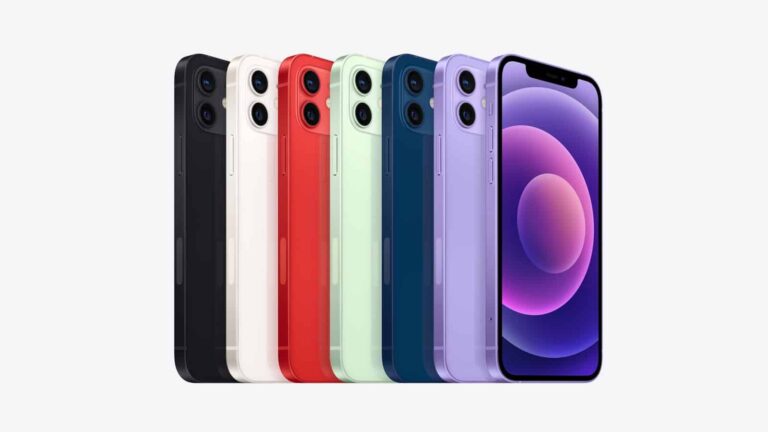
The iPhone 12 sales have been banned in France due to high radiation. It seems like the iPhone 12’s Specific Absorption Rate (SAR) is above the legal limit, which is why France now forbids iPhone 12 sales.
The sales of iPhone 12 have been banned in France due to higher-than-allowed radiation
France’s National Frequency Agency (ANFR) says that the model emits more than the permitted electromagnetic waves. The agency actually tested 141 phones for SAR, including the iPhone 12. It was discovered that the emits 5.74 watts per kilogram, when in a pocket.
In the EU, the standard is 4.0 watts per kilogram. During the second test, when the phone was placed 5mm from the human body, the iPhone 12 passed the test. The limit for that is 2.0 watts per kilogram.
ANFR told Apple to use “all available means” to solve the problem if it wants to continue selling the phone. Based on France’s junior minister for digital economy, this can be fixed via a software update, actually.
Apple disputes ANFR findings
Apple was quick to react to this, and the company actually disputes ANFR findings. Apple provided ANFR multiple Apple and independent third-party lab results to prove its statement. It remains to be seen what will happen next.
ANFR can reject these findings, as it did the test itself, or it will redo its tests, just to be sure. On the flip side, Apple apparently can fix this via a software update and remove all doubt.
Now, regarding SAR values. There is a limit for them set in the EU (European Union), to protect users, as the risk of cancer increases with higher radiation from the phones. ANFR also said that the data will be sent to other EU countries.
While Apple is trying to solve this problem, its new iPhone 15 series is getting a lot of attention. The company announced its new phones yesterday, four models, to be exact.