Nintendo has so few games on the mobile market, but they’ve all been notably good. One of the most recent entries into the company’s repertoire of mobile games is Mario Kart Tour. Well, according to Video Game Chronicle, Nintendo is sunsetting Mario Kart Tour next month.
Mario Kart Tour launched back in 2019, and it was the center of a lot of attention. The game was fun and it gave a pretty faithful Mario Kart experience. The only issue was that the company didn’t implement a multiplayer function for some time.
The game has remained playable ever since, and it’s seen a drop off in players as time passed. It’s still available to download on the Google Play Store and the Apple App Store. If you want to experience this game, then you’d better do it now.
Nintendo is sunsetting Mario Kart Tour
All good things must come to an end, and Mario Kart Tour is no different. Nintendo and DeNA announced that after October 4th, Mario Kart will no longer receive any more new content. This means that there won’t be any new characters or tracks added.
This comes as quite a shocker, as Mario Kart Tour is the company’s second-highest-grossing mobile game, bringing in more than $2 million each month. It’s a fair bit behind Fire Emblem Heroes which brings in about $5 million each month.
This is unfortunate news for Mario Kart Tour fans, but the companies didn’t state that the game would be unplayable after the date. They stated that no new content will be added after the date. Hopefully, the company keeps up the servers for some more time, as Mario Kart Tour, while it’s not brand new, is still relatively recent compared to other apps.
There’s a ton of content on Mario Kart Tour now, so you’ll have a ton to dive into before the game is sunsetted.
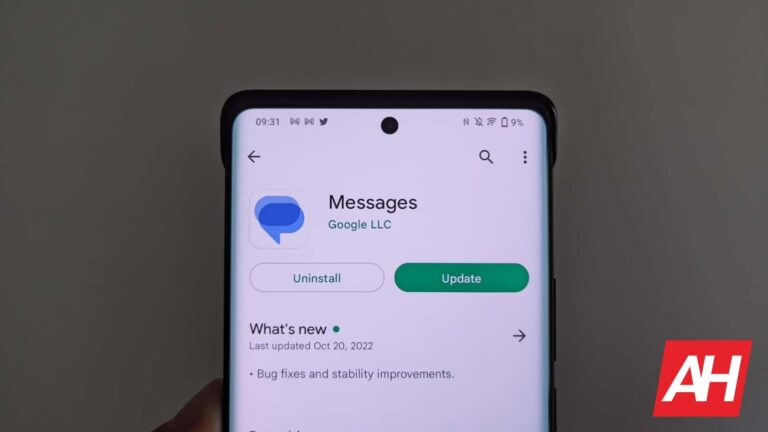
Google Messages could soon add multi-device support. The feature will allow you to access your messages, including RCS chats, across multiple devices. It will use your phone number and Google account to sync up messages.
Currently, Google Messages doesn’t support multi-device syncing of messages. You can use the web version to read, send, or receive messages on other devices, including your computer (devices are paired using a QR code). However, if you have two Android devices, you can’t use the Google Messages app with the same phone number on both of them.
For example, if you want to access your messages on the Pixel Tablet or any other Wi-Fi tablet, Google will redirect you to the web version of Messages via a pre-installed PWA (Progressive Web App). Even if your tablet supports SIM, you can use the Google Messages app with your phone number on your primary device only. This is not the connected experience users want from their Android ecosystem.
It appears Google has a fix in the works. App researcher AssembleDebug recently found code strings within the messaging app hinting at a multi-device syncing feature. “Use your phone number to send and receive messages on devices signed into your Google account,” one of the strings reads. “Message from your phone number on your other devices,” the other says.
These strings suggest Google will allow you to sync your messages across devices signed into the same Google account. Instead of setting up the Messages app with different phone numbers, you can use the same phone number on all of them. You don’t need to swap your SIM if you want to access messages from a different device. This is more convenient than using the web version.
Google is currently working on multi-device support for Messages
Multi-device support for Google Messages is currently in development. The source found the strings in the latest beta version of the app but couldn’t get the feature working. It appears the company isn’t done assembling all the puzzles for a working solution.
Meanwhile, the same report adds that Google Messages is also preparing to show you a warning screen when a screen reader is active. It will block access to your messages. “Screen reader active,” the warning is titled. “We suspect that there’s a screen reader active on your device. Your content will be accessible once it is turned off,” it explains. We will let you know when we have more information about these upcoming Google Messages features.
The Ballistic Bobcat is an Iran-aligned APT group, and initially, about two years ago, cybersecurity researchers at ESET tracked this threat group. Here below, we have mentioned all the other names of the Ballistic Bobcat APT group:-
APT35
APT42
Charming Kitten
TA453
PHOSPHORUS
Recently, cybersecurity analysts at ESET found a new Ballistic Bobcat campaign, Sponsor Malware, via which threat actors are actively targeting several entities in:-
Brazil
Israel
The United Arab Emirates
Security experts uncover Sponsor, a new backdoor deployed by the Ballistic Bobcat APT group, from an interesting sample on an Israeli victim’s system in May 2022.
Timeline & Victimology
During the pandemic, it actively targeted COVID-19-related organizations globally, including WHO and Gilead.
Ballistic Bobcat and Sponsor backdoor campaigns overlap, revealing a clear pattern in tool development. Four more versions of Sponsor were found, deployed in Brazil, Israel, and the UAE, targeting 34 victims.
Here in the below image, the complete timeline is given:-
Timeline (Source – WeLiveSecurity)
Ballistic Bobcat exploited Microsoft Exchange vulnerabilities, often opportunistically, in a campaign named “Sponsoring Access.”
Sponsor backdoor employs innocuous configuration files and a modular approach to evade scans, a tactic frequently used by Ballistic Bobcat for over two years, alongside open-source tools on compromised systems.
Besides this, among the 34 victims, the maximum number of them were located in Israel, while only two of the victims were from other countries:-
Brazil, at a medical cooperative and health insurance operators United Arab Emirates, at an unidentified organization
Verticals targeted in Israel
Here below, we have mentioned all the verticals that were targeted in Israel:-
Automotive
Communications
Engineering
Financial services
Healthcare
Insurance
Law
Manufacturing
Retail
Technology
Telecommunications
Moreover, security analysts discovered that Ballistic Bobcat hit an Israeli insurance marketplace in August 2021 by exploiting the CISA’s reported tools and found the following IOCs:-
MicrosoftOutlookUpdateSchedule
MicrosoftOutlookUpdateSchedule.xml
GoogleChangeManagement
GoogleChangeManagement.xml
In the Sponsoring Access campaign, several open-source tools were used by the operators of Ballistic Bobcat, and here’s the full list:-
Sponsor backdoors in C++ include compilation timestamps, PDB paths, and version info for tracking changes. While the Sponsor collects host info, sends it to the C&C server, and records the node ID in node.txt.
Ballistic Bobcat piggybacked on PowerLess C&C and introduced a new server, using multiple IPs for tools, which are now inactive.
OnePlus has been known to troll its competitors on their big day. From trolling Samsung during the Unpacked event back in February, talking about how expensive the Galaxy S23 Ultra was, compared to the OnePlus 11. Now, OnePlus is at it again, ahead of the Apple event, which is set to get going in a little over an hour.
OnePlus posted on X and Threads, saying “Guess who introduced USB-C to flagship phones in 2015?” and then has a screenshot of their original Twitter post about the OnePlus 2 having USB-C. This was way back in June 2015, so they had to dig for a bit to find it.
Of course, USB-C is not new to Android users, and honestly, it’s not even new to Apple users. Since the MacBook and iPad all use USB-C and have for quite some time. And just about every Android phone released over the last four or more years, have used USB-C. But it’s still a big day for Apple and the iPhone 15, since Apple really only changes ports about every 10 years.
The USB-C iPhone is coming today!
Obviously, a big reason why the iPhone is going USB-C is because of the European Union forcing them too. Though, Apple has been working on a USB-C iPhone for many years, and even when they announced lightning on the iPhone 5, they said it was for the next “10 years”. Which was in 2012, it’s now been 11 years, so it’s definitely time.
Getting USB-C on the iPhone is going to be huge for carrying only one cable when you travel. As you’ll be able to charge your laptop, tablet and phone, no matter the brands, with the same cable. This was the originally promised future of USB-C many years ago. And it’s finally starting to come to fruition in 2023.
In a recent update, Jean-Francois Baril announced the coming of the HMD smartphone brand. This new brand will kick off HMD’s partnership with partners that’ll help in the development process of these coming smartphones. From the official statement from the CEO of HMD, it is clear that this new brand will launch affordable and sustainable smartphones.
So it is safe to see this coming brand launch mid-range devices to compete with other brands in the smartphone industry. In the area of sustainability, HMD aims to make these coming devices repairable and upgradeable. This means that those who will purchase these HMD devices will receive steady software and security upgrades.
Another impressive feature of these devices will be the fact that they’ll support a 5G connection. This will stay true to HMD’s reputation of being the fastest-growing 5G smartphone manufacturer year-on-year. Well, this coming HMD smartphone brand might raise questions in users’ minds regarding Nokia and their devices.
The coming HMD smartphone brand will not bring an end to the Nokia partnership
With this new smartphone brand, HMD aims to focus on customer needs. To this aim, they’d ensure to make the devices from this brand not only affordable but also very sustainable. From available information regarding this coming brand, it is clear that it will be a bit similar to the Nokia brand.
Already HMD is the home of Nokia phones, and it has held this title for over six years. During this period, the company has been able to make Nokia a household name in certain regions. Not only are Nokia devices affordable, but they are also very sustainable.
Nokia’s devices are sure to get about two years of software and security updates.
These devices from Nokia are also very repairable and are built to last a long time. In terms of software, Nokia devices run on a stock Android with no bloatware and a ton of security features. For these reasons, lots of people have chosen to go with Nokia smartphones in place of other more expensive or similarly priced options.
The coming HMD smartphone brand might also stick to this line of operation. However, the birth of this brand will not end the HMD and Nokia partnership that has given fans lots of impressive devices over the past six years. Both brands will exist together and help strengthen HMD’s ever-growing presence in Europe and other parts of the world.
With a focus on affordability, there might not be a flagship device coming from this new brand. More details on the HMD smartphone brand will become available in the coming months. Will you be happy to try out a device from the HMD smartphone brand once available?
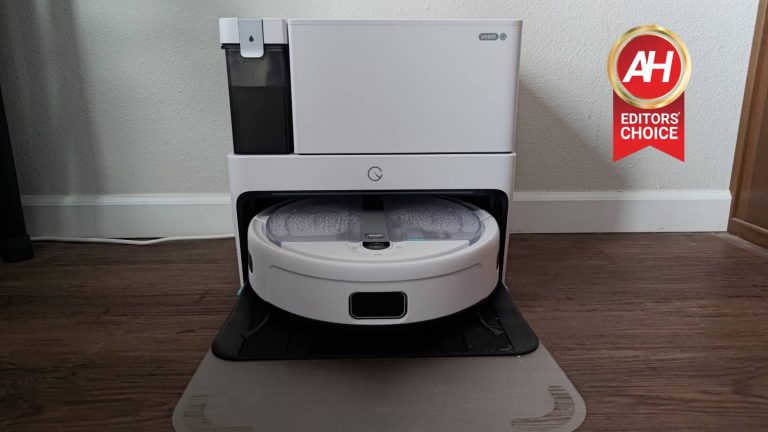
Yeedi has quickly established itself as one of the better brands of robot vacuums, and the company is back with its latest product, the Yeedi Cube. It’s Yeedi’s most advanced robot vacuum to date and comes with quite a few upgrades over past models.
Like a self-washing feature to clean the mopping pad after use, and even a drying unit to ensure that the wet pad doesn’t get moldy and create unpleasant smells. It’s these little quality of life changes that really aim to put the experience of using the Yeedi Cube over the top. You could easily just take off the mop mat yourself and wash it. And with plenty of robot vacuums, that’s what you do. But having the base do this task for you adds a level of convenience that’s quite honestly, really nice to have. Though to be clear, you may still want to give it a proper wash every once in a while. I’d say every couple of weeks.
These are of course, just a couple of the many things about the Yeedi Cube that are worth discussing. And in our time with it for review, it’s been a big help in keeping the apartment cleaner. With all of that said, let’s dive in and take a look at everything the Yeedi Cube has to offer. Not to mention how it performs overall. Is it worth the money and should you consider buying one? We go into all of that in this review.
The Yeedi Cube has a big focus on being hands-free
Convenience is the cornerstone of any robot vacuum. But not all robot vacuums are created equal in this way. Some are much more convenient than others. And from personal testing, the Yeedi Cub is very, very high on the list of available options out there today. Right from the start Yeedi makes things convenient with even something as simple as the packaging. The box that everything came in was quite big, but it wasn’t overly secured with packing tape to keep everything sealed up.
Instead, Yeedi put together this thoughtful setup where the box had this pull tab at one end. You yank it across to the other side and voila. The box is now unsealed and you don’t have to mess with any tape. This also feels more sustainable and that deserves to be applauded. It was just a nice, easy way to get into the packaging that you don’t see too often.
Beyond the packaging, there are other instances of convenience with the unit. Sure everything was packed up nice and neat and as efficiently as possible. But everything was also labeled so you knew exactly which pieces were what and where they go. For example, the edge brushes are color-coded. One is green and one is red, and these correspond to their placement on the underside of the vacuum. They were also separated this way in the box. Yeedi also had tiny stickers over all the sensors to ensure safe packing and to prevent damage. Again, thoughtful packaging here. These are little things, but they add up.
The carry handle is probably the best design choice of any vacuum I’ve seen
The carry handle is one of the better design choices I’ve seen on any robot vacuum. If you think about these vacuums and their size, they’re both relatively small and at the same time, annoying to carry around to a new location if you’re doing spot cleaning. Or if you need to carry it up or down the stairs should you live in a multi-story home. Not with the Yeedi Cube. Instead, Yeedi provided the carry handle. This serves two purposes.
Firstly, it’s an easy way to grab and pull out the water tank. Which secures into the top of the vacuum. There’s also this little latch at the front of it. You push the latch button back and simultaneously pull the handle up. The water tank comes right out. On a past Yeedi vacuum I tried, the water tank was in the back. Not necessarily complicated to get to, but certainly less convenient than this.
Secondly, the handle is your way to pick the vacuum up and carry it around for any reason at all. Sometimes during testing the vacuum would get stuck on things. I had forgotten some stuff was hiding under one of the couches and needed to pull the vacuum out. Thanks to the handle this was much easier to do. Of course more commonly, you will likely use the handle to pick the vacuum up and transfer it to another part of the home. Yeedi intended this to be used for spot cleaning and moving it up or down to different floors. And trust me, this is going to make having a robot vacuum in a multi-floor home way easier.
The self-emptying features are the epitome of convenience
For more than a year my main vacuum was Yeedi’s Vac Station. Which came with a self-emptying dust bin and I thought to myself, “this is the best thing ever.” Well, it turns out that it’s not the best thing ever. Because the best thing ever with regards to a robot vacuum is the new omni station that comes with the Yeedi Cube. Not only does it have a self-emptying dust bin, but it has a self-emptying water tank.
If you set the vacuum to vacuum and mop modes, the Yeedi Cube will make its way around your home, sucking up dust and debris and mopping the floors with water from the tank. After 20 minutes or so it’ll go back to the omni station and empty the water tank into the dirty water container. The omni station just sucks it right up. And it’s fantastic. My only complaint is that 20 min. is the max time before emptying. With the dust bin, the vacuum will simply finish the entire clean first.
Now, you’ll eventually have to empty the dirty water container. So you could argue that this is the same as just emptying the tank from the get-go. But it’s not. Because there’s enough water in the vacuum’s tank to do multiple mopping sessions. And this way you’re only emptying the dirty water container when absolutely necessary. I do it every few cleanings as that’s when the container starts to get close to full. The dust bag meanwhile doesn’t need to be replaced until about two months later. However, the vacuum only comes with the one bag. So you will probably want to buy more right away and just have them ready for when you need them.
Don’t worry about odors and mold on the mop pad
Honestly, this is one of the more ingenious ideas Yeedi had for this unit. I can only imagine the eventual smells that could come from the mop pad after multiple days or weeks of use. Even if you did wash the pad semi-regularly. That doesn’t really have to be a concern with the Yeedi Cube.
Because the omni station has a self-cleaning scrubber. Whenever the vacuum wheels itself back into position at the omni station, it does so where the mop pad fits right over this little scrubber. After every single mop session, the scrubber goes to work to clean the mop pad. And to prevent odors or mold, the omni station also includes a self-drying feature. Once the scrubbing is done, the hot air dryer kicks in and gets up to 104 degrees Fahrenheit (40 degrees Celsius) to dry the pad off. This way the water from the mopping session and the scrubbing don’t set in and get that old musty water smell.
If you notice a slight whirring noise from the omni station after the vacuum goes back to charge, after the emptying of the water tank and the dust bin, and after the scrubber has done its job, that’s the hot air dryer. I found this all works reasonably well together and it just makes general maintenance and care of the vacuum and its parts a lot simpler to deal with. It means less things for you to clean overall. And I don’t know how I will ever go back.
The battery seems to last longer than past Yeedi vacuums
Like any other robot vacuum, the Yeedi Cube has an internal battery. So it won’t last forever and will eventually have to recharge. But, the battery does seem to last longer than the last two robot vacuums I used from Yeedi. The Vac Max and the Vac Station.
I mean it’s going to charge at the end of every single cleaning sessions regardless. So really, there’s not much to worry about in this area. It will always be charged the next time you clean. But the important take away is that because the battery seems to last longer, it can keep the Yeedi Cube cleaning longer before it goes back to the omni station to charge. And that means I can be assured that the floors throughout the apartment will be cleaned before that happens.
Even if I have to send it through on another pass. For those with larger spaces, like multi-floor or single-floor homes, I can’t guarantee the vacuum will last for multiple passes but it should have no issue cleaning the entire home at least once. Naturally this will depend on how big your home or apartment is. If it’s a few thousand square feet, the Yeedi Cube may need to charge and resume cleaning. But average-sized homes or apartments shouldn’t have to worry about this at all. As it wasn’t a big issue for me personally.
Setting things up was super simple with the app
My only reservation with robot vacuums a lot of the time comes down to the app. Even if the vacuums perform only to mediocre standards, chances are they’re still good to have around when you don’t want to vacuum yourself. Because it’s better than not vacuuming at all. Where the experience I feel like can be downgraded is if the app is just not good. The Yeedi companion app is the exact opposite of that. It’s a really well-made and well-designed app that’s easy to use and that makes a huge difference.
It took maybe two minutes to connect the Yeedi Cube and have everything ready to go. From there, you can customize your clean with different parameters. This includes whether or not you want to have the Yeedi Cube vacuum only or vacuum and mop. You can also change the level of water used and how much suction there is during cleans. Additionally, the app lets you set up scheduled cleanings (which I think could be better), and wall off rooms.
There’s a lot of control here and it makes using the Yeedi Cube that much better. In particular, one of my favorite features is the ability to designate sections of the home that you don’t want the vacuum to go into. I live in a three-bedroom apartment and two of those rooms I wall off regularly. The Yeedi Cube stays out of them entirely and just goes about cleaning the rest of the place. Simple pinch and expand gestures in the app will make the area larger or smaller too. Then you just hit save and the closed off section will stay there till you remove it.
You can even use the app to manually do a wash or dry of the mop pad if you just feel like doing it an extra time. What’s more, is that you can set up scheduled drying and washing times. And there’s a toggle for auto-empty too if you want to disable it. Whatever you need seems to be there. As Yeedi appears to have thought of everything.
Got pets? It’s not a problem for the Yeedi Cube
One thing I was glad to have but less impressed with on past Yeedi Vacuums was how it cleaned up pet hair. It’s important to note that this was mostly limited to a very low pile rug we have in the kitchen. Which just seems to grab onto pet hair and never let go. And I almost always had to go over the rug multiple times to get most of it. And even then, there was still some left and if I wanted it as clean as possible, I’d need to run over it with our standard vacuum.
The Yeedi Cube however, appears to pull up more of this pet hair from the same rug than the last two Yeedi Vacuums I used. And that’s an amazing feeling because it means I can let the Yeedi Cube do most of the vacuuming throughout the apartment. I still vacuum some small parts of my bedroom because I need to move things about to get everywhere. But the Yeedi Cube handles everything else.
Now, it doesn’t get all the hair off that one rug. But it does the best job so far and I’m overall happy with the results. And again, I think this is more of an issue with the rug than the vacuum. While my standard push vacuum does clean the hair better, the Yeedi Cube does a great job on the hardwood, the carpets, and other rugs in the apartment. Overall there’s no disappointment here. If you’re worried about pet hair, you shouldn’t be. The Yeedi Cube likely won’t have any problems cleaning it up.
Scheduled cleanings didn’t work as well as I’d hoped at first
Scheduled cleanings are an awesome feature. Normally. They allow you to configure the vacuum to clean the home at the same time everyday. This way you don’t even have to think about starting the clean.
Nearly everything becomes automated with this. So all you have to do is empty the tanks and dust bin from time to time. Except that isn’t what happened with my experience. Half the time the scheduled cleans just never initiated. The other half were fine. On at least one occasion I had to change the scheduled cleaning time to get it to start. Although the next day it once again skipped my designated cleaning time.
There is good and bad news with this. The bad news is that it’s possible others may run into this issue. The good news is that this is a bug with the app and Yeedi confirms it will be fixed in a future update to it. There’s also a way to fix the problem in a roundabout way. You just have to go back into the time zone section under the vacuum’s settings and in the “About Vacuum” section, and switch the time zone to something else, then save, and then back to your actual time zone again and save once more. This fixed the issue for me and it now starts cleaning on time with scheduled sessions.
The carpet detection helps prevent wet carpets
Having an all-in-one mopping and vacuuming robot vacuum means it does both jobs at once. And that’s great. Unless it mops your carpets and rugs too and gets them soaked or damp.
One feature I really appreciate is that Yeedi Cube was designed to prevent this. There’s a feature in the advanced settings of the app where you can set the vacuum to avoid carpets altogether. If you want to. Although we don’t know why you would since you’d just have to vacuum those yourself.
But you can also choose the “Across carpets” option for the carpet detection avoidance mode. And this allows the vacuum to go across carpets to complete the clean, but also lift the mop pad and only vacuum in those areas. So in short, if it detects carpet or rugs, the mop pad will lift up, it will stop mopping, and only vacuum. This way your carpets don’t get soaked. This one thing I was worried about when I first started using the vacuum and I’m overjoyed that this was baked in.
The omni station takes up less space than you’d think
I will admit I was a little worried about the size of the omni station at first. Because it does take up more space than the last Yeedi vacuum I had. And that’s understandable considering all the extra tech and features. Surprisingly however, it doesn’t take up that much extra space. And in fact it’s the smallest omni station on the market. Other robot vacuums are either taller, wider, or both. And this is great because it means you can more easily fit it into your own home’s unique space. For smaller apartments especially this will be a nice surprise.
Even if the space factor isn’t a big deal to you, trust me when I say you’ll be happy the omni station isn’t some large hulking mass of plastic. It’s still relatively compact and can be tucked in a corner so long as there’s room for the vacuum to get out and do its job.
Should you buy the Yeedi Cube?
Personally, I think anyone looking for a capable robot vacuum that does more than just vacuum should consider the Yeedi Cube. It’s not the only option with features such as integrated mopping and self-emptying bins and water tanks. But it does offer these things at a lower price than some competitors and does just as good of a job at cleaning. There’s also just too many nice convenience features to overlook the Yeedi Cube.
The carry handle, the mop pad scrubber and hot air dryer, and the omni station’s dirty water tank and dust bag are all excellent features. And then little things like the lifting mop pad when going over carpets really just turns things up a notch. And as silly as it may sound, I think the carry handle is the best part. Robot vacuums are small compared to regular vacuums. And chances are they’re lighter than many of them too. But it’s still a pain to move them between floors for a full clean or to just different rooms if you’re doing spot cleaning. The carry handle makes this a breeze.
But at the end of the day, only you can decide if the Yeedi Cube is right for you. We do think it’s worth it though.
Buy the Yeedi Cube if:
– You want a robot vacuum with a mopping feature
– You value convenience
– The self-empty and self-cleaning features are desirable to you
Today, September 12, 2023, starts one of the biggest tech trials to date. DOJ (Department of Justice) has raised a lawsuit against Google. One expert actually referred to this trial as the “antitrust trial of the century”. This is basically a major tech monopoly trial, as the US will try to take control. This is a trial against Google, but many other companies are a part of the equation. In this article, we’ll go a bit deeper on what exactly is going on, and will keep you up to speed on the proceedings. This trial could go on for quite some time, so get ready.
Why is it happening?
Why did the Department of Justice raise an antitrust lawsuit against Google? Well, the DOJ will try to prove that Google violated anti-monopoly law. Google has a number of exclusive agreements with smartphone manufacturers and browser makers, which make its search engine default for consumers. Yes, Google pays Apple and other companies to keep things the way it is. DOJ will argue that those deals are freezing out competitors, basically. Google, of course, disagrees, and claims the market is wide open.
What is Google’s stance?
Google believes there’s no wrongdoing here. The company says that using Google is not mandatory on any smartphone, and that all of this is by choice. That the arrangement it has with companies is perfectly legal. People can choose different web search engines at any time, nothing is stopping them. They choose to use Google.
Who exactly is suing Google?
The Department of Justice (DOJ) is behind this lawsuit, but that’s not the whole story. The DOJ is in coalition with 39 states from the US. In other words, this is a huge case, and something that will be in the focus of the public until it’s over.
How dominant is Google?
Google holds about 88% of the domestic (the US) search market, based on the Public Data Sources. The rest falls on Bing, DuckDuckGo, and others. In other words, Google is very dominant in that regard. The company also has over 70% of the US search advertising market, the ads you see when you search.
The US vs Big Tech?
Many see this trial as the US vs Big Tech trial. Why? Well, it will kind of show whether the US has the legal authority to take some control from the big tech companies, essentially. Big tech companies basically control how we access information these days, and this trial will show whether the US can take some control away from them. It may not have legal grounds to do so, we’ll have to wait and see.
DOJ hopes to be more successful than the FTC
FTC (Federal Trade Commission) tried to block a number of acquisitions for Big Tech, but it failed to do so. FTC tried to block Microsoft’s acquisition of Activision, which is a monstrous $69 billion deal. The same happened with Meta’s Within deal, and more. Analysts do believe this is a whole different ballpark, though, and that the DOJ has a case here.
When did this all start?
This lawsuit originates from 2020, back when the Trump Administration was in control. Two separate complaints are actually in question here, but in time, they became a single case that is presented here. Back in 2020, the DOJ and dozens of states accused Google of its dominance in online search. They alleged that Google is harming the competition by making deals with wireless carriers and smartphone makers. They alleged that those deals made Google Search the default or exclusive option for people.
We’ve seen semi-similar lawsuits in the past
This course of events will seem familiar to the older generations. Every 20 years or so, the DOJ decides to take on the dominant force(s) in the tech industry. DOJ did that with IBM at the end of the 1960s, and then it was Microsoft’s turn at the end of the 1990s. Granted, many see this as a much bigger case than those were, and they’re probably right. It is worth noting that DOJ lost both of those cases, as IBM and Microsoft won. The thing is, those cases did affect both companies in a rather negative way, and they did lose their momentum in the process.
What’s at stake for Google?
What’s at stake for Google here? Well, experts don’t see the outcome of this trial as the main problem, believe it or not. They see the trial’s existence as a huge problem as it is. As already mentioned, both IBM and Microsoft lost their momentum during their trials, and the same could happen to Google. This, of course, is an entirely different case decades after the first two, so… we’ll see. There are many outcomes to this. If Google loses the case, things could become really problematic. The outcome will affect not only Google, but many other companies included in the process. Including Apple, Mozilla, and more.
What’s Google’s plan of defense?
Google considers this case to be “deeply flawed”. The company laid out its plan of defense quite recently, actually. It was laid out by the company’s president of global affairs, Kent Walker. Google will argue that its distribution agreements haven’t harmed the competition for search. Google also plans to mention Amazon and some other companies for simple reasons. Around 60% of users start their product searches on Amazon, in the US. The company will make sure to point out that browser and device makers choose Google amongst the competition, and that their choice is “based on the quality of products” Google offers. Walker also pointed out that Google isn’t the only company that pays for prominent placement on browsers.
Another point that Google plans to make is that Google’s payments to device makers and carriers to promote its search product and browser are just marketing, simple marketing. Consumers can easily change their search engines should they choose to do so, Google is not preventing them or anything like that. Several other details have been highlighted by Walker, but this is the gist of things.
How long will the trial last?
The trial is expected to last around two months. The exact dates have not been predicted, of course. Following the trial, appeals will be a possibility, of course. Either side will have the option to file an appeal on the outcome.
More than a week after Disney pulled the plug on its 25 channels for Charter Spectrum users due to a major contract dispute, the two companies have finally reached an agreement.
The crux of the matter
The dispute began when Charter Spectrum, in an effort to control costs, decided to renegotiate its deal with Disney, which would provide access to Disney’s ad-supported streaming services, such as Disney+ and ESPN+, without any additional charges. Although both companies eventually agreed on the financial aspects, they couldn’t come to terms regarding the streaming conditions, ultimately leading Disney to remove all its channels.
However, despite the issue, Disney took steps to ensure that its content remained accessible to viewers. This included introducing a special promotional offer for Hulu + Live TV, available at a discounted rate of $50 per month for three months, down from the regular $70.
What does the new agreement include?
This new agreement aims to address most of these concerns and also offers exclusive benefits to Spectrum users. These benefits include access to the highly-anticipated standalone ESPN streaming service, set to launch in the near future, and access to Disney+’s ad-supported basic tier for Spectrum TV Select subscribers. Additionally, for Spectrum TV Select Plus plan subscribers, the agreement includes access to ESPN+ as part of their package.
Furthermore, this deal will bring back 19 networks, including ABC-owned stations such as the Disney Channel, FX, and the Nat Geo Channel. However, it’s important to note that while many previously available channels have returned, some channels like Baby TV, Disney Junior, Disney XD, Freeform, FXM, FXX, Nat Geo Wild, and Nat Geo Mundo are no longer accessible through the cable service.
“Our collective goal has always been to build an innovative model for the future. This deal recognizes both the continued value of linear television and the growing popularity of streaming services while addressing the evolving needs of our consumers,” said Disney CEO Robert A. Iger.
If you’re looking for a new robot vacuum, then you’ve come to the right place. Here, we’ll be listing the best deals that you can find on the iRobot Roomba robot vacuums. Whether you’re looking for something cheap like the iRobot Roomba i3, or something expensive like the Roomba S9, everything that iRobot has is available on this list.
iRobot does typically discount its robot vacuums, so you can almost always find some sort of a deal on at least one of their products. Of course, the best times to buy one are near shopping holidays like Prime Day and Black Friday. But you can still find them on sale at other times of the year.
Best iRobot Roomba robot vacuum Deals
iRobot is one of the most popular robot vacuum companies out there. Whether they are the best, is up for debate. As some people might prefer another brand over iRobot and some might prefer iRobot. But it is the most synonymous brand with robot vacuums.
iRobot has been around for nearly 30 years, surprisingly. And has been making robot vacuums the entire time. So it does have the experience, compared to the competition.
The lineup from iRobot ranges from the i3 to the i9, and there’s even some others available like the S9. Now iRobot does offer a self-emptying dustbin, however it is not included with most of its robot vacuums. The plus models do come with the self-emptying dustbin, which is what makes it a plus model. So definitely keep that in mind here. That self-emptying dustbin does make it a bit more expensive. If that’s not as big of a deal for you, you do have the option of getting the same model without that self-emptying dustbin.
So without further ado, here are the best deals that you can currently find on iRobot Roomba robot vacuums.
Over the past few weeks, leading up to today’s ‘Wonderlust‘ event from Apple, we’ve heard that Apple is ditching leather and going with a new material for its cases and watch bands – called FineWoven. Which looks odd, since Apple doesn’t usually capitalize a letter in the middle of a word.
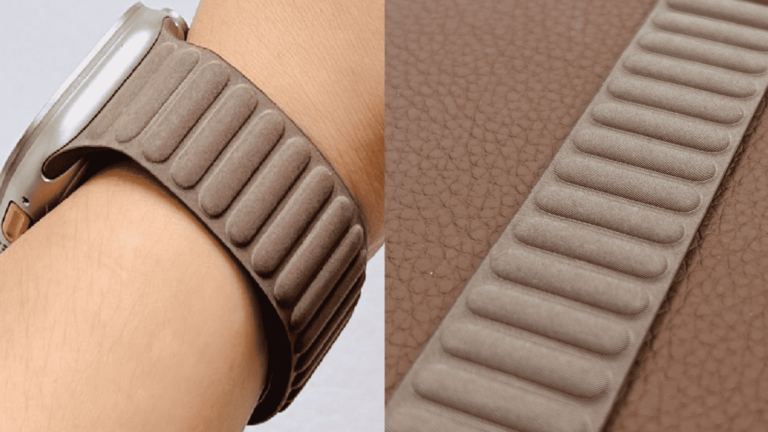
Now today, we’re seeing some more images of a FineWoven Apple Watch Band, surfacing on X (formerly Twitter). This new material is expected to replace leather for Apple’s first-party accessories, and it does look pretty good. This leak comes from X user @KosutamiSan, who posted a couple pictures of the Watch band, one with it laid out flat and one with it attached to an Apple Watch Ultra.
The design is quite similar to the leather band, in fact it looks the exact same. But a little more felt-like. It’ll be interesting to see what the bands actually feel like, in person.
Ditching the leather watch bands are definitely going to leave a hole in the market, but there’s plenty of great leather watch bands available from other companies – like Nomad. Which makes a really great leather band for the Apple Watch.
FineWoven coming to phone cases too
In the past couple of weeks, we’ve seen a ton of leaks of cases for the iPhone 15 series that are using the FineWoven name. They look to be a cross between alcantara and a silicon case. Of course, we’ll know for sure in the next few hours, as Apple actually makes it official.
According to many analysts, Apple is likely dropping leather as an environmental decision. Leather has a rather high carbon footprint. So while the environment might be the reason that Apple gives on stage, the likely answer is they are moving to another premium material. It’s no secret that Apple’s leather cases have been pretty terrible over the last few years. So it’s a good move, especially if these can hold up better.