Multiple vulnerabilities have been identified in ArubaOS-Switch Switches, specifically pertaining to Stored Cross-site Scripting (Stored XSS), Denial of Service (DoS), and Memory corruption.
Aruba has taken measures to mitigate these vulnerabilities and has subsequently published a security advisory.
ArubaOS-Switch is owned by Aruba Networks, a Hewlett Packard Enterprise subsidiary. This allows users to manage their networks from a centralized location. Aruba Networks manufactures several networking products.
This vulnerability exists in the web management interface on ArubaOS-Switch which could allow an unauthenticated threat actor to exploit a Stored XSS attack. This attack can be conducted against a user of the Aruba Web management interface under certain configurations.
If an attacker is able to succeed in exploiting this vulnerability, it can allow a threat actor to execute arbitrary script code on the affected interface. The CVSS score for this vulnerability has been given as 8.3 (High).
CVE-2023-39267: Authenticated Denial of Service Vulnerability
The Command Line Interface (CLI) of ArubaOS-Switch has been identified to be vulnerable to an authenticated remote code execution which can lead to a Denial-of-Service condition. The CVSS Score for this vulnerability has been given as 6.6 (Medium).
An attacker can exploit this vulnerability by sending specially crafted packets to the ArubaOS-Switch, leading to an unauthenticated remote code execution. This vulnerability arises as a part of a memory corruption vulnerability in the ArubaOS-Switch.
The CVSS score for this vulnerability has been given as 4.5 (Medium).
Affected Products & Fixed in Version
The affected products include HPE Aruba Networking Switch Models,
Aruba 5400R Series Switches
Aruba 3810 Series Switches
Aruba 2920 Series Switches
Aruba 2930F Series Switches
Aruba 2930M Series Switches
Aruba 2530 Series Switches
Aruba 2540 Series Switches
Software Branch Versions
Fixed in Version
ArubaOS-Switch 16.11.xxxx: KB/WC/YA/YB/YC.16.11.0012 and below.ArubaOS-Switch 16.10.xxxx: KB/WC/YA/YB/YC.16.10.0025 and below.ArubaOS-Switch 16.10.xxxx: WB.16.10.23 and below.ArubaOS-Switch 16.09.xxxx: All versions.ArubaOS-Switch 16.08.xxxx: KB/WB/WC/YA/YB/YC.16.08.0026 and below.ArubaOS-Switch 16.07.xxxx: All versions.ArubaOS-Switch 16.06.xxxx: All versions.ArubaOS-Switch 16.05.xxxx: All versions.ArubaOS-Switch 16.04.xxxx: KA/RA.16.04.0026 and below.ArubaOS-Switch 16.03.xxxx: All versions.ArubaOS-Switch 16.02.xxxx: All versions.ArubaOS-Switch 16.01.xxxx: All versions.ArubaOS-Switch 15.xx.xxxx: 15.16.0025 and below.
ArubaOS-Switch 16.11.xxxx: KB/WC/YA/YB/YC.16.11.0013 and above.ArubaOS-Switch 16.10.xxxx: WB.16.10.0024 and above.ArubaOS-Switch 16.08.xxxx: KB/WB/WC/YA/YB/YC.16.08.0027 and above.ArubaOS-Switch 16.04.xxxx: KA/RA.16.04.0027 and above.ArubaOS-Switch 15.xx.xxxx: A.15.16.0026 and above.
“16.10.xxxx:KB/WC/YA/YB/YC will not receive fixes for these vulnerabilities. Upgrading to KB/WC/YA/YB/YC.16.11.0013 and above will address these vulnerabilities.” reads the advisory by Aruba Networks.
Additionally, Aruba also provided workarounds for addressing these vulnerabilities in which they mentioned that “To minimize the likelihood of an attacker exploiting these vulnerabilities, HPE Aruba Networking recommends that the CLI and web-based management interfaces be restricted to a dedicated layer 2 segment/VLAN and/or controlled by firewall policies at layer 3 and above”.
One of these vulnerabilities (CVE-2023-39266) has been publicly disclosed with a Proof-of-concept which can be found here. Users of these products are recommended to upgrade to the latest version to fix these vulnerabilities and prevent them from getting exploited.
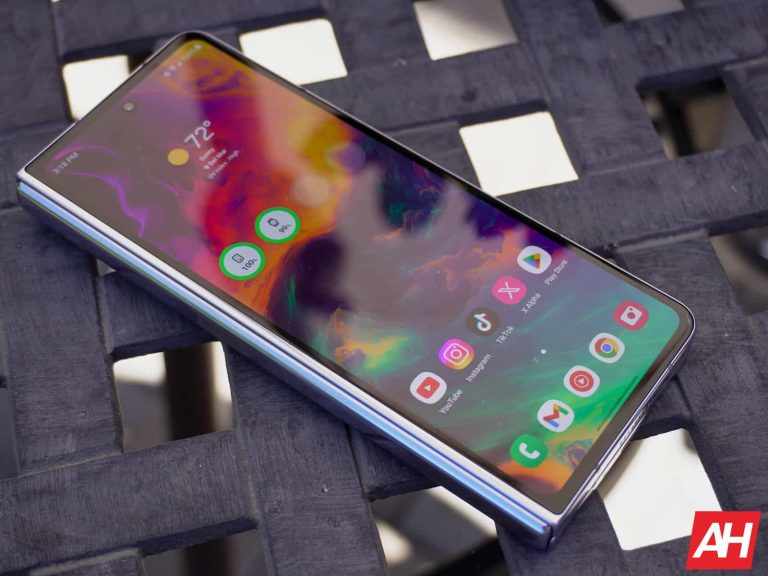
Samsung has launched the new Galaxy Z Fold 5, and it once again does not come with a USB-C charger in the box. Which is not a huge surprise, most OEMs ditched that a couple of years ago. Luckily, you can get a decent USB-C wall charger for not a whole lot of money. And since the Galaxy Z Fold 5 does not support anything faster than 25W, you won’t need to spend top-dollar for a much faster charger. Though, it’s a good idea to do that, as you can use it to charge other things like laptops, tablets, etc.
In this list, you’ll find a number of great USB-C wall chargers that you can pick up for the Galaxy Z Fold 5, some of which are as low as $10.
This is the charger that Samsung shipped with the Galaxy S20 and Note 20 series last year. So it’s not necessarily a new charger from Samsung, but one that you might already have in your home. And it works great with the Galaxy Z Fold 5.
This is a USB-C PD charger that can charge up to 25W. Now if you are charging something else that might not charge at up to 25W it will charge at that rate. Basically, it is backwards compatible. Which is a nice addition.
Finally, the Samsung 25W Travel Adapter is available in two colors: White and Black.
This wall charger from Belkin does support up to 25W charging speed, and it uses PPS in addition to Power Delivery. PPS is what Samsung uses for the faster charging speeds. So you will for sure get the full 25W charging out of this one. And it’s the same price as the Samsung charger above.
It will also work with almost any other USB-C device, as this is backwards compatible, even with phones that are not USB-C PD.
Spigen also makes chargers. Yes, the company you know for making great cases for literally every phone ever made. They also make a few chargers that are worth buying, like this one for the Galaxy Z Fold 5.
This is a dual-port USB-C PD charger that can charge at up to 40W. You won’t get 40W out of each port, but rather combined. It will do 25W at most, but if you’re using both ports together, it’ll be closer to 20W each.
Another great option for the Galaxy Z Fold 5, especially if you have other devices you need to charge. The RAVPower 61W charger has a 61W USB-C PD port and a 12W USB-A port. However, if you are using both ports, the USB-C port becomes a 45W port. That’s just how power works.
It is backwards compatible to the 25W charging that the Galaxy Z Fold 5 is able to support. But it’ll also work for charging USB-C laptops and even tablets, which is really useful. Making this charger quite versatile.
This is one of our favorite USB-C chargers, because it’s a new GaN charger so it’s much smaller while still boasting 65W of power.
This particular charger has two USB-C ports and a USB-A port. So you’re going to be able to charge multiple devices at the same time. While this will charge at faster speeds than 25W, your Galaxy Z Fold 5 won’t charge faster, as it will only ask for 25W. But this is a good charger to take traveling to charge your laptop, smartphone and maybe a smartwatch too.
Since we are all working from home right now, this charger from RAVPower is a really great one to buy. This is a four-port desktop USB charging station. It has two USB-C PD ports available that can charge at 65W total. So it could charge your laptop and your Galaxy Z Fold 5 at the same time.
It also sports two USB-A ports for charging other devices slower, like a smartwatch or a fitness tracker.
This makes this a must-buy for a home office setup. Especially since we all have plenty of products that we need to charge daily.
Here’s another 20W charger, and as mentioned above, you won’t see much of a difference between 20W and 25W charging. This is a smaller one, so you can still use it to travel with. Toss it in your bag, without it taking up a lot of space.
It is available in both black and white, however for some reason, the black one is actually $2 more expensive.
This 20W charger from UGREEN is also fairly cheap, coming in at under 25W. If you’re wondering why so many chargers are capped at 20W, it’s because of the iPhone. But it’ll still work fine on the Galaxy Z Fold 5. And slower charging is actually better, as your battery will last longer in the long run.
At 20W, you should see about 50% charge on your Galaxy Z Fold 5 in about 30 minutes.
The PowerPort III Duo from Anker is a really good option. This sports two USB-C ports, that support PowerIQ 3.0 (that’s Anker’s proprietary fast charging spec). We’re looking at 36W on this one, so it’s not so much a super fast charger, but it can charge two devices simultaenously.
The plug on the PowerPort III Duo does also fold, making this great for traveling. As you won’t need to worry about the plug getting bent while you have it in your bag.
After completely redesigning the web version of its messaging app, Google announced that Chat is getting one more important feature that won’t really be available for the general public until next year.
Google confirmed it has teamed up with Mio, a well-known provider of interoperability solutions, to provide Chat users with additional messaging options that involve other similar services.
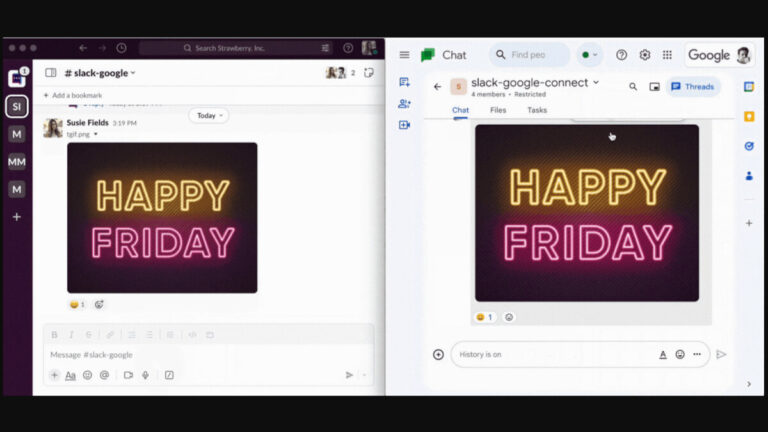
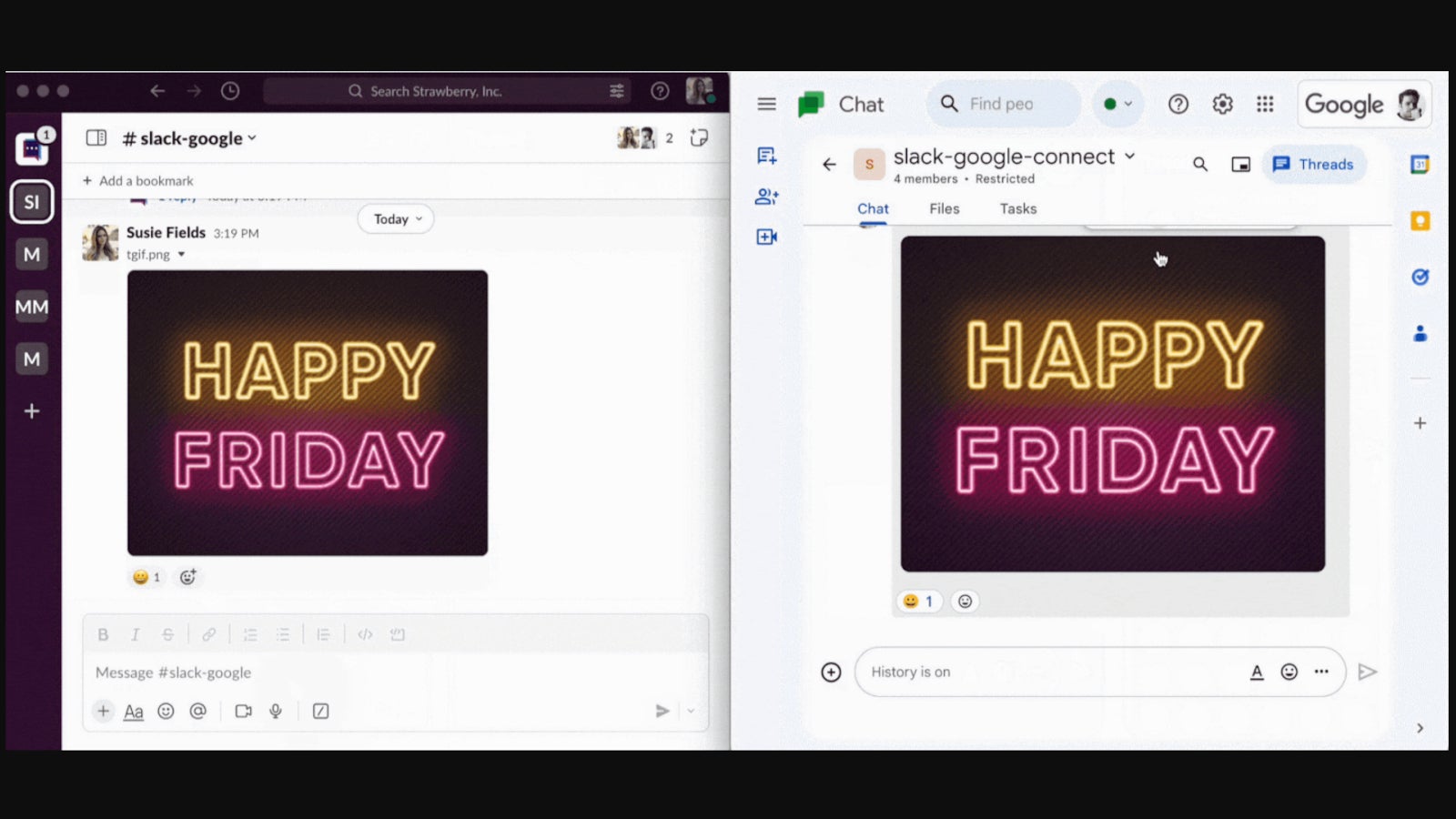
Starting today, beta users will benefit from messaging interoperability between Google Chat and other platforms such as Slack and Teams. Although this is just in beta now, Google says the feature will be generally available in early 2024.
The new interoperability solution is supposed to make the Chat experience much smoother for those who use multiple channels and tools for communication. It reduce the chance of missing messaging and the hassle of having to monitor multiple chat tools.
The downside is that you’ll need Mio licenses for this to be available. Those who wish to request beta access, must reach out to Google’s account rep or submit a dedicated form to contact Mio.
Keep in mind that the new messaging feature is aimed at business, so it’s only available to Google Workspace Business Starter, Business Standard, Business Plus, Essential Starter, Enterprise Essentials, Enterprise Essentials Plus, Enterprise Standard, Enterprise Plus, Frontline Starter, Frontline Standard, as well as Nonprofits customers.
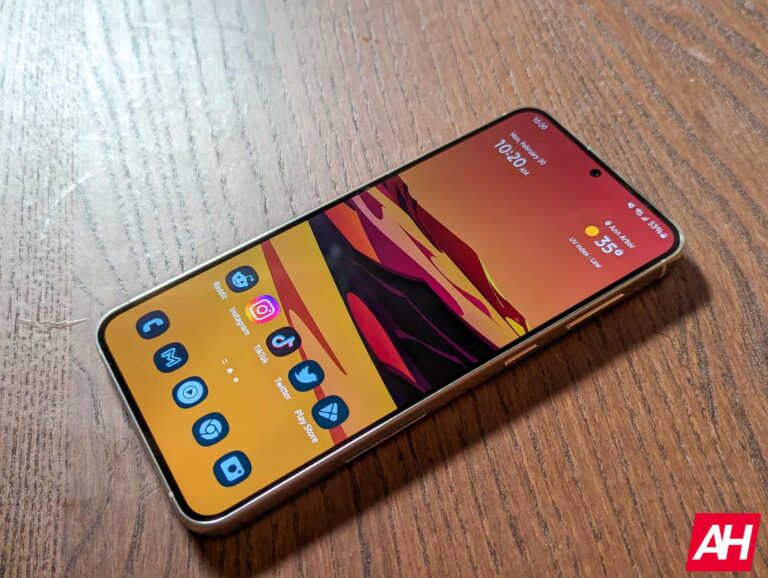
Samsung has reportedly sold over 18 million units of the Galaxy S23, Galaxy S23+, and Galaxy S23 Ultra combined so far. Compared to the Galaxy S22 series, sales have grown 23 percent in the first six months after launch. The growth over the Galaxy S21 series is close to 30 percent.
Samsung’s Galaxy S23 phones have more demand than the Galaxy S22
According to market research firm Korea Investment & Securities Co. (via @Tech_Reve), the cumulative sales figure of the Galaxy S23 series for six months reached 18.63 million units. As expected, the Ultra model is the most popular of the trio. It accounted for almost half of all sales (8.89 million units). The base Galaxy S23 sold 6.43 million units, while Samsung moved 3.31 million Galaxy S23+ phones off its shelves during this period.
Sales of Samsung’s foldable smartphones, meanwhile, marginally declined over the past year. A year after their launch, the Galaxy Z Fold 4 and Galaxy Z Flip 4 have cumulatively sold 9.31 million units, the report states. In comparison, the combined sales volume of the Galaxy Z Fold 3 and Galaxy Z Flip 3 in the first year was 9.65 million. The Flip model outsold the Fold in both generations.
Samsung sold 5.76 million units of the Galaxy Z Flip 4 in the first year, while the Galaxy Z Fold 4 sold 3.55 million units. The sales figures of the third-gen Flip and Fold models were 6.32 million and 3.32 million. This isn’t surprising considering the lower price tag of the Flip, as well as its appealing style statement. The Fold model is more of a multitasking device and costs almost twice as much as the Flip.
Samsung recently launched the Galaxy Z Fold 5 and Galaxy Z Flip 5 with a handful of upgrades. Both models feature a redesigned hinge that allows the devices to fold flat without a gap. The Flip model also has a bigger cover display. Early signs have been promising, with shipments growing about 75 percent from the same period last year. Time will tell whether Samsung manages to hit its sales target for the latest foldables.
Samsung may struggle to repeat the feat with the Galaxy S24 next year
Samsung shipping the Galaxy S23 series with a Snapdragon chip globally may have helped boost the sales this year. People who usually got the Exynos processor grabbed the opportunity to upgrade their phones. However, Exynos is making a return on the Galaxy S24 series. Considering its ill reputation, Samsung may struggle to maintain the growth trajectory of its flagship smartphones next year. The Galaxy S24 series will launch in early 2024.
Ohio History Connection acknowledged that in a ransomware attack the attackers may have had access to 7,600 SSNs.
The Ohio History Connection (OHC) has posted a breach notification in which it discloses that a ransomware attack successfully encrypted internal data servers. During the attack, the cybercriminals may have had access to names, addresses, and Social Security Numbers (SSNs) of current and former OHC employees (from 2009 to 2023). Additionally, they may have gained access to W-9 reports and other records revealing the names and personal SSNs of vendors who contracted to provide services to OHC. They also may have gained access to images of checks provided to OHC by some members and donors beginning in 2020.
OHC is a statewide history nonprofit chartered in 1885 that manages more than 50 sites and museums across the state. As the State Archives for the state, OHC preserves the historical records of Ohio’s legislative, executive, and judicial branches.
The ransomware attack took place in early July of 2023, after which OHC notified the FBI and retained forensic IT consulting firms to help it determine the extent of the data breach and to assist in reconstructing its systems and restoring its data.
In total, the information of 7,600 individuals was potentially exposed. Notification letters were mailed on August 23, 2023 to all individuals who were impacted by this data breach.
While OHC hasn’t said which ransomware group was behind the attack, we have information that it was LockBit, although I was unable to locate the OHC data on LockBit’s leak site at the time of writing (it was there earlier this month).
screenshot taken early August 2023
OHC said that it made an offer to the cybercriminals to prevent the release of the data, but the offer was rejected on August 7, 2023. OHC hasn’t disclosed how the attackers got in.
Those impacted may sign up for free credit monitoring for one year and take advantage of their rights to the free fraud alert services offered by the three major credit bureaus. At the time of writing, there is no evidence that there has been any use or attempted use of the information exposed in this incident.
What to do if you’ve been caught in a data breach
There are some actions you can take if you are, or suspect you may have been, the victim of a data breach.
Check the vendor’s advice. Every breach is different, so check with the vendor to find out what’s happened, and follow any specific advice they offer.
Change your password. You can make a stolen password useless to thieves by changing it. Choose a strong password that you don’t use for anything else. Better yet, let a password manager choose one for you.
Enable two-factor authentication (2FA). If you can, use a FIDO2-compliant hardware key, laptop or phone as your second factor. Some forms of two-factor authentication (2FA) can be phished just as easily as a password. 2FA that relies on a FIDO2 device can’t be phished.
Watch out for fake vendors. The thieves may contact you posing as the vendor. Check the vendor website to see if they are contacting victims, and verify any contacts using a different communication channel.
Take your time. Phishing attacks often impersonate people or brands you know, and use themes that require urgent attention, such as missed deliveries, account suspensions, and security alerts.
Prevent intrusions. Stop threats early before they can even infiltrate or infect your endpoints. Use endpoint security software that can prevent exploits and malware used to deliver ransomware.
Detect intrusions. Make it harder for intruders to operate inside your organization by segmenting networks and assigning access rights prudently. Use EDR or MDR to detect unusual activity before an attack occurs.
Stop malicious encryption. Deploy Endpoint Detection and Response software like Malwarebytes EDR that uses multiple different detection techniques to identify ransomware, and ransomware rollback to restore damaged system files.
Create offsite, offline backups. Keep backups offsite and offline, beyond the reach of attackers. Test them regularly to make sure you can restore essential business functions swiftly.
Don’t get attacked twice. Once you’ve isolated the outbreak and stopped the first attack, you must remove every trace of the attackers, their malware, their tools, and their methods of entry, to avoid being attacked again.
Malwarebytes EDR and MDR remove all remnants of ransomware and prevents you from getting reinfected. Want to learn more about how we can help protect your business? Get a free trial below.
The Pixel 8 and the Pixel 8 Pro have made a stop at the FCC recently according to a new report from 9To5Google. Google’s upcoming smartphones, which are perhaps the least kept secret in the smartphone world at this point (just as they are every year it seems), have leaked in what is really incredible fashion over the last month. A few of those leaks happened early morning on August 30. And one of those leaks comes directly from Google by showing a picture of the upcoming Pixel 8 Pro on a Google Store page.
Now as this is an FCC listing it might not seem like there’s much exciting information to be had. It’s certainly not as exciting as hearing about and seeing all the flashy new features and specs. But there’s still some details worth knowing.
Google has filed for five Pixel 8 models with the FCC
This isn’t entirely informative when it comes to specifics. But it does showcase that Google is looking to secure approval for five different skus of the Pixel 8 series phones. These FCC filings include model numbers GKWS6, G9BQD, GZPF0, GPJ41, and G1MNW. As 9To5Google points out, G1MNW is likely to be the Pixel 8 Pro due to its mention of support for Ultra-wideband wireless technology. The other four models would then be variations of the standard Pixel 8.
In addition to this information the filing also details Bluetooth, mmWave 5G, sub6, and Wi-Fi 6E support. There’s not a whole lot else to gather from these filings. And that’s to be expected as there never really is much detail in them. As far as leaks go FCC filings aren’t generally what hypes people up. But they provide insightful information nonetheless. If nothing else, it shows that Google is fairly close to releasing these devices. And that’s made only more evident with Google’s invites that went out today for the upcoming Fall event. In addition to the other recent leaks.
Recent reports indicate that there has been a privilege escalation vulnerability discovered, which arises due to abandoned Active Directory URLs.
Threat actors can use this flaw to gain illegal authorization codes that can be used against Microsoft Power Platform API to gain access tokens and escalate their privileges.
Microsoft has patched these vulnerabilities as soon as they were reported. However, there are certain limitations for users to mitigate this issue.
Abandoned Reply URLs
As per reports shared with Cyber Security News, researchers identified some abandoned URLs, which were then evaluated for their availability for registration with impacted Azure services.
During this method, an abandoned reply URL belonging to the Dynamics Data Integration app that was linked with the Azure Traffic manager (dataintegratorui[.]trafficmanager[.]net)profile was discovered.
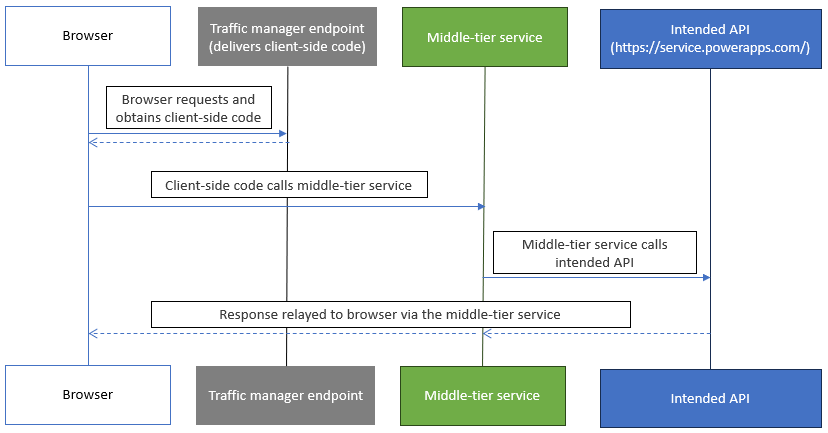
Since this is one of many first-party Microsoft applications, no additional consent was required to initiate the attack. Nevertheless, the legitimate version of the application uses the getExternalData API for proxying a request to a set of limited downstream APIs.
Legitimate application flow (Source: Secureworks)
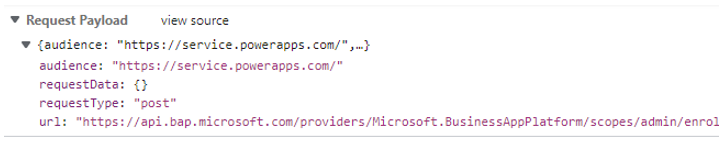
The requested URL of getExternalData (https: //<middletierservice>/api/GetExternalData) consists of three payload parameters namely ‘url‘, ‘requestData‘, and ‘requestType‘ and requested token ‘audience‘. With the help of the middle-tier service, the Power Platform downstream API and the Azure AD Graph API were accessible.
Request from client to middle-tier service (Source: Secureworks)
Threat actors abuse these platforms by redirecting a victim to a malicious server. Victims who visit them through the Azure AD have the authorization code in the URL, which is then exchanged for access tokens by the malicious server.
Threat actors then use the server to call the middle-tier service with the access token and the intended API.
DocumentGet a Demo
With DoControl, you can keep your SaaS applications and data safe and secure by creating workflows tailored to your needs. It’s an easy and efficient way to identify and manage risks. You can mitigate the risk and exposure of your organization’s SaaS applications in just a few simple steps.
Power Platform Privilege Escalation
Power Platform is a collaborative platform introduced by Microsoft with low-code tools to automate processes and other useful solutions for different use cases. It also provides integration with services like GitHub and other apps.
However, an API to this platform allows users to manage environments, change the settings, and get information about capacity consumption. Since this platform can be accessed by crafting the abandoned URL, it allows users to escalate their privileges.
It can also be used to abuse its administrative capabilities by creating an application user with a system administrator role or deleting the environment with an HTTP delete request.
Azure AD Graph API
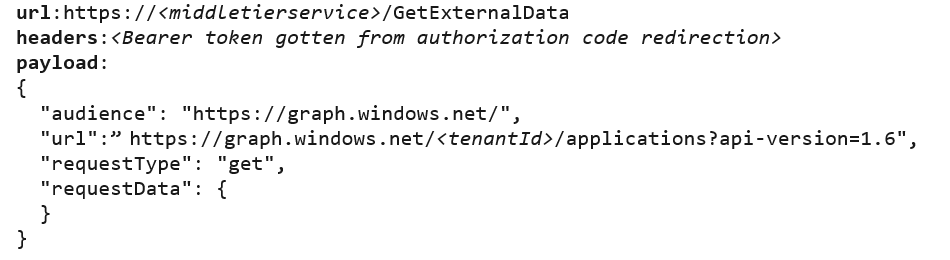
In the case of Azure AD Graph API access, threat actors accessing them via the middle-tier service are limited to read-only access. Threat actors can only gather information but cannot write on the system. Though this serves as a protection, they can still gather additional information about the environment for initiating further attacks.
Request used for reading Azure AD (Source: Secureworks)
Furthermore, it was detected that even after deleting the first-party application, the issue is not addressed since the application has been pre-consented for all tenants.
Access token issuing can be addressed by disabling users’ sign-in ability and nullifying other legitimate application usage. For detailed information, Secureworks has provided a complete report.
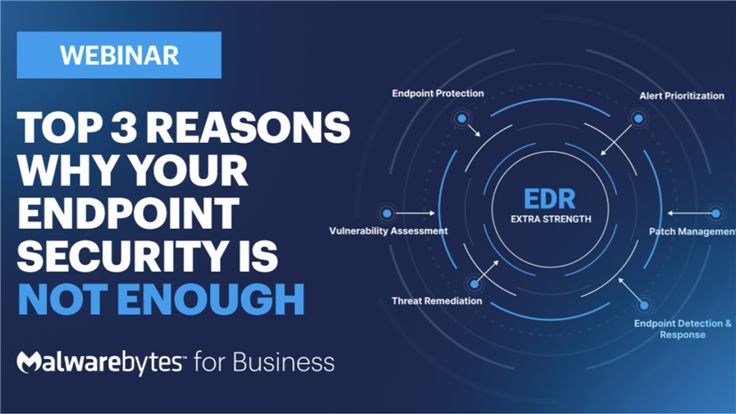
Join our upcoming webinar and learn about weaknesses in your current endpoint security setup and how to address them.
Despite widespread deployment of endpoint protection solutions, cyberattacks continue to make headlines, affecting organizations of all sizes and sectors. Recent statistics reveal that 70% of companies were impacted by ransomware last year (State of Malware Report 2023, Malwarebytes), and 83% experienced more than one data breach.
Given the existence of so many successful attacks in the past year, the question remains: How can organizations best protect themselves in a rapidly evolving threat landscape?
On September 7th, join Alan Radomsky, Vice President of Solutions Engineering at Malwarebytes, and Kenneth Tom, Director of Global Product Marketing at Malwarebytes, for an insightful webinar on how can organizations level up their security to better avoid cyber attacks.
Key topics to be discussed include:
Identifying weaknesses in your current endpoint security setup
Exploring new innovations to bridge security gaps
Strategies for achieving security goals within budget constraints
Expert Speakers
Alan Radomsky
Alan Radomsky has 23 years of experience in the cybersecurity industry, serving various sectors including Finance, Retail, Manufacturing, Education, Healthcare, and Government. A 5-year Malwarebytes veteran, he possesses in-depth technical expertise to help organizations navigate the complex threat landscape.
Kenneth Tom
Kenneth Tom leads product marketing efforts for Endpoint Detection and Response at Malwarebytes. He brings over 20 years of product management and product marketing experience across numerous cybersecurity technologies, working with industry-leading companies.
Event Details
Title: Top 3 Reasons Why Your Endpoint Security Is Not Enough
Date: September 7th
Time: 10:00 am PT / 1:00 pm ET
Duration: 1 hour
Don’t miss this opportunity to gain valuable insights into improving your organization’s security posture. Register today!
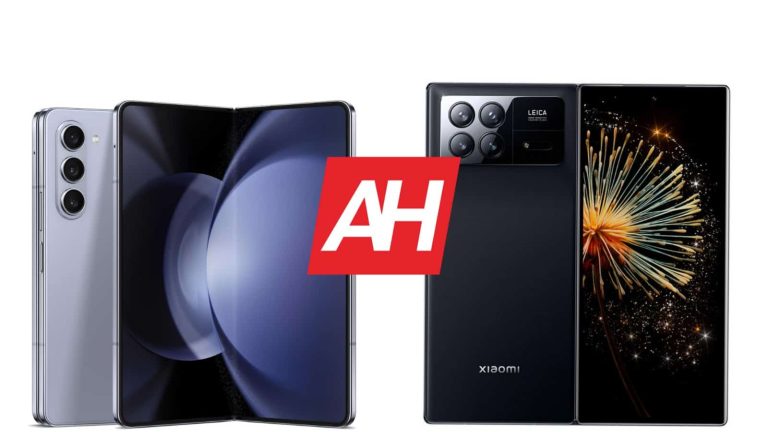
In this article, we’ll compare two brand new foldable smartphones, the Samsung Galaxy Z Fold 5 vs Xiaomi MIX Fold 3. The first one launched at the end of last month, while the second one arrived in mid-August. Both of these phones are book-style foldables, and are essentially competing for similar types of users. Unfortunately, though, the Xiaomi MIX Fold 3 is not available globally, the only thing you can do is import it.
Having said that, the Xiaomi MIX Fold 3 does have some advantages over the Galaxy Z Fold 5, which should make this comparison rather interesting. Samsung’s foldable has its upsides too, of course. That being said, we’ll first list their specifications, and will then compare the two phones across a number of categories. Let’s get started.
– Screen size (main): 7.6-inch Foldable Dynamic AMOLED 2X display (120Hz, HDR10+, 1,750 nits) 8.03-inch Foldable LTPO OLED+ (120Hz, HDR10+, Dolby Vision, 1,300 nits) – Screen Size (cover): 6.2-inch Dynamic AMOLED 2X (120Hz) 6.56-inch AMOLED (120Hz) – Display resolution (main): 1812 x 2176 2160 x 1916 – Display resolution (cover): 2316 x 904 2520 x 1080 – SoC: Qualcomm Snapdragon 8 Gen 2 for Galaxy Qualcomm Snapdragon 8 Gen 2 (overclocked) – RAM: 12GB (LPDDR5X) 12GB/16GB (LPDDR5X) – Storage: 256GB/512GB/1TB (UFS 4.0) 256GB/512GB/1TB (UFS 4.0) – Rear cameras: 50MP (wide, f/1.8 aperture, Dual Pixel PDAF OIS), 12MP (ultrawide, 123-degree FoV), 10MP (telephoto, 3x optical zoom) 50MP (wide, f/1.8 aperture, PDAF, OIS), 10MP (ultrawide, 120-degree FoV), 10MP (telephoto, 3.2x optical zoom), 10MP (telephoto, 5x optical zoom) – Front cameras: 4MP (under display, main display, f/1.8 aperture), 10MP (cover display, f/2.2 aperture) 20MP (main & cover display, wide, f/2.3 aperture) – Battery: 4,400mAh 4,800mAh – Charging: 25W wired, 15W wireless, 4.5W reverse wireless (no charger) 67W wired, 50W wireless (charger included) – Dimensions (unfolded): 154.9 x 129.9 x 6.1mm 161.2 x 143.3 x 5.3mm – Dimensions (folded): 154.9 x 67.1 x 13.4mm 161.2 x 73.5 x 10.9mm – Weight: 253 grams 255/259 grams – Connectivity: 5G, LTE, NFC, Wi-Fi, USB Type-C, Bluetooth 5.3 5G, LTE, NFC, Wi-Fi, USB Type-C, Bluetooth 5.3 – Security: Side-facing fingerprint scanner – OS: Android 13 with One UI Android 13 with MIUI Fold 14 – Price: $1,799 CNY8,999 ($1,239) – Buy: Samsung Xiaomi (China only)
Samsung Galaxy Z Fold 5 vs Xiaomi MIX Fold 3: Design
Both of these devices are made out of metal and glass. They are both also rather tall and narrow when folded, though the Galaxy Z Fold 5 takes the narrow aspect to a whole new level. The Xiaomi MIX Fold 3 has sharper corners, while both have thin bezels around their cover displays. There is also a display camera hole on each of the two cover displays. The Xiaomi MIX Fold 3 has a display camera hole on the main panel, while the Galaxy Z Fold 5 hides it under the display.
Having said that, both smartphones do fold flat, but the Xiaomi MIX Fold 3 is much narrower when folded. It measures 10.9mm when folded, compared to 13.4mm of the Galaxy Z Fold 5. It’s also thinner when not folded at 5.3mm, compared to 6.1mm. The Xiaomi MIX Fold 3 is a larger phone overall, which is not surprising considering it has larger displays. What is surprising is the fact that it weighs exactly as much as the Galaxy Z Fold 5, well, a couple of grams more, but the difference is negligible.
Their backsides look entirely different. The Galaxy Z Fold 5’s is flat, and there are three vertically aligned cameras included in the top-left corner. The Xiaomi MIX Fold 3 has a camera island in the upper portion too, with four cameras, and Leica lenses. That portion of the phone is actually raised, as the backplate raises gradually to reach it. The Galaxy Z Fold 5 does come with an IPX8 rating for water resistance, while the Xiaomi MIX Fold 3 does not.
Samsung Galaxy Z Fold 5 vs Xiaomi MIX Fold 3: Display
The Galaxy Z Fold 5 features a 7.6-inch 2176 x 1812 main display. That is a foldable Dynamic AMOLED 2X panel with a 120Hz refresh rate. It also supports HDR10+ content, and has a slightly higher screen-to-body ratio than the Galaxy Z Fold 5. The max brightness here is 1,750 nits The cover display on this phone is a 6.2-inch 2316 x 904 Dynamic AMOLED 2X panel with a 120Hz refresh rate. This panel is protected by the Gorilla Glass Victus 2, and has a 23.1:9 aspect ratio.
The Xiaomi MIX Fold 3, on the flip side, includes an 8.03-inch 2160 x 1916 Foldable LTPO OLED+ display. That panel has a 120Hz refresh rate too, and can project up to 1 billion colors. HDR10+ is supported here, as is Dolby Vision. This display can provide you with 1,300 nits of brightness, max. The cover display measures 6.56 inches, and has a 2520 x 1080 resolution. It offers a 21:9 aspect ratio, and it’s protected by the Gorilla Glass Victus 2. This is an AMOLED panel with a 120Hz refresh rate, and it does support HDR10+ content, and Dolby Vision. It goes up to 2,600 nits of peak brightness.
All four displays on these two phones support a 120Hz refresh rate, and all four of them are quite good. The main display of the Galaxy Z Fold 5 has the advantage of being brighter than the Xiaomi MIX Fold 3’s, but the cover displays deliver an entirely different story. All displays are bright enough, though, and they offer a good touch response. The viewing angles are also quite good, and the blacks are deep. All displays are also quite vivid, no complaints here.
Samsung Galaxy Z Fold 5 vs Xiaomi MIX Fold 3: Performance
The Snapdragon 8 Gen 2 fuels both of these smartphones, even though it comes with different brandings. Both versions of the chip are overclocked, basically, not the standard Snapdragon 8 Gen 2 models. In addition to that, you’ll find 12GB of LPDDR5X RAM inside the Galaxy Z Fold 5, and up to 16GB of LPDDR5X RAM inside the Xiaomi MIX Fold 3. They both offer UFS 4.0 flash storage too.
When it comes to regular, everyday performance, both phones shine. They’re very smooth, and handle multitasking really well, along with anything else you can think of. Things are a bit different in the gaming department, though. They both do a good job, but the Xiaomi MIX Fold 3 has a tendency to heat up more, and that can be an issue with longer gaming sessions, especially if graphically demanding titles are in play. That’s something to keep in mind, though Xiaomi could try to fix that via software. In general, however, both smartphones offer really good performance.
Samsung Galaxy Z Fold 5 vs Xiaomi MIX Fold 3: Battery
There is a 4,400mAh battery inside the Galaxy Z Fold 5, and a 4,800mAh unit inside the Xiaomi MIX Fold 3. The battery life is good on both phones, but the Xiaomi MIX Fold 3 wins easily in that regard. The Galaxy Z Fold 5 provided us with under 7 hours of screen-on-time, most of the time. We managed to reach that mark, though, sometimes. The Xiaomi MIX Fold 3, on the flip side, goes over the 8-hour screen-on-time mark if you need it to.
Do note that your mileage may vary, though. You’ll be using different apps, under different signal strengths, and in different ways. There are also two displays to consider here, on both phones. So… you may get entirely different results. The Xiaomi MIX Fold 3 should be able to provide you with better battery life regardless, though.
The charging department is another spot where the Xiaomi MIX Fold 3 beats the Galaxy Z Fold 5, easily. It supports 67W wired, and 50W wireless charging. The Galaxy Z Fold 5 offers support for 25W wired, 15W wireless, and 4.5W reverse wireless charging. The charging speeds are not even close. On top of everything, the Xiaomi MIX Fold 3 does come with a charger in the box too, unlike the Xiaomi MIX Fold 3.
Samsung Galaxy Z Fold 5 vs Xiaomi MIX Fold 3: Cameras
The Galaxy Z Fold 5 includes a 50-megapixel main camera (PDAF, OIS), a 12-megapixel ultrawide unit (123-degree FoV), and a 10-megapixel telephoto camera (3x optical zoom, PDAF, OIS). The Xiaomi MIX Fold 3 has a 50-megapixel main camera (f/1.8 aperture, OIS, PDAF), a 12-megapixel ultrawide camera (120-degree FoV), and two 10-megapixel telephoto units. Both offer PDAF and OIS support, one comes with 3x optical zoom, while the other offers 5x optical zoom. Leica lenses are also in use here.
While the Galaxy Z Fold 5 provides really good pictures, the Xiaomi MIX Fold 3 has it beat. Xiaomi really managed to cram in respectable hardware here. The images from the main camera are just vivid enough, not too much, while the Galaxy Z Fold 5 can go overboard in that regard, especially in some scenarios. The dynamic range is quite good on both phones. Their ultrawide cameras do a good job, that goes for both of them, while the Xiaomi MIX Fold 3 does take the upper hand in the telephoto department.
It takes better zoom shots across the board, it doesn’t really matter how far you zoom in. The Galaxy Z Fold 3 does compete well up to 3x, though. In low light, both smartphones do a good job, though the Xiaomi MIX Fold 3 does keep the shadows a bit darker to give you a more realistic look.
Audio
If you need a headphone jack on your phone, well, neither of these two devices offers one. You’ll need to rely on their Type-C ports for wired audio connections. If you prefer to go wireless, however, you’ll be glad to know that both offer Bluetooth 5.3 support.
Both smartphones are also equipped with stereo speakers, and both sets are above average in terms of loudness. They’re more than loud enough, and the sound output is well-balanced. The sound is rich, and will likely please most of you.
According to a well-known analyst, Ming-Chi Kuo, the iPhone 15 Pro Max (aka Ultra) will be the most popular iPhone 15 model, for one specific reason. That reason is really not hard to guess, as there’s one feature this phone will have that no other iPhone 15 variant will offer.
The iPhone 15 Pro Max to be the most popular model for one specific reason
We are, of course, talking about the phone’s periscope telephoto camera. The vanilla models won’t offer it, and neither will the iPhone 15 Pro, rumors claim. The iPhone 16 Pro will make that jump next year, but not the iPhone 15 Pro.
The analyst claims that the iPhone 15 Pro Max will account for 35-40% of orders for the iPhone 15 series. Needless to say, that’s a huge claim, and a large chunk of the iPhone 15 series sales. He actually expects this phone to sell 10-20% better than its predecessor.
Now, based on what we know so far, Largan is allegedly the only periscope module supplier for the device. Largan is the company that supplies Huawei with periscope lenses, by the way.
The ‘Pro’ models will be lighter than their predecessors thanks to the titanium frame
Other than that periscope camera, larger body, display, and battery, the iPhone 15 Pro Max will essentially have the same improvements as the iPhone 15 Pro. Both will offer thinner bezels this time around, and a frame made out of titanium. That will make them lighter.
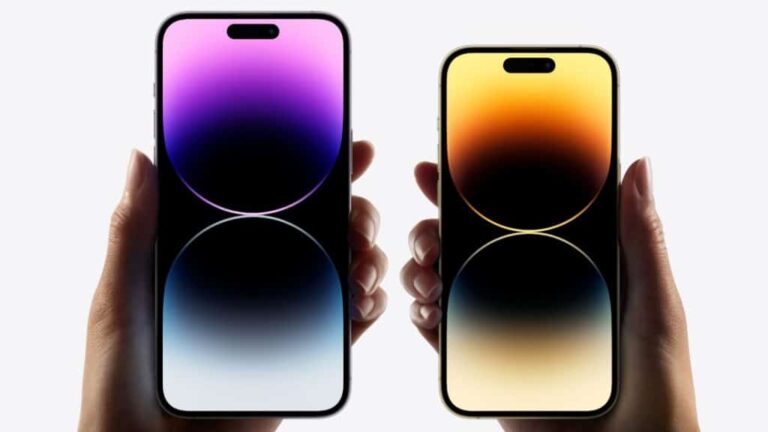
All iPhone 15 series devices will include a Dynamic Island cutout this time around. Those four devices will also debut a Type-C port on iPhones. Apple was kind of forced by the EU to make the switch.
Apple announced the iPhone event yesterday. The company announced that it will be held on September 12, as we expected. Pre-orders are tipped to start on September 15, and the devices will become available to purchase on September 22.