From a recent post to the brand’s X page, it is clear that a new Sony Xperia smartphone is coming. This device will launch in Japan on September 1st, which is just a few days away. The launch event will be live-streamed via Sony’s official YouTube channel for all to watch and engage with.
However, the post giving away these details doesn’t say anything regarding the device. So fans are left in the dark regarding what they should expect from this coming product launch event. But from the images given, it might be safe to expect this product to be a smartphone, as it shows off what seems to be a smartphone rear camera lens.
Due to the lack of details on the said product, many might say that this launch event will bring an already existing product to the global market. However, that isn’t the case, as there’s still one more important device in the brand’s line-up that is still yet to launch. That device is none other than the Xperia 5 series entry for this year.
Sony Xperia smartphone entry, the 5 V, will take on the competition in a few days
Already, netizens have got to see the Xperia 1 V and 10 V smartphones. The first is Sony’s most expensive and feature-packed smartphone, while the latter is the more affordable entry. In terms of pricing and features, the coming Xperia 5 V will sit between the 1 V and the 10 V.
Sometime last month, a promotional video of this device found its way to the internet. A Reddit user was able to get their hands on this video and share it via their page. This video showed off the design of this device with its dual camera setup and Sony finish.
The design concept and color choice of the video also match that of the image Sony shared via their X page. For specifications, there is little known about the coming device, but it will be a flagship device. From its Geekbench listing, it is clear that this device will launch with the Snapdragon 8 Gen 2 processor.
It’d also launch, packing 16GB worth of RAM capacity that might be paired up with up to 1TB storage. Another leak concerning this device also claims that it’d support 33W fast charging. This charging speed might charge up a 5000mAh battery capacity which it might carry over from its predecessor.
Following typical Sony fashion, this might be a very compact device with a sub-6.5-inch screen size. In comparison with its predecessor, this device will improve upon its performance and storage. Other details on its specifications will be made available as the coming Sony Xperia smartphone launch date approaches.
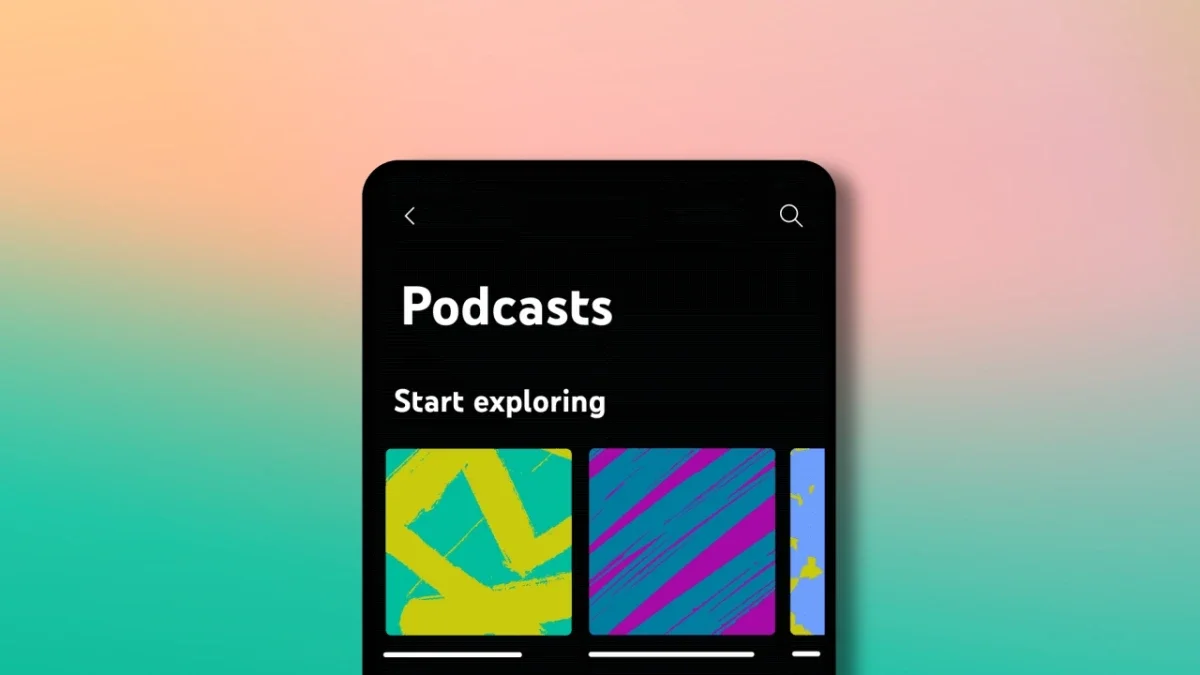
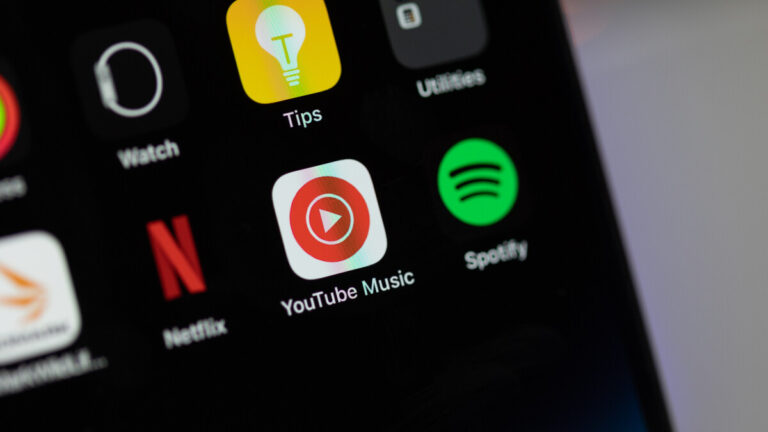
YouTube is expanding its podcasting offerings by adding support for RSS uploads and private feeds in YouTube Music. RSS uploads will allow podcasters to easily submit their podcasts to YouTube without having to use a third-party service, thus making it easier for podcasters to get their shows on YouTube and reach a wider audience.
The news was confirmed by YouTube product lead Steve McLendon to TechCrunch during the Podcast Movement conference this week. The upcoming podcasting features are in addition to the already consistent stream of updates and features being added to the YouTube and YouTube Music platforms.
The addition of RSS feeds is a significant step for YouTube in its efforts to become a major player in the podcasting space. These features give podcasters more control over how their shows are distributed and listened to, and they make it easier for listeners to find and discover new podcasts.
Embracing RSS feeds will allow users of the platform to better curate their favorite podcasts lists and follow lesser known or private podcasts that are not placed front and center. Spotify does not currently offer this feature, as the company prefers for its users to opt for Spotify’s own podcast subscriptions.
YouTube’s move to support RSS uploads and private feeds is a sign of the company’s growing commitment to podcasting. YouTube is already one of the most popular platforms for listening to podcasts, and these new features are likely to make it even more attractive to podcasters and listeners.
YouTube Music, for example, is becoming a more competitive product when it comes to music streaming. Supporting podcast features as well will position the app in a more level playing field with standalone podcast apps, such as the popular Apple Podcasts and Overcast, and ahead of Spotify when it comes to supporting private RSS feeds.
One of the biggest debates in the Android tech community this year had to do with Samsung Galaxy storage. Well, this might no longer be a debatable topic with the launch and rollout of Android 14 to devices around the world. Some users of Samsung Galaxy devices that have access to the Android 14 beta upgrade have noticed some changes that clear the air regarding storage.
Currently, a misrepresentation of system storage usage on Galaxy devices is getting users all worked up. With the Galaxy S23 series, their storage shows that system software uses up to 60GB of space, which is excessive. But this is a misrepresentation of how much storage the devices’ system software takes up, and it is in no way close to figures users are debating over.
The reason some users of this year’s flagship devices from Samsung are seeing these outrageous numbers in system storage usage is quite technical. It has to do with how smartphone storage works and has nothing to do with bloatware and storage mismanagement. Let’s now delve into this topic for a clearer understanding and also see how Samsung will fix the issue.
A technical fix to the Samsung Galaxy storage issue currently working fans up
A clearer understanding of how device storage and its software interpretation works will disperse user concerns. It all boils down to Gigabytes and gibibytes, which are two measurements for storage. You know the first is Gigabyte, but you might not be familiar with the latter.
These two are both measurements for RAM storage capacity, but they both have different powers. For the more popular Gigabytes, it measures storage in powers of 1024, which you might have heard of as well. But gibibyte is a bit different as it reads storage to the power of 1000 and this variation means storage figures might see a slight shift.
So the amount of Gigabyte storage on your device will reduce when converted to gibibyte. To cover this up, most manufacturers add numbers up to increase the storage back to the advertised state. So in your storage settings page, the addition to step things back up will reflect in various available categories.
Unfortunately, with the Samsung flagship devices for this year, this addition found its way to the system storage section. This doesn’t mean that the device’s system takes up that much space, but was just a software flaw and a misrepresentation. With the coming Android 14 upgrade, this issue will see a fix, reflecting the actual storage the Galaxy device’s system takes up.
Along with the launch of Android 14 will also come One UI 6.0 which will reflect this change on the storage settings. Some users like Max Weinbach have already begun noticing this change thanks to their One UI 6 beta upgrade. More users around the world will get this upgrade once Android 14 rolls out in the coming months.
The Xiaomi 13T Pro design surfaced in real-life images yesterday, thanks to NCC. That comes following the leak of the phone’s renders. Having said that, its sibling, the Xiaomi 13T, has just surfaced in an 18-minute video ahead of its launch.
The Xiaomi 13T appears in an 18-minute video prior to its launch
These two devices will, of course, launch together. In any case, this video has been shared by a Guatemalan YouTuber, Eufracio Lopez 502, and it has been embedded below the article.
You can get a really good look at the phone here, and also its software. The YouTuber goes through the menus on the phone, and also talks about various other aspects of the device.
The Xiaomi 13T will feature a 6.67-inch 2712 x 1220 1.5K AMOLED display. That panel will offer a 144Hz refresh rate, and a 480Hz touch sampling rate. The display is also said to offer a 2,880Hz high frequency PWM dimming, and up to 2,600 nits of peak brightness.
The MediaTek Dimensity 8200 will fuel the phone, while you’ll get 12GB of LPDDR5 RAM here. Xiaomi will also include 256GB of UFS 3.1 flash storage. That will likely be the only model in global markets, but we’ll see.
A 5,000mAh battery will be included, and 67W charging supported
Two SIM cards will be included, of course, and Android 13 too. Xiaomi’s MIUI 14 skin will be pre-installed on Google’s OS. A 5,000mAh battery will sit inside the phone, and support 67W wired charging. A charger will also be a part of the package.
A 50-megapixel main camera (Sony’s IMX707 sensor) will be backed by a 13-megapixel ultrawide camera (OmniVision OV13B10 sensor), and a 50-megapixel telephoto camera (OmniVision OV50D).
Bluetooth 5.3 will be supported here, while the Xiaomi 13T will ship with IP68 certification for water and dust resistance. The device will also include stereo speakers, and Dolby Atmos support.
The Xiaomi 13T is coming in Black and Blue color variants, and it’s expected to launch globally in September. The September 1 is rumored to be the launch date.
With devices coming out with more and more RAM, that’s a statement that you’ve probably come across multiple times. To the uninitiated, it could just be another number in the torrent of specs being flung at you when a new phone, tablet, or computer comes out. But, what is RAM? Why is it important? How does having more of it make a device more powerful?
This is what we’re going to explain here. In this piece, we’re going to go over these questions and more that you might have about RAM. Knowing this could be make-or-break when choosing your next device. This could help you understand what’s running your computer, gaming console, phone, or other device. So, let’s dive in.
What is RAM?
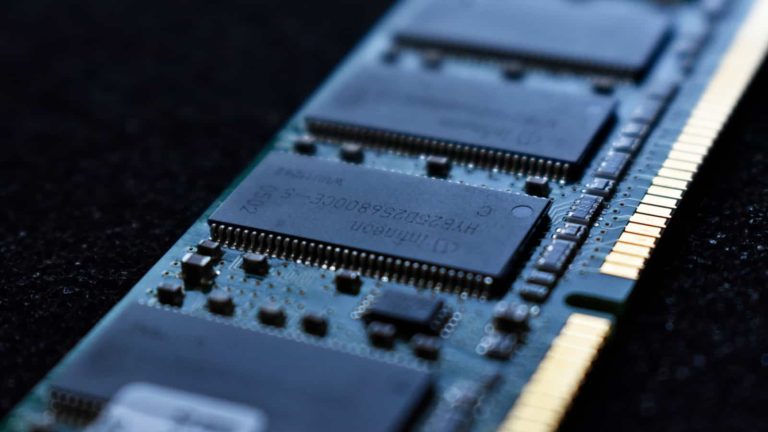
So, let’s start off with what this term means. RAM is an acronym meaning Random Access Memory. Just like your computer’s storage device (hard drive, SSD, SD card, flash drive, etc.), RAM stores data in the form of binary code. However, it serves a different purpose than storage.
Storage is perfect for storing data to be held for extended periods of time. When you install a program on your computer, (let’s say a paint program) you’re going to be using it multiple times over an extended period of time. That program and its files are saved to the storage.
However, RAM is all about the here and now. Let’s say you want to paint using the program. Well, what’s happening? You’re picking colors, drawing lines, adjusting the UI, changing settings, fixing mistakes, picking tools; you’re making quick changes in real-time. The issue is that you can’t access and make changes to your storage that quickly. You need a form of memory that can be changed and affected at a moment’s notice.
This is where RAM comes in. As per its name, it can be accessed randomly. When you open the program, that program is loaded into the RAM so that everything you do will be reflected in real-time. Everything you do in the program affects what’s loaded into the RAM. This doesn’t only apply to programs; many of the basic functions that keep your device’s operating system running are loaded into RAM. If you didn’t have RAM, your device wouldn’t be able to run.
Why more RAM is better
Let’s use an analogy; think of your device as a house. You store a lot of furniture, appliances, devices, and other items in the living room. This is where you live, so you can readily access these items at a moment’s notice, and you NEED to. Now, think of the basement as the storage.; you’re keeping items down there for long periods of time, and you don’t need to access them at a moment’s notice.
When you use programs on your computer, you’re loading data onto your RAM. Imagine this as placing more items inside your living room. The more programs you load up, the more RAM you use. So, imagine loading more items into your living room.
Eventually, you’re going to run out of space. When you run out of RAM, your device will start closing programs you had running before to make room for the programs you’re loading in now. This is similar to taking the older items and placing them outside to make room for new furniture.
So, as you can imagine, having more RAM is just like having a larger living room. The more you have, the more programs you can have running without needing to close.
Where does the basement come into play? Well, some devices will actually use some of the storage as backup RAM. A device could have 8GB of RAM and actually borrow several gigabytes from the storage.
Circling back to our house analogy, when the living room gets full, instead of chucking the items on the lawn, you’ll place some of the furniture in the basement to access later. Not every device does this, but it can really help.
What does the “DDR” stand for?
When you see that a new device comes out, you’ll sometimes see the term “DDR”. For example, you’ll see “16GB of DDR5 RAM”. But, what does that mean? Why do companies want you to get hyped about higher DDR numbers?
First, a quick lesson in clock speed
When you’re looking at a CPU’s specs, you’ll typically see its clock speed, a number measured in hertz (Hz), kilohertz (kHz), megahertz (MHz), or gigahertz (GHz). That’s its clock speed. It’s the number of pulses a CPU gives off every second. We won’t dig too deeply into that, as that’s not relevant to the article (here’s an informative video). When each pulse happens, also called a clock cycle, the CPU sends out one or several instructions.
Clock cycles are divided into upbeats and downbeats. Each cycle starts on an upbeat, and the halfway point between each pulse is a downbeat. It’s analogous to clapping hands. When your hands make contact, it’s an upbeat and when your hands are furthest apart, it’s a downbeat.
With that out of the way, let’s talk about DDR
DDR, or Double Data Rate, RAM was invented in 2000, and it took off after just a couple of years. Before, computers used SDRAM (Synchronous Dynamic Random-Access Memory). Both of these terms deal with how and when the RAM sends data to the CPU.
This is where the above lesson comes into relevance. SDRAM was perfectly synced with the CPU; the RAM chip would only send data to the CPU once every clock cycle.
Enter DDR
However, DDR RAM (Dual Data Rate) broke that mold. Not only would it send data on the upbeat, but it’d also send data on the downbeat. This doubled the speed of the RAM, making the rate you can access it much faster.
As time went on, there were new generations of DDR RAM to come out. Each generation increased the speed of the RAM. DDR2 doubled the speed of DDR, DDR3 doubled the speed of DDR2, and so on.
Not only did future generations of DDR RAM increase the speed, but they also decreased the power consumption. While they’re small, the chips in your device consume a lot of energy. Every time the RAM sends data to the CPU, it uses a little bit of energy. One cycle doesn’t consume a lot of energy, but remember, cycles happen millions and billions of times every second. That doesn’t matter as much if your device is plugged in, but it can be a factor if your device is on battery.
DDR 1 RAM has an operating voltage of about 2.6V and DDR5 RAM has an operating voltage of 1.1V. That’s about a 56% reduction in power consumption.
What about LPDDR RAM?
LPDDR (Low-Power Dual Data Rate) RAM is designed for mobile devices like phones and tablets. While it has “DDR” in its name, the technology has actually evolved independently from DDR technology. In fact, it’s actually closer to SDRAM in that it syncs with the CPU. It’s meant to consume less energy than DDR RAM, as it’s in devices that are battery-powered.
To wrap things up
That was a rundown of the memory that’s probably powering the device you’re reading this article on. Hopefully, you now have a deeper understanding. RAM technology will improve as time goes on, and you’re now equipped to know what’s coming next.
The very first HONOR Magic Vs2 info has just surfaced, as we’re waiting for the Magic V2’s global launch. As a reminder, the Magic V2 will launch globally on September 1, during an event in Berlin, as part of IFA.
The very first HONOR Magic Vs2 info surfaced, and it’s odd
Having said that, the Magic Vs2 has surfaced on the 3C authority in China. That website basically confirmed the device’s charging speed. The phone appeared with the model number ‘VCA-AN00’. This name allegedly belongs to the Magic Vs2, but we cannot confirm it just yet.
That being said, the website claims the phone will support a max charging speed of 35W. That is considerably slower than what its predecessor offers (66W). Needless to say, that’s very odd.
So, what’s happening here? Is it an error on the 3C’s end, or perhaps is this model number wrong? Well, it doesn’t have to be either one, to be quite honest. The Magic Vs2 is rumored to be an outwards-folding foldable, so that could be the reason for this change.
HONOR could make a huge design change with the Magic Vs2
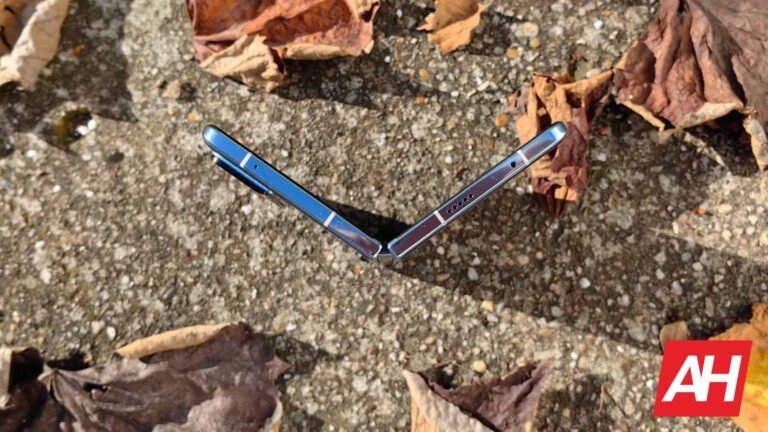
The Magic Vs was just a better variant of the Magic V, but with the Magic Vs2, HONOR could make a huge change. Unlike book-style foldables HONOR has been releasing thus far, this phone could feature an outwards-folding design.
That design change could have forced HONOR to push the charging speed down, due to heating. We’ll have to wait and see, though, as we’re only guessing at this point. Who knows, perhaps the source is wrong, and this is not the Magic Vs2 at all.
In any case, the Magic V2 managed to get a lot of attention when it launched. Why? Well, because it became the thinnest book-style foldable in the market, and it still is. It’s also one of the lightest. Despite all that, HONOR managed to cram a 5,000mAh battery on the inside, thanks to new battery tech, and a new hinge.
Google and its services are the heart of your Android experience. You can view and change settings pertaining to your Google account right from your Google settings page. According to Android analyst Mishaal Rahman, the Google settings page will get a massive revamp.
The changes to the page really revolve around making the interface less cluttered. Also, it will bring the app more in line with Material You. Right now, the settings consist of a straightforward list of services and settings. At the top of the page, you’ll see your profile picture with the option to view relevant information about your account.
The Google settings page revamp will bring a big change
While this revamp will bring a new look to the page, there’s good news for people who want a familiar experience. When you open the page, you’ll see a new two-tabbed look. The first tab will show you a collection of recommended settings. We’re not sure if these recommended settings will be the same for everyone or if they’ll be catered to the user.
In this tab, we see a grid view with large rounded rectangular buttons. Up top, there’s the Google One section showing you how much storage you used up with the option to manage the settings. Under that, we see other options like Find My Device, Google Wallet, and the Password Manager.
Google Play Services is starting to roll out a big redesign of its settings page. I’m referring to the page you access by going to Settings > Google.
Now, instead of showing the full list of settings by default, you’ll get quick access to a couple of key settings in the… pic.twitter.com/zQs2bhAHb0
This is to offer you a quick way to access certain settings. It eliminates the need to search through the settings.
However, if you don’t find the settings in the first tab, then don’t worry. The second tab will show you the classic list view for the settings page. There, you’ll have the same experience that you had before.
This revamp isn’t really to change the aesthetic of the app. It’s mostly to help you find certain settings quickly. The update is rolling out, but there’s a chance that you won’t see it right away. It’s an update that will come through the Google Play Services.
YouTube Music is not exactly known for having the latest and greatest features when compared to competing apps such as Spotify. However, the app has been making good progress this year and has finally added a long-promised feature to its arsenal — live lyrics.
The real-time lyrics feature on YouTube Music has been in the works for quite sometime, including a limited roll out to test users that reported on this feature back in April. Since then, there haven’t been any additional updates on its progress, to the point where many started to wonder if the feature had been nixed.
However, progress on the feature continued and it is now seeing a wider rollout to YouTube Music users on Android and iOS. This was originally reported on by 9to5Google, adding that live lyrics continue to roll out for more songs on versions 6.15 (Android) and 6.16 (iOS) of the app.
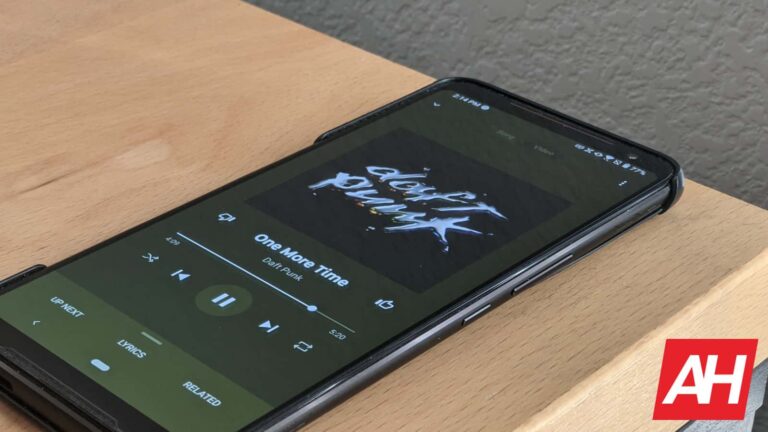
YouTube Music Live Lyrics on Android
Unfortunately, live lyrics are not yet available when you are casting your music or when listening on the web or TV-connected apps. The feature is also not available for every single song on the platform, although it looks like support is being added to more songs as time progresses.
Live lyrics are likely powered by MusixMatch, a popular lyrics provider that partnered with Google earlier last year. The lyrics are displayed in a scrolling format, so you can easily follow along with the song. You can also tap on the lyrics to highlight them and rewind or forward to that specific spot where that lyric appears on the song.
It’s good to see Google following through on adding more features to YouTube Music and making this app a worthy replacement to those looking to move away from their current music streaming app. A YouTube Premium subscription includes access to YouTube Music, so essentially, if you are paying for Premium you should be able to save some money and use your already paid for subscription to the Music app as well. Feature parity with other apps is the next step to make that a reality for most.
In YouTube Music, you’re able to view a song’s lyrics while you’re listening to it. That’s a useful feature to have, but the company has been working on making it more fun for a few months. After a while of waiting, YouTube Music is finally rolling out live lyrics.
We’ve known that YouTube has been working on this feature for some time. We first heard about it in April, and we’ve been wondering when the company was going to launch it. However, 9To5Google has spotted this feature in the wild, and that shows that YouTube is in the process of releasing it to the public.
YouTube Music is rolling out live lyrics
Live lyrics are a nice way for you to know where you are in the song when you’re viewing the lyrics. You never know when you’ll lose your place.
This new feature brings a new look to the lyrics UI. Instead of seeing a solid background color, you’ll see through the panel to the album art, only it will be heavily blurred. The words will float over the background.
The text will light up as the song progresses, letting you know where you are in the song. The rest of the text will remain grayed out. While the lyrics are timed to the music, you’ll still be able to scroll further in the lyrics to see what words are coming up. However, when the song reaches the next line, it will scroll back to the current line.
One little detail is that you’ll see a little musical note in between some of the lines. This indicates sections when there’s just music with no lyrics. A neat feature is that, if you tap on a line in the lyrics, the app will navigate to that point in the song.
It’s still a work in progress
We were able to see this feature, but it’s not there 100%. There are still songs on the platform that don’t have lyrics available, so that will remain a problem.
One thing we noticed was that the live lyrics aren’t available for all songs. You’re likely to still see songs with the older style of lyrics. We’ve seen a case where one song will have the live lyrics, but another song (a song that’s in the same album, mind you) would have the older lyrics.
As time goes on, it’s going to make it to more songs.
The Huawei Nova 11 Pro is Huawei’s latest mid-ranger. This is actually an upper-mid-range smartphone, which is supposed to be the last step before reaching Huawei flagships. In this review, we’ll see what the Huawei Nova 11 Pro is capable of, and if it’s worth getting over one of Huawei’s flagship smartphones. The phone certainly isn’t cheap, but to some of you, that price may be worth it. There is a lot to talk about here, as the device itself has a really nice design, and very capable cameras, plus a number of other positives. Not everything is perfect, though, of course. So… let’s dive in!
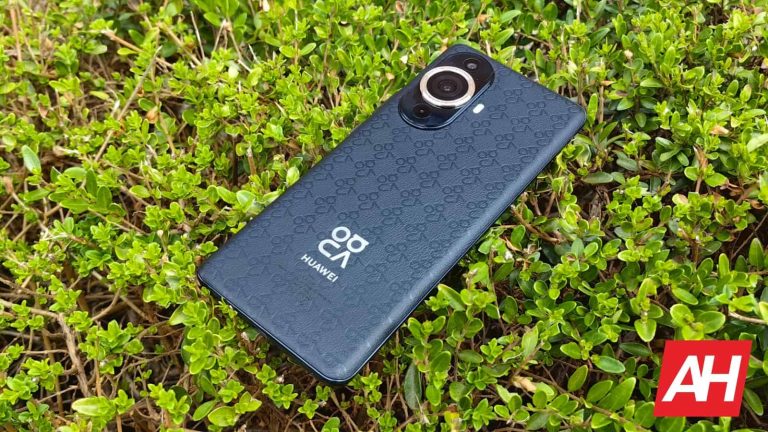
The Huawei Nova 11 Pro hits the right spot when it comes to design. Huawei did everything right here, basically. The phone doesn’t feel too large despite its large 6.78-inch display, and that’s quite a feat. It feels great to hold, and use, for several reasons. The curves are included in all the right places, the display is curved, so the phone is not too wide, and on top of that, its weight is right where it should be. This phone weighs 188 grams, and comes with an eco-leather backplate.
It comes in two color options
The phone comes in Black and Green models, and unfortunately, we ended up reviewing the black one. The green one looks outstanding in images, though, and its green eco-leather backplate is combined with a metallic frame which has a green tint on it. The black model has a shiny black frame, which is combined with a black eco-leather backplate. That variant also looks very nice, but not nearly as flashy as the green model. In any case, Huawei refers to this backplate as ‘nova Monogram Vegan Leather Design’. There is a pattern (Nova logo) imprinted on that leather, and you will feel it. It feels great to hold and use, and it helps a lot when it comes to grip.
There is a pill-shaped camera hole on the front, for a good reason
On the front, a pill-shaped cutout is located in the top-left corner, while the bezels are very thin. All the physical buttons are placed on the right-hand side, while there is an interesting-looking camera island included on the back. It is placed in the top-left corner, and the main camera is placed in the middle, in between ultrawide and telephoto cameras. That main camera has a noticeably larger sensor than the other two shooters. This camera design fits nicely with the overall design of the phone, that’s for sure.
The phone feels smaller than it is, which is a good thing
The phone measures 164.24 x 74.35 x 7.88mm, but despite that, it doesn’t feel as big due to the curves and the weight. All in all, this is probably the best-feeling smartphone with a 6.78-inch display that I’ve ever handled, I cannot emphasize that enough. Huawei nailed it when it comes to usage comfort.
Accessories
Huawei did include a case in the box here. You will find a regular soft silicone aka gel case on the inside. It’s one of those see-through cases that many Chinese OEMs included, and it’s a great addition in my opinion. This gives you great protection, at least until you get something else that you like more. Even if you stick with this one, that’s perfectly fine. It offers enough grip, and it’s actually quite thin, so it doesn’t add much bulk to the device itself. Every smartphone OEM should include something like this in the box.
Huawei Nova 11 Pro Review: Display
There is a 6.78-inch display included on this handset. It offers a resolution of 2652 x 1200 pixels, and it’s an OLED panel with a 120Hz refresh rate. You’re also getting a 300Hz touch sampling rate here, which is always nice to see, as most smartphones with a 120Hz refresh rate end up offering a 240Hz touch sampling rate. That display can also project up to 1 billion colors, and it does support HDR10 content. You’re also getting a rather high screen-to-body ratio here (91.1%, approximately), and the panel is protected by Huawei’s Kunlun glass, which has proven to be really tough on the Mate 50 Pro.
It’s not the brightest display out there, but it looks really good
This display managed to jump to over 700 nits of brightness under auto settings. That’s not flagship-grade brightness, but the panel is not dim by any means. It has a wide color gamut, but you won’t get full DCI-P3 coverage here. Having said that, the colors are not the most accurate but the display does look good. It’s vivid, sharp, and a 120Hz refresh rate has been incorporated well here, with the hardware.
You can choose between Normal & Vivid modes
You can choose between Normal and Vivid modes for the display, so you do get some customization in that regard. There are also three options for the refresh rate settings. You can choose between standard (60Hz), high (120Hz), or Dynamic. We used the phone on Dynamic, and it turned up the refresh rate when needed flawlessly. All in all, considering the sector in which it’s competing in, the display is actually quite good. It could be better in terms of color accuracy, but that’s not something many people will notice or care about.
Huawei Nova 11 Pro Review: Performance
The Huawei Nova 11 Pro is equipped with the Snapdragon 778G SoC, a 4G version of it. That is due to the US ban issued against Huawei. It’s a long story, but you’re probably at least somewhat familiar with it. That being said, this chip has been out in the market for quite some time. Despite that, however, it still offers really good performance. It’s around the Snapdragon 7 Gen 1 in that regard, which is not bad. It’s not exactly the most powerful mid-range chip out there, not even close, but it offers good performance. In collaboration with Huawei’s EMUI, and 8GB of LPDDR5 RAM included here.
The phone offers great performance across the board
The phone is very fluid, generally. Huawei’s animations are great, and this chip is more than powerful enough to handle everything. Even during heavier multitasking, it performed really well. Some of you are probably wondering about games, though. Well, for a mid-range phone, it’s really good at gaming. I always say you should aim for a flagship-grade phone if you plan on playing graphically demanding games. That is true in this case too, though this phone can handle them. You may not be able to play them at the highest resolution or details, but it can handle pretty much anything. The vast majority of games will run very smoothly. I tried a bunch of games from AppGallery, just to test the phone out, and didn’t really notice any glaring issues. I was unable to test games like Genshin Impact, and so on, as the phone does not have access to the Google Play Store. The thing is, I wanted to experience the phone as a regular user will, so without sideloading, etc. You can, though, technically, sideload games that do not specifically require Google Play Services, or install one of the emulators available to run such games. More on that in the software section, though.
Huawei Nova 11 Pro Review: Battery
The Huawei Nova 11 Pro comes with a 4,500mAh battery. During our testing, the phone has proven to have good battery life, but not great. I lingered between 6.5 and 7 hours of screen-on-time on most days. There were also odd days when I was closer to 6 hours of screen-on-time. Your mileage may vary, of course, as is the case with every other phone. I played games only for testing purposes, but didn’t really spare the phone when it comes to usage.
The battery life is not bad, but it’s not outstanding either
One thing to note is that I used it in adaptive mode, so I allowed the phone to jump between refresh rates, I did not force it on 120Hz, there was no need. The phone did a wonderful job in that regard. Granted, if Huawei managed to squeeze in 4,800mAh or 5,000mAh on the inside, the battery life would be noticeably better. It’s not exactly bad as it is either, though, so… no complaints here.
This handset offers blazing fast charging
What about the charging, though? Well, 100W wired charging is supported, but there’s no wireless charging support here. With such fast charging, however, even if you end up lacking battery life at some point, a quick charge will fix all your problems. You can fully charge the device in under half an hour, and yes, the charger is included in the box. We managed to get a full charge in only 24-25 minutes, which is crazy fast, needless to say.
Huawei Nova 11 Pro Review: Camera
The Huawei Nova 11 Pro has two cameras on the back. It includes a 50-megapixel UltraVision camera (f/1.9 aperture), and an 8-megapixel ultrawide unit (f/2.2 aperture). A 2-megapixel depth sensor has been ditched, and that’s not a bad thing, exactly. The phone’s ultrawide camera actually doubles as a macro camera, in case you were wondering. When it comes to front-facing cameras, you’re getting a 60-megapixel ultrawide camera (f/2.4 aperture), and an 8-megapixel portrait camera (f/2.2 aperture). Needless to say, this is quite an interesting, and unique front-facing setup.
The main camera’s performance is really good
The camera performance from the main camera, during the day, is great, to say the least. The images do look quite natural, the processing is spot on. No, you will not find noise in such conditions, not at all. The dynamic range is also good. Now, we did notice some issues with hazing from time to time, due to white balance issues, but that didn’t happen often at all. It happened only sometimes, and only when the sun was really bright outside. The colors are great, and the images overall do look vivid. Do note that using the ‘AI’ mode in the camera will tune up the saturation. It’s not really needed, but if you want more saturated images, go for it. 2x shots also look really good, and are taken by the main camera, as a telephoto camera is not present here.
You’ll want to stick with the main camera in low light conditions
The ultrawide camera, during the day, well… it does a good job, but the end results look different than the ones from the main shooter. The colors look different, which is not great, as it’s always best when the same color rendition is retained. The camera does a good job, though. It produces enough detail, despite the fact it’s only an 8-megapixel sensor. The dynamic range is good too, but not on the same level as what the main camera offers. When it comes to macro shots, that ultrawide camera does a good job. We’d suggest sticking to a 1x option when shooting macros with the ultrawide camera, as you’ll get the best balance between shooting distance and details.
What about low light? Well, the photos from the main camera are good enough. The camera produces enough detail, and the images also end up well-exposed. It also has really good noise control, even in some extreme situations. In most situations, you won’t notice a difference between regular and night mode shots, but in some, we did notice a difference. The night mode managed to offer sharper photos in some dark alleyways, and similar shots during the night. It did take longer to take an image and process it, though. It also produces slightly brighter images in some shots.
The ultrawide camera is used for macro shots
Ultrawide camera in low light, however, didn’t do all that well. The images were too dark, and there is no night mode available for the ultrawide camera. If there’s enough light in the scene, this camera can pull out a half-decent shot, but if not, the images from the ultrawide camera will simply look too dark. After snapping a bunch of shots with it, I gave up entirely, and simply focused on the phone’s main camera in low light.
The Huawei Nova 11 Pro takes great-looking selfies
What about selfies? That is, after all, supposed to be the Nova 11 Pro’s forte. Well, the phone does deliver in that regard, definitely. It offers excellent details, good skin tones, and well-balanced shots with great dynamic range. Chances are you will be very happy with the selfie camera setup on this phone.
You’ll be able to record video up to 4K30 here
When it comes to video, the Huawei Nova 11 Pro can record up to 4K30 with all of its cameras, that includes selfie cameras too. You can also opt for 1080p60, of course. The video footage is fine, for the most part, but it could offer more detail. The footage does tend to look softer than we’d like. Other than that, we don’t have many complaints. The colors are good, and so is the dynamic range. The same goes for stabilization. Things deteriorate in low light, however, as the dynamic range is not as great, and we did notice quite a bit of haloing around street lights, car lights, and so on.
Camera samples:
Huawei Nova 11 Pro Review: Software
In terms of software, you’re getting Android 12 here, with Huawei’s EMUI 13 on top of it. Google services are not a part of the package here, of course. You’re getting Huawei”s services, though, with the company’s AppGallery app store. If you’ve used a more modern Huawei smartphone, you know exactly what to expect here. The UI is good, it’s very fluid with great animations. There are also plenty of customization options. The notification shade and quick toggles are separate at the top, depending on where you trigger the pull-down gesture from. The notification shade is on the left, while the quick toggles are on the right.
Various well-known EMUI features are available here
You do get access to features such as the Magazine Lockscreen, which can change background images on its own. There are also some easy-to-activate shortcuts on the lock screen, and the always on display is also included in the package. You can even download more AOD themes, if you feel the need to do so. By default, all your apps are on home screens, there’s no app drawer. You can change that via the settings, though, and use a more regular Android setup, if you’d like.
EMUI 13 also comes with support for large folders, and also combined widgets. You can combine three widgets into a single one, if you want. Stacked widgets are a part of the offering too, as that’s one of the newest features Huawei is offering in EMUI. The company’s Assistant Today screen is making a comeback here too. It’s basically a shelf on the leftmost home screen, which contains a ton of info. It’s there to replace the Google News page, which is available on many Android phones.
You also get access to Huawei’s voice assistant
Huawei’s Celia voice assistant is also available here, and it does support voice commands. AI Lens is here to help you search for stuff by using your camera, and much more. Huawei also has very capable first-party apps pre-installed here. It has an outstanding video editor, for example, but a file manager, music player, and some other apps are here too. Even the company’s Petal Maps do a fine job when it comes to navigation.
The software is good, but there are no Google services here
Huawei’s EMUI software is actually really good, and so is its performance. The elephant in the room is the lack of Google services, though, of course. If you’re using Google apps on a regular basis, this is definitely not a phone for you, even though there are ways to bring Google apps on the device (like GBox, for example). There are also some notable omissions in the AppGallery, when it comes to other popular apps. Huawei will pull those apps from app repositories for you, though, so you’ll be able to install them, if you want. This is not an ideal solution, but it works. Still, the lack of apps is still Huawei’s biggest problem, which is a shame, because the company’s software was and still is great.
Huawei Nova 11 Pro Review: Should you buy it?
Should you buy the Huawei Nova 11 Pro? Is this the phone for you? Well, it’ll certainly appeal to some people. The Huawei Nova 11 Pro offers an outstanding design. It fits great in the hand, you really have to try it out in order to realize how comfortable it is to hold and use, despite its size. The material on the back definitely helps with the grip. The cameras are good enough, even though not exactly flagship-grade. The display is also great, to say the least, and the software performs flawlessly. The thing is, plenty of apps are still missing from the AppGallery, and there are still apps out there that require specifically Google services in order to function. Google apps are not available here either, unless you use an Android emulator like GBox, which is not an ideal solution. Still, if the software is not an obstacle for you, and you want a very comfortable, and yet large device, with great selfie cameras, the Huawei Nova 11 Pro is worth considering, at the very least.
_cuva
You should buy the Huawei Nova 11 Pro if you:
– want a really comfortable smartphone, which is also on the larger side – want a phone that looks different than anything out there – need blazing fast charging – hate it when OEMs don’t include a charger in the box – want a reliable main camera for daylight & nighttime conditions – love taking selfies – don’t use Google apps all that much
You shouldn’t buy the Huawei Nova 11 Pro if you:
– love using Google apps – find pill-shaped cutouts to be an eye-sore – need 5G – plan to get the phone wet – shoot a lot of videos with your phones – love using the ultrawide camera for taking pictures