About 7 years ago, Meta introduced a lite version of its Messenger app to give users the choice to save storage space on their phones. In 2020, the Messenger Lite app was removed from the App Store, becoming unavailable for iOS users. Now, Meta is discontinuing it for Android users as well.
As spotted by 9to5Google, the app is no longer available in the Play Store for new users to download. And some of you who use the Messenger Lite app might have already received the message when opening the app that “Messenger Lite is going away, and will not be available after September 18.” What’s important to know is that chat history will not be lost; it will remain accessible within the Messenger app.
Messenger Lite, as the name suggests, is a lighter version of Messenger that is stripped down of many features such as stories, animated stickers, dark mode, or changing a chat’s theme. Not having all these features means you can save up on storage space since the size of the app is smaller.
However, it appears that Meta has decided to discontinue this lightweight app and focus solely on the full version. This move might disappoint many users who believe that Messenger drains their battery too quickly or who simply prefer an app version that only enables sending and receiving messages and does not have any additional features or ads, for that matter.
The company began working on end-to-end encryption in 2019 but still tests it and has not introduced it to all its users. Meta’s engineers realized that they would need to essentially rewrite the entire messaging and calling code base from scratch, which sure takes time.
In recent times, the world of cybersecurity has been rocked by a series of audacious cyberattacks. At the heart of these attacks is the notorious Lapsus$ teen hackers group, primarily composed of teenagers. Their high-profile hacks, especially the leak of the unreleased Grand Theft Auto 6 details, have sent shockwaves through the industry.
The Rise of Lapsus$ and Their Noteworthy Exploits
The Lapsus$ group, believed to be primarily based in the UK and possibly Brazil, has been responsible for a series of high-profile cyberattacks on major tech firms such as Nvidia. Their audacious methods and the sheer scale of their operations have made them a significant concern for cybersecurity experts worldwide.
One of the group’s key members, 18-year-old Arion Kurtaj, was recently found guilty of hacking into the systems of Grand Theft Auto developer Rockstar Games, among other companies. His involvement in leaking clips of the unreleased Grand Theft Auto 6 game while on bail further highlighted the group’s brazen approach to cybercrime.
Grand Theft Auto 6 Leak: A Shock to the Gaming Community
The gaming community was left in disbelief when details of the highly anticipated Grand Theft Auto 6 were leaked online. Arion Kurtaj, a key member of the Lapsus$ group, was found to have downloaded the company’s internal files about the game. These files, which hadn’t been announced and weren’t expected to be released for another year or more, were later leaked, causing significant disruption to Rockstar Games.
Other High-Profile Attacks: Uber, Revolut, and More
But the Grand Theft Auto 6 leak was just the tip of the iceberg. The Lapsus$ group’s hacking spree extended to other major companies, including Uber and fintech firm Revolut. Their method of operation often involved tricking employees of these companies into sharing their login credentials, granting the hackers unprecedented access to sensitive data.
In one instance, the group demanded a whopping $4 million ransom from telecoms company BT and mobile operator EE. While no ransom was paid, the audacity of the demand showcased the group’s confidence in their operations.
The Conviction and the Aftermath
The recent conviction of Arion Kurtaj and another unnamed 17-year-old member of the Lapsus$ group marks a significant milestone in the fight against cybercrime. While Kurtaj, diagnosed with autism, was deemed unfit to stand trial, the jury was tasked with determining whether he conducted the alleged acts.
The trial, which lasted for seven weeks at Southwark Crown Court in London, shed light on the group’s operations, their motivations, and the extent of their cyberattacks.
FAQs
Q: Who are the Lapsus$ hackers? A: Lapsus$ is a notorious hacking group believed to be primarily composed of teenagers based in the UK and possibly Brazil. They have been responsible for a series of high-profile cyberattacks on major tech firms.
Q: What is the Grand Theft Auto 6 leak? A: Arion Kurtaj, a member of the Lapsus$ group, hacked into Rockstar Games’ systems and leaked details of the unreleased Grand Theft Auto 6 game.
Q: Were the Lapsus$ hackers arrested? A: Yes, Arion Kurtaj and another unnamed 17-year-old member of the Lapsus$ group were arrested and recently convicted for their involvement in the cyberattacks.
Q: How did the Lapsus$ group hack into companies? A: The group often used a combination of computer hacking and con-man like tricks to gain access to companies. They would sometimes trick employees into sharing their login credentials.
Conclusion
The conviction of the Lapsus$ teen hackers serves as a stark reminder of the evolving threats in the world of cybersecurity. As the digital landscape continues to grow, so do the challenges posed by hackers and cybercriminals. It’s imperative for companies and individuals alike to stay informed, vigilant, and proactive in safeguarding their digital assets.
Meta announced two Messenger-related changes. All Facebook Messenger users will get encrypted chats later this year, while the Messenger Lite app is going away entirely.
Encrypted chats are getting a full rollout on Facebook Messenger
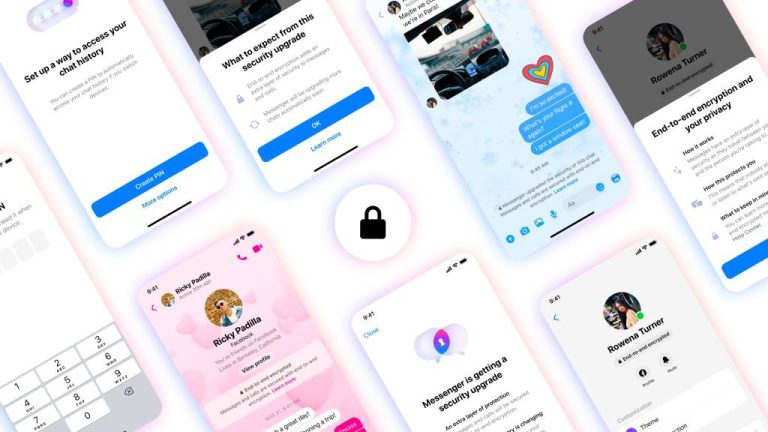
The company has already started expanding end-to-end encryption in Messenger, and it will complete that rollout by the end of this year. The standard was first rolled out about a year ago, to some users.
Meta said that the transition was not easy, saying that it was “an incredibly complex and challenging engineering puzzle”. The change is very welcomed, however, as every messaging service should be end-to-end encrypted.
What does that mean, exactly? Well, when conversations are end-to-end encrypted, they’re basically fully safe. Nobody can eavesdrop on them, or intercept them. Well, not even law enforcement can get ahold of them.
It is worth noting that your Messenger message history will also be encrypted. Once the rollout finishes, Messenger will finally come to the same playing field as WhatsApp, another Meta service.
The Messenger Lite app will become a thing of the past next month
That’s not all, however. Meta also announced that the Messenger Lite app is going away. This app has been available on Android since 2016, but Meta has now decided to pull the plug.
It will kill off the app in September, so next month. The exact date is September 18, in case you were wondering. Your conversation history is safe, however, as everything will still be available in (regular) Messenger.
In fact, if you go and look for that app in the Play Store now, you will not find it. It’s no longer available, unless you’ve installed it before. In other words, new users cannot see it.
Meta did not explain why this is happening. We are, however, presuming that the company wants to cut down on the number of products, on top of the fact that smartphones are plenty powerful to run the regular Messenger app these days.
It is also worth noting that Meta is looking to remove SMS support from Messenger, that change will also come next month. That was announced not long ago.
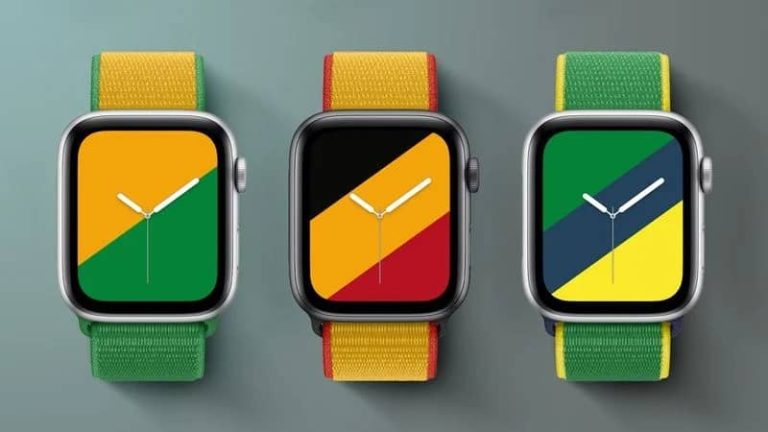
Yes, you read it right, a future Apple Watch could be able to automatically adapt its watch face to match your clothes and its watch band. How? Well, it’s not as complicated as it may seem, but it would be cool to see.
Future Apple Watch could be able to match its watch face colors to your clothes
Apple seems to be considering adding color sampling sensors to its future Apple Watch devices, Apple Insider reports. The publication got this info from a patent Apple submitted.
The patent submitted to the U.S. Patent and Trademark Office (USPTO) is titled “Electronic Devices with Color Sampling Sensors”. Those light sensors would be placed under the display, and be able to figure out the colors of surrounding objects.
Apple goes even further to explain things. An optical sensor, such as a camera, proximity sensor, ambient light sensor, fingerprint sensor, and other light-based under-screen sensors can sample colors by emitting a sequence of red, green, and blue lights towards external objects.
Apple’s algorithm would take information from the sensors and do the job
Following that, the watch would run a band-specific algorithm and match colors with a predetermined list of watch band colors. A clothing-specific algorithm would do the same with your clothing.
That sure is interesting, as it would be an automatic process. Many people would find this cool, probably, even though it’s a bit gimmicky at the same time. It would be a seamless process, as you wouldn’t really need to lift a finger. Your watch face would always match your band and/or clothes.
Do note that this is just a patent, for now. Chances are this won’t become a reality anytime soon, but it could, at some point. We’ll have to wait and see. Companies do submit tons of patents every year, but only a small percentage of them turn into actual products, so… we’ll see.
Google has just announced that the protection for additional sensitive actions taken in Gmail that were introduced last year has been extended to specific actions. All these actions will get a “Verify it’s you” prompt if Google deems them risky enough.
This will provide an additional layer of security for Gmail users that are taking sensitive actions in the app, specifically actions related to:
Filters: creating a new filter, editing an existing filter, or importing filters.
Forwarding: Adding a new forwarding address from the Forwarding and POP/IMAP settings.
IMAP access: Enabling the IMAP access status from the settings. (Workspace admins control whether this setting is visible to end users or not)
After getting the prompt, Gmail users will be able to confirm the validity of the action via a 2-step verification code or another similar trusted factor. More importantly, Google says that if a verification challenge is failed or not completed, Gmail users will receive a “Critical security alert” notification on their devices.It’s important to mention that this additional security feature only supports users that use Google as their identity provider and actions taken within Google products (SAML users are not supported).
End users won’t have to look for this feature in the app’s settings, although it’s recommended to enable 2-step verification. The stronger protection for sensitive actions in Gmail will be available to all Google Workspace customers and users with personal Google Accounts.
According to Google, the rapid release domain will be getting the new security feature in the next two weeks, while scheduled release domains will get it in up to 3 days starting September 6.
Corporate mobile devices have become essential to everyday tasks for employees, but this convenience also comes with security risks.
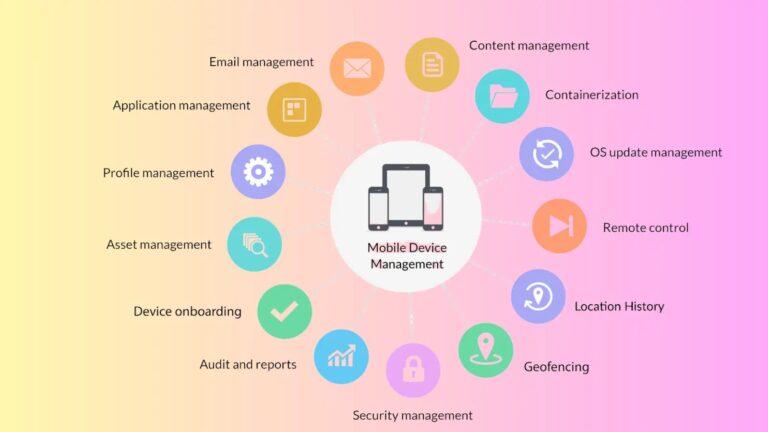
The challenge lies in managing and securing multiple devices, especially without a proper solution. This is where mobile device management(MDM) comes into play, providing a centralized solution to remotely manage, monitor, and secure mobile devices.
The process of enrolling a large number of devices can be time-consuming and cumbersome. However, there are several enrollment methods available to simplify this process.
Android’s zero-touch enrollment and Apple Business Manager enrollment are great options for devices purchased from verified resellers, while Knox Mobile Enrollment streamlines enrollment for Samsung Knox devices.
But what about devices that are not purchased from verified resellers or are employee-owned? This is where QR code enrollment comes in, providing an efficient way to bulk enroll Android devices.
What is QR Code enrollment?
This article will focus specifically on QR code enrollment, a bulk enrollment method for devices running Android 6.0 or above.
With this method, the administrators can just scan the QR code that’s provided by the MDM server for the Android device and onboard it to the server.
This approach for bulk enrollment is more seamless than other methods because the administrator can set up enrollment templates in advance, which include the required users, policies, and configurations based on their intended use or purpose.
This means that the administrators can easily enroll many devices at once, and each will automatically have the correct user assigned and the right policies in place.
How can Enrollment Templates be Tailored To the Varying Uses of Different Devices?
Enrollment templates are the first step in the device enrollment process, can be tailored to meet an organization’s specific needs and hold essential information, such as user, group, and naming patterns.
A naming pattern systematically assigns unique names to devices, such as a serial number, UDID, or IMEI. It helps avoid confusion by preventing identical names from being transferred to different devices.
When users want to set up a new device, they can easily enroll it in the MDM server by scanning the QR code from the prepared templates.
The device then follows the policies and configurations set in the enrollment template so that minimal manual intervention is required. Once enrolled, the device is ready for use.
By customizing enrollment templates, you can save time and eliminate repetitive tasks. Plus, you can ensure your devices are enrolled and secured according to your organization’s policies.
Let’s say the organization uses dedicated frontline devices and wants to assign them to the floor manager responsible for them.
Using the template’s QR code, you can create a custom template that assigns all devices onboarded to the floor manager.
This eliminates the need to assign each device individually, and your organization saves time and money.
Imagine the organization has integrated directory services, and the admin wants to allow users to enroll their devices themselves.
You can create a template that enables users to enroll using their directory credentials, eliminating the need for manual intervention by an admin. Here, too, your organization saves time and money by reducing the involvement of help desk personnel.
DocumentFREE Trial
A comprehensive MDM solution tailored to organizations of all sizes to Manage and secure devices, apps and data from a unified console
What are the Benefits of QR Code Enrollment?
Using QR code enrollment with enrollment templates, you can:
Simplify the bulk enrollment process and eliminate the need for manual intervention.
Automate user assignments, allowing IT admins to assign devices to tagged users and groups automatically.
Associate a naming pattern with devices for easy identification.
Assign multiple devices to a single user to avoid individual device tagging and further streamline enrollment.
Ensure that the necessary policies and configurations assigned to the template are applied to the devices automatically.
MDM helps simplify the management of mobile devices within your organization. ManageEngine Mobile Device Manager Plus is a comprehensive MDM solution tailored to organizations of all sizes.
Mobile Device Manager Plus ensures devices are secure and productive with a wide range of features, including device configuration management, policy enforcement, and application management.
With Mobile Device Manager Plus, you can streamline your device management processes and unlock the full potential of your organization’s mobile devices.
Learn more about this comprehensive mobile device management solution, and discover how to streamline the administration of your mobile workforce devices today.
The Google Pixel 8a won’t launch anytime soon, and yet it just surfaced on Geekbench. That listing actually reveals some of the phone’s specs, along with its early performance benchmarks.
The Pixel 7a was launched back in May this year, during Google I/O. Chances are the Pixel 8a will do the same next year, so probably in May 2024. That’s a long time away from now, so it’s a bit odd this phone already appeared on Geekbench.
The Pixel 8a has already appeared on Geekbench, with some of its specs
Having said that, the phone surfaced with the ‘Akita’ codename. It managed to score 1,218 points in the single-core, and 3,175 points in the multi-core benchmark test. Do take those numbers with a grain of salt, though.
The phone seems to be running an underclocked version of the Google Tensor G3. The Tensor G3 is the chip that is expected to fuel the Pixel 8 and Pixel 8 Pro handsets. Those two phones are expected to launch later this year.
Android 14 is also listed on Geekbench, as is 8GB of RAM. That is basically all the information that the listing shared. As far as the rest of its specs are concerned, well, your guess is as good as ours.
It’s still way too early to know such things. The Pixel 8a info has not surfaced just yet. Considering that the Pixel 8 and Pixel 8 Pro designs did appear, however, the Pixel 8a could resemble its predecessor.
The phone is expected to include a fullHD+ OLED display, wireless charging & more
Aside from the specs mentioned here, we are expecting a fullHD+ display, which will likely offer a 90Hz refresh rate, if not a 120Hz refresh rate. That will be an OLED display, by the way.
The Pixel 7a also brought wireless charging to the Pixel A series, so this phone will hopefully retain that functionality. An under-display fingerprint scanner will be included too, of the optical variety. We’re also expecting some sort of IP rating, probably an IP67 rating for water and dust resistance.
While the introduction of the Bing AI chatbot in Microsoft’s Edge browser has redefined the way users search for information on the web, Chrome users have long been lacking such a feature. However, the extension HARPA AI could be a solution to the problem, as it not only combines web automation by using both ChatGPT and Claude but also helps users manage spreadsheets, generate YouTube video summaries and more.
Based in Helsinki, the company began before the advent of generative AI chatbots as an online price monitoring and form-filling tool. However, with the integration of Claude and ChatGPT, the Chrome extension has evolved into a personal AI that automates tasks, garnering a user base exceeding 150,000.
Benefits of using HARPA AI
Although similar in essence to Bing’s AI chatbot in ways such as AI-driven web searches, page-aware conversations, text composition, and web page summarization, HARPA AI distinguishes itself through its diverse automation and customization tools. These include personalized ChatGPT prompts, page-aware prompts for specific purposes like marketing and SEO, and content writing abilities, spanning from professional emails to SWOT analyses and articles.
Additionally, the extension can also provide YouTube video summaries, which users can configure based on their needs. Moreover, similar to Microsoft’s integration of Bing AI chatbot in Office apps, the HARPA AI extension integrates with both Microsoft Excel and Google Sheets to get instant help with formulas and allows users to create custom macros. Lastly, taking advantage of ChatGPT’s abilities, the extension allows users to draft Facebook posts, reply to direct messages, and enhance their CVs.
While some may argue that other extensions also offer similar functionality, HARPA sets itself apart by offering a clean and user-friendly experience. “HARPA’s product philosophy is centred around creating a tool the team would want to use themselves. This approach, combined with unique automation functionality, sets HARPA apart in the current market, reinforcing its commitment to quality and user satisfaction,” said HARPA AI project manager Aleksei Sharuk, in an interview with Android Headlines.
The difference between using ChatGPT and Claude
Although both AI chatbots offer similar features, Anthropic’s Claude stands out by integrating Constitutional AI, a measure to prevent exposure to harmful content. Additionally, the recently unveiled Claude 2, which is also available in HARPA, enables more extensive and detailed responses than ChatGPT, along with improved skills in mathematics, coding, and reasoning. Moreover, Claude 2’s capacity to analyze 75,000 words at once renders it an exceptional companion for comprehending lengthy PDFs and research papers.
However, it is important to note that Claude 2 is only available in the U.S. and the U.K. Therefore, users who want to switch to using Claude 2 in HARPA will need to use a VPN to access it.
“HARPA is continuously working on innovation, focusing on new features such as AI personas, where the AI assistant will have memory and personality traits. This initiative will enhance user interaction, making it more personalized and engaging. Additionally, HARPA is diligently improving automation processes in custom prompts, a move that promises to elevate the user experience further,” said Aleksei.
Keeping Privacy in Mind
In an era where privacy concerns and data collection are paramount, HARPA asserts its adherence to strict GDPR regulations as an EU-based startup and states that user data is not transmitted to HARPA’s servers, guaranteeing safety and privacy. Additionally, the company also highlights its commitment to not collecting or disseminating personal data, housing all information on users’ devices.
However, HARPA did acknowledge a potential instance of information sharing with the introduction of paid subscriptions. In such cases, user information would be shared with payment systems like Fastspring or Stripe during account creation.
Google’s efforts to integrate Bard in Search
When asked about whether Google’s plan to integrate Bard into Search would majorly impact HARPA since users would prefer a first-party solution, Aleksei highlighted the company’s unique proposition of incorporating various types of AI chatbots and stated, “While Google might introduce its AI solutions, HARPA sees this as an opportunity rather than a threat. Rather than competing with new AI like Bard, HARPA can integrate them alongside existing solutions such as ChatGPT, Bard and Claude. This allows HARPA to maintain its unique position, leveraging the best of various AI technologies.”
Privilege escalation is a commonly employed attack vector in the Windows operating system environment.
Attackers often leverage offensive tools such as Meterpreter, CobaltStrike, or Potato tools to execute code such as “NT AUTHORITY\SYSTEM.”
These tools typically employ token duplication and service manipulation techniques to perform attacks like LSASS tinkering.
RPC Mapper and BFE.DLL
The Deep Instinct security research team developed an RPC mapper tool for analyzing RPC methods. The BfeRpcOpenToken method, which is part of the Windows Filtering Platform, captured their attention.
The Windows Filtering Platform is a native platform that offers network traffic control capabilities based on various attributes like application, user, address, and port.
FWPUCLNT.DLL and BFE.DLL play key roles in extracting tokens. By calling FwpsOpenToken0, a handle is duplicated from BfeRpcOpenToken, effectively accessing the BFE service token.
BfeDriverTokenQuery triggers BfeRpcOpenToken, leading to a device IO request to “WfpAle.”
This device was created by the tcpip.sys driver becomes instrumental in the token extraction process.
Token query involves calculating a hash based on the LUID, iterating over a hash table, and identifying the appropriate entry. The token insertion function, WfpAleInsertTokenInformationByUserTokenIdIfNeeded, is explored, revealing its relation to IPSec.
Attack Techniques Developed by Researchers
Duplicating Tokens via WFP:
Duplicating tokens (Source: Deep Instinct)
By sending a device IO request, WfpAleProcessTokenReference is invoked, attaching the thread to the process space, duplicating tokens, and adding them to the hash table. Brute-forcing the LUID can lead to token duplication.
Triggering IPSec Connection
Ipsec Communication (Source: Deep Instinct)
Configuring an IPSec policy can lead to token insertion into the hash table. The Print Spooler service is exploited to achieve this through RPC calls.
Manipulating User Service
Gaining the token of another logged-on user can facilitate lateral movement.
The OneSyncSvc service, involving RPC calls and ALPC ports, is manipulated to achieve this. While these attack techniques are designed to be stealthy, they are not undetectable.
The “NoFilter” technique highlights a sophisticated and covert approach to privilege escalation by exploiting the Windows Filtering Platform.
Security professionals are advised to stay vigilant, monitor for suspicious activities related to the Windows Filtering Platform, and explore ways to defend against such attacks.
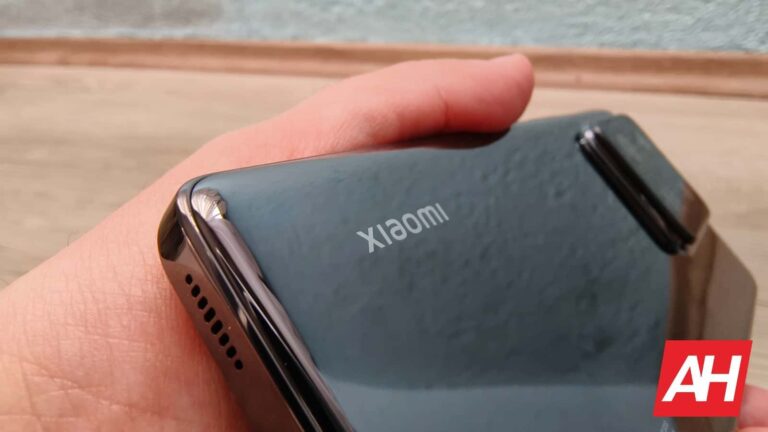
The Xiaomi 13T Pro is the company’s upcoming high-end smartphone. The device’s renders and specs surfaced not long ago, and it just got certified too. NCC certification confirmed the Xiaomi 13T Pro design by sharing real-life images.
The Xiaomi 13T Pro design got confirmed via certification with real-life images
If you take a look at the gallery below the article, you’ll see the phone in two color options. The device is shown in gray and white colors. The white color looks light gray because of the lighting, most probably.
In a recent leak, some renders of the phone surfaced, showing off the black and blue colors of the phone. So, the Xiaomi 13T Pro will be coming in three different color variants, it seems. The phone’s charger is also shown here.
Having said that, Xiaomi is expected to announce both the Xiaomi 13T and 13T Pro next month. The Xiaomi 13T already popped up on NBTC, EEC, and TUV Rheinland certifications recently. The Xiaomi 13T Pro appeared on Geekbench, however.
The Xiaomi 13T Pro will feature a flat display, thin bezels, and a centered display camera. Three cameras will sit on the back of the device. They will be included inside a camera island in the top-left corner.
Both glass back, and eco-leather back variants will launch
Based on the images that leaked, some variants will feature a glass back, and some eco leather back. The blue color I mentioned earlier, has an eco-leather back.
The phone is tipped to feature a 6.67-inch 2712 x 1220 OLED display with a 144Hz refresh rate. The MediaTek Dimensity 9200+ SoC will fuel the phone, while you’ll be able to choose between 12GB and 16GB of LPDDR5X RAM.
A 5,000mAh battery was also mentioned, along with 120W fast wired charging. A 50-megapixel main camera (Sony’s IMX707 sensor) will be included on the back, along with a 13-megapixel ultrawide camera, and a 50-megapixel telephoto unit.
The device will also offer two SIM card slots, and ship with Android 13, and MIUI 14 on top of it. An in-display fingerprint scanner will be included, as will stereo speakers.