It looks like the first set of leaks for the upcoming 14th Gen Intel CPUs has popped up in the form of some benchmarks. As noted by VideoCardz this appears to be the first leak pertaining to Intel’s upcoming processors, and they indicate an increase in the core count compared to the currently available 13th Gen processors.
The data comes from BAPCo, which showcases CrossMark CPU results for two of Intel’s upcoming 14th Gen processors. The Intel Core i9-14900K and the Intel Core i7-14700K. Based on the benchmark information the new i9 CPU will come with 24 cores up from 16 in its 13th Gen counterpart. While the new i7 CPU gets a bump from 16 cores to 20. Both CPUs were paired up with 16GB of DDR5 RAM and an NVIDIA GeForce RTX 4090 GPU for these tests.
Scores for the tests were based on a variety of categories including productivity, creativity, responsiveness, and overall performance. The i9-14900K CPU obviously comes out on top seeing as it’ll be Intel’s flagship for this new processor generation. Accumulating a maximum score of 1859 in responsiveness, 2550 in creativity, 2180 in productivity, and 2279 overall. The Core i7-14700K meanwhile saw scores at 1562, 2293, 1892, and 1997 respectively. Worth noting is that these are also desktop CPUs.
Intel may officially reveal 14th Gen CPUs in September
It’s unclear when exactly Intel plans to unveil its newest generation of processors. But it seems the company might be planning to announce them at its Intel Innovation event in September. Followed by a full rollout of the products by October. Since these are just benchmark test results there’s no indication of availability or pricing just yet. Both of which are likely to be confirmed by Intel once it announces the new 14th Gen lineup later this year.
If those times are accurate, then consumers looking for a CPU upgrade won’t have to wait a whole lot longer to get into the new hardware. Although you may need to consider other upgrades as well depending on your motherboard. As these new processors are designed for the LGA1700 socket and your board will need to support that.
This kind of program is commonly referred to as stalkerware. As the name suggests, people aren’t doing anything good with this kind of software. You’ll most commonly see it on Android devices, put there by someone with temporary physical access. Depending on the program, it may access phone records, texts, photos, camera, microphone, GPS…you name it, it can possibly do it.
The device owner will have no idea that this is going on, because these programs come with no app icon and stay hidden.
A domestic abuser or someone up to no good generally installs the app on the phone without the victim’s consent or knowledge. Once done, it can be used to keep track of the person for as long as it remains on the device.
In this case, LetMeSpy first made notification of the breach in June, with the following message:
On June 21, 2023, a security incident occurred involving obtaining unauthorized access to the data of website users.
As a result of the attack, the criminals gained access to email addresses, telephone numbers and the content of messages collected on accounts. For 100% clarity: Everything collected from mobile devices where the owner wouldn’t have been aware LeMeSpy was present in the first place.
Given that someone with this app on their phone could potentially be in a perilous position to begin with, it’s even worse that such an individual would have their data stolen in this way. Polish site Niebezpiecznik, which first reported the breach, said that the database dumped online contained:
26,000+ email addresses of the tool’s “operators” along with hashes of their passwords.
16,000+ text messages, including passwords and codes for various services.
Telephone numbers of people who had contacted the tracked phones.
Telephone numbers of the people whom the tracked phone owner had called (along with the names associated with them in the contacts list).
A database dump in SQL format, containing more data, including locations.
A terrible situation, needlessly caused by an app most folks wouldn’t want on their devices.
Well, it seems the breach was a step too far for LetMeSpy too. So much data was deleted that new users are now blocked from creating an account. A permanent shutdown will take place in August. TechCrunch notes that the app is no longer available for download, and currently installed versions seem to be completely dead, as per a network traffic analysis.
A nonprofit transparency collective called DDoSecrets told TechCrunch that the app had been used to steal data from more than 13,000 compromised devices “until recently”. This is quite a bit lower than the 236k devices the LetMeSpy website claimed to be residing on.
We recently covered the LetMeSpy hack on our Lock and Code podcast, asking (among other things) if there’s ever a situation where a hack like this could be considered “good”.
How to prevent spyware and stalkerware-type apps
Set a screen lock on your phone and don’t let anyone else access it
Keep your phone up-to-date. Make sure you’re always on the latest version of your phone’s software.
Use an antivirus on your phone. Malwarebytes for Android shows you exactly what information you’re sharing with each app on Android, so you can keep an eye on your privacy. Malwarebytes detects the LetMeSpy app as Android/Monitor.LetMeSpy.
Coalition Against Stalkerware
Malwarebytes is a founding member of the Coalition Against Stalkerware. We continue to share intelligence with the Coalition Against Stalkerware to improve industry-wide detections while also guiding the domestic abuse support networks within the coalition through thorny, technical questions of detection, removal, and prevention.
We don’t just report on Android security—we provide it
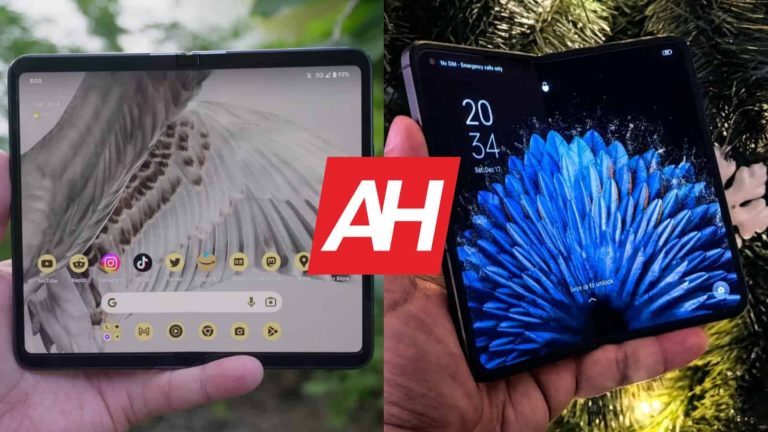
ind The Pixel Fold is Google’s first foldable smartphone, and it’s hard to deny it was inspired by some devices from OPPO. The Pixel Fold adopts a similar form factor to the OPPO Find N2. That’s why we’ll compare the two devices here, the Google Pixel Fold vs OPPO Find N2. Both of these devices adopt a horizontal layout when unfolded. They’re shorter and wider than Samsung’s Galaxy Z Fold phones.
This does mean that the experience of using these devices is different than that of the Galaxy Z Fold series. The thing is, the Pixel Fold and OPPO Find N2 are considerably different devices too, despite the fact they have a similar form factor. We’ll first list their specifications, and then we’ll move to compare them across a number of other categories you’d expect. Let’s get to it, shall we?
Both of these phones do utilize a similar form factor, with a horizontal layout when unfolded. The thing is, the Find N2 has smaller displays in comparison, and that makes it considerably smaller. It is noticeably shorter than the Pixel Fold, and also quite a bit more narrow. The Find N2 is thicker than Google’s offering, though, and much lighter. It weighs 233 or 237 grams (depending on the model), while the Pixel Fold weighs 283 grams. The difference is huge, actually.
They’re both made out of metal and glass, while the Find N2 also comes with a variant with eco leather back. Unlike the Pixel Fold, the OPPO Find N2 does offer stylus support. On the flip side, the Pixel Fold has an official IPX8 rating for water resistance, while the Find N2 does not. The two devices also look quite different, especially from the back, and when they’re unfolded. The cover displays are quite similar, but different in size.
Both phones have a centered display camera hole on their cover displays. The OPPO Find N2 also has one on the main display (but it’s not centered), while the Pixel Fold hides that camera in its bezel on the main display. Speaking of which, the bezels around the Find N2’s main display are noticeably thinner, which is another reason why the Find N2 is so compact. Both have a side-facing fingerprint scanner, and entirely different-looking camera islands on the back. You’ll find three rear cameras on both phones, though.
Google Pixel Fold vs OPPO Find N2: Display
The Pixel Fold has a 7.6-inch main display. That is a Foldable OLED panel with a 1840 x 2208 resolution, and a 120Hz refresh rate. That display supports HDR10+ content, and gets up to 1,450 nits of brightness at its peak. The cover display on the phone measures 5.8 inches, and it has a 2092 x 1080 resolution. It is an OLED panel with a 120Hz refresh rate, and supports HDR content. It’s protected by Gorilla Glass Victus, and has a 17.4:9 aspect ratio. It gets up to 1,550 nits of peak brightness.
OPPO Find N2
The OPPO Find N2, on the other hand, has a 7.1-inch main display. That is a Foldable LTPO AMOLED display with a resolution of 1792 x 1920. That display has a 120Hz refresh rate, and supports HDR10+ content. It gets up to 1,550 nits at its peak. The second panel measures 5.54 inches, and it offers a resolution of 2120 x 1080. That means it has an 18:9 aspect ratio. That is an AMOLED panel with a 120Hz refresh rate, and it’s protected by the Gorilla Glass Victus. That display gets up to 1,350 nits of brightness.
Truth be said, all displays on these two phones are really good. They’re all bright enough, sharp enough, and also quite smooth as a 120Hz refresh rate has been well-implemented. The viewing angles are not bad either, quite the contrary. The colors are vivid, and the blacks are deep, as you’d expect. They’re different in size, but you’ll be happy using all of them, basically. Even the cover displays are wide enough.
Google Pixel Fold vs OPPO Find N2: Performance
The Google Tensor G2 SoC fuels the Pixel Fold. Google also included 12GB of LPDDR5 RAM on the inside, along with UFS 3.1 flash storage. The OPPO Find N2, on the flip side, is fueled by the Snapdragon 8+ Gen 1 processor. It also includes up to 16GB of LPDDR5 RAM, and UFS 3.1 flash storage. They’re on an equal playing field in the RAM and storage departments, while the Find N2’s SoC has more raw power than the Tensor G2.
When it comes to actual performance, they’re not that much different. The Find N2 does feel a bit snappier, especially when opening up apps, and multitasking, but the difference is not that big at all. Both phones do a great job and offer consistent performance. The Find N2 does have more gaming prowess, though, so if you plan on playing graphically-intensive games, do take note of that. The Pixel Fold does handle games well, too, though. All in all, chances are you’ll be happy with the performance of both phones.
Google Pixel Fold vs OPPO Find N2: Battery
A 4,821mAh battery sits inside the Pixel Fold, while the Find N2 is equipped with a 4,520mAh battery. Do note that the Find N2 is a considerably smaller device, hence the smaller battery. How do they compare in the battery department, though? Well, your mileage may differ, of course, but for us, both did a great job. We were able to reach 7.5-8 hours of screen-on-time on both phones, on days we did not play games.
Gaming will, of course, negatively impact battery life, so do take note of that. Both phones were able to cross the 8-hour screen-on-time mark at times, and go above it. The thing is, the battery life will also heavily depend on your usage, and depend on which screen you’re using most. If you’re spending a lot of time on the cover display, you’ll get noticeably better battery life. All in all, you could get a completely different experience, but the battery life is not bad overall, not at all.
The Pixel Fold supports 21W wired, and 7.5W wireless charging. The OPPO Find N2, on the other hand, supports 67W wired, and 10W reverse wired charging. OPPO’s handset does charge a lot faster than the Pixel Fold, and it’s not even close. On top of that, the Pixel Fold does not include a charger in the box. OPPO, on the other hand, does, you’ll find a 67W charger inside the Find N2 retail box.
Google Pixel Fold vs OPPO Find N2: Cameras
Each of these phones has three cameras on the back, though they’re fairly different. The Pixel Fold has a 48-megapixel main camera (f/1.7 aperture, OIS, Dual Pixel PDAF), a 10.8-megapixel ultrawide camera (121-degree FoV), and a 10.8-megapixel telephoto camera (5x optical zoom). The OPPO Find N2 includes a 50-megapixel main camera (f/1.8 aperture, OIS, multi-directional PDAF), a 48-megapixel ultrawide unit (115-degree FoV), and a 32-megapixel telephoto camera (2x optical zoom).
Google Pixel Fold
What about the end result? Well, both phones do a good job, actually. The Google Pixel Fold offers that contrasty look you’re used to with other Pixel phones. It has great HDR performance, and does a good job in low light. The OPPO Find N2 has been heavily optimized since launch, and the camera performance improved quite a bit. The images do end up looking detailed and punchy, but not too saturated or anything like that. Low light performance is also quite good, but not to the level of the Pixel Fold.
Both ultrawide cameras offer good performance, albeit not as good as the main sensors. The Pixel Fold’s does offer a wider FoV, though. When it comes to the telephoto camera, that’s an easy with for the Pixel Fold. It has 5x optical zoom, compared to 2x optical zoom on the Find N2. 3x should be minimum, as 2x is not that useful. Let’s hope that OPPO will include 5x or at least 3x with the next model.
Audio
Both of these phones have a set of stereo speakers included. Both of those sets are quite good, though we prefer the sound coming from the Find N2. It does seem to be a bit richer. The difference is not big at all, though.
What you will not find on either phone is an audio jack. You’ll need to rely on Type-C ports for wired audio connections. If you’d prefer to go wireless, do note that the Pixel Fold supports Bluetooth 5.2, while the Find N2 offers Bluetooth 5.3.
The new Netflix rate feature is bringing some changes to what streamers have been used to. Despite calling this feature ‘new’, it’s important to note that rating content on Netflix has been available for a while. The ratings users give content (either shows or movies) helps Netflix understand what a streamer likes.
With this rating feature, users can either like or dislike what they stream. Previously, they could only do this either before or after watching the content via the title page. This allowed them to watch the content first and give a verdict afterwards on whether they liked or disliked what they watched.
Well, things are now changing and Netflix is letting streamers rate content while viewing it. There are a few benefits to this new feature for streamers on the Netflix platform. Let’s have a look at this improvement and how it’d affect Netflix users around the world.
The new Netflix rate feature brings a new way to engage with the content you love
Home to more than 5400 movies and TV shows, Netflix has become the one-stop for content streamers. Most streamers on Netflix get to watch movies based on recommendations from friends or the platform’s algorithm. This algorithm gets its idea of what streamers might like based on their watch history.
By rating a movie Netflix’s algorithm gets to understand what users like and what they don’t like. Now, with the new Netflix rate feature, streamers have the freedom to rate content at any point before they watch, while watching, and even after watching. Previously, streamers could only rate the content from the title page before or after watching the movie.
To give streamers this ability, Netflix will bring the rate buttons (like and dislike) to the video-playing interface. This will make it easily accessible for those watching a movie or TV show. With this tool in hand, streamers can quickly leave a rating, either positive and continue watching or negative and leave at once.
However, it’s good to note that this improvement is now rolling out to Android and iOS users. It will become available via an app update from the Google Play Store or the App Store. This is just one area where Netflix is making some changes to benefit not only its business but also its customers around the world.
Everyone loves a good sale, and when it comes sales with online shopping, Amazon’s Prime Big Deal Days is the next major one to look forward to. Much like the official Prime Day, Prime Big Deal Days will have lots of discounts on all kinds of stuff on Amazon. These discounts will of course be exclusively for Prime Members, so if you don’t already have a membership, now is as good of a time as any to consider one.
In addition to all the extra benefits you get, which includes free two-day shipping and access to Prime Video and Prime Music (not to mention Prime Gaming), the sale pricing during this event is kind of like the cherry on top. Chances are you’ll find all kinds of savings across the many things Amazon sells. Some of which might even be things you were looking to buy. That being said, Amazon hasn’t shared any specific information about what the deals will be yet. The company does however say it will have more to share closer to the event.
As for when it starts, it’s simply sometime in October. Amazon has not confirmed a specific day. However, last year’s Prime Early Access Sale was October 11 and October 12. And there’s a good chance Amazon will hold this year’s sale around the same time.
Amazon’s Prime Big Deal Days is available in 19 countries
This will be a global sale reaching 19 different countries. Opening the door for members to discounts weeks ahead of Black Friday here in the US. The countries that have access to the sale include Australia, Austria, Belgium, Brazil, Canada, China, France, Germany, Italy, Japan, Luxembourg, Netherlands, Poland, Portugal, Singapore, Spain, Sweden, the US, and the UK.
Members should expect to find deals nearly as good as Prime Day on everything from electronics to home goods. Typical things you might find on sale during Prime Big Deal Days could be Keurig coffee machines, kitchen appliances from Ninja, and of course, Amazon’s smart home tech. Such as the Echo, Echo Dot, Echo Show and more.
According to the latest iPhone info, the iPhone 15 Pro may get a massive storage upgrade. A well-known tipster, Yeux1122 (via 9to5Mac), claims that Apple will increase the storage capacity of the iPhone 15 Pro to 2TB. He claims to have gotten the info from a supplier.
The iPhone 15 Pro models may get a massive storage upgrade
He’s not the only one who pointed this out. Similar info popped up on Weibo too. That source also expects Apple to double storage capacities across the board. That means that the 128GB storage variant could be ditched for a 256GB option. That part seems to be more of his wish and assumption, rather than anything else, though.
The storage options of the vanilla models will likely stay intact. In other words, you can expect the base models to offer 128GB, while the top-end models may arrive with 512GB of storage.
Now, this storage info may even turn out to be accurate. Why? Well, because of the price increases that have been rumored, especially for the ‘Pro’ series. The iPhone 15 Pro and Pro Max are tipped to cost $100-200 more than current-gen models.
Regarding the iPhone 15 and 15 Plus, well, it all depends on who you ask. Some sources claimed those two will get a price bump too, others, however, said the opposite.
Some consumers would jump at a chance to grab a 2TB iPhone 15 Pro, especially creators
There are always people out there who need more storage, so having a 2TB option for ‘Pro’ models would be great for them. If you’re filming content on your iPhone, for example, chances are that you’re always in need of extra storage.
The iPhone 15 series is tipped to launch on either September 12 or 13. The devices are expected to go on pre-order on September 15, and become available to purchase on September 22.
All of them will offer Type-C USB ports, and Dynamic Island. The ‘Pro’ models will, of course, have some advantages, such as a titanium frame, thinner bezels, better cameras, and so on.
X, the social media app that we previously called Twitter, has an interesting new feature in the works. It is readying the ability to sort posts on user profiles. While you normally see the most recent posts at the top, the new feature will allow you to sort them by likes or engagements.
The upcoming feature was announced recently by Andrea Conway, a designer at X. Screenshots posted on the platform show you will be able to sort posts by tapping the Posts tab on profiles. The company seems to be working on three different views currently: “Most recent,” “Most liked,” and “Most engaged with.” The first option will probably be the default.
Conway suggested that the feature is still in development and may look different by the time it rolls out to users. “Baby steps,” the X designer replied when someone suggested that a time frame would be a nice addition. Users will be able to sort posts by most likes or engagements from the past week or month. It may sometimes be pointless if top posts are from a long time back.
This feature shouldn’t affect the pinning option that users have. It allows them to highlight their most important post at the top of the chronological feed. Sorting posts should still keep the pinned post at the top. Meanwhile, X already sorts posts by engagements when you’re logged out. Visit any profile without logging in and you’ll see their top posts at the top, rather than the most recent ones. So it appears to be an ongoing work for a while.
X will also let you sort comments
X is also working on a sorting feature for comments, Conway confirmed. Unfortunately, we don’t have estimated launch timelines for either feature. But the good news is that the company has been rushing to release experimental features ever since Elon Musk took it over last year. So we might get the sorting feature soon. We will let you know as soon as we have more information.
Amid these interesting developments at X, Musk is preparing to take on Meta CEO Mark Zuckerberg in a cage fight. The tech billionaires are expected to announce a date for the fight this week. Musk recently said that the face-off will be live-streamed on X with the proceeds going to charity for veterans. Zuckerberg, meanwhile, cheekily suggested using a “more reliable platform” to raise money. It remains to be seen if they do fight or were bluffing all along.
It’s no secret that this surge in the AI field has prompted many companies to explore new ways of securing data for training their AI models. And as part of these initiatives, Zoom quietly revised its terms of service, allowing the utilization of customer data, including chats, for training its AI models. However, after receiving widespread backlash, the company has decided to reverse these changes.
Labelled as “Customer Content” and introduced in March, the new policy changes granted the company an extensive array of rights, including a “perpetual, worldwide, non-exclusive, royalty-free, sublicensable, and transferable license,” enabling the use of customer content for purposes such as machine learning, AI training, testing, and broader product development.
However, these changes raised concerns about Zoom’s practices and sparked discussions about the ethical boundaries of data usage. As a result, the company issued a blog post to address the situation and clarify its stance, asserting that it would not engage in the activities that the revised terms appeared to permit.
“Notwithstanding the above, Zoom will not use audio, video or chat Customer Content to train our artificial intelligence models without your consent. We’ve updated our terms of service to further confirm that we will not use audio, video, or chat customer content to train our artificial intelligence models without your consent,” said Zoom.
Zoom IQ
Similar to other tech companies, Zoom’s decision to update its privacy policy stems from the introduction of the “Zoom IQ” feature, which uses AI to summarize chat discussions and generates automated responses for text-based queries. And although account owners are required to grant consent before using these tools, participants in a Zoom IQ-enabled call are only presented with the option to “Leave Meeting” or acknowledge with a “Got it” button. This means that if you choose not to exit the call, Zoom will use your data to train its AI regardless of your decision.
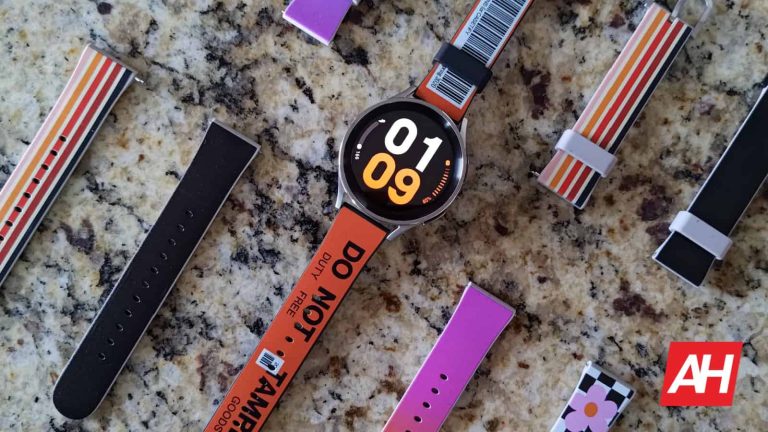
The Galaxy Watch 6 and Galaxy Watch 6 Classic are Samsung’s newest smartwatches, both of which bring forth some great improvements to the functionality. Of course with any watch, functionality isn’t enough. You’re going to want a good band to match that upscale functionality. Something with Style. And that’s where CASETiFY bands come in. These bands are your answer to infusing your watch with a little more style and flair. And the best part is that CASETiFY has LOADS of options to choose from. There are a few basic options that are 100% CASETiFY.
But the reason these are so good is because CASETiFY also partnered with tons of artists to make a bunch of uniquely-designed bands with their own little artistic touches. Take this ‘Duty Free – Orange’ Flexi band for example. It’s unique, and just might be the band you’re looking for if you travel a lot and happen to spend plenty of time in airports. Maybe you grab things from the Duty Free shop a lot. Now, I’m using this band on the Galaxy Watch 5 Pro and not the Galaxy Watch 6 Classic. And that’s the beauty of these bands on top of the style. They’re compatible with both the Galaxy Watch 6 series and Galaxy Watch 5 series. So even if you have last year’s Samsung watch, these still work.
CASETiFY offers hundreds of band designs for the Galaxy Watch 6 and Galaxy Watch 5
The band in particular I have on this watch is the Flexi band. Which really, is the only band model that CASETiFY offers for the Galaxy Watches. But it’s the 20 pages of designs to choose from that makes this a great option. On top of that, these are pretty comfortable to wear all day without any sort of irritation.
They all come in 20mm sizes so they fit any of the watches from both this year and last year. Plus, CASETiFY makes them from recycled phone cases so these create less waste. If you’d like to grab your own CASETiFY band for the Galaxy Watch 6 or Galaxy Watch 5 series, you can do so from the link below.
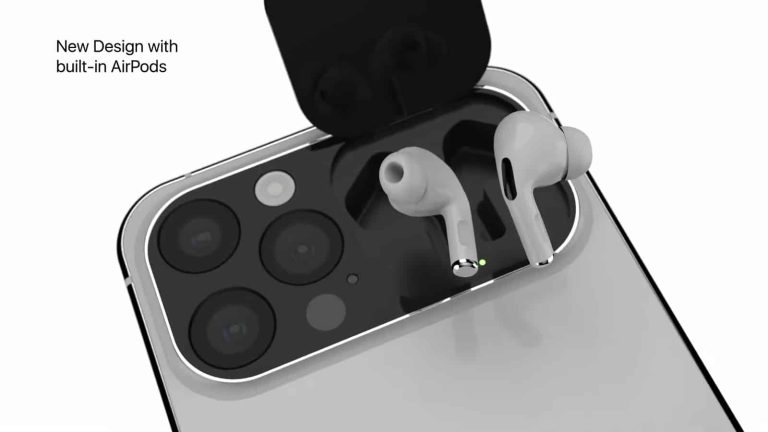
A rather interesting new concept design has been published by 4RMD. This particular concept shows us an iPhone model with built-in AirPods and two displays, it’s an iPhone 19 Ultra concept, to be more accurate.
New iPhone concept has AirPods built-in and two displays
The designer envisioned a phone with a titanium frame, and two displays, actually. Underneath that second display, you’ll find the AirPods. The screen lifts up, like a case, and reveals a set of AirPods.
This phone also has solid-state buttons, while it retains Dynamic Island. That cutout is smaller than it is on current-gen models, and has two cameras included there. We do hope that the Dynamic Island will be entirely gone by the time the iPhone 19 series comes around, though.
In any case, this phone has a familiar-looking triple camera layout on the back, though the second display is located right next to those cameras here. The sides of the phone are flat, but have chamfered edges.
A 180Hz display is also mentioned here, along with a 5,000mAh battery
The designer also shared some specs that he envisioned here. This concept device has a 6.9-inch display with thin bezels. That is a ProMotion display with a 180Hz refresh rate, and it goes up to 2,400 nits when it comes to brightness.
A 48-megapixel main camera (f/1.5 aperture) is capable of 8K video recording, while a periscope telephoto camera also sits on the back. A 5,000mAh battery is also mentioned, for “30 hours battery life”.
You’ll also notice a Type-C USB port at the bottom, while the M2 chip is mentioned by the designer too. He also mentioned the price tag he’d put on this device, $1,499.
It’s always interesting to see such designs pop up, though this one is quite unrealistic. That was probably kind of the point here, to make a fun design that will attract attention.
The video published on YouTube has a duration of 2 minutes, and it’s embedded below.