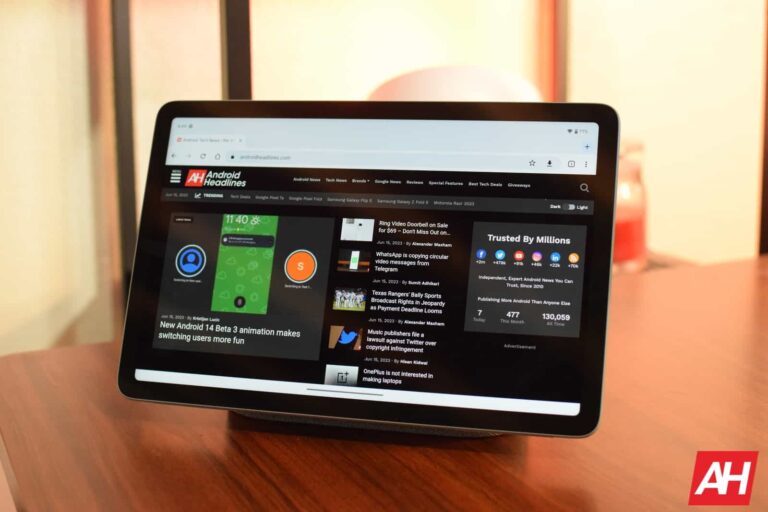
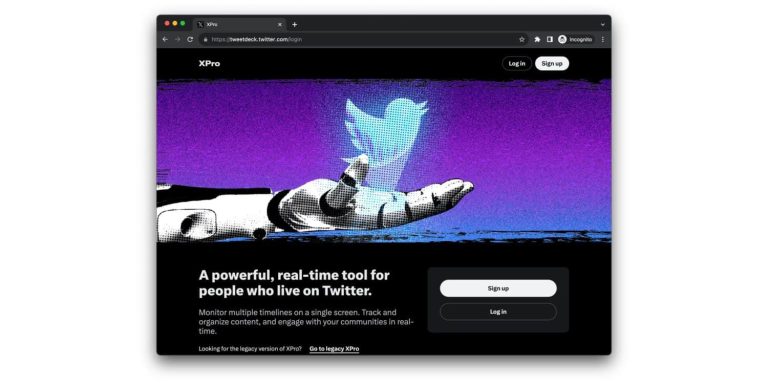
The rebranding spree continues at X (formerly Twitter), with TweetDeck now being called XPro. This comes shortly after the company renamed “tweet” to “post,” and subsequently, “retweet,” aka RT, to “repost.” With those changes, the TweetDeck name became irrelevant and X has promptly rebranded it too.
The new name for the app fits perfectly with its purpose, as TweetDeck has always been kind of a “pro” version of Twitter aimed at power users and professionals. The XPro brand appears on the landing page (when logged out) of the website as well as the site name (via). However, the URL (tweetdeck.twitter.com) remains unchanged. Perhaps that requires a bigger technical change, so the company isn’t hurrying to it.
The main twitter.com URL has also remained unchanged after the platform was rebranded to X last month. That said, x.com does redirect you to twitter.com, so the necessary work is going on behind the scenes. It might take some time before X completely does away with the Twitter brand, though. The XPro landing page still has references to the old brand name, and so does X in some places.
The TweetDeck brand still appears in several places
“A powerful, real-time tool for people who live on Twitter,” the platform’s tagline reads currently. The webpage also has a link to the “legacy XPro” at the bottom, but it loads the older version of TweetDeck with no rebrand or any other changes. If you recall, X released the revamped XPro (still called Twitter and TweetDeck back then) early last month with plans to make it an X Blue (previously Twitter Blue) feature.
The company initially forced everyone to the new version, but later allowed them to go back to the older TweetDeck. It lives on today and doesn’t require a Blue subscription yet. This change may come soon, though. Perhaps the company may be looking to improve XPro with new features such as multi-account support. It’s an important feature considering the target audience of the service, which is mainly large organizations.
It’s unclear when X will hide XPro behind the Blue paywall. Once it does, the legacy TweetDeck will probably go down for once and all. For the time being, you can access it from your TweetDeck Account settings when on the new interface. Simply select the TweetDeck version and switch back with ease. X currently lets you opt out of the revamped XPro, but that option likely won’t exist once the change is forced on everyone.
Video-sharing sites are all about personalized and curated content to pique people’s interest. Well, it appears that the EU isn’t a fan of that, and this compelled TikTok to introduce a new non-personalized feed on the platform. It’ll also bring another change to the platform, according to a new blog post (via Phone Arena).
The EU has been fighting to make the Internet a better place for all. Last year, it brought the Digital Services Act (DSA), which defines rules for social media platforms, search engines, and online shops to follow. If a company does not follow these rules, then it risks being banned from the EU.
TikTok brings a new non-personalized feed
So, when you’re scrolling through TikTok, you’re seeing videos based on your activity on the platform. If you like a lot of cooking videos, you’re more likely to see videos of people making yet another form of cheesecake; if you’re into cars, then expect a lot of Teslas and Lamborghinis on your feed. This is how the company keeps people on the platform.
However, the EU does not like the platform collecting data on its users in order to curate the content for its users. Thus, the EU urged TikTok to make some changes.
So, because of this, TikTok announced that it was introducing a non-personalized feed. This means that, instead of seeing videos tailored toward your tastes, you’ll see mainly popular videos in your area. It will be a smattering of random videos that have picked up the most steam. While this might sound like a terrible idea, don’t worry, it’s an optional feature.
That’s good because a lot of people on the internet don’t like feeds full of algorithmically curated content. Popular doesn’t necessarily mean good.
Along with this, TikTok is also bringing another change to comply with the new ruleset. This next one is targeted at minors. Users between the age of 13 and 17 will no longer receive personalized ads on the platform. People receive ads based on their activity on the platform, but they can also be based on their activity off of it.
Since this was targeted at several companies in the EU, then you should expect changes to come to more platforms.
A well-known Apple analyst, Ming-Chi Kuo, predicts a lower demand for the iPhone 15 series, compared to their predecessors. He added that this could make it challenging for Apple suppliers to grow their revenue in H2 this year.
The iPhone 15 demand is expected to be lower than for iPhone 14
This is an interesting prediction, especially considering that iPhone 15 models will debut Type-C for iPhones. All models will also include a Dynamic Island, and the ‘Pro’ models will get more refinements.
One would think that will be enough to push consumers to stores, but Ming-Chi Kuo doesn’t think so. He did not exactly elaborate on his answer, but the price jump that is expected could have something to do with that.
Depending on who you ask, the new iPhone 15 Pro models will cost between $100-$200 more than their predecessors in the US. The vanilla iPhone 15 models will either keep their price tags, or see a price jump as well, depending on the source of the rumors.
Price jump is expected both in the US, and in other markets
Outside of the US, the price jump will be even higher, as per usual. It is expected to be especially brutal in Europe and some other regions. Those are only rumors thus far, though.
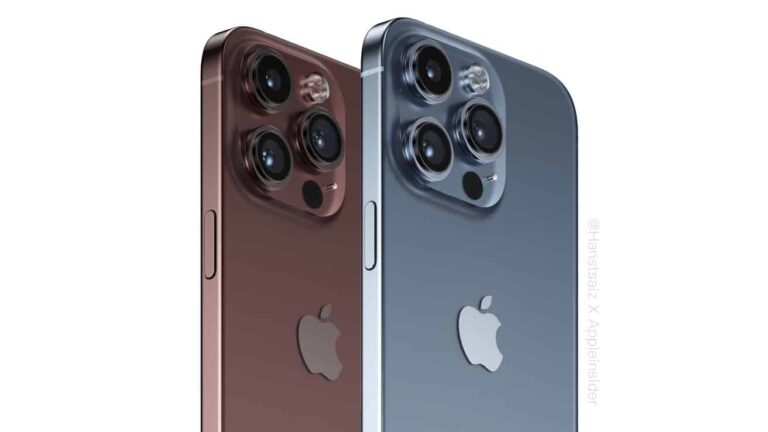
In any case, I mentioned iPhone 15 Pro refinements earlier in the article. Both models will offer thinner bezels than their predecessors, considerably thinner. Ice Universe said that they’ll be the thinnest in the market, at least until the Xiaomi 14 arrives. Those bezels will also be uniform.
On top of that, Apple is said to be using titanium for the frame of both smartphones. The iPhone 15 Pro Max variant is also tipped to include a periscope telephoto camera, which is also a first for iPhones.
The entire iPhone 15 series will launch in either September or October. They’re expected to arrive in September, but a recent rumor said the launch could be postponed to October due to display-related issues.
Attackers are using Microsoft Teams chats from compromised Microsft 365 tenants as credential theft phishing lures
Attackers believed to have ties to Russia’s Foreign Intelligence Service (SVR) are using Microsoft Teams chats as credential theft phishing lures. Microsoft Threat Intelligence has posted details about the perceived attacks targeted at fewer than 40 unique global organizations. The targeted organizations are mostly found among government, non-government organizations (NGOs), IT services, technology, discrete manufacturing, and media sectors.
According to Microsoft the attackers are part of the same group that was behind the attacks against SolarWinds, the Sunburst backdoor, TEARDROP malware, GoldMax malware, and other related components. Malwarebytes tracks that group as APT29/Cozy Bear. A group well-known for finding and deploying novel tactics, techniques, and procedures (TTPs).
In the phishing attacks the group leverages previously compromised Microsoft 365 instances, mostly owned by small businesses, to create new domains that look like technical support accounts. From these instances the group reaches out through Teams messages and persuades targets to approve multi-factor authentication (MFA) prompts initiated by the attacker.
The compromised instances are renamed and used to set up a new onmicrosoft.com subdomain. Onmicrosoft.com domains are legitimate Microsoft domains which are automatically used by Microsoft 365 for fallback purposes in case a custom domain is not created.
The attackers often use security terms or product-specific names in these subdomain names to give credibility to the technical support themed messages which are sent out as a lure.
example image courtesy of Microsoft
The objective is to target users with passwordless authentication configured on their account, or accounts for which they have obtained credentials previously. In both cases they require the user to enter a code that is displayed during the authentication flow into the prompt on the Microsoft Authenticator app on their mobile device.
Once the target has done this, the attacker can use the gained access to further compromise the account. Typically, this involves information theft from the now compromised Microsoft 365 tenant. In some cases, the actor attempts to add a device to the organization as a managed device via Microsoft Entra ID (formerly Azure Active Directory), likely an attempt to circumvent conditional access policies configured to restrict access to specific resources to managed devices only.
Microsoft says it has successfully blocked the Russian threat group from utilizing the compromised instances in other attacks and is now actively working to address and limit the impact of the campaign.
How to avoid tech support scammers
In the blog Microsoft provides a very important ground rule to remember: Authentication requests not initiated by the user should be treated as malicious.
As a security provider with a good reputation, we do get a lot of impersonators. Maybe we should be flattered, but frankly we are annoyed. So here are a few tell-tale signs that you are dealing with an impersonator:
The company gives you any name at all other than Malwarebytes. Malwarebytes does not outsource support. We have our own Support team. There are no third parties “authorized” to provide support. Nobody is “licensed” to use our name, logo, or any other intellectual property.
The company can’t or won’t take your credit card the first time you ask. Reputable organizations don’t do this. Period. Malwarebytes has a credit card processor that takes payments for all transactions. Credit card processors do things like vet clients for risk, fraud, and abuse. So any company having trouble doing business with one, probably fits into one of those three categories. Credit cards also have reasonably robust consumer fraud protection, so if you’re being steered away from using one, that is also a red flag that the company is about to do something they probably shouldn’t.
The company makes outbound support calls. Malwarebytes, and Microsoft, do not do this. Tech support companies that make outbound unsolicited calls tend to do so because they bought your personal information from a data broker who classified you as a vulnerable target. How would they know you have a problem with your computer? How would they even know you own a computer? Generally speaking, if someone calls you out of the blue claiming your computer has a problem, hang up.
Malwarebytes EDR and MDR removes all remnants of ransomware and prevents you from getting reinfected. Want to learn more about how we can help protect your business? Get a free trial below.
Google introduced its first tablet in several years, the Pixel Tablet, and it’s proven to be a popular device. It’s a powerful tablet, and it launched at a pretty competitive price. While that’s the case, Google just gave the Pixel Tablet its first discount.
If you’re in the market for a new slab with a powerful processor, premium design, and useful features, then you might want to check out the Pixel Tablet. It originally retails for $499, but this discount takes $60 off of the price. You can pick one up for $439.
The Pixel Tablet is on discount, but what does it offer?
There’s a lot to love about this device. It’s been well-received by reviewers, and you can check out Android Headline’s review right here.
The Pixel Tablet has a large 10.95-inch display with a 2560 x 1600 resolution. This means that you will get sharp visuals when using it. The display uses LCD technology, which is a bummer, but it’s not bad in the slightest.
Powering this tablet, we have Google’s own Tensor G2 SoC. That’s the same chip powering the Pixel 7 Pro, so you know that you’ll get great performance. That’s backed up by 8GB of RAM and 128GB of onboard storage. The version with 265GB of storage is not on discount; that one costs $519.
Other tablets have good performance and displays, but what makes the Pixel tablet stand out? Well, since this device was built by Google, you know that you’re getting the most optimized software experience on an Android tablet. Everything will flow smoothly and fluidly. The company has been working on the software for the tablet since 2021, and it shows.
Also, and this is probably the headlining feature of this tablet, you’re able to attach the tablet to the included speaker dock so that you can use it as a smart display. The dock will simultaneously charge the device and be its speaker. This is something that makes the device stand out.
You can pick up the Pixel Tablet on the Google Store, and you can also follow the Amazon link here. We’re not sure when this deal will end, so you’ll want to act on it soon.
According to a new report, Huawei could actually get access to 5G chips thanks to SMIC. As many of you know by now, Huawei has been heavily impacted by the US sanctions. Not only can the company not use 5G processors, but it’s also not allowed to use Google services on its phones… amongst other things.
Huawei is now 10th placed smartphone manufacturer in the world
That impacted Huawei in a considerable way over the years. The company was once on the way to becoming the world’s number one smartphone manufacturer, and now it’s a 10th placed company globally. Many say that it would achieve its goal if not for the US ban, and it sure did seem that way.
Having said that, Huawei changed things up by adding its own services to its devices, and adapting any way it could. It has been using Qualcomm’s processors but with 4G connectivity instead of 5G. That could change moving forward.
Digitimes notes that Reuters and Nikkei Asia have been “closely monitoring” the rumors regarding Huawei and SMIC collaboration. The two companies are allegedly planning to undertake “mass production of 5G chips by the end of 2023”.
Huawei had its own Kirin chips out there, and they were outstanding at the point the US sanctions went into effect. Those sanctions also prevented Huawei from making good processors, which is why Huawei ditched Kirin altogether.
Huawei could reportedly get access to 5G chips thanks to SMIC, but they may not be good enough
The question remains, can Huawei and SMIC actually achieve something like this? Currently, SMIC can only achieve 7nm mass production through DUV with multiple exposures. That is nowhere near what TSMC can do these days.
We wonder if these chips would be any good if manufactured in the near future. It seems like the tech is not yet there for SMIC and Huawei to consider making flagship-grade chips, perhaps something for more affordable devices though? Only time will tell.
We take a look at what appears to be the beginning of the end for Meta’s behavioural advertising in Europe.
The EU is going toe to toe with Meta once more, with the social network giant conceding defeat yet again. After having taken Meta to task for various privacy violations and data breaches, Meta is now having to provide European users with a way to opt out of behavioural advertising. The threat of fines totalling $100,000 a day probably helped things along a little bit.
This has been a long time coming. In fact, it’s taken no fewer than five years of “extensive litigation” to reach this landmark moment. Two complaints from the European Center for Digital Right (NYOB) back in 2018 set the wheels in motion. Additional interest from the European Data Protection Board and decisions made by the Court of Justice of the European Union (CJEU) heaped additional pressure on the now relenting Meta.
Today, we are announcing our intention to change the legal basis that we use to process certain data for behavioural advertising for people in the EU, EEA and Switzerland from ‘Legitimate Interests’ to ‘Consent’. This change is to address a number of evolving and emerging regulatory requirements in the region, notably how our lead data protection regulator in the EU, the Irish Data Protection Commission (DPC), is now interpreting GDPR in light of recent legal rulings, as well as anticipating the entry into force of the Digital Markets Act (DMA).
As The Record explains, behavioural advertising typically involves the display of adverts customised by someone’s browsing habits and / or app usage. A picture is built up over time of said user, and it essentially follows them around the web. Web browsers have been pushing back against some of this behaviour for some time now, with some of them isolating third party cookies or looking to sunset them completely.
In this case, Meta may be looking to get ahead of the game somewhat in the face of what The Record calls “an inevitable near-term regulatory reality”, and so look proactive while getting its own preferred time frame for changes in order.
There’s no solid dates set yet for when these changes may come into force. October has been referenced as a possibility, but (as with the delays to cookie sunsetting) there may well be similar delays here. From the Meta blog:
We will share further information over the months ahead, because it will take time for us to continue to constructively engage with regulators to ensure that any proposed solution addresses regulatory obligations in the EU, including GDPR and the upcoming DMA.
Whenever these changes come into force, many meta users will not see the benefit. If you’re located outside of the EU, the European Economic Area (EEA), or Switzerland, then unfortunately you’re out of luck on the behavioural advertising avoidance front.
This may well create additional pressure regardless, given the many privacy and safety organisations located in the US who will no doubt be watching these developments closely to see what can be replicated.
Meta has had a very rough time of things where the EU is concerned. Back in July 2022, regulators were threatening to ban Facebook in relation to data transfers to the US. In September of the same year, Instagram was counting the cost of a $400m fine related to the handling of children’s data. November? That would be the $277m fine issued by the Irish Data Protection Commision because of a Facebook data breach. March was all about Facebook having “illegally processed” user data. July of this year saw Meta subsidiaries ordered to pay $14m over misleading data collection disclosure.
Wherever you look, no matter which part of the business we’re talking about, there’s often a fine and an EU regulator thrown into the mix. It’s a very large and costly legal war of attrition, and the message is loud and clear. The EU will keep doing this for as long as it takes for Meta to get its house in order.
We don’t just report on threats—we remove them
Cybersecurity risks should never spread beyond a headline. Keep threats off your devices by downloading Malwarebytes today.
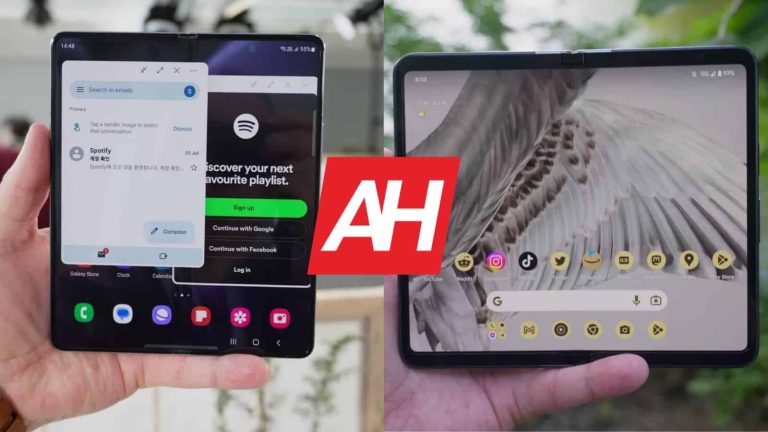
The Galaxy Z Fold 5 is the latest book-style foldable from Samsung. When it comes to the US, it doesn’t have many competitors, but we’ll compare it with one of them, the one from Google. We’ll compare the Samsung Galaxy Z Fold 5 vs Google Pixel Fold. Both of these smartphones are book-style foldables, but they have somewhat different approaches to that form factor. They both look different, and feel different to use.
We’ll first list their specifications, and then we’ll move to compare them across a number of other categories. Checking out the design differences will be especially interesting. In addition to that, we’ll also check out their displays, performance, battery life, cameras, and audio performance. Let’s get to it.
Specs
– Screen size (main): 7.6-inch Foldable Dynamic AMOLED 2X display (120Hz, HDR10+, 1,750 nits / 7.6-inch Foldable OLED display (120Hz, HDR10+, 1,450 nits) – Cover: 6.2-inch Dynamic AMOLED 2X (120Hz) / 5.8-inch OLED (120Hz) – Screen resolution (main): 1812 x 2176 / 1840 x 2208 – Cover: 2316 x 904 / 2092 x 1080 – SoC: Snapdragon 8 Gen 2 for Galaxy / Google Tensor G2 – RAM: 12GB (LPDDR5X) / 12GB (LPDDR5) – Storage: 256GB/512GB/1TB / 256GB/512GB – Rear cameras: 50MP (wide, f/1.8 aperture, OIS), 12MP (ultrawide, 123-degree FoV), 10MP (telephoto, 3x optical zoom) / 48MP (wide, f/1.7 aperture, OIS), 10.8MP (ultrawide, 121-degree FoV), 10.8MP (telephoto, 5x optical zoom, OIS) – Front cameras: 4MP (under display, main display, f/1.8 aperture), 10MP (cover display, f/2.2 aperture) / 8MP (main display, f/2.0 aperture), 9.5MP (cover dsiplay, f/2.2 aperture) – Battery: 4,400mAh / 4,821mAh – Dimensions (unfolded): 154.9 x 129.9 x 6.1mm / 158.7 x 139.7 x 5.8mm – Dimensions (folded): 154.9 x 67.1 x 13.4mm / 139.7 x 79.5 x 12.1mm – Weight: 253 grams / 283 grams – Connectivity: 5G, LTE, NFC, Wi-Fi, USB Type-C, Bluetooth 5.3 / 5.2 – Security: Side-facing fingerprint scanner – OS: Android 13 with One UI / Android 13 – Price: $1,799 / $1,799 – Buy: Samsung / Google
Samsung Galaxy Z Fold 5 vs Google Pixel Fold: Design
As already mentioned, both of these phones are book-style foldables. The thing is, the Galaxy Z Fold 5 goes for a tall, narrow shape, while the Pixel Fold is shorter and wider. That way the Pixel Fold feels more like a regular phone when folded, and has a horizontal layout when unfolded. The Galaxy Z Fold 5 is really narrow when folded, and it almost has a square shape when unfolded.
Considering these layouts, the two phones are considerably different in terms of usage. They are both made out of metal and glass, though. They both have a display camera hole on the cover display. It’s also worth noting that both of these devices do fold flat. The Pixel Fold is a bit thinner when both folded and unfolded, while it weighs more than the Galaxy Z Fold 5. You will feel that difference, as it weighs 283 grams, compared to 253 grams of the Fold 5.
Both handsets have three cameras on the back, though they look considerably different from the design standpoint (camera islands), and the hardware is also different. Samsung opted for an under-display camera on the main display, while Google hid the camera inside the bezel around the main display. Those bezels are noticeably thicker than the ones on the Galaxy Z Fold 5. In fact, its top and bottom bezels are thicker than the side bezels, which does look a bit weird.
Both of these devices do offer an IPX8 rating for water resistance. They are both quite slippery, by the way, so using a case may not be a bad idea. They do both feel like premium devices, though.
Samsung Galaxy Z Fold 5 vs Google Pixel Fold: Display
The Galaxy Z Fold 5 includes a 7.6-inch 1812 x 2176 Foldable Dynamic AMOLED 2X display. That panel has a 120Hz refresh rate, supports HDR10+ content, and has a peak brightness of 1,750 nits. The second display on the phone is a 6.2-inch panel. That display has a 2316 x 904 resolution, and a 23.1:9 aspect ratio. That is a Dynamic AMOLED 2X display with a 120Hz refresh rate, and it’s protected by the Gorilla Glass Victus 2.
The Google Pixel Fold, on the other hand, includes a 7.6-inch 1840 x 2208 Foldable OLED display. That display has a 120Hz refresh rate, and supports HDR10+ content. It has a peak brightness of 1,450 nits. The cover display on the phone measures 5.8 inches, and offers a resolution of 2092 x 1080. That panel has a 17.4:9 aspect ratio, and a peak brightness of 1,550. That is an OLED panel with a 120Hz refresh rate, supports HDR content, and is protected by the Gorilla Glass Victus.
All four displays here are good, actually. There’s not much to complain about, to be quite honest. The Galaxy Z Fold 5’s main display does get a bit brighter, but the Pixel Fold’s is bright enough. The Pixel Fold’s cover display is more enjoyable to use, due to its aspect ratio and size. They both offer vivid colors, good viewing angles, and are more than sharp enough. You do need to decide which aspect ratio suits you better, though, mainly when it comes to main displays. These are considerably different foldables.
Samsung Galaxy Z Fold 5 vs Google Pixel Fold: Performance
The Snapdragon 8 Gen 2 for Galaxy fuels the Galaxy Z Fold 5. Samsung also included 12GB of LPDDR5X RAM in the device, and UFS 4.0 flash storage too. The Pixel Fold, on the other hand, is fueled by the Google Tensor G2 processor. Google also included 12GB of LPDDR5 RAM inside this phone, and UFS 3.1 flash storage. Samsung does have the edge when it comes to sheer performance power.
The Snapdragon 8 Gen 2 is more powerful than the Tensor G2, and it also offers better power consumption. RAM and storage modules are also newer and faster inside the Galaxy Z Fold 5. Is that something you’ll notice during your usage, though? Well, no, unless you compare them directly, and then you’ll notice that the Fold 5 is a bit snappier, and that goes for opening up apps too.
Where you will notice the difference, however, is in the gaming department. If you’re not a gamer, this won’t really interest you. Both phones do a great job with most games, but when it comes to the most graphically-intensive games, the Galaxy Z Fold 5 is the king. The Pixel Fold is not exactly made for gaming, and in games such as Genshin Impact, it can struggle a bit, at least in comparison to the Fold 5. Overall, though, both phones do offer good performance.
Samsung Galaxy Z Fold 5 vs Google Pixel Fold: Battery
The Galaxy Z Fold 5 has a 4,400mAh battery on the inside, while the Pixel Fold comes with a 4,821mAh unit. Google did manage to squeeze in a considerably larger battery inside its foldable, and it also has a smaller cover display. Considering everything, does it offer better battery life, though? Despite its SoC? Well, yes, it does, at least it did during our testing. Do note that your mileage may be considerably different, though. Your usage could end up being considerably different, as there are two screens here to think of. We did use the cover displays on both phones quite a bit.
In any case, crossing the 8-hour screen-on-time mark on the Pixel Fold was not a problem for us at all. The phone actually went to 8 and a half hours of screen-on-time without a problem almost every time. We’re still actively testing the Galaxy Z Fold 5, but its battery life also seems promising. We’re not seeing it to be as good as what the Pixel Fold offers, though. On the Fold 5, we’re getting closer to 7 hours of screen-on-time, 7 and a half. Do note that we’re not really gaming on our phones all that much, other than for testing purposes.
Now, in terms of charging. The Galaxy Z Fold 5 supports 25W wired, 15W wireless, and 4.5W reverse wireless charging. The Pixel Fold, on the other hand, supports 21W wired, and 7.5W wireless charging. Neither phone offers particularly fast charging, but if you’re planning on charging these devices wirelessly, the Fold 5 is the better option. Neither phone comes with a charging brick, though.
Samsung Galaxy Z Fold 5 vs Google Pixel Fold: Cameras
The Galaxy Z Fold 5 has a 50-megapixel main camera, a 12-megapixel ultrawide unit (123-degree FoV), and a 10-megapixel telephoto camera (3x optical zoom). The Pixel Fold, on the other hand, includes a 48-megapixel main camera, a 10.8-megapixel ultrawide unit (121-degree FoV), and a 10.8-megapixel telephoto camera (5x optical zoom).
So, the Pixel Fold is closer to the Pixel 7a in terms of its cameras, than the Pixel 7 Pro, as far as hardware is concerned. It does have that telephoto camera unlike the Pixel 7a, however. Despite the fact its camera hardware is inferior to the Pixel 7 Pro, the pictures look great. Google’s image processing strikes again. The images are sharp, vivid, and have that Pixel look you’d expect, that contrasty look. The telephoto camera also does a really good job at 5x, and the phone didn’t exactly falter in low light either.
The Galaxy Z Fold 5 provides a bit more saturated images, and it’s less reliable than the Pixel Fold, in the general scheme of things. The skin colors are a hit-and-miss, for example. Still, the images it provides are sharp, vivid, and look good overall. The phone also did a good job in low light, while its telephoto camera is not as good as the one on the Pixel Fold, but it’s quite good nonetheless.
Audio
Both the Galaxy Z Fold 5 and Pixel Fold include a set of stereo speakers. Both sets of speakers are good, and loud enough. They are well-balanced, and there’s even some bass to speak of. These are not the best speakers out there, though, but they’re on the same playing field, and they’re good overall.
What you will not find on either phone is an audio jack. You will need to use a Type-C port on either phone in order to connect your headphones via a wire. If you prefer wireless connections, Bluetooth 5.3 is available on the Galaxy Z Fold 5, while the Pixel Fold includes Bluetooth 5.2.
Ever since its launch back in 2016, the Brave browser has grown to be the go-to choice for internet surfers. This privacy-oriented browser is now home to over 50.2 million monthly users around the globe. Brave is now proud to announce its new media search feature that keeps users away from Google and Bing search engines.
The announcement of this new feature was given in a recent press release. For a while now, Brave has not been able to offer media results like pictures and videos for users. This is because the privacy-focused browser has long relied on either Google or Bing for media results.
By doing this, Brave exposes its user to privacy risks that it claims to protect them from. But all of that is changing as the browser is getting a new in-house media search feature. With this, users will be able to search for media-related issues and get results without relying on other browsers.
The new media search result feature on the Brave browser is here to improve privacy
At the heart of Brave’s services is privacy, and that’s one of the things users find attractive about the browser. The company refers to itself as the best privacy online. It also promises users better protection while browsing, outperforming what Google and Bing offer.
Brave helps to block web trackers and ads while users surf from one website to the other. To further solidify its privacy-oriented features, the browser is getting a new media (image and video) search feature. This new feature keeps all media searches within the Bing ecosystem and keeps users away from other browsers.
Previously, users of the Brave browser had to rely on API calls to Google and Bing before they could image search results. But all of that is coming to an end as the Brave browser can now source image search results on its own. This shows that Brave is ready to stand on its own and it started this break-off from Google and Bing early this year.
Brave also claims that providing its media search results with sourcing APIs will make the browser faster. This new privacy-oriented media search feature will also improve user privacy. The browser also promises to add a ton of new features to improve the media search results it gives users. These additional features will roll out in the coming future.
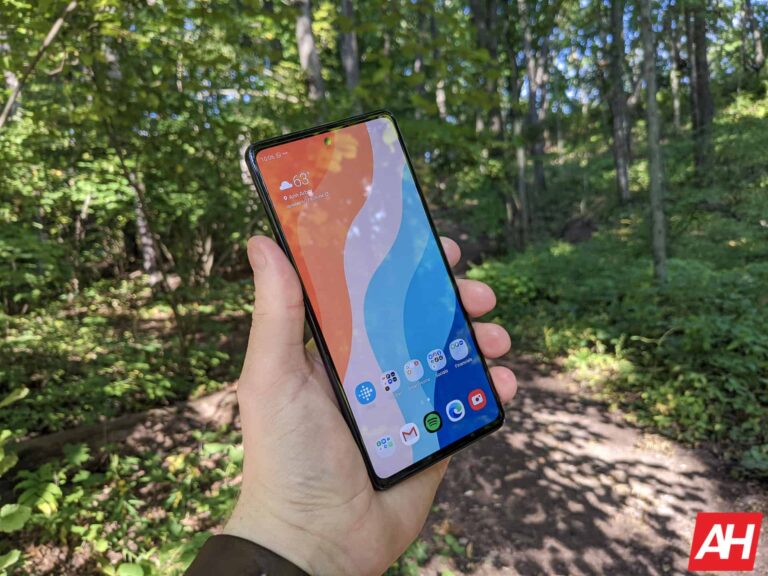
Samsung has begun rolling out the August 2023 Android security patch to Galaxy devices. This month, the Galaxy S20 FE has earned the distinction of being the first to pick up the latest security update. Neither Google nor Samsung has detailed the content of the new SMR (Security Maintenance Release).
As of this writing, the August security update is available for the 4G/LTE version of the Galaxy S20 FE in a handful of Latin American countries. All-things-Samsung publication SamMobile first spotted the rollout, which is now live in Bolivia, Brazil, Guatemala, Panama, Paraguay, and Trinidad & Tobago.
The latest update for the Galaxy S20 FE (LTE) in the region comes with the firmware build number G780GXXS6EWG9. Samsung’s official changelog states that the device isn’t getting anything apart from this month’s security fixes. Unfortunately, as said earlier, we don’t yet have the patch details.
Google will probably publish the content of the latest ASB (Android Security Bulletin) on Monday. Samsung will subsequently update its monthly bulletin with those details, adding details about the Galaxy-specific vulnerabilities it fixed this month. As usual, the August SMR for Galaxy devices should bring several dozen vulnerability patches, including a handful of critical ones.
While we wait for the patch details, Samsung may be already preparing to expand the availability of the August update for the Galaxy S20 FE to other regions. The LTE version didn’t arrive in the US but the Korean firm did launch the phone with 5G connectivity stateside. The company will also soon release the August SMR for other Galaxy devices, including the Galaxy S23 series.
If you’re using the Galaxy S20 FE or any other Galaxy phone, you can manually check for new software updates from the Settings app. Go to the Software update menu and tap on Download and install. Wait until the device finishes looking for new updates. If it doesn’t find any, check again a few days later.
The Galaxy S20 FE will not get the Android 14 update
Galaxy S20 FE users may be getting the August security update ahead of everyone else, but they don’t have major feature updates lined up for them in the future. Launched with Android 10 in the second half of 2020, this phone will not get Android 14. It will end its life on Android 13, which it picked up late last year. For those looking to upgrade, Samsung seemingly has the Galaxy S23 FE coming in a month or two. Stay tuned for its official launch.

 example image courtesy of Microsoft