WikiLeaks founder Julian Assange has been released from prison after reaching a deal with the U.S. government.
The agreement, announced early today, ends the long-standing legal battle between Assange and the U.S. authorities.
Terms of the Deal
Assange, 52, was arrested at the Ecuadorian embassy in London in April 2019 and has been held in Belmarsh prison since then.
He was facing extradition to the United States on charges related to WikiLeaks’ publication of classified U.S. military records and diplomatic cables in 2010 and 2011.
Under the terms of the deal, Assange has agreed to plead guilty to one count of conspiracy to commit computer intrusion, a charge that carries a maximum sentence of five years in prison.
However, in a surprise move, the U.S. government has agreed to drop all remaining charges against him, including espionage charges that could have carried a sentence of up to 175 years in prison.
JULIAN ASSANGE IS FREE
Julian Assange is free. He left Belmarsh maximum security prison on the morning of 24 June, after having spent 1901 days there. He was granted bail by the High Court in London and was released at Stansted airport during the afternoon, where he boarded a…
In exchange for his guilty plea, Assange will be released from prison immediately and allowed to return to his home in London.
He will also be required to cooperate with U.S. authorities in their ongoing investigations related to WikiLeaks.
Shift in U.S. Government Stance
The deal marks a significant shift in the U.S. government’s stance on Assange, who has been a thorn in the side of successive U.S. administrations.
The Obama administration had previously declined to prosecute Assange, citing concerns about the implications for press freedom.
However, the Trump administration had taken a harder line, with then-Attorney General Jeff Sessions stating that Assange’s arrest was a “priority.”
Assange’s supporters, who have long argued that he was being unfairly targeted for his role in exposing U.S. war crimes and human rights abuses, are hailing the deal as a major victory.“
This is a huge win for Julian and press freedom,” said WikiLeaks lawyer Jennifer Robinson. “We are thrilled that Julian will finally be able to return home and resume his life.”
The deal is also seen as a significant blow to the U.S. government’s efforts to prosecute Assange, which human rights groups and journalists around the world had widely criticized.
Reactions and Implications
Amnesty International, which had campaigned for Assange’s release, welcomed the news, saying it was “a long-overdue recognition of the need to protect freedom of expression and the right to information.”
Assange’s release is expected to spark a new wave of debate about the role of whistleblowers and the importance of protecting press freedom in the digital age.
As the world becomes increasingly interconnected and dependent on digital technologies, the question of balancing national security with the need for transparency and accountability will only likely become more pressing in future years.
FreeWebinar! 3 Security Trends to Maximize MSP Growth -> Register For Free
We all witnessed the advent of AI, but nothing prepared us for its quick takeover, given the debate over regulated acceptance that AI came with. Everywhere you turn, you will encounter an AI feature, whether directly or on the backend. AI isn’t stopping at social media apps but also crossing into trading apps. Developers are hoping to improve analysis and increase the probability of predictions. In the coming years, there will be specific AI features that forex traders can expect in trading apps. Let’s consider a number of them.
What Is AI in Forex Trading?
Artificial intelligence in forex trading involves several processes and applications, such as machine learning, data analysis, and cognition. Over the decades, these processes have been used to identify and analyze statistical data, such as price trends. They have even been applied to help traders make accurate predictions and automate trade activities. Here are some artificial intelligence features you can expect in trading apps.
Sentiment Analysis
Sentiment analysis focuses on the prevailing emotion of the market towards a given currency, and it strongly influences investor decisions. Since sentiment analysis is a qualitative analysis where numbers are sketchy for data-driven decisions, AI provides a way to compensate for the absence of statistical evidence. In seconds, AI can fetch data from across the globe and inform traders about market sentiments. The data comes from news, expert comments, economic indicators, and social media posts from interest groups.
Risk Mitigation Systems
Risk is an ever-present factor in every business. However, its presence is even more potent in a relatively volatile market like forex. Risk mitigation systems help traders identify, analyze, and prioritize risks. These processes will inform the trader’s coordinated deployment of his funds in ways that reduce the impact of adverse outcomes or increase profitable outcomes. The data analyzed by AI usually involves historical events and market situations.
With AI’s assistance, spotting and avoiding fraudulent positions can be easier. Manipulative forces and unusual trading patterns in online trading markets negatively influence investors to buy pseudo-bullish stocks. By including this AI feature in trading apps, traders can have safer trading grounds.
Predictive Modeling
A large chunk of trading activity involves predictions and forecasting. With the large amounts of data available for analysis today, AI’s robust capabilities are a veritable tool in the arsenal of forex traders.
Now, traders can deploy more effective trading plans. With historical and current trends under the radar of AI’s investigative prowess, one can spot unusual trend patterns and predict future patterns. This feature’s incorporation of technical and fundamental analytics makes this feature powerful.
Automation
Several global operations have embraced automation, and the money market is following suit. Automation reduces human involvement in tasks and processes to the barest minimum. In forex trading, automation is often referred to as robotic trading. Trading apps with this AI feature are developed with instructions already programmed to take a trading action when they observe a particular market condition.
For instance, you can set up the app to stop loss when it notices a trend you must have observed from previous analysis. AI features can help erase human bias and errors from emotional trading. Automation saves time, eases mental stress, and helps you diligently follow trading plans.
HFT Capabilities
One feature traders can look for is the High-Frequency Trading capability. HFT ensures traders can enter several markets simultaneously and earn profits quickly. The key to profit maximization using high-frequency trading opportunities is to identify several opportunities with small price disparities and make profits from them.
The collection of these small profits becomes worthwhile. Thanks to its data collection, analysis, and automation, AI can undertake intensive research and enter trades that offer arbitrage opportunities. Although many traders are concerned about the nature of HFT opportunities, the speed of execution and liquidity encourage traders desirous of quick profits to seek this feature on trading apps.
Backtesting Capabilities
With this feature, traders can ascertain the effectiveness of their online trading plans. AI gathers information about the outcome of similar plans in the past and analyzes it to show traders if the trading strategy has been effective in similar situations. The result is a pointer to what to expect in the future should the trader carry out the trade action at the current time. This feature helps traders discover possible errors and adjust their plans.
Possible Concerns Over AI in Forex Trading
It is plausible to see disruptive innovations like AI witness their fair share of disadvantages and concerns. What are these concerns?
Expensive To Implement
Developing and implementing these AI features costs developers and companies running these trading apps a fortune. The required technological sophistication and the hiring price for the professionals needed to implement these AI tasks require a lot of money. Setting these technologies up is only part of the process; it requires continuous updating and review. All these costs affect the company and the end user, who will have to pay higher usage fees.
Regulation and Ethical Issues
With AI being an innovation still under study, governing bodies are still trying to find the best way to create regulations that will not hamper its developmental use. However, work is ongoing to set up ethical guidelines to protect platforms from unfair trading and illegal data access. There is also a growing concern over AI’s ability to pry into people’s and companies’ private information, leaving identity damage in its wake.
Over-Dependence
It is a known human weakness to continue an act that gives people results with less work, and AI offers just that. However, this leaves us with the problem of overdependence in online trading. This problem manifests in two ways. First, it may result in severe losses when tiny system errors produce wrong predictions. Second, with AI doing the research and even performing automated trading, traders may begin to lose touch with their skills.
Balancing Innovation and Ethics in AI-Driven Forex Trading
Numerous AI features forex traders may expect in trading apps, such as sentiment analysis tools, predictive modeling, and automation, are innovative solutions to what many traders find taxing and time-consuming. However, there are also concerns. These concerns range from over-dependence on AI to ethical issues. Going by the current trajectory of events, AI is here to stay. Regulatory bodies and financial institutions are working to reduce and eliminate threats posed by the concerns.
Four Vietnamese nationals have been charged for their involvement in a series of computer intrusions that caused over $71 million in losses to U.S. companies.
The indictment, unsealed today, names Ta Van Tai, aka “Quynh Hoa,” aka “Bich Thuy;” Nguyen Viet Quoc, aka “Tien Nguyen;” Nguyen Trang Xuyen; and Nguyen Van Truong, aka “Chung Nguyen,” as members of the notorious international cybercrime group known as “FIN9.”
From May 2018 through October 2021, the defendants allegedly hacked into the computer networks of various U.S. companies, stealing non-public information, employee benefits, and funds.
U.S. Attorney Philip R. Sellinger emphasized the severity of the crimes, stating, “The FIN9 defendants were prolific international hackers who, for years, allegedly used phishing campaigns, supply chain attacks, and other hacking methods to steal millions from their victims.”
According to the indictment, the FIN9 group employed a range of sophisticated techniques to infiltrate their victims’ networks.
These included phishing campaigns and supply chain attacks, which target the computer networks of trusted third-party vendors.
Once inside, the hackers exfiltrated sensitive information, including employee benefits and gift card data, which they redirected to accounts under control.
FBI Newark Special Agent in Charge James E. Dennehy highlighted the challenges in tracking such cyber criminals, noting, “Cyber actors cloak themselves in the virtual world, hiding in a space most people can’t see and don’t understand.
However brilliant these hackers believe they are at disguising themselves, these members of the FIN9 group couldn’t conceal their exfiltration of data from their victims’ companies.”
Charges and Potential Penalties
The defendants face many charges, including conspiracy to commit fraud, extortion, wire fraud, and intentional damage to protected computers.
If convicted, they could face significant prison time. Specifically, they are charged with:
One count of conspiracy to commit fraud, extortion, and related activity in connection with computers, carrying a penalty of up to five years in prison.
One count of conspiracy to commit wire fraud, with a potential 20-year sentence.
Two counts of intentional damage to a protected computer, each carrying up to 10 years in prison.
Additional charges of conspiracy to commit money laundering, aggravated identity theft, and conspiracy to commit identity fraud, with penalties ranging from two to 20 years in prison.
U.S. Attorney Sellinger credited the FBI Newark’s Cyber squad and their counterparts in Little Rock for their diligent work in bringing these charges.
The case is being prosecuted by Assistant U.S. Attorneys Anthony P. Torntore and Vinay S. Limbachia of the U.S. Attorney’s Cybercrime Unit in Newark.
The charges and allegations in the indictment are accusations, and the defendants are presumed innocent unless and until proven guilty.
FreeWebinar! 3 Security Trends to Maximize MSP Growth -> Register For Free
It’s not often that streaming services like YouTube and Twitch release new tools that are specifically designed to help smaller creators gain new followers. The new feature launched this week by YouTube introduces a new way for users to support their favorite creators.
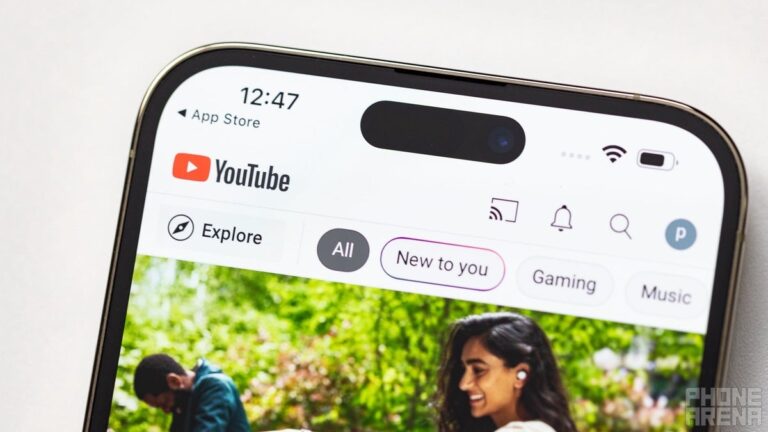
Unlike many of the similar features released by YouTube in the past, this one only addressed to smaller creators. In addition to functions such as “Like” and “Share,” YouTube viewers will now have another feature at their disposal: Hype.
According to YouTube, the more viewers hype a video, the greater the chance of it appearing in the rankings with other hyped videos. The streaming service says that the ranking will appear in the “Explore” section, so it won’t be listed in the “Trending” section.
Apparently, the new “hype” feature isn’t used as an indicator for YouTube’s search and discovery system. More importantly, this was launched as an experiment, so not everyone will have access to it.
Only lucky viewers in Brazil, Turkey and Taiwan can take advantage of the “hype” feature and use on videos posted in the last seven days. One other thing worth mentioning is that eligibility for the experiments is limited to a subset of YouTube Partner Program content creators with fewer than 500,000 subscribers.
Obviously, the videos produced must meet YouTube’s community guidelines, otherwise “hyping” them won’t have any effect when it comes to rankings. The new feature will be tested in the coming weeks and might change based on the feedback received from YouTube viewers.
Generally speaking, the ability to “hype” a video to support your favorite creator is very nice, especially if you’re a hardcore fan. Personally, I believe that lowering the number of subscribers a creator must have to be eligible for the “hype” function will truly help smaller content creators.
In a shocking development, the NHS has revealed that it was the victim of a major cyber attack targeting Synnovis.
Synnovis, formerly Viapath, is a London-based provider of pathology services. It is a partnership between Guy’s and St Thomas’ NHS Foundation Trust, King’s College Hospital NHS Foundation.
The attack, which occurred on June 22nd, has potentially compromised the sensitive health data of millions of NHS patients across England.
According to official statements from NHS England and NHS Digital, the cybercriminals behind the attack were able to access Synnovis’ systems.
FreeWebinar! 3 Security Trends to Maximize MSP Growth -> Register For Free
Synnovis Response
“Synnovis, a pathology services partnership between two London hospital Trusts and SYNLAB, recently fell victim to a cyberattack. Last week, a group claimed responsibility for the attack and published data online.” Snnaovis said via press release statement.
There has been no evidence to suggest that the Laboratory Information Management Systems (LIMS) databases, which are critical for supporting laboratory operations and holding patient test requests and results, have been compromised or posted online.
“However, a partial and fragmented form of the administrative working drive has been posted. This drive contains some fragments of patient-identifiable data. Our top priority is addressing this issue and understanding the extent of the breach, Synnovis Said.
The NHS uses these systems to securely transfer patient data between different parts of the health service, which has raised serious concerns about the safety and privacy of confidential patient information.
NHS officials are scrambling to assess the full extent of the breach and determine exactly what data may have been exposed.
They have assured the public that emergency services and urgent care remain fully operational, but some non-urgent appointments and services may need to be rescheduled as they work to restore impacted systems securely.
Synnovis has taken its affected systems offline as a precautionary measure while they investigate the incident in partnership with the National Cyber Security Centre and NHS.
However, many question how such a vital part of the NHS digital infrastructure could be left vulnerable to attack.
The NHS is now facing difficult questions about its cyber security measures’ robustness and preparedness for increasingly sophisticated cyber threats.
Patients are being urged to be extra vigilant and report any suspicious communications claiming to be from the NHS.
As more details emerge about the scale and impact of this unprecedented attack on England’s health service, public trust in the NHS’ ability to keep personal data safe hangs in the balance.
This developing story has sent shockwaves through the healthcare sector and beyond.
Investigations are complex and may take weeks to identify impacted individuals. Local health systems collaborate to manage the patient impact, ensuring urgent blood samples are processed, and laboratories can access historical records. NHS officials said patients should attend appointments and seek urgent care as usual unless advised otherwise.
In this article, we’ll be comparing the very best Apple and Vivo have to offer at the moment. We’ll compare the Apple iPhone 15 Pro Max vs Vivo X100 Ultra. The Vivo X100 Ultra is newer, as it launched in May, while the iPhone 15 Pro Max arrived back in September last year. Before we begin, it is also worth noting that the Vivo X100 Ultra does not come in a global variant. The phone was launched in China only. You can import it and install the Google Play Store, though, and the phone should work just fine.
With that in mind, we’ll first list the specifications of both smartphones. Following that, we’ll compare them across a number of different sections. We’ll compare their designs, displays, performance, battery life, cameras, and audio performance. Considering how different these phones are, there’s a lot to talk about. So… let’s get to it.
Specs
Apple iPhone 15 Pro Max vs Vivo X100 Ultra, respectively
Apple iPhone 15 Pro Max vs Vivo X100 Ultra: Design
These two handsets do look completely different. That is true regardless if you’re looking at them from the front, the sides, or the back. Let’s first say that the iPhone 15 Pro Max is made out of titanium and glass. The Vivo X100 Ultra is made out of aluminum and glass. The iPhone 15 Pro Max has a flat display and a pill-shaped cutout on the front. The Vivo X100 Ultra has a curved display and a display camera hole, which is much smaller than the iPhone’s cutout. Both phones have immensely thin bezels around their displays.
The iPhone 15 Pro Max has flat sides which are slightly curved towards the edges. The Vivo X100 Ultra does not have flat sides at all, its front and back sides curve into the thin side frame. The iPhone 15 Pro Max has a power/lock button on the right side. Its volume up and down buttons are on the left, as is the Action Button. The Vivo X100 Ultra has all of its physical buttons on the right-hand side.
The two phones have different camera islands on the back. The iPhone 15 Pro Max has its recognizable triple camera setup in the form of a camera island placed in the top-left corner. Vivo’s flagship includes a large, round camera oreo, which is centered in the upper portion of its back. There are three cameras inside it. Both devices are IP68 certified, which means they’re both water and dust-resistant.
The Vivo X100 Ultra is taller, while the iPhone 15 Pro Max is wider of the two. Apple’s handset is slightly thinner, and also slightly lighter (8-gram difference). Both smartphones are very slippery in the hand. So you’ll likely want to use a case with each of these phones.
Apple iPhone 15 Pro Max vs Vivo X100 Ultra: Display
The iPhone 15 Pro Max features a 6.7-inch 2796 x 1290 LTPO Super Retina XDR OLED display. This panel is flat, and it offers an adaptive refresh rate of up to 120Hz. HDR10 content is supported here, as is Dolby Vision. The peak brightness of the iPhone 15 Pro Max’s display is 2,000 nits. The display aspect ratio is 19.5:9, while the screen-to-body ratio is around 89%. The Ceramic Shield glass protects this display.
On the other hand, the Vivo X100 Ultra has a 6.78-inch QHD+ (3200 x 1440) LTPO AMOLED display. This panel is curved, and it has an adaptive refresh rate of up to 120Hz. It can project up to 1 billion colors and supports Dolby Vision too. HDR content is supported, and the peak brightness here is at 3,000 nits. The display aspect ratio on this panel is 20:9, while the screen-to-body ratio is around 89%. The display protection is unknown.
Both of these phones have great displays. They’re vivid, have great viewing angles, and they’re also very sharp. The touch response is great too, while the blacks are deep, as you’d expect them to be on OLED panels. Both displays also get more than bright enough in all conditions. The Vivo X100 Ultra does get a bit brighter, though not as much as the peak brightness would indicate. The bottom line is, that both of these displays are great.
Apple iPhone 15 Pro Max vs Vivo X100 Ultra: Performance
Apple’s A17 Pro SoC fuels the iPhone 15 Pro Max. This is Apple’s very own 3nm processor. Apple also included 8GB of RAM inside of its handset, along with NVMe flash storage. The Vivo X100 Ultra, on the flip side, is fueled by the Snapdragon 8 Gen 3 chip. That is a 4nm processor, and the best Qualcomm has to offer. That chip is paired with up to 16GB of LPDDR5X RAM and UFS 4.0 flash storage.
Both of these phones offer great performance. When it comes to regular, everyday tasks, they’re very snappy. That goes for basically every action that comes to mind, ranging from opening apps and multitasking to consuming multimedia and image processing. Those two chips are different but are amongst the best you can find for smartphones these days, if not the best ones.
What about gaming? Well, that’s another area where both smartphones shine. They can run basically anything you’ll find in their respective app stores. Yes, both phones will get warm while gaming, even very warm if you’re pushing them hard, but that won’t affect their performance. Well, at least not if you’re gaming for a normal time span, of course, you can always overdo it. The point is, both can handle gaming without a problem, even when it comes to graphically-demanding titles.
Apple iPhone 15 Pro Max vs Vivo X100 Ultra: Battery
There is a 4,441mAh battery included inside the iPhone 15 Pro Max. The Vivo X100 Ultra, on the flip side, has a 5,500mAh battery pack. Android smartphones usually have larger battery packs than their iPhone counterparts, so don’t be surprised by this difference. In terms of battery life, both of these phones are great. They can be pushed really hard before you’ll need to charge them.
Getting over 7 hours of screen-on-time is not a problem on either device. In fact, it’s even possible to reach that 8-hour screen-on-time mark if you’re possible. Do note that your mileage may vary, as each of us uses our phones differently, with different apps, different signal strength, different usage patterns in general, etc. Still, it’s hard to argue that both phones offer great battery life. The vast majority of you won’t need to charge them during the day unless you’re using them as gaming machines or something like that.
In regards to charging, the Vivo X100 Ultra is the clear winner. The phone supports 80W wired, 30W wireless, and 5W reverse wireless charging. It also ships with a charger in the box. The iPhone 15 Pro Max offers 20W wired, 15W wireless (MagSafe and Qi2), 7.5W wireless (Qi), and 4.5W reverse wireless charging. Apple’s flagship also does not ship with a charger in the box. The Vivo X100 Ultra will charge much faster, both via a wire and wirelessly.
Apple iPhone 15 Pro Max vs Vivo X100 Ultra: Cameras
The iPhone 15 Pro Max has a 48-megapixel main camera (sensor-shift OIS), a 12-megapixel ultrawide unit (120-degree FoV), and a 12-megapixel periscope telephoto camera (5x optical zoom). The Vivo X100 Ultra, on the other hand, includes a 50-megapixel main camera (1-inch type sensor, gimbal OIS), a 50-megapixel ultrawide camera (116-degree FoV), and a 200-megapixel periscope telephoto camera (3.7x optical zoom, macro).
Both of these phones do a great job in terms of camera performance, but there are some differences. Both lean towards warmer colors, and offer sharp and great-looking photos. During the day, they’re on par in a number of ways. Their secondary cameras also do a good job of keeping the same color profile as the main shooters. The ultrawide shooters are on par too, but the telephoto camera performance is definitely better on the Vivo X100 Ultra. It does a better job at higher zoom levels, not to mention that the macro and portrait photography performance from it trumps the iPhone 15 Pro Max.
In low light, both phones do a good job, but the Vivo X100 Ultra does better in terms of light flares. The iPhone 15 Pro Max does try to keep scenes looking closer to real life, as it keeps them a bit darker than the Vivo X100 Ultra. Both phones do a really good job overall, but the Vivo X100 Ultra does tend to hit the sweet spot more often than not. That could have something to do with its advantage in the camera sensor department. The video performance is better on the iPhone 15 Pro Max.
Audio
Both of these phones do include stereo speakers. Both of these sets are good, but the iPhone 15 Pro Max does have the advantage here. Its speakers are noticeably louder in comparison, despite the fact both sets are well-balanced and offer good audio output.
You will not find a 3.5mm headphone jack here, on either of the two devices. Each of them has a Type-C port, though, so you can use that to hook up your wired headphones. If not, Bluetooth 5.3 is available on the iPhone 15 Pro Max, and Bluetooth 5.4 on the Vivo X100 Ultra.
If you thought last year’s Paramount Plus price increase was the last, the company will apply another one in 2024. Paramount Plus has been struggling to obtain the profit it initially expected. The new prices are part of a strategy to recover up to $500 million in costs.
Paramount Plus is one of the best-known streaming services, although it is not the most used. It offers multiple plans with different perks and benefits. Now, starting August 20, Paramount Plus with Showtime, Paramount Plus Essential, and Paramount Plus with limited commercials plans will become more expensive for new subscribers. However, the price of one of them will remain the same for current subscribers.
There’s a new price increase on Paramount Plus plans for 2024
Starting with the Paramount Plus with Showtime plan, it will cost $12,99 per month (previously $11,99). Regarding the Paramount Plus with limited commercials plan, it will cost $7,99 monthly (from $6,99). Finally, the Paramount Plus Essential plan will also cost $7,99 (from $5,99).
It’s worth noting that current subscribers of the Paramount Plus Essential plan will maintain the previous price. They will only start paying the new prices when they change to another one. On the other hand, current Paramount Plus with Showtime and Paramount Plus with limited commercials plan subscribers will pay the new prices starting from their next billing date or after September 20.
Latest price rise is bigger than the previous one
As mentioned before, there was already a price increase in the Paramount Plus plans last year. Overall, the cost of most plans had increased by $1 per month. Now, there are plans that increase by up to $2.
The latest increase is part of the company’s strategy to recover some money. Paramount Plus shareholders had been notified of future moves to stabilize the company’s financial situation. The movements range from cutting jobs to increasing plan prices. Recently, the company’s plan to merge with Skydance fell apart, which was a huge blow.
Google is enhancing its Gmail app for Android and iOS devices with a new “Summarize” feature. This AI-powered tool, available to paid subscribers, aims to streamline email management by condensing lengthy email threads.
The “Summarize this email” button, located beneath the subject line, will appear in email threads with more than two responses. Upon tapping the button, a Gemini sheet will slide up from the bottom of the screen, providing a concise summary of the email thread. Users can then rate the summary with a thumbs up or thumbs down.
Gemini-powered “Summarize this email” feature in Gmail on mobile | Image credit — Google
Google has announced that the rollout of this feature will begin today and be fully available to all eligible users in the next couple of weeks. This feature is expected to be helpful to users that are usually on the go and need a quicker way to triage their inbox.
In addition to the mobile app enhancement, Google is also introducing a Gemini side panel in the web version of Gmail. This side panel, powered by Gemini 1.5 Pro, offers a range of features to assist users with their email tasks. These features include summarizing email threads, suggesting responses, helping draft emails, and answering questions about emails within the inbox or Google Drive files. Furthermore, by tapping the Gemini sparkle icon in the top-right corner, users can access proactive prompts from Gmail. The rollout of this feature is also starting today and will be fully available in the coming weeks.
Gemini in Gmail side panel on the web | Image credit — Google
Both the mobile app’s “Summarize” feature and the web version’s Gemini side panel are accessible to users who have subscribed to specific Google Workspace AI plans. These include Gemini Business and Enterprise add-on, Gemini Education and Education Premium add-on, or Google One AI Premium.
The YouTube app for Android TV and Google TV is now receiving the “stable volume” feature. It is designed to improve your listening experience by avoiding big volume differences in a video. The option has been available in the mobile app for some time.
There are times when creators do not properly balance volume levels before uploading their videos to YouTube. This results in parts with different volume levels, such as the intro and the rest of the video or a sponsored section. So, you have to manually lower or raise the volume every time, which can be annoying.
“Stable volume” will improve your audio experience on YouTube for Android TV
With that in mind, the YouTube team developed the “stable volume” feature. Once activated, it automatically balances the volume range of the playing video. The option analyzes the video to detect abnormal volume differences between different sections. The result should be a video with a more cohesive audio experience, preventing you from having to modify volume levels on your own constantly.
After a few months of being available on mobile devices, the “stable volume” feature is arriving in the YouTube app for Android TV and Google TV. According to the blog post, the goal of the feature is to “reduce discordant differences in volume.” It is enabled by default, but you can disable it if you want. For example, if you notice that it is negatively affecting the audio of a video.
The new feature will be especially noticeable in content such as podcasts, but it will also help in any video with notable differences between the volume range of different sections. However, it probably won’t have much effect on music.
You can access the “stable volume” option from gear icon available in each playing video. You can also disable it completely for all videos in the app settings. The rollout is happening with the latest YouTube app v4.40.303 update.
Google’s Gemini AI tech will be available to teen students across 100 countries soon
During the ISTE 2024 education conference, Google revealed that Gemini models will soon be available for all students with school accounts. The company said that Gemini is coming to teenagers through their Google Workspace for Education-issued accounts. Its AI chatbot will be available initially in English in more than 100 countries across the globe.
In a blog post, Google announced the Workspace for Education (school) account administrators will be able to enable Gemini on these accounts. The company also mentioned that Gemini on these accounts will “add extra data protection for all education users free of charge”.
Google Gemini for students in schools offers an additional level of data security
Besides, the company emphasizes that it will not use data from chat on these accounts to improve its Gemini AI models. To be specific, the data generated from school accounts wouldn’t be reviewed by anyone. Also, it will not be shared with other institutions.
Notably, Google claims that Gemini is tuned to identify content that’s inappropriate for teen users. It also has various guardrails to prevent inappropriate responses, such as illegal or age-gated substances, from appearing in results.
Notably, Gemini for students will automatically run a double-check response feature for fact-based questions “to help them develop information literacy and critical thinking skills”.
Google is also launching the Read Along in Classroom feature globally
Google has also announced that it is launching the Read Along in Classroom feature globally in the near future. Thanks to the feature, students across the world will be able to practice their reading skills in English. The feature will soon also provide additional support in a student’s native language. Additional language support will be limited to Spanish at the start. It will support more languages in the coming months.
Furthermore, the company has announced that a version of Google Vids without generative AI will be available to students/teachers. It will be offered on the Google Workspace for Education Plus accounts.