According to recent sources, threat actors have been working on a new variant of cross-platform ransomware that is named “Akira”.
Akira was introduced to the cybersecurity sector in March 2023, which targets several financial institutions and organisations for stealing sensitive data.
Akira has been using a Tor website for their communications with perpetrators and for posting the leaked data publicly if their ransom demands are not met from any of the affected organizations.
Threat actors using ransomware-as-a-service (RaaS) have increased among the cybercriminal community as several source codes of many ransomware were leaked online that are being used for malicious purposes.
Akira Tor website (Source: K7)
Akira Linux Variant
Threat actors have created unique public RSA keys and unique IDs for every organization they attack.
These identifiers are then used to find the appropriate decryption keys when the demands are met. In addition, the unique ID is also used for communication purposes.
Public RSA key (Source: K7)
The unique key ID and their corresponding public RSA key are linked along with the ransom note. Furthermore, the ransomware also consists of an exclusion list of files for encryption.
Exclusion list (Source: K7)
Unique ID for communication (Source: K7)
The ransomware not only consists of an exclusion list, but also contains a list of file extensions to be encrypted, which includes .sqlite, .sqlite2, and .sqlite3.
K7 has published a complete report on this ransomware which includes the command line arguments and other information.
Organizations are recommended to take extra precautions when it comes to ransomware attacks. It is safe to keep a backup of important files for recovering systems after a ransomware attack.
Avast has recently released a decrypter for the well-known Akira Ransomware on Windows. Additionally, they are currently working on a decrypter for the Linux version of the ransomware.
It is not recommended to pay ransom demands as there is no guarantee that the ransomware groups will decrypt the files.
The new Galaxy Z Flip 5 just launched, and it is already making people around the world talk. Whether it is about its features or its new hinge, people are talking about this device. A good number of these people are also considering buying this device once available.
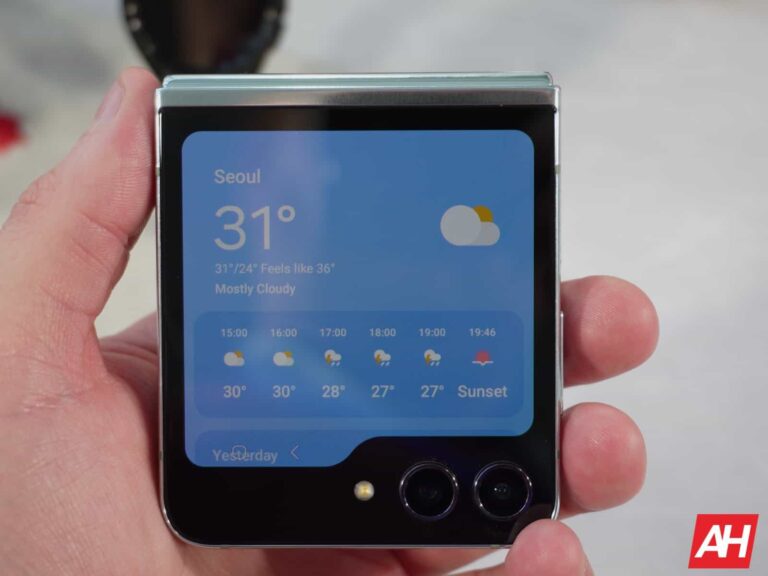
Samsung did get some areas of this device quite right, one such area is the cover display. Truthfully, there are a few upgrades on this new clamshell folding device from Samsung in comparison with its predecessor. Aside from the new cover display which will attract buyers, Samsung also added a more powerful processor (Snapdragon 8 Gen 2).
This article won’t delve into details of this new device, as its coming review will give you all the information you’d need. In this article, you’d see how the new Z Flip device’s external display compares with another clamshell folding device that has a similar cover display. The device in question is none other than the Motorola Razr+ and you can learn more about it by clicking on this link.
Comparing the external display of the new Galaxy Z Flip 5 with that of the Motorola Razr+
Both the new Galaxy Z Flip 5 and the Motorola Razr+ take the external displays to a different level. The Galaxy Z Flip 4 launched with a 1.9-inch external display, and the successor to the Razr+ has a 2.7-inch external display. However, the Galaxy Z Flip 5 and Razr+ come with 3.4 and 3.6-inch cover displays, respectively.
These are massive upgrades from their previous models, especially for Samsung’s clamshell foldable device. In the clamshell folding market, these devices come with the biggest cover display a buyer could ask for. However, the Razr+ takes the crown as the clamshell folding device with the largest screen.
The large cover displays are not just on these devices as mere decoration. They are very functional, helping users access notifications and apps while the device is folded. With this screen, users can also treat the rear cameras as a selfie camera and take crisp pictures without flipping the device open.
However, when it comes to accessing apps from the cover display, the Razr+ takes the crown once again. This device offers users access to nearly all their apps directly from the cover display. Samsung, on its part, offers access to a good amount of apps, but not all apps users might need at this time.
Having the larger 3.6-inch screen also gives the Razr+ the upper hand in this comparison. While the difference in screen size might be negligible, it still makes a difference. The external screen on the Razr+ reaches the edges of the rear panel, giving users more estate to benefit from the full-screen mode.
Having the camera on the external screen from the Razr+ might be a drawback for some potential buyers. For the Galaxy Flip 5, its uneven external display might be off-putting for other users as well. Overall, the external display on the Motorola Razr+ seems to be the better pick when it comes to practicality.
Tecno is a smartphone company that has fallen under your radar, especially if you live in the United States. However, it’s a company you should keep your eyes on if you live in other countries. The company launched its Camon 20 series of phones, and we were given the opportunity to review and compare two of them. Here’s the Camon 20 Pro vs. the Camon 20 Premier.
These are two phones with several similarities and differences. In all honesty, a lot of the differences between these phones lie in the internals. We’ll dive into those internals along with the outward-facing differences to help you decide between them.
Before we get started
We have the full review of the Camon 20 Pro, and it proved to be a fantastic device. If you’re interested in looking at this phone, then you can see why we gave it a 5-star review. Click here to read the review.
Tecno Camon 20 Pro vs. Tecno Camon 20 Premier: Build and design
When it comes to the build quality of these phones, both of these phones feel pretty similar to one another. Both of them have backs made from soft plastic, so neither of them feels particularly premium in the hand. The Camon 20 Pro feels the least premium of the pair, as it’s the lightest.
The Camon 20 Premier has a bit more weight to it. It’s pretty noticeable, especially if you pick up the Pro after using the Premier for an extended period of time. The Premier just feels more solidly built. While that’s the case, both of these phones have plastic frames, and that subtracts from both phones’ feel in the hand.
All in all, these are both mid-range phones, and they feel like it when you pick them up. The Premier is the more premium of the two, and you’ll feel it.
Design
Both of these phones share an extremely similar design. This makes sense, as they’re both from the same line of phones. They both have soft-touch plastic backs that feel like leather to the touch. There’s a design on the back with lines running throughout; colliding with other lines and running to the edges. It’s a unique design that makes it stand out from the slew of metal and glass sandwiches.
There’s only one major design difference between these phones, and it’s the camera package. The area around the Camon 20 Pro’s camera package is an irregular pentagon that sticks out among the lines. Rather, the area is formed from where the lines aren’t. The Premier has the same pentagonal shape around the camera package, but there’s a piece of metal encompassing the camera lenses. The Pro has its lenses protruding separately.
Basically, it’s obvious that these phones are two very close siblings. If you’re looking for a more premium-feeling phone, then the Premier is the way to go.
Tecno Camon 20 Pro vs. Tecno Camon 20 Premier: Display
This is an easy one; both of these phones are using the exact same panel. The Camon 20 Pro and Premier have breathtaking OLED displays. In fact, the display is one of the best aspects of these phones. Images just pop with pleasantly juicy colors.
There are two color settings for these displays. There’s the Original color mode with more subdued colors. They’re responsibly saturated, and they’re for people who want a more toned-down experience. There’s also a Bright-colored mode. This will pump up the colors and make them pop more.
There’s also a color temperature slider that lets you dial in the color temperature that you want to see. It’s pretty precise. With screens this amazing, you can bet that you’ll have a great time watching content and playing games on either handset.
When it comes to brightness, both phones are equally matched. Both displays get plenty bright; much brighter than you’d need for indoor use. When cranked up to full brightness, they’re easily visible in the bright sun.
It doesn’t matter which model you pick up, you’ll be getting an absolutely amazing viewing experience.
Tecno Camon 20 Pro vs. Tecno Camon 20 Premier: RAM and storage
The Camon 20 Premier takes the cake in one category. Both phones have the same 8GB of RAM. Also, they both have the option to expand it to a whopping 16GB using storage.
However, speaking of storage, the Camon 20 Pro comes with a handy 256GB of storage. The Premier, on the other hand, comes with 512GB of onboard storage.
Tecno Camon 20 Pro vs. Tecno Camon 20 Premier: Speakers
When it comes to the speaker quality, both of these phones are pretty close, but the Premier edges out the Pro by just a bit. The Premier’s have slightly more depth out of the box than the Pro’s. You’ll have to listen to them at the same time to really tell the difference.
I say “out of the box” because both of these phones have a pretty robust set of options to customize the sound. They both have the same set of controls, so you can tailor your sound on both.
You have an equalizer, four different sound profiles, your choice of stereo width, and which aspects you want to boost. At the end of the day, the Premier’s speakers will sound slightly better, but the difference is negligible to those who aren’t audiophiles.
Tecno Camon 20 Pro vs. Tecno Camon 20 Premier: Performance
On paper, the Camon 20 Premier should be objectively better. It’s running a more powerful processor, the MediaTek Dimensity 8050 while the Pro uses the MediaTek Helio G99. However, as we all know, on-paper specs don’t tell the whole story.
When it comes to day-to-day performance, neither of these phones slows down. I used both of these phones and, no matter the processor, they gave me consistently smooth performance. It didn’t matter if I was using them for video-watching, work, social media, or photography, these phones just did not want to slow down.
The Pro maybe dropped an animation frame slightly more than the Premier, but instances of dropped frames are extremely few and far apart. Tecno optimized the software excellently to work with the hardware.
Tecno Camon 20 Pro vs. Tecno Camon 20 Premier: Gaming
That’s day-to-day performance; gaming is a different story. This is the area where these phones show their differences. Gaming on the Camon 20 Pro is a decent to good affair. Running 2D games and most 3D games is a breeze. It only starts to slow down when trying to render more graphically intensive games like Genshin Impact or Star Rail.
Running these games at their top settings will make for a pretty stuttery experience, but they’re not unplayable. Knocking the graphics down to below normal will smooth things out. It’s for casual to heavier gaming.
The Camon 20 Premier, on the other hand, is much better at gaming. Of course, it tackles 2D games with no issue. In the case of more graphically intensive games, it’s able to tackle them as well. Moving back to Genshin, cranking the graphics to full didn’t phase this phone at all. It’s even able to run it at a good frame rate. It reaches 60fps at times and above 30fps when rendering a lot of the world. The Premier is much more of a gaming phone.
Tecno Camon 20 Pro vs. Tecno Camon 20 Premier: Camera
The camera is another where these two phones are distinct. In our review of the Camon 20 Pro, we noted that the camera was the weakest part of the experience. The pictures were lacking in the contrast and color departments. Pictures taken under direct sunlight looked as though they were taken on an overcast day.
When it came to video, it looked heavily compressed and the stabilization was just not there. All in all, the camera could have been better in just about every capacity.
However, the camera package of the Premier shows some notable improvements; actually, it’s like night and day. The Premier was able to produce pictures with more pleasing contrast and pleasant colors. Photos taken on an overcast day almost looked like they were taken under direct sunlight. One thing I’d say is that this phone tends to lean more toward the warmer side of the spectrum.
On the video front, videos still look compressed like the Camon 20 Pro’s camera. The 1080p videos didn’t have much detail, and cranking it up to 4K didn’t help much. However, the video stabilization was much better.
Tecno Camon 20 Pro vs. Tecno Camon 20 Premier: Battery
Back to the similarities; these phones have similar battery mileage. They both sport a 5,000mAh battery and they can both last you about a day and a half on a single charge. This goes for moderate to light usage. If you’re a heavy user, then you’re looking at about a day.
When it comes to charging, the Premier takes the prize. The Camon 20 Premier comes with a 45W charger in the box while the Pro has a 33W charger in the box. The Premier charges about 12%, but it won’t lead to a massive cut in overall charging time.
Tecno Camon 20 Pro vs. Tecno Camon 20 Premier: Software
Both of these phones are running the same version of HiOS version 13 running on Android 13. You won’t find a single difference in the software.
Tecno Camon 20 Pro vs. Tecno Camon 20 Premier: Misc features
When it comes to miscellaneous features, the Camon 20 Pro walks away with some wins. The Pro comes with a 3.5mm headphone jack while the Premier doesn’t. Also, while the Premier comes with twice the onboard storage, the Pro has microSD card expansion.
Tecno Camon 20 Pro vs. Tecno Camon 20 Premier: Price
Now comes the price. The price for these phones can vary depending on the vendor you’re looking into. On average, prices for the Camon 20 Pro seem to hover between $180 and $250. In short, it’s a sub-$300 phone that can be had for a steal if you find the right vendor. Just know that this phone isn’t native to the States, so you might have to pay import fees. As for the Camon 20 Premier, this phone’s price is around $360.
Tecno Camon 20 Pro vs. Tecno Camon 20 Premier: Final verdict
Both of these phones are fantastic. It doesn’t matter which phone you choose, you’ll be getting a strong smartphone experience. While this is the case, the Camon 20Premier overtakes the Pro in some key areas.
The Premier has more storage, better gaming prowess, and a much better camera. If you’re more focused on these areas, then the extra $100 or so might be worth it. However, you won’t have a bad experience with any of the phones.
Instagram has grown to be one of the most popular apps globally over the years, but a new study claims that Americans are desperate to delete it off of their devices. Suggesting its popularity within the country may be waning a bit. According to the study, which was conducted by VPNpro, Instagram overtakes all other apps in a single specific area. Apparently, it has a higher search volume with regards to deleting or deactivating than any other app.
It should be noted that the study only mentions US users. Furthermore, it only takes into account a small collection of apps. Specifically, the top 10 social media apps. Which also include Facebook, Snapchat, TikTok, Twitter (now called X), Reddit, YouTube, LinkedIn, Pinterest, and WhatsApp. What some might find interesting is that Meta owns three of these apps. Although that isn’t necessarily relevant to the study data.
Study says Instagram is the app that Americans want to delete the most
Based on the study’s information, Instagram is said to be the app that US users want off their phones more than any of the other top social media apps. The study says that users search for how to delete it 1.1 million more times than the second-closest app, which was Facebook.
Additionally, it claims users on the West coast want to delete more than anywhere else in the country. That being said, only 21 out of 50 states saw Instagram as the app that users most want to delete. States like California, Texas, Florida, Georgia, and New York ranked highest out of all 50 states.
Interestingly, X and TikTok were ranked 4th and 5th respectively. Which might be surprising given how much they have both been in the media as of late with relation to negativity. Pinterest ranks number 10, with the study claiming there were only 7,501 searches related to deleting the app off mobile devices. WhatsApp, another Meta-owned app, ranked 9th with a total of 8,226 searches. While Facebook at number 2 had 1,005,860 searches.
A patch is now available for an Ivanti EPMM vulnerability that was used in a cyberattack on the ICT platform which is relied upon by a dozen Norwegian ministries.
The Cybersecurity and Infrastructure Security Agency (CISA) added one new vulnerability to its Known Exploited Vulnerabilities Catalog affecting Ivanti Endpoint Manager Mobile, based on evidence of active exploitation. All Federal Civilian Executive Branch (FCEB) agencies must remediate this vulnerability by August 15, 2023 to protect their networks against active threats.
We urge everyone else to take this vulnerability seriously and to patch as soon as possible since the vulnerability was used in a cyberattack on the ICT platform which is relied upon by 12 Norwegian ministries.
The vulnerability exists in Ivanti Endpoint Manager Mobile (EPMM), formerly known as MobileIron Core, and impacts all supported versions as well as unsupported and end-of-life releases. Ivanti EPMM is a mobile management software engine that enables IT to set policies for mobile devices, applications, and content. The affected Norwegian ministries used it to manage mobile devices used by government employees and grant remote access to government systems and applications.
The Common Vulnerabilities and Exposures (CVE) database lists publicly disclosed computer security flaws. The CVE assigned to this vulnerability is:
CVE-2023-35078 (CVSS score 10 out of 10): Ivanti Endpoint Manager Mobile (EPMM), formerly MobileIron Core, allows remote attackers to obtain Personally Identifiable Information (PII), add an administrative account, and change the configuration because of an authentication bypass, as exploited in the wild.
Ivanti has made a patch available for supported version 11.4 releases 11.10, 11.9 and 11.8 and recommends that you immediately take action to ensure you are fully protected. Customers can find the detailed information and how to access and apply the remediations in Ivanti’s Knowledge Base article (login required).
The vulnerability was discovered in Norway as a result of an investigation into a cyberattack on the ICT platform used by 12 ministries. The Norwegian National Security Authority (NSM) and the Norwegian Government Security and Service Organization (DSS) found the vulnerability but chose not to disclose any details until a patch was available.
In a statement, Erik Hope, Director General of the Norwegian Government Security and Service Organisation (DSS) said:
“We have detected a previously unknown vulnerability in one of our suppliers’ software. This vulnerability has been exploited by an unknown third party. This vulnerability has now been fixed. It is still too early to say anything about who is behind the attack or the extent of the attack. Our investigations and the police investigations will provide more answers.”
On their site, Ivanti describes the vulnerability as an authentication bypass vulnerability in Ivanti EPMM that allows unauthorized users to access restricted functionality or resources of the application without proper authentication. According to Ivanti the vulnerability was used against “a very limited number of customers.”
According to Shodan scan posted by BleepingComputer, more than 2,900 MobileIron user portals are presently exposed online, out of which around three dozen are linked with US local and state government agencies.
Image courtesy of BleepingComputer
It is strongly advised that all network admins apply the Ivanti Endpoint Manager Mobile (MobileIron) patches as soon as possible. If this is not possible at short notice or you are using an unsupported version, you should restrict access to the platform as much as possible.
We don’t just report on vulnerabilities—we identify them, and prioritize action.
d, tThe Galaxy Z Flip 5 got announced during Samsung’s second Unpacked event of 2023, and it does bring some improvements over its predecessor. In this article, we’ll compare the two, the Galaxy Z Flip 5 vs Galaxy Z Flip 4. Granted, Samsung did make more design changes on the Flip 5, than it did on the Fold 5, and this phone may even be worth getting just for the cover display changes. More on that soon.
We’ll first list the specs of both smartphones, and will then move to compare them across a number of other categories. We’ll compare their designs, displays, performance, battery life, cameras, and audio performance. That being said, let’s get this party on the road, shall we, there’s a lot to talk about here.
Specs
– Main display: 6.7-inch fullHD+ foldable Dynamic AMOLED (120Hz) – Cover display: 3.4-inch 720 x 748 Super AMOLED / 1.9-inch 260 x 512 Super AMOLED – SoC: Snapdragon 8 Gen 2 for Galaxy / Snapdragon 8+ Gen 1 – RAM: 8GB (LPDDR5X) / 8GB (LPDDR5) – Storage: 256GB/512GB (UFS 4.0) / 128GB/256GB/512GB (UFS 3.1) – Rear cameras: 12MP (wide, OIS, PDAF, f/1.8 aperture, 1.8um pixel size), 12MP (ultrawide, 123-degree FoV) – Front cameras: 10MP (f/2.2 aperture, 1.22um pixel size) / 10MP (f/2.4 aperture, 1.22um pixel size) – Battery: 3,700mAh (25W wired, 15W wireless, 4.5W reverse wireless), no charger – Dimensions (unfolded): 165.1 x 71.9 x 6.9mm / 165.2 x 71.9 x 6.9mm – Dimensions (folded): 85.1 x 71.9 x 15.1mm / 84.9 x 71.9 x 15.9-17.1mm – Weight: 187 grams – Connectivity: 5G, LTE, NFC, Wi-Fi, USB Type-C, Bluetooth 5.3 / 5.2 – Security: Side-facing fingerprint scanner – OS: Android 13 with One UI / Android 12 with One UI (upgradable) – Price: $999 / $999 – Buy: Amazon / Amazon
Samsung Galaxy Z Flip 5 vs Samsung Galaxy Z Flip 4: Design
Both of these phones are made out of metal and glass, and even though they have a very similar form factor and size, you’ll quickly see the difference between them. The Galaxy Z Flip 5 has a much larger cover display than the Flip 4. That sheer fact is more than enough to spot it right away. In addition to that, the Flip 5 folds flat unlike the Flip 4. That also makes it look and feel more modern. The Galaxy Z Flip 5 is also a bit thinner than its predecessor.
The Galaxy Z Flip 5 also has horizontal cameras on the back, to accommodate that cover display that looks like a folder icon. The Flip 4 has vertically-aligned cameras, which is another easy way to differentiate the two. The Flip 5 is also all black on the entire front side of the phone (when folded). On the other hanhe Flip 4 is not, it combines that black portion where the display is with the color of the phone itself.
The two phones are basically identical in terms of dimensions. There is a 0.1-0.2mm difference in terms of height, and slight difference in the thickness department, but that’s basically it. Both smartphones are IPX8 certified for water resistance, and both have thin bezels on the main display, and a centered display camera hole. You will also find flat sides on both smartphones, that goes for all their sides.
Samsung Galaxy Z Flip 5 vs Samsung Galaxy Z Flip 4: Display
Both of these smartphones utilize the same main display, basically. We’re looking at a 6.7-inch panel with fullHD+ (2640 x 1080) resolution. This is a foldable Dynamic AMOLED 2X display with a 120Hz refresh rate. HDR10+ content is supported here, and the display can go up to 1,200 nits of brightness at its peak. These two panels are basically identical, so if you’ve used the Flip 4, you know exactly what to expect here in terms of image reproduction.
The cover display on the Galaxy Z Flip 5 measures 3.4 inches. It has a resolution of 720 x 748 pixels, and it’s protected by the Gorilla Glass Victus 2. That is a Super AMOLED display with a 60Hz refresh rate. The Galaxy Z Flip 4 has a 1.9-inch Super AMOLED display with a resolution of 260 x 512 pixels. The Gorilla Glass Victus+ is included on top of that panel, for protection purposes.
When it comes to the main display, they’re the same in terms of image quality. The Galaxy Z Flip 5’s main display should be more resistant to breakage, though. The cover display on the Flip 5 is much larger, and thus will be much more useful, as Samsung will allow you to use any app on it through Good Lock. The same cannot be said for the Galaxy Z Flip 4’s display, though, it’s simply too small. Some people will probably prefer that, though.
Samsung Galaxy Z Flip 5 vs Samsung Galaxy Z Flip 4: Performance
The Galaxy Z Flip 5 is fueled by the Snapdragon 8 Gen 2 for Galaxy. It also includes 8GB of LPDDR5X RAM, and UFS 4.0 flash storage. The Galaxy Z Flip 4, on the other hand, has 8GB of LPDD5 RAM and UFS 3.1 flash storage. So, in terms of performance-related specs, the Flip 5 does have the upper hand across the board, which was to be expected. How do they compare performance-wise, though?
At the time of writing this comparison, we did not have enough time to properly review the Flip 5. We did use it, however, for a bit. Based on those impressions, the phone performs great, as expected. It has the same chip as the Galaxy S23 Ultra, and the latest RAM and storage chips. It flies through everything with ease. On the other hand, the Flip 4 is not far from it either. To this day the phone offers outstanding performance, and we really can’t complain, even though you’ll see slightly faster app launches on the Flip 5, and things like that. You can’t really go wrong with either, though. Even when gaming is concerned, both smartphones can handle even the most intense games, though they do get quite warm after longer gaming sessions.
Samsung Galaxy Z Flip 5 vs Samsung Galaxy Z Flip 4: Battery
Samsung opted not to improve the battery capacity on the Flip 5. Both of these smartphones include a 3,700mAh battery on the inside. The Snapdragon 8 Gen 2 is a bit more power efficient than the Snapdragon 8+ Gen 1, though, so one would expect it to offer better battery life. The Flip 5 does have a larger cover display, though, so that could impact battery life too. We did not use the phone long enough to make our verdict, but the battery life seems to be quite similar to what the Flip 4 offered, if not a bit better, at least thus far.
Another area where Samsung opted not to make any improvements is… charging. The Galaxy Z Flip 5 supports 25W wired, 15W wireless, and 4.5W reverse wireless charging. That’s exactly the same as what the Galaxy Z Flip 4 offers. The Flip 5 also doesn’t include a charger in the box, just like its predecessor, you will find a charging cable in there, though. If you end up using 25W wired charging, both phones can reach a 50-percent charge in about 30 minutes. It’ll take them approximately another hour to jump to 100%.
Samsung Galaxy Z Flip 5 vs Samsung Galaxy Z Flip 4: Cameras
When it comes to cameras, Samsung has decided to keep things… the same. The camera hardware is identical to last year’s model. We’re looking at a 12-megapixel main camera with an f/1.8 aperture and 1.8um pixel size. OIS is included, as is PDAF. A 12-megapixel ultrawide camera also sits on the back of both phones, and it offers a 123-degree field-of-view. On the front (main display) you’ll find a 10-megapixel selfie shooter. The aperture is slightly different, but everything else seems to be the same here too.
What about camera performance? Well, we’ll talk more about that in our full review, but based on some initial samples, it seems to be very similar to last year’s model. That’s not surprising at all considering the similarities in the software, and the identical hardware. You’re still getting quite saturated images here, which do look pleasing to the eye. Don’t expect them to look close to real life, though.
As is the case with the Galaxy Z Flip 4, the Flip 5 does have a tendency of messing up skin tones due to its saturation preferences, and that is especially noticeable later afternoon when the sun is on the way down. Do note that Samsung will likely issue a number of updates in the coming weeks, so the camera performance may see further improvements.
Audio
Both smartphones do include a set of stereo speakers tuned by AKG. There’s not a lot of difference between them, if any. The output is good, the speakers are loud enough, and they’re also detailed enough, even at higher volumes. They’re not the best out there, but they’re not bad at all.
You will not find a 3.5mm headphone jack on either of these two phones. You can always utilize a Type-C port that sits on both smartphones, for wired audio connection purposes. When it comes to wireless connectivity, the Galaxy Z Flip 5 is equipped with Bluetooth 5.3, while the Galaxy Z Flip 4 supports Bluetooth 5.2.
A new edition of the “VirusTotal Malware Trends Report” series, which focuses mostly on “Emerging Formats and Delivery Techniques,” has been published by VirusTotal to understand the nature of malicious attacks better.
A representative subset of user submissions from January 2021 through the end of June 2023 was utilized for creating all the data in this report.
The attackers are increasingly employing new file types and tactics to circumvent detection. Email attachments continue to be a common means to propagate malware.
According to reports, campaigns are linked to reported rises of suspicious PDF files. Even while it seems as though the trend has gradually slowed down, it continues to encounter new campaigns in 2023, with the largest peak of suspicious PDF files ever recorded occurring in June 2023.
Also, attackers started adopting OneNote as a trustworthy substitute for macros in other Office applications in 2023, and antivirus (AV) software was originally taken aback by this new format.
Additionally, there is a rise in the use of ISO files by hackers to disseminate malware, often by attaching them as compressed files that are challenging for security software to analyze.
Emerging Formats and Delivery Techniques
The installation packages for a range of software, including Windows, Telegram, AnyDesk, and malicious CryptoNotepad, are being disguised as ISO files.
Malware Distribution Trends
Despite being a relatively ancient strategy, spreading malware using email attachments experienced a rise in popularity as early as 2022.
To better understand the development of defenses and the efficacy of various social engineering approaches, attackers combine the use of well-known distribution routes for malware with new forms.
Malware Distribution Trends
“We have observed these PDFs being used for various purposes; for example, they could be “weaponized” to exploit a vulnerability, or simply contain a link to a phishing site that requests information”, according to the VirusTotal report.
By 2023, malware that is sent as an email attachment will increasingly be in the OneNote format. In 2023, it emerged as the most potent newcomer attachment format.
It allows attackers to include malicious URLs and other scripting languages, such as JavaScript, PowerShell, Visual Basic Script, and Windows Script, inside the document.
Due to its tremendous adaptability and resourcefulness for attackers, OneNote is now a trustworthy substitute for the traditional usage of macros by attackers in other Office products.
“Malicious OneNote files usually embed a malicious file (vba, html+jscript, PowerShell, or any combination of them) and, as happens with malicious Office attachments, try to convince the victim to allow execution”, reads the report.
Final Thoughts
The security industry must recognize the necessity for alternate file formats for malware transmission, and more effort must be made to thwart these emerging means of infection.
As legitimate websites are frequently used for malware distribution, it is advised that you monitor trends in malware distribution and actively check how your security stack responds to reduce infection risks proactively.
Include all logs to/from allowed legitimate websites in your analysis, and avoid focusing solely on anomalous traffic with your anomaly detection.
A few years back, Samsung made a massive decision to discontinue the much-loved Galaxy Note series of S Pen-equipped flagship smartphones. The company has since merged it with the Ultra model in the Galaxy S series while giving the Note’s slot in the second half of the year to foldables. It has seemingly turned out to be a smart move. The Korean firm’s mobile chief T.M. Roh has revealed that its foldable phones are on track to outsell the Galaxy Note this year.
“As we speak, they are almost on par,” Roh, the head of Samsung’s mobile division, said about the annual sales figure of the two device categories in a recent interview with CNET. “And the expectation [is] that with the Flip and Fold 5, we will be able to finally surpass that.” Roh made the comments shortly after unveiling the Galaxy Z Fold 5 and Galaxy Z Flip 5 foldables during Samsung’s Unpacked event on Wednesday. The event took place in South Korea’s capital city of Seoul.
Samsung discontinued the Galaxy Note to make foldables mainstream
When Samsung first launched the Galaxy Note series in 2011, it was a niche phone for people willing to pay more for extra features such as a bigger screen and S Pen support. Over the years, the Note lineup amassed a strong fanbase, ushering in the era of big-screen smartphones. Samsung kept the Note series separate from the Galaxy S series, giving ample time for both in the market. The latter arrived early in the year, with the Note following in the second half.
However, with Samsung ushering the smartphone industry into the foldable era in 2019, the company had to work out ways to stay ahead of the competition that was about to come. The company found it best to discontinue the Note lineup and reserve the second half of the year for foldables. This happened in 2021 as Samsung pushed to make foldables mainstream. For Note fans, the company re-designed the Galaxy S Ultra to look like Note, even offering the S Pen built-in.
The Galaxy Note 20 series in 2020 was the last in the lineup. It reportedly sold about 12 million units. Last year, Samsung sold ten million foldable smartphones. Roh’s words suggest the company is on its way to selling more than 12 million foldables this year. The Galaxy Z Fold 5 and Galaxy Z Flip 5, which are now available to pre-order, should make up the vast majority of that figure. The new foldables bring a few notable improvements over their predecessors. They will go on sale on August 11.
If you happen to be in the market for a brand-new Android tablet or smartphone, here are some of today’s most popular devices. They are known for having excellent displays, superb cameras, long-lasting batteries, powerful computing capabilities, and much more.
Top 5 Android tablets you can purchase today
The type of tablet you should invest in depends on what you want your device to do. Also, the cost is one of the most important things you should consider.
Some of these tablets are far more affordable than others, so take your time to shop around at different websites to try and find the best deal. Don’t just buy the first tablet you find on the first website you visit.
Without further ado, here are the five best tablets running on the Android operating system. They include the following popular devices:
Samsung Galaxy A14 5G (cheapest smartphone that performs really well) – only £150
Other great Android smartphones on the market that you may also want to consider looking into are the Motorola Moto Edge+, the Samsung Galaxy Z Fold 4, the Motorola Think Phone, and the OnePlus Nord 2T.
There’s also the Realme GT 2 Pro, the Xiaomi 13 Pro, the Samsung Galaxy S22, and the Redmi Note 11 Pro, to name just a few reliable devices.
I like to play games and watch movies; which smartphones are best?
Whether you like playing graphically demanding, high-end video games like Red Dead Redemption 2, playing 32Red online blackjack, or watching your favourite 4K Ultra HD movies and television shows on streaming sites like Amazon Prime Video or Netflix, some of the best Android smartphones to consider for these activities are the Samsung Galaxy S23 Ultra, the Asus ROG Phone 7 Ultimate, and the Black Shark 5 Pro.
All of the Android smartphones and tablets mentioned above are great for playing most games and watching high-quality movies and TV shows.
They are all very good quality, and they all have positive reviews. However, if you can afford it, you’re better off going for the more expensive Android smartphones or tablets because they are slightly better in every way than the cheaper costing devices.
What are the best video games to play on the best Android smartphones?
If you’re looking for games with amazing 3D-rendered graphics and stunning animated sequences to play on your new Android tablet, some of the best games to keep an eye out for in 2023 are the following hit titles:
You can also find plenty of state-of-the-art live dealer games from companies like Evolution Gaming, OnAir Entertainment, and Pragmatic Play. To play these games, and many of the graphically demanding video games mentioned above, in most countries, you must be at least 18 years old.
In other words, check that you are of legal age before attempting to play any of these top games from your Android smartphone or tablet device.
In some countries, you may find that you need to be 19 or 21 to play live dealer games from Evolution Gaming, OnAir Entertainment, and Pragmatic Play. The exact minimum age varies from one jurisdiction to the next.
WhatsApp continues on its quest to revolutionize communication by adding more and more methods to share your thoughts. Now, in addition to its popular voice messages, WhatsApp is adding video to the mix.
The popular messaging app has announced the rollout of instant video messages where its users can easily create and share brief personal videos directly within a chat. This was also shared by Meta’s CEO, Mark Zuckerberg by a message on his Instagram channel, followed by a video on how the feature will work.
Source – Mark Zuckerberg’s Instagram
Video messages can be up to 60 seconds long, which the company believes is long enough to add a personal touch to users’ interactions and allow them to share their experiences more vividly. They are very easy to use as well, making use of the same button WhatsApp users are already using to send voice messages, employing a neat little trick to switch from audio to video mode.
Tapping on the microphone icon will switch to video mode and holding the button will start to record video. Additionally, a swipe-up feature allows you to record hands-free.
Upon opening a video message in a chat, the video will automatically play without sound, but you can easily enable the audio by tapping on it. To ensure your privacy, video messages are protected with end-to-end encryption, providing a secure communication experience.
The rollout of video messages has already begun, and over the next few weeks, it will become available to all users. This follows the release of a brand new WhatsApp standalone app for Wear OS after years of relying on notifications for users to view their messages on their smartwatch. We hope this trend of releasing timely features continues for WhatsApp as it can only benefit its users, especially when there are so many different messaging app options to choose from.