Samsung’s Unpacked is set to take place on July 26, live from Seoul, Korea. And you know what that means. Samsung Galaxy Reserve is back. Once again, you can reserve the next Galaxy before it is even announced and get $50 off of your purchase.
As usual, this is a no-commitment offer from Samsung, so you are going to be able to input your name and email to reserve your device(s). There’s no commitment to buy, and Samsung does not even ask for a credit card. If you opt to buy one of the new device(s), then you’ll get $50 off. It’s just that simple.
You can reserve your Samsung Galaxy device(s) here. This is available until July 26, when Unpacked is set to take place.
What to expect from Unpacked
For the first time ever, Unpacked is taking place in Korea. Typically, Samsung has held Unpacked events in the US or in Europe. And sometimes both. So this is a first, and it’s set to be a jampacked event. We are expecting to see the Galaxy Z Fold 5, Galaxy Z Flip 5, Galaxy Tab S9 series, Galaxy Watch 6 series and possibly a new pair of Galaxy Buds all announced at this event. So it’s set to be a pretty big one.
We’ve seen loads of leaks already for these devices, and the Galaxy Z Fold 5 and Galaxy Z Flip 5 are looking like they’ll be pretty similar to last year’s phones. Maybe after the Google Pixel Fold got rave reviews, Samsung will make some changes for next years models. But this years, are already set in stone and have been for a few months.
Since Unpacked is taking place in Korea, you can expect that the event will be happening early in the morning on July 26 here in the US. After all, there is a 13-hour time difference between the East Coast and Korea. That’s 16-hours for the West Coast.
OnePlus is no longer the “Flagship killer” company. Its mainline phones no longer sit at a price that’s half of the latest Galaxy phones. Now, its mid-range-priced phones are, well, mid-range phones, but that doesn’t mean that they can’t be good. I was given the opportunity to review the newly-released OnePlus Nord N30. Is this phone worth the $300 price tag, or should you pass it up? Let’s find out.
OnePlus Nord N30 Review: Build and design
First impressions truly begin when you pick up the phone. Picking up this phone, it’s not hard to see that it’s a mid-range device. It doesn’t feel bad by any means; in fact, it feels solid. The metal frame feels great and sturdy, and that goes for the glass back. The whole package feels like OnePlus put a lot of effort into making it feel like a well-built phone.
The only thing making it feel less expensive is the heft. It feels pretty light compared to any flagship phone. However, I’m not going to dock points because this is not meant to be a flagship phone.
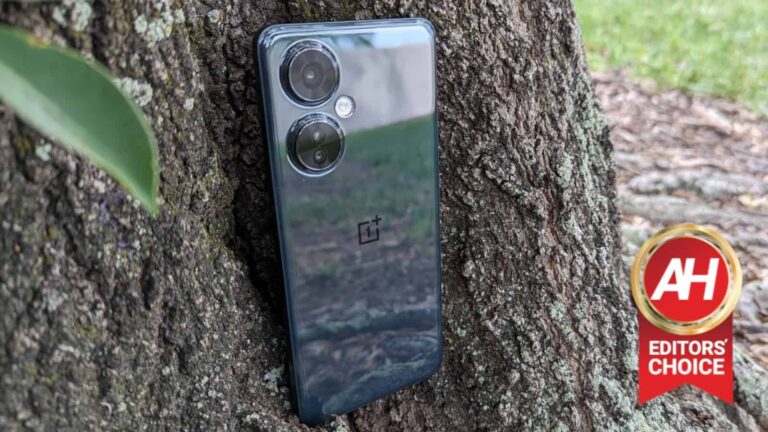
As for the design, it represents the design aesthetic that OnePlus has established. It’s the same design language that extends throughout the modern Nord phones. It’s a metal and glass sandwich with two circular protrusions on the top left for the cameras. They jut from the glass, there seems to be some inspiration from Oppo with this phone. The company is popular for having camera bumps that gently slope upward and plateau.
This is a similar case for the OnePlus Nord N30. There’s a subtle slope in the glass leading up to the metal rings around the camera sensors. Speaking of the sensors, there are three of them. The main camera sits in the top circle alone, and there’s a macro camera and depth sensor occupying the bottom one.
The main gripe I have about this phone’s design is the use of such reflective glass. Without exaggeration, this phone’s back is a mirror. This makes fingerprints much more noticeable and taking pictures a nightmare.
OnePlus Nord N30 Review: Display
We’re well past the point where cheaper phones with LCD displays are doomed to have low-quality displays. Imagine a $300 phone with an LCD display back in 2015 (yikes!). Nowadays cheaper phones are coming out with really nice displays, and the OnePlus Nord N30 is an excellent example of this. The display is not only nice, but it’s also beautiful.
Even though we’ve seen flagship phones with high-quality LCDs from the likes of LG and HTC, this display is still a sight for sore eyes. Right off the bat, you’ll notice that the colors are pleasantly saturated. There are points (especially in the red tones), where it’s approaching OLED territory. The cooler tones aren’t quite as punchy, but they still pack a nice punch.
Besides the saturation, there’s a pleasant emphasis on white balance. The panel displays white pretty close to a true scientific white. This is something that characterizes the display on other OnePlus devices like the OnePlus Pad. It gives the display a nicely cool color temperature without being too blue.
The display is only made better by the refresh rate and brightness. It runs at a smooth 120Hz refresh rate. Navigating the interface and using the apps just looks amazing. Moving onto the brightness, it gets more than bright enough to view in the sun. Using this phone in the bright Florida sun, I had no issues seeing the display clearly. As with any display, you’ll only really have trouble seeing it if the sun itself is directly reflected on the screen.
OnePlus Nord N30 Review: Performance
What can I say, OnePlus has a track record of launching well-performing phones for a lower price since 2014. I admit that, after experiencing the performance of the OnePlus Nord N300, I didn’t have high hopes going into this review. However, the difference between the N300 and N30 is like night and day.
The OnePlus Nord N30 is an extremely smooth performer. It just glides through the software without any issues or hiccups. There’s the very rare occasion of stutter or dropped frames, but they’re so few and far apart that they’re negligible. This was a surprise because it’s using a pretty dated mid-range processor, the Snapdragon 695G SoC. No matter what I threw at the phone, it just didn’t want to slow down.
OnePlus Nord N30 Review: Gaming
Moving onto gaming, this is an area where the OnePlus Nord N30 gave me a pleasant surprise. When it comes to gaming, 2D games are an automatic shoo-in. Pixelated RPGs, platformers, Dungeon crawlers, rogue-likes, you name it. There’s no reason that any of your run-of-the-mill games should pose any issue with this phone. Plus, this gorgeous display makes prettier games, like those from Odencat, look stunning (I recommend playing Fishing Paradiso).
3D games
3D games are the downfall of most phones’ gaming performance, but the OnePlus Nord N30 held up strong- really strong. Moderately graphically intensive games like Dragon Ball Legends were no sweat for this phone. More ambitious games like Sky: Children Of The Light didn’t cause the phone to flinch. But, how about we aim for the stars?
Genshin Impact bogs down a lot of phones, and I have to admit that it did knock the phone’s FPS down a bit. However, even on the highest graphical settings, I was able to have surprisingly smooth gameplay. I didn’t get the fluid 60FPS, but the experience was overall smooth with an average framerate at just above 30FPS. It does drop down into the teens every now and then, but it doesn’t stutter or lock up. And again, I’m talking about the highest graphical settings. I was able to consistently play the game with no issues.
OnePlus Nord N30 Review: Speakers
The speakers are another win for this phone, as they produce an amazing sound. A lot of cheaper phones skimp on the speakers. They are almost always alright. The speakers on the OnePlus Nord N30, on the other hand, are comparable to the speakers on my Pixel 6. They produce a surprisingly wide sound with a lot of depth. You don’t only hear the bass, you feel it.
When listening to classical or orchestral music, I don’t only hear the gritty sound of the bows on the double basses, I also hear those accompanying lower tones, albeit not as much as with a larger speaker. The lower tones are strong, but they avoid sounding muddy. When listening to more modern music like late 80s pop, the piercing electric bass still cuts through.
The higher tones are no slouch either, and they’re key if you want the vocals to cut through. Vocals cut through pleasantly. I feel that they could probably cut through a little more, but that’s not to say that they don’t sound great. So, whether you’re watching movies, listening to music, or gaming, you’ll have a great time with these speakers.
OnePlus Nord N30 Review: Camera
Just like with display technology, the camera capabilities of $300 phones have soared exceptionally high in the last several years. This is much the case with the OnePlus Nord N30. It’s a champ when it comes to still photography.
Still photos
Starting off with the exposure and contrast, this phone does a good job of creating a nice balanced photo. The shadows are dark enough without being totally crushed. On the opposite side of the spectrum, however, I found that the images tend to lean on the lighter side. This leads to just a bit more overexposure than I’d like to see. It’s not too bad, though.
Moving onto the colors, OnePlus was able to create photos that are responsibly colorful, but there’s one exception. The blue tones and the green tones are pleasantly juicy, and this makes this phone great for nature and sky shots. The same goes for yellow and bright orange. The earthy tones, however, could use a little boost in my opinion.
So, what’s the one exception? Well, if you watch the camera deep-dives by Juan Carlos Bagnelle, you’d know that digital sensors have a hard time exposing red properly. The reds produced by the OnePlus Nord N30’s camera are absolutely nuclear. They tip the scale in with their saturation and they really singe the retinas.
Low Light
The low-light performance of this phone is solid. You get the basic issues that plague all sensors like additional noise, a lack of color, weaker details, and reduced contrast. However, this phone’s performance was respectable. In fact, the software did a good job of reining in the digital noise.
Video
The still photography is good, but the video quality is definitely lacking. The video stabilization is really good at eliminating shakes. Casually walking, the video was very smooth.
The colors and dynamic range saw a noticeable drop, however. The juicy blue sky and green grass from the photos are gone and so is the nice dynamic range. The over-exposure that was present in the photos is worse when it comes to the videos.
Also, the overall sharpness has been reduced. I can see that the phone employs some sharpening to the footage, but it ultimately looks low-res.
OnePlus Nord N30 Review: Software
This could be a divisive subject considering how much Oxygen OS has changed recently. Due to the company’s merger with Oppo, OxygenOS has taken on a look similar to Oppo’s Color OS. While that may be the case, I rather enjoy the software on the OnePlus Nord N30.
The software looks refined while a bit cartoonish in some areas. This is evident in the app drawer and Quick Settings with large and bubbly buttons.
One major strong point about the software is the set of visual customizations. You can change the wallpaper and theme just like with every other phone, but it goes deeper than that. Starting with the app icons, you can choose from five different icon shapes and dial in the actual size of the icons. There’s even a setting where you can choose how rounded the corners are. That’s only if you choose the rounded square option. There are other settings you can change like the screen transition and the app animation speed.
The software manages to stand apart as its own thing, but it doesn’t stray far from the core Android experience. Whether you’re used to OneUI, MyUX, Stock Android, etc., you’ll be able to pick up this phone and use it without a sweat.
OnePlus Nord N30 Review: Battery
This phone has a reliable battery, to say the least. Using it, I had no trouble getting a day and a half out of this phone. This includes moderate usage with gaming, video-watching, and social media scrolling. Power users will get less mileage, but they’ll still be able to make it to bed with a little bit of power in the tank.
As for charging, we all know OnePlus to hook its phones up with fast charging. This phone comes with a charger in the box (woohoo), and it’s a powerful 63W brick. This brick charges the phone insanely fast. I was able to top it off in just over an hour.
What’s missing?
When it comes to what’s missing from this phone, the list isn’t long. There’s no IP water and dust resistance and there’s no wireless charging. Since this is still a budget phone, the lack of them doesn’t dock phones from the phone. Just know that these are some features you’ll be missing out on if you get this phone.
Conclusion
Confession: When I got this phone at my door, I wasn’t all that excited. After reviewing the Nord N300, my hopes weren’t set too high for the Nord N30. However, the more I used this phone, the more I fell in love with it. The more reliable I found it. It excels in just about every area, and that says a lot about a $300 phone.
As I asked at the beginning of this review, is this phone worth the $300 price tag? My answer is no. It’s worth so much more. I highly recommend that you pick up this phone.
Ahead of Prime Day, Amazon is launching one of its most popular streaming service deals, once again. That is, giving you two months of service for $0.99/month. This is available for a number of streaming services right now, and it is also limited to Prime members.
These services include:
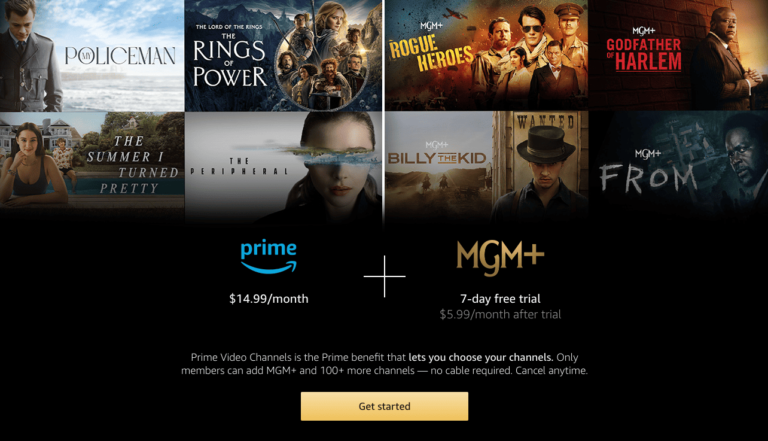
You’ll get the first two months for $0.99 per month, and then after that, it will jump up to its regular price. You will be subscribing to these through Amazon Prime Video Channels, and cancelling through there as well. This is a really good way to check out these services, in an extended trial, since you’re paying $1.98 for two months of use.
You’ll likely notice that a lot of these streaming services are not the most popular ones, aside from STARZ and Cinemax. The others are more niche, so this is a good way to try them out.
If you’re not already a Prime member, you can sign up for a free 30-day trial by clicking here. If you are a student, that will be a 6-month free trial. Still plenty of time to take advantage of Prime Day next week.
Keep in mind that these offers on these streaming services are valid through the end of Prime Day, which is July 12, 2023. So you’re going to want to grab these before they are gone. And as always, keep it locked to AndroidHeadlines for all of the great Prime Day deals next week. So you are sure to not waste your money.
Just recently, Elon Musk made a change to Twitter that led to yet another backlash. The company made it so that people needed to be logged in to see tweets. However, that may no longer be the case, as it seems that Twitter has backtracked.
To catch you up, Twitter has been facing another whirlwind of criticism because of several changes that came about. The rate limit puts a limit on how many tweets users can view daily. Also, the company made it so that you could only see tweets if you’re logged in. These changes were widely dragged.
You might not have to be logged in to view tweets
So far, it doesn’t seem that Elon has announced that this change was going away. Instead, people are finding that they’re able to see tweets when logged out. Several folks at Engadget are able to see individual tweets when logged out. There are also some people who can see tweet previews in iMessage.
This might not have been completely reversed, however. While people are still able to see individual tweets, profiles aren’t loading in properly. While the profile will come up, their feed of tweets isn’t loading. Also, there are also people who just aren’t seeing any tweets. So, it seems that this reversal is still in the process.
There could be a good reason behind the changes
Right now, we can’t confirm 100% what Elon is saying, but he did explain why he’s doing this. It has something to do with the next frontier in technology, AI. AI language models need to be trained with a ton of data. Well, where does that data come from?
Companies like OpenAI and Google (and the company just admitted this) scrape data from the internet, and they get data from everywhere. A lot of this data comes from social media. According to Elon Musk, due to so much of this data scraping from tweets, Twitter is having some major internal issues. This is, according to Musk, one of the reasons behind the rate limit and requiring people to be logged in to view tweets.
Whether that’s the case, it’s good to see that Twitter is walking back this change.
Amazon’s Prime Day is here, July 11 and 12. It’s back as a two-day event in the middle of July, bringing us a Black Friday in July type of event.
Since announcing Prime Day, Amazon has also started a number of early deals for the big event. These range from discounted smart speakers, Amazon hardware, to extended free trials of different services, and even some TVs.
We have rounded up the very best early Prime Day deals here, for you to check out. As a reminder, you are going to need to be a Prime member to take advantage of the majority of these deals. If you are not a member, you can sign up for a free 30-day trial here. And take full advantage of Prime Day. Without spending a single penny. Just remember to cancel Prime afterwards, unless you do want to keep the service.
Best Early Amazon Prime Day 2023 Deals
Prime Day is here, and we’re rounding up the very best deals that you can get ahead of Prime Day (July 11 and 12) here in this post. That includes deals from brands like Amazon, Ring, Google, Blink, Instant Pot, Keurig, and so much more. So you’ll be able to save loads this year on Prime Day and get just what you need.
New this year, we are doing a roundup of the very best deals that are under $50. So for those bargain hunters out there, we have you covered as well. And keep an eye out for other roundups of Prime Day deals ahead of Prime Day and during Prime Day.
We will be updating this post up until Prime Day, so make sure you keep it locked here for all of the latest Prime Day Deals. That way you won’t miss out on any of the good deals.
Without further ado, here are the best early Prime Day deals.
Google is widely rolling out its image generation experiment in Slides. All users who have signed up for Workspace Labs should get the new experimental feature over the next few days. It’s part of Duet AI, the company’s new home for its AI efforts for the Workspace suite of productivity apps.
The tech giant announced this tool during the Google I/O conference in May, along with a host of other experimental AI features. It also launched Workspace Labs to allow users to test out those experiments early. Since then, the company has released several such features through Labs. AI-powered image generation in Slides started rolling out early last month but in a limited capacity. It’s now available widely, 9to5Google confirms.
Google Slides is getting an AI-powered image generation tool
Like similar generative AI tools on Gmail and Docs, Slides (slides.new) will show you a “Welcome to Workspace Labs” prompt once you have access to the image generation feature. At the end of the toolbar, you’ll find a new “photo” icon with a sparkle in the top-right corner. Tapping it opens the “Help me visualize” panel, where you can enter a text prompt to “create visuals for your presentation.”
Google lets you choose from various styles for your image. You have options like Photography, Background, Vector Art, Sketch, Watercolor, and Cyberpunk. You can select the “I’m Feeling Lucky” option if you can’t decide on a style or proceed without picking a style. Once you have entered your text prompt and selected a style, Slides will work its AI magic to give you multiple image results. Google says it might take about 20 seconds to generate images.
Slides will give you eight AI-generated images, though you can generate more (in sets of eight images). Previously generated images aren’t deleted if you generate more. A click on the image will add it to your current document. You can leave feedback by selecting the thumbs-up/down button. According to Google, you will get better results if you include the “subject, setting, distance to subject, materials, or background” in your prompt and avoid figurative language.
An example prompt is, “A beautiful photograph of a Hawaiian beach at sunset with palm trees in the distance.” Since all Workspace Labs features are experimental, Google may use human reviewers to “read, annotate, and process your Labs interactions data.” As such, you should avoid including personal, confidential, or sensitive information in prompts. If you’re interested in Google’s Workspace AI experiments, you can sign up here.
Firefox has released patches for some of its high and moderate vulnerabilities in Firefox, ESR (Extended Support Release), and Thunderbird products. These vulnerabilities were privately disclosed, and appropriate CVEs and security advisories have been released.
The severity of the released list of vulnerabilities accounts for 4 High, 1 Low, and 8 Moderate.
High Severity Vulnerabilities:
CVE-2023-37201: Use-after-free in WebRTC certificate generation
This vulnerability exists due to the use-after-free condition in which a pointer to the memory is not cleared even after the memory location is freed up.
An attacker can use this to hack the program and use it for malicious purposes. The CVSS Score for this vulnerability is not published yet.
CVE-2023-37202: Potential use-after-free from compartment mismatch in SpiderMonkey
This vulnerability exists in the SpiderMonkey, an open-source JS and WebAssembly engine developed by the Mozilla Foundation. SpiderMonkey has a cross-compartment wrapping feature that wraps a scripted proxy.
This feature allows objects from other compartments to be stored in the main compartment leading to a use-after-free condition.
The CVSS Score and vector for this vulnerability are yet to be published.
CVE-2023-37211: Memory safety bugs fixed in Firefox 115, Firefox ESR 102.13, and Thunderbird 102.13
This is a memory corruption vulnerability in the Firefox 114, ESR 102.13, and Thunderbird 102.13 versions that attackers could exploit to run arbitrary codes in the system.
The CVSS Score and vector for this vulnerability are yet to be published.
This is a memory corruption vulnerability present in Firefox 114 that threat actors can exploit to run arbitrary codes in the systems.
The CVSS Score and vector for this vulnerability are yet to be published.
Medium Severity Vulnerabilities
CVE(s)
Description
CVE-2023-3482
Block all cookies bypass for localstorage
CVE-2023-37203
Drag and Drop API may provide access to local system files
CVE-2023-37204
Fullscreen notification obscured via option element
CVE-2023-37205
URL spoofing in address bar using RTL characters
CVE-2023-37206
Insufficient validation of symlinks in the FileSystem API
CVE-2023-37207
Fullscreen notification obscured
CVE-2023-37208
Lack of warning when opening Diagcab files
CVE-2023-37209
Use-after-free in `NotifyOnHistoryReload`
CVE-2023-37210
Full-screen mode exit prevention
Affected Products and Fixed Versions
The mentioned vulnerabilities affect Firefox version 114. In order to fix these vulnerabilities, users are recommended to upgrade their Firefox to version 115.
With more than 392 million users, Firefox stands as one of the most used browsers in the world due to its features and security. Security researchers globally prefer Firefox over any other browsers due to its usability and convenience.
“AI-based email security measures Protect your business From Email Threats!” – Request a Free Demo.
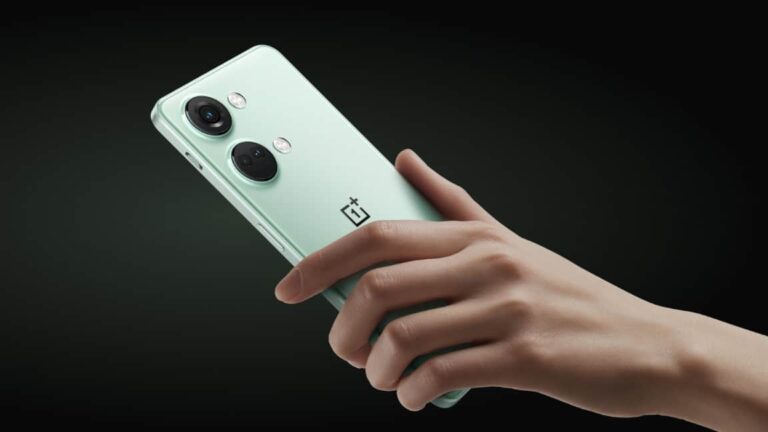
The Nord series of OnePlus phones has proven to be popular among fans, and we’ve been waiting for the next main entry in the series. Well, the wait is over, as the OnePlus Nord3 5G is now official, and this phone is going to be a mid-range beast (via Engadget).
The Nord series has been a thing since 2020 when the company started focusing on making mid-range phones rather than flagship killers. There are several phones, like the OnePlus Nord N30, that were just announced, and it looks like it’s going to be a very capable phone. The Android Headlines review is coming soon.
The OnePlus Nord 3 looks like it’s going to be a beast
While this is a mid-range phone, it’s clear that OnePlus wants this to bite the ankles of phones like the base Galaxy S23 and comparable phones. Starting off with the display, this phone is sporting a large 6.7-inch display with a 2772 x 1240 resolution. It’s significantly more pixel-packed than a typical 1080p display, and it runs at a fluid 120Hz.
Moving onto the internals, the phone uses the powerful MediaTek Dimensity 9000 SoC. That’s backed up by up to 16GB of RAM, which is massive. We can bet that there will be no issues with the performance. As for the battery, we’re looking at a 5,000mAh battery with 80W charging.
For the camera technology, the OnePlus Nord 3 will use a 50MP main camera, and we’re sure it’s going to bin down to around 12MP. Actually, this is the same camera on the OnePlus 11. However, what will matter is how the software handles the visual data.
As for the other sensors, we’re looking at an 8MP ultrawide camera and a 2MP macro camera. Up front, we’re looking at a 16MP selfie camera.
So, all of this power should be pricey, right? About that. This premium mid-ranger won’t cost a premium price. The base model (8GB RAM 128GB storage) costs €449. That’s equivalent to about $488. The more capable model (16GB RAM 265GB storage) will run you €549, or about $597. If you’re in the States, then you’re going to be missing out on this phone, and that goes for those of you in the UK.
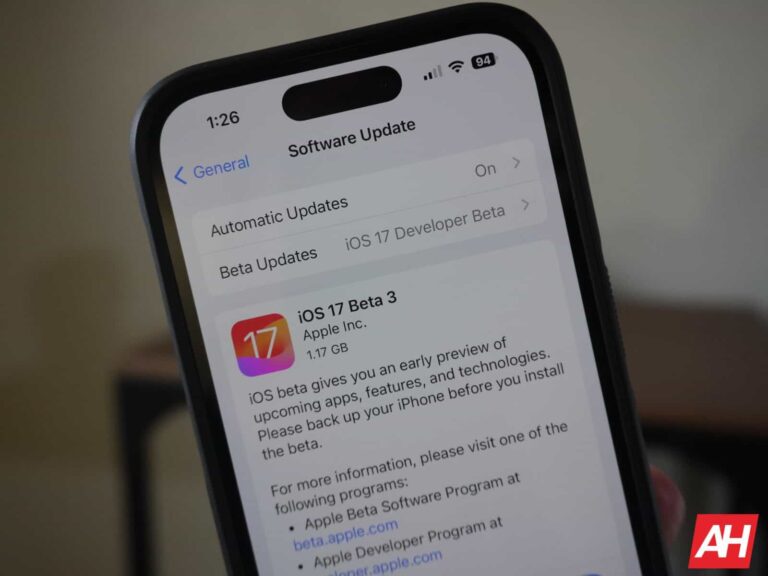
Apple has just pushed out the third beta for iOS 17 and iPadOS 17. That’s just two weeks after Beta 2 was released, and we expect this to also be the public beta, but no word on that just yet. On Apple’s website, it still shows as “coming soon”.
This beta update still appears to be a pretty large one, at about 1.15GB in size. That means that each of the betas since the first one, has been over a gigabyte in size. Hopefully that means lots of bugs have been fixed.
Early reports are saying that this beta was a quick one to install, which is a bit of a surprise after Beta 2. Which took quite some time to install. So despite the larger size here, it might actually be mostly a bug fixer.
In iOS 17, there’s not a ton of big features, this is more of a stability release this year. But it is releasing some cool features like Contact Posters. Which is a customizable poster that others will see when you call. Apple also redesigned the iMessage apps screen, making it easier to jump into apps and share photos, location and much more.
iPadOS 17 Beta 3 released too
Apple has also released the third beta for iPadOS 17, which honestly, has a bigger upgrade this year compared to iOS 17. Apple typically likes to push out features to iPadOS a year after they launched on iOS. So this year, with iPadOS 17, we’re getting new lockscreen widgets, as well as interactive widgets (which is an iOS 17 feature). So it’s almost more exciting to get iPadOS 17.
Both can be downloaded now by heading into the Settings on your iPhone or iPad. Tapping on General, then Software Update. You might need to recheck Developer Beta updates and turn them back on. I’ve noticed on my iPhone 14 Pro, that it was pushed back to turning Beta updates off, for some reason.
OpenAI recently disabled ChatGPT’s Bing browsing due to user discovery of its paywall-bypassing potential, commonly employed by news outlets to promote paid subscriptions.
While OpenAI makes this announcement via a tweet. The Bing browsing feature is exclusive to ChatGPT Plus subscribers only and is the premium version of ChatGPT.
OpenAI Doesn’t want Any Problems
OpenAI expressed gratitude to ChatGPT Plus subscribers for their valuable feedback on the browsing feature during the beta phase.
OpenAI, backed by Microsoft, plans to reintroduce the feature shortly. Additionally, OpenAI updated its FAQ page to inform Plus subscribers about the situation.
Out of caution, we disabled the Browse with Bing beta feature on July 3, 2023, to address concerns and respective content owners.
OpenAI is diligently working to restore the beta and values users’ understanding of the process.
As users have successfully commanded ChatGPT to access paid websites, enabling them to access premium content from various sources.
That’s why the company takes responsibility and aims to uphold the rights of content owners by ensuring ChatGPT no longer bypasses paywalls.
Integration of Bing with ChatGPT
With notable collaborations with Microsoft, OpenAI swiftly became one of the world’s fastest-growing companies, and for this, all credit goes to its diverse AI advancements.
Though Microsoft had previously embraced the GPT large-language model, OpenAI’s integration of Bing as a partner search engine for the AI chatbot is a recent development.
The browse beta feature aids users by instantly generating content through ChatGPT and also provides enhanced web searches with AI capabilities.
Browse with Bing integration empowers ChatGPT Plus users with up-to-date information from Microsoft’s search engine, surpassing the chatbot’s training data from September 2021.
Upon its return, iPhone users of OpenAI’s ChatGPT app can activate the feature by enabling Browsing in the app’s settings under “New Features.
Switch to GPT-4 in the model selector, then opt for “Browse with Bing” from the dropdown menu.
OpenAI’s API granting universal access has led to the successful integration of ChatGPT by numerous companies, such as:-
Snapchat
Microsoft
Mercedes-Benz
ChatGPT’s iconic status as a top AI chatbot stems from its ability to generate a large amount of content with just a short and simple prompt.
Moreover, OpenAI promptly acknowledged the Browse beta’s unintended paywall bypass, taking the right steps to rectify its flaws and temporarily disabling it.
“AI-based email security measures Protect your business From Email Threats!” – Request a Free Demo.





.png
)