Hackers target vaults, buckets, and secrets to access some of the most classified and valuable information, including API keys, logins, and other useful data kept within these storage solutions.
These storage solutions’ centralized and often inadequately protected nature makes them exceptional targets for the threat actors.
Cybersecurity analysts at DATADOG Security Labs discovered that hackers have been attacking the vaults, buckets, and secrets to steal data.
Hackers Attacking AWS Vaults
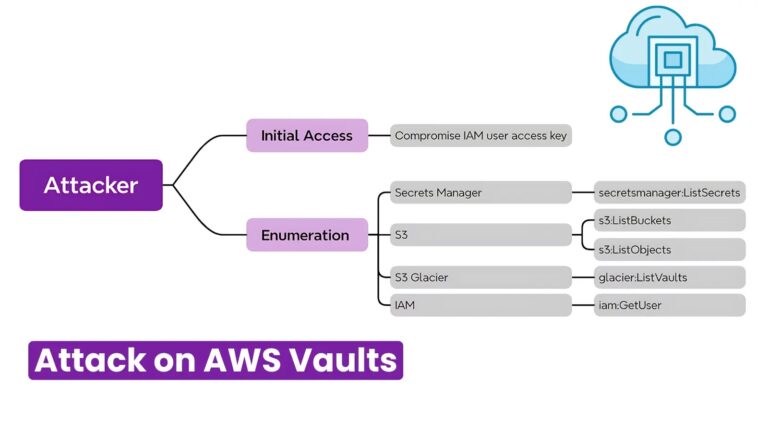
From 2024-05-23 to 2024-05-27, analysts detected abnormal behavior in a client’s AWS during threat hunting. IP 148[.]252.146.75 attempted ListSecrets and ListVaults API calls.
Enriched as a potential UK Vodafone residential proxy. Activity in another AWS included ListBuckets to enumerate S3 buckets, then ListObjects on available buckets – automated per event times.
Free Webinar on API vulnerability scanning for OWASP API Top 10 vulnerabilities -> Book Your Spot
No GetSecretValue, BatchGetSecretValue, or GetObject were observed despite the S3 data events that were enabled. While the reasons are:-
Broad automated campaign assessing available data before exfiltration
or
Testing AWS identity access level for resale value determination
First, the attacker was observed targeting the S3 Glacier vault backup data. After failed enumeration, subsequent InitiateJob calls were expected to retrieve the vault archive list and specific archive, then GetJobOutput to download.
Attackers commonly mask location using VPNs like free Cloudflare WARP, whose AWS API calls may seem less suspicious than other VPN providers.
Attack chain (Source – DATADOG Security Labs)
The requests-auth-aws-sigv4 Python library likely generated the identified user agent for manually signing AWS API requests, unlike typical AWS CLI or Boto3 SDK usage, which handles Sigv4 signing automatically.
Manually managing to sign provides no real advantage but could indicate suspicious activity if unexpected in your environment.
Recommendations
Researchers recommend detection and response teams closely examine this campaign due to the potentially severe operational impact of the exfiltration of production LLM data and resources from your cloud environment.
Here below, we have mentioned all the detection opportunities:-
Utilize IoCs to detect specific campaigns.
Enrich CloudFlare IPs if expected API calls.
Multiple regions ListSecret/ListVault in a short period.
17 regions under 1 minute in observed data.
Spikes in AccessDenied for ListSecrets, ListBuckets, ListObjects, ListVaults.
Suspicious AccessDenied spikes indicate a lack of proper permissions.
FreeWebinar! 3 Security Trends to Maximize MSP Growth -> Register For Free
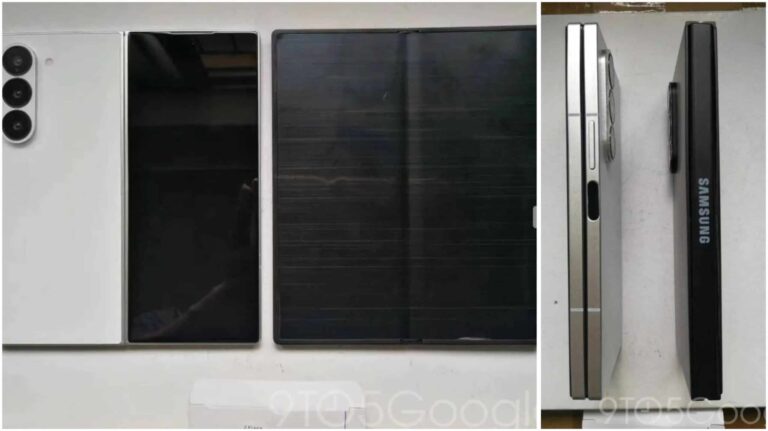
The Galaxy Z Fold 6 dummy images surfaced several times thus far, but not a single one gave us a good look at the display crease. Those dummy units are allegedly very precise, and that includes the display crease.
The display crease on the Galaxy Z Fold 6 & Flip 6 is not exactly flattering
If you take a look at the images in the gallery below, you’ll see a significant display crease on both devices. The Galaxy Z Fold 6 seemingly has an even bigger “problem” with that than the Flip 6, as rumors indicated.
There are a number of phones out there that have less pronounced creases
Various other smartphone OEMs managed to tone down the crease significantly. That doesn’t seem to be the case for Samsung, though. The crease is still very much pronounced here. Well, we’ll see if the real products will be the same in that regard.
Based on these dummy units, which come in two colors, the Galaxy Z Fold 6 won’t be that thin either. The Galaxy Z Fold 5 is nowhere as thin as the HONOR Magic V2 for example, nor the OnePlus Open.
If you were hoping to see some significant changes in that regard, well, that won’t be the case, it seems. The Galaxy Z Fold 6 will have three vertically-aligned cameras on the back. It will look similar to its predecessor.
The Galaxy Z Flip 6 will still have two cameras on the back, as does the Flip 5. Both phones will be made out of metal and glass. Both of them will launch on July 10. That’s when Samsung’s second Unpacked event of the year will take place. That is still unofficial, but several sources confirmed it.
TikTok and its Chinese parent company ByteDance have filed a brief spelling out their lawsuit against the US government over the proposed ban. Filed in the US Court of Appeals for the D.C. Circuit, the brief calls the newly passed law to ban the app unconstitutional and a restriction on freedom of speech. A group of TikTok creators, who have separately sued the US government over the same matter, also filed a similar appeal.
TikTok and TikTok creators appeal in court against the US ban law
After mulling over it for years, the US government finally framed a law to ban TikTok. President Joe Biden signed the law on April 24, just a day after the Senate passed it. American lawmakers have national security concerns with the platform over its potential ties with the Chinese government, which the firm has always denied. TikTok has until January 19, 2025, to either sell its US operations or face a nationwide ban and exit the country.
Unsurprisingly, the company disagrees with the US government’s decision and has challenged the law in court. It filed a lawsuit seeking a ruling that blocks the law. A group of US-based TikTok creators who earn their livelihood from the app also filed a similar lawsuit. All of them argue that the proposed ban violates the First Amendment rights of Americans. They called the law an attempt to put an “extraordinary restraint on speech.”
The plaintiffs have now filed briefs doubling down on their arguments, providing the court with more evidence supporting their case. TikTok says the US government didn’t consider other options and rapidly moved forward with a law to ban the app. The firm adds that it provided American lawmakers “with an extensive and detailed plan to mitigate national security risks” but they ignored it and passed the law in a hurry.
“Never before has Congress expressly singled out and shut down a specific speech forum,” TikTok’s newly filed brief laments Congress for an unconstitutional law. “Never before has Congress silenced so much speech in a single act,” the brief continues in the same tone. “Congress gave this Court almost nothing to review. Congress enacted no findings, so there is no way to know why majorities of the House and Senate decided to ban TikTok.”
Oral arguments in the case will begin in September
The court will hear oral arguments in TikTok’s lawsuit against the US government’s ban law on September 16, 2024. Both parties have asked the court to expedite the case and announce its ruling by the first week of December. This is to ensure that TikTok gets enough time to appeal to the Supreme Court review if needed. As said earlier, the firm has until January 19, 2025, to finalize its next steps, whether to sell the app or exit the US.
President Joe Biden can extend the deadline, though. He may do that if he sees enough progress toward a divesture. However, it won’t be easy for ByteDance to sell TikTok’s US arm unless it decides to give the platform away cheaply. There aren’t many buyers who might be willing to spend billions of dollars on TikTok without getting access to its coveted recommendation algorithm, the key to its success.
A Chinese export law reportedly blocks the sale of the platform’s recommendation algorithm. So any buyer might have to develop a fresh algorithm from scratch, which could severely impact the user experience. TikTok has already denied that it is developing a US-only algorithm for a possible sale. For the time being, it is seemingly focused on blocking the law and living on to see more success in the US. Its newly filed brief contains hundreds of pages of communications with the US lawmakers explaining its measures to mitigate national security concerns. Time will tell what the court decides.
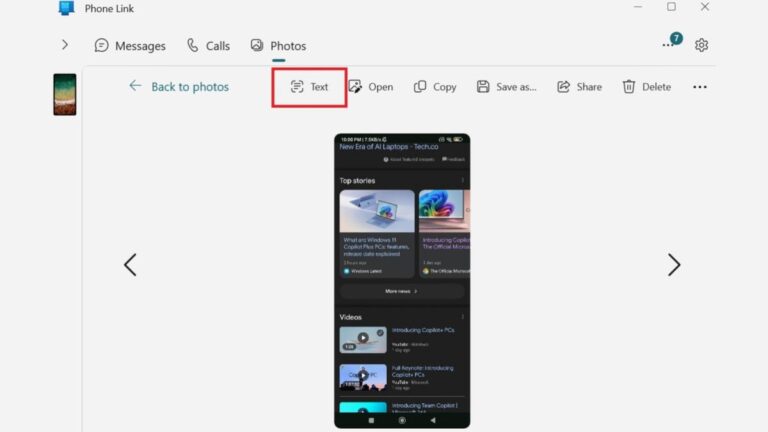
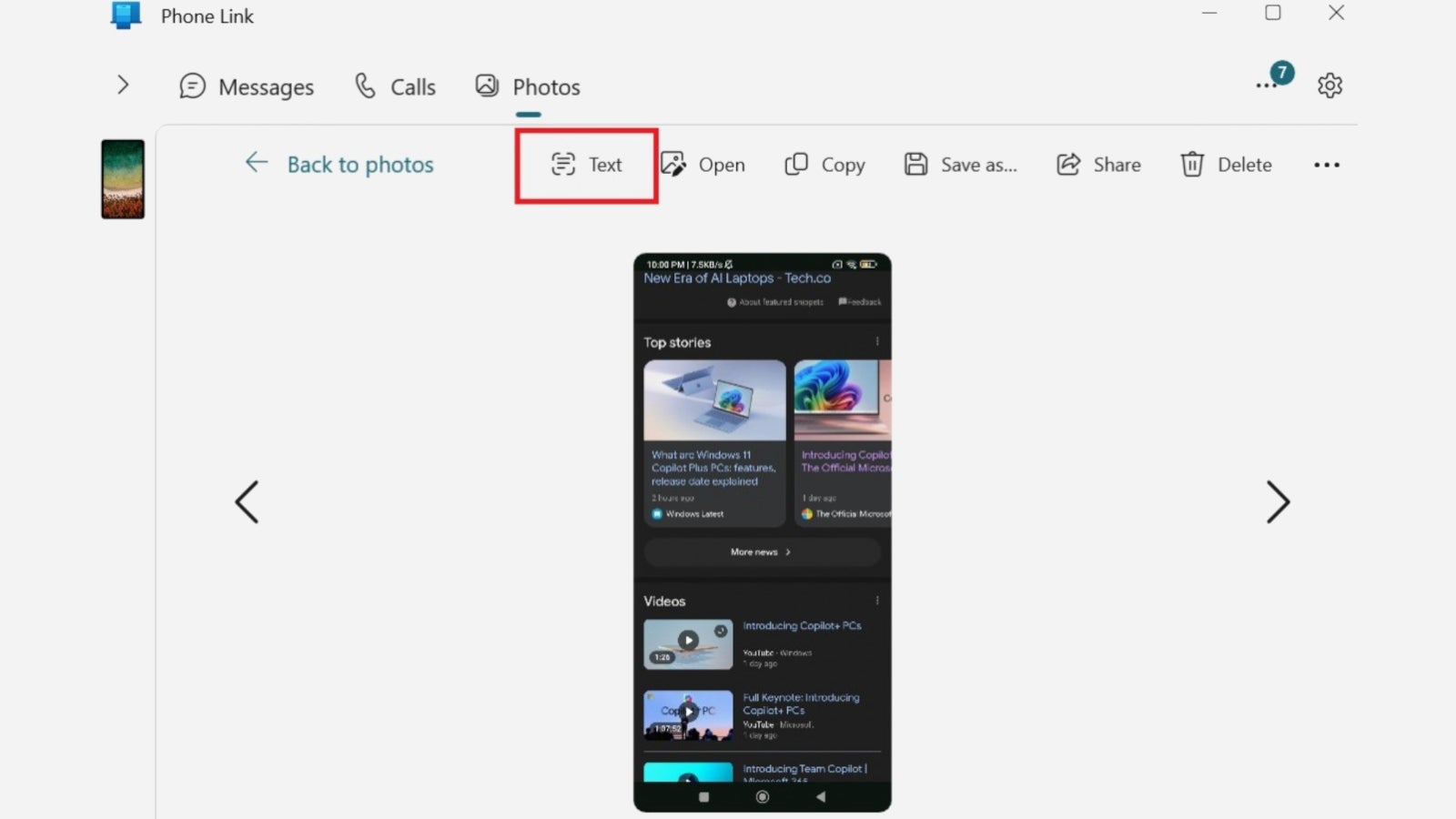
Microsoft is rolling out a new update that brings a feature that many Android users will want to take advantage of: the ability to extract text from the images stored on their phones.
The folks at Windows Latest report that the OCR (optical character recognition) is now making its way to all Windows 11 users after about one month spent in beta testing where only members of the Windows Insider Program had access to it.
Although Microsoft initially called the feature “Scan Text,” but it’s now labeled simply as “Text.” Regardless of how it’s called, it uses the same technology as the traditional OCR, so if you’d like to try it out, you’ll have to update Phone Link to the latest version (1.24052.124.0).
Unfortunately, it appears that the feature only works well with English texts. If you’re trying to extract text from other languages, you’ll notice that it’s not as accurate.
Microsoft claims that its OCR-like feature should work with multiple languages, but that seems to be false at the moment. Even so, having the ability to save text from an image in a sperate document can be invaluable sometimes, even the feature is limited to English language.
Keep in mind that you can bring up the ability to extract text from images stored on your Android phone by simply using the dedicated shortcut: Ctrl + T.
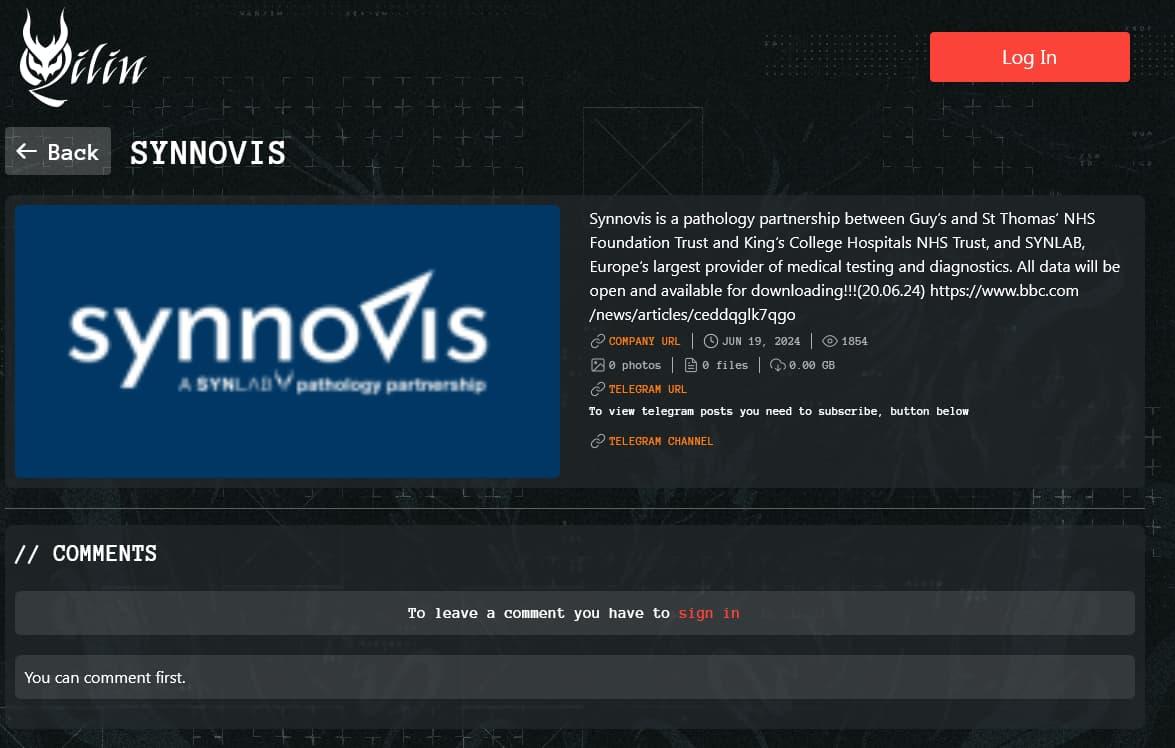
On June 3, 2024, as reported by Hackread.com, attackers launched a targeted ransomware attack against Synnovis, a key outsourced lab service provider for NHS hospitals in South-East London. The perpetrators, identified as the Qilin ransomware gang, escalated their tactics after the NHS rejected their demand for a $50 million ransom. As a result, the gang stole and publicly leaked the entire dataset they had exfiltrated.
In its updated incident report, NHS revealed that King’s College Hospital NHS Foundation Trust and Guy’s and St Thomas’ NHS Foundation Trust were the most severely affected NHS Trusts in this incident. Consequentially, these trusts were forced to postpone 1,294 outpatient appointments and 320 elective procedures.
According to BBC reports, the ransomware incident severely impacted healthcare operations, affecting more than 3,000 hospital and GP appointments and operations due to disruptions in pathology services.
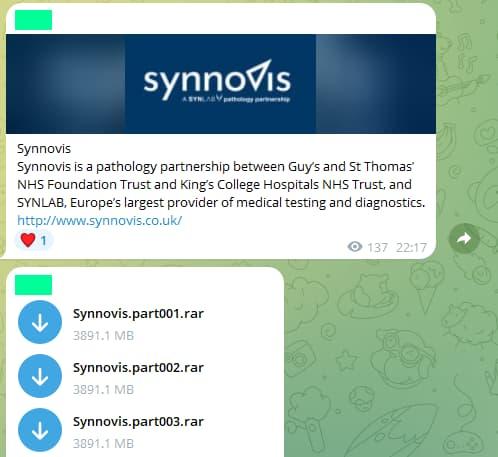
Hackread.com can confirm that The Qilin ransomware gang utilized Telegram to distribute 400GB of sensitive data stolen from Synnovis. This method differs from the typical approach of ransomware groups, who often use dedicated dark web leak sites or publicize their attacks to pressure and shame victims into paying ransom.
Expert Commentary
Peter Mackenzie, director of incident response at Sophos, commented on the latest development stating, “Unfortunately, healthcare organizations have been—and will continue to be—a prime target for ransomware attacks because the services they provide are so critical to the communities they serve, and this puts pressure on the targets to get back online as fast as possible.”
“We’ve already seen several high-profile ransomware attacks against hospital systems this past year around the world, and Sophos’ most recent State of Ransomware reportfound that 63% of UK healthcare organisations were hit by ransomware in the last year (although most were able to stop the attack before the data was encrypted),” said Peter.
“Further complicating matters is the rise in supply chain attacks across industries. They are a preferred method of compromise for a number of criminal groups because, as well as being difficult to defend against, they also have a ripple effect, allowing attackers to infiltrate multiple systems at a time,” he explained. “In fact, IT and cyber professionals working in the UK healthcare sector perceive partners and the supply chain to be their single biggest cybersecurity risk.”
According to a legal expert in the use of data in the Health sector, Sarah Tedstone of law firm Fieldfisher, such events are inevitably going to escalate as data becomes more fundamental to patient care and research.
“We are seeing a growing trend in this sector as there is a global push to prioritise the use and sharing of valuable health data to enable innovation in this sector. The pandemic showed that having more and better quality data contributed significantly to collaboration and innovation and we are seeing growth across many sectors including in diagnostic testing, which is contributing to significant health breakthroughs,” she commented.
The data is being analysed but at this point, it is not known if sensitive information such as blood test results could have been published.
“We have seen from other such incidents how distressing this can be to individuals involved. The disclosure of test results can involve very personal information about the individual but also where genetic or genomic information is involved this can infer information about wider family groups,” Sarah added.
It’s also thought confidential financial agreements between the NHS and Synnovis could be published.
“The consequences of such disclosure could be the loss of valuable commercially sensitive information and affect competition in the market resulting in increased cost for the NHS impeding its ability to obtain cost-effective services,” said Sarah.
“Regulators around the world are expressing their concern at repeated health hacks and consequently there have been in the last few years for the first time criminal sanctions laid against the management team in a European health company criticised for its lack of security and response to an incident,” Sarah warned.
The ransomware attack on Synnovis is already highlighting the consequences for healthcare services, disrupting over 3,000 hospital and GP appointments and operations. This breach not only compromises patient confidentiality but also jeopardizes critical medical procedures. It highlights vulnerabilities in healthcare cybersecurity, necessitating urgent measures to safeguard patient data and ensure uninterrupted medical care in the face of escalating cyber threats.
Last month, a prolific tipster claimed that Samsung would upgrade the ultrawide and 3x zoom cameras on the Galaxy S25 Ultra. Another source has now backed this information and shed more light on the rumored upgrades. Huge resolution changes are on the cards.
Samsung to use two new 50MP cameras on the Galaxy S25 Ultra
A lengthy post on X by @ISAQUES81 details the new camera sensors Samsung is using on the Galaxy S25 Ultra. According to the tipster, the next Ultra’s ultrawide camera will use a new version of the 50MP ISOCELL JN1 sensor. At 1/2.76 inches, this sensor is slightly smaller than the Galaxy S24 Ultra’s 1/2.55-inch ultrawide camera. However, we are looking at a massive resolution upgrade from 12MP.
The tipster doesn’t reveal other specifications of the new camera for Samsung’s next Ultra flagship. The ISOCELL JN1 features 0.64μm pixels, though pixel binning technology allows it to merge neighboring pixels to absorb more light. It can record 4K videos at 60fps (frames per second). Since the company is using a new version of this sensor, we might see some changes to these specs.
For the 3x optical zoom camera, Samsung is turning to a larger sensor with a 50MP resolution, up from 10MP. The Galaxy S25 Ultra’s 3x zoom lens is said to feature a 1/3-inch sensor, larger than the current Ultra’s 1/3.52-inch sensor. Other details are missing but we have early confirmation that the new Ultra will bring major changes to its camera setup. Samsung is also working on improved camera algorithms.
As suggested in the previous leak, the Galaxy S25 Ultra doesn’t seem to be getting upgraded sensors for the 200MP main camera and 50MP 5x zoom camera. These are relatively new cameras, so this isn’t surprising. Anyways, Samsung is improving its algorithms, so the camera output may get better even with unchanged hardware. Things are looking good for the Galaxy S25 Ultra.
The other two models may get the same camera upgrade
Samsung will launch the Galaxy S25 series in early 2025, probably in January. As usual, the company should release three models. The Ultra should be accompanied by a Galaxy S25 and a Galaxy S25+. In the past, Samsung has equipped the smaller two models with the same ultrawide and 3x zoom cameras as the Ultra. If it doesn’t change things next year, these upgrades should be found across the lineup.
Interestingly, a recent leak suggested the Galaxy S25 and Galaxy S25+ will feature an unchanged 50MP primary rear camera and an unchanged 12MP selfie shooter. The leak didn’t mention anything about the ultrawide and 3x zoom cameras. This further hints at an upgrade for the latter two cameras. This might also hint at an unchanged selfie camera for the Galaxy S25 Ultra. Expect more detailed leaks in the coming months.
The cybersecurity and antivirus software provider Kaspersky’s products are now banned in the US. On Thursday, the Biden administration announced plans to stop the sales of Kaspersky’s antivirus software. Notably, it is the first time the department has completely banned the sales of a cybersecurity technology firm in the nation. The administration has cited that Russia’s influence over Kaspersky poses a significant security risk in the country.
The ban on Kaspersky products in the US will kick in on July 20
The sales of the Kaspersky products will be banned in the US starting from July 20. It means that starting from next month, Kaspersky products will not be available on the store shelves. Besides that, the company will also not be able to sell its products via any online marketplace.
The ban doesn’t just end here because all third-party products that are utilizing Kaspersky services will also be banned in the nation. According to Reuters, the full ban will kick in on September 29, 2024. From the date, the new decision will also ban downloads of software updates, resales, and licensing of any Kaspersky product.
That said, the administration has provided a 100-day window to existing Kaspersky customers and businesses to look for viable alternatives for their computers. Notably, the Biden administration has also added Kaspersky and two of its other units to a trade restriction list in the nation.
Kaspersky to pursue legal options to continue its operations
In an email to Reuters, Kaspersky announced that it is going to pursue legal options to continue operations. Kaspersky said it believed the U.S. decision was based on “the present geopolitical climate and theoretical concerns, rather than on a comprehensive evaluation of the integrity of Kaspersky’s products and services.”
The company had previously already announced that it is a privately managed company without any connections to the Russian government.
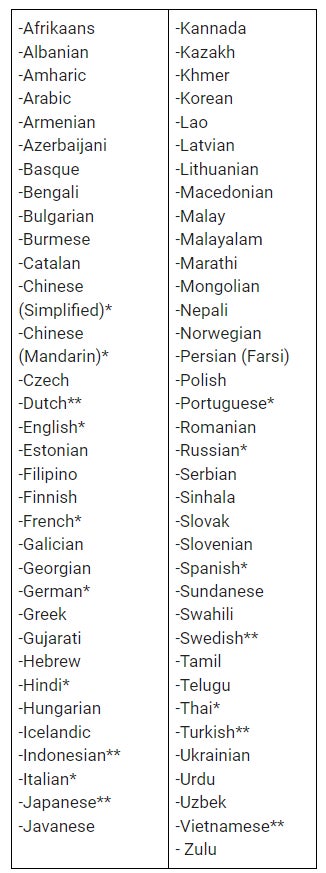
Google Meet is getting an important update for many users. The app has just received support for 52 languages to translated captions and 11 more languages for closed captions.
If you’re a Google Workspace customer or a simple user with a personal account, you’ll benefit from the expanded support for closed captioning to include the following languages in beta:
Azerbaijani
Czech
Greek
Icelandic
Kazakh
Lao
Lithuanian
Malay
Serbian
Swahili
Ukrainian
With the addition of these 11 languages, closed captioning now supports a total of 87 languages, although keep in mind that some are still in beta.
Moving on to translated captions, Google Meet is getting support for 52 languages. According to Google, only Gemini for Google Workspace customers are getting support for these languages, which can be translated to and from any other fully supported language.
In addition, Google announced that it’s rolling out full language support to 6 previously launched languages: Dutch, Indonesian, Japanese, Swedish, Turkish, and Vietnamese.
With the latest update, Google Meet translated captions now fully support 69 languages, allowing for over 4,600 language pairs.
Along with the update, Google also revealed that starting January 22, 2025, translated captions in Google Meet will be exclusively available to Gemini for Google Workspace customers.
Until then, translated captions will be available in the following Gemini add-ons: Gemini Enterprise, AI Meetings and Messaging, and Gemini Education premium.
As far as close captioning goes, the new languages are now available to all Google Workspace customers and users with personal Google accounts, so you don’t really have to pay for it.
A new botnet named Zergeca has emerged, showcasing advanced capabilities that set it apart from typical Distributed Denial of Service (DDoS) botnets.
Discovered by the XLab Cyber Threat Insight Analysis (CTIA) system on May 20, 2024, Zergeca has already demonstrated its potential to cause significant disruption.
This article delves into the intricate details of Zergeca, its functionalities, and its implications for cybersecurity.
Discovery and Initial Analysis
On May 20, 2024, while many were celebrating a holiday, the XLab CTIA system captured a suspicious ELF file located at /usr/bin/geomi.
This file, packed with a modified UPX and uploaded from Russia to VirusTotal, initially evaded detection by antivirus engines.
Later that evening, another Geomi file with the same UPX magic number was uploaded from Germany.
The multi-country uploads and the modified UPX packer raised red flags, prompting further investigation.
Zergeca’s Capabilities
Upon analysis, it was confirmed that Zergeca is a botnet implemented in Golang.
The botnet’s name, Zergeca, is inspired by the swarming Zerg in StarCraft, reflecting its aggressive and expansive nature.
Zergeca is not just a typical DDoS botnet; it supports six different attack methods and boasts additional capabilities such as proxying, scanning, self-upgrading, persistence, file transfer, reverse shell, and collecting sensitive device information.
Unique Network Communication Features
From a network communication perspective, Zergeca exhibits several unique features:
Multiple DNS Resolution Methods: Prioritizes DNS over HTTPS (DOH) for Command and Control (C2) resolution.
Smux Library: Utilizes the uncommon Smux library for C2 communication protocol, encrypted via XOR.
During the investigation, it was discovered that Zergeca’s C2 IP address, 84.54.51.82, had been serving at least two Mirai botnets since September 2023.
This suggests that the author behind Zergeca accumulated experience operating Mirai botnets before creating Zergeca.
The primary methods used by 84.54.51.82 to propagate samples include exploiting Telnet weak passwords and specific known vulnerabilities such as CVE-2022-35733 and CVE-2018-10562.
DDoS Statistics and Targets
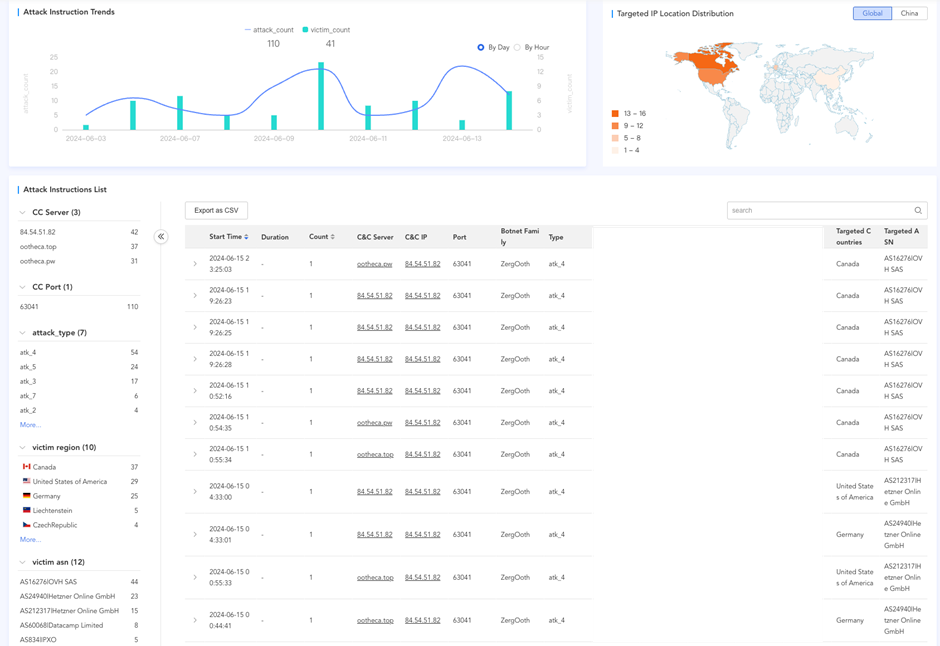
From early to mid-June 2024, Zergeca primarily targeted regions such as Canada, the United States, and Germany.
The main type of attack was ackFlood (atk_4), with victims distributed across multiple countries and different Autonomous System Numbers (ASNs).
Zergeca botnet primarily targeted regions such as Canada, the United States, and Germany
The reverse analysis of Zergeca revealed that the botnet is designed for the x86-64 CPU architecture and targets the Linux platform.
The presence of strings like “android,” “darwin,” and “windows” in the samples, along with Golang’s inherent cross-platform capabilities, suggests that the author may eventually aim for full platform support.
Zergeca achieves persistence on compromised devices by adding a system service named geomi.service.
This service ensures that the Zergeca sample automatically generates a new geomi process if the device restarts or the process is terminated.
String Decryption and Communication Protocol
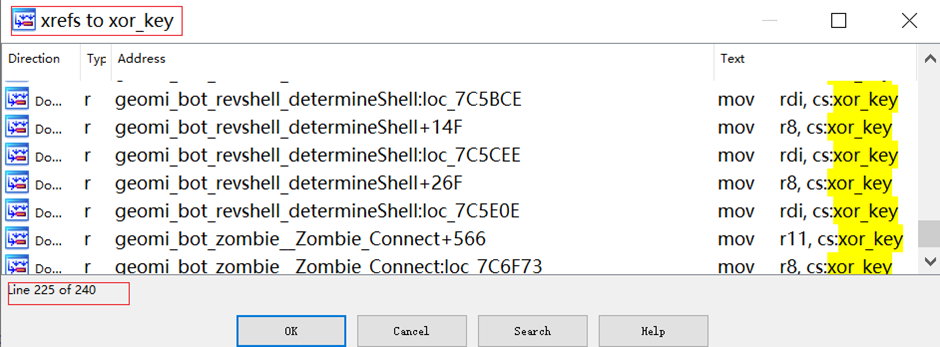
Zergeca uses XOR encryption for many sensitive strings.
The XOR key is initially set to EC 22 2B A9 F3 DD, but only the first six bytes are used.
The decryption process can be automated by identifying specific patterns in the decryption-related code blocks, restoring all encrypted strings efficiently.
Zergeca uses Smux for Bot-C2 communication. Smux (Simple MUltipleXing) is a Golang multiplexing library that relies on underlying connections like TCP or KCP for reliability and ordering, providing stream-oriented multiplexing.
Silivaccine Module
To monopolize the device, Zergeca includes a list of competitor threats, covering miners, backdoor trojans, botnets, and more.
Zergeca continuously monitors the system and terminates any process whose name or runtime parameters match those on the list, deleting the corresponding binary files.
OZI.A
COM.UFO.MINER
KINSING
KTHREADDI
kaiten
srv00
meminitsrv
.javae
solr.sh
monerohash
minexmr
c3pool
crypto-pool.fr
f2pool.com
xmrpool.eu
………
Zombie Module
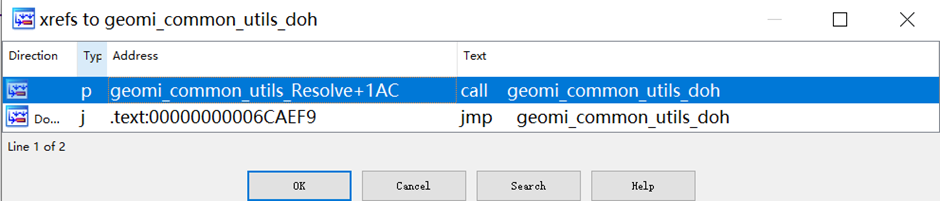
Zergeca resolves the C2 IP address using the geomi_common_utils_Resolve function, which supports four resolvers: Public DNS, Local DNS, DoH, and OpenNIC.
After obtaining the C2 IP, the bot reports sensitive device information to the C2 and awaits commands, supporting six types of DDoS attacks, scanning, reverse shell, and other functions.
The discovery of Zergeca highlights botnets’ continuous evolution and increasing sophistication.
With its advanced scanning, persistence features, and multi-functional capabilities, Zergeca poses a significant cybersecurity threat.
Cybersecurity professionals must stay vigilant and proactive in identifying and mitigating such threats as the botnet continues to develop.
IOC
Sample
23ca4ab1518ff76f5037ea12f367a469
9d96646d4fa35b6f7c19a3b5d3846777
d78d1c57fb6e818eb1b52417e262ce59
604397198f291fa5eb2c363f7c93c9bf

f68139904e127b95249ffd40dfeedd21
d7b5d45628aa22726fd09d452a9e5717
6ac8958d3f542274596bd5206ae8fa96

pathced with "xlab" at the end of file
980cad4be8bf20fea5c34c5195013200

sample captured on 2024.06.19, support ddos vector 7
60f23acebf0ddb51a3176d0750055cf8
Domain
ootheca.pw
ootheca.top
bot.hamsterrace.space
IP
84.54.51.82 The Netherlands|None|None AS202685|Aggros Operations Ltd.
FreeWebinar! 3 Security Trends to Maximize MSP Growth -> Register For Free
Ulefone’s Summer Sale will be over soon, but there’s still time to grab up to 69% on the company’s products. The sale will end on June 23, so in two days from the point of publishing this article.
Various different products are on offer, but the main focus is on the Ulefone Armor 25T Pro and Armor 26 Ultra. Both of those are very compelling offerings from the company and some of the best phones Ulefone has to offer.
The Ulefone Summer Sale is almost over, but there’s still time to grab up to 69% off
Both of these phones are rugged devices, they’re different, though. The Ulefone Armor 25T Pro comes with thermal imaging and infrared night vision capability thanks to its rear camera setup. The phone also has a 6.78-inch fullHD+ display with a 120Hz refresh rate.
The MediaTek Dimensity 6300 5G SoC fuels this phone, while it includes up to 12GB of RAM. It also comes with 256GB of storage, which is expandable. A 6,500mAh battery sits inside of this phone. 33W wired and 30W wireless charging is supported, while Android 14 comes out of the box. This phone can be yours for only $289.99, at the moment (40% off).
The Ulefone Armor 26 Ultra comes in standard and Walkie-Talkie versions. It has a truly impressive speaker on the back and a gigantic 15,600mAh battery. You can recharge that battery via 120W wired charging, and a charger is included.
The device offers 12GB of RAM, but you can expand that up to 24GB RAM thanks to virtual RAM. This phone also has a 200-megapixel main camera and much more. The standard version of the phone will cost you $359.99, while the Walkie-Talkie model costs $419.99.
The Ulefone Armor Pad 3 Pro and Ulefone Note 18 Ultra are also worth noting. That tablet and smartphone are currently priced at $279.99 (50% off) and $149.99 (50% off), respectively.
If you’d like to check out all the devices that are on sale, check out the link below. Ulefone also published the Ulefone Note 18 Ultra unboxing video, in case you’re interested.
.webp)